IInvenTiv to emerge as a key forum which will provide solutions to complex global problems

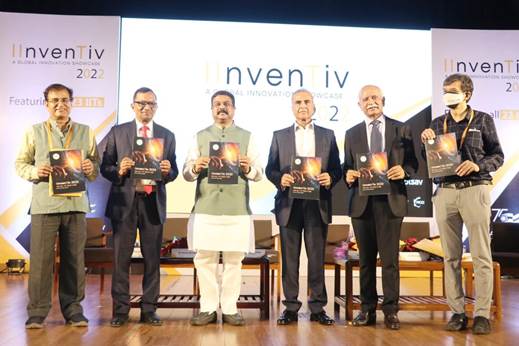
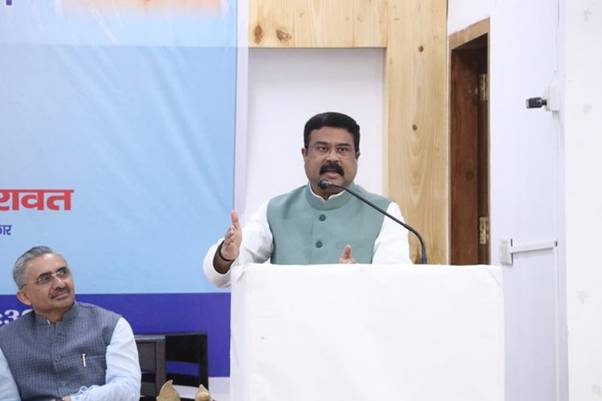
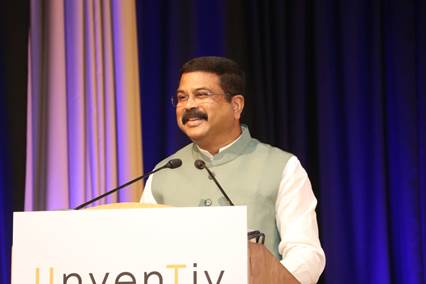
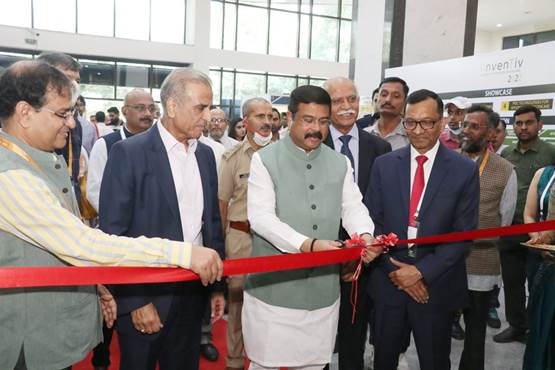
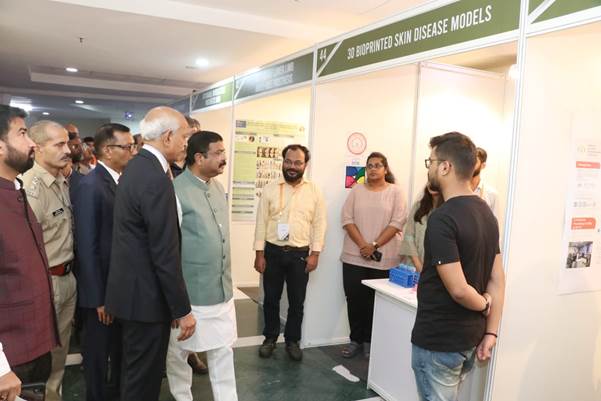
 Union Minister for Education and Skill Development and Patron-in-Chief of IInvenTiv Shri Dharmendra Pradhan, today inaugurated IInvenTiv – the first-ever all-IITs R&D Showcase at the Indian Institute of Technology, Delhi. The two-day event that would conclude on October 15th brings academia and industry under one roof to showcase India’s global R&D strength. A brochure for IInvenTiv was also launched by the Minister, followed by a visit to the exhibition booths.

The inaugural session was also graced by Mr Sunil Bharti Mittal, Founder and Chairperson Bharti Enterprises, as the Guest of Honour, accompanied by Dr. Pawan Goenka, Chairman, Steering Committee IInvenTiv; Dr. BVR Mohan Reddy, Co-Chairman, Steering Committee IInvenTiv; and Dr. Subhasis Chaudhuri, Director IIT Bombay, and Convener, Steering Committee IInvenTiv. 
https://static.pib.gov.in/WriteReadData/userfiles/image/image001H7BS.jpg

https://static.pib.gov.in/WriteReadData/userfiles/image/image002858I.jpg

Speaking on the occasion Shri Dharmendra Pradhan expressed his happiness to be part of this historic-first event that bears testimony to Prime Minister Shri Narendra Modi’s mantra of ‘Jai Anusandhan’ to build an Aatmanirbhar Bharat. The Minister said that IITs are no more just Indian Institutes of Technology, but today, they have become Instruments of Transformation. IITs are the repositories of knowledge & experience and bridge to the future, he added.

Shri Pradhan highlighted that the Covid pandemic has clearly shown us the impact of what happens when technology driven research commits itself to the service of human race. Whether, it is development of Indian vaccines within a short span of time that not only benefitted Indians but millions of people across the world. It has all been possible because of brilliant minds like yours, he added. He further said that these are the signs of an Atmanirbhar Bharat and we have to encourage the relationship of Academic R&D – new age technology – industry- Society even more to take research and innovation to the zenith so that no one is left behind.

The Minister said that our IITs have to move beyond being just engineering colleges. We have to stop benchmarking IITs on the basis of placement packages. IITs should redefine parameters and benchmark on number of innovations brought in the market, innovations monetised, and number of job creators created. He also said that technology will drive the next phase of growth and development with IT and communications technology among the front runners. The world today will invest more vigorously on India. India’s talent, digital-first attitude, market size, emerging purchasing power and growing aspirations is a heady mix to take India forward at an unprecedented speed and scale. Our IITs should seize this opportunity, he added.

Shri Pradhan stated that in the AmritKaal, the anusandhan-led Bharat would be propelled by innovations at the grass roots level and it would seek the participation of all, especially the rural sector. IInvenTiv shall be the start of such a revolution and emerge as a key forum which will provide solutions to complex global problems.

The R&D Fair is being organized in commemoration of the 75th year of India’s Independence in line with the Azadi ka Amrit Mahotsav initiative. It has brought over 300 representatives from industry, including startups, along with government, and embassy officials, and global IIT-alumni. Apart from that, overall footfall of around 1500 attendees is expected throughout the event, which includes faculty, students, and research scholars from various institutions, among others.

There are 75 projects and 6 Showcase projects on diverse themes such as, Defence and aerospace, Healthcare (including devices and digital health), Environment and Sustainability (including air, water, rivers), Clean Energy & Renewables (including Hydrogen and EV), Manufacturing (including smart, advanced and industry 4.0), AI/ML/Blockchain technologies (including quantum computing), Smart Cities & Infrastructure (including smart mobility), Communication Technologies (including education and 5G), Robotics, Sensors & Actuators, and Semiconductors, Flexible electronics & Nanotechnology, being exhibited at the event. The projects are aligned with the vision of Make in India, Digital India, and Atmanirbhar Bharat, and are aimed at impacting the lives of all sections of society.

The two-day event would host representatives from Confederation of Indian Industry (CII), Federation of Indian Chambers of Commerce & Industry (FICCI) and National Association of Software and Service Companies (NASSCOM), along with students, global IIT alumni, faculties of various CFTIs, scientists from DRDO, ISRO, CSIR and ICAR, and so on.
https://static.pib.gov.in/WriteReadData/userfiles/image/image003BJU0.jpg

https://static.pib.gov.in/WriteReadData/userfiles/image/image0041XGO.jpg


****

Programme for the implementation of National Education Policy 2020 in Uttarakhand

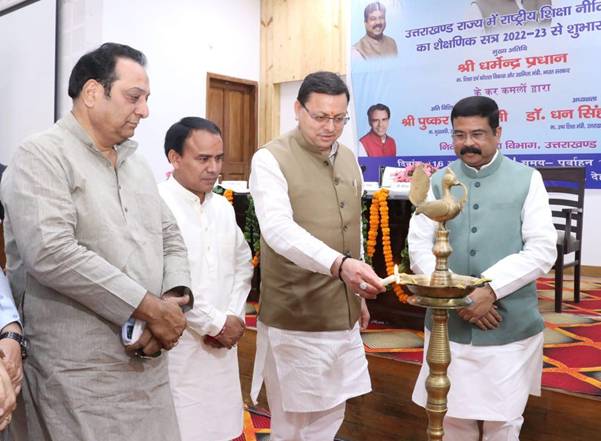
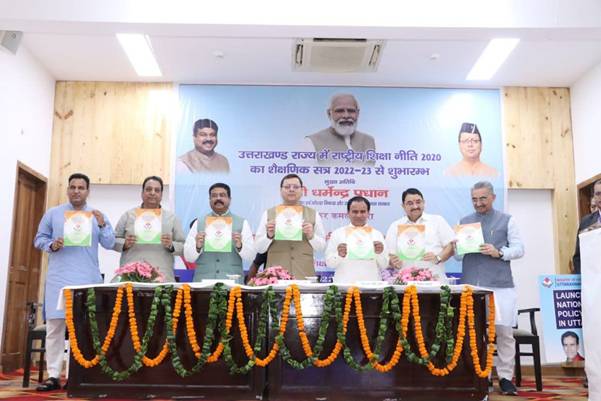
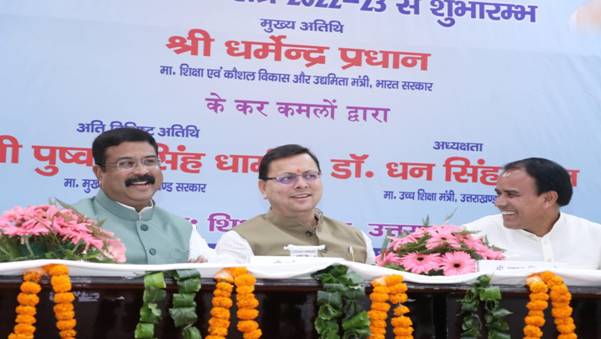
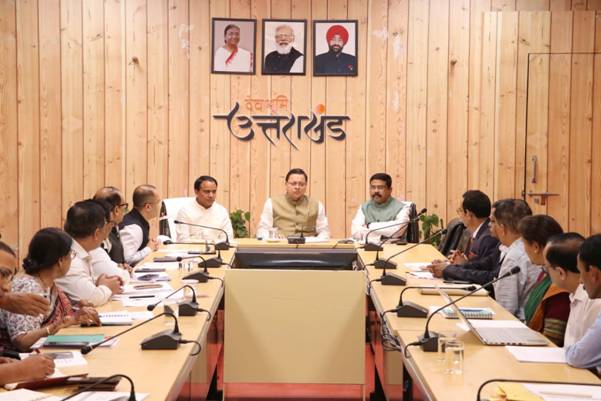
 Union Education and Skill Development and Entrepreneurship Minister Shri Dharmendra Pradhan along with CM of Uttarakhand, Shri Pushkar Singh Dhami; Minister of Health, Education and Cooperative of Uttarakhand Dr. Dhan Singh Rawat and senior officials of Government of Uttarakhand, participated in the launch of National Education Policy 2020 in Uttarakhand from the academic session 2022-23.


He said that NEP 2020 is a philosophical document to reinvigorate setting up of a knowledge-based economy and society. Uttarakhand-Devbhumi is the land of the divine. Uttarakhand is also the land of knowledge. He lauded Uttarakhand, the Devbhoomi for taking the lead in implementing NEP2020 . 

1.jfif

Shri Pradhan asserted that NEP 2020 has put emphasis on education from the age of 3 years with first three years as Balvatika and lauded Uttarakhand for being the first state in the country to adopt this. Later he added, “NEP 2020 has also put emphasis on local languages and mother tongue. We must unshackle our education system from the colonial hangover and create a more inclusive, forward-looking education system”.

4.jfif

Shri Pradhan shared that the world is changing rapidly. We are in the midst of Industrial Revolution 4.0. Uttarakhand is capable of preparing its youth for the challenges of tomorrow. Today’s launch is an important step towards that direction.  

He also added that from Gangotri to the galaxy, our youth must explore the world, embrace the future and remain rooted at the same time. Our education system must evolve and keep pace with their aspirations.

Shri Pradhan underlined the role of technology in transforming education. He also highlighted various initiatives by the Govt. of India such as 260 TV channels for education and Digital University, etc. for strengthening the digital ecosystem.    

Shri Pradhan aslo reviewed the initiatives taken in the education and skill sectors in Uttarakhand and progress being made in the implementation of NEP2020.

review meet.jfif

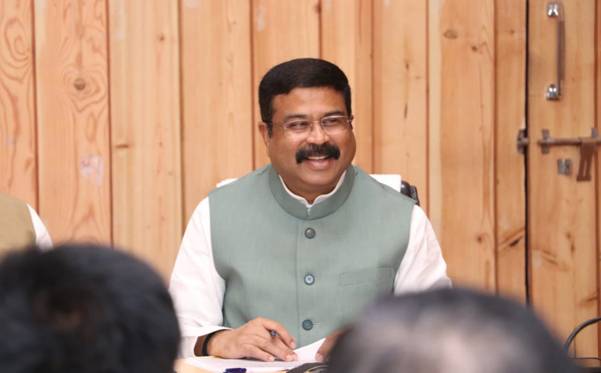
While addressing the gathering Shri Pradhan said that Uttarakhand is a land of divinity and a land of possibilities. A vibrant education and skills ecosystem will equip the youth of Uttarakhand with the necessary knowledge and skills to embrace the challenges of 21st century.

2222222.jfif

Shri Pradhan further said that Uttarakhand is taking many initiatives in this direction. From Balvatika to stress on local languages, school readiness program, skill development efforts and many other initiatives will pave way for a brighter future for the students of Uttarakhand. 

Later, he added that with the spirit of “for the students, by the teachers”, called for a more rooted and futuristic curriculum, capacity building of teachers, leveraging technology and reimagining the skills ecosystem.

*******

Durga Puja & Ravan Dahan

Durga puja & Ravan Dahan

Durga puja is the largest festival for Bengalis as It originated in Kolkata many years ago.

Durga puja, Durgotsava, Vijaydashmi, or Sharodotsava is a yearly Hindu festival that is celebrated in the Indian subcontinent that honors and reveres the Hindu Goddess Durga and celebrates Goddess Durga’s victory over Mahishasura.

While, Ravan Dahan _ On the same day, somewhere in a different era, Ravana was killed by Lord Rama. In today’s India, Ramlila is organized for the last 9 nights and Ravana Dahan marks the day where good triumphs over evil.

In the significance of Durga Puja,
According to Hindu mythology, Lord Brahma granted the demon Mahishasura the boon of invincibility, which meant that no man or god could kill him. After receiving the blessing, Mahishasura attacked the gods and chased them out of heaven. To defeat the demon king, all the gods gathered to worship Adi Shakti. Maa Durga was created by the divine light that emanated from all the gods during the puja.


The first day of Durga Puja marks the arrival of the goddess and is called Mahalaya.

On the sixth day, Sasthi celebrations and worship begin. The goddess is worshipped in her various forms as Durga, Lakshmi, and Saraswati over the next three days. Maa Durga’s battle with Mahishasura lasted ten days. On the tenth day, Goddess Durga slew the demon king, and thus the day is celebrated as Vijaya Dashami, symbolizing the triumph of good over evil.

While, From the 1st to the 9th day, Ram-Leela events happen all over the country to celebrate the festival.

On the last day, devotees immerse Goddess Durga’s idol in the holy Ganges water. It is referred to as Durga Visarjan. Worshippers march in procession before the immersion, accompanied by drumming, singing, and dancing.

While on the same last day, people do Ravan Dahan as Lord Ram killed Ravan.

# Both the events Durga Puja and Ravan Dahan take place on the day of Vijayadashami. The myth and motive behind these two events is the end of Evil by God.
#Victory of God upon Evil.

Salient Features of NEP, 2020

Salient Features of NEP, 2020

The National Education Policy 2020 was unveiled on July 29, 2020. The National Education Policy 2020 makes a number of changes to both higher education and secondary education, including technical education. The National Education Policy 2020 lists a number of action items/activities that should be implemented in both higher education and schooling.

The following are specifics of NEP 2020’s key features:

• Ensuring universal access at all educational levels, from preschool to grade 12;

• Ensuring that all children between the ages of 0 and 3 receive high-quality early care and education;

• New Pedagogical and Curricular Framework (5+3+3+4);

• There are no clear distinctions between the humanities and sciences, academic and extracurricular pursuits, or career paths;

• Launching a national initiative on basic literacy and numeracy;

• Promoting multilingualism and Indian languages as a priority; The home language, mother tongue, local language, or regional language will be used as the primary medium of teaching until at least Grade 5, but ideally until Grade 8 and beyond.

• Assessment reforms, including up to two Board Exams per school year, one for the main exam and one for improvement, if requested;

• The establishment of the PARAKH (Performance Assessment, Review, and Analysis of Knowledge for Holistic Development) National Assessment Center;

• Educational equity and inclusion, with a focus on Socially and Economically Disadvantaged Groups (SEDGs);

• Special Education Zones and a specific gender inclusion fund for underprivileged areas and groups;

• Effective and open procedures for hiring teachers and performance evaluations based on merit;

• Ensuring that all resources are accessible via school complexes and clusters;

•State School Standards Authority (SSSA) establishment 

• Promotion of vocational education throughout the K–12 and tertiary systems of instruction;

• raising GER to 50% in higher education;

• Multidisciplinary, all-encompassing education with numerous points of access and departure;

• NTA will conduct a Common Entrance Exam for HEI Admission;

• The founding of an academic bank of credit

•Multidisciplinary Education and Research Universities (MERUs) establishment ;

•The National Research Foundation (NRF) was established.

•”Light yet Tight” regulation 

• The Higher Education Commission of India (HECI), a single overarching umbrella organisation, with independent bodies for standard setting (the General Education Council), funding (the Higher Education Grants Council), accreditation (the National Accreditation Council [NAC]), and regulation (the National Higher Education Regulatory Council [NHERC]), is responsible for promoting the higher education sector, including teacher education but excluding medical and legal education;

• Growing open and distant education to boost the gross enrollment ratio (GER).

• Globalization in Education

• The higher education system will include professional education as a core component. The goal of institutions in these and other sectors, including independent technical universities, law schools, medical schools, and agricultural colleges, is to become multidisciplinary institutions.

• 4-year integrated stage- and subject-specific teacher education degree in education

• Creating a National Mentoring Mission.

•The establishment of the National Educational Technology Forum (NETF), an independent organisation that would serve as a forum for the unrestricted discussion of ways to use technology to improve instruction, evaluation, planning, and administration.

•The appropriate use of technology in all educational levels.

•Objectives Reaching 100% adult and juvenile literacy.

• The commercialization of higher education will be fought and stopped by a number of methods with checks and balances.

• As a “not for profit” company, all educational institutions will be held to the same standards of audit and disclosure.

• The Center and the States will collaborate to boost public spending on education so that it reaches 6% of GDP as soon as possible.

• The Central Advisory Board of Education should be strengthened to maintain coordination and to put more of an emphasis on quality education overall.

By 2030, the NEP, 2020 aims to raise the GER in preschool through secondary education to 100%, while it will rise from 26.3% in 2018 to 50% in higher education, including vocational education.

INTERNATIONAL LITERACY DAY

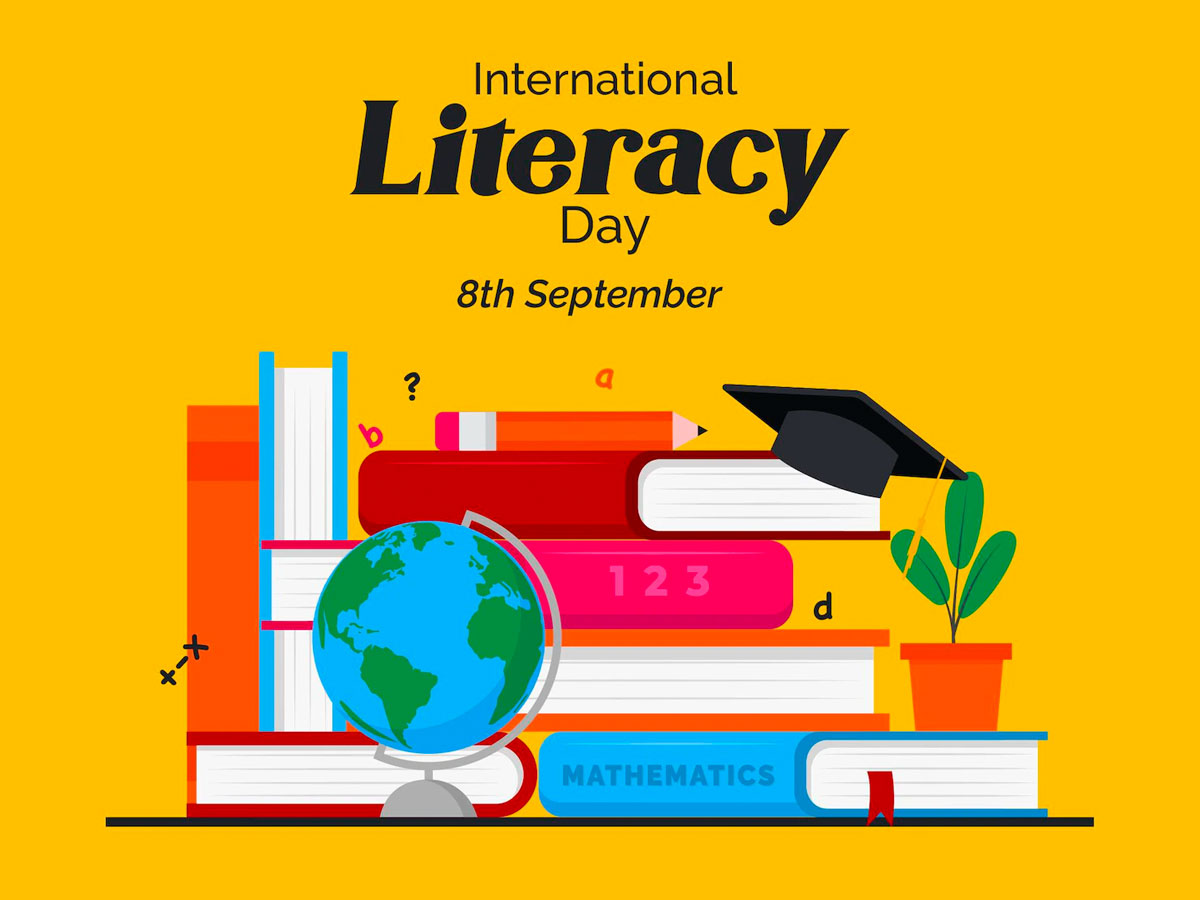
INTERNATIONAL LITERACY DAY- SEPTEMBER 8, 2022


Every year on September 8, International Literacy Day is
celebrated to bring attention to and concern for literacy issues that exist
both locally and globally. The United Nations  Educational, Scientific and
Cultural Organization, or UNESCO, established International Literacy Day in
1966 “to remind the public of the importance of literacy as a matter of
dignity and human rights,” and it returns responsibility for the problems
of illiteracy to local communities where literacy begins, one person at a time.


HISTORY OF INTERNATIONAL LITERACY DAY

Despite significant improvements in literacy rates during
the more than 50 years since the first International Literacy Day, illiteracy
is still a major issue on a global scale. It is estimated that more than 750
million adults worldwide are illiterate. No country or culture on earth is
immune to the affliction of illiteracy, including the United States, where an
estimated 32 million Americans lack basic literacy skills.


What is literacy, exactly?


Literacy is described as
“the quality or state of being literate: educated…able to read and
write” in the Miriam-Webster Dictionary. You probably spend a lot of time
reading online, so it 
may come as a surprise to hear that there are people
living and working in your 
area who are unable to read not
only this post but also books, menus at restaurants, traffic signs, voting
ballots, instructions, prescription bottle labels, and cereal boxes.


Can you picture surviving in today’s world without the
fundamental skills of reading and writing? The goal of International Literacy
Day is to eradicate illiteracy in every local community around the globe.


 The idea for International Literacy Day was initially
proposed during the Tehran, Iran-hosted “World Conference of Ministers of
Education for the Eradication of Illiteracy” in 1965. In the year that
followed, UNESCO took the initiative and established September 8 as
International Literacy Day, with the main objective being “…to remind
the international community of the importance of literacy for individuals,
communities, and societies, and the need for intensified efforts towards more
literate societies.” One year later, the world community took up the
challenge of eradicating illiteracy by taking part in the first International
Literacy Day.


TRADITIONS
OF THE DAY

A gift that is frequently taken for granted is literacy. In
our daily lives, reading is crucial. Being unable to read or write makes it
difficult to get around and prevents you from enjoying a wide variety of
things.


On International Literacy Day, groups and people step up
and use their literacy to support and encourage those who are having
trouble reading and writing. Volunteers from the community, including students
and working adults, tutor local children, donate books to local libraries, and
sponsor a student’s tuition and education to help them succeed in life.


To plan and carry out the best strategies for the abolition
of illiteracy, institutions, government- and international organizations hold
think tanks and debate forums in addition to organizing grassroots literacy
campaigns. They additionally hold fundraising events. Every year, a theme is
chosen for International Literacy Day as a means of raising public awareness of
a particular subject.


How to cope with stress in your daily life

Stress is a natural part of life, and like many things, it’s important to learn how to manage it. If you’re suffering from stress, here are some helpful tips for coping:

Find a hobby

If you’re looking for a way to manage stress and unwind, a hobby can be an excellent option. It doesn’t have to be something specific or intense; you could simply enjoy doing something that inspires you every day.

Whatever it is that makes your heart race with excitement, there’s probably an outlet for it in your life—if not now then at some point in the future. Taking up knitting or painting might seem like an odd choice when you’re stressed out by midterms and finals, but these activities can become routine sources of relaxation as well as hobbies!

When we were kids growing up, many of us were fond of playing sports: football or baseball games were favorite pastimes at our houses during the summer months because they gave us something physical (and occasionally competitive) to do together after school hours were over. Nowadays however there are plenty other ways for parents and kids alike alike enjoy getting involved together outside on weekends – whether through volunteering with community organizations like Habitat For Humanity; going camping together on family camping trips; taking part in organized activities such as dance lessons where everyone learns new moves together while having fun at once too 🙂

Build a daily routine

The first step to managing stress is building a daily routine. A morning routine, afternoon routine and evening routine are all good places to start.

Make sure you have your coffee (or tea) before 7:30 AM. This will help you get going in the morning and prevent late-night cram sessions later on in the day when you’re tired or distracted by something else that needs doing.

Get through at least one workout session per week—even if it’s just walking around campus for 30 minutes with friends or playing basketball with teammates after class! Exercise helps burn off energy so that mentally challenging tasks don’t seem insurmountable anymore; moreover, exercise has been shown to reduce anxiety levels as well as improve moods overall.* Go grocery shopping once per week rather than buying food from convenience stores because they tend to have higher prices than supermarkets do; however replacing fast food with healthy alternatives like salads instead of burgers will save money while still providing nutritious meals throughout each day.* Try not using social media sites like Facebook or Twitter too frequently either during lunch breaks at work because this causes users’ lives outside office hours become blurred together into one giant blur which makes everything seem more difficult than before since now there’s no separation between work life & personal life anymore.

Eat healthy food

Eating a balanced diet is key to managing stress. It helps you feel more energized and less tired, which can help you avoid getting sick or stressed out by hunger pangs. If possible, eat a healthy breakfast every morning—this will give you the energy boost that makes it easier for you to get through your day!

If eating junk food is something that stresses out your stomach (and let’s be honest here: who doesn’t love pizza?), try finding healthier snacks like fruit salad bites or even granola bars instead of sugary ones. The key here is moderation; no one should ever eat too much junk food because this will only make them feel worse afterwards.

Get in touch with your family

Stress is a normal part of life and as such, it’s important to find ways to manage your stress. One way you can do this is by talking with your family about how they can help.

Family members are a great source of support when it comes to helping you manage stress—and they may not even realize how much they’re helping! If you have parents or siblings who live nearby, consider asking them if they’d like some help managing their own lives and those around them. You could even offer up some of your time (or money) in exchange for their assistance so that everyone benefits from their efforts together.

Get enough sleep

Sleep is important for learning and memory.

It’s also linked to stress reduction.

Getting enough sleep can help reduce your stress levels, which will make you more productive at school or work.

Go for a walk

You can get away from the stress of school by going for a walk.

Go for a walk alone or with friends if you’d like, but don’t worry about being seen—the point of walking is just to move your body, not impress others. Listen to music while you walk (or listen in silence), and try to take in some fresh air too. Take your dog for a long walk around the neighborhood; they’ll love it! If possible, try walking at least 10,000 steps each day—that’s equivalent to running one mile per hour continuously for 30 minutes straight! When I was younger and had more energy than I do now as an adult who’s trying everything she can think of not only stay healthy but also keep fit at age 55+.

Listen to music

Music is a great way to relax and de-stress. You can listen to any music you like, but try not to choose something that’s too hard or fast. Music can also help you focus on what’s important in your life, which will help keep things in perspective when they get overwhelming.

Music can also help with sleep! I recommend listening before bed because it helps calm your mind enough so that it doesn’t keep tossing and turning at night because of all the stressors going through your head during the day (or even week).

Meditate

Meditating is a great way to relax and unwind. It can help you deal with stress, anxiety and depression, improve your memory and creativity, even slow down the aging process.

If you’re new to meditation or have never tried it before there are plenty of ways that beginners can begin:

Sit comfortably in a comfortable position (sitting or lying down).

Close your eyes if possible – this might help you focus better on what you are doing (most people choose not to cover their eyes).

Start by breathing normally through both nostrils for one minute without counting the breaths or trying anything else at first; this will help clear any thoughts from your mind so that when they come back again later on during meditation they won’t distract us from our task at hand which is meditating.

Talk to someone about your stressors

Talking to someone about your stressors is an important part of managing them. You can talk to your friends and family, but it’s also helpful to talk about the stressors with a therapist or counselor. If you feel comfortable talking about this issue with a doctor, go for it! The same goes for religious leaders, coaches and mentors who have experience dealing with similar issues in their own lives. And if none of these people are available yet, teachers are usually willing to listen when students come seeking guidance from them (or even just want advice on how they should handle their own problems).

Few more steps to encounter stress

Stress can be caused by a variety of factors including work-related issues, relationships with friends and family members or even just having too much on your plate at once. In order to manage stress effectively there are some steps that you can take:

Start taking breaks from time to time during the day (even if only for 5 minutes). This will help you relax and recharge so that when you return back into work mode again; everything feels fresh again.

Try getting outdoors more often during the day so that there’s less time spent indoors where all these feelings tend to accumulate over time because there isn’t much else going on besides watching TV shows while eating pizza as opposed being outside enjoying nature around us all… You get what I mean? 🙂

I hope this article has given you some useful tips for managing your stress. Remember that the best way to deal with a stressful situation is to stay calm and take action. Use our tips above and find something that helps you relax, like giving yourself time away from your responsibilities or getting some exercise – anything will do.

Story of Edupub

Once upon a time, there was a small publishing company called Edupub. The company specialized in creating educational books and materials for students of all ages. However, the company struggled to keep up with the ever-evolving technology in the education industry.

One day, the founder of Edupub, a young and innovative entrepreneur named Sarah, attended a conference on the future of education technology. At the conference, she met several developers who were working on interactive and immersive educational tools.

Sarah was inspired by the possibilities that these tools could bring to the educational publishing industry. She immediately set out to collaborate with these developers to create the next generation of educational materials.

After months of hard work, Edupub launched its first interactive book. The book combined text, images, videos, and interactive quizzes, all in one digital platform. Students could read, watch, and interact with the material, making learning a more engaging and immersive experience.

The interactive book was an instant hit, and soon, schools and universities all over the world began to adopt the technology. Edupub became known for its innovative and cutting-edge educational materials, and its popularity soared.

As the company grew, Sarah continued to push the boundaries of what was possible in educational publishing. She worked with developers to create virtual reality simulations, augmented reality textbooks, and even personalized learning platforms that adapted to each student’s unique learning style.

Edupub’s success caught the attention of investors, and the company received funding to expand its offerings even further. They began to partner with schools and universities to create customized learning experiences, tailoring the materials to fit each institution’s unique needs.

Years later, Edupub had become the go-to company for innovative and immersive educational materials. The company had changed the way students learned and provided new opportunities for educators to engage with their students. Sarah was proud of what she had accomplished, and her dedication to innovation had paved the way for a new era in educational publishing.

There is a Recession of Immense Proportions in Education Funding

The statistics are all trending in the wrong way for public schools. Both test scores and violence are declining. Parents are yelling at school boards, and kids are sobbing on social workers’ sofas. The rage intensifies. Assertiveness is waning. Enrollment is decreasing. Attendance is declining. Bus drivers, substitute teachers, and teachers are all in short supply. Education and Qualification depend on every reason that disturbs students from learning.

Republicans are preparing political attacks this year that specifically target public school inadequacies as each phase of the epidemic presents new logistical challenges to be managed. An unprecedented crisis in public education affects practically every aspect of what educators do, from teaching arithmetic to counseling fearful kids to running the school. 

Political conflicts are a significant aspect of education, putting school boards, teachers, and students in the sights of culture warriors. Schools are under fire for their pandemic decision-making, curriculums, racial equality policies, and even the books they keep in their libraries. 

Republicans, who see education as a politically good topic, argue for greater “parental control” or the authority to question instructors’ decisions. The epidemic has been used by a fired-up school choice movement to offer alternatives to conventional public schools.

Lost Learning

Experts feared pupils sent to rural schools during the outbreak would suffer academically. They were accurate.

Dan Goldhaber, an education researcher at the American Institutes for Research, stated, “The learning losses have been severe so far, and honestly, I’m frightened that we haven’t stopped falling.”

Researchers may compare the performance of millions of pupils with what would be anticipated in the absence of the epidemic using data from the nationally conducted exam known as i-Ready, which evaluates students in reading and arithmetic three times a year. Significant decreases were noted, notably among the youngest kids and in arithmetic.

The lowest point came in the autumn of 2020, after a string of chaotic, remote-controlled courses for all pupils. Although there has been significant progress by autumn 2021, academic achievement was still below historical averages.

Consider the third grade, a crucial learning year that indicates future performance. In the autumn of 2021, 38 percent of third-graders were reading below grade level, up from 31 percent in the past. Thirty-nine percent of kids in arithmetic performed below grade level, compared to 29 percent.

According to a McKinsey & Co. research, schools with a majority of Black students were two months behind pre-pandemic levels while those with a majority of White students were five months behind. Students from low-income households, who already had poor academic performance, suffered the most. McKinsey researcher Emma Dorn proposes a “K-shaped” recovery in which children from higher-income families recover while those from lower-income homes continue to deteriorate.

“Some youngsters are making a full recovery and performing well. Some folks aren’t, she said. “I’m concerned that there may be a whole generation of pupils who are completely alienated from the educational system,” the author said.

Bus and Instructor Drivers Are Needed

As the omicron strain of the coronavirus swept the nation this winter and rendered many instructors ineffective, schools, already understaffed on a good day, had little room for mistakes. Teachers were forced to cover other courses during their planning times due to a significant lack of replacements, which moved preparation to the nights. The superintendent covered the middle school math and science courses on four days this school year because San Francisco schools were so broke. Sometimes, classes were left unattended or joined with other groups to form vast, unglorified study halls.

The National Education Association’s president, Becky Pringle, stated of the shortages, “The epidemic made an already grim situation much more catastrophic.”

In 2016, 1.06 persons were employed for each job posting. According to the Bureau of Labor Statistics, that ratio has continuously decreased, reaching 0.59 hires for every vacancy in 2016. The BLS estimated that there were 557,320 substitute teachers in 2013. The figure has dropped to 415,510 by 2020. Almost all districts mention the need for extra subs.

“Teachers are now experiencing widespread exhaustion, being down and out, and just running out of gas. Even before the epidemic, instructors were under pressure, but nothing had been taken away, said Jennifer Schlicht, a high school teacher in Olathe, Kansas, west of Kansas City.

According to research, shortages of teachers are especially severe in special education, among those who instruct English language learners, and among substitutes. Additionally, districts have lacked bus drivers during the whole school year, causing them to double up on routes, delay start times, and even cancel classes when necessary.

Lesson plans are being scrutinized by instructors, and detractors have targeted the teachers’ unions for demanding remote learning for a significant portion of the epidemic. Many instructors believe the situation will worsen since irate teachers will likely resign. And they claim that political smear campaigns worsen fatigue.

According to Daniel A. Domenech, executive director of AASA, The School Superintendents Association, “it’s simply created an atmosphere that people don’t want to be a part of anymore.” People want to look after children, not to be blamed, criticized, or penalized for doing so. 

Teacher's Day !

The word teacher in India is much more than a word of professional identity. The feeling goes very deep with a teacher. If we look into ancient India, we can find a vast role of gurus (teachers) in shaping the beliefs of our disciples. This tradition still exists today, even though it has waned a bit after being hit by the fierce waves of time.

In India, Teachers’ Day is celebrated on 5th September on the birth anniversary of Dr. Sarvepalli Radhakrishnan.  In the year 1965, some of the prominent students of Late Dr S. Radhakrishnan organised a gathering to pay obeisance to that Great Teacher of repute. In that gathering, in his speech Dr Radhakrishnan expressed his deep reservation regarding his birth anniversary celebration and emphasised that his birth anniversary should be celebrated as ‘Teachers’ Day’, by paying homage to other Great Teachers of India and Bangladesh. Since the year 1967, 5th September is celebrated as Teachers’ Day till date.

There is a celebratory tradition that students across the country follow in the vibe of the prestigious day. Students dress up like their teachers and do roleplaying activities with junior classes, showing a glimpse of admiration for their modern age gurus. Teachers are showered with gifts, flowers and handmade greeting cards and many more tokens of appreciation from their students as a symbol of respect and gratitude for providing versatile guidance to them. Students also organize cultural events, up memorable speeches, shows, group activities and much more.

The word Guru is derived from two Sanskrit words GU meaning Darkness and RU meaning Destroyer so guru means “one who destroys darkness”. The above Sanskrit quote means that the guru or teacher is a combination of three deities (Brahma, Vishnu, and Mahesh) from Indian mythology who bestow great wisdom and remove darkness from the lives of their students.

Though becoming a teacher is not an easy task, they have to be patient and solve their students’ problems for a better future. They teach their students about the importance of time and how to manage and achieve something in their life. They teach us how to respect our elders and parents and how to treat other people around us. The future and present of children totally depend on the education they get from their teachers and it is only they who sometimes become our best friends and help us to remove the mess created by us somewhere in our life.

What is machine learning?

Today’s digital world
relies heavily on our ability to build intelligent and smart systems by
deploying artificial intelligence successfully. One of the applications of AI
is Machine Learning which supports systems and enables them to learn and
improve from experience. It focuses on developing programs that can access data
and use it to draw decisions without being programmed as such. In the growing
field of data science, machine learning has tremendous applications. By using
statistical methods, programmers write algorithms and train them to classify
data and make predictions. It is used to uncover deep data insights and use
them to drive decisions. Machine Learning has a growing impact on global
business applications and with greater impact, comes a greater scope for job
opportunities in this field.

How does machine learning work?

According to UC
Berkley, the algorithm of a machine learning model that enables the system to
make predictions is divided into three parts

1. A Decision
Process –
Making predictions
or classifying data is the first step of a machine learning model. Depending on
what data we input, it is possible to label it by producing an estimate about
patterns in data and how closely they are related to something that the model
has seen before.

2. An Error
Function –
It serves to
evaluate the accuracy of the model by checking if the prediction is correct.

3. An Model
Optimization Process –
In
order to fit the machine learning model to the data points used in the training
set, we can adjust the weights to get rid of the inconsistency in the
predictions. The algorithm is trained such that it will repeat this process to
optimize the model.

Applications of machine learning

There are numerous
applications of machine learning including:

1. Speech recognition
This model is used in
converting speech to text and visa-versa and uses a natural language process to
process speech into a written format. A common example of this is included in
many mobile phones to perform a voice search. For e.g. Siri, Alexa, etc.

2. Customer Service
With the introduction of
online chatbots, the services have improved across businesses. Redundant tasks
are recognized and replaced with bots to provide a better and seamless flow to
users. They answer all frequently asked questions and take the place of a
virtual assistant to make our lives easier.

3. Computer Vision
The advancement of AI
technology has led programmers to derive useful information from digital
images, assets, videos, and visual inputs. Computer vision helps in taking the
action based on the inputs and is powered by convolutional neural networks.
This technology is being used in computer vision applications such as photo
tagging, radiology imaging, etc.

Best Machine Learning courses in the
market

1. Google AI – ML
Crash Course

2. Coursera – Machine
Learning with Python

3. Coursera – Deep
Learning Specialization

4. EdX – Machine
Learning

5. Fast.ai –
Introduction to Machine Learning for Coders

6. Coursera – Advanced
Machine Learning Specialization

7. Udemy – Machine
Learning

8. Udacity – Machine
Learning for Beginners


Government policies regarding Education in India.

Before 1976, education was exclusively the responsibility of states; the Central government was only concerned with certain areas like co-ordination and determination of standards in technical and higher education, etc. In 1976, through a Constitutional amendment, education became a joint responsibility.

The Indian government has been trying to enhance the quality of education since the time of independence. There have been numerous policies and schemes that aimed at providing better education for everyone, irrespective of caste and religion. Indian constitution allows children with the right to education, which means that education isn’t just something that children want, it is their right.

The Indian government has had some long-term education policies along with some latest additions. Mentioned below are some of the best schemes that were framed to promote education in India-

Samagra Shiksha

Under this scheme, the government has decided to treat the school education from class 1 to 12 holistically and without segments. This scheme is framed to increase the efficiency of school education and provide students with better facilities to promote holistic growth. This has been done due to the long-time need for change in the education system of India.

Eklavya Schools

A lot of scheduled caste and minority people face issues like discrimination while trying to get educated; they generally don’t have enough money to have a proper education. This is why the government of India introduced this scheme. Under this scheme, special schools are to be made for scheduled caste and minority students that will provide basic education along with skill development in sports and other fields. This is being done to provide them equal opportunities.

Free education for poor

This was a masterstroke by the state government of Assam, and under this everyone with a BPL card will be allowed to avail free high quality senior secondary education, polytechnic and other degree courses from government institutions. This is done to help people to get an education even if they cannot afford it. This is sure to promote education in those areas.

Scholarships

One of the main reasons for people opting for not to educate their kids is due to limitations caused due to lack of money. Indian government runs a lot of scholarship schemes like Kanya Vidhya Dhan, which aims at providing funds for the education of girls. Similarly, there are a lot of other programs that cover meritorious students, minorities, etc.

Providing sanitation facilities

One of the main reasons for girls not attending schools in India was the lack of female sanitation facilities in government schools. Government has implemented a variety of policies and schemes to tackle this situation. Now over 80% of schools in India have proper sanitation facilities for students. This has worked efficiently till now and the government is planning to invest more in this area.

Gender education

Telangana government has announced that all the schools coming under their jurisdiction have to facilitate gender education to students compulsorily. This step will help in reducing the widespread inequality in gender in backward areas. Gender inequality is one of the main reasons as to why a lot of Indian kids don’t get a proper education.

Mid-day meals

This is one of the oldest running educational policies of the Indian government. Under this policy, primary schools in rural areas offer a one-time meal to their students. This policy has worked wonders and has been efficiently doing so for a long time now. The schools have to provide meals to students according to the government prescribed meal chart, to facilitate proper growth among students.

Free stationary and dress

Government schools have this policy for a long time now due to its efficiency. Under this policy, 2 members from a family that have a BPL card are allowed to get education from government schools without paying the fee. Stationery and schools dress are also provided to them.

Online Professional Degrees.

Online degree courses are by definition, those courses which can offer a degree certificate from an accredited university or college upon completion of the course by a student through the online or digital medium of the Internet. Online courses are preferred by many students who want a flexible course where they can study at their own time and place. 

Indians saw a sudden rise in online education in recent times, bringing one of the most debated subjects in the field of e-learning. There are several Indian universities offering online courses in India, thus putting an end to the drawbacks of classroom-based learning, such as location, accessibility, transport, and cost. Moreover, thousands of students in India move to different countries to get higher education and professional prospects. With Indian universities providing online courses, students can gain world quality education at the comfort of their home. For many online learning has become a way to complete their higher education. It has become a boon for working professionals as well as anyone who has other engagements to opt for online courses as it doesn’t carve into their already busy schedule. Some of the most enrolled online courses by students are :

  • Online BA
  • Online B.Com
  • Online BSc
  • Online BBA
  • Online MBA
  • Online MCA
  • Online MSc
  • Online Accounting Courses
  • Online Language master course
  • Online Content Writing course

Various websites that are providing these certified courses are.

  • Udemy
  • Coursera
  • SkillShare
  • Upgrad
  • LinkedIn Learing
  • Edx
  • UdaCity
  • Code Academy
  • Future Learn
  • Alison

गाँधी जी – एक ईमानदार इंसान

सत्य और अहिंसा के पुजारी महात्मा गाँधी के जीवन से जुड़े किस्से और कहानियां काफी रोचक रही हैं।आज भी गाँधी जी को श्रद्धांजलि अर्पित करने और सम्मान देने के लिए प्रतिवर्ष उनकी पुण्यतिथि पर याद किया जाता है। राष्ट्रपिता महात्मा गाँधी ने भारत की आजादी में महत्वपूर्ण भूमिका निभाई। उनका पूरा नाम मोहनदास करमचंद गांधी है लेकिन भारतीय स्वतंत्रता संग्राम में अहम योगदान और महान कर्मों से उन्हें राष्ट्र के पिता, महात्मा और बापू भी कहा जाता हैं।गाँधी जी बचपन से ही बहुत ईमानदार थे। यह बात इस छोटी सी कहानी से साबित होती है। एक बार स्कूल में शिक्षकों ने सभी छात्रों से कुछ अंग्रेजी शब्दों की स्पेलिंग लिखवायी। सभी बच्चों ने स्पेलिंग लिखी।शिक्षक ने सभी बच्चों की स्लेट्स इकठ्ठा की। उन्होंने देखा की गाँधी की स्पेलिंग गलत थी। उन्होंने गाँधी से इशारा किया की अपने पास के बच्चे की स्पेलिंग की नकल करो। लेकिन गाँधी ने ऐसा नहीं किया।परीक्षा के अंत में शिक्षक ने गाँधी से पूछा की तुमने नकल क्यों नहीं की? मैंने तुम्हें इशारा किया, तुमने देखा नहीं। तो गाँधी बोले, गुरूजी मुझे नकल नहीं करनी थी। शिक्षक बोले, तुम अकेले हो जिसका उत्तर गलत है।गाँधी बोले, मैं जानता हूँ गुरूजी पर मैं गलत रास्ता अपनाना नहीं चाहता। गाँधी के बचपन से जुड़ी इस घटना से यह पता चलता है कि महात्मा गाँधी बचपन से ही ईमानदार रहे थे।इसके साथ साथ गांधीजी एक जागरूक पत्रकार थे उन्होंने “यंग इंडिया”, नवजीवन और हरिजन जैसे समाचार पत्र प्रकाशित किए। उन्होंने समाचार पत्र का इस्तेमाल आंदोलनों के आयोजन में अहिंसा के उपयोग के संबंध में अपनी अनूठी विचारधारा और विचारों को फैलाने के लिए किया और पाठकों से ब्रिटेन से भारत की अंतिम स्वतंत्रता के लिए विचार करने, संगठित करने और योजना बनाने का आग्रह किया। साथ ही में गांधीजी एक कामयाब वकील भी थे।

गाँधी जी – एक ईमानदार इंसान

सत्य और अहिंसा के पुजारी महात्मा गाँधी के जीवन से जुड़े किस्से और कहानियां काफी रोचक रही हैं।आज भी गाँधी जी को श्रद्धांजलि अर्पित करने और सम्मान देने के लिए प्रतिवर्ष उनकी पुण्यतिथि पर याद किया जाता है। राष्ट्रपिता महात्मा गाँधी ने भारत की आजादी में महत्वपूर्ण भूमिका निभाई। उनका पूरा नाम मोहनदास करमचंद गांधी है लेकिन भारतीय स्वतंत्रता संग्राम में अहम योगदान और महान कर्मों से उन्हें राष्ट्र के पिता, महात्मा और बापू भी कहा जाता हैं।गाँधी जी बचपन से ही बहुत ईमानदार थे। यह बात इस छोटी सी कहानी से साबित होती है। एक बार स्कूल में शिक्षकों ने सभी छात्रों से कुछ अंग्रेजी शब्दों की स्पेलिंग लिखवायी। सभी बच्चों ने स्पेलिंग लिखी।शिक्षक ने सभी बच्चों की स्लेट्स इकठ्ठा की। उन्होंने देखा की गाँधी की स्पेलिंग गलत थी। उन्होंने गाँधी से इशारा किया की अपने पास के बच्चे की स्पेलिंग की नकल करो। लेकिन गाँधी ने ऐसा नहीं किया।परीक्षा के अंत में शिक्षक ने गाँधी से पूछा की तुमने नकल क्यों नहीं की? मैंने तुम्हें इशारा किया, तुमने देखा नहीं। तो गाँधी बोले, गुरूजी मुझे नकल नहीं करनी थी। शिक्षक बोले, तुम अकेले हो जिसका उत्तर गलत है।गाँधी बोले, मैं जानता हूँ गुरूजी पर मैं गलत रास्ता अपनाना नहीं चाहता। गाँधी के बचपन से जुड़ी इस घटना से यह पता चलता है कि महात्मा गाँधी बचपन से ही ईमानदार रहे थे।इसके साथ साथ गांधीजी एक जागरूक पत्रकार थे उन्होंने “यंग इंडिया”, नवजीवन और हरिजन जैसे समाचार पत्र प्रकाशित किए। उन्होंने समाचार पत्र का इस्तेमाल आंदोलनों के आयोजन में अहिंसा के उपयोग के संबंध में अपनी अनूठी विचारधारा और विचारों को फैलाने के लिए किया और पाठकों से ब्रिटेन से भारत की अंतिम स्वतंत्रता के लिए विचार करने, संगठित करने और योजना बनाने का आग्रह किया। साथ ही में गांधीजी एक कामयाब वकील भी थे।

Glimpse of New Education Policy

Glimpse of New Education Policy

The National Education Policy (NEP) 2022 is a policy document released by the Government of India on 29th July 2020. It outlines the government’s vision for the education sector in India over the next ten years. The policy has been developed after extensive consultations with various stakeholders, including teachers, students, parents, education experts, and civil society organizations. It covers all aspects of education, from early childhood education to higher education and vocational training. 


NIP aims to transform the education system of India by providing world-class education. The policy also aims at creating a “Global Knowledge Superpower” in the field of education. It focuses on the individual need of every student. The policy also seeks to create a more flexible and adaptive education system that can meet the needs of students and the economy.

Vocational Education is part of the New Education Policy. It includes teaching the mother tongue and regional languages up to the 5th year of schooling. The policy also makes it mandatory for schools and colleges to make their curriculum flexible and holistic.

Major Highlights of New education policy

  • It focuses on providing quality and affordable education to all children in the age group of 3-18 years.
  • Students will now be tested on their abilities to apply concepts to solving real problems rather than on how well they remember things from books.
  • The school curriculum in India has been updated to incorporate more core concepts and vocational education.
  • It focuses on using technology in education to make it more effective.
  • It focuses on a system where there is no distinction between rural and urban areas, and all children have access to quality education.
  • The policy wants to set up a National Higher Education Regulatory Council to oversee the regulation of higher education institutions.
  • It introduces a new 5+3+3+4 education structure, which moves away from the current 10+2 system.
  • The master’s degree (MPhil) course will no longer be required.
  • It says all higher education institutes (HEIs) will be governed by a single regulator, except the Medical and Law Colleges.
  • School board examinations will continue in 10th and 12th classes and redesigned to be more holistic and developmental.
  • Higher education will receive flexibility in subjects. There will be multiple entry points and exit points for all students.
  • UG programmed courses can range in duration from three to four years. The minimum duration required to get a certificate is one year. However, students can opt for a different route if they want to, such as obtaining a two-year Advanced Diploma or getting a B. Tech degree.
  • An academic bank of credit (ABC) will be created as a digital recognition awarded for a student’s academic performance.