Union Minister for Education, Shri Dharmendra Pradhan, will launch the PM e-VIDYA DTH Channel No. 31 for Indian Sign Language (ISL) tomorrow (6 December,2024) in New Delhi. Union Minister of State (Independent Charge) for Skill Development and Entrepreneurship and Minister of State for Education, Shri Jayant Chaudhary will also grace the event. The programme will witness participation from Hearing Impaired (HI) children, HI achievers, special educators, ISL certified interpreters and organisations working for mainstreaming the Hearing-Impaired community.
This critical initiative supports the objectives of the National Education Policy (NEP) 2020 which recommends promotion of Indian Sign Language to foster a more inclusive educational environment. Para 4.22 of NEP states that ‘Indian Sign Language (ISL) will be standardized across the country, and National and State curriculum materials developed, for use by students with hearing impairment. Local sign languages will be respected and taught as well, where possible and relevant.’
An exclusive PM e-Vidya channel devoted to the promotion of the Indian Sign Language has been conceptualised to promote ISL as a language as well as a school subject, so that the larger population has access to learning the language. The Channel will disseminate learning content for school children (Central & State Curriculum), teachers, teacher educators and other stakeholders in the area of career guidance, skill training, mental health, class-wise curricular content, communication skills, as well as promotion of Sign Language as a language subject, just like verbal languages like Hindi, English etc., for all.
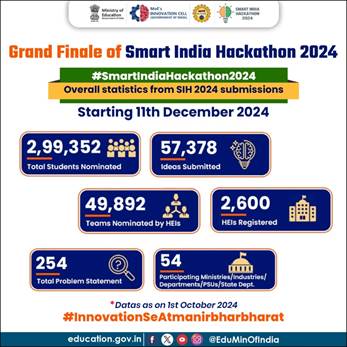
The 7th edition of the Smart India Hackathon (SIH) will concurrently begin on 11th December, 2024 at 51 centres nationwide. Union Minister for Education, Shri Dharmendra Pradhan, will virtually inaugurate the event. SIH is a nationwide initiative to provide students with a platform to solve some of the pressing problems we face in our daily lives and thus inculcate a culture of product innovation and a problem-solving mind set. Like past editions, the student teams will work on either the problem statements given by the Ministries/Departments/Industries or submit their idea in the Student Innovation Category against any of the 17 themes.
For SIH 2024, more than 250 problem statements have been submitted by 54 Ministries, Departments, State Governments, PSUs, and Industries. This year, an impressive 240% increase has been recorded in internal hackathons at the institute level, growing from over 900 in SIH 2023 to over 2247 in SIH 2024, making this the largest edition so far. More than 86000 teams have participated in SIH 2024 at the institute level and around 49,000 student teams (each consisting of 6 students and 2 mentors) have been recommended by these institutes for the national level round. SIH grand finale also serves as a ground for open interaction between officials from different Ministries/government departments and students, teachers from educational institutes which is very unique and also very encouraging for the students and teachers.
The challenges identified and addressed cover 17 major areas/themes linked to sectors of national importance and national priorities. These are Healthcare, Supply chain & Logistics, Smart Technologies, Heritage & Culture, Sustainability, Education & Skill Development, Water, Agriculture & Food, Emerging Technologies, and Disaster Management.
SIH has profoundly influenced India’s innovation landscape, empowering students and professionals to address real-world challenges. A pivotal element ensuring this success is the SIH Alumni Network, which, through its well-designed portal (https://alumni.mic.gov.in/), has seamlessly documented success stories, showcasing transformative outcomes. Till date, SIH Alumni have established over 100 Startups, many of which have strong social dimensions.
Are you passionate about fitness and helping others achieve their health goals?
Personal training certification is the key to turning that passion into a rewarding career. With the right certification, you can unlock opportunities to make a difference in people’s lives while pursuing a fulfilling profession.
The journey to becoming a personal trainer can open doors to various career paths in the fitness industry. Earning a personal training certification allows you to gain credibility and the knowledge needed to guide clients safely and effectively. In this blog, we will discuss what to expect during the personal training certification process.
Preparing for the Written Exam
Getting ready for the personal training certification exam is important. Start by learning the key topics. Study the terms, exercises, and health concepts that are essential for personal trainers.
Make a study plan and stick to it. Use flashcards to remember important terms. It helps to review old exams and practice questions.
Group study can also help. Join a study group or class. This makes learning fun and effective.
Hands-On Training and Gaining Practical Experience
Hands-on training is a vital part of the personal training certification process. You will learn how to work with clients and teach exercises. This includes showing proper forms and correcting mistakes.
Find a local gym or training center. They often offer practical sessions. Shadowing experienced personal trainers can give you great insights.
Your hands-on experience will boost your confidence. The more you practice, the better you will become. This will help you in your future career as a personal trainer.
Completing the Required Practical Assessments
Practical assessments are crucial for your trainer certification. You will need to demonstrate skills in front of an evaluator. They will check how well you can train clients.
Practice all the required assessments. This includes exercises and client interactions. Knowing what to expect will ease your nerves.
Be sure to follow all guidelines during your assessment. Confidence is key to showing your skills. Doing well will help you earn your personal trainer certification.
Navigating Continuing Education and Recertification Requirements
Once you earn your personal training certification, learning doesn’t end. Continuing education courses help keep your knowledge up to date. These courses ensure you stay informed about new trends and changes in the fitness industry.
You’ll need to complete certain courses for recertification. These may include updates on the latest research and trends in personal training. Make sure you check which courses are required to stay certified.
There are many organizations offering fitness certification courses. You can choose courses that interest you to grow your skills. For instance, visiting https://www.americansportandfitness.com/products/barre-certification can help you gain more expertise and get certified in return.
Ready for Success: Your Path to Personal Training Certification
Obtaining your personal training certification opens doors to a rewarding career. It not only boosts your credibility but also equips you with essential skills to guide others toward their fitness goals. By staying updated through continuing education, you ensure ongoing success in this dynamic industry.
With hard work and dedication, you’ll be well on your way to a fulfilling career as a personal trainer. Keep learning, practicing, and pushing yourself to new heights.
Did you find this article helpful? Visit more of our blogs!
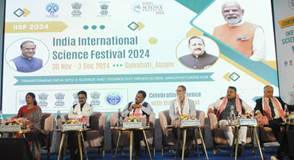
India International Science Festival (IISF) is going to be celebrated at Indian Institute of Technology Guwahati during 30 Nov. to 3 Dec. 2024. The Council of Scientific and Industrial Research (CSIR) is the nodal department for this year IISF and a constituent laboratory of CSIR namely National Institute for Interdisciplinary Science and Technology (CSIR-NIIST, Thiruvananthapuram) is coordinating the whole festival. IISF is a unique festival of science society engagement which was initiated in the year 2015 and the very first IISF was organised at IIT Delhi. Vijnana Bharati, a science movement of India conceptualized this science festival. North East India will witness this festival for the first time. To date, India International Science Festival has been the largest science event in the country with a participation of thousands of people who come together annually to foster scientific collaboration, inspire young minds and propel economic growth through scientific approaches.
“IISF is not only meant for the people who do science. The key philosophy of IISF is the celebration of science by all, and thus it also engages common people in a joyful and entertaining manner”.
This year in 2024, IISF is being organized at IIT Guwahati, Assam from November 30th – December 4th, 2024. The theme of this 10th edition of IISF is “Transforming India into an S&T driven Global Manufacturing Hub”. It reflects the government’s aim to merge science and technology with industrial growth, making India global leader in manufacturing.
IISF Organizers and Organizing Partners
The Ministry of Science and Technology (MoS&T), through their departments viz. Department of Science & Technology (DST), Council of Scientific & Industrial Research (CSIR), Department of Biotechnology (DBT) and Ministry of Earth Science (MoES) is responsible for conducting this mega annual event. Along with government organizations Vijnana Bharati has been a consistent organizing partner of IISF since the inception of this event.
The other organizations that took active part in IISF are office of Principal Scientific Advisor (PSA) to Govt. of India, Department of Space (DoS), Department of Atomic Energy (DAE), Directorate of Defence Research & Development (DDR&D), Ministry of New And Renewable Energy (MNRE), Ministry of Health & Family Welfare (MoH&FW), Department of Agricultural Research and Education (DARE), Ministry of Environment, Forest and Climate Change (MoEFCC), Ministry of Ayush, Ministry of Electronics and Information Technology (MeitY), Ministry of Rural Development (MoRD), and many other concerned ministries, their departments, councils and organizations.
The IISF-2024 is being coordinated by the CSIR, convened by CSIR-NIIST and partnered by all the major ministries and scientific departments of the Government of India in collaboration with Vijnana Bharati.
Thematic Events of IISF-2024
IISF has various themes that aim to indulge scientific and common people for diverse scientific discussions and activities. Here, everyone gets a chance to engage and learn scientific approaches due to the themes that have been planned after keeping in mind the needs of various stakeholders. For IISF some new themes have been added as per the need of North East India and here a little information is been given about all themes.
To begin with, IISF 2024 has one special event “Chandrayaan – The Museum of the Moon” where an artistic model by British artist Dr. Luke Jerram will be placed among the attendees to showcase and celebrate India’s success of Chandrayaan Mission. The model is a replica of the moon that measures about seven meters in diameter and will showcase the real like imagery of lunar surface where Chandrayaan was landed on August 23, 2023.
Mega Science and Technology Exhibition will showcase accomplishments and success stories of India in the field of Science, Technology, Engineering, and Mathematics (STEM). In the expo various technologies developed by Indian Scientific and R&D Institutions across the country kept on display for all four days of the festival to show and educate students, scientists, and the general public.
Make in India, Make for theWorld event aims to attract national as well as international organizations involved in manufacturing, technology, and logistics to discuss about things required to make India a global manufacturing hub.
The New Nalanda known earlier as Student Science Village will enable interaction of students and teachers. The event aims to ignite students’ interest in STEM through interactive exhibits, demonstrations, educational games and challenges.
Pragya Bharat event will discuss New Frontiers in S&T that are needed to make India Viksit Bharat by 2047. The event aims at promoting cutting edge research across various scientific disciplines like AI, Biotechnology, Cybersecurity, Robotics, Quantum Computing etc. which can make India developed and self-reliant.
Nari Shakti – Women’s Development to Women-led Development in S&T event will focus on active participation of women in STEM and Entrepreneurship and discuss about various schemes provided by Government of India to empower women in S&T.
S&T Hackathon – Ideas for Viksit Bharat event is designed to encourage school and college students to develop innovative solutions related to science and technology, focusing on Viksit Bharat Sankalp. Teams comprising of students and mentors will be allowed to participate in the competition and winners will get attractive prizes whereas final participants will get special benefits like internships, project positions etc.
Young Scientists Conclave intends to bring together young researchers, scientists and innovators below the age of 45 years belonging to academia, research and industry fraternities. It enables young researchers to be aware of the scientific policies of India and the recent developments in science and technology of India including infrastructure development, funding opportunities etc.
Thought Leaders Round Table – Minister – Secretary – Councils – CEO Conclave will bring the leaders and policy makers like Central and State Government Ministers, Departmental Secretaries, S&T Councils and CEOs of Industries on one platform. The event will have discussions on important issues and establish collaborations for making big changes in public and private sectors that can align with the goal of Viksit Bharat.
The Gurukula – Aspiring Educators and Teachers Workshop earlier known as The National Science Teachers Workshop aiming at the professional development of science teachers by equipping them with innovative teaching methodologies, modern tools and strategies to effectively impart scientific knowledge to students.
Mission Start-up eventoffers the opportunity to Start-ups and supporting enablers like incubation centres. Start-ups in this event can showcase their products and services to the investors and associates which in turn help them grab the further opportunities under Start-up India mission and other initiatives available in the country.
Reimagining Bharat Exhibition – Transformation through New Age Technologies aims to showcase emerging technologies and prototypes/models developed by Governmental Agencies and Departments. The S&T areas targeted for this event are not limited to fundamental and applied sciences, agriculture, healthcare, space, education, strategic sectors, robotics, etc.
Sagarika – The Tale of Earth Sciences event as name suggest aims to engage and educate people on different areas of earth science such asmeteorology, oceanography, ecology etc. Through this event, IISF desires to raise public awareness on environmental issues.
Science beyond Borders event is aimed at fostering international collaboration, partnerships and exchange of dialogues among scientists, researchers and institutions to address global challenges in S&T.
Vigyanika event celebrates Science Literature Festival which aims to promote science literacy and effective science communication strategies in Indian languages. The interactions done through keynote lectures, panel discussions and scientific sessions among S&T authors, Vigyan Kavi Sammelan, Science Drama and arts, and related competitions.
Fusion Forum – The Atomic Assembly event will discuss the current perspectives, future benefits, and pressing challenges in implementing nuclear energy in India for various sectors like Generation of power, nuclear medicine, agriculture, Additive manufacturing etc.
Student – Scientist Interaction Program – Face to Face with New Frontiers in Science mediates interaction and short discussion based sessions of students/researchers with experts of various disciplines of S&T to inspire students to pursue science and research career.
National Social Organizations and Institutions Meet (NSOIM), well understand the role of social organizations promotion of S&T and thus provides them platform to discuss scientific interventions and sustainable models for societal development and nation-building.
Vision Sansad aims at bringing together key leaders like Directors, Vice Chancellors, Presidents and Senior Leaders from every possible science institution of the country where discussions can take place strategies for advancing scientific research, collaboration and policy development to address current challenges and shaping the future of Indian science in an inclusive manner.
Science Safari Science through Games and Adventures provides a platform to display science-based toys and games and also workshops are being organized to let the teachers learn the ways these toys used for teaching purposes.
S&T Media Conclave will bring media personnel, journalists, communicators and general public on a platform where they can discuss the challenges and opportunities of communicating science to a wide audience, best ways of science communication and preventing misinformation, and strategies to enhance collaboration between scientific community and media.
Saga of Science Chronicles is an evening event that will tell the history and recent developments of Indian science and scientists through LED light show that will happen during 7:30 pm – 9:30 pm during each day of IISF 2024.
Science Odyssey of the North East will address the challenges that hinders the growth of science and technology in North East and discuss the ways of promotion of science and technology of North East.
The Taste of the Hills- North East Food Street will showcase the food heritage of North East and let the people eat and enjoy their traditional food items. The Food Street will remain open throughout IISF 2024.
North East Symphony- North East Cultural Fest will portray North East India’s diverse traditions, customs, and arts through experience of music, dance, crafts, and traditional practices. The fest is staged during the whole duration of IISF 2024.
IISF 2024, promises to be a landmark event in promoting science and technology. With the current theme it seeks to celebrate India’s scientific achievements and foster collaboration across various sectors. The event will feature diverse activities, engaging both scientific professionals and the general public. It is open for all and free so one has to attend the event to see India’s scientific achievements.
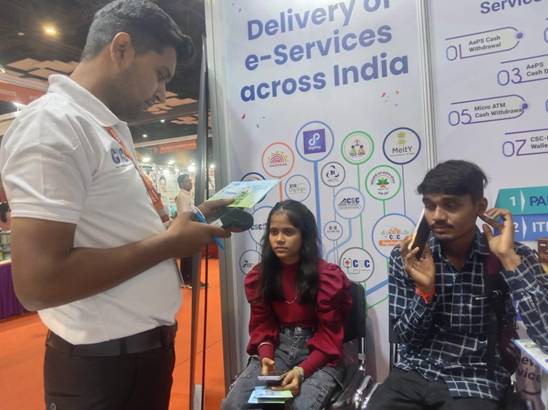
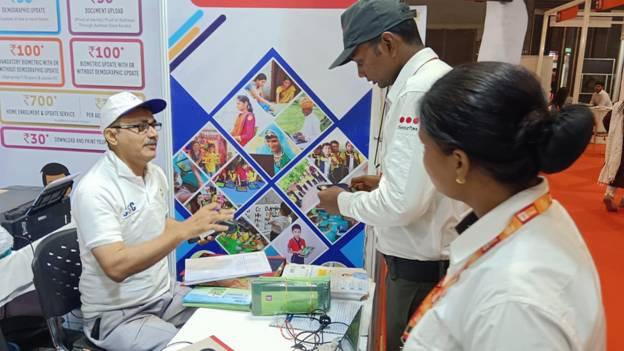
The Ministry of Electronics and Information Technology has set up a vibrant stall at the India International Trade Fair (IITF) in Hall No. 14. Hosted by Common Service Centers (CSC), the stall showcases a wide range of digital and community services, including the Grameen eStore, CSC Academy, DigiPay, Aadhaar-related services, and other key initiatives. The primary aim of this exhibit is to spread awareness about the facilities provided by CSC and encourage more people to leverage these services for their empowerment.
The Dynamic Leaders Behind the Stall
This CSC stall is led by two dedicated and inspiring Village Level Entrepreneurs (VLEs) from Delhi, Siddharth and Vikas. Their dedication and commitment reflect the transformative power of digital services, as they serve their communities while setting examples for others.
Siddharth: A 22-Year-Old Visionary
Siddharth, a 22-year-old entrepreneur, started his CSC center in 2020. Operating from Mandawali, Delhi, he faced the responsibility of supporting his family right after completing his 12th-grade education. Despite the challenges, he turned his situation around by utilizing the income generated through CSC services. Today, Siddharth manages services such as Aadhaar registration, DigiPay, and Grameen eStore with great efficiency. His journey is a testament to how young individuals can transform their lives by seizing the right opportunities.
Vikas: A Story of Resilience and Success
50-year-old Vikas has overcome significant challenges in his life. Stricken by polio in childhood, he experiences difficulty walking. However, his determination never wavered, and he established his CSC center in the Rohini area of Delhi. Vikas’s story serves as a powerful reminder that physical limitations cannot hinder one’s drive and potential for success. Through his center, he provides vital services like Aadhaar enrollment, seamless transactions via DigiPay, and other government schemes.
The CSC Stall: A Symbol of Digital Empowerment
Visitors to the CSC stall at IITF can explore opportunities like the Grameen eStore, which facilitates easy buying and selling of products, DigiPay for cashless transactions, and CSC Academy’s programs to enhance digital literacy. The efforts of VLEs like Siddharth and Vikas underscore how digital services can bridge gaps and empower individuals, even in the face of adversity.
Role Models for Society
The inspiring journeys of Siddharth and Vikas illustrate that digital services are not just tools for livelihood but also a means to uplift every segment of society. Their hard work and dedication have made them role models for countless others aspiring to achieve financial independence and social impact.
The CSC stall at the India International Trade Fair exemplifies the success of the Digital India initiative, reaching even the remotest corners of the country. Siddharth and Vikas, with their resilience and determination, stand as shining examples of this transformation. Their stories teach us that success is achievable despite challenges if one has perseverance and the right opportunities. CSC’s initiative not only promotes digital inclusion but also inspires individuals across the nation to become self-reliant and empowered.
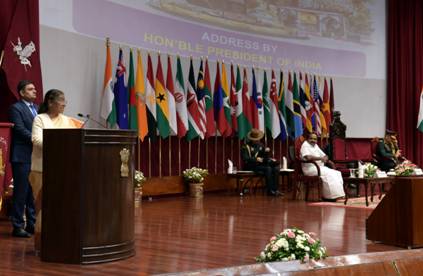
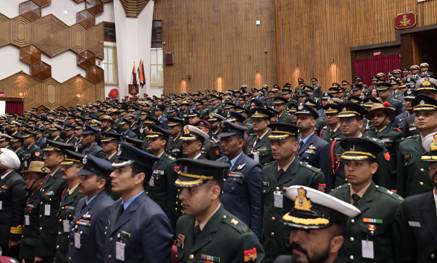
President Smt Droupadi Murmu visited the Defence Services Staff College (DSSC), Wellington in The Nilgiris District, Tamil Nadu on November 28, 2024. Addressing the student officers and faculty, the President said the DSSC has made commendable contribution to training & educating the potential leaders of the Armed Forces of India and friendly countries & selected civilian officers. Over the past seven decades, it has played a major role in professionally grooming the middle level officers. It has the unique distinction of having a composite multi-service and multi-national group of student officers and a professionally enriched faculty.
The President was happy to note that women officers are now commanding various units in all the three services. She said that the increasing strength and role of women in all spheres is encouraging and inspiring for all, especially young girls. She expressed hope for witnessing more and more women joining the Armed Forces, where they can demonstrate exceptional capabilities and break new ground in uncharted territories.
The President said that India is rising and the world is acknowledging the growth in various sectors, including defence. India is moving towards indigenisation and self-reliance to keep the Armed Forces ready to meet the future challenges. The country is being developed as a major defence manufacturing hub, and is moving towards becoming a reliable defence partner & big defence exporter.
The President said: “In the fast-changing geopolitical environment, we need to be well-prepared to tackle any situation. We not only have to secure our national interests, but also prepare for new national security challenges like cyber warfare and terrorism. Updated knowledge and cutting-edge technologies based on intensive research are required to be applied.” She expressed confidence that this course will prepare student officers all for higher responsibilities and as strategists who can deal with complex situations in an effective manner.
The President appreciated the unique role of the institution in nurturing the future senior leadership of the Armed Forces. She appreciated the creativity, dedication and the focus with which training is being conducted at the College. She also complimented the student officers for having being selected for the prestigious Staff Course at DSSC, and their rigourous efforts while undertaking this course.
The President also interacted with the Student Officers, including 38 from friendly countries, attending the course at the DSSC. She hailed the role of the International Student Officers in strengthening the mutual cooperation and relationship of their countries with India, and wished them a fruitful and successful stay at DSSC.
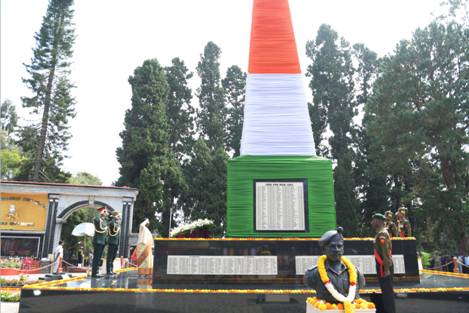
The President also laid a wreath at the War Memorial, and interacted with Ex-servicemen & Veer Naris.
The President felicitated the Veer Naris acknowledging the supreme sacrifice of their loved ones in the service to the Nation. She was accompanied by Minister of Backward Classes (Minister-in-Waiting) of Tamil Nadu Government Shri Siva V Meyyanathan and Commandant DSSC Lt Gen Virendra Vats.
Established in 1948, DSSC is a premier Tri-services institute with a mandate to train and hone their skills of selected middle-level officers of the Armed Forces of India and friendly countries. Since its inception, the College has trained more than 2,000 International Officers, and 24,000 Indian Officers have passed through its portals. The College alumni, over the years, have risen to become heads of States and Militaries across the world. The President appreciated the training activities being conducted at the College with special emphasis on initiatives undertaken on enhancing jointmanship amongst the officers of the Indian Armed Forces.
Media plays a crucial role in shaping public perceptions and disseminating information, including scientific knowledge, to the general populace. However, while media has the potential to foster scientific thinking among newspaper readers, it also faces several challenges that can hinder its effectiveness in achieving this goal.
On the positive side, media can serve as a powerful tool for popularizing scientific concepts, discoveries, and advancements. Well-written articles and features in newspapers have the potential to simplify complex scientific subjects, making them accessible to a wider audience. Through engaging storytelling and relatable examples, media can bridge the gap between scientific jargon and public understanding, fostering a sense of curiosity and interest in science.
Furthermore, media coverage can help shed light on critical scientific issues such as climate change, public health concerns, and technological innovations. By presenting accurate and balanced information, media can elevate public awareness and prompt informed discussions, which are vital for making informed decisions at both individual and societal levels.
However, there are challenges that media encounters in effectively spreading scientific thinking. One significant concern is the oversimplification or sensationalization of scientific news for the sake of grabbing attention. This can lead to the distortion of scientific facts and misrepresentation of research findings, which in turn undermines the credibility of scientific information.
Additionally, the competition for readership and the need for high click-through rates in the digital age can encourage the prioritization of sensational stories over in-depth, accurate reporting. This can result in the neglect of more complex scientific issues that require nuanced understanding and analysis.
Furthermore, the lack of scientific literacy among journalists can contribute to inaccurate reporting. Misinterpretation of scientific studies or failure to critically evaluate the credibility of sources can perpetuate misinformation, leading to a misinformed public.
In conclusion, media has the potential to be a powerful agent for spreading scientific thinking among newspaper readers. However, responsible journalism, accurate reporting, and a commitment to presenting science comprehensibly and unbiasedly are crucial for media to effectively fulfil this role. Balancing the demands of generating attention-grabbing content with the responsibility of promoting accurate scientific knowledge is essential for fostering a scientifically informed society.
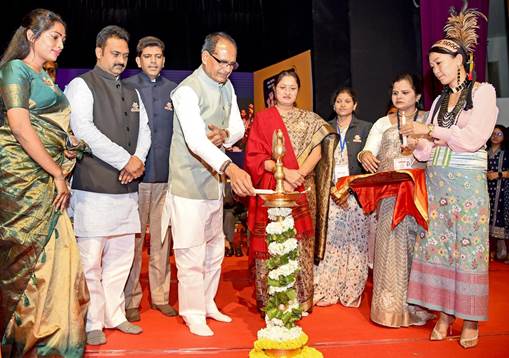
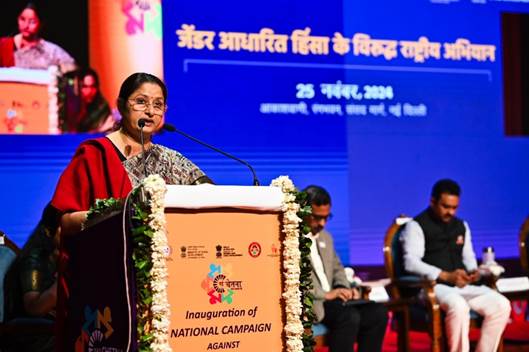
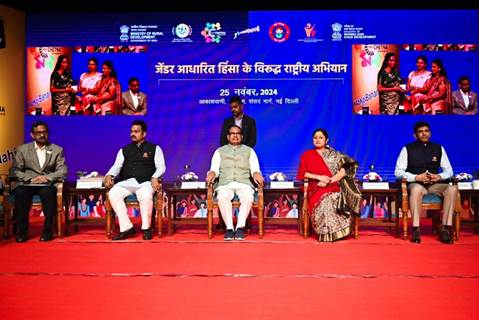
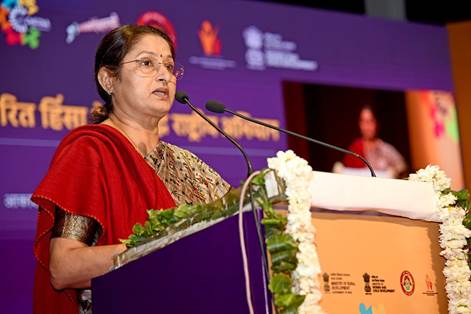
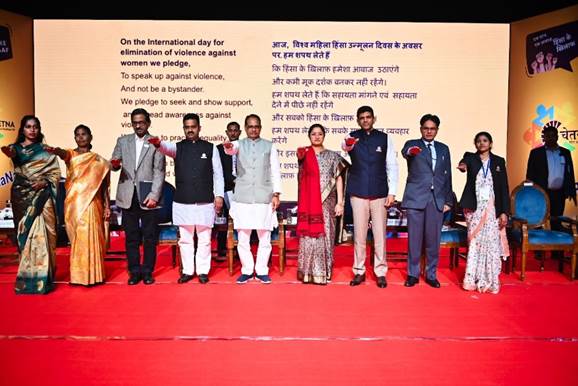
A National Campaign “#AbKoiBahanaNahi” was launched today in New Delhi. It is a collaborative effort between the Ministries of Women and Child Development and Rural Development, with support from UN Women. The Union Minister for Women and Child Development, Smt. Annpurna Devi, Union Minister for Rural Development, Shri Shivraj Singh Chouhan, Minister of State for Rural Development Shri Kamlesh Paswan and Dr. Chandra Sekhar Pemmasani, Minister of State for Rural Development and Communications were present on this occasion.
While addressing the gathering the Minister Smt. Annpurna Devi said that the purpose of this campaign being launched today is to advance the rights of women and individuals of diverse genders, and to free their lives from fear and gender-based discrimination. This aims to empower women to break free from shame and societal constraints, enabling them to report the atrocities they have faced and fight for their dignity.
This year, building on the Global Campaign of the United Nations of #NoExcuse, which draws attention to the alarming escalation of violence against women to revitalize commitments, call for accountability and action, the Government of India launched #AbKoiBahanaNahi with the aim to highlight the message of urgency of ending violence against women and girls, and underscoring zero-tolerance stance of central India towards any and all forms of gender-based violence.
The Government of India, implementing the paradigm shift in governance to women-led development, has created enabling provisions for women’s full, equal and meaningful participation in all spheres of life and the economy, such as several large scale interventions to reduce women’s drudgery and poverty, building public care infrastructure and universal access to healthcare, to reduce women’s disproportionate care work, improving access to formal financial systems, bridging the gender digital divide, ensuring safe mobility, safe accommodation, and building a robust service delivery infrastructure for the prevention and redressal of all forms of violence against women and girls.
Highlighting the good work already underway the Union Minister for Rural Development, Shri Shivraj Singh Chouhan, said that if women are to be completely empowered, then women empowerment, social empowerment, political empowerment, and educational empowerment must be achieved. Under the leadership of Prime Minister Shri Narendra Modi, women empowerment initiatives are being implemented as a campaign.
Gender-based violence inhibits women and girls from living with dignity and contributing as equal partners in the development process. As India aims to become a developed country by 2047, under the visionary leadership of Prime Minister Shri Narendra Modi, this dream will not be possible without women’s full and equal contribution, which, in turn, is hindered if women continue to face violence or the threat of violence. The Union Minister for Women and Child Development reiterated the importance of female participation in the economy to make Viksit Bharat, as envisioned by Prime Minister, a reality.
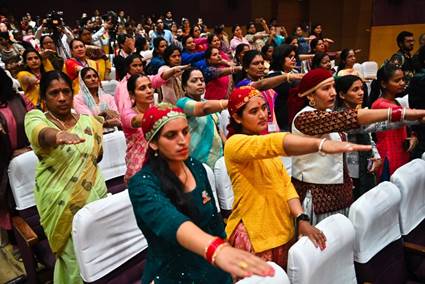
Hence, in order to urge all stakeholders to take decisive steps towards addressing violence against women and girls, the “#AbKoiBahanaNahi” (#अबकोईबहानानहीं) campaign commenced with a national Call to Action. To ensure a wide reach on spreading the call to action on ending gender-based violence, leaving no one behind, the campaign was launched in conjunction with the ‘Nayi Chetna 3.0 campaign,’ organized by the Ministry of Rural Development, reaffirming the national commitment to end all forms of gender-based violence.
At the launch event, a film on #AbKoiBahanaNahi was showcased, highlighting the need for accountability from all stakeholders, including citizens, to pledge against ending gender-based violence.
The primary objective of the campaign is to foster advocacy efforts and inform policy directives concerning the safety and security of women and girls. Furthermore, this campaign serves as a critical and urgent call for systemic change, emphasizing the imperative for justice, equity, and transformation. The campaign aims to catalyze a ripple effect, where each action and initiative contributes to reinforcing the message of women’s safety as a fundamental and non-negotiable priority for national growth and development.
The launch event was attended by women leaders from Self Help Groups across the country, staff from service providers for redressal for survivors of violence against women and girls, such as One Stop Centres, and Aanganwadi workers, amongst others. To spread the awareness of the campaign to the remotest corners of the country, the launch was telecast live through the Webcast link and Ministry of Women and Child Development’s YouTube channel.
Globally, every year, from 25th November, which is observed as the International Day for the Elimination of Violence against Women, to 10th December, which is observed as the Human Rights Day, the 16 Days of Activism campaign is observed by civil society to raise awareness on ending gender-based violence.
YouTube Link -https://www.youtube.com/embed/xTcQfXFuRmo
National Statistics Office (NSO) under the MoSPI is responsible for conducting large scale sample surveys on various socio-economic subjects on All India basis. These surveys are either Household based surveys where the primary unit of enumeration is a household or Enterprise based surveys where the primary unit of enumeration is an enterprise. These surveys are designed to meet the requirements of various stakeholder Ministries and departments, based on recommendations from various expert groups and committees. The household surveys primarily collect information that is not available either through administrative records or through surveys conducted by domain-specific Ministries or departments.
The surveys are being conducted in digital platform using Computer Assisted Personal Interview (CAPI) or web-based application with in-built validation mechanism to ensure consistency at the stage of data collection. Collected data are thoroughly scrutinized by the supervisory level officers to identify inconsistency, if any and necessary clarifications are obtained/corrections are incorporated. Monitoring of survey process is also accomplished through the digital platform. Before commencement of any survey, extensive training on survey instruments as well as use of CAPI are provided to the field officials. Clarifications are also given on a regular basis on the queries raised by field officials during the course of the survey. Further, Data quality workshops are also organised to address the conceptual queries and monitoring the survey data quality time-to-time. Additionally, survey instruments are periodically improved to enhance data quality. Before taking up any new survey, whether the indicators to be generated from the surveys are available from any other government survey/administrative data sources, are extensively verified to rule out the possibility of duplication of surveys. Also, consultations with relevant line Ministries and departments are held to avoid duplication of work, effort, etc.
Regular dialogues with data users are conducted so that Ministries/ Departments can incorporate their feedback on additional data coverage and disclosure requirements. To facilitate this, MoSPI conducts Data User Conferences after release of results of sample surveys with an aim to engage stakeholders and enhance understanding of the survey’s findings, focusing on data access, interpretation, user concerns and survey methodology. Further, to ensure transparency of survey results, unit level data of the surveys are also made available on MoSPI’s website for access by various researchers, policymakers, etc to better understand, analyze and explore the country’s data.
This information was given by the Minister of State (independent Charge) of the Ministry of Statistics and Programme Implementation, Minister of State (Independent Charge) of the Ministry of Planning and Minister of State in the Ministry of Culture, Shri Rao Inderjit Singh in a written reply in the Rajya sabha today
The official data source on Employment and Unemployment is Periodic Labour Force Survey (PLFS) which is conducted by the Ministry of Statistics and Programme Implementation (MoSPI) since 2017-18. The survey period is July to June every year. As per the latest available Annual PLFS reports, the estimated Worker Population Ratio (WPR) and Unemployment Rate (UR) on usual status for persons of age 15 years and above in the country is as follows:
Year
WPR (in %)
UR (in %)
2017-18
46.8
6.0
2018-19
47.3
5.8
2019-20
50.9
4.8
2020-21
52.6
4.2
2021-22
52.9
4.1
2022-23
56.0
3.2
2023-24
58.2
3.2
Source: PLFS, MoSPI
The above data indicates that the WPR i.e. employment has increasing trend and Unemployment Rate has a decreasing trend over the years.
The KLEMS (K: Capital, L: Labour, E: Energy, M: Materials and S: Services) database published by Reserve Bank of India’s (RBI) provides employment estimates at all India level. As per the latest data of the database, provisional estimates for 2023-24, employment in the country increased to 64.33 crore in year 2023-24 compared to 47.15 crore in 2014-15. Total increase in employment during 2014-15 to 2023-24 is about 17 crore.
To provide various employment related services to the youth of the country on a single platform, Government of India has launched National Career Service (NCS) portal (www.ncs.gov.in) which includes services like job search & matching, career counselling, vocational guidance, information on skill development courses, internships etc through the portal. During the year 2024-25 (as on 15.11.2024), 1.12 crore vacancies were posted on NCS portal and more than 3.53 Crore number of vacancies mobilized on the portal since its launch in 2015.
Further, Government of India has also launched MY Bharat platform which provides myriad opportunities for youth engagement through various organizations onboarded on the portal with a view to involve them in meaningful activities. The MY Bharat portal is envisioned as a pivotal, technology-driven facilitator for youth development and youth-led development, with the overarching goal of providing equitable opportunities to empower the youth in realizing their aspirations.
Employment generation coupled with improving employability is the priority of the Government. Accordingly, the Government of India has taken various steps for generating employment in the country.
The various Ministries/ Departments of Government of India like Ministry of Micro, Small and Medium Enterprises, Ministry of Rural Development, Ministry of Housing and Urban Affairs, Ministry of Finance, Ministry of Textiles, Ministry of Electronics and Information Technology, etc. are implementing different employment generation schemes/ programmes like Prime Minister’s Employment Generation Programme (PMEGP), Mahatma Gandhi National Rural Employment Guarantee Scheme (MGNREGS), Deen Dayal Upadhyaya Grameen Kaushalya Yojana (DDU-GKY), Rural Self Employment and Training Institutes (RSETIs), Deendayal Antyodaya Yojana-National Urban Livelihoods Mission (DAY-NULM), Pradhan Mantri Mudra Yojana (PMMY), etc. including increase in capital expenditure to boost employment creation. The details of various employment generation schemes/programmes being implemented by the Government of India may be seen at https://dge.gov.in/dge/schemes_programmes.
Further, Government announced in the Budget 2024-25, the Prime Minister’s package of 5 schemes and initiatives to facilitate employment, skilling and other opportunities for 4.1 crore youth over a 5-year period with a central outlay of Rs. 2 lakh crore.
India Employment Report, 2024 of Institute for Human Development (IHD) – International Labour Organisation (ILO) mentioned that in ILO’s Global Report Trends for Youth, 2022, the worldwide youth unemployment rate was 15.6 per cent in 2021. Further, as per World Employment and Social Outlook Trends, 2024 by ILO, globally, in 2023, the youth unemployment rate was 13.3 per cent.
The official data source of Employment/ Unemployment indicator in India at present is the Periodic Labour Force Survey (PLFS) conducted by the Ministry of Statistics and Programme Implementation (MoSPI) since 2017-18. The survey period is July to June of the next year. As per the latest available Annual PLFS reports, the estimated Unemployment Rate (UR) on usual status for youth of age 15-29 years in the country in the year 2023-24 was 10.2% which is lower than global levels. Further, the Worker Population Ratio (WPR) for youth indicating employment has increased from 31.4% in 2017-18 to 41.7% in 2023-24.
Employees’ Provident Fund Organization (EPFO) Payroll Data gives an idea of the level of employment in the formal sector. More than 1.3 crore net subscribers joined EPFO during 2023-24. Moreover, during September 2017 to August, 2024, more than 7.03 crore net subscribers have joined EPFO, indicating increase in formalisation of employment.
All the labour force indicators are providing evidence of improved employment scenario in the country.
Employment generation coupled with improving employability is the priority of the Government. Accordingly, the Government of India has taken various steps for generating employment in the country.
The various Ministries/ Departments of Government of India like Ministry of Micro, Small and Medium Enterprises, Ministry of Rural Development, Ministry of Housing and Urban Affairs, Ministry of Finance, Ministry of Textile, etc. are implementing different employment generation schemes/ programmes like Prime Minister’s Employment Generation Programme (PMEGP), Mahatma Gandhi National Rural Employment Guarantee Scheme (MGNREGS), Pt. Deen Dayal Upadhyaya Grameen Kaushalya Yojana (DDU-GKY), Rural Self Employment and Training Institutes (RSETIs), Deen Dayal Antodaya Yojana-National Urban Livelihoods Mission (DAY-NULM), Pradhan Mantri Mudra Yojana (PMMY), etc. The details of various employment generation schemes/ programmes being implemented by the Government of India may be seen at https://dge.gov.in/dge/schemes_programmes.
Today, the Hon’ble Supreme Court vide its Order dated 25.11.2024 in WP (C) No. 13029 of 1985 titled as M. C. Mehta Vs. Union of India & Ors., inter alia, directed as under:
“…we direct the Commission to consider the grant of relaxation of actions in terms of clauses 5 and 8 of Stage IV measures (only in relation to educational institutions) as well as clause 11 of Stage III measures. The Commission may consider of grant of exemptions to certain classes from the aforesaid actions/measures. The Commission will have to consider the grant of relaxation/exemption as regards the actions under the aforesaid three clauses for various reasons, including the following:
A large number of students are being deprived of the facility of Mid Day Meals as the schools and anganwadis are closed;
A large number of students do not have the facilities to take benefit of online education. Many educational institutions do not have facilities to provide online education; and
The residences of many students do not have air purifiers, and therefore, there may not be any difference between the children sitting at home and the children attending school.
…We also leave it to the Commission to decide on the continuation of the ban on conducting physical classes of X and XII standards on the same grounds.
Various options can be considered by the Commission. One can be of granting relaxation to those schools and educational institutions which do not have the facility of online education, and the other can be of granting relaxation to those students who do not have the facilities of attending online education at their respective homes. We make it clear that we are leaving it to the Commission to decide to what extent, if any, the measures relating to education which are otherwise applicable in Stages III and IV of the GRAP can be either relaxed or exceptions can be carved out. We expect that a decision shall be taken by the Commission during the course of the day or, at the latest, by tomorrow morning so that it can be implemented…”
Further, in respectful compliance of the above noted directives of the Hon’ble Supreme Court, the Commission further deliberated upon the related issues and has taken note of the following key factors:
All the primary schools in the NCT of Delhi and also those in other areas of NCR do not have capabilities / access for conducting classes purely in an online mode;
The adverse air quality scenario, primarily owing to highly unfavourable meteorological and climatic conditions, generally prevails for a long duration during winter months typically from November till January and going by the AQI trend in Delhi during such periods, GRAP Stages – III / IV are required to be invoked for considerable periods of time during these months. Such restrictions have an impact on the functioning of the educational system and the quality of education;
Students of classes X and XII and the associated school authorities are most impacted by the GRAP Stage – IV restrictions, considering the Board examinations facing them and the various competitive exams which follow. These students are required to attend classes in a physical mode considering the practical classes as also the practical examinations. Besides, the students are also required to attend to extra classes / tutorials for the Board examinations;
The Commission also considered various representations relating to conduct of physical classes in schools during such restrictive GRAP stages.
Considering all the above noted aspects and in respectful compliance of the Hon’ble Supreme Court’s directives, the Commission, today has ordered the following with immediate effect and until further orders:
Clause 11 of GRAP Stage-III, Clause 5 of GRAP Stage-IV and Clause 8 of GRAP Stage-IV (to the extent it relates to colleges / educational institutions) are relaxed to the extent that State Govts. in the NCR and the GNCTD shall ensure that all classes upto 12th Standard in schools and those in colleges / educational institutions are conducted in a “Hybrid” mode i.e., both in “physical” and also in an “online” mode, wherever online mode is feasible, in the territorial jurisdiction of the NCT of Delhi and in the districts of Gurugram, Faridabad, Ghaziabad and Gautam Buddh Nagar in the NCR. The option to exercise online mode of education, wherever available, shall vest with the students and their guardians.
NCR State Governments may also consider conducting classes in a hybrid mode as above in all other areas in NCR.
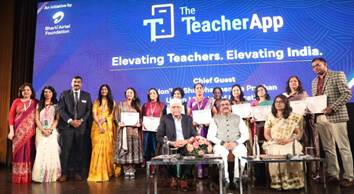
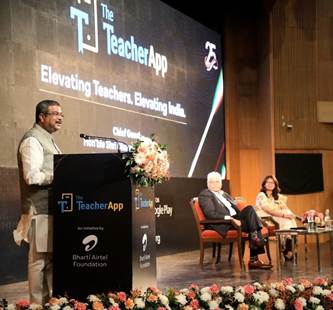
Union Minister for Education, Shri Dharmendra Pradhan, today in New Delhi unveiled the TeacherApp, an innovative digital platform designed to revolutionize education in India by equipping educators with future-ready skills to meet the demands of 21st-century classrooms. The Platform has been developed by Bharti Airtel Foundation, the philanthropic arm of Bharti Enterprises. Vice Chairman of Bharti Enterprises, Shri Rakesh Bharti Mittal; CEO of Bharti Airtel Foundation, Smt. Mamta Saikia, dignitaries from the education sector, school principals, teachers and B.Ed. students were also present at the event.
Addressing the gathering on the theme of “Elevating Teachers, Elevating India,” Shri Dharmendra Pradhan stated that this app will significantly empower teachers through continuous capacity building, leveraging innovative course content, technology, and community-building features. He emphasized that teachers are the real Karmayogis shaping the future generation, and the government is placing unprecedented focus on their continuous capacity building in line with the spirit of NEP 2020.
The Minister further highlighted that enlightened teachers create enlightened students. As India progresses in the knowledge-driven 21st century, teachers will play a pivotal role in identifying future opportunities and ensuring that our youth lead the nation’s growth story, he added.
Based on the on-ground experience and deep understanding of the challenges educators face, The TeacherApp has been conceptualised. This platform will equip them with both time-tested and future-ready skills through innovative digital resources. This user-centric, free app developed with direct inputs from teachers is accessible across the Web, iOS, and Android, ensuring seamless access for educators nationwide. The platform offers over 260 hours of high-quality resources, both created and curated including courses, learning bytes, short videos, podcasts, and interactive webinar formats such as thematic fests, webinars, competitions, and quizzes, all designed to foster future readiness, elevate pedagogical practices, and enhance student engagement in classrooms. Additionally, the app also features live expert sessions that provide practical classroom strategies and aims to build a community of teachers by highlighting their exceptional impact stories. The app combines tech innovation with partnerships across 12 states to transform education.
This platform has a unique section called Teaching Kits comprising content of 900 hours. This feature is designed to support teachers with tools Including teaching videos, project-based learning activities, worksheets, lesson plans, and question banks, among others for classroom delivery. With a mission to transform schools into safe and happy learning spaces, The TeacherApp not only supports teachers’ growth but also empowers schools’ leaders and administrators. Aligned with the National Education Policy 2020, the app aims to build future-ready educators equipped to meet the evolving needs of education.
Shri Rakesh Bharti Mittal, in his address, said that to make India thrive as a global economic leader, it is imperative that the education system equips educators to foster creativity, critical thinking, and innovation. The TeacherApp will offer teachers access to world-class resources and best practices that empower them to deliver exceptional learning experiences, he added.
The Union Cabinet, chaired by Prime Minister Shri Narendra Modi, has approved One Nation One Subscription, a new Central Sector Scheme for providing country-wide access to scholarly research articles and journal publication. The scheme will be administered through a simple, user friendly and fully digital process. This will be a “One Nation One Subscription” facility for the government higher education institutions and R&D laboratories of the central government.
A total of about Rs.6,000 crore has been allocated for One Nation One Subscription for 3 calendar years, 2025, 2026 and 2027 as a new Central Sector Scheme. One Nation One Subscription will build on and further enhance the scope and reach of the range of initiatives undertaken by the Government of India over the past decade in the domains of education, for maximizing access to quality higher education for the youth of India. This will supplement the ANRF initiative to promote research and development and foster a culture of research and innovation throughout government universities, colleges, research institutions, and R&D laboratories.
The benefits of One Nation One Subscription scheme will be provided to all Higher Educational Institutions under the management of the Central or State Government and Research & Development Institutions of the Central Government, through a national subscription coordinated by a central agency, namely the Information and Library Network (INFLIBNET), an autonomous inter-university centre of the University Grants Commission (UGC). This list covers more than 6,300 institutions, translating into nearly 1.8 crore students, faculty and researchers, who will be able to potentially avail benefits of One Nation One Subscription.
This is in line with the goals of Viksitbharat@2047, National Education Policy (NEP) 2020 and Anusandhan National Research Foundation (ANRF). The initiative will expand access to scholarly journals to a vast diaspora of students, faculty, researchers and scientists of all disciplines, including those in tier 2 and tier 3 cities, thereby promoting core as well as interdisciplinary research in the country. The ANRF will periodically review the usage of One Nation One Subscription and publications of Indian authors of these institutions.
The Department of Higher Education will have a unified portal “One Nation One Subscription” through which the institutions will be able to access the journals. The ANRF will periodically review the usage of One Nation One Subscription and publications of Indian authors of these institutions. The DHE and other Ministries having HEIs and R&D Institutions under their management shall be proactively conducting Information, Education and Communication (IEC) campaigns among students, faculty and researchers of these institutions about availability and method of access to One Nation One Subscription, resulting in improved usage of the facility across the country. The State Governments will also be requested to carry out campaigns at their level for maximizing usage of the unique facility by students, faculty and researchers of all government institutions.
The Government of India has set up seven Zonal Cultural Centres (ZCCs) in the country with headquarters at Patiala (Punjab), Nagpur (Maharashtra), Udaipur (Rajasthan), Prayagraj (Uttar Pradesh), Kolkata (West Bengal), Dimapur (Nagaland) and Thanjavur (Tamil Nadu) to protect, promote and preserve various forms of folk art & culture throughout the country and also to set up mechanism for development of the cultures of various regions. The mandate behind setting up of these ZCCs was to bind the nation culturally while retaining the individuality of the regions that comprise them. The aims and objectives of establishing these ZCCs are:
to preserve and promote the projection and dissemination of arts in the concerned zone;
to develop and promote their rich cultural diversity;
to encourage folk & tribal arts and preservation of vanishing arts;
to involve youth in creative cultural communication and lay special emphasis on the linkages between different areas and their contribution to Indian culture.
A Corpus Fund was provided to each ZCC towards cost of equipment and infrastructure including buildings. Government of India provided Rs. 10.00 crore each to all the seven ZCCs in 7th & 10th Plan. During 2014-15, an additional amount of Rs. 10.00 crore each was provided to six (6) ZCCs viz. North Zone Cultural Centre, Patiala; South Zone Cultural Centre, Thanjavur; South Central Zone Cultural Centre, Nagpur; West Zone Cultural Centre, Udaipur; North Central Zone Cultural Centre, Prayagraj & Eastern Zonal Cultural Centre, Kolkata and Rs. 20.00 crore was provided to North East Zone Cultural Centre (NEZCC), Dimapur towards corpus enhancement, taking the total corpus to Rs. 30.00 crore for NEZCC, Dimapur and Rs. 20.00 crore each for the remaining six ZCCs. All the administrative expenses of these ZCCs are being met by the interest accrued on this Corpus Fund. Land required by each Centre was provided free of cost by the State Governments wherein the headquarters of ZCCs are located.
For the promotion of art & culture in the country, these ZCCs organize various cultural activities and programmes on regular basis throughout the year for which annual grant-in-aid is provided to them. Besides, Ministry of Culture also organizes Rashtriya Sanskriti Mahotsavs (RSMs) through these ZCCs where a large number of artists from all over India are engaged who showcase their talents during these programmes. From November, 2015 onwards, fourteen (14) RSMs and four (04) Zonal Level RSMs have been organized by Ministry of Culture across the country. In addition, a minimum number of 42 Regional Festivals are organized by these ZCCs every year for promotion of art and culture.


















 Eduindex
You must be logged in to post a comment.