

Even in 2022 , where everybody preaches equality , Dalits are still considered as a lower cast and have to face discrimination from society. But some of them have started to stand for themselves as they don’t want to let their children and family go through the humiliation that they’ve faced in past. Such is a case of Natu Parmar. Only on the basis of his cast , he wasn’t allowed to arrive on a horse at his marriage due to the fear of negative reaction from the upper castes people of his village. He decided he would not let such a thing to happen to his daughter. He set a perfect example of women’s empowerment by making his daughter sit not on a horse but on an elephant during her wedding procession. This Friday , he made his daughter Bharti take out her pre wedding procession sitting on an elephant . The elephant was called from Ahemdabad and was decorated with beautiful vibrant colors. The animal had banners that read ‘Let the child teach’ and ‘Give rights to the daughter’. There was also a photo of Dr. Babasaheb Ambedkar that went on to give the message of equal rights to all irrespective of caste and gender. Parmar said, “Police permission is required to use the elephant but no police protection was taken at the event. We want to give a message to the Dalit society to not be afraid of anyone as all of us are equal and laws are there to protect us. Parmar has also protested at the collector’s office with a cow carcass while opposing the 2016 Una flogging incident. He has an NGO called Navnirman Trust which works for the cause of Dalits and the service of sick cows. The trust also has a museum to keep all the plastic consumed by cows in order to give society a strong message. Parmar has two sons aged 19 and 21 years, who like their elder sister, are pursuing a course in nursing. “The boys have got their mother’s name written in their school records instead of their father’s, to give the message of women empowerment,” said Parmar. Bharti is currently working as a general staff nurse in Limdi General Hospital with a degree in nursing and midwifery. Bharti’s in laws are also aware of Parmar’s love for Bharti and his ways of social welfare
Tag: #equality
EMPATHY, TOLERANCE AND COMPASSION TOWARDS WEAKER SECTION

Compassion is understanding or empathy for the suffering of others. Tolerance is respect, acceptance, and appreciation for those whose opinions, practices, race religion, nationality, etc. are different from one’s own. These qualities are very important for an individual living in a society.
India is a multicultural society with high numbers of vulnerable, Disadvantaged, and weaker sections. So efficient delivery of services and addressing their concerns are very important. India with its diverse cultures which traditionally evolved with the modern 21st century makes it unique in its existence. Tolerance and compassion have always played a major role throughout the transition of time for the unity of the nation in diversity.
Weaker sections like SCs/STs and rural/urban poor are unaware of public policies, subsidies, and public utilities. Weaker sections are marginalized, deprived of justice, and illiterate. They have very low bargaining power and ability to assert their demands so helping them, being compassionate towards them, and supporting them can help them a lot.
The quality of being a compassionate persons is:
- To understand the needs and the expectations of people.
- Understanding the needs of marginalized and vulnerable sections of people living in a society.
- To Undertake a faster approach and measures to address the issues of society.
- To have an Unbiased approach to the distribution of government facilities.
- To Make oneself accessible to all citizens and seeking for their feedback to improve better.
- Respecting affirmative action toward the disadvantaged and implementing them with a positive attitude.
The quality of being a tolerant person is:
- Freedom from Bigotry, respecting each other choices.
- It helps in developing qualities like respect towards others, knowledge, openness, and communication between diverse sections of society.
- Upholding natural rights which are Human rights, Democracy, Multiculturalism, Pluralism etc.
- Protecting the constitutional principles of Fundamental Rights which forms the basic structure of the constitution.
- Preventing tendency of intimidation, coercion, oppression, etc.
Poor and marginalized sections of the society that have faced negligence and left empty-handed for such a long duration of time have become afflicted that there is no one to listen to them and solve their issues. They have been dealt with harshness many times, and this behavior has inculcated in them a sense of inferiority and less importance they have stated attributing to themselves.
In a nation empowered and educated section perform better job and pay taxes to run a nation’s economy. This revenue are spent to alleviate poverty by enabling weaker section to become part of mainstream economy. This needs compassion to spend revenue on them and tolerance to provide them all chances for becoming self-sustaining. Hence, we must have tolerance and compassion toward them, as they are not exposed to newer technology, awareness of their own rights, nation’s outlook, programmes for themselves and nation’s expectation from them.
In egalitarian society, tolerance and compassion are two important qualities to be practiced by
every individual and Hence tolerance and compassion towards the weaker sections are
one of the basic qualities any individual should poses.
Equitable distribution of resources and welfare-oriented development should be among the primary goals of democratic government. To develop a country, not just the government but every individual in a society should have qualities like compassion, tolerance, and empathy towards the weaker section of the society.
GENDER BASED VIOLENCE AND MENTAL HEALTH COUNSELING
Gender-based violence impact the enormously on mental health of person. In this case, mental health counselling has significant role to eradicate gender based violence. Post-violence survivor possibly suffer with depression, anxiety and post traumatic stress disorder. Accurate role of mental healthcare prevent the increasing number of GBV; to reduce negative thoughts. Countries having Gender Based violence prevention based on rigid public health model that do not carry mental health component, though GBV must require concepts, competencies and standards of mental health to interdicte the GBV. Inequality of gender, gender stereotypes & prejudice, difference of feminity and masculinity capabilities, Upbringing in patriarchal society or mindset aggression, male ego are several elements increasing insensitivity and hideousness and intricate to control the GBV.
Listen to and invest believe in survivors because prepetrator is only responsible for actions. Teach in schools what is to be men and make them aware of their emotional side. Call for responses and services require mandate for solution, Understand consent is extremely vital as men hard time to evaluate NO, learn the signs of abuse and how can we help and talk extensively and exclusively of gender based violence. In 2013 UNFPA and UN Women initiated Joint Global Programme on Essential Services giving to people who suffering with Gender based violence; providing access to services and quality of these particularly focus on health, Justice and social science ( such as psycho – counseling, helplines and safe house) and programmes on sexual & reproduction health because health services should be first place that survivors of abuse seek assistance.
1) Mental health professionals well aware of how to help and support the survivors, what are their emotional & psychological requirements in case of physical,verbal, sexual violences, anxiety and depression mental health professional (MHP) capable to encounter accordingly.
2) Counselling is a faithful forum where anyone can be vulnerable, survivors can find easy to open up & release themselves emotionally in front of mental health Counselors. MHP can maintain solidarity to survivors, value their experience, understand their needs, ensure faith of confidentiality that no word will go out in fact each word will taken into consideration.
3) In gender-based violence, survivor evidently confront the issue of acceptance and believing. Professionals competent enough to provide acceptance and build confidence in them
4) Survivors needs emotional Support as Counselors understand it entrust emotional assistance.5) Mental health counselling significantly help survivors to uplift their lives by feeling confident that help them to know about themselves and find sustainability on financial level. For it, Health professionals must support the idea of high level of self awareness for themselves for more influencial results.
5) Mental health counselling significantly help survivors to uplift their lives by feeling confident that help them to know about themselves and find sustainability on financial level. For it, Health professionals must support the idea of high level of self awareness for themselves for more influencial results.
6) Different Mental health counselling Programs and survey research increase the efficiency and credibility of Counselling for survivors. Research determine the effectiveness of orientation of work, conclude the conceptual results that enhance the relevancy and realiability of survey.
7) Mental health professionals helps survivors to overcome of feeling of unwantedness just by listening and understanding their outputs, that give them sufficient emotional support.
8) Mental health counselling must provide 24×7 through E – Governance and from NGOs online portals. Government initiatives become extreme important regarding gender Based violence, their women empowerment Policies must confirm the positive results on society that ultimately helps women socially.
9) Determining mental health counseling in rural areas is crucial because women especially in marginalized community found far more difficult to come out and express their needs because social structure & norms. Mostly do not aware of what to do in such situations. At this time, mental health counselors untapped them & make them aware of their legal, social and political rights; moreover their human rights.
10) Gender based violence survivor do not know what to do now it at first, self doubt engraved in them strongly. Mental health professional advisory assistance support them to better their condition by doing counselling sessions and penetrate positivity.
11) By community Awareness program, self employment, skill development program, self help group , support health care & group insurance support evidently proved to be helpful to the survivors.
Gender based violence anywhere is a threat to peace & security everywhere – John.F.kerry
GENDER BASED VIOLENCE AND MENTAL HEALTH COUNSELING
Gender-based violence impact the enormously on mental health of person. In this case, mental health counselling has significant role to eradicate gender based violence. Post-violence survivor possibly suffer with depression, anxiety and post traumatic stress disorder. Accurate role of mental healthcare prevent the increasing number of GBV; to reduce negative thoughts. Countries having Gender Based violence prevention based on rigid public health model that do not carry mental health component, though GBV must require concepts, competencies and standards of mental health to interdicte the GBV. Inequality of gender, gender stereotypes & prejudice, difference of feminity and masculinity capabilities, Upbringing in patriarchal society or mindset aggression, male ego are several elements increasing insensitivity and hideousness and intricate to control the GBV.
Listen to and invest believe in survivors because prepetrator is only responsible for actions. Teach in schools what is to be men and make them aware of their emotional side. Call for responses and services require mandate for solution, Understand consent is extremely vital as men hard time to evaluate NO, learn the signs of abuse and how can we help and talk extensively and exclusively of gender based violence. In 2013 UNFPA and UN Women initiated Joint Global Programme on Essential Services giving to people who suffering with Gender based violence; providing access to services and quality of these particularly focus on health, Justice and social science ( such as psycho – counseling, helplines and safe house) and programmes on sexual & reproduction health because health services should be first place that survivors of abuse seek assistance.
1) Mental health professionals well aware of how to help and support the survivors, what are their emotional & psychological requirements in case of physical,verbal, sexual violences, anxiety and depression mental health professional (MHP) capable to encounter accordingly.
2) Counselling is a faithful forum where anyone can be vulnerable, survivors can find easy to open up & release themselves emotionally in front of mental health Counselors. MHP can maintain solidarity to survivors, value their experience, understand their needs, ensure faith of confidentiality that no word will go out in fact each word will taken into consideration.
3) In gender-based violence, survivor evidently confront the issue of acceptance and believing. Professionals competent enough to provide acceptance and build confidence in them
4) Survivors needs emotional Support as Counselors understand it entrust emotional assistance.5) Mental health counselling significantly help survivors to uplift their lives by feeling confident that help them to know about themselves and find sustainability on financial level. For it, Health professionals must support the idea of high level of self awareness for themselves for more influencial results.
5) Mental health counselling significantly help survivors to uplift their lives by feeling confident that help them to know about themselves and find sustainability on financial level. For it, Health professionals must support the idea of high level of self awareness for themselves for more influencial results.
6) Different Mental health counselling Programs and survey research increase the efficiency and credibility of Counselling for survivors. Research determine the effectiveness of orientation of work, conclude the conceptual results that enhance the relevancy and realiability of survey.
7) Mental health professionals helps survivors to overcome of feeling of unwantedness just by listening and understanding their outputs, that give them sufficient emotional support.
8) Mental health counselling must provide 24×7 through E – Governance and from NGOs online portals. Government initiatives become extreme important regarding gender Based violence, their women empowerment Policies must confirm the positive results on society that ultimately helps women socially.
9) Determining mental health counseling in rural areas is crucial because women especially in marginalized community found far more difficult to come out and express their needs because social structure & norms. Mostly do not aware of what to do in such situations. At this time, mental health counselors untapped them & make them aware of their legal, social and political rights; moreover their human rights.
10) Gender based violence survivor do not know what to do now it at first, self doubt engraved in them strongly. Mental health professional advisory assistance support them to better their condition by doing counselling sessions and penetrate positivity.
11) By community Awareness program, self employment, skill development program, self help group , support health care & group insurance support evidently proved to be helpful to the survivors.
Gender based violence anywhere is a threat to peace & security everywhere – John.F.kerry
The Alienation Of The Majority

Majority wins. This concept has been etched into our thinking. Right vs wrong is too abstract, but majority vs minority is appropriate as it is quantifiable. Democracy, data analysis, judicial verdicts, and other forms of decision making all function using this concept. If there’s a majoritarian will, there is a way. This is the power we have assigned to majorities. However, they sometimes feel disempowered and alienated.
“The browning of America” is the phrase being used to describe the increasing non-white population in the USA, while the white population is decreasing. According to the 2020 census, the Whites still make up 59.7% of the population; however, this was the first time the White population, in absolute numbers, declined. The next largest group is the Hispanics (18.7%). Projections show that Whites will make up less than 50% of the population by 2045. In the same year, Hispanics will reach 24.6%, Blacks 13.1%, Asians 7.9%, and other multi-racial populations 3.8%. The perceived effacement of the Whites has had significant consequences. Feelings of insecurity and disempowerment have made the whites resent the non-whites and has led to an increase in racism and xenophobia. Other effects include voter suppression, limiting immigration, and mass incarceration. The most prominent effects can be seen in the rise of Donald Trump, the rightward shift of the Republican party, and pernicious white nationalism.
In a country that accepted white supremacism as the norm for decades, the effects of these drastic changes were predictable. But why does a country that shows no signs of a diminishing majority suffer through a similar predicament?
India is a diverse country. We are home to a multitude of cultures, languages, and religions. But, we do have a clear majority. According to the latest national census, Hindus make up 79.8% of India’s population. In comparison, Muslims make up 14.2%, Christians 2.3%, and the remaining is mostly comprised of Buddhists, Sikhs, and Jains. This division is predicted to remain stable. The Pew Research Centre has projected that in 2050, Hindus will make up 77% of the population, Muslims 18% and Christians 2%. Despite this overwhelming majority, Hindus often feel threatened by minorities and this has had devastating effects on our country.
The perceived marginalisation of Hindus is not due to changing demographics, it stems from the fear of losing identity and power. In 1947, partition divided the subcontinent into Islamic Pakistan and secular India. Attempts to make India a theocratic state failed. While most Indians cherished secularism, certain right wing organisations hoped to accrue support for the creation of a “Hindu Rashtra”. Consecutive liberal and centrist governments ennobled this secularism that served athwart communal and divisive forces. Successive governments’ focus on welfare schemes and social justice and failure to implement a Uniform Civil Code were interpreted as minority appeasement. Coupled with propaganda created by right wing organisations, the feeling of neglect in the Hindu population led to an increase in animosity and a need to protect one’s Hindu identity at all costs. Hindus were seen as victims, not beneficiaries of secularism. The culmination of these feelings was the election of Narendra Modi and the BJP.
The BJP is an openly Hindu nationalist party. This can be adduced by public hate mongering by BJP members, lack of condemnation for hate crimes against minorities, and active association with right wing organisations. The Babri Masjid demolition in 1992 and the Gujarat riots in 2002 were harbingers for the destructive communalism that would plague our country. Yet, Hindus felt that they needed to be protected from “the other” and elected Modi and the BJP. The ruling party has astonishingly managed to instil fear in the majority. The misrepresentation, even rewriting of history, is used to propound the need for revenge against Muslims and Christians for harm caused by the Mughal and British empires. Canards are used to arrogate that Hinduism could become a minority religion in the near future. The politics of polarisation is a tactic used by the BJP to evade responsibility for an economy that is in free fall, increasing unemployment rates, rising inflation, widespread income disparity, dismantling of democracy, and mismanagement of the COVID situation. “Sabka Saath Sabka Vikas” does not advocate for a society and economy that works for every Indian, but imbues a reassurance that Hindus will be empowered by the government.
Sadly, state supported Hindu extremism has sown seeds of intolerance in all parts of society. There is growing hate in this country. I am going to focus on three aspects of this hatred: violence against minorities, rise of Islamophobia and misuse of anti conversion laws.
India under the BJP has witnessed a rise in threats, harassment, harm, and murders of minorities. Events that have taken place recently are paragons. In Gurgaon (Haryana), Muslims are prevented from publicly praying on Fridays by right wing organisations. The way this is done is truly abhorrent — cow dung is spread throughout the prayer ground and chants of “Jai Sri Ram” are used to disrupt prayers. Muslims who wish to pray are continuously intimidated and those who wish to help are threatened. In Haridwar (Uttarakhand), Hindutva leaders called for a Muslim Genocide. Members of the BJP were present. The speeches made were disturbing, but the applause and cheering after each speech were sickening. India’s police have had no qualms in misusing anti terrorism and sedition laws to arrest minorities — often with no proof. However, no arrests of these chauvinists have been made yet. This inaction valorises the reprehensible hate spewed by these individuals. There was no condemnation or calls for arrest from the powers that be. Complete silence while real threats are made to Muslims proves, beyond doubt, who the BJP really serves — Hindi, Hindu, Hindustan.
Violent right wing organisations — such as the Rashtriya Swayamsevak Sangh (RSS), Vishva Hindu Parishad (VHS), and Bajrang Dal — are not treated as national security threats, but are seen as nationalists. Lynching of Muslims occur in broad daylight and with complete impunity. Muslims are underrepresented in our government, but overrepresented in our jails. They are also disproportionately affected by police brutality. This behaviour has infected the youth as well, as seen by the attacks on JNU conducted by the Akhil Bharatiya Vidyarthi Parishad (ABVP) — a right wing student organization affiliated with the RSS — in January 2020. Our cricket team members and TV advertisements aren’t safe from this Islamophobia either. Another concern is mainstream media’s deliberate ignorance of Islamophobia. Violence against Muslims is usually reported by a handful of investigative journalists and independent media houses. Reports by the mainstream media use euphemisms to avoid reporting the truth; for instance: the word “right wing activists” is used instead of violent right wing organisations or domestic terrorists. Labelling of protesting farmers as “Khalistanis”, the Citizenship Amendment Act, cow vigilantism, reprisals for violence against Hindus in other countries, the baseless arrest of Muslim journalist Siddique Kappan and Muslim comedian Munawar Faruqui are few other examples of state supported discrimination against minorities.
Arunachal Pradesh, Chhattisgarh, Gujarat, Himachal Pradesh, Jharkhand, Madhya Pradesh, Odisha, Uttar Pradesh, and Uttarakhand are states that have laws restricting religious conversion. This article will focus on the irrationality and effects of the anti-conversion law proposed in Karnataka, my home state. The proposed bill, ironically called the Karnataka Protection of Right to Freedom of Religion Bill, 2021, passed the Legislative Assembly (lower house) by voice vote on 23rd December. The bill is expected to pass the Legislative Council (upper house) in January 2022.
Under the ostensibly innocuous guise of protecting vulnerable Hindus, the provisions of the bill blatantly attack religious freedom. The vagueness of the bill will make it prone to radical interpretations and loopholes: Should charity be considered goodwill or allurement? Will children from marginalised sections of society be denied opportunities to create a better life for themselves at Christian educational institutions? What specific criteria must be satisfied to determine if a conversion is legal or illegal? The bill also entices public vigilantism as it allows “…any other person who is related to him [the converted] by blood, marriage or adoption or in any form associated or colleague…” to lodge complaints of such conversions. The bill oddly does not criminalize re-conversion — a provision that codifies the wishes of right wing organisations. According to section 12 of the bill, the burden of proof is on the accused, and not the prosecution — this violates traditional judicial norms. The entire bill violates the right to profess one’s chosen religion as enshrined in the constitution. The notion that the poor and marginalised sections of society convert only due to force — and not because they find the message of a different religion more meaningful — is demeaning.
Even though the implementation of this bill has not started, its devastating effects are conspicuous. A report by the United Christian Forum (UCF), Association for Protection of Civil Rights (APCR), and United Against Hate notes that there have been 32 incidents targeting Christians and their places of worship in Karnataka this year. Karnataka ranks third among the states, after only Chhattisgarh (47) and Uttar Pradesh (66). There is a high possibility that the actual number is much higher than these reports. Since the government announced its intention to pass an anti conversion law, 5 attacks against Christians have occurred in quick succession. The People’s Union for Civil Liberties (PUCL) has also documented 39 attacks on churches in Karnataka between January and November 2021. Disruption of worship, burning of the Bible, vandalisation of worship places, threatening of priests, prevention of Christmas celebrations in schools by right wing Hindu organizations have taken place recently.
Karnataka is the only southern state where the BJP is in power; it therefore experiences the domineering tactic of divide and rule. It should be noted that the government did not wait for the report of the Legislative Committee to survey all Christian churches in preparation for an anti-conversion law. Moreover, a Pew Research Centre survey found that “religious switching has a minimal impact on the size of religious groups”. With a population that comprises only 1.87% of the state’s population, claims that Christians engage in “mass conversions” that threaten the Hindus, who make up 84% of the state population are inane. The lack of data on these “mass conversions” should have halted the government’s plans to pass such a dangerous bill. The government chooses to deny Christians their fundamental right to worship just to appease right wing organisations. This divisive agenda will damage the state’s progressive reputation and enmesh the citizens in a cycle of hate. Forceful conversions are wrong, but they need to be solved through education and socio-economic empowerment, not violent mobs.
Can we reverse the damage done? Considering recent events, it’s easy to believe that we’ve crossed the point of no return, but we must not give up. We must acknowledge that bigotry is no longer individual action, but is a part of the structural systems of our country. We must focus less on isolating and containing a few “bad apples” and more on reducing the fertile ground in which intolerant and hateful ideologies thrive. As an Op-ed argued, we are entering the Jim Crow era of Hindutva, as seen by lynchings and the notion that minorities are second class citizens. Our complicity will lead to the Nazi era of Hindutva, in other words, the fruition of the plans discussed in Haridwar. Waiting for legislative action to counter intolerance is infructuous. There is also the possibility that this hatred does not stop with the Prime Minister — as seen by the backlash he received for his Eid greetings on Twitter. Opposition parties are also unlikely to fight for the protection of minorities in fear of alienating the majority. Only joint action by ordinary citizens of India can bring real change.
Sadly, we’ve been desensitized and have accepted this changing social fabric as normal. The government may have legalised mob violence against minorities, but we cannot afford to remain indifferent to the current and potential sufferings that India’s minorities face. This need to establish supremacy, at all costs, does not reflect the aspirations of the Indian Hindu. However, their silence only fuels the hatred espoused by these domestic terrorists. Denying the existence of this problem is a privilege that many can ill-afford. As Martin Luther King Jr said: “In the end, we will remember not the words of our enemies, but the silence of our friends”. In the name of “protecting Hinduism”, right wing organisations propagate their vile agenda that repudiates the true values of Hinduism. Insecurity and fear — sustained by constant propaganda — must be fought with fact and reason. We must actively speak out against hate, while overcoming the prejudices we may hold ourselves. The belief that we’re too far gone must be countervailed with hope. The fragility and impermanence of our secularism have never been this exposed. We must resist divisive powers by building a resilient unity that does not depend on the government in power.
As a society, we must introspect and combat bigotry from the grassroot level. It is becoming increasingly difficult to live in India as a minority; the constant fear of violence and threats causes harmful emotional distress and fatigue. This new normal of division, intolerance, and hate must be replaced with a better normal of empathy, compassion and love. These may seem like naive emotions, but they are the only solutions to hate that have ever worked.
We must realise that anti nationals are not those who oppose the policies of a temporary government, but those that threaten the very idea of India that has thrived for more than 70 years. An egalitarian society protects democracy and the rule of law; a majoritarian one produces authoritarianism and violence. The survival of our country needs every Indian. Belonging to a minority religion does not make anyone less Indian. We must not confuse chauvinism with patriotism. Our constitutionally protected diversity will help us move forward as a country, homogeneity is nothing but regressive. The government must stop focusing on the othering of Muslims and Christians and instead focus on the achievements in education, healthcare and social welfare of institutions run by minorities. Us vs them is nothing but a distraction and an attempt to paint a narrative in which minorities are disloyal to India. We must work together to save India, so that future generations can witness the plurality that we took for granted. The vestige of inclusivity we enjoy must be preserved by all of us.
The majority is winning. The cost of this victory? The very idea of India.
“Differences are not intended to separate, to alienate. We are different precisely in order to realize our need of one another.”
Desmond Tutu
Women in Indian Politics
Women In Indian Politics
India is the largest democracy in the world and to sustain its democracy, it has undergone various struggles. As soon as it was freed from the clutches of colonialism, it was faced with the challenges of social and economic development of the country. The Constitution of India has bestowed various rights to its citizens to ensure equal rights and equality, liberty, gender justice etc. Though the constitutional provisions allowed the women to leave the relative calm of the domestic sphere to enter the male-dominated political sphere, the involvement of women in politics has been low key (Khanna, 2009). Khanna has classified the factors which affects the political participation of women in politics into three categories-psychological variables, socio-economic variable and political variable. The questions of reservation for women in representative institutions has long been debated in India. The issue of reservations for women had come up in the Constituent Assembly had been rejected by women representative as it was felt to be unnecessary, since the working of democracy in the normal course would ensure the representation of all sections of Indian society. The suggestions were also seen to underestimate the strength of women to compete as equals (Menon, 2000).
Reservation as a strategy for enhancing women’s status within the new polity had been rejected very early on by women leaders as a retrograde step (Rai & Sharma, 2000). But by 1996, women had emerged as a significant force in politics and almost the same representative of women’s movement who rejected any such demand, demanded reservations. Women had been at the forefront of the movements against corruption and price-rise that preceded the imposition of Emergency. The 1980s saw the emergence of the vocal and visible autonomous women’s groups (Menon, 2000). The question that looms before these is-if increase in the number of women in parliament will bring any socio-economic benefits to them. However, while the political ground in India is shifting with regard to women participation in politics, this is a slow and difficult process, which needs constant vigilance by movements and groups within and outside of state institutions (Rai and Sharma, 2000).
The debate regarding women’s reservations in parliament has taken various shapes. There have been number of arguments for and against it. But a fact that cannot be ignored is that women in India have climbed the ladder too. Although they are not huge in number but they are there. But being a woman, they have faced many brickbats and mud slung. The criticisms that they faced carried an ingrained sexism reflecting the very nature of a male dominated politics.
Access to politics for women has never been a bed of roses. Participation of women anywhere has never been easy but politics being a male bastion traditionally, makes it difficult for the presence of women in it. To penetrate this highly male dominated arena, women have to go through various struggles to consolidate one’s position in it. While it becomes relatively easier for some as compared to others, but it’s never without any struggle or completely easy for any woman.
If we analyse the journey of three women i.e., Indira Gandhi, Jayalalitha and Sushma Swaraj to politics, it will come to view that – initially, these women were not into politics either because they wanted to pursue some other career or they had no one to guide them to it but eventually as in the case of Indira Gandhi, the atmosphere (her house being the centre of freedom movement) during her time as well the pursuance of her father got her into politics. In case of Jayalalithaa, her mentor and guide MGR introduced her to politics while Sushma Swaraj after the pursuance of law developed an interest in politics with moral support from her family. Though Indira Gandhi had a background – involvement of her family in freedom struggle as well as in Parliamentary politics and Jayalalithaa was introduced into politics by the most loved figure of his time MGR and Sushma Swaraj dug her own well, none of these women had an easier path. Being a woman, they had to fight to consolidate their positions in the party. The path through which they got into politics and the intensity of struggle faced by them though differ, but nevertheless, they had to work twice as men to stay, to establish themselves. Jayalalithaa’s modesty had been violated in the Assembly Hall; Indira Gandhi had been dubbed as ‘only man in the politics’ and Sushma Swaraj had been the target of derogatory online trolls. Evaluating the leaders on the basis of their decisions in a democracy is one thing while criticism based on sexism is an entirely different thing.
Being from different family background, lives of every woman is bound to differ, the only common thing is that they are ‘woman’. Being a woman is all that takes for people to throw harsh comments. Indira Gandhi’s tenure was termed as authoritarian while Jayalalithaa was termed as irresponsible and inconsistent. It was so because they were able to keep in check their male counterparts. Any action by a women minister is judged by a gendered perspective and the online trolls faced by Sushma Swaraj while she was the Minister of External Affairs points to this. Jayalalithaa claimed that baseless questions were asked to her because she is a self- made woman.
Why is it that the corruption case of Jayalalithaa has been in the talk for a long time and not that of Mr. Karunanidhi (Jayalalithaa was condemned for arresting him on corruption case just because he was an old ‘man’)? Why is it that the decisions of Indira Gandhi have been equated with an authoritarian rule and not that any other male counterparts? Why the evaluation against every women politician involves threats of rape and beating? Is it because in this highly male dominated politics, participation of women is not accepted for it seems to threaten the authority of men?
The point is that it is not at all unfair evaluating any leader-women or men on the basis of their decisions but criticising them with ingrained sexism in it doesn’t seem to be compatible with the values that we cherish in our democracy. Women continue to be target of sexist remarks but it doesn’t mean that they have stopped asserting themselves with force. Women have taken very active part in various political activism. It doesn’t apply only to urban areas but also to rural women. They have been engaged in political acumen from protesting against the British rule to demands for equal wages. Feminist issues usually appear something else in public discourse (Menon, 2000) be it Uniform Civil Code or Women’s Reservation Bill. While women participation in politics is improving overtime but they constantly have to fight for their presence to be felt. They have to constantly engage in negotiations to consolidate their positions. India, though largest democracy in the world has long way to go to sustain its democratic principles and rights. It still lacks in many ways in terms of gender parity, not only in politics but in many other spheres. But participation of women in politics become important because until and unless women are in decision making position, safe and sustainable cities or lifestyle will be out of reach. Though, legally women have been granted rights but only with social development as well as change in the mind-set will bring life to these rights!
P.S. This is an opinionated piece – believing that everyone is entitled to opinions!
Image Credit: Google
How we create equality
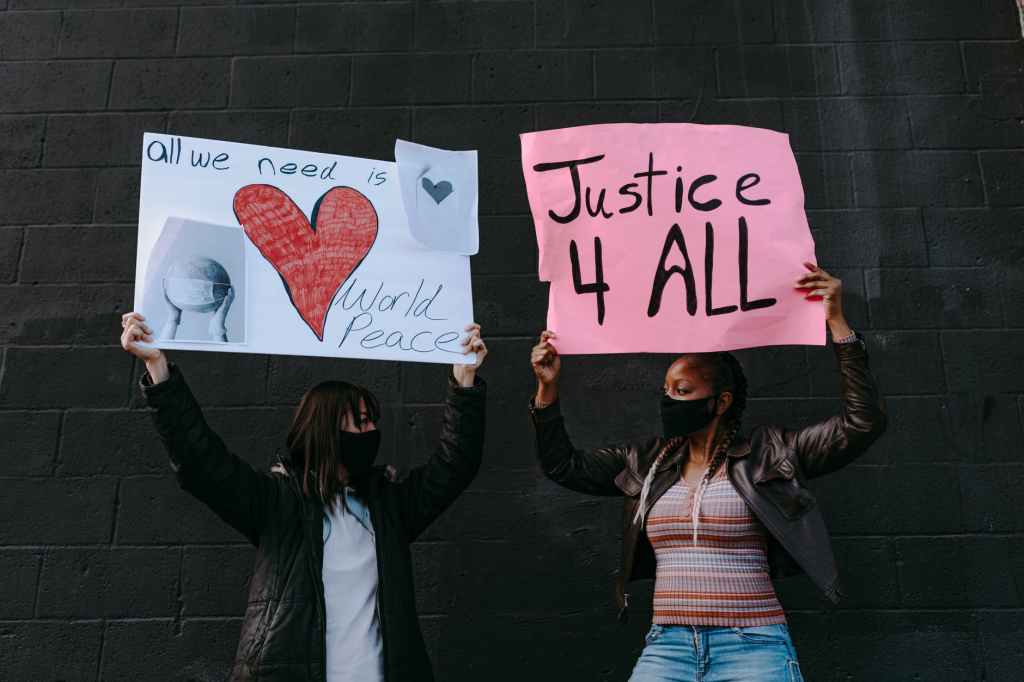
While surfing through linkdein I came across a post where a doctor sir Ganeshan, he was providing free medical deliveries to girl. Many people of community have distinct view of it as if it is a right way and right thing.
In my view, this is how we create equality,
there are two ways
first, we share everything we have equally and eventually with time everything gets equalize,
another way is we try balancing both sides like if people are not happy after having girl child we will free them from fee charge(its temporary solution of a big part of solution) and as societies are progressing they will learn and improve with time.
Example of first one is colonized countries they doesn’t got support from developed countries and they got bullied many time but we are slowly progressing toward equality,
Example of second one is solutions for girl equality by indian govt, it involves temporary(situation based) solution like dowry punishment to educating and reservation, the benefits of having second way is it’s fast, and it has lots of temporary solution to big problems like girl foeticide case.
You can see post here
https://www.linkedin.com/posts/ashwini-mahesh_activity-6846473782144630785-ZcoR
Connect me on LinkedIn here
The problem of poverty in India
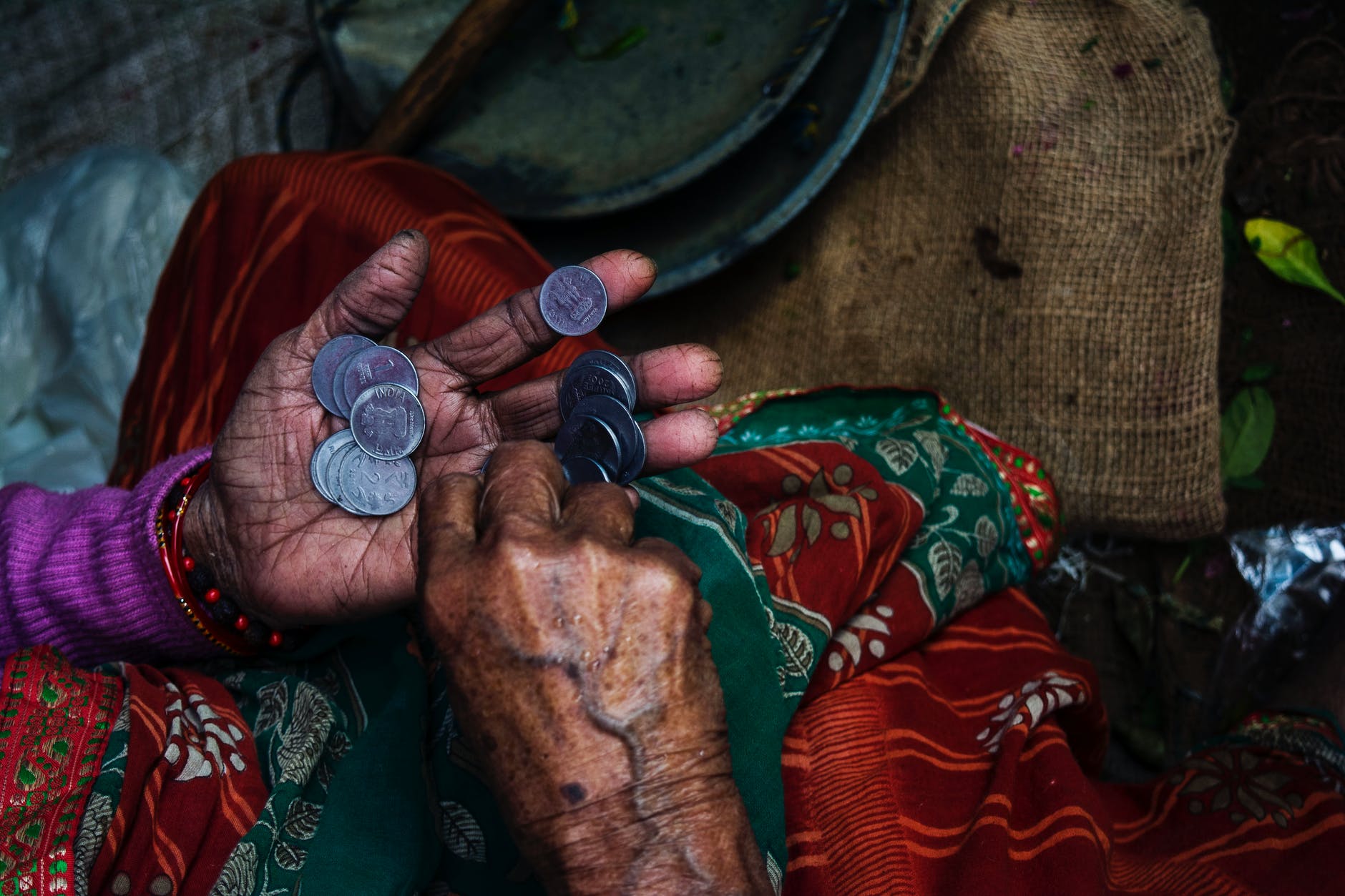
In India, poverty is presently estimated by fixing a poverty line based on a differentiated calorie-norm. This means that the level of poverty depends upon the capacity of a person to purchase food and a person who can buy specific amount of food to cross the poverty line margin for nutrients and calorie intake is above the poverty line. Whereas, the person who cannot buy enough food to meet the required nutrition value of calories and carbohydrates is below the poverty line. This level is not the correct parameter to check the level of poverty.
A task force of the Planning Commission in 1979 defined the poverty line as that per capita expenditure at which the average per capita per day calorie intake was 2400 calories in rural areas and 2100 calories in urban areas. Average per capita expenditures incurred by that population group in each State which consumed these quantities of calories, as per the 1973-74 survey of NSSO, were used as the poverty lines.
The debate on the extent of poverty in India has been a matter of global interest in the recent years. The primary reason for the global interest in the debate is that the levels of poverty in India and China have come to exert significant influence over the trends in world poverty itself.
Within India too, there has been growing contestation around poverty estimates, particularly in the period of economic reforms. First, there are persistent disagreements among economists on whether the rate of poverty decline after economic reforms was slower than in the preceding period. Secondly, the shift to targeted, rather than universal, welfare schemes has witnessed the use of poverty estimates to decide on the number of households eligible to access these schemes. The report of the Expert Group on the estimation of poverty, chaired by Suresh Tendulkar, is the latest input to the “Great Indian Poverty Debate.”
It is to be noted here that many subsidies and programs are launched by the government but these additional increments do not reach the actual people that are in need of them. Instead it is sent back to the businessman and thus a lot of profit is earned on these subsidized goods. Thus, to lower the level of poverty in India, schemes have to be launched in order to directly benefit the people in need.
The Hindu states that, “A final issue with the report, of much long-term consequence, relates to the wisdom of abandoning the calorie norm. It is indeed true that the levels of calorie intakes are not well correlated with nutritional outcomes. However, abandoning the calorie norm altogether and taking solace from the fortuitous fact that calorie intakes appear adequate at the new poverty lines is an arbitrary proposition. It is unclear whether there is any basis, theoretical or empirical, for this relationship to hold true across time.”
The Tendulkar Committee has pitched for a policy position that is stranded between the harsh realities of poverty in India and the fiscal conservativeness of a neo-liberal framework. The real challenge lies in preserving the positives from the report, and strongly persisting with the demand for a universal social security system.
Written by: Ananya Kaushal
Women Empowerment: It’s Meaning and Why is It Important?
“I rise up my voice- not so I can shout, but so that those without a voice can be heard…we cannot succeed when half of us are held back.”
Nobel Laureate Malala Yousafzai
And that sentiment precisely outlines the basis of new age women empowerment. Discrimination against women is rampant all over the world even in this 21st century. Even though about 50% of the world’s population consists of women, but unfortunately most of them are denied basic rights education, freedom of speech, voting power and even independent identity.
In India, in theory, women enjoy a status of equality with the men as per constitutional and legal provisions. Arguably, our country has taken enormous strides towards inclusion of women with the fairer gender excelling in diverse fields, from literature to astrophysics to finance. But with headlines about dowry killing, female foeticides and domestic violence still making the newspapers, put a silent question mark behind the two words.
Meaning of Women Empowerment
If it is to be elucidated beyond the two self-explanatory words, ‘Women Empowerment’ refers to complete emancipation of women from socioeconomic shackles of dependancy and deprivations. Often made synonymous to gender equality, the term women empowerment encompasses a much larger set of principles that needs whole-hearted attention.
Empowerment of women would mean encouraging women to be self-reliant, economically independent, have positive self-esteem, generate confidence to face any difficult situation and incite active participation in various socio-political development endeavours. The growing conscience is to accept women as individuals capable of making rational and educated decisions about them as well as the society, increasing and improving the economic, political and legal strength of the women, to ensure equal-right as men, achieve internationally agreed goals for development and sustainability, and improve the quality of life for their families and communities.
The various facets of women empowerment that needs to be addressed for a rounded out development are listed as:
Human Rights & Individual Rights:
A woman has the right to express her thoughts and opinions freely, without any restriction. Individual empowerment may be achieved by imparting self-confidence to articulate and assert the power of independent decision making. Women should be aware of their rights and social positions that they are entitled to constitutionally.
Social Empowerment of Women:
The most critical aspect of social empowerment of women is the promotion of gender equity. Gender equality implies that in society women and men enjoy the same opportunities, outcomes, rights and obligations in all spheres of life.
Educational Empowerment of Women:
It means enabling women to grab the knowledge, skills and self-confidence necessary to participate fully in the development process. Giving preference to the girl child for educational opportunities is a start.
Economic Empowerment of Women:
It means reducing the financial dependence of women on their mate counterparts by making them a significant part of the human resources. A better quality of material life, within the family as well as for the overall society, can be achieved through promotion of sustainable livelihoods like cottage industries, small entrepreneurial efforts owned and managed by women.
Empowerment Through Legal Knowledge:
Not only does it suggest the provision of an effective legal structure which is supportive of women empowerment, there also is the need to spread awareness among women about their legal rights and laws preventing their exploitation. It means addressing the gaps between what the law prescribed and what actually occurs.
Political Empowerment of Women:
The existence of a political system encouraging the participation of women in the political decision-making process and in governance. Indian constitution has provided the bulwarks for gender equality in the country in the following articles:
Article 14: Equality before law “The State shall not deny to any person equality before the law or the equal protection of the laws within the territory of India Prohibition of discrimination on groups of religion, race, caste, sex or place of birth”.
Article 16 (2): Equal opportunities “No citizen shall, on grounds only of religion, race, caste, sex, descent, place of birth, residence or any of them, be ineligible for, or discriminated against in respect or, any employment or office under the state”.
Article 23: Prohibition of traffic in human beings and forced labour.
Article 39(a): The citizen, men & women equally have the right to an adequate means of livelihood.
Article 40 (after the 73rd Amendment): 1/3rd of seats in panchayats shall be reserved for women.
Article 42: State shall make provisions for just and humane working conditions & maternity relief.
Article 51 A (e): One of the duties of every citizen is to renounce practices derogatory to the dignity of woman.
Government Laws and its subsequent amendments have seen larger inclusion of women with respect to their standing in the society and also there many acts which are preventing polygamy and bigamy, and their strict enforcements has to a large extent contributed towards lessening women exploitation. Various government schemes like Rastriya Mahila Kosh and STEP (Support to training cum Employment for women) have managed to bring financial development of rural women through self-sustainable employment. Also “Kanyashree” scheme which is in West Bengal, has been ranked 1st globally for women empowerment. The National Policy of Empowerment of Women (2001) is aimed at addressing all forms of violence against women including physical, mental and that arising from customs and traditions.
Why Woman Empowerment is Important?
A strong patriarchal society with deep-rooted socio-cultural values continues to affect the progress of women’s empowerment in the country. The need of the hour is an egalitarian society. Where there should be no place for gender superiority. Aim of government policies should be to identify and eliminate forces that are directed towards keeping the tradition of male dominance over its female counterpart alive.
Women empowerment in its actually is synonymous with complete development of the society. An educated woman, with knowledge about health, hygiene, cleanliness is capable of creating a better disease-free environment for her family. A self-employed woman is capable of contributing not only to her family’s finances, but also contributes towards increment of the country’s overall GDP. And many things which can be achieved.
All we need is an organized approach from the Government and law enforcement agencies of the country focussed in the right direction that would rest only with the liberation of women from all forms of evil.
LGBT RIGHTS IN INDIA

(Photo: iPleaders Blog)
“Every cloud has a silver lining.” This proverb goes well with the historic judgement passed by the Supreme court on 6th September 2018 in the favor of LGBT community rights. This has been much debated topic since a long time. Nothing could be more blessing than the enactment of Article 377 for the relief of LGBT community. The hearing of the petitions began with a bench consisting of Chief justice Dipak Misra and justices DY Chandrachud, AM Khanwilkar, Indu Malhotra, and Rohinton Fali Nariman. It was truly a landmark decision which struck down a 19th century law criminalizing homosexuality in India.
What role does the Indian Constitution play towards the emancipation of the society’s most marginalized and excluded? What vision does the Constitution espouse with respect to basic fundamental rights and freedoms? And what conception of inclusion and pluralism does the Constitution pursue in a society that remains deeply divided and disjointed? All these searching questions came to form a distinct part of the decision of the Indian Supreme Court (Court) when it was called upon to rule on the constitutional validly of Section 377 of the Indian Penal Code, 1860. It was not the first time however, that the Court was examining Section 377 on the touchstone of the Constitution, as the case previously travelled through several levels of judicial adjudication involving different jurisdictional procedures.
Embodying the ethos of Victorian morality, Section 377, a colonial-era law, criminalized ‘…carnal intercourse against the order of nature with any man, woman or animal…’. Anything that was not penal-vaginal sexual encounter was ‘against the order of nature’ and as a consequence ‘unnatural’. Through this provision, homosexual acts even between consenting adults was considered and proscribed as a criminal offense punishable with imprisonment. Thus, a significant section of the population comprising the LGBT+ community remained perpetually ostracized by the Indian society, persecuted by State authorities and marginalized in the discourse of constitutional rights. Therefore, when the Court decided in Navtej Johar v Union of India that Section 377 in so far as it criminalizes same sex acts between consenting adults, violates the constitutional mandate enshrined under the Fundamental Rights chapter, especially, Art. 21 (life and personal liberty), Art. 14 (equality and equal protection of laws), Art. 15 (non-discrimination) and Art. 19 (Freedom of expression), truly, it was a historic undoing of injustice towards the LGBT+ people. In other words, as a result of this decision, LGBT+ people who were historically and by default considered ‘criminals’ under the law, came a bit closer to acquiring an ‘equal moral membership’ of the society and the State. It was a tough as well as a long road but at the end everything seemed to be mightier.
Let us look back into the history of India from where the seeds of this discrimination were actually sown. India has a long tradition of tolerance for all kinds of beliefs, faiths, philosophies, and ways of living. This takes us back to the 1800s. Lord Macauley first created this law in 1860 when he was the President of the Indian Law Commission. The reason for this law was because the British WANTED TO “impose Victorian values” on the colony of India. Not only were such values trying to be inflicted on the Indian society but also the Constitution of India wanted to “…narrow constructions of patriarchal gender relations and heteronormativity” (Ramasubhan 91).
What’s important and a reflection of the movement itself is that the support has come not just from the queer people, but across a range of actors, movements and institutions. Progressive groups, state bodies like the National Human Rights Commission, teacher’s associations, professional associations including the medical and mental health establishments, women’s groups, student groups, trade unionists and private companies came out publicly against the judgement. Thousands across the country stood together, repeating the chant that brought together our resistance: ‘No Going Back’.
In declaring Section 377 to be unconstitutional, however, the Court was deeply reflective about the fact that for Constitutional rights to acquire a meaningful purpose for the marginalized communities, disciplining State action alone will not be sufficient. In this regard, the Court did not mince words when it stated that it is both, criminality of the law and the ‘silence and stigmatization’ of the society towards the LGBT+ community that orchestrates the marginalization and the exclusion of the former. Implicit in that claim was the understanding that inequality, hierarchy and prejudice transpires as much from State action as it does from societal sanctions, community conventions and private relationships. In the context of such social realities, what is the stated role of the Constitution and the laws? Is the mandate of the Constitution simply confined towards ordering the relationship between the State and the individual (vertical) or does the Constitution have an equal role to play in shaping normative values among individuals within the society?
The Court unequivocally embraced the latter narrative and found that the Indian Constitution envisions an expansive role for both the State and the individual to actively promote social change within the contours of the Constitution. It seeks transformative change ‘in the order of relations not just between the State and the individual, but also between individuals’. The transformative potential in Indian Constitution is a conscious ‘attempt to reverse the socializing of prejudice, discrimination, and power hegemony in a disjointed society’. Therefore, the Constitution, the Court surmises, obliges not only the State not to violate fundamental rights, but also individuals to ‘act in a manner that advances and promotes the Constitutional order of values’.
“Sexual orientation” is an essential attribute of privacy. Discrimination against an individual on the basis of sexual orientation is deeply offensive to the dignity and self-worth of the individual. This judgement can be considered as a revolutionary one in a society like India. But every judgement has two parts, one is written and other is its execution. The written part is progressive and reformist and its execution includes sensitizing the society and institutions in accepting what is written in this judgement. That may take time. Till then I would like to put forth some suggestions. The first step is sex education in schools and at homes. The second step is that the law enforcement agencies such as the police needs to be more sensitized towards the LGBT people. Similarly, our media and film fraternity can play a very important role in imparting knowledge and disseminating true information about LGBT people.
To conclude, we all are equal. Nobody should be discriminated on whatsoever ground. In the last few years LGBT are gaining acceptance in many parts of India. Many Bollywood films have dealt with homosexuality. They have also fair well at the box office. There’s a transformative constitutionalism which is happening and the real import of transformative constitutionalism lies in positive measures that the State ought to take in bringing the Constitution closer to the most deprived. Indian society needs to shrug off its old thinking and come out of the widely prevailing homophobia.
Morality in Rule of Law

(Photo: Thought and action)
Rule of Law is the fundamental principle which ensures good governance as well as individual rights and liberties. It says no one is above the law and every person living in a particular society is subject to the law of that society. All other notions associated with the rule of law must also be considered alongside it. It is a mechanism that encourage the equality of all citizens before the law. It also secures a non-arbitrary form of government, and specifically prevents the arbitrary use of power. In general, the rule of law implies that the creation of laws, their enforcement, and the relationships among legal rules are themselves legally regulated, so that no one including the most highly placed official is above the law.
Moralityis a concept that distinguishes right from wrong. It also talks about conduct that is considered acceptable or unacceptable in a particular society. The source of morality is usually considered to be natural law and God’s instructions through sacred documents.
Morals provide a basis for the development of law by virtue of justice, equity, good faith, and conscience. Morality plays an important role in making of law and its interpretation. Morals are an intrinsic part of the laws. In the ancient time morals and laws were considered as one and the same. In the current period though law and morality have several distinctions yet the same are not completely different or distinct. A relationship can be established between morality and law on three grounds: –
1) morals as the basis of law
2) morals as test of positive law
3) morals as the end of law.
According to Stammer “jurisprudence depends much upon moral ideas as just law has a need of ethical doctrine for its complete realization. Positive law and just law correspond to positive morality and rationally grounded ethics. There’s no difference and if any, it is only the difference of manner in which the desire for justice present itself”.
H.L.A Hart believes that there are several relations between law and morals. He was of the view that a legal system must exhibit some specific conformity with morality or justice or must rest on a widely diffused conviction that there is a moral obligation to obey it.
Ronald Dworkin has argued that both laws and constitutions are unavoidably rooted in political and moral principles. The law is not derived logically from accepted true moral principles. Rather, it is established by legislatures that come to agreement on public rules that are shaped by a political consensus about right and wrong.
Rule of law prioritizes the supremacy of law whereas morality prioritizes the moral values and consciences of the subjects of the state. For instance, a man is under no duty to help a beggar or the distressed and can neglect his sick and old parents without the fear of any legal or penal consequences, but morality does not allow a person to do so as it amounted to undesirable conduct condemned by morals and ethics. There is a close relation between the rule of law and morality. Morality complements the rule of law. But it is a casual relationship, as laws are not made out of moral principles, rather, they are established and shaped by a “legal consensus of right and wrong”. Even though morality is ultimately involved in making and modifying the law, it is never legally binding and does not have constitutional value. Laws have a marginal origin from the morals and ethics derived in the society which initially monitored the conduct of people, but morality solely cannot be the basis on which law has been derived. An acceptable statement is that both morality as well as rule of law have adapted to the development of society. Sometimes what seems right from the morality point of view may be contrary when viewed from the point of rule of law. For instance, when a person tries to feed a needy person, by means of theft solely for the purpose of feeding that needy person, morally the act may be justified yet the same may not be the case under rule of law. Because under the concept of rule of law, a person has committed. Therefore, morality has a marginal presence in rule of law whereas it is highly contradictory of the same.
Morality in Rule of Law with reference to H.L.A. Hart theory
Professor Herbert Lionel Adolphus Hart (H.L.A. Hart) is an influential legal professor. Hart revolutionized the methods of jurisprudence and the philosophy of law. He authored ‘The Concept of Law’ and made major contributions to political philosophy. Law can be analyzed in terms of rules which is largely based on Hart’s theory of law. According to him, rules are concerned not with what happens but with what is to be done. Rules are imperative or prescriptive rather than indicative or descriptive. Rules have a certain independence or self-legitimating character. Rules are different from commands. Commands normally call for one unique performance whereas rules have a general application and demands repeated activity. According to Hart, ‘Law consists of rules which are of broad application and non-optional character, but which are at the same time amenable to formalization, legislation and adjudication. According to Hart the law consists of primary and secondary rules. Primary rules are duty imposing rules on the citizens and have a legal sanction. Secondary rules are power conferring laws that describe how laws should be recognized, adjudicated or changed. Hart says these rules form the heart of the legal system.
Hart’s version of natural law is empirical. His position is based on a theory of human nature which believes in certain truisms. For example, Hart believes that one truism of human nature is that the overwhelming majority of human beings wish to survive. It means they would rather live than die. If one wish to survive, it is imperative that a society be developed which will help ensure survival. Hart believes there are five features of the human condition which sometimes work against survival, and the legal system must take these into account. Hart believes that: –
- there is the feature of human vulnerability.
- . there is the Hobbesian notion of approximate equality.
- . human beings possess at best a limited altruism.
- . the concept of limited resources governs our actions.
- . the idea of limited understanding and strength of will is important to any society.
Conclusion
The fundamental principle which ensures good governance as well as individual rights and liberties is the rule of law under which no one is above the law and every person living in a particular society is subject to the law of that society. Morality, on the other hand, is concept that distinguishes right from wrong and may refer to conduct that is considered acceptable or unacceptable in a particular society. Coercion and sanction may be important considerations but not the basic elements to make law work. The law is meant to facilitate. It is mechanism that resolves conflicts of interest among individuals. This idea of law brings us to the concept of rule of law which aims to treat every individual equally, irrespective of social status. Under the rule of law, individuals are protected from the element of coercion. Another element of the rule of law is equality, which is often confused with generality. Laws are based on generality and bind everyone, not any singular group. But equality here means that every individual is subject to the same law and procedures and has the same rights. A close relation exists between the rule of law and morality, since morality complements the rule of law. But it should still be considered a casual relationship, as laws are not made out of moral principles, rather, they are established and shaped by a “legal consensus of right and wrong”.
THE INFLUENCE OF GENDER ROLES ON HEALTH SECTOR INCLUDING REPRODUCTIVE RIGHTS

(Photo: Singularity Hub)
Men form one-third of a typical medical school’s population; Rest of the seats are all occupied by women. The pay gap in the healthcare sector is 25% higher than any other sector. Most women agree to work at low wages because of the financial crises they face. Gender inequality is leading to a shortage of healthcare workers in the sector. Women in India face “extensive gender discrimination” in access to healthcare. Gender inequality is leading to a shortage of healthcare workers in the sector because obviously only one-third of the seats were taken by men.
Under the National Health Mission, the government has launched several schemes. The most important program launched by the government is Rashtriya Arogya Nidhi which provides financial assistance to the patients that are below poverty line and are suffering from life-threatening diseases. Rashtriya Swasthya Bima Yojana is a government-run health insurance program for the Indian poor. It aims to provide health insurance coverage to the unrecognized sector workers belonging to the below poverty line. National AIDS Control Organization was set up so that every person living with HIV has access to quality care and is treated with dignity. Anganwadi Workers and the ASHA workers are the grassroots level functionaries under the umbrella ICDS Scheme and the National Health Mission respectively. Both these functionaries being closely connected with the rural and urban poor families, play a pivotal role in addressing their nutrition and health related problems/issues.
How the Government has failed them ?
· Do not have regular salaries, partly because their work is supposed to be voluntary and part-time.
· Even though the Code on Social Security, 2020 aims to include formal and informal sectors under a social safety net, it excludes several categories of workers, including ASHA and Anganwadi workers. The Code on Wages, too, has left this constituency out of its coverage, depriving employees of a fixed minimum wage.
· “As per Modi government’s definition, Anganwadi and ASHA workers are not ‘workers’ but only ‘volunteers’, who do not receive any ‘wage’ but only an ‘honorarium’! So the principle of minimum wage would not apply to these scheme workers.”
Also a gender issue
· Limited space for career progression is linked to low institutional recognition, demotivation, and curtailed opportunities for growth. ASHAs face sexual harassment by other health workers and community members, linked to their mobility and public profile. ASHAs have worked to further women’s interests, particularly in Chhattisgarh state where Mitanins(the name for ASHAs there) have mobilized protests against alcoholism, supported women’s collectives and taken action against gender based violence. ASHAs have begun taking action to mobilize their peers to reduce gender based violence. ASHAs have reported an increased sense of empowerment and personal growth, in part through their belief in the social value of their work.
Gender as a social determinant of health
- The social determinants of health (SDH) are the non-medical factors that influence health outcomes. They are the conditions in which people are born, grow, work, live, and age, and the wider set of forces and systems shaping the conditions of daily life. These forces and systems include economic policies and systems, development agendas, social norms, social policies and political systems.
- The SDH have an important influence on health inequities – the unfair and avoidable differences in health status seen within and between countries. In countries at all levels of income, health and illness follow a social gradient: the lower the socioeconomic position, the worse the health.
- The following list provides examples of the social determinants of health, which can influence health equity in positive and negative ways:
1.Income and social protection
2. Education
3.Unemployment and Job security
- Research shows that the social determinants can be more important than health care or lifestyle choices in influencing health. For example, numerous studies suggest that SDH account for between 30-55% of health outcomes. In addition, estimates show that the contribution of sectors outside health to population health outcomes exceeds the contribution from the health sector.
- Addressing SDH appropriately is fundamental for improving health and reducing longstanding inequities in health, which requires action by all sectors and civil .
- Social determinants of health are conditions in the environments in which people are born, live, learn, work, play, worship, and age that affect a wide range of health, functioning, and quality-of-life outcomes and risks. Conditions (e.g., social, economic, and physical) in these various environments and settings (e.g., school, church, workplace, and neighborhood) have been referred to as “place.”
- In addition to the more material attributes of “place, ” the patterns of social engagement and sense of security and well-being are also affected by where people live. Resources that enhance quality of life can have a significant influence on population health outcomes. Examples of these resources include safe and affordable housing, access to education, public safety, availability of healthy foods, local emergency/health services and, environments free of life-threatening toxins.
Reproductive rights in India
Reproductive Rights are rights of individual to decide freely and responsibly the number, spacing and timing of children. It is individual’s right to decide whether to reproduce and have reproductive health. The Supreme Court of India and several state high courts have recognized the importance of reproductive rights and have observed that the denial of reproductive rights is violation of women’s fundamental and human rights.
Courts have been at the forefront of expanding, protecting, and promoting reproductive rights. court through its various judgements from time to time has promoted and protected the reproductive rights of women. for instance, Puttaswamy judgment, Suchita Srivastava V. Chandigarh Administration, Navtej Singh Johar V. UOI.
Role of socio-physical environment in health care
Social determinants of health are the conditions in the environment where people sustain, i.e. they born, live, learn etc., which affects the health, functioning and quality of life outcomes and risks. Health starts from our localities, our homes, schools, communities where it is also examined by our access to social and economic opportunities. So, social determinants of health are designed to identity ways to create social and physical environment that promote good health.
Feminism: A Myth
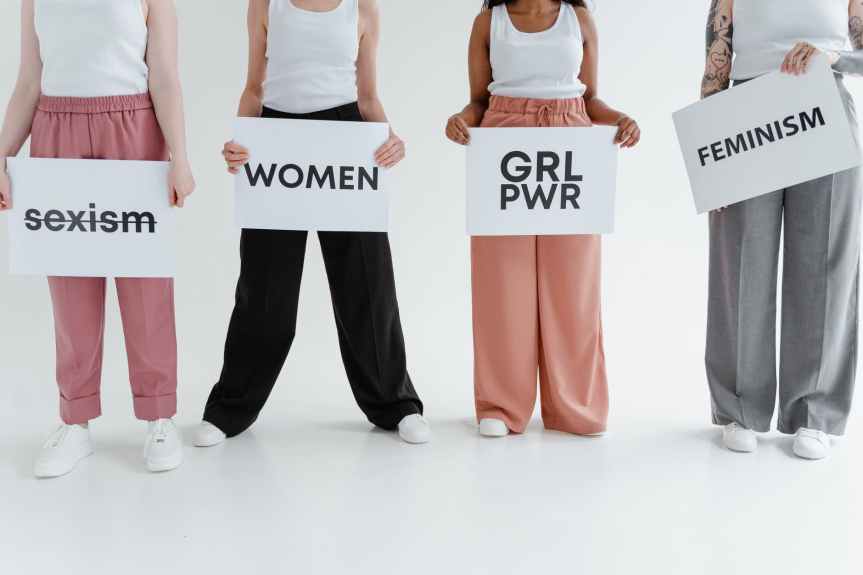
All over the world people are misguided about the word feminism. According to you what does feminism mean? Is it to put men down and rule the world or is it to enjoy everything a man can? Let’s discuss about various myths and the actual meaning of feminism and the significance of it in a women’s life.
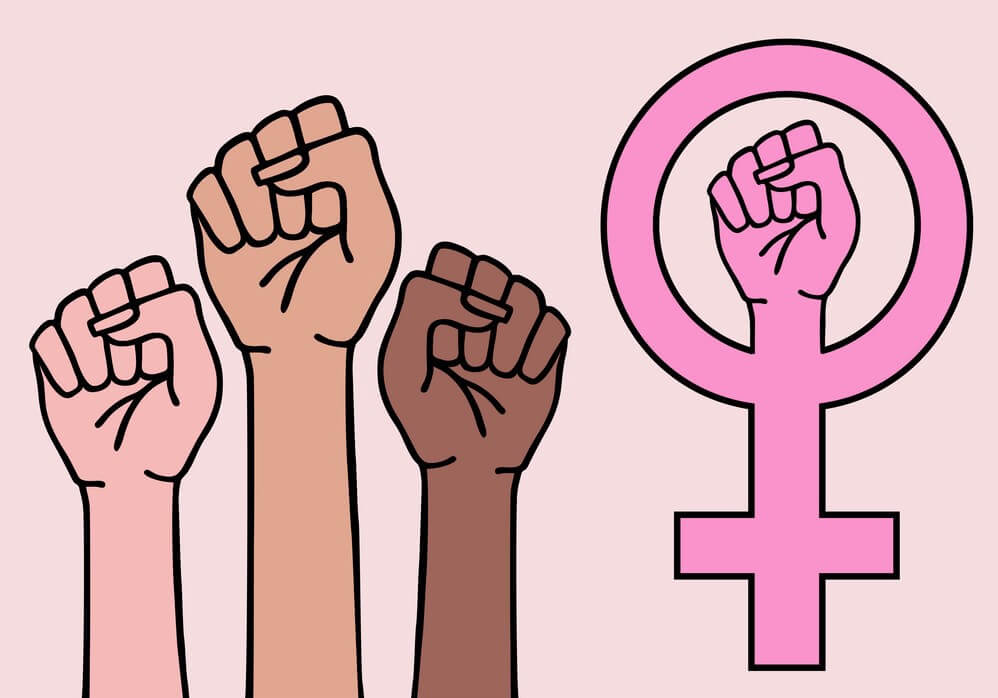
According to the Oxford dictionary feminism means “the belief that women should have the same rights and opportunities as men“. In more simpler words feminism is all about the equality between men and women and have the freedom of everything that they wish to do. Some people argue that they believe in ‘equality’ but they have no belief in feminism. Feminism has been made critical despite of it being a very simple concept.
From ancient times women are pointed out for the way they dress and for their aspirations. They have been constantly told to dress in a certain way and to live their life according to the norms of the society. Women are fighting for their equal rights from centuries for there right to vote, right to speech and freedom. People in the society have framed a woman according to their needs and expect them to fulfill their expectations. A married woman taking care of her husband, her in-laws and looking after their children is considered to be the ideal one whereas if she wants to work and be dependent, she is criticised and often being questioned on her motherhood. Similar type of Criticism she faces at her work place. These are the basic yet essential inequality that a women regularly faces.
Women-Women Conflict regarding feminism
Sometimes women also take feminism in a wrong way. They think that being a feminist means to humiliate men and they often misuse their power of being a women by falsely accusing a men in a crime. This is basically pseudo feminism. Women around the world debates for the real meaning of feminism which sometimes leads to conflicts. Some women of old generation are also against feminism and consider it as uncultural.
Myths
- Feminists hate men.
- Feminists are angry.
- Feminists are unattractive and not feminine.
- All feminists are lesbians.
- Feminists are all pro-choice.
- If you are a feminist, you cannot be religious.
- All feminists are career women and do not support stay-at-home moms.
- Feminists are Bra- Burners who hate sex.
- Feminists can only be women.
- Feminists don’t believe in marriage.
If you have ever found yourself saying “I’m not a feminist, but I am for equality,” then ask yourself why you do not claim the title? If it is because of the misconceptions of what a feminist truly is then empower yourself to raise awareness about what feminism is really all about.
Feminists are all about equality between genders– which means feminists don’t want women to be more powerful than men any more than we want men more powerful than women. What may seem like a discriminatory act against men is actually an attempt to level the playing field between men and women.
While huge strides have been made towards complete gender equality, a great deal of work remains to be done, both in India and abroad, including the gender pay gap, access to reproductive healthcare, protection against sexual assault and violence and gender representation in media, among other issues.

How a Guy Can Be a Feminist?
Basically feminism is not only committed to changing negative stereotypes about being a woman. A large facet of feminism is understanding streotypes about masculinity and its effects on society and what it means to be a man. If you care about equality for your mother, daughter, grandmother, girlfriend, a friend, who is female then feminism should be important to you. Additionally, feminism is about equality for all marginalized groups- equality for those who are LGBTQIA, disabled, and ethnic and racial minorities. Caring about feminism means caring about people who fit into these categories.
Being a feminist is not something to be ashamed of. It is the right of every person who believes in equality for all.
Thank you for reading!
Kadambini Ganguly: India’s First Female Doctor.
160 years ago, on this day, July 18, Kadambini Ganguly was born in a Bengali family in Bhagalpur, Bihar. As a child, she was rebellious with regard to sexism and patriarchy and was very hard-working as a student.
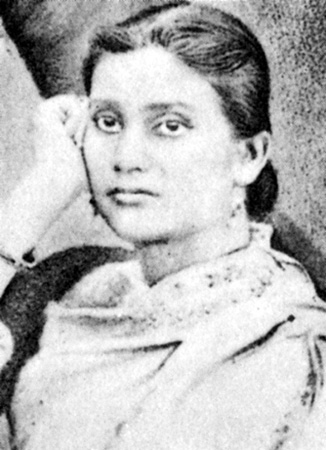
During her childhood, she had witnessed that in her area many women used to die without treatment as women could not get proper treatment because all doctors were males and Indian social culture didn’t approve a male doctor treating a female patient. From here, she dreamt of becoming a doctor during her childhood.
However, things didn’t happen according to her. She was married off at young age and thus she thought her dreams would go down the gutter. But it was then her husband who supported her in every walk of her life. She did her schooling partly at Banga Mahila Vidyalaya and partly at Bethune School. In 1878, she became the first female to pass the University of Calcutta entrance examination.
Within few years, she became one of the first few female graduates in the country alongside Chandramukhi Basu. When she wanted to study medicine, she was denied admission by University of Calcutta as the university wasn’t allowing female students back then. Dwarkanath Ganguly, Kadambini Ganguly’s husband challenged this patriarchal rule and in 1883 Kadambini Ganguly was the first female to take admission in Calcutta Medical College.
Kadambini Ganguly received a scholarship of two years and in 1886 she was awarded the GBMC award and thus making her the first female to have a degree in Western Medicine in the whole of South Asia.
It is also important to note that during that time people didn’t approve a female getting education and as a result she received strong opposition regarding her academical choices from conservatives even from her neighbourhood and relatives.
Bangabashi, a magazine of that time that was run by the then conservatives also called her a “whore” and this obviously didn’t go well with the Ganguly couple. Dwarkanath Ganguly legally filed a court case against the magazine and this resulted in 6 months jail term for the editor of the magazine.
Kadambini Ganguly also went abroad for her studies and got her further education in Edinburgh College of Medicines for Women. She quickly earned three different diploma degrees. Soon, she became popular in entire South Asia and Europe. Her name became so popular that the then King of Nepal invited her to treat his ailing mother.
Kadambini Ganguly had even advocated for social change in India and especially for women. It was due to her efforts that Bethune College in Kolkata added the Fine Arts course in their college. She was also one of the six female delegates to fifth session in Indian National Congress and even organised Women’s Conference in 1906 in Calcutta.
Authors of that time described Kadambini Ganguly as one of the “greatest” and the “most accomplished woman” of her time. And truly, all of us agree to it. Because of courageous women like her, so many women in the world must have got inspired to achieve their dreams. Kadambini Ganguly will always remain immortal in all her hearts.
17 Sustainable Goals by United Nations.
Sustainable development is development that meets the needs of the present without compromising the ability of future generations to meet their own needs. Sustainable development has continued to evolve as that of protecting the world’s resources while its true agenda is to control the world’s resources. Environmentally sustainable economic growth refers to economic development that meets the needs of all without leaving future generations with fewer natural resources than those we enjoy today. Let us know 17 Sustainable Goals set by UN and their progress by now.
1) Poverty Eradication:
The 2030 Agenda acknowledges that eradicating poverty in all its forms and dimensions, including extreme poverty, is the greatest global challenge and an indispensable requirement for sustainable development.
2) ENDING HUNGER:
The total number of persons suffering from severe food insecurity has been on the rise since 2015, and there are still millions of malnourished children. The economic slowdown and the disruption of food value chains caused by the pandemic are exacerbating hunger and food insecurity.
3) Ensure healthy lives and promote well- being for all at all ages
Progress in many health areas continues, but the rate of improvement has slowed and will not be sufficient to meet most of the Goal 3 targets. Globally, an estimated 295,000 maternal deaths occurred in 2017, resulting in an overall maternal mortality ratio of 211 maternal deaths per 100,000 live births, a 4 per cent reduction compared with 2015 and a 38 per cent reduction compared with 2000. The majority of the deaths occurred in low- and lower-middle-income countries, and roughly 66 per cent of them occurred in sub-Saharan Africa. At the current pace of progress, the world will fall short of the target of the Goal.
4) Ensure inclusive and equitable quality education and promote lifelong learning opportunities for all:
At the end of 2019, millions of children and young people were still out of school, and more than half of those in school were not meeting minimum proficiency standards in reading and numeracy.
5)Achieve gender equality and empower all women and girls
The commitment to advancing gender equality has brought about improvements in some areas, but the promise of a world in which every woman and girl enjoy full gender equality and all legal, social and economic barriers to their empowerment have been removed remains unfulfilled.
6)Ensure availability and sustainable management of water and sanitation for all
In 2017, 3 billion persons lacked soap and water at home. In 2016, 47 per cent of schools worldwide lacked handwashing facilities with available soap and water, and 40 per cent of health-care facilities were not equipped to practise hand hygiene at points of care.
7) Ensure access to affordable, reliable, sustainable and modern energy for all
The world is making good progress on increasing access to electricity and improving energy efficiency. However, millions of people throughout the world still lack such access, and progress on facilitating access to clean cooking fuels and technologies is too slow.
8) Promote sustained, inclusive and sustainable economic growth, full and productive employment and decent work for all:
In 2018, the rate of growth of global real GDP per capita was 2 per cent. In addition, the rate for least developed countries was 4.5 per cent in 2018, less than the 7 per cent growth rate targeted in the 2030 Agenda.
9) Build resilient infrastructure, promote inclusive and sustainable industrialization and foster innovation:
In 2019, 14 per cent of the world’s workers were employed in manufacturing activities, a figure that has not changed much since 2000. The share of manufacturing employment was the largest in Eastern and South-Eastern Asia (18 per cent) and the smallest in sub- Saharan Africa (6 per cent).
10)Reduce inequality within and among countries
In 73 of the 90 countries with comparable data during the period 2012–2017, the bottom 40 per cent of the population saw its incomes grow. Moreover, in slightly more than half of those countries, the bottom 40 per cent experienced a growth rate in income that was higher than the overall national average.
11) Make cities and human settlements inclusive, safe, resilient and sustainable:
Rapid urbanization has resulted in a growing number of slum dwellers, inadequate and overburdened infrastructure and services and worsening air pollution.
12) Ensure sustainable consumption and production patterns:
As at 2019, 79 countries and the European Union reported on at least one national policy instrument that contributed to sustainable consumption and production in their efforts towards the implementation of the 10-Year Framework of Programmes on Sustainable Consumption and Production Patterns.
13) Take urgent action to combat climate change and its impacts.
The year 2019 was the second warmest on record and the end of the warmest decade, 2010 to 2019. In addition, with a global average temperature of 1.1°C above estimated pre-industrial levels, the global community is far off track to meet either the 1.5 or 2°C targets called for in the Paris Agreement.
14. Conserve and sustainably use the oceans, seas and marine resources for sustainable development:
Oceans and fisheries continued to support the global population’s economic, social and environmental needs while suffering unsustainable depletion, environmental deterioration and carbon dioxide saturation and acidification.
15) Protect, restore and promote sustainable use of terrestrial ecosystems, sustainably manage forests, combat desertification, and halt and reverse land degradation and halt biodiversity loss:
Forest areas continued to decline, protected areas were not concentrated in areas of key biodiversity and species remained threatened with extinction.
16) Promote peaceful and inclusive societies for sustainable development, provide access to justice for all and build effective, accountable and inclusive institutions at all levels:
Conflict, insecurity, weak institutions and limited access to justice remain a great threat to sustainable development. Millions of people have been deprived of their security, human rights and access to justice.
17) Strengthen the means of implementation and revitalize the global partnership for sustainable development:
Strengthening multilateralism and global partnerships is more important than ever before. The global nature of the pandemic requires the participation of all governments, the private sector, civil society organizations and people throughout the world.
 Eduindex
You must be logged in to post a comment.