Feminism and the politics of childhood friends or foes? is written and edited by Rachel roshen and Katherine Twamley. The book consists of eighteen chapters in itself. The book is a contribution of many scholars, psychologists, professors and lecturers of education, catholic priest, activist and anthropologists.
Rachel Rosen is a senior lecturer in childhood in the department of social science at the UCL institute of Education and Katherine Twamley is a Leverhulme Trust Early Career Fellow in the department of social science at the UCL institute of Education.
The book discussed various kinds of feminism and children’s politics. It has an exploration of perceived commonalities and conflicts between the women and children. The whole book is in a dialogic method from a range of geographical contexts, social science discipline, activist organisations, and theoretical perspectives. The wide varieties of subjects include refugee camps, care labour, domestic violence and childcare and education. The author focuses on the local & global level and tries to drive the interconnection about the theoretical traditions.
Erica Burman found that the formulation of relation between women and children are representative. The responsibility of child caring is totally up to the mother as the bundling of women has been comprehensively critiqued. She also focused on the early care education of childhood. The book consists of childhood studies and women’s studies. Women and children are vulnerable victims or valorized as angelic innocents of home and hearth and the subject through which hope for national development flows. She said we should try to provide social and economical justice to the women and children.
The book discussed gender & society. Barrie Throne wanted to ask about feminism and the politics of childhood. Thrawn worked with various frameworks and theories such as intersectionality theory, psychosocial studies, and critical disability studies. Grassroots Women (GW) was an anti- imperialist, feminist organization in East Vancouver, Canada in early 1990s. The organization welcomed her members with their children. They said the presence of children makes their members also focused on their work. They consider universal childcare a woman’s right. In the end they said (GW) children and women are became great power if they united.
The book had a glance about the children and caretaker rights. Every child has the right of proper care and love. Radical feminism considers the children as the burden over the women and ground of oppression of women. They also discussed the challenges of/to feminist solidarity in the Sahrawi refugee camps (South Africa).
Marxist feminism focused over the renewed frame attention to social reproduction. They consider the women as the second and less paid workers. Taking care of the children should be the first job of women.
The concept of surrogacy is also shared here. The data is collected by the international commercial surrogacy. Here the practice of surrogacy is considered as the reproductive and productive laboring. Some feminist are in favor as some are in against. It directly impacts the child and women’s mental, emotional and physical condition. Decolonising childbearing and challenging the patriarchal nuclear family through indigenous knowledge is also shared here. In this chapter we discuss the role of men in child care and how the traditional value system of child bearing will guide the people to develop more effective programming for parent education and support family reunification. Child marriage practice is also criticized by the feminist. They share the world wide data of the early child marriage and its impact on the children and women.
The feminist is mean to be a fighter of social justice, they fight and struggle to get the social justice foe women and children. Domestic violence is a cycle of violence, a person tries to fill a woman or a child with a lot of guilt and shame so she could not try to stop the violence over her. Feminist also work in this sector too for give a save environment for them.
I chose this book for many reasons and one of them is this it discusses various feminism waves and theories. It gives a clear understanding of why we need feminism and the different context of women and children’s condition. Children and women are inseparable in order to provide strength to each other.
Reflection
The book is really Informative and interesting. It consists different view of feminism and feminist which going to help in my assessment too. The book had a broad number of examples, interviews and experiences about the challenges faced by the women and children at local and global level. Why we need feminist and how they struggle to achieve the goal of social justice for all. Here I also find the difference between radical feminism is different feminism. They consider child bearing as the ending of life or burden over the women or women does not want children or should not have children if they want to do something. The book gives a holistic perspective to think about geographical, social and economical impact on the condition of women and children. Everyone should go through the book once. They provide you with alternate theoretical constructs and practical examples of research on how best make sense of the importance of relation and thinking with complexity.
Domestic violence (also named domestic abuse or family violence) is violence or other abuse in a domestic setting, such as in marriage or cohabitation. Domestic violence may be used as a synonym for intimate partner violence, which is committed by a spouse or partner in an intimate relationship against the other spouse or partner, and can take place in heterosexual or same sex relationships, or between former spouses or partners. In the broadest sense, domestic violence can also involve violence against children, parents, or the elderly. It takes a number of forms, including physical, verbal, emotional, economic, religious, reproductive and sexual abuse, which can range from subtle, coercive forms to marital rape and to violent physical abuse such as choking, beating, female genital mutilation, and acid throwing that results in disfigurement or death. Domestic murders include stoning, bride burning, honor killing and dowry death(which sometimes involve non-cohabitating family members).
FORMS OF DOMESTIC VIOLENCE
Physical abuse is that involving contact intended to cause fear, pain, injury, other physical suffering or bodily harm. In the context of coercive control, physical abuse is to control the victim. Physical violence can be the culmination of other abusive behavior, such as threats, intimidation, and restriction of victim self-determination through isolation, manipulation and other limitations of personal freedom. Denying medical care, sleep deprivation, and forced drug or alcohol use, are also forms of physical abuse.
Sexual abuse, is defined by World Health Organization as any sexual act, attempt to obtain a sexual act, unwanted sexual comments or advances, or acts to traffic, or otherwise directed, against a person’s sexuality using coercion. Aside from initiation of the sexual act through physical force, sexual abuse occurs if a person is verbally pressured into consenting, unable to understand the nature or condition of the act, unable to decline participation, or unable to communicate unwillingness to engage in the sexual act. This could be because of underage immaturity, illness, disability, or the influence of alcohol or other drugs, or due to intimidation or pressure.
Emotional abuse includes minimizing threats, isolation, public humiliation, unrelenting criticism. Stalking is a common form of psychological intimidation. Victims tend to feel their partner has nearly total control over them, greatly affecting the power dynamic in a relationship, empowering the perpetrator, and disempowering the victim. Victims often suffer from depression, putting them at increased risk of eating disorders, suicide, and drug and alcohol abuse.
Economic abuse (or financial abuse) is a form of abuse when one intimate partner has control over the other partner’s access to economic resources. Marital assets are used as a means of control. Economic abuse diminishes the victim’s capacity to support themselves, increasing dependence on the perpetrator, including reduced access to education, employment, career advancement, and assets acquirement. Forcing or pressuring a family member to sign documents, to sell things, or to change a will are forms of economic abuse.
CAUSES
A partner’s domination may take the form of emotional, physical or sexual abuse. Studies suggest that violent behavior often is caused by an interaction of situational and individual factors. That means that abusers learn violent behavior from their family, people in their community and other cultural influences as they grow up. They may have seen violence often or they may have been victims themselves. Some abusers acknowledge growing up having been abused as a child.
Children who witness or are the victims of violence may learn to believe that violence is a reasonable way to resolve conflict between people. Boys who learn that women are not to be valued or respected and who see violence directed against women are more likely to abuse women when they grow up. Girls who witness domestic violence in their families of origin are more likely to be victimized by their own husbands. Although women are most often the victim of domestic violence, the gender roles can and are reversed sometimes.
Alcohol and drugs may contribute to violent behavior. A drunk or high person will be less likely to control his or her violent impulses toward their partner, so keeping such drinking or drug use episodes to a minimum may be valuable for a person living in a domestic violence situation.
No cause of domestic violence, however, justifies the actions of the abuser, nor should it be used as a rationale for their behavior. These possible causes are only to better understand why an abuser believes it is acceptable to abuse their partner physically, sexually, psychologically or emotionally. Ultimately an abuser needs to get help for their unhealthy and destructive behavior, or find themselves living a solitary and lonely life.
STATISTICS OF DOMESTIC VIOLENCE
•1 in 4 women and 1 in 7 men will experience severe physical violence by an intimate partner in their lifetime. (CDC, 2017)
•1 in 10 women in the United States will be raped by an intimate partner in her lifetime. (CDC, 2010)
•Approximately 16.9% of women and 8.0% of men will experience sexual violence other than rape by an intimate partner at some point in their lifetime. (CDC, 2010)
•Data on sexual violence against men may be underreported.
•An estimated 9.7% of women and 2.3% of men have been stalked by an intimate partner during their lifetime. (CDC, 2017)
•Nearly half of all women and men in the United States will experience psychological aggression by an intimate partner in their lifetime. (CDC, 2017)
GOVERNMENT SCHEMES TO CURB DOMESTIC VIOLENCE
Beti Bachao, Beti Padhao, meant for uplifting women in the sphere of women’s education
Sukanya Samriddhi Account, meant to help families’ save for their daughters
One Stop Center scheme meant to offer easy access for women suffering from domestic abuse or violence, and needing support
Pradhan Mantri Ujjwala Yojana meant to offer free LPG connections to women living below poverty line
Mahila Haat meant to support women entrepreneurs and women self-help groups
Rajiv Gandhi National Crèche Scheme for Children of Working Mothers meant to provide affordable daycare services to working women
Maternity Benefit Scheme meant for pregnant women and lactating mothers
Women’s Helpline 1091 meant to provide emergency assistance to women in trouble, especially those facing violence of any kind
WHAT CAN WE DO?
•Calling the police if you see or hear evidence of domestic violence.
•Speak out publicly against domestic violence.
•Consider reaching out to your neighbor, friends, family.
•Educating others on domestic violence.
•Organize campaigns special in rural areas.
Donating to domestic violence counselling programs
Chess was the most important indoor game of the nineteenth century in England. It enjoyed centuries-old privileged status. It was considered as a ‘rational recreation’. Chess, unlike any other game, deals more with logic and rationality rather than fun, as we know, Rationalism had taken over the Victorian era abundantly.
(Alice playing Chess in Looking Glass world)
Alice, at once, recognizes the chess board stretched on the vast land in the Looking Glass World. It shows that although she is just seven and a half years, still familiar to the this game, which signifies the popularity of Chess in England in Victorian Era, especially among the bourgeois class(as it is also called ‘game of royals’) and Alice belonged to the same.
In life we make ‘choices’, in chess we make ‘moves’. In order to attain something valuable in life as to capture the opponent’s castle in chess, initiative has to be taken. Nobody can make decisions for me, I’ll have to play myself, it’s just suggestions that our people may put before us. Here, Alice makes a choice to participate in the game ‘imagining’ her goal where she wants to be in the end. Well, talking about imagination with reference to Victorian era, it significantly brought out a drastic change in society, though previously children along with adults were forced into realism. ‘Imagination’ is quite efficient to presume one’s position in the coming years and then working out to get there can be useful, because life makes it hard to calculate the further possibilities due to lack of information. Alice restrained herself asking the Queens about their arrival, thinking it would be obtrusive, which keeps her away from the information, also we see Alice not able to distinguish between Red Knight and White Knight and actually who’s there to save her declares her ignorance towards information.
Chess is symbolic to attributes of life, we see, there are (apparently) three stages in chess, that is, opening, middle game and the end game, similarly we have childhood, youth and adulthood in life. Alice joins the giant Chess game of life as a white pawn, that is, she holds very limited power and can move once at a time. We always need to start from the beginning, that is, from the very first ladder in order to earn it step by step. Alice has the freedom to setup her ‘goal’ to be a Queen, but she has no power over her inevitable maturation that’s leading her to womanhood. Within the framework of the chess game, Alice has almost no control over her path and she, with certain implied rules of the game, is driven by the corresponding characters in the book, as in chess, every piece moves in answer to the move of the other one. She is pushed towards her goal by the various situations occurring before her in every square, such as, the train ride, no-name forest, Humpty Dumpty and the White Knight. Thus, it can be traced from the narrative that in life, there is some invisible force that’s propelling every individual in the direction of set goal. It can be comprehended that collaboration is the biggest instrument to victory, for example, White Knight saved Alice from the attack of Red Knight without which it had been a Herculean task for her to reach to final square. We will have to rely on our people somehow, otherwise we can’t achieve our dreams just by our own self. In chess, one can take full credit for one’s victories, but in life it would be naive to say that what I achieved is all because of my sole efforts.
(Lewis Carroll)
The game of Chess in Through The Looking Glass represents the interest of Carroll in logics and mathematics, and the agent is ‘Alice’. This game is not about luck unlike other indoor/board games, rather brainy. In the same way, Life is more about randomness, it’s not alone in the hands of fate, though life is much more unpredictable. We need statistics as well as probability in both chess and life. Also, chess possesses two different colors, that is, one is light and the other one is dark, where I suppose, they stand for logic and nonsense respectively. Based on this idea, Alice often proves to be smarter, more prudent than the so-called adults she confronts in the Looking Glass world. This might also be a reverse-reflection of actual world, I guess, where we see adults inclined towards logic and children uttering stuff and nonsense and vice-versa, here, in the world of mirror.
(Children doing factory chores in Victorian England)
Life of the children in Victorian period was totally opposite to that of present-day children. They were considered as miniature adults and were expected to be highly sophisticated, more in the case of rich class children. Children were not allowed to shout, complain, interrupt or disagree with anyone. The children of rich parents were usually looked after by governesses, no matter humble or strict, and they only used to teach them manners and the way of living. Here, in Looking Glass world, Red Queen, the first character to guide Alice in the reverse world,
(Red Queen scolding Alice)
resembles very much like a governess of Alice when she teaches her how to not tweedle her fingers while speaking, how to behave, and to curtsey, and how Alice couldn’t go against her. She says, “when you’ve once said a thing, that fixes it, and you must take the consequences.”, because Alice is a Pawn and a Pawn cannot move backward, it is also allusion to the fact that once you have made the decision/choice, you can’t step back and stay committed bearing with it’s outcome, and she also asks Alice only to speak when she was asked to. Even we see TweedleDum-TweedleDee not ready to converse with Alice before she greets them. When Alice thinks that asking the Queens how they arrived would be impertinent, it shows again the social structure built for children in the real Victorian world.
When we are in a state of childhood, we want to turn into an adult soon. Similarly, Alice is excited about her lone-tour of adulthood through the Looking Glass world as she thinks she will be free of all the scolding, she says, “….no one here to scold me away from the fire….and can’t get me!” In the beginning, Alice was thrilled about her journey but as she is heading forward, she encounters the sense of loneliness in her journey to become a Queen(apparently) and acts adult herself. Though she is surrounded by different creatures many a times, but she feels alienated to their foreign ways. Hence, here Chess is a symbol of journey advancing from childhood to adulthood. She undergoes many crucial experiences, putting forward the idea of challenges one has to face in this journey of adulthood in one’s life. In the beginning, we see Alice being rude to Gnat about his jokes and later we see her kindness with White Knight that declares the change in her attitude as moving towards adulthood. When the Queen gives Alice directions as how to be a proper queen, it indicates that Alice wasn’t actually prepared to become a queen, just as it’s hard to prepare to be an adult in real world. Every square leads her to different characters and every character teaches Alice something significant, as we know, advice can come from the most unexpected places. For example, revelation of identity imposed by the situation in the woods of forgetfulness, the White Queen teaches her to believe in impossible, the fall of Humpty Dumpty symbolizes ‘the fall of man for pride’ and also ‘the fall of innocence’ proceeding towards maturity, and likewise all the other characters. These teachings help Alice to inherent the characteristics of adulthood within her. The crown here, symbolizes the transformation of Alice from childhood to adulthood.
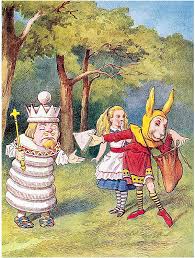
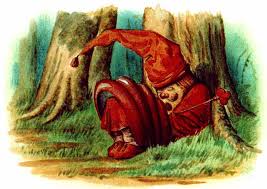
The Red King and the White King are almost doing nothing throughout the game as compared to their Queens. The Red King, as first encountered by Alice, is sleeping and his other pieces are performing their tasks to save him, whereas, the White King seems to be nervous not able to catch up with her Queen.
White King
Red King
Now these characters resemble in moves of both as that of the White and Red King in the real chess board. These actions of Queens and Kings in the world behind the mirror, may portray the position of women in the Victorian era. Women, at that time, used to engage themselves working for their husband and family, and also middle class and the working class women were employed to earn bread for their family, in support of their husbands. Red Queen saying to Alice, “…if you want to get somewhere else, you must run at least twice as fast as that!” may ascertain the idea that in a male-dominated society, women need to work double/toil harder in comparison to men in order to attain recognition. Women in the nineteenth century were not given much of the rights and privileges. This period is named after Queen Victoria, who was in the place of power. It is strange to encounter such a frivolous situation of women at the time when a lady herself was reigning over the society. When we behold Alice as a little woman moving from actual world to Looking Glass world, it may seem as she is struggling to change her confided world. She starts her journey all by herself which reflects the essence of independence in her. The characters like Live flowers resemble the social class structure that pushes Alice to follow their rules. When she chooses to be a Queen, she establishes the path for women/girls to upgrade their status because Alice learns that she must have a powerful authority to control Looking Glass world when one of the servants at once answers her after she turns into a Queen, so is the case for women in Victorian era, for example, Queen Victoria.
We need not be afraid of our high-rated opponents and feel incapable before them and it is then only that Alice is able to shake Red Queen in frustration and raises her voice against her rather than stitching her lips out of fear as evident in the beginning, that is, crown here, symbolizes her transformation from childhood to womanhood, gives her voice and finally renovates her status from a pawn to a queen. All the exclusive pieces are placed right behind the pawns. And a Pawn in comparison to them is just an ordinary, common piece that can slowly and gradually become a Queen. Even a pawn can cut down a King, pertaining to life, a single human being, regardless of his status, is enough to bring about revolution in the society, and win the castle of life. Alice suffering through all the odds, obstructions eventually made it, checkmated the Red King and turned into a Queen.
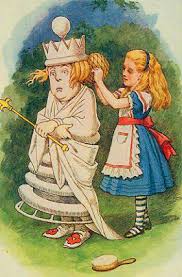
As a Queen in the game, the Red Queen and the White Queen are able to move swiftly and effortlessly. The White Queen, as she says, “jam-tomorrow and jam-yesterday, but never jam-today.”, and screams before pricking her thumb, travels in past and future which is true for the Queen,
(Alice tying clumsy hair of White Queen)
in general, in chess that she can freely move in every direction possible, but she is seen nervous and messy all the time here, and ultimately at two points passes up a chance to checkmate and on another occasion she missed the opportunity to capture the Red Knight. Similarly, the Red Queen said to Alice, “Speak when you’re spoken to!”, and having supporting her words, she doesn’t announce it after putting White King on the check, hence, the check is ignored. Their individual character traits restrained them from performing their duties. This also discovers their absent-mindedness and reverse effect of the mirror world.
The Knight in the chess moves very distinctively and is allowed to jump over any other pieces. Riding and falling of the White Knight in looking glass world is signifying it’s unique L-shape movement. The inventions of White Knight are here to present his powerful character trait, like in chess board Knight is an only piece imbibed with many powers, unlike other pieces, not even a Queen can move in same way as Knight, though his inventions are unprofitable disclosing the touch of the illusionary world, still it is pointing to the fact that precaution is must, so his horse wears spikes on it’s ankles to protect it from shark bites and he collects things that might be useful in the difficult situation. The White Knight is the only character that is benevolent with Alice and saves Alice from the attack of Red Knight (stopping her to be a Queen/upgrade the position of women in society), but it can be an example of gender-biased society where a man is shown as a powerful figure and woman belongs to a weaker section. Alice, here, is represented as a weak girl and this action of White Knight throws light on the concept of feminism, and make Alice learn that a woman must stand for herself and must discover her own capabilities.
Chess wasn’t just one of the themes in Carroll’s story, indeed, it was the ground for the novel’s structure. The game of chess in real world is ‘logical’ while in looking glass world it can be called as ‘maddening game of chess’. Also as an inverted image created by the mirror, this indoor game is displayed as an outer giant field of chess. The pieces are definitely running and moving under the implied rules, but the pattern is not applied evenly. This game sets the deterministic way of life. Both life and chess are, more or less, synonymous in almost every aspect.
When they hear the word “Feminist,” most people think of a bunch of angry women who believe that they are better than men. By definition the word “feminist” means “the advocacy of women’s rights on the basis of the equality of the sexes.” Feminists are not just women who stand outside buildings demanding things. In reality they have revolutionized today’s society and have improved the lives of many. Most rights that women have today derived from true feminists fighting for equality. Feminism has lost its true meaning. Real feminists such as the Suffragettes, Eleanor Roosevelt, Barbara Walters, and so many more have made it possible for women to become news anchors, be more than just a housewife, or allow women to vote.
Today’s feminists have taken these remarkable women and twisted what they stood for. Women have turned against men. Past feminism changed society forever. Today, feminists believe that men are less superior and that women could live on the Earth without them, but that is not what true feminism is. True feminism allows women to be equal to men. True feminists make it possible for women to work the same jobs as men or have the right to own property like men. Although the basis of feminism is still the same, it has become a more aggressive movement. Instead of bringing men and women together as a united front, it has created an even bigger gap throughout the United States. Today’s feminism isn’t making the same progress or spreading the same message. There are still other problems that feminism could fix, but if we don’t use feminism the right way then we won’t be fixing anything. If we continue to misuse feminism then we really will be just a bunch of angry women protesting outside of buildings. The definition, as I have spent my life believing it to be, is the belief that men and women should have equal social, political, and economic rights and opportunities. I do think that that is the most inclusive definition of what feminism is about. It’s about equality for both men and women and a playing field that respects the voices of women. True equality, true feminism is recognition of the dynamics that each person brings to the table. And I say “each person” because women will have reached truest levels of equality when men also have truest levels of equality. As long as we stay and assign task and duty, responsibility and opportunity to a particular gender, then we are not actually striving for true feminism.
I think at that time there was such an imbalance of power that you had to recognize the need to at least get some balance of power to women, some recognition that women should have choices and opportunities outside of the home, and in the home itself. Today we recognize that true feminism is the true equality of both sexes, without it being limited or restricted. And we actually have more young men and young women growing up today that have been raised in more feminist households, where men and women do a share of work in the house. They both have opportunities for education and for job opportunities. Jobs are not labeled for men and for women. There’s still not true equality and there’s still true job segregation. But in that context, there was a time in the late 60’s and early 70’s when the term feminism started growing and when and the Ms. Foundation started that there was a true segregation. And now I think the feminist movement had to take on “the women’s movement,” the women’s perspective so that it could get to a mainstream conversation.
The concept of toxic masculinity is used in academic and media discussions of masculinity to refer to certain cultural norms that are associated with harm to society and men themselves. Traditional stereotypes of men as socially dominant, along with related traits such as misogyny and homophobia, can be considered “toxic” due in part to their promotion of violence, including sexual assault and domestic violence. The socialization of boys in patriarchal societies often normalizes violence, such as in the saying “boys will be boys” about bullying and aggression. Self-reliance and emotional repression are correlated with increased psychological problems in men such as depression, increased stress, and substance use disorders. Toxic masculine traits are characteristic of the unspoken code of behavior among men in prisons, where they exist in part as a response to the harsh conditions of prison life.
Other traditionally masculine traits such as devotion to work, pride in excelling at sports, and providing for one’s family, are not considered to be “toxic”. The concept was originally used by authors associated with the mythopoetic men’s movement such as Shepherd Bliss to contrast stereotypical notions of masculinity with a “real” or “deep” masculinity that they say men have lost touch within modern society. Critics of the term argue that its meaning incorrectly implies that gender-related issues are caused by inherent male traits. The concept of toxic masculinity, or certain formulations of it, has been criticized by some conservatives as an undue condemnation of traditional masculinity, and by some feminists as an essentialist concept that ignores the role of choice and context in causing harmful behaviors and attitudes related to masculinity. toxic masculine norms are a feature of life for men in American prisons, where they are reflected in the behavior of both staff and inmates. The qualities of extreme self-reliance, domination of other men through violence, and avoiding the appearance of either femininity or weakness, comprise an unspoken code among prisoners. Suppressing vulnerable emotions is often adopted to successfully cope with the harsh conditions of prison life, defined by punishment, social isolation, and aggression. These factors likely play a role in suicide among male prisoners. Toxic masculinity can also take the form of bullying of boys by their peers and domestic violence directed toward boys at home. The often violent socialization of boys produces psychological trauma through the promotion of aggression and lack of interpersonal connection. Such trauma is often disregarded, such as in the saying “boys will be boys” about bullying. The promotion of idealized masculine roles emphasizing toughness, dominance, self-reliance, and the restriction of emotion can begin as early as infancy. Such norms are transmitted by parents, other male relatives, and members of the community. Media representations of masculinity on websites such as YouTube often promote similar stereotypical gender roles.
The concept of toxic masculinity has also been criticized from a feminist perspective. Andrea Waling and Michael Salter have argued that the concept of “toxic masculinity” in contradistinction to “healthy masculinity” emerged from a misunderstanding of Raewyn Connell’s 1987 work on hegemonic masculinity. To Waling, “toxic masculinity” is problematic because it presents men as victims of an unavoidable pathology, an essentialist approach that ignores the surrounding social and material context and the personal responsibility of men. Instructing men to practice “healthy masculinity” dismisses androgyny and adopting aspects of femininity as valid options for men, thereby perpetuating gender binaries and privileging masculinity over femininity.
Feminismis a social and political movement that advocates for the rights of women on the grounds of equality of sexes. It does not deny the biological differences between the sexes but demands equalityin opportunities. It covers everything from social and political to economic arenas. In fact, feminist campaigns have been a crucial part of history in women empowerment. The feminist campaigns of the twentieth century made the right to vote, public property, work and education possible. Thus, an essay on feminism will discuss its importance and impact.
Importance of Feminism
Feminism is not just important for women but for every sex, gender, caste, creed and more. It empowers the people and society as a whole. A very common misconception is that only women can be feminists.
It is absolutely wrong but feminism does not just benefit women. It strives for equality of the sexes, not the superiority of women. Feminism takes the gender roles which have been around for many years and tries to deconstruct them.
This allows people to live freely and empower lives without getting tied down by traditional restrictions. In other words, it benefits women as well as men. For instance, while it advocates that women must be free to earn it also advocates that why should men be the sole breadwinner of the family? It tries to give freedom to all.
Most importantly, it is essential for young people to get involved in the feminist movement. This way, we can achieve faster results. It is no less than a dream to live in a world full of equality.
Thus, we must all look at our own cultures and communities for making this dream a reality. We have not yet reached the result but we are on the journey, so we must continue on this mission to achieve successful results.
Impact of Feminism
Feminism has had a life-changing impact on everyone, especially women. If we look at history, we see that it is what gave women the right to vote. It was no small feat but was achieved successfully by women.
Further, if we look at modern feminism, we see how feminism involves in life-altering campaigns. For instance, campaigns that support the abortion of unwanted pregnancy and reproductive rights allow women to have freedom of choice.
Moreover, feminism constantly questions patriarchy and strives to renounce gender roles. It allows men to be whoever they wish to be without getting judged. It is not taboo for men to cry anymore because they must be allowed to express themselves freely.
All over the world people are misguided about the word feminism. According to you what does feminism mean? Is it to put men down and rule the world or is it to enjoy everything a man can? Let’s discuss about various myths and the actual meaning of feminism and the significance of it in a women’s life.
According to the Oxford dictionary feminism means “the belief that women should have the same rights and opportunities as men“. In more simpler words feminism is all about the equality between men and women and have the freedom of everything that they wish to do. Some people argue that they believe in ‘equality’ but they have no belief in feminism. Feminism has been made critical despite of it being a very simple concept.
From ancient times women are pointed out for the way they dress and for their aspirations. They have been constantly told to dress in a certain way and to live their life according to the norms of the society. Women are fighting for their equal rights from centuries for there right to vote, right to speech and freedom. People in the society have framed a woman according to their needs and expect them to fulfill their expectations. A married woman taking care of her husband, her in-laws and looking after their children is considered to be the ideal one whereas if she wants to work and be dependent, she is criticised and often being questioned on her motherhood. Similar type of Criticism she faces at her work place. These are the basic yet essential inequality that a women regularly faces.
Women-Women Conflict regarding feminism
Sometimes women also take feminism in a wrong way. They think that being a feminist means to humiliate men and they often misuse their power of being a women by falsely accusing a men in a crime. This is basically pseudo feminism. Women around the world debates for the real meaning of feminism which sometimes leads to conflicts. Some women of old generation are also against feminism and consider it as uncultural.
Myths
Feminists hate men.
Feminists are angry.
Feminists are unattractive and not feminine.
All feminists are lesbians.
Feminists are all pro-choice.
If you are a feminist, you cannot be religious.
All feminists are career women and do not support stay-at-home moms.
Feminists are Bra- Burners who hate sex.
Feminists can only be women.
Feminists don’t believe in marriage.
If you have ever found yourself saying “I’m not a feminist, but I am for equality,” then ask yourself why you do not claim the title? If it is because of the misconceptions of what a feminist truly is then empower yourself to raise awareness about what feminism is really all about.
Feminists are all about equality between genders– which means feminists don’t want women to be more powerful than men any more than we want men more powerful than women. What may seem like a discriminatory act against men is actually an attempt to level the playing field between men and women.
While huge strides have been made towards complete gender equality, a great deal of work remains to be done, both in India and abroad, including the gender pay gap, access to reproductive healthcare, protection against sexual assault and violence and gender representation in media, among other issues.
How a Guy Can Be a Feminist?
Basically feminism is not only committed to changing negative stereotypes about being a woman. A large facet of feminism is understanding streotypes about masculinity and its effects on society and what it means to be a man. If you care about equality for your mother, daughter, grandmother, girlfriend, a friend, who is female then feminism should be important to you. Additionally, feminism is about equality for all marginalized groups- equality for those who are LGBTQIA, disabled, and ethnic and racial minorities. Caring about feminism means caring about people who fit into these categories.
Being a feminist is not something to be ashamed of. It is the right of every person who believes in equality for all.
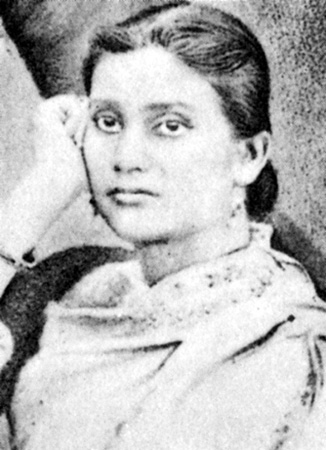
160 years ago, on this day, July 18, Kadambini Ganguly was born in a Bengali family in Bhagalpur, Bihar. As a child, she was rebellious with regard to sexism and patriarchy and was very hard-working as a student.
Picture of Dr. Kadambini Ganguly.
During her childhood, she had witnessed that in her area many women used to die without treatment as women could not get proper treatment because all doctors were males and Indian social culture didn’t approve a male doctor treating a female patient. From here, she dreamt of becoming a doctor during her childhood.
However, things didn’t happen according to her. She was married off at young age and thus she thought her dreams would go down the gutter. But it was then her husband who supported her in every walk of her life. She did her schooling partly at Banga Mahila Vidyalaya and partly at Bethune School. In 1878, she became the first female to pass the University of Calcutta entrance examination.
Within few years, she became one of the first few female graduates in the country alongside Chandramukhi Basu. When she wanted to study medicine, she was denied admission by University of Calcutta as the university wasn’t allowing female students back then. Dwarkanath Ganguly, Kadambini Ganguly’s husband challenged this patriarchal rule and in 1883 Kadambini Ganguly was the first female to take admission in Calcutta Medical College.
Kadambini Ganguly received a scholarship of two years and in 1886 she was awarded the GBMC award and thus making her the first female to have a degree in Western Medicine in the whole of South Asia.
It is also important to note that during that time people didn’t approve a female getting education and as a result she received strong opposition regarding her academical choices from conservatives even from her neighbourhood and relatives.
Bangabashi, a magazine of that time that was run by the then conservatives also called her a “whore” and this obviously didn’t go well with the Ganguly couple. Dwarkanath Ganguly legally filed a court case against the magazine and this resulted in 6 months jail term for the editor of the magazine.
Kadambini Ganguly also went abroad for her studies and got her further education in Edinburgh College of Medicines for Women. She quickly earned three different diploma degrees. Soon, she became popular in entire South Asia and Europe. Her name became so popular that the then King of Nepal invited her to treat his ailing mother.
Kadambini Ganguly had even advocated for social change in India and especially for women. It was due to her efforts that Bethune College in Kolkata added the Fine Arts course in their college. She was also one of the six female delegates to fifth session in Indian National Congress and even organised Women’s Conference in 1906 in Calcutta.
Authors of that time described Kadambini Ganguly as one of the “greatest” and the “most accomplished woman” of her time. And truly, all of us agree to it. Because of courageous women like her, so many women in the world must have got inspired to achieve their dreams. Kadambini Ganguly will always remain immortal in all her hearts.
Women’s empowerment can be defined to promoting women’s sense of self-worth, their ability to determine their own choices, and their right to influence social change for themselves and others.
‘There should be gender equality’ —a familiar line uttered repeatedly by many self-claimed modern era intellectuals .I think I will use the term that ‘men and women are complementary to each other’. Neither can survive without the other. Nature has created women and men in such a way that mankind will only survive if both genders coexist. Thus, the genders complement each other. I think this definition makes more sense .My argument is that gender equality means equal respect and equal remuneration in the same performance in their exclusive domain.
               Not all girls are made of sugar
               and spice and all things nice.
            There are girls made of dark lace
         and witchcraft and a little bit of vice.
          There are daughters made claw-first
        and story-mad, tiger roar and wolf-bad.
     There are women made of terrible tempests
    and savage storms and the untamed unwanted.

   These are damsels made of flawless fearlessness
 made of more bravery than knights have ever seen.
These are princesses made of valour and poison alike
 and they are here to hold court as your queens.

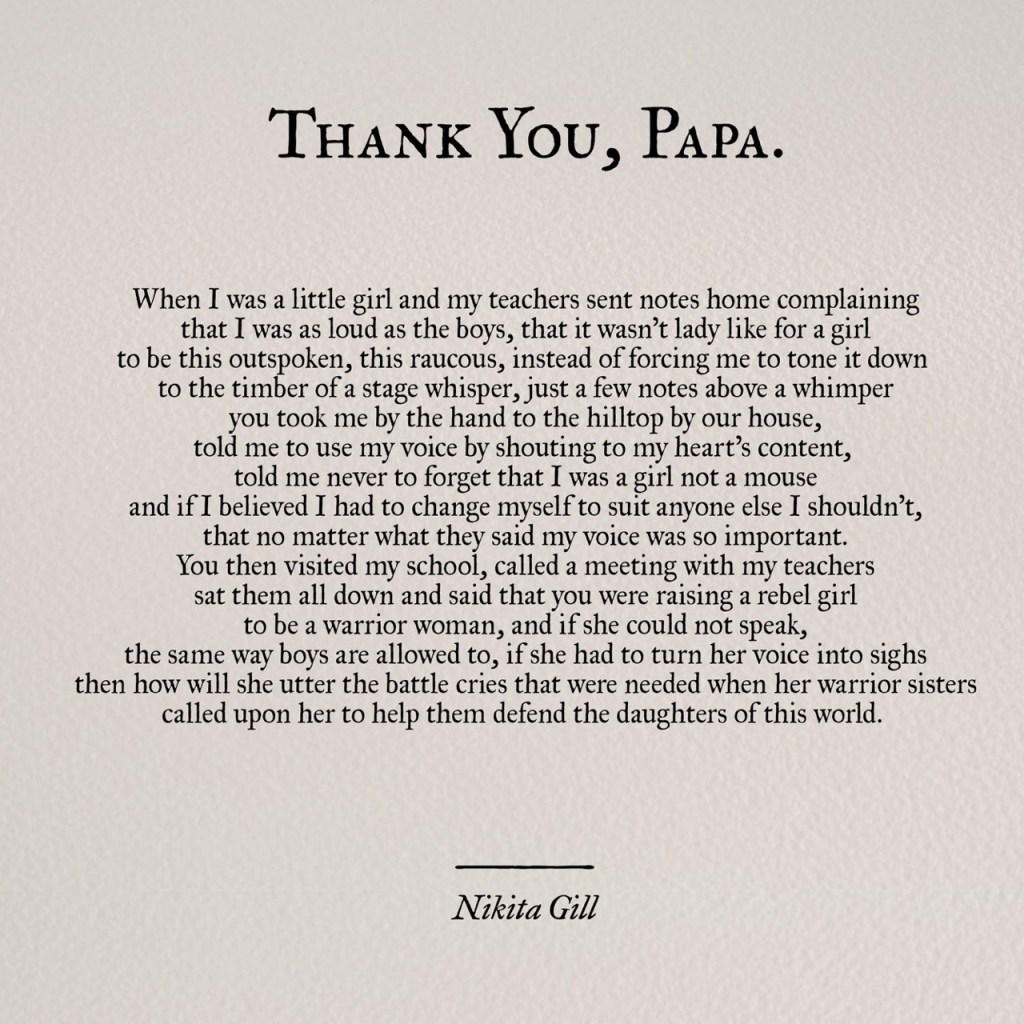
                             -Nikita gill
Why should the men’s championship get more sponsorship than women’s, and why should the winner be paid more? Why is it that men cricketers get paid more, receive more appreciation and more respect than their women counterparts? Why is Sachin Tendulkar treated as the God of cricket but Mithali Raj simply a good Indian woman cricketer? Why do male hockey players get more money and respect than women players?
The bottom line is, and I repeat myself here, nature has made men and women differently. They compliment each other but can’t be equal physically and cannot compete with each other in every area. But gender equality can be achieved if we can extend the same respect, offer the same pay scale and the same status to champions of both genders in their domain. Personally, I respect Sachin Tendulkar and Mithali Raj equally. I do watch women cricket matches with the same enthusiasm as I watch men’s cricket. Are you ready to do that? If yes, then you are encouraging gender equality. Else, you are going down a darker path, with no respect and no equality.
Also, being called “beautiful” is nice, don’t get me wrong. But hearing the words, “You’re brilliant” means so much more. Because beauty won’t get me a college diploma. Curves won’t get me a secure job and a sufficient salary. Being pretty won’t get me respect.
Beauty doesn’t encompass the person you are. All women have natural beauty, but beauty can only take you so far. When I am most insecure, I don’t want confirmations of my physical appearance. I want confirmation that my work, mind and strength are recognized. We grow up thinking beauty and male validation was the ultimate goal. Now, as a young woman, my greatest goal is to be successful in my career. I strive for knowledge, not perfect hair. I want respect, not a skinny waist. Being educated and opinionated will get you so much farther than just a pretty face. “Screw beautiful. I’m brilliant. If you really want to appease me, compliment my brain.”
” I WOULD RATHER STRUGGLE EVERYDAY OF MY LIFE THAN TO EVER GIVE A MAN THE POWER TO SAY ‘ YOU WOULDN’T HAVE THAT IF IT WASN’T FOR ME’ “
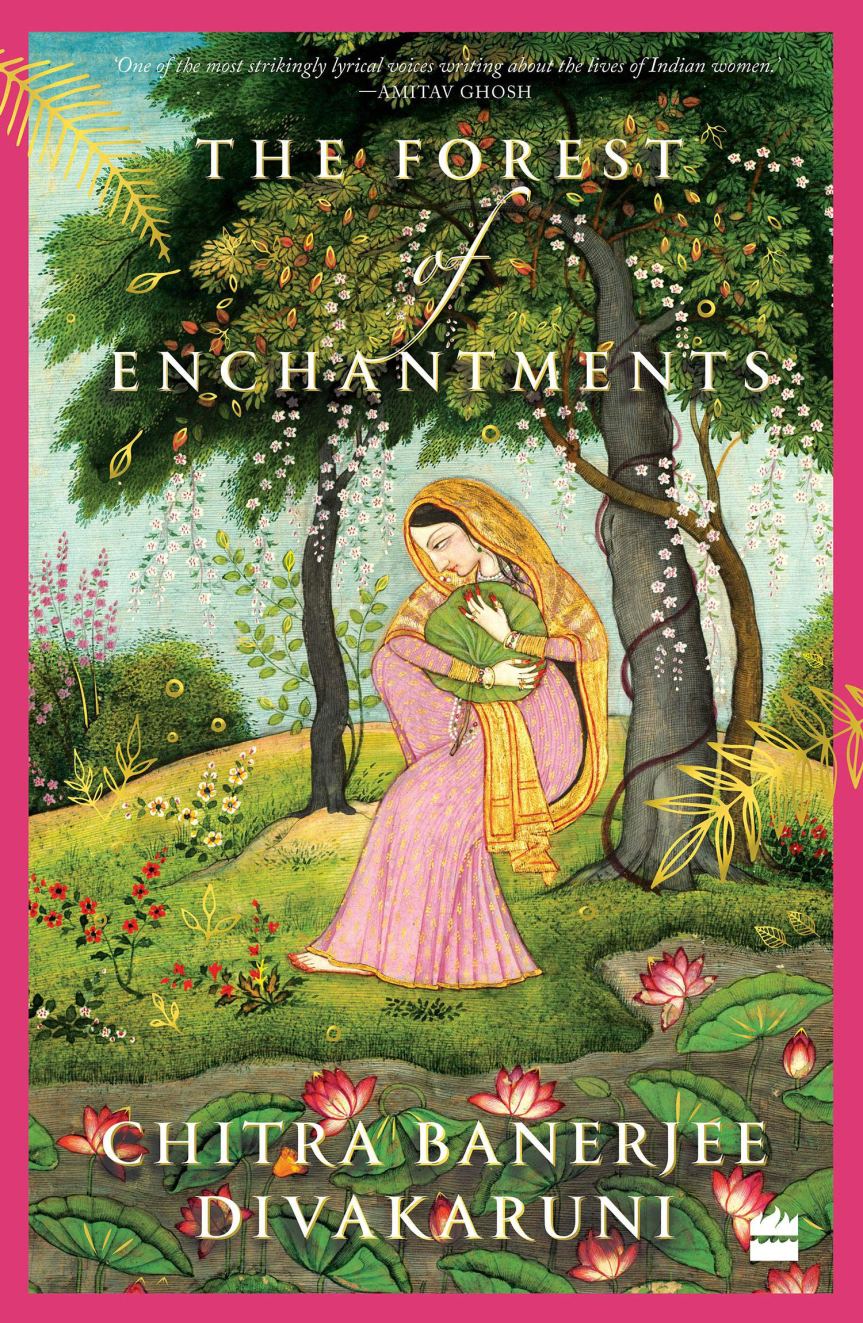
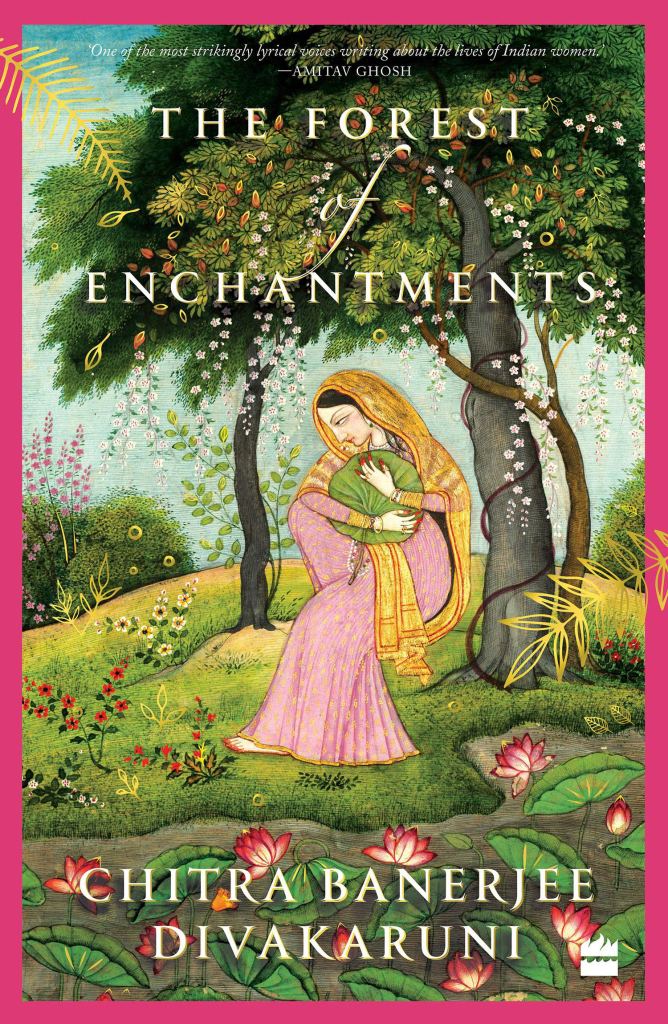
“Sita’s story haunted me. Because it was one of the first stories I was told, and because I sensed there was a disconnect between the truth of Sita and the way Indian popular culture thought of her. I sensed that Sita was more than what we took her to be. But who she was I didn’t yet know.”
Chitra Banerjee Divakaruni has made a well-written Author’s note right before the prologue to the novel begins. She tells us one big truth which is to a great extent a commonality among three-fourth of the world’s population who is familiar with the great epic ‘Ramayana’ – who real Sita is, is untold.
Despite Sita being considered as the incarnation of Goddess Lakshmi herself, she is often regarded as a meek woman who is an epitome of sacrifice and unending love, with no temper or hatred. The ‘ideal-woman concept’ idolizes Sita for she is considered the perfect wife with silent stoicism and the ability to long endure without whimpering. This is of course a prominent reason why many name their daughters ‘Sita’ and asks them to look up to the goddess to learn subservience, sacrifice and ‘perfection’. Sita is indeed to be idolized but not in a way most people perceive.
‘The Forest of Enchantments’ is brilliantly feministic in writing. It retells Ramayana through Sita’s eyes, making us analyse the story through a gynocentric perspective. Thus, it indubitably makes Ramayan a ‘Sitayan’. The author sets to bring out the version of Sita nobody knows, a Sita who is much more than a mere daughter, a loyal wife and a loving mother, a Sita who is a woman, an equal to Ram, one who refuses to give her dignity away even for love. Chitra Banarjee also tries to sympathize with some of the other female characters of Ramayana, who we consider evil, flawed or obnoxious, through Sita. We see Sita musing about whether Shurpanaka had deserved to get mutilated by Ram just for declaring her love for him. Similarly Sita chats with Ahalya asking her a question that most of us would’ve asked if gotten an opportunity to meet Ahalya in real- ‘why did she forgive Gautam?’. Sita is left answerless by Ahalya but it is quiet clear from her countenance that it is what women are supposed to do, forgive and endure. Sita herself had to go through a similar situation, when Ram refused to accept her, doubting her chastity after Ravan abducted her, she performed the agni-pareeksha and the gods itself declared her innocence. Sita got the answer as to why Ahalya forgave her husband when she found herself forgiving Ram inspite of how cruel he had been to her. The author draws a picture of how women are taught to endure and forgive when men are never blamed for their actions. She also points out how love can be blinding. Ram’s consecutive injustices to Sita like abandoning her while she’s pregnant and making her do fire test is often celebrated by people as the spirit of kingship and the duty of a husband but ‘The Forest of Enchantments’ questions Ram on how he’s going to pay for his actions. The epilogue to the novel is heart-wrenching, especially for the female audience, for it shows how extreme a woman can get insulted, how her dignity is at stake and her indecisiveness whether to choose love or self-respect. Sita lets go the love of her life and chooses to be dignified and decides not to settle for anything less.
Chitra Banerjee’s ‘Sita’ is what every woman should be. Loving, caring yet resilient and dignified. The author walks us through every little detail on ‘How to be a Sita’, not the stoic one but the strong one. The book is indeed a must-read if you are ever asked to be like Sita.
“We realize the importance of our voices only when we are silenced.” Malala Yousafzai, a teenager known throughout Pakistan for her advocacy on women’s education and women’s rights. Standing up for women’s progress can be a risky business in countries like Afghanistan and Pakistan where vicious Islamic extremists have a strong foothold. She has publicly spoken for women education was shot in the head by the Taliban, in an attempt to silence her. She survived.
This near to death experience gave her a voice which could not be supressed and that progressed to her earning the Noble Prize when she was just 17, she has been continuing to fight for female education and her global scale has been increasing ever since. In Malala’s gripping book she tells a story of faith, hope and bravery.
Circumstances which brought her to the front of an international scene on female education are heart-wrenching and tragic, that involved Taliban taking over Pakistan, being forbidden to attend school because of her being a girl and was asked to stay at home and being shot in the head by the deadliest terrorist group in the world back in 2012. These are the situations which many would not be able to sail through, most would abandon and drown will fighting for what is right. But she did not budge. She kept a fierce front and continued to advocate for education for girl’s and women. After going through hell, her voice is stronger than ever and is also supported globally.
Overview–
In the first half of the book, she describes the history of Pakistan, her family’s ancestors and Swat, which is the northern region of Pakistan where she used to live as a kid. She shares anecdotes about her childhood, her family. She gives the reader a glimpse of Pakistan through a women’s approach. Malala’s father founded the local school which she attended growing up, from a young age, she demonstrated strong character and soon began to ask her father why were women being treated so poorly in Pakistan. In response, he told Malala about Afghanistan, where the Taliban burned schools for young girls and forced them to wear full burkas. Her father’s goal was to make her understand that the poor treatment of women in Pakistan was actually not that bad, when he compared to the way women were treated in Afghanistan. This book is almost about her father, Ziauddin, who is a teacher, headmaster and a local activist. He is the dominant influence in Malala’s life and has been consecutively criticized for encouraging his intelligent child to be outspoken in a dangerous environment. According to Malala’s perspective, her father feels guilt and felt responsible for what had happened to her, but also is proud of her bravery and accomplishments. Ziauddin is a very progressive man in Western terms and considering where he belongs from. Her father is the leader of the local environmental movement, champion of girls’ education, woman’s rights advocate He has challenged the Taliban repeatedly at many public events. In one of the most memorable scenes from the book, Taliban mullah who was a local who was accompanied by village leaders, pay an evening call on the Yousafzai home to demand that Ziauddin needs to stop educating girls. Her dad not only pushes them back, but he also he kicks them out of the house. Malala carefully sees that her father speaks out in support of his ideals. she is heavily influenced by the conduct of her parents. She learns her father’s ideals and develops with her own impressive smartness, talent, bravery and determination. Malala’s fierce advocacy on behalf of girls’ education and women’s right is clear and forthright as her father’s. When the Taliban threats finally had shut down her school, she tells the journalists that: “They cannot stop me. I will get my education if it’s at home, school or some other place.” She has a mind of her own. She has her own voice as well. She conveys with humour, that her father is a romantic and idealistic man and her mother, is an illiterate Pashtun woman, who keeps the family grounded. It will be very interesting to see how, as she grows older, Malala will inculcate the strong and different models presented by her parents. This book has raised many questions, In the year 2012, one of her impactful speeches led to a group of Taliban militants stopping her school bus on the way back home and shooting her in the head. Thankfully, Malala survived although she had to flee from her country her home and now lives in the United Kingdom continuing her fight for women’s right to education and their rights.
Final Thoughts:
this book should be used around the world to teach the importance of education and what impact it can make. It is an extremely powerful book. Malala is someone we can all get inspired from. When you are reading this book, you will easily forget that she was just a child when most of these unfortunate events happened. This book is a fast read. It is suitable for people who are specialists in the region and ordinary people who are seeking to improve their knowledge of Pakistan, but will be especially engaging for those who are interested in the story of this inspiring young woman, whose life goals and contributions to the global community are just beginning. She used her misery and her tragic past to build a cause that matters and helps to solve the problems she sees as pressing. The fight is still going on and its needs our undivided attention.
We must have heard from our relatives and people from our older generation that a good woman or a good wife is the one who knows how to ‘adjust’. We also must have come across conversations where patriarchs have often said things like “to maintain a good relationship, a woman must adjust” or “till the time things don’t go worse a woman should learn to adjust and shouldn’t go for judicial recourse”.
Photo Credits: First Post
These casual patriarchal phrases raise many important questions: do women need to face the worse to get justice? Do women need to tolerate abuse from their partners till the time abuse doesn’t go extremely physical or sexual in nature? Do only women need to give up on their dreams and just look after their families?
Patriarchy apologists, however appraise some women in our society and they are only those women who unwillingly or willingly give up on their dreams and career in order to maintain a ‘happy’ family or women who stay with their ‘cruel’ in laws. This proves that the more a woman sacrifices or the more a woman tolerates abuse, the more she is loved and the more she is considered as an “ideal woman”.
But the moment a woman stands up for herself, the moment she focuses on her dreams and career instead of caring about maintaining a family, the moment she stops adjusting, the same patriarchy apologists start slut shamming her or shamming her simply. In this case, she becomes a “bad example” for all other women just for standing up for her simple basic rights.
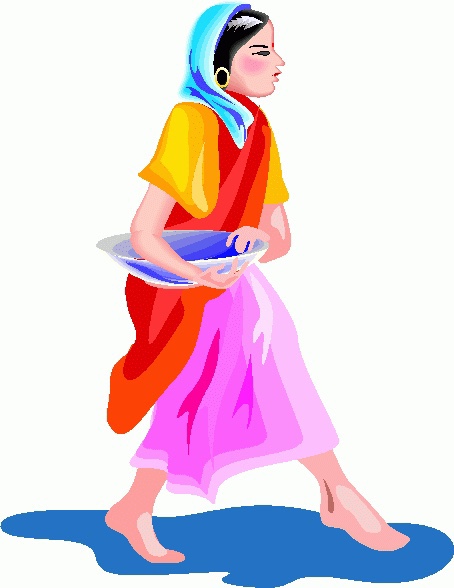
This also reminds us about how society has taught us that a mother only becomes “a true mother” when she is sacrificial. In India, people question a mother’s identity even if she chooses to wear a western outfit. Do women now even have to sacrifice on their preferred clothes? Women wearing western are seen “incapable “of raising a child? How does a simple piece of fabric decides a woman’s worth? Mothers are also judged by our patriarchal world for being into a particular profession, for example, those engaged in beauty and wellness or into travelling. How does a mother’s profession makes her “less of a mother”?
Photo Credits: Clipart Library.
It’s high time we stop romanticising women who suffer because of internalized patriarchy. The only thing our patriarchal society has to understand is that a woman’s personal choices are her own fundamental rights and she can exercise them as and when she wants.
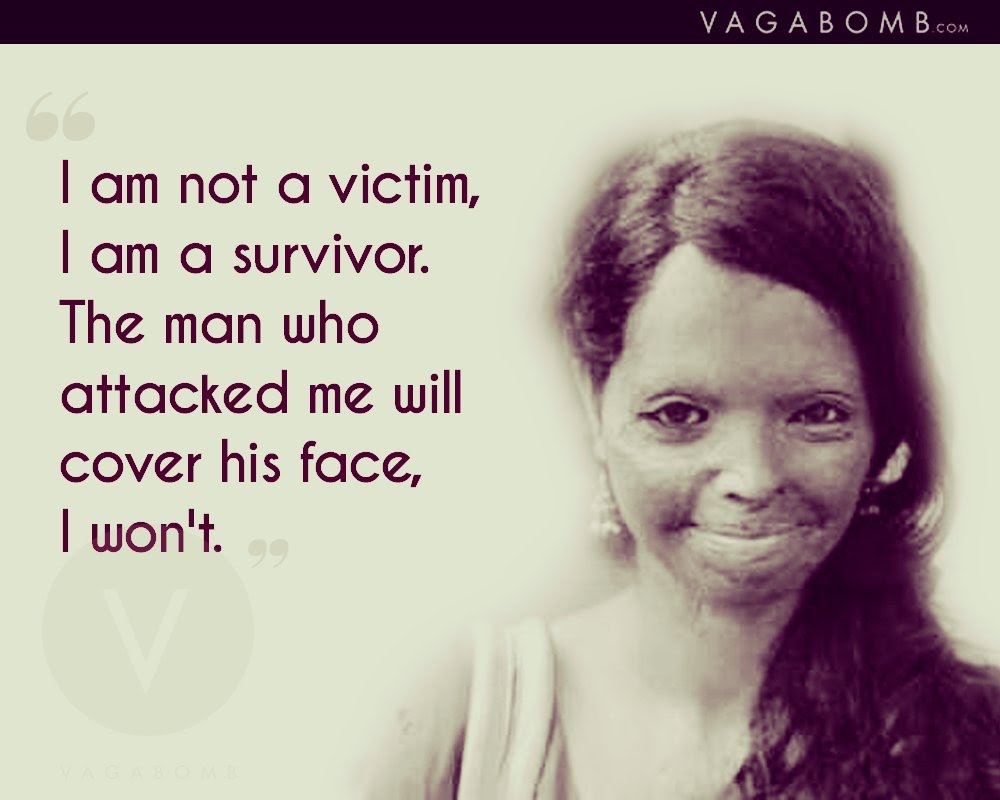
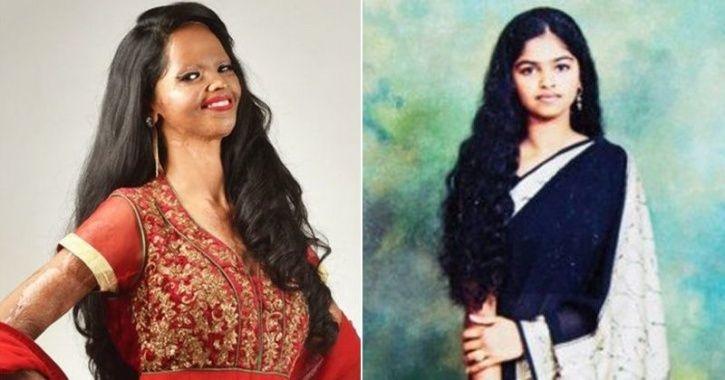
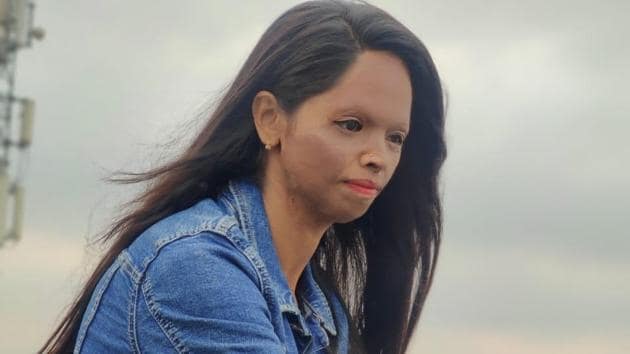
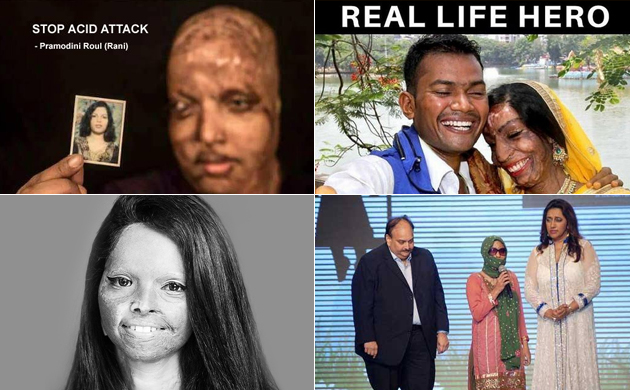
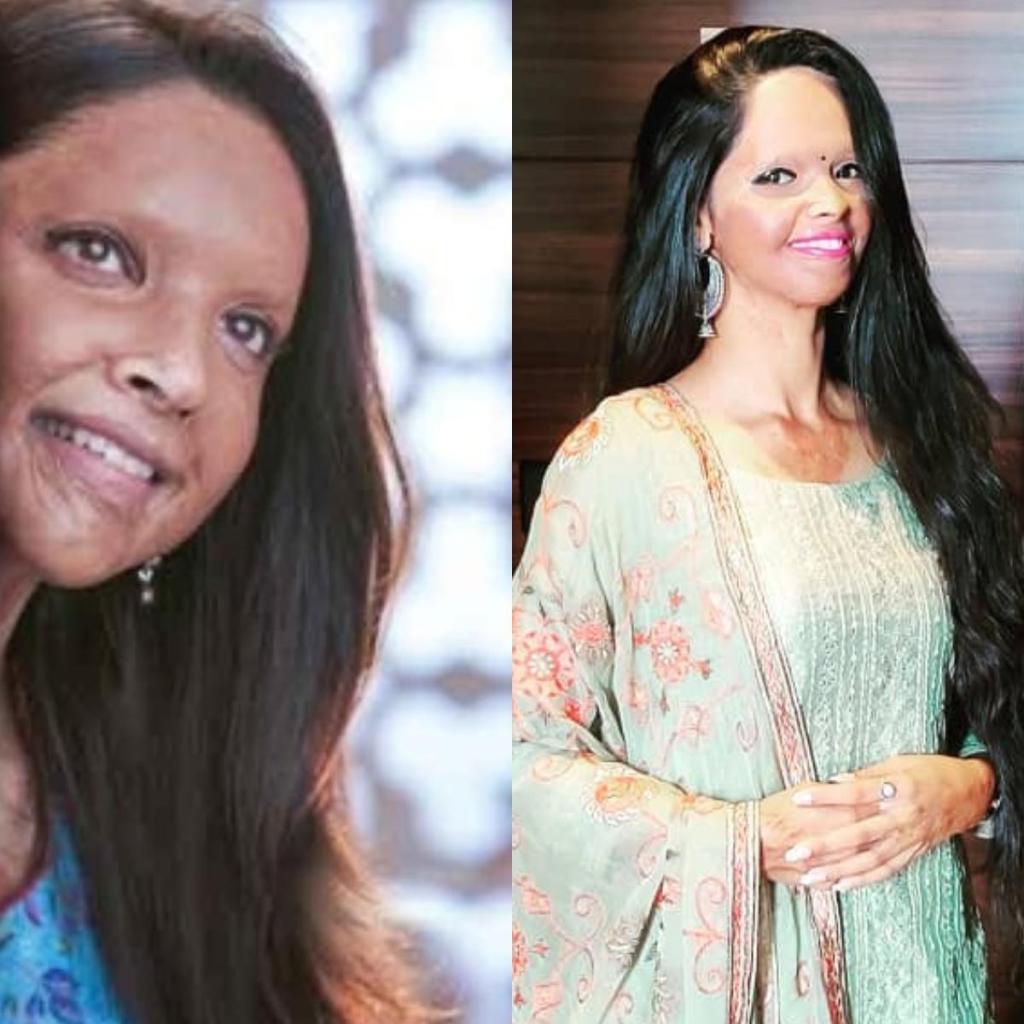
Laxmi Agarwal, was only 15 when her jilted lover had thrown acid on her and she had to bear the brunt of a monstrous attack. The motive of the attacker was vengeance for her refusal to marry him. She was burning alive on the road in excruciating pain and was screaming for help on the road. When the accident took place, she was in a state of shock. The only question that kept arising in her mind was “why me?” For two and a half months she refused to look at herself in the mirror, she failed to have the spirit to face what she had been through. Her heart and mind were filled with feelings of self -hatred and shame.
People around her especially women would call her names and taunted her. They faulted her for this heinous crime and questioned her upbringing which would leave her and her family tormented. She was scarred for her entire life and was traumatized that she had contemplated suicide. But thinking of the pain that she would cause to her parents, she decided to end such thoughts. Her attacker assumed that he would leave her trapped within the four walls of her house but little did he know that he had ruined her face not her dreams.
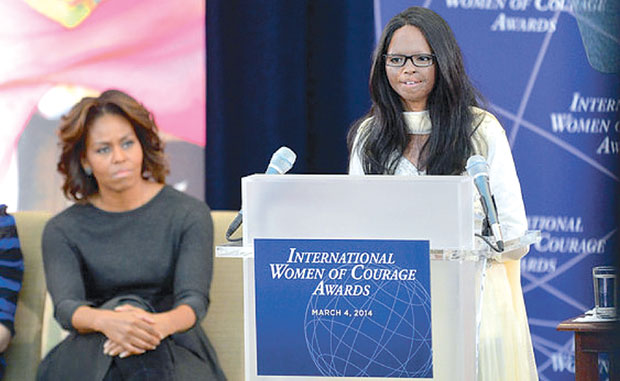
Change was afoot for Laxmi, she refused to be enslaved by the injustice caused to her, with her family’s support she bounced back powerfully. She had filed a Public interest litigation in the supreme court that dealt with acid attack crimes and also petitioned for the ban of the sale of acid which led to the court ordering central and state governments to curb the regulation of acid. After four years of trial her attacker was put behind the bars. Laxmi Agarwal was presented with the International Women of courage award by Michelle Obama, she was also given the International Women Empowerment Award from the Ministry of Women and Child Development, she has challenged the stereotypes and prejudices of the beauty community and has helped over 400 acid attack survivors with her NGO.
Putting myself in her shoes, at such a young age seeing your life colliding and having no control over is horrifying. Face is the first part of the body which is directly associated to your identity. It would have felt like someone has taken away my identity for the rest of my life. The look on my face would change how people would perceive me and that would have impacted me mentally as the psychological pain cannot be measured. Women like Laxmi are an epitome of courage and resilience going through a life changing event still led her to having a strong ground beneath her. She did not let anyone else decide what her life could be and took charge over it herself. Laxmi encourages people to fight against wrongful acts and stand up for themselves. She is undoubtedly an inspiration for not only acid attack survivors but also for every person who has faced injustice in their lives.
Mithun Bhat, born in Bhopal, could buy 2 houses within a month, Bentley, Ferrari and paid all his debts. But previously, he worked with salary under the minimum wage. So, how could he earn so much money only in a month? He tells us his story.
“I worked at pizza delivery service for a year. I was prior a collage student and did a part time job in a restaurant. I did it to support my study. In the second year of study I was close to be expelled since I could not pay the tuition. At the time, I had to take a loan. I could finally paid my tuition, but I had no money to pay the monthly installments to the bank. Honestly, studying and working all at once was beyond my endurance, and eventually, I was expelled from campus a week before the end of school year. That was the beginning of the darkest days of my life. My father lost his job and my family didn’t know how to survive. Could you imagine how hopeless I felt? I had no decent work and no education, and my father lost his job. I could do nothing to help them.
One night, I was delivering a pizza to the last location. A guy opened the door. He was with his friends, and while he was paying the pizza, I heard their discussion about where would they invest Rs. 2,000,000 they earned 10 minutes ago. I just made a glance and saw a sort of graph and figures on the laptop screen. The guy opening the door gave me Rs. 1,000 but the price was only Rs. 600. He told me to keep the change.
I was absolutely surprised and after I got back home, I took my laptop and tried to recall about their discussion. After 5 minutes, I remembered that they told about online trading. On the Broker website I found the graphs and figures I saw at the guy’s laptop.
After reading all information about the broker and watching tutorial videos, I opened a demo account where I got virtual money. I quickly understood what I had to do, it was very easy. I earned some money after my very first transaction. Then I thought… I did not lose anything, so I decided to open a real account and deposited my last money there. At the morning, I woke up and saw that I earned Rs. 30,654 over that night. After 2 weeks I could paid my debts off, bought a car, and I could help my father while he was searching for a new job and pay his expenses for the next few months. 2 weeks later, I already had 2 houses in the suburb. And all I did without leaving my home and getting higher education.
That’s my luck. It would never happen if I did not meet the rich guy while delivering the pizza. I know there are a lot of people having not good times like me, that’s why I tell you: if you want to live without any problem, I can tell you how to earn money with Trading Resource. It is very easy if you would try it.
She was just a 15 year old girl . A girl , full of life . But what happened to her .
It’s her story . A story of a survivor.
She was powerful not because she wasn’t scared but because she went on so strongly, despite the fear.”
– Atticus
At the age of 15 , when a girl or a boy makes happy memories and learn about life . She was attacked in the market full of people . She was attacked because she rejected an old jerk of 32 years old.
A 32 year old proposed a marriage proposal to a 15 year old girl , who lives near the neighborhood. She ignored and rejected him and he planned an acid attack .
Her name is Lakshmi Agarwal , she was attacked at the age of 15 in 2005 in New Delhi after rejecting the romantic advances of Naeem Khan . She didn’t inform anyone about the scenario because she believed her parents and society would have blamed her and stopped her study .
After 10 months , Lakshmi was in the market and Naeem asked her again through message about the marriage proposal but she didn’t respond . And in no time , Kamran (Naeem’s older brother ) and his girlfriend attacked her with acid . He was in the motorcycle and his girlfriend Rakhi threw acid on Lakshmi , when Kamran called her name and she looked behind for response.
She fainted on the road and when she regain consciousness she went middle of the road asked for help and met with multiple accidents but no one stopped to help her . She was burning in fire and her skin was melting.
A man named Arun Singh called PCR and told police about the situation . Someone threw water to help her but it turned out opposite and the acid burnt her neck . Arun think it might be late , so he helped her on the backseat of his car , later the seat cover turned into black hole due to the acid .
Arun admitted her in the hospital , called police and her family . Lakshmi went through many surgeries and operations including eye surgery. Four days later Naeem Khan got arrested but was bailed after a month later .
Protests and media attention.
After many protests and media attention Naeem got life imprisonment .
Lakshmi’s story was one of the series in the Hindustan Times. Lakshmi was scared after the attack because most of her face and body parts were not same as before . But she didn’t loose hope ,she fought for justice , asked for help for the victims of acid attacks and pleaded the law for the ban on sale of acid.
Meanwhile government failed to frame policies on acid sale and chemical attacks .
“ Seriousness is not seen on the part of the government in handling the issue,” the bench headed by Justice RM Lodha.
In 2013 , the plea of Agarwal was heard and later claims that “ Acid is freely available in shops. Our own volunteers have gone and purchased acid easily. In fact, I have myself purchased acid,” she said. “We have launched a new initiative called ‘Shoot Acid’.
After , the law passed by Supreme court . Lakshmi founded NGO named Chhanv Foundation to help acid attack survivors in India.
In 2019, she was honored with the International Women Empowerment Award from the Ministry of Women and Child Development, the Ministry of Drinking Water and Sanitation and UNICEF for her campaign of Stop Acid Sale. In 2014, she received the International Women of Courage award at the hands of First Lady Michelle Obama.
And the movie Chhapaak is based on her life and stars Deepika Padukone in her role.
“And one day she discovered that she was fierce, and strong, and full of fire, and that not even she could hold herself back because her passion burned brighter than her fears.”












 Eduindex
You must be logged in to post a comment.