One Indian Girl : Book Review

About the book

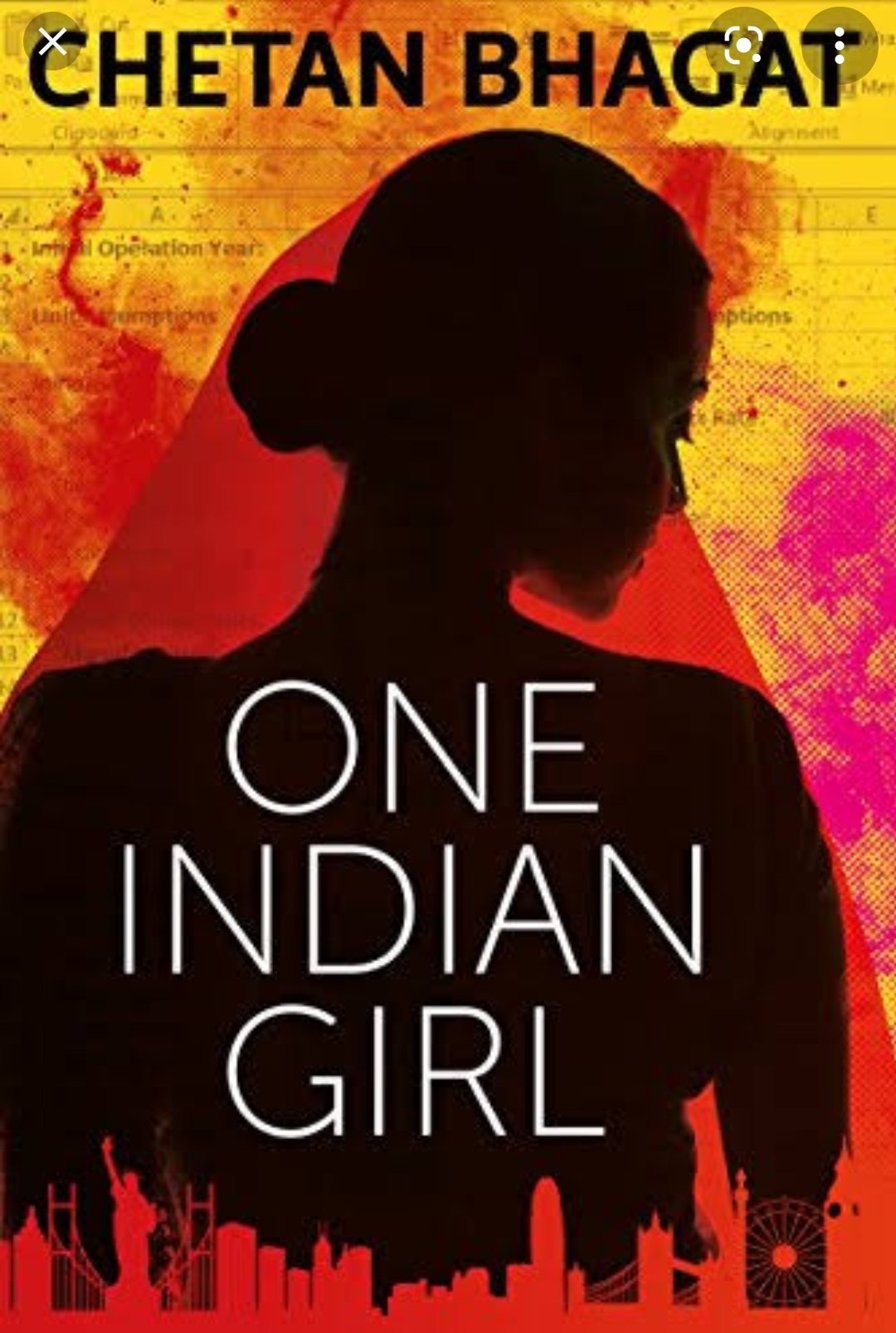
  • Title : One Indian Girl
  • Author : Chetan Bhagat
  • Genre : Fiction
  • Subject : Feminism
  • Year of publication : 2016
  • Number of pages : 280

About the author

Chetan Bhagat is the author of sex bestselling novels – Five point someone, One night @ the call center , The 3 mistakes of my life, 2 States, Revolution 2020, Half Girlfriend.

In 2008, The New York Times called him ” the biggest- selling author in India’s history”. He is also a Filmfare-award-winning screenplay writer.

TIME magazine named him as one of the 100 most influential people in the world and Fast Company, USA, listed him as one of the 100 most creative people in business globally.

Chetan Bhagat went to college at IIT Delhi and IIM Ahmedabad, after which he worked in investment banking for a decade before quitting his job to become a full – time writer.

” To all Indian girls especially the ones who dare to dream and live life on their own terms.” – Chetan Bhagat

Analysis of the book

One Indian Girl is the story of Radhika Mehta, a worker at the Distressed Debt Group of Goldman Sachs, the investment bank.

The book tells us about that what if we are a girl, we should also have equal rights to live independently in the way what a boy lives.

“Why do people tell girls all this? You ask them to achieve things, but when they do, you can’t handle it.”

Summary of the story

The book starts with Radhika making arrangements regarding her marriage with Brijesh Gulati who works in the Facebook company in San Francisco. She later reveals her childhood and life in Delhi, as a nerdy personality in contrast to her elder sister Aditi.

While trying to engage conversation with Brijesh, she is unexpectedly contacted by Debasish “Debu” Sen who wishes to meet her, to which she refuses. She later, meets him in the gym and then there occurs the flashbacks to four years ago.

When Radhika began her job training at Goldman Sachs, she was introduced to Debu and then the two started dating, eventually starting a live in relationship. When Radhika gets a bonus of 150,000 dollars and tells Debu, he doesn’t react as Radhika expects and after a few days, he breaks up with her due to being pressurised by Radhika about marriage and wanting instead a simple girl as a housewife. Facing depression, she opts for a move to Hong Kong.

In Hong Kong when she gets to know her boss’s boss Neel Gupta who is 20 years older than her , she finds him attractive. On their business trip together, they end up sleeping together by the beach. This continues for one year, but after that Radhika realises that she has no future with him as he is married with children. Thus she breaks up with him and shifts to London office.

After getting tremendous pressure from her mother for an arrange marriage, she finally agreed and connects with Brijesh Gulati in a matrimonial site and also says yes for marriage to make her mother happy.

Both her ex- boyfriends realised they want her back and contacted Radhika but she was very confused between her past and future husband so she turned down both their proposals and even cancelled her wedding with Brijesh because she felt she was not ready for marriage.

“Why do we need our men to praise and validate us in order for us to feel accomplished?”

“You know what women really want? We don’t want to choose. We want to fly and we also want a beautiful nest. We want both. Do male birds tell female birds to choose? “Hey honey, choose. Either fly or sit in the nest.”
https://bookmate.com/books/d41pnvtp/quotes

What is Catcalling?

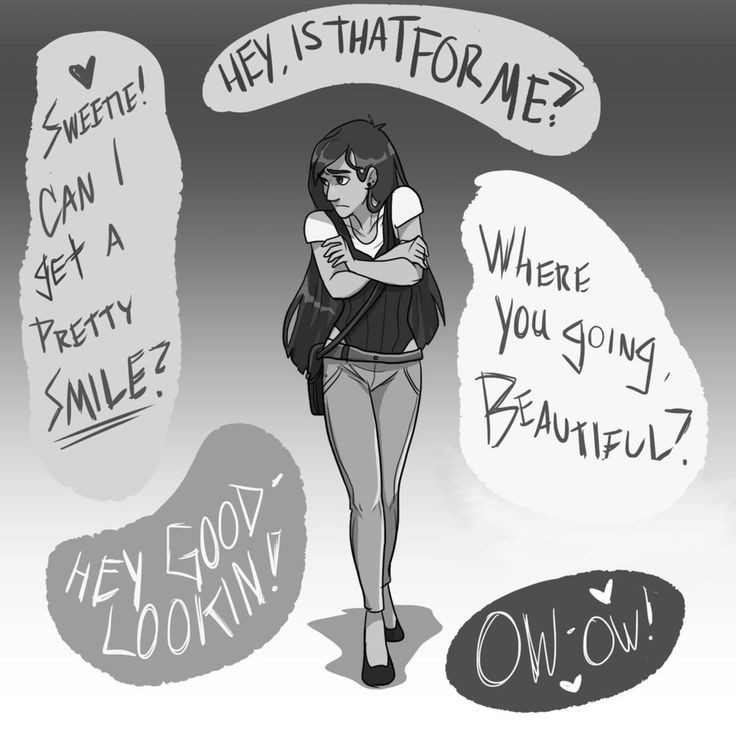
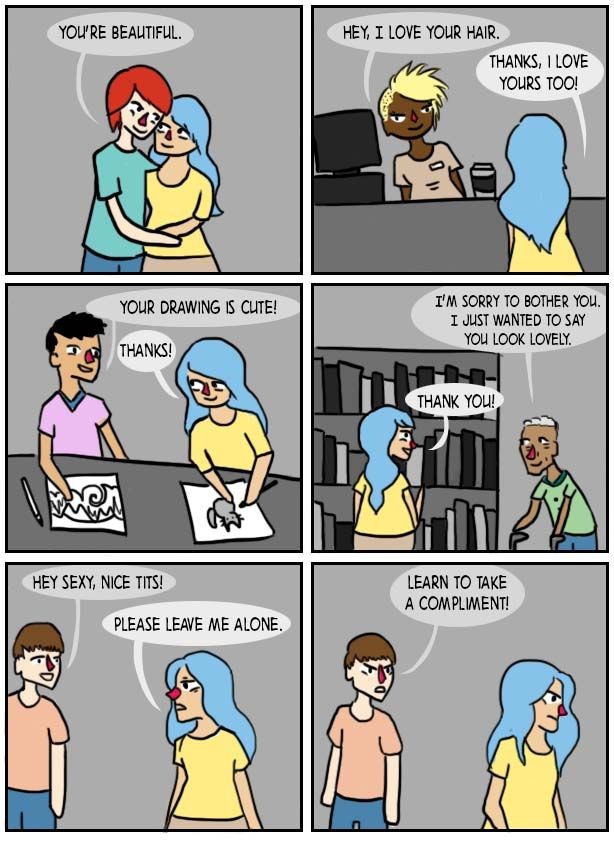
Catcalling is a form of harassment primarily consisting of unwanted sexual comments. This may include honking, wolf-whistling and indecent exposures. Most of the time, it is a man who catcalls and a woman who is catcalled.

According to surveys by Stop Street Harassment (a non-profit organization):

  • Nearly 95% of female respondents were honked at one or more times
  • Nearly 82% of female respondents were the target of a vulgar gesture at least once
  • Nearly 81% of female respondents were the target of sexually explicit comments from an unknown man at least once
  • Just over 77% of women said they were the target of kissing noises from men.

Where catcalling takes place?

Catcalling doesn’t only happen on the streets. Sexual harassers find targets on campus sidewalks, in restaurants and movie theaters, at work, inside homes – literally anywhere. Similarly, anyone can be a catcaller – including a person’s acquaintances. Online catcalling is also an issue just as severe as in-person catcalling. What’s worse, people on social media are able to say more because they are protected by a screen.

The Problems with Catcalling

  • It’s disrespectful: Catcalling is uncalled-for and usually makes the victim feel exposed and uncomfortable. In some cases, catcalling is used as a method of expressing power over someone, rather than the misperception of it being a “compliment”.
  • It’s not impressive: Someone may catcall in order to impress their friends, or the person they are catcalling at, but it’s actually unimpressive and immature.

Catcalling is not a compliment, it’s a harassment!!

Whilst compliments and flirting can be harmless and fun, shouting at strangers is not flattering, it leaves “targets” feeling exposed.

Catcalling is degrading, demeaning, and disgusting.

Women have the right to be treated with as much respect and dignity when walking down the street as any man. Women deserve to feel safe.

How to react if you are being catcalled?

  • Catcallers usually look for a reaction. Don’t give them one, especially fear.
  • Get to a safe or crowded place as soon as you can. Seek help if needed.
  • If you are around other people and it’s safe, you can use a simple comeback like “that’s harassment” or “don’t do that”.
  • While snapping back (if you choose to do so), make sure to keep walking and don’t stop.
  • Avoid the use of swear words or eye contact.
  • If it’s online, you can block and report them. Choosing to reply is also an option (e.g., asking “would you find it okay if someone spoke to your mother or sister in that way?”).
  • Document it: write it down or take a picture/screenshot. By doing this you can call them out later.
  • Share your story if you feel comfortable.

How to intervene if someone is being catcalled?

  • Call out the harasser if it is safe to do so.
  • Create a distraction or start chatting with the target (e.g., drop your keys and ask “are these yours?”).
  • Approach the target afterwards to see if they need company or if there is anything else you can do to help.
  • Whatever you do, don’t put the person who is catcalled at greater risk (e.g., becoming aggressive).

Catcalling has become normalized, as it is often disregarded as a “joke”, or even a compliment. These are some tips to learn why this is absolutely not the case.

Menstrual hygiene: necessity and not a luxury

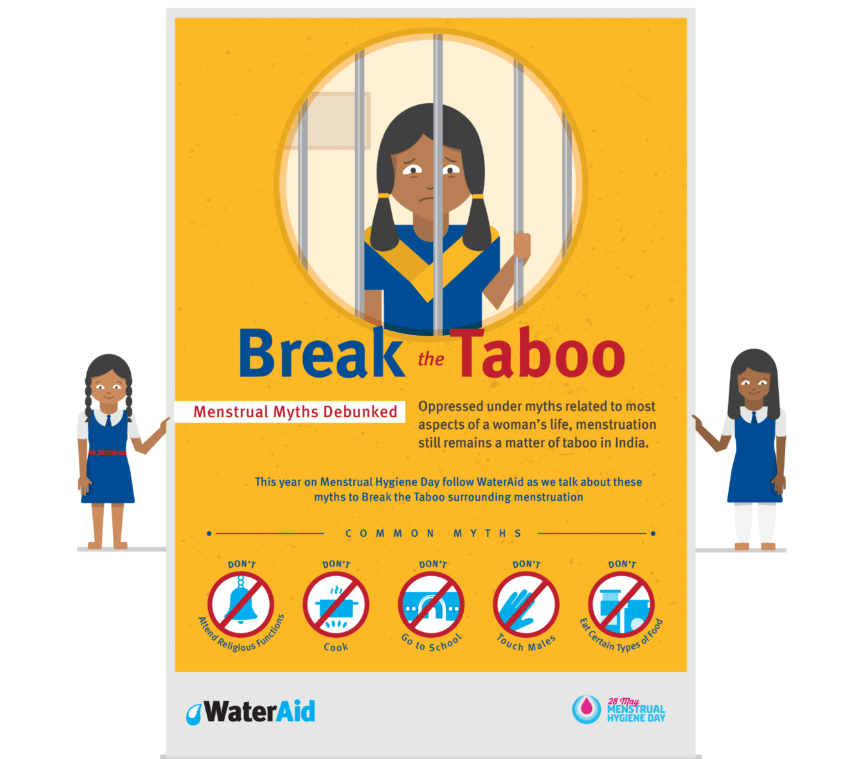
Break the taboo


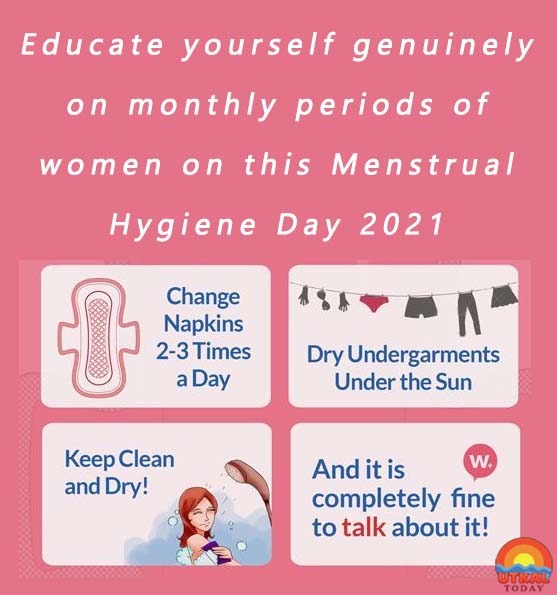
Menstruation is associated with the onset of puberty in girls. Menstrual health and hygiene or menstrual hygiene management brings up the adequate access to menstrual hygiene products to collect and absorb the flow of blood during the menstruating period. It also refers to the privacy to change the used material to a new and clean one and to dispose the used one .
Still today in many parts of India , menstruation is considered a taboo and often it brings with it tons of rules , many restrictions and sometimes discrimination and isolation. A girl or a women in her period is often excluded from many social and religious events and even sometimes they are not even allowed to enter in the kitchen of their own house .
Cause of menstruation still being a taboo –
Still today girls and women feel uncomfortable to talk about their period loudly and consider it a shame ; and not being talked about it loudly results in adolescent girls remaining unknown and ignorant of the hygiene and health practise which many a times results in adverse health conditions. Illiteracy , poverty and lack of awareness are the major behind menstruation still being a taboo in indian society. Several studies indicate that in india, specially in the rural areas and in the slums, most of the girls and women do not have consistent and adequate access to good quality menstrural hygiene products with 88% of them using homemade alternatives such as clothes, rags, hay, sand and ash.
OUTCOMES OF NOT HAVING ACESS TO MENSTRUAL HYGIENE PRODUCTS
Not having adequate access to clean and proper menstrual hygiene products causes many health problems like Reproductive Tract Infections (RTI), irritation of skin which causes discomfort and possibly results in dermatitis which is a medical condition in which the skins swells , turns red and at times becomes a sore with blisters. There is a balance of good and bad bacteria that live in the vagina . If this balance gets disrupted or hampered because of certain poor menstrual hygiene it causes vaginosis . This impact women the most when they are pregnant or trying to get pregnant . RTI also increases the chances of having cervical cancer. Added to the discomfort it also hampers their mobilty and day – to – day activites.
Why is menstrual awareness important ?
Myths about menstruation is largely prevalent forcing many girls to dropout of school early year at menarche in India . A study finds a 12 % decline in school enrollment rate for girls in the menarche group , also in the co-ed schools , disparity is clearly visible in the ratio of girls to boys always remaining low.
It is very important to spread awareness on menstrual hygiene . Menstruation considered a taboo topic , most of the adolescent girls when they get their first period, they don’t know about “menstrual hygiene management “. Many a time, unawareness about menstrual hygiene has an a adverse impact on women’s health especially in rural areas and the slums of the cities. Not having access to proper menstrual hygiene products is the harsh reality of most rural and slum womens. Lack of information and other socio-cultural norms and the use of unhygenic products instead of safe sanitary napkins and tampons makes it difficult for the girls to remain hygenic .
Its high time we spead correct information and educate the adolescent girls about menstruation and help them know about how to maintain proper menstrual hygiene . To educate girls and spread awareness among the womens of slums and the rural areas , the much needed measure is to spread awareness that it a normal very biological process and busts the myths associated with menstruation to ensure healthy menstrual practices.
Spreading awareness about menstruation and menstrual hygiene can help in creating a culture that welcomes discussions about it and can also prevent many diseases and infections caused due to unhygenic practices.
MENSTRUAL PRODUCTS IS A BASIC NECESSITY
Poverty is another reason why the womens of rural areas and slums use alternatives most of them cannot afford adequate and proper menstral products . the unavailability of menstrual products n rural areas ans high cost of the same in the cities deter menstrual hygiene in India.
To increase awareness about menstrual hygiene product being a necessity the washrooms in schools shouls also stock menstrual product besides stocking soaps , papaer towels etc. Having the supply of free menstrual products in every schools will not only ensure that every menstruating girl gets access to the basic needs easily , but many a times it helps in solving economic issues.
Its time for us to start spreading awareness about menstrual hygiene and spread knowledge and correct information about it and start treating it is as a healthly biological process and not a taboo.

https://swachhindia.ndtv.com/menstrual-hygiene-day-facts-26-percent-use-sanitary-pads-periods-34309/

References:

https://www.hindawi.com/journals/jeph/2018/1730964/

https://swachhindia.ndtv.com/menstrual-hygiene-day-facts-26-percent-use-sanitary-pads-periods-34309/

Menstrual hygiene products should be treated as a necessity

The Private-Public Distinction: Through a Feminist Lens:

From the beginning to this day, women have always been oppressed be it by men in their family or by the state that was and is still highly patriarchal. Earlier, the private (households) and the public (political, business world) were strictly kept separate. State had no roles in what was happening in the private sphere. And the major factor of this separation was that public was controlled by males and private appeared to be in control of females.

The separation between private (home) and public (work) made a significant difference in the lives of males and females, and of course, it was negative for women. For example, males were expected to work out and hence they dominated the outside world while females were expected to stay at home and decide the household decisions and thus they happened to be the controllers of the households.

However, the above situation was far away from reality. In most cases, as public was controlled by males it used to have a direct influence on the private sphere. And therefore, the then feminists and scholars labelled this distinction as baseless and started demanding for political rights of females like voting rights, reproductive rights and like. It was through the second wave of feminism in 1960s, feminists began to bring up more such marginalised communities and issues into the picture.

Earlier only a “white heterosexual male” normative was followed in the world and especially in western civilisations.
Feminists have rejected the public-private boundary as an acceptable rationale for legal action or inaction. A feminist argument is that such a separation disadvantages women of their rights and advantages privileged groups like white heterosexual males.

Three major arguments that were brought by feminists which aimed to challenge the public-private distinction are, first,
politics and society, both had ignored the domestic sphere, second, public-private distinction is deeply gendered and
sexist as its assigns roles to people based on their biological characteristics and because of this women become the most affected underprivileged group, third, calling “family” a
private sphere was an attempt to hide domination and abuse in the relationships in families from legal discourse.

To put an end to all of this ignorance, women activists fought against the injustices and demanded the states to intervene in household matters like laws against domestic violence, divorce rights to women, abortion rights and other rights to choose. Along with these domestic protection rights, many other rights on the public sphere were also demanded.

Feminists from the second feminist wave asked for equal representation in politics, law-making and other decision making procedures which were of both public and private significance.

Examples:

1) Paid Work:

Even though working environment has
changed nowadays as compared to earlier times, females suffer from hard labour but less payment. From corporate houses to films and television everywhere females are paid less than their male counterparts even though all of them do the same work. At times, female actors do more work as they have dance sequences in addition in the movies but still get paid less for the work. This has witnessed a change in recent times where female actors have begun to charge lump sum amount.

2) Patriarchal State:

States can be extremely patriarchal to
women in terms of legal and political rights. This can happen in two ways- one by creating patriarchal and misogynist laws for women, two by not doing anything progressive for women (because not interfering into women’s rights is also equal to creating misogynist laws for women). Over the past few decades, this has also witnessed a change where we have seen governments making women friendly laws like reservations and special commissions for women or anti dowry and anti-domestic violence rights.

3) Male Violence:

This can mean anything that happens both in public and private sphere. Sexual harassment at workplaces is at peak all over the world. Thanks to social activists and NGOs in India who all fought for implementation of sexual harassment act back in 1990s when a social worker was brutally sexually assaulted for stopping a child marriage in the Indian state of Rajasthan.

At the end, we all as a society collectively need to understand that opposite of patriarchy is gender equality, that is, feminism, nothing else.

A society that can breach the stereotype in India .

I never feel confined by gender, by labels, by expectations, by stereotypes. I’m free to be myself.

Princess Nokia

Introduction

During the last two decades it is said that to be a women is the most precious gift a human can have . To be able to give birth to another human being that lives inside precisely 9 months at most .

But their is another dispute that a women can only be a insider . That can fulfill the needs of the dominant society.

Isn’t these two statements are contradictory. In first one a women is a precious gift and in another she can only fullfill one’s needs but only in four walls .

Aren’t they human or a thing that can only live under the roof of men for living ?

Women have always played an important role in the society . Even in the ancient times , they were considered as an equal with the men . So what change , the air , the water , the life style or the mindset . We can also say that the stereotype mindset in society .

Years and years before people grew their ego and think about their individual benefits. Women lead life with virtue , wisdom and respect .

When it start

It was all not same as it was now , their were times when women rule the nation . But due to the foreign invasion , women suffer immensely . At the mediaeval times , women came to be confined within the four walls of the house .

Mediaeval period also known as ‘DARK AGE ‘ as very few women’s were found to be a ruler at that period . It was the period when women brought to the deeds where they made to be inferior to men .

They were raped and brutally killed by the demons who think they can dominate them .

Rani Padmavati, Jodha Bai, Gulbadan Begum, Nurjahan, Jahan Ara , Mumtaj Mahal, Razia Sultan , Jija Bai are some of the women who fought for their right , safety , people , family and love also saved many .

“And one day she discovered that she was fierce, and strong, and full of fire, and that not even she could hold herself back because her passion burned brighter than her fears.”

– Mark Anthony

Modern era

It’s a century of love , reliability , equality and most important individuality .

Then why women are always compared to the men . Why they questioned when they are innocent . ( Well not all are innocent and victim , just for those who are ) .

I do believe that men and women are different . Their differences doesn’t make them weak . It’s just a perspective and view of people that make them vulnerable .

But do women care , it’s their own life not to say that anyone means ANYONE can come and stamp their ‘so called ’ rules on them . Not against the male gender but to those who think they can dominate and lock them in four walls .

Not to say, if women lock men in four wall room . So what will happen to them . Umm. Let’s think , they run like a horse at the time when the room unlocked .

If OJO -MOJO can’t stay in their rooms can’t OLLE do the same . Yes she can , also kick their humpy dumpy bum.

Let’s end the topic and eat some more . It’s a 21st century donot let someone walk on you , you can stand for yourself .

“Don’t let anyone speak for you, and don’t rely on others to fight for you.”

– Michelle Obama

This editorial is written under one’s perspective . Neither against any gender nor in favour .

GENDER? No, we aren’t supposed to impose it at birth.

The above statement may appear intriguing to some, but that’s what we need to do, at least in 2021. Even today, majority of the world population is not aware about the distinction between ‘sex’ and ‘gender’.

Gender is something that is most often thrown and forced upon us according to the sex we received at birth. We are told to act, dress and behave in a certain way. In more simple words, ‘sex’ is what nature has given us at birth, for example, ‘female’ and ‘gender’ is something that we identify ourselves with as we grow up, for example, ‘woman’.

In this way, we can say that gender is a social construct, that is, gender is a human made concept while sex is a naturally grown system we have on our respective bodies since our birth.

It is also important to note that gender is variant and we would be doing injustice to the gender minorities like agender, non- binary and gender fluid people if we overlook them.

Moreover, we should also keep in mind that, lack of awareness regarding the difference between ‘sex’ and ‘gender’ is one of the main reasons of patriarchy. As mentioned above, since our birth we are expected to behave in a certain way. For example, when a male child is born, we expect them to be tough and physically strong and compare them with wild tigers and lions while when a female child is born we expect them to be soft and pleasant like an angel.

Another example could be, male toddlers are gifted guns and cars whereas female toddlers are gifted doll houses and ‘kitchen sets’, because from the beginning only we have this sexist notion ingrained in us that the male child will grow up and ‘earn’ the bread while the female child will ‘bake’ the bread.

‘Sex’ and ‘gender’ are most often used interchangeably and this also contributes to patriarchy, in fact it shows how patriarchy is deeply ingrained in us. Some of us indulge in patriarchy without even knowing it.

Patriarchy may favour males but it is beneficial to no genders in the world. In global context, gender expressions like ‘feminine’ stereotypically means one needs to be loving and
caring and ‘masculine’ stereotypically means one needs to be daring and challenging. Now here comes the problem- for example- a male who has ‘loving’ and ‘caring’ characteristics and identifies himself as a ‘man’ suffers due to these socially constructed ideas of being ‘masculine’. Similarly, a female who has ‘daring’ and ‘challenging’ characteristics and identifies herself as a ‘woman’ has to suffer due to the culturally made concepts of being ‘feminine’.

Another interesting thing is to note that if a man identifying male has some stereotypically feminine characteristics like caring, being soft and submissive, they are trolled and if a woman identifying female has some stereotypically masculine characteristics like daring, being loud and dominant, they are praised. This proves that the patriarchal world we live in hates femininity and just loves masculinity.

If a man celebrates his masculinity, he is praised but if a woman celebrates her femininity, then she becomes inauspicious for the society. It is important for us to note that femininity and masculinity is subjective and depends on person to person.

equity not manhating

Feminism is just another word for equality. As we all know feminism is being criticized on favoring women over men. It means mass empowerment. It’s  men being aware of the need for women empowerment. All sexes being treated the same under the same roof. Being independent irrespective of whatever you are. No matter what sex, race, religion, caste, creed, status anyone is they all have the same right to enjoy the facilities provided. Who says feminism is just women empowerment? It is the collective empowerment of the people.  It’s the word that stands proudly against inequality and injustice. It is the key to freedom and individuality.

“Feminism is the radical notion that women are human beings.”

 Cheris Kramarae

Speaking about my country, it’s far below in feministic thoughts. As I have already mentioned, most people thinks it as something against man. This is just because of the misconception prolonging on the very word. There was one incident where a famous television show anchor said that she supports equality but not feminism. How pathetic isn’t it? Its high time human beings define the word perfectly. Women are still below in many areas. Decisions in women’s lives are still made by men either husband, father or their own sons. The complexity of the statement kills itself. And to my surprise there are a large percentage of women those nurture themselves as well their children to stay under men in all aspects of life excluding sacrifice. At the same time I shouldn’t be neglecting the fact that seeds of changes are sprouting in the desert.

anti sexist movement
Anti-sexist movement spreading throughout the world

Furthermore, I have seen people opposing feminism as disapproval of the idea of women and men are the same. Women and men aren’t the same and the very prospect of feminism isn’t sameness, rather it is equality. Sameness means look alike but equality isn’t look alikeness its equal say and being treated the same. Empowerment isn’t women-only term as life isn’t for copulation only. As a conclusion, I would like to quote that development isn’t possible without feminism. 

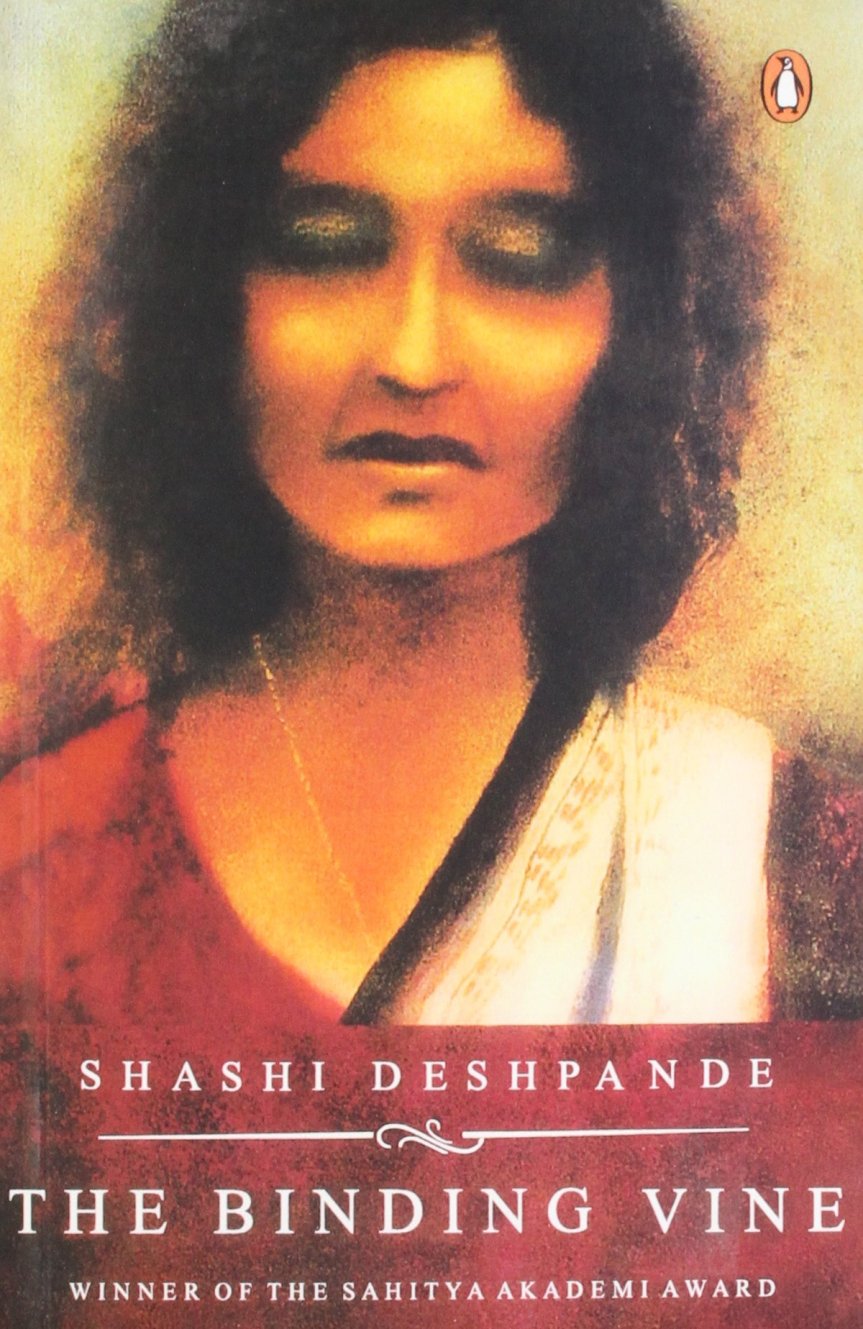
Gender in Shashi Deshpande’s ‘The Binding Vine’

Sashi Deshpande is a Sahitya Academy winning Indian novelist best known for her works The Dark Hold No Terrors and That Long Silence. Her novels generally centre around educated middle-class urban Indian female protagonists who struggle against the oppression of an overtly patriarchal society. She is critically acclaimed for her sensitive and realistic portrayal of women who are fettered to their roles as daughters, wives and mothers. They are conscious of the social inequality and question the deliberate efforts made by men to maintain this. In The Binding Vine, Deshpande introduces women from various backgrounds who collectively question the subordinate status ordained to them by society. This essay seeks to analyse the lead female characters from the novel with reference to feminist theories by Simone De Beauvoir and Virginia Woolf.

“…thus she is called ‘the sex’, by which is meant that she appears essentially to the male as a sexual being.”

Simone De Beauvoir

“What were the use of my creation, if I were entirely contained here?” This quote from Wuthering heights by Emily Bronte in the beginning of the novel runs as a common theme throughout The Binding Vine. The novel uses stream of consciousness method as it follows the life of Urmi, a middle-class college lecturer who encounters several women in her life. With her as the anchor, Deshpande reveals the sufferings of women from different sections of the society. The novel begins by describing Urmi’s personal grief upon losing her infant child. She becomes detached from the world and struggles to get back to her normal life. She is financially independent and is confident in asserting her freedom and agency. She chooses her own husband by marrying Kishore who works in Merchant Navy and is barely ever home. He asserts himself sexually and does not provide the emotional support that she desperately craves. Urmi’s character reinforces Beauvoir’s point that “…thus she is called ‘the sex’, by which is meant that she appears essentially to the male as a sexual being.” Despite being socially and financially independent, Urmi is still scene as a sexual object by her husband.

Urmi later gets acquainted with Shakuntai and her daughter Kalpana. Shakuntai had moved to Bombay in search of her husband who has deserted her for another woman. Coming from the lower strata of the society, she is uneducated, financially unstable and struggles by toiling hard to look after her three children. Her daughter Kalpana is a strong woman who is forced to marry her uncle Prabhakar. Having been molested by Prabhakar since a young age, Kalpana turns down the offer. This enrages him and he brutally rapes her. Though Kalpana is critically injured, Shakuntai hesitates to file a case against Prabhakar and even goes as far to blame her daughter for her current condition. This is due to the internalised patriarchal ideology that the assaulter is entitled to do so as a man while the victim is responsible for ‘encouraging’ the crime. Furthermore, she herself is under constant threat of being held responsible for the downfall of her family as the society always blames women for disrupting its ‘honour’. Just like Beauvoir, Deshpande focuses on the unrealistic standards set by the society on women that expects them to be the perfect loyal caretaker who submissively accepts the will imposed on them by men. Women are always considered as the inessential and the other while the men are the subject and the absolute. Beauvoir further explains this internalisation by saying that “Thus, woman may fail to lay claim to the status of subject because she lacks definite resources, because she feels the necessary bond that ties her to man regardless of reciprocity, and because she is often very well pleased with her role as the Other.” Shakuntai blaming her own daughter for being a rape victim simply emphasises the fact that women themselves unconsciously perpetuate their role as the inessential subordinate. 

Another significant character explored in the book is that of Mira, Urmi’s late mother-in-law. Kishore’s step-mother Akka hands Urmi a trunk consisting of Mira’s diaries and poems. Urmi learns how Kishore’s father saw Mira at a wedding and fell in love. “Since then he had “single-minded pursuit of an object; marrying Mira””. She is married off to him against her wishes and falls victim to a life of marital rape. Mira is forced to suppress her aspirations to be a writer, her only channel of outlet being the scribbles of words on her diary. Her writings clearly describe her revulsion and fear for the sexual acts with her husband and it is evident that she’s slowly spiralling into depression. Writing serves as her sole tether to her life on earth. After marriage, she is renamed ‘Nirmala’ by her in-laws which stands testimony to the society’s attempt to estrange women from her individuality after marriage.

"Niramala, they call, I stand statue-still.

Do you build the new without razing the old?

A tablet of rice, a pencil of gold

Can they make me a Nirmla? I am Mira."

Mira’s mental health improves as she joyously awaits the birth of her child, but she dies soon after childbirth. Kishore’s father marries Akka solely for the purpose of looking after the baby. This further reinforces the male perspective pointed out by Beauvoir that “woman has not been socially emancipated through man’s need – sexual desire and the desire for offspring – which makes the male dependent for satisfaction upon the female.”

In spite of being a skilled writer, Mira is shunned away from the literary world. Her husband and her family never encouraged her passion and she was forced to lead a domestic life. Her frustration on being stifled of her skills are evident in her works. This is further reinforced when she narrates her encounter with Venu, a renowned poet. Upon reading a few of her poems, he says “Why do you need to write poetry? It is enough for a young woman like you to give birth to children. That is your poetry; leave the other poetry to us men” . Where Venu is celebrated as a great poet of Indian literature, Mira’s voice is silenced and confined to four walls. She never had the luxury of having a room of her own that Woolf confirms is a necessity for a writer. She was forced to write late at night in secret while the men were asleep. Mira represents the generation of women writers who, despite being talented, were blatantly excluded from the literary world by men. Through Mira, Deshpande resonates the concerns raised by both Virginia Woolf and Adrienne Rich on the struggles of being a female writer in a patriarchal society.

The Binding Vine also features characters such as Urmi’s friend Vanna and Shakuntai’s sister Sulu, who perform their role as the archetypal role of ‘women as angels’. They try hard to maintain the societal pressure of being what Beauvoir explains as “‘truly feminine’ – that is, frivolous, infantile, irresponsible, the submissive woman.”

Despite the numerous struggles of women portrayed in the novel, Sashi Deshpande hints at positivity towards the end of the novel. Urmi convinces Shakuntai to disclose the identity of Kalpana’s assaulter resulting in a gathering of a mass of protestors who fight hard for her Justice. Urmi resolves to translate Mira’s poems to English and to publish them. She also encourages Vanna to stand up for herself and moves on from her personal grief to fight alongside women for a collective cause. Like Beauvoir and Woolf, Deshpande urges women to stand together like ‘binding vines’ against the oppression of patriarchy. The novel celebrates women’s solidarity as friends, companions and sharers of life.     

Reference Links:

Decline of Political participation of Females in India

Since the beginning of rebellious movements against the oppressive British regime in 19th century, women have played an integral part in freedom struggle in India. From Rani Lakshmibai in 1857 to Mantangini Hazra in 1942, women have always upheld the patriotism and love for their nation.

Sarojini Naidu, an Indian political activist, joined Indian Independence movement back in 1905 and later became the Governor of Uttar Pradesh in Independent India, making her India’s first female Governor.

In the post independent India, prominent freedom fighter Sucheta Kriplani became the first female Chief Minister of India for Indian State Uttar Pradesh. In 1966, Indira Gandhi became the first female Prime Minister of India.

But if women participated in Indian politics and independence movements so actively at a time when women weren’t even allowed to walk out freely, why do we see a sudden decrease in participation of women in Indian Politics in 21st Century?

In 1990s, there were about 6 sitting female Chief Ministers in India and in 2021, there is only one sitting female Chief Minister in India, that is, Mamata Banerjee in West Bengal. Let us see the reasons behind lack of participation of females in Indian politics.

Assault on Indian female politicians:

India holds a bad history of torture, discrimination and hostility towards female politicians. From Ms. Jayalalitha who was brutally assaulted in late 1980s to Ms.Mayawati and Ms. Mamata Banerjee who were assaulted ruthlessly in mid-1990s proves that Indian Politics has never been safe for women. These female politicians were assaulted especially by male chauvinists to intimidate them for being a woman and raising voice in politics. These assaults discourage women in India to join politics.

Indian Political Parties are Male-dominated:

Unless a political party is formed by a female, all other political parties be it left, right or centre are by nature male-dominated in India. Females are not given powerful positions in these parties which further lower their self-esteem and this influences other women negatively to not join politics.

Systematic Sexism in Politics:

Even if women are given political positions, they are mostly given those positions that are stereotypically considered “womanly”. Women holding positions are also often harassed by male politicians. Women who want to hold more prominent positions thus get discouraged. Although some things have changed in recent years where we have seen women holding powerful positions in Defence and Finance Ministry, still a lot more has to be done.

Patriarchal Society:

This is a bitter reality that our male-dominated society doesn’t love “dominant female leaders”. For instance, when in 2019, two Female MPs from West Bengal wore a shirt and jeans, they were criticised and shammed for wearing western whereas so many male members in Parliament wearing jeans wasn’t an issue. The fear of getting judged by the society also discourages women to join politics.

What can be done to improve the situation?

First and foremost, we should make a safe political environment for women and listen to the issues they face in politics. Second, society and the government must have a feminist approach so that women come out and lead political movements. And lastly, although India has women friendly laws, these laws aren’t implemented and thus proper implementation of these laws must be done, for example, taking strict action against male politicians who make misogynistic statements, abuse women and like.

INTERNATIONAL WIDOWS DAY: A timeline of lives of Widows in India.

Today, June 23, is a very important day for one of the most neglected sections of our society, and they are none other than the widows. International Widows Day was firstly established by The Loomba Foundation to increase awareness about the tyrannies faced by widows all across the world. June 23 was especially adopted by the Loomba Foundation because it was on this day in 1954 the mother of foundation’s owner became a widow. Later on in 2010, this date was officially adopted by United Nations to focus on issues of widowhood.

Widowhood in India: A brief History.

During ancient times, after the death of a man, their wives were expected to live an execrable and damnable life. Widows were made to wear only white clothes, shave their heads and had limited options for having food of their choice. Untouchability and ostracism of widows were at peak. At some places widows were forced to undergo the Sati practice in which widows had to sacrifice themselves by sitting atop their deceased husband’s funeral pyre. These practices came from the patriarchal idea that if a husband’s life is over, his wife’s life is also over.

Ban of Sati Practice: Prominent Social Reformer Raja Rammohan Roy led the movement against the evil practice of Sati in India and finally on December 4, 1829, Bengal Sati Regulation was passed by Lord William Bentinck.

Widow Remarriage: A significant change!

Indian Social Reformer Ishwar Chandra Vidyasagar from Bengal was one of the major leaders who advocated in favour of remarriage of widows in India. He received support from several dignitaries of that time including Rani Rashmoni of Kolkata to many other government officials in East India Company.

Finally, Hindu Widows’ Remarriage Act, 1856, was drafted by Lord Dalhousie and passed by Lord Canning for remarriage of Hindu Widows in all jurisdictions of India under East India Company.

Did the lives of widows change after the progressive law?

The simple answer to the question above is “no”. Although things have improved in well-read and educated families where widows don’t have to go through the same amount of brutality as before, however things have not changed for millions of widows in India.

Abandonment: A newer problem!

Widows, even in 21st century have to face massive amount of torture from confinement to lack of care in many Indian families who have a patriarchal and out-dated approach.

Most women in India are not financially independent and are dependent on their husbands for daily needs. And thus, when the husband passes away widows become financially vulnerable. Children of the widows do not take the responsibility of their well-being and abandon them. With no options left, widows take shelter in old age homes or take the path of spiritual life and settle in ashrams of holy cities like Varanasi and Vrindavan. There are also some NGOs and private bodies in these holy cities who take care about the wellbeing of the widows including their medical and food expenses. Widows are also encouraged to engage themselves in some relatively easy jobs like stitching and sewing by these NGOs to have financial stability.

There are more than 50 million widows in India and its high time that we as a society and government must step up to protect their rights and make a discrimination free environment for them.

Feminism In History

Sita Devi, Malala Yousafzai, Arunachalam Muruganantham, Justin Trudeau, Jim Parsons – they have one thing in common – Feminism.

Equality is like gravity. We need it to stand on this earth as men and women, and the misogyny that is in every culture is not a true part of the human condition.

Joss Whedon

A whole lot of us choose not to be called feminists due to the envelope of wrong teachings of ancient patriarchy. Despite standing for nothing but inclusivity and equality, it is seen as a gimmick to assert the dominance of women over men, something that it is just “anti-men.” This is the root cause of the negative connotations attached to feminism. Years of wrong, limited portrayals in the media have stereotyped a feminist as the one uncouth woman who drinks, smokes carelessly, abuses shamelessly, does not understand the need to get married, hates pink, and loathes men. That is definitely not what feminism specifically stands for.

lindgrensmith.com

The movement has made a ton of heads turn and as it forged ahead, feminism reached the level of cultural relevance that it hadn’t been subjected to in years. Now, a major item of cultural discourse, it has definitely led to the ‘clear as mud’ conversations as quite a lot of the population was unaware of the basic terminology of feminism.

One can’t give a single definition to the word ‘feminism’, but in short, it signifies putting a full stop to gender discrimination and focusing on gender equality. There’ve been different types of feminism that’ve come into the picture. Instead of describing them separately, feminism was divided into different phases based on the timeline called the “waves of feminism.” You might think that this history is a straightforward arc. The reality is that there are many sub-movements building on (and standing against ) each other. That being said, the wave metaphor serves as a good starting point. It doesn’t tell the whole story, but it helps outline it.

The First-wave feminism of the early 1900s had a fairly simple goal: have society recognize that women are humans too, not property. However, it only focused on the privileges and freedom of white women primarily.

The Second-wave feminism of the 1960s, built on first-wave feminism challenged women’s roles in the society. Traditional gender and family roles were questioned and the theory of Queer population was more in discussion. Women were now given access to male-dominated spaces, promoting equality. The system was questioned of being inherently patriarchal and that only an overhaul could liberate women.

While first and second-wave feminism had largely neglected racial disparities within gender, the Third wave brought attention to it. The term ‘intersectionalism’ was brought into the picture – how different kinds of oppression – like those based on gender and race – intersect with each other.

Social media has lobbed the movement into the technological age. The fourth wave emphasizes on inclusivity and trans rights are a big part of the conversation, too.

Half-knowledged people say that the misogyny faced by women today is idealized by Sita who faced similar things in her life too. The despotism tolerated by Sita has set a baseline for torment in our culture for the women to follow today. However, this is untrue. The truth had just lost its translation. She had her own fight against the patriarchal world but she rose above her status to show free will and courage to stand up against injustice. In the end, she stopped looking for any saviour and reclaimed her honour and defied what she thought was wrong.

Feminism does not associate itself only with equality of women. It addresses the issues of caste, race, disabilities, and more. By the same token, it works to liberate men from the toxicity of society. It serves as a means to uplift marginalized people who were denied equality historically. Hence, trying to shun it by using the concept of ‘equalism’ would be like overlooking the centuries of trauma and injustice. Its aim now is fighting kyriarchy ( a social system or set of connecting social systems built around domination, oppression, and submission) as well.

It’s the perception of feminism that needs a change. The only bad guy here is the structural oppression which affects every person – man or woman, in some way. A man tied in the shackles of patriarchy needs a voice too and that’s the perk of feminism. It is time to stop looking at it in the wrong light as it would only drive you away from the reality of intersectional problems.

Yoga!

Yoga Sanskrit: योग; Sanskrit for “yoking” or “union”, is a group of physical, mental, and spiritual practices or disciplines that originated in ancient India. Yoga is one of the six orthodox philosophical schools of Hinduism. There are a broad variety of yoga schools, practices, and goals in Hinduism, Buddhism, and Jainism and there are four paths or types of yoga: Karma yoga, Kriya yoga, Bhakti yoga, and Jnana yoga. Research studies have shown that traditional yoga systems that include breathing exercises and asanas or postures, chants, and meditation can reduce stress and improve immunity and lung functions. Traditional forms and modern methods of yoga are practiced worldwide.

The practice of yoga has been thought to date back to pre-vedic Indian traditions, possibly in the Indus valley civilization around 3000 BCE. Yoga is mentioned in the Rigveda, and also referenced in the Upanishads, though it most likely developed as a systematic study around the 5th and 6th centuries BCE, in ancient India’s ascetic and Śramaṇa movements.

The chronology of earliest texts describing yoga practices is unclear, varyingly credited to the Upanishads. The Yoga Sutras of Patanjali date from the 2nd century BCE, and gained prominence in the West in the 20th century after being first introduced by Swami Vivekananda. Hatha yoga texts began to emerge sometime between the 9th and 11th century with origins in tantra.


Yoga gurus from India introduced yoga to the West following the success of Vivekananda’s adaptation of yoga without asanas in the late 19th and early 20th centuries. The term “yoga” in the Western world often denotes a modern form of hatha yoga and yoga as exercise, consisting largely of the asanas. Outside India, it has developed into a posture-based physical fitness, stress-relief and relaxation technique. Traditional yoga, however, includes physical exercise, meditation, and spirituality. Yoga has its own epistemological method, which assumes the ontology and metaphysics of the closely correlated Samkhya darsana.

In this today’s world it’s so difficult to spend our time and go to gym and take a diet and etc etc. But yoga is formed to pe in a peace of mind where we are not just physically but we are mentally fit too.

MENSTRUAL HYGIENE: A CHALLENGING DEVELOPMENT ISSUE


Menstruation is still now a social taboo in Indian Society.The major reasons behind menstruation still being a taboo in the Indian society are illiteracy, poverty and lack of awareness.

WHAT IS MENSTRUATIONS?
The blood coming out from vagina normally occurs as part of a woman’s monthly cycle called menstruation or periods. Every month, our body prepares for pregnancy. The uterus, or womb, sheds its lining in case of no pregnancy . The menstrual blood is partly blood and partly tissue from inside the uterus. We can say that periods are the onset of puberty in girls. During this time a girl goes through several physical and psychological changes in her body. It is associated with bleeding along with stomach ache , nausea as well as mood swings.
After the onset of puberty , it brings various rules, restrictions, isolation and changed expectations in the girls life by the society. These changes in attitude towards girls such as restrictions on their self expressions, schooling, mobility and freedom has far reaching consequences on the mindset of women.

MENSTRUATION- A TABOO
In the Indian society menstruation is still considered as a taboo. Till now, adolescent girls are not given proper information about menstruation. People create major hurdles in educating girls about menstrual hygiene.

Mothers also don’t talk with their daughters about this topic because they feel shy while expressing the terms. Another reason they don’t discuss this topic is because most of them lack scientific knowledge on puberty and menstruation.
Most of the people in India, especially the girls are illiterate. This is one of the reasons for which menstruation is still a relevant taboo in our Indian society. The other important reasons are poverty and lack of awareness about menstrual health and hygiene.
Very less number (less than 18 percent) of Indian women use sanitary pads.

TROUBLES SUFFERED BY THE WOMEN:
In many families women’s freedom is still in the hands of patriarchal discourse. With the evolution of these cultures, there has not been any significant change in people’s attitudes and mentality towards menstruation.

In some families menstruation is still denoted as an unclean or embarrassing thing. For them even mentioning menstruation in public or private places is embarrassing. Most girls feel embarrassed to go to a medical store to buy sanitary pads for them. There are also many girls who cannot afford to buy the Sanitary Napkins.

Most of the girls in financially unprivileged families drop out of school when they begin to menstruate. More than 77 percent of girls and women in India use an old cloth, which is often reused, ashes, newspapers, dried leaves and husk sand during periods.

During these periods women are not allowed to participate in day-to-day activities. They are not allowed to enter the house or carry in with their household chores. They are even restricted from entering the kitchens. They are restricted from entering the temple. They are not even allowed to any sacred places and also not allowed to perform any rituals. They are restricted from doing all these works because they think that a menstruating woman is impure and everything she touches turns impure or bad. They think after menstruation a woman must be purified before entering the house or other places.
While menstruating, a woman goes through several psychological trauma and mood swings . During this time they should be given proper care but instead they are treated poorly by the society.

SURVEYS:
According to the latest National Family and Health Survey 58 per cent of young Indian women (15-24 years) use a hygienic method of protection (mostly sanitary pads) which is a significant increase from the 12 percent using pads in 2010. This is a consequence of greater attention to menstrual hygiene management over the past few years in India. This not only prevails in the Indian society but is a global issue.
On a global level, at least 500 million women and girls lack adequate facilities for menstrual hygiene management. The lack in appropriate information on sanitation and hygiene facilities, especially in public places like schools, workplaces or health centres can pose a major obstacle to women and girls.

CONCLUSION:
To prevent this troubles faced by the menstruating women in our society, we must give them proper education about menstrual health and hygiene, provide financial support or distribute sanitary napkins to the unprivileged women so that they don’t have to suffer the ill fate. @track2traininginstitute @edunewsnetwork

MOVIE REVIEW “The color purple”


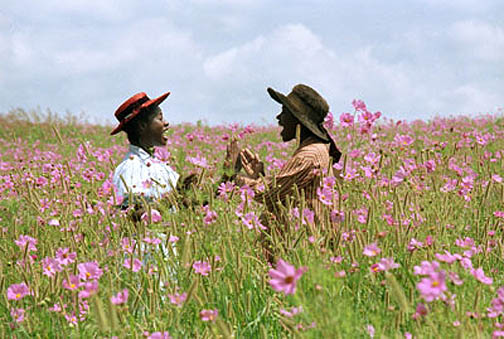
“The color purple” is a breath-taking historical drama starring Whoopi Goldberg as Celie the main protagonist directed by Steven Spielberg. This movie claimed many prestigious awards like Golden Globe Award for Best Actress, Blue Ribbon Award for Best Foreign Film, etc. The world premiere occurred on December 18, 1985.

The plot is based on the Pulitzer prize-winning 1982 novel “The color purple” by Alice Walker. I always enjoyed the script, the idea of how a woman who is timid, terrified is converted to a strong independent personality at the end of the movie.

Celie is a woman cruelly treated by the world, a shy, frightened little girl whose life consists mostly of eluding the men who want to rape and beat her. As a young teenager, she is raped by the man she takes to be her father, and both of her babies a son and a daughter are taken away from her. Then after this Celie is married off to Albert by her stepfather, Albert- a brutal farmer, who beat her, uses her as a servant and use her as an object to satisfy his lust and also convinces her she is ugly.


There are many emotional scenes in this movie but for me, the scene that pulled my heartstrings is where Celie is separated from her sister Nettie-the one person who loves Celie, who understands Celie. Nettie is one of the beautiful things Celie has in her life. When her father tries to assault her, she flees to Celie for safety now then Albert tries to assault her but when she fights him off, he throws her from his house. This scene is so much emotional, powerful and real. Hats off to the actors Deserta Jackson and Akosua Busia who played young Celie and Nettie, they both are so good in the movie.


The climax in the movie comes when two powerful, strong independent women came to Celie’s life. One is Sofia who is married to Harpo (son of Albert from his first wife) and the other women is Shug Avery the one person Albert cherishes in his life. Shug a jazz singer who remains Albert’s one and only true love. Shug could see the beauty beneath Celie’s fear, she became the transformative power in Celie’s life.

One of the most joyous experiences I have in the movie is the scene where Shug tells Celie “Oh miss Celie why you always cover up your smile, show me that pretty smile” and for the first time Celie laughed her heart out and this scene is the favorite and most joyous scene of mine.


This movie has many scenes where feminist criticism is shown I.e. the inequality between the sexes, the injustice of domestic and sexual abuse, and women’s struggle for recognition as individuals who deserve fair and equal treatment. Some of the scenes are: –

  • Violence by males upon females is a common occurrence even in relationships that are quite loving, like that between Harpo and his wife Sofia. He beats her because a woman is supposed to mind a man. Beating a wife is regarded as an acceptable way to assert male authority.
  • Women are not allowed to laugh at a man like in the scene where Celie passed comments on Albert and every woman present there starts laughing at Albert, Harpo says “Shut up! It’s bad luck for a woman to laugh at the man.”


The most powerful and turning point of the movie is when Shug finds out about Nettie’s letter, Celie discovered that her children and her sister is alive whom she thought had died.

Now, Celie becomes so powerful that she questioned Albert about the letters and finally takes a stand for herself and told Albert that she is leaving him and going with Shug. They both have a war of words in which again Albert tries to convince Celie he says “You’re black, you’re poor, you’re ugly, you’re a woman! You’re nothing!” to which Celie replied “Until you do right by me everything you even think about gonna fail! I’m poor, black, I may even be ugly. But dear god, I’m here.”  This is the favorite dialog of mine in the movie. This particular dialog shows how a shy, frightened woman is transformed into a strong personality and speaks for her own rights.


Hats off to the director and cast especially Whoopi Goldberg who played Celie. When a movie character is really working, we become that character. That’s what the movies offer: Escapism into lives other than our own. For a time during watching “The color purple” my mind, my soul connects with the character Celie as I empathize with her struggle and her victory at the end.

This movie justifies its main central idea I.e. self-discovery, womanhood- how a woman’s mutual sympathy and support can act as a defense against the oppression of men.


Really loved the movie!! Hope you all will enjoy the movie.


Feminist Movement across the times

The feminist movement (also known as the women’s movement, or simply
feminism) refers to a series of political campaigns for reforms on issues such as
reproductive rights, domestic violence, maternity leave, equal pay, women’s
suffrage, sexual harassment, and sexual violence, all of which fall under the label
of feminism and the feminist movement. The movement’s priorities vary among
nations and communities, and range from opposition to female genital mutilation
in one country, to opposition to the glass ceiling in another.

Feminism in parts of the Western world has gone through three waves. First-wave
feminism was oriented around the station of middle- or upper-class white women
and involved suffrage and political equality. Second-wave feminism attempted to
further combat social and cultural inequalities. Although the first wave of
feminism involved mainly middle class white women, the second wave brought in
women of colour and women from other developing nations that were seeking
solidarity. Third-wave feminism is continuing to address the financial, social and
cultural inequalities and includes renewed campaigning for greater influence of

women in politics and media. In reaction to political activism, feminists have also
had to maintain focus on women’s reproductive rights, such as the right to
abortion. Fourth-wave feminism examines the interlocking systems of power that
contribute to the stratification of traditionally marginalized groups.

Feminism in the United States, Canada and a number of countries in western
Europe has been divided into three waves by feminist scholars: first, second and
third-wave feminism. Recent (early 2010s) research suggests there may be a fourth
wave characterized, in part, by new media platforms.

The women’s movement became more popular in May 1968 when women began
to read again, more widely, the book The Second Sex, written in 1949 by a
defender of women’s rights, Simone de Beauvoir. De Beauvoir’s writing explained
why it was difficult for talented women to become successful. The obstacles de
Beauvoir enumerates include women’s inability to make as much money as men
do in the same profession, women’s domestic responsibilities, society’s lack of
support towards talented women, and women’s fear that success will lead to an
annoyed husband or prevent them from even finding a husband at all. De Beauvoir
also argues that women lack ambition because of how they are raised, noting that
girls are told to follow the duties of their mothers, whereas boys are told to exceed
the accomplishments of their fathers. Along with other influences, Simone de
Beauvoir’s work helped the feminist movement to erupt, causing the formation of
Le Mouvement de Libération des Femmes (The Women’s Liberation Movement).
Contributors to The Women’s Liberation Movement include Simone de Beauvoir,
Christiane Rochefort, Christine Delphy and Anne Tristan. Through this movement,
women gained equal rights such as a right to an education, a right to work, and a
right to vote. One of the most important issues that The Women’s Liberation
movement faced was the banning of abortion and contraception, which the group
saw as a violation of women’s rights. Thus, they made a declaration known as Le
Manifeste de 343 which held signatures from 343 women admitting to having had
an illegal abortion. The declaration was published in two French newspapers, Le
Nouvel Observateur and Le Monde, on 5 April 1971. The group gained support
upon the publication. Women received the right to abort with the passing of the
Veil Law in 1975.

The Women’s movement effected change in Western society, including women’s
suffrage, the right to initiate divorce proceedings and “no fault” divorce, the right
of women to make individual decisions regarding pregnancy (including access to
contraceptives and abortion), and the right to own property. It has also led to broad
employment for women at more equitable wages, and access to university
education.

In 1918 Crystal Eastman wrote an article published in the Birth Control Review,
she contended that birth control is a fundamental right for women and must be
available as an alternative if they are to participate fully in the modern world. “In
short, if feminism, conscious and bold and intelligent, leads the demand, it will be
supported by the secret eagerness of all women to control the size of their families,
and a suffrage state should make short work of repealing these old laws that stand
in the way of birth control.” She stated “I don’t believe there is one woman within
the confines of this state who does not believe in birth control!”

The United Nations Human Development Report 2004 estimated that when both
paid employment and unpaid household tasks are accounted for, on average
women work more than men. In rural areas of selected developing countries
women performed an average of 20% more work than men, or 120% of men’s total
work, an additional 102 minutes per day. In the OECD countries surveyed, on
average women performed 5% more work than men, or 105% of men’s total
work—an additional 20 minutes per day. However, men did up to 19 minutes more
work per day than women in five out of the eighteen OECD countries surveyed:
Canada, Denmark, Hungary, Israel, and The Netherlands. According to UN
Women, “Women perform 66 percent of the world’s work, produce 50 percent of
the food, but earn 10 percent of the income and own 1 percent of the property.”

The feminist movement’s agenda includes acting as a counter to the putatively
patriarchal strands in the dominant culture. While differing during the progression
of waves, it is a movement that has sought to challenge the political structure,
power holders, and cultural beliefs or practices.

Although antecedents to feminism may be found far back before the 18 th century,
the seeds of the modern feminist movement were planted during the late part of
that century. Christine de Pizan, a late medieval writer, was possibly the earliest
feminist in the western tradition. She is believed to be the first woman to make a
living out of writing. Feminist thought began to take a more substantial shape
during the Enlightenment with such thinkers as Lady Mary Wortley Montagu and
the Marquis de Condorcet championing women’s education. The first scientific
society for women was founded in Middelburg, a city in the south of the Dutch
republic, in 1785. Journals for women that focused on issues like science became
popular during this period as well.

The women who made the first efforts towards women’s suffrage came from more
stable and privileged backgrounds, and were able to dedicate time and energy into
making change. Initial developments for women, therefore, mainly benefited white
women in the middle and upper classes.