In March of 2020, news rapidly spread that there was a very high chance of Yes Bank collapsing. This caused widespread panic among the people and soon even the Reserve Bank of India (RBI) had to step in. On 5th March 2020, the RBI foisted a 30-day moratorium (temporary prohibition of activity) on the bank and replaced the entire top management to prevent it from collapsing. So, what exactly happened?
Well, when a bank lends money to its borrowers, it does so by charging a certain amount of interest on the loan amount. However, some of it always is in arrears or ends up as bad debts. When a borrower defaults in the payment of the principal or interest amounts, it is said to be in arrears. In finance terms, these loans are referred to as Non-Performing Assets (NPA). These NPAs are precisely what brought Yes Bank down on its knees. For any bank to survive, its deposits need to be more than the amount it lends. When we take a look at the bank’s books of accounts, we can notice what exactly went wrong. At the end of the financial year 2013-14, its loans stood at Rs.55,633 Crores and its deposits totaled to Rs.74,192 Crores. By September 2019, the loans almost quadrupled to about Rs.2,25,000 Crores. The amount in the deposits, however, failed to keep up with the pace and stood at Rs.2,21,000 crores. Also the kinds of people the bank lent money to were not as financially capable of repayment. This led to an increase of NPAs from 2% a year earlier to 19% in the year 2019-20. This surge led Yes Bank to post a loss of a whopping US$2.5 Million in the period from October to December 2020.
The founder of the Bank, Rana Kapoor, had a reputation for being good at sanctioning loans to those who were sure to repay. However, in his greed to increase the loan count, he started treating the Bank’s money as his own. He even gave loans to companies that were reporting repeated losses and manipulated the books to show the NPAs lesser than how much they were. Many of the companies that Yes lent to were caught in a vicious cycle of borrowing more to repay their previous debts. Rana Kapoor was ordered by the RBI to step down from his chair and was arrested for fraud. He was accused of deteriorating the relationship between the Bank and the Central Government. The Finance minister, Nirmala Sitharaman, proposed a plan to reconstruct the management under which the State Bank of India would have a 49% stake of ownership. Prashant Kumar was made the new CEO. However, the help came at the wrong time as the pandemic forced the financial sector to plummet. At the end of the day, the story of Yes Bank and Rana Kapoor teaches us that more does not always mean better. He sought to expand without even considering the risks or the consequences, which led to its ultimate downfall.
This is the time when you start becoming more independent and truly begin the journey of self- discovery. A time for many big decisions and experiences and certainly is one of the most important phases of your life. Here are few things that one must learn to make the most of this period in life
LEARN FINANCES
Financial education is one of the most important subjects but yet ignored by many young adults. The sooner you start saving, investing and managing, the sooner you will learn and see the results. Since you are young, you don’t really have much to lose, this will help you practice without lasting consequences and will give you a leg up in regards to your peers and provides you with experience. So start planning for the future.
MAKE MISTAKES
Do not fear making mistakes, take the risk, take the chance. Our mistakes are what helps us grow and learn. So, for your 20s, embrace the idea that you will make mistakes and lots of them! But always learn the lesson that it has taught you, or else it would be an effort in vain. These lessons must be the push on your journey towards a better self.
LEARN HEALTHY HABITS
In 20s, health is at its peak, so this creates an illusion for many young adults that they can eat junk and drink anything for pleasure, but these choices have severe long-term consequences on body. So, this time of your life is a good opportunity to establish life-long healthy habits.
Consider your diet, learn to cook, and find a way of exercising that works best for you. Starting early on to build a healthy foundation is likely to improve your well-being significantly and will be one of the best investments for future.
TRAVEL
Even if you are short on your budget, travel your city and neighboring towns, because traveling can add value to your life. When you travel, you learn how to adapt to new situations, it takes you out of our comfort zone and allows you to test yourself. You learn to live with people, often without a common cultural ground or language. It gives a new perspective about life and boosts confidence.
Have you ever heard or read in a newspaper that a person who won millions of dollar got broke after few years, why is this so ? This is because of lack of financial education, and the reason behind many of the people after good degree and jobs and a good salary still facing financial issues is the same lack of financial education.
1. Listen to podcasts, like the Rich Dad Radio Show.
2. There are plenty of you tube channels of financial experts, subscribe their channels and follow them.
3. Read newspapers, magazines, or books based on money, finance, and investing.
4. Follow peoples or pages sharing financial knowledge on social media.
5. Hang around with people smarter than you beyond all this have a keen interest and a burning desire. That’s all you need to be financially literate.
Property rights define the theoretical and legal ownership of resources and how they can be used. These resources can be both tangible or intangible and can be owned by individuals, businesses, and governments. In many countries, including the United States, individuals generally exercise private property rights or the rights of private persons to accumulate, hold, delegate, rent, or sell their property. In economics property rights form the basis for all market exchange, and the allocation of property rights in a society affects the efficiency of resource use.
Understanding Property Rights
Property is secured by laws that are clearly defined and enforced by the state. These laws define ownership and any associated benefits that come with holding the property. The term property is very expansive, though the legal protection for certain kinds of property varies between jurisdictions.Property is generally owned by individuals or a small group of people. The rights of property ownership can be extended by using patents and copyrights to protect:
Scarce physical resources such as houses, cars, books, and cellphones
Non-human creatures like dogs, cats, horses or birds
Intellectual property such as inventions, ideas, or words
Other types of property, such as communal or government property, are legally owned by well-defined groups. These are typically deemed public property. Ownership is enforced by individuals in positions of political or cultural power. Property rights give the owner or right holder the ability to do with the property what they choose. That includes holding on to it, selling or renting it out for profit, or transferring it to another party.
Acquiring Rights to a Property
Individuals in a private property rights regime acquire and transfer in mutually agreed-upon transfers, or else through homesteading. Mutual transfers include rents, sales, voluntary sharing, inheritances, gambling, and charity. Homesteading is the unique case; an individual may acquire a previously unowned resource by mixing his labor with the resource over a period of time. Examples of homesteading acts include plowing a field, carving stone, and domesticating a wild animal. In areas where property rights don’t exist, the ownership and use of resources are allocated by force, normally by the government. That means these resources are allocated by political ends rather than economic ones. Such governments determine who may interact with, can be excluded from, or may benefit from the use of the property.
Private Property Rights
Private property rights are one of the pillars of capitalist economies, as well as many legal systems, and moral philosophies. Within a private property rights regime, individuals need the ability to exclude others from the uses and benefits of their property. All privately owned resources are rivalrous, meaning only a single user may possess the title and legal claim to the property. Private property owners also have the exclusive right to use and benefit from the services or products. Private property owners may exchange the resource on a voluntary basis.
Private Property Rights and Market Prices
Every market price in a voluntary, capitalist society originates through transfers of private property. Each transaction takes place between one property owner and someone interested in acquiring the property. The value at which the property exchanges depends on how valuable it is to each party. Suppose an investor purchases $1,000 in shares of stock in Apple. In this case, Apple values owning the $1,000 more than the stock. The investor has the opposite preference, and values ownership of Apple stock more than $1,000.
Financial literacy is the ability to understand and effectively use various financial skills, including personal financial management, budgeting, and investing. Financial literacy is the foundation of your relationship with money, and it is a lifelong journey of learning. The earlier you start, the better off you will be, because education is the key to success when it comes to money.
Read on to discover how you can become financially literate and able to navigate the challenging but critical waters of personal finance. And when you have educated yourself, try to pass your knowledge on to your family and friends. Many people find money matters intimidating, but they don’t have to be, so spread the news by example.
Understanding Financial Literacy
In recent decades financial products and services have become increasingly widespread throughout society. Whereas earlier generations of Americans may have purchased goods primarily in cash, today various credit products are popular, such as credit and debit cards and electronic transfers. Indeed, a 2019 survey from the Federal Reserve Bank of San Francisco showed that consumers preferred cash payments in only 22% of transactions, favoring debit cards for 42% and credit cards for 29%.
Other products, such as mortgages, student loans, health insurance, and self-directed accounts, have also grown in importance. This has made it even more imperative for individuals to understand how to use them responsibly. Although there are many skills that might fall under the umbrella of financial literacy, popular examples include household budgeting, learning how to manage and pay off debts, and evaluating the tradeoffs between different credit and investment products. These skills often require at least a working knowledge of key financial concepts, such as compound interest and the time value of money. Given the importance of finance in modern society, lacking financial literacy can be very damaging to an individual’s long-term financial success.
Being financially illiterate can lead to a number of pitfalls, such as being more likely to accumulate unsustainable debt burdens, either through poor spending decisions or a lack of long-term preparation. This in turn can lead to poor credit, bankruptcy, housing foreclosure, and other negative consequences. Thankfully, there are now more resources than ever for those wishing to educate themselves about the world of finance. One such example is the government-sponsored Financial Literacy and Education Commission, which offers a range of free learning resources.
Strategies to Improve Your Financial Literacy Skills
Developing financial literacy to improve your personal finances involves learning and practicing a variety of skills related to budgeting, managing and paying off debts, and understanding credit and investment products. Here are several practical strategies to consider.
Create a Budget—Track how much money you receive each month against how much you spend in an Excel sheet, on paper, or with a budgeting app. Your budget should include income (paychecks, investments, alimony), fixed expenses (rent/mortgage payments, utilities, loan payments), discretionary spending (nonessentials such as eating out, shopping, and travel), and savings.
Pay Yourself First—To build savings, this reverse budgeting strategy involves choosing a savings goal (say, a down payment for a home), deciding how much you want to contribute toward it each month, and setting that amount aside before you divvy up the rest of your expenses.
Pay Bills Promptly—Stay on top of monthly bills, making sure that payments consistently arrive on time. Consider taking advantage of automatic debits from a checking account or bill-pay apps and sign up for payment reminders (by email, phone, or text).
Peter Lynch is one of the most successful and top value investor of all time. He was a legendary fund manager who gave 29% returns to their investors for 13 years in a row. He wrote books on value investing , where he shared his investment lessons which he learned and used during his journey as an investor. He is one of the greatest value investor of all time. He is a firm believer that an average investor can also pick winning stocks as Wall Street professional with right research, patience , steady discipline and common sense.
Some of his investment principles are –
1. Invest in what you already know – “The worst thing you can do is invest in companies you know nothing about. Unfortunately buying stocks on ignorance is still a popular American pastime.” -Peter Lynch
People can perform well by investing in what they already know. For instance if a doctor wants to invest in banking sector (about which he know nothing) , he will not have that great return as compared to if he will invest in pharmaceutical companies ( as he already knew about drugs, healthcare sector and their companies)
“Invest in what you know. It leaves out the role of serious fundamental stock research. People buy a stock and they know nothing about it. That’s gambling and it’s not good.” -Peter Lynch
So, it’s better to choose the company whose products/services are either used by you or you are familier of the products/services of that company in some way or other. These knowledge will lead you to invest in better stocks .
2. Invest in companies not in stocks – “Look for small companies that are already profitable and have proven that their concept can be replicated. • Be suspicious of companies with growth rates of 50 to 100 percent a year”-Peter Lynch
Behind every stock there is a company. If companies will perform well, the stocks automatically will perform well. So, it’s important to know about the company, it’s business model. Choose a company whose fundamentals are strong. A company whose business model is so easy to understand that anyone can understand and run that company.
“Go for a business that any idiot can run – because sooner or later any idiot probably is going to be running it” -Peter Lynch
Know a companies management, it’s fundamentals and then ask yourself , “are you able to understand the mission and vision of the company? “ or “If you’ll be given the responsibility to run this company, will you be able to run the company? “
If the answers to the above questions are a YES then it’ll be great to invest in that company.
So always remember that you have to invest in a company and not in a single stock.
“Behind every stock is a company. Find out what it’s doing.” -Peter Lynch
“Never invest in a company without understanding its finances. The biggest losses in stocks come from companies with poor balance sheets.”
3. Don’t take unnecessary risks. Take calculated risks – You don’t have to take risks which you can’t bear. Only take calculated risks.
Let’s say, you have $10 dollar, maybe if you will lost this, you won’t regret. But what if you lost $100 or $1000! Always buy stocks of the amount if you lose won’t regret. You are not required to put all your money in market and risk all that money. Instead put only that amount which if you lose won’t make you regret of investing.
Also, invest only the amount you will not need ever back in your life
4. Peter Lynch said that the most important thing that keep in mind while investing is : know why you own it.
“ You have to know what you own ,and why are you own it .” -Petrr Lynch
It sounds simple but it is not . He said when I asked most people they just don’t know why they own a stock . 80% of investors have no answer to this question .
They maybe hear some tip from anywhere and put their money at risk and when they lose it they blame institutions .
First you have to know the reason . Why you should invest in this company ,research about that company . Check their balance sheets . Without proper research you are not investing you are just gambling . Read and know as much as you can about the company. And remember to buy the company and not just a stock.
“If you’re prepared to invest in a company, then you ought to be able to explain why in simple language that a fifth grader could understand, and quickly enough so the fifth grader won’t get bored.” – Peter Lynch
5. Invest for long time- Lynch used to hold stocks for long period of time. He used to sell the stocks when the fundamentals of any company gets changed. This is his advice for all investors out there to not go behind short term profits but invest for a long period of time.
He even conducted many studies to understand the power of compounding.
“People who succeed in the stock market also accept periodic losses, setbacks, and unexpected occurrences. Calamitous drops do not scare them out of the game.”
Some more investment lessons by Peter Lynch :
• “Never invest in any idea you can’t illustrate with a crayon .”
• “The trick is not to learn to trust your gut feelings, but rather to discipline yourself to ignore them. Stand by your stocks as long as the fundamental story of the company hasn’t changed”
• “Whenever you invest in any company, you’re looking for its market cap to rise. This can’t happen unless buyers are paying higher prices for the shares, making your investment more valuable.”
• “There’s no shame in losing money on a stock. Everybody does it. What is shameful is to hold on to a stock, or worse, to buy more of it when the fundamentals are deteriorating.”
• “Never invest in any company before you’ve done the homework on the company’s earnings prospects, financial condition, competitive position, etc”
• “Big companies have small moves, small companies have big moves.”
• “Good management, a strong balance sheet, and a sensible plan of action will overcome many obstacles, but when you’ve got weak management, a weak balance sheet, and a misguided plan of action, the greatest industry in the world won’t bail you out.”
• “In the long run, a portfolio of well chosen stocks and/or equity mutual funds will always outperform a portfolio of bonds or a money-market account. In the long run, a portfolio of poorly chosen stocks won’t outperform the money left under the mattress.”
This is how he succeed in the world of investment. You can learn from him and help yourself to reach the level you want in investment.
– Since the beginning of March, COVID-19 has turned millions of Americans’ financial situations upside down.
While the economy is showing signs of recovery, many Americans are still unemployed and having to dip into their savings to cover basic living costs. To that end, the question remains: How do you protect your credit score? Read on for some tips.
• Contact your lender aas soon as possible if you can’t make a payment. On-time payments are the largest factor affecting your credit score. Many lenders continue to offer emergency support such as deferral or forbearance options that may allow you to reduce or suspend payments for a fixed period. However, if those terms are set to expire soon, you should “call your lender to discuss what options are available,” says Rod Griffin, senior director of consumer education and advocacy for the credit reporting agency Experian.
• Look for ways to boost your credit score. If you have limited credit history, building credit can be challenging. Experian’s free tool, ExperianBoost, can help raise your FICO score instantly by giving you credit for on-time utility, phone and streaming service payments.
This type of alternative financial data, known as “consumer-permissioned data,” allows you to manage your data with confidence and qualify for better credit. In fact, two out of three Experian Boost users see an increase in their credit score with an average increase of about 12 points. That’s enough to make a significant difference when applying for a loan or any type of credit.
• Consider getting a balance transfer credit card or one with an introductory offer. Handled responsibly, this actually has the potential to increase your credit score while either buying you time to pay off your debts or getting a “welcome bonus” of perhaps hundreds of dollars. If you’re looking for personalized credit card options, tools like Experian CreditMatch can help you get the right card based on your financial profile.
• Pay attention to your utilization ratio. Your credit score is based on your total balance-to-limit ratio (a.k.a. “utilization rate”). Adding a new credit card increases your total available credit. As long as your total credit balance remains the same, you’d be decreasing your utilization rate, which can potentially boost your credit score. Be sure to transfer balances to the card with lower interest and be mindful of temporary low interest rates.
While any balance can cause scores to decline, you should keep your utilization under 30 percent, both overall and on individual accounts. Shooting for a top credit score? “Keep your utilization in the single digits, or even better, pay your credit card balances in full each month,” says Griffin.
• Fight fraud by checking your credit report regularly.According to the Federal Trade Commission., there’s been a huge jump in attempted credit – and debit-card fraud since the pandemic hit; consumers have lost more than $100 million to COVID-19-related fraud
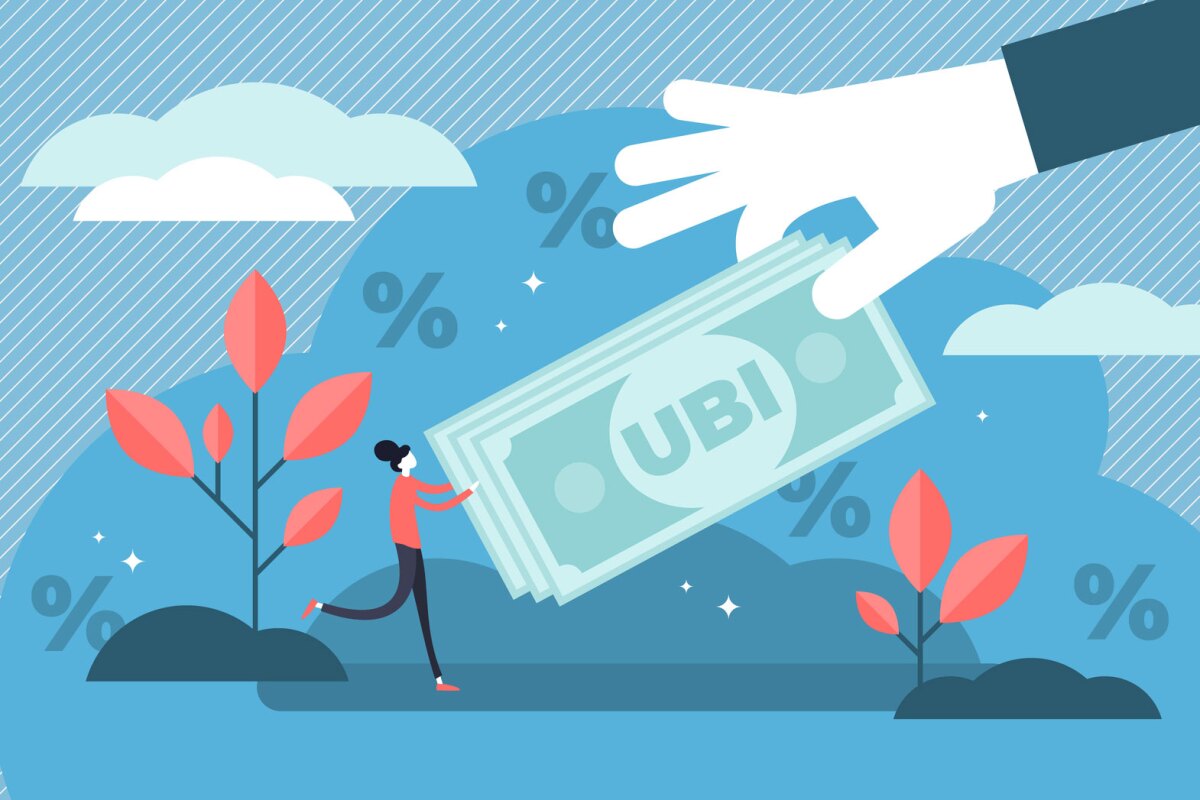
Universal Basic income(UBI), also called citizen’s income, citizen’s basic income, basic income guarantee, basic living stipend, guaranteed annual income, or universal demo grant, is a theoretical governmental public program for a periodic payment delivered to all citizens of a given population without a means test or work requirement. It’s main purpose is to reduce inequality and eliminate poverty.
Features of UBI:
1. Universal Scheme: UBI is a universal scheme in nature. It means UBI is not targeted so all citizens of the country will receive the payment of cash without any discrimination.
2. Periodic: Money will be distributed to the beneficiaries at a fixed interval i.e. monthly/yearly.
3. Cash Payment: The beneficiaries will get the cash directly into their account. So they won’t get anything in kind of cash i.e. vouchers for goods or services.
4. Unconditional Scheme: It means one need not prove his or her unemployment status or socio-economic identity to be eligible for UBI. So social or economic positions of the Beneficairy/individual are not taken into consideration.
5. Individual Beneficiary: In this scheme each citizen (or adult citizen) is considered as the beneficiary rather than each household.
An unconditional income that is sufficient to meet a person’s basic needs (i.e., at or above the poverty line) is sometimes called a full basic income; if it is less than that amount, it may be called a partial basic income. One central motive for basic income is the belief that automation and robotization is paving the way for a world with fewer paid jobs.
Today, disruptive technologies like artificial intelligence are ushering in productivity gains that we have never seen before. They are also steadily reducing human capital requirements, making jobs a premium. The gap between the rich and everyone else has expanded significantly in recent years, and many fear that automation and globalization will widen it further.
Good Idea Why?
1. Currently, the government provides services through various social welfare schemes but now the government wants to change this trend by giving them cash so that peoples can buy services/goods of their choice.
2. UBI will provide secured income to individuals.
3. The scheme will reduce poverty and income inequality in society.
4. It will increase the purchasing power of the poor, so aggregate demand in the economy will get a boost.
5. It is easy to implement because the government needs not to identify the beneficiaries which is very tough task for State and Central Government.
6. This scheme will reduce the wastage of government money because its implementation is very simple.
If the only choice were between mass impoverishment and a UBI, a UBI would be preferable.
UBI is a project for reforming capitalism into an economic system by empowering labor in relation to capital, granting workers greater bargaining power with employers in labor markets, which can gradually de-commodify labor by separating work from income. This would allow for an expansion in the scope of the social economy by granting citizens greater means to pursue non-work activities (such as art or other hobbies) that do not yield strong financial returns.
Such a program would allow people to spend their money on whatever they value most. It would create a broad sense of ownership and a new constituency to shake up the system of big-money politics. Studies of conditional cash-transfer programs in developing economies have found that such policies can empower women and other marginalized groups.
Bad Idea Why?
1. There is a strong possibility that free cash to the poor can make them lazy or it may reduce the incentive for work, increasing the rate of inflation in the economy.
2. There is no guarantee that the given cash will be spent on productive activities, health & education, etc. It may be spent on tobacco, alcohol, drugs, and other luxury goods etc.
3. It may be that workers can refuse to work (as it had been observed in the case of MGNREGA) as a laborer or demand higher wages which can increase the cost of production of agricultural goods.
4. UBI is a flawed idea, not least because it would be prohibitively expensive unless accompanied by deep cuts to the rest of the safety net.
5. Without major cost savings, federal tax revenue would have to be doubled, which would impose massive distortionary costs on the economy.
And, no, a permanent UBI could not be financed with government debt or newly printed currency. Sacrificing all other social programs for the sake of a UBI is a terrible idea. Such programs exist to address specific problems, such as the vulnerability of the elderly, children, and disabled people.
Imagine living in a society where children still go hungry, and where those with severe health conditions are deprived of adequate care, because all the tax revenue has gone to sending monthly checks to every citizen, millionaires and billionaires included. Basic economic theory implies that taxes on income are distortionary in as much as they discourage work and investment. Moreover, governments should avoid transfers to the same people from whom they collect revenue, but that is precisely what a UBI would do.
Besides, a more sensible policy is already on offer: a negative income tax, or what is sometimes called “guaranteed basic income.” Rather than giving everyone $1,000 per month, a guaranteed-income program would offer transfers only to individuals whose monthly income is below $1,000, thereby coming in at a mere fraction of a UBI’s cost.
In conclusion it can be said that history has proven that freebies never changed the economic conditions of the people. So giving a sum of Rs.7,620 per person/year will not change much as we have seen this in the MGNREGA schemes which gives Rs.10,000 per year to the people.
So the government should focus to increase the skill of the people at free cost rather than free cash.
In 1983 the video games industry was hit with a recession that almost ended the existence of video games of that time period. This period lasted for almost two years from 1983 to 1985. Many people and journalists who were critical were calling video gaming a fad. Numerous companies went bankrupt or stopped making video games entirely. This recession is known as the Great North American Video Game Crash or Atari Shock (Primarily in Japan).
Video games in the 1970s were dominated by arcade machines and by the end of the decade home game consoles were also getting popular. With the start of the 1980s, the video gaming industry witnessed a boom with numerous companies like Mattel, Atari, and Coleco dominating the market. The early 80s was a time of innovation and growth in the video game industry but there was instability in the industry as well. This was a time period when video games were becoming more mainstream and popular. Many new players entered the market ranging from industries to small developers that had no association or prior experience in game development in general.
Super Nintendo Entertainment System released on November 1990 (Successor to NES)
Pacman was a big hit in the early 80s and it was not of the most popular video games in the arcades. Its successor Miss. Pacman improved on the formula and was a success as well. After the success of Pacman in the arcades, Atari wanted to replicate the success in the home game consoles. But with the limited constraints with the memory and short development period, the game was not well received by the consumers and critics alike. In 1982 Atari also brought the license to release the video game of the movie for 21 million. The game was developed in a time period of only 5 weeks. The game was negatively received and only 1 million copies of the game were sold off the 5 million manufactured. Many of the sales were also returned to the retailers furthering the damage. During this period video games were being published by small developers with very poor quality and many big developers were producing games that were more of a marketing token than the game. There were many clones of the same games with little to no redeeming quality and replayability. There were also numerous consoles unlike today with too many options that were no different from one another. With the abundance of supply and low sales of games, retailers started to remove stocks of video games and this led to the shrinking of the industry. Atari had lost $500 Million in 1983 and had to cut its workforce from 10,000 employees to just 400 employees.
During the 1980s there was a boom in the Personal Computers market as well. The PCs were much more powerful than consoles and they could play games and do many tasks like word processing and spreadsheets. The PC industry was unaffected by this low point of video game consoles.
In 1985 Nintendo Corporation launched the Nintendo Entertainment systems in North America and Nintendo ensured that only a limited number of games to be released under their license agreement. This ensured a certain threshold of quality for the games that were released for the system and Nintendo emerged out of the survivor from the video game crash. The Nintendo Corporation started to dominate the video game industry with an assurance of quality that was unmatched by any other corporation at that time. Many other entrants like SEGA also emerged after the crash. Nintendo with its approach and license and quality assurance of video games has left a big impact on the industry to this date. Video games industry has only grown since then and also overtaken other source of entertainment. Nintendo can be credited to provide the industry a trajectory that was severely needed after the crash of 83.
Many people think that in the professional world, selfishness and greed are the characteristics that pay dividends. But the truth is, excepting win-lose situations, that the most successful people in the medium and long term are those who are the most generous in their business and personal lives.
Ambition is a desire to take on more than you can realistically accomplish, to constantly strive for improvement, to grow both personally and professionally, and, of course, the desire to generate more income. However there comes a time when ambition crosses a line, and when that happens it becomes greed. Greed is the desire to chew more than you can eat, a desire that distracts you from realistically possible goals. Greed is wanting to get more than what you have actually earned, obtaining maximum profit at minimum cost, or as an old adage has it: “Grasp all, lose all.”
Today there is an abundance of courses and books on finance, limitless knowledge on hand with a simple click. But to know what is right, to subdue the pirates of greed and to follow your trading plan- this is another story. People who look for easy money invariably find that there is no such thing, paying a heavy price for this lesson. Ego, vanity, and revenge play a part, causing people to fail on their trading accounts. This is one of the factors that explains why people might not fall into the exclusive 10% that ‘win’, and find themselves one of the 90% that lose.
Literature and film are full of greedy and stingy characters, and the moral of films like ‘A Christmas Carol’ or ‘The Wolf of Wall Street’ is always the same: the fate of the greedy is heartbreaking. Their addiction to work means that they live a lonely life, and their search for wealth means that at the end of their lives, they have only the sober memory of their friends from the Stock Exchange.
GIVE AND TAKE
People do not realize that giving without expecting something in return could be a competitive advantage, as well as making ones outlook more positive. Studies have shown that the most successful people are generous. At least this is the affirmation of Adam Grant, a psychologist and professor at Wharton and author of “Give and Take”.
A generous person builds bigger and stronger networks, improves communication with their existing contacts, and also finds it easier to interact with people outside of their core network- this gives them access to new contacts and valuable sources of information. Generous people inspire in others a predisposition, or positive receptivity, to reconnect with them, as well as a greater willingness to collaborate.
Moreover, being a giver encourages persistence because givers are able to enthusiastically motivate people, inspiring confidence, because they are liberal with praise. They create a generally positive environment. Talent is important, but the most important factor in success is persistence. And what’s even more interesting is that being a giver has an energizing effect that increases levels of happiness.
According to Bill Williams, famous trader and writer of “Trading Chaos”, people with a ‘giving’ mindset enjoy more happiness and success. For example, later in his career Bill always traded two accounts, one for himself and one for his charities. The charity account always made more money, even though he traded using the same method with both accounts. In the charity account he never veered from his strategy, while in his own account he would sometimes take a trade based on a “feel”, or get in a trade before the actual signal. This shows us the importance of sticking to a plan, but also the importance of being a ‘giver’.
Giving distracts us from our problems, adds meaning to our lives and helps us feel valued by others. This explains why avidity and egoism are the trader’s worst enemy. Having a benevolent mindset while trading helps the trader to increase performance. Happy people earn more money on average, score higher yields, make better decisions and contribute more to their organizations. Furthermore, traders who are givers are at the top of the most successful trading operations.
THE GREED EFFECT
Focusing only on money results in the ‘greedy effect’, something that all professional traders know. In fact, one of the most common pieces of (rarely followed) advice that newbies receive is to shift their focus from trade results to the trading process, analyzing and following the rules of their trading system. Another suggestion is to start reasoning in pips and ticks instead of dollars. This reduces the greedy mindset and develops a more reliable attitude.
However we can make a further effort to improve our performance by shifting our focus to be more generous. One example is trading for charitable purposes like the aforementioned Bill Williams, another could be simply committing a small part of your monthly or annual profit to microcredits, which promote a world of stability and self-sufficiency, key to overcoming poverty.
Material things can be recovered, but feelings of guilt, helplessness and loneliness cannot be solved with money. If humans would be more understanding of and generous to others, the world would be a very different place. And that is why those who practice generosity, making it part of their daily lives, experience an uplifting of their mental and emotional state, and are generally filled with more satisfaction in their professional and personal lives.
In conclusion, we see that generous people are the most successful in their daily trading performance for the reasons described above. Having a giving mindset helps professionals become part of that exclusive group, the 10% of winners.
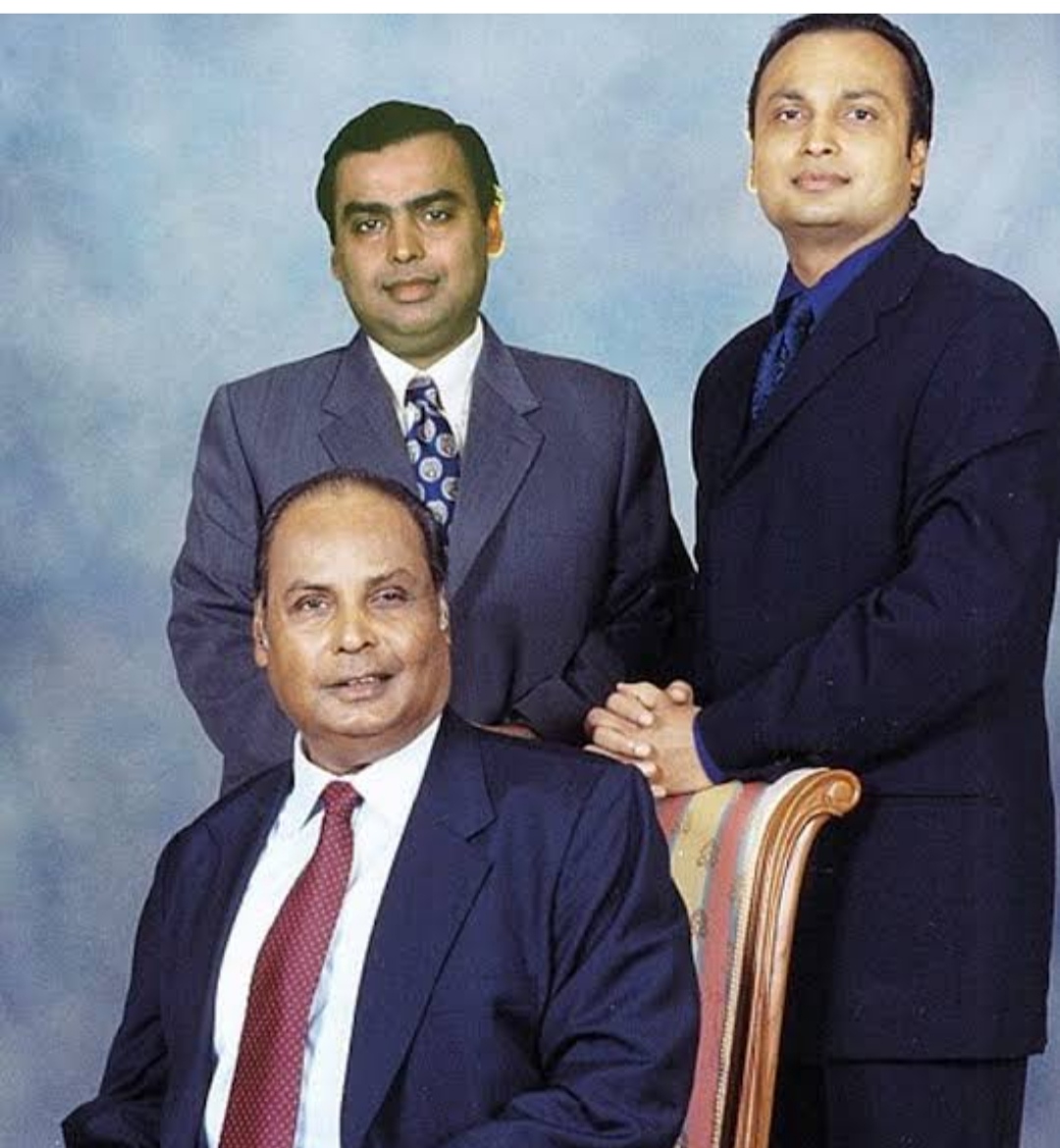
Dhirajlal Hirachand Ambani, popularly known as Dhirubhai Ambani. He is the father of Mukesh Ambani and Anil Ambani
Dhirubhai Ambani was a successful Indian business tycoon who founded Reliance Industries.
Dhirubhai Ambani,Indian industrialist,the founder of Reliance Industries, a giant petrochemicals, communications, power, and textiles.
Reliance is the biggest exporter in India and the first privately owned Indian company.
Dhirubhai Ambani passed away in 2002, before his death itself in 1980’s he handover the reliance corporation to his sons Mukesh Ambani and Anil Ambani.
Reliance Power Limited (R-power), formerly known as Reliance Energy Generation Limited (REGL) is a part of the reliance Anil Ambani Group. It was established to develop, construct, operate and maintain power projects in the Indian and international markets.
Mukesh Ambani runs Reliance industries which has interests in petrochemicals, oil and gas, telecom and retail.
Reliance industries limited, diverse businesses include petrochemicals, natural gas,retail, telecommunications,mass media and textiles. Reliance is one of the most profitable companies in India.
Reliance’s Mukesh Ambani and Nita Ambani are the owners of the second most expensive home in the World, ANTILIA, Mumbai.
Presently, there are various schemes and financing options available to new businesses as it becomes easier to procure funds for new businesses with time. In fact, entrepreneurs can actually choose the source that is the most convenient and suitable according to the nature of their business and the amount they need. Let’s take a look at some of the most commonly used sources-
a) CROWDFUNDING
Crowdfunding is that the use of small amounts of capital from an outsized number of people to finance a new business venture. Crowdfunding makes use of the straightforward accessibility of vast networks of individuals through social media and crowdfunding websites to bring investors and entrepreneurs together, with the potential to extend entrepreneurship by expanding the pool of investors beyond the normal circle of householders or relatives
Advantages-
Reduced financial risk– Crowdfunding enables small businesses to test the viability of their business ideas before making huge investments. With crowdfunding, you can test the market and get some feedback before spending heavily.
Safe for investors– Investors are always searching for opportunities with big benefits and low risks. As such, investors find this option a good choice, considering it is an independent sector that is not linked to other financial markets. It remains stable even during times of economic instability.
Tax-free– Crowdfunding decreases the investor’s tax burden as they don’t have to pay tax on these investments.
Disadvantages-
Time and effort– Successful campaigns require a lot of personal devotion, in terms of time, effort, and money. You will spend a lot of time and money creating prototypes, convincing videos, and persuasive content to sell your idea.
Theft of idea– Unless your crowdfunding idea is patented and you have all the copyrights and trademarks in place, someone could steal it. Some individuals could steal your idea and build a better version (or just market it more successfully).
b) ANGEL INVESTORS
An angel investor is a high net-worth person who provides capital for small start-ups or entrepreneurs, usually in exchange for equity in the company. The financial backing, they provide may only be a one-time investment, or it could be ongoing financial support to help the new company in its early stages. Angel investors are often looking for a higher return on their money than they would get if they were to invest in the stock market. However, their interest in start-ups usually goes beyond just monetary return. They may be interested in working within a particular industry, mentoring a new generation of entrepreneurs or making use of their skills and experience in a new way.
Advantages-
Flexible & Less Risk– Unlike loans, there isn’t a need to pay back the funding from an angel investor because they receive equity in exchange for financing. When compared with others, Angel investors are usually negotiable, since they invest it from their own pocket. In most of the cases, many angels are successful entrepreneurs who have cashed out and understand the amount of risk involved with establishing a business.
Offer valuable knowledge– Since most of the angels are season investors, they can provide contacts, expert support, and guidance that can support the business grow swiftly. Their insight and resources can be of tremendous value for the company’s growth.
Disadvantages-
Loss of control– After investing the money in a start-up, most angel investors take a hands-on approach to the business and thus the founder and the company might lose control.
Expectations of Angel investors– They may expect a substantial return on their investment, sometimes equal to 10 times their original investment within the first five to seven years. This can create additional pressure. Therefore, before accepting funding, it should be evaluated whether the business can grow at the rate that an investor would expect, and establish expectations for growth.
c) Venture Capitalists
A venture capitalist (VC) is a private equity investor that provides capital to companies exhibiting high growth potential in exchange for an equity stake. This could be funding start-up ventures or supporting small companies that wish to expand but do not have access to equities market. Venture capitalists are willing to risk investing in such companies because they can earn a massive return on their investments if these companies are a success. VCs experience high rates of failure due to the uncertainty that is involved with new and unproven companies.
Advantages-
Business expertise– Aside from the financial backing, obtaining venture capital financing can provide a start-up or young business with a valuable source of guidance and consultation. This can help with a variety of business decisions, including financial management and human resource management. Making better decisions in these key areas can be vitally important as your business grows.
Additional resources– In a number of critical areas, including legal, tax and personnel matters, a VC firm can provide active support, all the more important at a key stage in the growth of a young company. Faster growth and greater success are two potential key benefits.
Connections- Venture capitalists are typically well connected in the business community. Tapping into these connections could have tremendous benefits.
Disadvantages-
Loss of control– The drawbacks associated with equity financing in general can be compounded with venture capital financing. You could think of it as equity financing on steroids. With a large injection of cash and professional – and possibly aggressive – investors, it is likely that your VC partners will want to be involved. The size of their stake could determine how much say they have in shaping your company’s direction.
Minority ownership status– Depending on the size of the VC firm’s stake in your company, which could be more than 50%, you could lose management control. Essentially, you could be giving up ownership of your own business.
Keeping in mind the pros and cons of various options available, an entrepreneur can choose the option that is easily available and suitable for their new business.
According to the 2011 population census India has nearly 104 million senior citizens of the total population. And around 71 % of senior citizens live in rural parts and 29 % reside in urban areas of India. These senior citizens are often left out when it comes to basic amenities and requirements and have to depend on others for their living and financial support especially in urban areas, whereas the senior citizens living in rural areas are unable to get aids for their age-related impairments or disabilities due to financial weakness. For overcoming this issue in senior citizens of rural and urban areas and provide the senior citizens with financial and health stability, the government came up with the Senior Citizens Welfare Scheme and Rashtriya Vayoshri Yojana. The Senior Citizens Welfare Fund (SCWF) was included under the Finance Act, 2015 for 3 years that is till 2020. This fund is utilized for the welfare of senior citizens. It is expected that around 5,20,000 senior citizens would benefit from this scheme. The scheme also tries that at least 30 % of beneficiaries in all districts should be women as far as possible. An amount of Rs. 410.23 crore was allocated as of December 2019, as initial funding under the scheme, and is handled by the Ministry of Social Justice and Empowerment. The fund is allocated from the unclaimed money which is lying untouched (after 10 years is transferred) under the Small Savings Schemes, Public Provident Fund, Employees Provident Fund (unclaimed for 7 years), any insurance scheme (be it life or non – life), any such unclaimed policy under the insurance companies, Coal Mines Provident Fund, and Central Government Schemes such as the Savings lying in the Post Office, Post Office Time Deposit Account, Kisan Vikas Patra, Post Office Monthly Income Account, Post Office Recurring Deposit, and Senior Citizens Savings Scheme.
In 2016, the Department of Economic Affairs transferred an amount of Rs 5889.17 crore to the corpus of Senior Citizens Welfare Fund and the interest accrued from this would be utilized for the Welfare Scheme funded from the Senior Citizens Welfare Fund. The Department of Economic Affairs allocated an amount of Rs 16 crore from the Senior Citizens Welfare Fund and provided it to the Department of Social Justice and Empowerment for the implementation of the Rashtriya Vayoshri Yojana. An inter–ministerial committee is set up for the administration of the funds. This ministry comprises – Ministry of Social Justice and Empowerment as the Nodal Ministry, Ministry of Health and Family Welfare, Ministry of Rural Development, Ministry of Labour and Employment, Ministry of Housing and Urban Affairs, and Department of Financial Services.
Rashtriya Vayoshri Yojana is a scheme under the Ministry of Social Justice and Empowerment. This scheme was launched in 2017. The funds for this scheme target at providing assistive living devices and other aids to the Below Poverty Line (BPL) category belonging to senior citizens, who suffer from disabilities due to growing age. Artificial Limbs Manufacturing Corporation of India (ALIMCO) is a public sector undertaking under the Ministry of Social Justice and Empowerment by which the scheme is implemented. This public sector undertaking manufactures assistive living devices. Depending upon the disability of impairment the following assistive devices are provided to the eligible senior citizens under the scheme:
• Spectacles
• Artificial Dentures
• Hearing Aids
• Walking Sticks
• Wheelchair
• Crutches / Walkers
• Elbow Crutches
• Tripods / Quadpods
To avail of benefits under this scheme, the senior citizen must belong to Below Poverty Line (BPL) category. He/she must be suffering from age-related disabilities and those disabilities can be – Loss of teeth, hearing impairment, locomotor disability, or low vision. The assistive devices provided for these impairments try to provide near normalcy bodily functioning.
Impact
A total of 325 districts were selected for the implementation of this scheme. 135 districts completed their assessment camps for identification of the beneficiaries as of 25/01/2019. As per the Ministry of Social Justice and Empowerment 70939 senior citizens belonging to the BPL category have benefited from 77 distribution camps organized. In the year 2017 – 18,34069 senior citizens benefited from this scheme and in the year 2018 – 19, 36870 senior citizens benefited from this scheme of Rashtriya Vayoshri Yojana.
Baltics, also known as the Baltic States is comprised of three countries including Latvia, Lithuania, and Estonia. The three countries are situated on the eastern shores of the Baltic Sea. In 1991 the regional governments of Lithuania, Latvia, and Estonia declared independence from the Union of Soviet Socialists Republics (USSR). Three countries have a collective population of just over 6 million. The three have been one of the better examples which have been progressing well after the breakup of the USSR. Many other former Soviet republics have been suffering the disarray of corruption and political instability.
In 2002 Baltic countries applied for membership in the European Union (EU) and by May 2004 all the three countries joined the EU. They also gained membership in NATO by March 2004.
Downtown Tallinn
Baltic independence in 1991
It’s truly astounding how the three countries have developed since 1991. None of them were independent since 1940. The three countries had large Russian minorities and many Soviet soldiers were still stationed there. There were no major national institutions and banking infrastructure with a crumbling economy. There was a growing homegrown national moment against the ruling government since the 1980s. The homegrown fronts won the republican parliamentary election against the ruling party in early 1990 and were allowed to govern but with limited power. The Russian president at that time, Boris Yeltsin had not contested their newly declared independence in 1991. The Baltic also witnessed no violence when the three governments had declared their independence.
The three nations also had almost no natural resources, unlike USSR which was resource-rich. They were still in a very vulnerable situation with a small population and no military of their own. Even though the countries were linguistically distinct with different languages, but people in all three countries had a united drive to strive for a better future. The three had implemented reforms with a shared vision. The governments of the three shared many policies, ideas, and experiences. The Baltic States also valued their new independence with a lot of enthusiasm and didn’t take it for granted. The other ex- USSR countries often had to ask for assistance from Russian Federation and also formed new alliances with the Russian government. Baltic countries on the other hand tried to stay away from joining the post-Soviet Commonwealth of Independent States. In the subsequent years, all the three countries adopted radical economic policies and Estonia was the first mover and Latvia and Lithuania would follow suit. In 1994 Estonia introduced a flat income tax at just 24 percent and the other two also implemented the policies. Currently, Lithuania has a tax rate of just 15 percent which is one of the lowest. With early and fast deregulation and privatization, the Baltic countries were able to capture a large amount of foreign direct investment. Estonia also radically transformed its public sector with various digitalization implementations and less reliance on paperwork. Latvian and Lithuania’s transformation in this area was not as drastic but after some time both of them followed Estonia’s footsteps. Transparency International ranks Estonia No. 17, Lithuania 37, and Latvia 42 out of 175 countries on its Corruption Perception Index for 2020. This is a commendable ranking considering they all the three are a relatively new entrant to the EU and many other EU countries have lower ranks than the three.
Success attributions
The success can also be attributed to the generous support that the three countries received from the international community and funds granted by the EU, World Bank, and the IMF. In 2008 Baltic suffered from the global economic crisis. The three soon adopted the Euro as their currency to avoid any future liquidity freeze issues that they experienced at that time. The economies al the Baltic rebounded quickly and due to good monetary measures, the three have a very low public debt. Baltic governments have also made swift progress in the Education sector and the three have attained commendable rankings in the Program for International Student Assessment (PISA) of the Organization for Economic Cooperation and Development (OECD). Estonia has done a very commendable task in this area with top 10 rankings in many assessments. But the Baltics also face many challenges with population loss due to low birth rate and emigration. Proximity and hostility with Russia still is a challenge that the tiny nations have to endure.
Cost Accounting focuses on company’s total cost of production by assessing the variable and fixed costs at each step of production and selling. It is critical aspect of accounting as cost directly affects the revenue of the company and also helps in determining the pricing strategy of the product/service.
Unlike financial accounting which provides information to external users (Public, Government, Banks etc), Cost accounting provides vital information to the internal users (mainly management) for decision making.
Two main types of costs are Variable and Fixed costs. Fixed cost refers to the part of cost which does not vary or depend on the level of production. For example, Rent of office or factory. It has to be paid even when the facility is not being utilised or there is no production or sales. However, Variable cost varies according to the level of production. For example, labour wages or cost of raw material.
To understand costing better, let’s understand different elements it comprises of-
Cost of material consumed is the sum of all the cost spent to procure a raw material, store it till it gets consumed. All such costs are added with the actual cost of raw material purchased to arrive at the cost of materials consumed.
Employees Benefit expenses- The benefit provided to employees are summarised into four categories:
benefits in the short-term (benefits payable to employees shortly after they provide the service, e.g. a salary)
benefits in the long-term(such benefits may become payable long after the employees provide the service e.g. a long-service award)
benefits ofpost-employment (i.e. after they have retired from employment e.g. a pension)
termination benefits (those that would be payable if the employees were to be terminated before normal retirement age (e.g. a retrenchment package)
Purchases of stock in trade, refers to all the purchases of finished goods that the company buys towards conducting its business.
Other Expenses are not directly related to the business but are ancillary in nature. It is of utmost importance and have to be accurately differentiated from the expenses, as per the prescribed guidelines and based on the nature of the business.
Amortisation and Depreciation expenses- Amortization is a method of spreading the cost of an intangible asset over a specific period of time, which is usually the course of its useful life. The goal in amortizing an asset is to match the expense of acquiring it with the revenue it generates. Depreciation is a method of spreading the cost of a tangible asset over a specified period of time, typically the asset’s useful life. The purpose of depreciation is to match the expense of obtaining an asset to the income it helps a company earn.
In order to reduce costs substantially which ultimately increases the revenue of the company, elements of the total costs need to be analysed and reduced, if possible. It helps in examining the costs step by step, stage of production wise which is an essential process to determine the price per unit and also determining the relationship between each cost and how it affects the Cost of goods sold and the net profit. These elements are grouped together on the basis of their similar nature and hence, it becomes easier to reduce cost element by element.
















 Eduindex News
You must be logged in to post a comment.