Government Budgeting

Description of the budget

The word ‘budget’ is derived from the French word, Bougette, which means a leather wallet or purse.Therefore, the term modern budget refers to a document that contains estimates of revenue and expenditure of a country, usually for one year.

Types of Budget

Budgets can be categorized based on the following principles:

  1. Combined time.
  2. Number of budget’s tabled in the legislature.
  3. The overall finance budget’s position is presented in the budget.
  4. An approved policy on the takeover of revenue and expenditure in the budget.
Division of receipts and expenses in the budget.

Based on these principles budget’s can be:(Annual budget’s or long-term budget’s.

  1. One or more budget’s.
  2. Excess budget’s, deficits or estimates.
  3. Budget or revenue budget.
  4. Departmental budget or operating budget.

A brief description of the different types is as follows
1. ANNUAL or long-term budget’s

Generally, Government budget’s are for one year that is, for one year. In India, England and many other commonwealth countries the financial year, starts on April 1 and ends on March 31, but in the U.S.A., Australia, Sweden and Italy the dates are 1st July and 30th June. Some countries adopt a planned economic policy and meet the requirements for long-term planning, using a long-term budget, that is, preparing a budget for three years or more. Such a budget is a long-term plan rather than a long-term budget because what is offered is a financial plan over the years to fund the program.These countries spread the use of program costs over many years. The legislature approves the plan and estimates its costs, but that does not equal the actual voting of all-time shares. Every year, the national budget will include expenditure on a plan for that year, to be approved by the legislature.

2. One or more budget’s

When the estimates of all Government functions are allocated to a single budget, it is known as a single budget. The advantage of a single budget is that it reflects the financpractisetion of the Government as a whole.But if there are separate budget-related budget’s passed by the legislature, it is called a mass budget. In India, we have two budget’s — one for the railway line and one for the rest of the departments. The practice of having a separate train budget began in 1921. In England, there is one budget.

3. Extra income, deficit or limited budget

A budget is a surplus if the estimated income exceeds the estimated cost/expense But if the expected revenue falls below the expected cost, it becomes a budget deficit. According to economists, a deficit budget is a sign of global development. A limited budget is when the expected revenue is equal to the expected cost/expense. Budgets are often in short supply.

4. Income or budget of income

A budget is one in which the estimates of various items of income and expenditure include amounts to be acquired or used in one year,.In revenue and expenditure budget’s, accumulated in one financial year,, are planned for that financial year, regardless of whether the revenue is available or expenses incurred in that financial year,. In India, Britain and the U.S.A., counts are calculated, in France and other continents, counting income.

5. Departmental or operational budget

The current practice is to have a departmental budget, that is, the revenue and expenses of one department are organized under it. It does not provide any information about the work or activity that has been budgeted for. The operating budget is another where the total cost of a particular project is compiled under the head of a specific program.It is organized into activities, programs, activities and projects, for example, in the case of collaboration (employment), it will be divided into programs such as higher education, Secondary and Higher Education. Each program will be divided into activities, for example, teacher training is a task. The project is the final unit of division of labor.It symbolizes work as a major project, such as the construction of a school building. The A.R.C. proposed the adoption of a budget for all the departments and agencies of the Central and provincial governments that have managed development programs.

REFERENCE

Essay on Budget: Top 4 Essays | Government | Public Administration

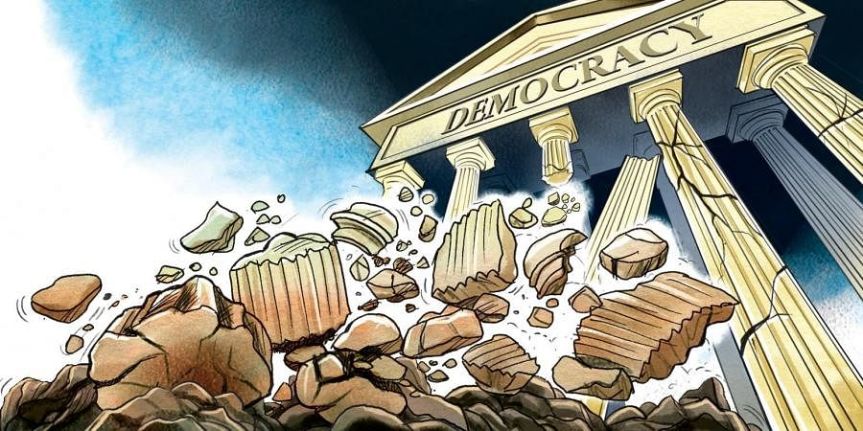
Has Democracy Expired?

Democracy, or rule by the people, has always been a complex concept. There have been freedom struggles, revolutions, and even wars to protect it. But nothing is permanent. Humankind has often taken democracy for granted and overestimated its permanence. As J.S Mill put it, “The fatal tendency of mankind to leave off thinking about a thing when it is no longer doubtful, is the cause of half their errors”. It wouldn’t be the first time an ostensibly powerful institution ended after years of dominance. When thinking about the end of a monarchy, guillotines and cake are few images that come to mind. 

Critiques of democracy note that voter ignorance and slow decision making often cause problems in a democracy. Furthermore, A democratically elected government earns its legitimacy because a majority of people, not all people, vote for it. Thus, it reflects the will of the majority and not everybody. This creates the possibility of the “tyranny of the majority”. Plato went so far as to assert that democracy is the science of manipulating people and it leads to the rule of tyrants. 

India’s “democratic experiment”, which began after we gained independence, has been anything but a smooth journey. Nevertheless, despite attacks on our democracy, such as the National Emergency of 1975, democracy has always protected our people. But now, democracy itself is in danger. 

We often make the mistake of ennobling free and fair elections as the only necessary criteria for a successful democracy. This is far from the truth. This article is not an attempt to undermine the fact that the current government was democratically elected, instead, it intends to showcase the harm a government elected by 38% of the population and a rising resentment of democracy amongst the people can cause. As we shall see, India’s democratic nature has been conspicuously declining for a while. 

Freedom House, an American Think Tank, gave India a score of 67/100 in its 2021 report and characterized India as a “partly free” country. A score of 34/40 in the political rights section confirms the purity 0f our elections. However, a score of 33/60 in the civil liberties section emblazons the potency of this government’s attack on democracy. According to the report, events such as the violence during the CAA protests, the misuse of sedition laws, the significant hardships that migrant workers had to endure during the lockdown, the baseless scapegoating of Muslims as super-spreaders of Covid-19, and the Babri Masjid Verdict contributed to this score. India was considered a “free” country as recently as 2020, with a score of 71/100. The 2021 score is also lower than those of 2019 (75/100) and 2018 (77/100), showing that the strength of our democracy is depleting. The last time the Freedom House considered India as partly free was in 1997, possibly because of the instability in Parliament at that time. 

Another report by the V-Dem Institute in Sweden described India as an “electoral autocracy”. According to the report, India belonged to the “EA+” category, signifying that it could also belong to the “closed autocracy” category. The reasons for this score include the curtailment of freedom of media, academia, and civil society; an increase in censorship; the misuse of sedition, defamation, and counter-terrorism laws, especially the Unlawful Activities Prevention Act (UAPA) to harass, intimidate, and imprison critics and opponents; the Citizenship Amendment Act (CAA); and the use the Foreign Contributions Regulation Act (FCRA) to restrict the entry, exit and functioning of Civil Society Organisations (CSO) and constrain the use of foreign contributions to NGOs within India. The V-Dem Institute reports have described India as an “electoral democracy” in the 2020, 2019, and 2018 reports. 

Sadly, the government’s response to these reports has been vituperative. They decided to deny the validity of these reports instead of countering their assertions. This approach to criticism and dissidence is not limited to foreign entities. Indian dissenters, whether they are farmers, students, members of opposition parties, or even ordinary citizens, are punitively called “anti-nationals” and even terrorists for criticizing the government. In an increasingly globalized world, it is accepted that opinions may be formed on issues beyond one’s national borders. The government’s disrespect and disregard for reputable news agencies, such as The New York Times and The Australian, is appalling. The government prefers listening to fraudulent news agencies, such as The Daily Guardian and The Australia Today, that were made by staunch sycophants. The government must remember that “You measure a democracy by the freedom it gives its dissidents, not the freedom it gives its assimilated conformists.” (Abbie Hoffman)

The symbol of our democracy, the parliament, has also witnessed numerous attempts to undermine our democracy. The Question Hour, which is a tool used to hold the ruling party accountable, was removed for the Monsoon session of Parliament. Considering that this was the first session of parliament since the pandemic began, the removal of this accountability mechanism is untenable. The ruling party used this session to push through the contentious farm bills. If these bills were truly what the entire nation needed, the government should have adhered to the democratic process and allowed a division vote when members of the opposition repeatedly requested for one. A voice vote may be quicker, but it undermines the voice of the opposition, which is a pillar of democracy. 

These farm bills join a larger list of controversial bills, including the bill that abrogated Jammu and Kashmir’s special status, the Citizenship Amendment Bill, and amendments to the Unlawful Activities (Prevention) Act, that did not pass motions to be sent to select committees for further parliamentary scrutiny. These committees provide a forum for feedback from various stakeholders and act as a consensus-building platform across political parties. In the 16th Lok Sabha (2014-19), 25% of the Bills were referred to these committees, which was much lower than the 71% and 60% during the UPA II and UPA I regimes respectively. Since 2020 began, out of the 44 bills introduced in parliament, no bill has been referred to the select committee. Unlike the GST Council, these standing committees weren’t allowed to meet virtually during the pandemic, despite numerous requests from opposition parties. 

From the exploitation of anti-defection laws; the misuse of ordinances; the creation of the opaque PM-CARES Fund; the oligarchical capture of democratic institutions such as the Central Information Commission, Reserve Bank of India, and even the Election Commission and finally to the recent Information Technology (Intermediary Guidelines and Digital Media Ethics Code) Rules, 2021 that could undermine free expression and privacy for internet users in India, the recent attacks to our democracy have been terrifying. Criticism, accountability, and independent institutions have all been seriously diminished. The Covid-19 pandemic appears to have derailed all democratic processes, except elections. 

At this time we must ask ourselves, do we still value our democracy? And most importantly, are we willing to fight for it together? I fear that the answer to both these questions is no and it has been for a long time. 

In 2017, two well-reputed political science scholars, Roberto Foa and Yascha Mounk published a paper titled “The Signs of Deconsolidation” that showed that over 70% of Indian respondents wished for a “strong leader who does not have to bother with elections”. This is a higher percentage than that of the USA (30%), Nigeria (45%), Turkey (58%), and even Pakistan (62%). This indicates that Indians are more willing to express support for authoritarian alternatives to democracy. 

This preference for the undemocratisation of India is further highlighted by recent studies conducted by the Pew Research Centre. Their 2017 report on democracy showed that 55% of Indian respondents felt that “a system in which a strong leader can make decisions without interference from parliament or the courts” would be a “totally good” way of governing this country. Conversely, only 17% of respondents felt that this would be “very bad” and 28% of them felt that this would be “totally bad”. Moreover, their 2020 report showed that 70% of Indian respondents were satisfied with the way that democracy worked in India. This is a significant rise compared to the 54% of respondents that were satisfied with it as per the 2019 report. The 2020 report also showed that 26% were dissatisfied with it, which is lower than the 33% in 2019. 

Undoubtedly, concluding that democracy has no place in our future would be incongruously prescient, but a growing intolerance for democracy is indubitable. People prefer quick decision making over the slow democratic process that requires consensus and deliberation. People would rather see tangible changes made by decree than wait for the democratic process. While the subversion of the democratic process may seem harmless to the current ruling party and those who espouse their ideology, permanent harm to our democracy ought to be denounced. The ubiquity of democracy should not depend on any political party’s ideology. The end of democracy would bring about the epoch of a procrustean India and end the plurality, secularism, and diversity that we have considered primordial for decades. At the rate our democracy is eroding, impassivity could mean that we’re the last generation of Indians to live in a true liberal democracy. 

The next opportunity for voters to actively resist this attack on our democracy may seem too far away. However, the 2024 general elections are preceded by elections in 16 states. My hope is that the control, division, and hatred promulgated by our current leaders, will ultimately consume them. Any reduction in their mandate will benefit our democracy. And if there is one thing that authoritarians cannot handle, it is the feeling of losing control. 

Democracy is not a plant that grows everywhere but hopefully, it can re-grow in our great nation. 

BLESSING IN DISGUISE

BY DAKSHITA NAITHANI

The year 2020, as we all know, will be a major change in our life. It has also demonstrated the opposite side of existence. We continued to count things for the future, and when the pandemic struck, it reminded us of how unexpected life can be; different aspects of life were affected, and working conditions were significantly altered. There was a lot of misunderstanding in the education industry about how to teach pupils, how to start lessons, and so on. However, technology was the solution to all problems.

People have used mobile phones for social interactions and pleasure in the past, but they have now evolved into a source of information, and we can say that school has come within our grasp. This situation is very similar to one of the chapters in NCERT’s English course book for class 9 called “The fun they had,” in which two children from the future (2050) got their hands on a real hardcover book from their grandfather and were amused by the idea of a real school and school building where all the children of the same age group used to study together under one roof and thought that happiness was being together with their friends. Did the pupils in this circumstance realise that this narrative would become so relevant and genuine to them? Many parents used to refuse to let their children to use cell phones, but it has now become a necessity.

Although there are always two sides to a coin, sales of smart phones soared as a result of the epidemic, since every home needed one additional one for their children to attend courses. Technology has also played a significant role in education, and how we use it can have positive or negative consequences. Phones have evolved into more than simply a means of communication; they have also become a lifeline and an indispensible component of our lives in some manner. It was a struggle for teachers to not only teach their material but also to engage with their pupils throughout these testing periods. They’ve also learned to utilise technology in a variety of ways, including not just communicating but also using various digital classrooms, boards, and audio and visual teaching and learning methods. They were not only effective in speaking with pupils, but also with their guardians, and despite the challenges, they were able to establish an emotional bond with them.

Many parents lost their jobs as a result of industry losses and were obliged to shift their children from private to government schools, but many were pleased to do so because the curriculum is on par with top institutions. The government and teachers have made it a point to link each and every kid with them. Many teachers aided their students financially as well as academically. Many teachers have also attempted to offer phones or internet connections to their kids, demonstrating that humanity bears primary responsibility in any scenario.

The desire for change in school education emerges as a result of continual changes in society on psychological, social, and economic levels. As a result, we must constantly introduce and upgrade a framework. As you can see with the current pandemic, a lot of adjustments are required both during and after the crisis. With this in mind, the Delhi government began giving curriculum-based work sheets to children of all grades, as well as training their teachers.

Teachers’ ability and efficiency have been improved via the use of webinars and online seminars on a regular basis. Regular trainings were provided to demonstrate how to use Google products to make the teaching and learning process more engaging and beneficial. The government has also launched a number of applications, such as Chalklit and Diksha, to provide a platform for various trainings and to keep instructors informed about innovative ways of teaching and learning. It was remarkable that students continued to attend courses on a regular basis, whether they were in the same city or in their village; their desire to study grew day by day, and they began to respond positively.

One nation, One election

                                                                       (Photo: Think India)

“One nation, one election”, might sound good as well as appealing, but it will have a number of anti-democratic consequences. It’s true saying that simultaneous elections for Lok Sabha and State Assembly could save time, energy and money of our country, but on the other side it can prove to be harmful for our country as well as democracy.

Apart from logical considerations, which cannot be a serious reason for a major change to the basic structure of the Indian polity, the most seductive argument in favor of simultaneous elections is the allure of Modi’s phrase, “One nation, one election.” This matches the “one nation, one tax” rationale for the goods and services tax (GST), which, of course, came into force via its own constitutional amendment on 1 July, 2017.

While one can debate the economic costs and benefits of GST, the analogy with elections is logically flawed. Indeed, the concept of simultaneous elections fundamentally runs against the grin of our Westminster-style federal political union. “One nation, one election” would make sense if India were a unitary state. But we are a union of states, which is philosophically and politically an essentially different conception of the Indian nation-state. With this, let us discuss the disadvantages of holding simultaneous elections in India:

  • Rule by the majority is the cardinal principle of Indian democracy. The concept of simultaneous elections goes against this principle since if elections are held simultaneously then the Lok Sabha and the state legislative assemblies cannot be dissolved before completing their full period of 5 years even if the ruling party is reduced to a minority hence it will go against the federal principles.
  •  It will disown today’s reality of fragmented quality at the state level where coalitions are the order of the day. So, simultaneous elections try to bring in the presidential type of governance where the state assembly is no longer can decide their own path and have to be in existence for 5 years with a minority party in power.
  • Even if elections were to take place simultaneously, parties contesting in only one state would anyway be similarly burdened. So, it probably takes care of only national parties. And the logistic requirement of movement of the requisite security forces. This constant would remain even if simultaneous elections were held.

So, it can be said that holding simultaneous elections is certainly desirable but not feasible. The question which arises is, “Why should the states suffer from the electoral decisions taken at the centre?” It has been said that simultaneous elections would curtail government expenditure but the election commission has updated that for this it would require the procurement of 24 lakh EVMs and an equal number of VVPAT units which is double the number required to hold only parliamentary polls. So, the first objective is not met.

Therefore, notwithstanding the benefits of simultaneous elections highlighted above, the cost to the Indian democracy in terms of playing havoc with the cardinal principle of rule by the majority will be far more than any savings to be realized to the public exchequer. Rather other alternatives should be explored to reduce election-related expenses like state funding of elections, decriminalization of politics, bringing in transparency in political funding by linking Aadhaar card to the election Identity card which has still not been done, etc.


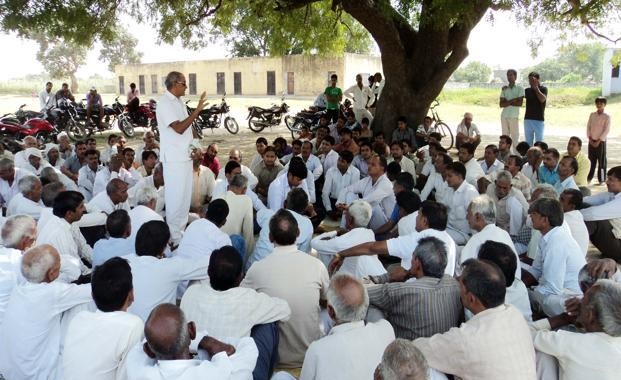
LOCAL SELF-GOVERNMENT

                                                               (Photo: ClearIAS)

According to D. Lockard, local government may be loosely defined as a public organization, authorized to decide and administer a limited range of public policies within relatively small territory which is a subdivision of a regional or national government.

A nation develops from its roots and for a nation to develop we need a strong base and in a country like India, the base is the local self-government like municipalities and panchayats, etc. These are the grassroots of a democracy in our country. It gives a good amount of exposure to the people who participate in the governance and running of these institutions, in both political and social aspects, making our democracy more participative as well as substantive. In rural areas, the self-governing bodies are the Panchayats and in urban it is the municipal corporations, etc. Local self-government consists of rural local self-government and urban area local self-government.

In India, villages are always considered as strength of this country. It is said that the soul of India lives in villages and a majority of 60% of the total population currently lives in rural areas. The exponents of the local self-government institutions hold the view that such local self-governments are the basis of democracy and the best way to develop political consciousness among the people. Through the local self-government, the regional and local interests convert into national interest. The Rural Local self-governments are the result of most landmark year 1992, when the 73rd amendment was incorporated in the constitution. Necessary related provisions were added in 1992 by the way of the 74th amendment act, 1992. It bifurcated the urban local self-government system.

Gandhi Ji also emphasized local self-government. To him, development meant a fuller participation of people in the achievement of essential goals. Village is the primary unit of government and from the village upwards, units of government with residuary powers, are to be established. And at each level, complete democracy and freedom are to be guaranteed.

Thus, the local self-government holds a vital role when it comes to the strengthening of democracy. It encourages local, political, and social leadership, thus making people more participative. It makes democracy substantive with its very own existence. These have to shoulder manifold and complex responsibilities. Hence, they are the grassroots of our democracy.

e-RUPI : A DIGITAL VOUCHER

e-RUPI is a digital solution launched by the Hon’ble PM via video conferencing to allow cashless payment solution for COVID-19 vaccination. The digital payment solution has been developed with the support of DFS (Department of Financial Services) and NHA (National Health Authority) and is powered by NPCI (National Payment Corporation of India).
This particular digital token does not require someone to have a bank account or any particular mobile app, it works even for the non-smartphone using population. With nearly 80 per cent of the population in India having mobile connection, e-RUPI may revolutionize the digital payment system in the country.
 This digital payment instrument is in the form of pre-paid digital vouchers, which is directly delivered to the phones of beneficiaries by organizations via SMS or QR code, and may be used for purchase of specific goods or services, but can’t be converted to cash or transferred to another person.
The system has been built by NPCI on its UPI platform, and has on boarded banks that will be the issuing entities. Any corporate or government agency will have to approach the partner banks, which are both private and public-sector lenders, with the details of specific persons and the purpose for which payments have to be made. The beneficiaries will be identified using their mobile number and a voucher allocated by a bank to the service provider in the name of a given person, would only be delivered to that person.
This contact less e-RUPI is easy, safe and secure as it keeps the details of the beneficiaries completely confidential. The entire transaction process through this voucher is relatively faster and at the same time reliable, as the required amount is already stored in the voucher.
PM Modi expressed happiness, that e-Rupi initiative has come at a time when the country is celebrating the Amrit Mahotsav on the  75th anniversary of independence.
Banks with e-Rupi are:-
  • State Bank of India
  • HDFC Bank
  • Axis Bank
  • Punjab National Bank
  • Bank of Baroda
  • Canara Bank
  • IndusInd Bank
  • ICICI Bank
  • Union Bank of India
  • Kotak Bank 
  • Indian Bank
Benifits of e-Rupi :-
1.e-Rupi will provide more transparency than cash.
2.It helps corporate to enable well being of their employees.
3.Voucher redemption can be tracked by issuer.
4.It is a contactless payment, so there is no need of cash handling.
5.It does not require beneficiary to carry print out of the voucher.
6.e-Rupi does not require digital payment app or a bank account to redeem the voucher.
7.Redemption of voucher is a quick and easy process.                                              
8.It is expected to be a revolutionary initiative in the direction of ensuring a leak-proof delivery of welfare services.      
9.It can also be used for delivering services under schemes meant for providing drugs and nutritional support under Mother and Child welfare schemes, TB eradication programmes, drugs & diagnostics under schemes like Ayushman Bharat Pradhan Mantri Jan Arogya Yojana, fertilizer subsidies etc. Even the private sector can leverage these digital vouchers as part of their employee welfare and corporate social responsibility programmes.
10.It keep the details of beneficiaries confidential.

List of PSUs in India

A state-owned enterprise in India is called a public sector undertaking—PSU or a public sector enterprise. In a PSU company, most shares, 51% or more, are owned by the central or state government. The ministry of heavy industries and public enterprises administers central public sector enterprises. PSUs are mainly categorized into 3 major ratnas.

  • Maharatna Companies
  • Navratna Companies
  • Miniratna Companies
PSU Jobs - Check The Latest Job Openings In Top Govt PSU

Maharatna Companies

For a company to be eligible for the Maharatna category has to fulfil these criteria; Three years with an average annual net profit of over Rs. 2500 crore, OR Average annual Net worth of Rs. 10,000 crore for 3 years, OR Average annual Turnover of Rs. 20,000 crore for 3 years (against Rs 25,000 crore prescribed earlier)

Benefits for investment: Rs. 1,000 crore–Rs. 5,000 crore, or free to decide on investments up to 15% of their net worth in a project.

Navaratna Companies

Eligibility: A score of 60 (out of 100), based on six parameters which include net profit, net worth, total workforce cost, the total cost of production, cost of services, PBDIT (Profit Before Depreciation, Interest, and Taxes), capital employed, etc., AND A company must first be a Miniratna and have 4 independent directors on its board before it can be made a Navratna.

Benefits for investment: up to Rs. 1,000 crore or 15% of their net worth on a single project or 30% of their net worth in the entire year (not exceeding Rs. 1,000 crores).

Miniratna Companies

Miniratna Companies are further divided into two minor categories:

  • Miniratna Category-I
  • Miniratna Category-II

List of Maharatna Companies

1. National Thermal Power Corporation (NTPC)

2. Oil and Natural Gas Corporation (ONGC)

3. Steel Authority of India Limited (SAIL)

4. Bharat Heavy Electricals Limited (BHEL)

5. Indian Oil Corporation Limited (IOCL)

6. Coal India Limited (CIL)

7. Gas Authority of India Limited (GAIL)

8. Bharat Petroleum Corporation Limited (BPCL)

9. Power Grid Corporation of India (POWERGRID)

List of Navratna Companies

1. Bharat Electronics Limited (BEL)

2. Container Corporation of India (CONCOR)

3. Engineers India Limited (EIL)

4. Hindustan Aeronautics Limited (HAL)

5. Mahanagar Telephone Nigam Limited (MTNL)

6. National Aluminium Company (NALCO)

7. National Buildings Construction Corporation (NBCC)

8. National Mineral Development Corporation (NMDC)

9. Neyveli Lignite Corporation Limited (NLCIL)

10. Oil India Limited (OIL)

11. Power Finance Corporation (PFC)

12. Rashtriya Ispat Nigam Limited (RINL)

13. Rural Electrification Corporation (REC)

14. Shipping Corporation of India (SCI)

Morality in Rule of Law

                                                            (Photo: Thought and action)

Rule of Law is the fundamental principle which ensures good governance as well as individual rights and liberties. It says no one is above the law and every person living in a particular society is subject to the law of that society. All other notions associated with the rule of law must also be considered alongside it. It is a mechanism that encourage the equality of all citizens before the law. It also secures a non-arbitrary form of government, and specifically prevents the arbitrary use of power. In general, the rule of law implies that the creation of laws, their enforcement, and the relationships among legal rules are themselves legally regulated, so that no one including the most highly placed official is above the law.

Moralityis a concept that distinguishes right from wrong. It also talks about conduct that is considered acceptable or unacceptable in a particular society. The source of morality is usually considered to be natural law and God’s instructions through sacred documents.

Morals provide a basis for the development of law by virtue of justice, equity, good faith, and conscience. Morality plays an important role in making of law and its interpretation. Morals are an intrinsic part of the laws. In the ancient time morals and laws were considered as one and the same. In the current period though law and morality have several distinctions yet the same are not completely different or distinct. A relationship can be established between morality and law on three grounds: –

1)     morals as the basis of law

2)      morals as test of positive law

3)      morals as the end of law.

According to Stammer “jurisprudence depends much upon moral ideas as just law has a need of ethical doctrine for its complete realization. Positive law and just law correspond to positive morality and rationally grounded ethics. There’s no difference and if any, it is only the difference of manner in which the desire for justice present itself”.

H.L.A Hart believes that there are several relations between law and morals. He was of the view that a legal system must exhibit some specific conformity with morality or justice or must rest on a widely diffused conviction that there is a moral obligation to obey it.

Ronald Dworkin has argued that both laws and constitutions are unavoidably rooted in political and moral principles. The law is not derived logically from accepted true moral principles. Rather, it is established by legislatures that come to agreement on public rules that are shaped by a political consensus about right and wrong.

Rule of law prioritizes the supremacy of law whereas morality prioritizes the moral values and consciences of the subjects of the state. For instance, a man is under no duty to help a beggar or the distressed and can neglect his sick and old parents without the fear of any legal or penal consequences, but morality does not allow a person to do so as it amounted to undesirable conduct condemned by morals and ethics. There is a close relation between the rule of law and morality.  Morality complements the rule of law. But it is a casual relationship, as laws are not made out of moral principles, rather, they are established and shaped by a “legal consensus of right and wrong”. Even though morality is ultimately involved in making and modifying the law, it is never legally binding and does not have constitutional value.  Laws have a marginal origin from the morals and ethics derived in the society which initially monitored the conduct of people, but morality solely cannot be the basis on which law has been derived. An acceptable statement is that both morality as well as rule of law have adapted to the development of society. Sometimes what seems right from the morality point of view may be contrary when viewed from the point of rule of law.  For instance, when a person tries to feed a needy person, by means of theft solely for the purpose of feeding that needy person, morally the act may be justified yet the same may not be the case under rule of law. Because under the concept of rule of law, a person has committed. Therefore, morality has a marginal presence in rule of law whereas it is highly contradictory of the same.

Morality in Rule of Law with reference to H.L.A. Hart theory

Professor Herbert Lionel Adolphus Hart (H.L.A. Hart) is an influential legal professor. Hart revolutionized the methods of jurisprudence and the philosophy of law. He authored ‘The Concept of Law’ and made major contributions to political philosophy. Law can be analyzed in terms of rules which is largely based on Hart’s theory of law. According to him, rules are concerned not with what happens but with what is to be done. Rules are imperative or prescriptive rather than indicative or descriptive. Rules have a certain independence or self-legitimating character. Rules are different from commands. Commands normally call for one unique performance whereas rules have a general application and demands repeated activity. According to Hart, ‘Law consists of rules which are of broad application and non-optional character, but which are at the same time amenable to formalization, legislation and adjudication. According to Hart the law consists of primary and secondary rules. Primary rules are duty imposing rules on the citizens and have a legal sanction. Secondary rules are power conferring laws that describe how laws should be recognized, adjudicated or changed. Hart says these rules form the heart of the legal system.

Hart’s version of natural law is empirical. His position is based on a theory of human nature which believes in certain truisms. For example, Hart believes that one truism of human nature is that the overwhelming majority of human beings wish to survive. It means they would rather live than die. If one wish to survive, it is imperative that a society be developed which will help ensure survival. Hart believes there are five features of the human condition which sometimes work against survival, and the legal system must take these into account.  Hart believes that: –

  •      there is the feature of human vulnerability.
  • .     there is the Hobbesian notion of approximate equality.
  • .      human beings possess at best a limited altruism.
  • .      the concept of limited resources governs our actions.
  • .     the idea of limited understanding and strength of will is important to any society.
     Conclusion
    The fundamental principle which ensures good governance as well as individual rights and liberties is the rule of law under which no one is above the law and every person living in a particular society is subject to the law of that society.  Morality, on the other hand, is concept that distinguishes right from wrong and may refer to conduct that is considered acceptable or unacceptable in a particular society.  Coercion and sanction may be important considerations but not the basic elements to make law work. The law is meant to facilitate. It is mechanism that resolves conflicts of interest among individuals. This idea of law brings us to the concept of rule of law which aims to treat every individual equally, irrespective of social status. Under the rule of law, individuals are protected from the element of coercion. Another element of the rule of law is equality, which is often confused with generality. Laws are based on generality and bind everyone, not any singular group. But equality here means that every individual is subject to the same law and procedures and has the same rights. A close relation exists between the rule of law and morality, since morality complements the rule of law. But it should still be considered a casual relationship, as laws are not made out of moral principles, rather, they are established and shaped by a “legal consensus of right and wrong”

Understanding Pegasus

How would you feel if someone says that you are being tapped 24/7 , someone is reading all your messages, accessing to all your private datas , recording you. Pretty sure everyone would be spooked out . This is what Pegasus project of Amnesty International claims.

What is Pegasus??

Pegasus has been derived from Greek mythology . It symbolizes a white horse with wings . But today Pegasus is a dangerous virus which can access your phone , steal your data and sell it to someone else. For this virus to enter your phone , you doesn’t have to click on any links , just a misscall is enough to infiltrate your phone.

Who developed this spyware and why?

This spyware was developed by NSO , an Israeli cyberarm firm . The actual motive behind this was to track down terrorist and criminals. This software is only sold to government. Maxican government confirmed that they used Pegasus spyware to capture Maxican druglord El Chappo.

What is the cost of installing this software?

Over half a million dollars ie over 3.5 crore rupees cost as installation fees and almost $650000 ie almost 5 crore to spy on just 10 Android or iPhone users. And hundreds of thousand dollars more for additional surveillance target.

What its relevance today??

Amnesty International with many others carried out Pegasus Project and alleged that many governments have been using this spyware to tap illegally its citizens. They listed out 50000 phone numbers in which pegasus infiltrated, or tried to, or are its potential targets. This list includes many known political leaders, media houses, journalist, lawyers and scholars.France’s President Macron charged his phone eversince his name was on the list.

This project alleged that countries like Togo, Rwanda ,Morocco, Saudi Arabia,Bahrain ,UAE,Azarbaizan,Kagakhstan,Mexico ,Hungary and India have used this spyware to spy on its citizens. It is important to note that this report clearly claims that just because numbers appears on the list it doesn’t means that their phone were attacked, its only suspicions.Many countries have already started investigation.

Though this project has not been proved right yet, this is a serious issue that needs to be addressed. It is terrifying just to know that such software even exist.

RTI ACT and Investigative Journalism.

Just like citizens, the RTI act has enabled lot many journalists in the country to investigate regarding their concerned issues. RTI act over the years has become an important weapon for journalists to divulge hidden and lesser known information. RTI act has become so crucial and an “everyday thing” for some journalists that they have build their entire career out of it.

Some of the famous cases where RTI act has helped journalists in their investigation procedure are:

1) Chhatrapati Shivaji Memorial Project by journalist Mr. Vishwas Waghmode:

Mr. Waghmode, a journalist at the time in The Indian Express investigated the controversial Chhatrapati Shivaji Memorial project. According to him, the initial cost quoted by the contractor was Rs.3826 crores which was supposed to be the lowest bid as opposed to the government’s bid which was Rs.2500 crores. The government in order to resolve this issue set up a committee led by the chief secretary in order to renegotiate the cost which successfully got the cost down to the government’s estimate of Rs.2500 crores. Mr.Waghmode in connection with this case stated that the rules do not allow renegotiation but rather they are supposed to issue fresh tenders. He further added that the opposition was alleging the government had reduced the height of the statue in order to reduce the cost which the government vehemently denied.

In order to have the “genuine information”, he took the help of RTI act. Mr. Waghmode discovered and revealed how the government had in reality decreased the height of the statue and the horse by 7.5m. But in order to show that the height of the statue was not reduced, they had instead increased the height of the sword by 7.5m. He further revealed that since the sword was straight, the amount of money required to build the sword was quite less when compared to the reduction in height and that in turn helped them reduce the cost by a substantial amount.

RESULT:

When all of this came into the public eye, the State Government could not justify why the height of the sword was increased and was in deep shame.

2) HONORARY DOCTORATE SCAM by Shyamlal Yadav.

When we talk about investigative journalism in India, we can never ignore this name, that is, Shyamlal Yadav. In 2018, Mr. Shyamlal Yadav in The Indian Express published a series of investigative reports on how India has emerged as one of the biggest markets for “predatory” publishers of substandard research journals.


On February 6, 2018, The Indian Express scrutinised over 500 RTI applications filed over 470 higher educational institutions to find that monitoring authorities, and hundreds of politicians and bureaucrats were awarded such degrees between 1997 and 2017.

The list for instance included former director of IISC, who received 18 honorary doctorates from public universities between 2006 and 2012 when he was chairman of NAAC’s EC. The list also had several UGC chairmen who had such degrees during their tenure.


RESULT:
Rules were made by higher authorities in 2019 after the investigative report via RTI files whereby NAAC officials, family weren’t allowed to accept honorary doctorates from institutions under their watch. RTI was used to dig out crucial facts in this case.

3) Discontinuation of LIC policies by Shyamlal Yadav

Shyamlal Yadav got information through RTI from Life Insurance Corporation (LIC) that there were 59 million insurance policies those were lapsed permanently due to discontinuance of premium. And the premium deposited since then had become LIC property. Despite many efforts LIC did not provide the info on total money deposited against those policies till the date they lapsed. As a result, Indian Express published the story about the discontinuation.


RESULT:


Within 25 days of publication of the story, LIC issued fresh
advertisements regarding renewal of policies.

4) Streams of Filth by Shyamlal Yadav:

This was an investigation by Shyamlal Yadav regarding water pollution in India that took over one year. About 39 RTI applications regarding expenses by Government on water projects were filed.
It came into notice that large amount of money was spent by Government for water purification projects but there was little effect on nation’s lifelines.
The story was published in The Indian Express and was selected by UNESCO as one of the 20 best Investigative pieces in the world.


RESULT:
Central Pollution Control Board said the rivers of India are not just polluted but severely toxic.

One Nation One Ration Card

The pandemic has hit hard on the economy and disrupted the lives of many around the world. For some it is the question of health, for some it is the question of lives vs livelihood. One of the worst hit section of the society are the migrant workers for whom food, shelter and income has become the main concern.

In order to tackle the issue of food security, the Government of India introduced the One Nation One Ration Card scheme (ONORC). ONORC allows a beneficiary to access his food entitlements from anywhere in India irrespective of the place where the ration card is registered.

Presently, thirty-two States and Union territories have already completed the formalities of the scheme, which include linking beneficiaries’ ration cards with their Aadhaar numbers and installing e-Point of Sale (e-POS) machines in each FPS.

The full mobility of food subsidy under the National Food Security Act (NFSA), 2013 relies on digitisation of the public distribution system (PDS), a network of over 5,00,000 fair-price shops (FPS). This would be ensured on the basis of Aadhaar authentication and validated data.

The Integrated Management of Public Distribution System (IMPDS) portal records all purchases made under ONORC.

What are the benefits of this scheme?

  • Ensuring Right To Food: Previously, ration cardholders can avail their entitlement of subsidised food grains under the National Food Security Act, only from the designated Fair price shop (FPS) within the concerned state. However, if a beneficiary were to shift to another state, he/she would need to apply for a new ration card in the second state. Thus, ONORC envisages removing the geographical hindrance to social justice and enabling the right to food.
  • Supporting the migrant Population: Nearly, 37% of the population is that of migrant labourers. The scheme is therefore important for anyone who is going to move from one place to the other.
  • Reducing Leakages: The ONORC can reduce leakages, because the fundamental prerequisite of this scheme is deduplication. This will ensure that the same person does not figure as a beneficiary in two different locations of the country. Further, the scheme is linked with Aadhaar and biometrics, this removes most possibilities of corruption.
  • Reducing Social Discrimination: ONORC will be particularly beneficial for women and other disadvantaged groups, given how social identity (caste, class and gender) and other contextual factors (including power relations) provide a strong backdrop in accessing PDS.

What are the Roadblocks?

  • Exclusion Error: The digitisation of this PDS process, through Aadhaar-linked ration cards and smart cards, has been pushed in an effort to reduce leakages. However, there has been a rise of exclusion errors in post-Aadhaar seeding. There are many sections of society who still don’t have Aadhar Cards, thereby depriving them of food security.
  • Domicile-Based Social Sector Schemes: Not only PDS, most of the anti-poverty, rural employment, welfare and food security schemes were historically based on domicile-based access and restricted people to access government social security, welfare and food entitlements at their place of origin.
  • Disrupting Supplies At FPS: An FPS receives the monthly quota of products strictly in accordance with the number of people assigned to it. The ONORC, when fully operational, would disrupt this practice, as some FPSs may have to cater to more numbers of cards even as others cater to less, owing to migration of people.

Suggestions by some experts

  • Opening up Alternate Delivery Centres: If emergencies continue to hamper uptake at ration shops, alternate delivery channels can be considered for delivering food grains to vulnerable groups.
  • Focusing on Nutritional Security: Food security should be seen from a broader framework of nutritional security. Therefore, ONORC must allow the portability of Integrated Child Development Services, Mid-Day Meals, immunisation, health care and other facilities.
  • Replacing PDS With Food Coupons: In the longer run, the PDS system may be replaced by a fool-proof food coupon system or direct benefit transfer. Wherein, a Below Poverty Line family can buy rice, pulses, sugar and oil from any Kirana store at the market price, by either paying fully through the coupon or by cash.

Conclusion

ONORC is the far-reaching reform of the public distribution ecosystem since the Food Security Act. It will provide food security to jobless migrants and will help achieve the target set under SDG 2: Ending hunger by 2030.

Is Media still Working On its ethics and norms.

As the UP Election are on the way all the political parties are on their way to lure the public towards them to getthe votes and to win the elections. Therefore a lot interviews and rallies have started taken place. India has just came out of the second wave of Covid-19 and somehow there were many political rallies lead to the boost in cases at some places.

Sadly the same thing is happening again and the rallies and political gatherings have started again. No one knows what can be the result of all this but as there are a chances of having a third wave of Covid-19 around October it is not something that leaders should be focusing on.

Among all this the role of media has became limited to promoting the government and several products only. The major news channels are not talking about the problems that may arise as the result of the actions taken by Government. Upon having a chance to interview they only end up asking silly questions like a 5 year old fro, prime minister and from chief minister as well.

The role of media is to ask questions on behalf of the public but it seems to do everything except that only.

what do you think about current media and what do you think about the government. please share your thoughts in the comments below.

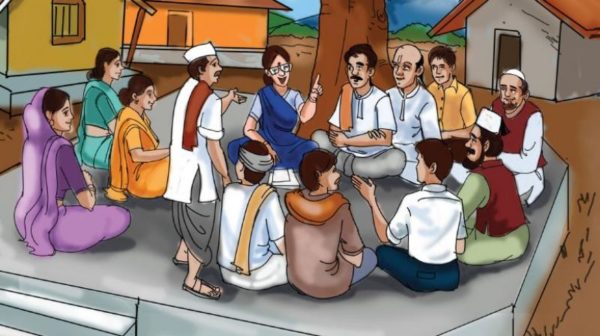
What are Gram Nyayalayas?

Gram Nyayalayas are village courts for speedy and easy access to the justice system in the rural areas of India.

When was it established?

The Gram Nyayalayas were established following the recommendation of 114th report of the Law Commission of India for providing speedy, substantial and inexpensive justice to the common man. Hence Gram Nyayalayas Act, 2008 was passed by the Parliament of India.

Structure of Gram Nyayalayas

Each Gram Nyayalaya is a court of Judicial Magistrate of the first class.

Its Nyayadhikari (presiding officer) is appointed by the State Government in consultation with the High Court.

The Gram Nyayalaya shall be established for every Panchayat at the intermediate level or a group of contiguous Panchayats at the intermediate level in a district.

The seat of the Gram Nyayalaya will be located at the headquarters of the intermediate Panchayat; they will go to villages, work there and dispose of the cases.

Jurisdiction of Gram Nyayalayas

Gram Nyayalayas have jurisdiction over an area specified by a notification by the State Government in consultation with the respective High Court.

Nyayadhikari can hold mobile courts and conduct proceedings in villages.

Gram Nyayalayas have both civil and criminal jurisdiction over the offences.

  • They can try criminal offences specified in the First Schedule and civil suits specified in Second Schedule to the Act.
  • The Central as well as the State Governments have been given the power to amend the First Schedule and the Second Schedule of the Act.
  • The pecuniary jurisdiction of the Nyayalayas is fixed by the respective High Courts.

High Courts can transfer eligible cases from the District court to the Gram Nyayalayas.

The Court shall try to settle disputes via conciliation between the parties and the court can make use of the conciliators to be appointed for this purpose.

Why are Gram Nyayalayas important?

  • Lack of infrastructure like buildings, office spaces and related equipment
  • Lack of man-power resources, notaries, stamp vendors etc. at sub-district level
  • Inadequate Central assistance
  • Lack of awareness among lawyers, police officials
  • Non-cooperation of enforcement agencies
  • The reluctance of state functionaries to invoke the jurisdiction of Gram Nyayalayas
  • Setting up of legal services institutions at Taluk level reducing the dependency on Gram Nyayalayas

What are the critisims associated with the Gram Nyayalayas?

  • The number of disputes settled by Gram Nyayalayas are negligible and most are referred to District forums by appeal. Hence, they are not effective in reducing the burden of District Courts.
  • Absence of a regular cadre of Gram Nyayadhikari
  • Ambiguities regarding jurisdiction due to the parallel existence of alternate dispute mechanisms, tribunals, adalats etc.
  • Some Gram Nyayalayas are located at cities and towns which doesn’t provide any utility to villagers.
  • Inadequate awareness amongst various stakeholders

Some suggestions by experts to improve the functioning of Gram nyayalayas

  • Establishing a regular cadre of Gram Nyayadhikaris
  • Conducting procedures in local language and with simpler procedures
  • Creating awareness amongst stakeholders via seminars, press releases etc.
  • Establishing permanent Gram Nyayalayas at the intermediate level in a suitable location proving easy access to the common people
  • Clearly specifying the jurisdiction of Gram Nyayalayas and re-defining it to remove any ambiguities
  • Providing building, staff etc. for Gram Nyayalayas and provisioning them in the state budget

Conclusion

The Preamble to the Gram Nyayalayas Act envisions access to justice to the citizens at their doorstep and to ensure that opportunities for securing justice are not denied to any citizen.

Despite the many challenges and shortcomings of the existing framework of the Village Courts in India, they have a positive role in providing access to justice to the poor and reaching out to marginalized sections of the society.

It has the potential to reduce the pendency of cases at higher levels. However, to achieve the stated objectives, some efforts must be made to revamp the organizational and jurisdictional aspects of Gram Nyayalayas.

Section 66A Of IT Act,still relevant ?

How does this act came into existence ?

Section 66A of the Information Technology Act (“IT Act”), 2000, came into existence through an amendment in 2008. This  section penalised sending “offensive messages” via online communication. provision was often misused by enforcement authorities and caused problems over freedom of speech on  internet.

Case of shreya singhal vs Union of India

Two girls were arrested in Mumbai over criticising the bandh in maharashtra over demise of shiv sena chief Bala sahib Thackeray in November 2012. One of them posted illegal content while another one simply liked it, both of them were booked under section 66A of IT ACT and section 295A of IPC.

Although,both of girls were released and charges were dropped but this act invited criticism from all over the country.
Shocked by misuse of law by the authorities, Shreya singhal filed an PIL in 2012 to declare section 66A of IT ACT 2000 as unconstitutional.

On March 24, 2015 the Hon’ble Supreme Court of India passed a landmark judgement in this matter. The Hon’ble Supreme Court  came out with judgement that Section 66A of the IT Act is arbitrarily and disproportionately affects the right to freedom of speech. Also, all the pending cases were directed to be dismissed and no fresh cases were to be registered under this scrapped section 66A of IT ACT.

Why is section 66A of IT Act in news in 2021 ?

Even,after this section was scrapped,many fresh cases were registered under this section of IT act. A plea was filed by PUCL ,it came into light that even after 7 years of the law being scrapped. total of 745 cases are still pending and active before the district courts in 11 states, under Section 66A of the IT Act. Supreme court have sent a notice to centre, demanding why this scrapped section is still in use and why not proper measures are taken till now.