Food from scratch…

Noodles

A 4000 year old bowl of noodles unearthed in China is the earliest example ever found of one of the world’s most popular foods. Noodles have been a staple food in many parts of the world for at least 2000 years. But who inverted the noodle? This is a hotly contested topic – with the Chinese , Italian and Arabs all staking a claim.

Ice cream

The first ice cream was probably made by chance when someone left some milk outside on a cold night and it froze!

Alexander the great enjoyed ice cream made with milk, fruit juice, honey and snow in the 4th century B.C. and the Roman emperor Nero ordered ice to ne brought from the mountains and combined it with fruit toppings. The Chinese also had a method of making ice creams and some believe that ice cream came to Europe from China.

It was Quintus Maximus, a roman general, who first wrote down a recipe for ice cream. Marco Polo brought the Chinese recipe to Venice after his visit to Peking. The king of England, Charles I is supposed to have offered his chef a handsome reward to keep his ice cream recipe a secret!

You favourite ice cream cone was invented by a pastry maker Ernest Hamwi in 1904, at the World Fair in St. Louis. He put a scoop of ice cream on his pastry when an ice cream seller in a neighbouring stall ran out of dishes- and it became an instant hit!

Chocolate

Cocoa, from which chocolate is made is said to have originated in the Amazon atleast 4000 years ago. The origins of chocolate can be traced back to the ancient Mayan and Aztec civilization in central America, who first enjoyed ‘chocolatel’, a much prized spicy drink made from roasted cocoa beans, the Aztecs believed that the cocoa tree was a gift from their God, Quetzalcoatl. According to legend, He had been banished by the other gods for giving the tree to mankind, but he promised to return to them one day.

The Spanish, led by Hernando Cortez, invaded Mexico in the 16th century. When the Aztecs saw Cortez, they believed their god had returned and welcomed him with a golden cup of chocolate! When Cortez returned to Spain in 1528, he loaded his galleons with cocoa beans and equipment for making the chocolate drink. Soon ‘chocolate’ became a fashionable drink enjoyed by the rich in Spain.

It was in 1847 that solid chocolate, as we know of today, was made by Fry and sons of Bristol by mixing sugar with cocoa powder and cocoa butter and your favourite treat was born.
Chewing gum

Thousands of years ago people chewed gum in it’s natural form. The most common ancient chewing gum was tree resin lumps, but people chewed various sweet grasses, leaves, grains and waxes also. The first commercial Chewing gum was made and sold in 1848 by John Bacon Curtis. He made a sticky, rubbery material from the spruce tree which could be chewed. In the 1860’s, Thomas Adams began selling chicle, a gum from the sapodilla tree of Mexico’s Yucatan desert.

Thank you for reading. Have a nice day!🌼

MUMBAI – A SENSATIONAL CITY

I will always cherish my visit to Mumbai, the city of dreams, and a city after my heart. Known for beautiful places and some UNESCO heritage sites like Gateway of India, Elephanta Caves, Juhu Beach, Marine Drive, Chhatrapati Shivaji Maharaj Terminus, Galleries, Victoria and Art Deco buildings and Colaba Causeway, the iconic Crawford Market, Amazing Street food, and a lot more. The people of Mumbai are termed as “Mumbaikar”. Mumbai surrounded by the Arabian Sea was first known as Bombay which is located in a peninsular on the Western coast of Maharashtra state. Mumbai has tropical humidity, from March to May the weather is hot and dry, from June to November Mumbai has heavy rains, and from December to February, the temperature is cool.

Mumbai is the financial capital of India, making it one of the expensive cities in Asia. I think Mumbai is the best place to restart your life in India but you’ll have to work on your budget. For fitness freaks in the dawn to enjoying the nightlife, Marine Drive is the best place you will see in Mumbai. The soothing sound of waves helps you to unwind, well you can enjoy the beauty of the sea, but not relax as the emotion-struck couples engaged in PDA will make you gag, and believe me, it’s not at all romantic as you see in Bollywood films and speaking about movies. Mumbai is the base of the Bollywood industry with the largest producer of films, making Mumbai India’s largest entertainment capital, and who knows you may spot an actor in a diner or club. Acting and Drama hold special interest for Mumbaikars and one famous place is NCPA (National Center Of Performing Arts). People here are helpful and friendly and makes sure that you feel comfortable. Shopping buffs will love this place from Colaba Causeway to Bandra Linking road to Crawford Market for the street shopping. Each building has a history behind it, Be it Gateway of India or the Taj Hotel. Street food is one popular sensation of Mumbai. Mouthwatering Vada pav, Pani puri Falooda, Pav Bhaji, Ragda puri, Missal Pav, Snow Cones (Gola), Sev puri, to Chines food, and the list goes on. To budget-friendly eateries to posh Restaurants and Bars, Mumbai has it all. Some 5 Star hotels such as Trident, The Oberoi, Taj Mahal Hotel are just so classy.

Well, there are a lot more facts to know about, like Mumbai has a Coastline of about 150 Kilometers, Dharavi in Mumbai is the biggest slum in Asia, The famous network of Dabbawalas (lunchbox delivery system) that is only seen Mumbai, first bus service in India was started in Mumbai, etc. Even though Mumbai is a beautiful place, there are a lot of disadvantages too. The dense population has been causing a lot of damage to the environment like Land pollution, Air pollution, Water Pollution, Deforestation leading to drastic climate change. With proper care, awareness, and solution, we can restore its natural beauty. Mumbai will always remain my forever favorite. Even though there are problems within the city, I would say heaven is where your heart is.

Kailasa Temple: A Golden Inscription on the Pages of Indian History

Rock cut architectures, especially from the bygone eras, are awe inspiring pieces of excellent craftsmanship and structural engineering. The sheer amount of details and size of some of the best examples of this art form can leave the people dumbstruck. It is unimaginable for many minds as to how such extravagant monuments and structures were carved with the tools that were available during their creation. These architectures are a reflection of how human beings can create even with limitations, which again, is a relative term with respect to time. 

India has a special relation with rock cut architecture, as for the country has the most variety and abundance of these structures across the world. Most of the rock cut structures in India are religious in nature. Amongst all, the Kailash Temple, which is a part of the Ellora cave series is considered to be the pinnacle of this category of architecture. So, what makes it special? Let’s see…

Introduction

Rock cut architecture mainly refers to carving out of structures from a solid natural rock. The large amount of surplus rock pieces that were produced during this process were presumably shifted somewhere else for other economic purposes. To prevent the rocks from falling over the workers, the interiors were carved starting from the roof and then working downwards.

Ellora is one of the largest rock-cut monastery- temple complexes, and also a UNESCO World Heritage Site. It is situated at a distance from 29 kilometres north-west of Aurangabad, Maharashtra, India and features Buddhist, Jain and Hindu monuments, dating back to 600 CE. This complex was constructed over a large period of time, spanning from 600-1000 CE. They were built during the reign of Rashtrakuta dynasty (constructed the Hindu and Buddhist caves) and Yadava dynasty (added quite a number of Jain caves). Over 100 caves were excavated in this site from the basalt cliffs in the Charanandri Hills. Out of them, only 34 are open for the public. 12 Buddhist (caves 1-12), 17 Hindu (caves 13-29)and 5 Jain (caves 30-34) make up the public accessible attractions and also display the religious harmony that was the binding cultural fabric of ancient India. The legendary Kailasha temple is featured in cave 16, and holds the honour of being the largest monolithic rock excavation in the world.

Glory of the Bygone Era

Kailasa or Kailashanatha temple is the largest rock cut Hindu temple in the Ellora cave complex. It is a megalith (stone from which a structure or monument is created, alone or along with other stones) shaped like a chariot, carved from a rock cliff face, ranging across 2 kilometres along the sloping basalt cliff. Its construction is estimated to have started in between 756-773 CE and was completed around the 8th century CE. Though there is a lack of dedicatory inscription, but on the basis of two epigraphs (the Vadodara copper plate inscription of Karkaraja II, a ruler of Rashtrakuta branch of Gujarat and the Kadaba grant of Govinda Prabhutavarsha), it is considered that Krishna I, a Rashtrakuta ruler has commissioned the creation of Kailasa temple. Though there are some specks of uncertainty due to various irregularities in the timeline and other historical documents. This magnanimous structure is dedicated to Kailashanatha (Shiva), but there are various sculptures of deities from Vaishnavism and Shaktism, along with relief panels depicting the two major Hindu epics, Ramayana and Mahabharata.

Due to the size, architecture and sculptures, it is considered to be one of the  most exceptional cave temples across the world.  One of the highlight worthy fact about the construction of this temple is that it has been excavated vertically, that is, the carving started from the top of the original rock and moved downwards, in contrast to the established method of carving from the front. The architecture defers from the earlier style attributed to the Deccan region. The southern influence is considered to be due to involvement of Chalukya and Pallava artisans. Based on a Marathi  legend, an architect named Kokasa is theorized to be the chief architect of Kailasa temple. It has some resemblance to the Virupaksha temple, Pattadakal and Kailasa Temple, Kanchi.

Exploring the Culture

The temple courtyard entrance has a low gopuram. The deities on the left side of the entrance belong to Shaivism and on the right side, deities of Vaishnavism are more prominent. This gateway leads to U shaped courtyard, which is edged by a three storey high columned arcade. The arcade and the complementary alcoves are decorated by sculptured panels and relief carvings of various deities. Some of the famous sculptures are ascetic Shiva, dancing Shiva and Shiva being warned by Parvati about Ravana.
The central shrine is dedicated to Shiva and has an image of Nandi (the sacred bull), and is situated within the courtyard. The temple encasing the lingam, also include a flat-roof mandapa, held up by 16 pillars and a Dravidian shikhara. Throughout the entire shrine, carvings of niches, windows, images of deities and mithunas are in abundance. As the tradition, Nandi sits on the porch in front of the primary temple. The Nandi mandapa and the main Shiva temple is situated on a height of 7 metres, and built in two storeys. The base of the temple is carved as such to project that the elephants are holding the temple aloft. The Nandi mandapa is connected to the main shrine via a rock bridge. The lower levels, upon which the temple is standing, depicts various mythological scenes and sculptures. Five detached shrines in the compound are also a notable feature, three of which are dedicated to Ganga, Yamuna and Saraswati.

Website References

https://en.wikipedia.org/wiki/Kailasa_Temple,_Ellora

https://en.wikipedia.org/wiki/Ellora_Caves

https://en.wikipedia.org/wiki/Indian_rock-cut_architecture

Before you vanish off the face of earth read these books.

If you are a regular know-all-the-famous-books voracious reader you have already read most of these so you may skip I won’t mind. But for those of you who want to show off that you “read” here’s a bunch of books you could actually read and not get bored and maybe magically fall in love with books.

I am not mentioning Harry Potter or Twilight or The Hunger Games and so because these are some books that shape you as a teenager and the books call the readers themselves I need not do it.

Note: This is not a ranked I listed my favourites. Let’s first go through the fiction section…

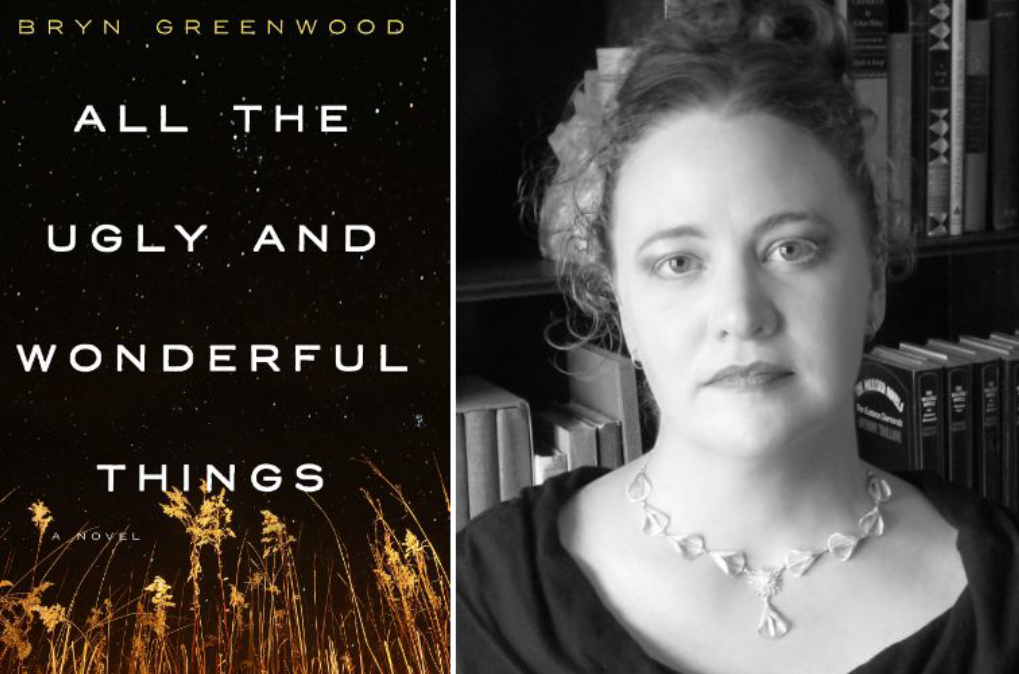
1. “All the ugly and wonderful things”

Author- Bryn Greenwood Page count-432

An unusual and disturbing love story but somehow you want this couple to be together. The story is messed up but trust me it will leave a mark on your mind.

2. “A walk to remember”

Author – Nicholas Sparks Page count – 240

http://eduindexnews.com/2020/09/06/a-walk-to-remember-book-review/

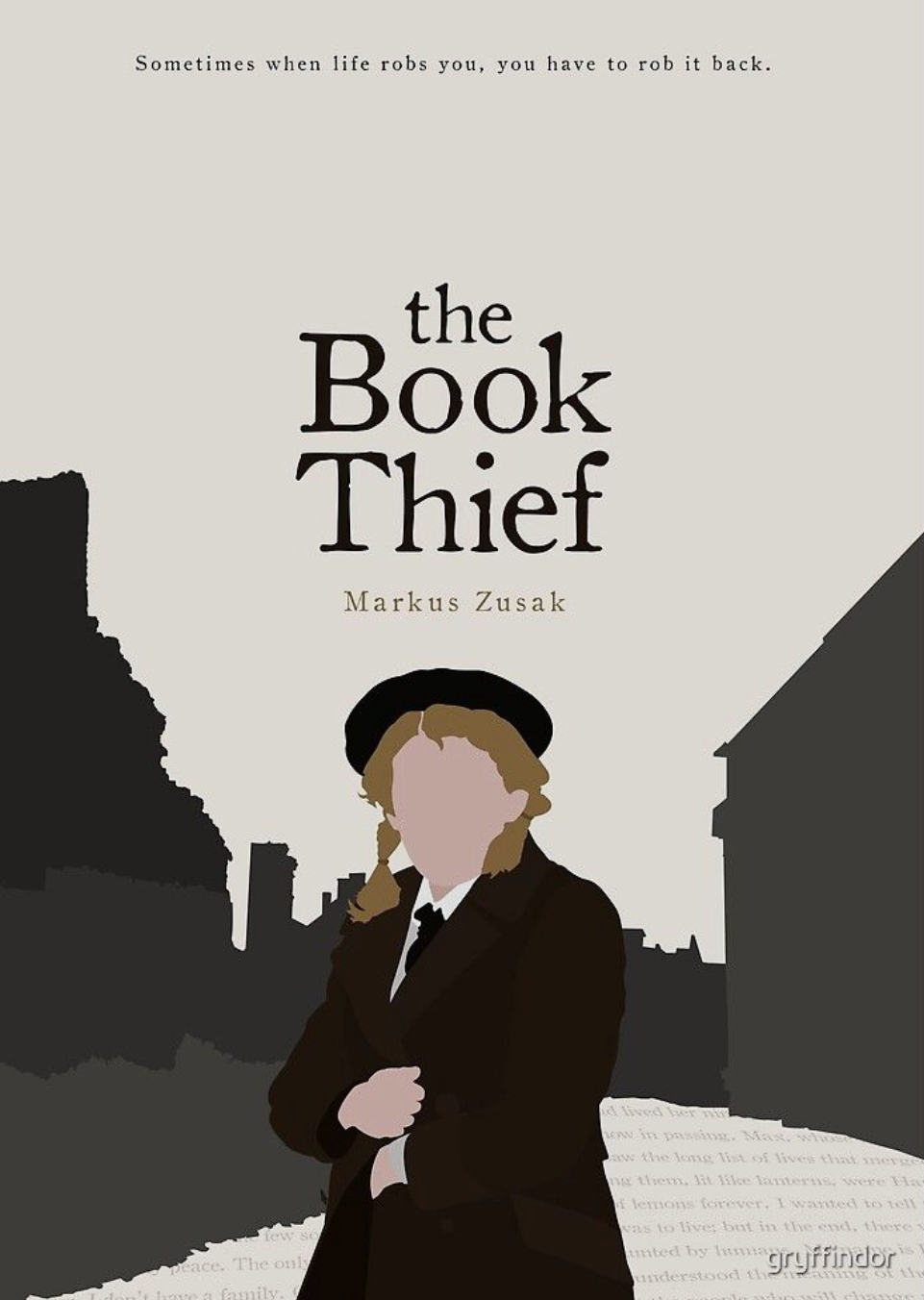
3. “The book thief”

Author- Markus Zusak Page count – 584

A historical novel narrated by Death. It’s about a little girl finding solace in books. The war makes things happen.

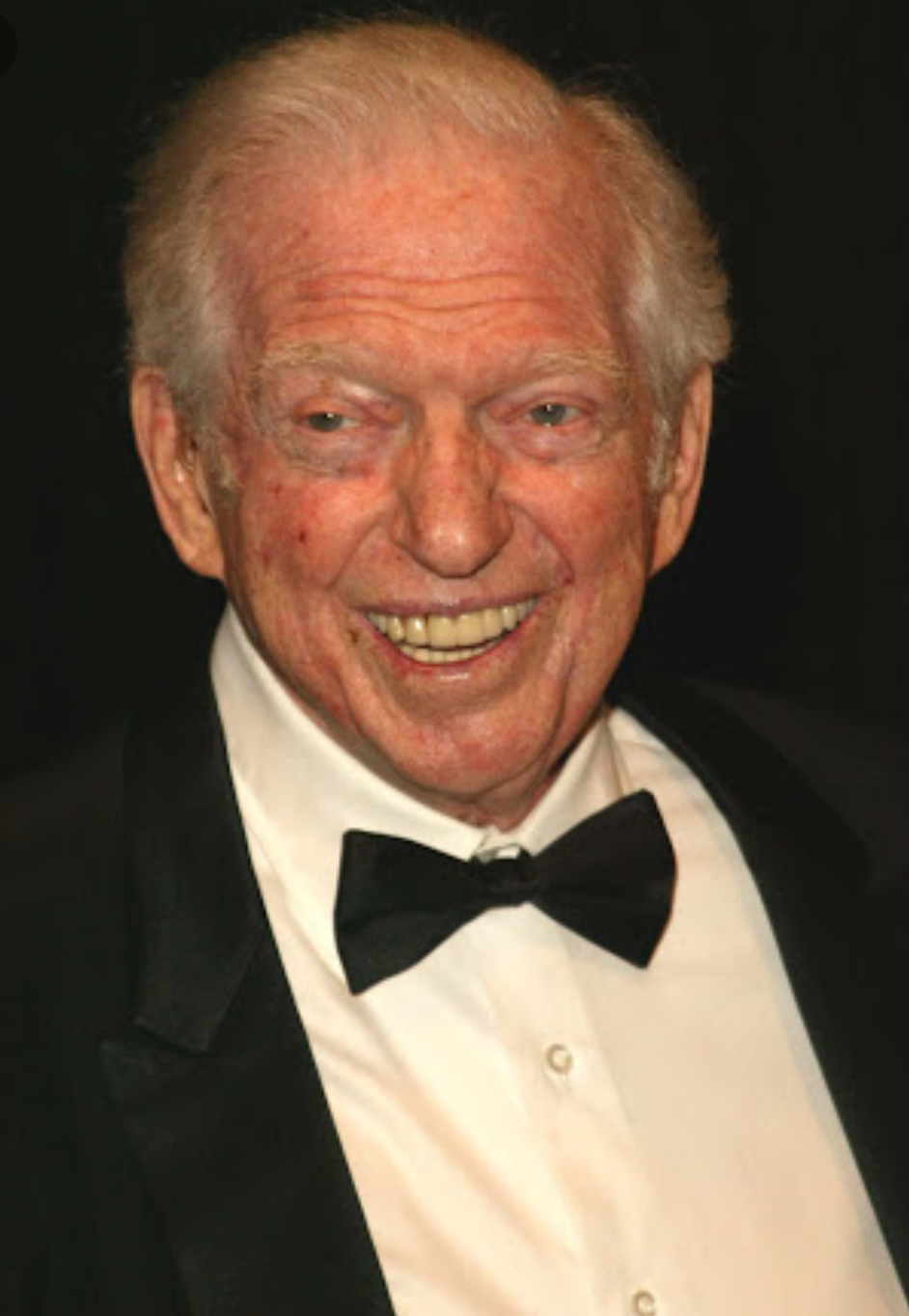
4. “Tell me your dreams”

Author- Sidney Sheldon Page count- 363

An absolute best thriller on Dissociative Identity Disorder or Split personality.

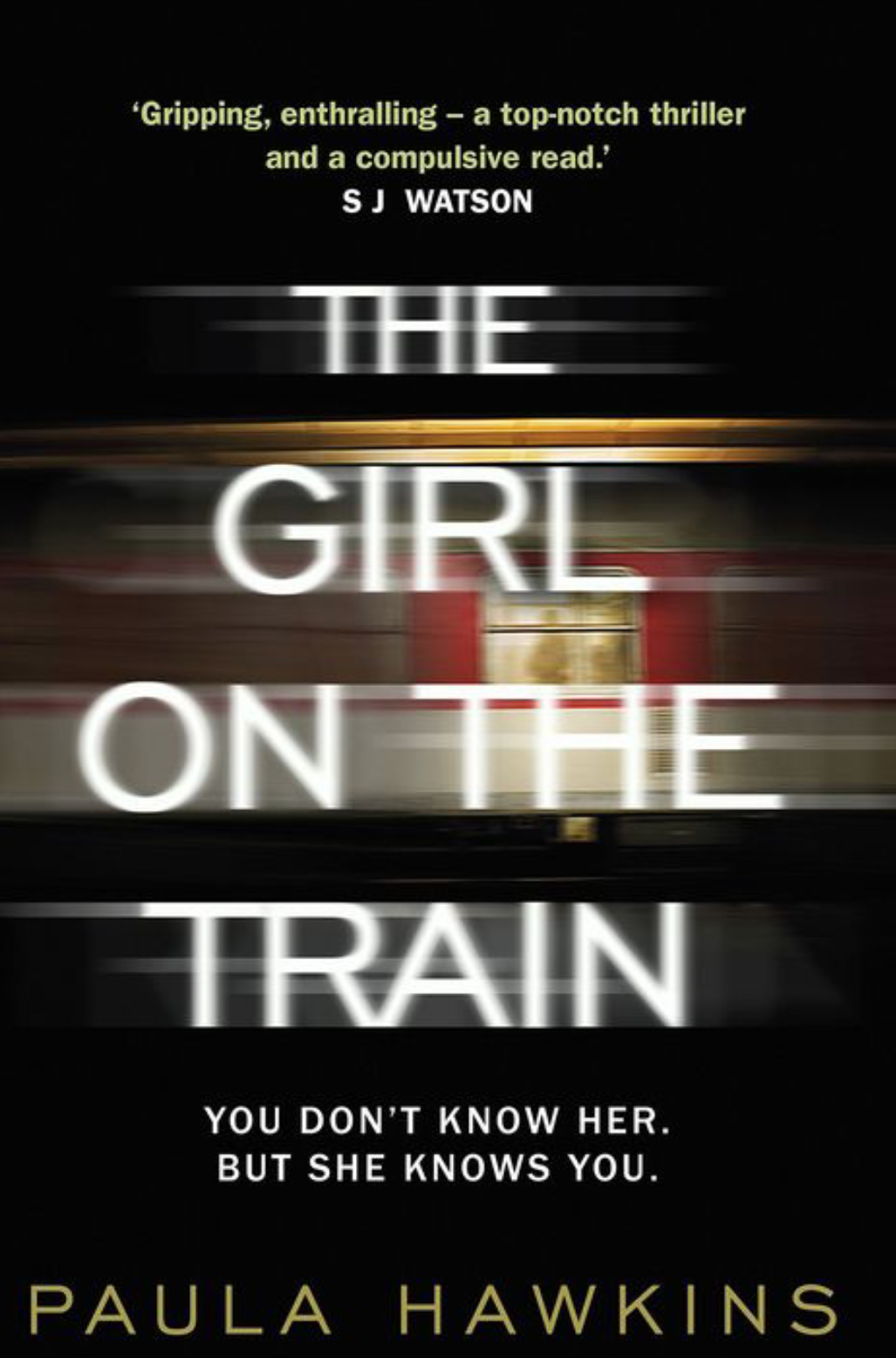
5. “The girl on the train”

Author- Paula Hawkins Page count – 317

Another great thriller. All about the title literally. Take my word for it you’ll love it.

6. “A thousand splendid suns”

Author- Khaled Hosseini Page count – 384

http://eduindexnews.com/2020/09/06/a-thousand-splendid-suns-book-review/

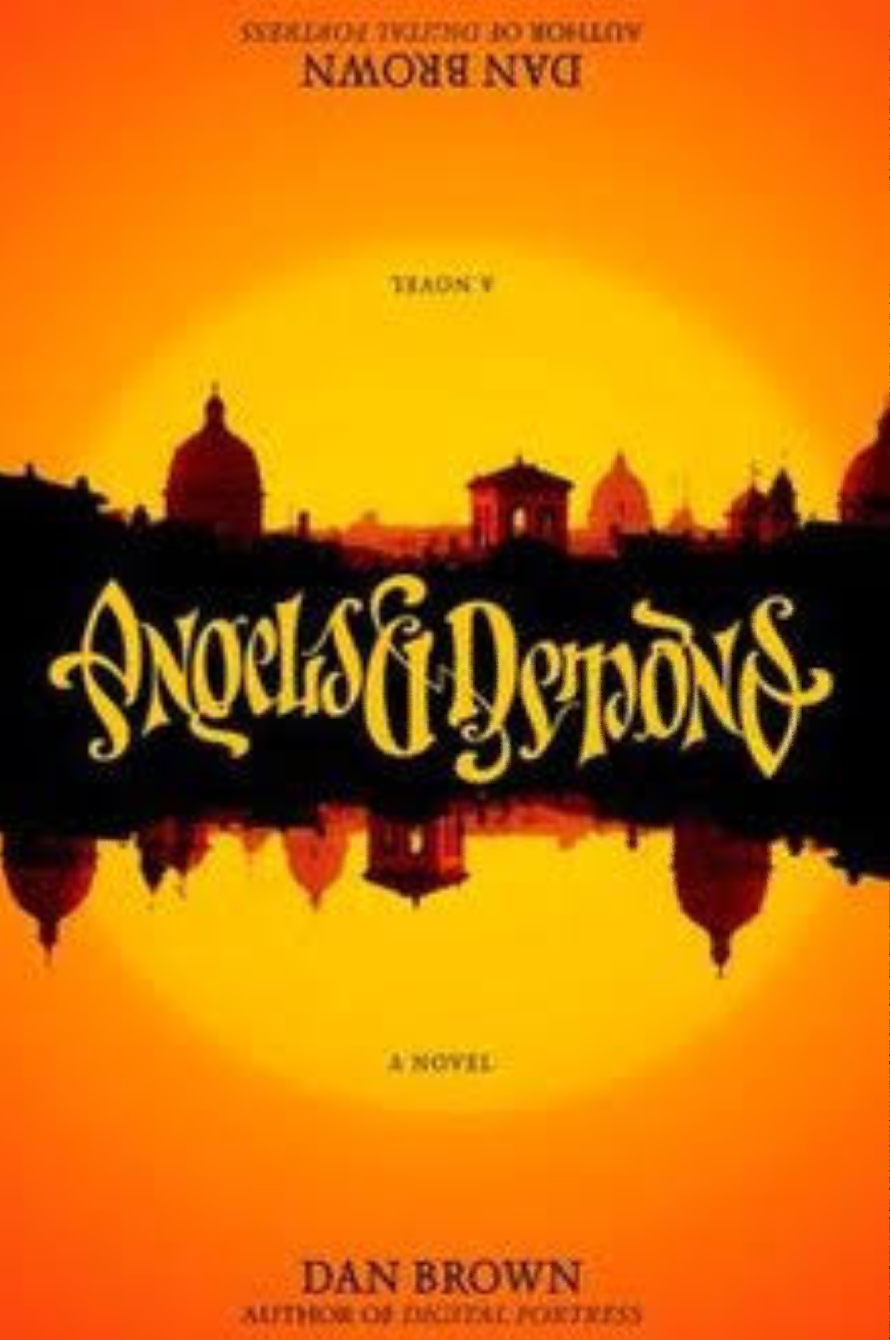
7. “Angels and demons”

Author- Dan Brown Page count -664

First of the Robert Langdon series. Though it’s a thick book you’ll want in read it all in one sitting.

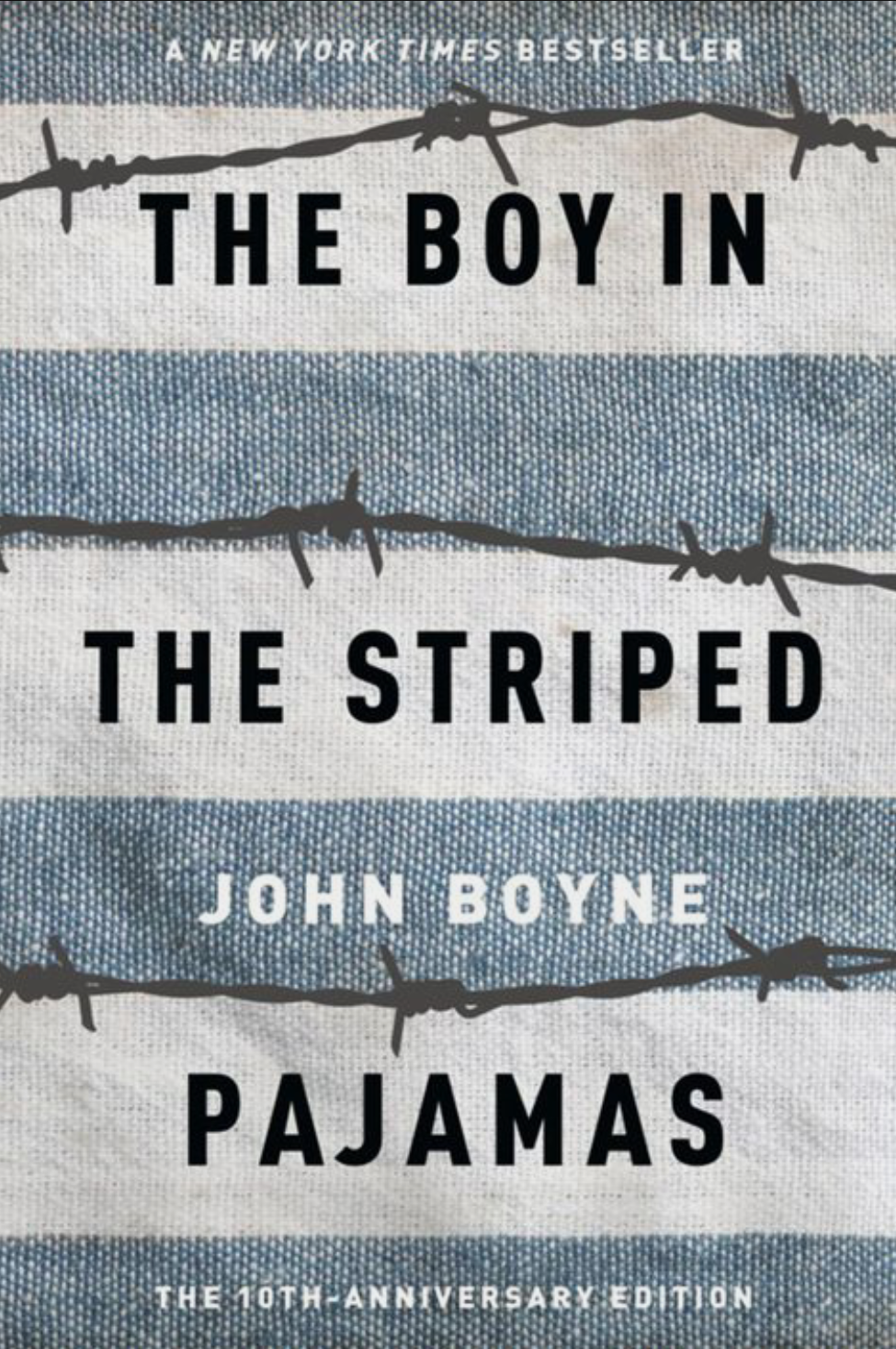
8. “The boy in striped pyjamas”

Author- John Boyne Page count -216

Written from the perspective of a nine-year old boy. You won’t believe how and when this innocent narrative turns into a powerful holocaust story.

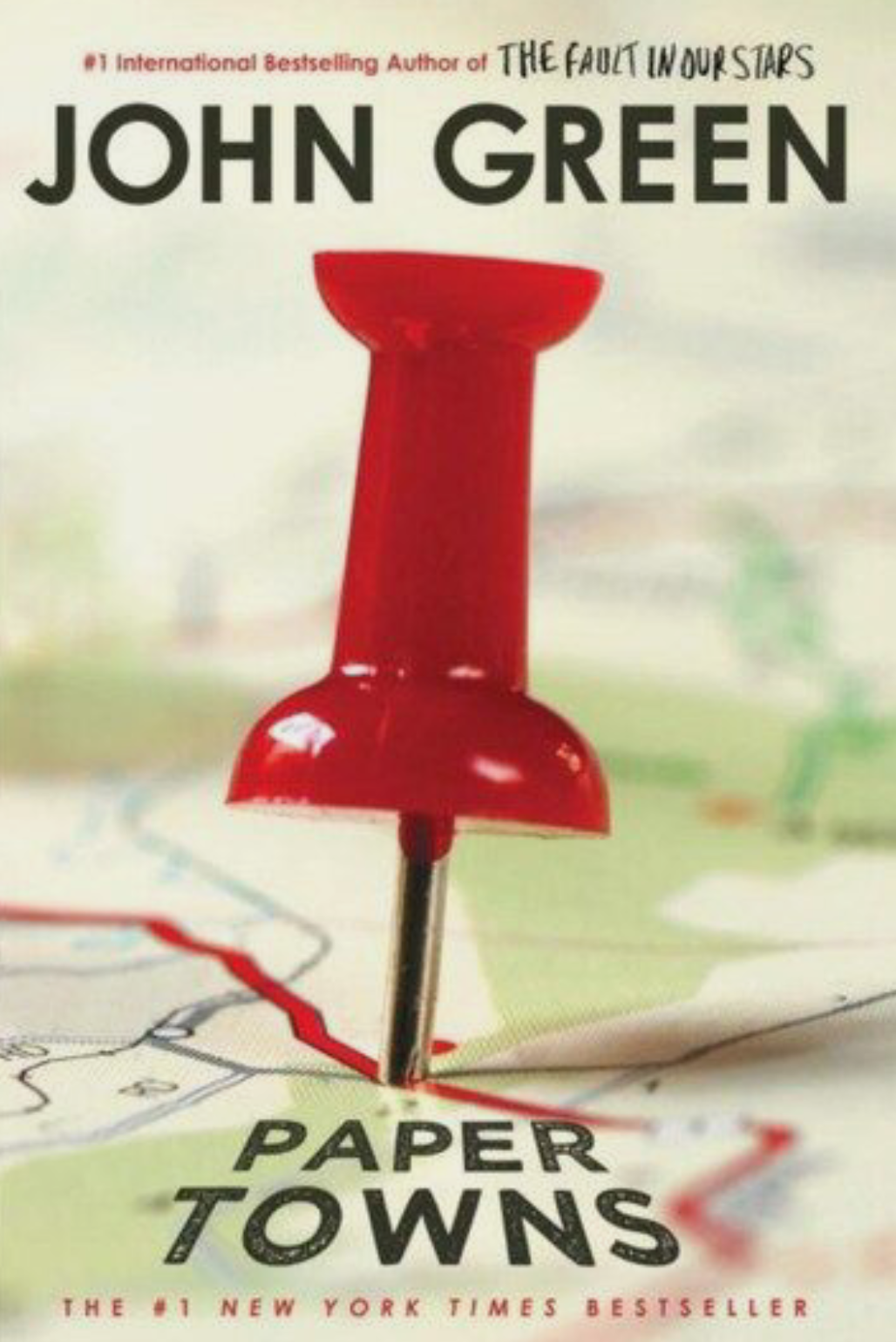
9. “Paper towns”

Author- John Green

Page count -305

A young adult about a group of friends finding out secrets about a mysterious girl. Dialogues and quotes are brilliant.

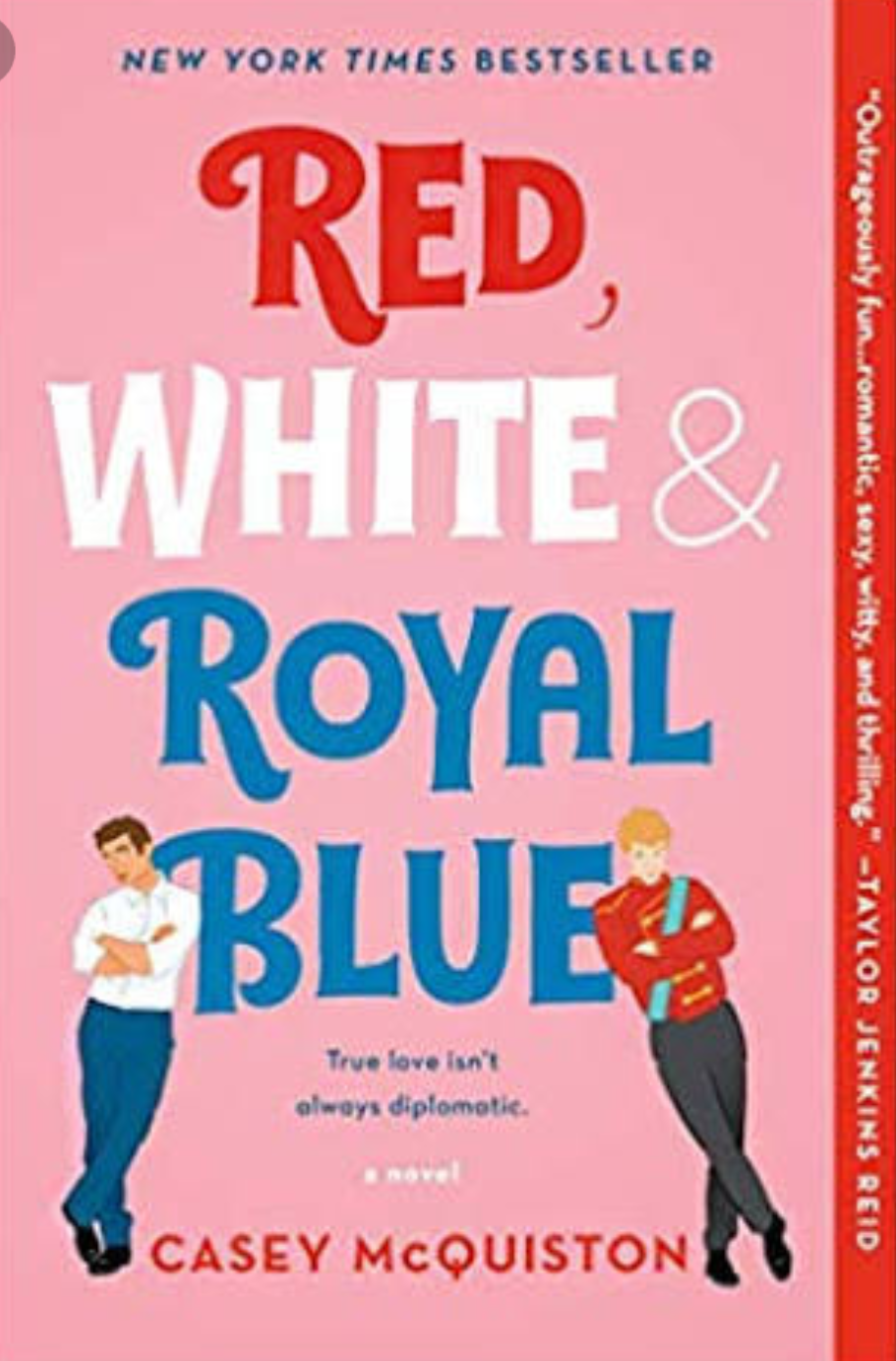
10. “Red, white and royal blue”

Author – Casey McQuiston Page count- 432 LGBT romance novel. It’s so so good needs no explanation.

Non-fiction…

11. “The diary of a young girl”

Author- Anne Frank Page count -352

12. A brief history of time”

Author- Stephen Hawking Page count – 256 13. “Into the wild”

Author- John Krakauer Page count -224

14. “Wild: from lost to found on the Pacific crest trail”

Author- Cheryl Strayed Page count-336

15. “Ikigai”

Author-Albert Liebermann and Hector Garcia Page count -208

Thank you for reading. Have a nice day!

Hunger Games of the government…

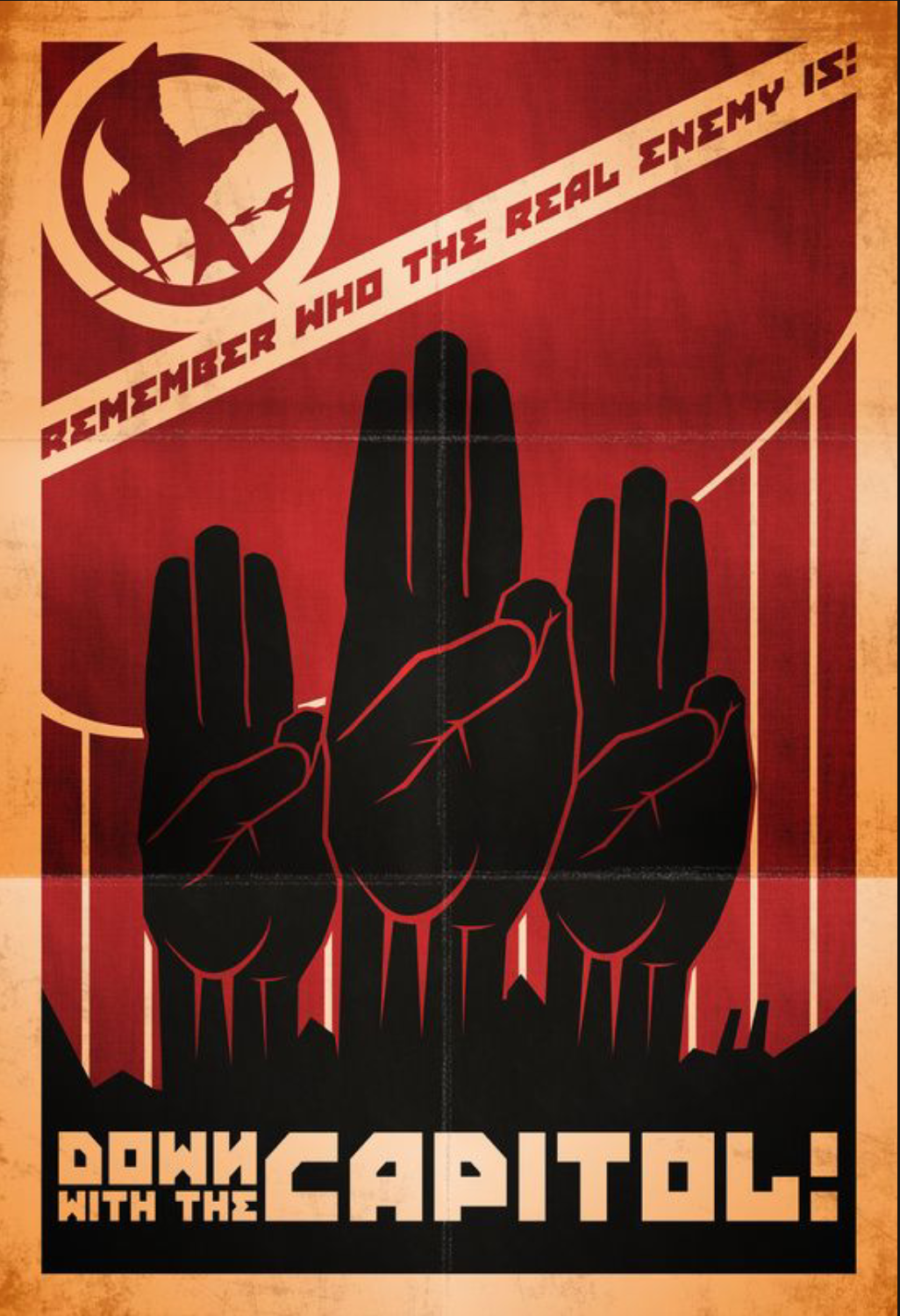
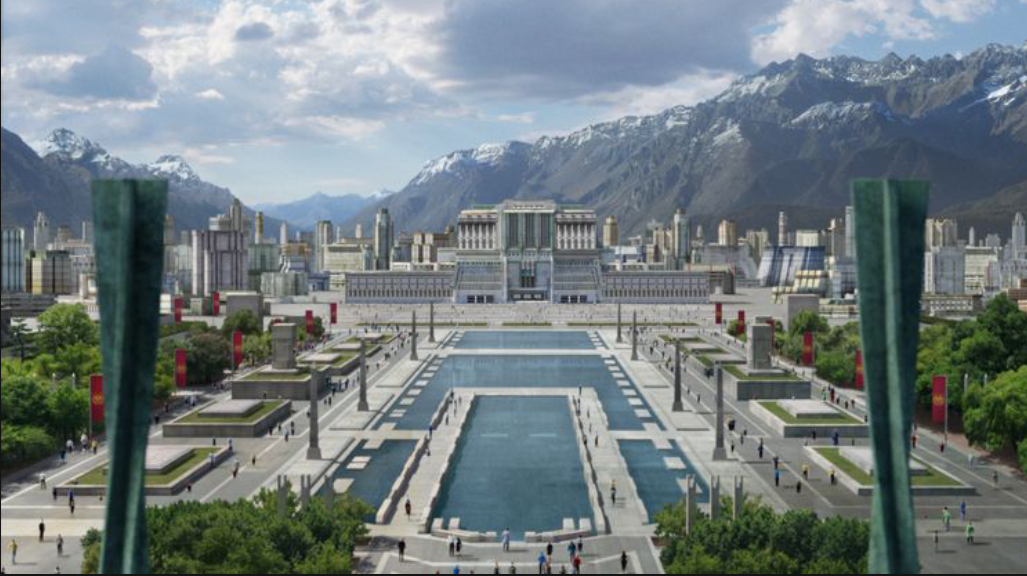
The government holds too much power. This is very well portrayed in the Hunger Games a book trilogy written by American author Suzanne Collins later made into a science fiction dystopian film series. The story is basically how the government has too much power over the lives of common man, how and why it is so wrong. The story is takes place in the fictional country that goes by the name of Panem. It consists of 12 districts that have been assigned various disciplines under which the people of the district work. Naming a few, district 3 specializes in technology, district 11 in agriculture, district 12 in coal mining. District 12 being the smallest and the poorest. All these districts are forced to produce the assigned goods and no have no freedom. The Capitol is the government who enjoy all the riches and luxury while the other districts starve to death. The Capitol, for the sole purpose of entertainment, organises this game annually where two teenagers- a male and a female are forced to participate, locked in an area and have to fight each other to death. The one who survives is declared the winner.

On the big screen we may find it interesting but more interestingly the series is the best depiction of communism. We know that our government always wants to suppress us and gain full control over our lives. Hence this book or the movie series is a good way to give us some lesson in an entertaining manner.

The government’s control over the goods production in a district and no freedom of their own reminds us of the real world example of North and South Korea. Everyone is aware of the situation here. People in North Korea have no freedom it is only the governmental control over their lives and henceforth people are starving. On the contrary, South Korea is thriving. Former Soviet Union couldn’t find a permanent position due to the same reasons. It had too much control over the people and the people suffered. A government cannot work without the cooperation of its people. History holds records of how such controlling government led to their own decline. Panem government violates its people’s basic rights resulting in poverty and starvation and later a rebellion.

The Hunger Games also shows how the upper class lives in luxury in contrast to the middle class lives. It shows how the people of district 1 enjoy all the facilities and live a posh life. They do not have to wait in lines for hours to manage some food for the family. This demonstrates real life situation where the rich are getting richer and the poor even poorer. The government might show us false hope but it is the lower class people who are the fools. The horrors of communism in this book/movie is a good way to let the younger generation realise the truth about the world. Also teach us lessons to be smarter.

Thank you for reading. Have a nice day!

Mahabharata: A Myth or Reality

Some stories are at the heart of Indian history.  The mythological stories of Mahabharata are one of these.  This epic of Maharishi Ved Vyasa was written by Lord Shri Ganesh.

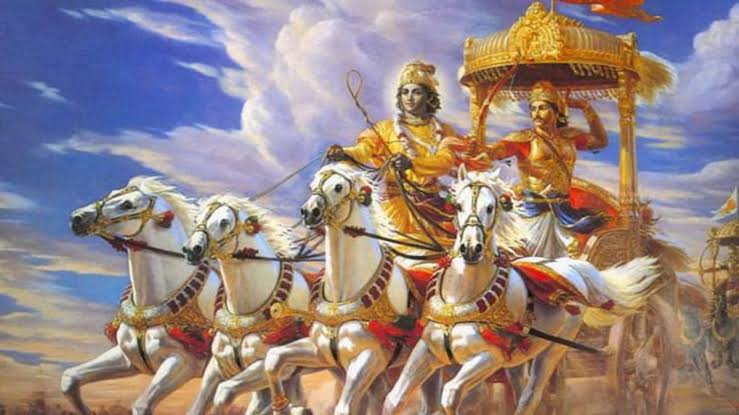
 The characters in these amazing stories of the epic have many amazing powers.  Even Narayana himself, through his wisdom, diplomacy and deceit, had led the right Pandavas to victory in this great war of Mahabharata.

Mahabharata war has a great aspect of the number 18.  There are 18 chapters in this epic.  Lord Krishna gave the knowledge of Gita to Arjuna for a total of 18 days.  The Mahabharata war lasted for 18 days.  The Gita also has 18 chapters. Army of  the Kauravas and the Pandavas  had a total number of 18 Akshohini army of which 11 belongs to Kauravas and 7 to Pandavas were Akshohini army. The main initiators of this war was also 18. Also only a number of 18 warriors survived in this war.

 Some such skeletons were found in Mohenjo daro which had the effect of radiation. In Mahabharata, the results of Brahmastra were given from the chapter number 13 to 15 of the Saptik festival.  Historians believe that the Brahmastra left 5561 BC was the atomic bomb.

 There were no zodiac signs during Mahabharata.  Astrology at that time was totally based on 27 constellations, not on 12 zodiac signs.  In the constellations,not Ashwini but Rohini was the first place.  Various civilizations experimented in astrology and created zodiac signs based on the moon and the sun and began to predict the future of the people, while in the Vedas and the Mahabharata there is no mention of such learning to show that the planetary constellation would make a person’s life  They affect.

The Mahabharata is written by Ved Vyasa.  Actually, Ved Vyas was not a name, but a title, which was given to people with knowledge of Vedas. There were a number of 27 Ved Vyas before Krishnadvapayana and he was himself the 28 Ved Vyas.  He was named Krishnadvapayan because he was born as a dynasty and was born on an island.

 Ghatotkacha, son of Bhima and Nagakanya Ahilavati had a son named ‘Barbarika’.  At some places, it is also said that he was born from the stomach of Murmant’s daughter ‘Kamakantakata’.  When the war of Mahabharata was decided, Barbarik also expressed his desire to join the war and promised his mother to support the loser.  Barbarik rode his blue horse with three arrows and a bow to the battlefield of Kurukshetra.

 Three arrows were enough for Barbarik, on whose strength he could destroy the entire army of Kauravas and Pandavas.  Knowing this, Lord Krishna appeared in front of him in the form of a Brahmin and asked him to trick Barbareek into charity.

 Barbarik prayed to Krishna that he wanted to see war till the end, then Krishna accepted his statement.  He donated his head to the Dwadashi of Falgun Mas.  Lord Krishna watered that head with nectar and placed it on a hill near the battlefield, from where Barbarik could see the entire Mahabharata war.

The Apatani

Arunachal Pradesh is the land of lofty mountains, pristine landscape, and a large tribal population. Surrounded by blue rolling hills, tucked in foothills of Himalayas, and nestled in the lap of nature, is the tiny yet picturesque town of Zero. Zero Valley is the home to the Eastern Himalayan ethnic group, Apatani or Tanii as they call themselves. The Apatani people were unknown to the outside world until the 1900s. The valley is dotted by paddy fields and the tribe makes its living from farming and fishing. They reflect a beguiling co-existence between man and nature.
The Apatani tribe is non-nomadic which means, unlike other tribes, they don’t travel. Though, some sources say they migrated from Mongolia and Tibet regions.
The Apatani has no written historical record, but a very strong oral culture. It is through folklores and stories transmitted orally from generations, one gets to know about their rich past.

The Apatani also had some traditions which seem quite unusual to the modern world. One of them being the forceful abduction of girls and women by the men of their tribe in to wed them. Once the girl is picked by the man, the shaman, the religious priest, would check their compatibility in the chicken’s liver, thus declaring them married. They are also one of the very few tribes who practice their religion. Apatani follows the Dongi- Polo religion which is worshipping nature, the Sun, and the Moon. They have a totem in every house and sacrifice animals to seek spiritual blessings for their tribe and land. Their major festivals are Murung in January and Dree in July.

Besides their cultural heritage is distinct too. The Apatani women adorn themselves with big wooden nose plugs known as Yaping Hurlo and facial tattoos known as Tippie. At the time Apatani women’s first menstruation their face is tattooed and nose plugged. The ink of the tattoo is made up of pig fat and soot from the fireplace and the motif is hand-poked on the face using a thorny plant. The tattoo is a line extending from their forehead till the tip of the nose and five lines under the lower lip. Men also have a T shape tattoo on their chin.

The famous story behind the practice of nose plugs and the facial tattoo is fascinating. The Apatani tribe women were considered to be the most beautiful women in Arunachal Pradesh, and men from neighboring tribes would try to steal them. To protect them, the Apatani women were made to have the nose plugs and cover their faces in the tattoo. This was done to disfigure them so they look less appealing and over time it has embedded in their local culture. But this is just one of the stories one gets to hear about this practice. There are other stories for different reasons. But unfortunately, there is no written account to solve the mystery.

But this ‘Apatani art’, as the older Apatani women call it, is slowly dying. The newer generations are not into nose plugs and facial tattoos. They are now going out to the ‘Indian mainland’ to study and believe that this practice is a visual identification of their tribe, often making them prone to discrimination in their social lives. Also, the tradition was banned by the government in the 1970s and thus is no more in practice. The nose plug and tattoo are only visible on older Apatani women. But the last bearers of this tradition are proud of their identity.
Presently, only 60,000 Apatani people are living in the Zero Valley. Their tribe and its tradition are on the verge of extinction.

A brief history of India’s NAM

While looking at India’s foreign policy [IFP], one of the foremost aspects that one studies is the Non-Alignment Movement. This is because it invariably shaped India’s vision and international behavior for long periods of time.

Primarily, there were three kinds of factors that contributed to the choice of IFP. These were Personal, National and Systemic.  At a personal level, Nehru sought to pursue an ideational foreign policy and to this end he supported multilateral institutions, cut down defence spending and advocated the process of decolonisation. This doctrine of his called for going down a diplomatic path free from the dominance of superpowers but over the years, in practice, the policy proved to be more critical of American policies over those of the Soviet Union.

The policy was in keeping with the national experience of colonialism. To this end, India was reluctant to limit its foreign policy options through an alignment with either superpower. The moral stance of NAM was in keeping with India’s historical and cultural legacies as well as Gandhian heritage.

At the systemic level, the foreign policy made sense, for it enabled a materially weak state to play a role more significant than expected. It allowed for the turning of ‘limitation into asset’. Even though this worked well for India at the global level and allowed the country to play a significant role in UN peacekeeping operations, the policy fell short on a number of occasions. The stubborn opposition to defence spending led to a drastic ill preparedness of Indian military which in turn culminated in a major defeat following the dispute and war of 1962 with China.

Amidst the war and its aftermath, the three factors contributed again to a shift in IFP and security policies. At a personal level, Nehru’s hitherto unchallenged status in the political arena came under fire. There were demands of political opposition and also the abandonment of NAM, but despite these calls, the policy makers did not abandon NAM formally. On the national front, the political outcry and perceived threat from China led to a significant military modernisation programme, despite Nehru’s earlier reluctance. At the systemic level, India found support from US during and also after the China crisis.

India’s military modernisation helped India’s military intervention in East Pakistan during the war of 1971, which led to the break-up of Pakistan and the emergence of India as a dominant power in the subcontinent. However, personal factors (some of Indira Gandhi’s economic policies), national factors (oil crisis) and systemic factors (material weakness), all prevented it from playing a significant role in global affairs.

It was only after the collapse of the Soviet Union and end of the Cold War that India’s foreign policy could undergo a shift and boast of a new relevance. As always, an amalgam of personal, national and systemic factors induced these new changes. On the national front, there was a financial crisis while systemic forces such as the inability to rely on the Soviet Union etc led to dramatic transformation.

Ancient Egyptian Gods

Ancient Egyptian Society had many different deities which were an important part of the people’s belief system. There were about 2000 deities in the Egyptian pantheon which were an integral part of the culture. The most famous gods were considered as State Deities while others were a part of the rituals of a specific region. Some of the most popular Deities are – Isis, Osiris, Horus, Ra, Bastet, Set, Nephthys, Anubis.

Isis

Isis was the goddess of magic and was a clever and ambitious woman. She was the wife of Osiris and the patron of magicians. She loved her husband very much and encouraged their son to take vengeance on the evil god Set who had Osiris. She is shown as a beautiful woman with colourful wings.

Osiris

Osiris was a wise and good pharaoh and the husband of Isis. He taught men about farming and is said to have built the first cities of Egypt. His brother Set tricked him into getting inside a coffin and made it into pieces and then hid the pieces all over Egypt. Isis spent years searching for him and eventually put all the pieces together when he partially came back to life. He was the god of the underworld and he sat in judgement over the souls of the dead.

Horus

Horus was called as the Avenger and the son of Isis and Osiris. When he grew up, he defeated Set and became the new pharaoh of Egypt. All mortal pharaohs are considered as descendants of him. Falcon is his symbol and he is often pictured as the man with a falcon’s head.

Ra

Ra was the first pharaoh of the world and the God of the Sun. The Egyptians celebrated as Ra would emerge victoriously after sailing the golden sun ship across the sky. After many centuries Ra became old and went back to the heaven after giving his throne to Osiris.

Bastet

Bastet was the goddess of cats and extremely popular in Egypt. She was a protective goddess and people used to wear amulets with her likeness for good luck. She is pictured as a cat fighting with a knife with the serpent Apep. She was the faithful cat of Ra.

Set

He was the god of desert, storms and evil. He is very tricky and the strongest of all the gods. He became the pharaoh after killing his brother Osiris and was later defeated by his nephew Horus. After that he fled into the desert and controlled the harsh lands outside of the Nile valley. In his old age he spent his days sailing Ra’s boat and defending her from the armies of the serpent Apep. He is pictured as a red skinned god with the head of an unknown animal demon.

Nephthys

Nephthys is the kind and gentle river goddess. She is the wife of Set and the sister of Isis. She didn’t like Set and helped Isis to find the pieces of Osiris and put him together. Her son was Anubis.

Anubis

Anubis is the god of funerals and the most important god. He helped Isis make Osiris into the first mummy. He is pictured as a man with a jackal’s head.

The Mughal Empire

The Mughal Empire administrated India and Pakistan In 16th and 17th centuries. They were Muslims who used to rule a country with Hinduism as majority tho they had given many rights to Hindus as well. Before their invasion India was divided into many small kingdoms of Hindus and Muslims and significantly the rich Jain businessmen were conscientious regarding the devotional arts and many beautiful manuscripts. Mughals fortified Islamic especially Persian Culture arts and beliefs in India.

The great grandson of Tamerlan and Genghis Khan was the first Mughal emperor in India. In 1526, he challenged and defeated Lodhi at the first Battle of Panipat, and then he came to establish the Mughal Empire in India. Babar ruled until 1530, replacing his son Humayun. The Mughal Dynasty developed out of the remnants of the Mongolian Emperor who lived in Turkestan in the 15th century. They have become Muslims and have assimilated the ideology of the Middle East, while retaining aspects of their Far Eastern origins.

They also maintained the great military ability and abilities of their Mongolian predecessors, and were among the first Western military figures to use weapons.

Mughals brought many significant changes in India and its administrative system such as:

  • They introduced centralized government that brought together many kingdoms under one flag.
  • Their one of the most germane contribution was Persian art and culture.
  • They gifted India a unique style of architecture(examples are Taj Mahal).
  • A system of education that took account of pupils’ needs
  • Mughals had given rights and freedom to women.
  • Akbar tried to put a ban on sati and encouraged widows’ remarriage and the creation of special markets for women to make them feel safe and more powerful.
  • Basically they promoted a delegated government with respect for human rights.

Babur, the first Mughal Emperor, was a son of Genghis Khan and Tamerlain. Babur succeeded his father as ruler of the state of Farghana in Turkestan when he was just 12 years old, but he was soon deposed by older relatives. In 1504, Babur traveled to Afghanistan and then returned to India, presumably at the behest of some Indian princes who decided to dispose of their rulers. Babur had disposed of the king, and he wanted to take over himself.

Babur preceded his son Humayun, who was a poor dictator, a great author, and a heroin user. He soon destroyed the kingdom. He finally regained the throne, but died shortly after breaking his spine down the steps. Although Humayan was definitely catastrophic as a monarch, his love of poetry and culture profoundly inspired his son Akbar, and helped to make the Mughal Empire both an artistic and a military force.

The Third Emperor, Jalal-ud-din Muhammad Akbar, is considered to be one of the great rulers of all time , regardless of region. Akbar ascended the throne at the age of 13, and proceeded to recapture the remaining territories lost from the Babur Dynasty. At the time of his death in 1605 he ruled much of northern, southern, and western India. Akbar has worked tirelessly to take over the hearts and minds of the Hindu community. While this may well have been for political reasons-he married a Hindu princess (and is said to have married several thousand wives for military and diplomatic purposes)-it was also part of his ideology.

Akbar ‘s son, Emperor Jahangir, re-elected Islam as a state religion and followed a policy of religious freedom. His court comprised a considerable number of Indian Hindus, Persian Shi’a and Sufis, and members of central heterodox Islamic sects. Jahangir also started constructing the majestic temples and gardens that the Mughals are often known for today, hiring hundreds of Persian architects to build palaces and construct splendid gardens.

The architectural accomplishments of the Mughals occurred between 1592 and 1666 during the rule of Jahangir ‘s son, Jahan. The Taj Mahal was commissioned by Jahan. The Taj Mahal stands for the pinnacle of the Mughal Empire; it symbolizes peace, strength and trust. The building is a mausoleum designed by Jahan for his wife Mumtaz, and has come to symbolize the love between two persons.

The time of the Great Moguls, which started in 1526 with the accession of Babur to the throne, ended with the death of Aurangzeb in 1707. Under Aurangzeb, the Mughal Empire achieved the height of its military strength, but the law remained chaotic. This was partially attributable to the indifference of the people to the bigotry and taxes of Aurangazeb, but also because the kingdom had actually been too large to be ruled effectively. And, some fifty years after his passing, the Mughal Rule disintegrated. Aurangzeb ‘s death was preceded by a war of succession between his three sons.

Books on Indian History which You Must Read

Indian History has been the theme for many books. Whether its fiction or non-fiction, there are plenty of books which deserve to be on the list of must-read books written on the topic of history. These books give one a detailed understanding of India’s history.

Be it comprehensive historical books or fictional accounts of a historical incident, there are many options for you to choose from. If you are a person who loves both reading and history then the following 5 books are just the right choice for you.

The Argumentative Indian by Amartya Sen

Amartya Sen is an Indian Economist and writer who had won the Nobel Prize in 1998. This book is a collection of essays and it will help one understand the Indian polity. It focusses on the importance of public debate, argument and intellectual diversity in the Indian civilization of the past. Sen writes about his view on how and what will lead to the success of democracy in India.

India After Gandhi by Ramachandra Guha

Ramachandra Guha is an Indian writer and researcher whose areas of interest include society, politics and history. India After Gandhi is a book describing the journey of modern India, from post-independence from the British in 1947 until the 1990s. The book will provide one with a thorough understanding of India’s social and economic spheres. It covers the country’s political history over the later part of the 20th century.

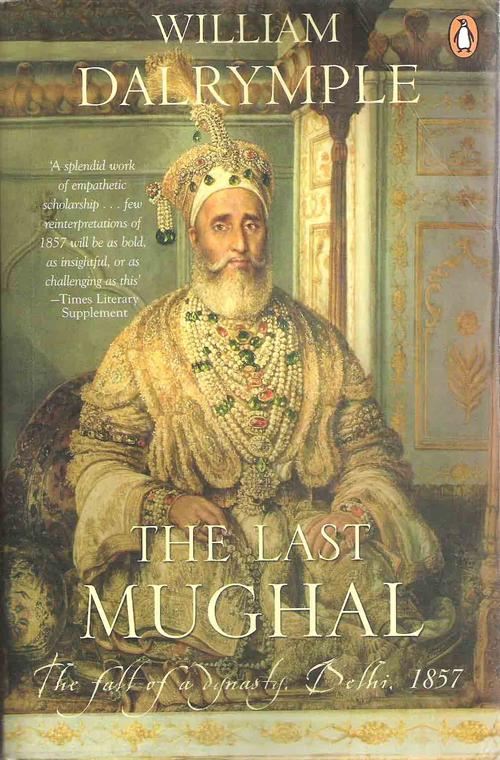
The Last Mughal by William Dalrymple

William Dalrymple is a Scottish historian, writer, critic, art historian and curator. He has won several awards and prizes for his writings. The book is a comprehensive description of the time period when the Mughal empire started declining in India. It will be a treat for people who love reading history. It is about the last Mughal ruler, Bahadur Shah Zafar II, and it provides an account of 19th century India with the tale of the emergence of the British Raj. Another famous book by him is White Mughals which is his fifth major book, it tells the story of the love affair between James Achilles Kirkpatrick and Khair-un-Nissa Begum at the backdrop of nineteenth century Hyderabad.

The Discovery of India by Jawaharlal Nehru

Jawaharlal Nehru was India’s first prime minister and he wrote this from 1942 – 1946. This book was written by Nehru when he was imprisoned by the British. It is a tribute to the rich cultural heritage and legacy of the country. It provides an account of all major developments in the subcontinent from the period of Indus Valley Civilization to the last years of the British rule.

The Palace of Illusions by Chitra Banerjee Divakaruni

Chitra Banerjee Divakaruni is an award-winning writer, novelist and poet. The book is about the tale of the epic Mahabharata, written from the perspective of Draupadi (Panchaali). It tells the story of the woman who fights, endures a lot living in a patriarchal world. It is a historical fiction which traces the historical tale and the life of Panchaali.

The Enlightenment Age

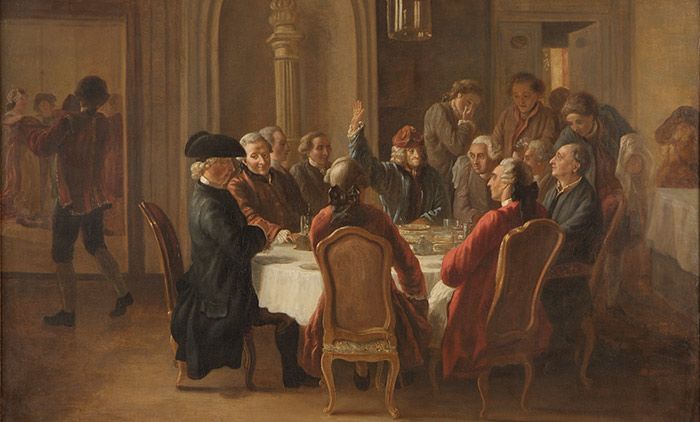
The Age of Enlightenment, also called the Age of Reason was an intellectual revolution which dominated Europe during the 17th and 18th century. Enlightenment was the emergence and creation of ideas which challenged the existing notions of the world. It questioned the existing set of ideas and conceptions about religion, society and politics. Before this period, Europe was essentially a land dominated by religion. This intellectual movement was carried out by the Enlightenment philosophers like Baron de Montesquieu, Voltaire, David Hume and Adam Ferguson.

According to some, the beginning of the Enlightenment was after the publication of René Descartes’ philosophy of ‘Cogito, ergo sum’ (“I think, therefore I Am”) in 1637, while others belief the publication of Isaac Newton’s ‘Principia Mathematica’ (1687) began the Scientific Revolution and the beginning of the Enlightenment.

The philosophers and intellectuals challenged the clergy men who supported the traditional view of society. These new ideas influenced cultural practices like writing, painting, printing, music, sculpture and architecture. There was also significant progress in technology and medical science.

The key ideas of the Enlightenment were Reason, Empiricism, Science, Universalism, Individualism, Secularism, Freedom and similar others. The thinkers stressed on the primacy of reason to establish rationalist ideas based on fact. The key to expanding human knowledge was shifted upon empirical facts and scientific experiments. This concept of scientific reason was considered universal and could be applied to all situations. Philosophers opposed all traditional religious authority and stressed on the importance of knowledge free from all religious biases. They pointed out the creation of a form of knowledge which was not influenced by any religious ideas or superstitions. A secular idea was born and this spread quickly throughout Europe. This led to the belief that all individuals are same and equal despite their religious and philosophical views.

It was the idea of Individualism which was the starting point of all scientific knowledge. Science was the supreme form of knowledge as scientific facts were based on observation and experiments. This led to an increase in objective ideas and decrease in belief of superstitions. The philosophers wrote in a very direct way and took clear positions. They wrote about important changes and transitions going on in the society. A traditional social order was replaced by a modern State. The formation of a political State took place and the powers shifted from the hands of the Church to the State. Society was no longer dependent on the traditional religious institutions. It was believed that the application of reason and scientific knowledge could remove the cruelty and injustice from social institutions. The works of Voltaire instilled a desire for new ideas and belief in progress among the Europeans.

Thinkers like Saint Simon greatly influenced the societal processes. According to him modern society was threatened by anarchy and disorder. To bring back social order a Science of Society would be necessary. He constructed a ‘Social Physiology’ to bring order and stability in the society. He believed that modern society would flourish if science and industry were used for the service of humans. A major social re-organisation would be necessary to bring about order and proceed towards a successful social change which would bring about societal progress. Although his ideas were neglected at first, as Europe became engulfed with disorder and war, these ideas started influencing people. Eventually Saint Simon became a key figure in the liberal political movements of Europe.

History of Chocolate

The first thing which comes to our mind when we hear the word chocolate is a candy or a dessert which tastes sweet. At present, Chocolate is one of the most famous food items in the world. It is consumed worldwide in different forms and is loved by foodies. At first thought we think of it as something to eat and not drink. Chocolate has a very different history and the story behind its popularity is quite an interesting one. The history of Chocolate dates back to about 450 B.C. when it was originally consumed as a bitter drink mixed with spices or corn puree. It originated in Mesoamerica where the Aztecs believed that the cocoa or cacao seeds were the gifts of the God of wisdom. It was used as an aphrodisiac which gave the drinker strength. The sweet pulp of the cacao fruit surrounding the beans, was also fermented into an alcoholic beverage at that time. Today local folks of South Mexico are still known to make such drinks.

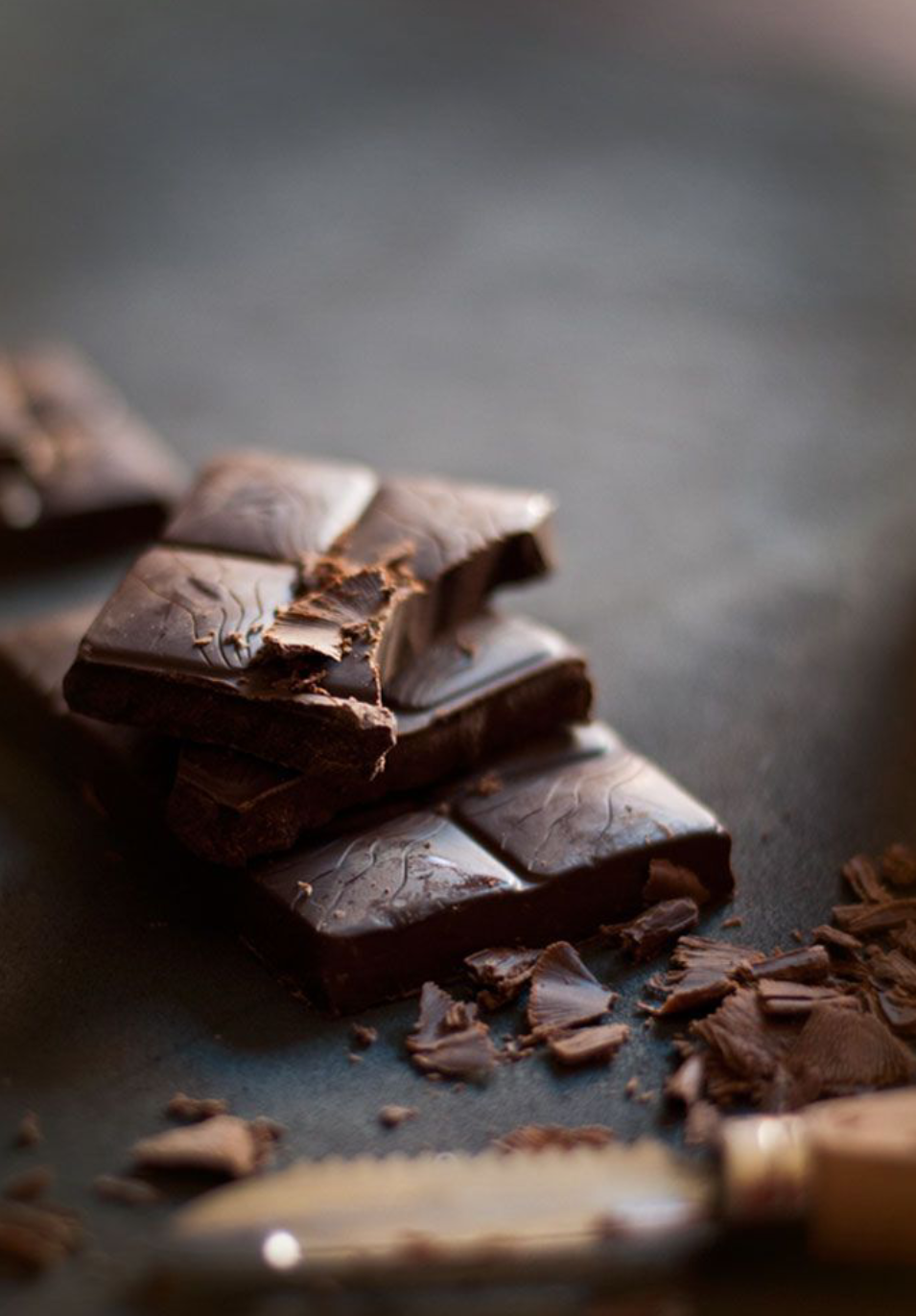
Photo by Pixabay on Pexels.com


The word chocolate came from the Aztec word “xocoatl” meaning a bitter drink brewed from cacao beans. The cacao tree has a Latin name “Theobroma cacao” meaning Food of the Gods. In pre-modern Latin America, the cacao seeds were considered so valuable that it was used as a currency. It was one of the essential items in rations of the United States soldiers during war. According to a 16th century Aztec document 100 cacao beans could be exchanged for a good turkey hen.  

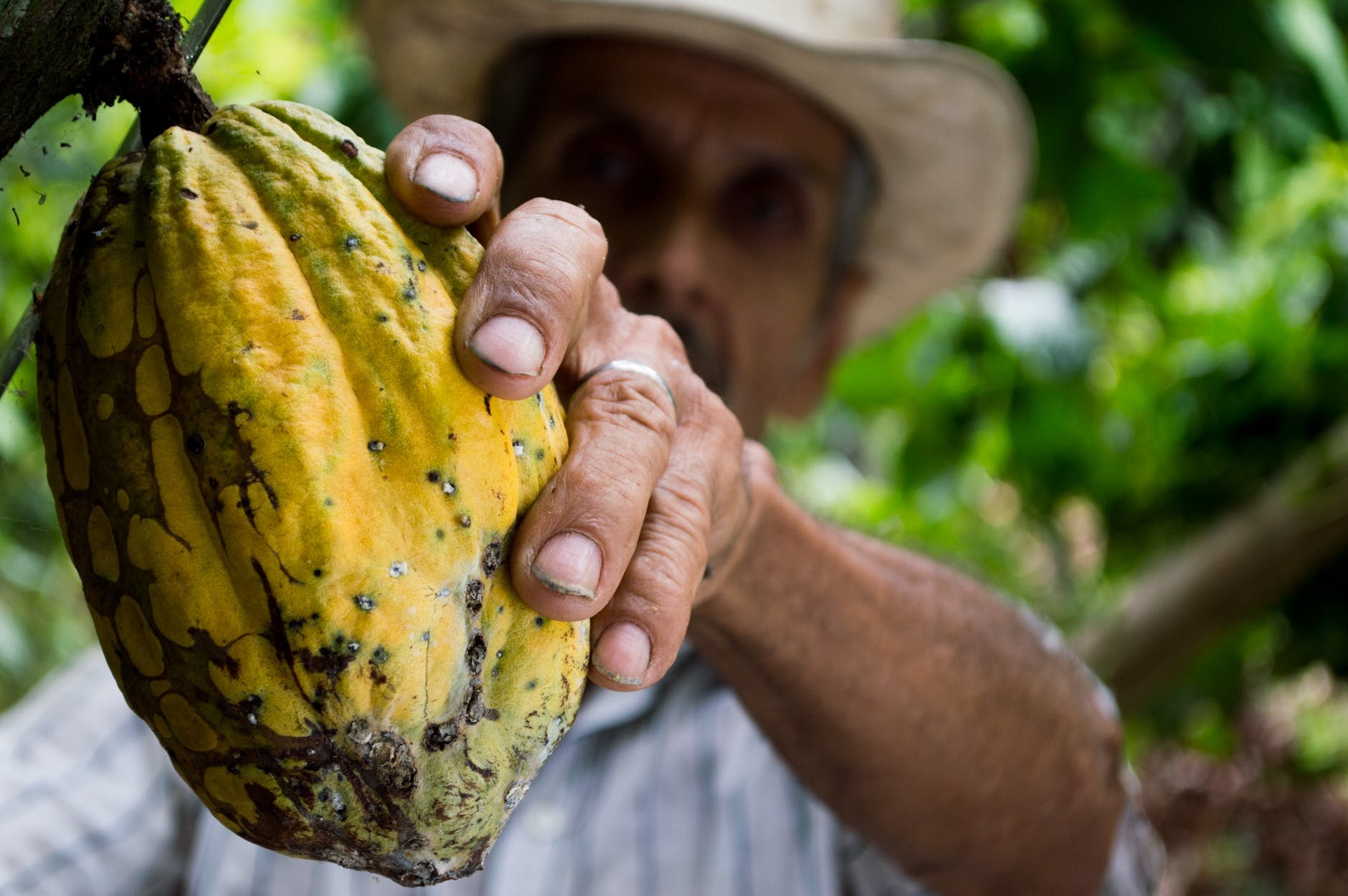
The cacao tree is native to Mesoamerica where its cultivation, consumption and cultural use began. When pollinated, the seeds of the cacao tree form a sheath, within which 30 to 40 brownish-red almond shaped beans are embedded in a sweet viscous pulp. The beans are bitter but the pulp is sweet which may have been consumed by humans at first. The cacao pods grow in a wide range of colors, like pale yellow, bright green, purple and crimson. The texture may vary from sculpted to completely smooth. The plantation of the cocoa trees is a tough process. When in natural environment, the trees can grow up to 60 feet tall but in plantations they grow only up to 20 feet.  

Photo by Sheena Wood on Pexels.com

Chocolate was prepared as a sweet by the European people when it arrived there. It got popularized among the rich people and eventually among the common. Christopher Columbus first came across cacao on his fourth mission to America, when he and his crew seized a canoe full of native goods for trade. He took the beans back to Spain. After it got imported to Europe, it was used as a medicine for treating abdominal diseases because of its bitter taste. After getting sweetened with the addition of sugar or honey, it became a court favorite and chocolate established a foothold in Europe within hundred years.  

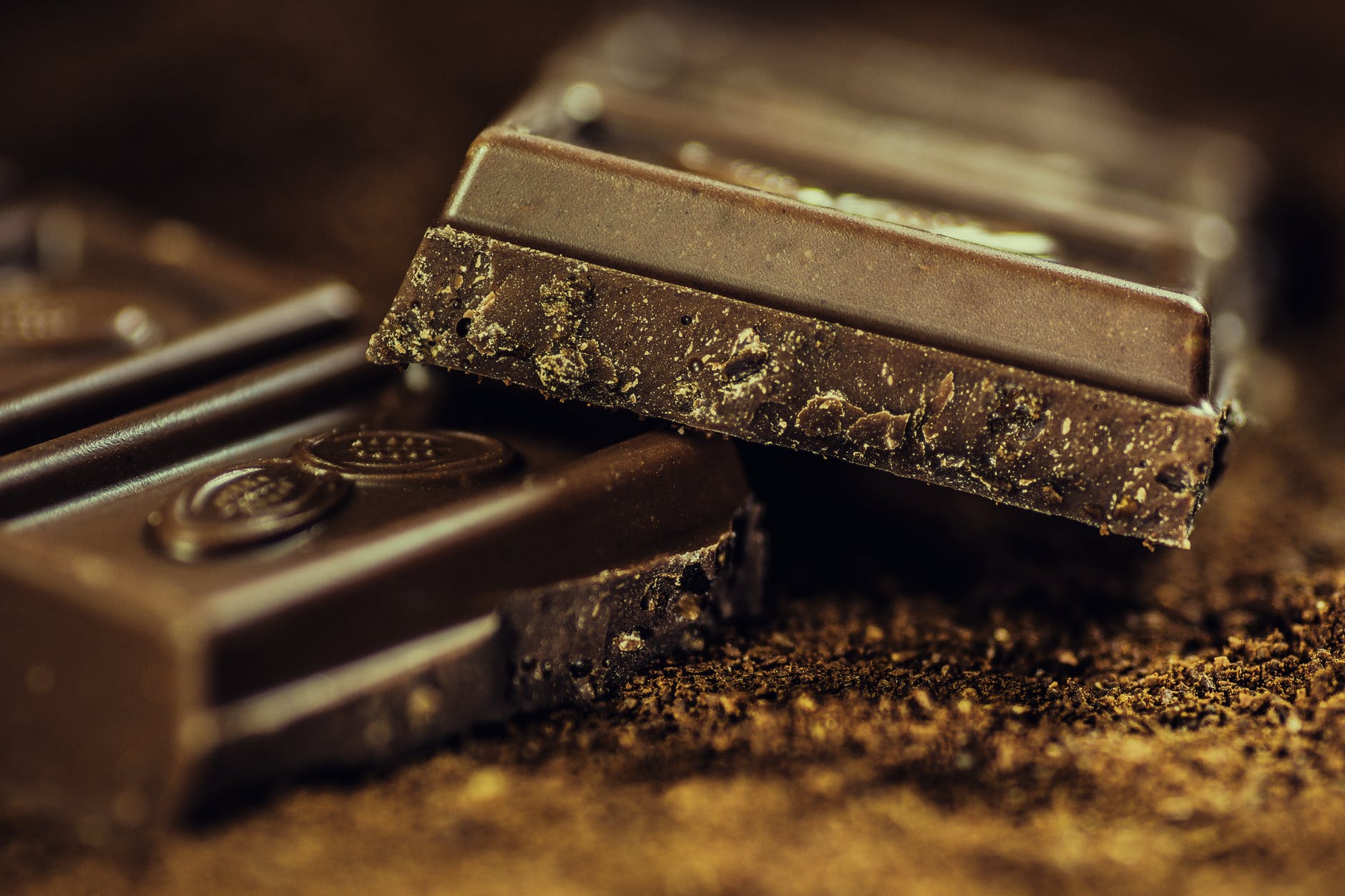
In 1828, a Dutch chemist found a way to make powdered chocolate and this product became known as the Dutch cocoa. This led to the creation of solid chocolate. The first modern chocolate bar was made by Joseph Fry in 1847 by making a moldable chocolate paste. By 1868, a small company called Cadbury was making chocolate candies in England. A few years later milk chocolate was made by Nestle. In the 20th century the word chocolate includes a variety of sweet treats. Modern day chocolate is made from the hardiest but least flavorful cocoa beans and it is often said that it has more sugar and additives than actual cocoa.  

Indian Folk Art

India is home to around 2500 tribes and it has always been portrayed as a land of cultural and traditional diversity. Every corner of the country has a distinctive cultural identity which is represented through different art forms. These art forms can be collectively put under the topic of Indian Folk Art. Each region has a different style and pattern of art which is practised by the rural folks living there. These art forms are colourful and simple and reflect the rich cultural heritage of India. The country is home to around 2500 tribes and ethnic groups. So each region has a unique and interesting form of folk art.

Previously these were done using natural dyes and mostly used for decorating walls and houses. These art forms have undergone many changes through all these years including change of medium, colours and pattern. Here are 10 such art forms which give us a peek into the cultural heritage of different regions of the country.

MADHUBANI

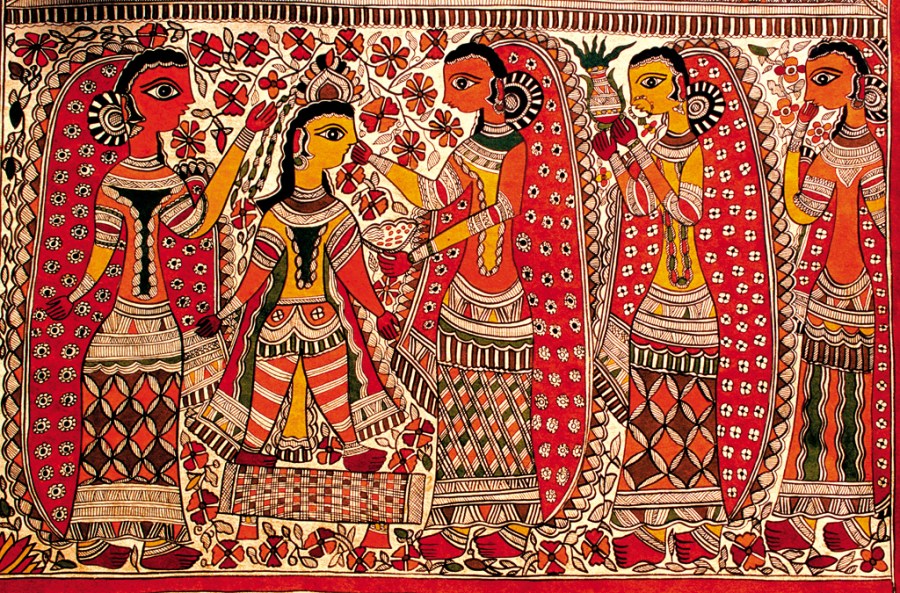
Madhubani, also known as Mithila art, was developed by women of Mithila in Northern Bihar. It is characterised by line drawings, colourful patterns and motives. These were practised for hundreds of years but were discovered in 1934 by a British colonial officer during an inspection after an earthquake.

PATACHITRA

The word ‘patachitra’ derives from the Sanskrit words patta, meaning canvas and chitra, meaning picture.  It is one of the oldest art forms of Odisha. It is done on canvas and portrays simple mythological themes through rich colours and motives. Some of the themes include Thia Badhia – depicting the temple of Jagannath, and Panchamukhi – depicting Lord Ganesh as a five-headed deity.

WARLI

Warli is the name of cultivator tribes belonging to Northern Maharashtra and Gujarat. Though discovered in early seventies, the roots of the art form can be traced back to as early as 10th century A.D. Mostly featuring geometrical shapes, they portray daily life, hunting, fishing and festival scenes. They show a common human figure through a circle and two triangles which move in circles resembling the circle of life.

RAJASTHANI MINIATURE PAINTING

The art form was introduced in the country by Mughals who brought in Persian artists for creating the art. The Mughal emperor Akbar built an atelier for them to promote the artwork. They trained Indian artists who produced it in a new style inspired by the royal lives of Mughals. Eventually the paintings made by these Indian artists came to be known as Rajput or Rajasthani miniature. They are characterized by strong lines and bold colours made from minerals, precious stones, even pure gold and silver.

TANJORE ART

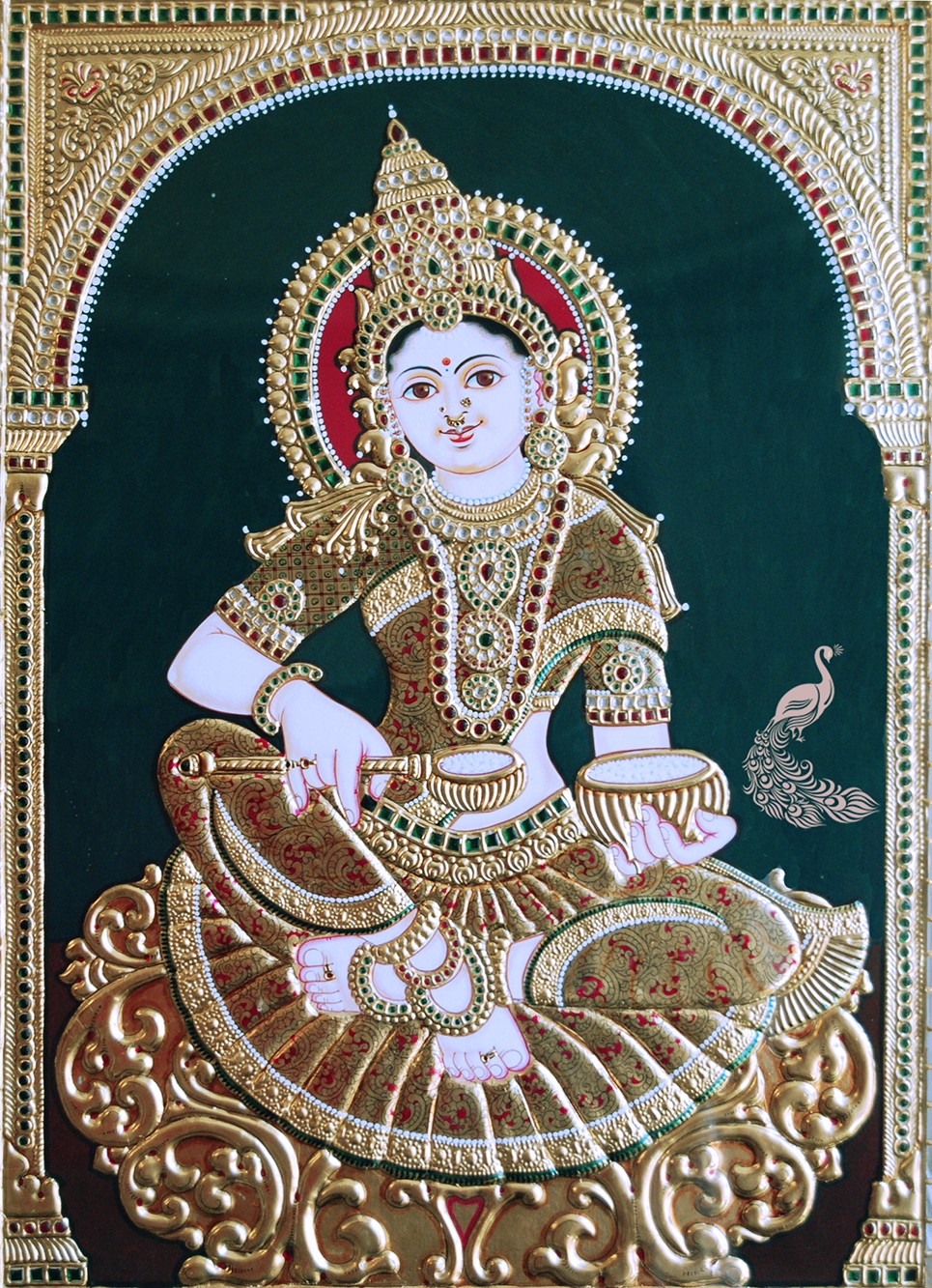
Originating in Tanjavore, about 300kms from Chennai, this art form evolved under the rulers of the Chola empire. Characterized by brilliant colour schemes, decorative jewellery with stones and remarkable gold leaf work, these paintings mostly consist themes of gods and goddesses.

KALAMEZUTHU

Similar to Rangoli and Kolam, this art form originated in Kerala. It mostly consists of the representation of deities like Kali and Lord Ayyappa on temple floors. Natural pigments and powders in five colours are used by the makers and the art is done by bare fingers without the use of any tools. The five colour shades are made from natural pigments like – rice powder for white, burnt husk for black, turmeric for yellow, a mixture of lime and turmeric for red and the leaves of certain trees for green.  Lighted oil lamps brighten the colours in the figures which usually feature anger or other emotions.

Zombies – A Myth or a Reality?

Have you watched the popular series – “The Walking Dead”? If you have watched it, you will definitely know what exactly I am talking about. If you do not know, I will just give a brief about it. It is a series about how survivors of zombie apocalypse are trying to escape and combat the threats from the zombies and how with time, human beings formed their own communities and groups and the rise of conflict between those communities. So basically this is a series about zombie apocalypse and how they are being termed as ‘walkers’ on earth.

So what exactly are these zombies? Do they exist for real or are they just a figment of imagination? From ages, zombies are being described as flesh eating corpse with a ravenous appetite, terrorizing on the grounds like a strong robot, looking to infest on flesh. Such creatures are almost dead and oozes every signs of inhumanity.

Are these new or have they always infested the earth? Well, history says that the stories of zombies first originated in Haiti culture, where the West African slaves were brought to work on Haiti’s sugar cane plantations. But they were treated so brutally, that their life or afterlife represents the zombie culture. Other says that the Ancient Greek Civilization was the first to experience this. In fact, many skeletons which were pinned down to ground using stones were unearthed, which kind of verifies their existence.

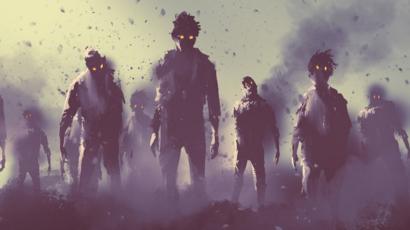
Who is prepared for a 'zombie apocalypse'? - BBC News
Zombie Apocalyse

But there do exists some true facts about the zombies and voodoo. Voodoo is practised as a religion in some cultures like Haiti where some people believe that zombies are people who are revived by a voodoo practitioner, Bokor. It is a concoction of herbs, bones, animal parts and especially ‘tetrodotoxin’ which is a deadly neurotoxin found in marine species, which if injected in high quantities can lead to paralysis and coma. It manifest zombie like qualities among the human beings. Thinking that infected person to be dead, they usually revive and thus rose the term ‘zombie’.

But is there even a bit of truth? Medical reports suggests so. One instance was that a person named Clairvius Narcisse, who was admitted to hospital due to acute respiratory problems in 1962, but later slipped into coma and being declared as dead, was buried later. 18 years later, a man goes to Angelina Narcisse and claims to be her brother. Upon verification by doctors, that he was buried alive, he was sent off to work in the sugar plantation.

Zombies might not exist as there have been no mention of these in Old Testament or New Testament but there have been mentions of resurrections of saints and sinners in Bible. So there is a very little evidence as to whether such zombies exists or if there is even a zombie apocalypse. Not only on religious books, since the eighteenth century, there have been various literatures of spirits and ghosts. Various movies were also made such as Night of the Living Dead and World War Z, just to name a few.

It is ultimately all about perception. Disasters have always caused such huge destruction and there is always this survival of the fittest psychology which goes among us. So it might be true that zombies do not exist, but then again who are we to judge history?