The Ten Best Air Coolers in India

Air Coolers are much more pocket-friendly and eco-friendly than air conditioners. You can easily buy the best air cooler in India without spending tens of thousands on it. It is cheaper than air conditioners as well as convenient for most people to buy. Here is a detailed list of the ten best air coolers in India.

List of air coolers in India

  1. Havells 70 L Desert Air Cooler – Havells has always been one of the leading companies for air coolers. Havells 70 L Desert Air Cooler has multiple features, making it the best air cooler in India. The height of the cooler is 122.5 cm. It has three settings for speed control. The power consumption of Havells 70 L Desert Air Cooler is 220 W. The tank capacity is 70 L. Also, it has a remote-control feature, and it has an inbuilt net which filters the dust. The dimension of the cooler is 54.8 cm * 122.5 cm * 71.5 cm. The price of the air cooler is around 15,000 INR.
  2. Orient Electric 50 L Desert Air Cooler – Orient is one of the well-known companies to provide the best air coolers in India. The Orient Electric 50 L Desert Air Cooler has various specifications, making it one of a kind. The air cooler has three side net honeycomb pads, an anti-bacterial tank, and so much more. The height of the cooler is 80 cm. It has three settings to control the speed. The air throw is around 60 ft. The power consumption of the cooler is 190 W. The tank capacity is 50 L. It comes without a remote-control facility. The air delivery is 3650 cfm. It has an inbuilt ice chamber as well as five castor wheels. It gives you an alarm when the tank gets empty. It has a dust filter, and also it indicates if the tank overflows. Other than all these excellent features, it also has a mosquito net. The dimension of the cooler is 65 cm * 80 cm * 42.5 cm. The price of the air cooler is 10,000 INR.
  3. AISEN 55 L Desert Air Cooler – AISEN is known nationwide for being one of the topmost manufacturers of air coolers. It provides you with the best air coolers in India. The AISEN 55 L Desert Air Cooler provides you with the best specifications. The height of the air cooler is 110 cm. It has three settings of speed. The power consumption is 190 W. The tank capacity of the air cooler is 55 L. The dimension of the air cooler is 68.5 cm * 110 cm * 41 cm. The price of the product is 10,000 INR.
  4. Kenstar 50 L Desert Air Cooler – Kenstar is one of the most popular brands to manufacture the best air coolers in India. They are known for their exclusive designs to make the air cooler stylish and trendy. The Kenstar 50 L Desert Air Cooler has its own beautiful features. The height of the air cooler is 72 cm. It has three settings with which you can control the speed. The cooler’s power consumption is 150 W. The tank capacity of the air cooler is 50 L. It has a remote-control facility, which makes it more convenient. It also has a honeycomb cooling feature, and it has two inbuilt modes to control the fan. You can either switch on the fan mode, or you can also switch on the fan and the cooling mode together, according to the need of the moment. The air delivery is around 3200 cm. It also comes with castor wheels and auto louver movement. Other features include a humidifier which controls the percentage of humidity. The dimension of the air cooler is 55 cm * 72 cm * 50 cm. The price of the product is 13,000 INR.
  5. Vistara Scala Personal Air Cooler 30 L – Vistara is well known for providing the most eco-friendly coolers in India. They use evaporate air technology, which is why they give the best air coolers in India. The height of the cooler is 57 cm. It is more of a personal cooler, which you can keep in your bedroom for the best result. It has three settings to control the speed. The cooler’s power consumption is 160 W. The tank capacity is 30 L. The air throw distance is 32 ft. The air cooler has four castor wheels and honeycomb pads. Instead of an inbuilt fan, it has a blower. It comes with no remote-control facility. The air delivery is 1200 cfm. It has an inbuilt ice chamber and also has the oscillating function. It indicates the level of water present inside and has a dust filter. Other features include a mosquito net, and it comes with a trolley. The cooler’s weight is 7.5 kg, and the dimension is 22 cm * 57 cm * 22 cm. The price of the product is 8,000 INR.
  6. Bajaj 36 L Personal Air Cooler – Bajaj has always been one of the most popular brands when it comes to electrical appliances. They provide you with the best air coolers in India. They have a high air delivery facility which is best suited for your bedroom. The design used for the cooling media is hexagonal in shape, which makes the room cooler. The features of the Bajaj 36 L Personal Air Cooler are as unique as it can get. The height of the air cooler is 84.5 cm. The air throw distance is 30 ft. It has three settings to moderate the speed. The cooling area covered by the cooler is around 150 sq.ft. The cooler’s power consumption is 100 W. The tank capacity is 36 L. It has honeycomb pads and a blower instead of an inbuilt fan. There is no remote-control facility. This is a manual personal air cooler. The air delivery is 2000 CFM, and it can deflect the air in five different ways. It has no ice chamber but has five castor wheels. It indicates the water level as well as the overflow but has no alarm facility. It has no dust filter. The weight of the air cooler is 9 kg, and the dimension is 47 cm * 84.5 cm * 45 cm. The price of the product is 7,000 INR.
  7. Maharaja Whiteline 65 L Desert Air Cooler – Maharaja is a famous brand in the electronic market. It manufactures the best air coolers in India and also, in a reasonable range. The Maharaja Whiteline 65 L Desert Air Cooler has its individual set of specifications. The height of the air cooler is 90 cm. The air throw distance is 50 ft. It has three settings of speed to control. The area of cooling is around 700 sq.ft. The power consumption is 165 W. The tank capacity of the air cooler is 65 L. The cooling media used in the cooler is wood wool. The motor speed of the cooler is 1450 rpm. It has no ice chamber, no castor wheels. But it indicates the water level. The weight of the air cooler is 20 kg, and the dimension is 72 cm * 90 cm * 72 cm. The price of the product is 7,000 INR.
  8. Voltas 15 L Personal Air Cooler – Not only does Voltas manufacture the best air coolers in India, but it is renowned for the production of multiple electronic appliances. The Voltas 15 L Personal Air Cooler has numerous features, making the cooling experience better than ever. The height of the cooler is 45 cm. It has three settings to control the speed. The area it covers for cooling is around 12 sq. ft. The cooler’s power consumption is 120 W. The tank capacity is 15 L. You can easily use it for your bedroom. It has honeycomb pads for cooling and a blower. There is no remote-control facility. The motor speed is around 1440 rpm. There is no inbuilt ice chamber, but it has four castor wheels. Other features include auto louver movement and oscillation. It indicates the water level as well as the overflow. It has the alarm facility, which means if the tank is empty. It has a dust filter and a mosquito net. The weight of the air cooler is 11 kg, and the dimension is 30 cm * 45 cm * 25 cm.
  9. Symphony 27 L Personal Air Cooler – Symphony provides you with the best air coolers in India as well as the most affordable ones. The Symphony 27 L Personal Air Cooler has several specifications, which makes it unique. The height of the air cooler is 70 cm. It has three settings to control the speed. The area it covers for cooling is around 1500 sq.ft. The cooler’s power consumption is 105 W. The tank capacity is 27 L. It has honeycomb cooling pads and a fan. There is no remote-control facility. It has an inbuilt ice chamber as well as four castor wheels. Other features include auto louver movement and oscillation. It indicates the water level and has a dust filter. It also comes with a mosquito net and an ionizer. The weight of the cooler is 7.5 kg, and the dimension is 45 cm * 70 cm * 30 cm. The price of the product is 5,000 INR.
  10.  Crompton 75 L Desert Air Cooler – When it comes to electrical appliances, there is no brand better than Crompton. They provide you with the best air coolers in India for a very reasonable price. The Crompton 75 L Desert Air Cooler has multiple features, which makes it exclusive. The height of the air cooler is 120 cm. The air throw distance is around 45 ft. It has three settings to control the speed. The area of cooling is approximately 500 sq.ft. The power consumption of the cooler is 190 W. the tank capacity of the cooler is 75 L. the cooling media used in, the cooler is honeycomb pads and fan. There is no remote-control facility. It operates in two ways, either in relaxed mode or in swing mode. The air gets deflected in four directions. It has inbuilt ice chambers and four castor wheels. It also has an auto lower movement but no oscillation. It also indicates the water level. The weight of the air cooler is 18.3 kg. The price of the product is 9,000 INR. 

These are the topmost electronic brands that serve you with the best air coolers in India. The price range varies from one brand to another, but all provide you with excellent manufactured products. All you need to do is make up your mind on which one to buy, depending on the price and, most importantly, the features. 

Best Beach Resorts in India

Who doesn’t like spending some quality moments at the beach with their close ones? To spend a vacation at the beach has always been one of the first choices amongst the people. You can bask in the sun while drinking coconut water, experience incredible water sports and activities at the beaches. How would you like to spend an excellent vacation at one of the beautiful beach resorts in India? Wouldn’t that be amazing to spend a few days at one of the luxury beach resorts in India, where you can wake up to the waves’ sound crashing on the shore? Hence, here is the list of ten best beach resorts in India, you can book for your next holiday destination:

What are the Ten Best Beach Resorts in India?

The beach resorts are one of the most incredible ways to relax for a couple of days and feel the serenity and calm, along with luxury. Who wouldn’t like to experience both – peace and comfort at the same time? This is precisely why beach resorts have become the most popular in recent times. So, if you wish to experience the same relaxation, fantastic food, luxury, and nature, you should stay at one of the resorts. Even if you love the mountains more than the Sea, you can try one vacation at the beach. You never know, this might change your choice for the upcoming travel destinations as well. To book for your next vacation, you can smoothly go to one of these beach resorts to experience the ultimate paradise:

Taj Exotica Resort & Spa Goa

One of the most popular luxury beach resorts in India, the Taj Exotica Resort & Spa, offers you an incredible experience in Goa. The resort is located in Benaulim on the southwest coast of Goa. It houses 34 luxury rooms, six suites, 98 villas, and 2 Presidential Villas. They have 24 hours all day diner facility for the guests. The best part of the resort is, they allow you to bring your pets along with you. Hence, you would be able to spend a lovely vacation with your pets. The price of the room starts at approximately Rs. 13,000. The resort has several exquisite amenities such as:

  • Wi-Fi
  • Badminton court
  • Tennis court
  • Pool tables
  • Cricket ground
  • Outdoor swimming pool
  • Jiva Spa

Sai Vishram Beach Resort

If you wish to spend a vacation with your family or partner, Sai Vishram Beach Resort is the perfect place for you. Located in Udupi, the resort offers you with various accommodations, such as Deluxe AC Cottages, Standard AC Cottages, Standard AC Rooms, Deluxe AC Rooms, and AC Tents. Along with such incredible facilities, they provide you with different sports activities like Jetski rides, Banana Boat rides, Air-Boat rides, and many others. The price of the room starts at approximately Rs. 8,500. The resort offers several other amenities like:

  • Coastal Cruise
  • Ayurvedic massage
  • Bonfire on the beach
  • Buffet system
  • No-Alcohol Policy
  • No Meat Serving

Acron Waterfront Resort

To experience a modern luxury vacation, you definitely should spend a few days at the Acron Waterfront Resort, located in Goa. The resort offers multiple fancy accommodations such as Seaside rooms, Riverside rooms, Courtyard rooms, Courtyard Suites, and Penthouse suites, for the guests to choose from. The price of the room starts at approximately Rs. 4,000. They offer you with various modern facilities such as:

  • Temperature controlled Jacuzzi
  • Infinity Pool
  • Gym
  • River Deck & Jetty
  • Laundry Service
  • Currency Exchange
  • Salon & Spa
  • The River Restaurant

Holiday Inn Resort Goa

One of the cleanliest resorts in Goa, the Holiday Inn Resort Goa, offers you the most beautiful time. It is located on the beautiful Mobor Beach in South Goa. The accommodations include Plaza and Deluxe rooms with a view of the pool, or garden, or Sea. The bedrooms have several facilities like extra bedding, dining table, closet, heater, AC, private bathroom, minibar, coffee and tea maker, TV, work desk, and many others. The price of the room starts at approximately Rs. 5,500. The other amenities offered by the resort are as follows:

  • Outdoor Pool
  • Cocktail Lounge
  • Gym
  • Spa
  • Foreign Currency Exchange
  • Laundry Valet
  • Daily Housekeeping

Caravela Beach Resort

Located at Varca, Goa, the Caravela Beach Resort offers you a peaceful vacation. The resort offers various accommodations such as Presidential Villa, Family Villa with ocean view, Deluxe Suite, Ocean Front View Room, Deluxe Room, Superior Room, and Garden Room. The price of the room starts at approximately Rs. 20,500. The amenities offered by the beach resort include:

  • Golf
  • Swimming Pool
  • Spa
  • Yoga
  • Ayurvedic Centre
  • Gym
  • Outdoor Jacuzzi
  • Live Band
  • Salon

Heritage Village Resort & Spa Goa

One of the most popular resorts in Goa, the Heritage Village Resort & Spa, offers world-class facilities. They have various accommodations with different facilities for the guests. The price of the room starts at approximately Rs. 6,000. The resort also offers several water activities such as jet-skiing, water polo, parasailing, and others. They offer various amenities like:

  • Garden
  • Swimming Pool
  • Bar
  • Kids pool
  • Play area
  • Turkish bath
  • Yoga
  • Meditation
  • Music
  • Karaoke
  • Disco nights
  • Customized private dinner
  • Sunset cruise
  • Private yacht
  • Candlelight dinner

ITC Grand Goa – A Luxury Collection Resort & Spa

To experience a village-style comfortable living on the beach, you definitely should spend your next holiday at the ITC Grand Goa – A Luxury Collection Resort & Spa. The resort houses multiple accommodations like Guest rooms and Suites with garden view, lagoon view, pool view, sea view, Lap Pool Suite, Luxury Suite, and Presidential Suite. The rooms have various facilities, including private balconies, outdoor rain-shower, secret gardens, Happy Hours, 24 Hours In-Room Dining, open-plan marble baths with spa, and others. The price of the room starts at approximately Rs. 8,000. The resort also offers other amenities such as:

  • Gym
  • Yoga
  • Swimming Pool
  • Jacuzzi
  • Volleyball field
  • Sauna
  • Games Room
  • Kaya Kalp – The Royal Spa

Taj Green Cove Resort & Spa Kovalam

If you wish to experience Bali in India, then Taj Green Cove Resort & Spa is the right place for you. Located at Kovalam, the resort offers you a Balinese style experience. They have multiple accommodations like Superior Cottages with Garden view and Sea view, Deluxe Suites with Sea view and Balcony, Premium Suites with Sea View and Plunge Pool, and Presidential Villa with Private Pool. The price of the room starts at approximately Rs. 10,500. The resort also offers several other amenities such as:

  • Jiva Spa
  • Gym
  • Romantic Lagoon Boat Ride
  • Business Centre
  • Leisure Services
  • Village Dwelling
  • Bait Moon Light Dinner
  • Backwater Cruise at Poovar

Novotel Goa Dona Sylvia Resort

One of the renowned beach resorts in Goa, the Novotel Goa Dona Sylvia Resort, is known for their incredible hospitality service. Located on Cavelossim Beach in South Goa, the resort offers various accommodations such as Premium Suite, Executive Villa King Room, Executive Villa Twin Room, Boutique Villa King Room, Boutique Villa Twin Room, and Premium Villa Room. The price of the room starts at approximately Rs. 6,000. The resort offers various other amenities such as:

  • Parking
  • AC
  • Porter
  • Wi-Fi
  • Laundry
  • Swimming Pool
  • Gym
  • Boat excursions
  • Deep-Sea Fishing
  • Jet skiing
  • Kayaking
  • Parasailing
  • Snorkeling
  • Badminton
  • Football
  • Volleyball
  • Bars
  • Restaurants
  • Room Service

Lemon Tree Amarante Beach Resort, Goa

The best resort to spend your next vacation in, the Lemon Tree Amarante Beach Resort in Goa. They offer multiple accommodations like Superior Room, Executive Room, Deluxe Room, Heritage Room, Terrace Studio, Heritage Studio, Heritage Suite, and Universally Accessible Room. All the rooms have various facilities such as Wi-Fi, daily newspaper, mineral water, coffee, and tea maker, telephones, work desk, TV, mini bar, orthopedic mattress, hairdryer, private bathroom, and others. The price of the room starts at approximately Rs. 7,000. Other amenities, provided by the resort include:

  • Gym
  • Spa
  • Swimming Pool
  • Restaurants
  • Foosball
  • PlayStation
  • Mini library

Nowadays, everyone deserves a little luxury and unwinding, due to the daily work pressure and busy schedule. There is no other better option than spending a weekend at one of the best beach resorts in India and feeling the essence of nature, the Sea, and the sun. Spending a few days with your family, partner, or even your pet, would cheer you up, which would lead to a fantastic start to a brighter, new week. You should book one of these resorts, and experience the Sea. Also, the change of weather and Vitamin C would work wonders on your mind and body, both. You would return from the vacation, much happier, and with beautiful tanned skin. Isn’t this amazing? All of the beach resorts have fantastic package deals as well, and you might get some discounts on them. Have a relaxing weekend getaway, far away from the city life, amidst the Sea and nature. Also, experience water activities. Trust me; they are exciting, fun, and thrilling. So, what are you waiting for? Go, book your room, and have a weekend full of spa massages, yoga, meditation, jet skiing, seafood, candlelight dinners at the beach, and most importantly, peace and relaxation.


My First Solo Trip to Nainital

Nainital, also known as the “City of Lakes,” is magnificent in every sense. The night, my train reached Bareilly, and I stepped out of the station to rent a cab to Nainital. Never had I any idea that a short trip of 3 days could change my whole perspective about traveling. I have always been fond of traveling, but Nainital was my first female solo trip, and the excitement, fear, and thrill juxtaposed all together inside my heart. But, let me tell you, even though the beautiful city is known for the lakes, it is much more than that. Nainital welcomes you with open hands, and trust me when I say this; it is one of the safest cities in India.

Now, I decided I would give you a list of activities you could do in Nainital, and none of them would burn a hole in your pocket. When I left for my solo travel, I only had 7,000 INR with myself, and I saved 3,000 INR, and I am not at all bluffing. The entire trip, excluding the train tickets, cost me 4,000 INR only. So, let’s get started on the list of activities you could do when you visit Nainital:

  • Walk around the City 

One thing, I had never experienced before Nainital, was walking around a city leisurely. This was my first time alone, and I had no restrictions on me, which is pretty standard in an Indian household, especially if you are a girl. So, three years back, when I set my feet on the roads of Nainital, it was way into the night. I had my luggage with me, and no outside cars are allowed inside the city premises at night. The cab dropped me on the outskirts, and I started walking without any idea of where to go. I had not booked a hotel yet, and to be honest, I was scared to death to walk alone on the streets. But the moment I came closer to the lake of Nainital, the beauty of the night sky filled with stars, and the reflection on the still water of the lake, I forgot what fear feels like. I was mesmerized by the beautiful sight of the city, and I walked on the streets the whole night. In my opinion, this is the most affordable way to look around the city. Go out and walk around leisurely, the beauty of the town would keep you captivated for a long time. 

  • Visit the Mall Road

Walking around the Mall Road was one of the most exciting activities for me. The entire road is always filled up with tourists and local people. There are tiny little shops on one side of the mall. You can buy a souvenir from one of the shops, for cheap. The Mall Road is the busiest place in the city. Every day, I used to walk down the Mall Road at least once, and talk to the people around. The people who live there are incredibly polite and friendly, and you can learn a lot about the city from them.

  • Row Boating at the Naini Lake

If you are in Nainital, you have to visit Naini Lake. The city, Nainital, is named after this particular lake. The lake’s atmosphere is vibrant in the day time, and you can also experience the beautiful silence at night time. Also, it would be best if you experienced row boating at the lake. The ticket is for 200 INR only. I would personally recommend you to visit the lake at night, too. The silence and the night sky make the lake more peaceful at that hour.

  • Visit the Mukteshwar Temple and the Rocks

After my first day at Nainital, I rented a cab with eight other tourists to visit Mukteshwar. I had heard a lot about the temple located at Mukteshwar and planned on visiting it. But, the most spectacular incident took place after I reached my destination. The Mukteshwar Temple was undoubtedly magnificent. But, I started to walk around the temple, and that’s how I found a trail to the most beautiful view I had ever seen. Rocks surrounded the entire place, and you could try rock-climbing, too. I spent the whole afternoon sitting on one of the stones, completely mesmerized by the view in front of me. I witnessed the snow-covered peaks of the mountains in front of me while sipping on a hot cup of tea. At that time, I realized how wonderful it was to be on your own, in an unknown city, with strangers. 

  • Go on the Ropeway

On the last day on my solo trip to Nainital, I planned on going up on the ropeway to observe the entire city. Undoubtedly, one of the most extraordinary experiences I had in Nainital is this. You don’t want to miss out on this one. There is always a massive line of travelers waiting to board on the ropeway. It took me a good one hour to finally get my turn, but I completely forgot about pretty much everything when I did. 

Nainital is immensely close to my heart. The city has given me a lot more than mere beautiful scenic sites. The town has given me beautiful memories to look back at, and it has taken away my fear of the outside world. The city made me fall in love with being alone and taking risks, even when you might face trouble. Before Nainital, I have been to multiple other cities and towns with my family, but what Nainital gifted me was more than just traveling. If you are a woman who is afraid to go solo or you are anticipating whether to take the trip alone, please do it. There is nothing freer and more peaceful about traveling at your own pace and on your own. To conclude, I would like to quote Jane Austen, “What are men to rocks and mountains?”

#DigitalAirStrike

“India bans 59 Chinese apps”

New Delhi: Indian Government has blocked 59 apps with Chinese links. Amid the ongoing tension between China and India, GOI has taken this decision, a digital boycott.
Indo-China border tension (Line of Actual Control) and after Indian soldiers were martyred at the Galwan River Valley,Ladakh. Ever since the incident, there has been an uproar on social media to boycott Chinese products, apps. Google play store and App Store has to discontinue it’s functions.
Here is the list of the banned Chinese apps-

  1. TikTok
  2. Shareit
  3. Kwai
  4. UC Browser
  5. Baidu map
  6. Shein
  7. Clash of Kings
  8. DU battery saver
  9. Helo
  10. Likee
  11. YouCam makeup
  12. Mi Community
  13. CM Brower
  14. Virus Cleaner
  15. APUS Browser
  16. ROMWE
  17. Club Factory
  18. Newsdog
  19. Beauty Plus
  20. WeChat
  21. UC News
  22. QQ Mail
  23. Weibo
  24. Xender
  25. QQ Music
  26. QQ Newsfeed
  27. Bigo Live
  28. SelfieCity
  29. Mail Master
  30. Parallel Space
  31. Mi Video Call – Xiaomi
  32. WeSync
  33. ES File Explorer
  34. Viva Video – QU Video Inc
  35. Meitu
  36. Vigo Video
  37. New Video Status
  38. DU Recorder
  39. Vault- Hide
  40. Cache Cleaner DU App studio
  41. DU Cleaner
  42. DU Browser
  43. Hago Play With New Friends
  44. Cam Scanner
  45. Clean Master – Cheetah Mobile
  46. Wonder Camera
  47. Photo Wonder
  48. QQ Player
  49. We Meet
  50. Sweet Selfie
  51. Baidu Translate
  52. Vmate
  53. QQ International
  54. QQ Security Center
  55. QQ Launcher
  56. U Video
  57. V fly Status Video
  58. Mobile Legends
  59. DU Privacy

Meanwhile, Twitter trends with various hashtags #DigitalAirStrike , #ChineseAppsBlocked and various memers are making posts.

A huge backlash and criticism was going on against Chinese applications.
Upon receiving recent credible inputs that such apps pose threat to sovereignty and integrity of India, the Government of India has decided to disallow the usage both [on] mobile and non-mobile Internet-enabled devices,” the Ministry of Electronics and IT (Meity) said in statement.
The Ministry used Section 69A of the Information Technology Act.
“There have been raging concerns on aspects relating to data security and safeguarding the privacy of 130 crore Indians. It has been noted recently that such concerns also pose a threat to sovereignty and security of our country. The Ministry of Information Technology has received many complaints from various sources including several reports about misuse of some mobile apps available on Android and iOS platforms for stealing and surreptitiously transmitting users’ data in an unauthorized manner to servers which have locations outside India. The compilation of these data, its mining and profiling by elements hostile to national security and defence of India, which ultimately impinges upon the sovereignty and integrity of India, is a matter of very deep and immediate concern which requires emergency measures.” -Govt officials said.
The Indian Cyber Crime Coordinate Centre under the Ministry of Home Affairs sent an exhaustive recommendation for blocking these “malicious apps,” the IT ministry. Earlier this ministry many concerns were received from citizens regarding the data security and the privacy issues.

As Prime Minister makes a digital move towards“ATMA NIRBHAR” Campaign.Official boycott of Chinese applications is a step towards Vocal for Local.

India reels from police brutality

Police brutality, ever since the death of George Floyd, the world had been reeling from the inhumane way police treat the “suspects”. Since then a number of protests have surged throughout the world regarding the brutality of police and thus moving to the broader spectrum of overall racism faced by the African-American community in America. While such a movement has done a lot of good, it has also spread a false sense of ease, projecting that such cases of the police brutalizing people is limited to America only. However, that is not the case, in countries such as India the problem is much larger and much more multi-faceted. Here the police do not target by race but by the Social status of a person, i.e. your monetary worth determines how the police treat you.

Photo by NEOSiAM 2020 on Pexels.com

People are often seen chanting the same old things such as know your rights, no one can arrest you without a warrant after such cases, however the problem is, that it isn’t the case of ground reality. Very often at the mere mention of their rights, the “alleged suspects” are beaten to an inch of their lives. Less than a month since the killing of George Floyd, another incident has the world reeling at the blatant lack of humanity within those who call themselves police. The case of P. Jeyraj and J. Fenix shows how these uniformed thugs terrorise the common folk. The cause of their arrest was an alleged violation of Covid-19 Curfew; however, several eyewitnesses deny to that as the arrest took place 30 mins before that. After the arrest of his father, Fenix reaches the station to inquire and is taken into custody. The father-son duo is beaten, nay brutalized by the police. They are tortured beyond imagination and after three days of constant torture the two succumb to their injuries. However, in order to cover up their crime the police file a hospital notice that the two allegedly fell and rolled over and had a subsequent hearth attack, however upon a closer look at the bodies by eyewitnesses that was no the case. The two had injuries throughout their bodies, their chest hair had been ripped out in tufts, their knees completely smashed by lathis, their faces pushed against the walls and blows rained upon their backsides and buttocks until they bled and ripped and subsequently the were stripped naked and thrown into jail. This is way to excessive just for a curfew break and just for this, the responsible police should have been sentenced to the maximum. However, this was not the case as the two were tortured way beyond this by someone who shouldn’t even be considered human. Their cries were heard throughout the time they were tortured. Behind the bars, where there are no CCTV cameras, these goons did their evil deed, they showed up iron tipped lathis or batons up their buttholes several times and their genitalia and backsides were completely ripped and mangled. Three times during the course of this torture, their blood-soaked clothes were sent back to their homes and fresh ones were demanded and then they would be sent back and so on. After a phony trial with a magistrate by the police, the two were taken back to custody and the torture upon their bodies and souls resumed. Two days after the phony trial the two were admitted into a hospital, and were pronounced dead due to heart failure and fever. This shows that even the medical practitioners hand out fake reports for the police. Since this issue came to light even after the blatant trying of Tamil Nadu police to cover it up, a mere two sub inspectors have been suspended and a few have been transferred. That seems like way below the bare minimum that the responsible authorities could do. To define how small the heinous crime’s punishment is, let us compare it to the sentencing of any given rapist. Nirbhaya case’s culprits dragged their cases for eight years. People arguing no matter how irrefutably inhumane their crime was they deserved the treatment of human beings. How is it that Indian society gives better treatment to bloody rapists than lower middleclass working people? How is it that even a terrorist is treated with better respect than a common folk. This wasn’t just a murder, this was a brutalizing work of psychopaths, who have no shred of human morality. No one should be treated like this, much less people who have “allegedly” committed such a small crime. We as a society must question ourselves that how can we progress further if we turn a blind eye to such events.

I feel that I speak about a vast majority of people who are going to see something like this, feel sad for about a minute or so and forget about it because it hasn’t happened to them. However, to them I say, you are even worse than these scums because the only one worse than someone who commits such a crime is someone who can act upon it but doesn’t.

India as a country has rotten to its core, rape, murder and now torture has become common place. In today’s India, Might makes Right. It is up to us, the future generation to change it, but by the looks of it we don’t have the ability to do so.

Dancing is a Long Journey without any Destination

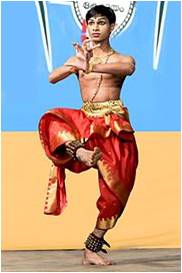
Summer vacations of young school children open up a whole new arena of hobbies for them to indulge in. These kids enroll themselves in various classes like dancing, singing, arts and craft, and sports. Although dancing is one of the primary activities, not many children these days opt for classical dance styles. Most of them prefer Freestyle or Bollywood. While no dance form is less than another, a few of them are losing their place in society. Lost in today’s times is one such dance form, Kuchipudi.

Kuchipudi, one of the eight classical dance styles of India, is a dance-drama performance art that originated in Andhra Pradesh in the Kuchelapuram village of Krishna, about 65km from Vijayawada. It is the only classical dance form that gains its name from a geographic location where it grew largely as a product of the Bhakti Movement in the early seventeenth century A.D.

danceThe history of Kuchipudi can further be traced back to the 1st century B.C. but the more popular stories are from 1502 A.D. According to some local legends, an orphan boy adopted the name Sidhendra Yogi acquiring higher studies, and one day when he asked God to help him cross a river, he vowed to devote his life to religious affairs. He then began to teach Brahmin boys devotional dance which was called Natya Shastra (which translated to offerings to God). In those days Kuchipudi was performed once in a year but was cautiously kept out of the reach of Devadasis. Even today in some coastal areas of Andhra Pradesh Kuchipudi is not accessible by all; it is still performed by all-male troupes.
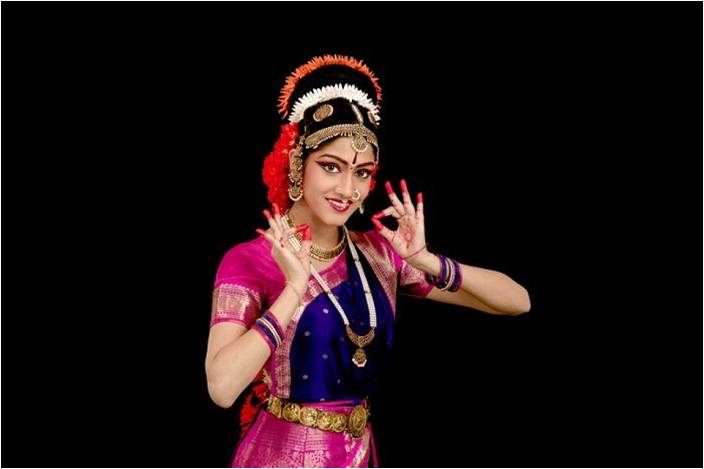
Kuchipudi today is known for its quick footwork, expressive eye movement, dramatic characterization, and spirited narrative. It is a representation of a fine combination of Nritta, Nritya, and Natya. The performer has to be skilled in speech, dance, and mime.

Earlier Kuchipudi was never a solo affair. Men and boys underwent rigorous training in abhinaya, music, and dancing. The sutradhar (director) played the key role and men played the roles of both the genders. Now it is fast becoming a solo affair enriched by the advent of female dancers.

dance 2With its lilting music and flowing music, Kuchipudi performances are a delight to watch. The beautiful costumes and light makeup of the artists contribute to their vibrant stage presence. While a male wears a dhoti, a female is adorned with a sari that is stitched with a pleated cloth that opens like a hand fan when the dancer stretches or bends her legs while portraying spectacular footwork. Traditional jewelry like a metallic waist belt is used along with ghungroos for producing rhythmic sounds. The eye expressions are given extra importance by outlining them with black kajal.


Indrani Bajpai and Yamini Krishnamurti kept Kuchipudi alive through public performances garnering not only new students but also making it known on the national and international stature. Names like Haleem Khan, Yamini Reddy, Atisha Pratap Singh, and Kalpalathika are trying to keep up with the tradition with their contributions.

Image COurtesy: GOOGLE

Should India be renamed, Bharat?

William Shakespeare had his most celebrated heroine Juliet say in his Romeo and Juliet play, What’s in a name”. “That which we call a rose. By any other name would smell as sweet.”

But most people wouldn’t agree with Shakespeare in their daily lives. For, a name is the most prominent identity of a person, a family, a caste, a religion or a country. Every name has a history. This was hotly debated in the constituent assembly when India got Independence from British rule. The British called India “India”. Before them, the Mughals, the biggest empire in India, called it Hindustan. After an intense debate, the Constitution accepted two names for the country, India and Bharat. Now, a petition had been filed in the Supreme Court seeking removal of ‘India’ as the name of the country and keeping just Bharat as the solitary identity of the nation.

In The Discovery of India, a book that Jawaharlal Nehru wrote during his years of captivity (1942-1946) and published in 1946 :

Often, as I walked from meeting to meeting, I spoke to my audiences of this India of ours, of Hindustan and of Bharata, the old Sanskrit name consequential from the mythical founders of the race.

When the book was published, these names, Hindustan, Bharat (also Bharata), India, coexisted in the subcontinent. Of the endless usage also was Hind, as in ‘Jai Hind’ (Victory to Hind), the battle-cry that Patel, Nehru other several other political leaders, liked to proclaim at the end of his speeches. To capture these innumerable meanings today is not an easy task. It demands to be conscious of the simple and yet too often forgotten fact that words have a past of their own; they do not maintain the same significance throughout time.

Naming the Nation and Constitutional debates

The constituent assembly debated Article 1 of the then draft constitution prepared under the chairmanship of BR Ambedkar. It was a heated debate that saw sharp exchanges among the members on November 18, 1949 – just eight days before the Constitution was adopted by “We, the people”. The debate opened with HV Kamath, a constituent assembly member from the Central Province and Berar. Kamath opposed the Ambedkar committee’s draft that had two names – India and Bharat.

Kamath projected amendments to Article 1 putting Bharat or alternatively Hind as the primary name for the country and voicing India only as the name in the English language. He listed names such as “Hindustan, Hind and Bharatbhumi or Bharatvarsh” to have been recommended by people.

When Kamath began explaining the origin of the name of Bharat, Bharatbhumi or Bharatvarsh dating it to ancient times. Kamath was strongly opposed to the language of Article 1(1) that says, “India that is Bharat”. Another prominent name to oppose the language was Seth Govind Das, who said, “India, that is, Bharat” are not beautiful words for the name of a country. We should have laid down the words “Bharat known as India also in foreign countries.” Das quoted the Vedas, the Mahabharat, some of the Puranas and the works of Chinese traveller Hiuen-Tsang to say that Bharat was the original name of the country, hence India should not be put as the principal name in the constitution post-independence. He also invoked Mahatma Gandhi saying that the country fought the battle of freedom raising the slogan of “Bharat Mata Ki Jai” asserting that Bharat could be the only plausible name for the country.

Among others who wanted India being named only as Bharat included KV Rao from Andhra Pradesh. Rao went to the extent of suggesting that on the basis of historical nomenclature, Pakistan could be named as Hindustan. Rao emphasized, “we can now call ‘Pakistan as Hindustan because the Indus river is there. Hind has replaced Sind : (Ha) in Prakrit is pronounced as (‘sa)’ in Sanskrit. Greeks pronounced Hind as Ind. Hereafter it is apt that we should refer to India as Bharat.”

At the end, when Rajendra Prasad put the amendments to vote, all fell. Article 1 remained intact as “India, that is Bharat”. However, the debate has continued.

Naming the nation: a sensitive and intricate issue to this day

In 2014, Yogi Adityanath – the current chief minister of Uttar Pradesh – had moved a Private Member’s Bill in the Lok Sabha, seeking substitution of word “India” in the Constitution with “Hindustan” proposing “Bharat” as the primary name of the country. His bill proposed to amend the language of Article 1 as, “Bharat, that is Hindustan, shall be a Union of States.

The Supreme Court wanted  the Centre and the states to comment on a plea demanding change in the name of the country from ‘India’ to ‘Bharat’, in April this year. A 2 judge bench of Chief Justice H L Dattu and Justice Arun Mishra had issued the notice to all state governments and union territories on the PIL which called for restricting the Centre from using the name of India in official papers and for any government purposes.

On June 1, 2020, Niranjan Bhatwal filed a petition, claiming to be a social activist from Maharashtra, said that even the NGO’s and corporates should be ordered to use ‘Bharat’ for all official and unofficial purposes. The PIL detailed that even in the Constituent Assembly, the leading suggestions for naming the country were “Hind, Hindustan, Bharat and Bharatbhumi or Bharatvarsh and names of that kind”.

Among the several questions raised in the PIL were whether the addition of India in Article 1 of the Constitution was just for reference, in order to repeal the Government of India Act 1935, and the Indian Independence Act 1947, where this country had been referred to as India and wanted it to be repealed by Article 395 of the Constitution. Further, it asked whether the addition of ‘India’ was simply referential for de-jure acknowledgement of the country by countries of other parts of the world for political purposes. The PIL also said whether Hindi language extracts of Article 1 Clause 1 of the Constitution signify the same meaning, as it signifies in the English language of the Constitution with respect to establishing the name of the country.

While the government has told the Supreme Court, there is no need to rename India as Bharat. Article 1 (1) of the Constitution lays down that “name and territory of the Union.—(1) India, that is Bharat, shall be a Union of States”. In its affidavit, the Ministry of Home Affairs has said issues concerning the country’s name have been reflected upon lengthily by the Constituent Assembly during the drafting of the Constitution and there was no requirement for a review.

The Supreme Court on 3rd June ordered that a plea to change India’s name specifically to ‘Bharat’ should be forwarded to the Centre for an appropriate decision.

“Bharat and India are both names given in the Constitution, says CJI.

The apex court had rejected a similar petition in 2016. Then CJI, T.S. Thakur emphasized that every Indian had the right to choose between calling his country ‘Bharat’ or ‘India’ and the Supreme Court had no business to either command or decide for a citizen what one should call his country.

Is there a solution?

The policymaking of naming is part of the societal production of the nation. Its processes are moulded by broad socio-political conditions and can be understood from several angles. The purpose has been to look at some of the inherited discourses on ‘Bhārata’ both prior to and at the time of its official equation with ‘India’ in the Constitution of 1950. In the 19th century, the name Bhārata was used to refer to the geographicalpolitical and administrative entity that the colonial power called ‘India’. That Bhārata—a cultural space whose unity was to be found in the social order of dharma—was a pre-national construction and not a national project.

 At the time of independence, India and Bhārata were equally worthy candidates to bless the newly-born nation, along with ‘Hindustan’. But the first article of the Constitution discarded Hindustan and listed the nation under a dual and bilingual identity: ‘India, that is Bharat’. One name was to be used as the translation of the other as exemplified on the cover of the national passport, where the English ‘Republic of India’ corresponds to the Hindi ‘Bhārata gaṇarājya’, or, possibly, even more, telling, on Indian postage stamps, where the two words Bhārata and India are located. It is possible that all these names will continue to be understood and interpreted with new circumstances, to give new connotations to India’s national identity, a constant, open-ended process.

What are we to make of the comparison of Bharat and India in the Constitution? How did such a double-name plan come about? This is the main question to be dealt with. In the end, we should realise that the Constituent assembly’s decision should be understood as the outcome of a long historical process with deep cultural roots.

Inspiring story of Google’s CEO: Sundar Pichai – Must read!!!

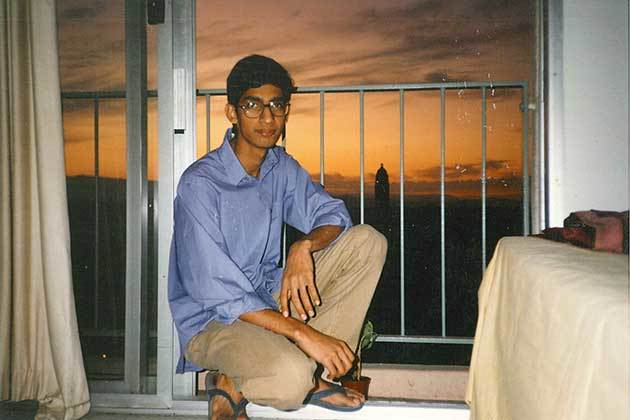
Growing up in India, like many of you, Sundar Pichai got my first telephone when he was 12. In case it turned out be a rotary phone, so it wasn’t that great for selfies. But he still loved to call my friends, play with it and sometimes take it apart. That telephone cemented my fascination with technology. Sundar Pichai remember in his parents’ house in Chennai, reading about the invention of the transistor at Bell labs. Of course, that initial invention helped found what became referred to as Silicon Valley and out of that came companies like fairchild semiconductor and Intel and every one the computers and software, that we all use today. You can draw an immediate line from that invention to the technology, that powers your Twitter feed or your WeChat messages today.

Google's Sundar Pichai travelled in buses, had no television while ...

Image source : GadegtsNow

When he was younger, people would say, this person didn’t get into this college or something and that is the end of the road. Sundar Pichai thought life is so different from that, and so he think it is important to you know, keep your hopes, keep your dreams and try to follow them and you recognize he think, most of how life plays out is up to you, not up to what happens outside of you. It’s important to keep that in mind and take the long-term view. As a teenager, jumping on to a crowded train. At Chennai and traveling for 24 hours, to attend my school at IIT Kharagpur and that opportunity changed the course of my life. You want to aim high enough that you fail, you know few times thought it is the natural part of the process. In fact, Larry accustomed say if you’re employed on really difficult things, you’re more happy because you’ve got no competition, others aren’t performing on that difficult a drag . And although you fail, you finish up doing something great within the process.

Sundar Pichai Biography - Childhood, Life Achievements & Timeline

Image source: Thefamousperson

You know, working the real world, it is important to be well rounded, it is important to try different things, or you know take some risks, he would encourage people to follow their passions a little bit more. To follow set lanes throughout your career. Getting into an elite institution doesn’t guarantee success, it matters plenty but it doesn’t guarantee success. It is important to stay that perspective in life and life may be a long road, and you know, you would like to require it at the proper pace and luxuriate in what you are doing. Sundar Pichai knew how much hard work it takes to pursue your dream of building a business. The long hours, time faraway from family, the ideas you recognize are brilliant, that just don’t seem to catch on. Reading that and thinking, it is the concept matters. It didn’t matter where you come from or what your background is.
One revolutionary idea, one brilliant invention can unleash other entrepreneurs to revolutionize, industries and ways you could never predict.

black samsung tablet display google browser on screen
Photo by PhotoMIX Company on Pexels.com

Word cup 1983

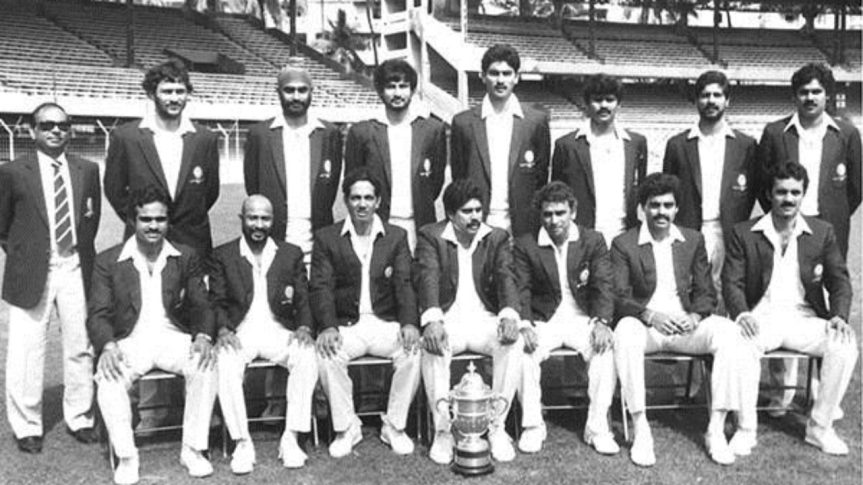
25th June 1983, was the first time that India won the cricket world cup. It was the first time that India had made an appearance in the finals, and they were up against West Indies  for whom this was their third consecutive world cup finals appearance. The world cup was hosted by the company Prudential that is why the world cup is also called Prudential world cup .The finals was played in Lord’s  cricket stadium also called  Lord’s in London which had had hosted world cup for the third time. India defeated West Indies by 43 runs. Kapil Dev lifting the Trophy from the balcony of the Lord’s cricket ground still remains the image of savor for the India fans. Even after 37 years people acknowledge this finals as the most memorable game played by the India cricket team.

India were the underdogs in the tournament, there was not much expectations from the team. However they defeated Zimbabwe in a crucial match, thanks to Kapi Dev who made 175 runs which lead the team to win the match. India was at 78 runs 5 wickets when Kapil dev came for batting his extraordinary innings took Indian team to victory. Unfortunately this historical match was not telecasted as British Broadcasting corporation  was on a strike  that day. In semi finals England was defeated by India by six wickets with thirty two balls remaining and Mohinder Amarnath becoming the player of the match. West indies defeated Australia in the semi finals by seven wickets with thirteen balls remaining and Vivin Richards became the man of the match.

West Indies and India made it to the finals, at that time West indies had really good bowling attack. So when they won the toss they chose to ball first and allowed India to Bat.  First came Sunil Gavaskar but his innings was short as he got out for just two runs but Krishnamachari Srikanth and Mohinder Amarnath had a good partnership and brought the runs to the fifty mark. Then soon Srikanth got out making  thirty eight runs, after that as the score was marching towards a hundred Mohinder Amarnath and Yashpal sharma lost their wickets after making twenty six runs and eleven runs respectively. Then came the captain Kapil Dev who stroke three boundaries in eight balls but got out in just 15 runs. Nor could the next players like Kirti Azad and Roger Binny could make runs, they did not even cross the double digit. Then Sandip Patil could only score 27 runs and The all rounder Madan lal came back to the pavilion after making 17 runs. India was all out in 54.4 overs making 183 runs.

Then came India’s turn to bowl, the first wicket was taken in just 11 balls by Balwinder singh sandhu that too of Gordon Greenidge who was really in a great form, he could only take 5 runs. West indies also had a great partnership of  Desmond Haynes and Vivin Richards which enabled west indies to cross the 50 mark, but  both of them were dismissed by  Madan Lal and Kapil Dev respectively. Soon West Indies was all out in 52 overs making 140 runs and India won by 43 runs and Mohinder Amarnath becoming the Man of the match. No Man of the series was awarded that year.

This victory not only made these players a hero but also changed the perception of games in India. This also lead to a high commercialization of cricket as a game, people started to think sports as a career and also many people really got engaged to the game. This win also brought a sense of ” we can do it” for the Indian team.


Media in India: Politics of regulation in a time of false News

The media plays a pertinent role by providing information which is indispensable for two reasons. Primarily, it ensures that citizens formulate proper and updated views by analysing the authentic and genuine facts as provided by media. Secondly, it provides information as a “checking function” by guaranteeing that the chosen government and its representatives act upon electoral promises.

Media thus plays a central role since it is the single means through which public opinion is engendered. The stability of a country is assessed by the way the media report the news of that country. Thus, it becomes the obligation of the media to circulate only applicable and valid facts locally and globally.

The role of media has been changing from what it was perceived. The neutrality of news in reporting is missing in the mainstream media today because of the hidden agendas that many press and media outlets hold.

 Media in India is mostly self-regulated.  The existing bodies for regulation of media such as the Press Council of India which is a statutory body and the News Broadcasting Standards Authority, a self-regulatory organization, issue standards which are more in the nature of guidelines.   Press Council of India established under the PCI Act of 1978 for the purpose of preserving the freedom of the press and of maintaining and improving the standards of newspapers and news agencies in India.

Even though the Constitution guarantees freedom of the press, the government does regulate some media. Print media are largely unregulated, and newspapers and magazines can print nearly anything as long as they don’t slander anyone. The Internet has also gone largely unregulated, despite congressional efforts to restrict some controversial content. Broadcast media, however, are subject to the most government regulation.

Decision-making power in the Indian media regulation is fairly centralized, with the central Government and ministries making the final calls when it comes to new policies and appointments. Politicians have a keen interest in news media regulation owing to the high degree of political ownership in the sector. Thus, political and electoral logic shapes media regulation.

Prime Minister Narendra Modi at the top of the decision-making list.  Modi follows a centralized decision-making model with significant power allotted to his Prime Minister’s Office (PMO), Modi has been a vocal advocate of the use of online media for political mobilization, participation and propaganda. Key influencers in the Indian regulation include Mukesh Ambani, chairman of the Reliance Group of Industries, Amit Shah, an MP and current president of Bharatiya Janata Party (BJP), Subhash Chandra, the chairman of Essel Group, Bennett Coleman & Co. Ltd (BCCL), which owns The Times of India.

WhatsApp has become the platform of choice for politicians because of its massive reach that goes beyond a party’s loyal voter base, but also because of the lack of gatekeepers. Messages forwarded through the system have no context about where they originate, but benefit from the trust of coming from a contact . . one of the BJP leaders denies the  spreading polarising content, but public  WhatsApp data collected by analysts and anecdotal evidence show that Indians are being flooded with propaganda memes, much of it anti-Muslim and critical of the opposition Congress party.

In April smriti Irani’s  ministry issued a circular saying that in order to fight the rise in fake news in print and electronic media, the government had decided that journalists who had complaints of creating/propagating fake news against them, would immediately have their press accreditation suspended.The following day, the Prime Minister’s Office asked her ministry to withdraw it.

Recently A picture of Vadra with the Chinese envoy. Both Republic TV and Times Now got excited enough over a picture of Robert Vadra to launch hashtags and primetime shows. Alt News had to give a video tutorial to Times Now and Republic TV to avoid such rookie mistakes. The picture was from a Chinese food festival that was also attended by India’s Railway Minister Suresh Prabhu, Sitaram Yechuri from CPIM, KC Tyagi from JDU and other leaders from BJP such as Tarun Vijay and Udit Raj. A quick google search could have avoided these channels the embarrassment though we suspect that they neither consider this as an embarrassment nor are they interested in the truth.

Similarly there was a statement attributed to Arundhati Roy – ‘’70 lakh Indian soldiers cannot defeat Azadi gang in Kashmir”  . A fake statement made in a non-existent interview during a trip that never took place was enough to launch prime time debates on Republic TV and CNN News 18 attacking Roy. The fake news had originated from some obscure Pakistani website called times of Islamabad

What followed was attack on Roy by BJP MP Paresh Rawal and prime time debates on the topic. Arnab Goswami called Roy a “one book whiner wonder” and continued to rant about his favorite topic of Lutyens media and pseudo liberals. An investigation by The Wire revealed the truth behind the fake outrage fueled by the news channels and this piece  by News laundry explored it further News laundry had republished an op-ed responding to Roy’s fake quote and it apologised for its editorial oversight and retracted the piece. There was no retraction or apology from Republic TV or CNN News 18 for attacking Roy based on fake news.

Indian media is grappling with many problems, but the country’s regulators fail to address them.

It took the Ministry of Information and Broadcasting (MIB), a key player in India’s media policy, two years and seven months to release public data that had been officially requested in 2015 by TheHoot.org, a website mapping media ownership in India. The ministry said that such data couldn’t be released as it was “third party information.” The ministry’s argument was just tosh as media companies have to reveal ownership data to qualify for a license to operate.

The episode epitomizes the excessively bureaucratic, politicized and clientelistic media regulation in India whose decisions have negative consequences for news media operations

Decision-making in matters related to the Indian media is riddled with political influence, regulatory parallelism and clashes over jurisdiction, involving not only decision-making authorities but also industry players,

“Ring of Fire”: Solar Eclipse 2020

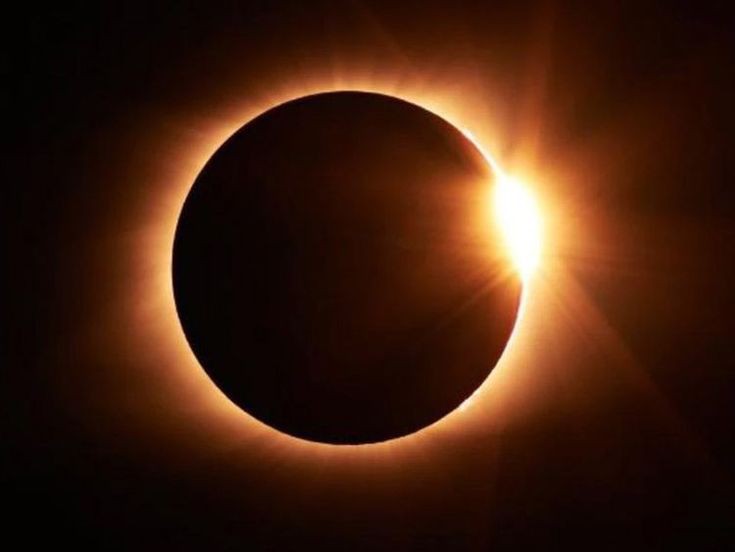
Solar Eclipse 2020: The moon covering the sun formed a celestial event “Ring of Fire” today, 21 June, being the longest day of year.

A solar eclipse occurs when the moon passes between the sun and the earth. When this happens, the moon blocks the light of the sun from reaching the earth. The shadow of the moon falls on the earth.‘The solar eclipse of 21 June, however, is an annular eclipse.This happens when the moon is farthest from the earth, according to NASA blog ’.

What is Ring of Fire?

When solar eclipse occurs, a bright light of Sun is observed around the moon at the height of annual solar eclipse that beautiful ring is called “Ring of Fire”. “ Annular solar eclipse is a particular case of the total solar eclipse. Like the total solar eclipse, the moon is aligned with the sun. However, on that day, the apparent size of the moon happens to be a wee smaller than the sun. Hence the moon covers the central part of the sun, and the rim of the sun appear like a ‘ring of fire’ in the sky for a very brief moment” Samir Dhurde of The Inter-University Centre for Astronomy and Astrophysics said.

“Ring of Fire”

Today, a beautiful celestial event, an annular solar eclipse, which is popularly known as the “ring of fire” eclipse, was visible on Sunday in parts of India.It has been spotted in Delhi, Haryana, Uttrakhand, Gujarat and Maharashtra. Social media and TV news channels were flooded with pictures of beautiful ring by sunlight. This was the first solar eclipse of 2020 which coincided with the Summer Solstice, being the longest day. The eclipse started around 10:30 am and ended at 3:05 pm. .

‘Ring of Fire’ observed at Dehradun (Uttrakhand)
‘Ring of Fire’ at Kurukshetra (Haryana)

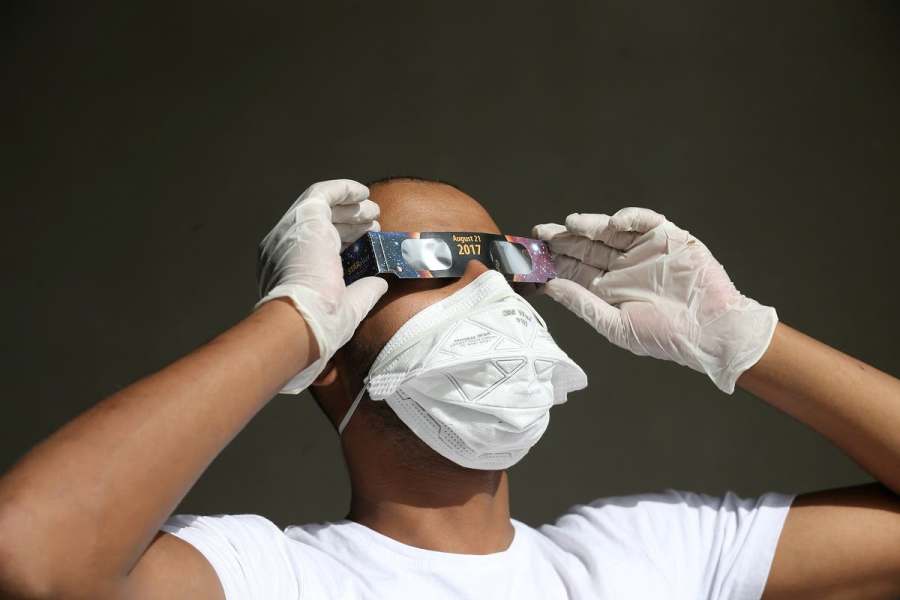
Due to covid-19 pandemic, a large number of people could not able to observe this event at planetariums as large gatherings are banned.

People looking for Solar Eclipse with masks on face, due to covid-19

Observing Solar eclipse event, one must have proper eye protection because looking directly at the Sun can cause permanent damage to the eye’s retina. However many people could not step out and watch the eclipse, many watched it online on their YouTube using NASA tracker. The eclipse was also visible in other countries such as Congo, Sudan, Ethiopia, Yemen, Saudi Arabia, Oman.

Galwan and it’s past

It is a devastating year where we have lost all our hopes of living a normal life.Things are turning into a nightmare where we cannot breath normally, we cannot step out of our house without covering our face, where we cannot talk or meet our friends like the way we used to do before. What has happened? Our life has changed upside down, we are living our in the boundaries of problems covered with dirt, virus, pollution. Now our world has completely turned itself into a virtual world consisting of dark and disturbing news. One such news which we came across recently was about the 20 soldiers who were martyred at the Galwan Valley(Ladakh), and we all know what happened, what made the soldiers to fight against the Chinese and why did they sacrificed their lives, but are you aware about the facts of the Galwan Valley, why did it become the battle ground of the Indian Army and Chinese Troops?

Why was it named as Galwan?

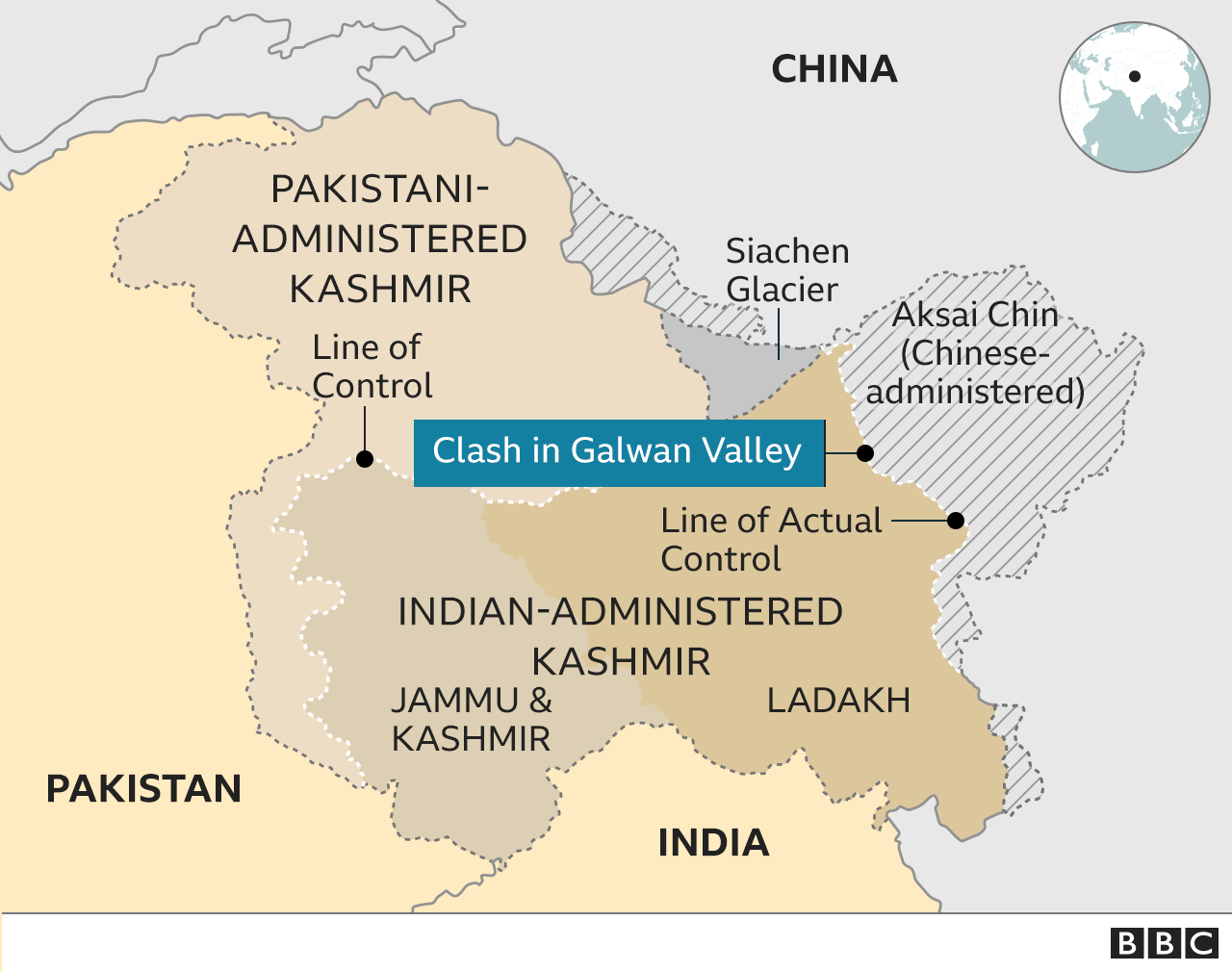
Galwan valley lies along the western sector of the Line of Actual Control (LAC), and close to Aksai Chin, am Indian territory under Beijing’s control.

Galwan Valley: Ten Indian soldiers reportedly released by China ...
BBC.com

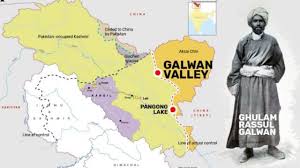
The valley has a hidden story behind it’s name. Digging deep into the story, you will find out that this valley belonged to Rasuul Galwan, who was a local explorer. The story starts where the Galwan was trekking with the Britishers in 1895, and while crossing the bridge the weather turned stormy and it got difficult for them to move forward but Rasuul came as a savior and saved the Britishers from the stormy weather. Britishers wanted to reward him, in return Rasuul asked them to name the valley after his name, Galwan.

kashmirobserver.net
Backstory of Ladakh's Galwan Valley and the legend of Rassul ...
Kasmirobserver.net

All of this is said to be written in the book “Servant Of Sahibs” written by Ghulam Rasuul Galwan itself, journeying his adventures in his book. The foreword of the book is written by British explorer and a leading figure in The Great Game between the British and Russia. Asking further about the story of Galwan, Mohammad Amin Galwan (Galwan’s grandson) says that the valley belongs to them since 200 years, but it has turned into a battleground for the Indian Army. He also adds that the Indian government should resolve their issues peacefully so that no war takes place.

Check the the video below for more facts about the valley.

SOLAR ECLIPSE, 21st June 2020

The Earth will witness an annular solar eclipse on Sunday, 21 June and the people in India will be able to catch this annual celestial event in action. It is not a regular one as it falls on the summer solstice, i.e. the longest day and the shortest night of the year.

What is solar eclipse?

A solar eclipse occurs when the moon passes between the sun and the earth. When this happens, the moon blocks the light of the sun from reaching the earth. The shadow of the moon is then cast on the earth.

There are three types of solar eclipses:

First, there is a total solar eclipse — which is only visible from a small area on earth. For the phenomenon to occur, the sun, moon and earth must be in a direct line.

Second is the partial solar eclipse when the sun, moon and earth are not exactly lined up.

The solar eclipse of 21 June, however, is an annular eclipse and is the third type. This happens when the moon is farthest from the earth, according to NASA blog. Since the moon is farther away from the earth, it seems smaller and does not block the entire view of the sun. The moon is in front of the sun and looks like a dark disk on top of an even larger disk which appears like a ring of fire.

The eclipse will be annular in some parts of the country, where sky gazers will get an opportunity to observe the “ring of fire” during the phenomenon. However, for most parts of the country, the eclipse will be partial.

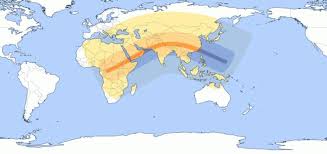
On June 21, the annular eclipse will first start for the people of Congo in Africa and progress through South Sudan, Ethiopia, Yemen, Oman, Saudi Arabia, the Indian Ocean and Pakistan, before entering India over Rajasthan. It will then move on to Tibet, China, Taiwan, before ending at the middle of the Pacific Ocean.

This will be the last eclipse to be seen from India for the next 28 months as the next eclipse will be seen in India on October 25, 2022.

In India, the solar eclipse of June 21 with begin at 9:15 am and will end at 3:03 pm. The sun will be seen as a ‘Ring Of Fire’ to the skygazers which is a rare event. The partial eclipse will begin at 9:15 am and it will reach its peak at 12:10 pm. The full eclipse will end at 2:02 pm and the phenomenon will end at 3:04 pm.

Some interesting facts

  1. In a year, there can be as many as five solar eclipses.
  2. A total solar eclipse is a rare sight and happens only once in every 18 months. For a total solar eclipse, the sun has to be blocked at least 90 percent by the moon.
  3. The longest duration of a total solar eclipse is 7.5 minutes
  4. The total solar eclipse cannot be seen from the North and South Poles

Russia assures support to India amid violent face-off with China at Galwan Valley

India and Russia enjoy close ties and have frequently engaged at the highest level, both Indian Prime Minister Narendra Modi and Russian President Vladimir Putin have spoken to each other several times this year including on COVID crisis.Later next week, the \foreign ministers of the three countries are scheduled for the RIC (Russia, India, China) meet. The Russian envoy called the existence of the grouping an “undisputable reality” which is “firmly fixed on the world map”. 

Commenting on the current stage of the trilateral cooperation amid the border skirmish, he said, “There are no indications that it might be frozen”Also, Russia is set to host SCO and BRICS summits later this year. 

Meanwhile, Pakistani Foreign Minister SM Qureshi also spoke to his Russian counterpart and the Russian foreign ministry readout of the talks reveals that Russia does not support Pakistab’s priorities as had been claimed by Islamabad.

One more attack = Indo-China WAR!!!

The relation between Indian and Chinese army are now being worse. India holds a record of never attacking any of the army first till date. Many near by countries think that India is weak and cannot attack first, but this is our spirituality and religion to avoid any fight, but when the things get worse there need to be done something. India never approach any army for fight it always keep the things calm and to solve the problem with words and not the wars. India always gave a extraordinary action in case of any mischief done by the opponents, India carried out many operations like:

  • Operation Vijay
  • Operation Meghdut
  • Operation Surya Hope
  • Operation Brasstackes
  • Operation Cactus and many more to list…

India also gave a very strong answer of the Pulwama attack. India has the strongest army and technology support from Russia and US.

police army commando special task force
Photo by Somchai Kongkamsri on Pexels.com

Recantly, India was betrayed by dragons during a normal peace talk Chinese army betrayed Indian army by sudden attack on our prestigious soldiers. In this betrayal our 20 soldiers lost theirs lives for India:


  1.  Col B Santosh Babu
  2.  Nb Sub Nuduram Soren
  3.  Nb Sub Mandeep Singjh
  4.  Nb Sub Satnam Singh
  5.  Hav K Palani
  6.  Hav Sunil Kuma
  7.  Hav Bipul Roy
  8.  Nk Deepak Kumar
  9.  Sep Rajesh Orang
  10.  Sep Kundan Kumar Ojha
  11.  Sep Ganesh Ram
  12.  Sep Chandrakanta Pradhan
  13.  Sep Ankush
  14.  Sep Gurbinder
  15.  Sep Gurtej Singh
  16.  Sep Chandan Kumar
  17.  Sep Kundan Kumar
  18.  Sep Aman Kumar
  19.  Sep Jai Kishore Singh
  20.  Sep Ganesh Hansda

_112919157_kashmir_military_clash_x2_640-nc

Image source: BBCnews

In return Indian army gave an dangerous answer with their 35 troops by killing. PM Modi gave freedom, if in near future again this type of activities are done by Dragons than Indian army can do anything without any upper orders. Indian army are ready with thier backpacks and loaded arms and waiting for activities by dragons and it will be close to WAR.

download (1)

Image source: Navbharatimes.com