
NEW EDUCATION POLICY TO BRING EVOLUTION IN THE EDUCATION SYSTEM.

NEW EDUCATION POLICY:
° Students are currently undergoing school exams conducted by responsible authorities in grades 3, 5, and 8.
° 10th and 12th grade board exams will continue, but will be redesigned for overall development.
° Mathematical reasoning and scientific temperament coding begins in 6th grade .Vocational training begins at school in sixth grade and includes internships.
° The 10 + 2 structure is replaced by 5 + 3 + 3 + 4. The new system consists of grades 12 and 3 years preschool / Anganwadi.
° Until 5th grade, this policy emphasizes the local / regional / native language as the teaching language.
° In schools and universities, Sanskrit is also included as a student option at all levels and consists of three language formulas.
° Under Graduate is now 3 or 4 years, with multiple degree options eligible for this period, such as a 1 year certificate, 2 years diploma, 3 years degree, 4 years bachelor’s degree in research, etc.
° An Academic Credit Bank (ABC) is created to store, transfer, and award bachelor’s degrees from digital learning achievements earned by students from various universities.
° The curriculum has been reduced to essentials for all subjects. They focus on critical thinking, discovery, inquiry, debate, and education based on analytical and holistic learning methods for education.
° Focus on e-learning so you can reduce your reliance on textbooks
Under the new policy, education will receive 6% of GDP, up from 1.7%. This definitely boosts the education system.
° By the end of 2040, all universities should be interdisciplinary institutions with more than 3000 students each. University affiliation will be phased out over the next 15 years.

Foucus on Regional /Mother Tongue Language:
As you know, young children learn new things as soon as they teach in their own language, not in another language they are unfamiliar with. This policy is aware of it, so children will be taught in their native language until the age of 5, but it can change to 8th grade .

NEW CURRICULUM STRUCTURE:
•) Rebuild the school curriculum and teaching methods into new 5 = 3 + 3 + 4 patterns.
•) The new curriculum structure is designed to attract the attention of learners at various developmental stages, such as 3-8 years old, 8-11 years old, 11-14 years old, 14-18 years old.
•) Elementary level lasts 5 years:
3 years before school, 1st and 2nd grade.
The preparatory stage lasts for 3 years: 3rd, 4th and 5th grade.
Middle school or high school lasts 3 years: 6th, 7th and 8th grade.
High school or junior high school lasts four years: 9th, 10th, 11th, 12th grade.
All of the above levels include Indian and regional traditions, ethical thinking, socio-emotional learning, quantitative and logical thinking, digital literacy, computational thinking, scientific manipulation, language and communication skills.

“Learning starts with failure; the first failure is the beginning of education.”

– John Hersey
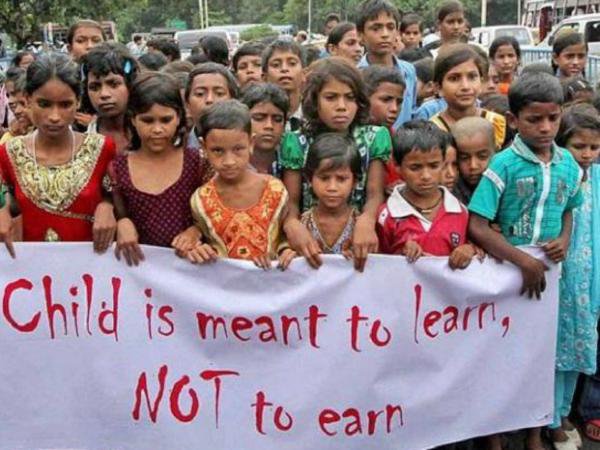
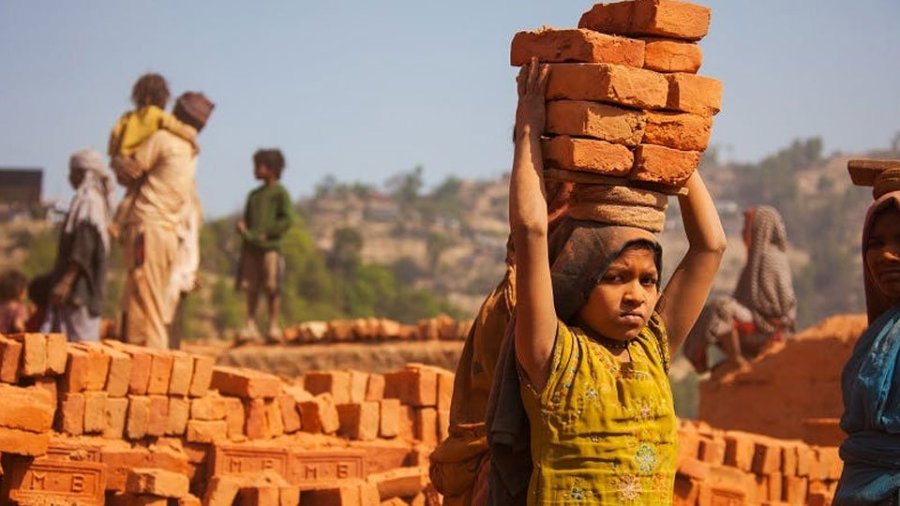
Child Labour in India.

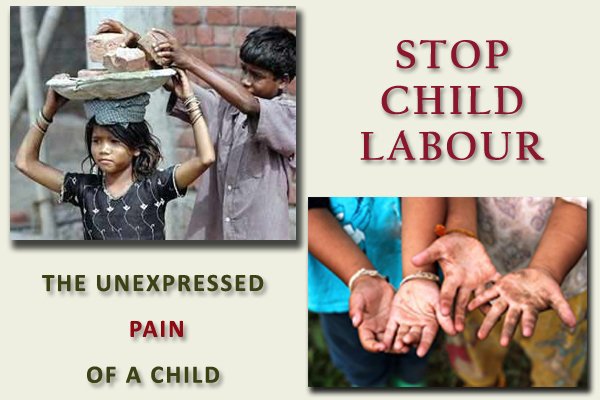
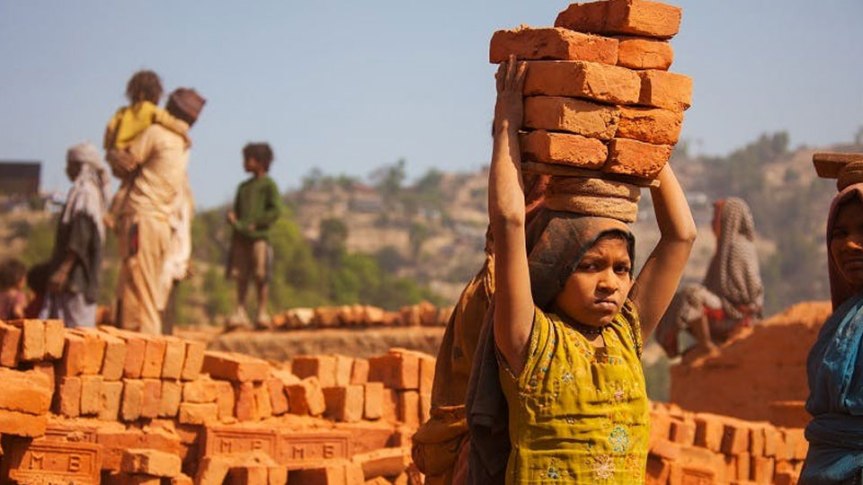
Child labor is the deprivation of children’s childhood, affecting their ability to attend regular school and exploiting them through all forms of work that are mentally, physically, socially and morally harmful.

After gaining independence from colonial rule, India enacted many constitutional protections and child labor laws. The Constitution of India in the principles of basic rights and public policy prohibits child labor under the age of 14 in factories, mines, castles or other dangerous occupations (Article 24). The Constitution also stipulated that by 1960 India would provide all children aged 6 to 14 with the infrastructure and resources for compulsory free of charge education . (Articles 21-A and 45).
In 2011, the Indian Census found that of the 259.64 million children in this age group, the total number of child laborers [ages 5-14] was 10.1 million. The problem of child labor is not unique to India. Approximately 217 million children work worldwide, many of whom work full-time.

In India child labour is defined as the involvement of children under the age of 17 in economically productive activities, with or without compensation and wages . Such participation can be physical, mental, or both. This work includes part-time or unpaid work on farms, family businesses, or other economic activities such as cultivation or milk production for sale or personal consumption. The Government of India divides child labor into two groups. The main workers are those who work more than 6 months a year. And marginal child laborers are workers who work all year round, but less than six months a year. In 1979, the Government of India established the Gurupadswamy Commission to learn about child labor and how to fight it. The Child Labor Probation and Regulation Act was enacted in 1986 on the recommendation of the Commission. A national child labor policy was developed in 1987 focusing on the rehabilitation of children working in dangerous professions. Since 1988, the Ministry of Labor and Employment has established approximately 100 industry-specific national child labor projects to rehabilitate child laborers.

The Government of India has enacted numerous laws, organizations and institutions to combat the issue of child labor. Some initiatives include child labor bans and regulations, laws prohibiting the employment of children in certain occupation and regulating the working conditions of children. The National Child Labor Policy attempts to take a sequential approach with a primary focus on the rehabilitation of children working in dangerous professions and processes of works. The Ministry of Labor and Employment is responsible for providing and supervising a range of child labor policies in India. In addition, as Osment reported, NGOs such as Care India, Child Rights and You, and Global March Against Child Labor were implemented to tackle child labor through access to education and resources. However, these efforts were of little success.

Non-governmental organisations:
Bachpan Bachao Andolan, Child Rights and You, ChildFund, CARE India, GoodWeave India,Talaash Association, Global March for Child Labor, and many other NGOs are campaigning to eliminate child labor in India. increase.

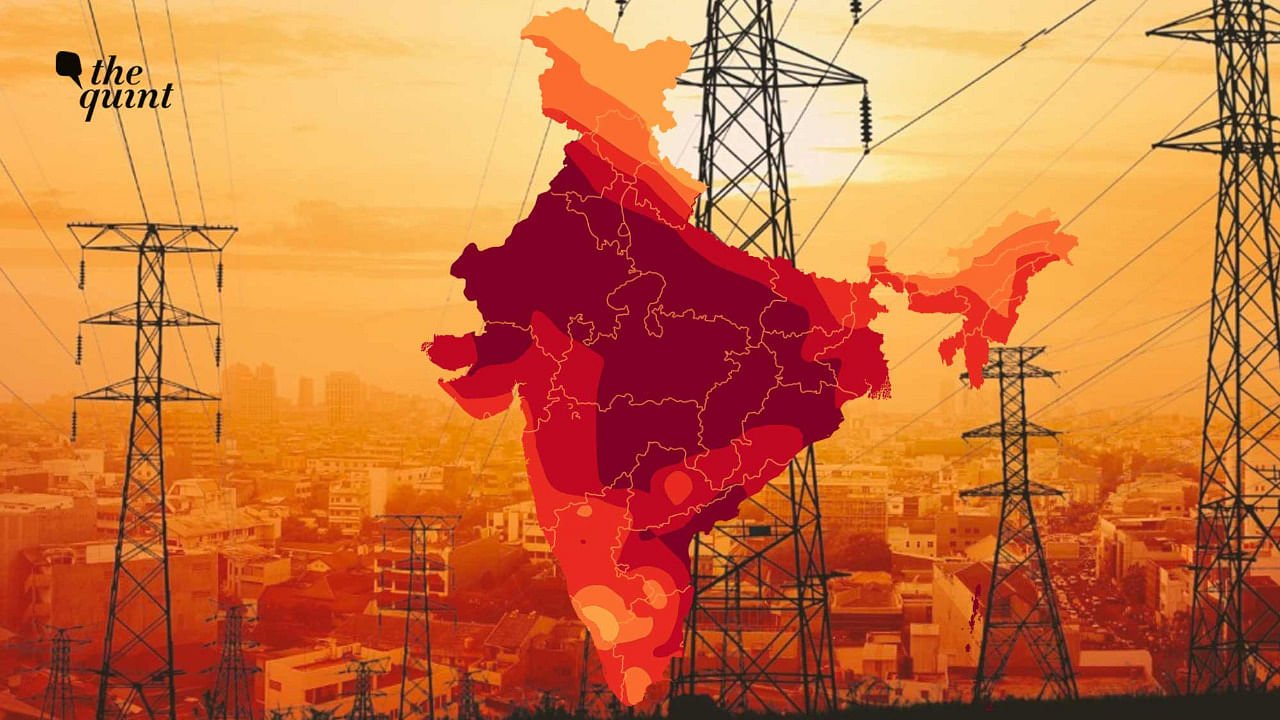
Shortage in Indias Power Supply.

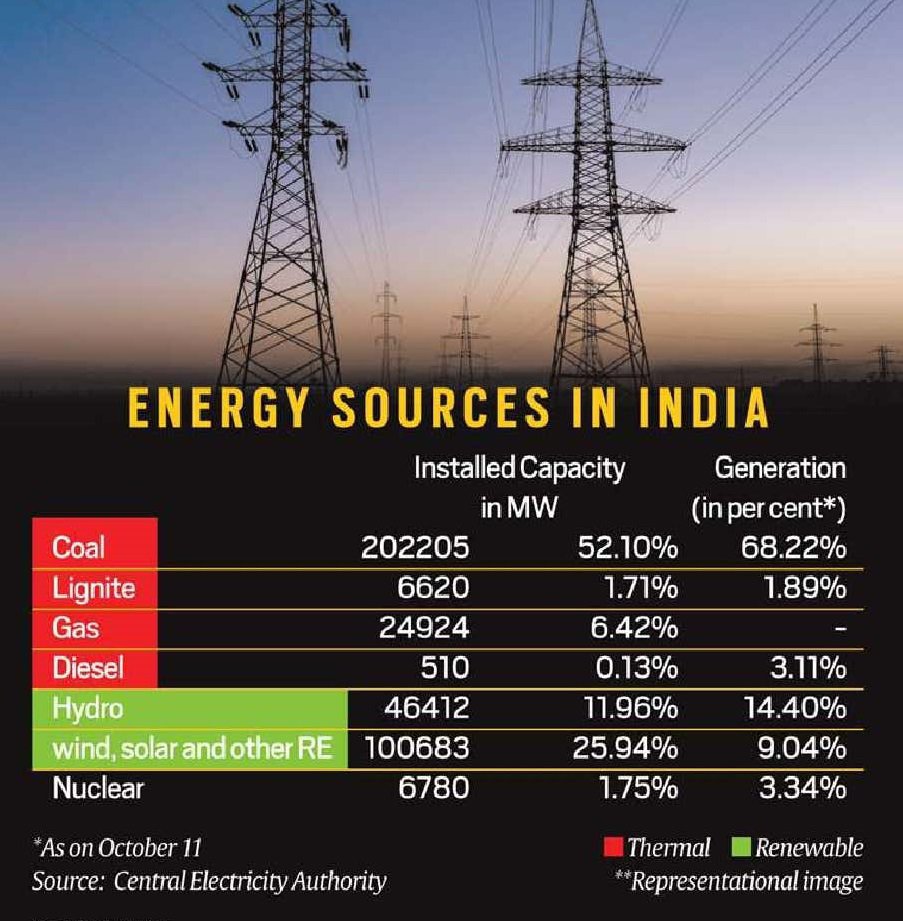
India has the fourth largest coal deposit in the world. It is the second largest fossil fuel producer after China and is home to Coal India, the world’s largest coal mining mine, which accounts for 80% of domestic production. Already allocated coal block mining capacity exceeds expected demand in 2030 by approximately 15% to 20%.


So why are India’s power plants facing coal shortages each year, leading to widespread power outages, exposing parts of the country to darkness and endangering industry?
There are several factors. India has a long time policy of minimizing coal imports. In February 2020, Coal Minister Pralhad Joshi announced that the country would stop importing steam coal from 2023 to 2024.
Mr Joshi said the Ministry of Coal will work with the Ministry of Railways and the Ministry of Shipping to allow Coal India, prisoners and commercial miners to discharge more coal from their supply by 2030. And the coal supply at power plants is running out at an alarming rate. The Department of Energy is currently blaming the decline in coal imports due to the current crisis. In 2018-19, 21.4 million tonnes of coal were imported for mixing, down to 23.8 million tonnes in 2019-20 and 8.3 million tonnes in 2021-22.


Power plant coal inventories have fallen by about 13% since April, reaching pre-summer lows. And for the first time since 2015, Coal India will import fuels used by state-owned and private power companies. The Ministry of Energy said almost all states showed that multiple state bids for coal imports would cause confusion and that the decision was made after calling for centralized procurement by Coal India.
Imported coal costs five times as much as domestic mining, so the center is being pushed back by the state.
Recently, the government has also pressured utilities to increase imports to mix with local coal. Last year, after a two-year break, three tranches of coal auctions were held and nine blocks were successfully awarded.

In September 2021, the Ministry of Coal issued a strict warning to owners of confined coal blocks, stating that their mines should increase production or face restrictions on coal supply by the CIL.
The ministry has discovered that these mines are producing below target.

Of the 43 coal mines outsourced to private companies in the energy, steel and metals sectors, none have met their annual production targets.
On May 6, Coal India announced that it would provide the private sector with 20 closed and abandoned underground coal mines and reopen and operate its revenue sharing model.

According to journalist Shreya Jai the current power supply chain does not seem ready to handle periods of high growth and state discos cannot pay gencos, but the power supply chain starts with state discos and needs repairs. Railroads, on the other hand, are struggling to align the thermal power industry’s demands for faster coal supply with those from other industries. Rakes must be prepared to meet the growing demand for almost all other bulk commodities, from cement and steel to sand and edible grains. By strengthening the value chain of the electric power sector, it is possible to resolve the coal supply-demand mismatch in the long run.

History of Television in India.

Television was founded by John Baird. The first television service was started in 1936 by British Broadcasting Corporation (BBC) of Britain . In 1939, television broadcasts began in the United States. In 1953 the first successful programme in colour was transmitted by Columbia Broadcasting System (CBS) in USA. In today՚s world, television has become one of the most powerful means of mass communication . It can impart education, information and entertainment . Television has end up becoming an necessary a part of our lives.


HISTORY
India’s first television station was established on October 24, 1951, in the Department of Electronics and telecommunications at Government Engineering College in Jabalpur. Television began in India as an experiment on September 15, 1959. It was first started as two hours programmes a week under the authority of AIR. Early programs of these experimental broadcasts were generally educational programs for children and farmers. By 1975, only seven Indian cities were using television services. The Satellite Instructional Television Experiment (SITE) was an important step by India for the use of television for the development of people and the country. Initially, the show was mainly produced by Doordarshan (DD), who was part of AIR at the time. Transmissions were made twice a day, morning and evening. In addition to information on agriculture, health and family planning, other important topics covered in these programs were audience education and awareness raising. Entertainment was also included in the form of dance, music and cinema. In 1976 Television services were separated from radio . Color television was introduced to the Indian market in 1982.

In the late 1980s, more and more people began to own televisions. There was only one channel, but the TV show was saturated. Therefore, the government opened another channel, partly broadcasting nationally and locally. This channel was called DD2 and was later renamed to DD Metro. Both channels were broadcast on the ground. In 1997, Prasar Bharati, was established.Doordarshan, along with AIR, was incorporated into a state-owned enterprise under Prasar Bharati. Transponders of the American satellites PAS-1 and PAS-4 assisted in the transmission and broadcasting of shows on DD. An international channel called DD International was launched in 1995 and broadcasts programs abroad 19 hours a day to Europe, Asia and Africa via PAS-4 and to North America via PAS-1.The 1980s were the prime time for DD, with shows like comedies such as Hum Log (1984-1985), Wagle Ki Duniya (1988), Buniyaad (1986-1987). Epics like Ramayan (1987–1988) and Mahabharat (1989–1990) brought millions to Doordarshan and later on Chandrakanta (1994–1996). Song-based programs for Hindi movies such as Chitrahaar and Rangoli, and crime thrillers such as Karamchand and Byomkesh Bakshi. Children’s shows such as Tenali Rama ,Vikram Betal and Malgudi Days .


Private Channels influence:
The introduction of communication channels was a revolutionary move to reach so many people. It became an opening for Private and Commercial broadcasters in our country. The emergence of private channels began in India in the 1990s after CNN aired the Gulf War. Hong Kong-based STAR (Satellite Telivision Asia Region ) enterned in a contract between an Indian company and Zee TV. It became the first Private Indian Hindi satellite channel. During this time, several local stations have emerged. Apart from local ones various international channels such as Channel, CNN, BBC, Discovery, etc were also available for Indian TV viewers. Their were various categories of channels available for viewers,such as the 24-hour news channel, Religious channels, cartoon channels, movie channels, something for everyone .


Changes and Evolution:
A significant change that has occurred is the use of different methods of delivering television programming. Just a while ago their were satellite-based antennas, but now the mode has converted to dishes. Other shipping methods are are delivery via cable network and direct satellite transmission. Now you can watch TV shows on your mobile phone , the technology behind it is called Internet Protocol Television. The emergence and spread of televisions and computers and the access to content anytime, anywhere, everyone has brought revolutionary change and access to the world of entertainment.

“I always say film is art, theater is life and television is furniture .”

Kenny Leon

Indian Economy after independence

Source: jagranjosh

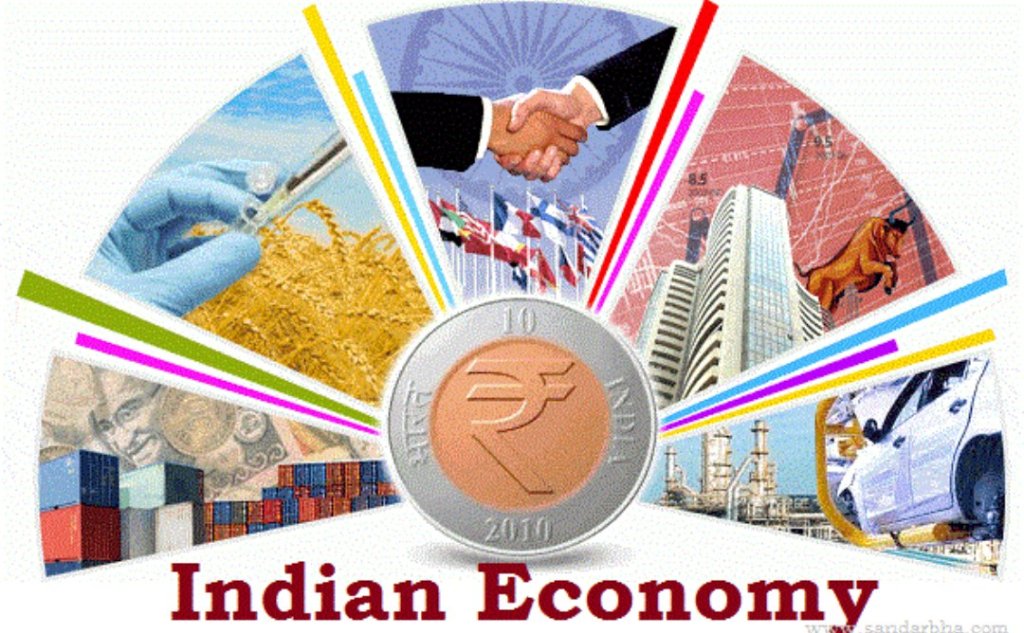
Indian economy at the time of Independence was in crucial state. This situation occurred due to the British Colonialism. After independence the Government changed plan for economic growth. The area of attention was shifted from agriculture to industry.

The growth of public enterprise generate employment and reduce poverty. In 1991, a revolution came into place in terms of liberalization, privatization and globalization that shaped the face of Indian economy. The Indian have the lowest per capital income and also the lowest consumption in the world.

The low income level consequent into low saving and thus small or no investment which end with low capital formation. Therefore, the dangerous cycle of poverty running in the country. The First Five Year Plan stated that the Indian economy remained more or less stagnant during colonial regime, because the basic conditions of economy was continuously remain the same.

The impact of modern industrialism in the later half of the 19th century was emerged through import of machine made goods from abroad that impact adversely on the traditional pattern of economic life, however unable to create the spark for Development. The conditioning of state led to decline of productivity especially those engaged in agriculture, the adverse effects. The consequence was a continuously increasing of employment. Hence, there could be no economic progress.

At the time of Independence 80% of population living in rural areas were engaged in agriculture for subsistence purposes; using traditional low productive technique for agriculture. The underdevelopment of Indian economy is reflected in it’s unbalanced occupational structure. Illiteracy was 84% , Communicable disease were widespread due to the absence of a good public health services, mortality rate was very high.

Agricultural activity contributed nearly 50% to Indian’s National Income. Mines, factories and small craftsmen work contributed only one – sixth, even lower than the numbers for trade, transport and communication. After independence, the government concern in the sphere of economic policy was to control persistent and severe inflationary pressure and to alleviate shortage of essential food items, which was increased by the partition of the country.

The industrial Policy Resolution of 1948 stamped as fundamental departure from earlier policy of laissez faire. Finally, the concept of planning Development programme under the auspices of the central government, was accepted and the planning commission was set up in March 1950 to make an assessment of the material capital and human resources of the country and to formulate a plan for the most effective and balanced utilisation of the countries resources.

India embarked upon the programme of planned economic development of the country with the formulation of first year plan that covered the period of 1951 – 1956. The second plan that followed was form 1956 – 1961 and third plan from 1961 to 1966. The other plans followed there after. The Eleventh Five Year Plan has been launched from 2007 – 2012; Twelfth Five year Plan was started from 2013 – 2014.


Source: Deccanherald

The first five year plan provided an inclusive general analysis the nature of the country’s Developmental problem and various options for mobilising resources and achieving Development with more equal distribution. There was special emphasis on the role of mass mobilization of idle rural labour and land reform. The plan optimistically project that saving and investment as a proportion of National Income would rise from an estimated 5 – 6% in the early 1950 to 20% by 1968 – 69.

S Chakravarti  had mentioned some shortcomings of Indian economy. Such as

• The basis cause of development was seen as being an acute deficiency of material capital, which prevented the introduction of more productive technologies.

• The limitation on the speed of capital accumulation was seen to lie in the low capacity to save.

• It was assumed that domestic capacity to save and raised by means of suitable fiscal and monetary policies. There were structural limitations preventing conversion of saving into productive investment.

• The inequality in income distribution was considered to a bad thing, a precipitate transformation of the ownership of productive assets was held to be detrimental to the maximization of production and savings.

• Agriculture was subject to secular diminishing returns, industrialization would allow surplus labour currently under employed in agriculture to be more productively employed in industry.


Neutrogena Deep Clean face wash

Neutrogena Deep Clean Facial Cleanser For Normal To Oily Skin, 200ml https://www.amazon.in/dp/B006LXDQRY/ref=cm_sw_r_apan_glt_fabc_dl_0F1YKXWWE1NGE0KQYS20

 Neutrogena is notable for making face fens for fulsome, acne-prone skin. This is your most solid option in the event that you have fulsome, and acne-prone skin. Delicate on your skin yet extreme on skin inflammation, the specific canvas-free equation tenderly purifies your skin from deep out. This face fen for fulsome skin contains Salicylic acid which is known to dispose of skin break out and reduces coming bunks.

READING IN THREE KEYS: How to Write a READING RESPONSE

Active reading involves looking at the text in more than one way.  For your reading responses write using these three “keys,” or methods, of analyzing what you have read: 

Reading responses in this class generally vary from 250 – 400 words. The length required will be specified on the assignment.


 Sometimes you will be asked to post your reading response to the Discussion Board and then follow-up with a response to one of your classmate’s postings. You may respond in any of the three “keys.”  A sample response building on a previous posting might start off with a sentence like this: “I agree with David that advertising objectifies women by portraying them as dehumanized objects, but I wonder whether women benefit from that objectification in any way?”  You can build your ideas on comments others have made.  And feel free to keep chatting with each other.

Top Five Valuable Companies In India

1) LIC

LIC stands for life Insurance Corporation of India. It was established on 1 September 1956 by the government of India. The Indian government had passed the life Insurance Act and merged 245 insurance companies. You have questions, How the LIC is earning money? LIC buys money in the way of policies from the public and they invest it among the NIFTY campanies. LIC Managing Director says India’s largest life Insurance had made profit of over Rs 15000 crores on equity investment.https://m.economictimes.com/markets/stocks/news/this-institutional-player-is-making-money-with-both-hands-in-equity/articleshow/78869219.cms?utm_source=whatsapp_pwa&utm_medium=social&utm_campaign=socialsharebuttons The head of the LIC is owned by Ministry of Finance, Government of India. LIC holds the biggest company by market capitalisation with an estimate valuation of Rs 8-10 lakh crore.https://economictimes.indiatimes.com/markets/ipos/fpos/government-proposes-to-hike-lic-authorised-capital-to-rs-25000-crore/articleshow/81375724.cms

2) HDFC BANK

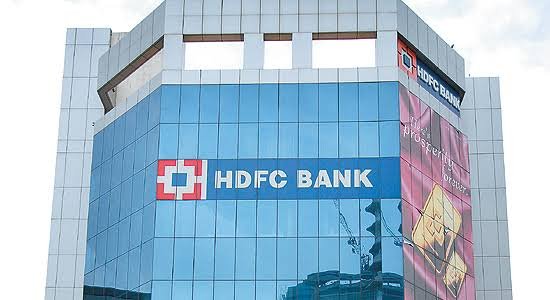
HDFC stands for Housing Development Finance Corporation Ltd. It is an financial services company and banking. This is the India’s largest private sector bank by assets. It was founded in August 1994.https://en.m.wikipedia.org/wiki/HDFC_Bank The Headquarters of HDFC in Mumbai, Maharashtra, India. Incorporated in 1994, HDFC Bank was the first bank in India approved by the RBI to offer financial services in the private sector. The revenue of HDFC is $22 billion in 2021. It has 120000 employees all over the India. The total valuation of HDFC is $22.70 billion.https://www.hdfc.com/

3) RELIANCE INDUSTRIES

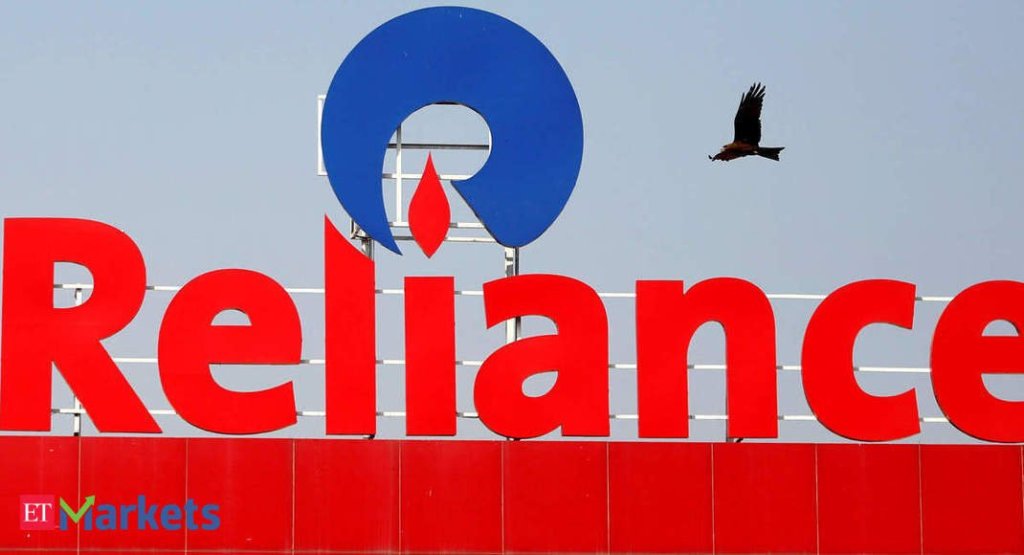
Reliance is a multi-industry company. It has operating many business entities. It was founded by Dhirubhai Ambani on 8 May 1973. It have headquarters in Mumbai, Maharashtra, India. Reliance has business in petroleum, natural gas, petrochemical, textile, retail, telecommunications, media, television, entertainment, music, financial services, software. Now, the owner of Reliance is Mukesh Ambani. https://en.m.wikipedia.org/wiki/Mukesh_Ambani He holds (50.54%) of Reliance. The revenue of Reliance is 4.83 lakh crores INR in 2021. The total assets of Reliance is $190 billion. https://en.m.wikipedia.org/wiki/Reliance_Industries

4) TATA GROUP

Tata Group is a conglomerate company. It was founded in 1868 by Jamshedji Tata. Tata group is the one of the biggest and oldest industrial group in India. It has headquarters in Mumbai, Maharashtra, India. Tata has business in automotive, airlines, chemical, defence, FMCG, electric utility, finance, football club, home appliances, hospitality, IT services, retail , e-commerce, real estate, salt, steel, software, cement, telecom. The revenue of Tata group is $123 billion in 2020. It’s net worth is 9.3 trillion INR.https://en.m.wikipedia.org/wiki/Tata_Motors

5) HINDUSTAN UNILEVER LIMITED

Hindustan Unilever Ltd is an consumer goods of India. It was established in 1931. It has headquarters in Mumbai, Maharashtra, India. This have business like foods, cleaning, agents, person care, skincare and water purifier. The company as 18000 employees and had rs 34619 crores revenue in FY2017-18. The net income of Hindustan is rs 6764 crores in 2020.https://www.hul.co.in/ Hindustan Unilever has a market cap of ₹545,762.50 crores and is ranked among the top 10 Indian companies in terms of market capitalisation. A leader in India’s fast-moving consumer goods firm, the company has a rich history of over 80 years. The company website says on any given day, nine out of ten Indian houses use the company’s products. https://m.economictimes.com/hindustan-unilever-ltd/stocks/companyid-13616.cms

Why Dollar is Higher Than Rupee ?

Indian National Rupee and US Dollar are the legal tenders in India and the US respectively. Both USD and INR are accepted in the US and India respectively because they meet following conditions which are necessary for anything to be called as money –

1.    General Acceptability
2.    Unit of account
3.    Store of storage
4.    Medium of Exchange

For general acceptability means that no one should refuse from accepting it; unit of account means that is can be used to represent the real value of an economic item; for store of value, it means that if it is stored, it value must not perish; and for medium of exchange, it means that it can be used as a medium for exchange of goods and services. 

As the aforesaid conditions are satisfied for Rupee in India and Dollar in the US, both the currencies are used as money in respective countries. However, in international trade when the nations carryout exchange of goods and services among themselves, Rupee lacks the general acceptability while Dollar, Gold, Special Drawing Rights (SRD) of International Monetary Fund (IMF)  and some other hard currencies like Euro, Japanese Yen, etc. are accepted by almost all countries as a medium of exchange. Thus dollar becomes the international currency while Rupee remains a currency in India only. 

Rupee Vs Dollar

As it is already explained why Rupee is a national currency while Dollar is an international currency, now let’s take a look on the factors which make Dollar stronger than the Rupee. 

1.    Current Account Deficit

The value of any currency in terms of international currency is determined by the demand and supply of the international currency in a particular country and the demand and supply depends on the nature of Balance of Payments (BOP) of a country. BOP is the foreign trade account divided into two parts – Current Account and Capital Account. All the trade in goods and services and foreign remittances are entered in current account while financial exchanges like loans, or overseas investments, Foreign Direct Investment (FDI) or Foreign Institutional Investment (FII) etc. are the part of capital account. If the value of exports is higher than the value of imports, then their will be a current account surplus and there will be a current account deficit if vice versa. 

The export from a country determines the supply of dollar as they will receive dollar from international market for their sold goods and services. Similarly, the imports determine demand of dollar. If imports from a country are higher than the exports from that country, then the demand of dollar will be higher than supply and the domestic currency like Rupee in India, will depreciate against the dollar. Similarly, if exports outpace the imports, then supply of dollar will exceed demand and Rupee will appreciate against dollar in India. In other words, if a country is having current account deficit, the local currency will depreciate against dollar while if it is having a current account surplus, the local currency will appreciate. 

In case of India, if BOP account will continue to have a current account deficit, Dollar will continue to overpower the Rupee. 

2.    Movement Of Capital

Not only just current account but capital account of BOP also determines the value of dollar against a currency. The capital account details the flow of foreign capital in and out of the country. If there is net foreign capital inflow in India in the form of FDI or FII, then the supply of dollar will be much higher than demand and Rupee will strengthen against the dollar. Similarly if there is net capital outflow, Rupee will depreciate. 

3.    Other Factors

There are several other factors also which determine the supply of dollar into the country. The foreign capital usually flows into the region which provides minimum risk and maximum returns. Higher interest rates in a country suggests higher returns. Therefore whenever Fed Reserve of the US increase the interest rates, there is turmoil in all financial markets across the globe because there is a risk of flight of Dollar back to the US. Since US is the largest economy of the world, it is also minimises the risk. As the risk factor also determines capital movement, most countries give significance to the risk rating by international agencies like Moody’s, Fitch etc. It is because of the risk factor that despite high interest rates in Zimbabwe, most investors ignore it. 

And last but not the least, Dollar is an international reserve currency and it is because of this reason, it overpowers most currencies across the world. The strength of US economy vis a vis Indian economy is another reason why Dollar overpowers the Rupee.