The conflict of Kashmir…

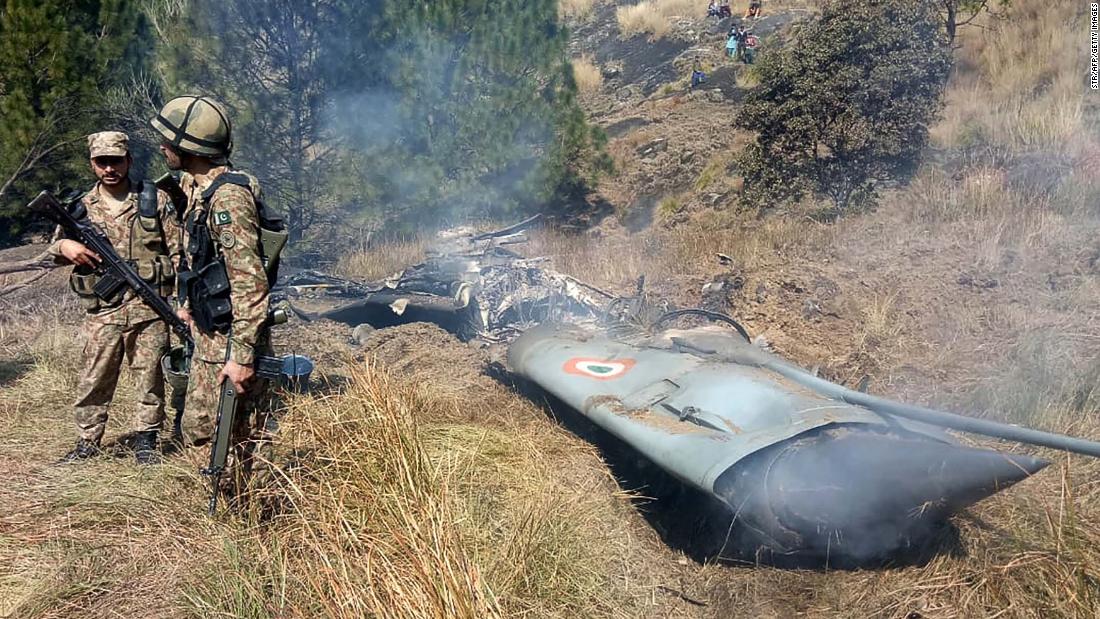
On February 14th 2019, a suicide bomber attacked a convoy of Indian security forces. “We’re getting reports of multiple casualties in a roadside…” He killed at least 40 Indian soldiers here in Kashmir. “The deadliest attack the region has seen this century.” The bomber was part of an Islamic militant group based in Pakistan. “Jaish-e-Mohammed claimed responsibility for that attack.” 12 days later, India carried out airstrikes in Northwestern Pakistan. Then Pakistan shot down at least one Indian aircraft around here. “The most serious escalation in years.” Kashmir is one of the most disputed places on Earth. Over the course of 70 years, it’s been at the center of three wars fought between two massive armies. It’s heavily occupied by more than half a million Indian troops and a deadly collection of militias and terrorist groups.

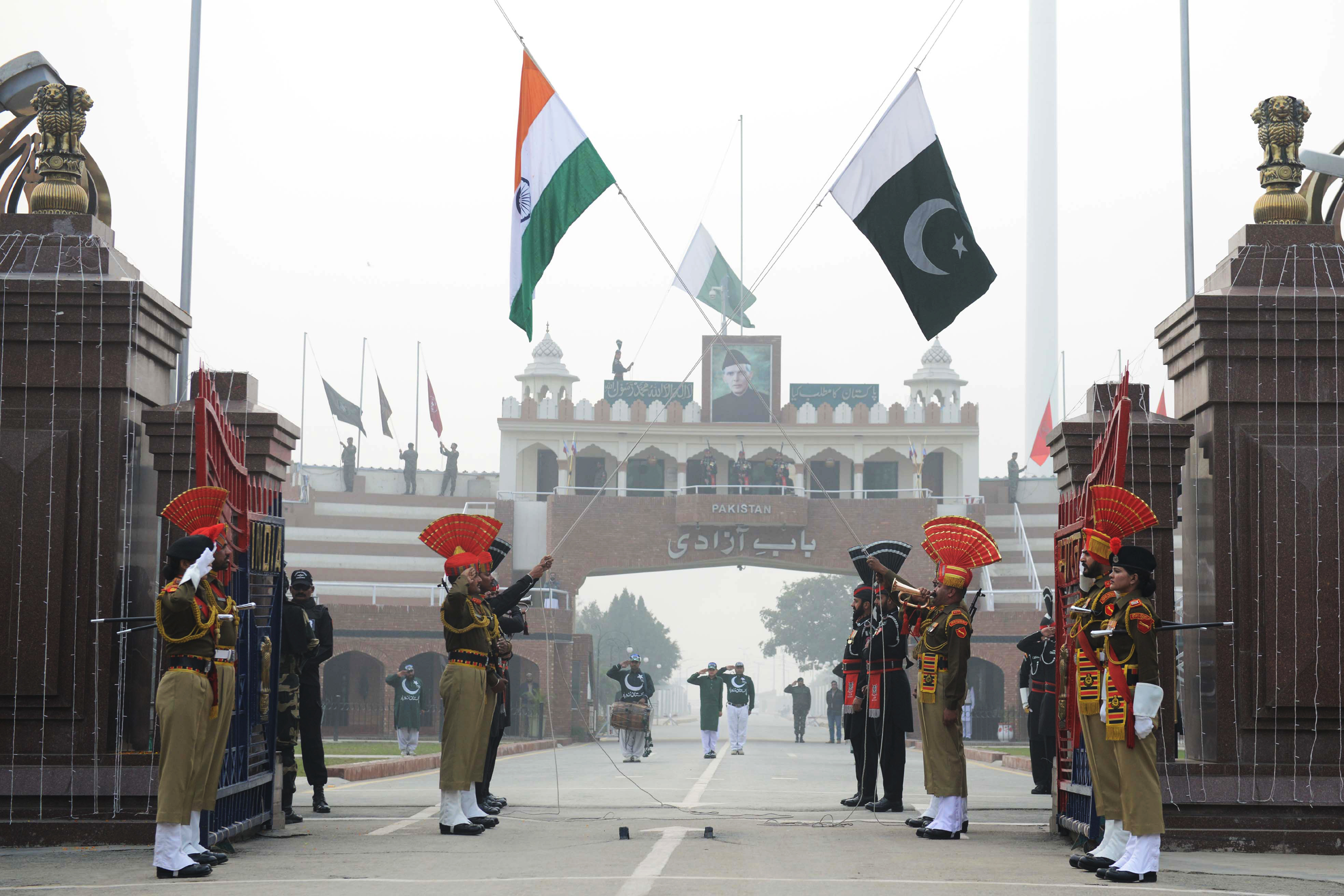
How Memory of Indian Partition Is Preserved Across Borders | Time
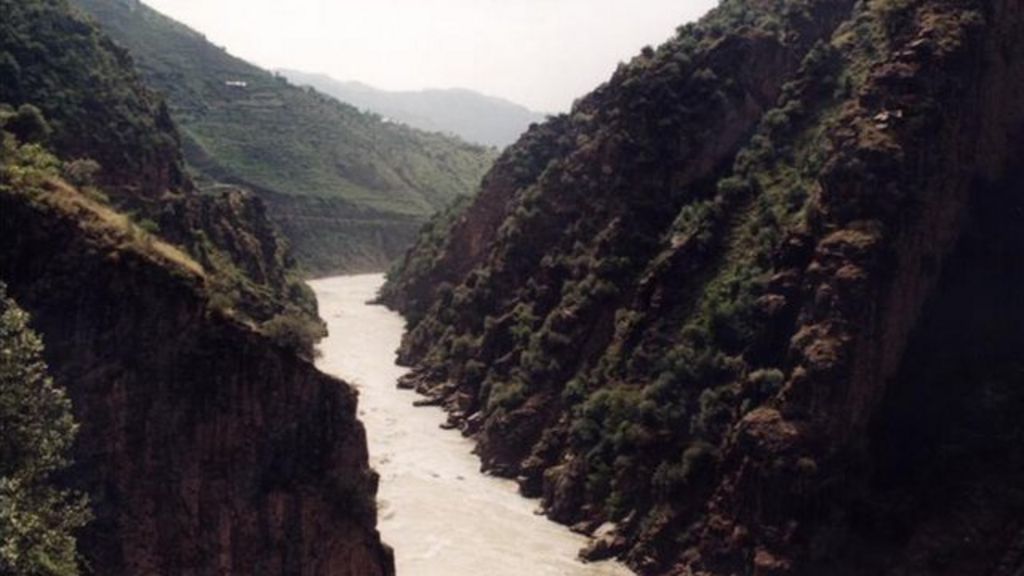
Kashmir is the stage for the relentless conflict between India and Pakistan. But focusing on the two countries can obscure what’s really at stake: The voice of Kashmiris who are caught in a vicious cycle of violence. Kashmir is one of the most strategic places in the world, where 3 powerful countries collide: India, Pakistan, and China. China invaded and took this slice of Kashmir from India. And was given this one by Pakistan. India and Pakistan control these parts, but lay claim to more. This region is at the center of a brutal conflict over these disputed borders. So it’s important to start when they were being drawn. In the mid-1800s, India was a patchwork of several hundred provinces and princely states under British rule. A century later, when British India won independence, the British left and hastily decided to split the region into two. These areas would be a new Muslim-majority country, Pakistan. And this would be the mostly Hindu, but secular, India. The partition was bloody. “Communal hatred flares up within the Punjab.” “1 million people become refugees overnight.” “They flee from savagery and butchery that has never been exceeded, even in India’s stormy history.” Amid the chaos, some princely states were given the choice to join either country. In most cases, the ruling monarchs followed the will of their people. But this state, called “Jammu & Kashmir” was different. It was right along this new border and had a Muslim-majority population, but was ruled by a Hindu monarch. When asked to pick a side, the ruler chose to stay neutral Fearing that the monarch would join India, the Kashmiri population rebelled here in 1947 Armed tribesmen from Pakistan soon joined the fight.

India and Pakistan in Kashmir border skirmish - BBC News
The monarch turned to India for military help and in exchange agreed to join them, which sparked the first Indo-Pakistan war in Kashmir. “Continuing thus increased the threat to world peace and brought the dispute to the eye of the United Nations . The UN Security Council brokered a ceasefire in 1949, which established this line with Pakistan controlling this side and India this one. It also asked Pakistani tribesmen to withdraw and Indian troops to follow, so that Kashmir could hold a direct vote to decide its own future. But neither held up their end of the deal. Pakistan argued that Kashmir’s Muslim-majority population rightfully belonged with them. While India insisted that Kashmir was handed over to them by the Hindu monarch. So they doubled down and added Kashmir to their constution. Both countries continued to tighten their grip around it for many years . “Kashmir. Fighting is going on and heavy casualties in men and equipment have been inflicted on the aggressor.”

India-Pakistan: Latest news on Kashmir crisis
In 1965, the second India-Pakistan war broke out in Kashmir. Thousands of people were killed between the huge armies on both sides. A ceasefire ended the war, but didn’t change this line. Kashmir was kept divided and occupied. And another war broke out in 1971. This time the focus wasn’t in Kashmir — it was in East Pakistan. Here, India helped rebels fight for independence and dealt Pakistan a devastating defeat. This region became a new country, Bangladesh, and Pakistan lost its eastern half. This made Kashmir more important than ever: It became one of the most militarized places on Earth, as India and Pakistan deployed planes, tanks, artillery, and soldiers along the Line of Control. On the political front, in ’87, India reportedly rigged an election, declaring a pro-India party as the winner. Now this was a big turning point for many Kashmiris, who felt they were again denied the chance to vote. Thousands took to the streets in Indian-controlled Kashmir to protest the occupation. But India met the movement for independence with harsh resistance. Which quickly escalated to more violence.
“In January security forces opened fire on demonstrating separatists, turning a two-year old struggling movement into a full-blown popular uprising.” “More than 600 people are killed in clashes between troops and separatists.” Kashmiri militias, just like the Jammu and Kashmir Liberation Front, started recruiting Muslim youth to fight for independence. And increasingly attacked the Indian military. Pakistan saw an opportunity in this insurgency. They helped introduce a new kind of militant group: Radical Islamic fighters who fought for a more pro-Pakistan Kashmir. By the mid ’90s, these groups dominated the insurgency. India responded with incredible military force, deploying 500,000 troops to Kashmir. And they cracked down on militants and protestors. Unarmed civilians were killed and many more were forced to flee the violence. And in ’98 the stakes were raised yet again. “Today India conducted three underground nuclear tests.” “Pakistan today successfully conducted five nuclear tests.” Kashmir became a battleground between two nuclear-armed nations and another war broke out in 1999. “More evidence of the attacks being launched on the Indian-controlled area of Kargil.” “The past two days have seen a number of the fiercest fighting thus far .” “Militant Muslim fighters have also crossed over into some parts of Indian-ruled Kashmir.” The 1999 war ended with another ceasefire, but that did not stop either country.

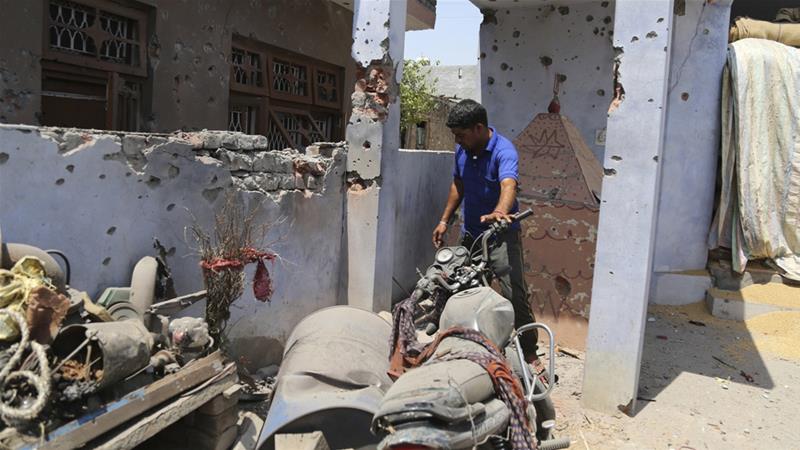
India-Pakistan cross-border shelling hits Kashmir | News | Al Jazeera

Over the years, Pakistan’s militant groups got bolder and launched terror attacks in Kashmir and outside of Kashmir. In 2001, members of Lashkar-e-Taiba bombed India’s parliament building in New Delhi killing 14 people. And in 2008, 10 militants from the same group killed 174 people and wounded 300 in Mumbai. Meanwhile, Indian military cracked down in Kashmir, firing bullets and pellets on unarmed protesters. Leaving hundreds wounded and blind. This is the vicious cycle of violence. The Indian Army’s crackdown drives some Kashmiris to join Pakistani-backed militant groups, who carry out violence against the Indian forces. It’s a cycle that Kashmiri civilians are stuck in the middle of. Which brings us back to 2019. The suicide bomber was 19-year old Adil Ahmed Dar from Pulwama, Kashmir. According to his parents, in 2016, Indian police officers stopped him and humiliated him by forcing his face into the ground. The same year he was shot in the leg at a protest. The next year, Dar left home with his brothers, to join Jaish-e-Mohammed, a Pakistani-supported militia that radicalized him and trained him to be a suicide bomber. A year later, he drove explosives into an Indian military convoy. For more than 70 years India and Pakistan have driven a cycle of violence, retaliation, and exploitation in Kashmir. But beneath it all is the Kashmiri’s wish to make a choice. A wish that continues to be suppressed, again and again, by violence.

Beijing’s 1st response to ban on 59 China-linked apps talks of cooperation

The decision by New Delhi to ban Chinese apps comes days after popular Chinese social media app WeChat – also banned by India – removed updates by the Embassy of India (EoI) on the current border conflict.

China reminded New Delhi of its responsibilities towards foreign companies Reuters

China reminded New Delhi of its responsibilities towards foreign companies. (Reuters)

Beijing on Tuesday said it was “strongly concerned” about New Delhi’s decision to ban 59, mostly Chinese, mobile applications such as TikTok, UC Browser and WeChat, stressed on cooperation between the two countries and underlined that the ban would go against “India’s interests”.

The information technology ministry did not underline the Chinese links of the 59 mobile apps but government officials didn’t leave anyone in doubt. The ban was fast-tracked by Home Minister Amit Shah after the June 15 violent confrontation between soldiers of India and China at eastern Ladakh’s Galwan valley that spiralled tensions between the two neighbours

The official announcement only said the 59 applications were prejudicial to sovereignty and integrity of India, defence of India, security of state and public order. “This move will safeguard the interests of crores of Indian mobile and internet users,” the Indian IT ministry statement on Monday evening said.

Chinese foreign ministry spokesperson Zhao Lijian said Beijing was strongly concerned about the order.

“China is strongly concerned about the relevant notice issued by the Indian side. We are checking on and verifying the situation,” Zhao Lijian said at the regular ministry briefing on Tuesday.

“I want to stress that the Chinese government always asks the Chinese businesses to abide by international rules, local laws and regulations in their business cooperation with foreign countries,” he said.

Zhao also went on to remind New Delhi of its responsibilities towards foreign companies.

“The Indian government has the responsibility to uphold the legitimate and legal rights of the international investors including the Chinese ones,” he said.

“The practical cooperation between China and India is actually mutually beneficial and win-win,” he said

Zhao added: “Such a pattern has been artificially undermined and it is not in the interest of the Indian side”.

The decision by New Delhi to ban Chinese apps comes days after popular Chinese social media app WeChat – also banned by India – removed updates by the Embassy of India (EoI) on the current border conflict including Prime Minister Narendra Modi’s statement on the clash that left 20 Indian Army soldiers dead. The reasons given for the removal of the posts include divulging state secrets and endangering national security.

The updates published on WeChat included Modi’s remarks on the India-China border situation, the phone call between the Indian and Chinese foreign ministers held earlier this month and a statement by the external affairs ministry’s (MEA) spokesperson on the border situation.

India’s decision to ban the China-linked apps and encourage people to use Indian applications is a continuing effort to reduce dependence on its neighbor’s products and hampers efforts by China’s largest corporations to expand beyond their own borders


Explained: How will the ban of TikTok and other Chinese apps be enforced; what will be the impact?

TikTok, other Chinese apps banned in India: The notification is expected to be followed by instructions to Internet service providers to block these apps.

Some of the banned Chinese apps are very popular among Indian users, especially TikTok which has over 100 millions active users in the country, especially in heartland India.

India on Monday banned 59 apps originating from China, including very popular ones like the short video platform TikTok, UC Browser, file sharing app ShareIt, and CamScanner, which allows iOS and Android devices to be used as image and document scanners.

What is the legal basis for India’s action?

The ban has been enforced under Section 69A of the Information Technology Act, 2000 (“Power to issue directions for blocking for public access of any information through any computer resource”): “Where the Central Government or any of its officers specially authorised by it… is satisfied that it is necessary or expedient so to do, in the interest of sovereignty and integrity of India, defence of India, security of the State, friendly relations with foreign States or public order or for preventing incitement to the commission of any cognizable offence relating to above, it may… by order, direct any agency of the Government or intermediary to block for access by the public or cause to be blocked for access by the public any information generated, transmitted, received, stored or hosted in any computer resource.

The Ministry of Information and Technology has said that it “has received many complaints from various sources including several reports about misuse of some mobile apps… for stealing and surreptitiously transmitting users’ data in an unauthorised manner to servers which have locations outside India”. Since this “ultimately impinges upon the sovereignty and integrity of India, is a matter of very deep and immediate concern which requires emergency measures”, it has said.

How will the ban be enforced?

The notification is expected to be followed by instructions to Internet service providers to block these apps. Users are likely to soon see a message saying access to the apps has been restricted on the request of the government.

However, while this will impact apps like TikTok and UC News that need a live feed to serve any purpose, users might still be able to continue using apps that don’t need an active Internet connection to be used. But further downloads of these apps, like CamScanner, are likely to be blocked on Google’s Play Store and Apple’s App Store.

India bans Chinese bans, Chinese apps banned, Chinese apps banned full list, TikTok banned, UC Browser banned, ShareIt banned, Indian ExpressqThe full list of 59 Chinese apps banned by the government.

What will be the impact of the ban?

Some apps on the banned list are very popular in India, especially TikTok, which has over 100 million active users in the country, mainly in the heartland. New social media platforms like Helo and Likee, as well as video chat app Bigo Live are immensely popular among Indians who are not comfortable in English. These users will have to look for substitutes.

Also, most of these platforms have Indian creators, for many of whom this is the only source of income. Many of these apps have offices and employees in India, and a few thousand jobs could be at stake.

Decoding LAC Conflict

How will the ban of TikTok and other Chinese apps be enforced; what will be the impact?

With stand-off at friction points continuing, expect a longer battle of nerves on Ladakh LAC

Talks will continue but military pushback also on Delhi’s table

Will the ban be permanent?

TikTok was banned in India on the order of the Madras High Court for a few days last year, but it came back soon after the court vacated the ban. This action, however, is more sweeping, impacts more apps, and has been taken in a specific strategic and national security context. It could be a warning to bigger Chinese businesses in India, and to China itself.

Are products really ‘Made In China’ ???

Made in China. We’ve become accustomed to seeing the label on products manufactured in the world’s second biggest economy. But buying one of these products in China instead of say, the U.S., doesn’t guarantee you’re getting a better price. Chinese tourists have built a reputation for being big spenders abroad, spending a whopping $277 billion in 2018, much more than any other nationality. A lot of times, people think that purchasing something in China will be inexpensive, but that isn’t always the case. So how much of a difference are we talking? If we bring four products from four popular western brands to compare. Starbucks, H&M, Adidas store, a Godiva store. To keep things consistent, we will be using 2019’s average foreign exchange rate. The products compared are:

  1. A standard black t-shirt at H&M.
  2. Starbucks Grande Cappuccino.
  3. Godiva Chocolates.
  4. An Adidas hat.

Now let’s compare:

  1. The shirt at H&M is priced nearly the same in the U.S. and China.
  2. A Grande Starbucks cappuccino will cost you $4.63 in Beijing, but in Los Angles, California, $3.95.
  3. This case of Godiva chocolates, called Pearls, is priced at $7.24 in Beijing, but only $3.95 in LA.
  4. The Adidas hat will set you back $42.27 in China, nearly double the price of a similar hat in the U.S.

This experiment has made clear that pricing are complicated. So much so, that websites have popped up like the Mac Index, a site that compares Apple product prices from around the world. So many ads for Apple here in this area. According to an analysis done by Tech Insights, the cost to make an Apple iPhone 11 Pro is $490.50. Yet according to The Mac Index, the price to buy one is $1,318 in Japan, $1,477 in the U.S., $1,658 in Mainland China and more than $2,000 in Turkey and Peru. Prices vary across countries due to factors like demand, tariffs and tax refunds. And then there’s the supply chain: the network of people, organizations, activities, information and resources involved in the creation of a product.

close up of camera over black background
Photo by ATC Comm Photo on Pexels.com

Apple’s current CEO Tim Cook is considered by some to be a mastermind in supply chain. He first joined Apple in 1998 with a mandate to clean up the company’s manufacturing and distribution. Over time, he closed factories and warehouses, instead opting for contract manufacturers in China. That’s great for Apple’s profit margins, but it’s certainly not praised by President Trump, who has asked Apple to make its products in the U.S. If, say, iPhone production was moved to the U.S., instead of China, different analyses show the price for the consumer could go up from anywhere from $30 or $40 to hundreds of dollars to even $30,000-100,000. That’s partially why, despite Apple pledging to invest more money in American manufacturing, it maintains China as its hub for making its gadgets.

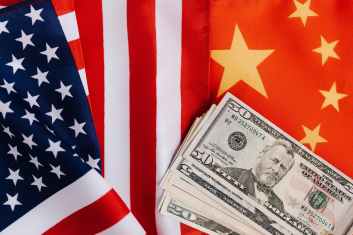
american and chinese flags and usa dollars
Photo by Karolina Grabowska on Pexels.com

That’s Omar Slim, a senior portfolio manager at global asset manager, PineBridge. When you hear about made in this country or that country is really quite relative and it’s a simplification of things because it’s most likely made in a number of countries. Here’s an example. Let’s say we want to make lasagna for dinner. If Jeff cooks the ground beef and prepares the cheese, Sarah makes the tomato sauce and layers the ingredients into a pan; and Blair, who bought all the ingredients, puts it in the oven, who gets the credit for making the lasagna? Now, let’s apply that to Apple’s iPhone. While the phone might say ‘Made in China,’ some of its parts come from other parts of Asia, Europe and even the U.S. Even though an iPhone may be assembled in China, it’s still tariffed in China as a U.S. product because Apple is an American company. The brand makes that clear with by, ‘Designed by Apple in California. How they’re treated in terms of customs, they will be treated as a U.S. product. So regardless of where they come, it’s essentially a U.S. product. Same for Chinese products going into the U.S. and same for, for instance, European cars.

India simply cannot afford to boycott Made in China — Quartz India

China became a popular manufacturing hub in the 1980s after it started to open to the world. It became known for its cheap labor costs, lax regulations and business-friendly environment. As China’s manufacturing sector grew, it took the crown from Germany as the world’s top exporter in 2010. While Made in China has become synonymous with cheap and low-quality products, China is hoping to change that. In 2015, it launched a Made in China 2025 initiative, which aims to shift its economy from low-end manufacturing to high-end, high-tech products. In 2017, Tim Cook said China lost its place as a low labor cost manufacturing nation many years ago. The U.S.-China trade war resulted in a tit-for-tat increase in tariffs on many products.

Petition · Political Parties: Boycott 'Made in China' products in ...

With increasing costs being passed on to consumers, many companies are looking to diversify their supply chain, instead of being so reliant on China. That sentiment has only grown, following the coronavirus pandemic’s hit on the global manufacturing industry. Along that supply chain, there will be some companies, that instead of manufacturing it in China, if they could, they could try to replace. In fact, companies including Apple, Microsoft and Google are reportedly looking into moving some of their hardware production from China to Vietnam or Thailand. But that might be harder than it sounds. The other countries will have a hard time to compete along with the fact that the infrastructure is shown that it’s quite good, along with the fact that in certain countries would not want to compromise the relationship with China.

70 Reasons that makes us Proud to be Made In India - Sanjay Dalmia

The reality today is that a product likely has many components which are sourced globally. A phone may be designed in the U.S, but its screen is sourced from South Korea, the sensors and microchips may be from Taiwan or Germany, with its assembly in China. So, the next time you see a product with the words, “Made in China,” remember that the full story is seldom pure, and never simple.

Trust A Snake But Not China

I am in tears to see how our entire nation stands completely united behind our PM Narendra Modi on China issue. Never in my wildest of dreams could I have imagined that political stalwarts from nearly all parties except Congress ranging from former Defence Minister Sharad Pawar to former UP Chief Minister Mayawati to former Railway Minister and presently Chief Minister of Bengal Mamata Banerjee well known as worst critic of PM Modi among others would all speak in one voice that they fully stand with PM Modi on China issue and shall back every move taken by him. Even Arvind Kejriwal who is CM of Delhi and did not attend the all party virtual meeting chaired by PM Modi too made it amply clear that he stands fully with PM on China issue!

                                       I am also in tears to see how Telangana CM K Chandrasekhar Rao visited the family of late Colonel B Santosh Babu who was the Commanding Officer of 16 Bihar Regiment and  who also led from the front and was martyred in recent Galwan face-off along with 19 others. Rao gave a cheque of Rs 4 crore to late Col Babu’s wife and also another cheque of Rs 1 crore to his parents. He also offered a Group 1 job to the late Colonel’s wife and made her a Deputy Collector in the State and also gave a 6,400 sq ft residential land in Hyderabad to the family! Certainly, the supreme sacrifice rendered by late Col Babu cannot be ever compensated by money or anything else but it will ensure that their families are not left on streets to fend for themselves as most unfortunately we saw in the aftermath of the 1962, 1965 and 1971 wars!

                                      Needless to say, the dastardly, ghastly and most cowardly betrayal by Chinese troops who suddenly attacked Indian troops led by late Col Santosh Babu in a similar way as terrorists do has shocked not just India but the whole world. This latest betrayal by China has only served to vindicate what former Defence Minister late George Fernandes had said about China that, “Our real enemy is China whom we must sort out first. Pakistan is a small fry and can be handled later.” Another former Defence Minister Mulayam Singh Yadav too considers China as our real enemy.

                                 Even former Supreme Court Judge – Justice Markandey Katju had termed Pakistan and Bangladesh as “fake countries” created by Jawaharlal Nehru and Indira Gandhi and had predicted that ultimately they would be merged with India in coming years! So then who is left? It is China! My best friend Sageer Khan too termed China as India’s biggest security threat for whom he said that we must have long term plans to crush them. Sageer also said that Pakistan is no worry as it can be crushed anytime as we did in 1971 when it was partitioned most easily when Bangladesh was born. Pakistan just keeps talking about cutting India into thousand pieces but even after nearly 50 years when we partitioned them, it has not been able to do anything except to rant, rant and rant!

                                         So our real worry is China. We must recruit more soldiers to fight with China on equal strength as they currently outnumber us. Our strength is about 11 lakh and their strength is more than 20 lakhs! We must buy latest fighter plane like Rafale from France as early as possible.

                                          We must guard ourselves from getting complacent and relaxed by just saying what we keep hearing also in some news channels repeatedly that, “This India is not what it was in 1962. This is India of 2020. Even China which spends lavishly on defence much more than what we spend has too come a long way since 1962.” We must never forget the age old time tested dictum that, “The more you sweat in peace, the less you bleed in war.” We cannot take a strong power like China for granted!   

                                         We must strive to remove all our weaknesses in defence and it is heartening to note that the current dispensation led by PM Narendra Modi and Defence Minister Rajnath Singh is exactly doing that! They have ensured that China releases our ten soldiers whom they had taken captive for which they must be commended and not condemned! We too released their soldiers including a Colonel rank officer. Rajnath Singh has just recently left for Russia on a three-day visit during which he is likely to press for the timely delivery of the S-400 missile defence systems and discuss ways to further expand bilateral military ties, amid the escalating border row with China! This is the crying need of the hour also!   

                                                Days after the India-China face-off in Galwan river valley, the family of Ladakhi writer and explorer Ghulam Rasul Galwan – from whom the Valley gets its name – recalled another brutal encounter on the same land, this one a century ago, that their ancestor had with Chinese soldiers. Manzoor who is Ghulam Rasul’s great grandson lamented rightly that, “It pains us that more than 100 years on, Chinese transgressions have continued.” Now again they have betrayed us and attacked without any cause! Even a snake cannot be as dangerous as China!

                                                 So it must be reiterated that we should never trust China and should never lower our guard under any circumstances. It is China which has constantly helped Pakistan to fight against us by providing them nuclear weapons, missiles and what not! It is again China which has mala fidely provoked Nepal with whom we enjoy good relations to declare many areas which belong to India as their own territory by bringing and passing a resolution in this regard just recently in Parliament!

                                            Again it is China which is provoking our other neighbouring countries like Sri Lanka to turn totally against us! It is China to whom Pakistan has ceded huge territory of PoK. It is China which wants to occupy the whole of Kashmir! It is China which is luring Pakistan into debt trap and want to eliminate its identity as a nation itself!

                                            It goes without saying that China cannot be loyal to anyone. It backstabbed us in 1962 after giving emotional slogans like “Hindi Chini Bhai Bhai”. This explains why now Zee News Channel has very rightly raised another slogan titled “Hindi Chini Bye Bye”!   

                                                Asserting India’s full and firm claim on the Galwan Valley of Ladakh, New Delhi has told Beijing that making “exaggerated and untenable claims” is contrary to the understanding reached in talks between military commanders on June 6. Anurag Srivastava who is the official spokesperson of the Ministry of External Affairs said suavely that, “Given its responsible approach to border management, India is very clear that all its activities are always within the Indian side of the Line of Actual Control. We expect the Chinese side to also confine its activities to its side of the LAC.” He minced no words to say that, “The Chinese side unilaterally attempted to change the status quo, took premeditated and planned action and was directly responsible for the casualties suffered by both sides. This could have been avoided had the agreement at the higher level been scrupulously followed by the Chinese side.”

                                                While calling the dastardly attack on Indian troops as “a premeditated action by China”, Lt Gen BS Jaswal (retd), former Army Commander, Northern Command, said he would have supported the use of firearms by Indian troops in the face of such “barbarism”. Jaswal who commanded this sector in 2010 said, “When the CO, 16 Bihar went to Patrolling Point PP14 and asked them to withdraw, they refused and a scuffle ensured. They attacked the commanding officer and our boys reacted. Our disadvantage was that we weren’t carrying any tools… Meanwhile, the Chinese got reinforcements which led to so many casualties.” He rightly added that, “I salute my boys. They caused double the casualties unarmed.” It was widely reported that they lost about 45 to 60 soldiers but Chinese kept quiet on such reports. Just recently they conceded that two officers of theirs died including a CO in a bloody confrontation with Indian troops on the night of June 15 in Galwan Valley. It is for the first time since Vietnam war that the PLA of China has suffered so many casualties!

                                               To be sure, Gautam Bambawale who is former India’s ambassador to Beijing while describing the killings of soldiers at Galwan as an “inflexion point” in India-China relations said it was time for New Delhi to make a “deep reappraisal” of its policy towards China, because the old template that has been defining their relationship for the last 30 years was “no longer working”. He further said that, “The current paradigm of India-china relationship was set in December 1988 during then Prime Minister Rajiv Gandhi’s visit to China. The key thing of that template was that while we continue our efforts to find a resolution of the boundary dispute, while ensuring peace on the border, the interactions and exchanges in other fields must proceed forward. After that there have been several agreements and understandings, in 1993, 1996, 2005, 2013 and several others. The world has changed in the meanwhile, the two countries have changed, but our relationship has continued to be defined within that template. I think this particular incident should change that.”

                                            Following the violent border face-off with China on June 15 that left 20 Indian soldiers dead and 45-60 Chinese soldiers dead, Defence Minister Rajnath Singh told the military top brass during a review meeting that the government has given the forces freedom to “give a befitting reply” if there is further escalation from the other side. PM Modi while praising the valour of the 20 army personnel killed in the clash said they “taught a lesson” to those who were eyeing Indian territory. Col (Retd) Sonam Wangchuk who is a hero of the Kargil war and Maha Vir Chakra awardee said that, “After this incident, we lost 20 boys but in return the casualties that we inflicted were more than double, around 40-43. I am sure we retaliated hard. The Chinese never admit their casualties. This happened in 1962 as well. Our one Kumaon company killed a thousand of theirs, while we lost 130 boys. Even at that time, they did not admit their casualties. Most probably this time too they will not admit it.”

                                                        It is heartening to note that the commanders will no longer be bound by restrictions on the use of firearms. A significant change has been made in rules of engagement (ROE) by the Indian Army by which “complete freedom of action” given to commanders deployed along the contested Line of Actual Control (LAC) to “handle situations at the tactical level”. The commanders will have full authority to respond to “extraordinary situations” using all the resources at their disposal. It was also disclosed that, “With the changes in the ROE, there’s nothing that limits the ability of Indian commanders to take whatever action they deem necessary on the LAC. ROE have been amended  to address to address the brutal tactics being employed by Chinese troops.”   

                                                    On Congress leader Rahul Gandhi’s question on whether the Indian soldiers were sent in “unarmed”, External Affairs Minister S Jaishankar tweeted that, “Let us get the facts straight. All troops on border duty always carry arms, especially when leaving post. Those at Galwan on 15 June did so. [It is a] longstanding practice (as per 1996 & 2005 agreements) not to use firearms during faceoffs.” It must also be noted that Article 6 of the agreement on confidence building measures in the military field along the LAC, signed by India and China in November 1996, states that, “Both sides will not open fire or conduct blast operations or hunt with guns or explosives within two kilometers from the Line of Actual Control.” It is China which has mocked at it by violating it flagrantly defying all that is prescribed in it!

                                   Clearly, China is now on the backfoot as it sacked the Army Commander for its Western Theatre Command ground forces responsible for handling the Sino-India border and who oversaw Chinese aggression in the Eastern Ladakh region and that too ahead of the all-important Corps Commander level meeting and appointed Lt Gen Xu Qiling as the new Commander. Both in the Doklam 73 day standoff and now Ladakh standoff, there is one common denominator: General Zhao Zongqi who is the PLA’s Western Theatre Command’s big boss who was masterminding everything. It is he who masterminded both the standoffs and has cultivated the reputation of being ruthless on the border. But now Xi Jinping has made him the scapegoat by sacking him. The Chinese don’t want to admit that it was their President who got his army’s nose bloody. So it is far more convenient to pin the entire blame on the sacked Lt General! It is very much possible that this sacking took place because India matched up to Chinese build up and kept developing its infrastructure relentlessly despite Chinese PLA’s strong attempts to block it somehow!  

                                      It is a no-brainer that the reason behind Chinese aggression is that it wants to hamper and stall the construction of the winding 255 km Darbuk-Shyok-Daulat Beg Oldie Road. This road will allow the Indian Army to easily access its last military post South of the Karakoram Pass. China was opposing the construction of this road, because once completed, this road will allow India to put retaliatory pressure on the Dragon at the Karakoram Pass, Chip Chap river area, Trig Heights, Hot Springs, Galwan and Depsang Plains. China wants to make the Daulat Beg Oldie sector inaccessible for India as part of its larger diabolical conspiracy of achieving its evil design of connecting Tibet with Pakistan occupied Gilgit-Baltistan. But thanks to our strong political leadership under PM Modi that India didn’t buckle and the political along with the military leadership made it absolutely clear that there will be no hiatus in road building along the Sino-India border. It is China which has to move back and restore the status quo as was the case in April 2020!

                                               Former Chief of Army Staff and now Minister of State for Road Transport and Highways – Gen VK Singh too very rightly suggests that, “The first thing that has been given out is to boycott Chinese goods, let’s start with this. Let’s hurt them economically… War and use of force is the last resort always and every time. When all other means fail then you resort to this. There are many means available.”  

                                                 To be sure, P Stobdan who is an expert on the Himalayan region very rightly points out in Hindustan Times dated June 20, 2020 in his enlightening article titled “How the Galwal Valley tragedy can transform Himalayan geopolitics” that, “India must respond to China’s move, not just through military means but through a forward-looking strategic, economic and connectivity vision matching China’s BRI project. It must think about reconnecting and resuming old trade links. Ladakh is a geostrategic axis or a pivot point for India to reach out to Central Asia, Europe and Russia. The Dorbo-Shayok-DBO road should be called the Ladakh economic corridor. It should be India’s approach to go beyond the Himalayas. Otherwise, India is destined to remain defensive in posture. This, however, is contingent on India reworking the governance priorities in Ladakh. The region has already remained neglected for a long time due to Article 370 and 35A.” He also rightly suggests that the area must be populated more as it is the locals who have the best understanding of the border.

                                          Air Chief Marshal RKS Bhadauria while referring to the situation on the Line of Actual Control and addressing a combined graduation parade at the Air Force Academy in Dundigal said, “We are well prepared and suitably deployed to respond to any contingency. I assure the nation that we are determined to deliver and will not let the sacrifices of our soldiers go in vain.” Speaking to media-persons later, he also said: “The Army is in total control of the situation at the Galwan Valley and the Air Force is ready to support the Army’s efforts by deploying additional forces to meet any emergency.” He also said: “The IAF has stepped up deployment in Leh and Srinagar. We are aware of the full situation. Be it at LAC, be it deployments beyond LAC. All the air deployments, their postures, the kind of deployments… We have full analysis and we have taken the necessary action that we need to take to handle any contingency that may arise with this kind of deployment. All actions have been taken. We know what their (Chinese) fields are. We know what their air fields are, where they are deployed, what are the operational bases.”    

                                     It would perfectly be in order to pay heed to what the IAF chief RKS Bhadauria advised that, “The security scenario in our region mandates that our armed forces remain prepared and vigilant at all times. The development at LAC is a small snapshot of what we are required to handle at short notice. Please join me in paying tribute to Colonel Santosh Babu and his brave men who sacrificed their lives while defending the LAC in Galwan Valley. The gallant action in a highly challenging situation has demonstrated our resolve to protect the sovereignty of our country at any cost.”

                                             It is but obvious that all the major countries whether it is USA or European Union or Australia have stated that they stand fully behind India and strongly condemned China for its Army’s cowardly and unprofessional acts! US Secretary of State Michael Pompeo has blamed China for escalating tensions along the border with India and openly termed it a “rogue Actor” in the neighbourhood. He also said that, “The PLA has escalated border tensions – we see it today in India, the world’s most popular-populous democracy. And we watch as it militarises the South China Sea and illegally claims more territory there, threatening vital sea lanes, a promise they broke again. It’s no longer enough to listen to what the Chinese Communist Party is saying. We can see their actions. I ticked through a few of them: Hong Kong, Tibet, Xinjiang, what they’re doing in India, what they’ve done in the economic zones along the Philippines and Malaysia and Indonesia and Vietnam, the coercion on Australia – when they had the audacity to demand that there would be an investigation of how this virus got from Wuhan to Milan, how this virus got from Wuhan to Tehran, how this virtus got from Wuhan to Oklahama City and to Belgium and to Spain, and decimating the global economy.” Can such a notorious nation be ever trusted? Certainly not!

                                Ostensibly, the writing on the wall is clear. Chinese can never be trusted. A snake can still be trusted as it may turn out to be non-poisonous also but China is full of poison and venom against not just India but even its own people where it rules by force and can never be trusted under any circumstances! The Galwan incident in which we lost 20 soldiers is the first such killings on the Sino-Indian border in 45 years. India has done the right thing by now removing all restrictions on soldiers of not opening fire as China has betrayed us most cruelly and most wrongly! Chinese soldiers fear Indians and this we saw when how the 1967 Nathu La conflict between India and China which started with pushing and jostling before a Chinese soldier opened fire and shot dead the Indian Commanding Officer. Indian forces retaliated very hard and we killed 340 soldiers of China but they could kill only 88 of our soldiers!

                                            In conclusion, the bottom-line from this latest dastardly incident is: Trust a snake but not China. It is China which is the root cause of all aggression directed by small neighbouring countries like Pakistan and Nepal against India! China intruded more than 600 times when Dr Manmohan Singh was PM and we lost more than 700 km. Overall, India lost more than 43,00 square km area in Congress rule which was catastrophic! Additionally no roads and no infrastructure were developed in border areas in last more than 70 years about which even former Defence Minister AK Antony of Congress party itself had lamented! We must highlight the nefarious designs of China and its brutal killings of our soldiers in all international forums and just like this time our soldiers ensured that Chinese soldiers and officers were killed in future also soldiers must have full freedom to open fire and this is what Centre has done now very commendably!

                                           On a concluding note, it is high time and we must now stop showing extra generosity towards China. It was India under Jawaharlal Nehru as PM who when America offered it a permanent seat in Security Council offered it instead to China due to which we have suffered immeasurably! What did we get in return? Backstabbed most grievously by the unprovoked 1962 Chinese well planned unprovoked invasion on India! Chinese’s sole and firm opposition till now in 2020 for India getting a permanent seat in UN Security Council and membership of India in Nuclear Suppliers Group (NSG)! The only silver lining in the dark cloud is that the present dispensation has clearly manifested that it will not kowtow before it as had happened earlier for which it must be commended and not condemned!           

Sanjeev Sirohi, Advocate,

s/o Col BPS Sirohi,

A 82, Defence Enclave,

Sardhana Road, Kankerkhera,

Meerut – 250001, Uttar Pradesh.

One more attack = Indo-China WAR!!!

The relation between Indian and Chinese army are now being worse. India holds a record of never attacking any of the army first till date. Many near by countries think that India is weak and cannot attack first, but this is our spirituality and religion to avoid any fight, but when the things get worse there need to be done something. India never approach any army for fight it always keep the things calm and to solve the problem with words and not the wars. India always gave a extraordinary action in case of any mischief done by the opponents, India carried out many operations like:

  • Operation Vijay
  • Operation Meghdut
  • Operation Surya Hope
  • Operation Brasstackes
  • Operation Cactus and many more to list…

India also gave a very strong answer of the Pulwama attack. India has the strongest army and technology support from Russia and US.

police army commando special task force
Photo by Somchai Kongkamsri on Pexels.com

Recantly, India was betrayed by dragons during a normal peace talk Chinese army betrayed Indian army by sudden attack on our prestigious soldiers. In this betrayal our 20 soldiers lost theirs lives for India:


  1.  Col B Santosh Babu
  2.  Nb Sub Nuduram Soren
  3.  Nb Sub Mandeep Singjh
  4.  Nb Sub Satnam Singh
  5.  Hav K Palani
  6.  Hav Sunil Kuma
  7.  Hav Bipul Roy
  8.  Nk Deepak Kumar
  9.  Sep Rajesh Orang
  10.  Sep Kundan Kumar Ojha
  11.  Sep Ganesh Ram
  12.  Sep Chandrakanta Pradhan
  13.  Sep Ankush
  14.  Sep Gurbinder
  15.  Sep Gurtej Singh
  16.  Sep Chandan Kumar
  17.  Sep Kundan Kumar
  18.  Sep Aman Kumar
  19.  Sep Jai Kishore Singh
  20.  Sep Ganesh Hansda

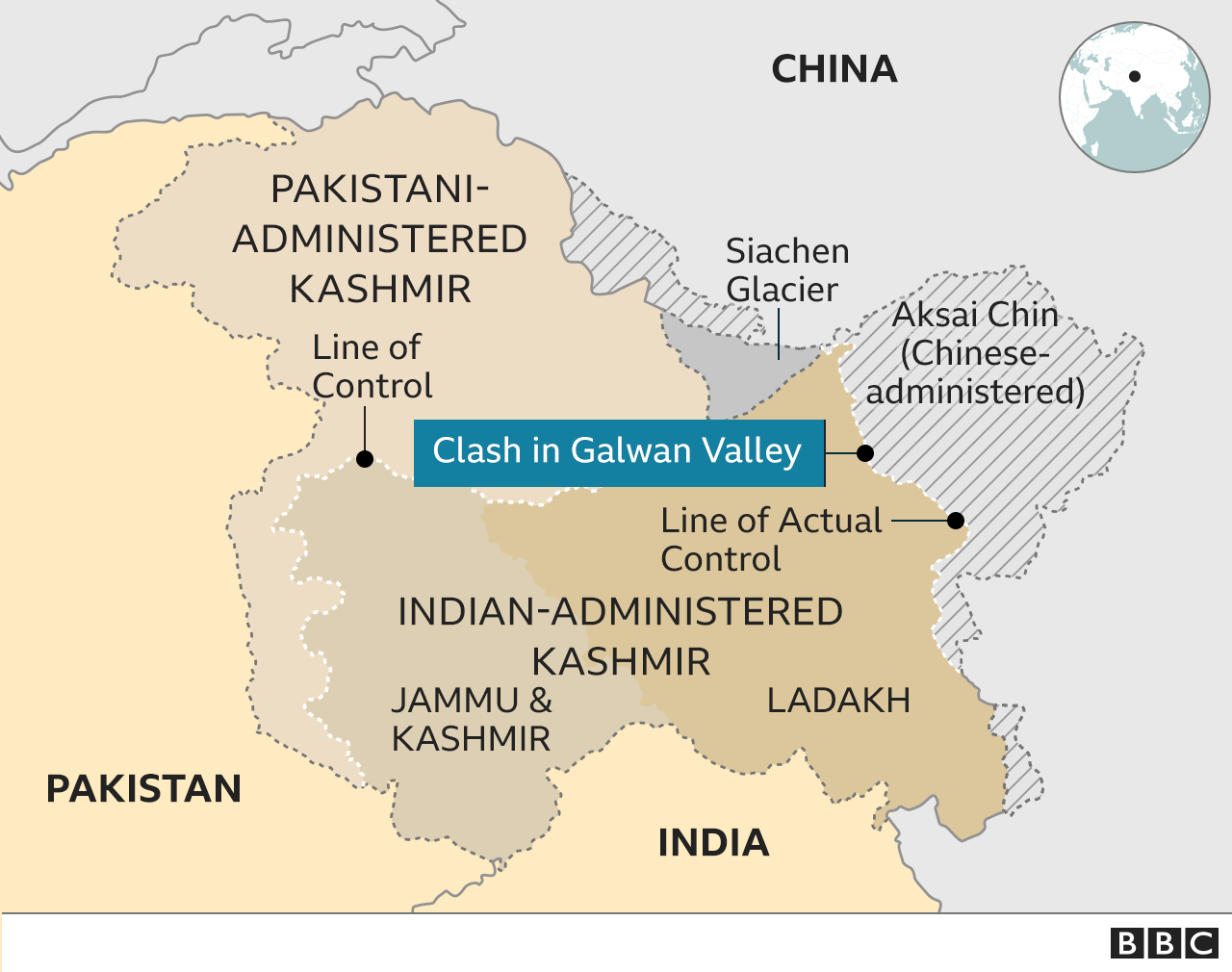
_112919157_kashmir_military_clash_x2_640-nc

Image source: BBCnews

In return Indian army gave an dangerous answer with their 35 troops by killing. PM Modi gave freedom, if in near future again this type of activities are done by Dragons than Indian army can do anything without any upper orders. Indian army are ready with thier backpacks and loaded arms and waiting for activities by dragons and it will be close to WAR.

download (1)

Image source: Navbharatimes.com