DEATH PENALTY IN INDIA

A number of dynasties have risen and fallen with the course of centuries. But in order to administer justice, the use of death penalty was common. Though the termination of death penalty was protested by many organizations yet it is practiced in different countries. Capital punishment or death sentence has been prescribed as a crime against humanity in the Charter of Rights by the UN and also requested its members to terminate the same. However, India being one of its member has still not abolished the death penalty even though under the Article 21, the Constitution of India has stated that the government has no right to take away an individual’s life. As a result, the international stand of India on the death sentence both at the Human Rights Council and the General Assembly has always been against the resolution that stating that is goes against the country’s law statues where an in the rarest of rare cases, a capital punishment is carried out.

Crimes Punishable by Death Penalty in India:

  • Murder- Murder is regarded as an offence to be punishable under the Article 302. A death sentence can be awarded to a group involved in robbery and in the process even one member commits murder, when an individual is abducted in exchange of ransom and the person gets killed, being engaged in any unlawful association or criminal activities which results in an individual’s death as well as the act of assisting and committing Sati, under all these situations one shall be punished with death penalty.
  • Rape- Under the Criminal Law (Amendment) Act, 2013, a rapist who during the course of crime causes the victim’s death or the victim is left in the vegetative state of persistent shall be held punishable. Capital punishment shall be imposed for rape of girls below 12 years and punishment also includes a minimum imprisonment of 20 years including fine.
  • Offence related to terrorism- Any unlawful act involving the usage of any sort of special category of explosives which is probable of causing imperil to human life or property is considered as an death penalty offence.
  • Abduction- The act of kidnapping is also punishable under law even if the kidnapper only threatens to cause harm to the victim.
  • Treason- The act of attempting to wage or carrying on a war in opposition to the government, soldiers, Army or Navy members or even Air Forces in committing mutiny are liable to be punished under death penalty.

In India, the rate of execution have decreased significantly in the past 20 years. The Article 21 of the Indian Constitution assures its citizens the right to life as well as personal liberty including the right to live with dignity. As stated in the article, no person shall be impoverished of his personal liberty and life except in accordance to the established law procedure. This implies that an individual’s personal liberty and life can only be argued if that individual commits a crime. Therefore, by means of public order and law, the state can curtail or take away the right to life following the law established procedure.

However, in India, a number of NGOs are fighting in opposition to the cruel and inhuman punishment and perseverance of human rights. Although judiciary has evolved the principle of “rarest of rare cases” and has indicated that it is with special reasons that death penalty must be imposed in cases of exceptional and aggravating circumstances where offenses are very grave in nature, the application of the principle itself, as evident from a plethora of cases, is in violation of Constitutional provisions. According to Justice V.R. Iyer who was against the death penalty, God has given us life and thus, He only has the right to take it away. The state has no right to take away any individual’s right to life. This is mere inhumanity from the State’s side. Thus, the death penalty procedure must be prescribed as an offense in opposition to human rights as well as it is unconstitutional. It must be taken into consideration by the government, the negative aspects of sentencing to death and must take steps to delete such provisions relating to death sentence away from the law. Although actual executions of convicts punished with death penalty are decreasing in number, yet a lot has to be done to fasten the procedure for those waiting on death row and also comply with India’s international commitments.

Juvenile Justice System In India

Juvenile offending is the act of participating in some unlawful behavior against the society by the persons young in age. The term Juvenile Justice refers to fair and just treatment to youth or children in shaping their personality in the society. Juvenile Justice System means a procedure to tackle with the issues related to minors with respect to society. The main purpose of the system is to protect the minors by applying effective treatment and creating a positive human developing environment. The main aim of the system is to adopt measures that are rehabilitative in nature instead of being punitive. If any means a young individual commits or minor turns lawbreaker, then the Juvenile courts takes up the duty to foster delicate treatment and care through special institutions. Thus, it would encourage the Juvenile delinquents to find their path to lead a much better and decent life. The system of Juvenile Justice is considered as one of the most enlightening and developing system worldwide, focusing on the children’s growth. The central focus is to provide proper care to the unprotected child and the reformation of deviants.

Earlier there was no separate system for the juveniles. They were held into prison without trials and were even locked behind the bars accompanied by the desensitized criminals. It was prescribed by the penologists in the nineteenth century that punishment should be equal for both juveniles and adults. As per the history records, juveniles were treated similar to the adult criminals and were imprisoned, hanged and even transported.

In India, the Juvenile Justice System (JJS) aroused during the British rule. Prior the rule of the British, the juveniles were treated either by the family or society in general. Gradually, the Indian Constitution provided distinct treatment for children and women. The issue of juvenile lawbreakers were given separate treatment. The light was thrown on the Juvenile Justice System aftermath the Nirbhaya case, 2012 Delhi gang rape and murder when people expressed their hostile nature attitude and sentiments towards the court’s decision. The minor who was involved in the brutal case was demanded for death sentence by the public. There was chaos and roaring in the Indian parliament, as a result of which new law came into existence. The Juvenile Justice Care and Protection of Children 2015, was a provision of comprehensive nature for minors found and reported guilty of conflict with the law. The law also deals with minors in need of protection and care. This was implemented taking into considerations the conventions of the rights of the child along with other related international instruments. The conception that the children are not mature compared to adults and are not aware of the nature and post effects of their acts led to the development of the Juvenile Justice System worldwide. The idea is based on the principle of doli incapax i.e. children are off the capacity to form intentions of criminal nature. Hence, a minor cannot be held liable for any unlawful act. It should be noted that there is no general consensus about the definition of youth and child. In the matter of age or adultery, different statutes have different mandates. The new act is seemingly a progressive one and a policy shift is observed in the legislation of Juvenile Justice. It was mainly designed to adopt the parens patriae philosophy and prescribe institutionalized care and protection. Punishment of delinquents in case of serious offence is the only shift observed. The socialization and reformation policy of the young individuals with punishment as an exception is being adopted by the Juvenile Justice System. It can also be distinguished from the general criminal courts as in adopting informal hearing. In the existing Juvenile Justice act of 2015, significant amendments were made last year.

The principle on which Juvenile Justice System is based is rights of the child and welfare of the society. It’s main center of focus is rehabilitation and reformation. The aim is to maintain equality and opportunities available to the minors for their personality development. There should be personality transformation from negative to positive. However, taking into account the former experiences, it is necessary to bridge the broad gap between the practice and theory. In order to do so, we have to build an efficient and good infrastructure Juvenile Justice Administration. The dreams are carried by the new legislation and it is our duty to make those dreams reality.

Should courts declare prostitution legal in India?

In general, the word ‘prostitution’ refers to the situation of women which means in Latin terms ‘expose publicly’. It means for hire, sexual activity by either giving or receiving one’s body. It is common lewdness of women in exchange of some value or gain. It can be considered as a business that exploits an individual’s vulnerability, particularly the women and children and also violates the human rights completely and making them object to transaction of money by use of force and power for the purpose of sex, bondage or labour. In India, prostitution is regarded as one of the oldest profession. In Indian society, prostitution is a problem of serious concern and its solution is seemingly difficult. It is a gender specified phenomenon where mainly the victims are girls and women and the men being the perpetrators. The dispensing chance of prostitution is nil if observed practically, thus it is a still a bitter reality today. The form of existence has altered but the outlook and sight has remain unchanged. One can describe the picture of prostitutes as any sex worker or prostitute found either in remote or public place staring at the public with a smile of welcoming gesture as well as approach.

Globally, consistent stand have been taken criticizing the gross violation of human resources and has encouraged the government to take strict measures against it. It was observed that providing a mandate of legal importance would prompt a safe and better society and environment for women. A platform should be provided to access justice in case of gross violation. The prostitutes or the sex workers should be made aware of their rights, financial aids, interests, health and freedom to deny or choose to take medical check ups on regular basis and other important benefits.

As under the act, prostitution is neither punishable nor illegal. In the context of India, though the Court has marked prostitution to be unethical yet explicitly, it is not illegal. Certain acts such as managing, pimping and owning of bordello, luring or engaging an individual into prostitution, dependence on prostitution as a source of income, trafficking of children and women for the prostitution purpose, etc. are considered illegal under the Immoral Traffic (prevention) Act, 1956 (ITPA). In India, a large number of bordellos are run illegally in some of the major cities like Delhi, Mumbai and Kolkata.

“Every country has made the laws to regulate prostitution so it might remain within its legal limits and without unduly violating upon the institutions of the marriage and family.”

– Law Commission Report of India

The societies in which prostitution is regarded legal have inferred that regulation of the profession is best as it is impossible to be ceased. India should also acquire understanding from such societies and thus take preventive actions. Today, there are millions of prostitutes in India and a quarter of them are believed to be minors, making Child prostitution and increased HIV virus incidences as among the most gruesome issues in India.

Prostitution should be made legal considering the following facts:

  • Medical checkups on regular basis will reduce the spread of STDs- Provision of adequate tools of birth control and conduction of regular medical checkups will result in the reduction of risk of sexual transmitted diseases which would possibly be transmitted from workers to customers and vice-versa. Thus, creating a safe and healthy society.
  • Protection of minors- Today a great number of minors are involved in prostitution. Therefore, by legalizing, the minors can be removed from this profession and their rights can be preserved safely.
  • Removal of middlemen and pimps- The legalization would reduce the criminal conduct and the sex worker’s wages would be increased as there would be no requirement of the middlemen and pimps. this would eventually lead to an upgradation in the industry system.
  • The count of sexual assaults and rapes would be reduced- Considering it as an easy alternative, the people would satisfy their sexual urge by directly resorting to the prostitutes instead of committing any heinous offence.
  • Protection of the rights of sex workers- Any sex worker could file complain and can prevail justice if denied agreed payment or ben a victim to any sexual assault.
  • Right to use body according to free will- Nobody prevails the right to put pressure on any individual to adhere a person’s standard in terms to morality.

Thus, it can be concluded that sex trade is here to stay and it can be ceased by any means, thus by recognizing it as a legitimate form of work would provide guaranteed benefits to the parties involved. The legalization of prostitution would preserve the rights of the sex works along with the job protection and also provide them a chance to live a normal life which they deserve.

Raising Legal Age of Marriage in India

In order to formulate policies for a better equality in gender, the Union Cabinet of India proposed to raise the age of marriage of both men and women. This proposal seemed to be a progressive step. As a result on December 15, the Union Cabinet made the decision to raise the legal marriage age of women to 21 years from 18 years and for men it is 21 years. Thus, making the marriageable age of both men and women equal.

The government is asked to establish and implement the minimum marriage age for women and child marriage is strictly forbidden under Article 16 of the Indian Constitution. The minimum age for marriage is mainly prescribed by the law so as to avert abuse of children and prohibit child marriage. Marriage is dealt by different religions according to their own standards. In Hinduism, under the Hindu Marriage Act, 1955, the minimum age of women is 18 years and men is 21 years for marriage. In the Muslim religion, a minor’s marriage is considered valid if he/she has attained puberty. The minimum marriage age for men and women is also specified as 21 and 18 years under the Prohibition of Child Marriage Act, 2006 and The Special Marriage Act, 1954.

It was decided by the Narendra Modi government to reappraise the marriage age of women for a great number of reasons with gender parity being one among them. Marriage at an early age often leads to instances of early pregnancies which may further effect the level of nutrition in both children and mothers. Thus, effecting the overall mental and physical health. It was also taken into consideration that if the voting age and consensual age to enter into a contract is same for both men and women, then the marriage age should also be made equal. Such changes in the age is believed to bring perceptional changes in the developing society. Such provision would also facilitate women empowerment specially encouraging them to enroll for higher education.

There might be some negative aspects to the law but these are just possibilities. As mentioned by the activists of women’s rights that the laws can be misused by the parents in order to punish the daughters who would have married either by eloping or against their will or domestic abuse. The authority of the parents would consequently increase over the young adults.

However, the law has a long way ahead. The law would ensure objective equality. There should be increased awareness among the women like the young girls should be counseled on pregnancies at an early age and network to enhance their health should be provided. The main focus should on creating awareness in relation to reproductive health and sexual rights of the women and it should be made sure that the girls are not drop out of colleges or school. The issues of equity should be addressed by the government and the unfortunate or disadvantaged women should be encouraged to complete their higher education, good job placement and opportunities should also be provided along with career counselling. It can be observed that the government is making great efforts to prevent any sort of discrimination towards women and trying to maintain equality between genders in every aspect.

Aadhar and Privacy

In the Indian Constitution, Article 21 preserves an individual’s right to privacy along with the human life’s dignity. The right to dignity is considered as a significant part of an individual’s right to life.

” In my considered opinion, right to privacy of any individual is essentially a natural right, which inheres in every human being by birth. Such right remains with the human beings till he/she breathes last. It is indeed inseparable and inalienable from human being. In other words, it is born with the human being and extinguish with the human being.”

– Justice Abhay Manohar Sapre

The most common question that we hear in every day is ‘May I see your ID?’, many of our regular activities depend upon the IDs like while cash withdrawal from an ATM, joining the line of fast track at the airport, at the entry of workplace etc. If the wrong ID is shown then in many places one is denied secure access to website, attention of emergency medication and many more facilities. In Hindi, the word ‘Aadhar’ refers to ‘the foundation base’. An Aadhar is basically a random number of unique identification containing 12 digits issued in India to all its citizens irrespective of the gender and age. The agency that issues and manages the Aadhar Card is Unique Identification Authority of India (UIDAI). In order to obtain Aadhar number, an individual who is an Indian resident requires enrollment. Primarily, Aadhar was initiated for the direct subsidies transfer into the bank account of citizens. However, the scope of Aadhar has been widened today. A case of privacy infringement was filed, the reason being that in order to acquire the Aadhar cards, the citizens were asked for their Biometrics by the Indian government. It was made compulsory for all the Indian citizens to have Aadhar card under the Aadhar scheme for the smooth functioning of the operations such as tax payment, bank accounts opening etc. A number of security benefits are provided to the weaker sections by the government, thus to avail such benefits it is necessary for all the citizens to be Aadhar card holders. However, the enrollment is not mandatory and hence it does not violate the any privacy rights as the biometrics are also provided voluntarily by the citizens. Certain sections of the society are unduly influenced secretly or directly by the government, thus the Act of Aadhar is a form of Doctrine of Colourable Legislation. In the case of Justice K.S.Puttaswamy vs. Union of India and ors 26, a petition was filed by the retired justice in which he challenged the Aadhar Scheme’s constitutional validity asserting that as the Aadhar is made compulsory, there is instance of violation of right to privacy of citizen. As an outcome, the individuals who are unwilling to register are not left with any option. Besides, in India there is lack of laws related to data protection which further increases the chances of leak of personal information of data if not handled with care. It was held that Privacy is a constitutionally protected right which not only emerges from the guarantee of life and personal liberty in Art. 21 of the Constitution, but also arises in varying contexts from the other facets of freedom and dignity recognized and guaranteed by the Fundamental Rights contained in Part III of the Indian Constitution.

Right to Privacy is a Fundamental Right. The right protects an individual’s internal sphere by the State as well as the Non- State’s interference and autonomous choices in life are allowed by the individual. The Right to Life and Personal Liberty derives the Right to Privacy. An individual can enter a citizen’s house without knocking at its door, this is easily made possible by technology. The same may be possible in case of state or non states. The privacy of the home must preserve all the essential aspects of dignity such as marriage, family, sexual orientation. The Article 21 of the Indian Constitution extends to the right to privacy and the Right to live with dignity.

Role of media in protecting democratic values in India: Success and Failure

In relation to society, media plays an important role in the life of human beings. In the contemporary period, media in form of radio videos, television has become a dependable factor for people in order to get information related to national as well as international interests. Media has also become a source for people to stay connected with their family members, friends and colleagues and assist them to keep themselves updated with the ongoing social trends.

Today, under the basic idea of freedom of speech and expression, media has invaded almost all elements of an individual’s life and thus can be considered universal. In India, there are different categories of media such as mass media which is further of various types like cinema, television, radio, magazines, newspaper and many active sites based on internet. At present, the media power has reached upto such great height that a body of government can be formed or shattered, simply by the positive and negative determination of the people.

In the public domain, the Indian media functions as a mediator between the citizens and the government, bringing up problems of serious concern and also acts as an agenda setter. The citizens must be protected by media in the first place in order to preserve the democratic values of the nation. This role is rightly acted by the media socially by aiding governmental programs such as Beti Bachao Beti Padhao, Swach Bharat Abhiyan, water and fuel saving initiatives etc. The media also helps the underprivileged people. The crimes related to women such as violence and gender discrimination and the practice of considering women weaker both physically and mentally prevailing in Indian society has been brought into light by the media. The people of the society are communicated and made aware of various other gruesome crimes via television, effective films, influential radio documentary, drama and animation. The social evils are terminated by bringing about positive change by the government by the help of the media. Therefore, free participation of people is involved in media and it acts as an unbiased mentor, this aids in encouraging the state of being equal in status, opportunities or rights which fortify the democracy. The country is also shaped economically and politically by the media apart from the social change. The media at times derive secret information related to corruption and make is accessible to the public making the life of officials and corrupt bodies of government difficult. In the nation, a great number of people are not aware of the political parties or the political activities. As a result of which many do not vote or vote in darkness. The media helps in making the public aware of the clear picture of the political parties, leaders and their agenda. Therefore, it plays a significant role in the turnout of a voter which is beneficial for the democracy’s strengthening. The media contributes greatly by providing accountability, publicity and transparency.

The current role of the media in the system of Parliament is a matter of debate along with criticism for ignoring its responsibilities towards the society. Certain practices of the media commercially has affected the Indian democracy recently. In the Indian market, truth and the quality or state of being correct is almost lost at the expense of interest of the world in media. In the recent years, the media somewhat seem to be navigated towards the dark. Today, the media acts as mouthpiece of the political parties and the agencies are under the control of some political leader. The rising communal riots due to coverage of sensitive propaganda news might prove threat to the democracy.

Thus, it is the duty of the media to act in a more responsible way and be accountable for presenting any information or news to the public. There is lot of scope for media to rise up to the people’s expectations and refine its standard. Freedom of press is a blessing in India but at times it may turn out to be alarming.

Curiosity (animals)

• Why don’t woodpeckers get a headache?

Have you ever seen woodpeckers striking trees with its long beaks? Woodpeckers hit the trees 20 times per second. Yet they don’t get a headache or any other head injury. The reason for thus is that woodpeckers are born with a helmet for the brain, which is formed of strong, thick muscles and sponge like bones in their skull. A woodpecker’s body too is specially designed to absorb the impact of the hit.

A millisecond before a woodpecker’s bill strikes on a tree dense muscles in the neck contract. Some of the force radiates down the neck muscles and protect the skull from a huge impact. A compressible bone in the skull offers a cushion effect too.

• Why aren’t spiders caught in their own webs?

Spiders spin their webs in a circular pattern that is spotted with sticky glue. When an insect brushes against these drops – each thread can carry several dozen per millimetre – it gets stuck and the spider rushes over to inject it with venom or cocoon it in silk. The question of course is how does the spider escape its own glue tracks? The answer lies in the fact is that the web is the spider’s home and it knows its way around the glue traps. There are some threads in the web that have no glue on them and the spider is careful to move only on these threads. It is also believed that spiders use an oily coating on their legs to protect themselves from getting stuck in their own webs!

Colourless rainbow

There are some rainbows that are colourless. They are called fogbows and are formed when the sun shines through a fog. The drops of water in the fog are too small to split up light into it’s different colours, so the fogbow is white in colour.

• What do we know about left handed animals?

Most people are right handed, though about one in ten among us is left handed. Animals like chimps, hump back whales and even toads favour one hand, paw, claw or fin over the other. Chimpanzees use both hands with ease, but have a preference for the right hand. Toads also prefer their right side to perform differ functions. Polar bears on the other hand, are left handed.

Some species of parrot such as the sulphur- crested cockatoo are entirely left handed, while others, including the king parrot are mainly right handed. The majority of parrots – including the budgie, galah and rainbow lorikeet use both claws comfortably. Female cats are more inclined to be right handed while male cats favour their left paws. The same is true for dogs. Interestingly, dogs wag their tails to the right when relaxed and to the left when agitated!

Thank you for reading. Have a nice day!🌼

Food from scratch…

Noodles

A 4000 year old bowl of noodles unearthed in China is the earliest example ever found of one of the world’s most popular foods. Noodles have been a staple food in many parts of the world for at least 2000 years. But who inverted the noodle? This is a hotly contested topic – with the Chinese , Italian and Arabs all staking a claim.

Ice cream

The first ice cream was probably made by chance when someone left some milk outside on a cold night and it froze!

Alexander the great enjoyed ice cream made with milk, fruit juice, honey and snow in the 4th century B.C. and the Roman emperor Nero ordered ice to ne brought from the mountains and combined it with fruit toppings. The Chinese also had a method of making ice creams and some believe that ice cream came to Europe from China.

It was Quintus Maximus, a roman general, who first wrote down a recipe for ice cream. Marco Polo brought the Chinese recipe to Venice after his visit to Peking. The king of England, Charles I is supposed to have offered his chef a handsome reward to keep his ice cream recipe a secret!

You favourite ice cream cone was invented by a pastry maker Ernest Hamwi in 1904, at the World Fair in St. Louis. He put a scoop of ice cream on his pastry when an ice cream seller in a neighbouring stall ran out of dishes- and it became an instant hit!

Chocolate

Cocoa, from which chocolate is made is said to have originated in the Amazon atleast 4000 years ago. The origins of chocolate can be traced back to the ancient Mayan and Aztec civilization in central America, who first enjoyed ‘chocolatel’, a much prized spicy drink made from roasted cocoa beans, the Aztecs believed that the cocoa tree was a gift from their God, Quetzalcoatl. According to legend, He had been banished by the other gods for giving the tree to mankind, but he promised to return to them one day.

The Spanish, led by Hernando Cortez, invaded Mexico in the 16th century. When the Aztecs saw Cortez, they believed their god had returned and welcomed him with a golden cup of chocolate! When Cortez returned to Spain in 1528, he loaded his galleons with cocoa beans and equipment for making the chocolate drink. Soon ‘chocolate’ became a fashionable drink enjoyed by the rich in Spain.

It was in 1847 that solid chocolate, as we know of today, was made by Fry and sons of Bristol by mixing sugar with cocoa powder and cocoa butter and your favourite treat was born.

Chewing gum

Thousands of years ago people chewed gum in it’s natural form. The most common ancient chewing gum was tree resin lumps, but people chewed various sweet grasses, leaves, grains and waxes also. The first commercial Chewing gum was made and sold in 1848 by John Bacon Curtis. He made a sticky, rubbery material from the spruce tree which could be chewed. In the 1860’s, Thomas Adams began selling chicle, a gum from the sapodilla tree of Mexico’s Yucatan desert.

Thank you for reading. Have a nice day!🌼

Bermuda triangle and other mysteries

Bermuda triangle

The Bermuda triangle is a region of the Atlantic Ocean between Bermuda and Florida, where ships and planes have mysteriously disappeared. Vincent Gaddis, who wrote about the disappearance named the region: ‘the deadly Bermuda triangle’.

The legend of the Bermuda triangle was uncovered when E.V.W. Jones, a reporter penned an article on a strange occurrence he had stumbled across. It seemed that an unusual number of planes and ships had been disappearing in the ocean between Florida and Bermuda. Over the years more than 200 separate mysterious disappearances have been attributed to the Bermuda triangle. No trace was ever found of the crafts or their passengers. The disappearance of Flight 19, ranks at the very top of Bermuda triangle lore. In 1945, five Navy planes vanished while on a routine training mission over the Atlantic. The media really went over board putting forward theories as to what might have happened at Bermuda triangle. The theories range from attacks by sea monsters to freak killer waves and kidnappings by aliens. However, later studies reveal that most of the incidents have been inaccurately reported and many agencies have declared the number and nature of disappearances in the region is similar to any other area of the sea.

Islands that vanished mysteriously

Have you heard of the Aurora islands? Even if you have, you are unlikely to ever see them, for they have vanished from the face of the Earth! The story begins in the 18th century when the captain if the ship sailing in the South Atlantic waters saw three small islands called the Aurora Islands after the name of the first ship. They soon became a common landmarks for the Spanish ships that routinely went to south America and then suddenly, the islands disappeared!

Since most islands are produced through volcanic activity, they can appear and disappear just as quickly over time and leave no trace for sea explorers to find. This maybe the explanation why another phantom island, Isla Grande, which lay just to the North of Aurora islands, has now vanished too. However, this explanation does not hold good for the disappearance of islands called Davis’ Land. There is even an island named the Isle of Brasil, which keeps appearing off and on near the coast of Ireland.

Uniqueness of Stonehenge

On the misty green plains of Salisbury, in southern England, stands one of the most mystical of the megaliths- Stonehenge. The beauty of these stones take one’s breath away. The 3.96 meters high stones are unique in that unlike the other megaliths, each stone has been artificially shaped into a curve. As a result, when they were assembled, they formed the outer line of a circle, when seen from above. At the same time, each stone has a slight bulge, so that when seen from below, they appeared to be in a straight line! Amazing isn’t it?

The astonishing scale and beauty of the stones, the great care and labour in construction and the mystery that surrounds their original purpose are just some of the reasons why Stonehenge is one of the most popular sights in England. Stonehenge is a magical experience indeed.

Thank you for reading. Have a nice day!

How to grab internships?

My connections often ask me how to get an internship?What preparations do we need to do to get an internship? How you prepared that you got so much internships? So, i thought of publishing an article that might help you all in getting your answers.

A Guide to Starting Your Career Off Right

Consider Your Qualifications

One of the most common misconceptions that students have about how to get an internship is that they must apply to every position that catches their eye to increase their odds. But this is a sure-fire recipe for radio silence from recruiters and hiring managers. Instead, think about the skills and experience you currently possess, and which positions you might be a good fit for based on that information. A few ways to narrow down which internships are right for you:

Think about your degree

Look up common career fields and job titles for people with your major.Consider your experience: Think about your previous work experience, and which roles it might prepare you for. A student working at a campus newspaper might consider a journalism internship, while a student who tutors for a statistics class may want to look at data science internships.

Identify transferable skills

Skills that help you succeed in school or in the student organisations you participate in — such as organisation, critical thinking and time management — will all be useful in the working world. Some quick research should reveal which jobs require these skills.

Explore your interests

With how much time you spend at work, you want to make sure you enjoy it! Write down a few career fields that interest you, and search internships in those areas.

Start small

Don’t feel pressured to get your dream internships right away, especially if you have no prior work experience. Start by exploring small local organisations, groups affiliated with your school or volunteer work in order to bolster your resume.

Know Where to Look

Once you have a more concrete idea of which internships would be the right fit, it’s time to see what’s out there! Here’s how you can do that.

Visit Job Sites

 Websites like LinkedIn , Internshala have millions of job listings, so you’re bound to find something that’s right for you. You can search for the internship titles you’re interested in, and narrow results down by location, size, industry, company ratings and more.

Leverage Your Network

Getting a personal recommendation can make all the difference in your internship search, so make sure to reach out to friends, family, colleagues, classmates, professors and alumni to see if they know anyone hiring.

Prepare Your Application Materials

No matter what job you apply to, there are a few key materials you’re going to want to have on hand. Here are the most common ones, and how to perfect them before you apply.

Resume

Resumes are brief documents that showcase your skills, education and professional background. Typically, resumes will contain your name and contact info, education, professional summary, work experience, skills and additional experience.

Social Media Profiles

Many recruiters use social medias to recruit— some may even require a link to your social media profiles. So, if you haven’t already, you may want to create a professional social media profile, especially on a networking site like LinkedIn.

A few best practices to follow as you polish your social media presence:

Choose a professional headshot for your profile picture.

Add relevant work experience as applicable.

Keep it appropriate — delete any suggestive references or pictures.

Share and engage with relevant industry content.

Hope, this will help you all in getting your dream internship.

Importance of INTERNSHIPS for college students!!!

In the world full of competitors to be successful student/businessman etc. should have a different approach. They need do things which have already less participants. It would be best if none of the competitors are present, it doesn’t mean you have to do very odd thing. Everyone needs a better lifestyle and a proper career so that they can live luxurious life with the family, for that we have to start at early as possible and gain the maximum experience. There are many of the websites nationally and internationally that provide work to college students as in the name of freelancers some of the popular sites are:

1- Internshala

2- LetsINTERN

3- LinkedIN

4- GlassDoor

5- Hello Intern

6- Twenty19

7- AngelList

8- Indian Internships

9- Oyster Connect

10- Interlelo

The above listed Internship site are the popular one yet there are many more to be listed.

  • Internships not only make a student financial independent at college life but it plays a very important role as while on last year of college it boost the CV and the chances of selection in your dream company gets increased by 10 folds.
  • Internship help a student start to build a professional network that can be a resource for the student.
  • Internship also help student to decide a second option of career and also can make it as a part-time works on his professional job.
  • Many companies are in search of students who have already completed an internship related to professional job which will also help student to do the work which is of his choice and already experienced on it.
  • Internships provide a great impact on confidence of the student which will help a lot in the actual job.
  • Students gain knowledge and get aware on how to talk with superior person, how to keep conversation on and most importantly how to influence anybody with the power of the words.
  • Students also get hands on to manage the task assigned. They also get to know to give a separate time table to each task and mange the workflow while studying.
  • They get the professional guidance even if they fail to mange the task as the internship provider cannot force any student and they encourage the student on compilation of task.


download

This are the most benifits of the Internship…Hope it will be helpful.

If you are in college and not having any internship, than go for it…It will prove helpful in the future.


10 REASONS YOU SHOULD TAKE AN INTERNSHIP

What are the benefits of doing an internship? What effect can an internship have on your career? Benefits range from a great way to get yourself into a company, to becoming an expert in your chosen industry and test driving industry to set yourself up for life, let’s take look at 10 reasons WHY you and your career can benefit from an internship!

Make sure to look out for the case studies where we will be speaking to people who have done internships and moved on to have amazing careers!

Why do an internship?

Gain Industry Knowledge From Experts

There is no substitute for experience. I don’t know who that quote is from but I like it so I’m using it. Learning from experienced professionals is a tremendous way to get to know your industry.

Sure, you’ve read all about the latest trends in marketing, sales or teaching, but there are people who have actually been doing this for years that can teach you little tricks and more efficient ways of doing things, so why not use their knowledge and add it to your own set of skills? It’s just one reason why internships and mentors can be great if you can get good ones.

 

advice-from-experienced-people

People are often surprised when they leave school or graduate from University, by the huge difference between what you read in textbooks vs completing tasks in the real world. In University you can often skate by for weeks at a time doing very little, go to lectures and sit on your phone, maybe get some homework done the night before it’s due in. In (most) workplaces this simply won’t do as your manager and colleagues are aware of your productivity and hold you accountable if you don’t complete it satisfactorily.

An example I can share with you is in my current job, each of us has 2-3 long-term activities and one short-term that we have to spend time on each day. If any of us neglect just one of these activities then we’re all aware of it and hear about it from our Director within an hour or two. Very different from a more chilled out Uni isn’t it?

 

Tasks during internship

You don’t control your own schedule anymore

It can be a shock to the system when moving from University to full-time work because you are no longer totally in charge of your own schedule, this can be frustrating because at University you can be thoroughly enjoying your freedom and suddenly having to live by a schedule decided by someone else can take some adjustment. Getting used to this through an internship can be helpful and ease the transition from graduation to full-time work.

A colleague of mine once brought up the ‘Imposter syndrome’, when someone gets a new job but worries ‘am I capable of this? Do I actually have the skills?’ which I thought was interesting as it was something I had experienced myself when starting a new job but I was unaware it was something that happens to a lot of people.

If you are starting out on your internship and feel this ‘imposter syndrome’ so what? You’re here to learn so, of course, you don’t know everything yet. Which brings us onto to our next point…

Learn without pressure.

The fact you’re doing an internship is like those ‘L’ learner plates that trainee drivers have on their cars. Your colleagues are aware that you are not an expert yet and so adjust their expectations accordingly, this can reduce the pressure on the intern greatly and allow you to learn at your own pace (within reason, of course, 6 weeks to learn the filing system is a bit much).
learn-skills-on-internship

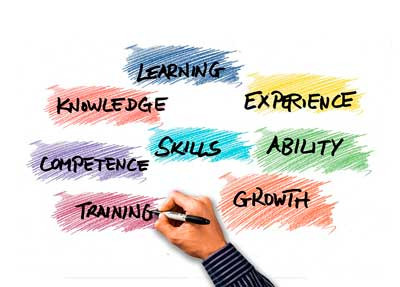
While you’re on the internship it’s a fantastic opportunity to develop skills, things you could never do before. Until I did my internship in renewable energy I had only ever given presentations to classmates and was so nervous beforehand that I dreaded it. However, after the experience of writing out the company business plan and presenting it to would-be investors, I now feel extremely confident in my ability knowing that if I have a good grasp of the material, there is nothing to be concerned about as I can present in an informative manner and comfortably answer questions.

Internships also help in that they expose you to workplace issues that aren’t covered in the classroom. Even simple things like going out with your friends for a few drinks on Thursday evening and not quite fancying an early morning lecture on Friday doesn’t cause much of an issue. This is a totally different issue in the workplace and can lead to big problems, not just an angry boss, but your colleagues genuinely depend on you for group productivity so if you go missing, they will often have to pick up your slack and unless you genuinely can’t get to work, that’s not fair.

Group work at University can be frustrating, but the pressure you feel to get a passing grade is nothing compared to investors or directors who are judging you and your group’s knowledge and ideas.

Practical Experience For Your CV

It’s awesome to receive A’s on your papers at Uni and employers will appreciate this, to a point, after this, they want to see what are you actually capable of? What have you done other than reading and then write a few assignments? An internship is a chance to demonstrate you can put theoretical knowledge into practice.

In my personal experience I found that once I’d done my internship and was able to add tasks and accomplishments to my CV to go alongside my academic achievements, interest from companies skyrocketed. It’s because someone who already has experience is less of a risk. The fact that someone has already hired you and the new company can see what you’ve done really boosts your EMPLOYABILITY.

Get Your Foot In The Door Of An Interesting Company

Jobs or at least, interviews often go to people that businesses and recruiters already have some connection with, this is an unfortunate situation I suffered from for a long time. I had no connections in Barcelona and did no networking, thinking and hoping that my talent and hard work would get me the job, sad thing is in many instances, this isn’t the case. As we will see later in a case study with Munish, he was clever enough to utilize a link between his University and a company which got him an introduction, meaning he was not just a faceless CV anymore, but a real person with skills and something to offer, this is INVALUABLE.

Possibility of full-time work after an internship if you perform well

The internship should never be the ultimate goal, it should be the stepping stone on the way. If you do a great job at the place you’re interning, there’s a possibility of getting a full-time job there! Two of my colleagues in my current company started out as interns and moved onto managerial positions in the company. This is what I mean by ‘foot in the door’ these two are very competent individuals and found their way in by accepting the internship and demonstrating their skills. Not everyone is so lucky but by working hard and producing results, what’s stopping you from doing the same thing they did?

Demonstrate you’re a hard worker

Something my Mum ingrained in me from a young age was the importance of showing up early and when possible, stay late, even if it’s only for 5 minutes. I didn’t realize how much managers love this attitude, someone who stays to get the job done and doesn’t run out the door at the first opportunity.

Hard Worker

Networking

As you will see from a case study later, making connections for the future can be of great benefit further down the road. A friend of mine got a great new job and the first year of his PhD paid for by a man running a company who used to be his manager during his internship. I’m not saying it will work out this way for everyone but it could be something as simple as a job referral or a skills recommendation on your LinkedIn!

Benefits-of-networkingg

A former colleague of mine has gone on to have the best job of any of my friends and anyone my age that I know of (we’ll speak to him later to find out more). He is currently getting paid to travel the world and write about beach soccer, how amazing is that? But how did he get the job? A referral! Someone knew about a vacancy at the place he’s working now and recommended him for the role. He did his time in an internship and learned loads about his industry, now he can combine this with being a great writer and everything came together so that next week he’s off to Portugal to write about beach soccer!

As stated earlier, finding a mentor can be of great benefit because you can be exposed to all the experiences that this person has had, the advice, things to do, things to avoid, how to deal with certain situations but there is also the chance they could put you in touch with someone for your next role!

Benefits-of-mentoring

Test-drive a career: do you want to do this for the rest of your life?

A great passion of mine is protecting the environment and so upon graduation from my Masters, I immediately embarked on an internship in renewable energy thinking this was my way to do something positive for the world.

I soon realized that the job provided almost no freedom, I needed to be between the laboratory, office and factory floor from 9-5 every day. This was great for a while because I was busy (the worst thing in a job is boredom) but it wasn’t something I could do for the next 60 years.

Doing an internship allowed me to do a ‘test drive’ of sorts and whilst I enjoyed my time there and learned a lot, I decided not to accept the offer of a full-time job as it wasn’t right for me. Something I would have been reluctant to do if I had signed a full-time contract, I would have felt obliged to stay.

Internships allow us to test-drive a company as well as the industry. Let’s face it, some companies are great and some are just plain rubbish, no work-life balance, boring job, poor pay, horrible co-workers etc. The internship is a light at the end of the tunnel, knowing you’ll be leaving and not stuck here until your 65! This way you can throw yourself into the job learning as much as possible.

test-drive

Get yourself references to support job applications

Similar to networking, references can help get your foot in the door of a company. Put yourself in the situation of a hiring manager, what mean’s more: a phone call from a trusted colleague or ex-colleague regarding an interesting candidate or one of the 200 CV applications in your email inbox?

Having a reference adds weight to your application, backing up your claims of skills and experience. I can’t tell you the struggles I used to have when applying for a job and they ask for references, who the hell do I put? sure I can email my old manager but…who knows if they’ll reply?!

How To Network

Conclusion
As you can see from the example we’ve used in Andrea, Serena and others, if you work smart, work hard, listen to people who are more experienced and learn from them you can go on to have amazing experiences and awesome careers!

So go and find yourself an amazing in internship and who knows, maybe someone will be asking you to pass on your advice and tips in the future after you’ve had your own amazing experiences! Internships in fields like marketing, finance, sales, teaching, IT and more can be found at EDUINDEX News, so don’t forget to utilize this resource to help you get your own internship!

Write to career@eduindex.org

Video Making/Editing work from home job/internship at Eduindex News

About the work from home job/internship

Selected intern’s day-to-day responsibilities include:

1. Create 1 video daily. Covering Indian news- 20 news in 3-5 minutes

2. Video can be animated or Video
3. Audio quality should be good.

Who can apply

Only those candidates can apply who:

1. are available for the work from home job/internship

2. can start the work from home job/internship between 7th Jun’20 and 20th Jul’20

3. are available for duration of 2 months

4. have relevant skills and interests


Perks and Benefits

Certificate Letter of recommendation Flexible work hours

How to Apply for Job/Internship

Send mail to career@eduindex.org