Nangiar Koothu: Exclusive Domain of Female Artists in Kerala

Kerala is home to several fascinating traditions and art forms. There is the graceful Mohiniyattam, the enigmatic Kathakali and the amusing Ottan Thullal. As we celebrate International Women’s Day this year, let us look at one such dance form that is interestingly, only performed by women.

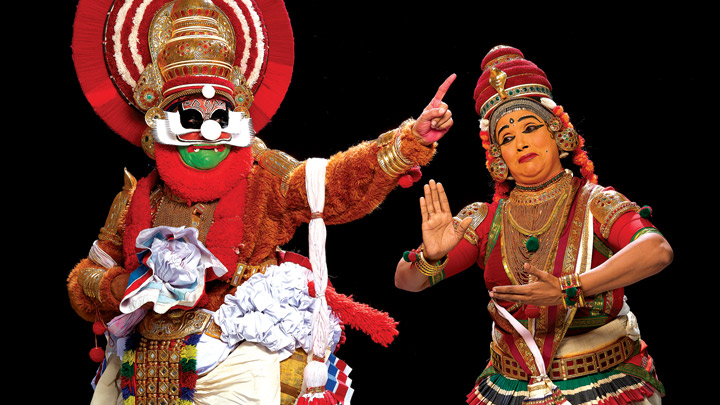
Nangiar Koothu is an art form that evolved from Koodiyattam, an ancient Sanskrit drama tradition. Koodiyattam is performed by Chakyars (a Hindu ‘ambalavasi’ or ‘temple-dwelling’ community) and Nangiars (women of the Hindu “Nambiar” community) together on stage. The Nangiars or ‘Nangiarammas’ as they are called, performed Nangiar Koothu as solo performances purely as a ceremonial ritual in a few temples in Kerala. These performances are staged in a special theatre that forms a part of temples in Kerala called “Koothambalams”. During the 1990s, Nangiar Koothu also experienced a cultural revival much like many other classical art forms in Kerala. The dance form which was until then performed only by a few Nambiar women in some temples across Kerala gained traction after an old acting manual of Sri Krishna Charitam called “Attaprakaram” was discovered in 1982 by Nirmala Paniker and G. Venu. This manuscript which contained 208 slokas dealt with women’s roles in Koodiyattam. Ammanur Madhava Chakyar, a Koodiyattam exponent re-worked the manuscript and made it more popular. It was after this that Kerala Kalamandalam and other training institutions began to witness an increasing number of girl students in the Koodiyattam genre and its offshoots like Nangiar Koothu. This dance form is nowadays no longer restricted to just the Nambiar community. In 1971, Kalamandalam Girija was the first woman from outside the community to learn and perform Nangiar Koothu. Kalamandalam Shylaja, Margi Sathi and Usha Nangiar are other exponents in this field.
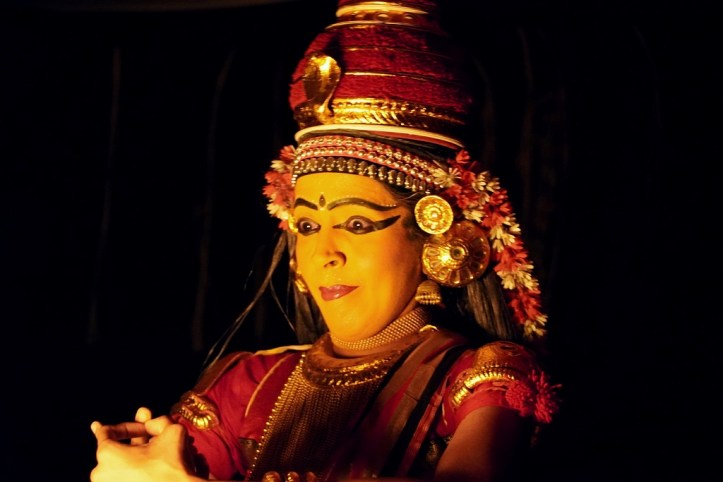
source: nangiarkoothu.com

Nangiar Koothu presents stories from Sri Krishna Charitam, which depicts the life of Sri Krishna. The dancer is accompanied by the vocal artist and percussion instruments such as the Mizhavu (pot drum), Idakka and Thimila. Traditionally, this dance goes on for 12 consecutive days. It has its foundations based on the ancient treatise Natya Shastra by Bharatamuni.

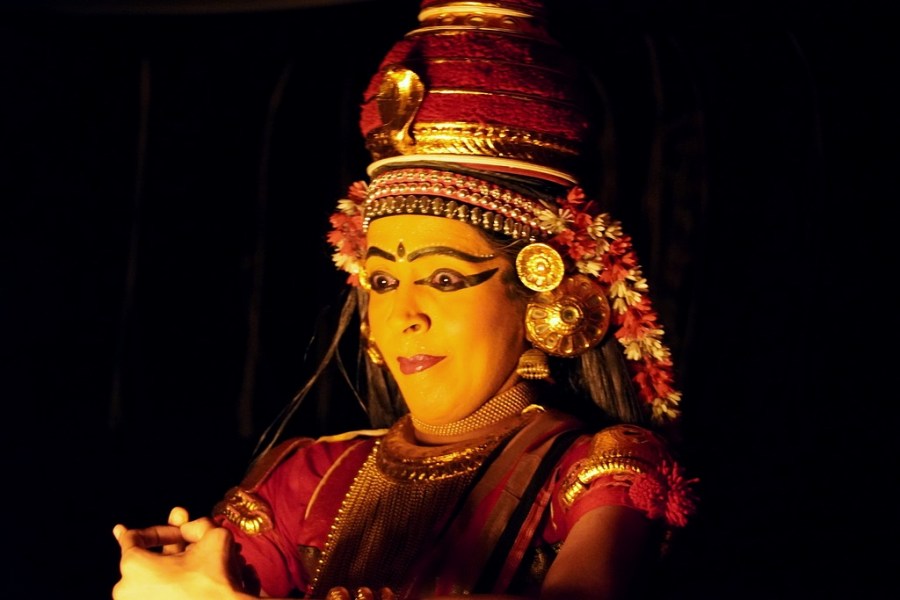
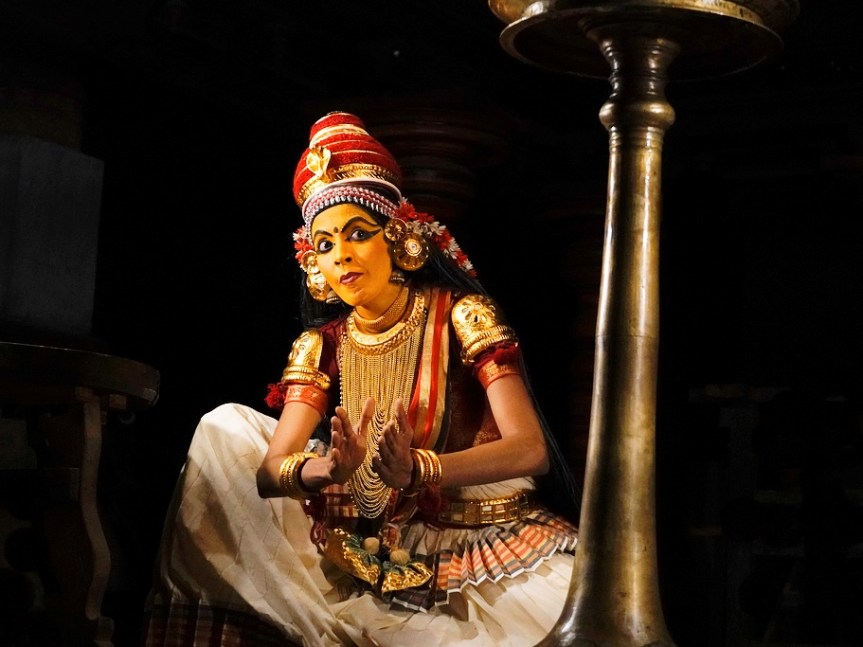
Nangiar Koothu is ‘abhinaya’ or acting-centric, the dancer expressing emotions with her eyes and hand gestures. ‘Nritta’ or pure dance is in focus only during the entry rituals (‘Purappad’). This dance at the beginning is called “Purvaranga Nritta”. During the performance, the Nangiar usually sits on a stool behind an oil lamp and acts out stories using intricate hand gestures, body movements and expressions. The dancer wears a red blouse and a white or cream-coloured skirt laced with gold or “kasavu” embroidery. She also wears red and white flowers in her hair and a distinct red headgear, with a hooded serpent on it probably symbolizing Anantha, the 1000-headed serpent.

This captivating dance form is still performed as a ritual offering in the Trissur Vadakkunathan Temple, Ambalapuzha Sri Krishna Temple, Irinjalakkuda Koodalmanikyam Temple, Tripunithara Poornathrayeswara Temple and Kottayam Kumaranellore Bhagavathy Temple. The performance begins on the day before Ashtamirohini, i.e. Sri Krishna’s birthday, in the Vadakkunathan temple and Ambalapuzha temple. Even though Nangiar Koothu is performed in the daytime, on Ashtamirohini day, it is held at night to match up with the time when Sri Krishna was born. The Koothu starts on the festival day in the Malayalam month of Chingam in the Poonathrayeswara temple and goes on for 8 days. It goes on for 12 consecutive days from the star-day ‘Uttram’ in the month of Medam in the Koodalmanikyam temple.
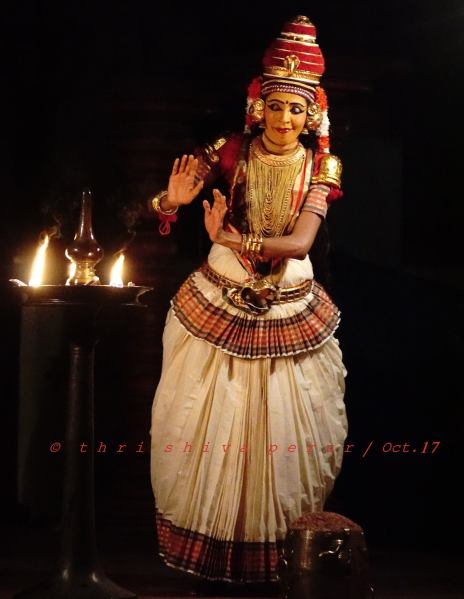
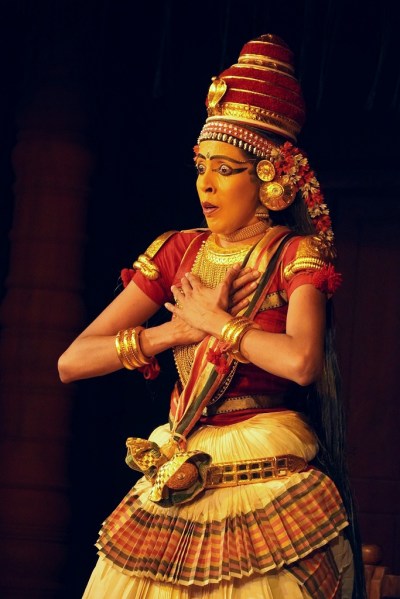
There is a variant form of Nangiar Koothu known as Dasamam Koothu or Chudala Koothu which is performed after an Akkithirippad has passed away. Akkithippad is a brahmin who has qualified himself to perform yagas including the athirathram, the most intricate of the yagas. The Nangiaramma performs on the ‘Sanjayanam’ day in a temperory koothambalam-like set-up, to help the deceased soul and his wife attain moksha. Though it is a rarely-performed dance form, artists like Aparna Nangiar have performed Dasamam Koothu in the last few years, even as recent as in 2021.

Over time, this art form which has historical antiquity of over 1500 years has also seen innovations in its story content. Dancers like Margi Sathi have introduced stories from Ramayana and the Kannaki Charitha into the performances. For art lovers and others alike, Nangiar Koothu is a very alluring dance form to witness and enjoy.        
Traditional Dance Forms of Kerala

The state of Kerala is well known for its luscious landscapes and beautiful backwaters. It is also home to a treasure trove of art forms and literature. These art and dance forms symbolize the rich historical and cultural heritage of the state. Let us take a look at some of the classical dance forms of Kerala that will no doubt mesmerize anyone.

Kathakali

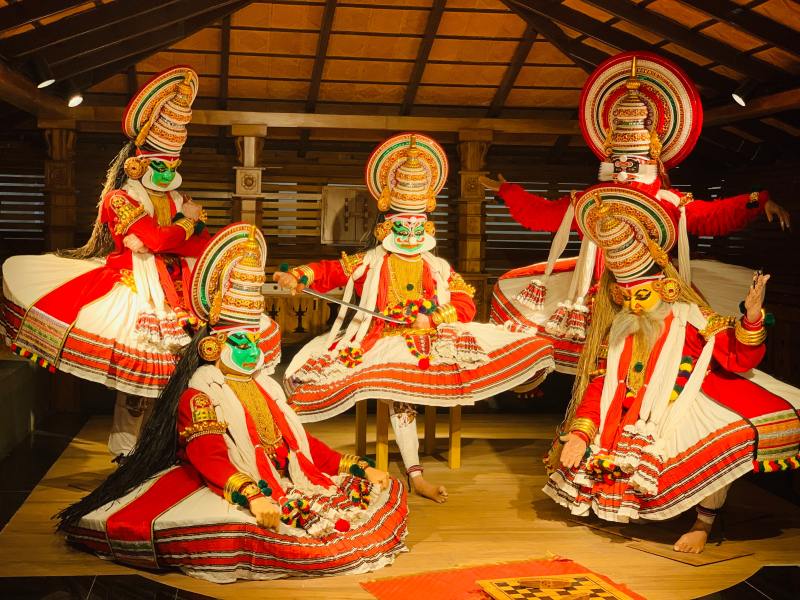
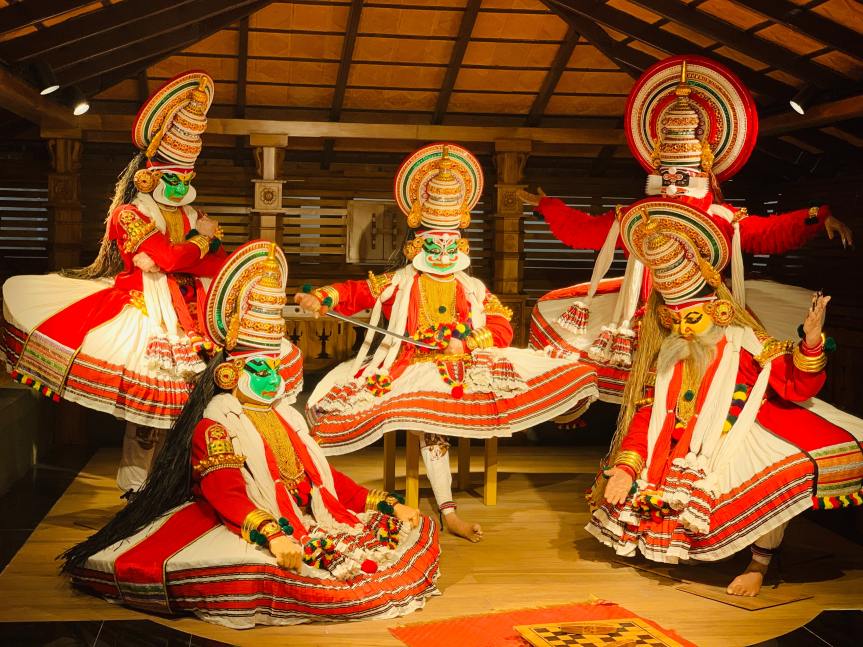
Kathakali is one of the most famous dance forms of Kerala, iconic for its elaborate costumes, colourful make-up, complex gestures and facial expressions. Formally systematized in the 17th century, this dance form has its roots in the temple and folk arts which are traceable to at least the 1st millennium CE. The term ‘Kathakali’ literally means ‘Story-play’. It has elements and aspects taken from Bharatamuni’s Natya Shastra as well as movements incorporated from ancient Indian martial arts and athletic traditions of South India.

A Kathakali performance perfectly blends musical instruments like Maddalam, Chenda, and Idakka, vocal performers, choreography, hand gestures and facial expressions to express ideas. The performances show folk stories, religious legends and spiritual ideas from the Puranas and Hindu epics. Traditionally, it was performed only by males, with female roles also being performed by men. Since the 1970s, women have also entered this field of classical dance. The performances used to be long and extended to many nights but have now been shortened. Taught in the past through the ancient Gurukula-based training system, students of Kathakali today are trained in professional schools like the Kerala Kalamandalam and Trivandrum Margi School.

Kathakali has 6 basic make-up types – Pachcha (green, typically for noble characters like Krishna, Rama, Nala), Kathi (Knife, for villain characters), Kari (Black, for she-demons), Thaadi (Beard, for characters like Hanuman), Minukku (Shining, for female characters), and Teppu (for special characters like Garuda, Jatayu, Hamsa).

Mohiniyattam

Source: wikimedia commons.org

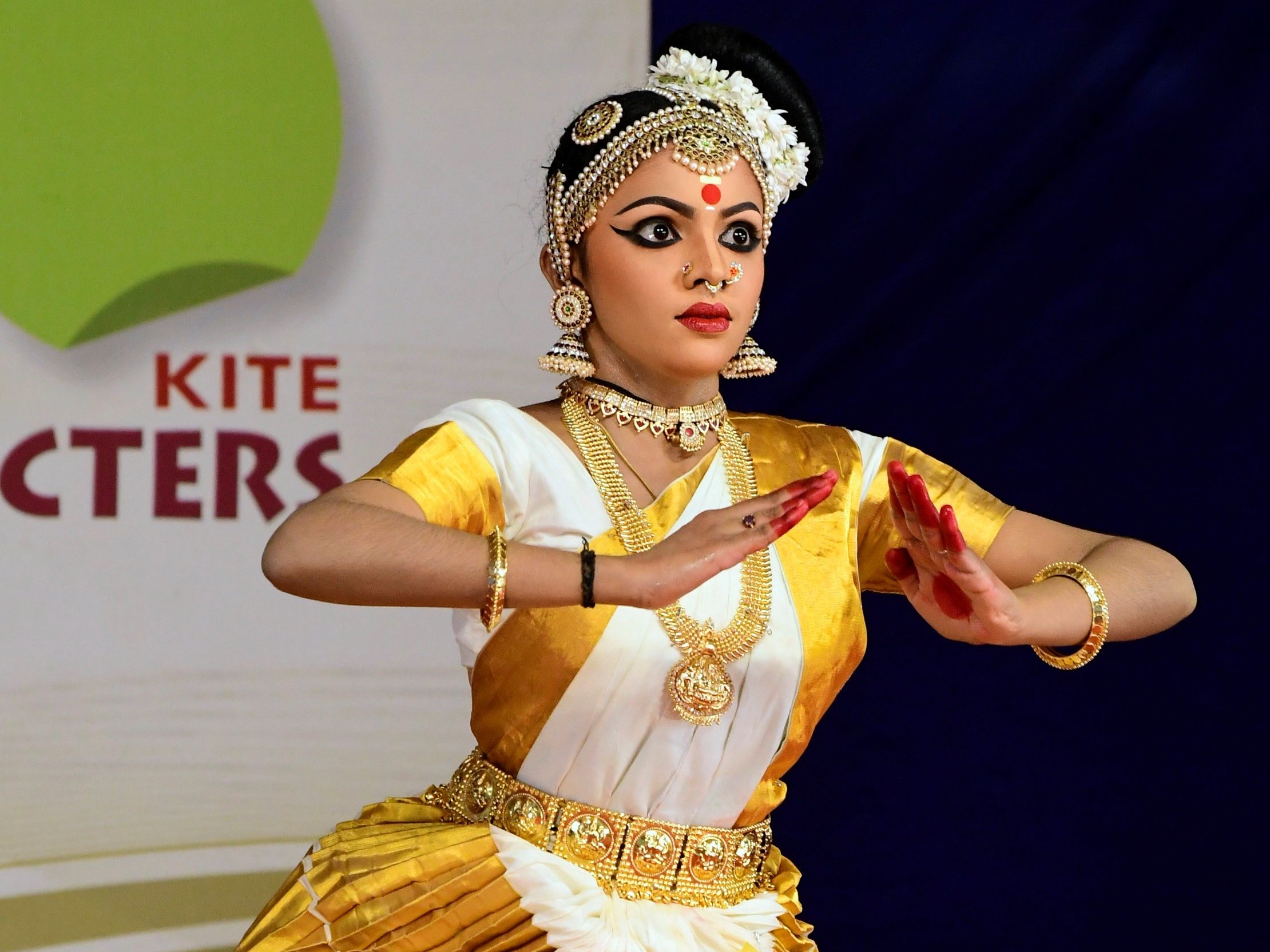
The roots of Mohiniyattam are in the Natya Shastra, following the Lasya style of delicate, graceful and feminine movements, The name comes from Mohini – a divine avatar of Lord Vishnu. It was traditionally performed solo by women although men perform it now as well. A typical Mohiniyattam performance includes Carnatic music and singing, with the songs in a Malayalam-Sanskrit hybrid called Manipravalam. The performers wear a plain white, off-white, or cream coloured saree with gold-laced embroidery. This dance form was banned by the British during their rule, ridiculed as a dance form of the devdasi system. The reintroduction and revival of Mohiniyattam after the Colonial era was spearheaded by the poet Vallathol Narayana Menon, who established the Kerala Kalamandalam dance school, encouraging the training and practice of the dance form.

Mohiniyattam and Kathakali form a part of the 7 classical dance forms of India.

Chakyar Koothu

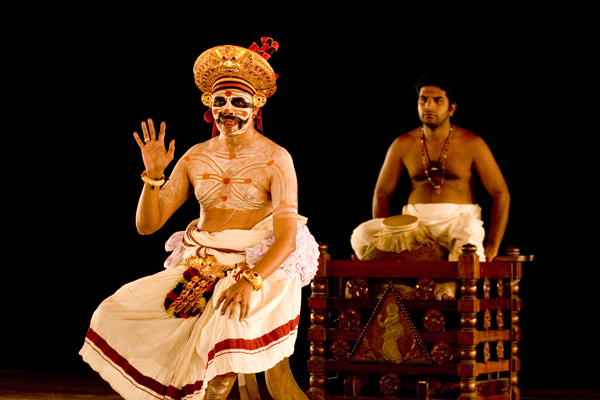
Chakyar Koothu is an art form performed in a place specifically designed inside Hindu temples called a Koothambalam. This dance form was traditionally performed by members of the Chakyar community in times of temple festivals. It is performed solo, with the performer narrating stories from Puranas and Hindu epics like Ramayana and Mahabharata. The performer wears a distinctive headgear and black mustache and has his torso covered in sandalwood paste and red dots. The performance is basically a monologue, oftentimes incorporating humor and wit to comment on current events and members of the audience. The performer is accompanied by musical instruments namely the pot drum Mizhavu and a pair of Ilathalam.

Nangiar Koothu

source: nangiarkoothu.com

Nangiar Koothu is a traditional dance form related to the art of Koodiyattam. Similar to Chakyar Koothu, it was presented only in Koothambalams, Performed solely by women, this dance form traditionally allowed only women of the Ambalavasi Nambiar community to learn it, but now is open to all. Nangiar koothu shows stories from Sree Krishna Charitam – a text depicting the life of Lord Krishna. The performer or Nangyaramma presents stories of Krishna using body movements, hand gestures and facial expressions and is accompanied by the Mizhavu.

Koodiyattam

souce: Keralatourism.org

Koodiyattam which literally translates to ‘Combined Act’ is an art form recognized by UNESCO as Masterpiece of the Oral and Intangible Heritage of Humanity. It is also performed in Koothambalams and combines Sanskrit theatre performances with elements of traditional Koothu, much like Chakyar Koothu. It is performed by Chakyars and Nangyarammas, who perform together on stage, unlike the solo performances of Chakyar Koothu and Nangiar Koothu.

In both Koodiyattam and Chakyar Koothu, Guru Mani Madhava Chakyar is considered the greatest master and artist. He introduced the art form to people outside the Chakyar community and outside Kerala.

Ottan Thullal

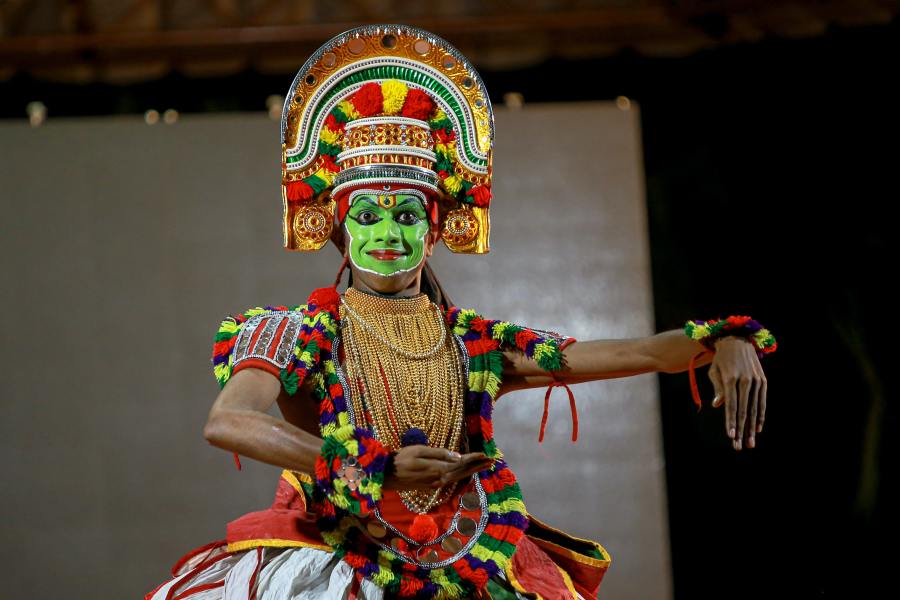
There are 3 varieties of Thullal – Ottan Thullal, Seekanthan Thullal and Parayan Thullal, of which Ottan Thullal is the most popular. It was introduced by the legendary poet Kunchan Nambiar in the 18th century, with its principles based on the Natya Shastra. It is said that Kunchan Nambiar developed this dance form to get back at a Chakyar who ridiculed him for falling asleep during a Chakyar Koothu performance. Ottan Thullal performances are often laced with humour, criticizing and commenting on society. The performer is accompanied by a Mridangam, Idakka and a pair of Ilathalam.

The performers wear green make-up much like a Pachcha character in Kathakali, with colourful costumes. They dance and recite while a chorus of 1 or more artists repeats the sentence that is recited. They perform in Malayalam, making it easily understandable for the local audience, and use old sayings and elements of folklore.

Mcaffeine Neem Face Wash

Mcaffeine Neem Face Wash Cleanser With Argan Oil & Vitamin E For Men And Women – 150 ml https://www.amazon.in/dp/B071X49GR9/ref=cm_sw_r_apan_glt_fabc_9B6RQWH965EW0W12D2T2

Factors used in this face wash are Caffeine, Neem, Argan Painting and Vitamin E. These all factor are skin-friendly. They not only clean your skin but also secure your skin. It’s extremely delicate to the skin, makes the skin smoother and vigour.

NIVEA Women Face Wash

NIVEA Women Face Wash for Oily Skin, Milk Delights Besan, 100 ml https://www.amazon.in/dp/B07LCQW2RC/ref=cm_sw_r_apan_glt_fabc_dl_9T8N600AC02KC1FZXA6Q?_encoding=UTF8&psc=1

NIVEA Milk Delights Minding besan Facewash does a nice job as it cleanses well, removing redundant canvas and dirt, without leaving skin dry or any slippery u forward. It adds a subtle fluorescence to the skin on regular employment. Suitable for both, dry and gushing skin.

Clean & Clear Foaming Face Wash

Clean & Clear Foaming Face Wash For Oily Skin, 150ml https://www.amazon.in/dp/B00CI3HDMU/ref=cm_sw_r_apan_glt_fabc_HKAP31DH2V0G6FYKDJP1

A pomade-free facial cleanser that removes extra slick to help heal and avert boils. Formulated specially for gushy and combination skin types, this detergent flushes supererogatory canvas and contaminations. It helps combat papules and prevents them from returning. The detergent has a gentle formula suitable for everyday use.

Neutrogena Deep Clean face wash

Neutrogena Deep Clean Facial Cleanser For Normal To Oily Skin, 200ml https://www.amazon.in/dp/B006LXDQRY/ref=cm_sw_r_apan_glt_fabc_dl_0F1YKXWWE1NGE0KQYS20

 Neutrogena is notable for making face fens for fulsome, acne-prone skin. This is your most solid option in the event that you have fulsome, and acne-prone skin. Delicate on your skin yet extreme on skin inflammation, the specific canvas-free equation tenderly purifies your skin from deep out. This face fen for fulsome skin contains Salicylic acid which is known to dispose of skin break out and reduces coming bunks.

Himalaya Neem Face Wash

Himalaya Herbals Purifying Neem Face Wash, 100ml https://www.amazon.in/dp/B002Q5JE2C/ref=cm_sw_r_apan_glt_fabc_1D670NAQADQ4RFK07F0X

Himalaya Herbals Purifying Neem Face Wash reduces skin inflammation and hickeys for all skin types. It has the combination of neem and turmeric for deep purification the skin from out without drying it out. It battles bacterial complications and forestalls there-occurrence of facial irregularities and calms your skin. It likewise improves the adaptability of the skin and positions out its tone.

How Should You Write Your READING RESPONSE?


Why Do It?

The reading response gives you an avenue to invite yourself into the written text and to make a connection with it. In many college courses you will be assigned to write papers about subjects with which you have no personal interest. Reading responses help to generate connections between the reader and text.


How?

The key to writing a compelling academic paper for any college course is being able to forge a personal connection on some level with your subject. You must care in some way about your subject, or else your writing will be lifeless, and your instructor, a human being, will have read a re-hashing of the facts of his/her course a million times before. Or, forget about writing for a college course. What about writing a report in the workplace?  What about proposing a new idea to your boss?  Such careful awareness of audience and tailoring your writing to a specific audience is an aspect of successful writing we’ll work on in this course.  However, you can’t even get to the point of getting someone else to care about what you are writing if you don’t care yourself.


That doesn’t mean you should only write about subjects that interest you.  On the contrary, half of the battle in writing a successful paper is coming up with an idea on a topic which is usually of little interest to you—finding an angle or connection through which you can approach or examine the text. What does it remind you of? Why do you respond emotionally? Or why do you not respond? Ask questions to find avenues into a piece of writing.  The creativity involved in continually forging such difficult connections will help you develop into a writer who can grab a reader’s attention by approaching a topic or subject through your own unique personal lens, that is, by looking at something through an angle no one else can see. 


Through active responding to reading, and examining your responses, you can learn to practice new approaches of interpretation to common themes.  Many of the ideas you generate in the reading responses will prove useful when you sit down to write the short essays (or maybe even your research paper).

KodiSoftware Download For Free | Top sites


Let’s start with knowing that what is Kodi software and why one should have it.

What is Kodi software?

Initially released in 2002 [as Xbox media play], in 2003 [as Xbox media centre]. Kodi software application is developed by the XBMC Foundation, Kodi is a free and open-source media player software application, it’s a non-profit technology consortium. It’s a 10-foot user interface with television and remote controls.

With a view of most streaming media such as podcasts, music, videos and views from the internet, one can access all Common digital media. These are some of its platform PowerPC, IA-36, ARM and x64(x84-64). Available in 12[75 including incomplete translations] language. HTPC it’s is a multi-platform home-theater PC application. Kodi is highly customizable so allow it’s users to stream media content via online services such as Crackle, Amazon Prime Internet Videos, Pandora Internet Radio, Spotify and Youtube.

The later version of kodi has a (PVR) graphic front and end. All these available advantages make Kodi a great software to be utilized.

 Let’s now dive into how to download Kodi for free.

Already millions of people are enjoying this great software for free. Kodi is running on the most common processer architectures, iOS, Android, MOS X and Windows operating systems.

How to download : select your platform

As Kodi supports a large range of devices and operating systems, it is multi flavour. Simply select your platform in which you want to install Kodi on and enjoy Kodi.


9 best vegan Omega-3 Supplements (2021) per Dietitians.

If you don’t have fish on your meal menu doesn’t mean you can’t get all the benefits of omega-3.

Omega-3 is also found in many plant foods, like chia and hemp seeds, in algal oil too. But mostly it is found in fish oil in significant levels.

For your vegan friends, there are plenty of options who wants to intake omega-3 and all of EPA, ALA L AND DHA.

Kerala Govt. takes steps againt Dowry

Societies have a long history of male domination, which can be witnessed from ancient rituals and customs.
Men are traditionally bread earners whereas their counterparts females are homemakers.
With time few things have changed but the major picture remains quite constant.
Dowry is an unethical practice in our society, hidden behind the name of gifts or blessings by elders. 

Many strategies and steps are taken by the government, but still, it’s prevalent. A new development took place in the string of events as now Kerala government directs employees to give affidavits that no dowry is taken by them. This circular was issued by the Department of Women & Child Development.
Under its new rules, all-male married employees are directed to submit a declaration stating that no dowry is taken from the bride’s family.
It comes after several cases of deaths due to dowry-related crimes reported in the state.
The declaration is to be submitted to the concerned department within 30 days of marriage, signed by the employee’s wife and inlaws. 
In case of a fake affidavit, legal action will be taken against the official. Moreover giving or taking of the dowry will be punished by the imprisonment of a term not less than 5 years and a fine of Rs 15,000.

Feminism in India

Ideally, what should be said to every child, repeatedly, throughout his or her school life is something like this: ‘You are in the process of being indoctrinated. We have not yet evolved a system of education that is not a system of indoctrination. We are sorry, but it is the best we can do. What you are being taught here is an amalgam of current prejudice and the choices of this particular culture. The slightest look at history will show how impermanent these must be. You are being taught by people who have been able to accommodate themselves to a regime of thought laid down by their predecessors. It is a self-perpetuating system. Those of you who are more robust and individual than others will be encouraged to leave and find ways of educating yourself — educating your own judgements. Those that stay must remember, always, and all the time, that they are being moulded and patterned to fit into the narrow and particular needs of this particular society.

Doris Lessing, The Golden Notebook

Feminism in India is a set of movements aimed at defining, establishing, and defending equal political, economic, and social rights and opportunities for women in India. It is the pursuit of women’s rights within the society of India. Like their feminist counterparts all over the world, feminists in India seek gender equality: the right to work for equal wages, the right to equal access to health and education, and equal political rights.Indian feminists also have fought against culture-specific issues within India’s patriarchal society, such as inheritance laws.

The history of feminism in India can be divided into three phases: the first phase, beginning in the mid-19th century, initiated when reformists began to speak in favor of women rights by making reforms in education, customs involving women; the second phase, from 1915 to Indian independence, when Gandhi incorporated women’s movements into the Quit India movement and independent women’s organisations began to emerge; and finally, the third phase, post-independence, which has focused on fair treatment of women at home after marriage, in the work force, and right to political parity.

Despite the progress made by Indian feminist movements, women living in modern India still face many issues of discrimination. India’s patriarchal culture has made the process of gaining land-ownership rights and access to education challenging. In the past two decades, there has also emerged a trend of sex-selective abortion. To Indian feminists, these are seen as injustices worth struggling against and feminism is often misunderstood by Indians as female domination rather than equality.

As in the West, there has been some criticism of feminist movements in India. They have especially been criticized for focusing too much on privileged women, and neglecting the needs and representation of poorer or lower caste women. This has led to the creation of caste-specific feminist organizations and movements

According to Maitrayee Chaudhuri, unlike the Western feminist movement, India’s movement was initiated by men, and later joined by women. But feminism as an initiative by women started independently a little later in Maharashtra by pioneering advocates of women’s rights and education: Savitribai Phule, who started the first school for girls in India (1848); Tarabai Shinde, who wrote India’s first feminist text Stri Purush Tulana (A Comparison Between Women and Men) in 1882; and Pandita Ramabai, who criticized patriarchy and caste-system in Hinduism, married outside her caste and converted to Christianity (1880s). The efforts of Bengali reformers included abolishing sati, which was a widow’s death by burning on her husband’s funeral pyre, abolishing the custom of child marriage, abolishing the disfiguring of widows, introducing the marriage of upper caste Hindu widows, promoting women’s education, obtaining legal rights for women to own property, and requiring the law to acknowledge women’s status by granting them basic rights in matters such as adoption.

The 19th century was the period that saw a majority of women’s issues which came under the spotlight and reforms began to be made. Much of the early reforms for Indian women were conducted by men. However, by the late 19th century they were joined in their efforts by their wives, sisters, daughters, protegees and other individuals directly affected by campaigns such as those carried out for women’s education. By the late 20th century, women gained greater autonomy through the formation of independent women’s own organisations. By the late thirties and forties a new narrative began to be constructed regarding “women’s activism”. This was newly researched and expanded with the vision to create ‘logical’ and organic links between feminism and Marxism, as well as with anti-communalism and anti-casteism, etc. The Constitution of India did guarantee ‘equality between the sexes,’ which created a relative lull in women’s movements until the 1970s.

Link

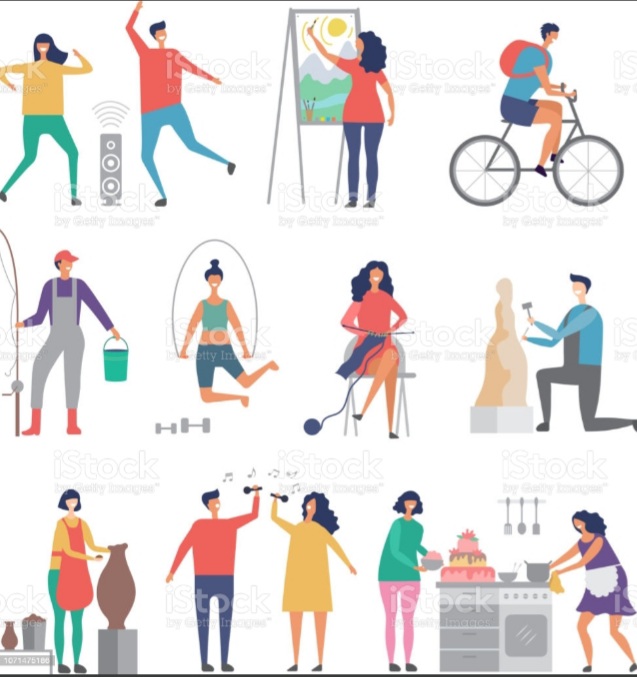
Hobbies

Hobbies are very common. Everyone have their own priorities and likes regarding the hobbies. My hobby is listening to the music.

Listening to songs is such a nice thing. Every individual starts listening to the songs when he or she is addicted to them and really cannot come out of it. The music the songs will change the mood of the person. The songs in the musical interrelated with the human beings.

It is so important to prioritize the positive things in and around us in the life. One of the positive things is the music. Music makes Man convertible. Whatever the situation may be, it it helps the individual to come out of the situation and also to move one and into a new situation. The music you listen motivates life. The lyrics in this song will motivate the individual and help the individual at anytime.

It is very important for an individual to prioritize the music and the songs in the life. Because the songs or the music helps the individual to feel stress-free. It also helps the individual to relieve the tension and all the depression he or she had.

Music is described for every emotion. Every emotion is described in its own way in mmusic. Every emotion is clearly explained by the respected song.

Hobbies can often also be very expensive. Luckily, there are still lots of cheap and even free hobbies that are fun, educational and rewarding.


Here some of fun and low-cost hobbies


DIY :
Buy a book on DIY and start on anything that needs fixing around your house, make your own clothes or give your friends self-made presents.


WRITE A THEMED LIST, AND WORK THROUGH IT :
Make a list of things you want to do or see. It could be anything from films you want to watch to local places you want to visit. Try to work through your list in a month.

WATCH ONLINE DOCUMENTARIES :


You can find lots of free documentaries on the websites of Tv channels, or even on youtube covering hundreds of subjects, such a history or the ocean. You could also finally watch your favourite actor’s ,author’s or musician’s biography.

LEARN NEW THINGS :
Educating yourself doesn’t have to be boring. What are you passionate about? It could be science , the oceams or even horror films. Google your interests and become a knowledgeable as you can about your passions.

GO CAMPING :


Try going caming with your friends during the weekend. All you need is a tent, some snacks, and drinks. If you dont live near woods or a forest, you can even try camping in your back garden.

DISCOVER NEW MUSIC :


Look for new music on music websites or youtube or spotify by searching for your favouirte genre. You could find a band you love.

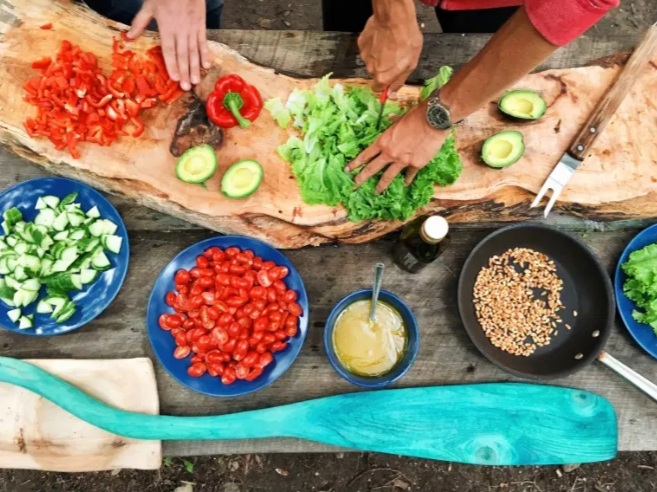
LEARN HOW TO COOK :


cooking is a useful life skill as well as a fun way to spebd your time. Invest in cheap ingredients and learn how to cook all of your favourite meals.

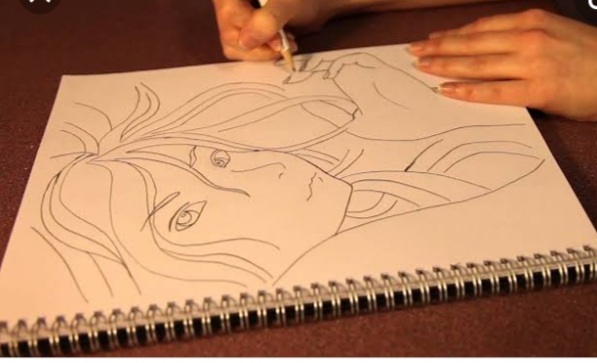
TRY DRAWING :


Drwaing is a really enjoyable way of expressing yourself. There are lots of different ways to draw, from painting to sketchibg to doodling, so choose one you are comfortable with and give it a go!


START INVESTING :


Investing is a great way to earn some extra money, just make sure you do your research properly when you first start.you don’t have to invest large sums, but small ones will be just as rewaeding if you have a plan.

WRITING :

Writing is one of the chepest ways to have fun. From blogging to trying your hand on a book, there are lots of different ways to enjoy writing. All you need is a pencil and paper to get started.PLAYING CARDS :
Invite some friends over , and get a pack of cards. There are hundreds of different games. You can play with cards and a pack is fairly cheap.

LEARN TO DANCE :


This hobby is great for your body and enjoyable pastime. Use youtube vidros and tutorials to teach yourself new dance moves.


READING :


Reading is a great way to exercise your mind.you can choose to lose yourself in a fictional world, learn more about your own world, or read the autobiography of someone you adimre. If you decide to pick reading up as a hobby, consider getting a library card for your local library.


Remember , the secret of life, happiness and fulfillment is simple: ” Find three hobbies you love: one to make you money, one to keep you in shape, abd one to be creative” .

Do you know about Maritime laws in india ? Let’s see some marine offenses

Definition of maritime laws :

In its counterparts as public law , it widely known as “the law of sea “. It also called Admiralty law. the process of carrying goods through sea, rules concerning protection and maintenance of ships at sea, registration and damage to ships, marine insurance etc. , is covered under maritime laws .

As india is surrounded by water from the three sides , it created nature condition for Marin trade after the water territorial trade started.

Legislations prior to Independence : maritime laws in India were governed under the British government. There are some of the regulations which deal with various aspects of maritime in India.

  • Coasting Vessels Act, 1838
  • Indian Registration of Ships Act, 1841,
  • Admiralty Offences (Colonial) Act, 1849
  • Inland Steam Vessels Act, 1917
  • Indian Ports Act, 1908
  • Control of Shipping Act, 1947

Legislations after independence : after the  independence sea laws mostly governed under article 297 of the constitution. And there are different lex on waters, continental shelf, EEZ and other maritime zones.

Some of the acts are there , for maritimes affairs . This are

  • The Merchant Shipping Act, 1958
  • The Admiralty (Jurisdiction and Settlement of Maritime Claims) Act, 2017. 
  • Article 297 of the constitution

Marines crimes , are frequent offenses which  have been committing in sea . There are some marine offences mentioned below –

  • Maritime Piracy
  • Smuggling Exotic plants and animals
  • Unauthorized entry
  • Illegal Carrying of Weapons and artillery
  • Maritime Drug trafficking
  • Maritime Human Trafficking
  • Discharging in Ocean Waters
  • Sailing or fishing in unauthorized areas–
  • Tax evasion

Maritime piracy is an illegal act of violence, detention or destruction against a ship , on person or property, for private purposes, by the crew or passengers of a private ship . Piracy also includes inciting and intentionally facilitating such acts of violence, and voluntarily participating in the operation of a pirate ship . Pushiment for piracy is prescribed in anti maritime piracy bill 2019 , that is (i) life imprisonment ; or (ii) death , if the act of piracy is caused or seek to cause death.

Smuggling Exotic plants and animals : For a ship without authorization, its illegal to do Smuggling of exotic plants and animals for wildlife smuggling. This is because wildlife smuggling involves the isolation of plants and animals. When they arrived at the destination, they may not be able to adapt to the new place. Animals may also cause vulnerable diseases in people. And it may also leads to the serious illness or death of animals . To smuggle Endangered Species of Wild Fauna and Flora , is crime in maritime law.

Unauthorized entry : the ship must seek permission from government of that nation , For entry in a nation’s marine boundary . Sailing on that nation’s waters without a permission is a maritime crime and punishable in all countries. And a person who illegally and secretly boards and hides in to the ship, without the consent of ship owner and master, to travel into international waters to reach some other country without any monitory payment and legal documents , is known as stowaway.

Illegal Carrying of Weapons and Artillery : to carry weapons and artillery, throughout the water territory of any country , which is not legally bonded , is a martime offence .Goods which are sensitive in nature can be transported by specific ships only . Bringing in weapons on a ship, is not authorized , it is a punishable offense.

Maritime Drug trafficking : maritime drug trafficking means transportation of illegal drugs produced in this region to global consumer markets through using ships . To sell drug, is illegal in itself and trafficking of it become more severe offence .

Maritime Human Trafficking : maritime Human Trafficking involves the use of force, fraud, or coercion to obtain some type of labor or commercial sex act , through exporting victim in other country vie ships .

Discharging in Ocean Waters : it refers to the sewage discharge done by the vessels and ships in the water territory of any nation . Marine pollution is a serious issue and almost all countries have strict policies against ships discharging sewage or oil into their coastal waters.

Sailing or fishing in unauthorized areas : it’s an offence to do sailing in an areas of water territory where the sailing or fishing is not allowed .

Tax evasion : ship owners trying to evade taxes through false documentation or incorrect representation of cargo material have been increasing rapidly, posing a threat to maritime security. It’s a white collar crime.