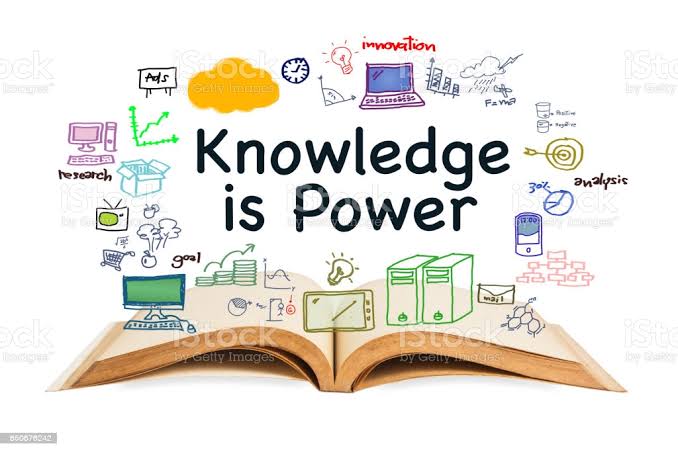
Being knowledgeable!

Knowledge plays an important role in personality development of an individual. It is important to know what’s going around you and what needs to be done, be it social, economical or technical. Confidence comes with knowledge. You cannot stand an interview without having appropriate knowledge. Neither can a person start his own venture without having proper knowledge about the field he is willing to enter. It is all linked, whatever sphere of life it might be. Knowledge stands at the top.
Photo by Janko Ferlic on Pexels.com

It is never limited to books or magazines; it can also be gained through experience and learning which is an important characteristic of a human. We learn by seeing, watching and observing things. The bookish language is either tricky, boring, lengthy or includes jargon which makes it difficult to get the true meaning of things and hence can be misunderstood. Here, the importance of practical knowledge comes into play.

You see, how vast is the field of knowledge is! It is a field in itself since it is either not accessible to all or those who can, fail to harness enough of it. It is a study where you learn for your interest and observe to know.

The emerging fields to gain knowledge can be finance, social, medical or anything that might interest you and would help you. Knowledge is not a force. It is the basics of a good personality and the reason behind the confidence of a person. Even if you are involved in house chores, it is important that you know what, why, how are you doing or carrying out your work. This builds efficiency and confidence in oneself. Nobody can question your ability if you are a knowledgeable person, in your field.

Some people carry diverse knowledge, the reason being their desire to know and explore more. Limiting yourself to books or doing manual work without good know-how can be boring. Many-a-times people opt to study the subjects which are totally out of their interest, just to get a good job with considerable earnings. Such businesses don’t go well and consequently affect the health of a person. This happens because they make it a burden and try to gain knowledge in a field they don’t belong to. Life is all about exploring new horizons and living them freely. Limits in education obstruct the growth of a person. Go beyond the textbooks and learn from the nature. Know your destiny, what is your purpose and how should you approach it. Again, knowledge about the ways to approach a situation is important. Always choose the right path no matter how difficult it might be. Of course, there are no good things easy and free. Struggle will lead you to the purpose of your life. Just don’t forget to “live” the journey.

Photo by Jill Wellington on Pexels.com

Knowledge concerns with personal well-being too, besides caring for the world. The learning you get from your parents and teachers, the experiences you gain from failures, the freshness you feel in the nature, all are a part of the big world of knowledge.

You can find solutions to your as well as others’ problems if you are knowledgeable. Also, improving and constantly gaining knowledge is important whatever area it may concern. You need to be well updated so as to put forward your best opinions and views. It might appear hectic at first but gradually you will get better at knowing things. Making it a habit will help a lot in future. People usually prefer and refer journals, newspapers, etc. for the purpose but “observing” is the best practice to get an insight and build a perspective.
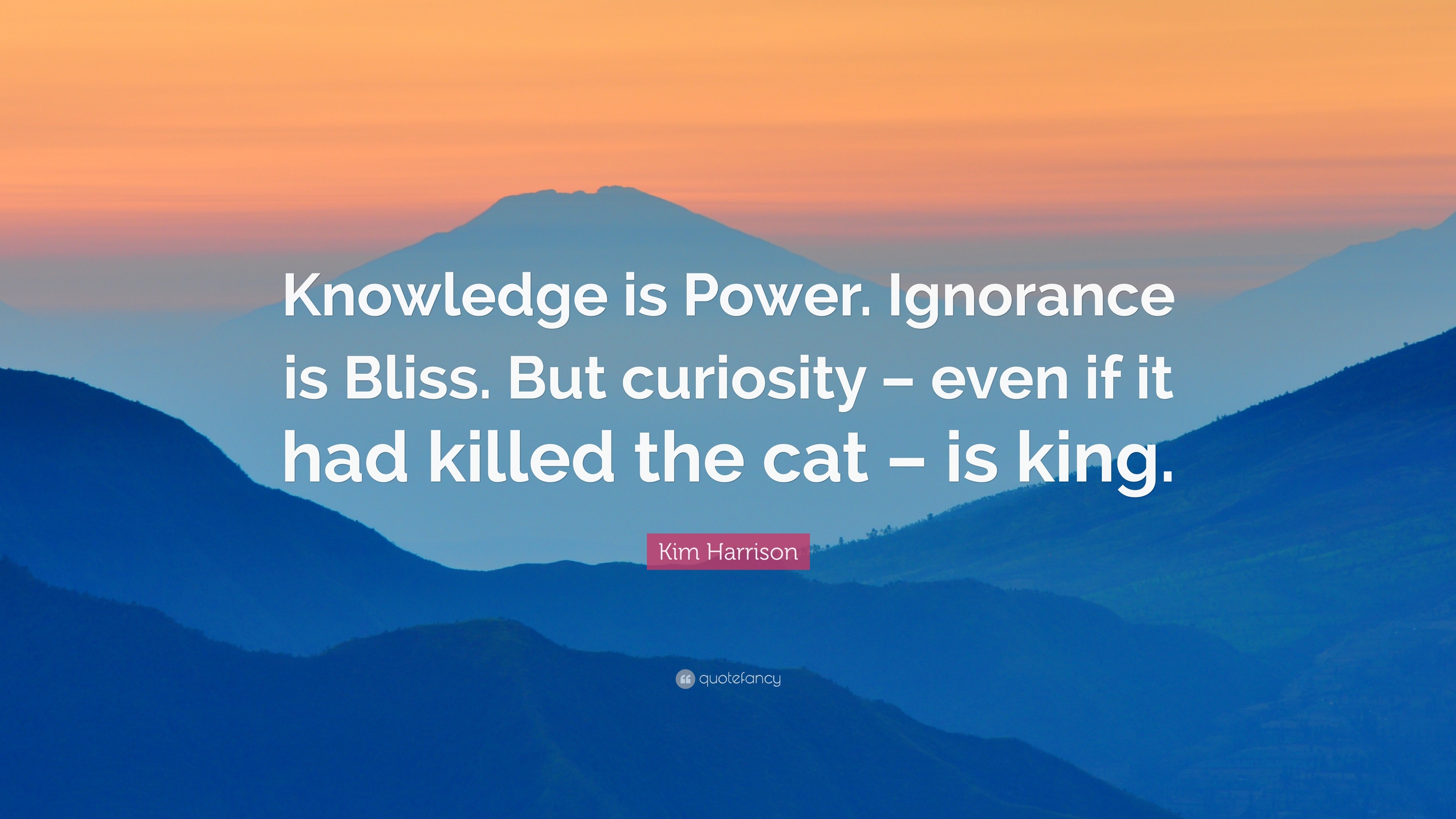
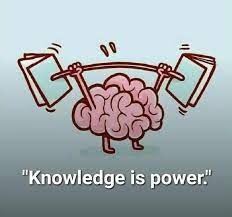
IF KNOWLEDGE IS POWER, WHY IGNORANCE IS BLISS ?

Knowledge means understanding of something such as facts, information, description and skills. It is the source of power to man and this distinguishes him from other creatures of the universe. However man is genuinely more vulnerable than numerous creatures, for he can’t see similar to a bird, nor can lift heavy weights as certain creatures. In any case he is the most remarkable animal on earth. This power essentially comes to him from information not from actual strength. ‘Knowledge is power’ implies that a man has instruction and a full oversight on his life by utilizing the strength of information. This means a person has the resources to express his views dynamically and make intelligent decisions based on his every day situations, awareness and understanding.

Kim Harrison Quote: “Knowledge is Power. Ignorance is Bliss. But curiosity  – even if it had killed

Ignorance, nonetheless, is “an absence of information, instruction, or mindfulness”. Knowledge is amazing, indeed, however a few people think it is incredible to pick when you need to know and proficient in something. This is the reason ignorance is bliss for some individuals. While knowledge is something you can decide to have, ignorance is picking whether you need to have a specific information. In any case, having an “ignorance is bliss” mindset is like people who love to procrastinate. They realize they have a forthcoming cutoff time, yet they fear the possibility of managing it, thus they delay it until they can no longer do so. Ultimately, they’ll encounter the cutoff time. Is ignorance truly euphoria? You can decide to not know something, however sooner or later, whatever information you’re attempting to keep away from will introduce itself to you. Knowledge is genuinely power, as you have control.

In any case, we can’t deny the way that sometimes “ignorance is bliss”. For instance, imagine a situation wherein an exceptionally giant meteor will hit earth. Having the information on this you will attempt each conceivable thing to save earth. You will attempt to change the predetermination. Eventually, you will either be successful or not. Notwithstanding, in case you were totally ignorant about this reality you would have proceeded with your life or would have attended parties, not realizing the end is near. The person that have the knowledge about the incoming meteorite may have the power to change something but he or she can never experience happiness or bliss at that kind of situation knowing their impending demise. He may get miserable or cry over the way that world is reaching a end.

VEDAS

The word Veda means Knowledge. Vedas are the earliest piece of literature that was written in the Sanskrit language. These were handed down from one generation to the other orally by the pandits who learned this from their ancestors. Even if there were no facilities to preserve the Vedas through the art of writing, it is preserved by transmitting to the generations orally. In Hindu culture, Vedas are considered spiritual and everlasting revelations. Vedas come under Shruti which means what is being heard. There are four Vedas, each of which was composed of different ages. However, it is believed that it always existed and sages chanted this in their deep meditative states. The four Vedas are – Rig Veda, Yajur Veda, Sama Veda and Atharva Veda.

RIG VEDA

The earliest of Vedas is the Rig Veda. It is a set of 1028 hymns in Vedic Sanskrit. Many of those are beautiful descriptions of nature. The prayers in this seek prosperity and well developed and cultured society. It is believed that these compositions are the natural outburst of Vedic rishis when they went through the mental transcendental stage. Some of the prominent rishis of this period are Vasistha, Gautama, Gritasamada, Vamadeva, Vishvamitra and Atri. Indra, Agni, Varun, Rudra, Aditya, Vayu, Aditi, and Ashwini twins are the eminent gods of this Veda whereas Usha (the goddess of dawn), Vak (the goddess of speech), and Prithvi (the goddess of earth) are the notable goddess of the Rig Veda. Do you know that the majority of the hymns spoke of universally recognized higher values of life like truthfulness, honesty, dedication, sacrifice, politeness, and culture? Rig Veda also provides knowledge about the social, political, and financial conditions of ancient India apart from religion.

YAJUR VEDA

The word Yajur means sacrifice or veneration. This Veda is mostly related to Rites and mantras of different sacrifices. It tells the directions and ways to conduct the yajnas. It is a mixture of both prose and poetry. Being a treatise on rituals, it’s the foremost popular of the four Vedas. Yajur Veda has two main divisions called Shukla and Krishna Yajur Veda i.e., Vajasaneyi Samhita and Taitriya Samhita. This mainly talks about the social and religious aspects of India at that time.

SAMA VEDA 

The term Sama means melody or songs. This contains the tunes for the recitation of Hymns. Sama Veda is mainly of 16,000 ragas and raginis which means musical notes. Only 75 verses out of 1875 verses are original and others belong to the Rig Veda. However, the Sama Veda gives the tunes for the recitation of the hymns of the Rig Veda. It may be called the book of Chants (Saman). This book stands as evidence of Indian music during this era.

ATHARVA VEDA

The Atharva Veda is also called the Brahma Veda. It talks about the treatment for ninety-nine diseases. This Veda is originated from the 2 rishis called Atharvah and Angiras. The Atharva Veda is of immense value because it represents the religious ideas at an early period of civilization. It consists of two main branches namely, Paipaddala and Saunaka. This book gives detailed information about the family, social and political life of the later Vedic period. To know the Vedas, it becomes mandatory to know the Vedangas, the limbs of the Vedas. The Vedangas talk about Siksha (education), Vyakarana (grammar), Kalpa (rituals), Nirukta (etymology), Chhanda (metrics), and Jyotisha (astronomy). 

Each Veda is composed of 4 parts: The Mantra-Samhitas or hymns, The Brahmanas or explanations of Mantras or rituals, Aranyakas, and Upanishads. The division of the Vedas into four parts is to suit the four stages during a man’s life.

Slime

Definition

a thick, wet, unpleasant substance that covers something

Slime is made from PVA school glue and a natural mineral called Borax, which is found in household items, such as eye contact solution and natural laundry detergents. When mixed, a reaction forms between the ions in Borax with the molecules in the PVA glue occurs, creating slime. We also use other safe ingredients to create different textured slimes, such as instant snow or biodegradable beads to create a unique experience with each slime.

Despite both of these products being safe to play with, slime should never be consumed. We also do not recommend people with highly sensitive skin or allergies to household items to play with slime, despite never having any complaints about such issues.

Origin and usage

The word slime likely comes from the Old English word ‘slim’ which was probably related to the Old English ‘lim’ meaning ‘sticky substance’. Slime is related to words in many other languages, including the Dutch word ‘slijm’ meaning ‘phlegm’, the German ‘Schleim’ (‘slime’), and the Latin ‘limus’ meaning ‘mud or mire’.

Difference: Fluid and Slime

Liquids consist of many small particles that are densely packed together but can move freely against each other. In thin liquids, the particles are usually small and move past each other quite unhindered. In viscous liquids, the particles are larger and often contain long chains that intertwine.

A good slime is wobbly, can be kneaded, formed, torn, and adheres easily to surfaces such as fingers without leaving any residue. It is a gel. A gel consists of at least two components: One component is solid and forms a 3D network. The other component is a liquid or gas that fills the pores of the network.

Original Slime

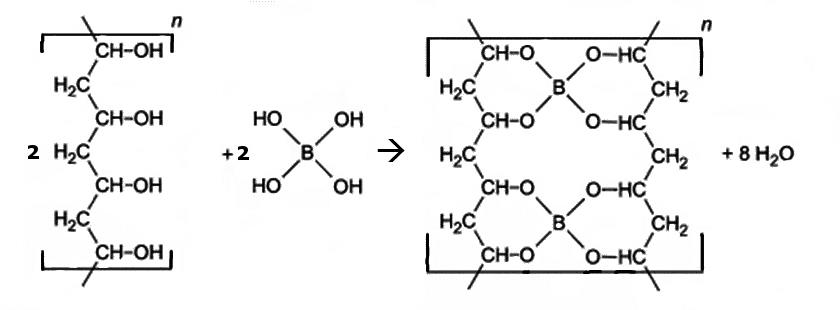
The original slime or DIY slime contains polyvinyl alcohol (PVA), borax (sodium tetraborate), and water. If borax is dissolved in water, boric acid is formed, which reacts further to tetrahydroxyborate. Tetrahydroxyborate reacts with PVA. The OH groups of both particles combine to form solid compounds so that the borate anions become “nodes” in a flexible network. In addition, water is formed which is stored in the pores of the network.

The bonds in the PVA borate network can be broken and newly formed relatively easily. Thus, the network is very changeable during kneading. This makes the slime really slimy.

Disposal

Borax and other boric acid compounds can damage unborn babies in the womb and impair fertility. Therefore, they are no longer sold to private households in EU countries and are banned from school laboratories. Borax must be disposed of as hazardous waste. If slime residues contain borax, they should be disposed of as hazardous waste.

How to make slime?

Though there are many variations, play slime can be made with a few basic ingredients and a simple recipe:

• Two 120ml bottles of liquid PVA glue

• Food colouring or glitter (optional)

• 5ml bicarbonate of soda

• 45ml saline solution (used for contact lenses)

To make slime, simply mix the ingredients in order in a large bowl. Continue stirring, then knead the mixture until it becomes thick and smooth. Slime can be stored for several weeks in an airtight container kept at room temperature.

Once you have the basic recipe perfected, you can experiment with your own slime variations by mixing colours and adding things like plastic gems, sequins or metallic confetti. Making slime is a great way to get kids busy in the kitchen, helping them practise important skills like measuring. Playing with slime is a fun, hands-on activity that can keep children occupied for hours!

Indian Education System

Education plays an important role in the development of an individual and making him a knowledgeable citizen. It is the education that makes an individual self-reliant, helps to suppress the social evils and contribute towards the development of the society and nation as a whole. Education helps in unravelling the mystery of nature. It enables us to understand and improve the working of our society. It creates conditions for a better life. Education brings out the capabilities to fight injustice happening in society. Every individual has the right to education. 

Indian Education is one of the largest and complex education systems in the world along with China. India is committed to providing basic education to its citizens, the framework of which is defined in the National Policy of Education. Elementary education is now compulsory in India. At the time of Independence, only 14% of India’s population was literate. Now after so many decades since Independence, the number of literates has increased by fivefold.

History of Education System

The history of Indian education system comes from the times of Ramayana and Mahabharata. The historic Indian education system is also called the Gurukula system. There were gurus then who are now known as teachers and shishyas who are called students now. The gurus and the shishyas lived together under one roof in Gurukula until the completion of their education. The shishyas were expected to help the guru in all the daily chores as part of their learning. The children belonging to higher strata of the society were taught all the subjects from Sanskrit to Holy Scriptures and mathematics to metaphysics by the gurus. The Gurukulas during those times focused on the practical aspects of life. The students were taught in the open classroom in the surrounding area of nature. This early system of education in India continued for many years until the modern education system came into the picture in the nineteenth century.

In the early 19th century, during the British period, the modern education system was brought into our country by Lord Thomas Babington Macaulay. The basic strength of this modernized education system was the examinations and a well-defined curriculum, which gave importance to subjects like science and mathematics and subjects like philosophy, metaphysics were given a back seat. The brick and mortar classrooms replaced the open classrooms in the Gurukulas. The essence of the guru shishya bond was taken over by a more formal relationship between the teacher and the student. To understand the progress of any student, examinations were conducted at frequent intervals. The focus of the education system shifted from learning to memorizing of the concepts to score good marks in the examinations.

Problems of Indian Education System

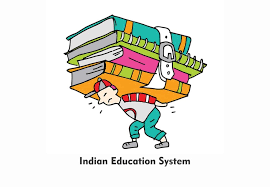
Over a period of time, it has been observed that there are many loopholes in the system of education in India. Instead of understanding the concepts, students started cramming and memorizing the lessons. Knowledge is given a backseat and scoring in high rankings takes importance. The modern parents have tuned their mindsets accordingly and their goal is to ensure that their children score good marks instead of acquiring knowledge right from the primary level. 

Private schools and colleges have been rapidly increasing in the country but the results produced by them are far beyond satisfactory. It has also been observed that the quality of teachers deteriorated with the passing of time. Our examination system is responsible for the wide skill gap. India is producing lakhs of engineers and professionals every year but only a fraction of this number is actually getting employed. This is because the Indian examination system focuses more on scoring good percentages rather than the actual continuous comprehensive evaluation. 

Research and development, which should be the cornerstone of our system, are given the least importance. The private schools and colleges focus on the admission of more students and are least interested in the quality of their education. This is the major reason why the faculties and the teachers lack skills and specialization. This is quite evident from the fact that a single professor is assigned to teach multiple subjects. 

How Can We Improve the Indian Education System?

First and most importantly we should improve the grading system. Rote learning should be discouraged completely. Teachers and faculties should focus more on the analytical skills of the students and grade them accordingly. There should be more focus on comprehensive evaluation instead of scoring only good marks. Workshops must be organized for teachers on a regular basis to keep them updated about the latest developments in the sector of education. At the same time, the curriculum should be reframed according to the present needs of education in India. 

The payroll structure of the teachers and the faculties especially in the government institutions should be improved. This step will help in motivating the teachers to develop their skills and they will take a keen interest in grooming or shaping up a student’s life and career. The government and other entities who are associated with the education sector, need to understand the importance of quality of education. Education should be a holistic process that must focus on the overall development of the physical, emotional, social and cognitive skills of a child. It needs to be a slow and cyclic process and must take place gradually to help the child develop into an autonomous, independent and knowledgeable individual.

Conclusion

An educated individual is an individual who should be able to contribute towards the betterment of the economic and social development of the society as well as the country. The true goal of education must exceed awarding the degrees and certificates to the students. Education is not a tool to earn livelihood but it is a way to liberate the mind and soul of an individual. 

29 Interesting facts about 29 different states(part-2)

Here is the part-2 of this article, in part-1, we have seen some interesting facts about some states in India. In this article, we are going to see some facts about rest of the states.

Telangana

Do you know once a Indian ruler was the world’s richest person in the world. He is Osman Ali Khan Bahadur, the last ruler of Nizam. In 1937, the time magazine featured Mir Osman Ali Khan Bahadur in there cover page as the world’s richest person. His estimated net worth is $2 billion in 1940, as of now $236 billion.

Karnataka

Do you know that 5 rivers flow in a single district in Karnataka. Vijayapura district in Karnataka witness flow of five rivers through it, they are Krishan, Doni, Bhima, Ghataprabha and Malaprabha. This district is also known as land of five rivers.

Haryana

Several historic battles like Mahabharata were fought in Haryana. Haryana is the home land for Indus and Vedic civilizations.

Punjab

According to the world records, The Golden Temple in Amritsar is the most visited place. The golden temple is located in Punjab. As by its name, it is really made of gold. This is the most popular tourist attraction in Punjab.

Odisha

In Odisha, you can find some of the oldest rocks in the world. The old rocks are about 3 Billion years ago. Our earth is believed to 4.5 Billion years old.

Sikkim

Each and every state in India have there own official language. Every state in India, have up to 1 or 2 official language. But Sikkim is the only state in India which 11 official languages.

Arunachal Pradesh

Do you known earlier Arunachal pradesh was a union territory, but later on 20th February it become a independent state.

Manipur

It is believed that the sport polo has originated in Manipur and was spread in the western countries by the Britishers during the colonial rule.

West Bengal

Have you ever wondered West Bengal is located at east but called as West Bengal? The answer is when India got its independence, the Bengal region was partitioned, the western part went to India and the eastern part went to Pakistan(Now Bangladesh). That’s why it is called West Bengal.

Chattisgarh

In Chattisgarh, motorcycle ambulances are used to save people life in the remote villages where ambulances cannot reach. So far it has saved about 200 pregnant women.

Bihar

Nalanda University is one of the world’s oldest university is located at Bihar. It was established in 5th century and it was functioned between 5th to 13th century. However it was destroyed in during some battles.

Tripura

Do you know 91 percent of the land in Tripura is under Cultivation? Rice is the crop of Tripura.

Meghalaya

Mawsnyram is the place located in Meghalaya, which receives highest amount of rainfall on this planet. The average rainfall here is 11,871mm.

Jharkhand

The state Jharkhand is rich in minerals such as iron ore, coal, mica, and limestone. It accounts for 40 percent of the total minerals found in India.

Nagaland

Nagaland is the only state in India to register population decline from 2001 to 2011 by 0.46 percent.

Himachal Pradesh

There is a village in Himachal Pradesh, which is called village of taboos. You cannot touch anything in there villages without there permission. If you touch anything without there permission then you have to pay fine to them.

Goa

Portuguese ruled Goa for more than 450 years. The rule of ended on 17th December 1971, by the invasion of Indian army.

That’s all from my side. I hope you like it.

TIPS TO MAKE YOURSELF FINANCIALLY LITERATE

Have you ever heard or read in a newspaper that a person who won millions of dollar got broke after few years, why is this so ? This is because of lack of financial education, and the reason behind many of the people after good degree and jobs and a good salary still facing financial issues is the same lack of financial education.

1. Listen to podcasts, like the Rich Dad Radio Show.

2. There are plenty of you tube channels of financial experts, subscribe their channels and follow them.

3. Read newspapers, magazines, or books based on money, finance, and investing.

4. Follow peoples or pages sharing financial knowledge on social media.

5. Hang around with people smarter than you beyond all this have a keen interest and a burning desire. That’s all you need to be financially literate.

Knowledge is Power

The English philosophy-essayist Francis Bacon rightly said, “knowledge itself is power”. Knowledge and power go together. You cannot think of power without knowledge. He who increases knowledge increases power. It is the only instrument of production and success which is not subject to diminishing returns. On the other hand ignorance is a curse and darkness. It brings superstitions, defeat, decadence, failures and frustration in its wake. Knowledge is enlightenment and light. It is freedom, liberation and realisation. Only a knowledgeable person can think big and high. For him nothing is impossible, no obstacle is great or insurmountable.

Knowledge makes you brave, bold, dashing and commanding. All great, successful and eminent persons in the history of the world have been very powerful. They have been so because they possessed the inexhaustible treasure of knowledge. There is no power so strong as knowledge and a person armed with knowledge and power cannot be stopped from achieving success and crowing glory in life. For him even the sky is not the limit. Knowledge lends self confidence, perseverance, hope, courage to face challenges, steadfastness and dedication to a purpose. God is god only because he is all knowledge. Knowledge reigns supreme and unchallenged.

It is knowledge which lends power to man to control and rule over forces of nature. Today the countries have come much closer to one another and the world has become a global village because of power of knowledge. Science, technology, success, advancement etc. are the other names and terms of knowledge. In the pre historic past man was ignorant, weak, helpless and puny. He lived in caves and jungles and suffered from many fatal diseases. He was never sure of food, security, shelter and safety because he had no knowledge and today he is most powerful creature. He is the master of all that he surveys. The moon is not beyond his reach nor the knowledge of the sun, the planets, the stars and galaxies. He is ready to set his foot on the Mars.

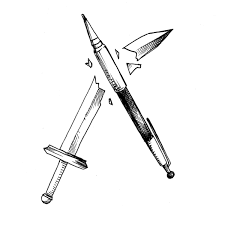
The history of human progress, civilization and evolution has been actually the history of advancement of knowledge. Ever since the dawn of civilization and history, it is the brain which has been more powerful than anything else. Knowledge rules supreme. The pen has been mightier than the sword. Behind the powers of kings and emperors was the brain of the learned men. It was Chanakya who guided the destiny of Maurya empire. History is the witness of the success, survival and victory of the races who were really intellectual and therefore, powerful.

Mao-Tse-Tung was wrong when he said that power grows on the barrel of a gun. He forgot the age old and time tested saying that those who live by the sword will perish by the sword. A sword can never be mightier than the pen. Pen represents learning, wisdom , knowledge, secrets of success and the sword, mere physical and material power. It is the brain or mind which is more important than matter. Mind has always ruled over matter and will continue to do so forever. The achievements of minds have always been marvellous. They have been eternal, without limits of time and space.

Pen is mightier than sword

Behind all genuine and lasting power, is knowledge. Genuine power is that which springs from knowledge and wisdom and the rest is brute force, fragile, momentary and like a bubble in the water of eternity. Knowledge is indeed power, it reigns supreme.

All about CMAT exam

Photo by Thirdman on Pexels.com

CMAT or the Common Management Admission Test is an aptitude test conducted by the National Testing Agency (NTA) for admission to MBA/PGDM courses in over 1,000 B-Schools across India.

Eligibility Criteria

  • The CMAT aspirant must have completed graduation in any discipline or equivalent from a recognized university
  • Final year Graduation students (10+2+3) are also eligible to apply for CMAT 2022 but they will have to present passing certificate at the time of admission

It evaluates a candidate’s ability in Quantitative Technique, Logical Reasoning, Language Comprehension and General Awareness areas. A new optional section on Innovation and Entrepreneurship with 25 questions of 30 minutes duration is also added.

  • The first option is of 3 hours Exam which is divided in 4 sections with 25 questions in each section. The sections are Quantitative Technique, Logical Reasoning, Language Comprehension and General Awareness
  • The second option is of 3½ hours exam which is divided in 5 sections with 25 questions in each section. The sections are Quantitative Technique, Logical Reasoning, Language Comprehension, General Awareness and Innovation and Entrepreneurship
  • There will be 100 questions for 3 hours exam and 125 questions for 3½ hours exam.
  • All are of objective type questions in MCQs form.
  • Question difficulty level is easy to moderate
  • Each correct answer is awarded +4 Mark
  • Each wrong answer is penalized with negative marking of -1 mark
  • No Individual Time limit to attempt question paper. Candidates can attempt any question from any section within the overall CMAT exam time limit
  • Merit Score and percentile is calculated on the basis of 4 sections.
  • CMAT score card displays Actual score obtained out of 400/500 Marks, Sectional score obtained and the sectional and overall percentile obtained in the Exam