Is Literature taking us away from the real world?

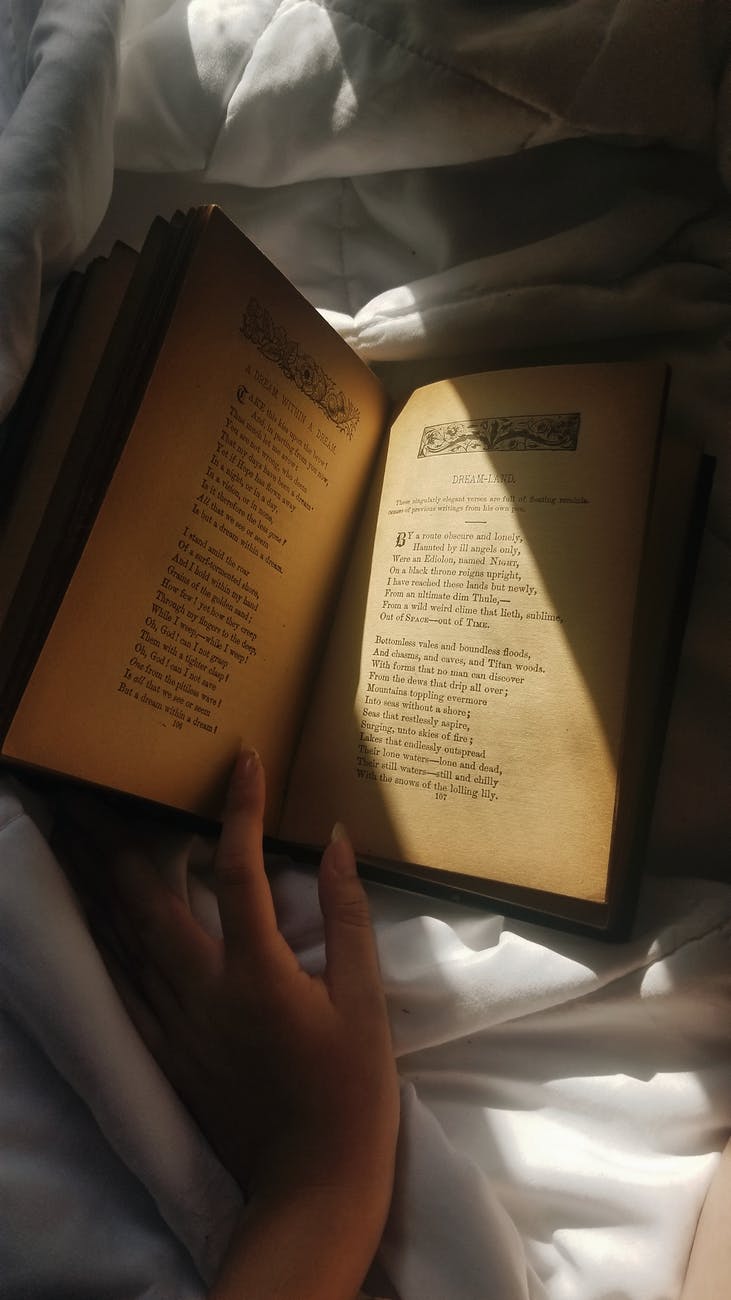
Photo by Maria Orlova on Pexels.com

It is always considered that the people always acknowledge “ what is actual and reasonable” and in this instance often the imaginative world is denied by them!

Literature is not only a branch of academia which people are fond of for centuries but it has further become into a subject of the matter when it comes to fiction”. It is often unvalued by the fact that literature provides an absurd approach to the other branches of the world that believes in science and not in magical elements.

The fact that one should always remember is that the essence of literature is never gone even in spite of so many prejudices against it. Great writers Like John Donne, William Shakespeare, Rabindranath Tagore have upheld the pride of literature by their beautiful works.

Literature – A Backbone of the Inner society!

A very famous quote of all, which we have known for ages; “Literature is a mirror of society”, yet we forget this quote because non- Literature people are not very fond of poetry, essays, and novels. But one must know that Literature is not only a place for fictional lovers but also provides a reality of the real world.

Taking back to Chaucer’s age when writing was not so popular, yet “Canterbury Tales” was written and unexpectedly it turned out to be the legendary piece that literature holds to date. Being one of the best pieces of all, Canterbury tales was the background of the 14th-century society of England where people believe in god and considered god above humans.

When the English renaissance came people started to believe among themselves and considered humans and humanists as the great topic and wrote about them and their lives.

The whole background history is found in those classical works in the form of so called “Literature works”.

Now when people talk about the history and the consequences of the wars, it is literature that has preserved the whole history in several kinds of books that are cherished and protected by them who understood the purity of literature.

Every drop of works is poured into the petals of history and preserved by these eminent writers who contributed their emotions and portrayed the society of that era through their writings and contributed to the ocean of literature.

For some it’s a “Myth” :

There are several ideologies and theories are done in the matter of literature and they proved that literature is a myth as it doesn’t belong any place in the real world! So the question that arrives here is , what do literarians, bibliophiles and the readers think about?

This is a very controversial concern, as for some “Literature is an emotion which should be presevered for the coming eras, It is something to be conserved so that the coming generation would know the aesthetics of emotions, culture and people.

As the days are going by, the essence of humanity is decreasing day after the other, but certain emotional norms are still alive holding up because of literature, it is because of Great works like “Romeo and Juliet”, “Pride and Prejudice”, “Wuthering Heights”, that people still believe in love and its pure existence between two people. Even in this era where people are having an ill-fated relationship and are doomed by their own actions still believe that there are certain emotions present In them.

The world is a better place if people love each other and live in harmony. It is literature that teaches that still we all are humans and we should accept the fact that not everywhere facts and logical explanations are approved, rather it is emotional evidence that is more prominent.

Its time to save literature!

Every branch of academia is relevant in some way or the other which provides us the reality check of various elements present in the world , among them literature is one of them which still is remembered and exists in our society due to the tremendous works done by the crafters of literature ( The writers, poets).

Hiding it or erasing it would never be a good thing to do, as aestheticism always protected these works and still popular among people who believe in fantasy and poetry. It is rather a sense a catharsis which each reader goes through which is written by these dead writers.

Though the artists die, the art remains forever! Likewise, The art of literature can never be faded because the artist’s art is immortal, all we have to respond that we as ardent readers should make this immortal art live for many centuries and should never let them fade away in spite of any circumstances which the worlds demand us to do.
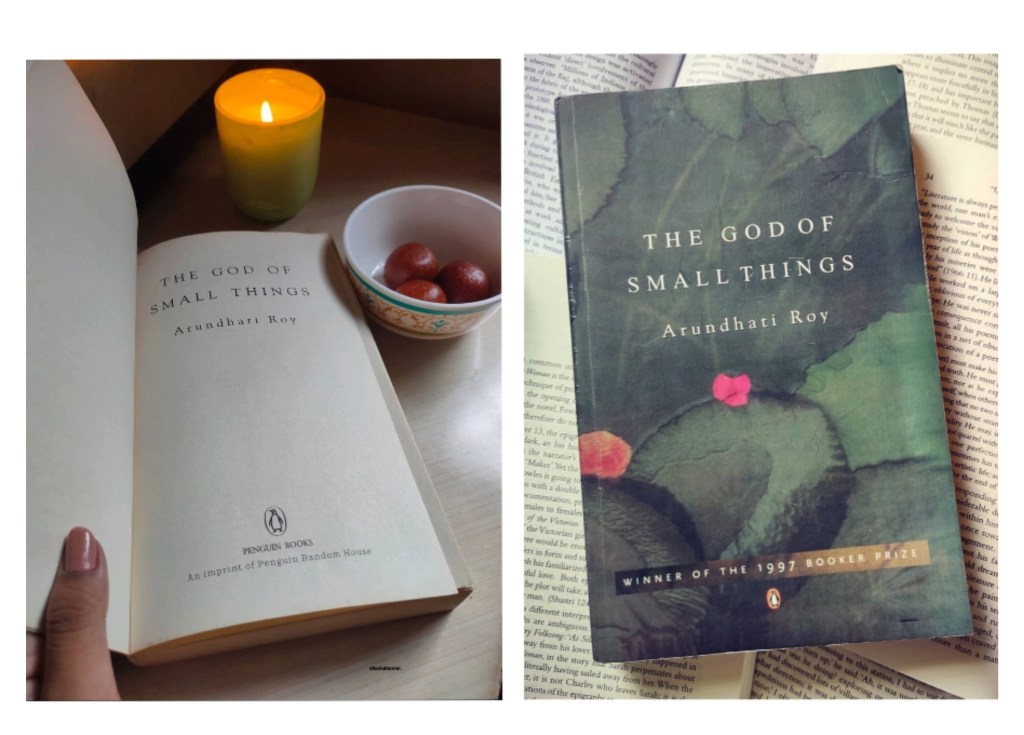
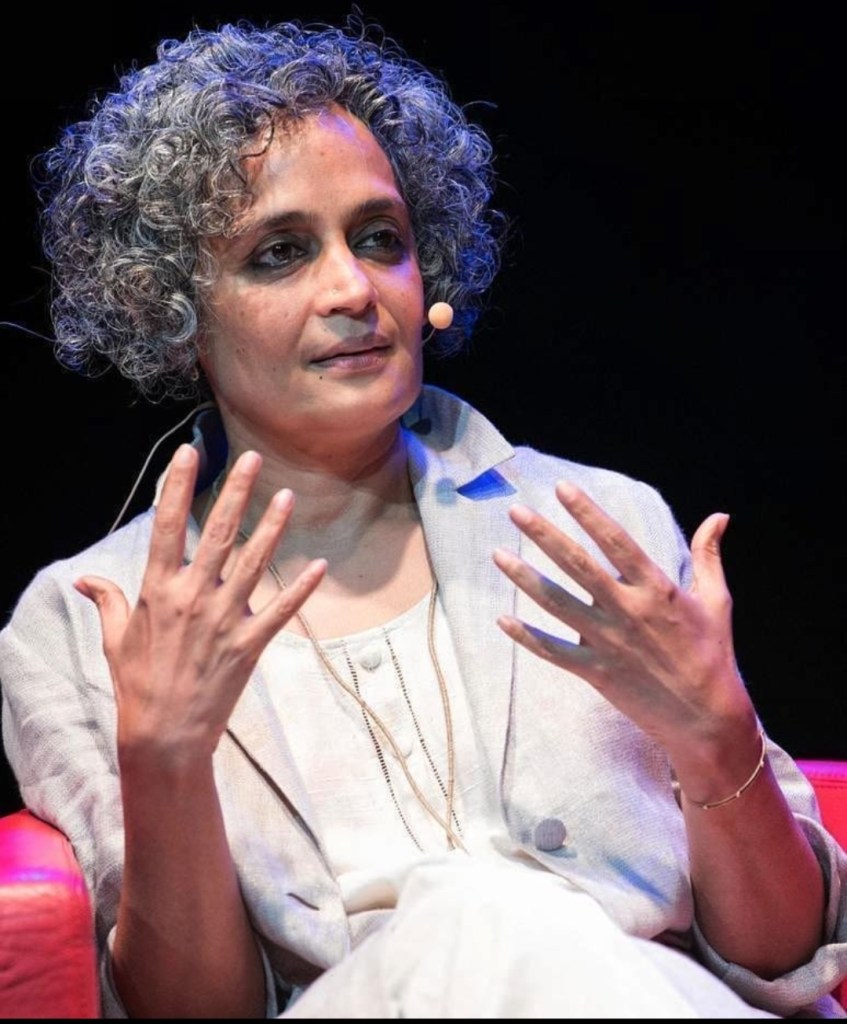
The God of Small Things by Arundhati Roy

Genre: Fiction, Drama

Rating: 4/5

“They all crossed into forbidden territory. They all tampered with the laws that lay down who should be loved and how. And how much.” Arundhati Roy – God of small things. 

This book was published and won the man booker prize in the year 1997.

A story about three generations of one broken family made up of flawed and broken individuals. It deals with themes of class and caste, love and sexuality, family and politics, and other little things. The God of Small Things is more than a novel. It’s an immersion of senses into a world, a language, a society, a culture that leaves you shattered. Arundhati Roy has crafted a world within the sleepy little town of Ayemenem. The way she has written is almost as if she invented her own language. The prose is so distinct and poetic that I’ve never read anything like it. At its heart, this is a story of family struggle (and everything that entails), but the trauma and division are beautifully balanced with lush descriptions of Kerala life.

‘May in Ayemenem is a hot, brooding month. The days are long and humid. The river shrinks and black crows gorge on bright mangoes in still, dustgreen trees. Red bananas ripen. Jackfruits burst. Dissolute bluebottles hum vacuously in the fruity air. Then they stun themselves against clear windowpanes and die, fatly baffled in the sun.’

Estha and Rahel, two-egg twins have met after years of staying apart. Set in the backwaters of Kerala during the height of Marxist influence, the book moves back-and-forth in time to establish the twins’ lives, and also that of their family – their parents, uncle, grandmother, and grandaunt. One tragic evening unravels any semblance of balance in their lives and leaves the family broken.

Arundhati Roy


“Perhaps it’s true that things can change in a day. That a few dozen hours can affect the outcome of whole lifetimes. And that when they do, those few dozen hours, like the salvaged remains of a burned house—the charred clock, the singed photograph, the scorched furniture—must be resurrected from the ruins and examined. Preserved. Accounted for. Little events, ordinary things, smashed and reconstituted. Imbued with new meaning. Suddenly they become the bleached bones of a story.”

Through the eyes of the twins, Estha and Rahel, she’s pointed out the hypocrisy, dejection, and sadness that is in the world. Specifically related to Love. About who should be loved and how much. Neither the questions asked, nor the answers given are easy. I can only imagine what her process might have been while writing this masterpiece. It is one of the finest pieces of literature I’ve ever read. The beautiful prose makes rain soaked, pickled flavour, cast ridden, left leaning Kerala come alive.


But what really bothered me is the constant repetition and lack of setting and description.
The story goes back and forth in time and and is filled with rich metaphors so it demands more attention.
If I have to describe it in a sentence I would say – It’s a lesson in sociology baked in prose poetry.

Pick this book up when your brain isn’t too scrambled.

How Reading can be an Obsession for Creative Minds

Photo by Sofia Alejandra on Pexels.com

“ A reader travels a world of visionary thoughts where his real self creates an extraordinary idol of thoughts without being judged and scared which they can’t do in the real world”.

The above quote straightaway refers to a person who is fascinated with books or popularly known as a “Bibliophile” in today’s era.  Often, we as non-readers don’t even consider reading as a daily habit because we are so much absorbed with our bustling life that reading is merely a tedious job and a waste of time.

We have dwelled our body and mind into the materialistic things of the world and in that process,  we don’t even invest 1% in self-productivity. Self-Productivity is one of the significant elements in which we all as humans lack in and therefore, the ones who accomplish by being self-productive reach their destination of living a successful life. The moto of our rustic life is also to become productive in our jobs and careers rather than being focused on ourselves.

Reading is not only a key to the unexplored ideas of great thoughts, but it is also a doorstep to explore yourself. Still, you might be reluctant with my perspective of reading books, so let’s give you some major reasons as to what happens if you have reading as a daily habit:

  1. You have a Critical  Mindset: When you start thinking out of the box, your mindset and persona are broadened. The more you read the better you will understand yourself. Reading is just not only mere streaming of words by your brain and mind, but it also provides a quick start for your inner mind to think critically.

Reading is like watering your mind and soul to grow in a fruitful manner. So, watering your plants daily provides the roots to live a long time, similarly, reading every day is like you are watering your soul, mind, and thoughts with a decent quality of information that will help you think critically in any situation.

Bingo! Having a critical mind will make your perspective for your life in a different way. The way we think is the way we, our thoughts develop and so our life provides experiences accordingly.

  • Reading equals No Insomnia: Another prominent cause which we humans face in this era is having sleep problems and living an unhealthy life. Lack of sleeping also gives birth to other sicknesses like depression, anxiety, obesity, etc.

We are addictive to so much of tech life that we have started to ignore ourselves and our body which faces certain inconvenience which occurs by our ignorance towards our body. Spending so much time on social media and scrolling till 2 am makes our eyes tired but still we continue to scroll up. Staying awake makes us insomniacs, that we feel lethargic and drowsy the whole day.

But have you ever tried reading a book, instead of using your phones? Reading is the best medicine to cure your insomnia because when you develop a good reading habit then you dedicate your whole brain and concentration to reading which will help you to sleep faster in no time.

Hence, reading is also a secret to living a long and happy life as it inculcates certain elements that you only experience if you are an ardent reader.

  • Reading welcomes all sorts of readers! : Most of the times, the non-readers don’t believe that reading is their cup of tea and give up easily due to the fact that, they don’t connect themselves. But one must know that there are several types of genres and sections in books which is easily available and one can choose according to their taste for books.

Whether it is Fictional, Non- fictional, Biographical, Historical, etc, and to be surprised that there are many unexplored sections that are yet to discover. Reading is a vast ocean and when you pour yourself into it, you will recognize a radical change in your personality and your way of living life.

Finding a connection with the book also helps a person understand the book better and improve themselves better. While reading when a person goes through the process of catharsis; it also releases their emotional and mental stress. 

  • Helps to Flush your Intrusive Thoughts: A very common tip to everyone: “When you overthink, write; and when you underthink then read and when you feel both then do both.

Reading is a mental therapy that will help you as a reader  to get away from those intrusive thoughts which always make you  distant from yourself. To avoid those unwanted emotions and thoughts which runs into your head, you must keep yourself with a good book and read it daily so that your mind will be occupied with a beautiful vibe of  quality content.

Remember, whenever you have such an intrusive thought, it is better to do something that will provide your mind with something positive connection between you and the mind. In this instance, reading is one of them that will help you get away from those unwelcome thoughts.

  • It Boosts your Concentration: Reading can be one of those habits which will help to deal with a good concentration level in your everyday life. Your brain cells are often guided right when they are on the pages rather than being on addictive sites. These days, attractive sites are often a cobweb of distracting your mind by spending more time on these unwanted platforms which will reduce the creative level of our brains and the capacity to think precisely.

Technology advancement has taken the perks of pleasure reading, so in short, when we are reading books, we are helping our mind to focus on the book rather than on other elements.

In short, it’s better to meddle with books and travel each letter of the world through your fingertips rather than meddling with your brain to do unwanted misadventures. Therefore, one should prefer a book to read to keep yourself wise , knowledgeable and sane!

Day Out With Chip- The Robot!

There is no rule on how to write. Sometimes, it comes easily and perfectly; sometimes it’s like drilling rock and then blasting it out with charges.”

  • Ernest Hemingway

Today’s article discusses all about writing with Chip – The Robot. I had officially booked a day out with him and he seemed welcoming. We had a long conversation which I will try to compress in this article. So, let us begin.

Hello Chip. So, My Very First Question For You Is That What Do You Think About Writing?

Writing is an art which only a few are blessed with. Certain talented people around the globe are able to compose creative and fictitious worlds and make people visualize them through their amazing description. That is exactly what writing is all about. You make people reflect through your writing. Thus, it becomes an art and can’t be learnt. The creative and imaginative aspects sprout from within.

Totally! I Agree To This. However, What Do You Think Makes Writing An Entertaining Task?

This totally depends on the interest levels of the individual. Writing is fun for people who are completely inclined towards it while those who hesitate to read even a page, aren’t going to like it. So, the thing is that you need complete love for the process before initiating it. The second stage could be that you are interested in the process but aren’t able to concentrate and come up with certain new ideas and topics to write on. In such cases, you could take inspiration from the pettiest things around you. You just need to open your inner eye to notice that. And that, I tell you honestly, is an amazing job. Sitting and pondering over the petty objects and coming up with some imaginative character or story of your own, in itself is so entertaining. Another reason maybe that you aren’t able to concentrate could be that your mind is disturbed and aren’t focused. Thus, all you could do is practice meditation or do tasks that would soothe your senses. In short, I would state that indulging into the process of imagination is one of the best experiences when it comes to writing which is enough to make writing an entertaining task.

That Was So Helpful! Which Is Your Favourite Genre When It Comes To Writing?

My favourite genre shall always be fiction because it makes writing all the more interesting. You get to weave your own imagination and there aren’t any limits in the framing of thoughts onto that sheet of paper. Fiction introduces a new world, not only to the readers but also to the writers.

True That! So, What Are The Effective Ways Of Writing Fiction?

Fiction as a genre needs extremely insightful and creative people to frame a good story. You need to think outside the box when it comes to fiction. People don’t admire the same boring mythological concepts. Instead, when added a spice of an entirely new world of fictitious characters and incidents, the story begins to gain certain amount of popularity. The effective way of writing fiction is to never force on writing it. Sit and ponder over the outline of your story. Don’t try to be creative when your brain is stressed. Don’t set a deadline to writing a story when working on fiction. Just be cool, calm and devoted to your manuscript. Don’t give up easily on manuscript. You could always give some time to thinking effectively. However, if you wish to launch your book at a specific date then it is advisable to start as early as possible so that you don’t have to overdo on the last minute and can work with peace.

So, Important! Would You Like To Speak About Some Other Favourite Genre Of Yours?

Certainly! Mystery catches my attention every single time. It is because of the intense suspense factor that makes reading such a fun task. Here too, you need to have the creativity to frame the suspense appropriately. A single mistake can disclose the entire sequence and thereby disrupt your attempt of maintaining suspense. So, this is another genre, you need to be careful with. Give proper amount of time to thinking and don’t rush. Your manuscript isn’t yelling at you to finish it as soon as possible, nor is anybody else urging you to be prompt. Unlike writing prompts which don’t stress on the topic, other types of write ups don’t require you to be prompt. So, work with peace and eliminate all the pessimistic thoughts before you choose to begin with these genres.

That Was So Helpful! Lastly, Would You Like To Conclude On A Good Note?

Certainly! I would like to thank you for choosing to go out with me. I request each and every reader of this article to definitely write and not hesitate in the process. The more you write, the more efficient you shall be. You just need to be faithful and devoted to the process. Your thoughts need to be refined, in order to make writing a fun task. Maintaining effective sanity is quintessential for writers who must hibernate from chaos. So, go surrender yourself to the lap of mother nature and write for hours together, trusting that one fine day a highly creative idea would grace you with its presence on that blank sheet of paper!

Thank You So Much Chip!

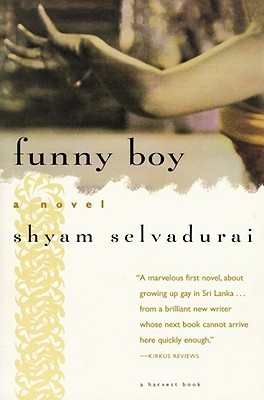
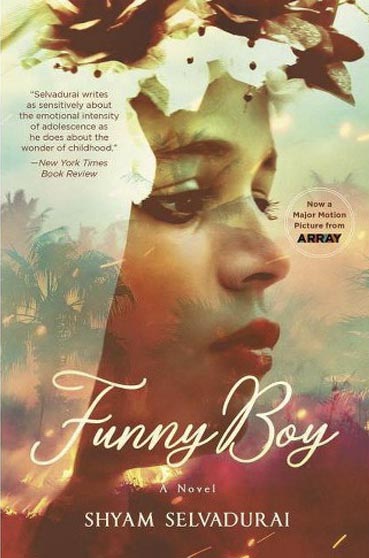
“The Funny boy” – A Homosexual Novel of searching identity

“For me, growing up, I felt like there was something fatally and tragically flawed in my nature and that it was my duty to try to avoid falling for that vice”.

– Shyam Selvadurai

Certainly, we all as a human, face some sort of battle within ourselves, might be towards our identity or maybe our existence. The worst crisis any human can face is the crisis within him/herself. It is one of the dangerous crises any person goes through, and this is what the author Shyam Selvadurai had gone in his own life which he portrayed in the novel “Funny Boy” through the main protagonist “Arjun” aka “Arjie”.

The Funny Boy – A Background :

The novel evidently sets in the early 1980’s at the consequent of Sri Lankan civil war, which showcase us the disputes and riots of Tamil – Sinhalese Historical enmity towards each other. The novel is divided into 6 chapters, in which every chapter has its own uniqueness which makes the novel more explicit.

The 1st chapter, “Pigs can’t fly”, begins with the Naïve life of the main character Arjie and his reminiscence of his childhood days, where he presents his own baffled thoughts of his own existence of, he being “Different” from other boys of his age. He was anxious and felt that his interests in playing with dolls and girls is a taboo for society whereas playing cricket will make him an ideal boy in the society.

“Life is full of stupid things and sometimes we just have to do them”, Arjie’s Amma says this to him when he refused to play with boys and instead, he likes to wear saree and play, “bride- bride” with his female cousins.

 This shows us how this chapter portray us that our society is prejudice towards the gender norms in which all of us are distributed. In one of the incidents when the relatives of Arjie saw him wearing a saree , made him a center of laughter and mocked him by saying him “ Funny”, through which the author tried to showcase us that the third Gender in our society is considered as unethical or as a clown which is irrelevant to the society, namely the title of the chapter “Pigs can’t fly’’, presents us how people in our society don’t accept the people who belongs to the third gender as according to them, pigs represents the people who are transgenders or gay like Arjie are breaking the norms of the culture.

Any war, riots or a sense of violence happens within the human minds, and politically, language and cultures drift us apart sometimes to establish a war”, this quote is well explained in the second chapter “Radha Aunty”, where this chapter explains us how casteism becomes a hurdle, when people fall in love.

They say that “If two people love each other, the rest is unimportant.”

“No, it isn’t. Ultimately, you must live in the real world.

And without your family you are nothing.”

The Funny Boy

By this quote, the author explains us the tragic love story of Radha Aunty and Anil Uncle who wanted to get marry, but the enmity and disbelief in both the communities of Tamil and Sinhalese made them apart! Indeed, this tragedy is obvious to show us the situation of the Sri Lankan civil war and the rules in which people were abused to be in. Incidents of Radha Aunty where she was brutally attacked by 2 Sinhalese people show us how threatening Humans were demons for each other.

“See no evil, hear no evil”, is the chapter 3 where show us one more Tragic incident happened with “Daryl Uncle”, we can say that the novel has a theme of failed love relationships, casteism, hatred, war, and disputes, as this chapter encloses about the incident of how Daryl uncle died or rather got murdered. It portrays us how violent was the time in columbo when the Journalist like Daryl uncle was abused and murdered.

In chapter 4, “Small Choices”, we get to know about Arjie’s feelings for the male character Jegan, who came to work in Appa’s hotel. This is the chapter where Arjie started to know about his identity but hide from the outer world as it was against the norms, which Arjie felt his feelings for men is Immorality. This chapter also counts about Anti- Tamilians and how these community was making a life miserable for the innocent people of Columbo.

Often, we know who we are, what is our identity, but because of the taboo inflicted in the society, we escape from our originality and behave as how the society wants to picture us. This is what Arjie was doing to be a normal ideal boy, but somewhere he was an abnormal boy (according to him) because of his gay feelings for the character Shehan in chapter 5, “The Best School of All “show us. When Arjie fell in love with Shehan, his perception for life and his ideology of his identity changed when he met shehan and shehan removed all the perplexed thoughts floating in the minds of Arjie. Shehan made Arjie realized that “We should ultimately know who we are! We should not hide identity from ourselves”. This is what made Arjie realize that he should respect himself and his identity. This was the chapter where he was not afraid of who he was and his sexual desires for Shehan was totally legit. In this chapter, Arjie was proud to be himself as a gay and his love for Shehan was compatible.

In “Riot Journal: An Epilogue’’ is the last chapter where Arjie wrote a journal on the effects and incidents of riots and its impact how ruined his life and lost his parents. The books end in a dismal and with a sense of alienation of Arjie and the tragic feelings inculcated and made him hollow.

Funny Boy – A Novel to explore one’s own identity !

Still unending war a human faces within himself/ Herself when it is about recognizing one’s own identity. We Humans have a psychology of hiding our real personality infront of other humans which is basically due to the age old cliché ideology of “Acceptance in the society”, due to which people hide there real self.

As Humans, we live in society and communities in which we have an urge of desire that we need love, cherishment, respect and acceptance in return, thus when we don’t get it we realize we are different from others, which ultimately makes us feel that we are an outcast from our society. so, as a part of community we behave as the world wants us to behave.

Whereas, “The Funny Boy” is the best novel of all which provides you that particular kind of Catharsis if you not aware of yourself!

So, a personal recommendation to the Bibliophile out there , Go check this Book which is not only a homosexual novel, but a novel which is Heartening and will open your insights to understand your real self.

Exploring Business Approaches!

“Being business minded requires you to always approach things with humility and respect.”

Strive Masiyiwa

We are by now familiar with two types of approaches which are of course, positive and negative but we miss out on another important one within the positive approach, the one that very subtly lets a wee bit of negativity drift in so that something positive can happen. Let us name it the Pogative Approach that uses negativity to make something positive occur in business. For instance, cheating with the delivery of your services to get a surplus is a good example of this approach. Thus, the point to be highlighted is that most businessmen resort to the Pogative Approach and assign it the positive tag. However, this approach isn’t acceptable in business owing to the fact that it has the capacity to damage your reputation which may only break the chain of regular customers and as stated in the earlier articles, you don’t want to compromise with the regular ones because they have the power to fetch you a new queue of customers through feedback. Thus, businessmen must shun the myopic perspective and have an agile future vision.

Before inaugurating your business on a large scale, it is better to begin as an entrepreneur because a bigger company comes with reputed customers and you don’t want to deal with them without any previous practice. You don’t want to mortify yourself by not being able to impart those perfect customer service skills. You don’t want a bad image owing to lack of expertise. That’s exactly why, we move from basics to advanced level of expertise because as the saying goes, Practice makes Perfect. Thus, practicality comes into handy as it lends us a helping hand towards the topsy turvy business route. Everything in life surely has stages. So, a company owner must have run errands or worked as an entrepreneur which is essential as it helps us understand whether or not we are interested in business. It can be considered the first stage. Many a times, after going through this basic stage, a person realizes that business isn’t his piece of cake, which eventually helps him back off and prevent future losses!

When customers come into the picture, businessmen have to adopt an emotional approach. Though, it may be a lipstick of sham that feeling needs to reach and penetrate deeply in the customers’ heart so that they feel impressed and prefer you yet again in the future. This is what constitutes customer service. However, instead of pretending to be emotional, it is advisable to be true to your feelings and respecting each and every customer who trusts you with their hard earned money. You don’t want to dupe them by showing a ruthless image that can never be dropped in the near future since First Impression is the Last Impression as we all know. Of course, you aren’t expected to have deep rooted loving emotions for each and every customer, but you surely must possess those ethics that dislocate your intentions of betraying them through lack of commitment. In short, emotions and ethics share a close relation which makes adopting the emotional approach mandatory since every customer matters.

Every business is a convenient spot for customers thus, expecting variety in conveniences is acceptable. Thus, one should adopt a flexible approach that welcomes all sorts of services to the society so that customers feel satisfied enough to approach you. For instance, if your business includes website designing then make sure you incorporate all sorts of web related activities. You too want a variety of sources that fetch you income, don’t you? Thus, don’t adopt a rigid approach and remember to remain open to the market trends as you digest new services in. Flexibility also comes into limelight when you are expected to fine tune your services. Don’t be rigid with the manner of your services and try streamlining them with new facilities each and every time, as the market trends transform! As we all know, we can either introduce new services or evolve convenient features in the existing one to make it look like a new service. Thus, both of these require a broad based mindset which accepts feedbacks be they in the form of criticism and takes these in a positive manner to enhance the quality of ones services.

Let us understand all of these approaches through a short story. Let us imagine a company selling children’s wear. The owner before beginning this business had been working as an entrepreneur and stitched pretty garments at home which received great demand later. Thus, it helped the owner evolve into a huge business since she had gained some expertise in customer handling and felt the need to occupy a bigger platform for herself. Customers receive a warm attitude that doesn’t back in pleasing them which lures them all the more. She stitches garments even better than the customer demands, which obviously melts them. They pledge to choose her always because the love mixed with the services clearly touches the customers’ heart. It’s been a year or so, she surveyed some people who informed her that including ladies wear could help which she flexibly considers with a positive approach and tries her hand on this new endeavor. She effectively learns the same and drags attention of women on a large scale after 6 months owing to the efforts she puts into perfectly constructing those beautiful garments with unique patterns that every lady feels eager to try out. In short, dedicated and flexible approach that accepts feedback helped her succeed and have a huge business. After ladies wear, she tried incorporating teen wear and this variety gained wider public admiration. In short, one mustn’t hesitate in introducing new services or trying hands on multiple ones so that success touches our feet!

Be Flexible, Be Vibrant, and Be Dedicated!

Happy Business- Ing!

Divorce: Taboo yet to be broken!..


India is a diversified country with people of a different colour, races live together happily. So these people form a society. We all follow the unwritten rules of this society. The only thing we need to remember is that not all the rules need to be followed. There are some rules and beliefs which need to be eradicated from society, one of these taboos is divorce.
There was one of my second cousins who lived in a village nearby. She was married and was living there with her husband and in-laws. The first year of her marriage went so well. She was very happy with her marriage. In the second year, her husband and mother in law asked to bring money and jewellery from her father. Firstly they used to ask for it casually, but later they began to hit her badly and kept torturing her. One day, they threw her out of the house to bring the money. She went to her mother’s home, told them everything happened with her. Her mother’s home was not economically sound. They knew that they couldn’t give any money or jewellery. Few months passed in all this. Now all the nearby people were questioning about her stay in mother’s home. Meanwhile, her brother gathered some money to give to her in-laws. Father, mother and brother decided to send her back to her marital home. But she was not at all ready to go back. She kept on pleading them not to send her back. She even told them that her life will be in danger if she goes back. But this social pressure was heavy enough than her pain. Brother took her to her marital home, gave them some money and came back. After receiving the money, a few days went peacefully. After that, again the cycle began. Torture became new normal to her. She called her home to take her out, but they asked her to ADJUST.
One day, news hit the home. A phonecall rang saying she got herself burned in a kitchen accident, the cylinder exploded. Now everybody rushed to the hospital. Father and brother now blamed her husband and in-laws for her accident. They even called the police and handed them over. But as there are many loopholes in the judiciary system, they were set free. After a few days of the battle of life, she gave up the fight.
This could be avoided, right? Now everything was left with just ifs and what-ifs. If they could’ve let her set free from the cage of tortures, she could have been alive. But divorce is a big taboo in India. When a girl leaves her home, parents think that whatever happens thereafter, is not their responsibility. But we need to remember that girls are not any load to carry. Two adult individuals get married, strangers to be clear in arranged marriages. When they live together, their nature and choices should match is not compulsory. They can have their own point of view. In this process, if they feel like in a toxic relationship, there should be an option to escape. I’m not saying or supporting to break the relation for the minor cause. But if it is going above your head, destroying you physically and mentally, then it’s better to get out. We as a parent or a society need to bring this change in us. Divorce cannot be a taboo. If you want to see your loved ones happy and breathing, then this could be the option if things get extreme. Divorce is a personal choice and nobody has the right to judge.

Music: An Underrated Stress Buster!…

I was going through some tough time these days. I felt like drowning in anxiety and overthinking. I didn’t even tell anyone about it.
One day I got so much lost in anxiety that I had to tell it to my best friend. He was talking with me, trying to convince and comfort me but it didn’t help. Meanwhile, a song from the movie ” Dear Zindagi ” was playing inside my head. I waited for a while and then opened my music application and played that song. I was listening to music after a very long time. With my headphones on, I was listening to music. On one side, my friend was convincing me and on the other, I was listening to music. After some time, I was feeling a bit calm and relaxed. Music helped to burst my stress.
I used to be an active music listener. But these days, I got stuck in life issues so much which took me away from music. Stress has become a major part of life. To counter with it, I even begin to meditate. But now I feel only meditation won’t help, music also needs to be there.
We must have heard from many that meditation can help you to relieve the stress. It is absolutely true that meditation, deep breathing exercises help you to stay calm and reduce anxiety. But now after coming back again to music, I feel the music is very much underrated. Soothing music can help you heal. Music has the power to change your mood. It can bring you from a state of anxiety to the state of peace. So what measures do we need to take when we feel anxious? Firstly you need to meditate and go through a deep breathing exercise. After that, you should go through your playlist and play the songs you love for a long time. But you need to play only soothing songs as they can only calm you down. One more thing, listening to music with headphones on will create a major impact. Headphones make you stay there to listen to music. It will prevent your mind from wandering towards negative emotions. These small things can help you a lot to maintain the peace. Give it a try!…

Find Happiness In Little Things!…

Rick was a scholar guy. He always used to top the boards. Everything was good with him except for his financial background. This made him scary and he used to be always under stress. Every little thing happening around would bother him deeply. He never dared to take risks in his life because of this fear. Rick was very much into himself and had very few friends in college. There was a girl in his class. She was always in a race with Rick for the first rank. She tried to talk to Rick at times but Rick’s fear made him run away from her. After a few days, Rick began to speak a little with her. She was a carefree girl, thinking about a single day at a time and living it at fullest and Rick used to be under stress every day thinking about the future. So basically, she was exactly the opposite of Rick. Now Rick was feeling comfortable being with her. He began to share things with her which he never did with anyone. He began to open up in front of her and she was just setting him free from his every single fear. She was an angel with a magical wand for Rick. She came into his life and changed it totally. Now Rick was confident about everything. He now dared to take risks to succeed. He even forgot that he had a fear disorder in the past. She made Rick meet his inner and actual self. Now Rick was a happy guy. Later they end up marrying each other and lived happy life together.
We also behave like Rick in our life. Rick is a character replica of Raju Rastogi from 3 idiots. We knowingly or unknowingly search for the one in our life who will set us free from all our scars and fears and be with us till the end.
When a human is born, the first thing it does is to cry. Crying is considered as a sign of sorrow. But our life begins only with a cry. It is the only time when your mother and loved ones smile when you cry. This is what tell us that there is happiness after sorrows.
You grow up. Life begins to show it’s a darker side to you. It’s the time when a face which used to smile on every little thing begins to cry and worry for everything. Our brain has the only job that is to think. When you encounter tough situations in life, your mind keeps on recreating the scene, again and again, making us anxious. You must have heard about the saying that you don’t laugh on the same joke again and again then why do you worry about the same thing again.

TO A SKYLARK

“To a Skylark” by Percy Bysshe Shelley is an ode to the “blithe” nature of a singing skylark and how human beings are unable to ever attain that same bliss. In the poem, Shelley addresses a skylark that flies up at a magnificent height and sings so melodiously that the world is entranced and charmed by its sweetness .The skylark is Shelley’s most exceptional natural metaphor for true poetic emotion, the “harmonious madness” of classic influence. It signifies high poetic imagination, virtue, and messenger of peace and progress. The skylark’s song concerns a position of purified existence; its song is driven by the pleasure of that uncomplicated simplicity of life, and is unmixed with any sign of despair or of the bittersweet, as human happiness very usually is.

The skylark’s unrestrained melody pours down upon the world, transcending every other grace making the speaker assume that the bird is not mortal at all, but a “Spirit.” It stands for idealism free from crime, exploitation, and slavery. In the poem, it’s rarely noticed but its deep mellow song helps to evoke the people of the mystical visions of Nature. The bird signifies the sheer, unrestrained happiness that Shelley is frantically seeking. This desperation comes through in the next stanzas. He sees the bird as a “high-born maiden” that serenades her lover below her and spring, or “vernal showers” that rain on the flowers below. The skylark is like “rainbow clouds” and the type of all “Joyous” things. 

Structurally and linguistically, this poem is almost unique among Shelley’s works; its strange form of a stanza, with four compact lines and one very long line, and its lilting, songlike diction (“profuse strains of unpremeditated art”) work to create the effect of spontaneous poetic expression flowing musically and naturally from the poet’s mind. The skylark is happy because it apprehends what makes it happy. It has a chosen advantage over human beings, who know
both what gives them happiness and what causes them unhappiness. They worry about the end because they are unaware of things that lie beyond mortality, among other reasons. The skylark knows what lies beyond death, and feels no concern about it. It is no so shocking that it is exceptionally happy the line “We” pine for things that we do not have, and even our “sweetest songs” are full of the “saddest thought[s].” clearly states it.

The poem ends with the writer soliciting with the bird to “Teach [him] half the gladness / That thy brain must know.” Even that little amount of happiness would give Shelley the capability to produce “harmonious madness” that would force the world to listen to him must as raptly as he is listening to the skylark now. Some critics say that P.B Shelley was not a practical man. He was far away from realism. So his Skylark continuously soared higher and did not come to the earth, like the Skylark of Wordsworth. On the whole, this poem is Shelley’s one of the most excellent works.

The Faerie Queene

Fairy Queen is a famous epic of Edmund Spenser published in 1590 during the sixteenth century. The poet craftily impersonates The Renaissance and Reformation elements. The poet also presents different types of allegory. Faerie Land” is signified to hold a figurative significance in the real world. Each character in Spenser’s epic can be referenced somehow back to the church, political climate, or disputes and spirituality of his era. Though she never appears in the poem, the poem Faerie Queene represents Queen Elizabeth and her castle is the ultimate goal or destination of many of the poem’s characters. The poem is written in what began to be identified as the Spenserian stanza: eight lines of 10 syllables followed by one 12-syllable line, rhyming ababbcbcc. One of the most prominent symbolic episodes in The Faerie Queene is Redcrosse’s fight with the Error. Redcrosse represents the knight of Holiness in the story and this protagonist gets his name from the blood-red cross emblazoned on his shield. Error, the Red Cross Knight’s first adversary, a monster that lives in the wandering woods is portrayed as a frightful creature with the features of a woman and the hind part of a serpent resembles to be a biblical reference back to the tale of Adam and Eve. Eve, having erred by having an apple from the tree of knowledge of good and evil, was coaxed to do so by Satan in the appearance of a serpent. 

Error hates the light and the stanza “Ay wont in desert darkness to remaine” makes it evident. Redcrosse makes the light enter the cave because it ricochets off his armor but he is also metamorphically the light. Error has no interest in the light he has to offer and only wants to remain evil or lack of faith. The clash among the Knight and the beast proved to be the most intense one. At one point in the course of his clash, the Knight discovered himself in the choking grasp of the monster’s huge tail. At this point, Lady Una shouted to the Knight to prove his courage. She urged him to have faith in himself and Jesus Christ and to battle valiantly. Motivated by the lady’s words, the Knight attacked with strengthened power and bravery. He was able to rescue himself from the hold of the monster’s tail. He then clasped the monster’s throat with such restraint that she threw out a lot of filth from her mouth. Black poison and big lumps of flesh and raw meat came out from her gut. The beast had many young ones that had all sought safety inside her mouth when the Knight had entered the cave and these little offsprings had now emerged from the monster’s mouth. Finally, the Knight succeeded in splitting off the monster’s head and killing her. Her offspring then began to drink the blood which was oozing from her with it, and their bellies burst open which resulted in their death. This was the prime venture of the Red Cross Knight and Lady Una felicitated him on his achievement. 

Behind these simple facts, there are spiritual and ethical interpretations that combine and merge in each other. The Redcross Knight stands for Holiness. Lady Una stands for Truth and her parents symbolize Humanity. The foul Dragon is a symbol of the Devil or Satan. The purpose of holiness is to champion the belief of motivation of honesty and retrieve the virtue of the human race, held in bondage by the powerful force of darkness. To conclude we can say that Spenser has impersonated The Redcrosse Knight’s clash with the Monster Error with exceptional talent. He describes the blunders and risks that plagued humanity in the world and explains how they may be overcome in the course of life and endures the popularity and universality of Spenser’s The Faerie Queene.

THE PARTING

Michael Drayton, was an English poet, the first to write odes in English in the style of Horace. The Parting by Michael Drayton is a sonnet. It is a poem about the breakup of the relationship between the poet and his companion. This sonnet has a very strict form and the poet has been cautious in composing his poetry, to assure that it fits the design constraints. The sonnet is very short, it consists of only 14 lines. Oftentimes, he has to synopsize in a single line of the poem, something he would ordinarily have penned a. The line, “Shake hands forever, cancel all our vows” summarizes quite a precise sense of the dispute signifying enduringly, with no chance of reconciliation. There is a change from the aggression of the first half of the poem, there remains a slight hint in the second half, as the author threatens his lover, telling her that if she leaves him, then she will be a murderess, who has killed not only their endearment but love itself. The language is harsh and cold, and after the Volta, in the third and fourth quatrains, the language is softer and more personal. Again, this is a function of the form of the sonnet; there must be a drastic change of ideas after line eight. For example, there is the brutally aggressive “you get no more of me” in the second line, and the much gentler “Now at the last gasp of love’s latest breath”. The poet uses the Volta not just to change the language but also to the entire message. Instead of pushing her apart from him as he did in the first eight lines, he is now emphasizing her of how consequential the end of the relationship will be. He goes from demanding to practically pleading. The orders in the first two quatrains such as “be it not seen” are replaced with conditionals, such as “if thou would’ st”; it seems almost as though he is pleading with her. Also, worth noting is how he goes from using the aggressive “you” to the gentler “thou” after the Volta.

In a sonnet, the rhythm is always iambic pentameter, which means that there must always be ten syllables per line, with each second syllable being stressed and the author breaks this pattern. Besides, to the constraints of the number of lines, because of which the poem is compressed, simplifying the poem’s purpose, and enhances it. For example, in the first line, “SINCE there’s no help, come let us kiss and part— ” there should be no stress on the third syllable, but the author has written the poem so that there is, stressing the “no” and giving weight to the preciseness of the first two quatrains. The author again breaks the rhythm in the last two lines that are ” —Now if thou would’st, when all have given him over, From death to life thou might’st him yet recover.”  using eleven syllables instead of ten. This is not a blunder or an accident, it has been done for one of two purposes; to add importance to these lines because it appears out of place due to their length, or because the poet thought that he clearly could not sum up his feelings in the eleven syllables that the conventional sonnet allows him. When looking at the rhythm, we should look not only at the line length but also at the rhyme scheme. In the first two quatrains, the rhyme words are very harsh, distancing the author from the poem. For example, there are the very harsh consonant sounds of “part” and “heart”, However, in the third quatrain, there are much softer sounds, such as “breath”, “death”, “lies” and “eyes”. The harsh ‘r’s and ‘t’s are replaced by softer ‘th’s and ‘s’s. This pattern is mirrored throughout the poem; in the first two quatrains. 

The structure of the sonnet has considerably added to the essence of the poem. In perfecting the poem to suit the constraints, the poet has illuminated the message and intensified the sense of what he is trying to say. Besides, where the poet for some purpose breaks the rules of the poem which adds more meaning to the poem, highlighting specific elements and making other parts exceptional.

#MeToo – But I’m Not A Woman!…

The campaign has again taken the limelight. Many women coming forward to tell the nightmares they’ve been through. We as a third-person watching it put our judgement giving sympathy to a particular gender. We don’t even try to understand another side of the story. We spoke of gender equality, so justice must be served in that way only. In our society, a man is guilty until proven innocent and a woman is innocent until proven guilty. I genuinely feel that justice need to be served to the one holding the truth.
The saddest and most unheard truth is men too get harassed. If you go and check the stats of male sexual harassments, you will be shocked. Men also get harassed right from the teenage till to the workplace. Men do go through all this and the worst thing is they can’t even come up to complain because they know that it’ll be the only who will be taken as a guilty. We have developed a mentality of a soft corner for gender in such cases. But this needs to be changed. Every man should stand by the women in such case and every woman should do the same as well. That’s only how it’ll work. If we are against rape, then there shouldn’t be any discrimination of gender as the criminal can be anybody with sick mentality irrespective of gender. Women cases have strong law and which is a thing to be appreciated but there is no such strict law for men. We see only figures which are recorded. But there are so many cases in which the victim don’t even dare to report because of the fear of getting proven guilty. This need to change. Nobody should live with this fear. Men and women are made by god. God made us to support each other through thicks and thins. But we end up taking the easiest judgement and assumption proving the innocent guilty. Rather if we stay by the side of truth to the best of our knowledge then only justice will have some value. Justice comes only with a fight and we need to stick together for the right. We, men and women together can eradicate this. The only thing we need is to support each other and fight for the right!…

Gurajada Apparao

Gurajada Venkata Apparao (21 September 1862 – 30 November 1915) was a noted Indian playwright, dramatist, poet, and writer known for his works in Telugu theatre. Rao wrote the play Kanyasulkam in 1892, which is often considered the greatest play in the Telugu language. One of the pioneers of Indian theatre, Rao holds the titles Kavisekhara and Abyudaya Kavitha Pithamahudu. In 1910, Rao scripted the widely known Telugu patriotic song “Desamunu Preminchumanna”.

In 1897, Kanyasulkam was published (by Vavilla Ramaswamy Sastrulu and Sons, Madras) and dedicated to Maharaja Ananda Gajapati. Apparao (along with his brother Syamala Rao) wrote several English poems. His Sarangadhara, published in “Indian Leisure Hour”, was well received. The editor of the Calcutta-based “Rees and Ryot”, Sambhu Chandra Mukherji read it and re-published it in his magazine. Gundukurti Venkata Ramanayya, editor of the “Indian Leisure Hour”, encouraged Apparao greatly during the same period. In 1891, Gurajada was appointed to the post of Epigraphist to the Maharaja of Vizianagaram.

Gurajada married Appala Narasamma in 1885. He continued his studies and graduated with B.A. (Philosophy major and Sanskrit minor) in 1886. For some period during 1886, he worked as Head Clerk in the Deputy Collector’s office. On Vijayadasami day, 1887, he joined as a Lecturer (Level IV) in M.R. College with a salary of Rs.100. Around the same time, he was introduced to Maharajah Pusapati Ananda Gajapati Raju (1850–1897).

In 1905, Gurajada’s mother died. In 1906, his close friend P.T. Srinivasa Iyyangar, principal of Mrs. A.V.N. College, Visakhapatnam started an association to promote curriculum reform in high schools. One of the chief aims was to introduce spoken dialects. Along with him, J.A. Yates (1874–1951) -a British civil servant, Gidugu and Gurajada were the principal members. Another friend S. Srinivasa Iyengar (1874–1941) also gave a lot of support and encouragement. Incidentally, this Srinivasa Iyengar was a well-known lawyer and was the President of AICC (All India Congress Committee) annual session at Guwahati in 1926. Gurajada’s childhood friend and classmate in Chipurupalli, Gidugu Rammurty (1863–1940) was his school of thought.

Gurajada lived most of his life in and around Vizianagaram in what was then called as Kalinga Rajyam. He and his father before him were both employed by the princely state of Vizianagaram. Gurajada enjoyed a close relationship with the ruling family during his adult life. He had his initial schooling in Cheepurupalli while his father was working there. His remaining schooling was done at Vizianagaram after his father died. During that time, he was taken care of by the then M.R. College Principal, C. Chandrasekhara Sastri who provided him free lodging and boarding. He completed his matriculation in 1882 and obtained F.A. in 1884. Soon after, he was employed as a teacher in M.R. High School in 1884 with a salary of Rs.25.

In 1887, Gurajada spoke at a Congress Party meeting in Vizianagaram. His daughter Voleti Lakshmi Narasamma was born in 1887. He was simultaneously involved in social work and became a member of the Voluntary Service Corps in Visakhapatnam in 1888. He was elected vice-president of the Ananda Gajapati Debating club in 1889. His son Gurajada Venkata Ramadasu was born in 1890. In 1891 he was promoted to Lecturer (Level III) with a salary of Rs.125. He taught the F.A. and B.A. classes several subjects including English Grammar, Sanskrit Literature, Translation, Greek and Roman Histories. His younger brother Syamala Rao died in 1892 while studying at Madras Law College.

In 1911, he was appointed to the Board of Studies by Madras University. The same year, Gurajada and his friends started the Andhra Sahitya Parishat to promote use of spoken dialects. The next year, he was invited to attend the meeting of the Bangeeya Sahitya Parishat (Bengal Literary Association) at Calcutta.

Gurajada retired in 1913, and the then Madras University honored him with the title “Emeritus Fellow”.He died on 30 November 1915.

Kanyasulkam

Kanyasulkam is about the deplorable condition of widows in traditional Brahmin families in the Andhra region of India during the 19th century. The play is a highly thought-provoking social drama dealing with social issues relevant to the time. Gurajada Apparao was deeply troubled by the double standards, hypocrisy and social inequalities in the Indian society. The English preface to the first edition of his play states: “Such a scandalous state of things is a disgrace to society, and literature can not have a higher function than to show up such practices and give currency to a high standard of moral ideas. Until reading habits prevail among masses, one must look only to the stage to exert such healthy influence.”

Perhaps for the first time in Telugu literary history, a prostitute was given a very positive image so much so that she is shown to better the lives of many people during the course of the play. The play is ageless in the sense that its projection of the Indian mindset and psyche is very relevant and applicable in Indian Society today. The play was, in some ways, ahead of its time and was very bold in criticizing the popular opinions and practices during that era. It frequently jabs at the male-dominated society of India, by bringing to the forefront certain egoistic idiosyncrasies of a typical Indian male, in an unflattering manner. It also questions the practices of witchcraft, sorcery, and their popular usage in medical practice during that period in India.

Indian Literature : Our Biggest Asset

Indian literature refers to the literature produced on the Indian subcontinent until 1947 and in the Republic of India thereafter. The earliest works of Indian literature were orally transmitted. Sanskrit literature begins with the oral literature of the Rig Veda a collection of literature dating to the period 1500–1200 BCE. The Sanskrit epics Ramayana and Mahabharata were subsequently codified and appeared towards the end of the 2nd millennium BCE. Classical Sanskrit literature developed rapidly during the first few centuries of the first millennium BCE, as did the Tamil Sangam literature, and the Pāli Canon. In the medieval period, literature in Kannada and Telugu appeared in the 6th and 11th centuries respectively. Later, literature in Marathi, Assamese, Odia, Bengali and Maithili appeared. Thereafter literature in various dialects of Hindi, Persian and Urdu began to appear as well. In 1913, Bengali poet Rabindranath Tagore became India’s first Nobel laureate in literature. In contemporary Indian literature, there are two major literary awards; these are the Sahitya Akademi Fellowship and the Jnanpith Award. Eight Jnanpith Awards each have been awarded in Hindi and Kannada, followed by five in Bengali and Malayalam, four in Odia, four in Gujarati, Marathi, Telugu and Urdu, two each in Assamese and Tamil, and one in Sanskrit.

Vedic Literature:

The Vedas are a large body of religious texts originating in ancient India. Composed in Vedic Sanskrit, the texts constitute the oldest layer of Sanskrit literature and the oldest scriptures of Hinduism. There are four Vedas: the Rigveda, the Yajurveda, the Samaveda and the Atharvaveda. Each Veda has four subdivisions – the Samhitas (mantras and benedictions), the Aranyakas (text on rituals, ceremonies, sacrifices and symbolic-sacrifices), the Brahmanas (commentaries on rituals, ceremonies and sacrifices), and the Upanishads (texts discussing meditation, philosophy and spiritual knowledge). Some scholars add a fifth category – the Upasanas. The texts of the Upanishads discuss ideas akin to the heterodox sramana-traditions.

Sanskrit Literature:

Sanskrit literature refers to texts composed in Sanskrit language since the 2nd-millennium BCE. Many of the prominent texts are associated with Indian religions, i.e., Hinduism, Buddhism, and Jainism, and were composed in ancient India. However, others were composed central, East or Southeast Asia and the canon includes works covering secular sciences and the arts. Early works of Sanskrit literature were transmitted through an oral tradition for centuries before they were written down in manuscript form. Dramas, poems and stories were written in Sanskrit language in ancient India.

Pali Literature:

Pali literature is concerned mainly with Theravada Buddhism, of which Pali is the traditional language. The earliest and most important Pali literature constitutes the Pali Canon, the scriptures of Theravada school. From the 15th century onwards, Pali literature has been dominated by Burma, though some has also been written in Thailand, Laos and Cambodia, as well as Ceylon. This Burmese literature has in turn been dominated by writings directly or indirectly concerned with the Abhidhamma Pitaka, the part of the Canon variously described as philosophy, psychology, metaphysics etc.

Sangam Literature:

The Sangam literature, sometimes referred to as the Cankam literature or Koodal literature connotes the ancient Tamil literature and is the earliest known literature of South India. The Tamil tradition and legends link it to three literary gatherings around Madurai (Pandyan capital): the first over 4,440 years, the second over 3,700 years, and the third over 1,850 years before the start of the common era. Scholars consider this Tamil tradition-based chronology as ahistorical and mythical. Some of these scholars suggest the historical Sangam literature era spanned from c. 300-BCE to 300-CE while others variously place this early classical Tamil literature period a bit later and more narrowly but all before 300 CE.

Indian Persian Literature:

During the early Muslim period, Persian became the official language of the northern part of Indian subcontinent, used by most of the educated and the government. The language had, from its earliest days in the 11th century AD, been imported to the subcontinent by various culturally Persianised Central Asian-Turkic and Afghan dynasties.[28] Several Indians became major Persian poets later on, the most notable being Amir Khusro and, in more modern times, Muhammad Iqbal. Much of the older Sanskrit literature was also translated into Persian. For a time, it remained the court language of the Mughals, soon to be replaced by Urdu. Persian still held its status, despite the spread of Urdu, well into the early years of the British rule in India. Most British officials had to learn Persian on coming to India and concluded their conversations in Persian. In 1837, however, the British, in an effort to expand their influence, made a government ruling to discontinue the use of Persian and commence the use of English instead. Thus started the decline of Persian as most of the subcontinent’s official governmental language, a position to be taken up by the new language of the British Raj, English. Many modern Indian languages still show signs of relatively heavy Persian influence, most notably Urdu and Hindi.