Financial and Passport Related Services by Post Offices

The details of the financial and passport related services primarily being provided by the post offices to the customers are attached herewith.

SchemeFeatures
Post Office Passport Seva Kendras (POPSK)Currently, providing the passport services at 442 Post Offices Passport Seva Kendras
Post Office SavingsAccount (POSA)For regular savings, withdrawals etc.Min. balance – ₹ 500/- and ₹ zero in case of Basic Savings AccountATM / Internet & Mobile Banking Facility / NEFT & RTGSPost office Savings Accounts with India Post Payment Bank account linkage for UPI, IMPS etc.
Recurring Deposit (RD)Min. instalment (per month): ₹ 100/- and thereafter any amount in the multiple of ₹ 10/-Max. instalment: No limitTerm: 5 Years and extendable for another 5 years
Time Deposit (TD)1/2/3/5 Year(s)Min. Deposit (Single): ₹ 1000 /- or in the multiple of ₹ 100/-Max. Deposit: No limitIncome Tax exemption for investment in 5 Year TDExtension – Twice after completion of term
MonthlyIncome Scheme  (MIS)For source of monthly incomeMin. Deposit: ₹ 1,000/- or in its multipleMax. Deposit: ₹ 9.0 lakh /- (individual); ₹ 15 lakh (in Joint)Term – 5 Years
Senior Citizens Savings Schemes (SCSS)Special scheme for Senior CitizensFor source of quarterly incomeMin. Single Deposit: Rs. 1,000/- or in its multipleMax. Deposit: Rs. 30,00,000/-Term – 5 Year and extendable after the expiry of each block period of three years
Public Provident Fund (PPF)Min. Initial Deposit: ₹ 500/-Max. Deposit: ₹ 1,50,000/- in a Financial YearMin. Subsequent deposit in the multiple of ₹ 50/-Income Tax exemption for investmentTax free InterestTerm – 15 Years and extendable further
 Sukanya Samriddhi Yojana Account (SSA)Special Scheme for girl childrenMin. Initial Deposit: ₹ 250/-Max. Deposit: ₹ 1,50,000/- in a Financial YearMin. Subsequent deposit in the multiple of ₹ 50/-Income Tax exemption for investmentTax free InterestTerm – 21 Years
NationalSavings Certificate – VIII Issue (NSC)Minimum investment – ₹ 1,000/-Maximum investment: No limit – In multiples of ₹ 100/-Income Tax exemption for investmentTerm – 5 years
Kisan Vikas Patra (KVP) Minimum investment – ₹ 1,000/-Maximum investment: No limit – In multiples of ₹ 100/-Maturity – Double the amount of investment
Mahila Samman Savings Certificate (MSSC)Special Scheme for Women and girl childrenInvestment is allowed from 01.04.2023 to 31.03.2025Minimum investment – ₹ 1,000/-Maximum investment: ₹ 2 Lakh per individual – In multiples of ₹ 100/-3 months-time-gap between the opening of accountsTerm – Two yearsLockup period – 6 months
PM Cares for Children Scheme 2021Special scheme for the beneficiaries identified by Ministry of Women and Child DevelopmentInitially, 4515 accounts were opened and fundedInvestment differs based on the age of child and maturity amount is ₹10 LakhMIS Interest is payable on 10 Lakh from the age of 18 to 23Maturity at the age of 23 of the account holders.
India Post Payment Bank (IPPB) Savings and current accounts Virtual Debit Card Domestic Money Transfer services Bill and utility payments Insurance services for IPPB customers

How to Get Paying Work When Money Is Short

 It is no secret that the cost of living is on the rise the whole world over. Many are already feeling the squeeze and it is only going to get harder to make ends meet. This is when having a little side hustle to your permanent job could be a real benefit.

Photo by Tima Miroshnichenko on Pexels.com

Window Cleaning

If you are not worried about heights, there are plenty of people that are wanting to have their windows, guttering, and fascia cleaned by willing participants. You are not going to want to clean the windows of the high-rise compartments or office buildings as these are much better left to the professionals with the correct gear but working either within an area that has one or two-story residential properties where all you will require is a bucket, ladder, and some cloths could be ideal.

Ad-Hoc Delivery Driver

If you have a vehicle and a clean driver’s license, you could set yourself up to be an ad-hoc delivery driver. There are shipping sites such as https://www.shiply.com/ where you can not only look for shipping services for moving your products and items, but you can also find delivery work that is needed to be carried out, some local and some not so.

As you will be an ad-hoc delivery driver, you will be able to source deliveries to make when you are free with no commitment to any time that you are not.

Handy Person

Within any community, some require a little extra assistance from those around them. Unfortunately, some of these people have no younger or more able friends or family to ask when they require a little help. This is when the role of a handy person will come into play, whether it is in helping them decorate their home, collecting their groceries, or performing some light gardening tasks, you will find that your efforts do not go unrewarded.

Uber Driver

You would be amazed at how easy it is to set yourself up as an Uber driver. In fact, all you need is a four-door vehicle, a clean driver’s license with a certain amount of driving experience, and the willingness to put yourself forward. Different states do have different laws and regulations when it comes to driving, so you will have to make sure that you are aware of these before you offer your services to make sure that you completely comply.

To Wrap It All Up

When it comes to any of the job roles that are mentioned above, you are in control of your hours, how many hours you work for as well as when you work. The main benefit is that should you feel that you require extra money to get you through the month you can put yourself forward for more work, and in addition to this, if you feel that you would like a break or do not need the extra money, you can take your time off to pursue other interests.

Real estate, types of real estate

 Real estate

Real estate is property in the form of land , houses, or other buildings. It is real property that consists of land and improvements , which include buildings , fixtures , roads , structures , and utility systems.
It having generally immovable property . 
For anyone who want more gain in property with low investment and more gain they should have real estate . 
There are many benefits of investing in real estate include passive income , stable cash flow , tax advantages, diversification, and leverage.
There are five main categories of real estate which include residential, commercial, industrial, raw land , and special use.
Investing in real estate includes purchasing a home , rental property, or land . Investment in this immovable property help person in future as everyone need money for their survival without money nothing can been taken in this world . So by investing in these properties people will gain more with their less investment after sometime in the future.

Types of Real Estate

1. Residential real estate – 

Any property used for residential purposes. Examples include single – family homes , condos , cooperatives, duplexes , townhouses, and multi-family residences.

2. Commercial real estate – 

Shopping centres, restaurants, schools , hospitals, and office spaces all are some examples of commercial properties that we are probably familiar with. Investing in them is more expensive as computer to residential properties, but the chances of profit generation are better too.

3. Industrial real estate – 

Buildings and factories used for manufacturing goods and warehousing are known as industrial properties. They are generally located far away from the city to avoid the citizens getting affected by their pollutants. Each factory produce polluting agents so it’s better that it should be far away.

4. Mixed use real estate – 

Mixed use real estate is fun investment because it allows you to play with both residential and commercial real estate.
The cool thing about mixed use real estate is that it can be single homes zoned on commercial land , which means a home can become a business such as a barber shop or boutique. It also includes properties like apartment building with retail stores on the first floors. 

5. Land – 

I think buying a land is one of the best idea in this generation. As day by day the price of land is increasing and if one person buy land today then in future he will get profit as their price will increase. Here investors typically receive more ROI when they purchase a building and rent it out as opposed to buying property with the purpose of holding on to it and selling it at a later date .
So investing in a real estate is good idea for anyone . We always need some property to ensure our financial condition will be good in the future. If a person don’t have any real estate he or she will regret later as everyone need money for their livelihood and maintaining their status in the society.
Try to invest in real estate it will surely help you in your difficult time .

Does printing more money solve the economic problems?

It is not a new thing for any economy to go through phases of economic problems and in certain cases falling short of actually putting those problems under control. These economic problems include inflation, unemployment, deflation and so on. No matter if it is a developing country or a developed one, both are equally subject to fall prey to such problems. While the economy goes through this period of uncertainty many people think that it is feasible to print more money to tackle the economic issues such as inflation, etc. But this is not a very feasible option in the reality.

The monetary decisions of any country is taken by the government of the respective country i.e., the government decides which denominations are printed and the design of bank notes and other security measures. It is the responsibility of the head bank of the country to follow the protocols while printing the money. There is always a limit that is set with respect to the printing of money. No country can singlehandedly print money in an unlimited manner whatsoever maybe the reason as more money leads to more economic issues.

Reasons why printing more money leads to more problems:

Whenever there is an increase in the supply of a certain good or commodity in the market with respect to its demand, the price of the commodity falls. This is also true in case of money. When there an uncalculated, increased production or printing of money, the money output gets divided within the entire population accordingly. Now each member of the society owns a greater amount of money. This leads to a fall in the value of money since everyone now has more money irrespective of the actual amount that they are supposed to have/ own. As the value of money falls, there is a rapid increase in the prices of the goods and commodities present in the market resulting in inflation i.e., an increase in the overall level of prices in the economy. For example, in January 1921, a daily newspaper in Germany cost 0.30 marks. Less than two years later, in November 1922, the same newspaper cost 70,000,000 marks. All other prices in the economy rose by similar amounts. This inflation was a result of a three times rise in the quantity of money present in the economy which further led to fall in the value of money. This example clearly shows inflation not only depends on the production of goods and services but also depends on the value and quantity of money present in an economy. Inflation further gives rise to another economic problem i.e., unemployment. As the prices of the goods and commodities rise, people, especially the firms in certain cases fall short of adequate resources to continue with the production activities. This further leads to the decision of reducing the number of workers working at the firm or leads to the termination of the working periods of workers in the firm. When this occurs at an widespread and increased basis, it leads to unemployment on a mass scale and causes widespread economic disruption and gives rise to a state of unrest in the society.

To conclude the answer of the question asked, “does printing more money solve all the economic issues?” The answer is “NO”. Rather it leads to further disruption in the economy and gives rise to unprecedented social unrest. Thus the government puts a limit on the production of Money in each year and makes its decision after analyzing the every single data so that there is no place of such economic disruption in near future due to hasty and uncalculated decisions.

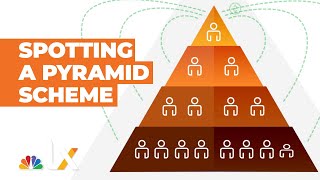
How to spot a pyramid scheme. 

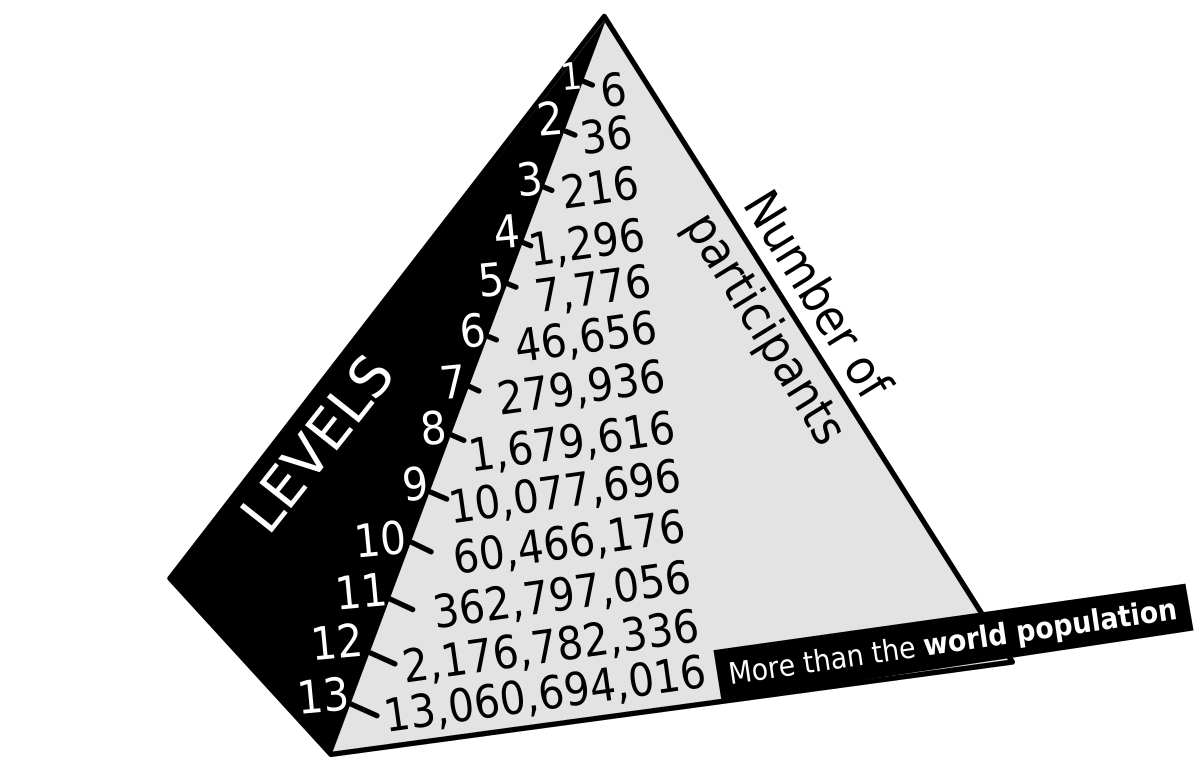
A pyramid scheme is a fraudulent system of making money based on recruiting an ever-increasing number of “investors.”  The initial promoters recruit investors, who in turn recruit more investors, and so on. The scheme is called a “pyramid” because at each level, the number of investors increases. The small group of initial promoters at the top require a large base of later investors to support the scheme by providing profits to the earlier investors.

Let’s assume the following: Founder Mike sits alone at the top of the heap, represented by the number “one.” Assume Mike recruits 10 second-tier people to the level directly below him, where each newbie must issue him a cash payment for the privilege of joining. Not only do those buy-in fees funnel directly into Mike’s pocket, but each of the 10 new members must then recruit 10 tier-three members of their own (totaling 100), who must pay fees to the tier-two recruiters, who must send a percentage of their takes back up to Mike. According to the hard-sell pitches made at recruitment events, those bold enough to take the pyramid plunge will theoretically receive substantial cash from the recruits below them. But in practice, the prospective member pools tend to dry up over time. And by the time a pyramid scheme invariably shuts down, the top-level operatives walk away with loads of cash, while the majority of lower-level members leave empty-handed. It should be noted that because pyramid schemes heavily rely on fees from new recruits, the vast majority do not involve the sale of actual products or services with any intrinsic value.

Unfortunately, these types of scams sometimes prey on people who need income quickly. For example, if you lost your job and are having a hard time finding a new job, you might be more willing to look into an opportunity that offers a fast return. But avoid the temptation to overlook the feeling that something is too good to be true. Instead, take a moment to calm yourself so you can make a legitimate plan after losing your job. Go over your budget—or create one for the first time—so you can manage your money in the best way possible while you try to increase your income.

How to Spot a Pyramid Scheme

Pyramid schemes and MLM sound a bit alike, don’t they? Here are some signs of a pyramid scheme, provided by the US Securities and Exchange Commission, to help you understand whether you’re considering a scam or a legitimate MLM opportunity:

  • You’re not selling something real. Legitimate MLMs sell tangible goods—many times there’s a ready-made market for them.
  • Get-rich-quick promises. If you’re being offered overnight success, get-rich-quick guarantees, or passive income promises, it’s probably too good to be true. People who make money with legitimate MLMs put a lot of time and effort into their businesses.
  • The company can’t prove it generates retail income. If the business can’t show you financial statements that demonstrate income from the sale of product, it could be generating all its income from recruiting people into the pyramid.
  • Strange or unnecessarily complex commission processes. Legitimate MLMs have easy-to-understand, product-based commissions.

The Bottom Line

Pyramid schemes are illegal in many countries. The model of profiting by using the network effect often traps individuals into recruiting their acquaintances, which can feel slimy for everyone involved and can ultimately strain relationships. Some people may shoot their shot each time and invest in multiple schemes losing money each time. Victims of pyramid schemes are often embrassed into silence and keep blaming themselves for not being tenacious enough to earn the promised returns, when in truth it’s the system that is faulty. Get rich quick schmes never work and will allways have some strings attached to it that can put people into legal trouble. Vigilance and knowledge about where your money goes are important factors that people must know, preventing them from falling pray for traps like the pyramid scheme.

sources – https://www.investopedia.com/insights/what-is-a-pyramid-scheme/ https://www.credit.com/blog/what-is-a-pyramid-scheme/

How to spot a pyramid scheme.

A pyramid scheme is a fraudulent system of making money based on recruiting an ever-increasing number of “investors.”  The initial promoters recruit investors, who in turn recruit more investors, and so on. The scheme is called a “pyramid” because at each level, the number of investors increases. The small group of initial promoters at the top require a large base of later investors to support the scheme by providing profits to the earlier investors.

Let’s assume the following: Founder Mike sits alone at the top of the heap, represented by the number “one.” Assume Mike recruits 10 second-tier people to the level directly below him, where each newbie must issue him a cash payment for the privilege of joining. Not only do those buy-in fees funnel directly into Mike’s pocket, but each of the 10 new members must then recruit 10 tier-three members of their own (totaling 100), who must pay fees to the tier-two recruiters, who must send a percentage of their takes back up to Mike. According to the hard-sell pitches made at recruitment events, those bold enough to take the pyramid plunge will theoretically receive substantial cash from the recruits below them. But in practice, the prospective member pools tend to dry up over time. And by the time a pyramid scheme invariably shuts down, the top-level operatives walk away with loads of cash, while the majority of lower-level members leave empty-handed. It should be noted that because pyramid schemes heavily rely on fees from new recruits, the vast majority do not involve the sale of actual products or services with any intrinsic value.

Unfortunately, these types of scams sometimes prey on people who need income quickly. For example, if you lost your job and are having a hard time finding a new job, you might be more willing to look into an opportunity that offers a fast return. But avoid the temptation to overlook the feeling that something is too good to be true. Instead, take a moment to calm yourself so you can make a legitimate plan after losing your job. Go over your budget—or create one for the first time—so you can manage your money in the best way possible while you try to increase your income.

How to Spot a Pyramid Scheme

Pyramid schemes and MLM sound a bit alike, don’t they? Here are some signs of a pyramid scheme, provided by the US Securities and Exchange Commission, to help you understand whether you’re considering a scam or a legitimate MLM opportunity:

  • You’re not selling something real. Legitimate MLMs sell tangible goods—many times there’s a ready-made market for them.
  • Get-rich-quick promises. If you’re being offered overnight success, get-rich-quick guarantees, or passive income promises, it’s probably too good to be true. People who make money with legitimate MLMs put a lot of time and effort into their businesses.
  • The company can’t prove it generates retail income. If the business can’t show you financial statements that demonstrate income from the sale of product, it could be generating all its income from recruiting people into the pyramid.
  • Strange or unnecessarily complex commission processes. Legitimate MLMs have easy-to-understand, product-based commissions.

The Bottom Line

Pyramid schemes are illegal in many countries. The model of profiting by using the network effect often traps individuals into recruiting their acquaintances, which can feel slimy for everyone involved and can ultimately strain relationships. Some people may shoot their shot each time and invest in multiple schemes losing money each time. Victims of pyramid schemes are often embrassed into silence and keep blaming themselves for not being tenacious enough to earn the promised returns, when in truth it’s the system that is faulty. Get rich quick schmes never work and will allways have some strings attached to it that can put people into legal trouble. Vigilance and knowledge about where your money goes are important factors that people must know, preventing them from falling pray for traps like the pyramid scheme.

sources – https://www.investopedia.com/insights/what-is-a-pyramid-scheme/ https://www.credit.com/blog/what-is-a-pyramid-scheme/

Summary of Union Budget 2021-22


The Union Minister for Finance & Corporate Affairs, Smt Nirmala Sitharaman presented the Union Budget 2021-22 in Parliament today, which is the first budget of this new decade and also a digital one in the backdrop of unprecedented COVID-19 crisis.

This year’s Budget lays focus on the seven pillars for reviving the economy – Health and Wellbeing, Physical and Financial Capital and Infrastructure, Inclusive Development for Aspirational India, Reinvigorating Human Capital, Innovation and R&D, and Minimum Government Maximum Governance. Several regulations around the securities market are proposed to be merged as a single code. Several direct taxes and indirect taxes amendments were also proposed.


Our FM starts the budget2021 announcement by mentioning the challenges during the pandemic and the vision of the Pradhan Mantri Garib Kalyan Yojana.
FM says that India has two vaccines made available and two more will be made accessible soon.
FM reiterated that the government is fully prepared to support the economy’s reset.
FM says the Budget2021 is based on 6 pillars.
Starting with healthcare & wellbeing:
Spending’s been increased
New scheme with an outlay of Rs.64K crore to be spread over 6 yrs
The above is in addition to the National Health Mission.


Support to rural & urban health centres
FM announces the Jal Jeevan Mission with an outlay of 2.87 lakh crores aiming to provide full-fledged water supply to all urban local bodies with household tap connections.
The FM proposed Rs1.41 lakh crores over a period of 5 Years for the Urban Swacch Bharath 2.0.


An amount of Rs.1.47 lakh crores, over a 5-year-period, from 2021 has been assigned for initiatives such as wastewater treatment, reduction in plastic waster, reduction in pollution and the like.
The Scrapping Policy has been announced in the Budget2021. The voluntary vehicle scrapping policy aims to remove inefficient vehicles so as to reduce vehicular pollution and oil import bills.
FM proposes an amount of Rs.35000 crore to manufacture and make accessible the COVID19 vaccine.


To strengthen nutritional content, delivery, outreach, and outcome, Government will merge the Supplementary Nutrition Programme and the PoshanAbhiyan and launch the Mission Poshan 2.0. Government will adopt an intensified strategy to improve nutritional outcomes across 112 Aspirational Districts.


Universal Coverage of Water Supply and Swachch Bharat Mission:

The Finance Minister announced that the JalJeevan Mission (Urban), will be launched for universal water supply in all 4,378 Urban Local Bodies with 2.86 crore household tap connections, as well as liquid waste management in 500 AMRUT cities. It will be implemented over 5 years, with an outlay of Rs. 2,87,000 crore. Moreover, the Urban Swachh Bharat Mission will be implemented with a total financial allocation of Rs 1,41,678 crore over a period of 5 years from 2021-2026. Also to tackle the burgeoning problem of air pollution, government proposed to provide an amount of Rs. 2,217 crore for 42 urban centres with a million-plus population in this budget. A voluntary vehicle scrapping policy to phase out old and unfit vehicles was also announced. Fitness tests have been proposed in automated fitness centres after 20 years in case of personal vehicles, and after 15 years in case of commercial vehicles.


Physical and Financial Capital and Infrastructure:

AatmaNirbhar Bharat-Production Linked Incentive Scheme

Finance Minister said that for a USD 5 trillion economy, our manufacturing sector has to grow in double digits on a sustained basis. Our manufacturing companies need to become an integral part of global supply chains, possess core competence and cutting-edge technology. To achieve all of the above, PLI schemes to create manufacturing global champions for an AatmaNirbhar Bharat have been announced for 13 sectors. For this, the government has committed nearly Rs.1.97 lakh crore in the next 5 years starting FY 2021-22. This initiative will help bring scale and size in key sectors, create and nurture global champions and provide jobs to our youth.


Textiles:

Similarly, to enable the textile industry to become globally competitive, attract large investments and boost employment generation, a scheme of Mega Investment Textiles Parks (MITRA) will be launched in addition to the PLI scheme. This will create world class infrastructure with plug and play facilities to enable create global champions in exports. 7 Textile Parks will be established over 3 years.

Thus, the budget was widely acclaimed and appreciated.

WHY DIAMONDS ARE SO EXPENSIVE ?

Diamonds are allotropes of carbon like graphite. But, the difference between them is tremendous. What makes diamonds so costly ? Well some might say that the extraordinariness, challenges in mining, toughness, cut, clearness, shading, and carat of diamonds make them costly and popular. Gold and silver are likewise uncommon, mining them is additionally troublesome however why just diamond is so costly ? Why people give diamond ring when they propose one another ?

Why Are Diamonds So Expensive? – EVEVIC JEWELRY

A few years ago it was not a trend to give diamond rings while proposing. There are many stones rarer than diamonds. They are costly as a result of a company called De Beers. Each diamond you find in this world comes from this company not because diamonds are very rare to find. There are numerous diamond mines in this world however this organization don’t let those diamonds to arrive at the market.

At the point when supply of a specific item is less however demand is high, this outcomes in making that item more costly. This company made the stock of diamonds exceptionally less. But, how ? Few years back diamonds were found only in India and Brazil. But then it was also found in Africa and that too in very large quantity. De beers was also one of the company which found a lot of diamonds in Africa. But the other mines company started selling diamonds because the supply of diamonds were increasing which can make them less expensive. They were in loss. De beers would have also done that but instead it started buying those diamonds by taking loans and because of that it became the owner of all mines in Africa. It became a monopoly and a monopoly does what it wants. Soon when other mines company discovered diamonds in Serbia and other countries De beers bought all of them. It became owner of all the diamonds in the world.

Yet, De beers never let people to realize that they have diamonds in exceptionally huge amount because then people won’t buy it. They restricted the stock of diamonds which made them uncommon. They further began promoting diamonds by giving statements like “A diamond is forever”. Because of this, the interest of people towards diamonds increased and they became expensive.

RESOURCES:

2. https://francisalukkas.com/why-are-diamonds-so-expensive-5-reasons/

What Is Inflation – The Truth behind Inflation | Real Burglar Of Money

Hello friends! If I gave you a hundred rupee note in the year 1958 and you kept it hidden under your bed for 60 years And if you took out that note today and used it in the market, then the value of that note would have reduced to a mere 1 rupee 20 paise in comparison to 1958 Let me explain it to you from another angle, if you did not understand If you buy something worth 100 rupees today, it would have cost 1 Rupee 20 paise back in 1958 That is 100 rupees of today is equal to 1 rupee 20 paise of 1958 This is because of inflation Inflation means dearness of things that makes things costlier for all of us every year Why does inflation occur and what are the reasons behind this? Is it really a bad thing? And how is inflation related to unemployment and other economic factors? We will talk about all of this in today’s video where I will explain this “ghastly” inflation to you Come, let us see First of all, a very important question- Why does inflation happen and who is causing it to happen? Are some government officials increasing the prices of things arbitrarily? It is not so .

There are several reasons for inflation but I’d like to discuss 4 main reasons for inflation in this article The first reason is very simple- An economic boom That is, a good economic growth When the economic growth is good, then there’s more money in the hands of the people who can spend it on different items When there’s more money in the hands of the people, they can spend it on different items That is, the demand for everything would go up in the economy When demand goes up, the businesses and companies that manufacture these products seek to increase the prices in a bid to earn more profit since so many people are willing to buy So they increase the price of the goods which will then lead to inflation Explaining this with an example- Imagine an aeroplane with 100 seats and 100 passengers have to board that plane But there are only 10 first class seats and 90 economy class seats Now if the passengers are given more money If they’re all given enough money to be able to afford a first class seat, they’ll all want to book a first class seat. But the number of seats are only 10 Not all of them can have a first class seat So what would happen as a response? In response, the airline would hike the prices of its first class seats so that only those who have more money can afford to book a first class seat So basically there is an inflation This type of inflation is called a “demand pull inflation”.

 A demand pull inflation is when the inflation rises with the rise in demand The second reason is the increase in the prices of the raw materials due to different reasons For example, if the prices of wheat and rice rise due to a bad monsoon season, the prices of oil rise or a new tax imposed by the government lead to a rise in the price of one of the raw materials then the companies that manufacture products using these raw materials they’d have to hike the prices of the products to make profits since manufacturing them would become costlier which would ultimately lead to inflation This inflation is called “cost push inflation” The third reason is increase in the salaries No, I’m not joking: When the companies or governments raise the salaries of their employees, then they have to increase the price of their products as well to be able to still make profits .This inflation is called “wage push inflation”.

 There could be other reasons for this as well If unemployment levels are at very low levels in a country, then it is extremely difficult for the companies to replace their employees and if they aren’t replaced, their salaries would have to be raised and this again, triggers inflation And finally, the fourth reason is currency depreciation This can happen due to several different reasons, out of which one of the most important reasons is printing of more notes by the government which leads to the currency losing its value And this is a very dicey reason This could also potentially trigger hyper inflation which is happening in Venezuela today and happened in Zimbabwe in 2008 If the inflation rate touches even 10% in our country, then it would cause the people to comment that things are becoming extremely dear very fast But in Venezuela, between 2016- 2019, the inflation rate was more than 5 crore percent!

 Taking the example of Zimbabwe, Around 2008, the currency of Zimbabwe was losing its value at such a rapid pace that the government began printing 1 million dollar and 1 billion dollar notes! And there existed even a 1 trillion dollar note in Zimbabwean dollars And do you know what the value of that 1 trillion Zimbabwean dollar note was? Just 1 US dollar! This is the extent to which money can lose its value in a case of hyper inflation But this is a very long topic on its own and I will make a video on it in the future because there are several political reasons behind it, apart from the economic ones Talking about the present, the inflation rate in most of the countries today is going down Think about why this is happening It is because of the shrinking demand in the wake of the lockdowns that have been imposed around the world People are buying fewer things and travelling less .

The people do not have money to spend because their businesses have shut down And so, there has been a decline in overall demand And the opposite of the “demand pull”(which I told you about as the first reason) is happening Since the demand is going down, so is the inflation As a response to this, some countries have decided to transfer cash to the people- distribute it for free Now, some people state that doing this would cause the inflation to increase What do you think will happen? I discussed the same logic in this video on Universal Basic Income that the biggest criticism of the Universal Basic Income and the free distribution of money is that it will cause the inflation to spike What do you think? Write down your explanations in the comments below And I will give the answer to this question later in the video I’d like to pose another interesting question before you Is inflation necessary? 

What if there was 0% inflation? Observing superficially, you could think that this would be great as things would stop becoming costlier and that it is good for you as you will be able to afford it for cheap You would be able to save up more and overtime, the value of money would not depreciate either So this would be another great thing! Analyzing deeply upon the reasons that lead to inflation then you would understand that 0% inflation is actually not a good thing This would mean that companies would not raise your salaries Your salary would remain constant And since salaries never go down, therefore, in general, inflation always stays in the positive .

And there is a third reason as well If there is deflation, that is, the prices of things keep decreasing every year, then the people would not want to spend money. They would want to save up First of all, the value of money is increasing, If deflation continues to happen, then five years on, the item that one wishes to buy would come for cheaper So they would want to buy it five years later instead of buying it now This would cut down the overall public expenditure Lesser expenditure would mean that the businesses would start incurring losses The businesses incurring losses would translate to people losing their jobs which would then cause the unemployment to rise I’ve told you about a very long and convoluted connection- You might wonder if it actually happens so Yes it does There is a very interesting relation between unemployment and inflation .

This shows us the inverse relation between unemployment and inflation If there’s economic growth, there will be an increase in inflation and unemployment would go down and unemployment will rise if inflation goes down And this is a very interesting explanation because one would not expect this to happen, but it does in reality But as obvious, there are some extreme limits where this graph is not valid For example, in the case of hyperinflation It isn’t that Venezuela today has 100% employment and 0% unemployment Some other factors come into play there. For instance, political factors which cause inflation to spike But generally, this graph is valid A question arises- Excessive inflation is bad because it would cause hyperinflation and increase dearness Nominal inflation is also bad because it would cause unemployment to rise So, what is the optimum level of inflation that a country should maintain? What could it be? This figure is 2% for the developed countries .

The central banks and the governments of the developed nations have decided that they should maintain an inflation rate of about 2% If it is more, then they would try and reduce it And if it is less, they would try and increase it For India, this rate is 4% with a margin of ±2% So the ideal inflation rate in India should be around 2-6% This keeps the prices stable and keeps the levels of unemployment at their lowest It ensures maximum employment So, if a government wants to control inflation, how can it do that? There can be several ways to do this Generally, the central bank of a country is responsible for controlling the inflation rate and normally, the central bank- RBI, in the case of India- controls the inflation rates by increasing/decreasing its interest rates If RBI increases it interest rates (which are called repo rates) which is charged on loans given to other banks.

 Then fewer banks would want to take loans And these banks in turn, would increase their interest rates as well which would reduce the number of people wanting to take loans This would result in lesser money being circulated in the economy And if this happens so, then inflation would go down And if RBI slashes its interest rates, then indirectly, through other banks, more people would want to take loans and this would push the inflation up So inflation rate can mainly be controlled by increasing or decreasing the interest rates But there are other ways as well- Inflation can also be controlled by printing of more notes Printing of more notes would obviously cause inflation to rise.

 The government can control inflation by imposing more taxes as I had explained in the reasons earlier in this video The government can also control inflation by spending more or by spending less, if there is a recession in a country and there’s no economic growth, then inflation would also decline This happens on a general basis, but not always Sometimes, it also happens that a country’s economic growth is going down and the country is going into recession but inflation is going up This situation is called “Stagflation”. This is a disastrous thing indeed. 

Why does this happen? The reason for this is- Assume that there is a recession within a country, but the cost push factors- the second reason for the rise of inflation that we talked about- The cost of the raw materials is rising For example, the rise of oil prices all across the world so the oil imported would then cost more so the inflation would rise because of cost push factors but there is recession within the country There is another exception from the other side- If there is deflation in a country, but simultaneously, there is economic growth in the country This happened in the USA between 1870-1890 This period is referred to as “The Great Deflation”.

 The cost of the goods were falling by around 2% every year and there was deflation, but there was also an economic boom Both the people and the businesses were making more money and employment was on the rise The reason behind this attributed to the rise in productivity This was a time when there was technological progress at such a rapid pace and new technologies were being developed that it compensated for the deflation Reverting to our original question- if people are given money for free in today’s times during this recession then would it lead to a rise in inflation? In my opinion, the answer of this is no. Inflation would not rise because handing out money wouldn’t amount to such a huge increase in wealth that people become capable to buy things that are not being supplied It would not be so. Because it would push up the demand very slightly.

And demand has fallen so low that giving out paltry sums of money would not alter the demand drastically So I do not think that the distribution of money for free would trigger any sort of inflation No matter how much importance inflation holds for the entire economy, but if we come down to personal consequences and how it personally affects you, then you could say that it has a negative consequence The money that you save up would lose value over time the prices of the things keep going up and dearness would always be on the rise .

This is why people invest their money in different things rather than stashing it under their bed For example, they buy gold with it. Because the price of gold rises overtime The value of money keeps diminishing due to inflation but the value of gold keeps rising Similarly, some people buy real estate/ Property to avoid this And some people invest in cryptocurrencies like Bitcoin , Ethereum ,etc.

Secrets to becoming wealthy from Famous Billionaires

Secrets revealed by famous billionaires being successful in this or that way is what we all want to achieve from Mark Zuckerberg to Elon Musk following their simple success principles is guaranteed to change your life.

Find your goal and formulate it correctly

Steve Jobs did not want to release a phone his goal is a phone that could function as a computer but was easy to use your goal should be specific. For Example, you like to bake cakes and you would like to do it more often and give some profit out of it I want to bake cakes for money is an incorrect way to formulate your goal the right goal would be to open a bakery where my cakes will be sold if you dream of a world tour it will be wrong to set a goal I want to travel the world it’s a wish not a goal the right formulation would be I want to earn twenty thousand dollars for my travels. 

Make a plan and follow it

Hypothetically if we explain the situation then it should be, How are you going to travel around the world what kind of Transportation are you going to use what will be your route when are you going to start planning short term and long term goals to help to identify weaknesses and major tasks that need to be focused on perhaps after drawing up the plan you will understand that your goal is not to earn twenty thousand dollars for a trip on a liner but to find like-minded people for hitchhiking around the world Elon Musk wants to colonize Mars having drawn up the plan he concluded that the main obstacle was the high cost of flying to the Red Planet now Elon is busy developing more economical space transport.

Don’t hold yourself back

You’ve probably heard about such a thing as emotional intelligence it is the ability not to suppress but to manage your emotions and display them where it’s appropriate also suppressed emotions are worse than physical well-being therefore do not be shy to show you true feelings and emotions at least for visiting doctors less often look at Oprah Winfrey for example that strong powerful woman always speaks up and shows how she truly feels about something that matters to her. 

Love what you do

Truly loving what you do and believing in its importance if you are not obsessed with your own business or the goal you are aiming at the path to success will be long and most likely endless if you’re not in love with your job it’s difficult to change your attitude towards it if you cannot quit trying to consider your current position as a tool to achieve your goal. For example, Once Mark Zuckerberg shared his favourite story that in 1962 John Kennedy visited the NASA Space Center in one of the offices he noticed the cleaner who was so engrossed in sweeping the floor that he did not even notice him, “Hi I’m John Kennedy what are you doing here” Kennedy addressed him then the janitor answered, “I’m working so that humanity could go to the moon Mr. president”.

Do what feels right to you

There will always be people giving you advice and offering you once-in-a-lifetime opportunities they might be indeed doing it trying to help you however taking the decision only out of fear that the opportunity will be lost is wrong let your personal beliefs and inspiration move you not fear only do what feels right to you and when it feels right to you follow Warren Buffett’s advice “you don’t have to swing at everything you can wait for your pitch”.

Spent money consciously

If you are obsessed with your goal then the refusal of a dress or any other impulse purchase will be an easy task for you. For Example, If you need to buy another dress go ahead but before you do it consider how much closer this dress will bring you to your goal Steve Jobs used to say spending a dollar wisely is more difficult than earning it that’s very wise weren’t you going to travel around the world maybe it’s better to buy sneakers in which it will be more comfortable to hitchhike or to take a foreign language course without which it will be difficult to organize a budget trip 

Use your time wisely

Time is a valuable resource and one should also approach it in a conscious way just like spending money Mark Zuckerberg is positive that you can’t succeed if you spend your energy on stupid and frivolous things so he is trying to cleanse his life from things that don’t have any sense choosing clothes is one of those things according to him no surprise we see him in the same great t-shirt every day we all have more significant time consumers than choosing clothes, For Example, the inability to say no to gossip social media the wish to do several tasks simultaneously and then stop halfway all these things consume the time that would be better invested in yourself just like other resources.

Set priorities

It is impossible to be successful in everything. For Example, Elon Musk believes in solar systems but understands that he doesn’t have enough strength for everything that’s why he dedicated himself to Tesla and SpaceX and the Solar City project is managed by other specialists the habit of prioritizing is useful not only in work but also in other aspects of life if you decided to spend an evening with your family do not get distracted by work and friends the desire to succeed in everything will not only lead to failure but will also consume your energy.

Say no to Stereotypes

Many of you have heard these things from other people that, “woman’s place is in the kitchen”, “real men don’t cry”, “we need children to have someone taking care of us when we are old” how often do you hear those stereotypes distort our perception of reality and also prevent us from having a good life achieving our goals and being happy it was the desire to be different from others that helped many billionaires become what they are today. Steve Jobs knew what he was talking about your time is limited that’s why you shouldn’t lose it by living other people’s lives do not fall into the trap of dogma do not let the noise of other people’s opinions beat your inner voice.

Live not only for yourself

For modern billionaires philanthropy is a spiritual priority many of them spend money to support the needy to develop art education and medicine Bill Gates and Warren Buffett started them The Giving Pledge campaign the idea of which is donating 50% of their income to charity there are more than 150 participants in this campaign including Mark Zuckerberg, George Lucas, Victor Pinchuk, and Vladimir Putin in giving someone your time attention and energy means investing in them prioritizing correctly is important children in orphanages or animals and shelters need your time.

The principles described above won’t make your billionaire overnight but success doesn’t always mean money it’s also about doing what you love and feeling happy.

MANAGING MONEY AND INCREASING SAVING

“Before Money becomes Wealth, it’s just Money. And for making Wealth from Money, we need to MANAGE it.”

Money Management is the broad concept which incorporates the key principles required for developing wealth and for preserving and protecting that wealth. It teaches about investing, budgeting, banking, tracking your expenses and assess the tax liabilities. This can also be called as Investment Management. Thus, Money Management is a technique where high interest output is delivered with any amount invested for money.

Spending money for satisfying needs, wishes and cravings regardless of whether they are justifies and included in a budget. can be seen in every human and is a very natural tendency and phenomenon and this idea of money management is especially developed to make the people, institutions and firms understand how to channelize and reduce the amount of money spent on different items and values which care not significant and which do not have any contribution in enhancing their living standards, long term asset or benefit. Money gives you the sense of self fulfilment and this sense of self fulfillment doesn’t come from rigorous spending of money or buying wealth but from having an amount of money which will not get outlived while fulfilling their lives needs, ambitions and providing a meaning livelihood which is convenient for them.

Thus, for money management it is also important to properly analyze the behavioral aspect of individuals or firms. Money Management also focuses on the behavioral attributes which influence the decision made by investors or organizations or individuals. And this decision making phenomena can severely affect the outcomes of long term strategies. In fact, everyone battles against the powerful elements like taxes, debt or inflation etc. which have the power to destroy and take away the wealth that we have attained by working hard. And a single wrong decision can affect and ensure our defeat.

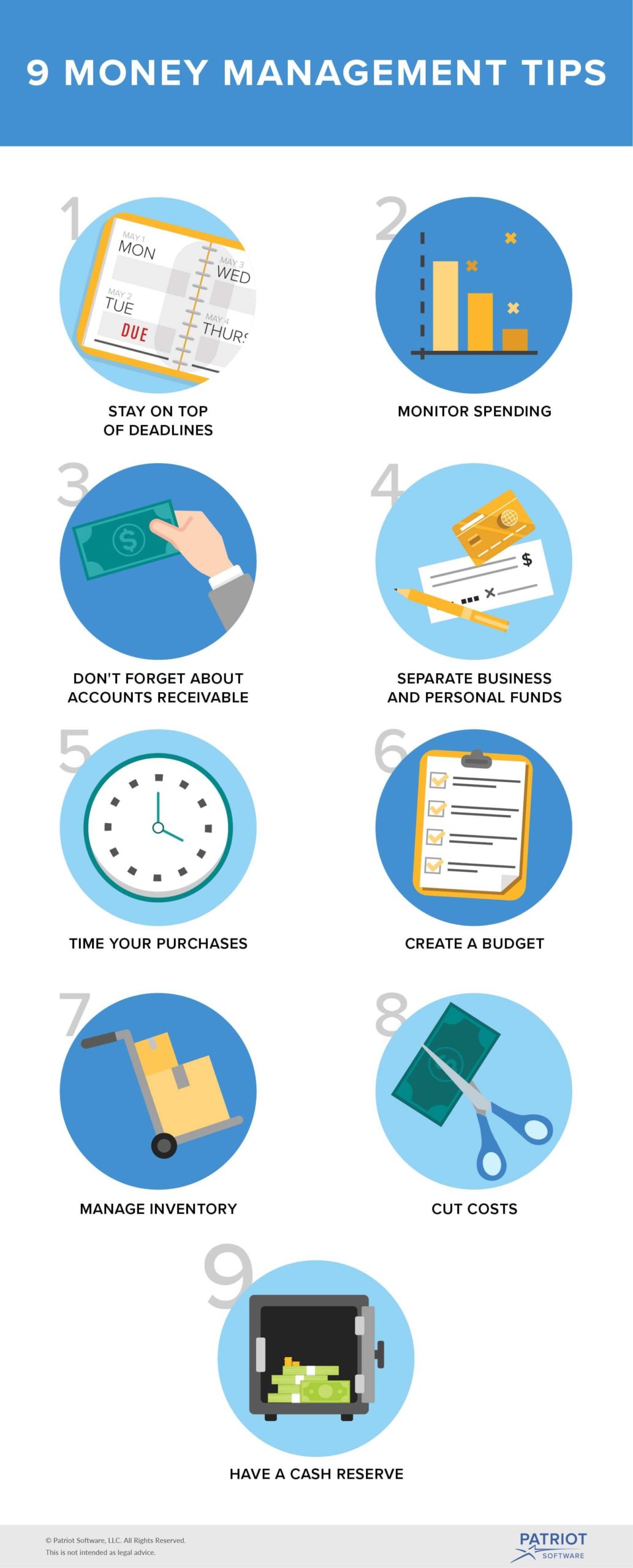
8 Tips for Money Management:

  1. CREATING A COMPREHENSIVE BUDGET PLAN (Listing the amount of money you receive and planning how to manage your expenses by using that amount and what will be your savings.)
  2. TRIMMING UNNECESSARY DAY TO DAY COSTS (Identify different ways to save and start from small scale. Eliminate day to day unnecessary costs and avoid penalty charges and fines)
  3. FIND WAYS TO PAY LESS INTEREST ON YOUR DEBTS
  4. MAKE GOALS FOR EFFECTIVE SAVINGS AND ACCELARATE THE SAVINGS
  5. AVOID PAYING MORE TAX THAN NEEDED
  6. USE ONLINE BANKING (because they help in setting up payment reminders, scheduling future bills and help in reviewing and analyzing the amount of money spent.)
  7. SAVE FOR RETIREMENT AND PLAN ACCORDINGLY
  8. WORK WITH AN ADVISOR (To reduce financial stress and feel secured. They help in analyzing your financial status and set up goals.)

NEED OF MONEY MANAGEMENT

  • Money and Finance Management is a vital part of personal and business life. Hence, it is hard to ignore and needs to be planned with proper vision, career, finances, goals etc. and these will drive your future. Proper financial knowledge is important for starting any successful business and it is the ability to manage one’s money.
  • It develops the ability of a person to understand financial concepts which will help him in managing money better. And ensures financial well being.
  • Money Management and Financial literacy is one of the major life skill and it increases the financial ability of a person. One can start investing in his 50s also but starting early has its own benefits.
  • Today, the rich is getting richer, poor is getting poorer and the middle class people are getting indebted. The reason is the lack of knowledge of money management. People learn about money management from their parents and families and not in school. What will the children of poor people learn about money management for them? The only thing that they know is to study hard for getting a job. That’s why even after having proper knowledge, skills and expertise they don’t get proper job and don’t get enough savings.

What is Capitalism? – How does Money make Money

 Hello everyone, The word ‘Capitalism’ comes from the word Capital which means Money. Or any type of wealth. Whether you have houses, cars on land, they are your capital. In the last video, I gave you the basic definition of Communism. It is a society where every person works according to his ability and receives according to his needs. If we have to define Capitalism similarly, Capitalism is a society where “from each according to his ability, To each according to his capital.” 

A society where every person works according to his ability but they get returns according to their capital. The person with the most capital will get the most profit. After knowing the definition you’d ask me: “What kind of a society is this?” “Where a person who has more money will get more money.” You heard it right, friends. I’ll talk about the exact workings later in the video. Basically, Capitalism is an ideology that promotes privatisation where the means of production like land, fields, factories, and industries, are owned by private individuals. 

In Communism they were owned by the public, everyone owned these. Similar to Communism, Capitalism is a very broad term and ideology. Where there are many subsections of ideologies with differences among them. But if you look at it broadly, there are a few things that are common in all the types. First is the Privatisation. Second, minimal interference by the Government. Most Capitalists believe that the Government has no business to be in business. This dialogue has been used by our Government recently. The third is the Free Market and Competition. and Fourth is something that is easily seen in a capitalist society, “Money Begets Money.” 
Money is earned through Money. I’ll explain this later. First, let’s talk about the history of Capitalism. The oldest example of Capitalism is Feudalism. This can be called the primitive form of capitalism. This was around the 10th century when landlords occupied land, and the farmers and labourers who worked on the land, worked tirelessly to grow crops. But all the profits from the land, was used to be taken by the landlords, and the farmers hardly earned enough to get by. You may wonder how this is an example of capitalism. The land was owned by an individual, the landlord. And to whom did most of the profit from the land go? The Landlord. Capitalism works similarly today. 

Whatever you do at whichever company, suppose you’re an employee at Apple, you work the whole day and get a monthly salary in return. But the company earns profits. Where does the profit go? It doesn’t go to you It goes to the owner of the company. Obviously, there are differences. Today you get workers’ rights and minimum wages and are not exploited, in most of the cases Who is the owner of this Apple company? That person who holds the most number of shares of the company. Even you can become the owner of the company through the share market. 

If you buy some shares Apple, any profits earned by it, you will get a part of. Because you are also an owner of a portion. We live in such a capitalist society today. An employee works in a company for a monthly salary and the profit earned by the company will be distributed among such people who don’t even know the day to day working of the company. You can earn the profit of the company by doing nothing if you invest in the company. And who can invest? Someone who already has the money. As I said, money makes money. 

One with the most money in a capitalist world can make more money easily by investing in such companies and taking their profits. Modern Capitalism started in the 16th-17th century in Britain and Netherlands. The first stock exchange of the world was the Amsterdam Stock Exchange, and the first company to be listed was the Dutch East India Company in 1602. Like there’s Karl Marx for Communism, similarly there’s Adam Smith for Capitalism. Known as the Father of Capitalism. In 1776 he wrote the book The Wealth of Nations. In the book, he talked about a policy Laissez-Faire. It is a French word that literally means ‘leave alone.’ That government should leave the economy alone and should not interfere. From here Free Market Capitalism started. Suppose you want to open a pizzeria and so does your neighbour. 
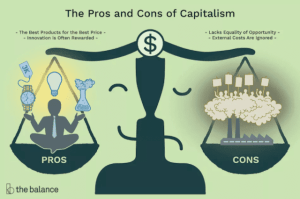
If a third person does not interfere between the two, there will be a very interesting and fair competition between you. About who can make the better pizza and sell it at a lower rate. Both of you will try to compete with each other and start experimenting. Trying to improve the quality of the pizza. Because of this competition, both of you will innovate and think of new ways. About how the pizza can be improved and sold at a lower price. In the opinion of Adam Smith, this competition was the invisible hand of the free market. Where no one is forcing you to make a better pizza, but the market situation is forcing you to innovate to make a better pizza. You are working only for your self-interest. You want your restaurant to grow and earn more profit and to perform better than your neighbour. 

But your working in your self-interest is also benefiting others. It is also in the interest of society that you work for your self-interest. This is the philosophy of Adam Smith. To increase the efficiency of your pizzeria you’d eventually realise that doing everything yourself was not smart. If you start taking orders yourself and making the pizza, it’ll take a lot of time. It would be better to hire a few people. One to take the orders at the front desk. One who’ll make the pizza and buy ingredients for it. One who will put the toppings on the pizza and put it in the oven. And one whose work would be to deliver the pizza. 

This is the Division of Labour. Every person is specialising in his work and because of the specialisation, productivity and efficiency increase rapidly. Adam Smith talked about this as well. This is one of the major reasons for the success of Capitalism across the world. Everyone realised that if they want to work in a better manner at a better speed, division of labour and specialization is necessary. Take Apple company, if a person wants to build an iPhone, it will take him years. but if there is an assembly line of workers to manufacture these iPhones, where the first person would fit the screen the second will fit the screws, then the assembly line will be able to manufacture numerous iPhones in a day. 

By implementing these ideas Industrial Revolution began. Where large factories were established; but what happened then? I talked but that in the Communism video. The workers were forced to work for hours in terrible conditions. They were getting exploited and eventually communist ideologies started. After hearing this you’d think that Karl Marx and Adam Smith would be sworn Enemies. But this wasn’t so, in reality, Karl Marx has written a book Das Kapital, where he agreed on many viewpoints of Adam Smith. There were definite disagreements between them but it can be said that they were looking at the same situation from different perspectives. 

On one hand, Adam Smith focuses on productivity and efficiency, On the other hand, Karl Marx agrees that productivity and efficiency would indeed increase but his focus is on an individual. He says that a worker would start feeling alienated if he works on repetitive tasks. To do the same for hours and years on end. The worker would not be proud of his work. He would question the purpose of his life. Seeing himself as only a small gear in a piece of large machinery. Karl Marx believed that specialisation would make workers more easily replaceable, and the capitalist would get more power to exploit the workers. The ideas of Karl Marx and Adam Smith are two perspectives of the same situation. Remember that both of them were born in different eras. Adam Smith died in 1790 and Karl Marx was born in 1818. 1790 was a time when the Industrial Revolution had just begun. And Karl Marx grew up seeing the workers being exploited in the factories. 

Maybe if they lived in the same era, their opinions would have agreed. Moving ahead in history, we know that Communism was first implemented in the Soviet Union. When it comes to the implementation of capitalism, in 1902 a significant incident happened. Three large steel companies in the USA, Carnegie Steel, Federal Steel and National Steel, merged together to become The US Steel. This was the first billion-dollar corporation in the world. Elbert H Gary was the chairperson of the company. And in the first year, it manufactured 2/3rd of the total steel manufactured in the US. But there remained some competition in the steel industry. 

So Garry invited all his competitors for a dinner and asked them why they were fighting amongst themselves while someone else was benefitting from their competition. He suggested that they work together and stop competitive pricing. This was how the first billion-dollar company in the world became a monopoly. According to the theory of Adam Smith, the Invisible hand of the free market was supposed to work and set things right. but in reality, this did not happen. Whenever there’s a monopoly for anything or a company, it is terrible for the consumers. Imagine you are stranded in a village late at night, waiting for a taxi. And the nearest city is 100-200 km away.

 But there is only one taxi. You ask the taxi driver to take you to the city, While he charges ₹500 for the distance normally, but he tells you that he would charge you ₹50,000 for taking you. You will not have any option. The taxi driver will have a monopoly here. You are stuck in a situation where the only way out is to, either give in or remain stuck there. You are forced to pay that sum. This extra amount is known as profit in Capitalism. In Das Kapital, Karl Marx talks about this theory, the Theory of Surplus Value. If I run a company that manufactures a product, and you are an employee working in the company that actually makes the product, Suppose I earn a profit of ₹80,000 by selling that product, but I pay ₹8,000 to you as salary.

 The ₹72,000 that we put call profit, Karl Marx called Surplus Value. All the surplus value and profits are taken away by me and you get only a salary. This is often seen in Capitalism. There can be many examples for this. A trader that buys products very cheap from the farmer and sells it at a much higher price The profit or surplus value is taken by the trader. A scientist discovers the formula for a vaccine, but in reality, the pharma companies selling that vaccine get the most profits. A singer that actually sings the song, but it is the music label that takes most of the profit. 

According to Karl Marx, this is a system where everyone is trying to climb a ladder to stop being exploited, but as soon as they reach the top they would start exploiting others. A system where work is not rewarded but money is. If you have the money to establish a company and employ people, you can take away the maximum profits. But obviously, not every company is like this, not every company owner is like this that’d keep on exploiting the employees. In contrast to the companies owned by private individuals are Joint Cooperative Companies such as Amul. More than 36 lakh of farmers are joint owners of Amul Co-operative. This is not a company listed on the stock market. You and I cannot invest our capital in Amul company. The profit earned by Amul and its benefits is distributed among these farmers that have created this company together. 

But obviously, to make such cooperative, one person has to take the lead. In the case of Amul, it was Tribhuvandas Patel who set up the Cooperative in 1946. Under the guidance of Sardar Vallabhbhai Patel. Regarding this there was a film as well called Manthan. It was the first crowd-funded film in India. More than 5 lakh farmers working in Amul contributed ₹2 each to make this film. Anyways, I got too diverted in the story. Coming back to the history of Capitalism, in 1929, capitalism received a huge shock when the stock market crashed terribly and a Great Depression started. The recession has been a very regular feature in Capitalism. 

There were large scale unemployment and poverty in the USA because of this. At this point entered the revolutionary economist Keynes, who altered the history of Capitalism. He believed that the Invisible Hand of the free market does not actually exist. In reality, if the free market is left free, it will lead to depression, recession, monopolies. The theory of Keynes was that governments should interfere and regulate the companies. Small companies should be subsidized, and big companies should be prevented from getting monopolies, there should be strict rules and regulations in place. 

In the decades that followed Keynes, countries all over the world took inspiration from him and implemented a model of Capitalism where rules and regulations existed. The next big shock to Capitalism was in the 1980s when Ronald Reagan in the USA and Margaret Thatcher in the UK reintroduced the free market of Adam Smith to the world. The capitalism implemented in these two countries is known as Neoliberalism. 

The basic foundational idea is of Adam Smith that government should not interfere in the market and market share run itself, and there exists an invisible free hand of the market, The current status is that in the last 40 years, in many countries of the world, especially the USA, we have seen Neoliberalism being implemented. Because of this inequalities have been rising significantly in the US. The rich are getting richer and the poor are not able to improve their situation. The big companies are starting to become monopolies. 

The History of Money

According to various individuals: Money is said to be the root of all evil. Yet it is money which controls the world. But what exactly is money? Money is a term that refers to two concepts: the abstract unit of account in terms of which the value of goods, services, and obligations can be compared; and anything that is widely established as a means of payment. Frequently the standard of value also serves as a medium of exchange, but that is not always the case. Nowadays we have digital currencies such as Bitcoin alongside our modern-day dollars and pounds. But how exactly did we reach to these currencies in the 21st century?

The Beginning: The Barter System

Barter is the exchange of resources or services for mutual advantage. Tribes in Mesopotamia were likely the starting point of the bartering system back in 6000 BC. Phoenicians (in the eastern Mediterranean; a part of modern-day Lebanon) saw the process, and they adopted it in their society. The barter system was frequently used by ancient people to get the food, weapons, and spices they needed. Because of salt’s great value, Roman soldiers bartered their services for the empire in exchange for it. In Colonial America, the colonists used bartering to get the goods and services they needed. Today, individuals, organizations, and governments still use, and often prefer, barter as a form of exchange of goods and services.

9000 – 6000 B.C.: Cattle and Grains

Cattle, which includes not only cows but also sheep, camels, and other livestock, are the first and oldest form of money. The livestock was also frequently bartered in exchange for various commodities. With the advent of agriculture also came the use of grains and other plant products as a standard form of barter in many cultures

1200 B.C.: Cowrie Shells

The first use of cowries, the shells of a mollusc available in the shallow waters of the Pacific and Indian Oceans, was in China. Historically, many societies have used cowries as money, and even as recently as the middle of this century, cowries have been used in some parts of Africa. The cowrie is the most widely and longest used currency in history.

1000 B.C.: First Metal Money

Bronze and Copper cowrie imitations were manufactured by China at the end of the Stone Age and are considered some of the earliest forms of metal coins. Metal tool money, such as knife and spade monies, was also first used in China. These early metal monies developed into primitive versions of round coins. These coins were made out of base metals, often containing holes so they could be put together like a chain.

500 B.C.: Coins

Outside China, the first coins developed out of lumps of silver. They soon took the familiar round form and were stamped with various Gods and emperors to mark their authenticity. These coins first appeared in Lydia (a part of present-day Turkey) but the techniques were quickly copied and further refined by the Greek, Persian and later the Roman empires. Unlike Chinese coins these new coins were made from precious metals such as silver, bronze, and gold, which had more inherent value.

118 B.C.: Leather Money

Leather money was used in China in the form of small pieces of white deerskin with colourful borders. This could be considered the first documented type of banknote.

806: Paper Currency

The first known paper banknotes appeared in China. China experienced over 500 years of early paper money, spanning from the ninth through the fifteenth century. Over this period, paper notes grew in production to the point that their value rapidly depreciated and inflation soared. Then beginning in 1455, the use of paper money in China disappeared for several hundred years. This was still many years before paper currency would reappear in Europe, and three centuries before it was considered common.

1816: The Gold Standard

Gold was officially made the standard of value in England in 1816. At this time, guidelines were made to allow for a non-inflationary production of standard banknotes which represented a certain amount of gold. Banknotes had been used in England and Europe for several hundred years before this time, but their worth had never been tied directly to gold. In the United States, the Gold Standard Act was officially enacted in 1900, which helped lead to the establishment of a central bank.

1930: End of the Gold Standard

The massive Depression of the 1930s, felt worldwide, marked the beginning of the end of the gold standard. In the United States, the gold standard was revised and the price of gold was devalued. This was the first step in ending the relationship altogether. The British and international gold standards soon ended as well, and the complexities of international monetary regulation began.

The Present:

Modern Day money is now longer restricted to simply coins or banknotes but has also advanced to the virtual world with new digital currencies outside the jurisdiction of governments such as cryptocurrency and various electronic wallets which are done through a portable electronic device, such as a smartphone, or a tablet now called mobile payment.

The evolution of money has truly seen various forms including physical ones such as livestock and coins made out of precious metals and has now even included virtual ones which now fit in the palm of your hand. Money makes the world round and its unknown what its new form will be.

LEARNING LESSONS FROM THE BOOK : THE PSYCHOLOGY OF MONEY

1. Use money to gain control over time, because the ability to do what you want, when you want, with whom you want , for as long as you want to, pays the highest dividend that exists in finance.

2. Wealth is what you don’t see, its hidden, it is the oncome that you have not spent and that is the fastest way to be wealthy, not spending the money you have and doing its opposite will never make you wealthy.

3. Wealth is just the accumulated leftovers after you spend what you take in. And since you can build wealth without a high income, but have no chance of building wealth without a high savings rate, its clear which one matters more.

4. Do not aim to be coldly rational( by looking at the spreadsheet) when making financial decisions. Aim to just be pretty reasonable. Reasonable is more realistic and you have a better chance of sticking with it for the long run.

5. Like everything else worthwhile, successful investing demands a price. But its currency is volatility, fear, doubt, uncertainity, and regret and you have to view them as fees( a price worth paying to get something nice in exchange).

TIPS TO MAKE YOURSELF FINANCIALLY LITERATE

Have you ever heard or read in a newspaper that a person who won millions of dollar got broke after few years, why is this so ? This is because of lack of financial education, and the reason behind many of the people after good degree and jobs and a good salary still facing financial issues is the same lack of financial education.

1. Listen to podcasts, like the Rich Dad Radio Show.

2. There are plenty of you tube channels of financial experts, subscribe their channels and follow them.

3. Read newspapers, magazines, or books based on money, finance, and investing.

4. Follow peoples or pages sharing financial knowledge on social media.

5. Hang around with people smarter than you beyond all this have a keen interest and a burning desire. That’s all you need to be financially literate.