Journalism and its aspects.

Journalism is the profession and activity of investigating and reporting issues, events, current scenario, fashion and trends to the world audience in the form of writing for newspaper and magazines or broadcasting on television, radio and online media such as blogs and networking sites. This field or activity includes writing, designing, editing and photography. Journalists are the people who collect primary and secondary information and news and the product generated by such professionals are known as journalism. Journalism has played important and crucial role during elective democracies all over world and from there it has emerge as a professional identity which is called as journalists. Even today also journalists have unique status and role in the society. Journalism covers all information about individual, society, politics, organizations, government and business. News media are the source of information about public affairs.

Some of the aspects of journalism are:

Print Journalism

Print Journalism is the practice of investigating and reporting of events in newspaper, magazines or in printed form to a broad audience. Print journalism also covers cultural aspects of society such as arts and entertainment. Photojournalist often paired with a print journalist who takes photographs to tell the story using a medium of photographs.

Broadcast Journalism

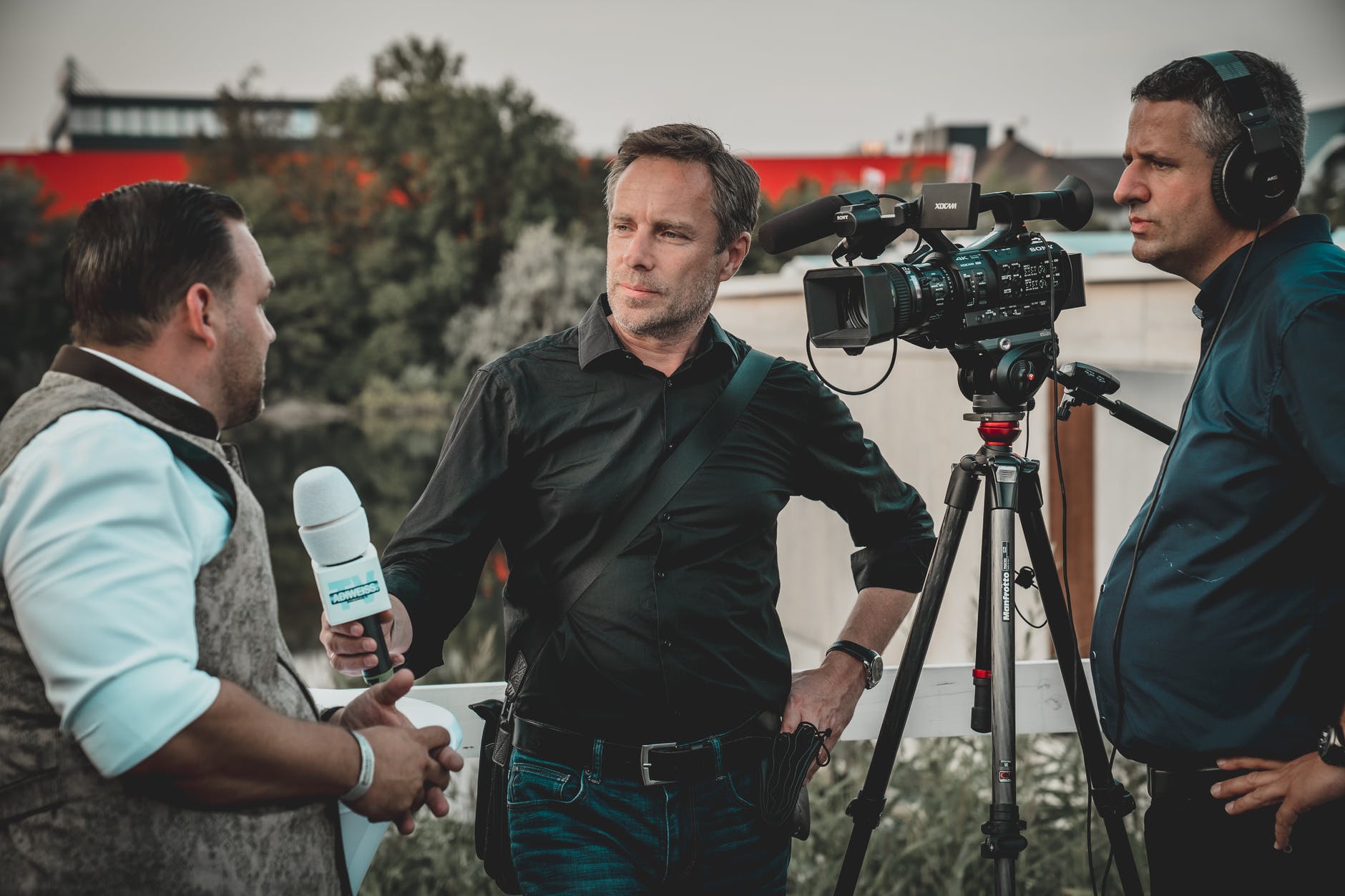
Instead of printing the news, broadcast journalists report via television, digital videos, and radio. Broadcast journalism can be prerecorded or presented live.Broadcast journalists include news anchors, producers, correspondents, audio technicians, and more.

Investigative Journalism:

Investigative journalism aims to find out about the facts and presenting them in an unbiased form to the public. Many a time the investigators may find themselves in situations where the person is recalcitrant and not willing to share the information. These are the situations where investigators have to show their talents and gather the original information for the presentation of facts to the public.

Watchdog Journalism

Watchdog journalism refers to journalists gathering facts and using the information to expose the wrongdoings of people in power. Watchdog journalism is a key component of a democratic society. The journalists promote change and hold leaders accountable for their actions. Articles, documentaries, and radio shows shine a light on poor behavior to invoke positive change.

Reviews Journalism

Review writing is rather exciting, here the writer gets to state the facts about any event, object, happening or any person and then present his viewpoint on the same as a summary of his entire research or findings. It is based on research and experience of the writer.

Sports Journalism

Sports journalism is a specific segment that only covers sport-related news. It includes live sporting events, recaps, and stories about professional athletes. As the popularity of athletic competitions increased, journalists starting covering the events in newspaper columns. A sports journalist knows more than the average person about one or multiple sports. They can provide detailed insights and analyze sports-related data.

Political Journalism

Political journalists cover news related to politics, politicians, and political science. Political journalism is a key part of a democratic society. It aims to publish unbiased reports on government officials, policy changes, and supreme court cases. The goal of political journalism is to keep voters informed. Political journalists are experts in political science and strive to provide factual and honest information.

Trade Journalism

Trade journalism covers developments in the business world. These articles can be technical, analytical, or industry-specific. Publications by trade journalists often focus on commodities, like oil and gas. Or, they may report on specific sectors, like the finance industry.

Columns Journalism

Columns are like a personal blog where the writer gets to express his views on any subject of his choice. He can write humorous blogs or any type of area where he expertise. Columns are generally published on a weekly basis.

Feature Writing

Feature writing involves long blogs about the scope, depth or interpretation of any event, object or any subject of concern. It brings the topics and viewpoints to which were previously unseen to the limelight. The data is collected and the information is inferred by conducting interviews and consulting experts in the field. Feature writings are generally very useful and are award-winning blogs when the goals are achieved.
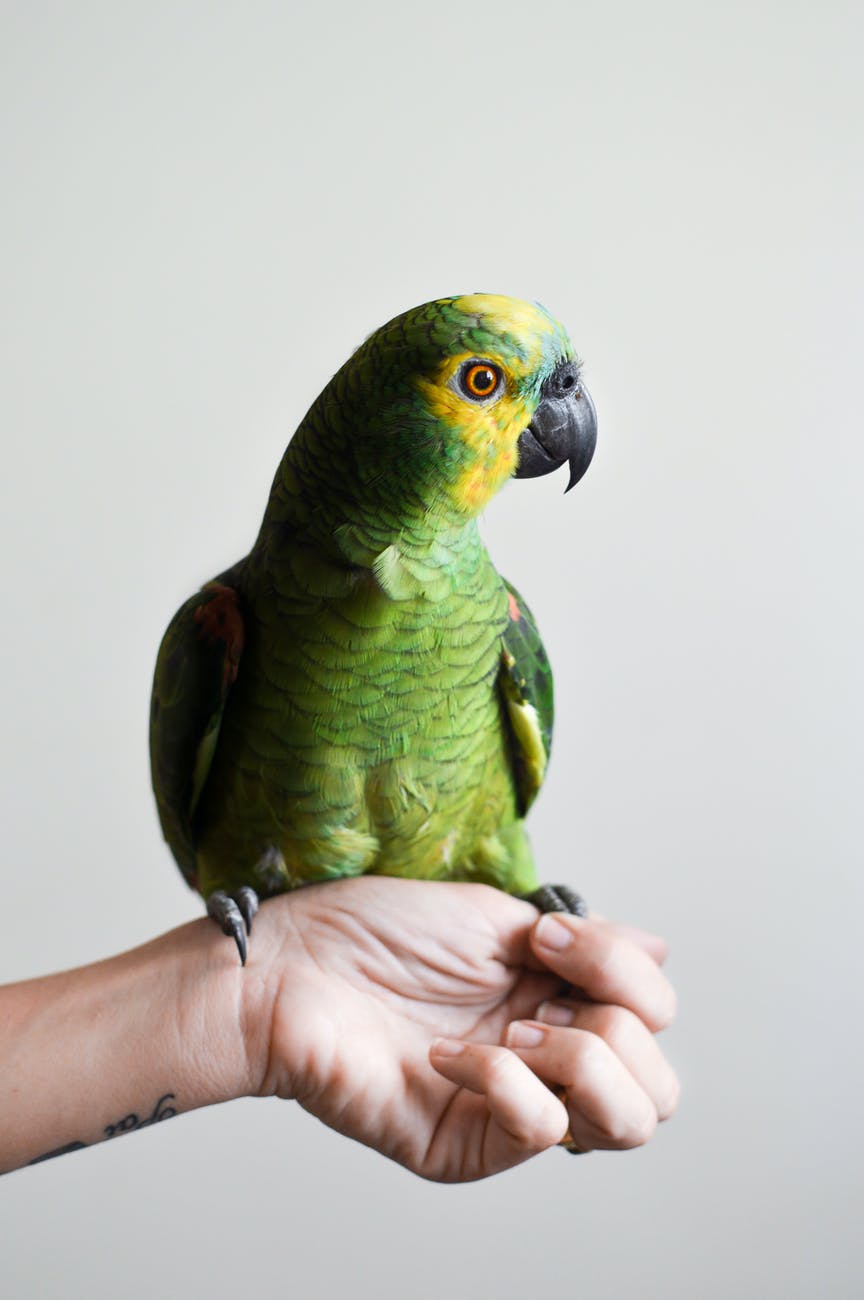
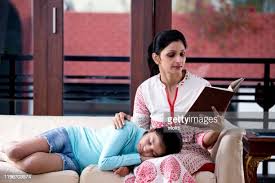
Is rice consumed by humans harmful for parrots?

There is a urban legend that goes – “consuming uncooked rice is harmful for a bird and can even lead to it’s death.” Out of fear of causing harm to flocks, people have stopped throwing rice at weddings. If you are a parrot owner who has been believing in this urban legend so far, it is time to get rid of this misconception and include rice to the diet of your feathered buddy! No one is quite sure how this myth emerged but there is no truth to this notion and on the factual side rice can be cosidered a tasty and nutritious dietary staple. The infamous myth of rice killing birds was based upon the faulty assertion that rice upon consumption consumes all the moisture in a bird’s stomach and henceforth expands and causes tearing, ultimately leading to it’s demise. But the fact is rice after soaking up moisture in a bird’s stomach will expand in a way that will lead to a healthy digestion.
However, the question of focus is – what kind of rice is more preferrable? Raw or cooked? Or how much quantity of rice should you feed your pet parrot?
Rice contains protein, Iron, thiamine, niacine and magnesium that promotes optimal physiological function in birds. Rice is also rice in carbs and helps in providing energy to birds. Technically, birds can be fed both raw and cooked rice. While parrots living in the wild habitat are most likely to consume uncooked rice, one can feed their pet parrot cooked rice. Infact, in many cases it has been observed that parrots after getting a taste of soft and starchy flavour of cooked rice have rejected raw rice. Furthermore, birds with small beaks find it difficult to consume and digest uncooked rice. It is extremely important to keep in mind that under no circumstances, one should feed their parrot fried rice since they can be detrimental to their health. Fried rice contains oil, salt and other ingredients which are unhealthy substances for birds. Excess salts can lead to hardening of arteries and cause heart problems that can be fatal for your parrot. Only pure rice without any additives is considered nutritious for birds. While rice is considered healthy, one shouldn’t force it upon their pets if they refuse to consume rice. Just like humans, your pet bird also has his/her own set of preferences. Therefore, it is advisable that you consult your vet before making any changes to your pet’s diet routine.

Photo by Caio on Pexels.com

IMPORTANCE OF NEWSPAPER

Newspapers provide general information and knowledge, such as news on the economy, sports, entertainment, trade, and commerce. In short, the newspaper is extremely important to humans; reading the newspaper on a daily basis can help us strengthen our reading habits, broaden our knowledge, and improve our fluency. For those who are interested in political news, there is a comprehensive list of what is happening on the national and worldwide political fronts. How significant was it for newspapers to report in depth. Assembly elections and Lok-Sabha bye-elections were recently held, and people on every street corner could be seen frantically trying to obtain a newspaper to learn the latest results.

Then there is worldwide political news, which keeps people informed about current events across the world. Some people’s first interest in sports is to turn to the newspaper’s Sports page. It also assists us in becoming more informed citizens. Newspapers keep us informed of any changes in the country’s rules and regulations. Furthermore, they are quite educational for students. Here, a learner can learn everything there is to know about general knowledge and current events. We keep up with technological advances, government legislation, research projects, and other topics.

Aside from that, newspapers feature fantastic pieces on social concerns, civilizations, the arts, and other topics. It informs the public about key problems and conveys public opinion. As a result, individuals will be able to conduct thorough assessments of the administration and its ministers. Likewise, newspapers provide excellent job prospects. Those looking for work read newspapers in order to find dependable job openings.Aside from that, newspapers feature fantastic pieces on social concerns, civilizations, the arts, and other topics. It informs the public about key problems and conveys public opinion. As a result, individuals will be able to conduct thorough assessments of the administration and its ministers. Likewise, newspapers provide excellent job prospects. Those looking for work read newspapers in order to find dependable job openings.

The Benefits of Reading Newspapers:

Some of the advantages of reading daily newspapers are as follows:

1.The world’s news is published in newspapers.

2.Newspapers are a source of general knowledge and information.

3.Newspapers cover topics such as the economy, sports, gaming, entertainment, trade, and business.

4.Reading the newspaper is a healthy habit that has been ingrained in modern society. This habit will broaden your horizons and deepen your understanding.

5.You may stay informed by reading the newspaper. It allows you to participate in any conversation about current events throughout the world.

6.Reading newspapers will boost your general knowledge and make it easier for you to relate to what is happening in the world.

7.Reading newspapers will boost your general knowledge and make it easier for you to relate to others who frequently discuss current events and politics.

8.You will have a clear notion and comprehension of what is going on in your country and throughout the world if you read newspapers.

A World Without Newspapers:

Everything is becoming digital as the globe advances swiftly. We can do everything on our cellphones or computers, from buying to reading the news. The newspaper industry has also been affected by digitisation. Because individuals can obtain fast updates about the newest news on their phones, newspaper sales have plummeted. Is this to say that the digital era will obliterate newspapers? Given the current situation, this prospect appears to be a distinct possibility. Are we, on the other hand, ready for a world without newspapers? Without newspapers, the world would be like a house without mirrors. We won’t be able to see our own reflection as a result of this.

Compare this condition to that of the rest of the globe and the newspaper. Imagine that the world has lost its national mirror, and you are unable to get an accurate image of what is going on around you. What’s worse, instead of the national mirror, we’re getting a fun-house mirror, which distorts information and causes you to perceive what isn’t genuine. In other words, politicians will have unrestricted access to the public to spread their ads and agendas. The data won’t be trustworthy, and it won’t even be examined. There will be no journalists to decode the government and corporate spin on stealing the average guy of his money.

Do Indians Get Enough SLEEP?

I’m telling you about on Sleep habits among Indians?

Aviral is a Man .Aviral knew he was dead tired. Though it had been more than thirty eight hours since the forty four year old marketing executive returned to Delhi early one morning from New York, he was still recovering from jet lag. He had forced himself to remain awake the whole day as he had hoped to coerce his body into sleeping at night.

But the much needed sleep seemed to elude him completely. “I hardly managed any sleep that night,” Aviral recalled. The time change had completely disrupted his sleep pattern, and when he got out of bed at 7a.m. to head for office, he was entirely ill at ease, to say the least. At the office, he could barely concentrate on his work.

Aviral wasn’t aware simply how exhausted he was until he had driven a quarter of the twenty-four kilometre stretch on his way back home in the suburbs of Delhi. He halted at a busy signal on the way, but fell asleep suddenly at the wheel. He dazed after the motorist behind him honked. Aviral drove on, but feeling woke up he couldn’t focus any further, he decided to pull off the main road and parked the car in a quiet place. Then, he rolled down the windows a bit and managed to take a two-hour nap in his car. It was only after that that Aviral could drive home safely.

It is an undisputed fact that not getting enough sleep can lead to problems in concentrating. In fact many sleep disorder experts think that lack of sleep is the reason for many ailments. Dr. Kumar Menon and his colleagues presented a study paper on sleep disorders in Mumbai in which they stressed on the need for early detection of the problem and concluded that it was high time that all the physicians “woke up to sleep disorders and included sleep history in evaluating their patients.”

Whatever be the cause of not getting proper and enough sleep, we’ve all experienced the exhaustion caused by lack of sleep. Thus, sleep is as important to a healthy lifestyle as eating properly and exercising. Getting a good night’s sleep is one of the simplest things we can do to stay healthy.

A good night’s sleep means waking up rested and invigorated. On an average, a healthy adult requires just over eight hours of sleep a night, according to Dr. Jeffrey Lipsitz, a Canadian expert on sleep disorders. However, the amount of sleep it takes to rejuvenate an individual varies from person to person. “It’s not a fixed number,” opines Joseph De Koninck, a renowned professor of psychology, adding that if one consistently gets less sleep than one needs, then “a sleep deficit accumulates.” The time it takes for a sleep deficit to accrue depends on how consistent the problem is. “Missing a couple of hours of sleep every night for a week is probably enough,” says another psychiatrist Robert Levitan.

Swarup Chatterjee, the 28 year-old IIM graduate and assistant manager at a BPO in Hyderabad, knows very well that he doesn’t get enough sleep. “I haven’t had more than four to five hours of sleep for the last three years. There’s always so much that needs to be done in my professional as well as personal life that I am constantly thinking.” Swarup is fully aware that all that is very stressful and he admits that even though he has high energy levels, he is often tired and so he drinks several cups of coffee to counter the fatigue. “But I know that I’ll be able to concentrate better if only I got more sleep,” Chatterjee concludes.

In a study conducted by sleep-disorder experts, it was found that at least one- third of adults have significant sleep loss, i.e. they have just six and a half hours or less of sleep every night. Then a recent survey conducted in India has shown that twenty-nine percent of Indians went to sleep only after midnight and sixty-one percent slept for seven hours or less. The survey also arrived at the conclusion that Indians were among the world’s earliest risers, with sixty-four percent getting out of bed before 7a.m. Is there a need to reiterate that “Early to Rise” is good provided a person follows the “Early to Bed” principle as well?

Sleep is crucial to maintaining one’s health. Without it, we increase our susceptibility to an astonishing array of health problems, including heart disease, stroke, diabetes, obesity and depression. Not sleeping enough can compromise your immune system, says Stanley Coren, noted professor of psychology and author of the very popular book, “Sleep Thieves”. You eat well and exercise in order to keep your immune system up, Coren goes on to explain, but if you aren’t sleeping, you undo all that good work. “The immune system works best when you are sleeping,” he says. “That’s when your natural killer cells are generated.”

Image Source -google.

Natural killer cells are produced in the bone marrow and found in the blood and lymph fluid. They are part of the body’s defence mechanism against viruses, bacteria, even cancer, and they do not work properly in the persons who are sleep- deprived. A study in Turkey revealed that after 24 hours of sleep deprivation, the percentage of natural killer cells in the blood declined by 37 percent. Another study in the USA conducted on 23 boys and men found that one night of partial sleep-deprivation reduced natural-killer-cell activity to 72 percent of normal levels. Though their activity returns to normal when we begin to get proper sleep, the real problem is that a lot of damage might have been done to our bodies when we were sleep-deprived for several nights and our immune system might have left us undefended and susceptible to infection.

Sleep is important in keeping not only our waistline trim, but ensuring a balanced brain activity too. During sleep, brain neurotransmitters-the chemicals that deliver messages between nerve cells in the brain-are replenished. When we do not sleep well, our brain chemicals become depleted which leads to emotional disturbances like depression, anxiety and general feelings of sadness, anger and irritation.

What are News Values

News values are described as themes that have been shown to strike a chord with media audience. The story with maximum news values gets the position of number one lead. News values provide the criteria in the routine practice of journalism, which enables journalists, editors and newsmen to decide routinely and regularly which stories are newsworthy and which is not. These are the qualities of news, which determine the selection of news from the myriad events that occur in the environment, and these are also the qualities that maintain reader interest in the news. Some of them are:

Timeliness- News must be timely. This is a news value, which is of utmost importance to the reader. News is a perishable commodity. Any information, which arrives, even an hour late ceases to be the news. It can turn into information if it is not timely and information is not necessarily news. News is only news for a day, after which it turns into information, history or event or the truth. Truth itself may or may not be news as the truth we know today may not be the truth tomorrow.

The concept of being first with the news is not a new concept. Newspapermen have always worked hard to be the first with news. This principle is evident in all news items, except middles, Human Interest stories, and perceptive stories. Besides, the tough competition amongst the newspapers makes sure that a reporter does not delay in getting the news or if any other publication prints it first it would have become history.

Proximity- We understand news only in terms of our environment and experience. Readers read the news report in terms of their own interest and in relation to their immediate environment. The closer the place is geographically to the readers, the more the value of the news item. If all things are kept common, then interest decreases as the distance increases. Principle of proximity is important and widely evident in the local newspapers. A typical news consumer is interested in familiar faces and familiar places. This news value has two aspects:

Local news of national importance

The local news, which happens in the immediate neighbourhood, within a community, is of maximum interest to the reader. This has direct implication on the reader, may affect his lifestyle, health, and his day-to-day living. For instance if a cricket match is held in Mohali stadium, it will be telecast all over the world, while remaining a local event albeit with national or maybe international importance . In this case, proximity principle works.

National news of local importance

Sometimes the events may happen far away , but have a direct relation with local area, so proximity principle applies nonetheless. For example; if a local girl wins the Miss World Contest, the implication of the news event, although not held locally has direct relevance to the local population. Another aspect of proximity is that some event held locally may have tremendous local importance. This type of news report is published in the local supplement of the newspaper.

Prominence- News about people or events that are widely known. All that is already famous, or newsworthy is given due attention by the media. For example- Coverage of Olympics, speech delivered by the Prime Minister etc.

Maintenance of Status Quo- The media regularly gives importance to the person or event that is already important and is already news. This is called maintaining status quo. Even common happenings with important people are given coverage because of the prominent position enjoyed by the person in the society. The readers are always interested in reading about every big and small detail in the life of famous people. For example; Sonia Gandhi’s favourite food. Although the event or idea itself is not newsworthy but certainly carries the news value of prominence.

Status Conferral- Newspapers have the capacity to make a person famous overnight. Any unusual or remarkable feat by an ordinary person can be given coverage in the media making the person important or prominent. Important things happening with common people, makes them important people at least for a period of time. This function of media is called Status Conferral function. For instance: CBSE topper of the year. The young boy who is a commoner one- day suddenly gains importance the next day due to his remarkable feat. The media confers a status of importance on him and makes him prominent.

Consequence- Sometimes the news is not as important as the results or the effects of that news. All events that happen after the news report are important. This type of news reports lead to a variety of follow-ups in the form of interpretative stories, features, columns and so on. This kind of story just cannot be given once and forgotten. It needs to be followed up regularly and consequences noted. For example: The news story about lack of infrastructure and basic facilities in the local hospital may have serious implications.

Human interest- Refers to that which touches the common man and affects his emotions and feelings. Human Interest stories are off shoots of a news report. Any news report can contain within itself a human- interest story. This is a featurised piece of writing which provides some respite in the newspaper from the serious, sometimes morose news stories.

Rarity- Anything unusual, odd or uncommon. It is common in journalistic parlance to say ,’if dog bites man it is not news but if man bites dog it is news.’ Anything out of ordinary has an element of human interest and is therefore considered newsworthy. E.g. News of flood, news of capture of Saddam Hussein etc.

Magnitude- How much, how many, how big, how fast. Everything else being equal, a million is bigger news than a thousand. A plane crash that kills 205 is bigger news than that kills five.

Significance- Whether the event promises or threatens to change the course of history. An event’s significance is determined by how many persons it will affect, to what extent and for how long.

Each news story has different news values. It depends upon the newspaper as to which news to be placed as the first lead. Sometimes a news story with very little news values appear as the first lead and a news story with tremendous news values and importance are not placed as the first lead. But generally the trend is placing news with greater news values as the number one lead. The frequency with which a certain kind of story or subject appears shows how newspapers react to it. Besides this there are certain stories bound to make headlines. For instance, record breaking temperature and thickening fog in the month of January, strike by CTU buses etc, Mohali ODI etc. Even here a newspaper can choose how much to talk about these topics. This will again reflect its stand on major issues.

NEWS AS A MEDIA

The word news is gotten from the Latin word ‘Nova’. It can likewise be followed into Sanskrit as ‘Nav’, which means new. It is difficult to characterize news in any single direction. Everybody can have their own meaning of information. Numerous parts of information structure are plainly identified with the quest for objectivity in the feeling of accuracy (Tuchman, 1978). The language of information is straight, explaining on occasion report along a solitary measurement with added data, representation, citation and conversation.

As per the Glasgow Media Group (1980) The language of information is by all accounts in a structure , which would permit of a genuinely straightforward trial of its reality or lie. It resembles being completely constantive (prepositional and fit for being demonstrated to be valid or bogus) and not per developmental. On the off chance that one examinations the news structure, an occasion must be delivered into ‘a tale about the occasion’ and during the time spent doing as such, includes an exchange between two went against modes-that of performative, which is additionally the interpretative and the fabulative(storytelling) mode, and that of constantive, which is likewise definite and authentic mode.

There is little uncertainty nonetheless, of the authentic idea of information. As Smith puts it, ‘the entire thought of information is that it is past the majority of perspectives (1973). In his view, without an attribution of validity by the crowd, news couldn’t be recognized from amusement or promulgation. This is the motivation behind why Gans(1979) apparently sensible supplication for ‘multiperspectival news ‘ is probably not going to get all inclusive approval and why the common pattern in news improvement has been away from philosophical towards nonpartisanship.

Antiquarians have sorted out that a similar essential news esteems have held consistent through time. “People have traded a comparable blend of information… from the beginning of time and across societies,” student of history Mitchell Stephens has composed. How would we clarify the secret of this consistency? The appropriate response, history specialists and sociologists have finished up, is that news fulfills an essential human drive. Individuals have an inborn need-a sense – to realize what is happening past their immediate experience. Monitoring occasions we can’t see with our own eyes induces a suspicion that all is well and good, control, and certainty. One author has called it “a want human mindfulness.”

At the point when the progression of information is discouraged, “murkiness falls,” and tension develops. The world, as a result, turns out to be excessively tranquil. We feel alone. John McCain, the U.S. congressperson from Arizona, composes that in his five and a half years as a POW in Hanoi, what he missed most was not solace, food, opportunity, or even his loved ones. “What I missed most was data – free uncensored, undistorted, plentiful data.” We can consider it the Awareness Instinct.

Noticeable columnists have given their own meanings of information. A portion of these definitions are recorded beneath:

Stanley Walker (New York Herald Tribune) – “News is more eccentric than the breeze. In some cases it is the redundancy with new characters of stories as old as the pyramids and again it could be practically outside the normal experience.”

Joseph Pulitzer (St. Louis Post Dispatch and New York World)- “Unique, particular, heartfelt, exciting, one of a kind, inquisitive, interesting, entertaining, odd and able to be discussed.”

Charles A. Dana (Editor, New York Sun)- “Anything that will make individuals talk.”

Arthur McEwan (Editor, San Francisco Examiner) – “Anything that makes the peruser say,’ Gee! Expert!”

John Chancellor (Correspondent, NBC News)- “News is an annal of contention and change.”

M.Lyle Spencer-“News is any occasion, thought or assessment that is opportune, that interests or influences an enormous number of individuals locally, and that is equipped for being perceived by them.”

Turner Calledge-“News is anything you didn’t know yesterday.”

Willard Bleyer-“Anything opportune that intrigues various people and best news is what has the best advantage for the best number.”

Chilton Bush-“News is generally animating data from customary individuals determine fulfillment and incitement.”

William L. Rewers – “News is the ideal report of occasions, realities or feelings that interest countless individuals.”

The best short definition that anybody has composed is that by late Prof. Willard G. Bleyer, in his reading material (Newspaper composing and Editing, page 30, Houghton Mifflin Co., Boston, 1932) – “News is anything ideal that intrigues various people, and the best news is what has the best advantage for the best number.”

Anything proposes that the paper isn’t restricted like different distributions to one field of interest, for example, science and history-any point might be news under the right conditions. Convenient recommends that it is new, not recently known, an occasion of today, or late yesterday, or the furthest down the line point to some prior conversation. Interest is the main word in the definition. The action word interest underlines that the peruser is relaxed and intentional. Number proposes that the peruser is of different sorts, the paper is distributed for the classes, its extension endeavors to be widespread.

In the present time of innovation, a similar news is accessible to all papers .Difference, anyway lies in the unmistakable quality and now and again the inclination given to it by the paper. That informs a lot concerning the paper. The strategy of the paper chooses such complexities. Rivalry from different media also has done a lot to change the essence of our papers today. Papers are turning out to be more visual by utilizing more tone, dynamic formats and different strategies. This change likewise focuses towards the changing disposition of the crowd. A crisper, really intriguing show is the thing that they search for. To keep on having a fulfilled peruser the paper changes itself thusly. This is a marvel which has happened in the print world. The amount it has influenced a specific paper still needs to be recognized.

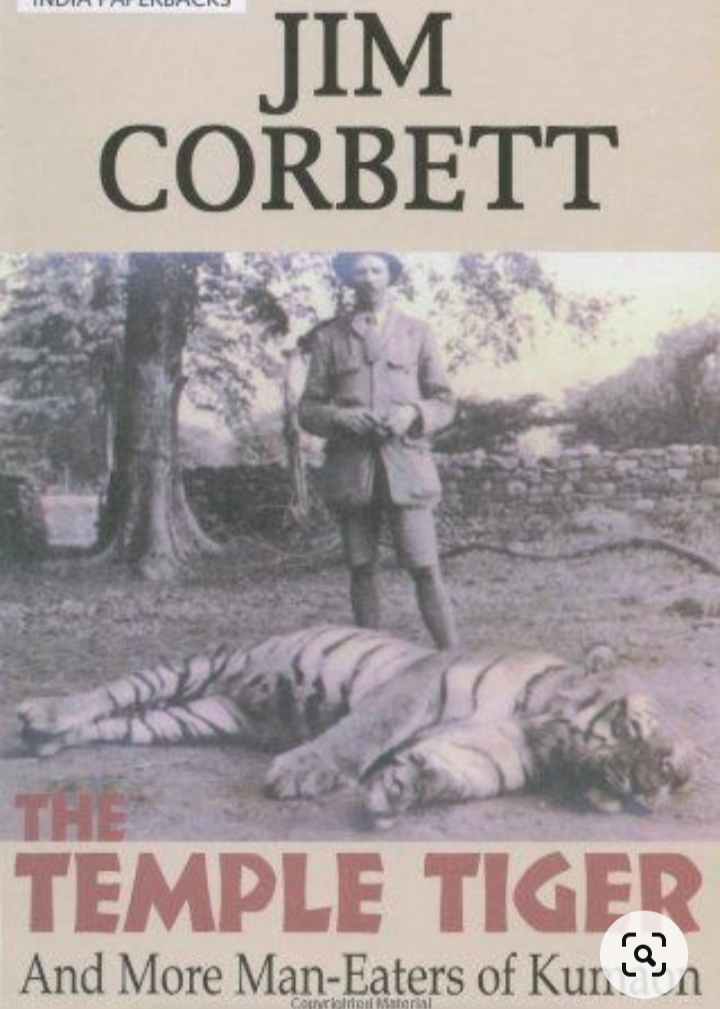
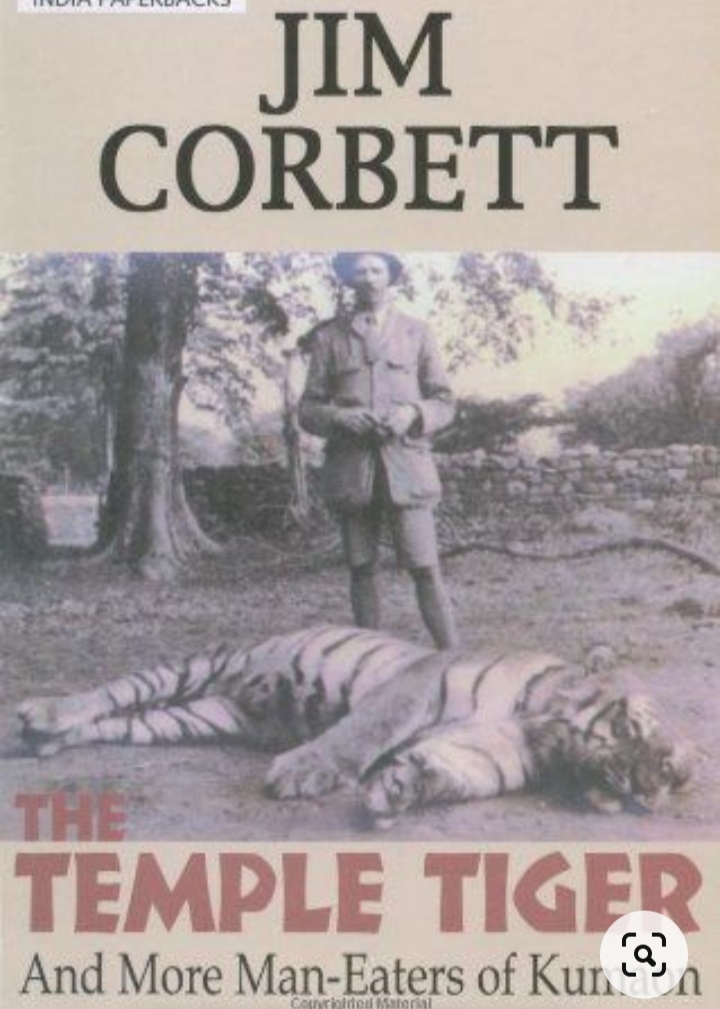
Jim Corbett’s Birth anniversary-“25 july”.


Full name – Edward James Corbett
Born – 25 July 1875 ,Nainital, (North-Western Provinces, British India
(now in Uttarakhand, India))
Died – 19 April 1955 (aged 79), Nyeri, Kenya
Nationality – Indian
Occupation – Hunter, naturalist, writer.

‘My India, about which these sketches of village life and work are written, refers to those portions of a vast land which I have known from my earliest days, and where I have worked; and the simple folk whose ways and characters I have tried to depict for you are those among whom I spent the great part of seventy years,’ -wrote Jim Corbett.

These words are not merely a description of a country by a man. These words reveal the life of a rare man who was British by blood but became an Indian at heart.

About Jim:

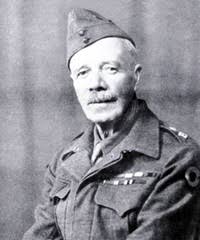
Edward James ‘Jim’ Corbett was born on 25 July 1875, at Nainital, United Province (now Uttarakhand) in British India. Corbett held the rank of Colonel in the British Indian Army, and worked for the Bengal and North Western Railway. Corbett was frequently called upon by the government of the United Provinces to slay man-eating tigers and leopards who had killed people in the villages of the Garhwal and Kumaon region. Corbett was able to succeed in many cases where numerous others had failed.

History:

Between 1910 and 1938, Corbett shot much-feared man-eaters such as the Champawat Tiger, the Leopard of Rudraprayag, the Tigers of Chowgarh and the Panar Leopard, who had cumulatively killed over a thousand people. His success in slaying the man-eaters earned him much respect and fame amongst the people residing in the villages of Kumaon, many of whom considered him to be a saint or sadhu because of his simple, dedicated and honest lifestyle. After his retirement, he authored The Maneaters of Kumaon, Jungle Lore, and other books recounting his hunts and experiences. Corbett’s stories became best-sellers because he narrated tales bubbling with spine-chilling reality in simple and enjoyable language.

Corbett had great admiration for tigers and photographed them avidly in his later years. His attraction towards the uncorrupted beauty of nature in the wild started in his childhood. He could identify the call of most animals and birds from a very young age, owing to his frequent visits to the wild. He never shot a tiger or a leopard unless it turned a man-eater. Corbett was a pioneer conservationist and lectured at local schools and societies to create awareness about the need to respect the wild.

A great human being who would even risk his own life for saving somebody else’s, Corbett continued to write and sound the alarm about the declining numbers of jungle cats till the last days of his life at Nueri, Kenya. He was distressed when people described the tiger as a blood-thirsty’ and ‘cruel’ beast. He refers to his childhood when a child freely roaming about the forest often ended meeting a tiger, the latter giving him a clear, ‘Hello child, what the hell are you doing here?” look and walking away.

. “”a tiger is a large-hearted gentleman with boundless courage and that when he is exterminated-as exterminated he will be unless public opinion rallies to his support-India will be the poorer, having lost the finest of her fauna,””- Jim Corbett had written. This quotation also makes it very obvious that Corbett had great respect for India and Indians. When you read his description of his experiences with men like Bala Singh in his stories or read about the manner in which he could identify the distinct grieving of an Indian wife for her husband, you know why he is still so revered. Corbett passed away on 19 April 1955. The Jim Corbett National Park in Uttarakhand is named after him.

Life of Jim corbett:

In childhood, he has a deep fascination for the forests and wildlife, and due to his interest in wildlife, he became a good tracker and hunter with time. Due to his amazing skill of tracking and hunting, he was often sought after by the then government of the united province to track and kill the tiger and leopard who becomes a man-eater. Even though he was the skilled hunter, he never killed any wild animal other than man-eaters.After many years as a celebrated hunter, he then developed a hobby of wildlife photography, especially, recording films of tigers in their natural habitat. He also used to give lectures on the rich natural heritage of India and the importance of the conservation of forests and wildlife to the school students.

He also penned his experience as a hunter and written many books on wildlife and hunting experiences. His most famous book was Man-Eaters of Kumaon that intensely portrayed his own hunting adventures. Many movies, TV episodes and documentaries have been made that are based on this critically acclaimed book.Later in his life, Jim Corbett started a movement to conserve the wild animals and forests. He strongly supported the All-India Conference for the Preservation of Wildlife and promoted the foundation of the Association for the Preservation of Game in the United Provinces. He also used his influence over the provincial government and lead the path that cleared the establishment of the first national park in India, the Hailey National Park, named after the Lord Malcolm Hailey in 1930s. The name later changed to the Jim Corbett National Park after the independence of India in 1957 in the honor of the legendary Jim Corbett.

Property Rights

What Are Property Rights?

Property rights define the theoretical and legal ownership of resources and how they can be used. These resources can be both tangible or intangible and can be owned by individuals, businesses, and governments. In many countries, including the United States, individuals generally exercise private property rights or the rights of private persons to accumulate, hold, delegate, rent, or sell their property. In economics property rights form the basis for all market exchange, and the allocation of property rights in a society affects the efficiency of resource use.

Understanding Property Rights

Property is secured by laws that are clearly defined and enforced by the state. These laws define ownership and any associated benefits that come with holding the property. The term property is very expansive, though the legal protection for certain kinds of property varies between jurisdictions.Property is generally owned by individuals or a small group of people. The rights of property ownership can be extended by using patents and copyrights to protect:

  • Scarce physical resources such as houses, cars, books, and cellphones
  • Non-human creatures like dogs, cats, horses or birds
  • Intellectual property such as inventions, ideas, or words

Other types of property, such as communal or government property, are legally owned by well-defined groups. These are typically deemed public property. Ownership is enforced by individuals in positions of political or cultural power. Property rights give the owner or right holder the ability to do with the property what they choose. That includes holding on to it, selling or renting it out for profit, or transferring it to another party.

Acquiring Rights to a Property

Individuals in a private property rights regime acquire and transfer in mutually agreed-upon transfers, or else through homesteading. Mutual transfers include rents, sales, voluntary sharing, inheritances, gambling, and charity. Homesteading is the unique case; an individual may acquire a previously unowned resource by mixing his labor with the resource over a period of time. Examples of homesteading acts include plowing a field, carving stone, and domesticating a wild animal. In areas where property rights don’t exist, the ownership and use of resources are allocated by force, normally by the government. That means these resources are allocated by political ends rather than economic ones. Such governments determine who may interact with, can be excluded from, or may benefit from the use of the property.

Private Property Rights

Private property rights are one of the pillars of capitalist economies, as well as many legal systems, and moral philosophies. Within a private property rights regime, individuals need the ability to exclude others from the uses and benefits of their property. All privately owned resources are rivalrous, meaning only a single user may possess the title and legal claim to the property. Private property owners also have the exclusive right to use and benefit from the services or products. Private property owners may exchange the resource on a voluntary basis.

Private Property Rights and Market Prices

Every market price in a voluntary, capitalist society originates through transfers of private property. Each transaction takes place between one property owner and someone interested in acquiring the property. The value at which the property exchanges depends on how valuable it is to each party. Suppose an investor purchases $1,000 in shares of stock in Apple. In this case, Apple values owning the $1,000 more than the stock. The investor has the opposite preference, and values ownership of Apple stock more than $1,000.

‘Summer vacation’-Before Pandemic VS During Pandemic.

Summer vacations are the best time in a year for every student. It offers every student an opportunity to explore new stuff. It also offers a chance of taking a break from the daily routine and shift to new hobbies such as gardening, painting, singing, and dancing while having fun with friends. All of us spend summer vacation doing what we love the most. Some people like to play at home simple, while others prefer stepping out to explore new things.

How I spent my summer Vacation, before Pandemic?

One reason why we have a long summer holiday is that the weather is just too hot to study or play or do anything comfortably. Many of my school friends run away with their families to the cool comfort of the hills. Those who stay back in the city get up late, hang around with friends, sleep an hour or two in the afternoons, and watch TV or play video games in the evenings. To me this amounts to doing almost nothing. During my last summer holidays, however, I did do something!

Of course, in the first three days of my month-long break it was great to wake up at six in the morning, take a look at my watch, and go back to sleep. I woke up at six-thirty, and that extra half- hour was pure heaven. But from the fourth day onwards, there was something else on my agenda-a three-week table-tennis coaching camp for school students. It was being conducted for three hours in the morning, five days a week, in a local club. The head coach, in his playing days, had represented India. Here was an opportunity I did not want to miss at any cost. After all, I too want to play for my country some day.

Since the camp started at 8 am, I was back to getting up at six. At the camp I learnt some new ways to serve, and some new strokes like the jab. I improved my ability to handle spin. I quickened my reflexes. I also learnt how to quickly find out an opponent’s weaknesses, and attack him there. Returning home and bathing with lots and lots of water was quite a treat. In the afternoons, I studied and slept. In the evenings there was a great family reunion with all of us sitting together to watch TV. When school was on, there just wasn’t enough time for this. Before I knew it, my summer vacation was over, and I was itching to display my new-found table tennis skills in our Indoor Games Hall in school!

How I spent my summer vacation, during Pandemic?

Given the COVID-19 pandemic, summer vacations may look different this year. Thus, there are some additional considerations to assess when taking time off. Here are some tips for lawyers considering vacationing during the summer months.

The New Normal: Consider Travel Restrictions and Self-Quarantines
Before planning any trips out of state, it can be helpful to consider whether your law firm has policies on local and international travel. Many law firms have travel restrictions or other parameters restricting an attorney’s return to an office after travel. If traveling out of state, depending on the destination since some states are considered “hotspots,” you may have to observe self-quarantining requirements before returning to the office.

If a planned vacation is to a hotspot area or an area with increased levels of infection, it can be helpful to consider beforehand whether you have the capability to work from home if you cannot return to the office for 14 days after travel. Many attorneys also are confirming whether their existing plans to visit other states still make sense at this time. For example, some states are requiring people to quarantine upon arrival. Other popular vacation destinations may pose an increased risk to vacationers who were otherwise practicing social distancing and other steps to reduce risks at home. Thus, the vacationing attorney may consider where the original plan can be revised or altered to reduce ongoing risk of getting sick or of being unable to return to the office in a timely way.

Plan Ahead:-
Given that the COVID-19 pandemic has drastically changed how many of us work, it is important to consider the ramifications of the new normal and the impact of the vacationing attorney on others. As such, the vacationing attorney can plan ahead to ensure that everyone is given latitude to adjust their schedules to accommodate potential additional work or issues that may require attention.

health is prior to enjoyment so ‘Stay Home, Stay Safe’.

Long live ‘NELSON MANDELA’

Nelson Mandela was born on 18 July 1918, at Umtata, Cape of Good Hope in South Africa. He is an iconic figure in today’s world when it comes to fighting for one’s rights as a human being. The son of a Xhosa Chief, Mandela studied law at the University of Witwatersrand, and in 1944 joined the African National Congress (ANC), After the Sharpeville massacre (1960), he was disillusioned to the extent that he gave up his non-violent stance and became one of those who helped found the Spear of the Nation, the ANC’s military wing. Arrested in 1962, he was sentenced to life imprisonment. The South African Court convicted him on charges of sabotage as well as other crimes committed while he led the movement against apartheid.

How is Nelson Mandela International Day celebrated?

Mandela provides service to others and always wants to create a better world for everyone. So, on this day if people find injustice in the neighbourhood, city, or state they do everything to alleviate the problem. Work in soup kitchens, marched with protesters, volunteer in local organisations, and work to help bring about civil liberties for everyone. Inspire change, and make every day a celebration of Mandela Day. People work for others and want to improve the lives of people around them. They will do this by volunteering or taking part in protests.

“After climbing a great hill, one only finds that there are many more hills to climb.”

This day provides a global call for people to recognise their ability and have a positive effect on others around them. People also inspire others about the values that Mandela shared like democracy, freedom, diversity, reconciliation, and respect. To promote Nelson Mandela Day, many people and organisations around the world take part in several activities. These activities are volunteering, sport, art, education, music, and culture. This day also celebrates a campaign known as “46664”, in reference to Nelson Mandela’s Robben Island prison number. The campaign was originally launched to raise awareness about HIV/AIDS. In 1995 and 1999 Children’s Fund and the Nelson Mandela Foundation were established.

“I learned that courage was not the absence of fear, but the triumph over it. The brave man is not he who does not feel afraid, but he who conquers that fear.”

His Movements And Struggles:

In accordance with the conviction, Mandela served twenty-seven years in prison. While in jail, Mandela’s reputation grew and he became widely known as the most significant black leader in South Africa. The conditions that he had to go through as a prisoner were appalling. He performed hard labour in a lime quarry. Prisoners were segregated on the basis of race, and the black prisoners received the fewest rations. Political prisoners were kept separate from ordinary criminals and received fewer privileges. Mandela himself describes how as a D-group prisoner, the lowest classification, he was allowed one visitor and one letter every six months. Letters, when they came, were often delayed for long periods and made unreadable by the prison censors. It calls for nerves of steel for a man imprisoned for life to get a degree of Bachelor in Law from the University of London through correspondence.

In February 1985, President PW Botha offered Mandela conditional release in return for renouncing armed struggle. Mandela spurned the offer, releasing a statement through his daughter Zindzi saying, ‘What freedom am I being offered while the organisation of people remains banned? Only free men can negotiate. A prisoner cannot enter into contracts.’

Throughout Mandela’s imprisonment, local and international pressure mounted on the South African Government to release him. In 1989, South Africa reached a crossroads when Botha suffered a stroke and was replaced as President by Frederik Willem de Klerk. De Klerk announced Mandela’s release in February 1990. His release from jail was broadcast live all over the world.

South Africa’s first multi-racial elections, in which full enfranchisement was granted, were held in April 1994. The ANC won 62 per cent of the votes in the election. Mandela became the first black President. As President from May 1994 to June 1999, Mandela presided over the transition from minority rule and apartheid, winning international respect for his advocacy of national and international reconciliation.

It is not surprising that Mahatma Gandhi should have inspired Mandela in his war against apartheid. The most universally respected figure of post-colonial Africa, Mandela was awarded the Nobel Peace Prize in 1993 along with De Klerk for their efforts to end apartheid and bring about the transition to non-racial democracy. Mandela remains an inspiring figure for any man in any corner of the world who becomes conscious of his rights and is willing to fight for the same.

The utterly butterly delicious story of Amul

Over the years, Amul, one of the most beloved brands of our country, has become the taste of India, just as its tagline claims. Every Indian millennial has grown up listening to the jingles of its many dairy products, and the Amul girl, the brand’s mascot in the polka-dotted dress, has become a nostalgia-evoking symbol. Amul has truly come a long way since its founding in 1946.

The beginning

Amul was formed as a part of a cooperative movement against Polson Dairy in Anand, Gujarat, which procured milk from local farmers of Kaira District at very low rates and sold it to the then Bombay government. Everyone except the farmers benefited from this trade. The farmers took their plea to Sardar Patel, who had advocated farmers’ cooperatives since 1942. The result was the formation of the Kaira District Co-operative Milk Producers’ Union Limited in Anand.

The union started pasteurising milk produced by a handful of farmers for the Bombay Milk Scheme and grew to 432 farmers by the end of 1948. The rapid growth led to problems including excess production that the Bombay Milk Scheme couldn’t accommodate. To solve this issue, a plant was set up to process all that extra milk into products such as milk powder and butter.

Amul is born

The late Dr. Verghese Kurien, rightly called the Milkman of India, was Amul’s true architect. His journey at Amul began in 1949 when he arrived in Anand to manage a dairy as a government employee. He went from helping farmers repair machinery to revolutionising India’s dairy industry with the White Revolution (or Operation Flood), the largest dairy development programme in the world.

The new dairy with the milk processing plant was ready for operation in October 1955, the year that also saw a breakthrough in dairy technology —buffalo milk was processed to make products for the first time in the world. The word ‘Amul’, derived from ‘Amulya’, which means ‘precious’ or ‘priceless’ in Sanskrit, was used to market the range of milk products developed by the Kaira Union. It is also an acronym for Anand Milk Union Ltd.

Dr Kurien had a vision. He wanted to offer small-scale dairy farmers quality-control units and centralised marketing, which were missing at the time in the dairy economy. Thus, the Gujarat Cooperative Milk Marketing Federation (GCMMF) was created in 1973 to market milk and all milk products produced by six district cooperative unions in Gujarat. GCMMF is the largest exporter of dairy products in India and Amul is the umbrella for all of its products.

Awards, accolades, and a global presence

Over the years, Amul, together with GCMMF, has won numerous awards. Some of these include the Rajiv Gandhi National Quality Award, 1999; the Golden Trophy for Outstanding Export Performance, 2009-10; Best Marketing Campaign, 2014; and World Dairy Innovation Award, among many others. Amul earned recognition all over the world when GCMMF  introduced it on the Global Dairy Trade (GDT) platform, where only the six top dairy players across the world sell their products.

More than a mere slogan

Amul’s famous slogan, which is now a part of its logo, was created in 1994 by Shri Kanon Krishna of a Mumbai-based advertising agency called Advertising and Sales Promotion (ASP). According to Amul, the Taste of India slogan is more than just corporate positioning or advertising jargon. This slogan lends meaning to the brand’s never-ending commitment to taking quality food and products to the rural man, which he otherwise couldn’t have afforded.

The Butter Girl

Amul did not always have the round-eyed moppet as its mascot. The Butter Girl was born in 1966 when Sylvester daCunha, the then MD of the advertising agency handling Amul butter’s account, created her for its campaign. It was a pleasant change from the dull, corporate ads that the previous agency had come up with. Being a seasoned marketer himself, Dr Kurien gave daCunha complete creative freedom to create and release the ads without taking the company’s permission. 30 years later, the Utterly Butterly Girl still wins hearts wherever she is, whether on a billboard or on the packet of butter.

Amul is not just a brand; it is also a movement that represents farmers’ economic freedom. The name is now a household term that is here to stay, and the chubby-cheeked Amul girl will continue to cast a spell on the public.

The Fight is Not over Yet- Farmer’s Protest

“Let us not forget that the cultivation of the Earth is the most important labor of man. When tillage begins, other arts will follow. The farmer’s, therefore are the founders of the civilization.”

Daniel Webster

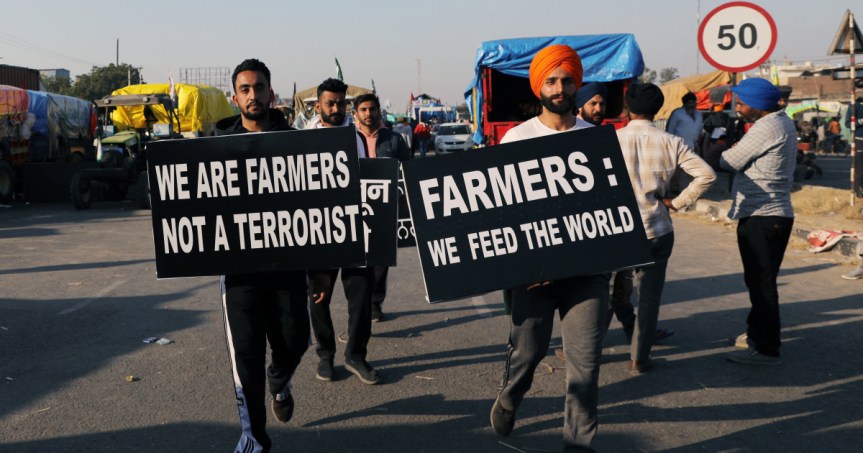
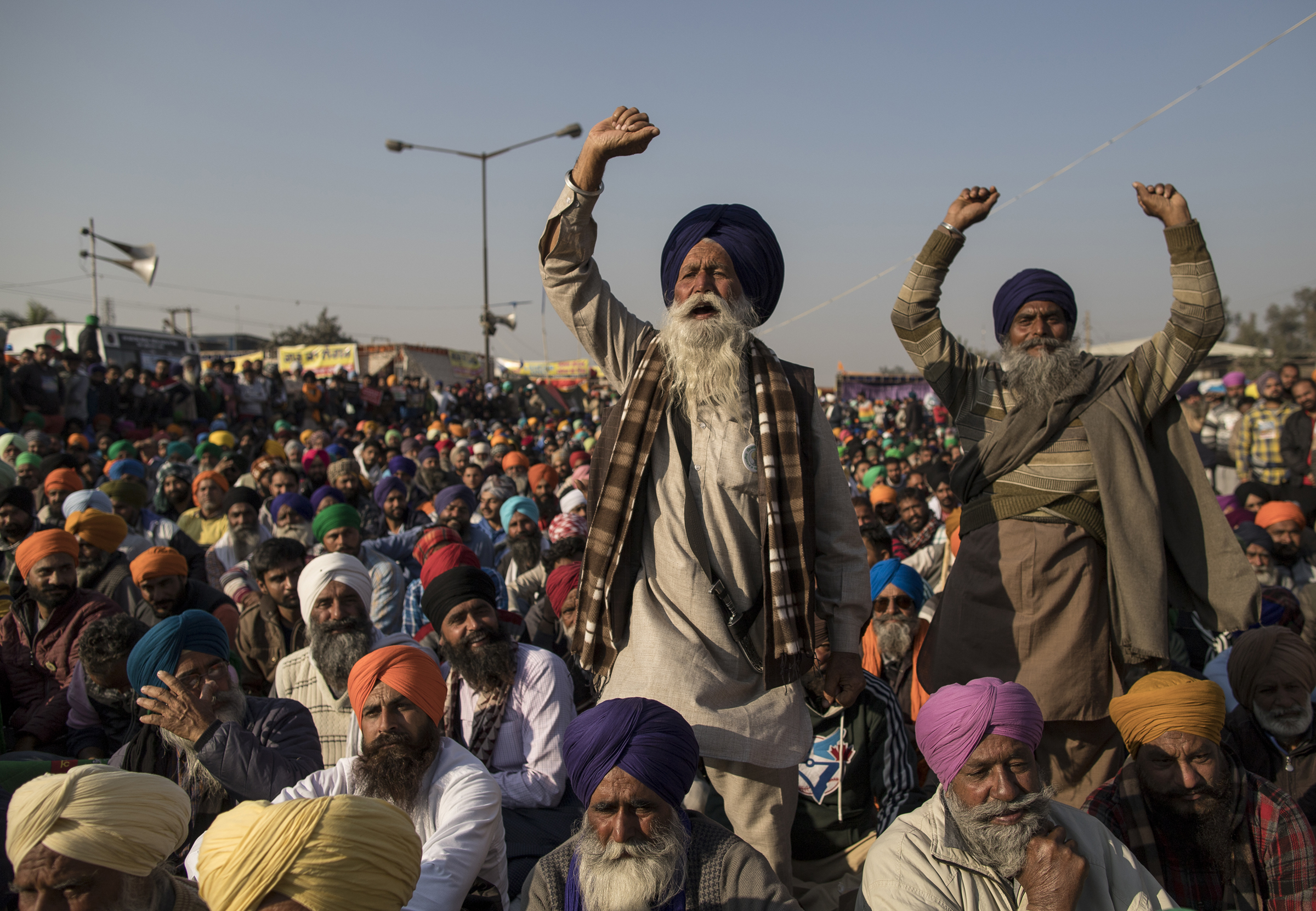
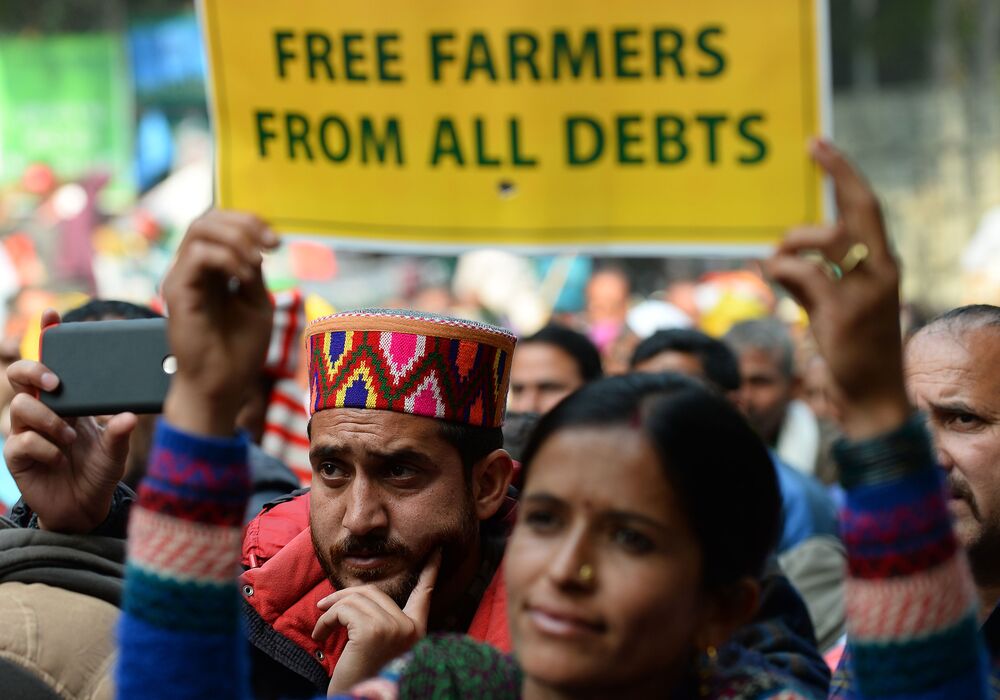
On August 9, 2020, Farmers from Punjab and Haryana laid siege to the national capital region. They are raising their voices against the recently passed farm bills. It has been five months since they have left their houses and have suffered hardships from the changed weather to farmer’s giving up and dying. But no beneficial approach has been taken for them, the fight continues to go on.

After 1947, the zamindari system was abolished in the nation. The farmlands were divided into smaller parts and the tiller became the owner of those parts but still they did not acquire bargaining power for their own crops which led to traders taking advantage of this drawback. Traders used to give credit then used to buy crops during the harvest season at lower prices. The farmer used to stay poor because he never got the good price for his crop production. To decide what the right price should be in the year 1960, when the country was going through the “Green Revolution”, APMC’S (Agriculture Produce Marketing Committees) were introduced which began to regulate the farm produce. Except the committee no one was allowed to buy produce from farmers. They will give traders a license and space to buy. In this system farmer is supposed to get different rates at which he wants to sell his production.

The Farmers' Protests Are a Turning Point for India | Time

But, till today unfortunately the farmers don’t decide the price the traders do. Even today the farmer is a price taker and not a price maker. No matter who makes the laws or tries to raise their opinions and concerns the atrocities have to be faced by the farmer’s.  As a result, they are dealing through several problems like lack of mechanization, soil erosion, agriculture marketing and so on. In India 76% of the farmer’s want to give up farming. The market needs to have a good buyer to pay a fair price. 

Amidst protest from the opposition and farmers organization, the monsoon session of the Lok Sabha passed three agricultural bills which were: – 

  1. Farmer’s Produce Trade and Commerce (promotion and facilitation) Bill, 2020 – to create a system where farmers and traders have the freedom to sell and purchase outside APMC’s, to promote barrier free inter state farmer produce, reduce facilitative framework for electronic trading.  If this is implemented the states will lose its revenue there are also chances that it may end the MSP based procurement system.
  • The Farmer (Empowerment and Protection) Agreement of Price Assurance and Farm Services Bill, 2020 – enable farmers too access modern technology, reduce cost marketing which will boost farmers income, effective dispute resolution. If this is implemented sponsors may not like to deal with small and marginal farmers, farmers who are into contract farming will get weak in terms of negotiating.
  • The Essential Commodities (Amendment) Bill, 2020- removing commodities like some important food items. Essential commodities, bring investment for farm infrastructure, help both farmers and consumers by bringing price stability. If this is implemented big companies will stock commodities, which means they will dictate whatever price they say.

Before helping the farmers, we should understand what problems they are facing. Firstly, we should strengthen the dispute redressal problem. There should be an intermediary body between the traders and the farmers. So, that they understand their rights and know what contract they are signing. They can get a guarantee for their crops and expand their growth if they have someone to help them. Secondly, they should have a bargaining power on what they have produced. This should be their basic right. Lastly if the government provides the farmers with people who can help them it will create massive trust on the government. 

The success or failure of the bill depends on the implementation. It will be unfair if the farmers think that this bill is their biggest enemy which is supposed to be helping them in ways which will change the entire agricultural system of the country. If the government genuinely wants to take up an initiative to help the famers and to end the protest, they should hear the perspective of the farmers because at the end of the day it is their livelihood which is being talked about. An industry that feeds you is worth fighting for.

Farmers' Protest Underscores Modi's Challenges Before Elections - Bloomberg

UNIX

UNIX Full Form - GeeksforGeeks

UNIX is a multi-user and multitasking operating system. in a multi-user environment. the computer can receive the commands from a number of end users programs, access files, and print documents simultaneously.

The host computer, which has a UNIX operating system, provides services to the terminal, such as file access services. four terminals are connected to one host computer and all the terminals are sharing resources from the host computer.

Features of UNIX

The general and additional features of UNIX operating system are :

  • File and Processes : file and process are two entities that are supported by UNIX. A file contains information, such as text, code or directory structure that you need to save in the computer, The file is stored in the hard disk of the computer at a particular location, which can be easily remember whereas a process is the name given to a file or a programs that is currently running . UNIX provides various tools that enable you to control a process, change the sequence of the process, and kill the process.
  • Multi-user system: UNIX supports multitasking system as the kernel is designed to handle multiple processes. A single user can run multiple process simultaneously. For example, an end user can print a file and edit another file simultaneously. The kernel handles the multiple processes as foreground and background process. The current process runs in the foreground and the other processes run in the background. This multitasking feature is an advantage for the programmers, as they do not have to close the editor and run the program; this can done simultaneously.
  • UNIX toolkit: The UNIX toolkit provides various tools that are enable you to perform different tasks in UNIX as kernel alone cannot perform every task. The tools that are included in the UNIX toolkit are:

1:- General purpose tools , such as vi editor

2:- Text manipulation utilizes filters that are used to retrieve the output from two or more commands simultaneously .

3:- Compiler and Interpreter .

4:- Network administration and system tools , such as mailx and pine.

  • Pattern Matching :- UNIX supports pattern matching feature that enables you to retrieve the output according to the required pattern . Pattern matching in UNIX can be implemented using a special characters , such as * known as metacharacter .
  • Programming Facility :- UNIX provides a programming facility known as shell that is developed specifically for programmers and not for the users .

News and Current affairs

Current Affairs 2021 for Banking, SSC, Railways and other Sarkari Exams

Current Affairs 2021: Today Current Affairs GK:-

Welcome to the Current Affairs Section of Adda247. Get Daily & Latest Current Affairs 2021 for UPSC, IAS/PCS, Banking, IBPS, SBI, RBI, SSC, Railway, UPPSC, RPSC, BPSC, MPPSC, TNPSC, UKPSC, APPSC, MPSC, KPSC and other competitive exams.

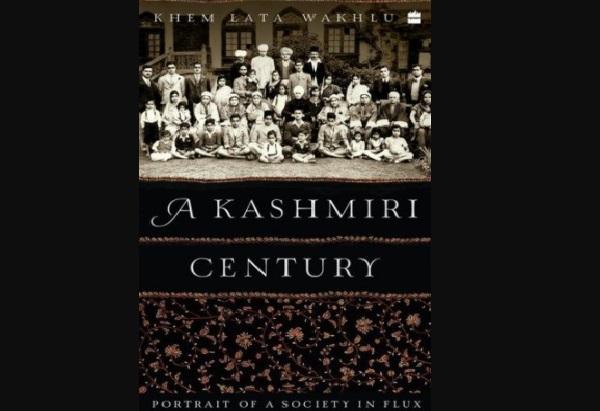
1. A Book Titled “Kashmiri Century: Portrait Of A Society In Flux” Released:-

A book titled “Kashmiri Century: Portrait of a Society in Flux” authored by Khemlata Wakhlu. She is a writer, a political leader and a social worker, who has devoted the past fifty years to using her many talents to improve a lot of the people of Jammu and Kashmir.

The essence of the book:

  • A Kashmiri Century is a powerful and rare compilation of human-interest stories. Spanning a full century, it throws a compassionate light on the innocent and hard-working people who live in the beautiful valley of Kashmir.
  • The stories are all based on the author’s personal experiences and her intimate understanding of what it means to be a Kashmiri-speaking native. They cover the period from the late 19th century to the present day.
  • None of the available political treatises has ever delved deeply into the sociological and the human sides of living in the valley.
  • The author’s intimate insights into Kashmiri society, its evolution in an enticing, remote valley, and how her people dealt with Kashmir’s bitter and tempestuous history, are sprinkled liberally across the book.

2. Andhra Pradesh introduces SALT programme:-

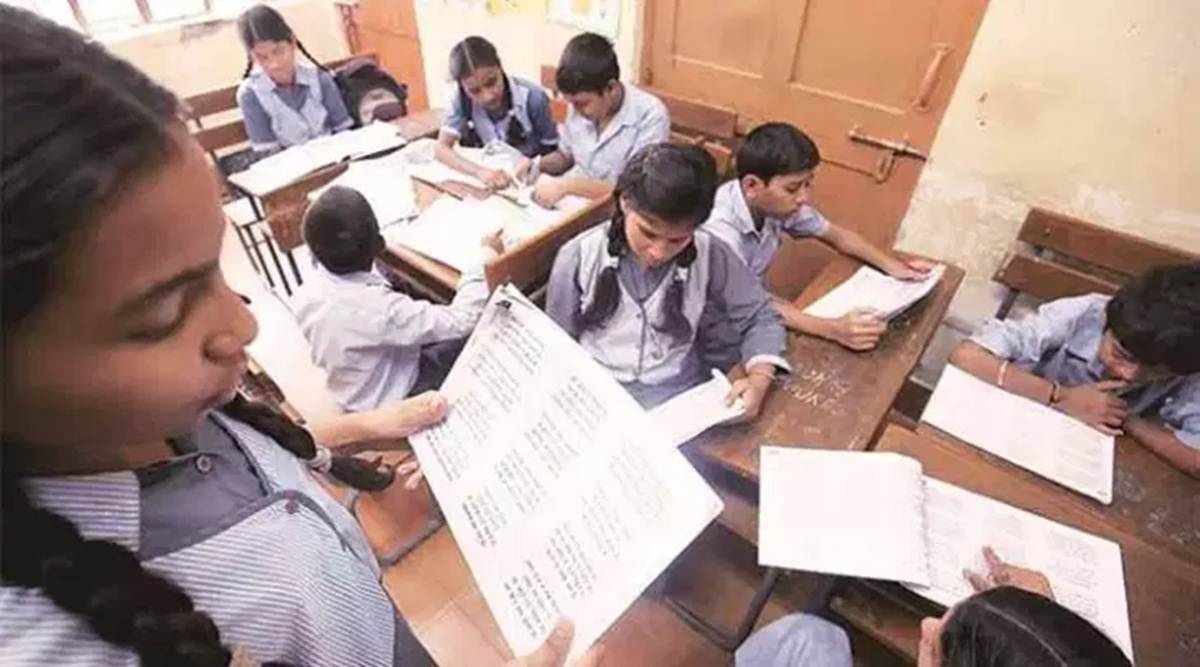
Andhra Pradesh has started a Supporting Andhra’s Learning Transformation (SALT) programme to transform foundational learning in government schools for which the World Bank has approved a loan of 250 million dollars. The main objectives of the programme are strengthening foundation schools and providing training and skill development to teachers. Andhra Pradesh’s public school education system has more than 40 lakh children and nearly 2 lakh teachers.

About the programme:

  • The five-year programme is result-oriented with the WB releasing funds after key goals are achieved. The government has converted all Anganwadis into pre-primary schools and attached them to the nearest schools.
  • The government’s document on SALT documents several challenges to improving the learning outcomes.
  • These include inadequate facilities in schools and a need for increased focus on foundational learning, the need for upgrading teaching skills of teachers, improving teacher-student interactions in classes, and capacity development of state-level institutions such as the Andhra Pradesh State Council of Education Research and Training (SCERT), State Institute of Education Management and Training (SIEMAT) and District Institutes of Education and Training (DIETs).
  • The government is also setting up new administrative structures which will monitor the working of schools, like the AP School Education Regulatory and Monitoring Commission.

Important takeaways for all competitive exams:

Chief Minister of Andhra Pradesh: YS Jagan Mohan Reddy; Governor: Biswa Bhusan Harichandan.

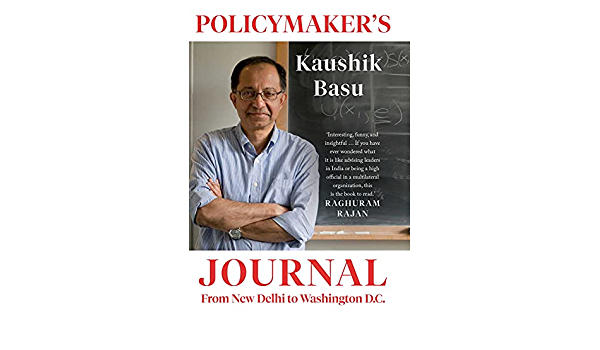
3. A book titled “Policymaker’s Journal: From New Delhi to Washington, DC” by Kaushik Basu:-

A book titled “Policymaker’s Journal: From New Delhi to Washington, DC” authored by Kaushik Basu released soon. This book charts the course of Kaushik Basu’s career over seven years, as he moved out of the cloisters of academe to the frenetic world of policymaking, first in India as Chief Economic Adviser to the Indian Government and after that as Chief Economist at the World Bank in Washington.

About Kaushik Basu:

Kaushik Basu is an Indian economist who was the Chief Economist of the World Bank from 2012 to 2016. He is the C. Marks Professor of International Studies and Professor of Economics at Cornell University. From 2009 to 2012, during the UPA government’s second term, Basu served as the Chief Economic Adviser to the Government of India.

4. WhatsApp appoints Manesh Mahatme as Head of Payments in India:-

WhatsApp has appointed former Amazon executive Manesh Mahatme as a director to lead the growth of its payments business in India. As Director, WhatsApp Payments-India, Mahatme will focus on enhancing the payments experience for users, scaling the service and work towards contributing to the messaging app’s vision of digital and financial inclusion in India.

Important takeaways for all competitive exams:

  • WhatsApp Founded: 2009;
  • WhatsApp CEO: Will Cathcart (Mar 2019–);
  • WhatsApp Headquarters: Menlo Park, California, United States;
  • WhatsApp Acquisition date: 19 February 2014;
  • WhatsApp Founders: Jan Koum, Brian Acton;
  • WhatsApp Parent organization: Facebook.

5. Swedish PM Stefan Lofven resigns following no confidence vote:-

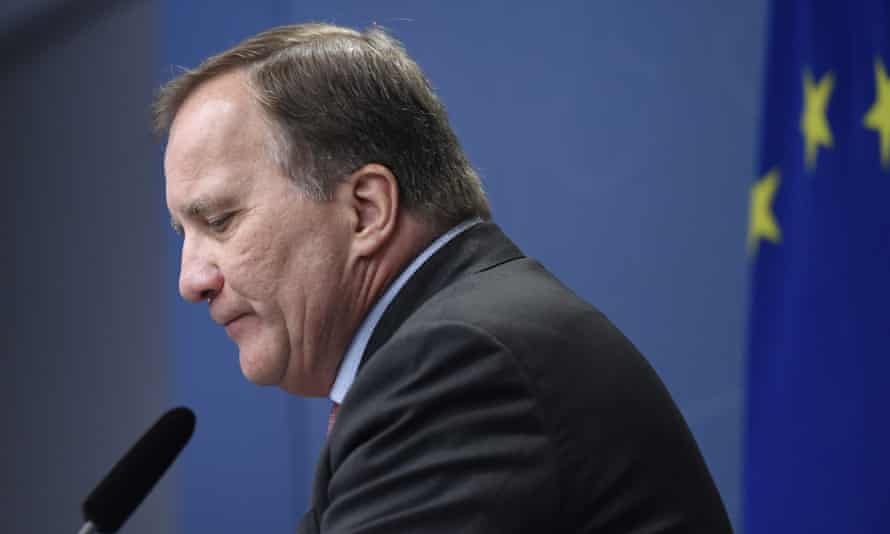
The Prime Minister of Sweden, Stefan Lofven, has announced his resignation on June 28, 2021, after he lost a confidence vote in parliament. The 63-year-old Lofven is the first Swedish government leader to be defeated by a no-confidence vote. He was serving as the prime minister of Sweden since 2014.The confidence motion was filed by the far-right Sweden Democrats after the Left Party said it was planning such a motion itself in protest against a plan to ease rent controls.

Important takeaways for all competitive exams:

Sweden Capital: Stockholm; Currency: Swedish krona.

6. Two more complaints, call for legal action against Twitter India:-

Twitter
Twitter India’s troubles continued on Tuesday after at least two more complaints being filed against the microblogging platform, and a political leader calling for legal action.
Twitter India Country Head Manish Maheshwari and news partnerships head Amrita Tripathi had been booked under Section 505 (2) of the Indian Penal Code and Section 74 of Information Technology (Amendment) Act 2008 for showing a wrong map of India on its website, on the complaint of a Bajrang Dal leader in Bulandshahr, Uttar Pradesh.
The issue revolves around a controversial map of India on the career section of Twitter, and showed Jammu and Kashmir and Ladakh as a separate country. This led to angry reactions on Twitter, and the microblogging platform removed the map on Monday night.
Later in the day, on Tuesday, Madhya Pradesh Home Minister Narottam Mishra said that he had asked the Director General of Police (DGP) to investigate the same issue and take legal action against Twitter for “distorting” India’s map.
In a separate case, the Delhi Police registered an FIR against Twitter, based on a complaint filed by the National Commission for Protection of Child Rights (NCPCR). The complaint alleges that Cchild pornographic videos and links were available on Twitter.
News reports said the Deputy Commissioner of Police, Cyber Cell had been summoned Tuesday by the NCPCR for not taking action against Twitter despite repeated letters.
“Twitter has a zero tolerance policy for child sexual exploitation (CSE) and we have a proactive approach to combating sexual exploitation of minors on our service. We have been at the forefront of responding to the evolving challenge of preventing the exploitation of children on the Internet and will continue to aggressively fight online child sexual abuse, as well as invest in the technology and tools that are essential to stay ahead of this issue. We will continue to invest in proactive detection and removal of content that violates the Twitter Rules and work with law enforcement and NGO partners in India to tackle the issue,” said a spokesperson at the microblogging platform.
According to Twitter, it uses PhotoDNA technology, its own proprietary tools, and other systems to detect behavioral signals and remove media. In many cases, it lets Twitter remove new accounts linked to this type of content before they have even sent their first tweet.
Twitter considers anyone under the age of 18 as a minor, and all viewing, sharing, or linking to child sexual exploitation (CSE) material, regardless of the intent, contributes to the re-victimization of the depicted children and is prohibited on our service, it says.
This includes media, text, illustrations, or computer-generated images. This also applies to content that may further contribute to the victimization of children through the promotion or glorification of child sexual exploitation, according to the social media platform.
Maheshwari has also been named in another FIR filed by UP Police in Ghaziabad. The Karnataka HC had on Thursday granted him interim relief in a case relating to an assault video that had gone viral on the microblogging platform. The HC had also directed that no coercive action be taken against him till Tuesday.
Karnataka HC said Tuesday it will hear the criminal case against Maheshwari on July 5.
The case relates to an ongoing complaint related to tweets on the assault of an elderly Muslim man in Ghaziabad.
Twitter on June 21 restricted tweets showing the video and images from it.
The government has been at loggerheads with Twitter ever since January, when the microblogging platform refused to take down some content related to the farmers’ protests in India, saying it goes against their company policies.
This further intensified after India enacted new rules for social media intermediaries. The government has said Twitter has not complied with the requirements, and may have lost its safe harbour protection under the IT Act.

7. Facebook, Google to soon publish reports as required by new IT Rules:-

Google search
Technology giants Facebook and Google will soon publish reports, as mandated by the new Information Technology Rules, providing information about the actions they took on user complaints in India.
While Facebook said on Tuesday it will publish an interim report on July 2 as mandated by the IT rules, Google will publish its transparency report as required under the new IT Rules in India.
“In accordance with the IT Rules, we’ll publish an interim report for the period May 15-June 15 on July 2. This report will contain details of the content that we have removed proactively using our automated tools. The final report will be published on July 15 containing details of user complaints received and action taken. The report on July 15 will also contain data related to WhatsApp, which is currently being validated,” said a Facebook spokesperson.
Twitter did not immediately respond to a request for comment.
The IT Rules, notified on February 25, ask significant social media intermediaries, or those with over 5 million users, to “publish periodic compliance report every month mentioning the details of complaints received and action taken thereon, and the number of specific communication links or parts of information that the intermediary has removed or disabled access to in pursuance of any proactive monitoring conducted by using automated tools or any other relevant information as may be specified”.
This was among the key issues that industry wanted clarity on in the new Rules. Many intermediaries were unclear about the format of these reports. A government official told Business Standard earlier that the compliance reports should have bare minimum details, on what type of content was removed or what other action was taken.
While most SSMIs publish annual or bi-annual transparency reports and would most likely publish compliance reports in a similar pattern, there was little clarity on whether those would be compliant with the new Rules.
Another issue that SSMIs are awaiting clarity on is that of the quantum of time required before which a user needs to be informed about their content being taken down. The kind of content on which intermediaries are required to do so includes content of pornographic nature, paedophilic, infringes trademarks and so on.
The government, it is understood, will bring out a standard operating procedure on the new IT Rules in consultation with industry and stakeholders, addressing some of the concerns that have been raised by them.
In addition, the Ministry of Electronics and Information Technology will be soon releasing a set of “frequently asked questions” to simplify the requirements in the Rules, on similar lines as done by the Ministry of Information and Broadcasting a few days ago.
While the Rules apply to all social media companies, the largest ones among these are Facebook, Google, WhatsApp, Twitter and the like.
According to data provided by the government, India has 530 million WhatsApp users, 410 million Facebook users, 210 million people on Instagram, and 17.5 million accounts on Twitter.

8. Top headlines: India approves Moderna vaccine; Sebi announces reforms:-

Moderna vaccine

India approves Moderna’s vaccine for emergency use; Cipla to import jab:


Drug major Cipla has been approved by India’s drug regulator to import Moderna’s coronavirus vaccine for restricted emergency use in the country, the government said on Tuesday. Moderna is said to have applied for the emergency use approval in India following the US agreement to donate doses to India via Covax. Cipla on behalf of the US pharma giant has requested for import and marketing authorisation of these jabs.

Sebi overhauls norms for appointment, removal of independent directors:

The Securities and Exchange Board of India (Sebi) on Tuesday overhauled norms pertaining for appointment, removal and remuneration of independent directors (ID) in order to reduce the sway of promoters on them. The regulator also reduced the minimum application amount for REITs and InvITs to Rs 10,000-15,000, from Rs 55,000 at present, aligning them with equity IPOs.

Monetise reserves or get set for auction: Dharmendra Pradhan to ONGC, OIL:

Taking into account the acreage Oil and Natural Gas Corporation (ONGC) and Oil India Ltd (OIL) hold amid the country’s dependency on imports for oil, Petroleum Minister Dharmendra Pradhan today said that the reserves held need to be monetised else the government would take it away for auctioning.

Bharti to invest Rs 3,700 crore in OneWeb; become largest shareholder:

Bharti will invest an additional USD 500 million (over Rs 3,700 crore) into OneWeb, to become the largest shareholder in the satellite communications company that billionaire Sunil Mittal-run Bharti Group along with the UK government had rescued from bankruptcy last year.

SBI to levy charges for cash withdrawal beyond four free transactions a month:

The country’s largest lender SBI will levy charges for cash withdrawal beyond four free transactions in a month from customers holding the basic savings bank deposit (BSBD) accounts. These customers will also be levied charges for cheque book beyond 10 leaves in a year.

9. Covid-19: Over 11,000 ‘super-spreaders’ vaccinated in Ahmedabad:

vaccination, coronavirus, covid-19, vaccine
More than 11,000 people categorised as ‘super-spreaders’ have been vaccinated against COVID-19 in Gujarat’s Ahmedabad city so far in a special drive started recently for their inoculation, local civic body said on Tuesday.
‘Super-spreaders’ are those who transmit an infectious disease to a large number of other people due to the nature of their job.
The Ahmedabad Municipal Corporation (AMC) recently started a special vaccination drive for ‘super-spreaders’, like vegetable vendors, grocers, petrol pump staff, barbers, courier and food delivery agents.
A total of 11,013 such people have been inoculated so far as part of the drive, the civic body said in a release.
A centre has been set up in each of the city’s seven civic zones to facilitate the vaccination of ‘super-spreaders’ so that they pose little danger of the spread of the disease to other people, the AMC said.
“To make the vaccination campaign more effective, it was decided to inoculate super-spreaders by running a special drive so that their chances of getting infected from COVID-19 are reduced, since they come in contact with many people due to the nature of their job,” it said.
On Monday, a total of 923 such people were vaccinated, including 582 in the age group of 18 to 44 years, and 341 in the 45 years and above category, he said.
Of late, Ahmedabad has seen a sharp drop in the number of coronavirus cases reported daily.
As per the AMC’s COVID-19 bulletin issued on Monday, there were 830 active COVID-19 cases in the city.
Ahmedabad has so far reported a total 2,30,660 coronavirus cases and 3,310 deaths due to the infection. Besides, 2,26,520 people have recovered from the disease, the bulletin said.

10. Monetise reserves or get set for auction: Oil minister Pradhan to ONGC, OIL:-

ONGC, oil exploration
Taking into account the acreage Oil and Natural Gas Corporation (ONGC) and Oil India Ltd (OIL) hold amid the country’s dependency on imports for oil, Petroleum Minister Dharmendra Pradhan today said that the reserves held need to be monetised else the government would take it away for auctioning.
Speaking at BNEF Summit today, Pradhan said that the two state-owned firms cannot indefinitely sit on resources when the nation is a net importer of oil and gas.
“We have asked them to do two things – do it yourself, (produce oil and gas) through some joint venture (with domain experts and foreign companies) (and) through a new business model. But the government cannot permit you to hold resources for an indefinite time,” he said.
Despite India bidding out acreages to private and other companies since the 1990s, ONGC) and OIL hold a “sizeable number of acreage for years,” he said.
ONGC and OIL, which discovered and brought to production all of India’s eight sedimentary basins, produce about three-fourths of the nation’s oil and gas.
Pradhan said India needs energy for its ambitious economic growth agenda. “We want to reduce import dependency. We want to monetise our own resources.”
The two state-owned companies, especially ONGC, have faced criticism ranging from not being able to quickly bring discoveries to production to lower recovery.
“We have given policy guidance to our state-owned oil companies – either you do on your own through new partners and new economic model, (else) the government will after a particular period intervene and use its authority to bid out the resources,” he said.
The government has already taken away dozens of small and marginal discoveries from the two firms and auctioned them in what is known as Discovered Small Field (DSF) rounds.
DSF offers pricing and marketing freedom to operators, something which ONGC and OIL do not have currently, constraining their efforts to monetise smaller discoveries.
Pradhan indicated the government would not hesitate to take away larger idle discoveries and auction them to private and foreign players.
Earlier this month, the minister had stated that the Directorate General of Hydrocarbons (DGH), the oil ministry’s technical arm, had the “full mandate” to identify unmonetised major fields that could be offered for bidding.
“Resources don’t belong to a company. They belong to the nation and the government. They cannot lie with a company indefinitely. If somebody cannot monetise them, we will have to bring a new regime,” he had said.
The statement comes weeks after his ministry told ONGC to sell a stake in producing oil fields such as Ratna R-Series in western offshore to private firms and get foreign partners in KG basin gas fields.
In October 2017, the DGH had identified 15 producing fields with a collective reserve of 791.2 million tonne of crude oil and 333.46 billion cubic meters of gas, for handing over to private firms in the hope that they would improve upon the baseline estimate and its extraction.
A year later, as many as 149 small and marginal fields of ONGC were identified for private and foreign companies on the grounds that the state-owned firm should focus only on bid ones.
ONGC produced 20.2 million tonne of crude oil in the fiscal year ending March 31 (2020-21), down from 20.6 million tonne in the previous year and 21.1 million tonne in 2018-19. It produced 21.87 billion cubic meters of gas in 2020-21, down from 23.74 bcm in the previous year and 24.67 bcm in 2018-19.

Reference Link:

https://currentaffairs.adda247.com/
https://www.business-standard.com/current-affairs

The New Silk Road

The Silk Road also called Silk Route was an ancient trade route, linking China  with the West, that carried goods and ideas between the two great civilizations of Rome and China. Silk went westward, and wool, gold, and silver went east. China also received Nestorian(Eastern) Christianity and Buddhism(from India) via the Silk Road.

The Silk Road began in north-central China in Xi’an (in modern day Shaanxi province). A caravan track stretched west along the Great Wall of China, across the Pamirs, touching the Indian province of Ladakh, then through Afghanistan, and into the Levant and Anatolia(Turkey). Its length was about 4,000 miles (more than 6,400 km). Goods were then shipped to Europe via the Mediterranean Sea.

China, now a global superpower seeks to revive this ancient trade route to open new channels of trade with the West in light of various geopolitical and border disputes with her neighbouring countries.

Parts of the Silk Road survives in the form of a paved highway connecting Pakistan and China’s Uyghur Autonomous Region of Xinjiang. In the 21st century the United Nations planned to sponsor a trans-Asian motor highway and railroad. The Silk Road also inspired China’s Belt and Road Initiative, a global infrastructure development strategy authored by President and General Secretary Xi Jinping. The Asian Infrastructure Investment Bank and the Silk Road fund will be the financing this gigantic project.

It’s flagship projects include the China-Pakistan economic corridor(CPEC), where China will fund the construction and development of a big port in Gwadar, Pakistan for trade and maritime shipment to Africa & West Asia.

China is investing heavily in BRI which includes many railway, energy sector, roadway and agriculture projects. Which is not surprising as the country being the world’s biggest oil importer, it’s energy security is a very important concern while current sea routes used to import Middle Eastern Oil continue to be frequently patrolled by the US Navy.

It remains to be seen whether the modern revival of the famous trade route is a successful endeavor.