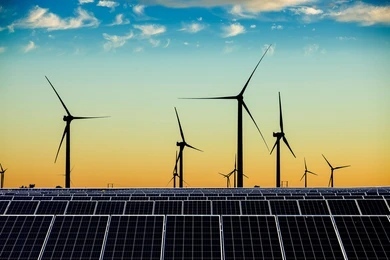
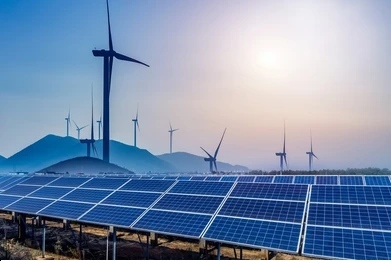
Promise For The Future: ‘RENEWABLE ENERGY’.

SOLAR POWER:

With energy consumption being the buzzword in developing economies around the world, fears of an energy crisis looming ahead are not totally unfounded. The non-renewable nature of fossil fuels makes complete dependence on these for future energy needs a very dicey affair. Renewable energy sources are the best bet in the scenario. And what can be a better renewable resource than the sun?

In a country like India, if the abundant amount of sunlight available is harnessed properly it could mean an end to the energy crisis. It is the most abundant source of energy. The average global solar radiation is around 5 kilowatt hours (KWH) per square meter per day with the sunshine hours ranging between 2300-4300 per year. India is in the sunny belt of the world. The country receives solar energy equivalent to more than 5000 trillion KWH per year, which is far more than its total annual energy consumption.
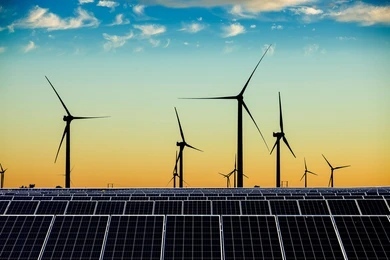
Besides, it is a renewable and clean energy source. Taking both environmental and economic cost, solar energy works cheaper than fossil fuel resources. Once we master techniques to harness solar energy, it can be a vital source of power on all planets. Solar energy could be a viable source of power generation for the next 1000 crore years. There are many technologies available for conversion of solar energy into solar power. For instance, solar photovoltaic (SPV) technology, photo galvanic cells, solar steam generators (solar concentrating power), solar tower or solar chimney, radio micrometers and thermopile are some of them.

ELECTRIC MOTORS:

Imagining a future where clean air is no longer a dream and our cities are not smog filled concrete jungles, could well become a reality in the coming years if the world begins to increasingly adopt the use of cleaner options like alternate-fuel vehicles . The rise in economic activity and the burgeoning population have led to a tremendous demand in the transport sector, especially in urban India. By 2025, India’s urban population is expected to grow five fold to a staggering 200 million while pollution is expected to grow seven times. With this tremendous growth has emerged a very critical issue of keeping air and noise pollution in urban areas under control.

If we can have three lakh electric vehicles (EVs) on the roads by 220 including three wheelers, cars and scooters, we would have reduced pollution by 16 lakh metric tones, saved ? 3700 crores in foreign exchange earnings and substantially reduced healthcare costs. Small electric buses, three wheelers and electric scooters are ideal for city mobility in India but it could take between 5-10 years before they become viable for commercial use.

Image Source – google.

The electric vehicle uses electric energy which is stored in batteries that feed the electric motor. Driving an electric vehicle is easier and more relaxing than a traditional one because it has no speed-gear and functioning noise. It is enough to turn the key and press the acceleration pedal; you need only two driving pedals- accelerator and brake.

The need to reduce air pollution along with the availability of new advanced clean alternative to internal batteries have allowed EVs to reappear as a combustion vehicles. Electric drive systems are virtually non-polluting and extremely energy efficient. While internal combustion vehicles can convert about 20% of the chemical energy in gasoline into useful work, 75% or more of the energy from a battery has productive power in an electric vehicle.

Electric motors can also provide power at almost any engine speed. While internal combustion engines must be revved up to high rpm to achieve maximum power electric motors provide nearly peak power even at low speeds. this gives electric vehicles strong acceleration performance from a stop.

The emergence of newer batteries has driven the cost and performance EVs. There are several major types of automotive batteries available and under development, from advanced lead acid batteries like those that start our internal combustion engines to lithium polymer bateries. Although recharging could be a consideration, home recharging systems are available giving EVs an added advantage.

Apart from being environment-and -user friendly, there are several other reasons for alternate fuel cars to flourish in India. Firstly, electricity for EVs can be produced from various sources for which India has natural resources and does not need to depend on the import of oil. Although EVs will not replace LPG, CNG or petrol and diesel for intercity use, the infrastructure required for EVs in the form of electricity distribution infrastructure is already available in all our cities and minimum costs are required to install additional capacity.

EVs are zero polluting, easy to handle and have low maintenance costs. EVs will not degrade with time and they are always zero polluting unlike conventional vehicles where the pollution increases with engine degradation, poor maintenance and adulterated fuel.. India also has the maximum market potential for EVs owing to an established auto component infrastructure, low manufacturing and R&D cost, mechanical hardware availability, high urban congestion and the presence of domestic market. The industry could significantly gain from rising exports by 2010, and with appropriate government support, could transform the landscape of urban India by reducing pollution, improving public health, creating employment opportunities and impacting society.

In order to do that, a holistic approach involving the government, public and auto majors is needed to promote EVs in India. Appropriate government policies during the next five years and adequate support from business houses and institutions. for instance, purchasing a fixed percentage of vehicles for their fleets and offering subsidies and tax exemptions, will go a long in promoting the industry in India. Finally, people have to become more informed about these technologies. The media must play its role in educating the public about alternate fuel vehicles and their advantages.
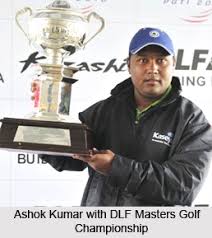
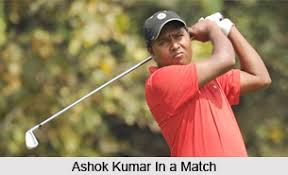
Do You Know This Indian Professional ‘GOLFER’?

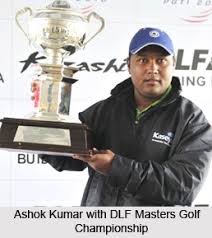
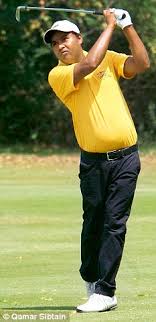
Ashok Kumar.

Rags- to- Riches story of Ashok kumar, who is a Professional Golfer of India.

Ashok Kumar, one of the country’s leading golfers who rose from the ranks of a caddie, remembers his very humble beginnings very distinctly. “The reason I am here in this swanky restaurant of the Oberoi, sipping coffee with you is because of golf. It has brought me name, fame and money and all that I could possibly ask for in life. Without golf, I am a zero ,” said the 27-year-old golfer with rare candour in a chat with Kalyan Ashok, a sports journalist working with Sportstar, one of India’s leading sports weeklies.

India’s No.3 golfer may not exactly be rolling in luxury at the moment, but he definitely leads a comfortable life-a far cry from the days when he used to sleep in a stable. “It’s destiny that brought me to this stage in life and I can’t sav that I deserve it, but it’s God’s gift to me through golf, sald Ashok. Not the one to forget his past, Ashok Kumar keeps reminding himself how he came up in life.

His story is stranger than fiction. Ashok was born into a poor family in Bihar that struggled to make both ends meet. (He has four brothers and two sisters.) In 1988, his parents sent him away with his elder brother to Delhi and he worked as an errand boy at the Jaipur Polo Club.

“I used to work in the day assisting my brother and sleep in the stable at night. The club also had the Air Force golf course and I wandered on to it one day and watched the players and caddies. I thought of becoming a caddie, but I was too young then. I did not get the job, but the club hired me a few years later,” recalls Ashok. It was then that he took to golf. He started practising in the club when no one was around. However, he was caught playing one day and was suspended from his job, as caddies were not allowed to practise golf.

“I was back to square one. Then I went away to help a lorry owner who was transporting sand. I remember the days when I had to pay five rupees to hire a blanket during winter and sleep in Connaught Place,” Ashok said wistfully.

Six months later, when things cooled down, he moved back to the Air Force golt course and became a caddie to Amit Luthra, who was India’s top golfer and an Asian Games gold medallist. “Luthra saab spoke to the club authorities and got me in,” Ashok said with gratitude writ large on his face.

Ashok learnt a lot from Luthra and one day he challenged his mentor to a play-of “I don’t know what got into my head and I told him that I will beat him, to which Luthraji said that if I did that he would waive a month’s caddie fee. We played on the road, but I lost,” Ashok smiled.

Luthra, however, was very impressed with the young man’s talent and got him enrolled at the Delhi Golf Club, which allowed caddies to play. Seizing this opportunity with both hands, Ashok went on to improve his game by leaps and bounds and in 1995, DGC selected him to play in the All India Junior tournament in Kolkata.

Image Source – google.

“I didn’t know where Kolkata was. I thought it was outside the country! I travelled in an unreserved compartment, spending most of the time sitting in the bathroom or just outside as there was no place elsewhere.” In Kolkata, he finished third and in the next two years he became the Junior Champion of the country. In 2000, he moved to the amateur ranks and two years later he became a pro, finishing his first season as India’s No.5 golf player. Riding a wave of success, Ashok held the No.1 spot in 2006 and 2008 and currently (2010) he is ranked No.3.

The moment he cherishes the most as a player is not the time when he won his first major title but when he finished 18th in the Hero Honda-DLF Tournament in 2002. It fetched him a cheque of Rs. 1 lakh. “I never looked back after that,”Ashok remarked.

In the early part of 2010, Ashok’s golfing career got a boost when the Bangalore- based business and software company, Kaseya India, run by golf enthusiast, Mr. Girish Krishnamurthy, decided to sponsor him. “I am a simple guy and with Kaseya around to take care of other things, I can concentrate better on my game now,” Ashok says with determination as well as gratitude. It is his ardent wish that all golf links in the country should support caddies, as he feels that many of them have a lot of inherent talent simply waiting to be tapped.

Ashok has modelled his game on his golfing idol, Tiger Woods. Incidentally, he had met Tiger when he was a caddie to Arjun Atwal in Bangkok a decade ago. “He hugged me when he was introduced by Atwal as a top amateur from India. I asked him for his advice, to which the legendary golfer simply said-‘don’t think of beating others, they should think of beating you,” Ashok’s eyes sparkled when he recalled his meeting with Tiger.

He faithfully follows that advice from the maestro and hopes to play with him one day. “For the moment, I eat, drink and sleep golf. There’s no distraction in my life. I relax with some music and watch CDs of Tiger Woods,” Ashok concluded.

How Much Does India Invest In Olympic Athletes?

Postponed by a year due to the pandemic, the Tokyo Olympics is now less than a month away. Last week, the Union Sports Minister Kiren Rijiju urged the people to extend their support to India’s Olympic-bound athletes, the same way they back India’s cricketers. However, India’s abysmal performances at the Olympics is in striking contrast to India’s immense success at cricket. The model of sports governance and financial irregularities are often blamed for the lack of competitive edge in sports other than cricket. So, the most obvious question that comes to our mind is, how much does India invest in the Olympics?

Money allocated for Sports

In the 2020-21 annual budget, the Government of India allocated Rs 2826.92 crore for sports, which meant an increase of mere ₹ 50 crore from the revised estimates of the financial year 2019-20. The Modi government’s flagship sports programme ‘Khelo India’ received a substantial hike of ₹ 312.42 crore and was allocated ₹ 890.42 crore compared to ₹578 crore in 2019-20. On the other hand, the National Sports Development Fund saw a reduction of ₹ 27.15 crore from ₹77.15 crore in 2019-20 to ₹ 50 crore in 2020-21. National Sports Federations saw the highest decrease after Finance Minister allocated ₹ 245 crore, ₹ 55 crore less than the previous financial year, according to The Wire. Even the budget for meritorious sportspersons saw a 40% reduction from the last financial year. It is important to note that the 2020-21 annual budget was presented in January 2020, when the government had no idea of the coming pandemic. It was also supposed to be the year of the Tokyo Olympics.

Target Olympic Podium Scheme

While these are the broad schemes under which Indian sportspersons are funded, the Target Olympic Podium Scheme (TOPS) provides financial assistance to potential Olympic medal winners. Launched in 2014, TOPS is the flagship programme of the Sports Ministry of India. The top-up funding scheme considers the performance of Indian athletes in the past three years. They are provided with personal coaches and other staff fees, cost of travel during competitions, purchase of equipment, and pocket allowance.

Looking Back At The Last Olympics

In the 2016 Rio Olympic, India spent ₹ 36.85 crore under TOPS, as per Financial Express. Nearly half of that amount was spent on shooting, which was India’s most successful Olympic sport in the previous three games. Shooting is also very expensive, which requires importing equipment from other countries. But shooting failed to bring any medal. Athletics received the second-highest funding of ₹ 7.80 crore in 2016, but India failed to make a mark in the sport. Unfortunately, out of the ₹ 36.85 crore, ₹30.49 crore had gone to disciplines that fell short of goals. Only 1.66 per cent of the total TOPS fund went to the fields that brought India two medals – PV Sindhu in Badminton and Sakshi Malik in wrestling.

Comparison With Other Countries

The United Kingdom allocated close to Rs 9000 crore on sports infrastructure and training in the annual sports budget, whereas India spent only one-third of the UK, Rs 3,200 crore, on youth affairs and sports, before 2016. The UK won 67 medals against India’s two at the Rio Games 2016. Abhinav Bindra had also tweeted back in 2016 that a medal cost UK 5.5 million pounds, and that is the kind of investment India needs to make. Otherwise, we cannot expect much. In the USA, a large number of athletes are privately funded. Individual athletes had started their own funding portal for donations from the general public. Therefore, only 10% of the US Olympic Committee’s finance was spent on athletes in Rio 2016, and the USA finished first. China, on the other hand, is known for its aggressive state-sponsored promotion of sports.

Private Investment In India

Before the 2016 Olympics, Indian Olympic Association (IOA) received donations from Reliance Jio, Amul, Tata Salt, Edelweiss Financial Services, Herbalife, Li Ning, and SBJ. Sakshi Malik had also thanked JSW Sport, a foundation funded by the OP Jindal group, after becoming India’s first medal winner in Rio Games, as reported by Hindustan Times.

However, unlike NSDF, where the contributions and sponsorships are open and documented, private funding to individual athletes is not. And most recently, the JSW Group has come on board to be the official sponsor of Team India in the Tokyo Olympics and has agreed to pledge sponsorship support of ₹ 1 crore to IOA. In 2018, the Sports Ministry earmarked ₹ 100 crore for funding of the athletes for the preparation of Tokyo Olympics 2020, which will take place this year. While the number of medals won cannot be equated to the investments made, since medals are not the only measure of success, India nonetheless needs to invest more and put in a new model of sports governance in action. A

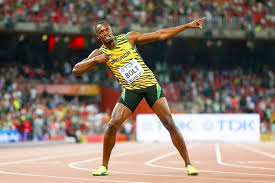
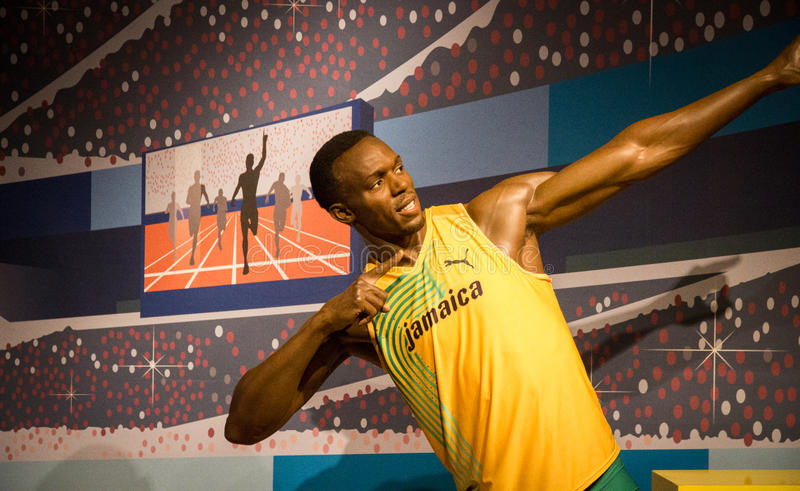
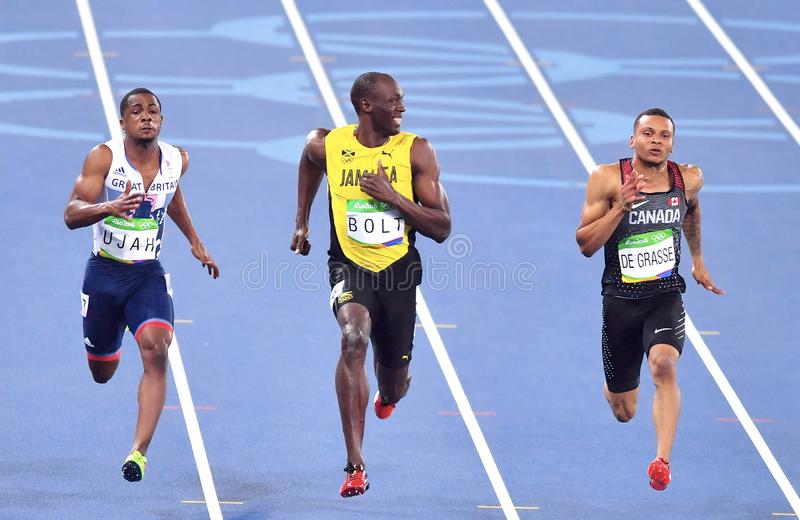
USAIN “The Lightning” BOLT.

Full name – Usain St Leo Bolt
Nickname(s)- Lightning Bolt
Nationality – Jamaican
Born – 21 August 1986 (age 34),Sherwood Content, Jamaica
Height – 1.95 m (6 ft 5 in)
Weight – 94 kg (207 lb)
Sport – Track and field
Event(s) – Sprints
Club – Racers Track Club
Coached by – Glen Mills
Retired – 2017
Awards And Honors: Olympic Games.

About Usain Bolt:

The world’s fastest man has adopted the world’s fastest animal. As part of an effort to help protect this ‘endangered species’ in Kenya, Bolt formally adopted a three-month-old cheetah cub in Nairobi. Bolt bestowed one of his own nicknames upon the cub, naming him ‘Lightning Bolt’. Symbolic indeed!

One cheetah at a Cincinnati Zoo ran the 100 metres in just over 6 seconds, about 3.5 seconds faster than Bolt’s human world record of 9.58 seconds. Some scientists are trying to apply the physics of a cheetah’s running style in order to maximize the ability of human runners. Well, do not be surprised if Bolt does land another ‘bolt from the blue’ by equalling the cheetah’s feat.

Sportsmen like Bolt are like the Halley’s Comet, they come once in 76 years, nay, a hundred years. Bolt, a three-time Olympic gold medalist, distinguished himself with a 200 metres gold medal at the 2002 World Junior Championships, making him the competition’s youngest ever gold medalist. In 2004, at the CARIFTA Games, he became the first junior sprinter to run the 200 metre in under 20 seconds with a time of 19.93 seconds, breaking Roy Martin’s world junior record by two-tenths of a second.

He turned professional in 2004, missing most of his first two seasons due to injuries. But he competed at the 2004 Summer Olympics.In his childhood, he loved to play Cricket and Football in the streets of Jamaica with his brother. In his school, he was the fastest runner in the 100-meter race. His primary coach, McNeil was sometimes got frustrated by his penchant jokes. At the 2001 IAAF World Youth Championships in Hungary, he made his first appearance at an international event. Bolt is one of only nine athletes in the world to win World Championships at the youth, junior, and senior levels.Bolt’s first sports choice was Cricket. He is a big fan of Football.

About his Life:

In 2007, he beat Don Quarrie’s 200 metres Jamaican national record with a run of 19.75 seconds. In May 2008, Bolt set his first 100 metres world record with a timing of 9.72 seconds. He set world records in both the 100 metres and 200 metres events at the Beijing Summer Olympics, recording 9.69 seconds in the former event. With a timing of 19.30 seconds in the 200 metres, he broke the previous record of 19.32 seconds by Michael Johnson at the 1996 Summer Olympics at Atlanta. A year after the Beijing Olympics, he lowered his 100 metres and 200 metres world records to 9.58 seconds and 19.19 seconds respectively at the 2009 World Championships. His record-breaking margin in the 100 metres is the highest since the start of digital time instruments. As a result of Bolt’s success in athletics, he was named the Laurens World Sportsman of the Year for 2009.

• He is an 11-time World Champion.– In Track and Field, he is considered the highest-paid athlete ever. – He has been with a number of honors and awards, including Track and Field Athlete of the Year, World Athlete of the Year, and Laureus World Sportsman of the Year (3 times). – He has collaborated with the Soul Electronics and has launched 2-types of Bolt edition in-ear headphones- Run-Free.

Bolt loves dancing and is a great admirer of Indian batsman Sachin Tendulkar, West Indian Opener Chris Gayle, and Australian opener Mathew Hayden. He is a football fan too, and supports Manchester United. What we can learn from a man like Bolt is the level to which one can reach if one works hard. Hours of hard and laborious training have gone into the making of this rare legend on the track, and countries with a billion strong population which cannot produce a single sensation on the track can do well to learn certain lessons from him.

India’s Medal Count Starts From Todayy!!

Mirabai Chanu marked history today by securing India’s first medal at Tokyo Summer Olympics 2021. She bagged silver medal in weightlifting under Women’s 49 kg. It is more remarkable day for India as it won the medal in weightlifting after 21 years of wait and struggle.

Saikhom Mirabai Chanu was born on 8 August 1994 in Imphal ,Manipur. She was in the field of weightlifting from the age of 12 years. She was also awarded with Padma Shri by Indian Government for her contributions to the sport . She has won several medals in Common Wealth Games and World Championship.

For her win, Prime Minister Narendra Modi personally congratulated her on phone. She took twitter to express her joy , she wrote ,”thank you my coach Vijay Sharma sir”. Many popular figures like Shikhar Dhawan , Gautam Gambhir , Mahesh Babu , Virender Sehwag, Kiren Rijiju also congratulated on her success.

Do You Remember This Leader?

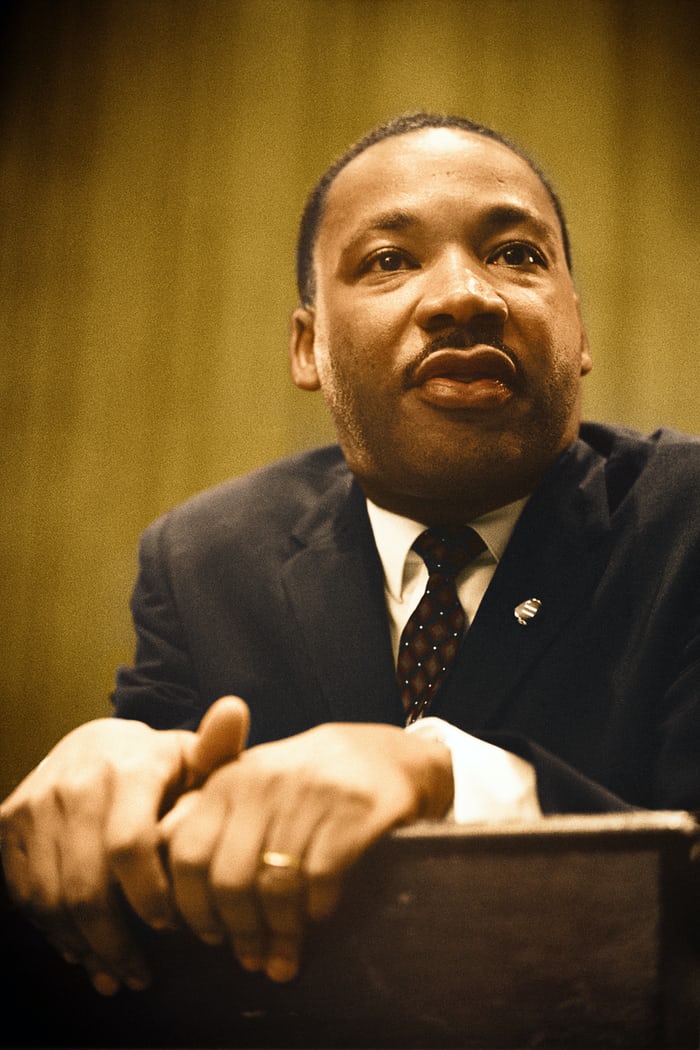
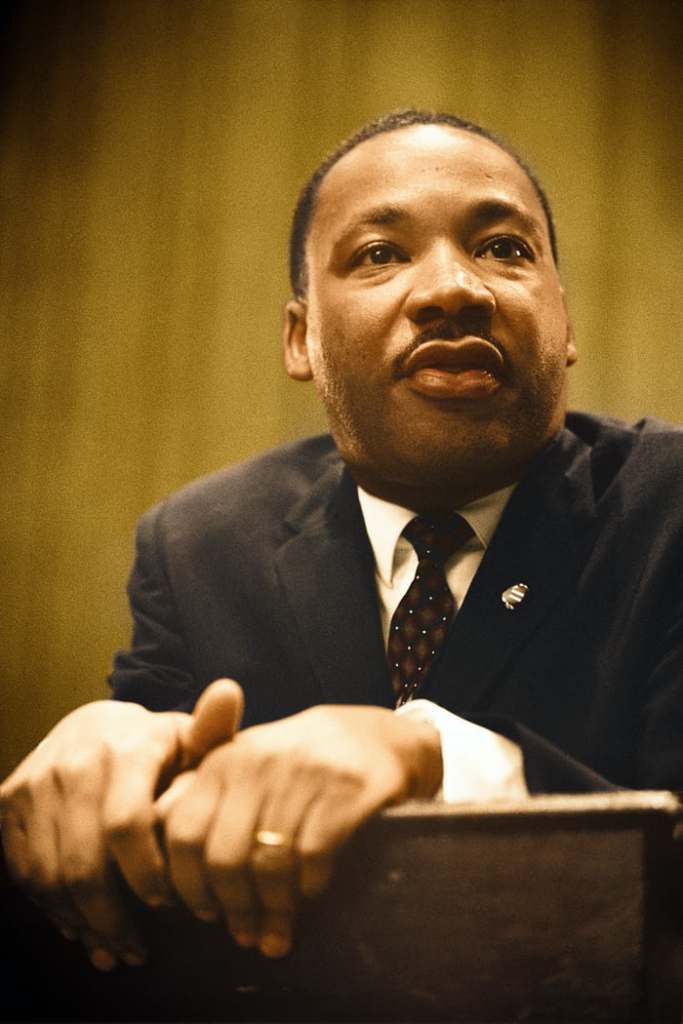
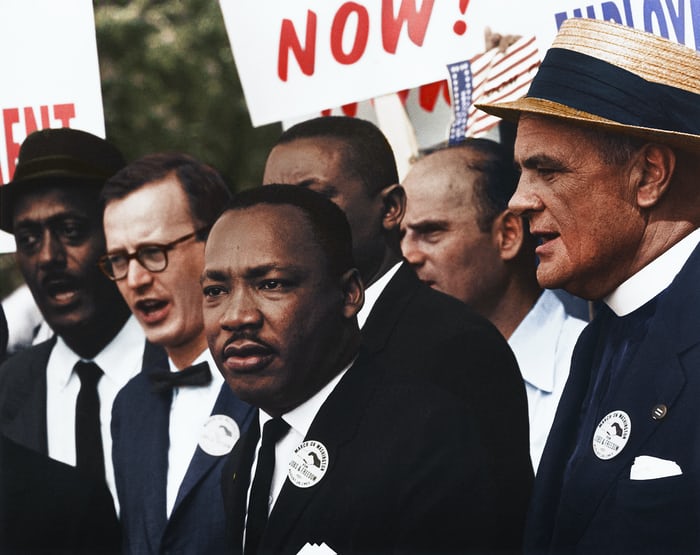
MARTIN LUTHER KING JR.

Also Known As:- MLK Jr. Michael Luther King, Jr.

Born: January 15, 1929 Atlanta Georgia

Died: April 4, 1968 Memphis Tennessee

Awards And Honors: Grammy Award (1970) Nobel Prize (1964)Notable Works: “I Have A Dream”

Occupation – Baptist, minister,activist

Known for – Civil rights movement, Peace movement

Awards – Nobel Peace Prize (1964)
Presidential Medal of Freedom (posthumously, 1977)
Congressional Gold Medal (posthumously, 2004)

About his Life:

There are people who are able to defeat the ravages of the eternal enemy-time and continue to live on in the minds of men, There are a select few who challenge the limitations of a system that fails to deliver justice. Men like Martin Luther King Jr are soldiers of God who do not care for the consequences when it comes to fighting for the truth. King was born on 15 January 1929, at Atlanta and died on 4 April 1968, at Memphis. Not a very long life, but what he achieved during this time is enviable. Few men reach such dazzling heights of spiritual success even in several lives.

King was a US civil rights leader. The son and grandson of Baptist teachers, King was deeply influenced by the idea of non-violence while in college. The influence of Mahatma Gandhi was obvious. Ordained a Baptist minister himself in 1954, he became pastor of a church in Montgomery. University. He was elected to head the Montgomery Improvement Association whose boycott efforts eventually ended the city’s policies of racial discrimination on public transportation. 1955, he received a doctorate from Boston University. He was elected to head the Montgomery improvement association whose boycott efforts eventually ended the city’s policies of racial discrimination on public transportation.

History:

In 1957, he formed the Southern Christian Leadership Conference and began lecturing nationwide, urging active non-violence to achieve civil rights for African Americans. In 1960, he was back in Atlanta to become co-pastor of Ebenezer Baptist Church with his father.

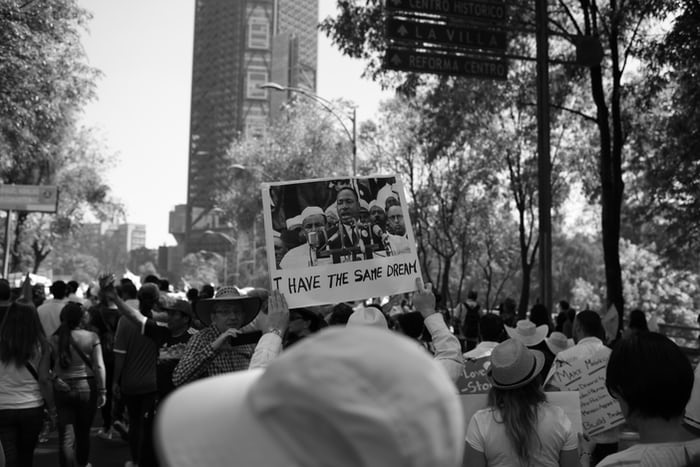
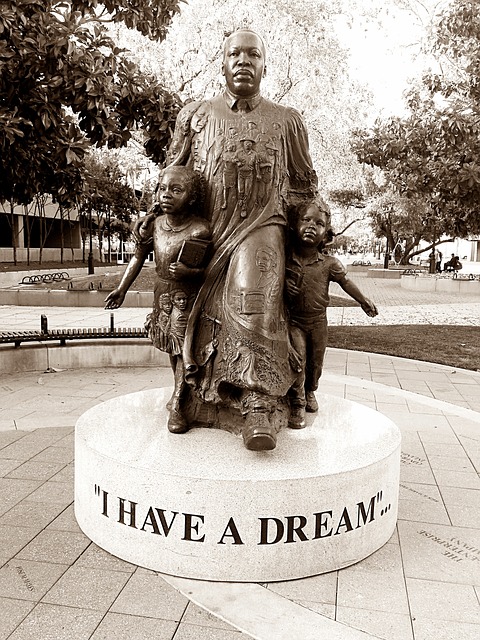
He was arrested and jailed for protesting segregation at a lunch counter. The case drew national attention and none other than the then presidential candidate, John F Kennedy, had to intercede to obtain his release. In 1963 King helped organise the March on Washington, an assembly of more than 200,000 protestors, at which he made his famous ‘I have a dream’ speech. This powerful and moving speech celebrates humanity as one big family where being human is more important than being black or white. The march influenced the passage of the Civil Rights Act of 1964. King was awarded the 1964 Nobel Prize for Peace.

In 1965, he was criticised from within the civil-rights movement for yielding to state troopers at a march in Selma and for failing in the effort to change Chicago’s housing segregation policies. Thereafter, he broadened his advocacy, addressing the plight of the poor of all races and opposing the Vietnam War. In 1968, he went to Memphis to support a strike by sanitation workers. There, on April 4, he was assassinated by James Earl Ray. A U.S. national holiday is celebrated in King’s honour on the third Monday of January in the USA. King, like Gandhi, was a gentle yet powerful prophet of a non- violent revolution who sacrificed his life for his principles. King lives through his work and words in the hearts of millions, and his untiring zeal to achieve justice motivates individuals to keep trying. The kind of following King has today undoubtedly makes us feel, ‘when one is willing, the Gods join in’. (Aeschylus).

MK day:After years of campaigning by activists, members of Congress and Coretta Scott King, among others, in 1983 President Ronald Reagan signed a bill creating a U.S. federal holiday in honor of King.Observed on the third Monday of January, Martin Luther King Day was first celebrated in 1986.

Assassination of Martin Luther King:

The events in Selma deepened a growing rift between Martin Luther King, Jr. and young radicals who repudiated his nonviolent methods and commitment to working within the established political framework.

As more militant Black leaders such as Stokely Carmichael rose to prominence, King broadened the scope of his activism to address issues such as the Vietnam War and poverty among Americans of all races. In 1967, King and the SCLC embarked on an ambitious program known as the Poor People’s Campaign, which was to include a massive march on the capital.

On the evening of April 4, 1968, Martin Luther King was assassinated. He was fatally shot while standing on the balcony of a motel in Memphis, where King had traveled to support a sanitation workers’ strike. In the wake of his death, a wave of riots swept major cities across the country, while President Johnson declared a national day of mourning.

James Earl Ray, an escaped convict and known racist, pleaded guilty to the murder and was sentenced to 99 years in prison. He later recanted his confession and gained some unlikely advocates, including members of the King family, before his death in 1998.

Martin Luther king Jr. Quotes:

“The ultimate measure of a man is not where he stands in moments of comfort and convenience, but where he stands at times of challenge and controversy.”

“Freedom is never voluntarily given by the oppressor; it must be demanded by the oppressed.”

“The time is always right to do what is right.”

“True peace is not merely the absence of tension; it is the presence of justice.”

“Our lives begin to end the day we become silent about things that matter.”

“Free at last, Free at last, Thank God almighty we are free at last.”

“Faith is taking the first step even when you don’t see the whole staircase.”

“In the end, we will remember not the words of our enemies, but the silence of our friends.”

“I believe that unarmed truth and unconditional love will have the final word in reality. This is why right, temporarily defeated, is stronger than evil triumphant.”

“I have decided to stick with love. Hate is too great a burden to bear.”

“Be a bush if you can’t be a tree. If you can’t be a highway, just be a trail. If you can’t be a sun, be a star. For it isn’t by size that you win or fail. Be the best of whatever you are.”

Property Rights

What Are Property Rights?

Property rights define the theoretical and legal ownership of resources and how they can be used. These resources can be both tangible or intangible and can be owned by individuals, businesses, and governments. In many countries, including the United States, individuals generally exercise private property rights or the rights of private persons to accumulate, hold, delegate, rent, or sell their property. In economics property rights form the basis for all market exchange, and the allocation of property rights in a society affects the efficiency of resource use.

Understanding Property Rights

Property is secured by laws that are clearly defined and enforced by the state. These laws define ownership and any associated benefits that come with holding the property. The term property is very expansive, though the legal protection for certain kinds of property varies between jurisdictions.Property is generally owned by individuals or a small group of people. The rights of property ownership can be extended by using patents and copyrights to protect:

  • Scarce physical resources such as houses, cars, books, and cellphones
  • Non-human creatures like dogs, cats, horses or birds
  • Intellectual property such as inventions, ideas, or words

Other types of property, such as communal or government property, are legally owned by well-defined groups. These are typically deemed public property. Ownership is enforced by individuals in positions of political or cultural power. Property rights give the owner or right holder the ability to do with the property what they choose. That includes holding on to it, selling or renting it out for profit, or transferring it to another party.

Acquiring Rights to a Property

Individuals in a private property rights regime acquire and transfer in mutually agreed-upon transfers, or else through homesteading. Mutual transfers include rents, sales, voluntary sharing, inheritances, gambling, and charity. Homesteading is the unique case; an individual may acquire a previously unowned resource by mixing his labor with the resource over a period of time. Examples of homesteading acts include plowing a field, carving stone, and domesticating a wild animal. In areas where property rights don’t exist, the ownership and use of resources are allocated by force, normally by the government. That means these resources are allocated by political ends rather than economic ones. Such governments determine who may interact with, can be excluded from, or may benefit from the use of the property.

Private Property Rights

Private property rights are one of the pillars of capitalist economies, as well as many legal systems, and moral philosophies. Within a private property rights regime, individuals need the ability to exclude others from the uses and benefits of their property. All privately owned resources are rivalrous, meaning only a single user may possess the title and legal claim to the property. Private property owners also have the exclusive right to use and benefit from the services or products. Private property owners may exchange the resource on a voluntary basis.

Private Property Rights and Market Prices

Every market price in a voluntary, capitalist society originates through transfers of private property. Each transaction takes place between one property owner and someone interested in acquiring the property. The value at which the property exchanges depends on how valuable it is to each party. Suppose an investor purchases $1,000 in shares of stock in Apple. In this case, Apple values owning the $1,000 more than the stock. The investor has the opposite preference, and values ownership of Apple stock more than $1,000.

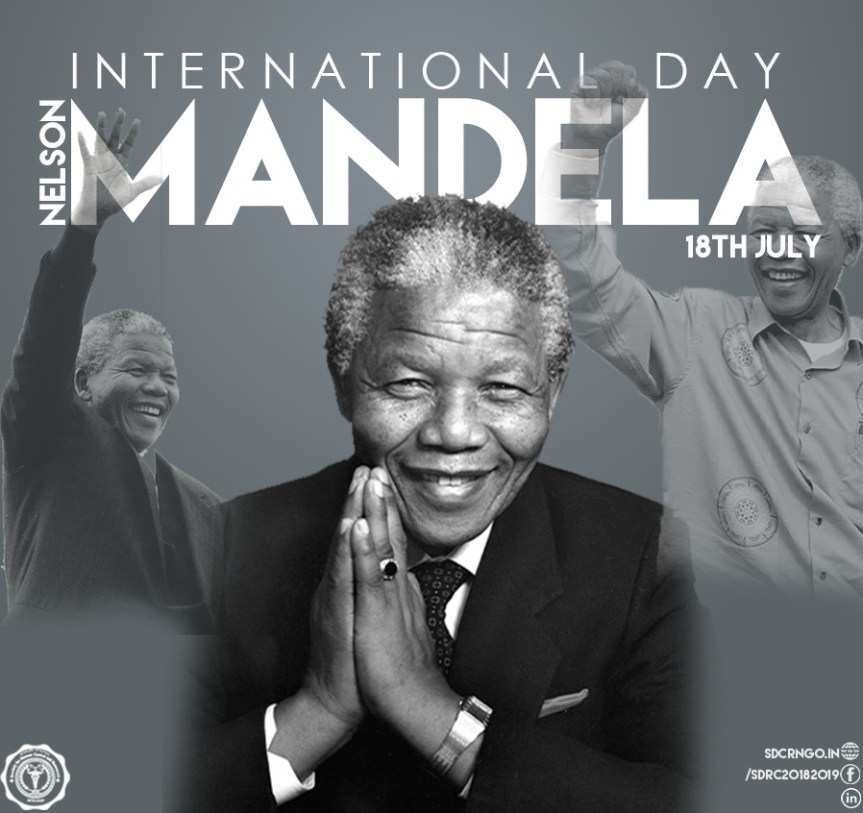
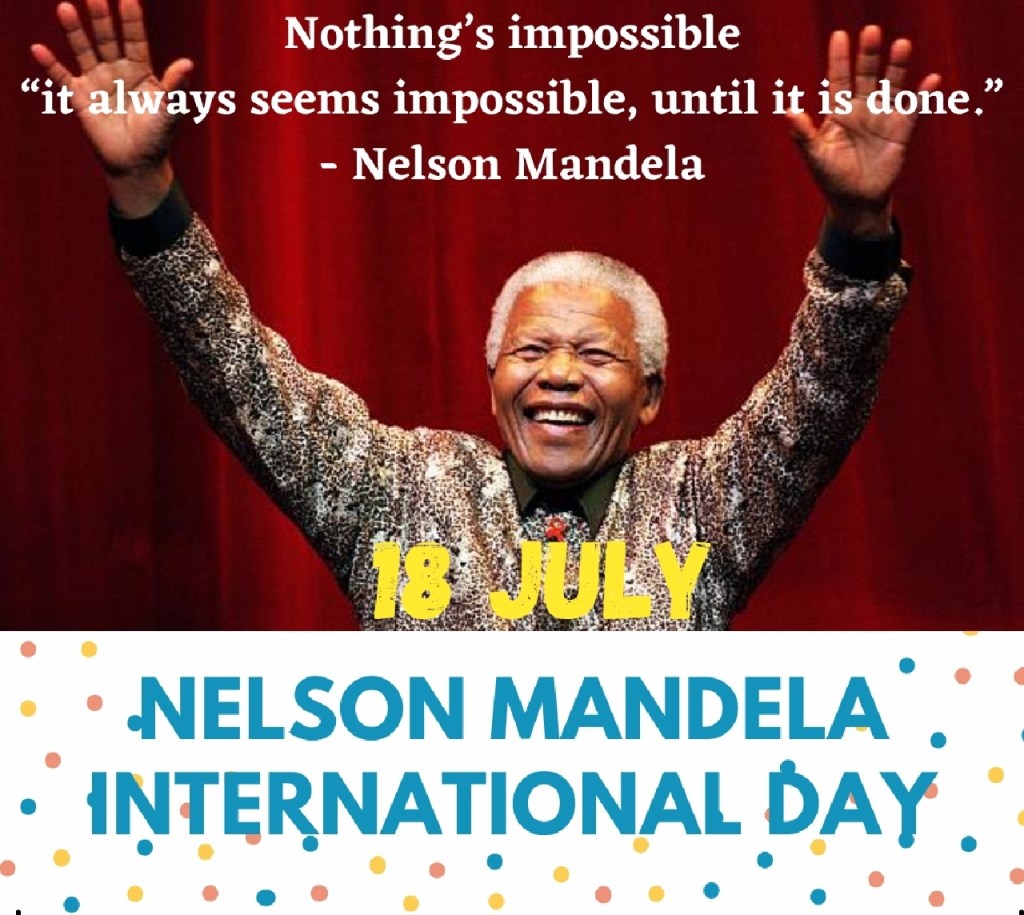
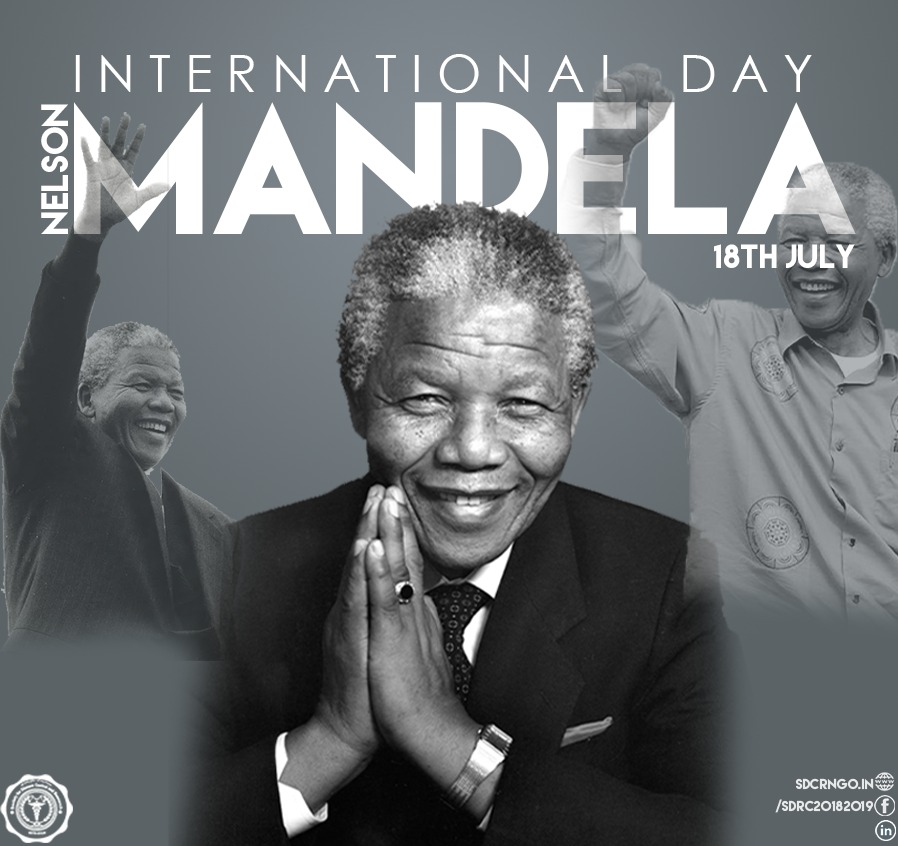
Long live ‘NELSON MANDELA’

Nelson Mandela was born on 18 July 1918, at Umtata, Cape of Good Hope in South Africa. He is an iconic figure in today’s world when it comes to fighting for one’s rights as a human being. The son of a Xhosa Chief, Mandela studied law at the University of Witwatersrand, and in 1944 joined the African National Congress (ANC), After the Sharpeville massacre (1960), he was disillusioned to the extent that he gave up his non-violent stance and became one of those who helped found the Spear of the Nation, the ANC’s military wing. Arrested in 1962, he was sentenced to life imprisonment. The South African Court convicted him on charges of sabotage as well as other crimes committed while he led the movement against apartheid.

How is Nelson Mandela International Day celebrated?

Mandela provides service to others and always wants to create a better world for everyone. So, on this day if people find injustice in the neighbourhood, city, or state they do everything to alleviate the problem. Work in soup kitchens, marched with protesters, volunteer in local organisations, and work to help bring about civil liberties for everyone. Inspire change, and make every day a celebration of Mandela Day. People work for others and want to improve the lives of people around them. They will do this by volunteering or taking part in protests.

“After climbing a great hill, one only finds that there are many more hills to climb.”

This day provides a global call for people to recognise their ability and have a positive effect on others around them. People also inspire others about the values that Mandela shared like democracy, freedom, diversity, reconciliation, and respect. To promote Nelson Mandela Day, many people and organisations around the world take part in several activities. These activities are volunteering, sport, art, education, music, and culture. This day also celebrates a campaign known as “46664”, in reference to Nelson Mandela’s Robben Island prison number. The campaign was originally launched to raise awareness about HIV/AIDS. In 1995 and 1999 Children’s Fund and the Nelson Mandela Foundation were established.

“I learned that courage was not the absence of fear, but the triumph over it. The brave man is not he who does not feel afraid, but he who conquers that fear.”

His Movements And Struggles:

In accordance with the conviction, Mandela served twenty-seven years in prison. While in jail, Mandela’s reputation grew and he became widely known as the most significant black leader in South Africa. The conditions that he had to go through as a prisoner were appalling. He performed hard labour in a lime quarry. Prisoners were segregated on the basis of race, and the black prisoners received the fewest rations. Political prisoners were kept separate from ordinary criminals and received fewer privileges. Mandela himself describes how as a D-group prisoner, the lowest classification, he was allowed one visitor and one letter every six months. Letters, when they came, were often delayed for long periods and made unreadable by the prison censors. It calls for nerves of steel for a man imprisoned for life to get a degree of Bachelor in Law from the University of London through correspondence.

In February 1985, President PW Botha offered Mandela conditional release in return for renouncing armed struggle. Mandela spurned the offer, releasing a statement through his daughter Zindzi saying, ‘What freedom am I being offered while the organisation of people remains banned? Only free men can negotiate. A prisoner cannot enter into contracts.’

Throughout Mandela’s imprisonment, local and international pressure mounted on the South African Government to release him. In 1989, South Africa reached a crossroads when Botha suffered a stroke and was replaced as President by Frederik Willem de Klerk. De Klerk announced Mandela’s release in February 1990. His release from jail was broadcast live all over the world.

South Africa’s first multi-racial elections, in which full enfranchisement was granted, were held in April 1994. The ANC won 62 per cent of the votes in the election. Mandela became the first black President. As President from May 1994 to June 1999, Mandela presided over the transition from minority rule and apartheid, winning international respect for his advocacy of national and international reconciliation.

It is not surprising that Mahatma Gandhi should have inspired Mandela in his war against apartheid. The most universally respected figure of post-colonial Africa, Mandela was awarded the Nobel Peace Prize in 1993 along with De Klerk for their efforts to end apartheid and bring about the transition to non-racial democracy. Mandela remains an inspiring figure for any man in any corner of the world who becomes conscious of his rights and is willing to fight for the same.

WHAT MAKES FINLAND THE HAPPIEST COUNTRY

Irrespective of experiencing 200 days of winter with complete absence of sun, Finland has maintained it’s position to be the Happiest Country in the World for the last four years. It has been named the most stable, freest and the safest country by various international bodies because of the socio-economic and welfare policies of the nation.
Finland is a natural beauty with forests, crystal clear lakes and wildlife. It has low pollution levels which makes the air clean and encourages more citizens to be amidst the nature. Hence, a large number of outdoor activities like kayaking, canoe, horse back riding and others can be experienced. Nature in itself is known to have immense healing power that can cheer people and lift their spirits.


Finland offers free Forest Therapy to it’s citizens where the general public is allowed to roam freely in natural areas like forests, lakes, and rivers without any permission from the landowners (if the areas fall under a private land). This traditional legal concept is called ‘’Everyman’s Right ‘’. However, the only condition applied is that no damage or disturbance should be faced by the landowner.


Finns have a warm culture and enjoy a relaxed way of living. Unlike other Western countries they believe in cooperation over competition. The follow minimalistic approach to life and prefer well-made, sustainable, functional items that will stand the test of time. Finns are not considered to be happy bubbly people with cheerful smiley faces. In fact, they are the least expressive people who take life as it comes.


Coming to the most important topic, what makes them the happiest country in the world?
Well, there cannot be a single factor to happiness. However, the main cause of it is self-satisfaction and inner peace, which in term is an outcome of various factors.


Finns follow a relaxed way of living and are at peace with themselves. Finland may not be the most powerful or wealthy economy but what makes them happy is the fact that they are at peace with their present situation. They are not too ambitious about what life should offer them and this helps them to feel satisfied with what they currently have.


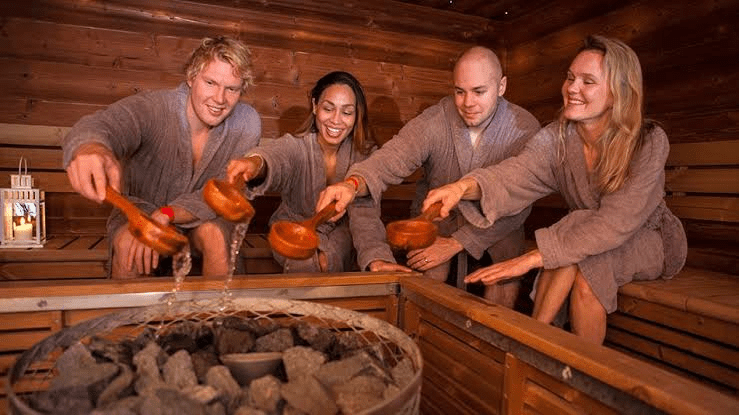
The national pass time for Finns is enjoying sauna baths. The fact that they have over 2 million saunas explains their love for the tradition. Saunas are places that purifies one’s body and soul. Sauna creates a sense of community and equality for the citizens as people from all backgrounds come together to enjoy the experience. Finns are used to being naked in the sauna with their family and friends, which can help create a comfort with and acceptance of their bodies, too.

Fins follow the philosophy of ‘Sisu’ that is focused on persevering when the odds are against us and viewing challenges as an opportunity. “Instead of waiting for a warm sunny day, many Finns practice daily sisu by heading out in any kind of weather for a brisk walk or cycle, or to spend time in nature.” They believe that happiness does not come from searching for it, but by living.

Finns value time over money. They choose a healthy work – life balance over wealth. A good personal life gives them the chance to pursue their personal interests and feed their creativity. This further contributes to the low inequality levels in Finland. The society majorly consists of middle-class households with very less poverty and more social security. They have few rich families but since the people are satisfied with themselves, they don’t believe in excessive show off of their wealth. This promotes the feeling of content and satisfaction amongst the low-income groups as well.

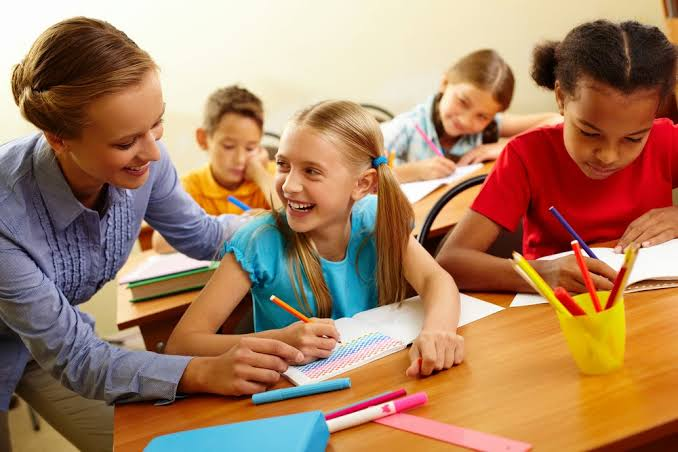
One of the main reasons why Finns are satisfied and happy with their lives is social equality. The government provides each new born a equal and healthy start to life. They distribute packages of clothing and other useful items to all new mothers. This was initially started to reduce the declining birth rate and high infant mortality but on a broader picture it reduces the difference and provides an equal start to all the new citizens. Equal opportunities are given to every citizen in terms of best education in schools and universities without any cost. This helps each child shape their own future without any form of economic hindrances. (A happy childhood breeds happy adults) The presence of best of health care opportunities to all the citizens at no cost reduces further disparity and makes them more secure and stress-free.

Under the ‘Housing first’ principle, it is ensured that even the rough sleepers are given the right support and a roof above them. The presence of equal opportunities for all makes people more satisfied with their lives, hence there is no need for people to adapt criminal offences. Low crime rates, in turn makes people more safe, secure and happy.

Finland strongly emphasises on closing gender equality as a means to promote the feeling of satisfaction and oneness amongst all citizens. Some of the measures includes providing new fathers with nine weeks of paternity leave at 70 percent of their salary and closing the gender pay gap. (Hence proving that a rising tide lifts all boats). Finland is one amongst the few Nordic countries where fathers spend more time with school-aged children compared to their mothers.

The extent of equality and freedom amongst the nation is such that they follow Flat Working Model in commercial world. For those who don’t know, a flat working model is one where there are few or no hierarchal levels between management and staff. This leads to less supervision and increased involvement with organizational decision-making, enabling open communication between all departments. Hence, increasing workplace productivity and team-cohesion. This worker-centric approach to business has served Finland well for more than a decade. Moreover, Finland is the only country that provides 25 paid workdays off in addition to the paid national holidays.

Finns are least active on social-media platforms that indulge in putting forward a polished view of their lives. They don’t brag about their success and wealth or show an outwardly exuberant zest for life. Rather, they believe in being reserved and accepting both the good and the bad as it comes. They believe that if they are truly happy, they don’t need to shove it in anyone’s faces.

Even after being the happiest country in the world, Finns have an emotionless exterior and prefer melancholic songs to express themselves. This is because they accept negative emotions as part of life. Trying to suppress one’s negative emotions is considered bad for one’s well-being. They are taught to embrace such emotions and learn to accept one’s life for what it is. This in turn has a positive impact on their life and help them feel more satisfied. They believe in expressing their negative emotions to such an extent that they celebrate a national event called “The International Day of Failure” (celebrated annually on 13 October), that carries an important message that without the possibility of failure there is no success, and occasional failure is therefore acceptable.

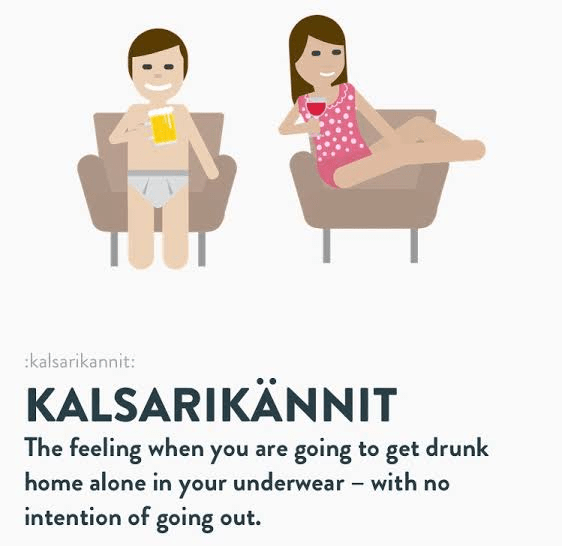
They follow the culture of Kalsarikännit or Pantsdrunk which is the practice of binge drinking alone in your home in your underpants. To a large extent, it is still considered a way of life in Finland, probably because of the stereotyped lack of social contacts among Finns.

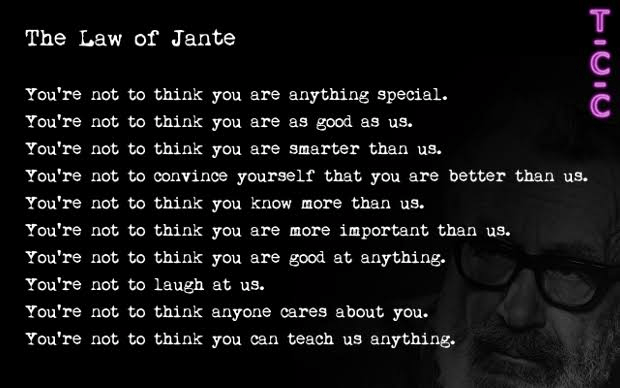
Another reason why nordic countries are most at peace with themselves may be the not mentioned, but always present, “Law of Jante” that is silently enforced by everybody in unison. Law of Jante explain the egalitarian nature of Nordic countries where they support a harmonious and happy society.

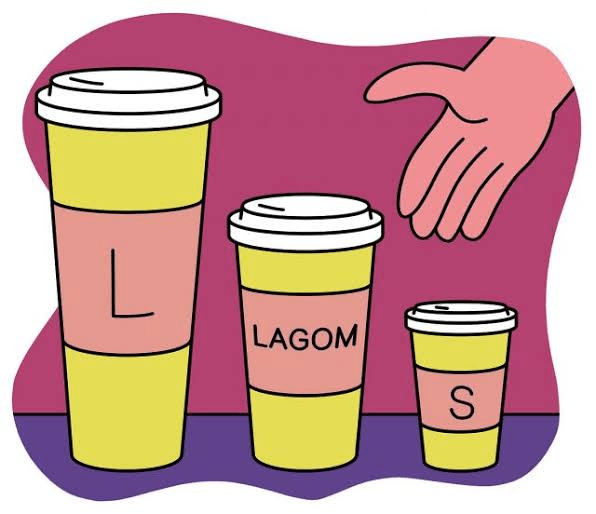
Finns are socialized to believe that what they have is as good as it gets—or close enough. Finns believe in the Norwegian term Lagom, which can be translated as “just the right amount,” i.e., neither too much nor too little. They believe that what they have is as good as it gets—or close enough. This mindset makes them the happiest people in the world despite living in small apartments, earning modest incomes, with even more limited purchasing power because of the high prices and taxation.

Hence, one thing that the world could learn from them is their willingness to embrace the less-sunny aspects of living i.e., to accept negative feelings as a normal part of life.

The utterly butterly delicious story of Amul

Over the years, Amul, one of the most beloved brands of our country, has become the taste of India, just as its tagline claims. Every Indian millennial has grown up listening to the jingles of its many dairy products, and the Amul girl, the brand’s mascot in the polka-dotted dress, has become a nostalgia-evoking symbol. Amul has truly come a long way since its founding in 1946.

The beginning

Amul was formed as a part of a cooperative movement against Polson Dairy in Anand, Gujarat, which procured milk from local farmers of Kaira District at very low rates and sold it to the then Bombay government. Everyone except the farmers benefited from this trade. The farmers took their plea to Sardar Patel, who had advocated farmers’ cooperatives since 1942. The result was the formation of the Kaira District Co-operative Milk Producers’ Union Limited in Anand.

The union started pasteurising milk produced by a handful of farmers for the Bombay Milk Scheme and grew to 432 farmers by the end of 1948. The rapid growth led to problems including excess production that the Bombay Milk Scheme couldn’t accommodate. To solve this issue, a plant was set up to process all that extra milk into products such as milk powder and butter.

Amul is born

The late Dr. Verghese Kurien, rightly called the Milkman of India, was Amul’s true architect. His journey at Amul began in 1949 when he arrived in Anand to manage a dairy as a government employee. He went from helping farmers repair machinery to revolutionising India’s dairy industry with the White Revolution (or Operation Flood), the largest dairy development programme in the world.

The new dairy with the milk processing plant was ready for operation in October 1955, the year that also saw a breakthrough in dairy technology —buffalo milk was processed to make products for the first time in the world. The word ‘Amul’, derived from ‘Amulya’, which means ‘precious’ or ‘priceless’ in Sanskrit, was used to market the range of milk products developed by the Kaira Union. It is also an acronym for Anand Milk Union Ltd.

Dr Kurien had a vision. He wanted to offer small-scale dairy farmers quality-control units and centralised marketing, which were missing at the time in the dairy economy. Thus, the Gujarat Cooperative Milk Marketing Federation (GCMMF) was created in 1973 to market milk and all milk products produced by six district cooperative unions in Gujarat. GCMMF is the largest exporter of dairy products in India and Amul is the umbrella for all of its products.

Awards, accolades, and a global presence

Over the years, Amul, together with GCMMF, has won numerous awards. Some of these include the Rajiv Gandhi National Quality Award, 1999; the Golden Trophy for Outstanding Export Performance, 2009-10; Best Marketing Campaign, 2014; and World Dairy Innovation Award, among many others. Amul earned recognition all over the world when GCMMF  introduced it on the Global Dairy Trade (GDT) platform, where only the six top dairy players across the world sell their products.

More than a mere slogan

Amul’s famous slogan, which is now a part of its logo, was created in 1994 by Shri Kanon Krishna of a Mumbai-based advertising agency called Advertising and Sales Promotion (ASP). According to Amul, the Taste of India slogan is more than just corporate positioning or advertising jargon. This slogan lends meaning to the brand’s never-ending commitment to taking quality food and products to the rural man, which he otherwise couldn’t have afforded.

The Butter Girl

Amul did not always have the round-eyed moppet as its mascot. The Butter Girl was born in 1966 when Sylvester daCunha, the then MD of the advertising agency handling Amul butter’s account, created her for its campaign. It was a pleasant change from the dull, corporate ads that the previous agency had come up with. Being a seasoned marketer himself, Dr Kurien gave daCunha complete creative freedom to create and release the ads without taking the company’s permission. 30 years later, the Utterly Butterly Girl still wins hearts wherever she is, whether on a billboard or on the packet of butter.

Amul is not just a brand; it is also a movement that represents farmers’ economic freedom. The name is now a household term that is here to stay, and the chubby-cheeked Amul girl will continue to cast a spell on the public.

Palestine Crisis and India’s Stance

The Israeli- Palestinian conflict is one of the world’s enduring conflicts, with the Israeli occupation of the West Bank and the Gaza Strip reaching 54 years of conflict. Various attempts have been made to resolve the conflict as part of the Israeli- Palestinian peace process. India has condemned the Israeli attack on Palestine territory describing it as crimes against humanity that should no longer take place in 21st century.

As state of conscience and advocates for universal human rights, India condemn the recent Israeli state-sponsored attacks against Palestinian life, land and property in Jerusalem and Gaza.

India reminds Israel of withdrawing forces from Gaza and opening the detention centre andnot
hindering any Human Rights of the people. India Considers Jerusalem as an international city under
the control of United Nations to protect and to preserve the unique spiritual and religious interests
located in the city ofthe three faiths, Christian, Jewish and Muslim to ensure that order and peace,
andespecially religious peace, reign in Jerusalem.

As a third world country, India affirms that Jerusalem is a sacred space and a holy city for the vast majority of the world’s population that follow the Abrahamic faith.
The Israeli state-sponsored attempts to evict and remove Palestinian residents from their ancestral and legally-owned homes in Jerusalem, specifically in the neighborhood of Sheikh Jarrah. International law affirms that the forced eviction and home removal meted on Palestinians is categorically illegal and is viewed by the international community as one of the main deterrents in ending Israeli apartheid and settler colonialism.

5-month-old baby girl in UK ‘turning to stone’

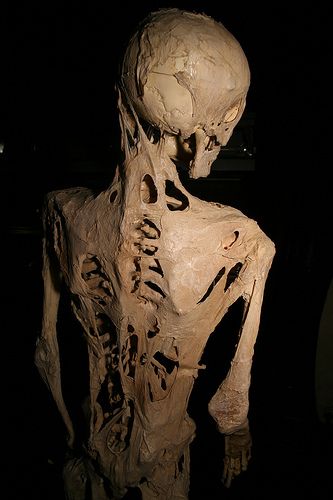
The effects of fibrodysplasia ossificans progressiva, a disease which causes damaged soft tissue to regrow as bone.

Lexi Robins, 5 month old from the UK is “turning to a stone”due to an extremely rare genetic condition Fibrodysplasia Ossificans Progressiva (FOP) that turns muscles into bones.

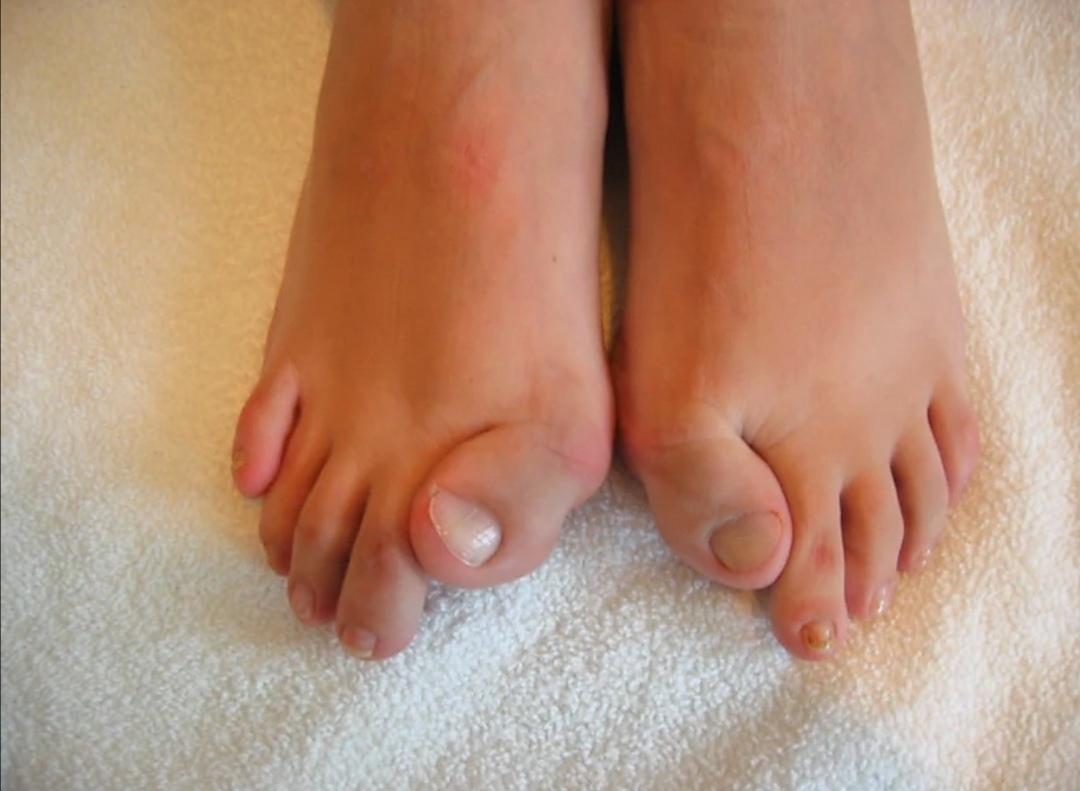
Lexi Robins was born on January 31 and seemed like any other normal baby, except she didn’t move her thumb and had bigger toes.

Lexi was diagnosed with a life-limiting disease called Fibrodysplasia Ossificans Progressiva (FOP), which affects just one in two million.

Due to the disorder, Lexi’s condition may worsen rapidly if she suffers any minor trauma, as simple as falling over. She cannot receive injections, vaccinations and dental care and cannot give birth.

Post by Alexandera robins https://www.instagram.com/tv/CQnwqnTIUlV/?utm_source=ig_embed&utm_campaign=loading.

FOP is a severe, disabling disorder with no current cure or treatment. It is the only known medical condition where one organ system changes into another. Fibrodysplasia ossificans progressiva is caused by a mutation of the gene ACVR1.

The FOP can lead to bone formation outside skeleton and restrict movement. It is believed to replace muscles and connective tissues, such as tendons and ligaments, with bone. Thus, it is generally perceived that the condition turns a body into stone.

People with this disease, which has no proven treatment, can be bedridden by the age of 20 and their life expectancy is around 40 years.

It has no current cure.

Educational and academic news and updates

Educational news and updates

1. IGNOU TEE June 2021 Exam Dates Announced, Details Here:-

IGNOU June TEE 2021: The Indira Gandhi National Open University (IGNOU) has announced June 2021 Term End Examination (TEE) dates.
IGNOU June TEE 2021 Exam Dates Announced, Details Here
IGNOU June TEE 2021: The Indira Gandhi National Open University (IGNOU) has announced June 2021 Term End Examination (TEE) dates. For undergraduate (UG) and postgraduate (PG) final year students, the exams will be conducted from August 3, along with exams for backlogs.
Similarly, postgraduate diploma (PGD), diploma, postgraduate certificate and certificate exams will also begin on August 3. Detailed date sheets will be released soon on the official website of the university.
“The Term-end Examination (TEE) June 2021 of the University will be conducted from 3rd August 2021 for the final year students of Under Graduate (UG) and Postgraduate (PG) programmes along with their backlogs, if any. The examination of Post Graduate Diploma, Diploma, Post Graduate Certificate and Certificate Programmes will also be held from 3rd August 2021. The Date-Sheet and other details will be notified shortly,” IGNOU said in a statement.

2. Online Classes Keep Students In Maharashtra’s Slums Far From Studies:-

Several parents expressed their hardship over the ordeal of not being able to provide their children with smart phones that have become an essential article of possession.
Online Classes Keep Students In Maharashtra's Slums Far From Studies
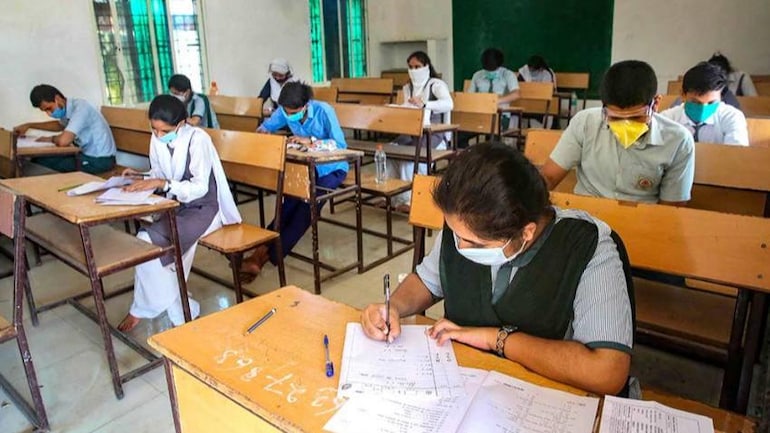
Nagpur: Amid the COVID-19 pandemic and its subsequent restrictions, students living in Nagpur’s Danteshwari Nagar slum are reeling under the effects of technological inaccessibility that has deprived them of the opportunity to attend online classes.
Several parents expressed their hardship over the ordeal of not being able to provide their children with smart phones that have become an essential article of possession.
“Since the time schools have closed, the lives of students have been severely affected. As we are labourers, we are not able to keep a check on our children. When they were going to school, we were assured that they were studying. We do not have the ability to provide them mobile phones with internet access,” said a parent.
Many other parents who live these slums echoed the same misery.
Nand Kumar Verma said, “We cannot afford smartphones. We have one phone which we need to carry to work. We do not earn so much to afford a smart phone for them. Studying from schools is a more convenient option for our children. Online classes have made things difficult. We are daily labourers and cannot look after their studies.”
His wife Rajini Verma stressed over her fear that her children will end up becoming labourers like themselves.
“Some of their teachers come and tell us to give mobile phones to children. This is not possible as our contractor calls us to give work during the day, and we need to keep it with us. Since they are not studying, we are afraid of how they will get admission for higher studies. We fear they will become labourers like us,” she said.
Students residing in the slum area are well aware of the issue. Laxmi Verma told ANI that she has four brothers and sisters. “It is difficult for all of us to study with one phone. Internet pack is also costly and sometimes there are network issues too,” she said.
Sonia Sahu, another student, said that due to network issues, she could not complete her online examination.
“Sometimes, when we are not able to recharge our phones, we miss out on our classes,” she added.
Jayshree Chikane, a teacher at a nearby government school said, “Students do face issues, especially the young kids. At least 50 per cent of our students do not have smart phone access. We try to send them notes over WhatsApp and tell them to call if they have doubts. Most of the kids in our school live in the slums. I am afraid that when they will rejoin, we will have to start from the very basics. Since they belong to lower-economic sections of society, their parents do not pay attention to them. Small children need their parents’ help to study.”

3. AKTU Even Semester Exams Will Be Held Online, Confirms University:-

Dr APJ Abdul Kalam Technical University (AKTU) even semester exams for the 2021-22 academic session will be conducted online and students will be able to take their exams from a place of their convenience. The exams will begin in August.
AKTU Even Semester Exams Will Be Held Online, Confirms University
New Delhi: Dr APJ Abdul Kalam Technical University (AKTU) even semester exams for the 2021-22 academic session will be conducted online and students will be able to take their exams from a place of their convenience. The exams will begin in August.
Requesting students not to believe in rumours related to exams, the university tweeted: “All the exams of even semester 2020-21 will be conducted in online mode only and students will be able to give their exams from anywhere. Please do not pay attention to any rumours in this regard. In case of any confusion, visit the University website. Best wishes to all the students.”
All the exams of Even Semester 2020-21 will be conducted in online mode only and students will be able to give their exams from anywhere.
Please do not pay attention to any rumours regarding this. In case of any confusion, visit the University website.
Best wishes to all the students.
examination controller
@AktuAcoe— AKTU (@AKTU_Lucknow) July 3, 2021
AKTU in June released the term-end examinations schedule, except final semester. Exams will held in online mode where students will be required to answer objective type questions, the university had said.

4. AKTU To Use UPCET 2021 Scores For MBA Admission:-

According to a statement from the NTA, many students were unable to take CMAT 2021 and therefore UPCET 2021 will also be considered as an eligibility test for AKTU MBA admissions.
AKTU To Use UPCET 2021 Scores For MBA Admission
New Delhi: In addition to the Common Management Admission Test (CMAT), Dr APJ Abdul Kalam Technical University (AKTU), Uttar Pradesh, will use the Uttar Pradesh Common Entrance Test (UPCET) 2021 for admitting students to the MBA programme, for the 2021-22 academic year. Both the exams are conducted by the National Testing Agency. While results of CMAT 2021 have been announced, UPCET 2021 is yet to be conducted.
According to a statement from the NTA, many students were unable to take CMAT 2021 and therefore UPCET 2021 will also be considered as an eligibility test for AKTU MBA admissions.
“To ensure larger participation and to provide relief to aspirants who could not appear in CMAT 2021, it has now been decided by AKTU that Uttar Pradesh Common Entrance Test (UPCET)- 2021 score will also be used for admission to the MBA programme of AKTU,” an official statement said.
Candidates with any one of the two exam scores –CMAT 2021 or UPCET 2021 – will be eligible to apply for MBA admission at AKTU, it added.
Registration for UPCET 2021 is going on. Students can submit their forms at upcet.nta.nic.in up to July 6, 2021.
Apart from MBA, the university will also use UPCET scores for MCA and some other undergraduate-level professional courses.
For admission to other postgraduate programmes – MTech, MPharm, MArch, MURP, and MDes – the university conducts its own entrance exam – APEE.
Registration for APEE 2021 is going on. The last date to apply is July 15.

5. Education Minister To Launch CBSE’s ‘Innovation Ambassador Programme’:-

The Innovation Ambassador Programme is a collaboration between the CBSE, the All India Council for Technical Education (AICTE) and the Innovation Cell of the Ministry of Education.
Education Minister To Launch CBSE’s ‘Innovation Ambassador Programme’
New Delhi: Education Minister Ramesh Pokhriyal ‘Nishank’ will launch the Innovation Ambassador – Online Training Programme for CBSE teachers on July 16, 2021, the Central Board of Secondary Education (CBSE) said.
The Innovation Ambassador Programme is a collaboration between the CBSE, the All India Council for Technical Education (AICTE) and the Innovation Cell of the Ministry of Education.
The programme aims to strengthen the mentoring capacity of teachers for nurturing innovative ideas from students.
Schools can register for the programme up to July 10 at mic.gov.in/sia. Each school can nominate up to five teachers to participate in the programme. Training will be provided on a first come, first served basis.
Through this programme, the CBSE aims to train 50,000 teachers – two or three teachers per school – from all affiliated schools as ‘Innovation Ambassadors’. Teachers will be shortlisted from nominations submitted by schools.
Teachers will be trained in four modules – design thinking and innovation, idea generation and ideal hand-holding, intellectual property rights, product/prototype development.
“The first batch of the first module of the first Programme, viz. Design Thinking & Innovation, will start from 20th July 2021,” an official statement said.
The trained teachers, or ‘Innovation Ambassadors’, will help in creating the culture of innovation in their schools, mentor other teachers, students, and provide support to other schools as resource persons, the CBSE had said.
They will also act as evaluators for national-level idea competitions, and act as mentors for the national level programme on innovation and related activities, the board had earlier said.

6. JMI Admissions 2021 UG, PG application deadline extended:-

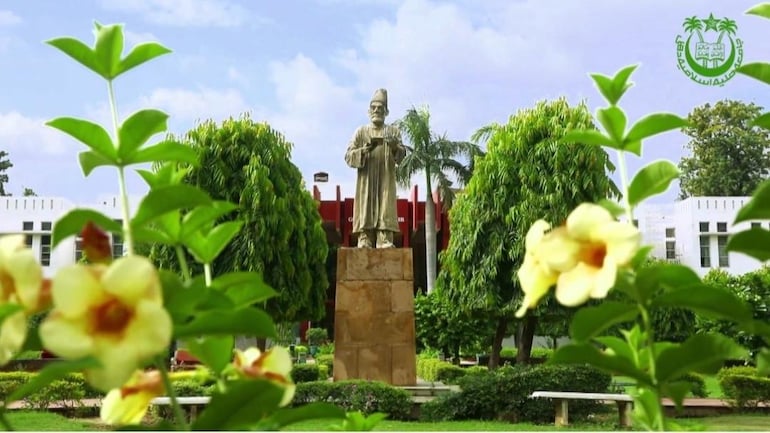
Jamia Millia Islamia UG, PG and diploma programme applications will be accepted till July 10 at the official website jmicoe.in. “The Vice-Chancellors, JMI on the request of the aspirants has approved the extension in the last date of filing of admission forms for all undergraduate, postgraduate, diploma programmes, etc for the academic session 2021-22 till July 1,” said the official notification read.
Jamia Millia Islamia application forms were released on May 17. Earlier, the last date to fill the application form was June 30.

New departments in Jamia Millia Islamia

The varsity has started new departments, including — Department of Design and Innovation, the Department of Hospital Management and Hospice Studies, the Department of Foreign Languages and the Department of Environmental Sciences.
Information about the new courses and departments can be accessed on the university’s website — jmi.ac.in and portal of the controller of examinations jmicoe.in.

7. CBSE releases important update on Class 12 evaluation:-

CBSE has released an important update regarding the Class 12 evaluation process for students who changed their subjects and for absentee students.
Cbse, cbse notification, class 12 evaluation, evaluation formula, board exam, cbse updates, cbse news, Cbse evaluation
CBSE released a notification on Thursday providing certain key updates on the Class 12 evaluation process for students who changed their subjects and for absentee students.
blob:https://www.indiatoday.in/cfd34ea4-595b-4cf8-a984-466fab4ca449

8. UP Board Class 10, Class 12 Results 2021 declaration date not decided yet: All you need to know:-

Here’s when UP Board Class 10 and Class 12 Results 2021 will be declared by the Uttar Pradesh Madhyamik Shiksha Parishad, UPMSP.
UP Board Class 10, Class 12 Results 2021 declaration date not decided yet, says official (Image source: PTI)
UP Board Results 2021: The Uttar Pradesh Madhyamik Shiksha Parishad, UPMSP is expected to declare the Class 10 and Class 12 board results 2021 soon. All the candidates are advised to keep a close check on the official website of UP Board for latest updates on UP Board Class 10 and Class 12 Results 2021.

9. CBSE invites schools to send in teacher nominations for Innovation Ambassador Programme:-

CBSE has invited affiliated schools to send in teacher nominations for the Innovation Ambassador Programme which was jointly launched with AICTE to train teachers.
Cbse, aicte, train teachers, teacher training, mou, skill development, innovation ambassador programme
CBSE and AICTE joined hands in mid-June to launch the Innovation Ambassador Programme to train teachers. The programme will be launched on July 16 and CBSE schools can now nominate a maximum of five teachers each for this programme.
The recent CBSE notification said the training for the same will be carried out on a first-come-first-serve basis. CBSE schools can register their teachers within July 10 through the website mic.gov.in/sia.
The detailed guidelines, portal user manual and the registration process are available on the above link.
Schools who have already registered their teachers will need to log in at the above link with the registered email ID of an SPOC (Single Point of Contact). As per CBSE’s notification, the password has been emailed to this e-mail ID.
The first batch of the first module of the first Innovation Ambassador Programme will be on Design Thinking and Innovation. It will begin in July 20.

About the Innovation Ambassador Programme

To strengthen the mentoring capacity of teachers, CBSE, in collaboration with the Innovation Cell, AICTE, Ministry of Education, launched the ‘Innovation Ambassador Programme’ in which the teachers from affiliated schools shall be trained on the following five modules:

10. 3 scholarship and fellowship programmes at IIT, JNU and others you can apply for in July 2021:-

Here are 3 major scholarship and fellowship programmes in India you can apply to in July 2021.
Scholarship, scholarship programmes, scholarships in India
chool and college students pursuing graduation can benefit much from ace scholarship programmes. These can build confidence, increase exposure, and give a better idea about what to expect in the job industry after passing certain courses.
Getting through a scholarship programme in reputed institutes such as IIT, JNU, etc. can change the career trajectory of young students. In such programmes, you will get to work beside the top students and faculty of India.
Check out these three major scholarship and fellowship programmes in India you can apply to by July 2021:

(i). Jawaharlal Nehru University School of Environmental Sciences Research Associateship 2021

Jawaharlal Nehru University School of Environmental Sciences (SES) Junior Research Fellowship 2021 is an opportunity offered by JNU, New Delhi to MSc degree holders.
The selected candidate will be working on the project entitled ‘Estimating Mass Balance of Glaciers in the Bhaga Basin, Western Himalaya using GPR and Remote Sensing Methods’.

Eligibility

  • The fellowship is open for candidates who hold an MSc degree in any branch of Environmental Sciences/ Physical Sciences/Geology/Applied Geology/Chemistry/Biogeochemistry.
  • They must have research experience in Glaciology, Remote sensing, and GIS with glacier field experience and field data collection and analysis.
Prizes and rewards: As per rules of JNU and MOESADVERTISEMENT
Last date to apply: 15-07-2021
Application mode: Via email only
Url: https://www.jnu.ac.in/career

(ii). IIT Gandhinagar Department of Humanities and Social Sciences Post-Doctoral Fellowship 2021

IIT Gandhinagar Department of Humanities and Social Sciences Post-Doctoral Fellowship 2021 is for MA and PhD degree holders. The fellowship is meant for the project titled, ‘Western Indian Glass: Mapping Kapadvanj’.

Eligibility

  • The fellowship is open for candidates below 35 years of age who hold an MA and PhD degree in Cultural Anthropology/Archaeology, with a good publication record.
  • They are expected to be proficient in Field research, Data acquisition, and critical analysis alongside having excellent oral and written communication skills.
  • The candidates must have specialisation in Ethnoarchaeology, Ancient Crafts, Pyro-technology, Ethnohistorical Methods, and Early Historic Medieval Archaeology.
  • Besides, they must have independent fieldwork experience and good knowledge in Gujarati and Isotope Analysis.
Prizes and rewards: Up to INR 35,000 to 45,000 per month plus other benefits
Last date to apply: 15-07-2021
Application mode: Via email only
Url: https://drive.google.com/file/d/1k1XiEH0VvAucaVZTk3OET9ViRP3D22eW/view

(iii). Digital Bharati Covid Scholarship 2021-22

Digital Bharati Covid Scholarship invites applications from children who are left vulnerable with very little or no financial support for their further education owing to a Covid-led crisis in their family.ADVERTISEMENT

Students who have lost either or both of their parents during the Covid-19 pandemic can apply.

Eligibility

  • The scholarship is open for Indian students from Classes 1 to 12. Students who have lost one or both of their parents since January 2020.
Prizes and rewards: Vouchers to get educational subscriptions of leading ed-tech companies and access to tablets/laptops
Last date to apply: 31-07-2021
Application mode: Online applications only
Url: www.b4s.in/it/DBCS1

2. academic news and updates:-

1. Deep tech holds extreme relevance for management students too: Lakshmi Narayanan, Emeritus Vice Chairman, Cognizant:-

Narayanan classified space and aviation, renewable energy, nuclear power and fusion power as high-growth sectors. While explaining about the managerial and business potential lying in these high-growth sectors, he also shared with the students that the highest degree of innovation in these sectors, highest R&D spends, and highest investments globally convinced him and other economists of these being the high-growth sectors globally.
The notion that deep technology is of interest only science and technology scholars is false as it holds extreme relevance to management students as well, said Lakshmi Narayanan, Former CEO, Emeritus Vice Chairman, Cognizant and Chairman, ICT Academy while sharing his thoughts on Deep Technology Management in high-growth sectors as part of the Great Lakes’ Term Zero – CXO Interaction series.
He said he believes that business professionals are expected to deliver benefits to humanity while the scholars pursue knowledge.
Narayanan classified space and aviation, renewable energy, nuclear power and fusion power as high-growth sectors. While explaining about the managerial and business potential lying in these high-growth sectors, he also shared with the students that the highest degree of innovation in these sectors, highest R&D spends, and highest investments globally convinced him and other economists of these being the high-growth sectors globally.
He also spoke about renewable energy streams and the challenges posed by the discoveries of science and technology on the field. As he elaborated on the four sectors that are growing faster than any other industries, globally; he shared critical insights for management and business professional to tap into those high-growth sectors and create a new world order that is free of high carbon emission and allows aversion of the climate crisis that the world is headed towards.

2. Delhi govt schools will conduct physical PTMs from Jul 19-31: Manish Sisodia:-

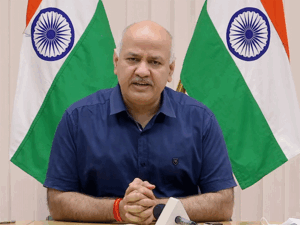
Deputy Chief Minister Manish Sisodia stated on Wednesday that Delhi government schools will hold physical Parent Teacher Meetings (PTMs) for all classes from July 19 to July 31 to discuss kids’ progress in the new normal.
Delhi government schools will conduct physical Parent Teacher Meetings (PTMs) for all classes from July 19 to 31 to discuss the progress of students amid the new normal, Deputy Chief Minister Manish Sisodia announced on Wednesday. Sisodia, who is also the Education Minister of Delhi, said special PTMs will be conducted for students of class 6 who have joined the government schools this year from municipal schools.
“The schools have been closed in Delhi since March last year. They were briefly opened for senior classes earlier this year but again had to be closed due to the Covid-19 situation and there is no possibility of reopening schools anytime soon right now. However, the online classes are going on as per the schedule of the session,” Sisodia said during an online press conference.
“The meetings will be conducted following all Covid protocols and will be held over a period of two weeks to avoid crowd on a particular day,” he said.
Sisodia said there will be special focus on class 6 students whose PTMs will be conducted jointly by teachers of Delhi government schools and MCD schools.
Every year, nearly 1.7 lakh students from municipal schools join those run by the Delhi government in class 6.
“I have emphasised earlier too that there is a need to increase collaboration between municipal and Delhi government teachers for smooth transition of students in Class 6 from MCD schools to those run by the city government,” he said.
“In order to facilitate this, special PTMs will be conducted for them jointly by Delhi government school teachers and those from MCD schools,” he added.

3. Have some authority to certify if candidate can’t take CA exams due to COVID issues: SC to ICAI:-

The CA exams, conducted by the ICAI in May, were postponed due to the COVID-19 pandemic and are scheduled to be held from July 5-20. A bench headed by Justice A M Khanwilkar said this after it was told that this would be the last opportunity for candidates under the old syllabus and the benefit of opt-out option would be given only to those who would produce positive RT-PCR report.
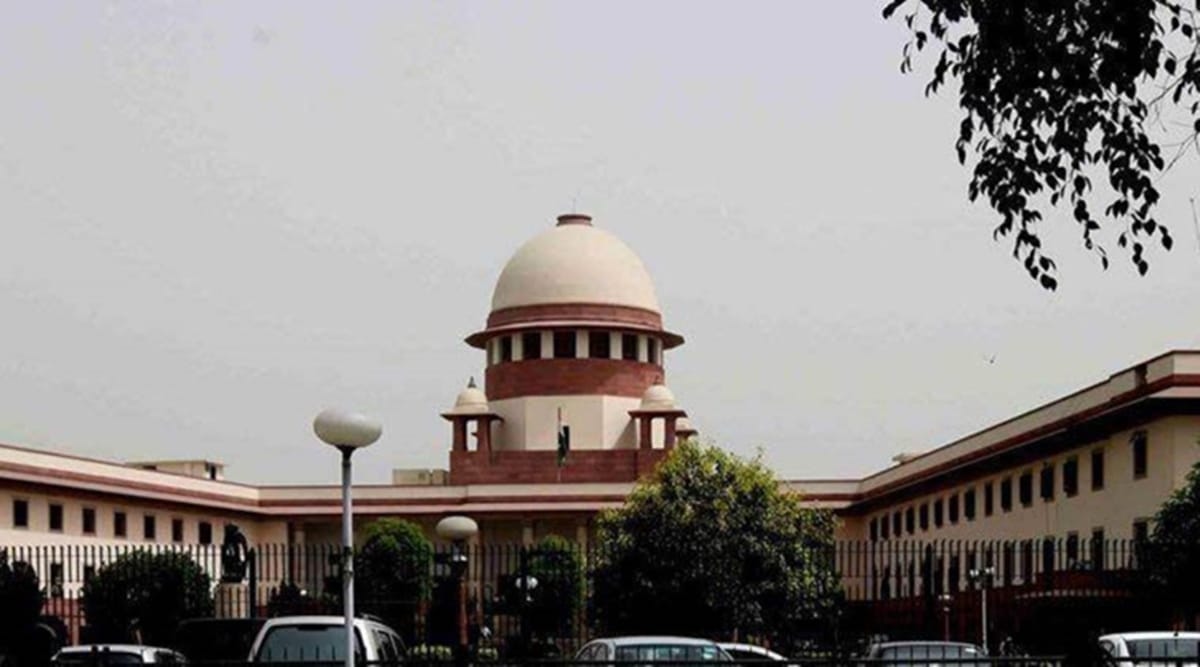
The Supreme Court on Tuesday asked the Institute of Chartered Accountants of India (ICAI) to look into “all angles” and consider having a competent authority to certify that a candidate of CA examinations scheduled in July is unable to appear due to COVID-19 related issues. Observing that having a negative RT-PCR report may not reflect the fitness of a person as the effects of coronavirus may be felt for months, the apex court said that ICAI should look into all the aspects as the matter relates ..
The CA exams, conducted by the ICAI in May, were postponed due to the COVID-19 pandemic and are scheduled to be held from July 5-20.
A bench headed by Justice A M Khanwilkar said this after it was told that this would be the last opportunity for candidates under the old syllabus and the benefit of opt-out option would be given only to those who would produce positive RT-PCR report.
“This condition of positive RT-PCR, which is pointed out, may be very difficult. Persons who have recovered from COVID may still be shown as positive. Those who have recovered may have long term problems. These are different situations,” said the bench, also comprising Justices Dinesh Maheshwari and Aniruddha Bose.
The apex court was hearing a batch of pleas seeking different reliefs including an opt-out option for the candidates, postponement of the exam, and increase in number of centres this year.
During the hearing conducted through video-conferencing, the bench observed there are instances where the RT-PCR test may be negative but the person shows symptoms of COVID.
“We are asking you to consider evolving a policy and identify a competent authority which can certify that a candidat ..

4. Schools can’t deny admission on ground that child has declared name of one parent: Manish Sisodia:-

This assumes significance from the point of view of children who have lost one or both parents to Covid.
No school in Delhi can deny admission to a child on the ground of declaring the name of just one parent, Deputy Chief Minister Manish Sisodia announced on Monday.
This assumes significance from the point of view of children who have lost one or both parents to Covid.
“No student in Delhi shall deny admission to a child on grounds that the child is declaring name of his or her single parent only,” Sisodia tweeted.

5. Conducive time to hold CA exams as COVID-19 spread substantially low: ICAI to SC:-

The ICAI said the CA exams are normally scheduled to be held in May, but owing to the high number of cases at that time it postponed them, and after evaluating all factors, has now decided to hold the exams this month when the number of COVID-19 cases is comparatively low.
ICAI told the Supreme Court on Monday that it is the most conducive time to hold CA exams as the COVID-19 spread is now at a substantially low level, offering an opportune moment for chartered accountants to further their professional career. The CA examinations which are conducted by the Institute of Chartered Accountants of India (ICAI) in May, were postponed due to the COVID-19 pandemic and are now scheduled to be held from July 5-20.
ICAI told the top court that as on date, the numbers of COVID-19 cases are comparatively low and thus it would be in the best interests of the candidates if the examinations are held as per the schedule and not cancelled or postponed.
A bench of Justices AM Khanwilkar, Dinesh Maheshwari and Aniruddha Bose said that since it has not received the ICAI note, it will hear the matter on Tuesday.
The top court is hearing a batch of pleas seeking different reliefs including an opt-out option for the candidates, postponement of the exam, and increase in number of centres this year.
At the outset, senior advocate Ramji Srinivasan, appearing for ICAI, said that they have circulated a note which if taken into consideration deals with some of the issues raised in the petitions.
Senior advocate Meenakshi Arora, appearing for one of the petitioners, said that they are not seeking deferment but want more centres to be given as many of them have been unilaterally closed by ICAI.
The bench said it will hear the matter on Tuesday and asked Srinivasan to take instruction on the contention raised by Arora.
In the note, ICAI has said the “chartered accountant exams are professional examinations and ought not to be equated with CBSE or other State Board Examinations for Class 10 or 12”, and it is in the interest of the candidates to start their “professional lives and earn livelihoods”.
It said the ICAI has no vested interest in holding the exams but to safeguard the interest of the aspiring CAs, ensuring that the exams are held at the most appropriate and conducive time.
The ICAI further told the top court that whenever the risk has been minimum this court has allowed exams to be held, like Class 12 exams in Kerala and Bihar which were held in April, 2021 and February, 2021 respectively.
“Further, the 3rd wave of COVID-19 cases is expected only by September-October. The Institute of Company Secretaries of India and the Institute of Cost Accountants of India are scheduled to hold examinations in August-September, 2021.
“Many candidates appear for 2 or more of these exams, hence the three Institutes hold the exams in a manner that the same do not overlap. Therefore, since COVID is dynamic in nature, the ICAI has got this very narrow window to hold the exam in July, 2021,” it said.
The ICAI said the CA exams are normally scheduled to be held in May, but owing to the high number of cases at that time it postponed them, and after evaluating all factors, has now decided to hold the exams this month when the number of COVID-19 cases is comparatively low.
It said that the present COVID situation in the country is similar to when this court had allowed ICAI to hold examinations in November, 2020 and there is no reason to believe that it will not take adequate precautions.
About the arrangements, it said that the average number of examinees in an examination room will be 12 and in any case not more than 50 percent of the capacity of the room.
It said there will be 10,820 exam rooms in 847 centres and the total number of examinees will be 3,74,230.
It further added that of these 580 centres have less than 200 candidates, 208 centres have 201-250 candidates, 58 centres have 251-300 candidates and one centre has more than 500 candidates.
It said that candidates are eager to appear in the examination, as out of 3,74,230 candidates, as on June 27, more than 2, 82, 000 candidates have downloaded their admit cards.
“It is understandable that some of the candidates would have inhibitions in appearing for the exams, but that cannot be allowed to jeopardize the aspirations of a majority of the candidates,” it said. MNL ABA SJK SA

6. BMC to start IB board schools in future: Aditya Thackeray:-

Thackeray said BMC would also start one CBSE and one ICSE school in each of the 24 administrative wards under it.
BMC schools, Schools in mumbai
Maharashtra Environment Minister Aditya Thackeray on Friday said International Baccalaureate (IB) board schools would be started by the Brihanmumbai Municipal Corporation (BMC) in the future and students would be provided free education in such facilities.
Thackeray, MLA from Worli and guardian minister of Mumbai suburban district, also said BMC would start one CBSE and one ICSE school in each of the 24 administrative wards under it.
Thackeray on Friday inaugurated the BMC’s new school, with a capacity of 400 students, under the CBSE board in Aziz Baug in the eastern part of the metropolis.
Among those who were present at the function were state minority affairs minister Nawab Malik, Shiv Sena Lok Sabha MP Rahul Shewale, and Mayor Kishori Pednekar.
Thackeray said the opening of this school was a dream come true for him, adding that over 2,000 applications have been received for the 400 seats it has.
Speaking on the occasion, Malik said he is the product of a BMC school, adding that there was need to instill confidence among people about civic-run educational institutions.

7. HP TET 2021: Check admit card release date, last minute revision tips:-

The HP TET 2021 admit card will be released four days before the exam i.e., on July 5, 2021. The exam is scheduled to commence on July 9, 2021.
HPTET 2021, HPTET, HPTET tips
Himachal Pradesh Board of Secondary Education (HPBOSE) is going to conduct the HP TET 2021 exam from July 9 to 12, as per the official schedule announced by the board. The offline exam is scheduled to be conducted on four consecutive days while the admit card is all set to release soon, now that HP TET 2021 registrations are over. 
Although HPBOSE has not specified any exact date of release of the HP TET admit card 2021, as per official notification on the website hpbose.org, the admit cards are set to release four days before the exam. With the offline exam scheduled to commence from July 9, 2021, the HP TET admit card for this year’s exam will therefore be released online on July 5, 2021. Once released, registered candidates will be able to download the admit card by logging in with the application number and date of birth. 
Assuming that aspirants have already covered the HP TET syllabus since the exam was notified back in April 2021, the last few days before the exam must be focused on refining preparations by practice and revisions. It is not recommended that candidates start studying entirely new concepts. Instead, one must go back to short notes and revision modules to ensure that whatever they have already learned can be confidently applied in answering the HP TET question paper. 
It goes without saying that revisions must form a significant part of one’s preparation during the last few days before the HP TET exam. However, revision does not necessarily require reading the same concepts over and over again without any goal. Questions from topics like child development and pedagogy etc can be of diverse variety. One must go back to the HP TET previous year question papers to know the type and pattern of questions that are most frequently asked in this exam. 
An important advantage of referring to past year papers is that candidates get the opportunity to identify the high marks yielding topics in the HP TET question paper. During the last few days, candidates must focus their study strategy on revising and practising the highest marks yielding topics. Aspirants can solve mock tests for the exam and practice solving sample question papers during the last few days before the exam. 
While starting to learn an entirely new topic during the last few days is not recommended, candidates may need to go back to the basics if there is any confusion in understanding subject-specific topics. One must aim to be well-versed with important topics including child psychology, pedagogy etc. At the same time, candidates must also be similarly well versed with subject-specific topics. 
One last but very important study strategy to improve the HP TET 2021 final score is to study and revise general awareness and current affairs based topics. These are common topics for all types of teacher eligibility tests covered under HP TET and hence candidates must aim to secure the maximum number of good attempts in these sections. 

8. NEET-MDS exam: SC seeks response from Centre on plea regarding early counselling for admissions:-

The plea came up for hearing before a bench of Justices D Y Chandrachud and M R Shah which agreed to hear it and issued notices to the Centre and others, including Dental Council of India.
Supreme Court on MDS, NEET-MDS,
The Supreme Court on Friday sought responses from the Centre and others on a plea filed by nine BDS doctors seeking a direction to the medical counselling committee (MCC) to release counselling dates at the earliest for the NEET-MDS admissions. The exams were held on December 16 last year.
The dental doctors, having a bachelor in dental surgery (BDS) degree, had appeared in the National Eligibility cum Entrance Test (NEET)-MDS conducted on December 16 last year by the National Board of Examination (NBE) for admission to the master in dental surgery (MDS) course.
The plea came up for hearing before a bench of Justices DY Chandrachud and M R Shah which agreed to hear it and issued notices to the Centre and others, including Dental Council of India.
The apex court has posted the plea for hearing on July 12.
Senior advocate Vikas Singh appeared for the petitioners in the matter and said there is no update on counselling. The plea, filed through lawyer Tanvi Dubey, said that these doctors are challenging the unjust and infinite delay caused by the MCC in announcing the counselling schedule for NEET-MDS, 2021.
“Issue an appropriate writ, order or direction…to direct Respondent No.1 (MCC) to release the counselling date at the earliest, but in any event, not later than three weeks,” the plea said.
The plea also sought a direction to the MCC to conduct separate counselling for the NEET-MDS 2021.
The results for admissions in PG courses for BDS candidates were also declared on the scheduled date, which is on December 31, 2020.
“However, after the declaration of the result, i.e., on 31.12.2020 until today i.e. 23.06.2021, there is no update regarding the counselling. It is most respectfully submitted that umpteen efforts were made by the Petitioners to get in touch with the Respondents in order to get an idea about the schedule of the counselling. However, there has been no update about the date of the commencement of the counselling,” the plea said.
It said the dentists, who are also registered with state Dental Council, have obtained provisional or permanent registration and have also undergone compulsory rotatory internship of a year in an approved or recognised dental college.
“That around 30,000 BDS (dental) graduates appeared for the NEET-MDS conducted for admission to over 6,500 seats in the country and till date there has been no update for admissions in PG courses,” it said. 

9. IIT-Guwahati and NESAC to jointly offer joint internships, degree programmes:-

Through this partnership, the institutes will follow a multidisciplinary approach to study disasters as northeast India is prone to flood, earthquake, landslide, and riverbank erosions.
iit, iit guwahati, iit courses, unique courses, BTech courses, online courses, integrated online, iit news, education news
The Indian Institute of Technology (IIT) Guwahati and North Eastern Space Application Centre (NESAC) will jointly carry out several initiatives to create a mass of skilled professionals in the field.
Some of the initiatives that would be taken up under this partnership include internship programmes, joint degree programmes, short-term training programmes, student exchange programmes and joint projects, among others.
TG Sitharam, Director, IIT Guwahati, said, “Joint certificate programmes, visiting professorship for teaching few suitable courses along with IITG faculty are few of the initiatives that both institutes could take forward.”
Since northeast India is prone to various disasters such as floods, earthquakes, landslides, and riverbank erosions, among others, the institutes will study these disasters and find suitable solutions.
PLN Raju, Director, North Eastern Space Application Centre (NESAC), said, “The signing of MoU with IIT Guwahati and specifically with CDMR (Centre for Disaster Management and Risk Reduction) at IIT-G focusing on training education and Research will further enhance NESAC in strengthening capacity building, training and research in this region.”
Recently, COVID-19 pandemic has been a learning lesson, which showed that any form of disaster can affect a country’s growth. To work in this direction, recently, IIT Guwahati has established a new Centre for Disaster Management and Research (CDMR).

10. Mumbai University’s IDOL to launch MMS course through distance learning mode:-

The MMS course is a two-year course and is divided into four semesters. IDOL will conduct a separate entrance test for admission to the course.
Mumbai University, MU, mms course through distance, MMS, Idol
The Mumbai University‘s Institute of Distance and Open Learning (IDOL) will soon launch a Master of Management Studies (MMS) course through distance education. The university’s academic council has approved the course to be offered through IDOL. This course will begin after the approval of the Distance Education Bureau (DEB) of the University Grants Commission (UGC).
The MMS course is a two-year programme divided into four semesters. The syllabus of MMS offered through regular college and IDOL will be the same.
The proposal will now be sent to the UGC for further approval. After getting their approval, it is our intention to start this MMS course through distance education from the next academic year 2022-23, said the director of Idol, said Prakash Mahanwar, director of IDOL, Mumbai University.
The study material of this MMS course will be prepared in due course of time. There will also be assignments and projects for MMS distance learning students. Direct guidance and demonstrations will be conducted for these students from various study centres. Students will also be given online guidance.
For this, teachers will be appointed for the MMS course in Idol. IDOL will conduct a separate entrance test for admission to the two-year MMS course.
“Many universities in India offer MBA courses in management through distance learning. There was a demand from the University of Mumbai to start distance learning courses as well. This will fulfil the dream of many students to pursue MMS education. This course will be run in a quality manner,” said Suhas Pednekar, VC, Mumbai University.

Reference Links:

Educational news and updates:

https://www.ndtv.com/topic/education-news
https://www.indiatoday.in/education-today

academic news and updates:

https://economictimes.indiatimes.com/industry/services/education
https://indianexpress.com/section/education/

Climate change : In India and World today .

Let’s double down on solar energy, let’s be more energy-efficient, let’s weatherize our homes. We can build a better, healthier economy based on good-paying, clean energy jobs.”

Ian Somerhalder, Actor

Being one of the second largest country , climate change in India is having profound effect on India and all over the world . India is ranked fourth among the list of countries most affected by climate change in the period from 1996 to 2015 .

With 7% of global emissions , India emits about 3 gigatonnes (Gt) CO2eq of greenhouse gases each year; about two and a half tons per person, which is half the world average.

Due to the rise in temperature , the Tibetan plateau are causing problem to Himalayan glaciers . It directly effect in increasing the flow rate of the Ganges , Brahmaputra, Yamuna and other major rivers.

The Indira Gandhi Institute of Development Research has reported that, if the prediction of the Intergovernmental Panel on Climate Change is correct about Global warming than it may cause fall of GDP upto 9%.

In all over the world , climate change is drastically affecting the change in temperature of the globe 🌎 . Climate change includes both global warming driven by human-induced emissions of greenhouse gases and the resulting large-scale shifts in weather patterns.

Causes :

Human envision and green house gasses are two important causes in the climate change. Greenhouse gases affect Earth’s energy balance and climate .Human activities have added greenhouse gases to the atmosphere. Human activities are changing the climate.

Other causes :

  • Power Plants.
  • Farming .
  • Deforestation.
  • Fertilizers.
  • Oil drilling.
  • Natural gas drilling.
  • Permafrost.
  • Garbage .
  • Volcanic eruption.
  • Pollution.

Campaigns

There are many campaigns that are going on . One of them is The ActNow campaign . It was launched at the UN Climate Change Conference (COP 24) in December 2018, with a call from Sir David Attenborough in conjunction with the award-winning “People’s Seat” initiative.

It signifies individual action on climate change and sustainability. By changing our habits and making choices that have less harmful effects on the environment, we can tackle the climate emergency and build a more sustainable world.

It is also working with other campaigns like The Good life goals , Anatomy of action , 170 actions to combat climate change , lazy person guide to saving the world , connect4climate , climate neutral now , trash hack , stop the waste , Think. Eat. Save. , Clean seas , breathe life , glowing glowing gone . Their may be others as well .


Prevention :

Becoming more energy efficient is a great way to prevent pollution. It causes the power plants to expend less energy that can lead to the production of greenhouse gases. … Replace your light bulbs with energy-efficient light bulbs that help you save electricity too.

  • Speak up!
  • Power your home with renewable energy.
  • Weatherize, weatherize, weatherize.
  • Invest in energy-efficient appliances.
  • Reduce water waste.
  • Actually eat the food you buy—and make less of it meat.
  • Buy better bulbs.
  • Pull the plug(s).

Conclusion

In the times , where the world is changing and taking measurements for saving the globe . Many Environmentalist , Actors , Politicians , Countries are taking precautions and actions on the climate change . It is our duty to prevent our world from falling . Take Initiative To Save The World .

Climate change is real. It is happening right now, it is the most urgent threat facing our entire species and we need to work collectively together and stop procrastinating.

Leonardo Di Caprio, Actor & Environmentalist

Link

Bangladesh: From Basket Case to Economic Success

Bangladesh, a country since its inception known as one of the poorest and most overly populated nations, is now gradually seeing economic improvement to an even greater degree than its contemporaries: India and Pakistan. At one point, Bangladesh was included in the list of Least Developed Countries (LDC) enumerated by the UN; but now it has been estimated that by 2024 it will break free from this categorization as it has seen a drastic increase in standard of living, fertility rates, and lowered infant mortality rates.

A Rough Start

Bangladesh got its independence from Pakistan in the year 1971 with the help of India. However, this independence was achieved through a lot of violence and struggle, so the Bangladeshi administration was not able to fulfil even some of the basic needs of its people due to the damage it had suffered, both economical and physical. Following this, there was even a major famine which killed nearly 15 lakh people in the country. This, along with political instability and constant military coups made it very difficult for any growth to take place in the country.    

The Basket Case

After its independence, the foreign secretary of USA at the time, Alexis Johnson, called Bangladesh an ‘International Basket Case’. A basket case means a country burdened by economic strife and which falls into severe debt in order to cope with its financial crises. Such countries are those that struggle to maintain a self-sufficient and autonomous economy. Other newspapers would also predict that Independent Bangladesh will be an economic failure. Such predictions at the time were made due to the fact that Bangladesh was overburdened by a very dense populations, leading to severe problems like food shortage. It was also not a country rich in natural resources which would allow it to bolster its economy, so the general view was it would become an underdeveloped state and become economically dependent on other countries. This became true in the 1980s, when Bangladesh heavily relied on foreign aid to stay afloat and meets its needs.

How did Bangladesh become a well-performing economy?

Firstly, there is the well-known fact of the cheap labor or low-skill manufacturing that Bangladesh provides. After China, you are most likely to see a ‘Made in Bangladesh’ tag on the clothes bought in even the most expensive and high-end shopping areas in the world. This is because international clothing and apparel companies look to countries like Bangladesh for cheap labor and manufacturing so as to make greater profits on their products. This industry has provided major employment in the country, and has contributed up to 10% of its GDP at times, helping the country a lot in its growth.

Furthermore, around 80% of the workforce in these factories are women, which is an indicator of high employment for women and their empowerment. In a country where women are generally limited to being homemakers, the employment of women has led to fruitful advancements. Many reports have shown that as more and more women employed in factories, their educational attainment, age of marriage, and general welfare has increased. This is due to the fact that they have become economically independent and have seen an increase in income, thereby allowing expenses to be made on girl child’s education and not making marriage for money a necessity. Today, even the male-female wage gap is slowly decreasing in Bangladesh.

Then there is also the role of NGOs in Bangladesh. International and national NGOs got involved in the improvement of Bangladesh’s socioeconomic situations, with the building of schools and advancement of medical infrastructure. NGOs have played a unique role in Bangladesh’s improvement, as generally such welfare measures should be taken by the government so as to gain public trust. However, the Bangladesh government has given much leeway to the NGOs, and has encouraged to work together with them so as to promote growth in the country. This attitude has led to significant improvements, and other governments hesitant to work with NGOs for fear of it affecting their public image should look to Bangladesh as an example of its benefits.

Finally, and perhaps most important, is the balanced foreign policy of Bangladesh. They have created such a foreign policy that they have received foreign aid from many different countries, even those that have opposed their independence like the USA. Also, the scheme of remittances (money transferred by Bangladeshi citizens working in foreign countries to their home) in the foreign policy has contributed greatly to the GDP of the country. Overall, the foreign policy has allowed for products and services from Bangladesh to be bought and sold in foreign, richer countries, thereby helping income.

Conclusion

Hence, in this way Bangladesh has seen much economic success especially in the last decade or so. What remains to be seen is how the country will move forward in the years to come. Will their dependence on the clothing and garment industry be dangerous? Will international trade regulations become stricter as the country is economically improving? Only time will tell us the answer to these but for now, Bangladesh can celebrate how far it has come.