Women in Renewable Energy: Call for Action


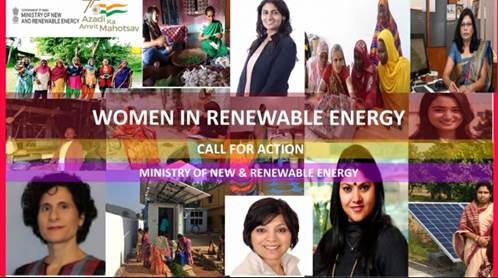
The Ministry of New & Renewable Energy (MNRE) observed the second day of its programme “New Frontiers: A Programme on Renewable Energy to celebrate Azadi ka Amrit Mahotsav. The Ministry organized an online session on “Women in Renewable Energy: Call for Action” to acknowledge the role of women entrepreneurs and leaders in the Renewable Energy Space. The session was attended by more than 200 participants including Padma Shree Awardee, Mr. Bunker Roy, officials of the Government of India, CEOs, CMDs, and representatives of NGOs, industries, banking institutions and, representatives from international organisations. 

Delivering the keynote address Secretary, MNRE recognised the role and importance of women’s participation in Renewable Energy and committed to formulation of a scheme for DRE applications, grater engagement with Ministry of Women and Child Development and addressing women’s issues in industry consultations.

Women RE entrepreneurs across the country shared their success stories, shining light on the impact of clean energy access on women. This was followed by the response to Call for Action by the stakeholders across policy makers, NGOs, Industries, international organisations and the Banking Institutions. Mr. Bunker Roy, founder Barefoot college, called for active engagement of women on RE platform. Mrs. Vaishali Nigam Sinha, founding chair for ReNew Power, and Ms. Mara Beatriz Orlando, energy specialist from WePower, highlighted how regular trainings and capacity building can change the lives of women entrepreneurs. Ms. A. Manimekhalai, Executive Director from Canara Bank called for earmarking funds for women, awareness campaign focused on women and sensitisation among financial institutions.

***

Process of Planning and Designing a New Town

 Planning is the process of thinking about and organizing the activities required to achieve a desired goal. The process of planning includes the determination of objectives and outlining the future actions that are needed to achieve these objectives. Various steps that are followed in the process of planning are:

1) Identifying the problem 

It involves the identification of the aim for the fulfillment of which the plan is being formulated. If a new plan is require or the modification of an existing plan could help in achieving these aims. 

2) Gathering information about the activities involved 

An effective plan needs complete knowledge of the activities involved and their effect on other external and internal activities. 

3) Analysis of information 

This information is then analyzed minutely and the information related with similar subjects is classified so that similar type of data can be kept together. 

4) Determining alternate plans 

There are alternate plans available for the achievement of the objectives and ingenuity and creativeness are required as some plans are also developed at this stage. 

5) Selecting the plan 

At this stage the plan which is acceptable to the operating personnel is proposed. The adaptability and the cost of the plan are also taken into consideration. 

6) Detailed sequence and timing 

Detailed like who will perform which activity under the plan and the time within which the plan should be carried out is determining in this step. 

7) Progress check of the plan 

The provisions are made for the follow up of the plan as the success of any plan can be measured by the results only. 

8) Implementation 

Implementation is the carrying out, execution, or practice of a plan, a method or any design, idea, model, specification, standard or policy for doing something. As such, implementation is the action that must follow any preliminary thinking in order for something to actually happen. 

9) Monitor and Control 

Managers must continually monitor the actual performance of their work units against the unit’s goals and plans. Manager’s also need to develop control systems to measure that performance and allow them to take corrective action when the plans are implemented improperly or when the situation changes.

Employment opportunities in Drone sector

 As per Drone Rules, 2021, any person who intends to obtain the authorisation to establish a Remote Pilot Training Organisation (RPTO) shall submit an application to the Director General of Civil Aviation in Form D5 on the Digital Sky Platform, along with the specified fees. As on 31 December 2021, nine remote pilot training organisations have been set up by entities under Government or private ownership. The State-wise list of RPTOs is attached as Annexure –I.

Any person between 18-65 years of age and with a class tenth certificate from a recognised Board can obtain a remote pilot licence after successful completion of training from authorised remote pilot training organisation. Students passing out of drone schools can look for employment opportunities in drone operations, maintenance, design, manufacturing and data analytics, etc. depending on the courses successfully completed by them.

An authorised remote pilot training organisation is free to have collaboration with foreign entities while ensuring strict compliance with the requirements specified by the Director General of Civil Aviation in respect of training syllabus, infrastructure, instructors, equipment and infrastructure etc.

Annexure- I

State-wise list of remote pilot training organisations


S No

State

Name of the remote pilot training organisation

1

Jharkhand

Alchemist Aviation Pvt. Ltd.

2

Maharashtra

Redbird Flight Training Academy Pvt. Ltd.

3

Maharashtra

The Bombay Flying Club

4

Tamil Nadu

CASR Anna University

5

Telangana

Flytech Aviation Academy

6

Telangana

Telangana State Aviation Academy

7

Uttar Pradesh

Ambitions Flying Club Pvt. Ltd.

8

Uttar Pradesh

Indira Gandhi Rashtriya Udan Akademy

9

Uttar Pradesh

Pioneer Flying Academy Pvt. Ltd.

216-feet tall ‘Statue of Equality’

 Prime Minister Shri Narendra Modi will visit Hyderabad on 5th February 2022. At around 2:45 PM, Prime Minister will visit the International Crops Research Institute for the Semi-Arid Tropics (ICRISAT) campus in Patancheru, Hyderabad and kickstart the 50th Anniversary celebrations of ICRISAT. At around 5 PM, Prime Minister will dedicate to the nation the ‘Statue of Equality’ in Hyderabad.

The 216-feet tall Statue of Equality commemorates the 11th century Bhakti Saint Sri Ramanujacharya, who promoted the idea of equality in all aspects of living including faith, caste and creed. The Statue is made of ‘panchaloha’, a combination of five metals: gold, silver, copper, brass, and zync and is among one of the tallest metallic statues in sitting position, in the world. It is mounted on a 54-ft high base building, named ‘Bhadra Vedi’, has floors devoted for a Vedic digital library and research centre, ancient Indian texts, a theatre, an educational gallery detailing many works of Sri Ramanujacharya. The statue has been conceptualised by Sri Chinna Jeeyar Swami of Sri Ramanujacharya Ashram.

During the programme, 3D Presentation Mapping on the life journey and teaching of Sri Ramanujacharya will also be showcased. Prime Minister will also visit the identical recreations of 108 Divya Desams (ornately carved temples) that surround the Statue of Equality.

Sri Ramanujacharya worked tirelessly for the upliftment of people with the spirit of every human being equal regardless of nationality, gender, race, caste or creed. The inauguration of the Statue of Equality is a part of the 12-day Sri Ramanuja Sahasrabdi Samaroham, the ongoing 1000th birth anniversary celebrations of Sri Ramanujacharya.

Earlier during the visit, Prime Minister will kickstart the 50th Anniversary celebrations of ICRISAT. Prime Minister will also inaugurate ICRISAT’s Climate Change Research Facility on Plant Protection and ICRISAT’s Rapid Generation Advancement Facility. These two facilities are dedicated to the smallholder farmers of Asia and sub-Saharan Africa. Prime Minister will also unveil a specially designed logo of ICRISAT and launch a commemorative stamp issued on the occasion.

ICRISAT is an international organisation that conducts agricultural research for development in Asia & sub-Saharan Africa. It helps farmers by providing improved crop varieties and hybrids and also helps smallholder farmers in the drylands fight climate change.

***


आज़ादी के खातिर – त्रिलोक कुमार

खून खौल जाता है
जब देश का कोई अपमान करे,

खून खौल जाता है
जब वीरो का कोई न  सम्मान करे,

बहुतो ने आज़ादी के खातिर
अपना लघु बहाया है

कितनो ने फासी को चूमा
कितनो ने गोली खाया है,

तब जाके हमने ये चैन के निंद पाया है
हम कदर करे उन वीरो का
हम सम्मान करे उन वीरो का
जिन्होंने सर्वस्य गवा के हमे ये समान दिलाया है,

तब जाके हैं कही अपना गर्व से सिर उठाया है
हमे अलख जागआना है

राष्ट्र प्रेम दिखलाना है
उन महान वीरो का बलिदान न व्यर्थ हो
दुश्मन चाहे कोई हो अपने प्रहार न पस्त हो,

भारत मा के वीर सिपाही हम करते आपका सम्मान 
आपने बढ़ाया है हम सबका मान

कुछ सपने देखे थे वीरो ने
ऐयसे राष्ट्र बनाना है

कोई न हो दुश्मन सबको अपनआ बतलाना है
कुछ भ्रस्ट लोगो ने मिलके सपने को अपमान किया
हम लोगो ने भी मिलके उनको है नकार दिया।।।

खून खौल जाता है
जब देश का कोई अपमान करे,

खून खौल जाता है
जब वीरो का कोई अपमान करे

कवि – श्री त्रिलोक कुमार


If I Ran The World

Now go to Daisy at Home to get the If Kids Ran the World themed menu. We invite you to share your dinner photos with us any time of the month on our Family Dinner Book Club Facebook page. If Kids Ruled the World Leo and Diane Dillon is a story about kids helping make our world a better place. .If it’s so inspiring that kids rule the world, read it aloud and it will impact your student community.

This book is a true celebration of childhood, play and imagination. This is the pinnacle of Dr. Seuss, celebrating the young imagination and creating a fantasy world that will delight and captivate readers of all ages. Description Leo and Diane Dillon, two-time Caldecott Medalists, show children how to create a more generous and peaceful world through play where everyone can share with each other. Two-time Caldecott Medalists Leo and Diane Dillon show how children can use play to create a more generous and peaceful world for all.

Diane Dillon lives in Brooklyn, New York. Leo and Diane Dillon are two of the most famous illustrators of our time. Leo and Diane created award-winning picture books, book covers, magazines and other works of art until Leo’s death in 2012. This is their last collaboration. Their long list of awards includes two Caldecott Medals, a NAACP Image Award, five Coretta Scott King Awards and Honors, four Boston Globe-Horn Book Awards, and induction into the Society of Illustrators Hall of Fame. They also won Coretta Scott King awards in 2003 for Rap a Tap Tap Heres Bojangles – Think of That and in 2005 for Virginia Hamilton’s People Could Fly – Picture Book.

The Dillons’ contributions to art and illustration, and their lifelong dedication to the diversity of children’s books, makes it uncomfortable to criticize If Kids Ruled the World. Criticism is further tempered by the fact that the book was the last edition the couple created together: Leo died before the book was finished.

Particularly helpful is the emphasis on sharing all the good things that come alive in the world the child has created. The story presents idealistic opportunities for global camaraderie and justice for all people – if only children ruled the world. In the colorful tree house, the children’s rainbow identifies the most important needs in our complex world, while the following branches feature boys and girls who happily help others.

If kids rule the world, even adults are better off. I like that the author points out that if children rule the world, then there will be more kindness and harmony. They say that if children rule the world, young people will make sure everyone has enough to eat and everyone can wear whatever they want without being ridiculed.

The book enlightens the reader about what would happen if children were in charge of the world. This book has so little to do with the world in which real children live, and it seems that this is a gesture, not a call to action. Leo Dillon’s latest book with Diane Dillon imagines what the world would be like if kids were in charge.

The Dillons, in their latest collaboration (Leo died in 2012), are turning the creation of this ideal world into a game; no holiness, no sense of tiresome duty. Perhaps Dillon’s intent was to show diversity, but a scene like this suggests that the past is irrelevant to the present.

They do not think about the poor and do not think about the proper development of the nation and the world as a whole, which shows how self-centered and selfish the rulers of the world are. In the current world scenario, every person who wants to be the president or prime minister of a country has only one goal – to rule the country or the world for the sake of money and power. The world cannot depend only on the rich; the poor also play a very important role in the whole environment.

I would just like to be a guiding light for the world and not impose thoughts on people that are not suitable for me as a ruler or even the people of the world as citizens. Seriously, if I really ruled this world, I would make sure that every person is happy in everything they do, and also respect each other or even the life of the other. That when you leave, you will be a better person than when you started.

It makes us doubt everything and in some cases robs us of the will to live. Our idea of ​​what looks good in the context of work no longer matches.

This means that in a world where we work more independently of others, there will be less feedback. Many agencies will move to campus or shared workspaces instead of a store front. Sarah and I take turns showing the children table decoration crafts.

On the 15th of each month, we share the title of the featured book. Satisfy your voracious literary appetite with a lifetime supply of free books in all formats and genres, as well as books, videos, and audiobooks that don’t wait. Pair it with ever-expanding shelf space so you never have room for your collection.

All people, regardless of gender or socioeconomic status, have the opportunity to learn to read and write. At birth, new mothers will be encouraged to attend parenting courses to learn how to care for their baby, including feeding and accompanying the baby through the various stages of his or her young life. If the child is out of wedlock, the mother will receive additional advice on how to cope emotionally and financially if she does not have family support.

Organize a conversation for the company’s senior management (both men and women) so that you can also share it with your boss, team, or HR. Women leaders can create ROI in their organizations, industries and the world right now. And putting the world in the hands of women would be too simplistic.

If you have a solid idea of ​​how to make a difference and are brave enough to lead the way, then I believe the world needs you right now. Because I’m willing to bet that your ideas, talents and drive can make the world a better place, and I love being a woman who supports you.

But I can’t do all this work alone, so I’m going to select a few key senators, representatives, and governors to serve as my advisory committee. But I suspect that after experiencing all the upgrades and upgrades to our core services, I will garner the most votes.

Finally, to say that I would do all this if I had to manage this world is easier than to actually implement them. I also understand that you may be the type of woman who wants to better understand what they’re getting into before jumping into a conversation. do not worry.

Tripura is becoming a land of opportunities

 The Prime Minister, Shri Narendra Modi paid tribute to the people who have contributed to the establishment and development of Tripura. He acknowledged the dignity and contribution of the state from the period of Manikya Dynasty. He praised the unity and collective efforts of the people of the state. He was speaking on the occasion of the 50th Statehood day of Tripura today.

The Prime Minister underlined the three years of meaningful development and said that Tripura is becoming a land of opportunities under the aegis of relentless efforts of the double engine government.  Highlighting the state’s excellent performance on many of the development parameters, the Prime Minister said that through the construction of the connectivity infrastructure, the state is fast becoming the hub of the trade corridor. Today, along with roads, railways, air and inlay waterways are also connecting Tripura with the rest of the world. The double engine government fulfilled the long pending demand of Tripura and got access to the Chittagong sea port in Bangladesh. The state received the first cargo from Bangladesh through Akhaura Integrated Check Post in 2020. The Prime Minister also mentioned the recent expansion of Maharaja Bir Bikram Airport.

The Prime Minister talked about good work in the state regarding providing pucca houses to the poor and use of new technology in housing construction. These Light House Projects (LHP) are going on in six states and Tripura is one of them. He said that the work of the last three years is just a beginning and Tripura’s real potential is yet to be realized. He said that the measures in the fields ranging from transparency in the administration to infrastructure development will prepare the state for decades to come. Campaigns like saturation of benefits and facilities in all the villages will make the lives of the people of Tripura easier and better, he said.

 The Prime Minister said as India will attain 100 years of Azadi, Tripura will also complete 75 years of statehood. “This is a great period for new resolutions and new opportunities”, the Prime Minister added.

***********

Types Of Diet To Follow.

These are foods that you should definitely eat every day, if possible, at every meal, regardless of the diet you follow. Whatever diet you follow, vegetables are the most important food for your health.

Focus on choosing less processed foods like fruits, vegetables, and whole grains as a major part of your diet. If you’re on a plant-based diet, most of your meals will consist of plant-based foods, such as vegetables and beans.

Each type of plant-based diet depends on how much animal products such as meat, dairy, and eggs are included in the diet. In terms of heart health, people on a ketogenic diet are encouraged to choose good quality foods and eat plenty of plant-based foods such as fruits and vegetables. Safe and healthy diets do not require excessive amounts of vitamins or supplements. The diet should include foods that you like, that you would like to eat throughout your life, not those that you can tolerate throughout the entire plan.

If you don’t like the foods on the plan, if the plan is too restrictive, or if it gets boring, you may not stick with it, so long-term weight loss is unlikely. But a healthy diet and snacks, along with exercise, can help you lose weight and maintain normal growth. Regular exercise can help teens feel healthier and feel better about themselves. However, combining a healthier diet with more activity is the best way to lose weight, maintain your weight over the long term, and improve your health.

In some situations, faster weight loss can be safe if done right, such as following a low-calorie, doctor-supervised diet or a short, fast-start phase of a healthy eating plan.

The bottom line is to understand your body type and choose a sustainable healthy weight loss plan, given that different diets work for different people. Here are the 8 best diet plans to help you lose weight and improve your overall health. The good news is that anyone can follow The Healthy Eating Plate’s recommendations and choose healthy, flavorful foods to create the diet that’s best for you.

Vegetarian Share on Pinterest Many people choose vegetarian food for ethical and health reasons. Types of vegetarians include fruit vegetarians, ovo vegetarians, egg vegetarians, semi-vegetarians, peach vegetarians, and raw vegetarians, leading to some differences in their meal plans (18).

Terms applied to such eating habits include “junk food diet” and “Western diet”. Some people eat unhealthy diets out of habit rather than consciously choosing unhealthy foods. A diet is best described as a fixed eating and drinking plan in which the type and amount of food is planned to achieve weight loss or maintain a specific lifestyle. Dieting is the practice of achieving or maintaining a certain weight through diet.

The individual diet is the sum of foods and drinks that you usually consume. The ketogenic diet, or keto diet, is a strict form of low-carbohydrate diet in which carbohydrate-containing foods are hardly consumed in order to put the body into a state of ketosis. The keto diet was designed to keep the body in a near-permanent state of ketosis, a metabolic state in which the body produces ketones from fat to use as energy instead of sugar from carbohydrates (the body’s primary and preferred source of energy). This is a popular, fast, low-carb diet for weight loss, whose proponents believe that you can lose a significant amount of kilograms by consuming proteins and fats in any amount, but without carbohydrates.

According to a May 2017 article in the Journal of Geriatric Cardiology, a plant-based diet is associated with a lower risk of type 2 diabetes and heart disease. A study published in August 2019 in the Journal of the American Heart Association also concluded that people who followed a strictly plant-based diet had a 25% lower risk of dying from any cause than those who did not. This study raises questions about long-term effects and mechanisms, but the researchers concluded that a low-carb, high-protein, high-fat diet could be considered a real recommendation for weight loss.

The results of these three studies suggest that a macronutrient-based dietary approach may have some benefits, but studies also show that while a particular diet may lead to weight loss for one person, it may not be effective for another person. individual differences in genes and lifestyle.

These diets have proven themselves by limiting and eliminating entire food groups from the diet. The point of these diets is to match people with their overall dietary needs based on their blood type. For example, people with blood type O are encouraged to eat plenty of protein-rich foods.

When following a gout diet, people should eat all vegetables and fruits, eggs, whole grains, low-fat dairy products, and most beverages. If you’re following the Atkins 40 diet, you should eat all of the above foods in addition to the foods below.

Foods that should be included in this diet on a regular basis include fruits, protein, starchy vegetables, whole grains, plant-based milk replacers, non-starchy vegetables, condiments, herbs, spices and seasonings, nuts seeds and other healthy fats, beverages Wait. Healthy fats, dairy products, vegetables, protein, fruits, herbs and spices, and beverages are some of the staples after a very low-fat diet.

Just as we have foods that most diet and nutrition experts recommend eating on a daily basis, we have foods that most nutrition experts advise against eating. Following the Sirtfood diet is not as easy as eating only these foods. As the name suggests, this diet encourages eating raw, unprocessed foods (at least three-quarters of the food you eat should be raw). The Raw Food Diet The raw food diet, or raw food diet, involves the consumption of foods and drinks that have not been processed, are 100% plant-based, and are ideally organic.

First and foremost, you need to base your ketogenic diet on healthy foods like healthy oils, avocados, eggs, oily fish, meats, cheese, seasonings, low carb vegetables, nuts and seeds, butter, and cream. An extreme diet can cause problems if you don’t get the right types and amounts of nutrients. Eating large amounts of certain foods such as grapefruit or meat will drastically cut calories; o Eliminating entire food groups, such as carbohydrates, can cause nutritional problems.

But there are some common anti-inflammatory foods to include in your diet if you’re in pain. Rather than trying to follow a long-term, low-FODMAP diet, Dr. Farhadi suggests using a food list to identify personal triggers—by far the most helpful thing anyone living with IBS can do, since some foods are triggers for some patients, but not others (and even triggers may not always be disabled).

10 Advantages Of Digital Marketing

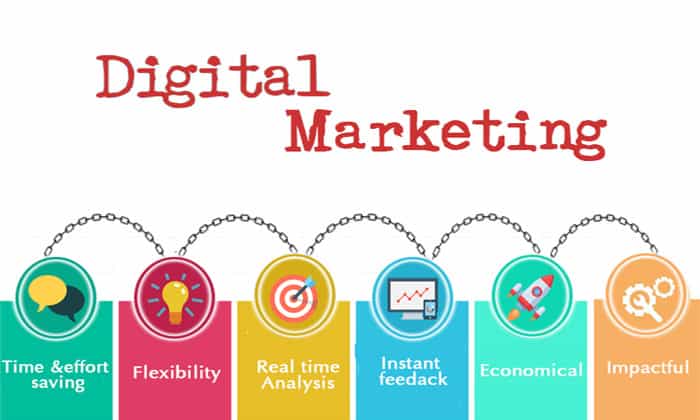
According to HubSpot’s report, digital marketing can help companies achieve a better cost of leads (CPL) than traditional marketing or even telemarketing. Business owners can easily achieve better results by incorporating technology-driven strategies into their marketing.

Companies use various digital marketing activities such as search engine optimization (SEO), social media marketing (SMM), email marketing, search engine marketing (SEM), content creation, and more to promote their brand to potential consumers or build loyalty. clients. More and more small businesses are implementing digital marketing strategies to reach their target consumers online effectively. Many companies, new or established, use digital marketing strategies to reach their target audience online.

As such, online marketing is a great way for a small business or startup to launch their own marketing plans. Digital online marketing saves a lot of money for businesses and companies to reach their target audience compared to traditional marketing.

Targeted and well-planned digital advertising and marketing campaigns can reach the right users in less time and at a lower cost. The greatest benefit of digital marketing is that you can reach your target audience in a cost-effective and measurable way. You can connect with people who match your ideal customers with targeted advertising, stay connected with current customers, and get noticed by people who are actively searching for your products or services online. With traditional marketing, you never know who your investments will reach because results are difficult to measure.

This is difficult for your budget because you can’t change it while the campaign is active for better results. Whereas in the case of traditional marketing, you would have to wait weeks or even months to assess the credibility of the campaign.

Unlike traditional methods, you can see in real-time what’s working and what’s not working for your online business. You can engage in real-time to gain a good understanding of how customers perceive your brand. By optimizing your content in the digital space, you can reach more buyers of your products online. Using relevant keywords can help you describe what you have to offer.

In fact, over time, your website’s traffic will increase and so will your conversion rate. This is a valuable marketing strategy, especially for businesses located in restricted areas like restaurants. Small brands can drive traffic locally and nationally to reach targeted consumers.

According to the report, by 2020, 26 billion gadgets, including smartphones, tablets, home appliances, shoes, glasses and other accessories, are expected to be integrated into a global online ecosystem, which speaks to the importance of digital marketing. Today, over 7.7 billion people around the world use the Internet to find, buy and promote products/services.

Digital platforms are increasingly associated with marketing schemes and everyday life. In today’s digital age, building an online presence and investing in internet marketing versus traditional marketing is essential for a business to survive and thrive. Today, hundreds of thousands of companies are engaged in digital marketing, because it is easier and more convenient for them to reach a large number of people in this way.

Traditionally, businesses reach their target audience through channels such as television, radio, magazines, events, and direct mail. Now that people are spending more time online, companies are trying to reach potential buyers through digital channels. In the age of digitalization, your best strategy would be to meet your customers online, where they already spend a lot of time.

Online marketing is great for businesses as it offers consumers a better and more convenient shopping experience. This high adaptability of online marketing is an important advantage that businesses can take advantage of to offer their consumers the best shopping experience. With online marketing, companies can deliver content to their customers through personalized and low-cost communication.

With all the benefits internet marketing can bring to your business, running a professional internet marketing campaign can further expand your business by bringing in more customers for your product or brand. Internet marketing is a great opportunity to grow your business and get more valuable traffic and sales. Even if you don’t have the budget for SEO or pay-per-click (PPC) advertising, businesses can still use digital marketing to build and connect with their audience.

Social media is one of the most convenient digital marketing methods used to distribute content and increase visibility for your business. Every social media profile you add to your marketing mix is ​​a gateway to your website, and every content you post is another opportunity to acquire a new customer.

Without the use of social media as part of your marketing strategy, it will be much harder for you to connect with anyone outside of your circle of loyal customers. You need to reach people who are interested in your business and want to hear from you.

Of all the benefits, the most significant benefit of online marketing is the ability to target people in a targeted manner. The main advantage of digital marketing is the ability to reach target audiences in a cost-effective and measurable way. Reduce costs: A properly planned and targeted digital marketing campaign can reach the right customers at a fraction of the cost of traditional marketing methods.

Trackable and measurable results. Measuring your online marketing with web analytics and other online tools makes it easy to determine the effectiveness of your campaign. With Google Analytics, you can track statistics and information on your marketing website.

By showing a breakdown of all of this traffic information, these analytics can help you prioritize your marketing channels. Real-time analytics give you a better understanding of the effectiveness of your marketing strategies. With access to this information, you can also optimize your marketing budget by investing in effective marketing campaigns. Digital Online Advertising and Marketing introduces you to these channels and strategies so your potential buyers can see you, learn more about you, and find out what’s important to deliver.

Digital online advertising and marketing help organizations and individuals easily reach audiences around the world. If your business is not limited to a specific location, you can use digital marketing to reach your target audience around the world. Unlike mass marketing, which effectively engages local audiences through radio, newspapers, and print media, Internet marketing allows businesses to build more personal relationships with consumers around the world. You can connect with potential customers online through various digital marketing channels, such as social media platforms (Facebook, Twitter, Google+, LinkedIn, etc.), SEO, email marketing, videos, etc.

As you can see, digital marketing has many benefits that can change how your business reaches and attracts your target market. With our digital marketing training courses, you can learn how to use digital marketing to create a steady stream of new customers and sales every day, regardless of your product, price range, or market. Our team will help your business reap the many benefits of digital marketing by providing various effective services such as Search Engine Optimization (SEO), PPC Management, and Social Media Management.

Environment, Forest and Climate Change

 The Vision of this Ministry is to provide the citizens of India a clean, green and healthy environment with peoples’ participation and to support higher and inclusive economic growth through sustainable utilization of available natural resources.  This Ministry has achieved different milestones to plan, promote, co-ordinate and oversee the implementation of India’s environmental and forestry policies and programmes related to conservation of the country’s natural resources including its lakes and rivers, its biodiversity, forests and wildlife, ensuring the welfare of animals, and the prevention and abatement of pollution.  The major achievements during year 2021 are as follows: –

Azadi ka Amrit Mahotsav:

Green Good Deed of the Week campaign: In order to commemorate the 75thyear of independence, the country is celebrating a 75 week-long “Azadi ka Amrut Mahotsav”. An outreach programme for promoting sustainable lifestyle –“Green Good Deed of the Week” campaign is being organized as a part of this Mahotsav through Eco-clubs since 12th March 2021. State Nodal Agencies and Eco-clubs organized various activities to promote sustainable lifestyle like cleanliness/ plantation drives, painting/ slogan/ essay competitions, awareness on single-use plastics, awareness on environment-friendly ways of celebrating festivals, etc.

Iconic week celebration: The Iconic Week of the Ministry of Environment, Forest and Climate Change (MoEF&CC) as a part of the Azadi ka Amrut Mahotsav was celebrated from 4th to 10thOctober, 2021. The major themes identified for activities of the week were lake/ wetland conservation, curbing of use of single-use plastics, wildlife conservation, forest conservation and coastal conservation. Activities like Green Pledge, webinars, promotion of Green Good Deeds and screening of videos on the identified themes were organized in schools/ colleges across the country in co-ordination with Department of School Education & Literacy and SNAs.

Swachhta Campaign from October 2 –November 1, 2021

  • The Swachhta Campaign was observed for one month starting from 2nd October – 1st November, 2021. During the campaign, a big number of files have been reviewed by the various divisions in the Ministry of Environment, Forest and Climate Change which comes to a huge total of 45,154 files. Out of which around 41,758 files have been weeded out which has resulted in generation of paper waste of approximately 9 tonnes. A heavy duty shredder machine was specially brought to do the huge task. A revenue generation of Rs. 18 thousand has been generated out of the process of disposal of the waste generated by weeding of the files. A sufficient clear and open area in the Indira Prayavaran Bhawan appx 3000 sq.ft. has been reclaimed.
  • The Ministry has organised an auction of the e-Waste to dispose of all obsolete items including computers, printers, photocopiers and other electronic equipment. The e-waste bid has already been finalised at a price of Rs. 5.21 lakh to M/s. Clean Waste Management, Burari, Delhi. The shifting of e-waste material has been completed.
  • The Ministry has also organised an auction to dispose of all obsolete furniture items including tables, chairs, almirahs, side racks, sofa sets and other waste furniture items. The furniture waste bid has already been finalised at a price of Rs. 6.80 lakh to M/s Patel scrap.

Sustainable Development Goals (SDGs)

The UN General Assembly in its 70th Session considered and adopted the 17 Sustainable Development Goals (SDGs) and associated 169 targets for the next 15 years. The 17 SDGs came into force with effect from 1st January, 2016. Though not legally binding, the SDGs have become de facto international obligations and have potential to reorient domestic spending priorities of the countries during the decade ending 2030. The SDG 13, 15 and 12 have been mapped majorly to Ministry of Environment, Forest and Climate Change. Significant strides have been made in achieving SDG 13 (Urgent action to protect against Climate Change and its impact) as 24% reduction in emission intensity of GDP against 2005 levels has been achieved in 2016 itself. India has emphasized that Climate Finance from developed countries as promised in the Paris agreement is integral to achieve this goal. Similarly, country’s pledge on land degradation neutrality and intense afforestation are helping the country move towards SDG 15(Sustainable use of terrestrial Ecosystems and prevention of Biodiversity Loss). The commitment of the country in implementing the Extended Producer responsibility in plastics and ratification of Basel Convention to monitor hazardous substances is a remarkable step in moving towards SDG12 for ensuring sustainable production and consumption patterns. The 2030 Agenda also underscored that quality, reliable and disaggregated data will be needed for measurement of progress and to ensure that “No One is Left Behind”. MoEF&CC is strengthening its data systems for realistic monitoring of progress on the sustainable development goals.

Climate Change

As a responsible member of the International community of nations, the Government will continue to engage in a meaningful way with deliberations in the International fora/ UN climate summit duly keeping in mind the national developmental goals and priorities through the various international meets and at present India is a president of UNCCD.

  • Ministry of Environment Forest and Climate Change took part in the 26th Session of the Conference of Parties (COP-26) to the United Nations Framework Convention on Climate Change (UNFCCC) was held in Glasgow, United Kingdom for green net zero program The National Statement in the World Leaders Summit was delivered by the Hon’ble Prime Minister at COP-26, which the following mainly discussed and highlighted during the summit
    • India’s non-fossil energy capacity to reach 500 GW by 2030
    • India will meet 50 per cent of its energy requirements with renewable energy by 2030.
    • India will reduce its total projected carbon emissions by one billion tonnes from now to 2030.
    • India will reduce the carbon intensity of its economy by 45 per cent by 2030, over 2005 levels.
    • By 2070, India will achieve the target of net zero emissions.
  • The transfer of climate finance and low-cost climate technologies have become more important for implementation of climate actions by the developing countries. The ambitions on climate finance by developed countries cannot remain the same as they were at the time of Paris Agreement in 2015 and the Indian Delegation led by Hon’ble Minister for Environment, Forest & Climate Change attending the COP Summit through multilateral negotiations with major countries for adoption of greener norms in the global scenario.
  • The Glasgow Climate Conference adopted decisions, which inter-alia, include adoption of an overarching decision titled “Glasgow Climate Pact” that stresses the urgency of enhancing ambition and action in relation to mitigation, adaptation and finance in this critical decade to address the gaps in the implementation of the goals of the Paris Agreement. The Glasgow Climate Pact also noted with deep regret that the goal of developed country Parties to mobilize jointly USD 100 billion per year by 2020 has not yet been met. The COP 26 outcome also include completion of work related to rules, procedures, and guidelines for the implementation of the Paris Agreement including that for cooperative approaches, mechanisms and non-market approaches referred to in Article 6, enhanced transparency framework, and common timeframes for Nationally Determined Contributions (NDCs) and it was discussed with Ministers and Representatives from United Kingdom, Scotland, South Korea, Australia, BASIC countries, Nepal, Bhutan, Maldives, France, Canada, Brazil, USA, UAE, Germany, Norway, Singapore, Jamaica, Sweden, and Japan. Hon’ble Minister also held meetings with the Ministers of Like Minded Developing Countries and also with representatives from United Nations Environment Programme, United Nations Convention to Combat Desertification, and Green Climate Fund.
  • For strengthening impact, the Indian Delegation also participated in side events on the side-lines of COP 26 which include South Asia Co-operative Environment Programme, International Solar Alliance, CDRI, Leadership Group for Industry Transition and Namami Gange.

PARIVESH

In order to streamline the procedure for early grant of Clearances under this Ministry PARIVESH portal has been simplified for grant of Environmental Clearances which is now been reduced to 70 working days..

In pursuant to the spirit of ‘Digital India’ and capturing the essence of Minimum Government and Maximum Governance, a Single-Window Integrated Environmental Management System named PARIVESH (Pro-Active and Responsive facilitation by Interactive, Virtuous and Environmental Single Window Hub) has been developed by the Ministry of Environment, Forest and Climate Change for complete online, expeditious and transparent system for environment, forest, wildlife and CRZ clearances in the country. The facility is operational for processing of applications for Environmental Clearances (ECs), Forest Clearances(FCs), Coastal Regulatory Zone Clearances (CRZ). Over the years, the existing system of ‘PARIVESH’ has undergone numerous modifications and customization in alignment with statutory provisions and requirements.

Ministry in recent times has automated various processes through PARIVESH such as development of online module in PARIVESH for dispensation for requirement of EC for expansion / modernization with no increase in pollution load, aligning the EIA Notification with MMDR Amendment Act 2021, Online generation of EC with unique identification number etc.

Due to the above initiatives along with other Policy reforms, the average time taken for grant of EC in all the sectors has reduced significantly from more than 150 days in 2019 to less than 90 days. In some of the sectors, the ECs are being granted even within 60 days also accordingly, ECs for 7787 projects was granted under EIA Notification in 2021.

Ministry has decided to upgrade the existing PARIVESH to provide a “single window” solution for administration of environmental regulations. Centralized Processing Centre (CPC) has been proposed to be set up in the Ministry of Environment, Forest & Climate Change. Upgraded PARIVESH will not only strengthen the clearance processes but also encourages ease of doing business in the country. Know Your Approval module with inbuilt decision rules in the envisaged system will guide the Users about the applicability of clearances to the proposed project activity. In addition, it will minimize repetitive efforts of the Users and the same time will ensure single version of the truth across all applicable clearances. Further, in the envisaged system redundancies in the process flow will be minimized to maximum extant.

DPR of the project proposal has been approved. Total time line for overall development of modules is 64 weeks, however modules for critical major clearance processes would be made live in 42 weeks from the date of on boarding of NIC’s system integrator.

Nagar Van Yojana:

Ministery is implementing Nagar Van Yojana and revised its guidelines in October 2021 with an aim at developing 400 Nagar Vans and 200 Nagar Vatikas with the objective to significantly enhance the tree outside forests and green cover in cities leading to better environment, enhancement of biodiversity and ecological benefits to the urban and peri-urban areas apart from improving quality of life of city dwellers. The scheme will be funded from the National Fund under CAMPA at a total cost of Rs. 895.00 crore during the period 2020-21 to 2024-25.

School Nursery Yojana: Ministry is implementing School Nursery Yojana with an aim to associate students in the process of raising plantations as part of their learning and by providing an environment for the students to understand and appreciate the significance of plants in maintaining and sustaining the natural ecosystem. The scheme ‘School Nursery Yojana’ is proposed to be implemented for the period of five years..

Compensatory Afforestation Fund Management and Planning Authority (CAMPA)

The “National Compensatory Afforestation Fund Management and Planning Authority” (National Authority) came into existence in place of the Ad-hoc CAMPA with effect from 30.09.2018; the day the Compensatory Afforestation Fund (CAF) Act, 2016 and CAF Rules, 2018 came into force. Hon’ble Minister, Environment, Forest and Climate Change, Government of India is the chairperson of the Governing Body of the National Authority. The National Authority manages and utilises the “National Compensatory Afforestation Fund” (National Fund), which has been created under the public account of India. The other fund at the State/UT level is known as “State Compensatory Afforestation Fund” under the public accounts of respective States/UTs. CAF collected against approvals under the Forest (Conservation) Act, 1980 is distributed in the ratio of 90:10 between the concerned State Fund and National Fund and are made available to the National Authority and respective State Authorities through budgetary process. Until 07.10.2021 funds amounting to Rs 6,63,63.12 crore was transferred from state specific bank accounts maintained at New Delhi to the public Account of India and Rs. 48,606.39 crore was disbursed from the National Fund to 32 States, who have created their public accounts and completed reconciliation.  Until now, twenty-eight schemes amounting to Rs 1329.78 crore has been approved from the National Fund. Similarly, Annual Plans of Operation (APOs) of 31 States/UTs worth Rs 9,926.48 crore have been approved from the respective State Fund during current financial year. The activities included in the APOs are mostly related to forestry and wildlife management.  At national level, achievement of compensatory afforestation (CA) in 9,06,583 Ha against the target of 10,63,031 ha is major achievements of CAMPA. The average survival percentage of CA has been reported to be 73 percent.

Wildlife

The project Dolphin and the project lion have been initiated and the associated environmental impact of this are also strengthen at the major sanctuary and forest areas for cleaner Environmental Protection of endangered species.

  • The Protected Area coverage in the country has been steadily increasing. The coverage of Protected Areas which was 4.90% of country’s geographical area in 2014 has now increased to 5.03%. This includes an increase in Protected Areas in the country from 740 with area of 1,61,081.62 sq.kms. in 2014 to present 981 with an area of 1,71,921 sq.kms.
  • Population of several species like Tiger, Asiatic Lion, Greater one Horned Rhinoceros, Asian elephants, etc. increased. Wildlife health is being addressed to aggressively monitor zoonotic diseases.
  • India has taken a leadership role in conservation of migratory birds along the Central Asian Flyway and had organized a two day workshop  in October 2021, with  Central Asian Flyway (CAF) Range countries on conservation of migratory birds along the Central Asian Flyway.
  • The Ministry has released ‘Guidelines for sustainable ecotourism in forest and wildlife areas-2021 in October 2021. These guidelines emphasise on participation of local community in ecotourism activities.

Biodiversity Conservation

India enacted the Biological Diversity (BD) Act in 2002, and notified the Rules in 2004, through an extensive consultative process initiated in 1994. India was one of the first few countries to have enacted such a comprehensive legislation on biodiversity.

The Act is implemented through a three-tier institutional mechanism, at national, state and local levels: The National Biodiversity Authority (NBA) at the national level set up by the Government of India, State Biodiversity Boards set up by the State Governments at the State level, and Biodiversity Management Committees (BMCs) constituted by the elected bodies at the local level.

The Convention on Biological Diversity (CBD) will hold its second part of the 15th Conference of the Parties (COP 15) in Kunming, China in 2022 in which delegates will come together to adopt a “Post-2020 Global Biodiversity Framework”. The vision for proposed framework is that “By 2050, biodiversity is valued, conserved, restored and wisely used, maintaining ecosystem services, sustaining a healthy planet and delivering benefits essential for all people. 2021 is viewed as a decisive year on biodiversity action. India joined High Ambition Coalition for Nature and People which calls for protecting at least 30 percent of world’s land and ocean by 2030 where India has already reported about 27% of area as conserved under Aichi Target 11 to CBD.

The Biological Diversity (Amendment) Bill, 2021 is being introduced to simplify, streamline and reduce compliance burden in order to encourage conducive environment for collaborative research and investments, simplify patent application process, widen the scope of levying access and benefit sharing with local communities and for further conservation of biological resources, without compromising the objectives of United Nation Convention on Biological Diversity and its Nagoya Protocol and also national interests.’

National Biodiversity Authority

National Biodiversity Authority, a statutory body of the Ministry of Environment Forest and Climate Change established to implement the Biological Diversity Act, 2002 has ensured that 28 State Biodiversity Boards, 8 Union Territory Biodiversity Councils and 2,76,156 Biodiversity Management Committees have been constituted in all local bodies to implement the provisions of the Act. NBA has accorded approvals for over 3000 applications to access biological resources and traditional knowledge for undertaking research, commercial utilization and patents. The BD Act envisages its implementation through consultation with local communities living in forest and rural areas. India is a leading country in issuing Internationally Recognized Certificate of Compliance (IRCC) which recognizes stakeholders for legally accessing biological resources. Till date, out of the 3297 IRCCs issued globally, 2339 IRCCs have been issued by India. Besides, 22 Biodiversity Heritage Sites have been notified by 12 State Governments and 159 plants and 175 animals have been notified as threatened species in 18 states and 2 Union Territories. Seventeen institutions of national importance have been recognized as national Repositories for preserving voucher specimens of biodiversity

Wetland

  • The number of Ramsar sites (Wetlands of International Importance) in India have increased to 47 covering an area of 10,90,230 hectares which include 21 new sites designated during 2019-2021. India has the largest number of Ramsar sites in South Asia.  A dedicated web portal for wetlands has been developed and was launched on 2nd October, 2021 (Gandhi Jayanti). The portal indianwetlands.in is a publicly available information and knowledge platform to facilitate knowledge sharing, information dissemination, host capacity building material, and provide a single-point access data repository.
  • Health cards prepared for 500 wetlands under the four pronged approach for conservation of wetlands.

Vienna Convention, Montreal Protocol to Protection of Ozone

The Ozone Cell of the Ministry of Environment, Forest and Climate Change is the national ozone unit for implementation of the Montreal Protocol in India and phase out of substances controlled under the Montreal Protocol.

After successfully phasing out chlorofluorocarbons, carbon tetrachloride, halons, methyl bromide and methyl chloroform for controlled uses, India is now phasing out hydrochlorofluorocarbons as per the accelerated phase out schedule of the Montreal Protocol

The Government of India ratified the Kigali Amendment to the Montreal Protocol to phase down Hydrofluorocarbons on 27 September 2021 after approval by the Union Cabinet. Hydrofluorocarbons are used in air conditioners, refrigerators, aerosols, foams and other products, which even though do not deplete the stratospheric ozone layer, they have high global warming potential ranging from 12 to 14,000. As per the Kigali Amendment, to the Montreal Protocol, India will complete its phase down of Hydrofluorocarbons in 4 steps from 2032 onwards with cumulative reduction of 85% of production and consumption of HFCs by 2047. In line with the Cabinet decision, National Strategy in consultation with all the stakeholders will be developed by 2023 and funding for preparing the strategy has been secured from the Multilateral Fund

The Ministry of Environment, Forest and Climate Change has developed and launched the India Cooling Action Plan (ICAP) during March 2019, to provide an integrated vision towards cooling across sectors encompassing inter alia reducing cooling demand, refrigerant transition, enhancing energy efficiency and better technology options with a 20-year time horizon. Space cooling in buildings being the most important and can significantly contribute to achieving the goals in the ICAP, has been prioritized for implementation of the recommendations given in the ICAP. Action points for implementation of the recommendations for Space Cooling in Buildings was finalized and launched on the World Ozone Day held on 16th September 2021 and widely disseminated

Following studies were completed as part of non-investment component of HCFC phase out Management Plan Stage-II (HPMP Stage-II)

a) Application of non-ODS and low GWP alternatives in Cold Chain Sector in India

b) Public Procurement Policies for Refrigeration and Air-Conditioning Equipment Using Non-ODS based refrigerants

c) Good servicing practices and Energy efficiency in RAC sector

The above studies were published and launched on 16 September 2021 on the World Ozone Day and were widely disseminated

Preparation of Stage-III of HPMP has been initiated, to the implemented from 2023-2030, after securing funding from the Multilateral Fund for preparation of project proposal.

National Clean Air Program

Ministry of Environment, Forest and Climate Change (MoEF&CC) is implementing National Clean Air Programme (NCAP) for reducing levels of air pollution in non-attainment cities (NACs) of the country since January 2019. NCAP is implemented in targeted 132 cities.

A Commission on Air Quality Management in NCR and Adjoining Areas (CAQM) has been constituted by enactment of an Act by Parliament for better coordination, research, identification and resolution of problems surrounding the air quality index and for matters connected therewith or incidental thereto.

Avoiding Use of Single Use Plastics and Efficient and Effective Management of Plastic Waste.

  • To enhance the efficacy implementation of PWMR, the Ministry has notified the Plastic Waste Management Amendment Rules, 2021 on 12th August 2021 which also prohibits identified single use plastic items, which have low utility and high littering potential, by 2022.
  • As per the notification, the manufacture, import, stocking, distribution, sale and use of 12 identified single-use plastic items including polystyrene and expanded polystyrene, commodities shall be prohibited with effect from the 1st of July, 2022.
  • The thickness of plastic carry bags has been increased from fifty microns to seventy-five microns with effect from 30th September, 2021, and to one hundred and twenty microns with effect from the 31st December, 2022.
  • The Ministry has organized “Awareness Campaign on Single Use Plastic – 2021”.
  • The States/UTs have been requested to constitute a Special Task Force under Chairpersonship of Chief Secretary/Administrator for elimination of single use plastics and effective implementation of Plastic Waste Management Rules, 2016. 31 Task Forces have been formed.
  • The Ministry of Environment, Forest and Climate Change has notified the draft Regulations on the Extended Producer Responsibility for plastic packaging under Plastic Waste Management Rules, 2016, as amended from time to time on 6th October 2021 for public consultation.

Combating the Land Degradation, Desertification and Drought:

  • India committed to achieve Land Degradation Neutrality and restoration of 26 million hectares of degraded land by 2030, which includes 21 million hectares of Bonn Challenge and additional commitment of 5 million hectares as voluntary commitment. India presently holds the Presidency of UNCCD COP for 2 years till April 2022.
  • Hon’ble Prime Minister, Shri Narendra Modi graced the High level Dialogue on desertification, land degradation and drought of United Nations General Assembly, held on 14th June 2021 highlighting the initiatives taken by India on combating Land Degradation.

Integrated Coastal Zone Management

Blue Economy is one of the thrust area of the Government for sustainable development of coastal resources. The development will in due consideration of Conservation & protection of coastal and marine resources, Pollution abatement measures, Management of coastal and Marine ecosystem, Livelihood enhancement with security of coastal community, Capacity building and will also comprehend Sustainable development goals.

10 beaches in 7 States and One Union Territory, have been developed at par with international Standards and has been conferred with prestigious Blue Flag certification for its environmentally sound management and ecological sustainable infrastructures with adequate safety measures. This has resulted in better waste management, maintaining bathing water quality, self-sustaining solar energy-based infrastructure, containing marine littering, enhancing local level livelihood options and increased tourist based economy.

****

Making India self-reliant in all areas

 The Vice President, Shri M Venkaiah Naidu today called for making India fully self-reliant in all areas, including strategic domains.

Addressing scientists and staff of the Naval Physical and Oceanographic Laboratory at Kochi,  the Vice President, stressed the need for increasing indigenous content in the defence sector and cutting down on imports.

“To achieve that, we need to not only give greater thrust to R & D activities, but also allow private collaboration, wherever it is possible and feasible, with stringent quality controls”, Shri Naidu observed.

On this occasion, the Vice President virtually laid the foundation stone of the “Towed Array Integration Facility”, essential for the development of towed array sonar systems, which is critical to underwater defence. The towed array sonar system is expected to enhance the Navy’s capabilities to detect quieter enemy submarines underwater.

Asserting that India is strongly marching ahead  on its way to becoming a global superpower in the coming decades, he lauded the scientists In defence, space and other areas for doing excellent work in strengthening India’s security.

Referring to the fact that India is still one of the largest importers of defence equipment, the Vice President said, In this context, the contribution of a small lab like NPOL in empowering the nation in its defence needs is truly commendable.

Keeping in view the geo-political scenario in our neighbourhood, the Vice President said NPOL’s role towards national security is paramount as all warships or conventional submarines in the fleet of the Indian Navy are installed with NPOL-developed sonars. “Besides bringing in the socio-economic gains by stopping imports in this niche domain, NPOL has been able to master a very complex and critical technology that is giving a strategic edge to the Indian Navy in anti-submarine warfare capabilities”, he added.

Lauding the laboratory for establishing itself as a leading Research & Development centre in the area of underwater surveillance systems, he noted that it is currently working on ambitious mission mode projects and technology demonstration projects, besides undertaking a major Flagship Programme, the INTEGRATED MARITIME SURVEILLANCE (INMARS) Programme for Indian Navy’s future requirement for the next 15 years.

Appreciating NPOL for building strong  network with industry and contributing towards improving financial performance of PSUs, the Vice President noted that

NPOL has also nurtured more than 100 local industries, including MSMEs and Start-ups, for developing niche technologies.

On the occasion, the Vice President also inaugurated Dr. APJ Abdul Kalam memorial and an installation on the occasion of Azadi ka Amrit Mahotsav near the laboratory. Describing the memorial as “truly befitting”, he said that it will inspire countless people from all walks of life every day.


Governor of Kerala, Shri Arif Mohhammed Khan, Minister for Industries, Government of Kerala, Shri P. Rajeev, Member of Parliament, Shri Hibi Eden, Director General (Naval Systems & Materials), Dr. Samir V Kamat, Director, Naval Physical and Oceanographic Laboratory, Shri S Vijayan Pillai, Chief Staff Officer (Training), Headquarters, Southern Naval Command, Rear Admiral T.V.N. Prasanna and others were present on the occasion.

Following is the full text of the speech:

“Namaskaram! Good afternoon to you all!

I am pleased to visit Naval Physical & Oceanographic Laboratory (NPOL), a premier R&D establishment of the Defence Research and Development Organization and interact with all of you today.

Formed in the Southern Naval Command in 1952, NPOL later became part of DRDO in 1958. It will be celebrating its 70th year of inception in 2022. It is a matter of pride for the nation that during these last seven decades, NPOL has established itself as a leading Research & Development centre in the area of underwater surveillance systems.

I am told that NPOL-developed Sonar systems, which are the most critical equipment in the Anti-Submarine Warfare, have been fitted in all leading platforms of Indian Navy including ships, submarines and helicopters. The country’s flagship technology achievement, the strategic submarine INS Arihant also carries NPOL-developed sonar system.

I understand that NPOL’s services to the nation started with design and development of Hull Mounted Sonar systems for the Indian Navy’s frontline Frigates and Destroyers. Today, NPOL has diversified the Research and Development area to Submarine Sonars, Airborne Sonars, Diver Detection Systems and Underwater Communication systems. I am happy to note that state of the art R & D facilities have been established and many new technologies in electronics and transducers have been developed.

With NPOL emerging as a leading and high performing R&D laboratory working in the area of underwater surveillance systems, Sonar systems developed by it are being used in Indian Navy’s frontline platforms for last few decades and many of them have entered into third and even fourth generation products.

Dear sisters and brothers,

As you all know, India is strongly marching ahead well on its way to becoming a global superpower in the coming decades. In defence, space and other areas, our scientists from DRDO, ISRO, BARC and other leading R & D organizations are doing excellent work in strengthening India’s security.

But it is also a fact that our country is still one of the largest importers of defence equipment. In this context, the contribution of a small lab like NPOL in empowering the nation in its defence needs is truly commendable. I understand that the scientists here are working very closely with the Indian Navy, frequently sailing with them in ships and submarines in order to gain a deeper insight into their requirements and offer customized solutions. This is advantageous in four ways 1) The complete know-how and know-why, especially in critical areas like oceanography and transducer materials, remains exclusively with us and no foreign player can enter into the market easily; 2) These systems can be upgraded periodically with improvements;  3) Our scientists can address the problems of users in a quick and efficient manner, making maintenance and life time support of these systems easier; and 4) Most importantly, through indigenization of these systems, there will be a savings to the exchequer ranging from 20% to 75%. 

I am glad to note that NPOL has also built strong relationship and network with industry for carrying out its charter of duties. The lab has been synergistically working with PSUs like BEL, KELTRON & HMT and is a key provider of technologies, contributing to their improved financial performance during the recent years. I am told that NPOL has also nurtured more than 100 local industries, including MSMEs and Start-ups, for developing niche technologies for underwater surveillance systems.

Keeping in view the geo-political scenario in our neighbourhood, I believe NPOL’s role towards national security is paramount as all warships or conventional submarines in the fleet of the Indian Navy are installed with NPOL-developed sonars. Besides bringing in the socio-economic gains by stopping imports in this niche domain, NPOL has been able to master a very complex and critical technology that is giving a strategic edge to the Indian Navy in anti-submarine warfare capabilities.

I am informed that currently this laboratory is working on ambitious mission mode projects and technology demonstration projects, besides undertaking a major Flagship Programme, the INTEGRATED MARITIME SURVEILLANCE (INMARS) Programme for Indian Navy’s future requirement for the next 15 years.

NPOL is also expanding its work to play a crucial role in establishing Underwater Domain Awareness for the nation.

Dear sisters and brothers,

Our mantra should be atma-nirbhartha—to make India fully self-reliant in all areas, including strategic domains. For instance, we need to keep increasing our indigenous content in the defence sector and cut down on imports. To achieve that, we need to not only give greater thrust to R & D activities, but also allow private collaboration, wherever it is possible and feasible, with stringent quality controls.  

On this occasion, let me inaugurate the 70th Anniversary celebrations of NPOL. I am sure that NPOL will keep its flag soaring higher and higher by developing several critical technologies and provide solutions to the Indian Navy in protecting our long coast line. Today, as part of the government’s AZADI KA AMRIT MAHOTSAV celebrations in connection with 75th year of Indian Independence, NPOL is commemorating a great visionary, Dr APJ Abdul Kalam, who rose from a humble background to become a great defence scientist and finally the president of the country. I feel honoured to dedicate Dr APJ ABDUL KALAM MEMORIAL to the nation. Dr Kalam’s memorial in front of this great laboratory is truly befitting and I am sure that it will inspire countless people from all walks of life every day.

Namaskar!

Jai Hind!”

*****

Dhamaka’ movie review: Sound of social implosion

The disturbing thoughts swim in the conscience as one could clearly hear the sound of social implosion in Ram Madhvani’s compelling thriller, lined with commentary on media ethics


In the week of big public apology, comes a film where a common man seeks repentance from a powerful minister for not being able to do his duty. A gutsy idea that fills you with nervous energy, the film is an official remake of a Korean flick but, closer home, it reminds you of the angry common man of ‘A Wednesday’.

In the Neeraj Pandey film, the desperate everyman threatened to bomb Mumbai, here the despairing migrant crosses the line. The film makes you wonder what has changed in the last decade. Perhaps, the trust of the marginalised has been breached. Perhaps, it was reflected during the mass exodus from big cities to villages during the pandemic. It is not that the last man standing in the row was getting attention earlier but he was not being fed hope by a section of rapacious media. His trust was not being played with 24×7.

What seems like a ‘usual’ terror attack/ hostage situation to him that he intends to milk, quickly turns personal as his estranged wife (Mrunal Thakur) is reporting from ground zero. Even as the threat lurks into the newsroom, the remnant of journalism left in his system is smoked out by a hard-nosed producer Ankita Malaskar (Amruta Subhash). For her, truth and news are two different things.

In the ensuing moral battle, it becomes increasingly clear who is the bigger villain of the piece. But, at the same time, the narrative also becomes increasingly predictable. As the taut thriller starts getting flaccid, you start picking up faults in the plot. When a film takes a high moral ground, the margin to slip also reduces. When a film that seeks to expose the artifice of prime-time news starts looking staged, it pains.


The set design and cinematography are top-notch but the functioning of the newsroom, the motivations of the ‘villain’, and the actions of the officer of the anti-terror unit (Vikas Kumar) leave you unsated. After taking you to the edge of the seat, the climax is a tad disappointing. A few more drafts, a little more sharpness would have helped. No such issue with Amruta who excels in a minutely observed character that exemplifies the state of a section of electronic news media.


Karthik has been astutely cast in the role of the hollow television anchor fattened by opportunism, teleprompter, and TRPs. Like in ‘Love Aaj Kal’, he plays the ‘straying’ part well but when it comes to the transformation, he fumbles. Thankfully, that portion is short here.

Dhamaka is currently streaming on Netflix.

Covid Cases on the rise in post-Diwali week


NEW DELHI: The end of the Diwali week marked a steady increase in new Covid-19 infections. India recorded 80,614 new cases of the coronavirus this week. With 10,789 new cases in the last 24 hours.

While cases in the southern states, namely Kerela and Tamil Nadu continue to gradually drop, a number of states observed a significant spike in cases. Jammu & Kashmir recorded a 34% increase in new cases in the past week.


Other states where the count increased in the current week are Karnataka, with a 17% increase, Maharashtra, Punjab, Delhi, Uttar Pradesh, Bengal, Rajasthan. Experts claim the increase in cases is a result of increased contact among people in the festive period. A major credit for the over-all spike can also be credited to increase in population in the markets. As most people connect the festival with an incentive to shop.

-Ananya Kaushal

The problem of poverty in India

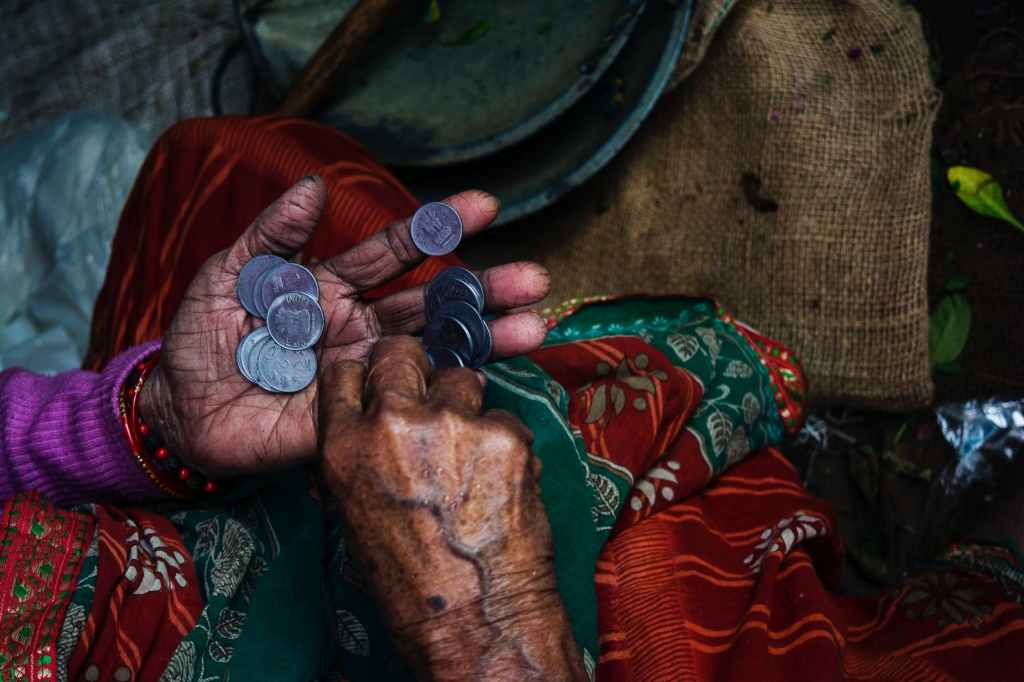
In India, poverty is presently estimated by fixing a poverty line based on a differentiated calorie-norm. This means that the level of poverty depends upon the capacity of a person to purchase food and a person who can buy specific amount of food to cross the poverty line margin for nutrients and calorie intake is above the poverty line. Whereas, the person who cannot buy enough food to meet the required nutrition value of calories and carbohydrates is below the poverty line. This level is not the correct parameter to check the level of poverty.

A task force of the Planning Commission in 1979 defined the poverty line as that per capita expenditure at which the average per capita per day calorie intake was 2400 calories in rural areas and 2100 calories in urban areas. Average per capita expenditures incurred by that population group in each State which consumed these quantities of calories, as per the 1973-74 survey of NSSO, were used as the poverty lines.

The debate on the extent of poverty in India has been a matter of global interest in the recent years. The primary reason for the global interest in the debate is that the levels of poverty in India and China have come to exert significant influence over the trends in world poverty itself.

Within India too, there has been growing contestation around poverty estimates, particularly in the period of economic reforms. First, there are persistent disagreements among economists on whether the rate of poverty decline after economic reforms was slower than in the preceding period. Secondly, the shift to targeted, rather than universal, welfare schemes has witnessed the use of poverty estimates to decide on the number of households eligible to access these schemes. The report of the Expert Group on the estimation of poverty, chaired by Suresh Tendulkar, is the latest input to the “Great Indian Poverty Debate.”

It is to be noted here that many subsidies and programs are launched by the government but these additional increments do not reach the actual people that are in need of them. Instead it is sent back to the businessman and thus a lot of profit is earned on these subsidized goods. Thus, to lower the level of poverty in India, schemes have to be launched in order to directly benefit the people in need.

The Hindu states that, “A final issue with the report, of much long-term consequence, relates to the wisdom of abandoning the calorie norm. It is indeed true that the levels of calorie intakes are not well correlated with nutritional outcomes. However, abandoning the calorie norm altogether and taking solace from the fortuitous fact that calorie intakes appear adequate at the new poverty lines is an arbitrary proposition. It is unclear whether there is any basis, theoretical or empirical, for this relationship to hold true across time.”

the Tendulkar Committee has pitched for a policy position that is stranded between the harsh realities of poverty in India and the fiscal conservativeness of a neo-liberal framework. The real challenge lies in preserving the positives from the report, and strongly persisting with the demand for a universal social security system.

– Ananya Kaushal

5 Scientific benefits of dark chocolate consumption

To all the chocolate lovers out there, did you know that consumption of chocolate can be beneficial for your health too? Well, Dark chocolate i.e chocolate containing cocoa solids and cocoa butter sans the milk and butter generally found in milk chocolate has been scientifically proven to provide potential health benefits to humans.

Photo by Polina Tankilevitch on Pexels.com

Listed below are 5 benefits of dark Chocolates:

1) Good for skin

The cocoa in dark chocolate contains flavonoids which helps our body to function more effectively. It fights off toxins and stressers and acts as a natural source of anti oxidant that helps in slowing down the ageing process in humans!

2)It is good for heart

Some of the compounds in dark chocolate especially flavanols helps in fighting off high blood pressure and high cholestrol which are the two major risk factors in heart disease. Henceforth, regukar consumption if dark chocolate may lessen the likelihood of a person developing heart diseases.

3) Improves brain function

According to researchers, dark chocolate may improve brain functions and prevent neurodegenerative conditions such as Alzheimer’s disease and Parkinson’s disease. According to a small study held in 2018, reasearchers suggested that the flavanols present in dark chocolate may improve neuroplasticity which is the brain’s ability to reorganise itself in response to intrinsic or extrinsic stimuli.

4) Improves blood sugar levels

Regular consumption of dark chocolate has been found to be helpful in metabolisation of glucose. A study in 2017 in the journal Appetite showed that participants who rarely consumed dark chocolate had higher risks of developing diabetes five years down the road when compared to participants who consume dark chocolate at least once per week.

5) May help with weight loss

Researchers suggest that dark chocolate may play a role in controlling appetite which in turn could help with weight loss. In the books Eat Chocolate, Lose Weight written by neuroscientist Will Clower suggests how eating a bit of dark chocolate before or after meals triggers hormones that signal to the brain you are full. However, proper diet chart and regular exercising should be done to help in successful weight loss.