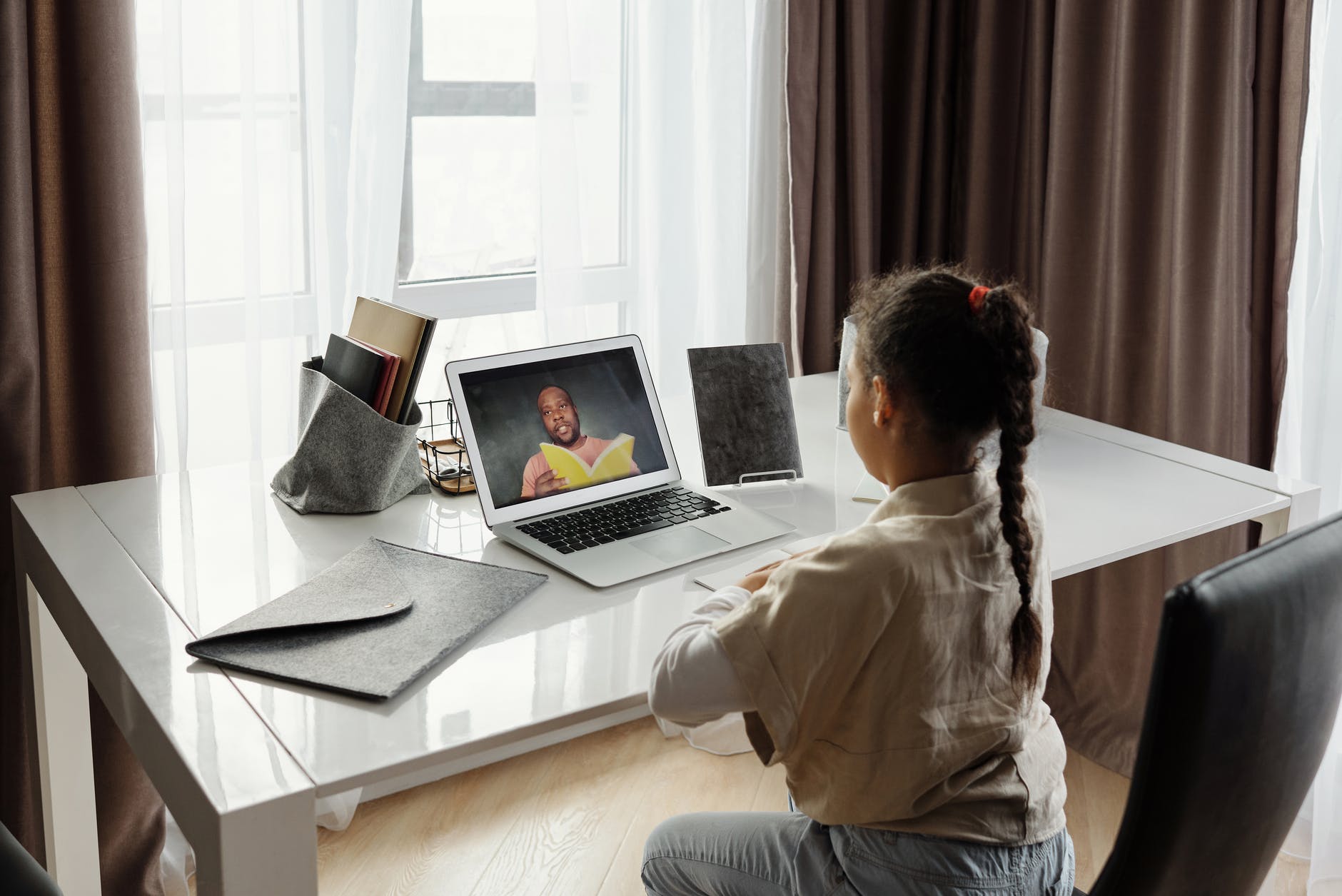
ONLINE CLASS IS A MENTAL EXHAUSTION FOR STUDENTS

Education is taught in a classroom environment in schools all over the world. Students are conditioned from ages to this traditional form of teaching. With the onset of the Covid-19 pandemic throughout the world, the entire scenario has been changed. Although the decision of online classes was shocking to everyone, students were a bit happy as they don’t want to go to their schools and on the other hand, they were sad, as they will miss their friends. With the emergence of online classes, parents were forced to get mobile phones or other gadgets for their children even if they didn’t wish that from their hearts. Children went on cloud nine as they were given a separate pc or mobile in which they could play, chat, enter social media, etc. Nobody knows what they do with their smartphones. Even if the parent questions the children, they had a witty answer that they are listening to classes or doing their assignments. No matter how strict their parents are or how hard they try to spy, the children started breaking all these by using the term ‘privacy’. Let us see how this situation affects a child’s mental and physical state.

MENTAL HEALTH

As we know, students are more likely to get distracted even by small things. In that state, they have to sit inside their homes and listen to the monotonous classes online. The classroom environment can never be brought to home as they have to share space with the family members. In this case, they tend to lose concentration very often as everyone in the house is engaged with some tasks. This brings no difference however hard they try to focus rather makes the student stressed out. 

Kids start their social life only from school. They start to mingle with others only from that time. This important phase of life is missed out by them and they grow in a reserved manner. It becomes difficult for them to gel with society and others as they were homebound all these days. Again, this brings in mental stress for the introverts. However, Extroverts will cope with the situation better than introverts. 

Studies from experts also reveal that kids are prone to develop anxiety and depression from being confined in a single place. They come across many things that are irrelevant to their age in social media and begin to watch unnecessary bad things out of curiosity. This stimulates the child’s mental state to do the wrong. Moreover, they increased the video games playtime and got addicted to games such as PUBG and free fire which also affects the mental stability directly. 

PHYSICAL HEALTH

Apart from affecting mental well-being, online classes also affect physical health. Using mobile phones and PCs for a long time affects the eyesight and give rise to headache as well as fatigue. The rays from the gadgets cause eye pain and irritation. Children use the mobiles even after class time as they cannot go out and play with others. They use this technology as time pass. As a result, they lack physical activities like outdoor games. If they go to school, they had a separate hour for playtime during which they run and play on the ground. Also, when they return home from school, they enjoy playing games and cycling with their friends in the surroundings. This increases stamina and makes the physical body strong.  

Learning is not only about gaining knowledge but also about physical, mental, social, and emotional well-being. So, the emergence of online classes has created unwanted stress and irritation in budding lives. All these are not realized by the children as they lack enough maturity. Escaping from exams and other troublesome things, students continue to prefer online classes to get some lame advantages without knowing that they cannot escape from life exams. This would be realized one day or the other by everyone and that day they would regret the ‘lifeless life’ they led without spending time in the outside world.

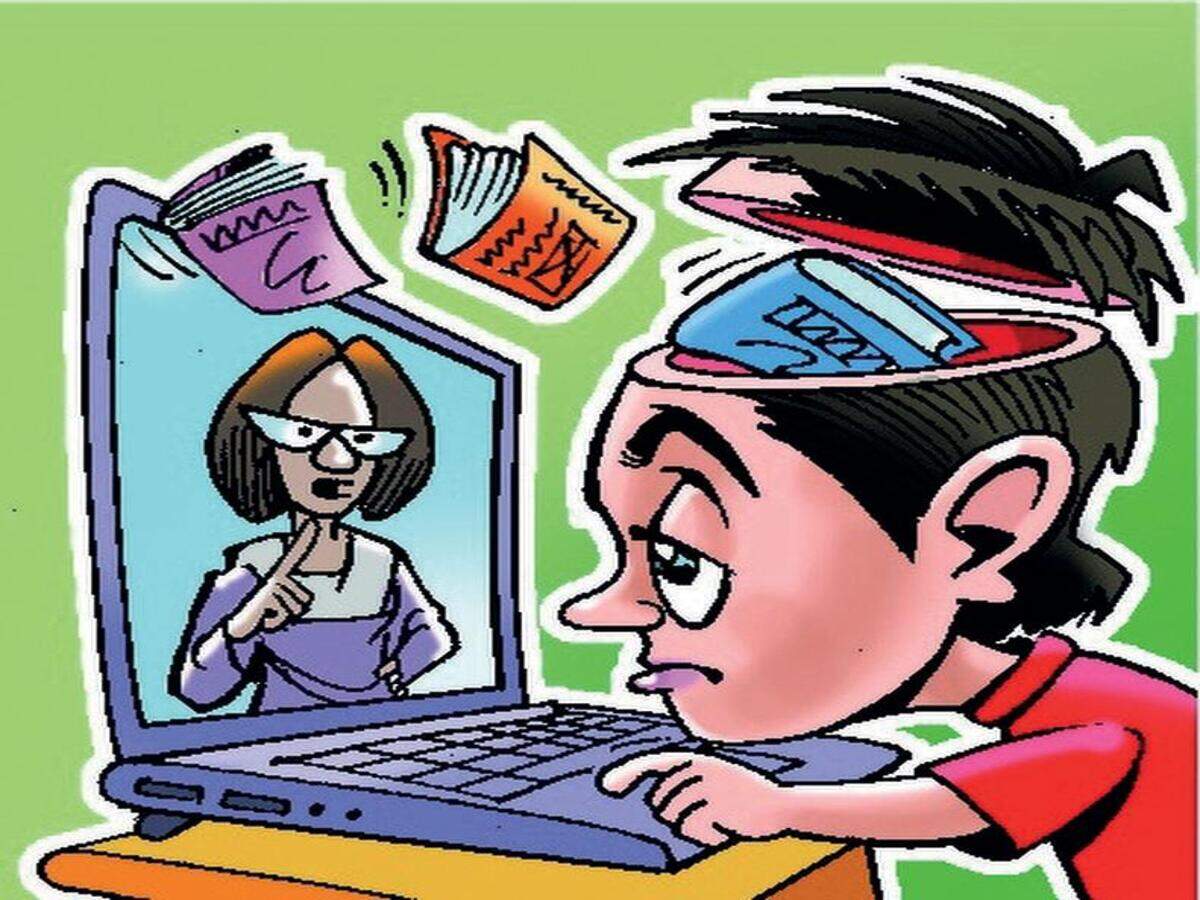
ONLINE EDUCATION: EXHAUSTION FOR STUDENTS RATHER THAN KNOWLEDGE

Specially for students of age 4 to 9 years

Everything has a positive and negative side. Similarly, online classes has both positive and negative sides. On one hand, the e-education and online classes have emerged as a solution for the educational crisis in current pandemic and thanks to these technological advancements which helped the students to continue their education. But on the other hand, online learning has numerous negative consequences also. In this article. we will try to identify and understand some these negative consequences and effects of online learning.

Due to pandemic, everybody lost many things, everyone’s life and lifestyle have changed and society has been altered but the there’s a huge impact of this pandemic is on the children’s of age group 4 to 9. These children’s should be learning new thing now, exploring and playing and making friends but all these things are nearly impossible for them in current situation. The pandemic forced the kids to moveout from the learning zone with which they were acquainted, like a classroom and are setup in the completely opposite scenario, where the students have missed many essential part of their education. The sudden transition of education from classroom studies to online learning will also have a huge impact on them. However, the new generation is very internet savvy but the e learning has certain limitations. Online learning comes with many challenges that has many impact on the students.

The main issue here is the lack of consistency… Children are more attentive and curious to learn things when they were in class but in this online learning scenario, the consistency of these children to be focused on studies and concentrated decreases. A students interest to answer the questions and clear doubts is more in classes but this is reduced in online learning. The willingness of a student to get his or her doubts cleared and participate in the class decreases due to the lack of one to one reaction with the teachers.

Reduced Concentration and Self Discipline… The major limitations that the students are currently facing in the online learning is reduced concentration in the class and self discipline. A school classroom provides the complete atmosphere which boosts the interest and concentration of students to learn. And such environment and structure which is effective for learning is not present at home. This classroom atmosphere give the best environment to student where they can learn, complete their assignment. Homes lack such things and as a result of which students struggle to finish their homework’s and assignments, lack of motivation and lower goals for themselves. This also discourages the students to do better in academics and explore new things.

Reduced Interaction with Peers… In addition to lack of motivation to study, the very important part of a child’s school life is also missed. This is their interaction with friends. Schools provide a neutral environment for students where they can study as well as enjoy. There is scope of social interactions which aids in developing many new skills such as understanding people of different personalities, setting boundaries, learning cooperation and empathy etc. These skills are very important for the students as it helps them in socializing with others. But such facilities cannot be provided in the homes due to the current pandemics. Because of this the students get isolated and a sense of isolation can emerge in them.

Health Hazards of Online Teaching… Online learning required continuous focus of screens which has many physical health and mental health hazards. The increase in screen time is one the major concerns and disadvantages of online learning. Some students may also develop bad posture and physicals problems. It has serious impacts on the eye sight of the students also.

ARE ONLINE CLASSES HERE TO STAY ?

ONLINE CLASSES ARE HERE TO STAY ?

Online classes are here to stay . Online learning has gain popularity , thanks to this pandemic . Not only colleges & universities but all schools have also introduced this system . In this pandemic , where the whole world is in lockdown it was very difficult to continue studies as all schools , universities , organizations were shut , & here these online class came into force .Online classes have whole different environment as compare to our traditional form of classroom , & students are enjoying this environment.

Some advantages of online classes which you also will relate to are :

  1. Taking classes usually means showing up on class at a particular time, sitting through a somewhat lengthy lecture and then going directly to your next class. Or, if you’ve spaced your classes out, you may be able to take a break in between, but you still have to stay on campus. It can make for really long, really intense, really exhausting days. Then you have to come home, do homework, sleep and do it all again the next day. It can easily become a grind. But with online classes you can sit comfortable & take the lecture by sitting in the position you want to .
  2. Online classes teaches you self discipline , because their is no teacher that will ask you to sit in discipline . You learn the most important thing of your line that is self discipline .
  3. Comfort of you very own home is what students like the most . You can take class from any where & every where .

4 Online classes will force you outside of your comfort zone (in a good way). You will have to learn to navigate the course lectures, download materials, interact with others online and communicate well digitally. Yes, this may be scary for some people! However, in the information age, these are essential skills and will allow you to keep pace with others.

At the same time online classes have disadvantages also which all of us know , they are :

  1. Online learning creates a sense of isolation , students starts feeling that they are in a cage & somebody is forcing you to sit in front of a device .
  2. It require self discipline , students don’t have this skill , as this skill require experience.
  3. Online classes are prone to technical issues, it require proper network connection & needs a proper device for taking classes on .
  4. Online classes need more time to be spend on screen & people don’t have this much time & patience to sit at one place .

Conclusion drawn from this is , we all know that this pandemic will stay for long & online classes are the only remedy for this , to avoid contact with one & other , & for students safety & security , online classes are here to stay

Online education

Due to corona it has been full of online classes even for 1st standard children just to make parents pay the fees even though there is no use of those classes when i say no uses students logging into the classes and they are enjoying , sleeping , eating , so there is no point in having classes for students under 8th standard. But there are many professional courses which are more useful for students now lets see about effectiveness of online education

As with most teaching methods, online learning also has its own set of positives and negatives. Decoding and understanding these positives and negatives will help institutes in creating strategies for more efficient delivery of the lessons, ensuring an uninterrupted learning journey for the students.

Advantages

Online learning offers teachers an efficient way to deliver lessons to students. Online learning has a number of tools such as videos, PDFs, podcasts, and teachers can use all these tools as part of their lesson plans. It allows students to attend classes from any location of their choice. It also allows schools to reach out to a more extensive network of students, instead of being restricted by geographical boundaries. All the course or study materials are available online, thus creating a paperless learning environment which is more affordable, while also being beneficial to the environment. Since online classes can be taken from home or location of choice, there are fewer chances of students missing out on lessons. Every student has a different learning journey and a different learning style. Some students are visual learners, while some students prefer to learn through audio. Similarly, some students thrive in the classroom, and other students are solo learners who get distracted by large groups. The online learning system, with its range of options and resources, can be personalized in many ways. It is the best way to create a perfect learning environment suited to the needs of each student.

Disadvantage

For many students, one of the biggest challenges of online learning is the struggle with focusing on the screen for long periods of time. With online learning, there is also a greater chance for students to be easily distracted by social media or other sites. Another key challenge of online classes is internet connectivity. While internet penetration has grown in leaps and bounds over the past few years, in smaller cities and towns, a consistent connection with decent speed is a problem. Without a consistent internet connection for students or teachers, there can be a lack of continuity in learning for the child. This is detrimental to the education process. Students can learn a lot from being in the company of their peers. However, in an online class, there are minimal physical interactions between students and teachers. This often results in a sense of isolation for the students. Online learning requires teachers to have a basic understanding of using digital forms of learning. However, this is not the case always. Very often, teachers have a very basic understanding of technology. Sometimes, they don’t even have the necessary resources and tools to conducts online classes. Many parents are concerned about the health hazards of having their children spend so many hours staring at a screen. This increase in screen time is one of the biggest concerns and disadvantages of online learning. Sometimes students also develop bad posture and other physical problems due to staying hunched in front of a screen. 

CORONAVIRUS AND ITS IMPACT ON EDUCATION

The COVID-19 was first identified in Wuhan, China in December 2019. The global outbreak of COVID-19 is still ongoing.

The current coronavirus pandemic is having a perplexing impact, not only on people’s health, but also on how they learn and work. The pandemic has introduced uncertainty into major aspects of society, including the education sector. Thousands of schools, colleges and other educational institutions are closed nationwide. This situation challenged the education system across the globe and forced institutions to shift to an online mode of teaching.

Photo by Ann Nekr on Pexels.com

Challenges of Online education

Schools and colleges have been impacted significantly by the rapid spread of the COVID-19 outbreak. Closures have pushed countries towards a modernized, digital style of teaching. However, this solution comes with its own unique set of challenges. Among the most important challenges created by the coronavirus is how to adapt to a system of online education.

There are various technological devices available for online education but sometimes they create a lot of problems. These difficulties and problems associated with modern technology range from downloading errors, installation issues , login problems, poor connectivity, etc. Sometimes student also finds online teaching to be boring. Students want face to face interaction which is not possible with online mode of learning

Universities across the globe have adjusted their courses in response to the spread of the coronavirus. Moving all the educational programs online may prove very challenging. While some universities or schools may already have strong online systems, smaller universities may struggle with the technology. Some students also don’t have reliable internet access or technology and they struggle to participate in online learning. This gap is seen across countries and between income brackets within countries.

Photo by Ann Nekr on Pexels.com

Advantages of Online Learning

  • More flexible than offline classes.
  • Saves time by avoiding transportation.

Disadvantages of Online Learning

  • Loss of interest
  • Small children have low concentration power, and they don’t want to sit for a longer time in front of the blue screen.
  • The availability of internet to students living in rural areas.
  • Speed and cost of internet.
  • Spending long time in online learning makes the students lose their motivation to participate.
  • Lots of poor students do not have access to laptops, computers, tablets, cell phones, etc.
  • Less interactive.

Conclusion

The COVID-19 pandemic lockdown has affected the academic performance of most of the students with varying degrees. Online education helps the students with an opportunity for self-study. However many subjects need practical classes; therefore, it is not easy to understand all the subjects online. The learning process cannot reach its full potential until students practice what they learn. This may impact their career in the future.

ICT and Education During Covid-19 in India

When the whole world is facing a pandemic situation and it affected every single sector of the world. And it has impacted the educational sector tremendously. Every single educational institutions is closed and we don’t have a choice. As a result globally, over 1.2 billion children were out of the classroom. In India, according to a UNICEF report, “School closures have impacted 247 million children enrolled in elementary and secondary education and 28 million children enrolled in pre-schools and Anganwadi centers. This is in addition to the more than 6 million girls and boys who were already out of school before the COVID-19 crisis”, the report mentioned. ICT appears as a bridge to break the distance and survive the learning i.e, the gap which was created by lockdown between teachers and learners has been filled with the help of ICT.

Due to this Covid-19, every educational institution and pandemic forced the sector to shift to a virtual and blended mode of learning. Because this was the only way to continue the education. Initially some problems were faced by students as well as teachers. Because suddenly they have to shift in a totally different situation than earlier and many teachers and institutions were not trained and equipped adequately to shift to online teaching. Hence, they give their best and learn new skills in such difficult times. And gradually they adopted and teaching-learning process continued.

ICT initiatives for continuing the Learning Process

In the era of digitalization ICT is necessary in every aspects of life. It stands for Information, Communication and Technology. These three words have different meaning but collectively ICT becomes a part and parcel of human being. With the help of ICT Educational Institutions have been using various platforms like Google Classrooms, Microsoft Team, Zoom, Google Meeting and many more to continue the process of learning for students amid pandemics. Techers also provide e-content to students for better learning.

National level ICT initiatives

To address the challenges of learning, the Ministry of Education has undertaken several initiatives to assist students and educators. Some initiatives used which already exists digital platform like DIKSHA(Digital Infrastructure for Knowledge Sharing), e-Pathshala, NROER(National Repository of Open Educational Resources). These were used extensively for supporting the learners and teachers across the country with educational resources and relevant trainings. ICT tools like T.V( Swayam Prabha TV channels), Radio(All India Radio) helped the government to reach a larger number of target audiences. Various states also adapted initiatives to provide the necessary resources. For example

Chhattisgarh’ Education at Your Doorstep(Padhai Tuhar Duar) Initiative:– It is a portal to tackle the impact of the Covid-19 crisis in the education sector. It aimed to provide the platform to connect the teachers and learners by providing access to good quality educational content from comfort of their homes. It has a mix resources like Live classes, Offline Video Lectures, Animations, Podcasts etc.

Kerala- KITE Initiatives:- The state government launched virtual classes through Kerala Infrastructure and Technology for Education which was launched in 2005. During the difficult times of Covid-19, the state has been effectively using technology to ensure continuous learning and embodied their slogans “Physical Distance and Social Utility into Practice.” and many more initiatives by central and state government.

Individual Initiatives

Initiatives by various profit, non-profit organizations, and individuals have been incredible force behind the effort to use technology to make learning possible to many learners. Some initiatives in India like Smarter ED Platform(it is an initiative by Lenevo in collaboration with Vidayalaya(a non-profit organization) that connects volunteer teachers and learners.) and Digital Daan. Individual efforts of teacher to reach every student to continue their learning has been also incredible during this pandemic situation. One such teacher is Ritika Tomar from Sonbhadra ,UP has come up with the solution to provide necessary information to her students. she divides her students into two groups one having smartphones and other having simple cell phones. she used WhatsApp and message services to reach out tob both groups respectively. Her efforts helped the available ICT iniciatives to reach her students in the best possible way. Few teachers in rural areas teaches their students following the protocols of social distancing using Loudspeakers. In this way lot of teachers have explored and used ICT tools to teach their students in the pandemic.

Thus it can be said that ICT has proved itself as a boon to education in the pandemic situation . Education sector has been impacted tremendously especially in India. technological innovation in the sector have made it possible to overcome the situation due to the crisis. The importance of e-learning has been realized and it has been acknowledged by educational communities. We can say that the era of e-learning has been started due to this pandemic. In post pandemic world to this ICT can be used in blended mode of learning.

Video games and Education : How to bridge the two

Videos games have become a significant part of our culture for over half the century. They have also lead to many leading artistic and technical endeavors including many innovations in all these years. People have started to recognize the importance of these games as culturally important and the need to curate and store them properly. 

Education is one of the areas that have gone through a transformational change in 2020 and forward. The learning space has transitioned from a physical space to a space that has gone digital. The convergence of various technologies and modalities has given birth to a new space in the education system.

When it comes to Computer games, many used to scoff at them as a mere product for brief entertainment, but the increased proliferation of digital in every individual’s life means that Video games have a more significant role to play than ever before. The increased visual fidelity with better computing power has signified more immersion in the digital world. Online education has been given a push from governments around the globe. The majority of the higher institutions are teaching remotely with the help of different online tools. One of the major challenges that many educators face is the problem of engagement on par with the physical class.

Instead of just looking at online education as an alternative for the physical classes, we have to look at online education as a means of learning that can enhance the experience and engagement of the students than the physical classes as well. The technologies in 2021 clearly indicate that various tools and measures can be added into the experience of not just online learning and but also in the space of cultural heritage and digital tourism. Video games are an important tool that educators can leverage to fulfill these requirements.

Engagement and immersion can be the key factors that can drive the education system forward. There are many instances where students skip a certain subject even before attempting to learn it. This can be due to a poor and unfavorable experience with a certain instructor or wrong assumptions about the difficulty of that subject. Engaging interfaces in the form of creative games, virtual reality, augmented reality, mixed reality can help alleviate these types of issues.

Human-Computer-Interaction is an important field where the aspect of design and technology converge. This area not just deals with technological issues but also with the psychological and socio-cultural problems while designing/building a product or an interface. The interface is an important area that is often overlooked on many platforms. Many Educational platforms don’t offer the freedom that can help students, but they rather use the stingy design philosophy and force the users to a particular behavior while using it. Therefore the interface of games becomes equally important. Games can be used to create a more participatory environment for both the teachers and students alike while increasing the experimentation and systematic thinking in the class.

Video games are usually played to win or accomplish a level. Players are motivated by winning these challenges and this is the key to stay engaged. Games motivate through fun, which is part of the natural learning process in human development with instant and visual feedback.

We can conclude that the implementation of video games in the realm of education can make online learning more engaging and intuitive for learners. This is still a novel field of research and we have a long way to go but we cannot dismiss the numerous possibilities that games can provide us in this area.