1 SKILL 4 LIFE: PERSONALITY DEVELOPMENT

 1 SKILL 4 LIFE: PERSONALITY DEVELOPMENT, is a journey which has a great power to lift as knowing one self is the true power. Personality development is the conscious choices taken to improve one’s life to become a better person than yesterday and to grow as an individual. Life is all about growing every single day and thus it is beautifully said that the best investment one makes in life is investing on one self because it not only improves one’s own life but also improves the lives of all those people who are surrounded by you.

“PERSONALITY IS AN UNDERSTANDING OF TRUE FORM OF YOURSELF WITHOUT ANY LIMITATIONS”

Personality development is a set of qualities that makes a person distinct or unique from the rest of the crown. It is a steady journey which is highly concerned about the psychological patterns of an individual’ s thoughts, emotions and feelings. The character, attributes and the trait of the person are totally responsible for molding their personal development. It is the sum of their characteristics that constitute the mental and physical being of a person which includes their daily habit. It is the belief that you worth effort, time and energy needed to develop yourself.

Personality development is the bridge that carries you towards the goal you are yet to reach. The better we become in our personality the lesser time it takes us to achieve our goals. Thus the growth is the bench mark which is the great separator between those who succeed and those who do not. It is very easy to judge the mistakes of other people but difficult to recognize our own mistakes. We must take the personal responsibility to change our self , we can not change the circumstances under going but we can definitely change our personality.

1 SKILL 4 LIFE: PERSONALITY DEVELOPMENT BY SWAMI VIVEKANANDA

According to the Vedantic concept advocated by Swami Vivekananda the all round development of in regards with harmony and spiritual development is possible when proper attention is given to developing one’s own personality . This skill is not an overnight task it requires a sufficient amount of time and effort to groom and shape personality.

KEY FACTORS REQUIRED FOR PERSONALITY DEVELOPMENT

    • WILL POWER: It is the important key factor to develop as it needs to come from within , the will power is what drives us to develop our personality in a faster way. All the great men of the world who rose to a great height of success were men of strong will.
    • SELF CONFIDENCE: It is another important factor to succeed in life. A person with self confidence will never give him in the phase of difficulties. do check out my previous article on THE POWER OF PERSEVERANCE 2 SUCCESS. Failures and hardships never discourage a confident person
    • CONCENTRATION: This is yet another important ingredient for personality development as it helps us in bringing the hidden potential in human beings. It is the power of concentration which gives strength in the darkest moments of life. One must do yoga and meditation do attain concentration(do check out my previous article on YOGA AND MEDITATION: 2 PILLARS OF HEALTHY LIFE)
    • KEEP SMILING: A humorous person keeps one self always above the worries and spreads the cheerfulness in his surroundings.

do check out the learnings from the personality of great people 50 Inspiring & Great Personalities of India and the World! – Leverage Edu

Learning with toys develop the creativity and sensitivity in students and give wings to their imagination

 Learning with toys develop the creativity and sensitivity in students and give wings to their imagination said Dr Subhas Sarkar,  Minister of State for Education while addressing the valedictory session of the International Webinar on ‘Toys and Games to Play, Make and Learn’ organized by the NCERT under the agies of Ministry of Education with an objective to promote Toy Based Pedagogy in school education for joyful learning.

Shri Sarkar said that toys teach children from being possessive to sharing, co-operative to empathy, exploring toys to make one on their own, inculcates among them imagination, creativity, and much more. It is the need of hour that parents teach their children through the toys as it will make things comprehensible for the students.

The Minister highlighted that we have a rich heritage of traditional toys which has originated in the subcontinent several thousand years ago in the Indus Valley civilization. Indian toys not only entertain, but also teach us scientific theories such as ‘Lattu’ teaches us gravity and balance, ‘Gullel’ teaches us potential and kinetic energy, he added.

He expressed that the International webinar is an important step towards reinventing a timeless tradition of toys and games. He hoped that the webinar has provided a roadmap for the school education which has been envisaged by the National Education Policy of 2020 to be based on India’s rich heritage and knowledge systems and prepare our youth for the challenges of the 21st century.

On the  2nd day of the webinar today,  there were two technical sessions on Toys and Games to Play, Make and Learn, and Toys to address different societal concerns, mainly to address the concerns of Children With Special Needs and 9 scholars presented their papers.  There was a panel discussion on Innovative Toys and Technology, where innovators, educationists and entrepreneurs from different countries shared their views on the need for promoting innovation and entrepreneurship in toy making. There were 7 presentations by the practitioners and case studies on toys, toy design and startups.

 The Session started with Prof. Sridhar Srivastava, Director, NCERT welcoming the dignitaries present on the occasion and the participants who had joined from different locations of various countries. Prof. Anupam Ahuja, Head, Division of International Relations, NCERT and a member of the Organizing Committee of the Webinar presented the brief report of two days of deliberations. Smt. L. S. Changsag, Joint Secretary (Instt), Ministry of Education shared the initiatives taken by the Ministry of Education in regard to Toy Based Pedagogy and the way forward. Prof. Anil D. Sahasrabudhe, Chairman, AICTE addressed the participants and enlightened them with his views.

Towards the closing of the 2 days deliberations of the International webinar, Prof. Jyotsna Tiwari, Head, Department of Gender Education, NCERT and the coordinator of the webinar proposed a vote of thanks to all the dignitaries, participants and invited audience.

*****

Assertiveness – An Essential Life Skill Everyone Should Master

Have you ever wondered how some people have a natural ability to express their opinions and views confidently, politely turn down the things that they don’t want to do and still manage to maintain a good rapport with people ? Do you think it is some superpower that they are born with ? Well, this superpower that they possess is called Assertiveness. And the good news is that with the help of the right strategies and dedicated practice, you too can develop this superpower.

What is assertiveness ?

Assertiveness is a healthy behaviour that helps you  express your views, feelings, needs and desires  in a calm, clear and reasonable way without  disrespecting the other person.It is a crucial life skill that enables you to stand up for your rights without undermining those of others’. Assertiveness doesn’t come naturally to most people. Often, they tend to respond passively or end up responding aggressively. At times people may also choose to respond in a passive-aggressive manner, which can be considered as a combination of these two types.

Photo by Rebrand Cities on Pexels.com

Why do you need to be assertive ?

Passive people often end up doing things that they really don’t want to do in an attempt to please others and eventually it takes a toll on their self esteem and confidence. On the other hand, the aggressive ones, though most of the time manage to get their ways, often find their insecurities getting worse due to their behaviour and end up being lonely and dissatisfied in life. In the case of passive aggressive responses, it may work well initially, but in the long run, the guilt of not being open and honest with people starts weighing them down and affects their relationships with people adversely.

By being assertive, you are honest in your thoughts and words and express yourself clearly, while remaining empathetic and fair. An assertive person knows how to strike a balance between speaking up for himself and respecting the rights and beliefs of the other person. They are firm without being rude and also adept at handling their emotions. 

Well, it all sounds good in theory, but putting it into practice requires a lot of effort. Be prepared for the numerous sighs, eye rolls, I-Can’t-Believe-You-Said-No lectures, rants on how disrespectful and rude you are etc., that are bound to come your way during this journey of being assertive. But trust me once you have passed the initial phase of discomfort, you will find that it’s way less stressful and a lot easier to express yourself effectively.

How to be assertive ?

Have a clear idea about your core values and beliefs

Only if you have a clear understanding about yourself and your core values, will you be able to express yourself clearly and confidently. A good place to start is by assessing your behaviour, style and thought pattern. Identify those beliefs that prevent you from standing up for yourself. Look out for the triggers that blow your fuse. Dig deeper into your mind and identify your core values. Ask yourself  whether your actions and responses align with your core values. This understanding of yourself and your values is the foundation of self confidence which in turn is the cornerstone of assertiveness.

Speak up even if your voice shakes

Whenever you find yourself in a situation where you don’t particularly agree on the thing that the majority agrees with, instead of nodding along or yelling at them, try putting across your views honestly in a clear and composed tone. It might be difficult in the beginning and you might have a hard time controlling your emotions and tone. But with practice you’ll find your confidence and ability to articulate your thoughts gradually improving. Trust the process and keep practicing.

Accept both the bricks and bouquets gracefully

Whenever you are starting out on something new, you are bound to face criticisms and if you are lucky you might end up winning a few compliments as well. Accept both with an open mind. Graciously accept the compliments and train yourself to handle criticisms positively.

I.Wish.I.Could.But.I.Don’t.Want.To 

If you were to ask a people pleaser what scares him the most – dealing with Dracula or saying No – chances are high that his answer would be the latter. Well, saying No can be hard not just for people pleasers but for everyone. But it is one of the crucial skills to master on your journey of becoming an assertive person. Acknowledge the request and then give a short but clear and honest reply. Remember that neither do you owe anybody a justification nor an apology for your decision. In any relationship, people generally appreciate transparency and by being open and honest about your feelings you are doing yourself as well as the other person a favour.

Practice Active Listening

Active listening is a skill that helps you better understand the other person’s perspective. While being assertive, respecting and considering the other person’s opinions and views is as important as articulating your thoughts. So it is important that you pay attention to what the other person says. Don’t shy away from asking questions if you need further information or clarification. By giving the other person room to explain himself, you are laying the basis for a constructive discussion and by attentively listening to him you are giving yourself a chance to view things from his perspective.

Watch your tone and body language

To have the desired impact, it’s not enough that you express yourself respectfully and honestly but you also need to maintain an assertive body language and tone while you speak. A relaxed open posture, good eye contact and the perfect mix of firmness and composure in the tone play a vital role in projecting your confidence. And this applies both when you are speaking as well as listening. 

‘I’ vs ‘You’

While expressing yourself, one thing that you need to keep remaining yourself is that your focus should be on the issue and not on pulling the other person down. To get your points across firmly and respectfully, use phrases like ‘I feel’, ‘In my opinion’, ‘I would like’  etc . The impact the expression  ‘I feel that my choice would be better in this case’  makes is way different from the one  the expression ‘Your choice is terrible’ makes . The latter points fingers at the other person and ridicules his choice whereas the former gets your point across without engaging in the blame game. 

Take a moment to reflect on your progress

Every time, after you’ve faced a situation where you acted assertively or at least tried to do so,  take a moment to reflect on what went well and what did not. Remember not to be too hard on yourself. Taking time out to review your progress helps you in understanding how far you have come in this journey of being assertive. It also gives you an opportunity to identify your weak points and the areas you need to work on. Also, helps you in identifying your behavioural patterns and thought process better. Consistent practice, along with periodic reflection, makes sure that your ride ahead is safe and smooth

Final Thoughts

Assertiveness may be a natural trait for a lucky few, but for most people it is a skill that needs practice and time to develop. During this journey, if you find yourself slipping to aggressive or passive modes, at times, just keep in mind that even the person who has won the ‘The Most Assertive Person of the Year’ award may not respond assertively 100% of the time. Instead of beating yourself up for such occasional goof ups, focus your attention on learning from them and fine tuning your assertiveness skills. Good Luck !


Stage of personality development

Personality is the term used for the integrated and dynamic organisation of the physical, mental, moral and social qualities of an individual. Personality development is very important for all. It helps in all sectors.

Stage of personality development

1 Learning and growth :- Development of people depends upon the work of people in which they have interest according to the age the understanding level of children will be increased by the passing of time.

2 Learning and maturity :- At the age many types of changes comes in the children life. Many types of changes are seen in the children and after that they can understand any thing.

Process of development :- process of development depends upon the daily work of children and from that any one can understand and personality development of children.

Important of personality development

From the personality development any one get confidence from their work. Life is more easier if we do something new for students. It helps us in achieving the goal of our lige. At the time of interview the interviewer 1st see the personality of a person and then after the education. For the success personality development is very important.

Being knowledgeable!

Knowledge plays an important role in personality development of an individual. It is important to know what’s going around you and what needs to be done, be it social, economical or technical. Confidence comes with knowledge. You cannot stand an interview without having appropriate knowledge. Neither can a person start his own venture without having proper knowledge about the field he is willing to enter. It is all linked, whatever sphere of life it might be. Knowledge stands at the top.

Photo by Janko Ferlic on Pexels.com

It is never limited to books or magazines; it can also be gained through experience and learning which is an important characteristic of a human. We learn by seeing, watching and observing things. The bookish language is either tricky, boring, lengthy or includes jargon which makes it difficult to get the true meaning of things and hence can be misunderstood. Here, the importance of practical knowledge comes into play.

You see, how vast is the field of knowledge is! It is a field in itself since it is either not accessible to all or those who can, fail to harness enough of it. It is a study where you learn for your interest and observe to know.

The emerging fields to gain knowledge can be finance, social, medical or anything that might interest you and would help you. Knowledge is not a force. It is the basics of a good personality and the reason behind the confidence of a person. Even if you are involved in house chores, it is important that you know what, why, how are you doing or carrying out your work. This builds efficiency and confidence in oneself. Nobody can question your ability if you are a knowledgeable person, in your field.

Some people carry diverse knowledge, the reason being their desire to know and explore more. Limiting yourself to books or doing manual work without good know-how can be boring. Many-a-times people opt to study the subjects which are totally out of their interest, just to get a good job with considerable earnings. Such businesses don’t go well and consequently affect the health of a person. This happens because they make it a burden and try to gain knowledge in a field they don’t belong to. Life is all about exploring new horizons and living them freely. Limits in education obstruct the growth of a person. Go beyond the textbooks and learn from the nature. Know your destiny, what is your purpose and how should you approach it. Again, knowledge about the ways to approach a situation is important. Always choose the right path no matter how difficult it might be. Of course, there are no good things easy and free. Struggle will lead you to the purpose of your life. Just don’t forget to “live” the journey.

Photo by Jill Wellington on Pexels.com

Knowledge concerns with personal well-being too, besides caring for the world. The learning you get from your parents and teachers, the experiences you gain from failures, the freshness you feel in the nature, all are a part of the big world of knowledge.

You can find solutions to your as well as others’ problems if you are knowledgeable. Also, improving and constantly gaining knowledge is important whatever area it may concern. You need to be well updated so as to put forward your best opinions and views. It might appear hectic at first but gradually you will get better at knowing things. Making it a habit will help a lot in future. People usually prefer and refer journals, newspapers, etc. for the purpose but “observing” is the best practice to get an insight and build a perspective.

How to improve Personality

Photo by John Diez on Pexels.com

A research study by psychologists at the University of Illinois suggests that we can change our traits provided we want to change them.

We can become the best version of ourselves if we want to. So, if you are willing to become the most terrific version of you, here are some personality development tips to your aid:

We are taught to be kind to others. Yet, many of us fail to be kind to ourselves. Studies show that self-compassion brings positive traits like optimism, extroversion, wisdom, happiness, positivity and resilience. According to Emma Seppala, research psychologist at Stanford University, self-compassion involves three steps:

  • Recognize that you deserve care and concern like anyone else and that is why you must be kind and understanding with oneself.
  • Recognize that making mistakes and failing is part of life. So, do not be hard on yourself when you commit a mistake or fail and indulge in self-critical thoughts.
  • Be aware of one’s emotions and feelings.

Contrary to popular belief, self-compassion does not mean letting yourself off the hook. Rather, it means taking corrective action, albeit without being too self-critical.

Don’t overthink and overanalyze. Neither let any negativity like shame, anger, jealousy or greed stay in your consciousness for too long. Instead, learn to take it easy; forgive easily and drop grudges against people as soon as they pop up. Being light in mind and heart makes you truly happy from within. And who does not like happy people?

We all like people with whom we can easily mingle and talk to. No one likes a person who responds with a straight face. So, learn to be warm. Flash that smile more often. Be friendly and be ready to share and help.

Doing things with style adds zing to your personality. The secret to doing things with style lies in working with passion and a relaxed mind. So, while you work at something, don’t let anything distract you from putting all your energy into it. At the same time, stay relaxed.

It is vital not just to pretend to be a helpful person; you genuinely have to do that to be that person. For instance, you realized that someone is in need, you can guide and say that I feel if you go to that person, he can be of help to you. Or you can give small piece of advice. Satisfactions that you get after helping someone is amazing, and believe me that will reflect on your face and personality development.

 Today is the age of networking, be social with people, you should often go for outings with friends, you will have self-knowledge about things and develop confidence to travel independently. Secondly, with your network, you know how to speak and interact, when to take credit of yourself and when to share and help. When and how to say no without hurting, you will learn all these basic things when you are with people around.

You can only learn when you are adaptive, if you are rigid with your though process than it is next to impossible to learn new things and personality development.

Personality Development

•What is personality?

   Personality refers to individual differences in characteristic patterns of thinking, feeling and behaving.
• What is personality development?
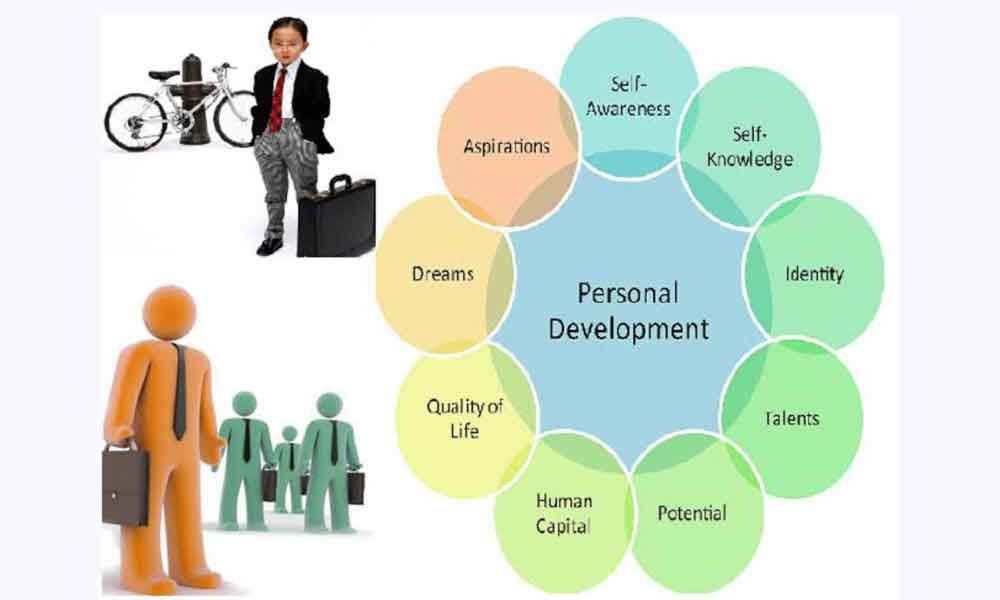
   Personality development refers to how the organized patterns of behavior that make up each person’s unique personality emerge over time. Many factors go into influencing personality, including genetics, environment, parenting, and societal variables.
   The various aspects of personality development are given in the image:
• What is the importance of personality development?
   Personality development helps you gain recognition and acceptance from the society as well as people around. Personality development plays an essential role not only in an individual’s professional but also personal lives. It makes an individual disciplined, punctual and an asset for his/her organization.
• Here are 10 most effective ways for one to develop his personality :-
1. Be a better listener. Try to listen to people and understand their point of view.
2. Read more and expand your interests. Reading will help you know more things and expand your knowledge.
3. Be a good conversationalist. Conversation with people is really helpful to develop your personality.
4. Have an Opinion. There is nothing more tiresome than trying to talk to someone who has no opinion on anything.
5. Meet New People. Meeting new people and talking to them will help you know yourself more.
6. Be yourself. Don’t try to please people by changing your opinion.
7. Have a positive outlook and attitude.
8. Be fun and see the humorous side of life. 
9. Be supportive of others. Help others and they will help you too.
10. Have Integrity and treat people with respect. People will treat you the way you treat them so be kind. 
   So now, what are you waiting for? Go now and help yourself grow and develop your personality.

In a world full of speakers, be a listener

Listening- more than a skill

Listening is an important skill that we use daily. You might not give it much thought but it does have a huge impact on your academics, job success and even personal relationships and happiness. Even though it might seem to you that it is a passive behavior as it involves silence, but it is not true.

Sometimes when you’re distressed because of a problem be it work related or a personal issue you just dial your best friend without giving it much thought, have you ever thought why? Most of the times we just want someone to listen to our side of the story patiently without being judgmental. We are not looking a solution for our problems but sometimes it just feels good to vent out that stuff. Everybody has a person to whom they can confide in about anything, for most people it’s their best friend, it’s because they feel understood and not judged.

Good listening is an important skill required in many professions these days. It is one of the main skills required by the people working as counselors and therapists. Because the person feels heard by the counselor, they find it easier to confide into them.

In some cultures, it is taught to emphasize on listening by being a silent communicator when receiving messages from elders or seniors. Buddhism, for instance, has a concept of mindfulness which means devoting your complete attention to the task you’re doing at the moment. It helps in developing longer attention span and good listening skill.

Listening requires a person to be attentive and therefore it is an active skill. Hearing and listening are not the same. Hearing is only a part of listening. When a person actually listens, he/she pays attention to what is being said and if required respond to it. Being a good listener means you listen to others without getting distracted and with their full attention and have the capacity to  analyze and then respond.

Now there are many people out there who listen just to respond without understanding completely the context of what is being said. We must be a patient listener and not be in a hurry to respond. We should refrain from forming an early judgement, prejudices and be open to all ideas.

When in doubt about the meaning of what is being said we should paraphrase it and check with the speaker whether or not they have been clearly understood by you. In the long run, developing active listening skills is sure to help you in various areas of your life.

PROCRASTINATION- THE INNER DEMON.

Procrastination is the act of casually delaying decisions or activities. For example, if you need to complete a project, completely end up spending time on the internet even you remember you should be working, that indicates that you’re procrastinating. Procrastination is often pernicious to people’s capacity to triumphantly achieve their goals. Procrastination normally means disregarding an unpleasant, yet likely more significant task, in the inclination of one that is more delightful or more manageable. Etymologically, “procrastination” is derived from the Latin verb procrastinate — to put off until tomorrow. People usually believe that procrastination is solely a topic of the willpower, yet in certainty, the condition is far more complicated than that.

When challenged with a choice to perform or a responsibility to complete, we ordinarily rely on our stability in order to force ourselves to accept tasks fulfilled. Moreover, our impulse, which is based on the expectation of achieving some award for our struggles, can increase our self-control, and get it more possible that we will get everything done appropriately. However, there are also various demotivating circumstances that we can endure, which have an adverse impact than our urge, signifying that they make us more inclined to procrastinate. For example, stress, fear of failure, and other invalidating troubles can cause us to dawdle carelessly. Procrastinators oftentimes put off preparing things, drop them to the extremely end moment, or seldom also waste their time gazing at the wall. Nonetheless, be mindful, procrastination is not a metonym for flagging. It’s a great plan to begin applying the term procrastination rather than applying the word’s negligence or setting something off. It gives a much more precise representation of your state. Simply addressing the correct title to your dilemma, then you start working on it.

How to stop procrastinating? Focus on performing, not withdrawing. Pen down the duties that you require to finish, and specify a time for performing them Switch off your email and social media, and withdraw lying anywhere near a television while you work. The personal concept is one important aspect, it helps you recognize your abilities and priorities, and by building one, you will nevermore think failed in what is it that you desire to do with your life. There are various apps created to assist you to be extra established, use that. If you accomplish a tough assignment on time, reward yourself with a gift. Acquiring new ways is one of the essential details of individual improvement. If we form a manner of creating something, its implementation needs more limited rational energy to do it. Acquiring new practices is, hence, quite significant. So overcome your procrastination to reach greater heights of success.

Covid-19 Pandemic Impact on the Mental Health of People

As the coronnavirus pandemic rapidly sweeps across the world ,it is inducing the considerable degree of fear,stress, worry, depression and concern in the people of the society .According to the survey, sixty-one per cent Indians are experiencing mental health-related issues because of the uncertainty and looming financial crisis during the lockdown.

In public mental health terms, the main psychological impact to date is elevated rates of stress or anxiety. But as new measures and impacts are introduced – especially quarantine and its effects on many people’s usual activities, routines or livelihoods – levels of loneliness, depression, harmful alcohol and drug use, and self-harm or suicidal behaviour are also expected to rise.

Therefore the present survey was intended to assess the mental health impact of the current lockdown on the population of New Delhi, India, a week after its imposition to assist the government agencies and healthcare professionals in safeguarding the mental health wellbeing of the community.Financial hardships are often experienced by individuals during quarantine. Lockdown majorly affected the work and income of 63.4 % of the population that was positively related to people aged 35–50 years, followed by 50–65 years, impacting their financial status. Even though 49.7 % of the study population claimed to have sufficient funds to manage the lockdown situation, remaining were either uncertain about it or did not have the resources to sustain it. Monetary loss is a stress during and post isolation because people are unable to work and professional activities are interrupted unprecedentedly; the effects appear to be long lasting. Financial loss due to quarantine created severe socio-economic distress and was established to be a contributing factor for symptoms of mental health disorders, anger and anxiety .

Few studies have explored this aspect of the lockdown in the Indian context, and most of the existing research fails to be inclusive in scope.The current study is meant to unravel the links between social factors like sexual orientation, type of family relationship, and residence in areas that have a high infection rate, and adverse mental health outcomes.The investigators also examined the processes that determine how and when sleeping and eating habits are intertwined with anxiety and depressive symptoms. Individual resilience and coping strategies were also explored. Finally, they looked into the possibility of empathic changes in the way people view the world, which could be a valuable mental resource helping to increase overall wellbeing and quality of life.

FREUDIAN PERSONALITY ANALYSIS

Human Personality is a complex combination of wide ranging emotions and traits.The development of human being is lifelong and hence personality development too is lifelong.Thus the personality of human beings is neither static nor simple to understand.Various Psychologists have come up with their own theories to explain Personalities ranging from Humanistic to Cognitive perspectives.

Sigmund Freud is considered as the father of psychology and he proposed the controversial Freudian Psychoanalytic Theory of personality.The analysis is accepted and criticized with the same fervour. So lets look deep into Freudian Personality Analysis.

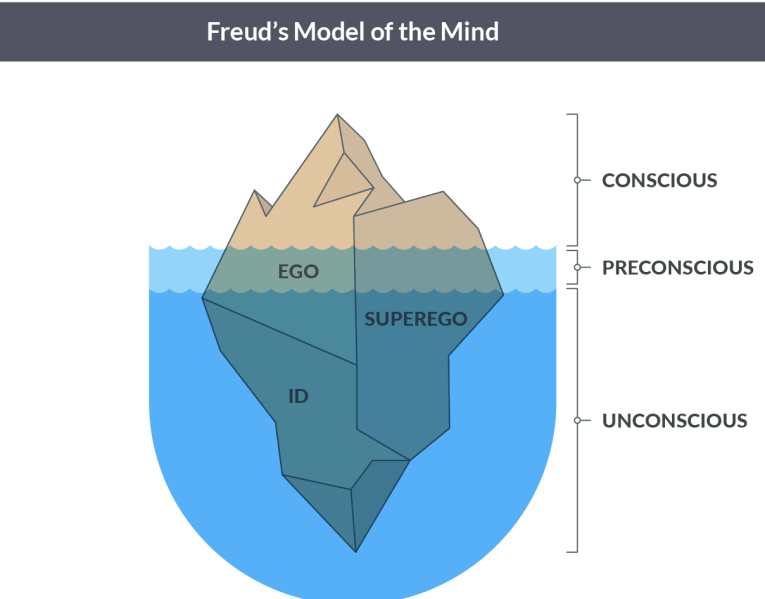
According to Sigmund Freud, human personality is complex and has more than a single component. According to Freud,Childhood traumas play a major role in personality development.In his famous psychoanalytic theory, Freud states that personality is composed of three elements known as the id, the ego, and the superego. These elements work together to create complex human behaviors.Each component adds its own unique contribution to personality and the three interact in ways that have a powerful influence on an individual. Each element of personality emerges at different points in life.

1.ID:The id is driven by the pleasure principle, which strives for immediate gratification of all desires, wants, and needs. If these needs are not satisfied immediately, the result is a state anxiety or tension. For example, an increase in hunger should produce an immediate attempt to eat .It is the unconscious aspect of thinking.

2.EGO:The ego operates based on the reality principle, which strives to satisfy the id’s desires in realistic and socially appropriate ways. The reality principle weighs the costs and benefits of an action before deciding to act upon or abandon impulses.In many cases, the id’s impulses can be satisfied through a process of delayed gratification—the ego will eventually allow the behavior, but only in the appropriate time and place.

3.SUPEREGO:The superego has two parts: The conscience which includes information about things that are viewed as bad by parents and society. These behaviors are often forbidden and lead to bad consequences, punishments, or feelings of guilt and remorse And the Second Part,The Ego ideal which includes the rules and standards for behaviors that the ego aspires to.Basically The superego tries to perfect and civilize our behavior. It works to suppress all unacceptable urges of the id and struggles to make the ego act upon idealistic standards rather that upon realistic principles. The superego is present in the conscious, pre conscious, and unconscious.

So,According to Freud, the key to a healthy personality is a balance between the id, the ego, and the superego.If the ego is able to adequately moderate between the demands of reality, the id, and the superego, a healthy and well-adjusted personality emerges. Freud believed that an imbalance would lead to a maladaptive personality.

Freud basically studies the interaction between Id,Ego and Super Ego using five Psychosexual stages of development where in the individual’s personality develops in a particular stage only if there is a balance between the three elements.The Freudian Psychosexual Stages of Development are as follows:

  • Oral (0 – 2years of age): Fixation on all things oral. If not satisfactorily met there is the likelihood of developing negative oral habits or behaviors.
  • Anal (2 to 3 years of age): As indicated this stage is primarily related to developing healthy toilet training habits.
  • Phallic (3 – 5 year of age): The development of healthy substitutes for the sexual attraction boys and girls have toward a parent of the opposite gender.
  • Latency (5 – 12 years of age): The development of healthy dormant sexual feelings for the opposite sex.
  • Genital (12 – adulthood): All tasks from the previous four stages are integrated into the mind allowing for the onset of healthy sexual feelings and behaviors.

Thus due to the sexualization of Personality Theory,Freud was highly criticized.Some Neo Freudians like Erikson and Adler came up with new and more realistic personality theories.This does not apply to everyone.It is just one of the way of studying the personality of a human being.

Music Therapy:A Novel Therapy

Did you ever feel that therapy involves talk by a psychologist and nothing else could come under the domain of therapy?If your answer is yes,Then you are wrong!!Well times have changed my reader~

Therapies have come a long way to incorporate other clinically approved methods such as animal assisted therapy,food therapy,aroma therapy etc.Music Therapy is one clinically developed program by psychologists to assist speedy healing of their clients.In this blog,the readers would be introduced to the world of Music therapy.So lets get started!

WHAT IS MUSIC THERAPY?

Music Therapy is the clinical and evidence-based use of music interventions to accomplish individualized goals within a therapeutic relationship by a credentialed professional who has completed an approved music therapy program.It is is an established health profession in which music is used within a therapeutic relationship to address physical, emotional, cognitive, and social needs of individuals. After assessing the strengths and needs of each client, the qualified music therapist provides the indicated treatment including creating, singing, moving to, and/or listening to music.

Through musical involvement in the therapeutic context, clients’ abilities are strengthened and transferred to other areas of their lives.This therapy also provides avenues for communication that can be helpful to those who find it difficult to express themselves in words. Research in music therapy supports its effectiveness in many areas especially emotional rehabilitation.

History

You all will be shocked to know that both world wars were the trigger that initiated the development of this therapy.During and after both World Wars, doctors and clinicians began to realize the powerful effects that music has on the healing process and requested that professional musicians be hired by the hospitals.This therapy first got officially recognized in the Michigan state university of the United States of America.Ultimately,The American Music Therapy Association (AMTA) was formed which focuses on creating more awareness about this wonderful therapy.

BENEFITS

Music therapy can benefit many individuals. The diverse nature of music means it can be applied in the treatment of concerns both physical and psychological.Since music can evoke positive emotions and improve brain health,Music therapy is said to manage and alleviate symptoms of mental health concern such as Depression, Mood issues,Anxiety,Schizophrenia,Substance abuse,Autism,Personality issues,Insomnia,Dementia etc.

In addition,Music therapy can improve the social,cognitive,emotional and motor functioning.This therapy was also effective in controlling patient’s situation in Alzheimer’s,Cancer and Hypertension.

Music therapy is frequently administered to reduce stress levels and pain perception of females in labor.This novel therapy has also been linked with improvements in self-esteem, self-concept, verbal communication, prosocial behavior, socialization skills, group cohesion, and coping skills.

Limitations

Even the most beautiful things have flaws,and so has music therapy.One of the major drawback is that this therapy cannot be used as a stand-alone therapy.The music therapy is also known as music assisted therapy implying it’s sole purpose is to assist the main therapy applied by the clinician on the client to produce fast results and relief.

Also,the music therapy like all other therapies is individualized.This is not a major drawback but should be kept in mind before going in for this option.All individuals are unique and so is their taste in music.Thus the therapist has to do additional tests to see which type of music and musical instrument works better for the client.

ALWAYS REMEMBER,WHERE WORDS FAIL,MUSIC SPEAKS…..

Thus in short we need to know that music therapy is a wonderful form of therapy which strengthens an individual and increases his/her quality of life.Choose Music for a better Life!

Do give a like,if you all found this article to be Interesting!

Thankyou!

Stay Knowledgeable!

Review of a research article

Article name:A Study of University Students’ Motivation and Its Relationship
with Their Academic Performance.

Student motivation is the element that leads students’ attitude towards learning process.God-gifted talents, best teachers and best schooling facilitate the academic performance and students’ motivation
is prerequisite for students’ accomplishment. This study attempts to identify the influence of students’
motivation on their academic performance.So come on research enthusiasts let’s look into the why,how and what of student motivation through this review!

Purpose and sample

This outstanding Research article by Ali and colleagues has been published in the International Journal of Business and Management.This study attempts to identify the influence of students’ motivation on their academic performance.The sample consisted of 342 university students of different programs in various universities of Islamabad and Lahore, Pakistan.The students were asked about how motivated they are about their university experience and what really motivated them to study.

METHODOLOGY

The questionnaire was distributed among both male and female students. There were 82% male and 18% female students in the survey with an average age of 20 years.“The University Student Motivation and Satisfaction Questionnaire version 2″ (TUSMSQ2) instrument was developed by Neill (2004) to measure student’s motivation. TUSMSQ2 instrument contains 30-items.

WHAT WAS TESTED?

The questions measure both Intrinsic and Extrinsic motivation of students. There were two intrinsic motivators; Self-exploration and Altruism and four extrinsic motivators;rejection of Alternative options, career and qualifications, Social enjoyment, and Social pressure in the questionnaire. The questions were based on five point Likert scale. For each item, students rated themselves on a scale of 1 to 5; 1 being “Very False”, towards, 5 being “Very True”

BASIS/THEORY OF THE STUDY

Motivation is state of mind that stimulates activities and human body actions.Student motivation is often separated into two types: Intrinsic motivation and extrinsic motivation.


Intrinsic motivation: A student is intrinsically motivated when he or she is motivated from within. Intrinsically motivated students keenly engage themselves in learning out of oddity, interest, or enjoyment, or in order to achieve their own scholarly and personal goals.Thus students with intrinsic motivation are more enthusiastic, self driven, challenging and feel pleasure in their studies.Intrinsically motivated students tend to prefer challenging tasks.

Extrinsic motivation: It is commonly viewed that extrinsically motivated student engages in learning
purely for attaining a reward or for avoiding some punishment.Extrinsic motivation means
to obtain some reward or avoid some punishment external to the activity itself such as grades, stickers or teacher approval.Students with extrinsic motivation try to drag themselves with academic assignments, feel compelled to learn, and always put minimal efforts to achieve maximum appreciations.

Results

The results indicate that academic performance amplifies between the ranges of 23 percent and 34 percent due to extrinsic motivation and intrinsic motivation.Also the comparisons of variables on
individual bases indicates that those students who adapt self-exploratory variable and altruism variable, rejection of alternative options variable tend to perform better, whereas student who adapt career and qualifications variable, social enjoyment variable and social pressure variable tend to perform less then expected.Also the study found positive and mutually causal relationship between student’s motivation and student’s academic performance. This relationship is reciprocal, meaning students who are more motivated perform better and student who perform better become more motivated.

implications

Any research article would be a waste without implications.This study helps in identifying the factors that will help educational thinkers to know students’ attitudes towards learning, what facilitates learning and what hinders in learning.Thus it will lead to better teaching methods and facilities to suit the student’s need thereby increasing their job competence.

So,this was a comprehensive review of a wonderful research article.Click the below button to read the article:

Hope you all liked the review,if yes please give this blog a like.

Thankyou!

Stay Knowledgeable!

Motivation:Cause of all actions

Why have i written this blog?why are you reading this blog?Why do you eat?Why do you love?

The answer to all of these actions is MOTIVATION!Motivation is the process that initiates, guides, and maintains goal-oriented behaviors. It is what causes you to act, whether it is reading this article, getting a glass of water to reduce thirst or reading a book to gain knowledge.So this blog will critically analyse the concept of motivation and help all of you to understand the reasons behind your actions.So lets get started!

Motivation describes the wants or needs that direct behavior toward a goal. It is an urge to behave or act in a way that will satisfy certain conditions, such as wishes, desires, or goals. Older theories of motivation stated that rational thought and reason were the guiding factors in human motivation; however, psychologists now believe that motivation may be rooted in basic impulses to optimize well-being, minimize physical pain, and maximize pleasure.

Motivation involves the biological, emotional, social, and cognitive forces that activate behavior. In everyday usage, the term “motivation” is frequently used to describe why a person does something. It is the driving force behind human actions.

So lets analyse the mechanism of motivation

Drives and motives

Motivations are commonly separated into drives and motives.

Drives are primarily biological, like thirst, hunger, sleepiness, and the need to reproduce—all of which lead us to seek out and take part in certain activities. Drives are believed to originate within a person and may not require external stimuli to encourage behavior.

Motives, on the other hand, are primarily driven by social and psychological mechanisms, such as work, family, and relationships. They include factors like praise and approval.

INtrinsic and extrinsic motivation

Motivation can be intrinsic (arising from internal factors) or extrinsic (arising from external factors).

Intrinsic:arise from within the individual, such as doing a complicated crossword puzzle purely for the personal gratification of solving a problem.

Extrinsic:arise from outside of the individual and often involve rewards such as trophies, money, social recognition, or praise.

In reality, our motivations are often a mix of both intrinsic and extrinsic factors, and the nature of the mix can change over time.Sometimes, intrinsic motivation can diminish when extrinsic motivation is given—a process known as the overjustification effect. This can lead to extinguishing the intrinsic motivation and creating a dependence on extrinsic rewards for continued performance.

Motivation v/s emotion

While motivation and emotion can be intricately linked, they are two fundamentally different things. Motivation describes the wants or needs that direct behavior toward a goal; in contrast, an emotion is a subjective state of being that we often describe as a feeling. Emotion and motivation are linked in several ways: both influence behavior and can lead us to take action, and emotion itself can act as a motivator.

The need to understand motivation

So at the end of this article,lets see what is the use of understanding the concept of motivation.Understanding motivation can:

  • Help improve the efficiency of people as they work toward goals
  • Help people take action
  • Encourage people to engage in health-oriented behaviors
  • Help people avoid unhealthy or maladaptive behaviors such as risk-taking and addiction
  • Help people feel more in control of their lives
  • Improve overall well-being and happiness

If you all liked this article,please do like it!

Thankyou!

Psychological impact of Covid-19

As a result of the emergence of coronavirus disease 2019 (COVID-19) outbreak caused by severe acute respiratory syndrome coronavirus 2 (SARS-CoV-2) infection in the Chinese city of Wuhan, a situation of socio-economic crisis and profound psychological distress rapidly occurred worldwide.

So this blog will look into various forms of psychological distress bought in by this pandemic due to educate and sensitize the readers about these issues.

Many psychological problems and important consequences in terms of mental health including stress, anxiety, depression, frustration, uncertainty during COVID-19 outbreak emerged progressively.Common psychological reactions related to the mass quarantine which was imposed in order to attenuate the COVID-19 spread are generalized fear and pervasive community anxiety which are typically associated with disease outbreaks, and increased with the escalation of new cases together with inadequate, anxiety-provoking information which was provided by media.The psychological reactions to COVID-19 pandemic may vary from a panic behavior or collective hysteria to pervasive feelings of hopelessness and desperation which are associated with negative outcomes including suicidal behavior.Importantly, other health measures may be compromised by abnormally elevated anxiety.

As the general population became increasingly exposed, anxiety-provoking topics related to this emergence of the health and socio-economic crisis need to be rapidly identified to early detect dysfunctional processes and maladaptive lifestyle changes potentially leading to the onset of psychiatric conditions.

So let us discuss the most important psychological impacts of COVID which are the root cause of other mental disorders :

-uncontrolled fears related to infection

This is commonly one of the most frequent psychological reaction to pandemics. Several existing studies demonstrated that those who have been exposed to the risk of infection may develop pervasive fears about their health, worries to infect others and fear infecting family members.

-Pervasive anxiety

Social isolation related to restrictions and lockdown measures are linked to feelings of uncertainty for the future, fear of new and unknown infective agents resulting in abnormally increased anxiety.Anxiety may be directly related to sensorial deprivation and pervasive loneliness.

-Frustration and boredom

Distress, boredom, social isolation and frustration are directly related to confinement, abnormally reduced social/physical contact with others, and loss of usual habits.

-LONELINESS

The final effect of social isolation is pervasive loneliness and boredom, which have potential dramatic effects on both physical and mental individual well-being. Pervasive loneliness may be significantly associated with increased depression and suicidal behavior.Unfortunately, the isolation is progressively enhanced by anxiety, panic or collective hysteria. Cognitive functions and decision making are firstly impaired by hyperarousal and anxiety and later by disabling feelings of loneliness.

After looking at these gruesome psychological impacts,it is crystal clear so as to how psychologically damaging this pandemic has been!The protective factors against these impacts include social support and psychological support.

Implementing community-based strategies to support resilience and psychologically vulnerable individuals during the COVID-19 crisis is fundamental for any community.The psychological impact of fear and anxiety due to the horrible spread of pandemic needs to be clearly recognized as a public health priority for both authorities and policy makers who should adopt clear behavioral and interventional strategies to reduce the burden of disease and the dramatic mental health consequences of this outbreak.