10 Animes to watch

The term anime is a Japanese colloquialism used as an abbreviation for the term “animation.” Generally in Japan, the word anime (written アニメ) is synonymous with animation of any kind from anywhere. Internationally, however, anime is typically referred to as animation that is produced from Japan. The distinction between anime and cartoons is more cultural than it is technical.

Anime itself dates back over a hundred years. The first confirmed example was produced in 1917 titled Namakura Gatana with a run time of only four minutes.

Here is a list of 10 animes you will enjoy watching

1. Death Note

Genres: ♟️ Psychological, 🔮 Supernatural, 🕵️ Mystery, 🤯 Thriller
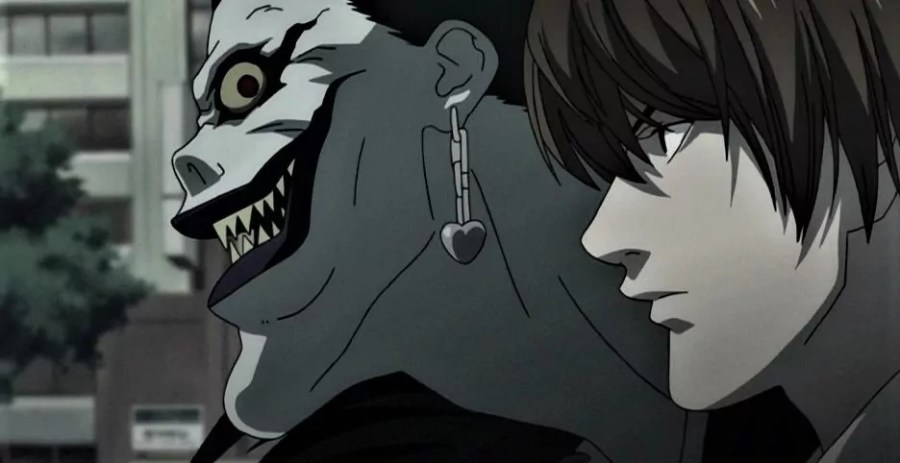
The story follows Light Yagami, a high school student who stumbles across a mysterious otherworldly notebook: the “Death Note”, which belonged to the Shinigami Ryuk, and grants its user the power to kill anyone whose name and face he knows. The series centers around Light’s subsequent attempts to use the Death Note to change the world into a utopian society without crime and the subsequent efforts of L, a reclusive international criminal profiler, to apprehend him and end his reign of terror.

2. Attack on Titan : Shingeki no Kyojin

Genres: 👊 Action, 🎭 Drama, 🧞 Fantasy, 🕵️ Mystery

Attack on Titan is set in a world where humanity lives inside cities surrounded by enormous Walls that protect them from Titans, gigantic humanoid creatures who devour humans seemingly without reason. The story centres around Eren Jaeger and his childhood friends Mikasa Ackermann and Armin Arlelt whose lives are changed forever after the appearance of a Colossal Titan, which brings about the destruction of their home town. Vowing revenge and to reclaim the world from the Titans, Eren, Mikasa, and Armin join the Scout Regiment, an elite group of soldiers who fight Titans outside the Walls.

3. My Hero Academia

Genres: 🐵 Animation, Action, 🌋 Adventure, 🤣 Comedy, ✨ Fantasy, 🤖 Sci-Fi

The story follows Izuku Midoriya, a boy born without superpowers in a world where they are the norm, but who still dreams of becoming a superhero himself. He is scouted by the world’s greatest hero, who shares his powers with Izuku after recognizing his value and later enrolls him in a high school for heroes in training.

4. Bleach

Genres: 👊 Action 👒 Adventure 🔮 Supernatural

High school student Kurosaki Ichigo is unlike any ordinary kid. Why? Because he can see ghosts. Ever since a young age, he’s been able to see spirits from the afterlife. Ichigo’s life completely changes one day when he and his two sisters are attacked by an evil, hungry and tormented spirit known as a Hollow.

5. Fullmetal Alchemist : Brotherhood

Genres: 👊 Action, 👒 Adventure, 🤣 Comedy, 🎭 Drama, 🧞 Fantasy

Abandoned by their father as kids, two young brothers, Edward and Alphonse Elric lived with their mother in a small town called Resembool. After losing their mother to a terminal illness, they try to resurrect her using alchemy – a science which allows you to transform physical matter from one form to another.

6. Demon Slayer

Genres: 👊 Action 👒 Adventure 🎭 Drama 🧞 Fantasy 🔮 Supernatural

Demon Slayer’s plot follows the epic saga of Tanjirou Kamado, a kind-hearted teen who, upon returning home one day, finds his entire family slaughtered by invading demons. Worst of all, he finds that his sister, Nezuko, has been turned into a bloodthirsty demon herself.

7. Tokyo Revengers

Genres: 👊 Action, 🎭 Drama, 💕 Romance,🔮 Supernatural

Hanagaki Takemichi lives an unsatisfying life right up until his death. Waking up 12 years in the past, he reckons with the eventual fate of his friends and tries to prevent an unfortunate future.

8. Odd Taxi

Genres: 🎭 Drama 🕵️ Mystery ♟️ Psychological
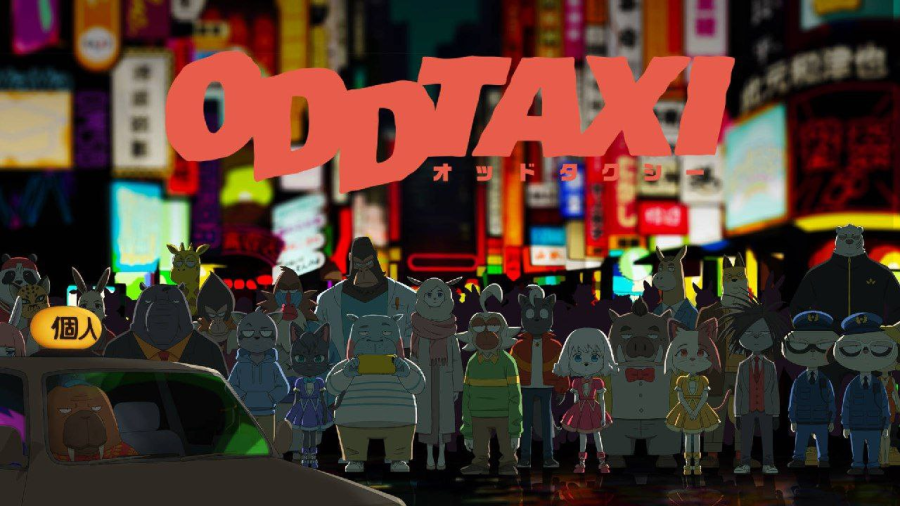
‌In a city which should be familiar, there is the feeling of something a little different. Kotokawa is a taxi driver who lives an ordinary life, taxing some quirky customers around. A slightly eccentric stranger who has no relatives nor any relations with other people, Kotokawa’s hobby is to listen to Rakugo on the radio before going to bed. For the time being, the only people he can consider as friends are his family doctor Gouriki, and his high school classmate Kakihana. Kabasawa, a college student who wants a buzz, Shirakawa, a nurse who’s hiding something, comedian group Homo Sapiens, who isn’t selling well, the city hoodlum Dobu, and the rookie idol group Mystery Kiss—the conversations with these people, which should not have meant much, lead to a girl who disappeared.

9. Haikyuu

Genres: 🤣 Comedy, 🎭 Drama, 🏀 Sport

Hinata Shouyou, a short middle school student, gained a sudden love of volleyball after watching a national championship match on TV. Determined to become like the championship’s star player, a short boy nicknamed “the small giant”, Shouyou joined his school’s volleyball club.

10. Jujutsu Kaisen

Genres: 👊 Action 🤣 Comedy 🎭 Drama 🔮 Supernatural

The story follows high school student Yuji Itadori as he joins a secret organization of Jujutsu Sorcerers in order to kill a powerful Curse named Ryomen Sukuna, of whom Yuji becomes the host.
Analyzing Alfred Hitchcock: The Psychological Genius Mind

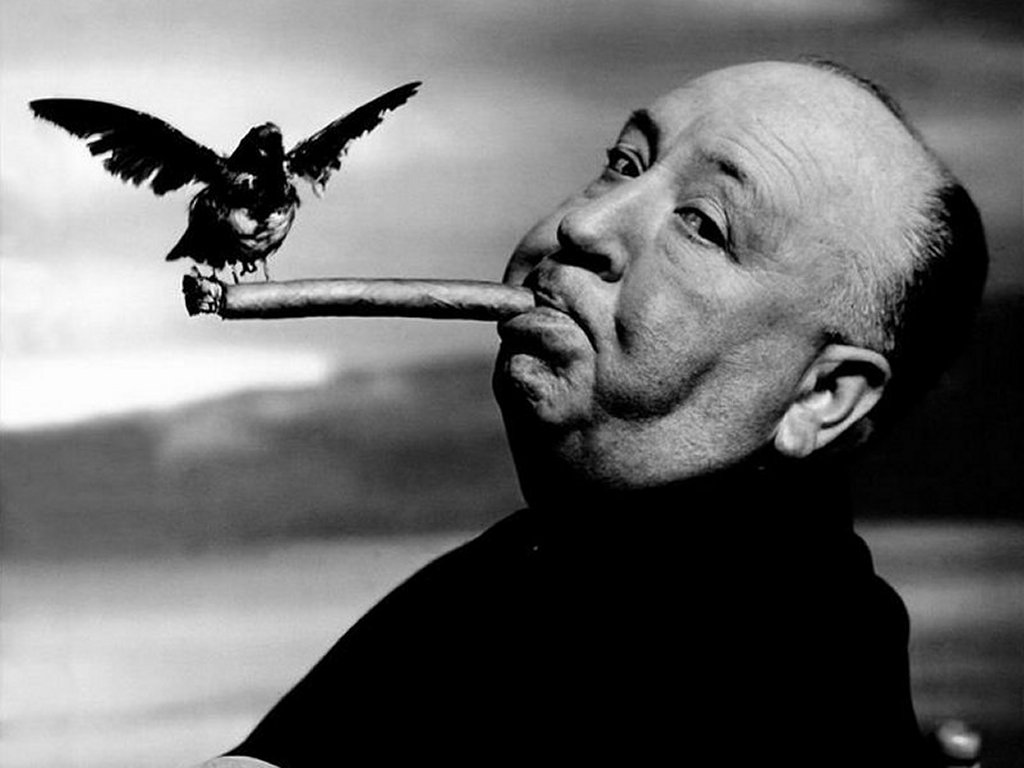
Sir Alfred Hitchcock

Introduction

The movies of Alfred Hitchcock, seem to have a permanent place in both American and Global Cinematic history. He is a common topic to turn when discussing auteur directors, film history,  suspense and psychoanalysis. His visual style is very distinct, the close-ups, subjective camerawork, unusual camera angles and the list goes on. Today, in this article, we intend to analysis the visual choices of Hitchcock’s most well known works including Vertigo, Rear Window and Psycho.

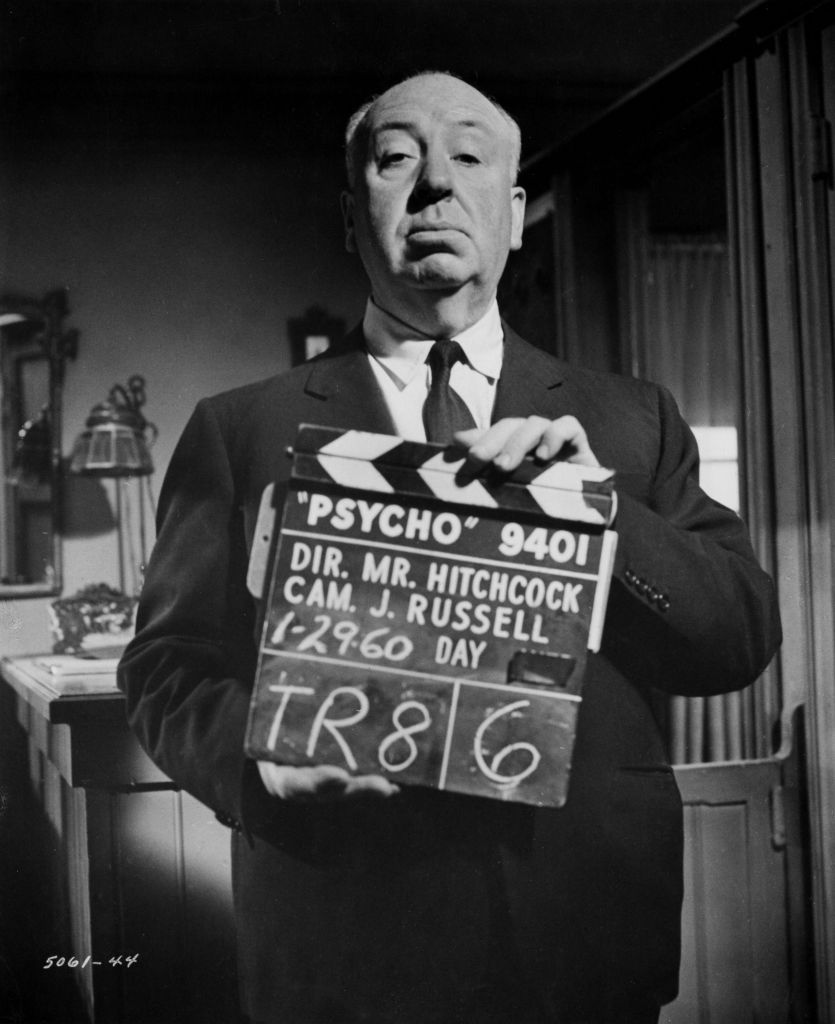
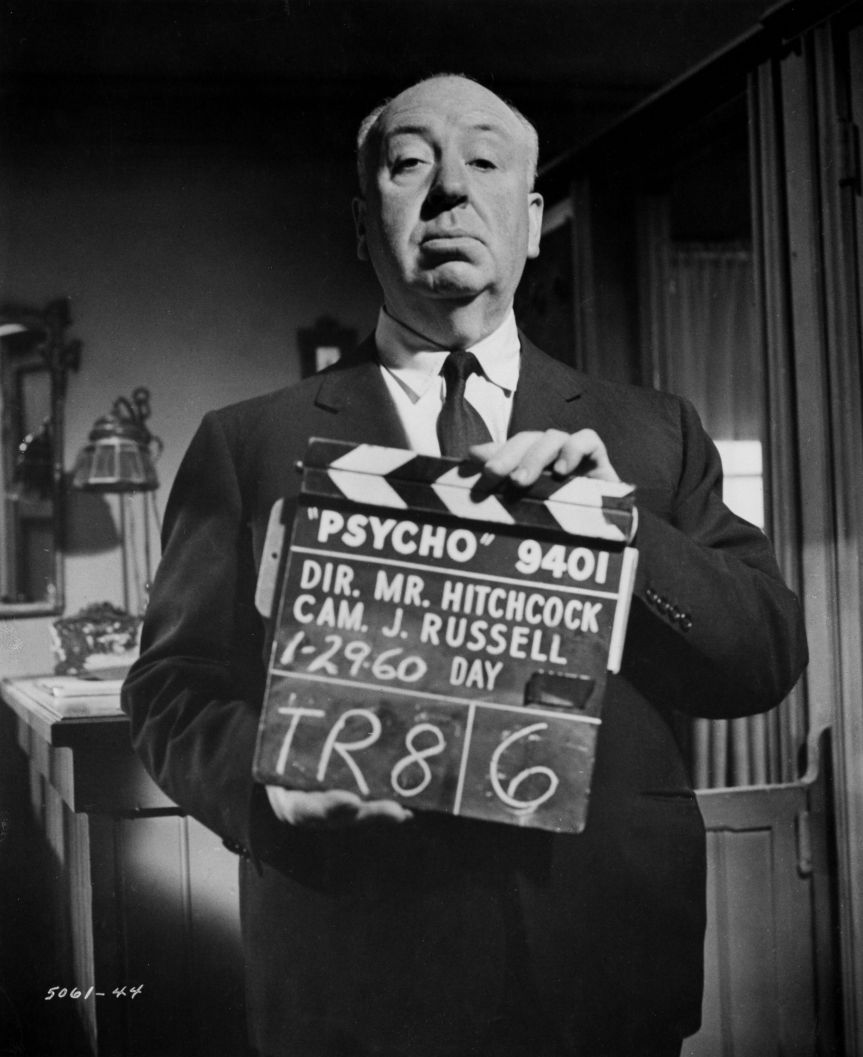
Sir Hitchcock before the shooting for Psycho (1960)

About Alfred Hitchcock

Sir Alfred Joseph Hitchcock  (13 August 1899 – 29 April 1980) was an English filmmaker who was one of the most influential figures in the history of cinema. In a career spanning six decades, he directed over 50 feature films, many of which are still widely watched and studied today. Known as the “Master of Suspense“, he became as well known as any of his actors thanks to his many interviews, his cameo roles  in most of his films, and his hosting and producing the television anthology Alfred Hitchcock Presents  (1955–65). His films garnered 46 Academy Awards nominations, including six wins, although he never won the award for Best Director despite five nominations.

Sir Hitchcock

Techniques and Methodology of Hitchcock’s Works

Alfred Hitchcock’s attention to detail in his films is one of the many things that makes him one of the most recognized film auteurs of all time. He was very particular what about he wanted seen on screen and how he wanted to get those shots. From camera movements to the things found in the mise-en-scène, Hitchcock was very precise about every little thing that is seen in his on screen worlds. He would strategically place objects throughout the mise-en-scène and have characters wear certain clothing. By doing this, Hitchcock is able to let the audience know things about the characters and the plot without it having to be said on camera. Hitchcock once said that “If it’s a good movie, the sound could go off and the audience would still have a perfectly clear idea of what was going on” . To Hitchcock, the conversations in his films were not important.  Visuals were of the utmost importance.  He loved point of view shots, which showed a shot of the actor and then cut to a shot of what the actor was looking at in order to convey what the actor is looking at; pretty much, the Kuleshov effect.

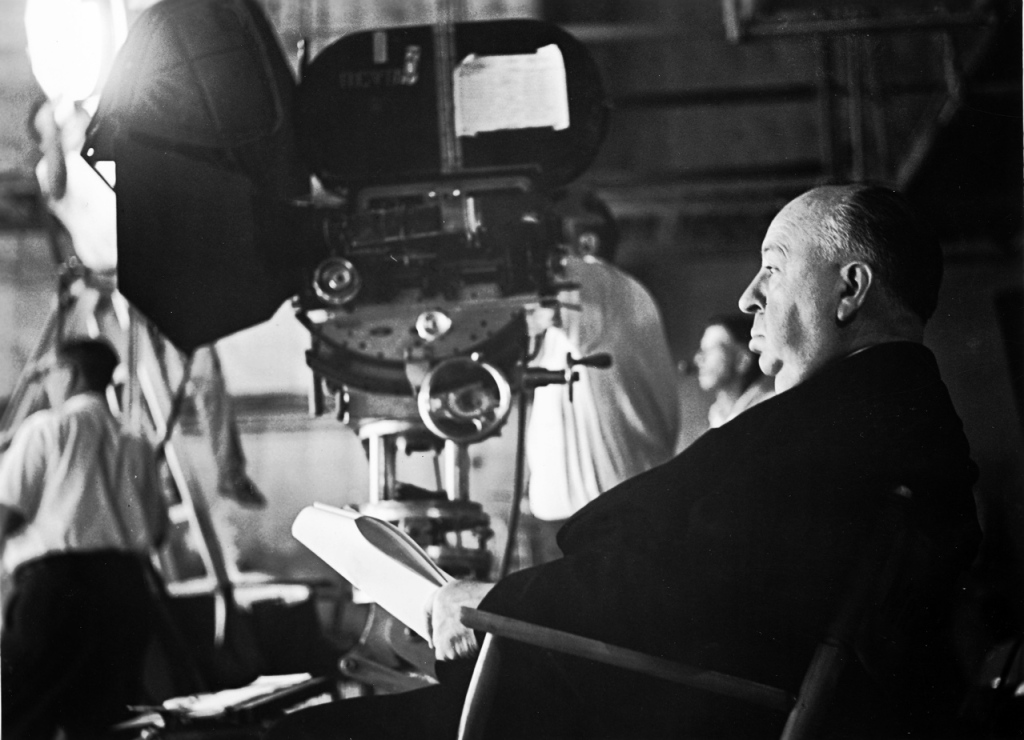
Sir Alfred Hitchcock on the set of one of his movies

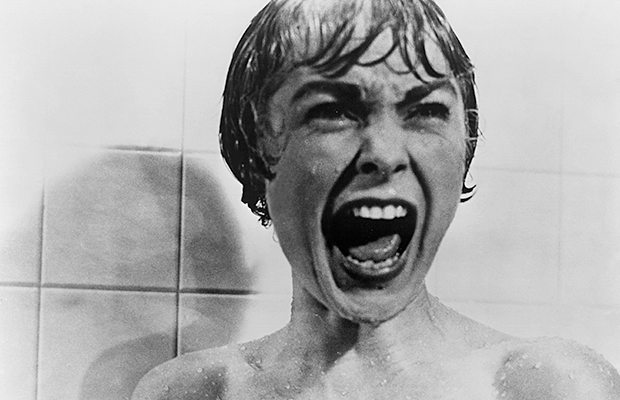
The soundtrack was extremely important to Alfred Hitchcock, as he managed to sync the music with the actions of the scenes.  His most famous scene would be the shower scene in Psycho, where the orchestra is perfectly correlated with the murder.  In his famous film, Hitchcock also incorporated the use of shot/reverse shot, a standard shot pattern that directors use to film conversations between two characters. In general, the actors avoid speaking directly to the viewer, because doing so acknowledges the audience’s presence and destroys the illusion of a naturally unfolding story. From panning shots, to tracking shots Alfred Hitchcock used his techniques in filming and editing in order to create great products that continue to intrigue audiences to this day.

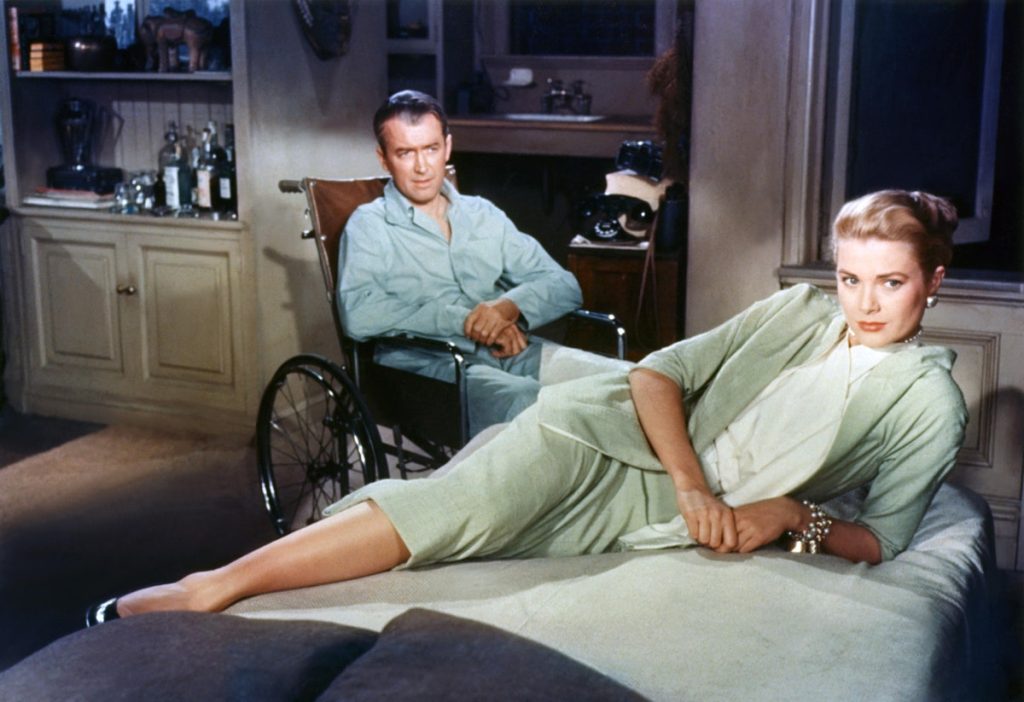
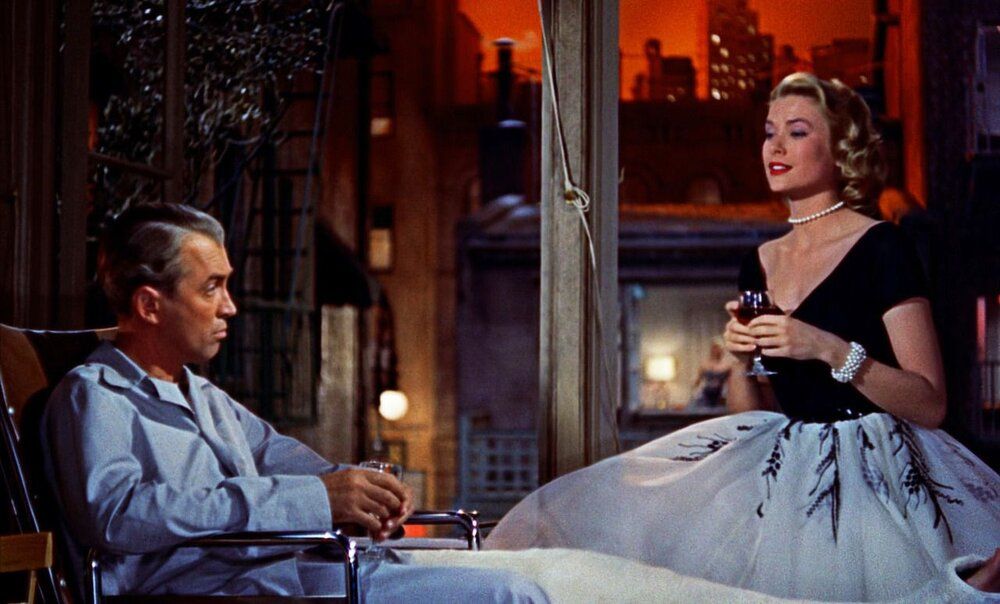
James Stewart as Jeff and Grace Kelly as Lisa Carol in Hitchcock’s Rear Window (1954) movie

Analysis of The Film “Rear Window” (1954)

The cinematography of Rear Window mainly focuses on the use of lighting and shadows. With the darkness and mystery of the film, Alfred Hitchcock was able to use his lighting to his best advantage. The light always is picking up on important symbols or messages in the scene. Such as the scene when the salesman finally comes into Jeff‘s room, the light only picks up on Jeff’s most valuable senses; his hands and eyes. Along with the lighting, the interesting angles are very common.  Not only did it create suspense, it creates confusion and the viewer wants to see more. Mise en Scene was very important in this film, as all of the scenes happened in the same group of apartments. In the city of New York, everything is very tight because of the huge population. The use of the differently decorated rooms also created personality and character for the roles who didn’t even speak

Scene from Hitchcock’s Rear Window (1954) movie

Although sound and music weren’t always in the film, it was there when it needed to be. The traffic and sounds of the city were placed delicately to remind the viewer of the area. The mix of piano from the songwriter in one apartment, from the screeching violins during nail-biting moments, created emotions for the viewer. Editing was evident everywhere, especially during a fight scene, or used very consciously during high suspense. The fades were apparent from day to day, which helped the viewer better understand the passage of time.

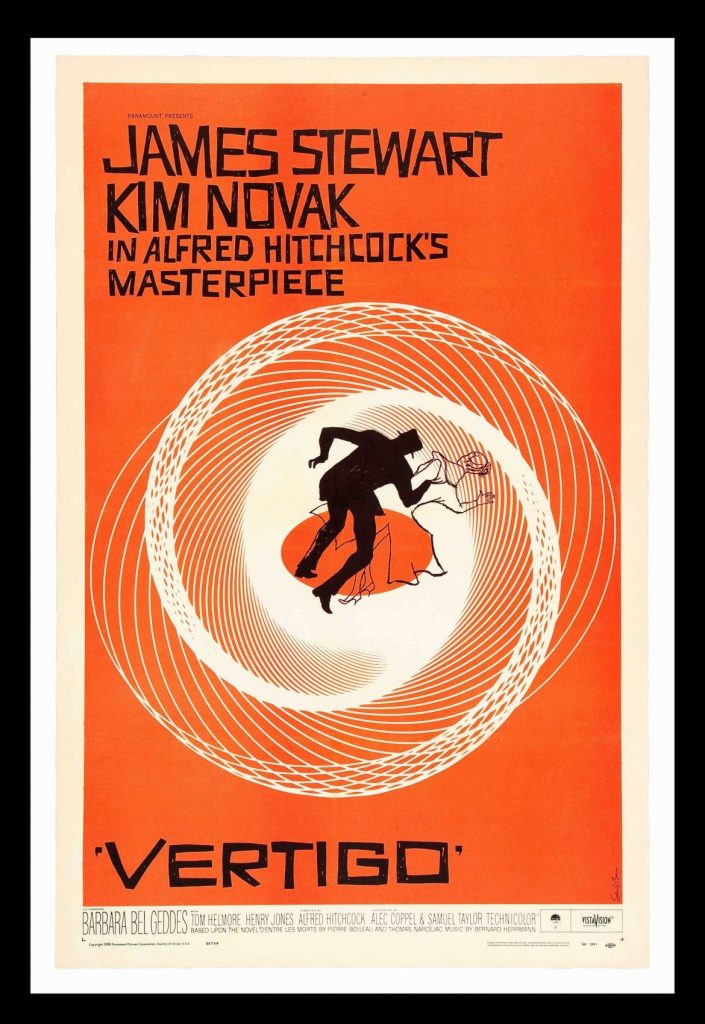
Poster of Hitchcock’s Vertigo (1958) movie

Analysis of The Film “Vertigo” (1958)

Vertigo is a 1958 suspense thriller directed by Alfred Hitchcock, written by Alec Coppel and Samuel Taylor and based upon the 1954 novel ‘D’entre Les Morts’ by Pierre Boileau and Thomas Narcejac. Starring James Stewart, Kim Novak and co-starring Barbara Bel Geddes.

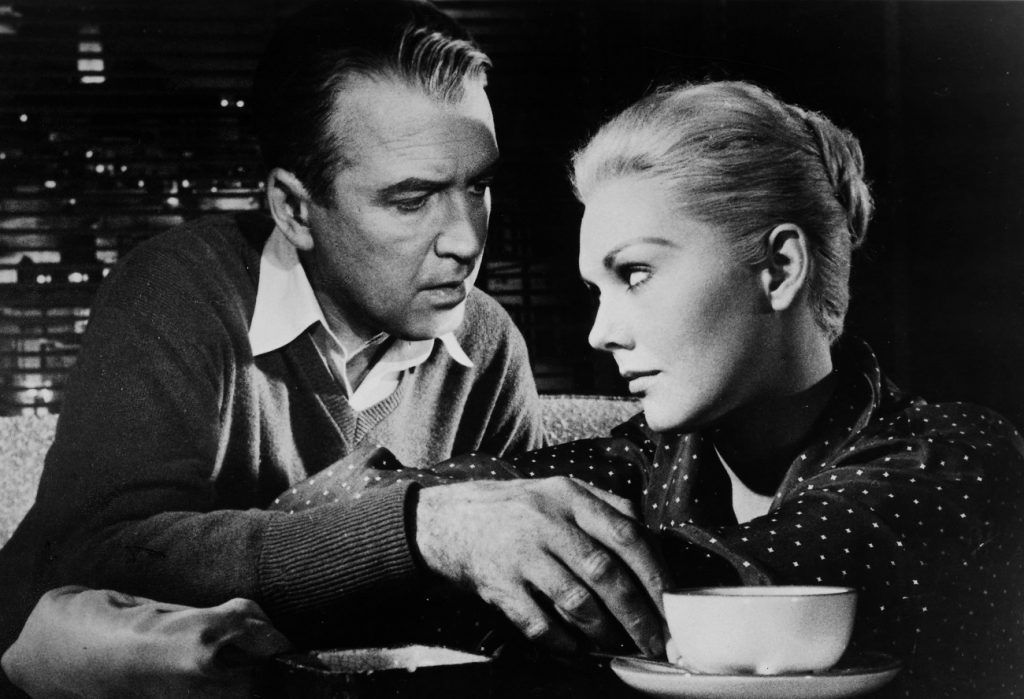
James Stewart as John Ferguson and Kim Novak as Madeleine in Hitchcock’s Vertigo (1958) movie

Vertigo is a film which functions on multiple levels simultaneously. On literal level it’s a mystery suspense story of a man hoodwinked into acting as an accomplice in a murder, his discovery of a hoax, and the unravelling of the threads of the murder plot. On a Psychological level, the film traces the twisted , circuitous routes of a psyche burdened down with guilt, desperately searching for an object on which to concentrate its repressed energy. Finally, on an allegorical or figurative level, it is a retelling of a immemorial tale of a man who has lost his love to the death and in hope of redeeming her descends into the underworld,  the most famous of these stories being that of Orpheus and Eurydice in Greek Mythology. Vertigo’s complexity however does not end with this multilevel approach to its tale, the film also succeeds in blurring the already fine line between objectivity and subjectivity . It takes the viewers so far into the mind of its main characters ( Scottie, played by Hitchcock veteran James Stewart), that audiences’ own objectivity, at least initially, is lost and replaced by complete identification with Scottie’s fantasies and obsessions.

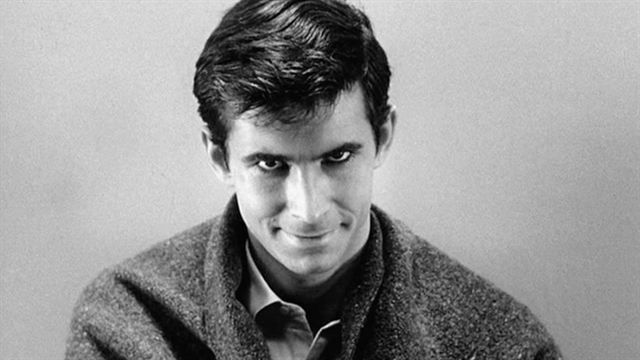
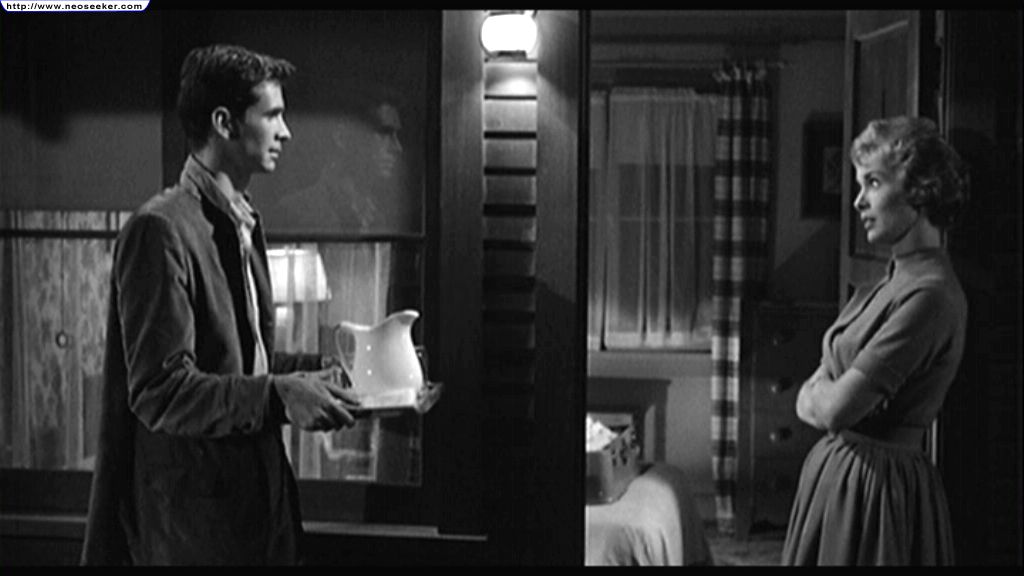
Anthony Perkins as Norman Bates in Hitchcock’s Psycho (1960) movie

Analysis of The Film “Psycho” (1960)

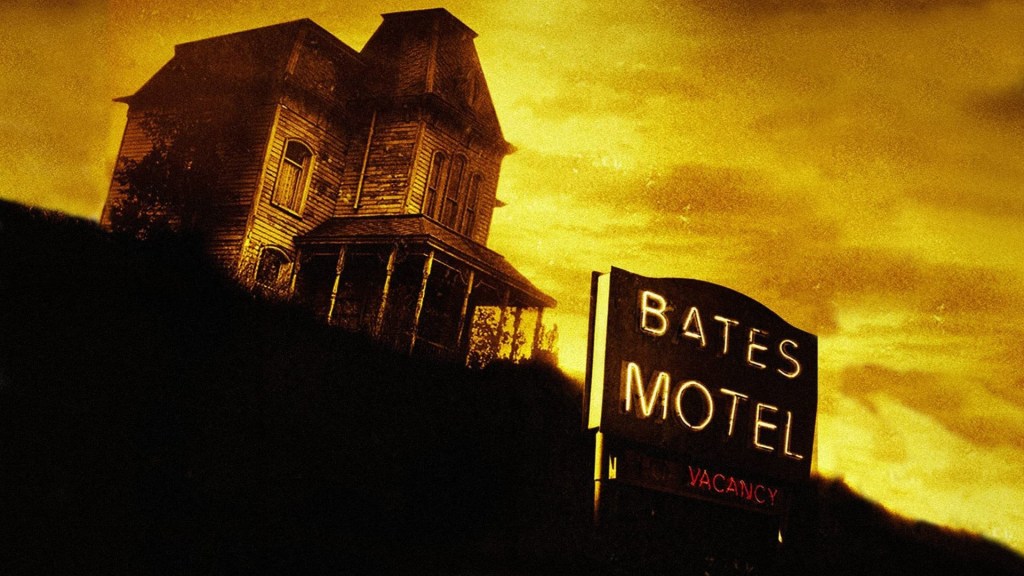
Hitchcock’s Psycho has been commended for forming the archetypical basis of all horror films that followed its 1960 release. The mass appeal that Psycho has maintained for over three decades can undoubtedly be attributed to its universality.

Scene from Hitchcock’s Psycho (1960) movie

In Psycho, Hitchcock allows the audience to become a subjective character within the plot to enhance the film’s psychological effects for an audience that is forced to recognize its own neurosis and psychological inadequacies as it is compelled to identify, for varying lengths of time, with the contrasting personalities of the film’s main characters. Hitchcock conveys an intensifying theme in Psycho, that bases itself on the unending subconscious battle between good and evil that exists in everyone through the audience’s subjective participation and implicit character parallels. The initial confrontation between Marion and Norman Bates is used by Hitchcock to subtly and slowly sway the audience’s sympathy from Marion to Norman. Hitchcock compels the audience to identify with the quiet and shy character whose devotion to his invalid mother has cost him his own identity. Upon the introduction of Norman, Hitchcock introduces the first of several character parallels within Psycho. The clash between Marion and Norman, although not apparent to the audience until the end of the film, is one of neurosis versus psychosis.

Anthony Perkins as Norman Bates and Janet Leigh as Marion Crane in Hitchcock’s Psycho (1960) movie

The fear that Psycho creates for the audience does not arise from the brutality of the murders but from the subconscious identification with the film’s characters who all reflect one side of a collective character. Hitchcock enforces the idea that all the basic emotions and sentiments derived from the film can be felt by anyone as the unending battle between good and evil exists in all aspects of life.The effective use of character parallels and the creation of the audience’s subjective role in the plot allows Hitchcock to entice terror and convey a lingering sense of anxiety within the audience through a progressively intensifying theme. Hitchcock’s brilliance as a director has consolidated Psycho’s place among the most reputable and profound horror films ever made.

Scene from Hitchcock’s Psycho (1960) movie

Conclusion

Alfred Hitchcock who has been entitled to the master of apprehension, suspense and fear, entices the audience to discern his unknown inner in a simulation over cinema curtain. Human, sets back his instincts for years; withholds sex and anger and wrap it in his inner depths where even is impenetrable for himself. But there is always probability of arising it in the society as a coarse event. Eruption of anger from sub-consciousness of Hitchcock’s characters brings along murder, crime and often imagination, tragic psychic disturbances. Anyone might be involved with the condition of these characters in real world. Most of Hitchcock’s movies create suspense in very first minutes of the show. The propensity to know arouses in him. He limits and draws attention of the audience to the film.Dark spaces, long and fearsome roads, deserted places and empty of habitat, are signs and symbols which sometimes refers to unaware and its inner events. Making use of sharp-pointed lines and thorn-shaped edges in locations and shades, which are taken from Gothic style, makes the movies horror and terror. Hitchcock through increasing vigilance, guides the audience toward making a powerful “ego” against incidents which mostly indicates determinism.

Why you should watch/read MONSTER?

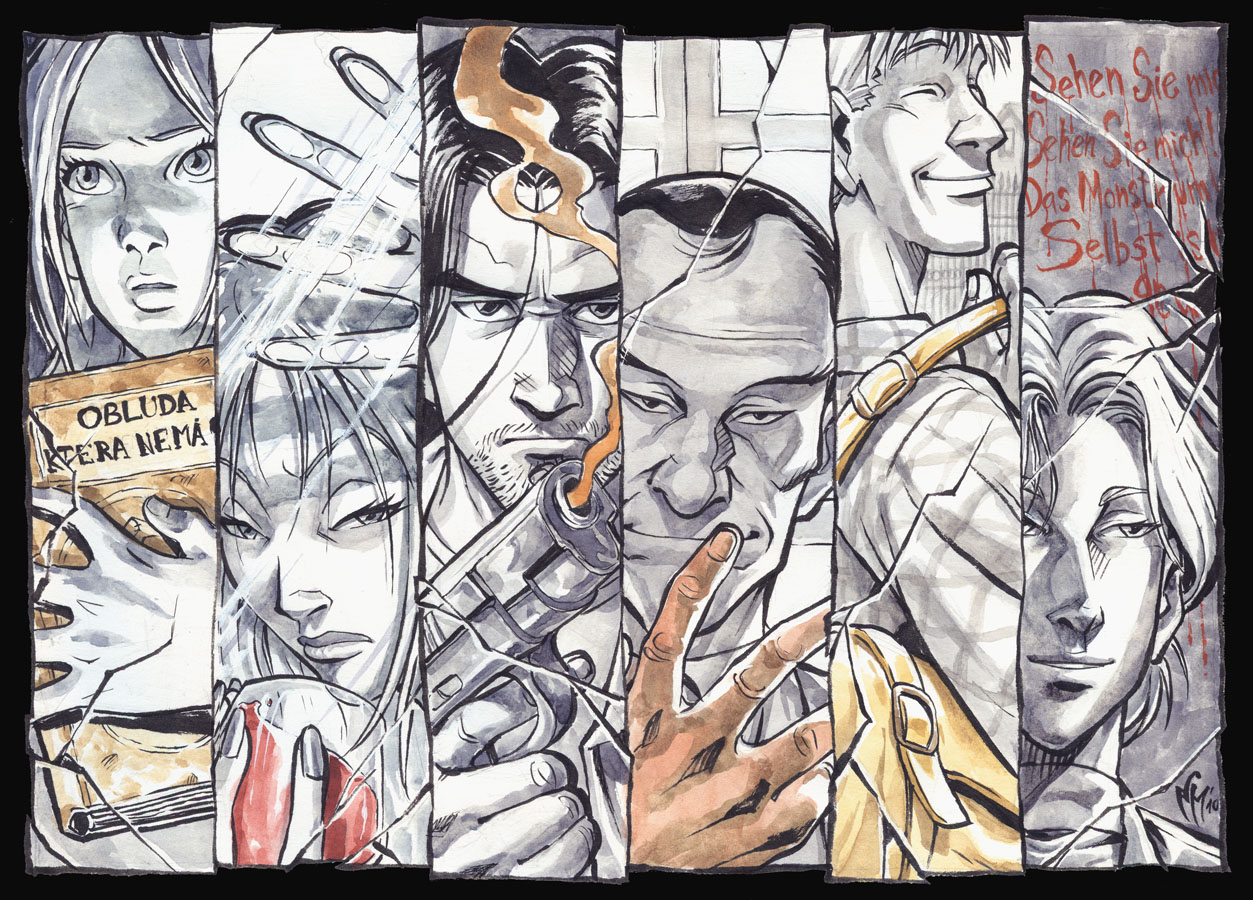
MONSTER is the magnum opus of mangaka Naoki Urasawa and a Cold War psychological thriller – it is a seinen manga manga also adapted into an anime following the whole story exactly. It follows a Japanese neurosurgeon, Dr. Kenzo Tenma, who has residence in Germany to work at Eisler Memorial. Engaged to his boss’ daughter and with optimistic prospects in his medical career, Tenma’s values soon hijacks any stable life as a darkly dramatic irony – he was only trying to do the right decision(s) morally: a tragic statement that ‘right’ doesn’t entail the best results. His life is sidetracked into revolutionary conspiracies from the Soviet bloc, violent machinations of a criminal underworld and a boy, Johan, who’s a nihilistic catalyst of chaos; all these intense affairs are to the backdrop of relatively ordinary existence as a shocking duality showcasing the thin veil between horror and normalcy as is also applicable to our own nature. Stylishly European in every day as an atmospheric overture, with the location rife for intrigue as close to the Iron Curtain, MONSTER is an incisive examination of human nature – the cause of ‘evil’, why and who is truly responsible; the whole work, too, acts as a character study in conscientiously designed personalities who’re palpable as representations to the human condition.

A difficult choice

Dr. Kenzo Tenma sacrifices his career to save Johan as a child in a dilemma of choosing a patient for his expertise – the town’s mayor or an innocent boy shot in the head – and although demanded to save the mayor for financial reasons, he opts for Johan as he arrived first in the staunch belief ‘all lives are equal’. These philosophical and moral systems are the root of MONSTER – how these inform and challenge one’s life choices to the darkness we may encounter as aberrant of all we thought as usual; beliefs are easier in a vacuum of a solitary life or with a confirmation bias. Tenma’s choice would have unforeseen, destructive ramifications for which he takes responsibility, too, for which no attitude could prepare him – he had saved a boy who would evolve into a ruthless, charismatic leader of mass destruction. If he knew of the outcome, would he still have performed his duty as a doctor and thought of Johan as ‘equal’ – this is the central concept that tests Tenma’s view on the worth of lives, his right, too, to intervene and act. As he’s demoted for his failure with the mayor, and his lover leaves him as no longer financially secure, the senior staff at the hospital responsible for his punishment all coincidentally die in a poisoning while the boy, Johan, disappears.

The investigation leads to nowhere and Tenma is restored in his role, he subsequently becomes the Chief of Surgery at the hospital nine years later. Destiny would have him reencounter Johan who’s an adult, however, who callously executes a patient as a clear reality the boy he rescued was indeed evil. This refocuses the old investigation onto Dr. Kenzo Tenma who benefited the most – a detective, Inspector Lunge, of a federal agency is convinced Tenma is behind all these crimes, ‘Johan’ a mere persona of his. Escaping from his normal life as the police seek to frame him, and determined to resolve his responsibility of ‘Johan’, Tenma embarks on a tenacious journey as a fugitive.

Excellent Characters

Supported with a vast cast, who are each developed in an immaculate fashion, and each embroiled into extensive subplots concerning these, MONSTER is a ‘coup de maître’ as a psychologically intimate drama with an array of emotions from these characters as an expository fiction of humanity – powerful from the complex dilemmas and philosophical challenges we see engage them throughout the voluminous narrative. Deliberately meticulous in characterization, contemplative in tone and purposeful in each plot point, MONSTER is a crafted tale sure to resonate with audiences for a long time at a fundamental level – it indulges in themes perpetually inherent to society, no matter the current state. Patience is rewarded in appreciation of the story as an emotive tale crafted into an intricate character study.

Themes

The plot structure is a slow-burn of side plots and miscellaneous errands to establish a vibrant world consisting of of various personalities, agendas and their interactions: no man is the same – each one has their own history – and valid perspective along with sympathetic emotions. The characters and situations are also not limited to the overpowering arc of a showdown between Johan and Tenma – people have their own multifaceted lives to not merely be props for the plot. As a result, Naoki Urasawa’s depicted world is tangibly immersive, both in the depth and also sober art, which explores darkness in a manner that’s not crudely exploitative, it is innocently inquisitive: a treatise of our morals in conflict to the worst of humans.

MONSTER accomplishes itself as a darkly philosophical work on society, people and their beliefs – it is the finest psychological horror, mystery drama and crime thriller in the history of manga as a comprehensive feat; it is a multi-layered narrative – little contrived or for some cheap ulterior purpose – with equally compelling characters. The setting of Eastern Europe in the throes of the oppressive Iron Curtain is unique an aesthetic that feels authentic – a dangerous regime where the authorities are unreliable and a sense of overbearing danger throughout from leadership which does not truly care for the people. I would rank MONSTER on level with Fyodor Dostoevsky’s ‘Crime and Punishment’ as a testament to the quality and feel only the medium, manga/anime, besets a prejudice on qualifying MONSTER to the canals of worthy artistic heritage.

PROCRASTINATION- THE INNER DEMON.

Procrastination is the act of casually delaying decisions or activities. For example, if you need to complete a project, completely end up spending time on the internet even you remember you should be working, that indicates that you’re procrastinating. Procrastination is often pernicious to people’s capacity to triumphantly achieve their goals. Procrastination normally means disregarding an unpleasant, yet likely more significant task, in the inclination of one that is more delightful or more manageable. Etymologically, “procrastination” is derived from the Latin verb procrastinate — to put off until tomorrow. People usually believe that procrastination is solely a topic of the willpower, yet in certainty, the condition is far more complicated than that.

When challenged with a choice to perform or a responsibility to complete, we ordinarily rely on our stability in order to force ourselves to accept tasks fulfilled. Moreover, our impulse, which is based on the expectation of achieving some award for our struggles, can increase our self-control, and get it more possible that we will get everything done appropriately. However, there are also various demotivating circumstances that we can endure, which have an adverse impact than our urge, signifying that they make us more inclined to procrastinate. For example, stress, fear of failure, and other invalidating troubles can cause us to dawdle carelessly. Procrastinators oftentimes put off preparing things, drop them to the extremely end moment, or seldom also waste their time gazing at the wall. Nonetheless, be mindful, procrastination is not a metonym for flagging. It’s a great plan to begin applying the term procrastination rather than applying the word’s negligence or setting something off. It gives a much more precise representation of your state. Simply addressing the correct title to your dilemma, then you start working on it.

How to stop procrastinating? Focus on performing, not withdrawing. Pen down the duties that you require to finish, and specify a time for performing them Switch off your email and social media, and withdraw lying anywhere near a television while you work. The personal concept is one important aspect, it helps you recognize your abilities and priorities, and by building one, you will nevermore think failed in what is it that you desire to do with your life. There are various apps created to assist you to be extra established, use that. If you accomplish a tough assignment on time, reward yourself with a gift. Acquiring new ways is one of the essential details of individual improvement. If we form a manner of creating something, its implementation needs more limited rational energy to do it. Acquiring new practices is, hence, quite significant. So overcome your procrastination to reach greater heights of success.

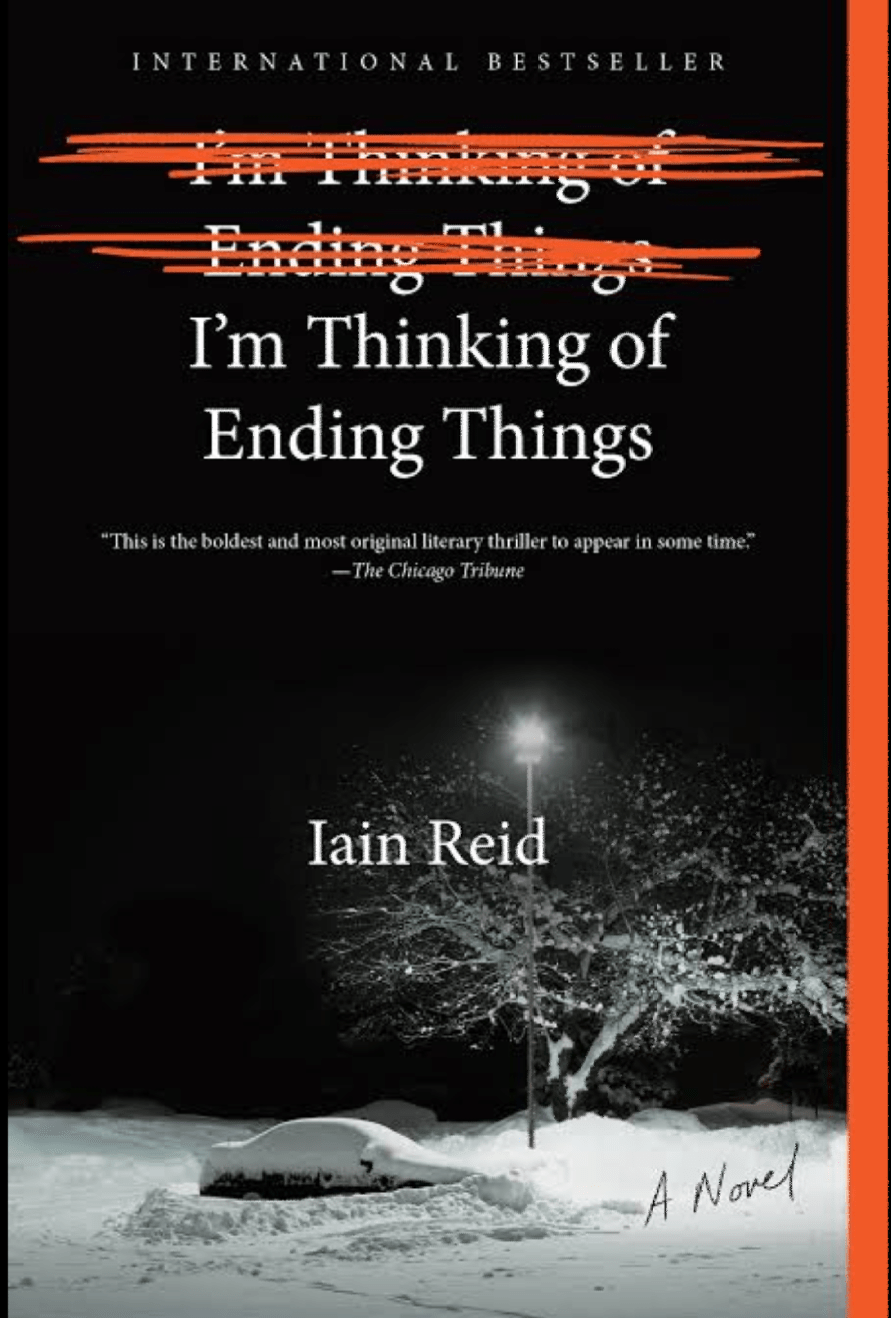
I’m thinking of ending things…

Author – Iain Reid

Page count – 224 (hardback) 130 (eBook)

Genre – Suspense, psychological thriller

The story is about a young woman and her boyfriend. A girl has no name (high five if you GoT (again) that reference). Jake is her boyfriend. We find them driving to his parents house in the country and then back home. Its just that. But you won’t believe how much happens in that time frame. The conversation between the couple makes you think. They have these deep talk about childhood and other stuff.

The name of the book is such because the girl keeps thinking of ending things with this boyfriend all this time and this is important.

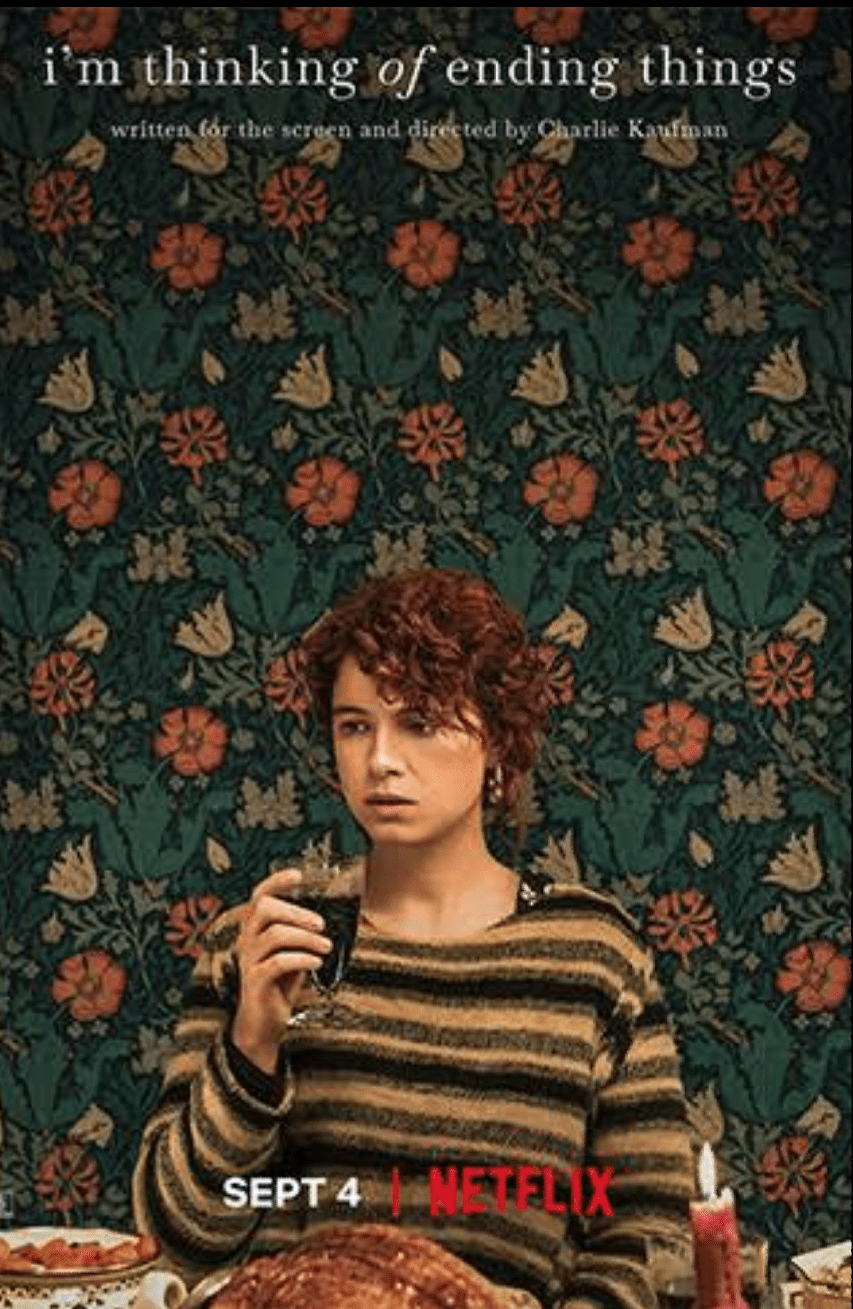
Recently made into a Netflix movie this book is what I wish I had heard about earlier. I strongly recommend thriller novel fans to give it a read. Moreover it’s short. You could finish it within a day or two. Haven’t seen the movie yet but I will check it out after I finish writing this. I really want to see the difference between how I pictured it and how the movie is portrayed. I do that with every book based movie.

It’s been a while since a read a good book. This one kept me hooked. One of those un-put-downable. The suspense it creates. You know there’s something wrong about it but you cannot pin point what it is. There’s this one crazy page and the next page is normal but you turn to the next page and it’s crazier than the first. You’ll make yourself comfortable with the surrounding, the character and the scene changes out of the blue. The last few pages are so confusing makes you feel anxious unless you read it all.

It has a 3.5/5 rating on Goodreads. I would rate it 4/5.

P.s. Suggest me some good thriller novels please.

Thank you for reading. Have a nice day!

Graphology

Photo by Karolina Grabowska on Pexels.com

Graphology is the study of hand writing to assess the personality traits of a person. It is the evaluation of physical characteristics and patterns of a handwriting to identify personality characteristics. Graphology is also used to identify the writer and their mental state during the time of writing. The word ‘graphology’ has been derived from the Greek word grapho meaning writing and logos meaning study or discussion. Graphology has been used by European psychologists and counsellors. It says that there is a relationship between personality, conducts, intellectual level, temper and character in handwriting. Hand writing can be analysed according to pressure, size, slant, zones, layout (margins, spaces between letters, words and lines). At present there are also some AI tools and websites which can be used.

Alfred Binet conducted a study on handwriting and called graphology “the science of the future”. In 1929, Milton Bunker founded The American Grapho Analysis Society. It made two different branches in the world of American graphology – graphoanalysis and holistic graphology.

Graphologists:

The works of some graphologists are mentioned below:

Max Pulver had authored three graphology books (from 1931 to 1949) and several articles. He has worked on pressure, intelligence, and crime. He developed the theory of Symbolism of Space and founded the Schweizerische Graphologische Gesellschaft (Swiss Graphological Society) in 1950 and was its president until his death.

Camillo Baldi was an Italian philosopher who worked on a variety of subjects. His best known essay on graphology was the first detailed investigation of the discipline.

Robert Saudek was a Czech-born graphologist. He was also a writer of novels, stories, poems and plays. He had considerable influence on the content and standing of graphology worldwide and published numerous articles in many languages like The Listener, Zeitschrift für Menschenkenntnis and the Journal of Social Psychology. He founded the Professional graphology society in the Netherlands and started two academic periodicals: in Dutch and English. Many graphologists worldwide today refer to Saudek’s work without knowing the origin. He published Experimental Graphology in 1929. Saudek examined the speed in handwriting and quantified handwriting by using a microscope, caliper, pressure board, ruler, protractor and slow-motion pictures. He also dealt with graphological phenomena in terms of the experimental psychologists.

Sheila Lowe is a British-born novelist and graphologist. Her first book was published in 1999 and was a bestseller in the Complete Idiot’s Guides series. In 2007, the first edition of Poison Pen, the first of her Claudia Rose forensic mystery series came out, published by Capital Crime Press. She is at present the president of the American Handwriting Analysis Foundation.

Photo by cottonbro on Pexels.com

Studies:

There has been studies in the U.S. on handwriting and sex. According to the research sex could be determined through writing at a significant level. Studies on ethnicity, race, age, nationality, sexual orientation, weight have got mixed results.

According to the Hungarian Parliamentary Commissioner for Data Protection and Freedom of Information, handwriting analysis without informed consent is considered to be a privacy violation.

Controversy:

Graphology has been a controversial topic for about a century. Some suggest that empirical studies have failed to show its validity to perform personality evaluation. Although it has got support from the scientific community in the mid twentieth century, some recent researches have rejected the validity of graphology as a tool for assessing personality and job performance.

Outside perils

It’s been a long time since I have stepped outside my home. With all such dreadful news flying in the air, stepping out is becoming more and more difficult. And to think about all the precautions that one needs to take, makes going out unbearable. If I think about not going out for a week, maybe a few months back, I would have definitely felt insane. There were days when even though there was no necessity to hop out, I would still go, maybe just for a stroll. In fact, truth to be told, I loved going out for any reason whatsoever.

But something seems to be changing with time. I am losing all my urge to go out. I feel terrified of the fact that I have go out. There can be numerous reasons for my lacklustre life. One, before going out, I have to make sure that I wear clothes which I am planning to give for washing, have to put on my mask, carry a sanitizer, carry a carry-bag, keep my mobile at home and the worst of it all, wear a headgear. To go out, maybe for 5 minutes, even for small reasons, such amount of preparation seems to be very tiresome. Two, on coming back to home, there seems to be series of drum-roll activities which is mandatory, otherwise I will be banned from my home. Upon returning, I have to directly run to the washroom, have a bath, wash my clothes and sanitize myself and everything I have bought. And then i am allowed to enter my room. Such huge amount of patience is needed. But what I now think is that I am not going out, not because of the two reasons. These two reasons are like fillers, trying to rationalize the situation and give a plausible explanation to my brain as to why I am not going out. The real reason, which i realized a few days back is completely shocking for me, even after self-realization.

The sole reason is completely psychological. My brain seems to have completely adapted to the new normal and somehow, with time, I ended up liking the isolation. Whenever chances of going out crops out, I do not get the urge to dress up to go out. My brain have completely accepted the fact that if I stay inside, I will be able to keep away the danger of contracting the infection. The truth is I am trying to delay the inevitable and somehow I got too much comfortable at home. Most of the times, I watch series or I study. Either of the two. I have also stopped ordering food from outside, via delivery boys, underlying reason is the fear of contracting infection. It seems like I have reached the peak where I do not feel the urgency nor the necessity to go out.

But, there is a problem with this kind of psychological fear. As our government is trying to bring about Unlock in phases, I still feel that there is no need to go outside, for the slightest of reasons. There is a very high chance that it might not be just me, many people across the globe might be feeling this. But they might not be comfortable opening up about this. So according to what I believe, that it might be very impressive as to what the government is doing to combat the entire issue, but at the same time, mental health and welfare institutions must also come in fore-front to break this silo and to take steps to rebuild this psychological breakdown.

Source: Self