Peer Pressure

We often talk about the pressure we deal with in our day-to-day lives. But, do we talk or think about peer pressure? People can be happy and content with their lives. But the sense of dissatisfaction arises as soon as they start comparing their lives and materials with others. They want to “fit in” with their groups or the people they socialize with.

What is Peer Pressure?

Peer pressure is the way how peers (people sharing the same age group or social position) influence each other. This influence is so powerful that it can even lead to going on the wrong track. This influence results in a behavior change, change in attitude and values, to follow their peers.

Not many people know about peer pressure as something that can leave a strong psychological impact on one’s life. It psychologically affects a person to do things according to/or as done by their peers or like groups, to gain social validation. The person may or may not feel good personally about doing something under the pressure of their peers but at the same, the validation from them might feel rewarding.

The most affected group from peer pressure are children and adolescents. Children and adolescents pick up different habits, attitudes, and behavior according to their age. Children, as we know have a habit of imitating what they see happening, and accordingly, they pick up habits from there. A child might what the same kind of bag pack, tiffin box, or any such material stuff as they see in their friend’s circle. They might want a phone or imitate the walking or talking style as their parents, or any celebrities they like. It can be said that children usually pick up attitudes and behaviors that are important to them.

On the other hand, adolescents are the most vulnerable to peer pressure. At this age, the group they are in is of utter importance to them.  They try to get in conformity to their peers’ ideas, styles, ideas, and values.

Peer pressure can have positive effects when people are pressured in a positive direction such as achieving excellent academic or any co-curriculum performance. However, the hunger for social acceptance and validation leads the youth to engage in risky and even at times illegal activities. They often fall prey to wrong deeds and get into alcoholism, drug abuse, life harm, or even sexual abuse.

Adolescence is a crucial and delicate age. Parents need to monitor their children’s activities, behavior, and attitudes. And, if any alarming signs are sensed, immediate action such be taken. However, the monitoring should not make the youth feel suffocated; unable to make any decisions on their own. It should be done in a way that the youth should feel free to talk about his/her feelings and problems with the parents.

Only shouting and scolding is not the solution to keep your child secured from peer pressure and its reputations, rather understanding the age and its impact is important. To keep youth away from the negative impacts of peer pressure, parental support and parental guidance are of utter importance.

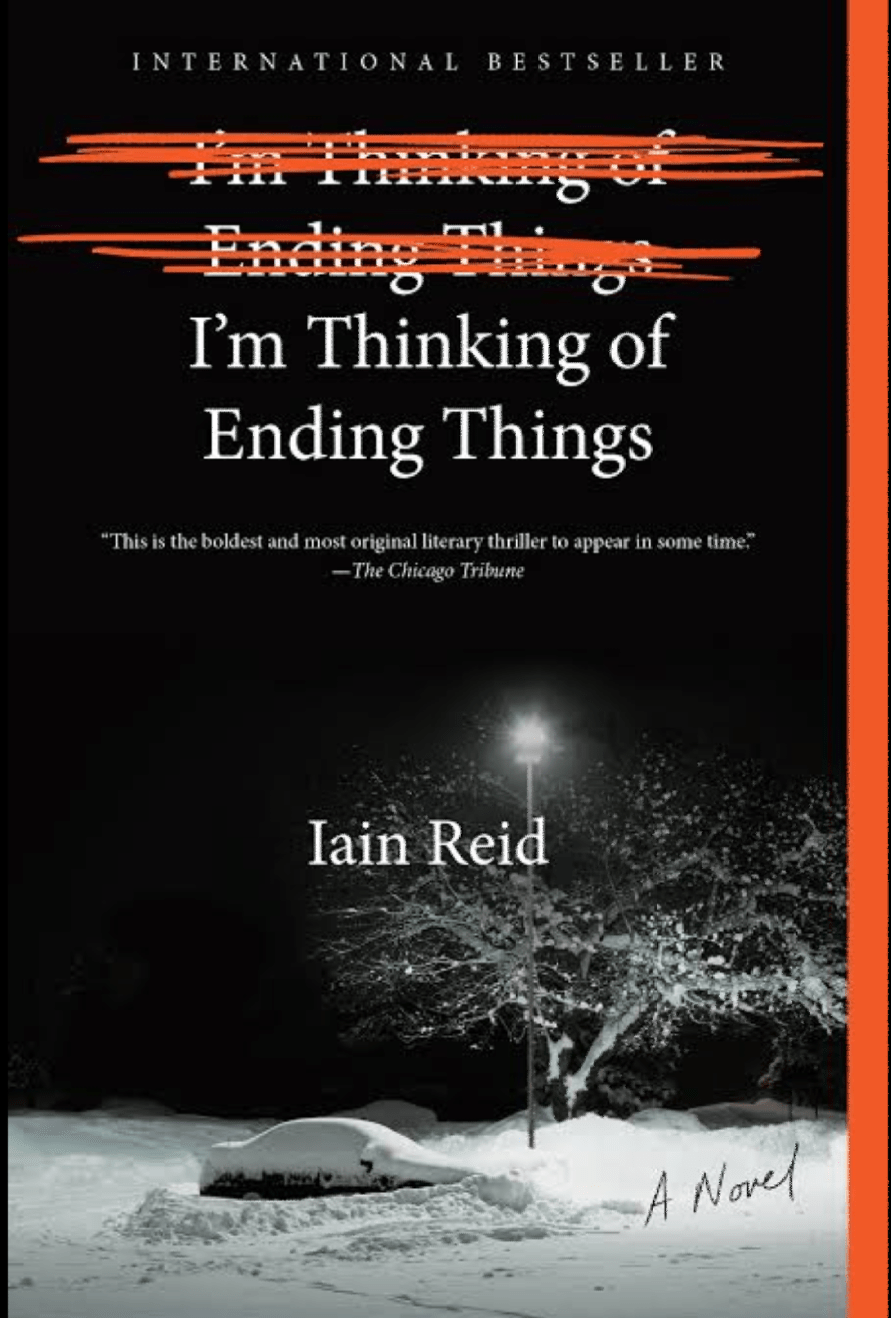
I’m thinking of ending things…

Author – Iain Reid

Page count – 224 (hardback) 130 (eBook)

Genre – Suspense, psychological thriller

The story is about a young woman and her boyfriend. A girl has no name (high five if you GoT (again) that reference). Jake is her boyfriend. We find them driving to his parents house in the country and then back home. Its just that. But you won’t believe how much happens in that time frame. The conversation between the couple makes you think. They have these deep talk about childhood and other stuff.

The name of the book is such because the girl keeps thinking of ending things with this boyfriend all this time and this is important.

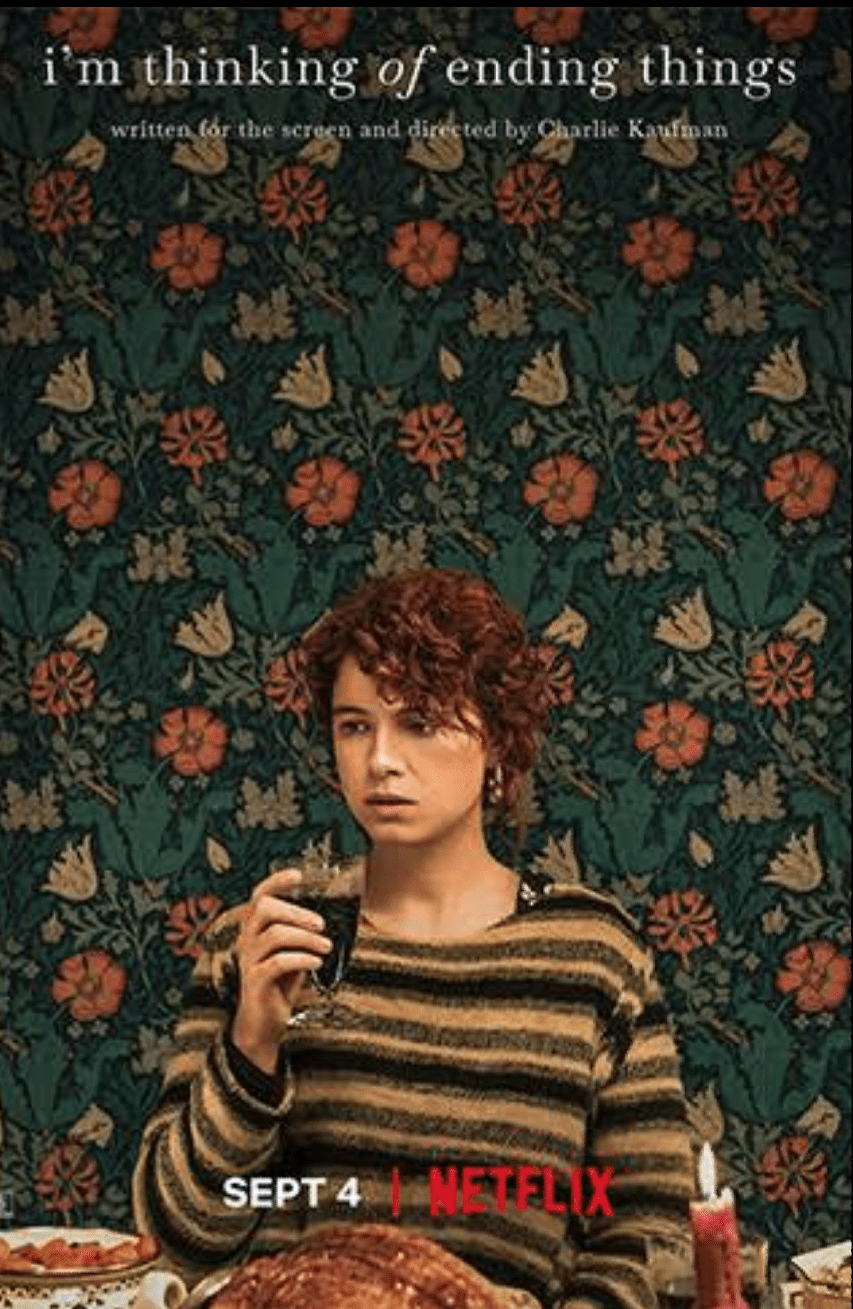
Recently made into a Netflix movie this book is what I wish I had heard about earlier. I strongly recommend thriller novel fans to give it a read. Moreover it’s short. You could finish it within a day or two. Haven’t seen the movie yet but I will check it out after I finish writing this. I really want to see the difference between how I pictured it and how the movie is portrayed. I do that with every book based movie.

It’s been a while since a read a good book. This one kept me hooked. One of those un-put-downable. The suspense it creates. You know there’s something wrong about it but you cannot pin point what it is. There’s this one crazy page and the next page is normal but you turn to the next page and it’s crazier than the first. You’ll make yourself comfortable with the surrounding, the character and the scene changes out of the blue. The last few pages are so confusing makes you feel anxious unless you read it all.

It has a 3.5/5 rating on Goodreads. I would rate it 4/5.

P.s. Suggest me some good thriller novels please.

Thank you for reading. Have a nice day!

The Psychological Connection to Hobbies

Most of us have had a childhood interest or a hobby which was our favourite pastime. With not much to do all day, we would spend our time engaging in different unique and creative activities. Not only saving us from boredom, these hobbies have provided us with lot of benefits and shaped us into becoming what we are today.

Photo by Sharon McCutcheon on Pexels.com

Almost everyone had a favourite pastime activity which would keep us busy in our childhood. Starting from painting, doodling to collecting stamps, pebbles, train tickets and what not. When asked about their hobbies many people were found to narrate happy tales of their childhood. In today’s busy world where it is difficult to even take a day off from work, we tend to lose touch with our creative sides. Thinking about our childhood days makes us realise how long it had been since these hobbies were a part of our lives. Sports, music, crafts have all been pushed aside in adulthood by our busy schedules and responsibilities. In the midst of all these we have not realised how important these had been in shaping us and how amazing it would be to revisit these days by going back to those hobbies.

As children we had many different ways to spend our times. Some of us were into painting and crafts, some were into musical instruments, while some had the interesting habit of collecting stuffs. All these hobbies seem simple but studies show that there is a lot more to it.

There’s a lot of factual information about the importance of art in a child’s development. Researches show that individuals who have been into art and crafts in their childhood are found to be more expressive and have better communication skills. Experimenting with art makes children open to broader ideas and help them handle unexpected situations with ease.

Photo by Marko Blazevic on Pexels.com

Collecting is believed to be a psychological impulse. Collection is a historical practice and it ranges from stamps, books, tickets, coins to leaves and pebbles. People maintain the habit of collecting due to various reasons. Some collect due to an interest in the things that the collections represent, while others view collection as a pleasurable form of owning something. The different aspects attached with it makes the psychology behind it so interesting. It has been known that individuals who had the habit of collecting grow up to be careerist individuals in future. As the saying goes “An individual’s childhood is reflection of their life”. Collectors are also known to make better social connections and more friendships.

Photo by Karolina Grabowska on Pexels.com

Individuals engaging with music from a very young age tend to enjoy musical instruments. Engaging with music makes us happy and lifts our spirits. Studies show that music improve our brain functions and it keeps the brain active. It has also been known that music helps in retaining information and develops memory. Children who have had such hobbies grow up to be smart individuals.

Photo by Nick Bondarev on Pexels.com

Few years back, Google had encouraged its employees to devote 20 percent of their time to side projects of their interest. It was a very innovative decision on the part of the company and it yielded amazing results. It has been known that following this, employees have performed more productively in their work and have achieved more. There are innumerable ways in which hobbies help in one’s overall growth and development. Most of us have lost touch with these but we can surely try and revive those habits. In fact, discovering childhood hobbies can make our lives better and make us happier. It feels amazing to revive those countless memories we have with an instrument or a habit. This will also help us become more productive in our work. Investing one’s time in areas of interest alongside their career can yield incredible results and, in the process, will make us better individuals with a more holistic outlook towards life.

Music Therapy:A Novel Therapy

Did you ever feel that therapy involves talk by a psychologist and nothing else could come under the domain of therapy?If your answer is yes,Then you are wrong!!Well times have changed my reader~

Therapies have come a long way to incorporate other clinically approved methods such as animal assisted therapy,food therapy,aroma therapy etc.Music Therapy is one clinically developed program by psychologists to assist speedy healing of their clients.In this blog,the readers would be introduced to the world of Music therapy.So lets get started!

WHAT IS MUSIC THERAPY?

Music Therapy is the clinical and evidence-based use of music interventions to accomplish individualized goals within a therapeutic relationship by a credentialed professional who has completed an approved music therapy program.It is is an established health profession in which music is used within a therapeutic relationship to address physical, emotional, cognitive, and social needs of individuals. After assessing the strengths and needs of each client, the qualified music therapist provides the indicated treatment including creating, singing, moving to, and/or listening to music.

Through musical involvement in the therapeutic context, clients’ abilities are strengthened and transferred to other areas of their lives.This therapy also provides avenues for communication that can be helpful to those who find it difficult to express themselves in words. Research in music therapy supports its effectiveness in many areas especially emotional rehabilitation.

History

You all will be shocked to know that both world wars were the trigger that initiated the development of this therapy.During and after both World Wars, doctors and clinicians began to realize the powerful effects that music has on the healing process and requested that professional musicians be hired by the hospitals.This therapy first got officially recognized in the Michigan state university of the United States of America.Ultimately,The American Music Therapy Association (AMTA) was formed which focuses on creating more awareness about this wonderful therapy.

BENEFITS

Music therapy can benefit many individuals. The diverse nature of music means it can be applied in the treatment of concerns both physical and psychological.Since music can evoke positive emotions and improve brain health,Music therapy is said to manage and alleviate symptoms of mental health concern such as Depression, Mood issues,Anxiety,Schizophrenia,Substance abuse,Autism,Personality issues,Insomnia,Dementia etc.

In addition,Music therapy can improve the social,cognitive,emotional and motor functioning.This therapy was also effective in controlling patient’s situation in Alzheimer’s,Cancer and Hypertension.

Music therapy is frequently administered to reduce stress levels and pain perception of females in labor.This novel therapy has also been linked with improvements in self-esteem, self-concept, verbal communication, prosocial behavior, socialization skills, group cohesion, and coping skills.

Limitations

Even the most beautiful things have flaws,and so has music therapy.One of the major drawback is that this therapy cannot be used as a stand-alone therapy.The music therapy is also known as music assisted therapy implying it’s sole purpose is to assist the main therapy applied by the clinician on the client to produce fast results and relief.

Also,the music therapy like all other therapies is individualized.This is not a major drawback but should be kept in mind before going in for this option.All individuals are unique and so is their taste in music.Thus the therapist has to do additional tests to see which type of music and musical instrument works better for the client.

ALWAYS REMEMBER,WHERE WORDS FAIL,MUSIC SPEAKS…..

Thus in short we need to know that music therapy is a wonderful form of therapy which strengthens an individual and increases his/her quality of life.Choose Music for a better Life!

Do give a like,if you all found this article to be Interesting!

Thankyou!

Stay Knowledgeable!

Review of a research article

Article name:A Study of University Students’ Motivation and Its Relationship
with Their Academic Performance.

Student motivation is the element that leads students’ attitude towards learning process.God-gifted talents, best teachers and best schooling facilitate the academic performance and students’ motivation
is prerequisite for students’ accomplishment. This study attempts to identify the influence of students’
motivation on their academic performance.So come on research enthusiasts let’s look into the why,how and what of student motivation through this review!

Purpose and sample

This outstanding Research article by Ali and colleagues has been published in the International Journal of Business and Management.This study attempts to identify the influence of students’ motivation on their academic performance.The sample consisted of 342 university students of different programs in various universities of Islamabad and Lahore, Pakistan.The students were asked about how motivated they are about their university experience and what really motivated them to study.

METHODOLOGY

The questionnaire was distributed among both male and female students. There were 82% male and 18% female students in the survey with an average age of 20 years.“The University Student Motivation and Satisfaction Questionnaire version 2″ (TUSMSQ2) instrument was developed by Neill (2004) to measure student’s motivation. TUSMSQ2 instrument contains 30-items.

WHAT WAS TESTED?

The questions measure both Intrinsic and Extrinsic motivation of students. There were two intrinsic motivators; Self-exploration and Altruism and four extrinsic motivators;rejection of Alternative options, career and qualifications, Social enjoyment, and Social pressure in the questionnaire. The questions were based on five point Likert scale. For each item, students rated themselves on a scale of 1 to 5; 1 being “Very False”, towards, 5 being “Very True”

BASIS/THEORY OF THE STUDY

Motivation is state of mind that stimulates activities and human body actions.Student motivation is often separated into two types: Intrinsic motivation and extrinsic motivation.


Intrinsic motivation: A student is intrinsically motivated when he or she is motivated from within. Intrinsically motivated students keenly engage themselves in learning out of oddity, interest, or enjoyment, or in order to achieve their own scholarly and personal goals.Thus students with intrinsic motivation are more enthusiastic, self driven, challenging and feel pleasure in their studies.Intrinsically motivated students tend to prefer challenging tasks.

Extrinsic motivation: It is commonly viewed that extrinsically motivated student engages in learning
purely for attaining a reward or for avoiding some punishment.Extrinsic motivation means
to obtain some reward or avoid some punishment external to the activity itself such as grades, stickers or teacher approval.Students with extrinsic motivation try to drag themselves with academic assignments, feel compelled to learn, and always put minimal efforts to achieve maximum appreciations.

Results

The results indicate that academic performance amplifies between the ranges of 23 percent and 34 percent due to extrinsic motivation and intrinsic motivation.Also the comparisons of variables on
individual bases indicates that those students who adapt self-exploratory variable and altruism variable, rejection of alternative options variable tend to perform better, whereas student who adapt career and qualifications variable, social enjoyment variable and social pressure variable tend to perform less then expected.Also the study found positive and mutually causal relationship between student’s motivation and student’s academic performance. This relationship is reciprocal, meaning students who are more motivated perform better and student who perform better become more motivated.

implications

Any research article would be a waste without implications.This study helps in identifying the factors that will help educational thinkers to know students’ attitudes towards learning, what facilitates learning and what hinders in learning.Thus it will lead to better teaching methods and facilities to suit the student’s need thereby increasing their job competence.

So,this was a comprehensive review of a wonderful research article.Click the below button to read the article:

Hope you all liked the review,if yes please give this blog a like.

Thankyou!

Stay Knowledgeable!

Motivation:Cause of all actions

Why have i written this blog?why are you reading this blog?Why do you eat?Why do you love?

The answer to all of these actions is MOTIVATION!Motivation is the process that initiates, guides, and maintains goal-oriented behaviors. It is what causes you to act, whether it is reading this article, getting a glass of water to reduce thirst or reading a book to gain knowledge.So this blog will critically analyse the concept of motivation and help all of you to understand the reasons behind your actions.So lets get started!

Motivation describes the wants or needs that direct behavior toward a goal. It is an urge to behave or act in a way that will satisfy certain conditions, such as wishes, desires, or goals. Older theories of motivation stated that rational thought and reason were the guiding factors in human motivation; however, psychologists now believe that motivation may be rooted in basic impulses to optimize well-being, minimize physical pain, and maximize pleasure.

Motivation involves the biological, emotional, social, and cognitive forces that activate behavior. In everyday usage, the term “motivation” is frequently used to describe why a person does something. It is the driving force behind human actions.

So lets analyse the mechanism of motivation

Drives and motives

Motivations are commonly separated into drives and motives.

Drives are primarily biological, like thirst, hunger, sleepiness, and the need to reproduce—all of which lead us to seek out and take part in certain activities. Drives are believed to originate within a person and may not require external stimuli to encourage behavior.

Motives, on the other hand, are primarily driven by social and psychological mechanisms, such as work, family, and relationships. They include factors like praise and approval.

INtrinsic and extrinsic motivation

Motivation can be intrinsic (arising from internal factors) or extrinsic (arising from external factors).

Intrinsic:arise from within the individual, such as doing a complicated crossword puzzle purely for the personal gratification of solving a problem.

Extrinsic:arise from outside of the individual and often involve rewards such as trophies, money, social recognition, or praise.

In reality, our motivations are often a mix of both intrinsic and extrinsic factors, and the nature of the mix can change over time.Sometimes, intrinsic motivation can diminish when extrinsic motivation is given—a process known as the overjustification effect. This can lead to extinguishing the intrinsic motivation and creating a dependence on extrinsic rewards for continued performance.

Motivation v/s emotion

While motivation and emotion can be intricately linked, they are two fundamentally different things. Motivation describes the wants or needs that direct behavior toward a goal; in contrast, an emotion is a subjective state of being that we often describe as a feeling. Emotion and motivation are linked in several ways: both influence behavior and can lead us to take action, and emotion itself can act as a motivator.

The need to understand motivation

So at the end of this article,lets see what is the use of understanding the concept of motivation.Understanding motivation can:

  • Help improve the efficiency of people as they work toward goals
  • Help people take action
  • Encourage people to engage in health-oriented behaviors
  • Help people avoid unhealthy or maladaptive behaviors such as risk-taking and addiction
  • Help people feel more in control of their lives
  • Improve overall well-being and happiness

If you all liked this article,please do like it!

Thankyou!

Psychological impact of Covid-19

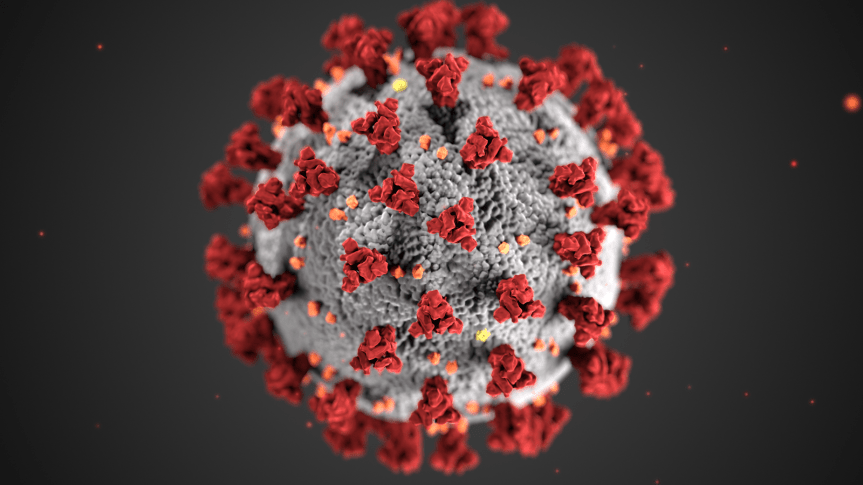
As a result of the emergence of coronavirus disease 2019 (COVID-19) outbreak caused by severe acute respiratory syndrome coronavirus 2 (SARS-CoV-2) infection in the Chinese city of Wuhan, a situation of socio-economic crisis and profound psychological distress rapidly occurred worldwide.

So this blog will look into various forms of psychological distress bought in by this pandemic due to educate and sensitize the readers about these issues.

Many psychological problems and important consequences in terms of mental health including stress, anxiety, depression, frustration, uncertainty during COVID-19 outbreak emerged progressively.Common psychological reactions related to the mass quarantine which was imposed in order to attenuate the COVID-19 spread are generalized fear and pervasive community anxiety which are typically associated with disease outbreaks, and increased with the escalation of new cases together with inadequate, anxiety-provoking information which was provided by media.The psychological reactions to COVID-19 pandemic may vary from a panic behavior or collective hysteria to pervasive feelings of hopelessness and desperation which are associated with negative outcomes including suicidal behavior.Importantly, other health measures may be compromised by abnormally elevated anxiety.

As the general population became increasingly exposed, anxiety-provoking topics related to this emergence of the health and socio-economic crisis need to be rapidly identified to early detect dysfunctional processes and maladaptive lifestyle changes potentially leading to the onset of psychiatric conditions.

So let us discuss the most important psychological impacts of COVID which are the root cause of other mental disorders :

-uncontrolled fears related to infection

This is commonly one of the most frequent psychological reaction to pandemics. Several existing studies demonstrated that those who have been exposed to the risk of infection may develop pervasive fears about their health, worries to infect others and fear infecting family members.

-Pervasive anxiety

Social isolation related to restrictions and lockdown measures are linked to feelings of uncertainty for the future, fear of new and unknown infective agents resulting in abnormally increased anxiety.Anxiety may be directly related to sensorial deprivation and pervasive loneliness.

-Frustration and boredom

Distress, boredom, social isolation and frustration are directly related to confinement, abnormally reduced social/physical contact with others, and loss of usual habits.

-LONELINESS

The final effect of social isolation is pervasive loneliness and boredom, which have potential dramatic effects on both physical and mental individual well-being. Pervasive loneliness may be significantly associated with increased depression and suicidal behavior.Unfortunately, the isolation is progressively enhanced by anxiety, panic or collective hysteria. Cognitive functions and decision making are firstly impaired by hyperarousal and anxiety and later by disabling feelings of loneliness.

After looking at these gruesome psychological impacts,it is crystal clear so as to how psychologically damaging this pandemic has been!The protective factors against these impacts include social support and psychological support.

Implementing community-based strategies to support resilience and psychologically vulnerable individuals during the COVID-19 crisis is fundamental for any community.The psychological impact of fear and anxiety due to the horrible spread of pandemic needs to be clearly recognized as a public health priority for both authorities and policy makers who should adopt clear behavioral and interventional strategies to reduce the burden of disease and the dramatic mental health consequences of this outbreak.

Graphology

Photo by Karolina Grabowska on Pexels.com

Graphology is the study of hand writing to assess the personality traits of a person. It is the evaluation of physical characteristics and patterns of a handwriting to identify personality characteristics. Graphology is also used to identify the writer and their mental state during the time of writing. The word ‘graphology’ has been derived from the Greek word grapho meaning writing and logos meaning study or discussion. Graphology has been used by European psychologists and counsellors. It says that there is a relationship between personality, conducts, intellectual level, temper and character in handwriting. Hand writing can be analysed according to pressure, size, slant, zones, layout (margins, spaces between letters, words and lines). At present there are also some AI tools and websites which can be used.

Alfred Binet conducted a study on handwriting and called graphology “the science of the future”. In 1929, Milton Bunker founded The American Grapho Analysis Society. It made two different branches in the world of American graphology – graphoanalysis and holistic graphology.

Graphologists:

The works of some graphologists are mentioned below:

Max Pulver had authored three graphology books (from 1931 to 1949) and several articles. He has worked on pressure, intelligence, and crime. He developed the theory of Symbolism of Space and founded the Schweizerische Graphologische Gesellschaft (Swiss Graphological Society) in 1950 and was its president until his death.

Camillo Baldi was an Italian philosopher who worked on a variety of subjects. His best known essay on graphology was the first detailed investigation of the discipline.

Robert Saudek was a Czech-born graphologist. He was also a writer of novels, stories, poems and plays. He had considerable influence on the content and standing of graphology worldwide and published numerous articles in many languages like The Listener, Zeitschrift für Menschenkenntnis and the Journal of Social Psychology. He founded the Professional graphology society in the Netherlands and started two academic periodicals: in Dutch and English. Many graphologists worldwide today refer to Saudek’s work without knowing the origin. He published Experimental Graphology in 1929. Saudek examined the speed in handwriting and quantified handwriting by using a microscope, caliper, pressure board, ruler, protractor and slow-motion pictures. He also dealt with graphological phenomena in terms of the experimental psychologists.

Sheila Lowe is a British-born novelist and graphologist. Her first book was published in 1999 and was a bestseller in the Complete Idiot’s Guides series. In 2007, the first edition of Poison Pen, the first of her Claudia Rose forensic mystery series came out, published by Capital Crime Press. She is at present the president of the American Handwriting Analysis Foundation.

Photo by cottonbro on Pexels.com

Studies:

There has been studies in the U.S. on handwriting and sex. According to the research sex could be determined through writing at a significant level. Studies on ethnicity, race, age, nationality, sexual orientation, weight have got mixed results.

According to the Hungarian Parliamentary Commissioner for Data Protection and Freedom of Information, handwriting analysis without informed consent is considered to be a privacy violation.

Controversy:

Graphology has been a controversial topic for about a century. Some suggest that empirical studies have failed to show its validity to perform personality evaluation. Although it has got support from the scientific community in the mid twentieth century, some recent researches have rejected the validity of graphology as a tool for assessing personality and job performance.

Bulimia:An Eating Disorder

In today’s instagram world,People especially adolescents are getting image and body conscious.They look at the perfect bodies of celebrities and aspire to be like them.In this aspiration,they are psychologically and physically wounded.Most of such people experience eating disorders where in they undergo extreme changes in their eating and exercise habits.Ultimately they damage themselves.

So,in today’s blog lets look at one of the eating disorders called Bulimia Nervosa,it’s causes and it’s impacts.Let’s get started.

Bulimia nervosa is an eating disorder characterized by episodes of binge eating—consuming a lot of food quickly—followed by compensatory behavior, most commonly vomiting or “purging.” People who are bulimic often feel a lack of control over their eating. A bulimic can consume as many as 3,400 calories in little more than an hour and as many as 20,000 calories in eight hours.

People with bulimia often know they have a problem and are afraid of their inability to stop eating. Bingeing is then followed by purging — namely, self-induced vomiting or the abuse of diuretics or laxatives. Bingeing and purging are often performed in secret, with feelings of shame alternating with relief.

The bingeing and purging cycle is usually repeated several times a week. As with anorexia, people with bulimia often have coexisting psychological illnesses, such as depression, anxiety, and substance abuse problems. Many physical dysfunctions result from the purging, including electrolyte imbalances, gastrointestinal troubles, and dental problems.

An estimated one to four percent of females have bulimia nervosa during their lifetime. The prevalence in males is unknown, but bulimia nervosa is far less common in males than females. Most cases begin in the late teens and early 20s, but can go undetected until the 30s or 40s.

SYMPTOMS

Bulimia signs and symptoms may include:

  • Being preoccupied with your body shape and weight
  • Living in fear of gaining weight
  • Repeated episodes of eating abnormally large amounts of food in one sitting
  • Feeling a loss of control during bingeing — like you can’t stop eating or can’t control what you eat
  • Forcing yourself to vomit or exercising too much to keep from gaining weight after bingeing
  • Using laxatives, diuretics or enemas after eating when they’re not needed
  • Fasting, restricting calories or avoiding certain foods between binges
  • Using dietary supplements or herbal products excessively for weight loss

CAUSES

Exact causes are not completely known and are believed to complex.Hence there is no single known cause of bulimia, but there are some factors that may play a part,such as:

  • Culture:As in strict body expectations:Slim and trim girls wanted for marriage in India.
  • Families:Constant pressure and criticism from parents on looks of children
  • Life changes or stressful events: can trigger bulimia.
  • Personality traits: Those with bulimia may have low self-esteem and feel hopeless.
  • Biology.:Genes, hormones, and other biological factors may contribute to development of bulimia.

Impact

Bulimia has a great impact on the individual and can lead to following complications:

  • Negative self-esteem and problems with relationships and social functioning
  • Dehydration leading to kidney failure
  • Heart problems
  • Severe tooth decay and gum disease
  • Absent or irregular periods in females
  • Digestive problems
  • Anxiety, depression, personality disorders or bipolar disorder
  • Misuse of alcohol or drugs
  • Self-injury and suicidal thoughts.

Management

If left untreated,bulimia can create major complications in life as mentioned above.Hence if you see your loved ones experiencing symptoms of bulimia,support them and console them.If the symptoms are unbearable,immediately consult a doctor and psychologist who will be able to help the patient successfully.

Please spread empathy and kindness.Acceptance and kindness can prevent bulimia in such insecure people.Every difficulty can be defeated with empathy,patience and willingness to improve and come out.

If you all found the article useful,do give it a like.

Thankyou!

Stay Kind!

PERSONALITY THEORIES

According to the American Psychological Association,Personality refers to an individual differences in characteristic patterns of thinking, feeling and behaving. The study of personality focuses on two broad areas: One is understanding individual differences in particular personality characteristics, such as sociability or irritability. The other is understanding how the various parts of a person come together as a whole.

So this blog will introduce the readers to some important theories used to describe personality.Let’s get started!

1) FREUD PSYCHOANALYTICAL PERSPECTIVE:

 According to Sigmund Freud Father of Psychoanalysis, an adult personality generally has three determinants: Id, Ego and Super Ego.The outcome of the combination of all the three determinants shapes an adult personality. Freud believed than an individual’s personality has three parts and thus is often called as tripartite personality.

  • Id:Irrational demands and urge.
  • Ego:Helps in fulfillment of Id after taking into consideration the reality.
  • Superego:Moral constraints of the individual.

Defense mechanisms play an important role in pushing unrealistic thoughts out of awareness. Stressful thoughts which are threatening to an individual’s survival should be pushed into unconscious mind to reduce anxiety through them.

2)ERIK ERIKSON:PSYCHOSOCIAL DEVELOPMENT THEORY:-

Erikson believes there are 8 stages in a person’s life and to enter into the next stage,a virtue has to be learnt from the previous stage and this leads to personality development.He focuses on different identity crisis in a person’s lifespan.As in

STAGE 1:Trust v/s Mistrust;Virtue:Hope

STAGE 2:Autonomy v/s Doubt;Virtue:Will

STAGE 3:Initiative v/s Guilt;Virtue:Sense of Purpose.

STAGE 4:Industriousness v/s Inferiorty;Virtue:Competence

STAGE 5:Identity cohesion v/s Role confusion;Virtue:Fidelity

STAGE 6:Intimacy v/s Isolation;Virtue:Love

STAGE 7:Generativity v/s Stagnation;Virtue:Care

STAGE 8:Ego Integrity v/s Despair;Virtue:Wisdom

3)CARL JUNG:INTOVERSION V/S EXTRAVERSION

Carl Jung established a theory, which saw universal types in human personality. The types categorized by Carl Jung are present in all of us. But, certain types are predominant over the normal mode of organizing our experience.Carl Jung also developed a theory of personality. His theory is one of the type theories of personality, as it involved typology of introversion and extraversion.There are 4 functions :Sensing,intuiting,thinking and feeling.

4)JULIAN ROTTER-LOCUS OF CONTROL

“Locus of Control.” For many people, their only exposure to the ideas of Julian B. Rotter is his concept of generalized expectancies for control of reinforcement, more commonly known as locus of control. Locus of control refers to people’s very general, cross-situational beliefs about what determines whether or not they get reinforced in life. People can be classified along a continuum from very internal to very external.
People with a strong internal locus of control believe that the responsibility for whether or not they get reinforced ultimately lies with themselves. Internals believe that success or failure is due to their own efforts. In contrast, externals believe that the reinforcers in life are controlled by luck, chance, or powerful others. Therefore, they see little impact of their own efforts on the amount of reinforcement they receive.

Thus we come to the end of the blog.This blog is aimed at introducing the readers to the world of personality analysis.However one must remember that human beings are complex and not one theory explains all the human behavior.The readers are requested to read more articles about the same and fill themselves with knowledge.

Give a like,if you all felt this article was informative and interesting.

Thankyou!

Creative Things to do When You Feel Lonely

According to a study of more than 170,000 people published at the Psychology Bulletin in 2013, the average adult’s network of friends have reduced in the past decades. It’s no wonder many people feel lonelier than ever.

Feeling lonely, however, is not a direct cause of being alone. It’s possible to feel lonely in a crowd.

Loneliness, in fact, is more dangerous than isolation because it increases a person’s mortality rate.

If it’s so dangerous, how do we fight loneliness then?

Wondering What to Do When You Feel Lonely?  Here Are some Tried and Tested Tips.

  • Watch Inspiring Ted Talks.
Rob Greenfield Speaking - Inspire Your Community with Rob!

Ted Talks are inspiring and informative. I don’t know why, but watching a few Ted Talks really help when I feel lonely and helpless. Watching TED talks will not only give you a motivational boost while your studying, it could also inspire your next career move. Better than that, it could help you improve your interview techniques and confidence in meetings helping you advance your career once you get your foot in the door.

  • Look Through Old photos
Remembering Through Photographs Stock Image - Image of photographs ...

Old photos bring back a time, a place, and a life that are long gone. Perhaps, it reminds us all; that everything shall come to an end at some point. I believe an old photo is a physical instillation of our memory from the past.Human emotions are fickle things. They are ever changing. Tears don’t indicate anything in particular. They’re just a bodily response.

  • Dance (Naked)
And I Feel Alive: Learning To Dance Alone

Sometimes, we feel lonely because we’re actually alone. So take this chance to do the things you can only do when you’re alone, like dancing naked or jumping on the bed with your shoes on. Doing crazy stuff alone will give you a good laugh.

  • Take A Bath
Do You Have To Take A Shower After A Bath Bomb? | Shower+Bath

Where do good ideas come from? In the shower, right? Taking a nice, long, and relaxing bath is a great way to be bask in your alone time, instead of drowning in self-pity.  Ladies, prepare a glass of red, chocolates and magazines. Gents, take a bubble bath with that scotch and enjoy life.

  • Adopt A Cute Pet
Cute babies - Babies Pets and Animals Photo (17268865) - Fanpop

All pets are cute no matter whom you want to adopt. A furry cat or dog will cheer you up. The playfulness of pets, plus the troubles (and fun) you’ll experience while training them will make you forget about your troubles. Even a goldfish or pretty parrot can do wonders for your mood.

  • Go on a solo date to eat your favorite food
Coffee Date with Myself - Chopstick Panorama

You know the problem with group and couples dates? The annoying “So what do we do?” and “Where do we eat?” questions. When you go on a date with yourself, you’re sure to go somewhere you actually like and you don’t have to wait around for others to decide.

  • Start Gratitude Journal
Dear Diary: The "Write" Way to Journal | Project Best Life

It’s hard to feel down when you know that you have a lot to be thankful for.  When you don’t know what to be thankful for, just write what you feel. Sometimes, it can help you identify why you feel lonely in the first place.

  • Create Something New
25 Easy To Do Waste Material Craft Ideas for Children

Wondering how to not feel lonely, when you actually prefer to be alone? Getting bored is a prerequisite of feeling lonely. And what’s one of the main causes of getting bored? Having nothing to do. So keep yourself occupied! Try a new recipe. Create a scrapbook. Finish that DIY project you’ve been postponing for so long.

  • Behave like a tourist in your own city and do crazy things
Tourist traps worth visiting - Insider

Dress up like a tourist, and do all the cheesy touristy things in your city. Eat the local delicacy, tour the crowded tourist spots and explore new locations you’ve never heard of. Take pictures with monuments and come home and rejoice those memories.

  • Read any book especially a fiction
Pin on Photography

Please don’t pick a Dummies book on how to stop feeling lonely.  Reading self-help when you’re feeling miserable will make just you feel worse. Read a good novel instead. Losing yourself in a good story or identifying with a powerful character will boost your confidence and fill you with a sense of adventure.

  • Sing your heart out and have your own concert in your room
Singing in Home Images, Stock Photos & Vectors | Shutterstock

The part “your heart out” basically means with vigorous or intense conviction. This is the basic intent of the sentence — that it’s okay to do that something as long as the person is doing it with great conviction or considerable effort.

To sing your out more literally means to sing with great conviction or great gusto and sincerity. Of course, it doesn’t mean to sing loudly at the top of your voice, which then isn’t necessarily a positive thing. To sing care-free like there is nobody else in this world except you.

  •  Go For A Quick Run
Feeling anxious? Run it out! — Neurofantastic

Running is scientifically proven to make you happier. Even 30 minutes of walking can instantly lift your mood, according to a 2006 study published at Medicine & Science in Sports & Exercise.

  • Volunteer for a cause
About Us – Butterfly Hospice Care

Focusing on the needs of others steers your mind away from sad thoughts. It’s impossible to feel lonely when you’re feeding the homeless, reading to kids at an orphanage, or dancing with grandmas at a salsa class. Helping the less fortunate will also fill you with immense gratitude.

  • Watch a Movie or Series
7 Best Apps To Watch Movies Together Online With Your Friends

Watch a movie alone or call some friends to go with you—it doesn’t matter. What’s important is you immerse yourself in an interesting story that’ll erase your gloomy thoughts. Watch a chick-flick, or a super hero movie—anything but a tear jerker, really —and grab lots of candy and popcorn.

“What to do when you feel lonely?”

I can’t imagine how many people have Googled that phrase when they felt the pangs of loneliness. Unfortunately, it’s not the best question to ask. Would you ask a doctor for a prescription before they check your symptoms?

Instead of trying things randomly, hoping one solution will do the trick—losing hope and feeling worse when it doesn’t—it’s better to identify the cause of your loneliness first. If you were previously happy in your own company, what could’ve caused you to feel lonely this time? Do your friends make you feel lonely? Is it your work or surroundings, perhaps? The cause of your loneliness will clue you in on the appropriate solution.

Do your friends make you feel lonely? Is it your work or surroundings, perhaps? The cause of your loneliness will clue you in on the appropriate solution.

Loneliness is an emotion, mostly triggered by a sad memory. Unfortunately the brain loves to overanalyze things, so even momentary loneliness can escalate to longer spells because of thoughts like “Why do I feel so alone?” and  “Am I a loser no one loves?” When this happens, just acknowledge the feeling and don’t overreact.

These are some of the things I do when I’m hit by this gruesome feeling of being alone even if I have more friends than I can count. What are your tips to feel less lonely? Do share in the comments!


5 SECRETS TO FINDING TRUE LOVE

Everybody desires to find their one true love with whom we can live our fairy tale of falling in love and living happily forever and ever. Welcome to reality my friends because these fairy tales exist only in movies and fiction stories.

Love is no fairy tale, so you can stop looking for a perfect “10” who fulfills all the qualifications on your wish list. It is possible, however, to find someone to stand by your side, brave the messiness of the world, and help you experience life to its fullest potential.

How do you work towards finding this ” someone ” ? Here are the 5 tried and tested secrets to finding your companian:

  1. BE REAL

To find real love, you must first emphasize your true self. If you want someone to love you through your moments of imperfection, you must first be willing to do that for someone else. Be real with yourself, so you are ready for someone else’s true self.

If you shift your personality, passions, or purpose to impress another person, you are not being your true self. People are attracted to genuine souls. Get to know yourself, love yourself, and learn to act and speak authentically.

2. BE CONFIDENT

Be confident in yourself, your decisions, and your ability to attract love into your life. If you are being your authentic, best self, this CONFIDENCE will radiate from you in a glow of SELF-WORTH. You will attract someone who recognizes, appreciates, and loves who you are.

Foster this confidence by knowing that you are whole and complete just by being you. Understand that a soul mate is nice to have, but not a must-have. You, alone, are enough.

3. BE OPEN

If your desire is to meet someone new, then you must be willing to connect and open up with the people around you. If someone next to you in the coffee line strikes up a conversation, be willing to engage. Even if that person is not to be the love of your life, practice BEING HONEST anyway. Developing this energy of openness will help you facilitate iterations that may lead to lasting relationships.

4. BE HAPPY

Perhaps the most important secret of this list is to be happy. Everyone wants to be around happy people; HAPPINESSS is magnetic. So focus your energy on thinking about and doing the things that make you happy. This energy of yours will also attract a similar kind of person which wiill only further amplify your life.

Will Smith said, “her happiness is not my responsibility. She should be happy and I should be happy individually. Then we come together and share our happiness. Giving someone a responsibility to make you happy when you can’t do it for yourself is selfish” let that sink in.

5. BE IN LOVE WITH YOURSELF

Loving yourself allows you to make healthier choices.When you put yourself first, you make choices that will only improve your quality of life. You eat better and sleep and exercise more because you realize that taking care of your mental and physical well-being are essential to your success.

By not loving yourselfyou‘ll create extra work for your partner because they‘ll have to pick up that slack and carry your weight. When you struggle with self-doubt and low self-esteem, your partner will have to work extra hard to make you happy.

The next time you enter a relationship, see to it that it will be with your true love already. This would save you from heartaches due to being with the wrong person.

Let love find you.
These tips can only help you increase the chance of finding the right person for you. However, there is no formula that can create true love. It just happens beyond conscious effort, and if handled well, it will surely last.

Do not try too hard on finding your true love. Let love find you, instead. And while waiting for it to arrive, focus on loving yourself.

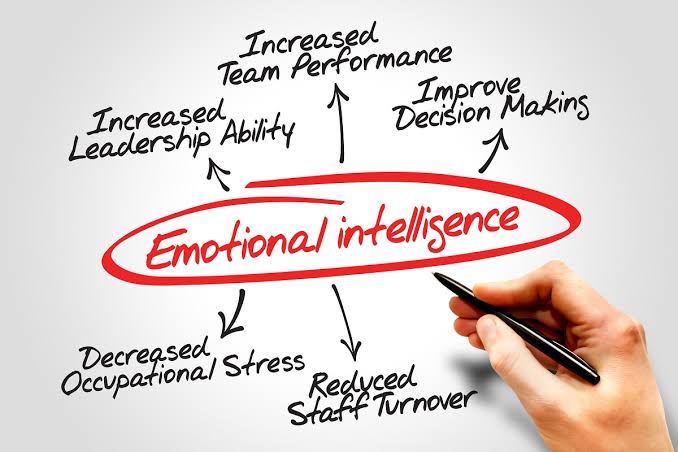
How Emotional Intelligence contributes to IQ+EQ=SUCCESS.

When we visit our relatives, we often hear this child is so intelligent. But that’s not actually what they are defining. They basically complement the kid’s emotional intelligence and not on their IQ. Emotional intelligence is a slippery topic, people usually have misconceptions about it. We all have different ways to show our emotions and different ways to deal with them too. 

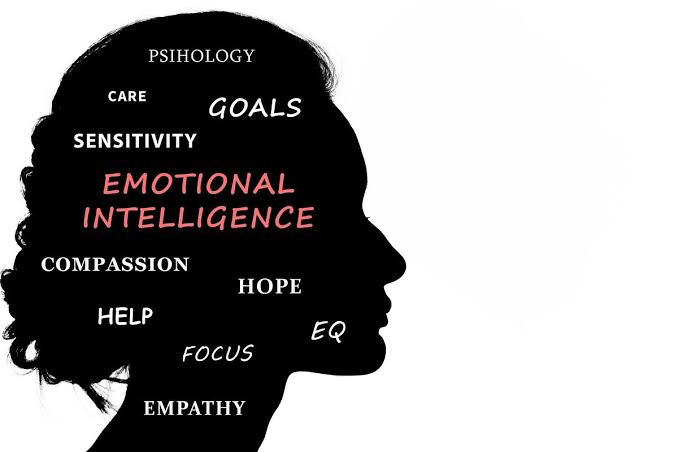
Emotional intelligence or emotional quotient (EQ) is the ability to understand and recognize your emotions and how to deal with numerous emotional situations of an individual. People with high emotional intelligence have more chances to become successful in most aspects of their life. If a job requires emotional labor, it is demanding to be emotionally intelligent.

Characteristics of Emotional Intelligence.

In a book titled “Emotional Intelligence – Why It Can Matter More Than IQ” 1995, Daniel Goleman, an American psychologist, expanded a framework of five components that characterize emotional intelligence:

  • Social skills– People find it attractive to talk with individuals with good social skills. People with emotional intelligence are good communicators too and are excellent in maintaining relationships.
  • Motivation– High emotional intelligence improves motivation. These people are usually motivated and make the surroundings too. These are productive and very effective in whatever they do.
  • Self-regulation– They can easily regulate their emotions which means they can control emotions and can tackle every situation and these think before they act. 
  • Self-awareness– These people understand their emotions and don’t let them rule them. These are super confident and believe in their intuition.

More the emotional intelligence, more maturity.

How to improve?

The biggest mistake that people make is that they are judgemental. They make a judgment without even knowing the whole story. This stuff should be avoided. Put yourself in their situation and then react. Humility can be a good thing and practicing this can make you confident about things. Just give opportunities to outshine others and don’t bother much to get applause for yourself. Self- evaluation also plays a crucial role. Admit your weakness and know where you have to work on in spite of giving false gratification that you’re perfect. In the business world or any other sector, it is highly necessary to be patient. Also taking responsibility, the responsibility of your work, or even hurting someone and apologizing. By being empathic and responding to their feelings we can make them feel comfortable. 

For example, if you ask an employee overtime and even if he agrees you may see a slight disappointment in his voice, so in spite of just ordering and walking off, appreciate his will to work.

What emotional intelligence affects.

Physical health – If you’re unable to manage your emotions probably you may affect your health by suffering from various diseases.

Mental health – Anxiety and depression can be a result of a lack of emotional intelligence.

Relationships – Communicating emotionally can be a booster in a relationship. Lacking this skill can also ruin your relationship.

Social intelligence – Tuning with your emotions may help you connect with the surrounding. Whereas being anti-social may cut your presence and make you feel less loved and less needed.

The basic idea of EQ:

  1. Identify your feelings.
  2. Identify other’s feelings.
  3. And then reacting accordingly.

Yes, of course, IQ matters but EQ enhances the value of IQ and every organization expects employees to be emotionally strong and intelligent.

Overthinking Worriers Are Probably Creative Geniuses

How many hours per day do you think? I never thought about that. So let me get this straight. You’re thinking all the time, and yet, you never realize how much time you spend thinking. That sounds like an addiction to me. I know, because I’m addicted to thinking too.

I am constantly overthinking things, whether it be focusing on irrelevant details, over complicating problems, psyching myself out, or getting overwhelmed by too many thoughts. It’s something I know a lot of people deal with, seemingly more in this generation than most, and it’s an interesting phenomenon. I can’t say exactly why I tend to overthink things (keep in mind I’m not a psychologist), but if I had to guess, I would say that it ties into the high expectations created by society and myself to be perfect, resulting in an unrealistic perfectionist attitude when approaching problems. I constantly have to remind myself that I’m focusing on the wrong parts of a problem and wasting time considering things that have little to no difference in my life in some futile search to be perfect. This problem of overthinking is most noticeable when I attempt to create art. Whether it be writing, drawing, making music, or even doodling, I always hit the brick wall of perfectionism. 

Overthinking can be one of the most frustrating, debilitating habits one can develop. Besides putting you through undue amounts of stress, overthinking can put your life on hold by preventing you from succeeding at work, damaging your relationships, and keeping you from chasing your dreams. It can throw your sleep patterns out of whack, cause you to stress-eat, and hold you back from appreciating your life for the gift that it is.

Much of the time, when we are overthinking, we are engaging in a destructive thought process that leads to unfavorable outcomes.

The “critical inner voice” in our heads that hones in on the negative aspects of a situation. This “voice” is like a sadistic coach that feeds us a ceaseless stream of criticism and undermines our goals. It’s that thought that pops up when we are about to go on a job interview: ‘You’ll never get this. You’re going to embarrass yourself. Just look how nervous you are.” It’s the dialogue that plays in your head analyzing your relationship: “Why is she so distant today? I must have said something stupid. She’s losing interest. She probably likes someone else.

So, why do we nurture this internal enemy that feeds us such negative commentary and dreadful advice? The truth is, we are all divided. All of us are split between our real self and our “anti-self.” While our real self is life-affirming, goal-directed and represents our true values and desires, our anti-self is like an internal enemy that is self-denying and self-critical, paranoid and suspicious, both toward ourselves and toward others. Our real self is built from positive life experiences, healthy developmental events and characteristics we witnessed in our parents and early caretakers. Our anti-self is shaped from our negative experiences, harmful events and attitudes we were exposed to early in life. 

Why do we live in our minds when we can just be living our life?  

It’s all about perspective and mindset.  While we’ve been contemplating situations that haven’t even come to fruition , or worrying about where we’ll be in five years, we could be celebrating the present and all the things going right in life.  Take a moment to breathe and think about all the great things in your world, and the things that make you happy: family, friends, children, relationships, vacation….football. The list is endless, but it takes a conscious shift in mindset to realize that what is bringing you down can weigh you down mentally, physically, and emotionally, too if you let it.

If you’re a classic over thinker, you analyze everything that happens in your life. You mull over every decision until you’re exhausted. You even brood about your tendency to brood. People who overthink tend to score high in the neurotic department. Neuroticism is one of the five big personality traits, along with openness, conscientiousness, extraversion and agreeableness. It’s linked to anxiety, fear, moodiness, worry, envy and frustration.

A lot of world-famous problem-solvers and artists were indeed worriers and over thinkers

There are a lot of incredibly creative scientists and artists on that list. If you have a tendency to worry about things to the point of being neurotic, there is a good chance you are a creative genius yourself.

Cheerful, happy-go-lucky people by definition do not brood about problems and so must be at a disadvantage when problem-solving compared to a more neurotic person. It is easy to observe that many geniuses seem to have a brooding, unhappy tendency that hints they are fairly high on the neuroticism spectrum. For example, think of the life stories of Isaac Newton, Charles Darwin, Vincent Van Gogh, etc. Perhaps the link between creativity and neuroticism was summed up most succinctly of all by John Lennon when he said: ‘Genius is pain.’

The overthinking hypothesis also explains the positives of neuroticism. The creativity of Isaac Newton and other neurotics may simply be the result of their tendency to dwell on problems far longer than average people.

“Do Psychological Halt -limit Our Actions” ?

It’s believed since centuries that whatever man things off, becomes the same. Thoughts and actions define the personality of a person and give a true definition of his/ her character. It has been often linked to the fact of psychology and how it has affected our day today life. Whatever man watches around, whatever happens around him do have an impact over his thoughts and definitely reflects in the actions. But why do we humans act according to our surroundings more these days, and instead of analyzing what actually needs to be done. There are various scenarios where even one needs to do a particular act but restricts himself from doing the same. 

There are various psychological theories reflecting such behaviour of humans, but today we will analyze a few of them and how we actually are a part of these. These are really famous research based theories and define han behavior in day to day life. To these are:

  1. The Abilene paradox
  2. The Spotlight Effect

So describing each one of these initially we would try to understand what Abilene paradox and Spotlight Effect are. 

So to make it simple to understand, “The Abilene paradox” is a scenario where everyone performs An activity or agrees with each other on some point of discussion which actually no one wants to. It usually explains agreement of people or number of individual but in reality they have some other opinions and views and in the fear of separation from the group, just agrees with one another. This act of human is generally focused out of individuals:

  1. Fear of separation from the group. 
  2. Thinking of what other will think about the person, that how dumb he/ she is.
  3. Sometimes to limit the scenario of conflict.

These often lead to a result, where no one actually wanted to reach individually but just out of fear of separation from the group, they all agreed to conclude at a general consensus. 

“The Spotlight Effect” has an effect on individual’s way of performing any task. The spotlight effect generally focuses as an effect which people usually visualize that everyone is watching them and noticing them. This effect usually has a greater impact on making any individual nervous whenever they are on stage, which they generally say as their stage fear. But as through the study and research in this field, it was acknowledged that other people usually pay less attention to others and the percentage is quite less, as compared to what the person thinks of it to be. It’s because other people are also under “The Spotlight Effect” and rather focusing on others, they have major focus on themselves being noticed. So whenever any individual feels nervous, he/ she may acknowledge this fact that they are just overthinking about their looks and performance and the other person is hardly concerned about it. 

So these psychological acts do affect our day to day activities and the way we perform, but what really matters is to step up for yourself and your views irrespective of what others may believe for the betterment. We all need to build  up the confidence to face the world without fear, and thus bring out the change we truly desire”.