As per the provisions of Sections 7(l)(h) and (i) of the Advocates Act, 1961, the Bar Council of India (BCI), is entrusted with the function inter-alia of promoting and laying down the standards of legal education in the country. The legal Education Rules, 2008 lay down the mandatory minimum standards and requirements for legal education in India. The BCI has informed that it periodically reviews and updates the curriculum to ensure that it remains relevant and comprehensive, and that it addresses the changing needs of the legal profession. The BCI has encouraged the law schools to include emerging areas of law, such as Intellectual Property Law, Cyber Law, and Environmental Law, in their curriculum. To make law courses more practical, the BCI has also introduced clinical legal education, which requires students to participate in internships, moot courts, and legal aid clinics. This helps students gain practical experience and develop their skills in a real-world setting. As per vision of Hon’ble Prime Minister the BCI has issued circular to all Universities and Centres of Legal Education to incorporate subjects such as block chains, electronic discovery, cyber-security, robotics, Artificial Intelligence and bio-ethics etc. in their curricula. Requisite Circular has also been issued to include the recently introduced three Criminal Laws i.e. Bharatiya Nyaya Sanhita, 2023, the Bharatiya Nagarik Suraksha Sanhita, 2023, and the Bharatiya Sakshya Adhiniyam, 2023 in the curriculum. Overall, the BCI is aware that curriculum of law courses in India remains comprehensive, practical and relevant to the needs of the legal profession and ensures that the graduates are well equipped to handle contemporary legal challenges.
Although, the BCI oversees the legal profession in India but it does not determine the fees for Advocates or Senior Advocates. Therefore, the matter of providing stipends to the junior advocates are totally at the discretion of the individual advocates and senior advocates. The BCI has further informed that the Delhi High Court vide order dated 25th July, 2024 in the case of Simran Kumari vs BCI & Anrs.,{W.P. (c) 10159/2024} has directed to consider representations regarding payment of minimum stipend to junior lawyers hired by advocates and senior advocates.
The BCI as a regulatory body, maintains the standards of legal education. Several circulars have been issued by BCI to State Governments and Universities to meticulously scrutinise the applications of new law Colleges before granting them NOCs and affiliations. If any deficiencies are found on the part of any Centres of Legal Educations (CLEs), the approval of affiliation are not granted. Moratorium to grant NOCs and affiliation to new law colleges and additional sections in existing centres was issued vide resolution dated 11.08.2019 which was subsequently overturned by Punjab and Haryana High Court in its order dated 04.12.2020. The BCI has also constituted a High-Level Committee headed by a former Chief Justice of High Court to identify such Centres of Legal Education which are not complying with the infrastructural, faculty, library and other requirements of Rules of Legal Education by conducting surprise inspections of these Centres of Legal Education without their knowledge. On the basis of the Report of High-Powered Surprise Inspection Committee, the BCI conducts rigorous inspections of Centres of Legal Educations (CLEs). Further, based on not meeting the standard, several CLEs have been barred from admitting students for the academic year 2024-25. The BCI has also launched Legal Education portal in December 2023, which has detected numerous irregularities committed by these CLEs which invite stringent action by BCI.
Identifying the absolute top ten conferences in the world is subjective and can vary depending on the field, relevance, impact, and attendee experience. However, here’s a diverse list that often garners significant attention and participation:
CES (Consumer Electronics Show): Held annually in Las Vegas, CES is a premier global event for showcasing cutting-edge consumer technologies, innovations, and trends across various industries.
World Economic Forum Annual Meeting (WEF Davos): An influential gathering of global leaders, business tycoons, policymakers, and intellectuals in Davos, Switzerland, discussing key economic, political, and societal issues.
TED (Technology, Entertainment, Design) Conference: Known for its powerful talks on diverse topics, the TED Conference brings together thought leaders, innovators, and influencers sharing inspiring ideas and stories.
SXSW (South by Southwest): Held in Austin, Texas, SXSW is a multifaceted event encompassing technology, music, film, and culture, attracting a diverse global audience.
Mobile World Congress (MWC): A leading event in the mobile technology industry held in Barcelona, MWC showcases the latest advancements in mobile devices, networks, and technology trends.
Web Summit: Europe’s largest tech conference gathering global tech leaders, startups, and innovators discussing emerging technologies, entrepreneurship, and digital transformation.
IEEE International Conference on Robotics and Automation (ICRA): A prestigious conference in the field of robotics and automation, attracting researchers, engineers, and industry professionals worldwide.
American Association for Cancer Research (AACR) Annual Meeting: A significant conference in oncology and cancer research, featuring cutting-edge research and discussions on cancer prevention and treatment.
International Conference on Machine Learning (ICML): One of the prominent conferences in machine learning and artificial intelligence, gathering researchers and experts to discuss the latest advancements.
United Nations Climate Change Conferences (COP): These annual global events bring together countries, organizations, and stakeholders to address climate change and environmental sustainability.
Each of these conferences has its unique focus, audience, and impact within its respective field, attracting a diverse range of attendees and speakers from around the world. The significance of these conferences often lies in their contribution to knowledge exchange, networking opportunities, and shaping global discussions and innovations.
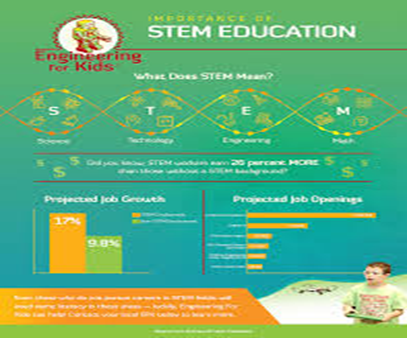
IMPORTANCE OF STEM EDUCATION FOR AN ENHANCED LEARNING
Definition Of Stem
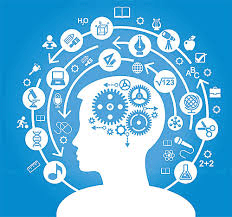
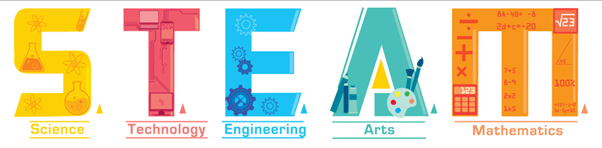
STEM is an artificial intelligence related to Science, Technology, Engineering and mathematics but it is a vast concept of more than these. It integrates and builds an advanced system of education taking into account every individual’s attention. STEM kind of learning needs to be paid attention as it has an improved technology with enclosing subjects that teaches moral values and discipline in inter-relating one another.
The main motive is to build advanced geniuses in the teenage able to tackle subject and real-time oriented issues. This tech unites with pupils making them to be well-versed and multi-talented in all occasions.
Benefits of STEM related education
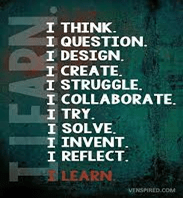
This kind of learning is focused on building higher order of thinking among students by connecting them a classroom experience to the modern world. A future model is built under campuses for upgrading their problem-solving ability, thinking skill, communication skills and creativity to sort out various critical circumstances in reality.
Generally, focuses on practical experience with real-time applications that gradually builds the skills ability level and shaping them to utilize a sense od outstanding creativity in a competitive world of 21st century.
The students brought up from this kind of teaching can tackle the reality as well as social media/virtual world simultaneously with their brilliance and social skills that comprises of curiosity, social skills, leadership, management and acceptance of up and downs in life.
In a specific period of life people will undergo circumstances where they become puzzled to take decision as choices will cause effects on their career which has to be made wisely. At that stage without realizing they randomly choose a false decision making them fall in a pit, which will be realized on later times by the same individual after which nothing can be undone.
This system basically concentrates on those kinds of cases so the growing kids can be exclusively intelligence while handling such experiences. This AI creates a similar kind illusion to make them think and decide their choices accordingly so they can adopt to changes or select a decision more preciously.
Differences from normal learning and AI integrated learning
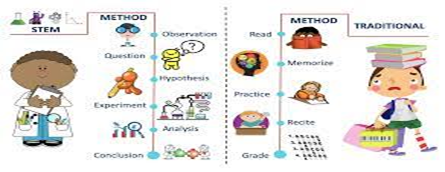
In a standard learning taught by faculties they can give you their knowledge ask them to explore it on your way but mostly pupils memorize concepts that will be totally vanished in this type of system where a machine will broaden every word and concept of subject and explaining the facts deeper by triggering your anxiety to grasp the entire knowledge.
They also become as Book-worms instead of knowing the working behind every concept thus it becomes like mugging/memorizing and vomiting/producing in exam papers just for marks rather than knowledge or skill developed education.
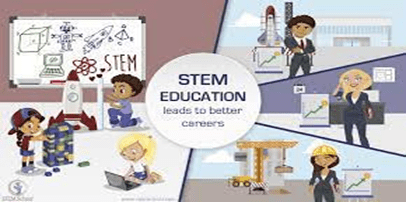
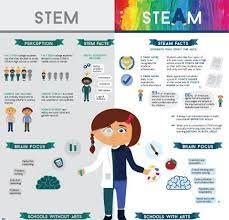
STEM education is the path of future learning making upcoming generation as innovative ones.
These AI models create crucial real-time happenings thus testing their initial level of thinking and providing solutions to the same. By doing this they actually promote their working of brain at a younger age which we call as maturity and experience at small ages.
It is also a known to contribute steps towards economic growth by this deep level thinking knowledge (innovation) which is unique in every kid. That is why each one is special but as they discover their innovative skill it becomes too late for individuals so by enhancing them to bring up their key skills so they are ready to face out life and unavoidable circumstances.
Ways to spread an idea to enlarge the importance about it to the Society
There are various ways through which you can advertise and spread the initiative taken by you. The only thing you require is an account in media platforms that will enroll your ads in various random posts that people may be searching for.
The only purpose of using social media is because the reach is tremendous while compared manually or just by recommendations. You need to focus on how you can market them by discussing their features and how it helps in the improvement of a teenager.
By adding relevant pictures or short clips of the same, people can get to know about the functionalities and capabilities of the system and the working.
Awareness can also be made and posters shall be published to keep a track of viewers and connect with them mutually to improve a knowledge of better learning among several institutions in exploring the skills of a teenager in their adolescent ages that support them vitally.
The base of any product to be recognized is how you explain and elaborate the advantages and benefits that grasps attention to every single student in a whole crowd or in a classroom.
If you are self-motivated to prove and provide minute specifications for the useful machine integrated model (AI/STEM education) it can be an added information for users so they support and promote in various different ways.
Social Media Channels
The enlarged platform of these trending applications has several unique features under each portal those are different from one another. From audience till owners of some companies have adopted to this virtual world that helps growing merchants to develop and stand tall of their product.
The only difficulty is not all the things are encouraged in these sites, if you want a product to be wide-spread then its uniqueness and features must grab the reader/visitor’s attention in such a way so they start marketing your brand as an affiliate or recommend your goods in some required places.
You as a producer can share things that will be helpful for any individual before trying it out. Social platforms like helps you to enrich with the fruitfulness of customers especially YouTube. There are millions of people from various continents utilizing this open platform for various entertainment.
From this article you can get to know some ideas and the importance of the STEM education as an effective way of building up the mental thinking ability by teaching them in a provoking way that enhances of building an IQ that is an advanced level for teenagers to think in a multi-tasking way.
Cyborg can be defined as an organism that has enhanced ability due to the integrated of some artificial components or technology. The concept of a man-machine mixture was widespread in science fiction before World War II. As early as 1843, Edgar AllanPoe described a man with extensive prostheses in the short story “The Man That Was Used Up”. In 1911, Jean de La Hire introduced the Nyctalope, a science fiction hero who was perhaps the first literary cyborg.
Actual cyborgization attempts : Yuval Noah Harari, a professor at the Hebrew University of Jerusalem said- “ Humans may upgrade themselves to become cyber within the next 200 years merging man and machine to potentially live”. Although many technology companies have announced the plans to fuse machines and humans. The fact is the transformation has already begun. Here are some fascinating example from mankind who are already famous for being part human, part cyborg.
Jens Neumann He’s the first person to have a completely artificial vision system, Neumann’s electronic eye is connected directly to visual cortex through brain implants enabling him to see lines and shapes. Latest reports say his vision has since then been restored.
Neil Harbisson The world’s first ‘eye-borg’ to perceive colour as a sound on a musical scale, has an antenna attach it to his skull that converts light waves into sound waves, making it possible for the otherwise colour-blind cyborg artiste to conduct colour concerts, among other things. Also he co-founded the Cyborg foundation to help humans become cyborgs and different cyborg rights.
Oscar Pistorius Often called ‘The blade runner’ Pistorius created history as the first double amputee to compete against able body runner at international level in 2007. Since ‘the fastest man on no legs’ has competed at World Championships in Athletics 2011, which he won; Summer Olympics 2012 for able-bodied and won a gold medal at the Summer Para Olympics 2012.
Kevin Warwick A cybernetics professor at University of Reading (UK ), he is one of the world’s foremost aspiring cyborgs, famous for experimenting with implants, including installing a microchip in his arm which allows him to operate select electrical gadgets.
Jesse Sullivan & Claudia Mitchell Sullivan is equipped with bionic arm, which is connected through nerve-muscle grafting. But that’s not the real achievement. Sullivan can control the limb with his mind and experience warmth, coolness and the pressure of his grip. Claudia, the world’s first woman cyborg after getting outfitted with bionic limb.
The US-based company Backyard Brains released what they refer to as the “world’s first commercially available cyborg” called the RoboRoach. The project started as a senior design project for a University of Michigan biomedical engineering student in 2010, and was launched as an available beta product on 25 February 2011.
The RoboRoach was officially released into production via a TED talk at the TED Global Conference; and via the crowdsourcing website Kickstarter in 2013, the kit allows students to use micro stimulation to momentarily control the movements of a walking cockroach (left and right) using a Bluetooth-enabled smartphone as the controller. Several animal welfare organizations including the RSPCA and PETA have expressed concerns about the ethics and welfare of animals in this project. In the late 2010s, scientists created cyborg jellyfish using a microelectronic prosthetic that propels the animal to swim almost three times faster while using just twice the metabolic energy of their unmodified peers. The prosthetics can be removed without harming the jellyfish.
Artificial Intelligence, or simply AI, is the ability of a computer system or machine to operate and interpret information in the same way that a human does. It is capable of learning, analyzing, copying, and adapting to new knowledge without the need for external optimization. Experts believe that AI will be able to make human existence more easier in the future by providing solutions to nearly all problems. Artificial Intelligence will also make humans aware of potential hazards ahead of time. Artificial intelligence (AI) is one of the most rapidly evolving disciplines of science and creation. Artificial intelligence (AI), also known as “man-made reasoning,” is a branch of software engineering that aims to create machines that can think and function like humans.
Artificial Intelligence (AI): A Brief History
Artificial insight research was also started in 1950. The development of electronic computers and stored programs computers sparked AI research. A connection could not interface a PC to reason or act like a human psyche for a long time after that. Following that, Norbert Wiener made a revelation that accelerated AI’s early development tremendously. He demonstrated that the reaction component is responsible for all creative behavior in individuals. Logic Theorist was another step toward modern AI. It is considered the most important AI programs, having been created by Newell and Simon in 1955.
Who is the Father of Artificial Intelligence?
Mr. John McCarthy (1927-2011) is known as the “Father of AI.” He was born in Boston, Massachusetts, to a poor European immigrant family. McCarthy had already excelled in Mathematics as a teenager. He used to work as a carpenter and a fisherman to help support his family before becoming an official at the California Institute of Technology, Caltech. John McCarthy received his bachelor’s degree in mathematics from Caltech in 1948 and his doctorate in 1951.
Who was John McCarthy?
John McCarthy, also regarded as the “Father of AI,” was a brilliant computer scientist and cognitive scientist. He has been fascinated by artificial intelligence since 1948, and in 1955, he created the term. The formalization of common sense information has been his principal artificial intelligence research topic. In 1958, he created the LISP programming language, and in the late 1950s and early 1960s, he pioneered the concept of time-sharing. Since the early 1960s, he has worked on proving that computer programs fit their specifications. In 1978, he developed the circumscription approach of non-monotonic reasoning.
Applications of Artificial Intelligence:
Marketing: Marketing, which has been a significant area for improvement and the current AI trends, is one of the most notable artificial intelligence examples applications. In terms of AI’s application in the marketing arena online, the early 2000s were not very promising. Yes, there was e-commerce, but the search was not very good. When you didn’t know the specific name of anything, finding it in a store was difficult. Smart suggestions are now far more effective thanks to advancements in AI. Consumers on the web may soon be able to buy things by snapping a photo of them, thanks to advances in AI. This concept is already being tested by companies like Cam Find and their competitors. AI Platforms like IFlyTek also has many AI softwares that leverages on machine and AI intelligence such as text-to-speech and document translation tools to improve everyday life.
Gaming: Artificial Intelligence (AI) has been an important aspect of the game business in recent years. In fact, one of AI’s greatest achievements is in the gaming business. One of the most notable achievements in the field of AI is DeepMind’s AI-based AlphaGo software, which is famous for defeating Lee Sedol, the world champion in the game of GO. The gaming world is the best illustration of clever artificial intelligence applications because it is on this platform that there are many changes in the purpose. AI is employed to create the game, develop the characters, and, to some extent, frame the tale.
Healthcare: The healthcare industry has been one of the most enthusiastic adopters of AI technology. It all comes down to AI’s ability to crunch numbers quickly and learn from previous data, which is important in the healthcare industry. AI has also made a significant contribution to assisting people in the care of patients. The automated bots and healthcare software ensure that patients are properly medicated and treated in the facilities. In some circumstances, AI programs have been reported to assist surgeons during operations.
Chat Bots: Virtual assistants have become increasingly popular in recent years. Almost every home has a virtual assistant that manages the household equipment. Siri and Cortana, for example, are gaining popularity as a result of the user experience they deliver. Amazon’s Echo is an example of how AI can be used to interpret human words into desired actions. This device employs speech recognition and natural language processing to carry out a variety of operations at your direction. It’s capable of much more than just playing your favorite music. It may be used to control your home’s electronics, book cabs, make phone calls, order your favorite meals, and check the weather, among other things.
Human intelligence is the intellectual capability of humans, which is marked by complex cognitive feats and high levels of motivation and self-awareness.Through intelligence, humans possess the cognitive abilities to learn, form concepts, understand, apply logic, and reason, including the capacities to recognize patterns, plan, innovate, solve problems, make decisions, retain information, and use language to communicate. There are conflicting ideas about how intelligence is measured, ranging from the idea that intelligence is fixed upon birth, or that it is malleable and can change depending on an individual’s mindset and efforts.Several subcategories of intelligence, such as emotional intelligence or social intelligence, are heavily debated as to whether they are traditional forms of intelligence.They are generally thought to be distinct processes that occur, though there is speculation that they tie into traditional intelligence more than previously suspected.
Various definitions of intelligence tend to converge around similar notions designed to capture the essence of this psychological factor. Jensennotes Carl Bereiter’s definition of intelligence: “what you use when you don’t know what to do” (p 111). After their extensive survey, Snyderman and Rothmanunderscored reasoning, problem solving, and learning as crucial for intelligence. The “mainstream science on intelligence” report coordinated by Gottfredsonhighlights reasoning, planning, solving problems, thinking abstractly, comprehending complex ideas, learning quickly, and learning from experience. The American Psychological Association (APA) report on intelligence acknowledges that “individuals differ from one another in their ability to understand complex ideas, to adapt effectively to the environment, to learn from experience, to engage in various forms of reasoning, to overcome obstacles by taking thought.
For more than a century, psychologists have developed hundreds of tests for the standardized measurement of intelligence with varying degrees of reliability and validityThe resulting measures allowed for the organization of taxonomies identifying minor and major cognitive abilities. J. B. Carroll,for example, proposed a threestratum theory of intelligence after the extensive reanalysis of more than 400 datasets with thousands of subjects from almost 20 different countries around the world.shows a simplified depiction of the taxonomy of cognitive abilities.
This survey of factor analytic studies supports the view that intelligence has a hierarchical structure (ie, like a pyramid). There is strong evidence for a factor representing general intelligence (g) located at the apex of the hierarchy (stratum III). This g factor provides an index of the level of difficulty that an individual can handle in performing induction, reasoning, visualization, or language comprehension tests. At a lower order in the hierarchy (stratum II), several broad ability factors are distinguished: fluid intelligence, crystallized intelligence, general memory, visual perception, auditory perception, retrieval, or cognitive speed. Lastly, stratum I is based on specific abilities, such as induction, lexical knowledge, associative memory, spatial relations, general sound discrimination, or ideational fluency.
Artificial Intelligence:-
INTRODUCTION:-
Artificial intelligence (AI), the ability of a digital computer or computer-controlled robot to perform tasks commonly associated with intelligent beings. The term is frequently applied to the project of developing systems endowed with the intellectual processes characteristic of humans, such as the ability to reason, discover meaning, generalize, or learn from past experience. Since the development of the digital computer in the 1940s, it has been demonstrated that computers can be programmed to carry out very complex tasks—as, for example, discovering proofs for mathematical theorems or playing chess—with great proficiency. Still, despite continuing advances in computer processing speed and memory capacity, there are as yet no programs that can match human flexibility over wider domains or in tasks requiring much everyday knowledge. On the other hand, some programs have attained the performance levels of human experts and professionals in performing certain specific tasks, so that artificial intelligence in this limited sense is found in applications as diverse as medical diagnosis, computer search engines, and voice or handwriting recognition.
Today, Artificial Intelligence is a very popular subject that is widely discussed in the technology and business circles. Many experts and industry analysts argue that AI or machine learning is the future – but if we look around, we are convinced that it’s not the future – it is the present.With the advancement in technology, we are already connected to AI in one way or the other – whether it is Siri, Watson or Alexa. Yes, the technology is in its initial phase and more and more companies are investing resources in machine learning, indicating a robust growth in AI products and apps in the near future.
The following statistics will give you an idea of growth!
– In 2014, more than $300 million was invested in AI startups, showing an increase of 300%, compared to the previous year (Bloomberg)
– By 2018, 6 billion connected devices will proactively ask for support. (Gartner)
– By the end of 2018, “customer digital assistants” will recognize customers by face and voice across channels and partners (Gartner)
– Artificial intelligence will replace 16% of American jobs by the end of the decade (Forrester)
– 15% of Apple phone owners’ users use Siri’s voice recognition capabilities. (BGR)
Unlike general perception, artificial intelligence is not limited to just IT or technology industry; instead, it is being extensively used in other areas such as medical, business, education, law, and manufacturing.
In the following, we are listing down 9 very intelligent AI solutions that we are using today, marketing machine learning as a present thing – not the future.
Siri
Tesla
Cogito
Netflix
Pandora
Nest (Google)
Boxever
Flying Drones
Echo
1. Siri
Siri is one of the most popular personal assistant offered by Apple in iPhone and iPad. The friendly female voice-activated assistant interacts with the user on a daily routine. She assists us to find information, get directions, send messages, make voice calls, open applications and add events to the calendar.Siri uses machine-learning technology in order to get smarter and capable-to-understand natural language questions and requests. It is surely one of the most iconic examples of machine learning abilities of gadgets.
2. Tesla
Not only smartphones but automobiles are also shifting towards Artificial Intelligence. Tesla is something you are missing if you are a car geek. This is one of the best automobiles available until now. The car has not only been able to achieve many accolades but also features like self-driving, predictive capabilities, and absolute technological innovation.If you are a technology geek and dreamt of owning a car like shown in Hollywood movies, Tesla is one you need in your garage. The car is getting smarter day by day through over the air updates.
3. Cogito
Cogito originally co-founded by Dr. Sandy and Joshua is one of the best examples of the behavioral version to improve the intelligence of customer support representatives, currently on the market. The company is a synthesis of machine learning and behavioral science to enhance customer collaboration for phone professionals.Cogito is applicable on millions of voice calls that take place on a daily basis. The AI solution analyzes the human voice and provides real-time guidance to enhance behavior.
5. Pandora
Pandora is one of the most popular and highly demanded tech solutions that exist. It is also called the DNA of music. Depending on 400 musical characteristics, the team of expert musicians individually analyzes the song. The system is also good at recommending the track record for recommending songs that would never get noticed, despite people’s liking.
6. Nest (Google)
Nest was one of the most famous and successful artificial intelligence startups and it was acquired by Google in 2014 for $3.2 billion. The Nest Learning Thermostat uses behavioral algorithms to save energy based on your behavior and schedule.It employs a very intelligent machine learning process that learns the temperature you like and programs itself in about a week. Moreover, it will automatically turn off to save energy, if nobody is at home.In fact, it is a combination of both – artificial intelligence as well as Bluetooth low-energy because some components of this solution will use BLE services and solutions.
7. Boxever
Boxever is a company that heavily relies on machine learning to enhance the customer experience in the travel industry and conveys micro-moments or experiences that can please the customers.Boxover significantly improves customer engagement through machine learning and Artificial Intelligence to rule the playing field, helping customers to find new ways and make memorable journeys.
8. Flying Drones
The flying drones are already shipping products to customers home – though on a test mode. They indicate a powerful machine learning system that can translate the environment into a 3D model through sensors and video cameras.The sensors and cameras are able to notice the position of the drones in the room by attaching them to the ceiling. Trajectory generation algorithm guides the drone on how and where to move. Using a Wi-Fi system, we can control the drones and use them for specific purposes – product delivery, video-making, or news reporting.
9. Echo
Echo was launched by Amazon, which is getting smarter and adding new features. It is a revolutionary product that can help you to search the web for information, schedule appointments, shop, control lights, switches, thermostats, answers questions, reads audiobooks, reports traffic and weather, gives info on local businesses, provides sports scores and schedules, and more using the Alexa Voice Service
Conclusion
Artificial Intelligence is gaining popularity at a quicker pace; influencing the way we live, interact, and improve customer experience. There is much more to come in the coming years with more improvements, development, and governance.
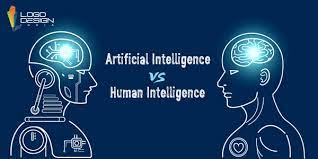
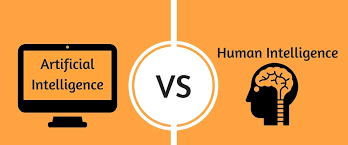
Difference Between Artificial Intelligence and Human Intelligence
Artificial Intelligence: Artificial Intelligence is based on the human insights that can be decided in a way that can machine can effortlessly actualize the tasks, from the basic to those that are indeed more complex. The reason for manufactured insights is learning, problem-solving, reasoning, and perception. This term may be connected to any machines which show related to a human intellect such as examination and decision-making and increments the efficiency. AI covers assignments like robotics, control systems, face recognition, scheduling, data mining, and numerous others.
Human Intelligence: Human intelligence or the behaviour of the human being has come to past experiences and the doings based upon situation, environment. And it is completely based upon the ability to change his/her own surroundings through knowledge which we gained. It gives diverse sorts of information. It can provide data on things related to the particular aptitude and knowledge, which can be another human subject, or, within the case of locators and spies, diplomatic data to which they had to get to. So, after concluding all it can give data on interpersonal connections and arrange of interest.
Below is a table of differences between Artificial intelligence and Human intelligence:
Feature
Artificial Intelligence
Human Intelligence
Emergence
AI is an advancement made by human insights; its early improvement is credited to Norbert Weiner who theorized on criticism mechanisms.
On the other hand, human creatures are made with the intrinsic capacity to think, reason, review, etc.
Pace/Rate of AI and human
As compared to people, computers can handle more data at a speedier rate. For occurrence, in the event that the human intellect can solve a math problem in 5 minutes, AI can solve 10 problems in a minute.
In terms of speed human cannot beat the speed of AI, or, machines.
Decision Making
AI is profoundly objective in choice making because it analyzes based on absolutely accumulated data.
Human’s choices may be affected by subjective components which are not based on figures alone.
Perfection
AI frequently produces precise comes about because it capacities based on a set of modified rules.
For human insights, there’s more often than not a room for “human error” as certain subtle elements may be missed at one point or the other.
Energy Consumption
Modern computer generally uses 2 watts energy.
On the other hand, human brains uses about 25 watts
Modification of AI and Human
AI takes much more time to adjust to unused changes.
Human insights can be adaptable in reaction to the changes to its environment. This makes individuals able to memorize and ace different skills.
Versatility
AI can as it were perform less assignments at the same time as a framework can as it were learn duties one at a time.
The human judgment skills underpins multitasking as prove by differing and concurrent roles.
Social Networking
AI has not aced the capacity to choose up on related social and enthusiastic cues.
On the other hand, as social creatures, people are much way better at social interaction since they can prepare theoretical data, have self-awareness, and are delicate to others’ feelings.












 Eduindex
You must be logged in to post a comment.