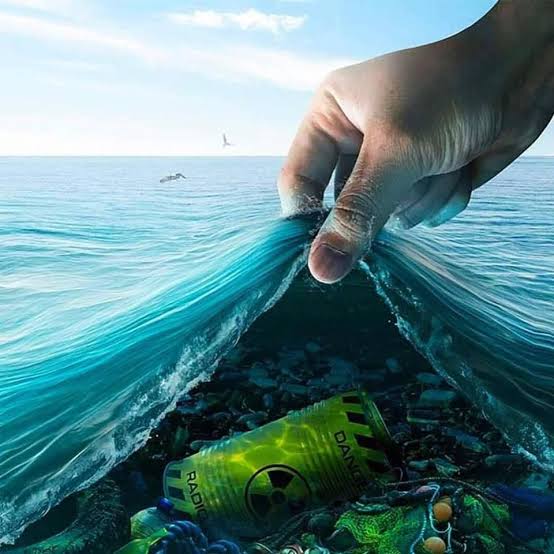
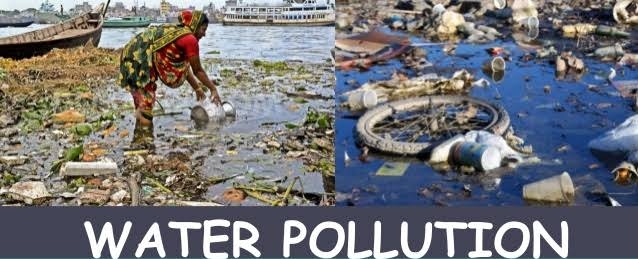
Talking about our most crucial resource “Water”, our rivers, lakes, seas are flooding with chemicals, waste, plastic, and other pollutants. Every living being’s life has become nothing but a threat. Yet we trash water anyway. A British poet named W.H Auden once said “Thousands have lived without love, not one without water.” Polluted water takes away more life than any war/form of violence. With access to less than 1℅ of freshwater resources, it is estimated that by 2050 demand for freshwater will increase by 1/3 than it is today.
In this article, you’ll know:-
★What is water pollution?
★What are the causes?
★What are the ways to prevent water pollution?
What is water pollution?
Water pollution is caused when water bodies are contaminated with chemicals, wastes, or microorganisms, that end up turning water bodies toxic to humans and the environment.
Causes of Water Pollution:-
Water is a Universal Solvent, and it can dissolve more substances than any other liquid on earth. That’s why water is easily polluted. Toxic Substances from factories, farms, and towns mix with it and make it polluted.
I) Groundwater Pollution- Groundwater gets polluted when pollutants like pesticides, fertilizer runoff, waste are leached from the trash yard and septic systems.
II) Surface Water Pollution- Surface water gets polluted by fertilizer runoff, farm waste, municipal and industrial waste, dumping garbage directly, etc.
III) Ocean water Pollution- Chemicals, nutrients, and many toxic substances from farms, industries, cities are carried by streams and rivers to the sea. Hence, ocean water gets polluted. It is also polluted because of oil spills and leaks.
IV) Radioactive Pollution- Radio Active wastes are generated by uranium mining, nuclear power plants, and by universities and hospitals using radioactive material for research. Unknowingly released or improper disposal of these pollutants can threaten groundwater, surface water, and marine resources.
What are the ways to prevent water pollution?
The ways by which one can prevent water pollution are:-
I) Reduce, reuse and recycle plastic.
II) Maintenance of vehicles(especially checking oil leakage or coolant leakage.
III) Proper disposal of chemicals, factory waste, oils, and non-biodegradable substance.
IV) By avoiding the usage of pesticides and herbicides.
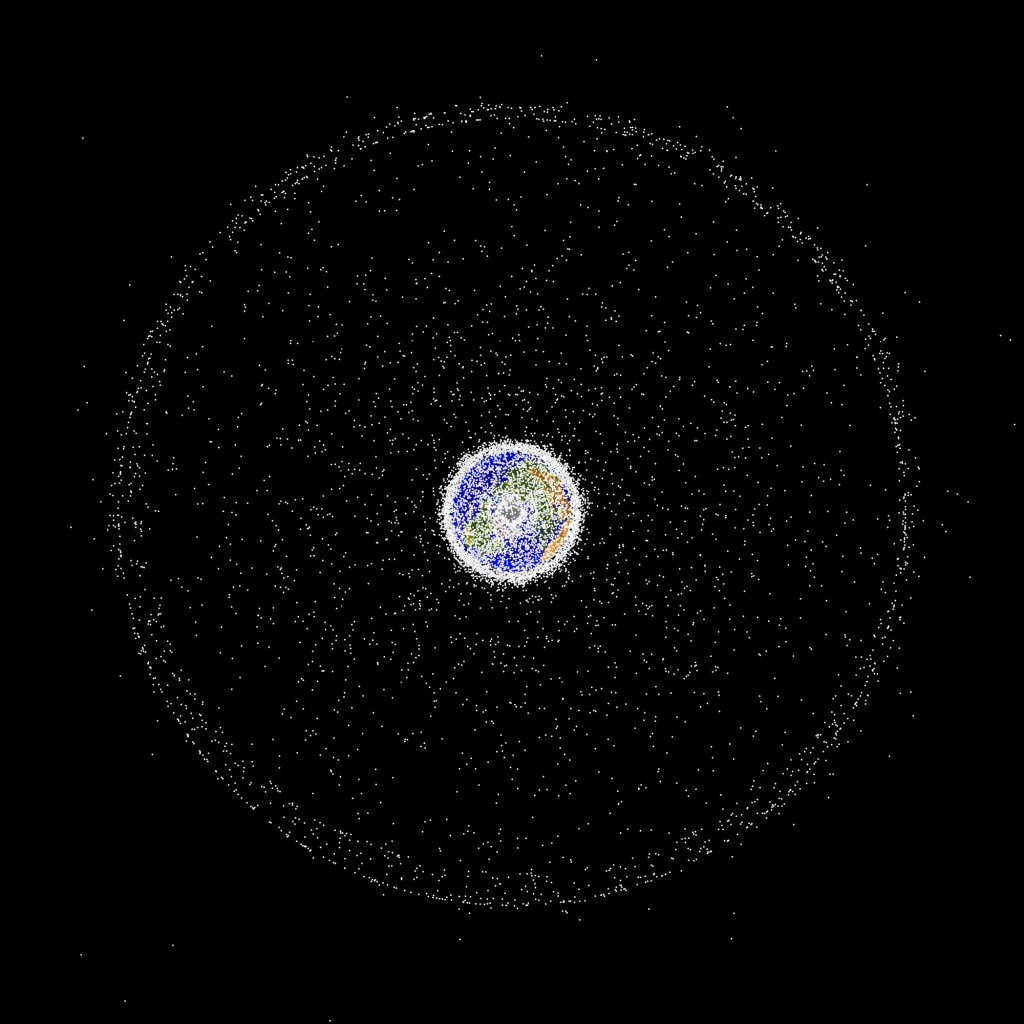
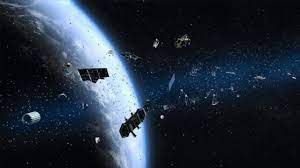
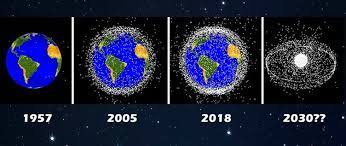
Space debris is the combination of natural(meteoroid) and artificial(man-made) particles. Natural debris orbits around the sun and artificial debris orbits around the earth. Hence they are called Orbital Debris. This can be any man-made object in the orbit moving in the earth’s orbit. Such debris includes nonfunctional spacecraft, abandoned launch vehicle stages, mission-related debris, and fragmentation debris.
In this article, we are going to focus on Artificial Debris, the Reason for its cause, and its prevention.
Space debris
What is Artificial space debris?
Any non-functional man-made object in space is called Artificial debris.
They come from
Satellites and spacecraft which are failed.
Satellites whose life has ended.
Rocket dismantle stages during the launch.
Hardware like nuts, bolts, payload covers, etc.
Solid propellant slag.
Cast aways during space activities like human wastes.
Fragments due to battery explosions, collisions, etc.
When two satellites collide they produce thousands of particles that are dangerous and can cause further destruction which makes Earth’s orbit unfit for satellite launches.
Artificial means man-made satellites
The number of satellite and rocket launches as of April 2021 is given below:
Number of rockets launched(excluding failures) since 1957
5560
Number of satellites carried by rockets launched
11139
Number of satellites still in space
7389
Number of satellites still functioning
3170
Let’s have a look at the number of satellites launched only in 2020 and 2021(April)
Satellites launched in 2020
1283
Satellites launched in 2021 (April)
853(65% of 2020)
History
In the year 2009, 19,000 debris over 5 cm in size were tracked.
In July 2013, more than 170 million debris smaller than 1 cm(0.4), around 670,000 debris of 1 to 10 cm in size, and approximately 29,000 larger debris were detected.
By July 2016, nearly 18,000 artificial debris were orbiting the earth.
In October 2019, nearly 20,000 artificial objects including 2,218 were tracked.
The speed with which the debris travel is more than 28,000 kph(23 times the speed of sound).
Have you heard of Kessler syndrome?
NASA scientist Donald Kessler in 1978, proposed that more launches could increase the junk around the earth which results in the chain reaction of collision of objects in space and further making the earth’s orbit unfit for satellites.
This situation would be extreme, but some experts worry that a variant of this could be a problem one day, and precautionary steps should be taken to avoid the problem.
How do they track space debris?
The USA and Russia have set up tracking networks to monitor the orbital space object population. The European Union is also starting to develop its ways to track debris.
Powerful lasers are used to measure the distance of these objects, like radar or sonar. When a laser beam hits the debris and bounces back to Earth, ground crews can measure how long it takes to figure out where they are and where they are going it alerts the ground stations in case of collisions. But usually, laser technology is used to detect the movement of satellites and if the same technique is used to detect the debris then continuous monitoring should be there since debris are found randomly in space.
Detection of objects through laser technology
India’s status on tracking debris
NETRA(Network for space Objects, Tracking, and Analysis)
Till now, ISRO was dependent on NORAD(North America Aerospace Defense Command) data,
which is available in the public domain, to keep track of space debris and monitor our active and passive satellites. However, this global data is not accurate but NORAD keeps accurate data available for those who are members of its network. Therefore, ISRO cannot access the data.
But now, ISRO has decided to set up telescopes and radars in four corners of the country to get accurate data and avoid unwanted collisions of the satellites.
In September 2019, India launched the early warning system NETRA to secure satellites and other assets in space.
Can satellites be protected from space debris?
There are two ways in which the satellites and spacecraft can be protected:
Computer programs can search for possible collisions between large debris. This system is used in the International Space Station to detect. These operations are expensive and can disturb delicate experiments. Space tracking networks can only track objects more than 100 mm in size. Even a 10 mm object can cause big trouble this cannot be called 100% effective.
A debris shield can be designed to provide additional protection for a spacecraft. One way is to increase the thickness of the craft but that can increase the mass of the craft/satellite. Hence, a specially designed shield called the Wipple shield was used. It was made of two thin walls separated by some space. It was observed that this wall was more resistant to debris. The outer layer absorbs a lot of debris energy so that the inner wall is not punctured.
Protection of satellites through shields
Space debris Removal
Removing space junk, especially larger pieces before they fragment is not easy. The best way to do this is retarding the force and deorbiting the junk. When it drops in altitude less than 400 km above the earth it is burnt.
For years NASA, ESA, and other space agencies are studying debris removal technologies. Some of the ideas include the usage of nets to gather junk and robotic arm. Japanese are now developing a type of satellite that uses magnets to catch and destroy the debris. Last year, UK has successfully cast a net around a dummy satellite.
Clearspace one
Clearspace-1 will be the first space mission to remove debris from the Earth orbit, it was planned to launch in 2025. The technology demonstration satellite was first developed by the Swiss Federal Institute of Technology in Lausanne.
Clearspace one
Many countries are trying to invent new technologies to reduce the threat of debris. Russia invented a Self Destroying Satellite. Australian researchers are developing the Hunter-Killer satellite to neutralize space junk. Finland has developed a Wooden Satellite and planning to launch this year.
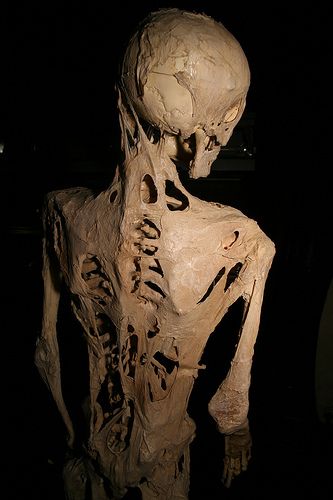
The effects of fibrodysplasia ossificans progressiva, a disease which causes damaged soft tissue to regrow as bone.
Lexi Robins, 5 month old from the UK is “turning to a stone”due to an extremely rare genetic condition Fibrodysplasia Ossificans Progressiva (FOP) that turns muscles into bones.
Lexi Robins
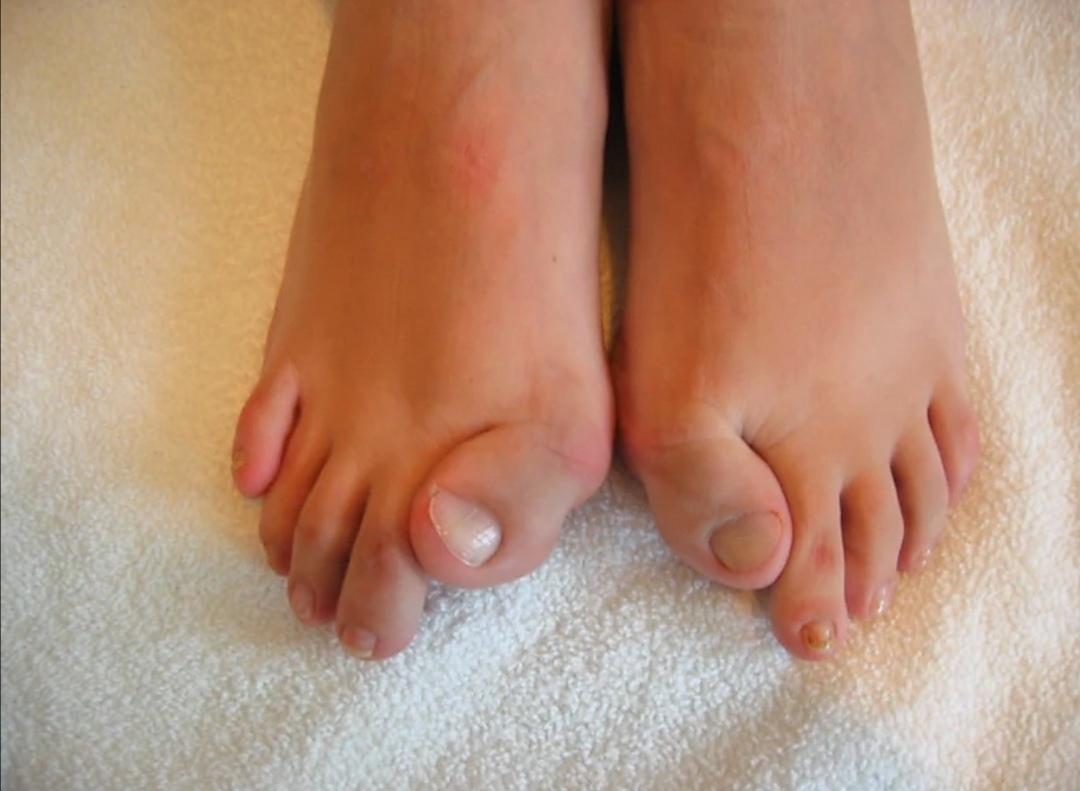
Lexi Robins was born on January 31 and seemed like any other normal baby, except she didn’t move her thumb and had bigger toes.
Lexi was diagnosed with a life-limiting disease called Fibrodysplasia Ossificans Progressiva (FOP), which affects just one in two million.
Due to the disorder, Lexi’s condition may worsen rapidly if she suffers any minor trauma, as simple as falling over. She cannot receive injections, vaccinations and dental care and cannot give birth.
FOP is a severe, disabling disorder with no current cure or treatment. It is the only known medical condition where one organ system changes into another. Fibrodysplasia ossificans progressiva is caused by a mutation of the gene ACVR1.
The FOP can lead to bone formation outside skeleton and restrict movement. It is believed to replace muscles and connective tissues, such as tendons and ligaments, with bone. Thus, it is generally perceived that the condition turns a body into stone.
People with this disease, which has no proven treatment, can be bedridden by the age of 20 and their life expectancy is around 40 years.
There is an undefined beauty in the film, filled with mystery and unexpected events. It drives most of us crazy when we don’t know what will happen next. When watching a mystery movie, the scenario is completely different. We love watching movies where it is impossible to predict. A mystery film becomes even better when the flavor of thriller is added to it. Thrillers are also about plausibility. Once magic or science-fiction works its way into the storyline, the film becomes less about normal people surviving harrowing situations and more about the mechanics of the fantasy world it now inhabits. The events of a thriller may be highly unlikely but they could, at least in an impressionistic way, happen in the real world. That’s what makes them captivating. It could happen to you. keeping this in mind I had prepared the list of best rated mystry thriller movies. The list consists of both , Hollywood as well as bollywood movies. The Movies are mostly numbered on the basis of their ratings, reviews from critics and public response. This is not a universal list in this genre, just take it as some suggestions if you wanna watch on this genre.
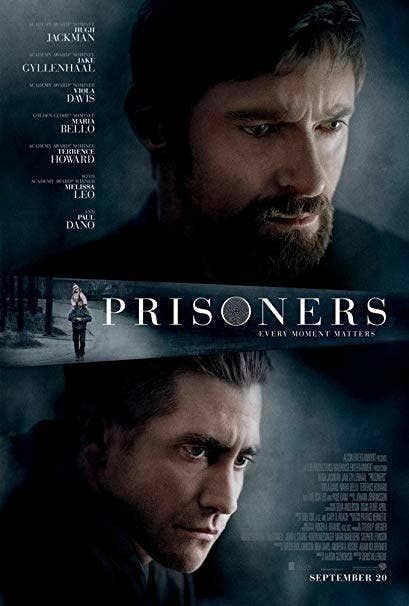
20. Prisoners (imdb- 8.1)
Prisoners is a 2013 American thriller film directed by Denis Villeneuve from a screenplay written by Aaron Guzikowski. The plot focuses on the abduction of two young girls in Pennsylvania and the subsequent search for the suspected abductor by the police. After police arrest a young suspect and release him, the father of one of the daughters takes matters into his own hands. It was chosen by the National Board of Review as one of the top ten films of 2013, and at the 86th Academy Awards, it was nominated for Best Cinematography.Gyllenhaal received the Best Supporting Actor of the Year Award at the 2013 Hollywood Film Festival for his “truly compelling, subtly layered” performance as Detective Loki.
19.kahaani (IMDb-8.1)
Kahaani is a Indian Hindi-language thriller film co-written, co-produced and directed by Sujoy Ghosh. It stars Vidya Balan as Vidya Bagchi, a pregnant woman searching for her missing husband in Kolkata during the festival of Durga Puja, assisted by Satyoki “Rana” Sinha and Khan. Kahaani garnered generally positive reviews from critics. The film won several awards, including three National Film Awards and five Filmfare Awards. The latter included trophies for Best Director (Ghosh) and Best Actress (Vidya).
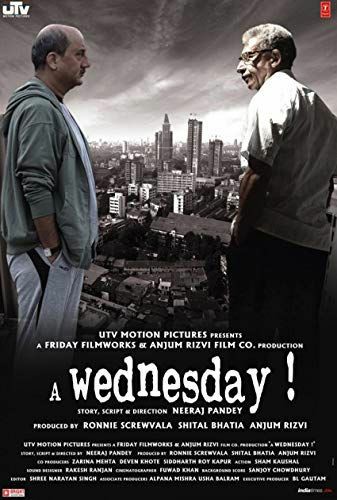
18.A Wednesday (IMDb-8.1)
A Wednesday! released on 5 September 2008 is a 2008 Indian Hindi-language thriller film written and directed by Neeraj Pandey.It stars Naseeruddin Shah and Anupam Kher. Set between 2 pm and 6 pm on a Wednesday,the film depicts an about-to-retire police commissioner (Anupam Kher) narrating a sequence of events that unfolded on a particular Wednesday. There does not exist any written record. The awareness of the incident exists only in his mind and in those of several individuals who were involved, willingly and unwillingly, and how those events affected the lives of all the concerned people. it won a number of awards including the Indira Gandhi Award for Best Debut Film of a Director at the 56th National Film Awards.
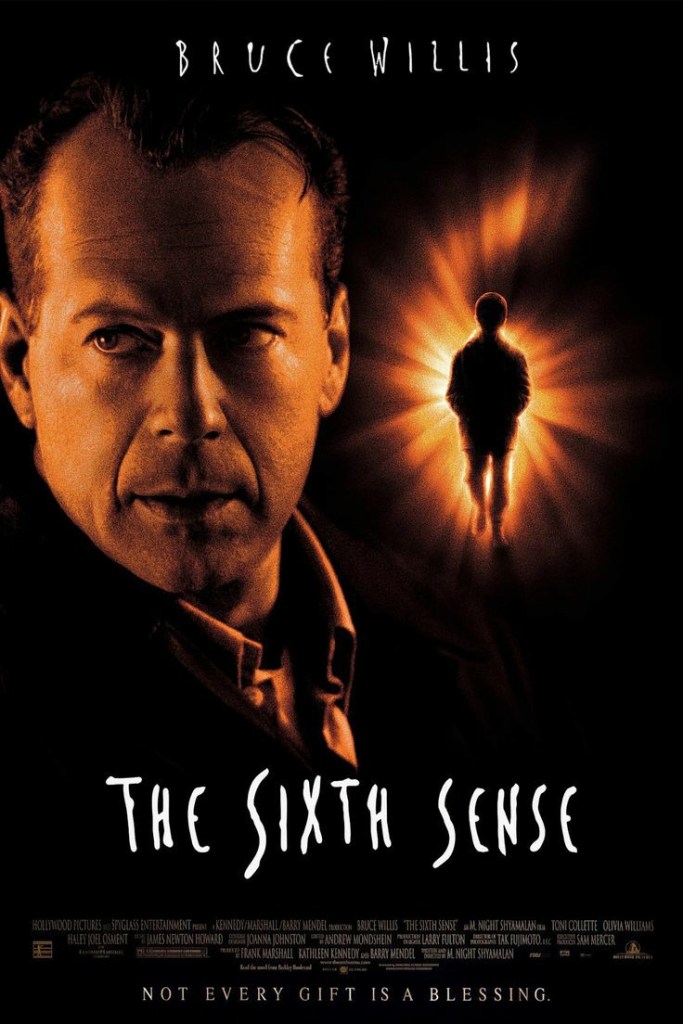
17.The sixth sense (IMDb- 8.1)
The Sixth Sense is a 1999 American supernatural psychological thriller film written and directed by M. Night Shyamalan. It stars Bruce Willis as a child psychologist whose patient (Haley Joel Osment) can talk to the dead. The film established Shyamalan and introduced the cinema public to his traits, most notably his affinity for surprise endings.It was nominated for six Academy Awards, including Best Picture, Best Director and Best Original Screenplay for Shyamalan, Best Supporting Actor for Osment, and Best Supporting Actress for Collette. It was the second-highest-grossing film of 1999, taking about $293 million in the US and $379 million in other markets.In 2013, the Writers Guild of America ranked the screenplay #50 on its list of 101 Greatest Screenplays ever written.
16.The memory of a murder(IMDb-8.1)
Memories of Murder is a 2003 South Korean crime thriller film co-written and directed by Bong Joon-ho. It is loosely based on the true story of Korea’s first confirmed serial murders, which took place between 1986 and 1991 in Hwaseong, Gyeonggi Province.The film has earned critical acclaim for its twisted tone, cinematography, editing, score, Song’s performance, and Bong’s direction and screenplay. Since its release, it won numerous national awards and has been regarded by many to be one of the finest films of the 21st century. It received screenings at several international film festivals, including Cannes Film Festival, Hawaii International Film Festival, London International Film Festival, Tokyo International Film Festival and San Sebastian International Film Festival, where Bong Joon-ho won the Best Director Award.
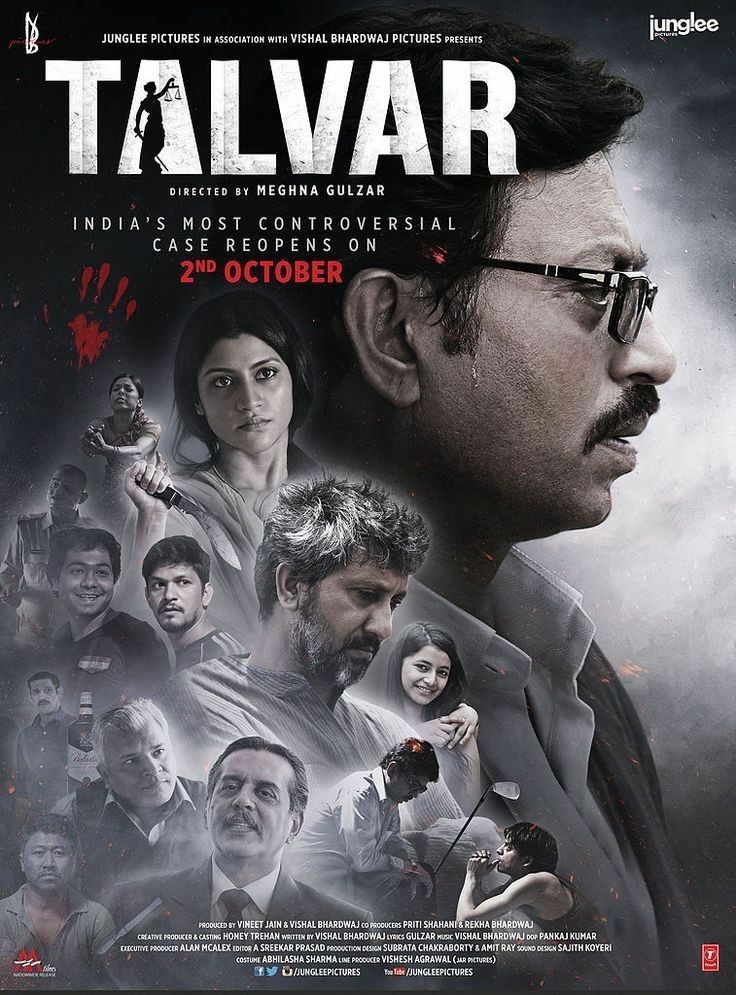
15.Talvar (IMDb- 8.2)
Talvar is a 2015 Indian Hindi-language thriller drama film directed by Meghna Gulzar and written by Vishal Bhardwaj. Produced by Bhardwaj and Vineet Jain, the film is based on the 2008 Noida double murder case involving a teenage girl and her family’s servant. Starring Irrfan Khan, Konkona Sen Sharma and Neeraj Kabi, the film follows the investigation of a case from three different perspectives in which her parents are either guilty or innocent of the murder charges by the police investigation, the first CBI probe and an investigation by a different CBI team.Talvar received a positive critical reception.Bhardwaj received the Best Adapted Screenplay Award for Talvar at the 63rd National Film Awards, and Prasad received the Award for Best Editing at the 61st Filmfare Awards.
14.Andhadhun (IMDb-8.2)
Andhadhun is a 2018 Indian Hindi-language black comedy crime thriller film co-written and directed by Sriram Raghavan, produced by Matchbox Pictures, and distributed by Viacom18 Motion Pictures. The film revolves around Akash, a piano player pretending to be visually-impaired, unwittingly becomes entangled in a number of problems as he witnesses the murder of a former film actor.Critics highlighted the writing, and Khurrana and Tabu’s performances. It won four awards, including Best Director and Best Screenplay, at the Screen Awards ceremony and five Filmfare Awards, including Best Film (Critics) and Best Actor (Critics) for Khurrana. It also won three National Film Awards: Best Feature Film in Hindi, Best Actor for Khurrana, and Best Screenplay.
13.The secret in their eyes (IMDb-8.2)
The Secret in Their Eyes is a 2009 Argentinian crime drama film directed, co-written, produced and edited by Juan José Campanella.The film depicts a judiciary employee and his boss, a law clerk, in 1974, played by Ricardo Darín and Soledad Villamil, as they investigate a rape and murder case, while also following the characters 25 years later reminiscing over the case and unearthing the buried romance between them.The film received awards in both Hollywood and Spain, notably the Academy Award for Best Foreign Language Film at the 82nd Academy Awards, making Argentina, with 1985’s The Official Story, the first country in Latin America to win it twice. In 2016, The Secret in Their Eyes was ranked No. 91 by international critics for the BBC’s 100 Greatest Films of the 21st Century.
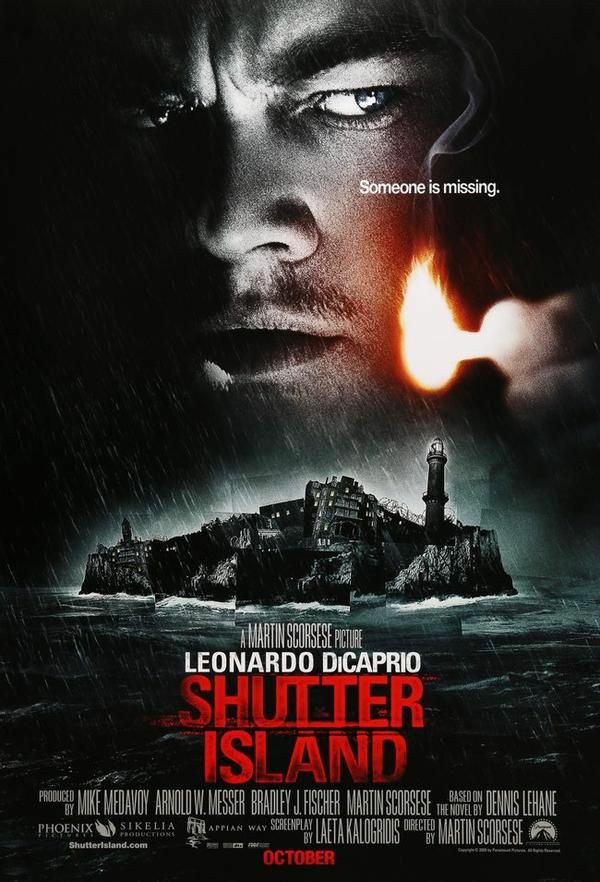
12.shutter island (IMDb- 8.2)
Shutter Island is a 2010 American neo-noir psychological thriller film directed by Martin Scorsese and written by Laeta Kalogridis, based on Dennis Lehane’s 2003 novel of the same name. Leonardo DiCaprio stars as Deputy U.S. Marshal Edward “Teddy” Daniels, who is investigating a psychiatric facility on Shutter Island after one of the patients goes missing. Mark Ruffalo plays his partner and fellow deputy marshal, Ben Kingsley is the facility’s lead psychiatrist, Max von Sydow is a German doctor, and Michelle Williams is Daniels’ wife. Released on February 19, 2010, the film received mostly positive reviews from critics, was chosen by National Board of Review as one of the top ten films of 2010, and grossed over $294 million worldwide.
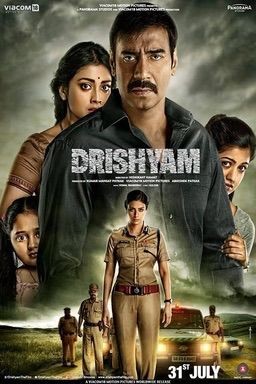
11.Drishyam (IMDb- 8.2)
Drishyam is a 2015 Indian Hindi-language thriller film directed by Nishikant Kamat. The film is a remake of the 2013 Malayalam-language film of the same name. The film was jointly produced by Kumar Mangat Pathak, Ajit Andhare and Abhishek Pathak, and stars Ajay Devgn, Tabu and Shriya Saran, and also features Ishita Dutta and Mrunal Jadhav. The movie revolves around Desperate measures that are taken by a man who tries to save his family from the dark side of the law, after they commit an unexpected crime.
10.memento (IMDb- 8.4)
Memento is a 2000 American neo-noir psychological thriller film written and directed by Christopher Nolan, and produced by Suzanne and Jennifer Todd. It revolves around a man who, as a result of an injury, has the inability to form new memories) and has short-term memory loss approximately every fifteen minutes. He is searching for the people who attacked him and killed his wife, using an intricate system of polaroid photographs and tattoos to track information he cannot remember.Memento received numerous accolades, including Oscar nominations for Best Original Screenplay and Best Film Editing.The film is now widely regarded as one of Nolan’s finest works and one of the best films of the 2000s.
9.The lives of others (IMDb-8.4)
The lives of others is a 2006 German drama film written and directed by Florian Henckel von Donnersmarck marking his feature film debut. The plot is about the monitoring of East Berlin residents by agents of the Stasi, East Germany’s secret police. It also won the BAFTA Award for Best Film Not in the English Language and European Film Award for Best Film, while was nominated for the Golden Globe Award for Best Foreign Language Film.
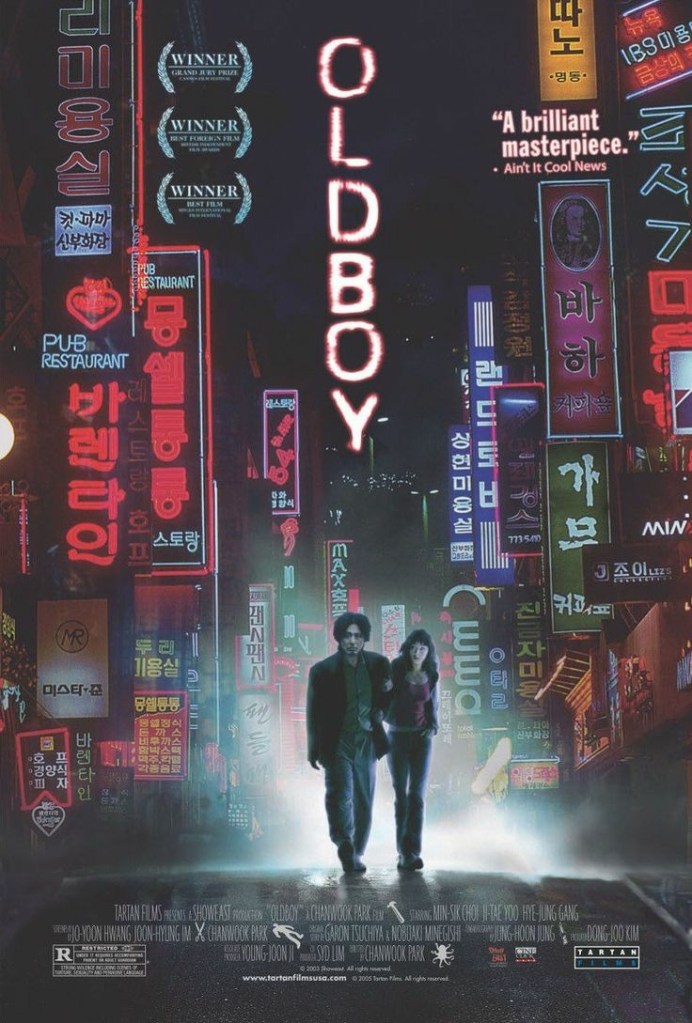
8.oldboy (IMDb- 8.4)
It is a 2003 South Korean neo-noir action thriller film, co-written and directed by Park Chan-wook. The film follows the story of Oh Dae-su, who is imprisoned in a cell which resembles a hotel room for 15 years without knowing the identity of his captor or his captor’s motives. When he is finally released, Dae-su finds himself still trapped in a web of conspiracy and violence. His own quest for vengeance becomes tied in with romance when he falls in love with an attractive young sushi chef, Mi-do.
The film won the Grand Prix at the 2004 Cannes Film Festival and high praise from the President of the Jury, director Quentin Tarantino.
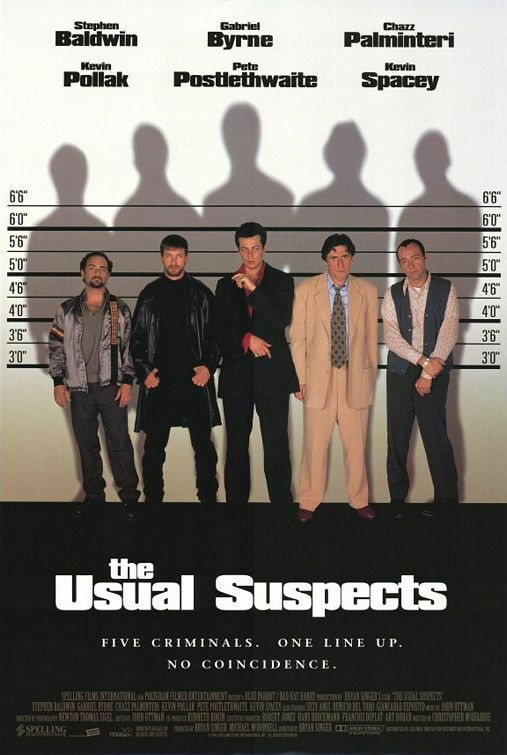
7.The usual suspect (IMDb- 8.5)
The Usual Suspects is a 1995 American neo-noir mystery thriller film directed by Bryan Singer and written by Christopher McQuarrie.The plot follows the interrogation of Roger “Verbal” Kint, a small-time con man, who is one of only two survivors of a massacre and fire on a ship docked at the Port of Los Angeles. Through flashback and narration, Kint tells an interrogator a convoluted story of events that led him and his criminal companions to the boat, and of a mysterious crime lord—known as Keyser Söze—who controlled them. .The film was shown out of competition at the 1995 Cannes Film Festival.It received favorable reviews and was eventually given a wider release. McQuarrie won an Academy Award for Best Original Screenplay and Spacey won the Academy Award for Best Supporting Actor for his performance.
6.The prestige (IMDb -8.5)
The Prestige is a 2006 science fiction psychological thriller film directed by Christopher Nolan, written by Nolan and his brother Jonathan, based on the 1995 novel of the same name by Christopher Priest. It follows Robert Angier and Alfred Borden, rival stage magicians in London at the end of the 19th century. Obsessed with creating the best stage illusion, they engage in competitive one-upmanship, with fatal results. It got Academy Award nominations for Best Art Direction and Best Cinematography.
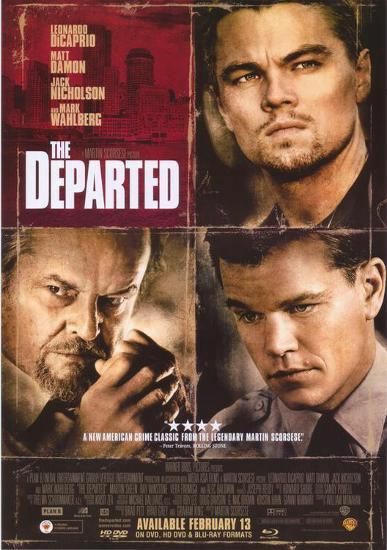
5.The. Departed (IMDb- 8.5)
The Departed is a 2006 American crime thriller film directed by Martin Scorsese and written by William Monahan. The film takes place in Boston. Irish Mob boss Frank Costello (Nicholson) plants Colin Sullivan (Damon) as a mole within the Massachusetts State Police; simultaneously, the police assign undercover state trooper Billy Costigan (DiCaprio) to infiltrate Costello’s crew. When both sides realize the situation, Sullivan and Costigan each attempt to discover the other’s identity before they are found out.
The Departed was a critical and commercial success, and won several awards, including four Oscars at the 79th Academy Awards, for Best Picture, Best Director, Best Adapted Screenplay, and Best Film Editing, becoming Scorsese’s first win for Best Director; Wahlberg was also nominated for Best Supporting Actor.
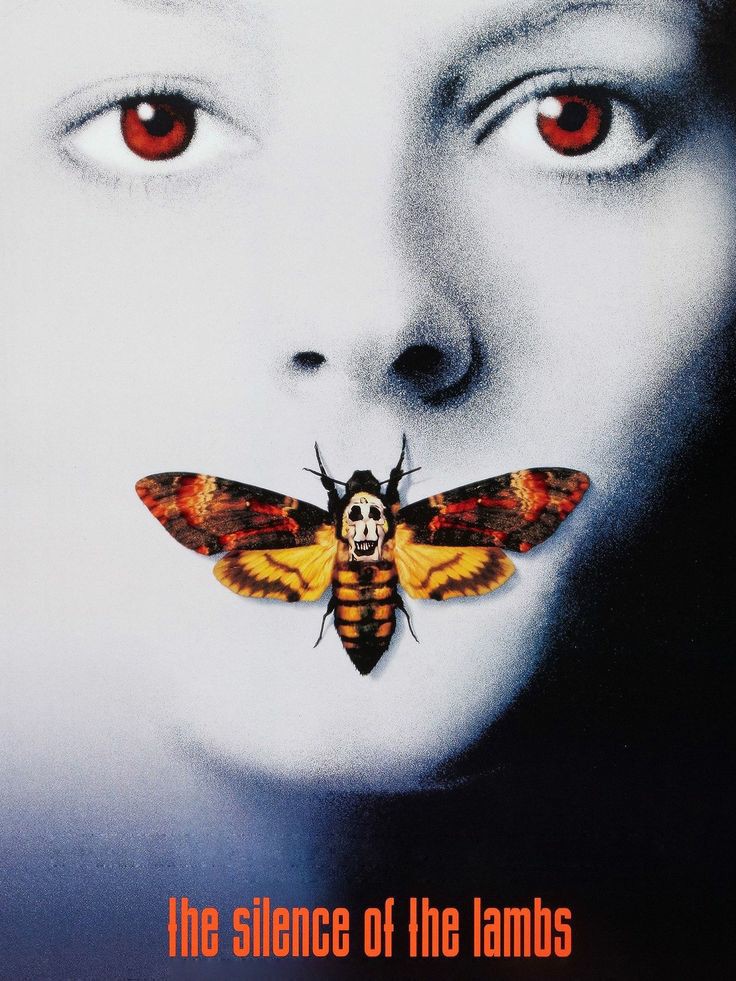
4.The silence of the lambs (IMDb- 8.6)
The Silence of the Lambs is a 1991 American psychological horror[ film directed by Jonathan Demme. It revolves around a young FBI trainee who is hunting a serial killer, “Buffalo Bill” (Ted Levine), who skins his female victims. To catch him, she seeks the advice of the imprisoned Dr. Hannibal Lecter (Anthony Hopkins), a brilliant psychiatrist and cannibalistic serial killer. The film also features performances from Scott Glenn, Anthony Heald and Kasi Lemmons.
The Silence of the Lambs is regularly cited by critics, film directors and audiences as one of the greatest and most influential films. It won Academy Awards in all the top five categories: Best Picture, Best Director, Best Actor, Best Actress, and Best Adapted Screenplay.
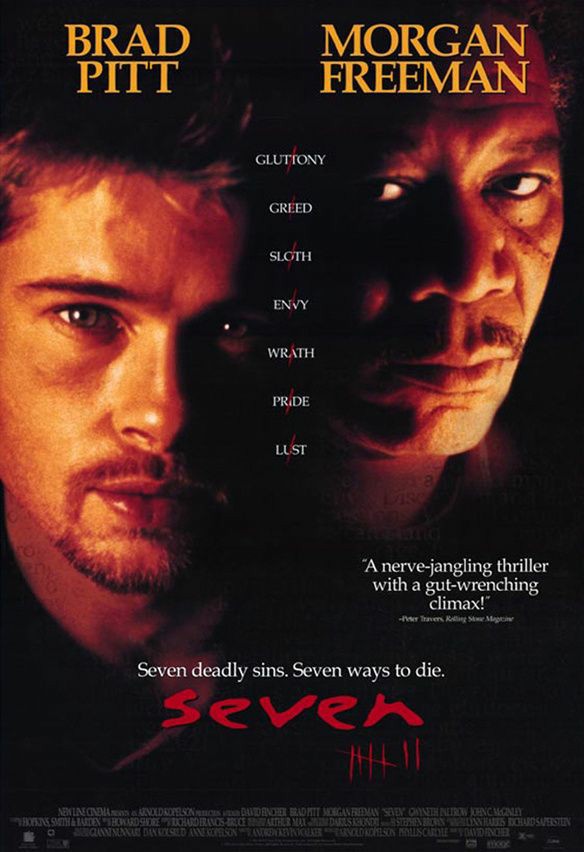
3.seven
Seven is a 1995 American neo-noir psychological crime thriller film directed by David Fincher and written by Andrew Kevin Walker. It stars Brad Pitt, Morgan Freeman, Gwyneth Paltrow, Kevin Spacey, R. Lee Ermey and John C. McGinley. The film tells the story of David Mills (Pitt), a detective who partners with the retiring William Somerset (Freeman) to track down a serial killer who uses the seven deadly sins as a motif in his murders.itwas the seventh-highest-grossing film of the year, grossing over $327 million worldwide. It was well received by critics and was nominated for Best Film Editing at the 68th Academy Awards.
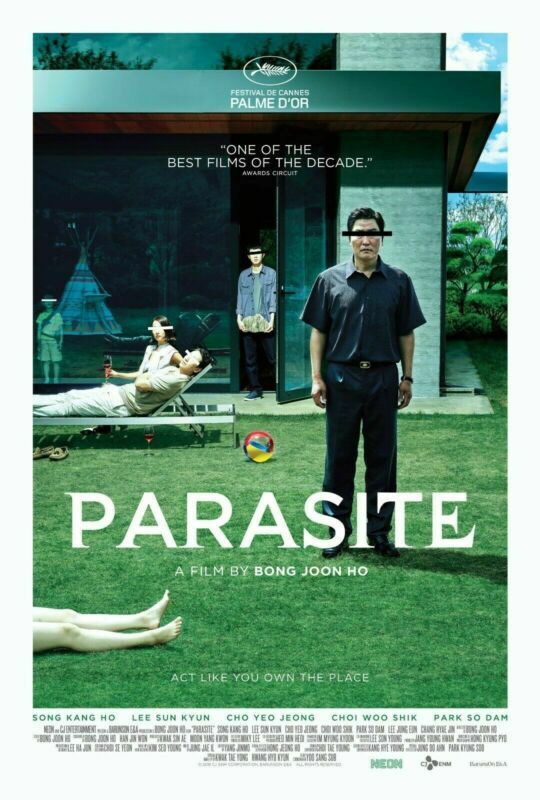
2.parasite (IMDb -8.6)
It is a 2019 South Korean black comedy thriller film directed by Bong Joon-ho, who co-wrote the screenplay with Han Jin-won.It revolves around a poor family who scheme to become employed by a wealthy family and infiltrate their household by posing as unrelated, highly qualified individuals.
Parasite premiered at the 2019 Cannes Film Festival on 21 May 2019, where it became the first South Korean film to win the Palme d’Or. Among its numerous accolades, Parasite won a leading four awards at the 92nd Academy Awards: Best Picture, Best Director, Best Original Screenplay, and Best International Feature Film, becoming the first non-English language film to win the Academy Award for Best Picture.
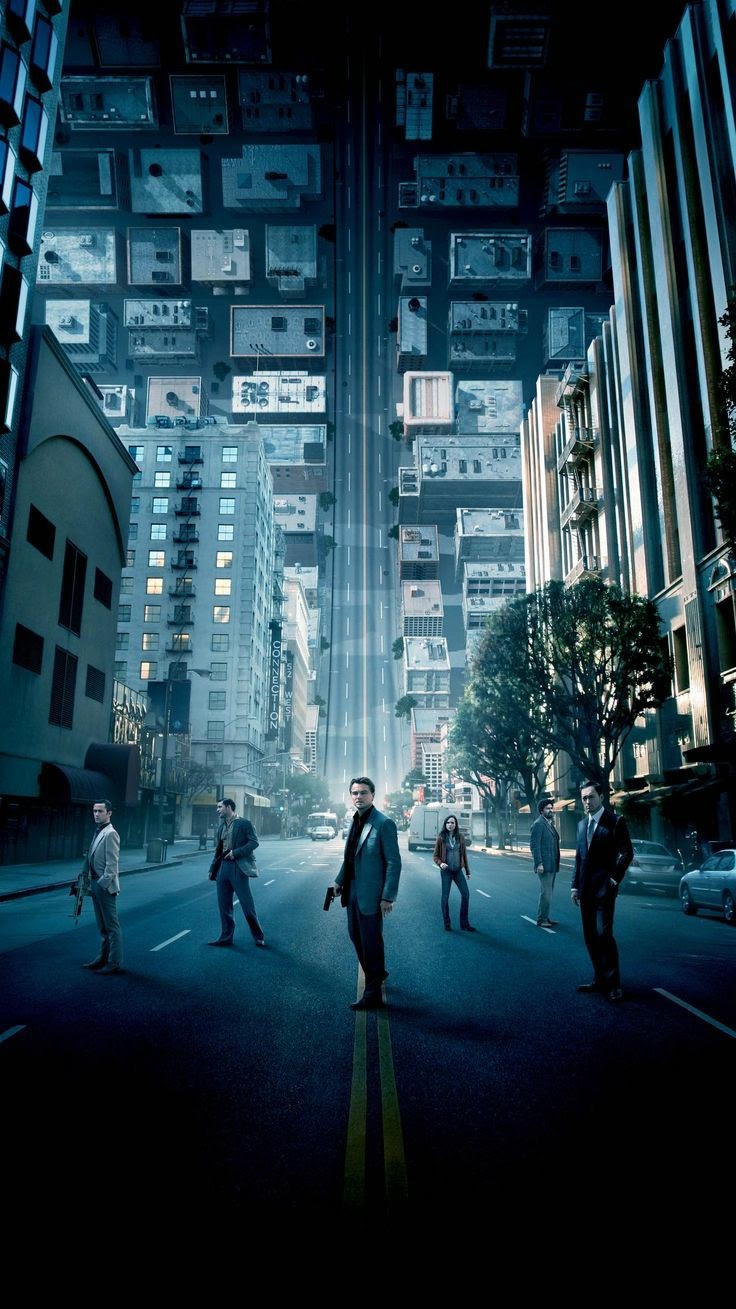
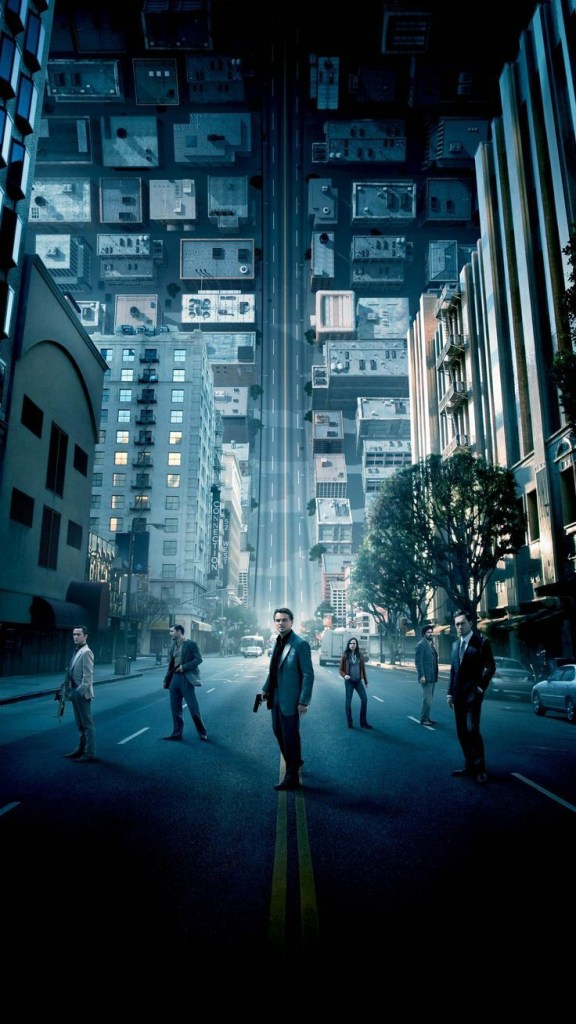
1.inception (IMDb-8.8)
The film stars Leonardo DiCaprio as a professional thief who steals information by infiltrating the subconscious of his targets. He is offered a chance to have his criminal history erased as payment for the implantation of another person’s idea into a target’s subconscious.Inception received critical praise for its screenplay, direction, themes, action sequences, visual effects, musical score, and ensemble cast. It won four Academy Awards in Best Cinematography, Best Sound Editing, Best Sound Mixing, and Best Visual Effects and was nominated for four more: Best Picture, Best Original Screenplay, Best Art Direction, and Best Original Score.
Swami Vivekananda as we all know was born on January 12, 1863 in Calcutta (present day Kolkata). Swami Vivekananda was never religious in his early life but was always interested in spirituality and meditation from young age.
Swami Vivekananda got educated from Calcutta University and had keen interest in subjects like history, religion, social science, philosophy and like. Today, July 4 is his death anniversary and us know five important incidents from his life.
1) Swami Vivekananda at Parliament of World Religions, 1893.
Photo Credits: India TV
Swami Vivekananda became extremely popular when he went to Chicago in 1893 for Parliament of World Religions where he represented India and Hinduism. He addressed Americans as “Sisters and Brothers of America” in his speech which led to widespread appreciation. In this event, he spoke about how the land of Vedas, Yoga and Saints has taught tolerance and universal acceptance to the world.
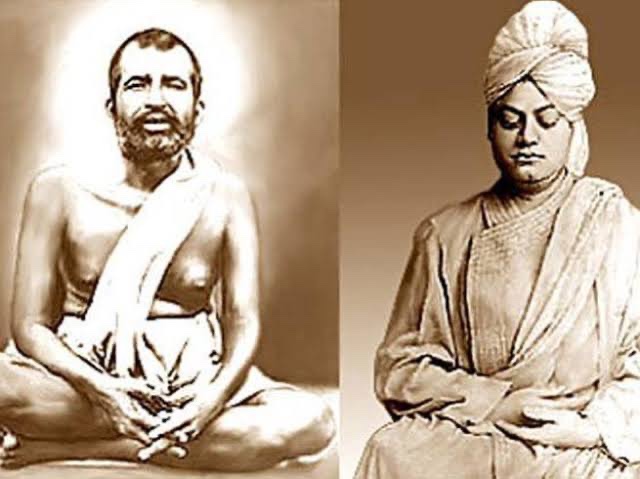
2) First meet of Swami Vivekananda and Ramkrishna Dev.
Photo Credits: Navbharat Times.
Swami Vivekananda met his mentor Ramkrishna Dev first in Dakshineswar Temple in Kolkata where Ramkrishna Dev used to reside but their relationship began when they met at the house of Surendra Nath Mitra. Ramkrishna Dev asked Swami Vivekananda to sing and impressed by his singing talent Ramkrishna Dev invited Swami Vivekananda to Dakshineswar.
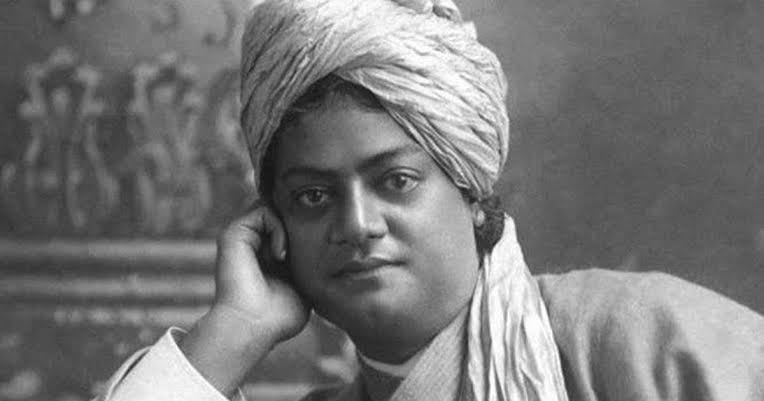
3) Life in Dakshineswar, Kolkata.
Photo Credits: Scroll.
Swami Vivekananda’s constant meetings with Ramkrishna Dev became important and life changing moments for him. Initially, Swami Vivekananda was amused and nervous when he first interacted with Ramkrishna Dev. After giving many tests, Swami Vivekananda finally accepted Ramkrishna Dev as his spiritual teacher in 1882. He remained there until Ramkrishna Dev’s death in 1886.
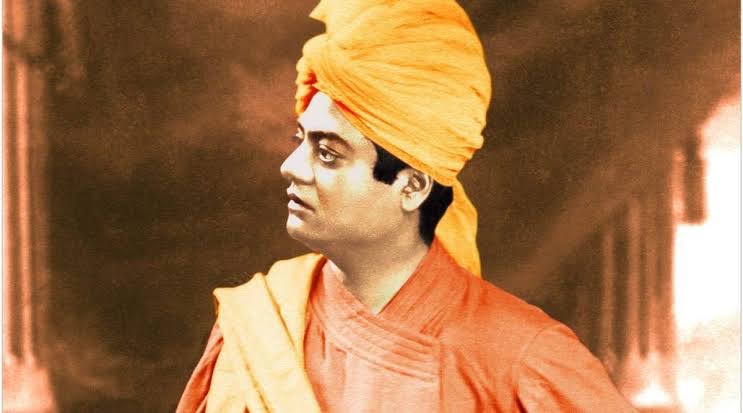
4) Enlightenment of Swami Vivekananda.
Photo Credits: The Indian Express
Swami Vivekananda once asked Ramkrishna Dev whether there’s any God or not (as Ramkrishna used to keep telling him about God ), to which Ramkrishna Dev replied “I am the proof that God exists”. After three days, Swami Vivekananda retuned to him and asked whether Ramkrishna Dev can show him God or not. Ramkrishna Dev asked a counter question that whether Swami Vivekananda has the courage to see God or not to which Swami Vivekananda replied “Yes”. After this, Ramkrishna Dev placed his foot on Swami Vivekananda’s chest and Swami Vivekananda lost his consciousness after that. He restored his consciousness after twelve hours but he was totally changed by then.
5) Establishment of Ramkrishna Mission and relationship with Sharada Devi.
Photo Credits: Old Indian Photos.
Swami Vivekananda founded The Ramkrishna Mission on May 1, 1897 to honour and recognise the efforts and teachings of Ramkrishna Dev. Swami Vivekananda also had a very respectful and loving approach with Sarada Devi as he went to Chicago in 1893 only after taking her blessings.
At the end let’s apply Swami Vivekananda’s words in real life and as Indians, we should always move towards social equality and individual freedom which were his primary teachings.
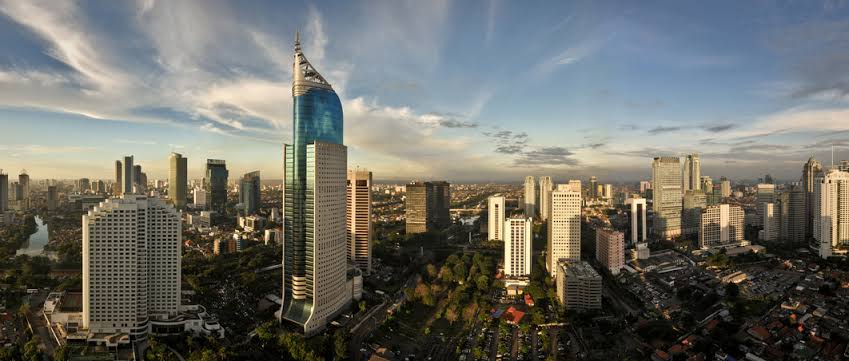
Officially Indonesia is a country in Southeast Asia and Oceania between the Indian and Pacific oceans.It is the world’s largest island country and the 14th-largest country by land area, at 1,904,569 square kilometres which consists of over seventeen thousand islands, including Sumatra, Java, Sulawesi, and parts of Borneo and New Guinea.Indonesia is the world’s fourth-most populous country and the most populous Muslim-majority country. Jakarta is the capital of Indonesia and it is the world’s second-most populous urban area.
HOW IS THE CLIMATE OF INDONESIA?
Basically Indonesia’s climate is almost entirely tropical.The coastal plains’ climate is average 28 °C, the inland and mountain areas are 26 °C, and the higher mountain regions, 23 °C. Temperature depends on the season, and through the change of seasons there is little change in the length of daylight hours.The main changeable thing is not Indonesia’s climate or air pressure, but rainfall. The area’s correlative humidity ranges between 70% and 90%. Although air temperature changes little from season to season or from one region to the next, cooler temperatures prevail at higher elevations. In general, temperatures drop approximately 1°C/90-meter increase in elevation.
Indonesia is a naturally tropical country, that’s why there are two seasons those are mainly Rainy and Dry, and it does not have spring, summer, autumn, or winter. In most of the country (including Java and Bali) the dry season is from April to October, while the wet season is from November to March.
PLACES TO VISIT –
There are many places to visit and each and every one is very beautiful. Indonesia is one of the world’s most beautiful places to visit and the most visited holiday destination. Let’s find out by my article what makes Indonesia so interesting !!
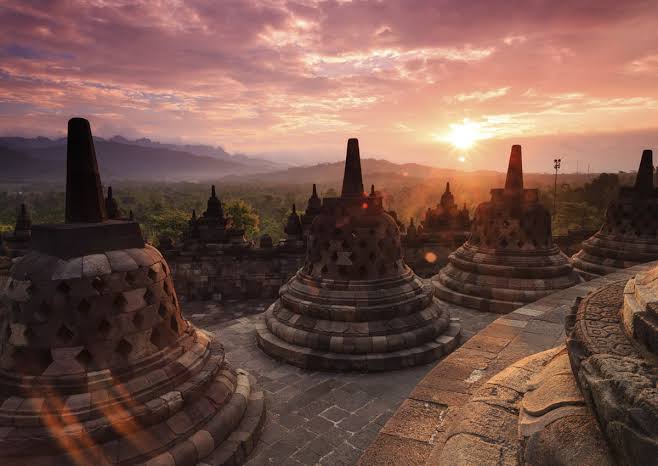
Gili Islands is for the best nightlife,Raja Ampat Islands for explore rare species of corals,Maluk Beach for witness the changing colors of sun rays,Kelimutu Lake for dramatic volcanic peaks,Lake Toba for largest caldera,Bunaken Marine Park for exotic range of fish species,Komodo National Park for giant monitor lizards,Mount Bromo for the active volcano,Mount Rinjani which is the second highest volcano of indonesia,Ijen for mining activities,Dieng Plateau which is an abode of god,Torajaland which relishes the culture,Borobudur Temple which is the world’s biggest buddhist sanctuary,Ubud for hike through rainforests & rice paddy fields,Tanjung Puting National Park for trekking in tropical jungle,Derawan Islands for relaxing & unwinding,Belitung for dutch colonial architecture,Nusa Dua for white sand beaches,Seminyak is the most happening place,Jakarta which is melting pot of cultures,Lombok is a stunning marine life,North Sulawesi is the best diving sites,Nusa Penida is offbeat yet spectacular,Bali which is cliche yet the best,Yogyakarta is a quaint little pretty place,Bandung is a different kind of calm,Bangka Islands is simply blissful and the Wae Rebo village is for iconic culture.
Indonesia city
LET’S TALK ABOUT 10 BEST PLACES IN INDONESIA-
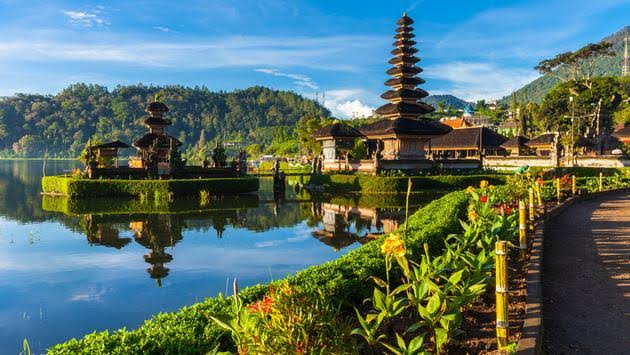
Bali- Bali is the most desirable place in Indonesia. We can say it is a dream destination. Bali is a fair of beautiful beaches, volcanic hills, lush rice paddies, and thousands upon thousands of Indonesian temples.It has the nickname “Island of God”.
Bali
Yogyakarta- It is located on the Island of Java. Yogyakarta is regarded as an important centre for classical Javanese fine arts and culture such as ballet, batik textiles, drama, literature, music, poetry, silversmithing, visual arts, and wayang puppetry.
Yogyakarta
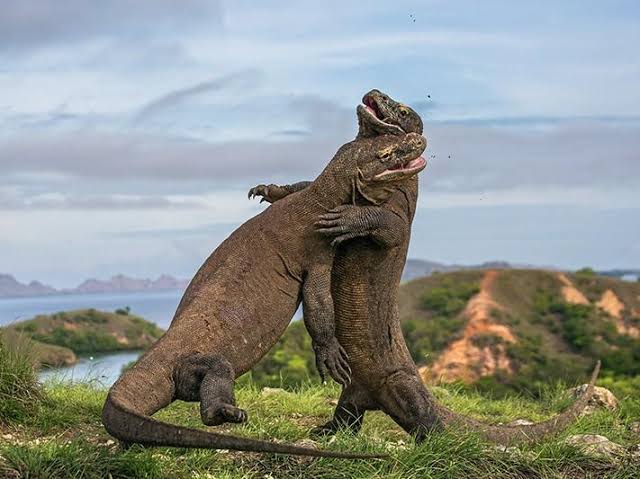
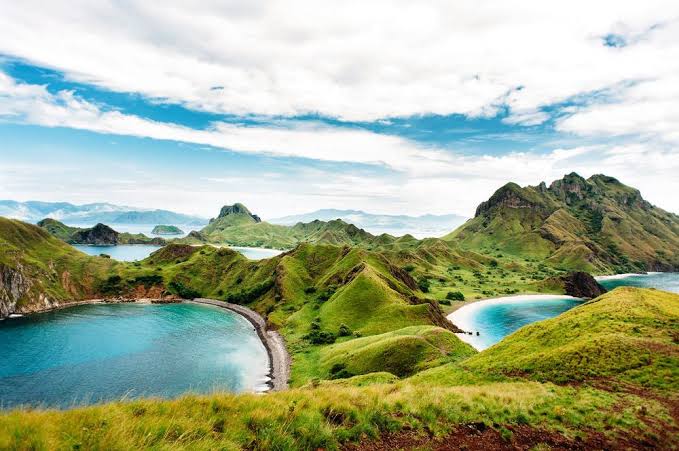
Komodo National Park- It is a national park which is located within the Lesser Sunda Islands in the border region between the provinces of East Nusa Tenggara and West Nusa Tenggara. It is founded to protect the world’s largest lizard. Now it protects other species, including marine species. In 1991 UNESCO declared it a World Heritage Site.
Komodo National Park
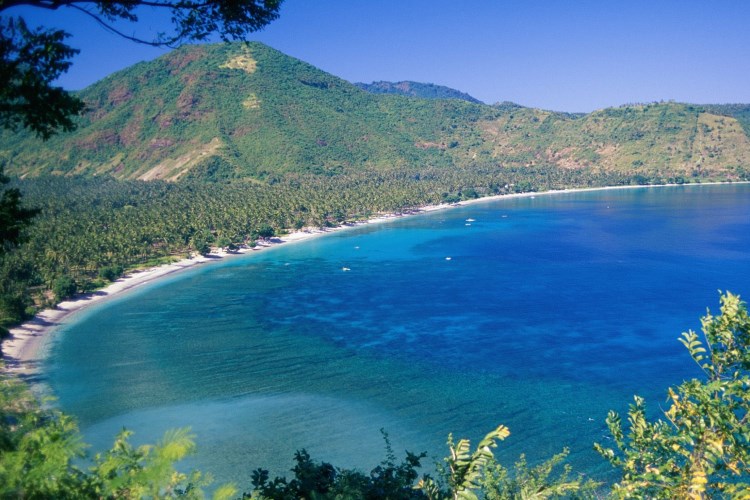
Lombok- It is an Island which is located in West Nusa Tenggara province.Lombok is surrounded by a number of smaller islands locally called Gili. Other interesting things are surfing hotspots, uncrowded beaches, and magical waterfalls tucked within steamy jungles, of which Tiu Kelep Waterfall tops the list without question.There’s also a fantastic nightlife scene.
Lombok
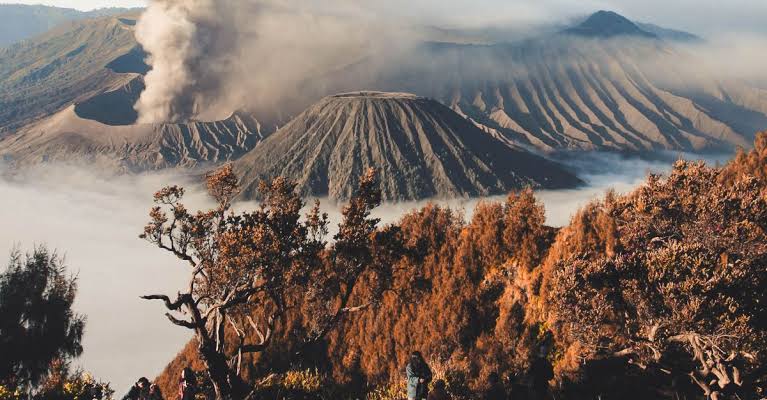
Bromo Tengger Semeru National Park- Bromo Tengger Semeru National Park, known locally as Taman Nasional Bromo Tengger Semeru (TNBTS) is a national park located in East Java. It is an ethereal yet barren wonderland of volcanic calderas seemingly continuously surrounded by smoke and clouds.
Bromo Tengger Semeru National Park
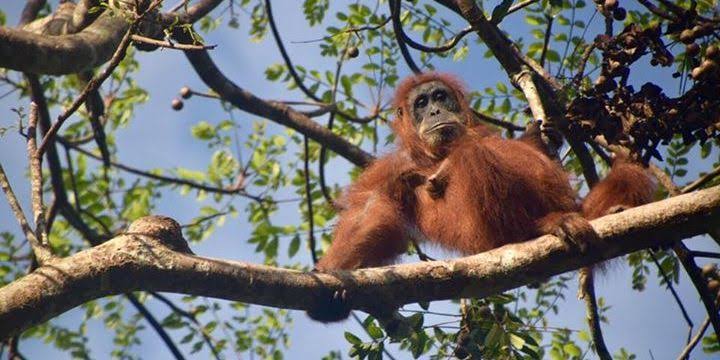
Bukit Lawang- It is a small tourist village on the bank of Bahorok River in North Sumatra province.Bukit Lawang is known for the largest animal sanctuary of Sumatran orangutan and also the main access point to the Gunung Leuser National Park from the east side.
Bukit Lawang
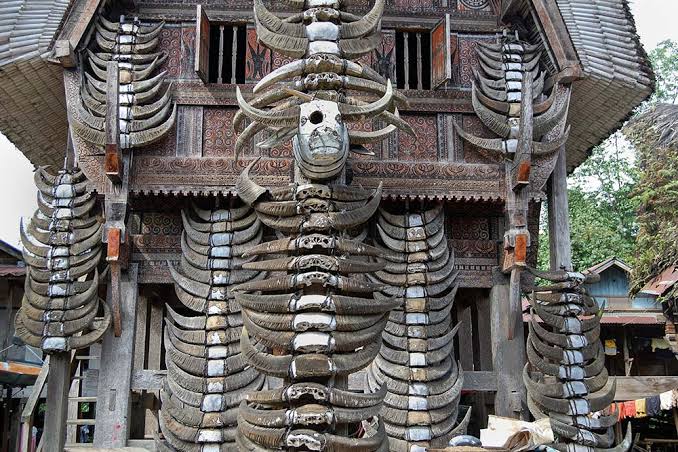
Torajaland- Nickname is ‘the Land of the Heavenly Kings,’it is famous for their massive peaked-roof houses known as tongkonan and spectacular but gruesome funeral rites. After a person’s death, the body is often kept for several years until the actual funeral ceremony. The deceased is then finally buried in a small cave or in a hollow tree. The biggest funerals are usually held in the dry-season months of July and August, but there are funerals year-round.
Torajaland
Flores Island- it is one of the Lesser Sunda Islands,The lakes are truly a sight to behold in every color you can think of – from browns and greens to aqua blue; colors caused by the minerals reacting to the gas of the region’s volcanoes. The Kelimutu three-colored lake is a must-see from the top of the volcano at sunrise.
Flores Island
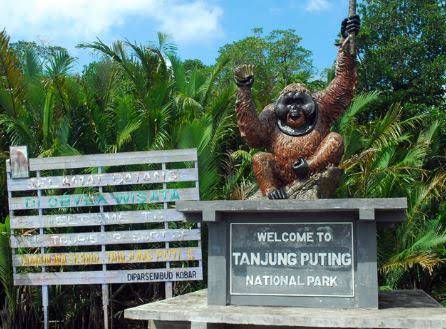
Tanjung Puting National Park- Located in the jungles of Borneo.The third-largest island in the world that’s part of Indonesia.
Tanjung Puting National Park
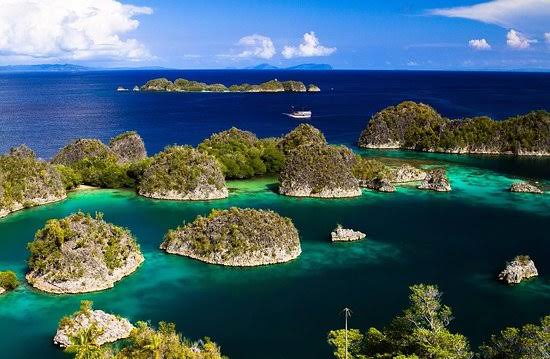
Raja Ampat Islands- Raja Ampat is one of the most sensational diving destinations in Indonesia. Raja Ampat, which means ‘Four Kings’. It consists of four major jungles.Clad islands surrounded by turquoise lagoons and pearly,white palm,fringed beaches like Waigeo,Salawati, Misool, and Batanta and along with thousands of smaller islands.
Sports be it soccer, cricket or baseball or any other has some or the other time played a role in some of our lives. But sometimes we just overlook those who make our sports look more spicy and enthusiastic before us.
Significance:
In 1994, International Sports Press Association established July 2 as “World Sports Journalist Day” as the organisation was found on July 2, 1924 and this was an effort made to honour sports journalists all over the world.
Sports Journalists do a lot of work before, dyeing and after sports matches, all of which are often overlooked. They’ve always played an integral part in transferring the information pertaining to sports to their ever loving audiences.
History of Sports Journalism.
Sports Journalism started in early 1800s when sports was beginning to get itself presented as a separate section in Western Newspapers. In early 1800s only elites could afford newspapers and as a result information relating to sports were restricted to horse riding or boxing , that is, the sports that were typically meant for elites.
In 20th century, New York Herald and New York World were two of the world’s first newspapers to cover sports journalism separately and have a complete full time sports department.
Slowly, the need and love for sports started to increase among the masses and that is why there was the demand for all together separate sports channels in television like ESPN and sports magazines like Sports Illustrated.
Digital Era and Sports Journalism.
Online Sports Journalism started when ESPN created its first ever sports website in the world in 1995. During initial years, only broad topics relating to sports were covered in Digital Sports but as internet expanded all over the world, many big and small bloggers, internet channels, web portals began covering all single and minutest topics relating to sports.
A majority of big and small websites are completely dedicated to sports and they also at times charge subscription fee from their readers. Search Engines like Google or Bing also provide information relating to sports during those days which are important for a particular sport.
Issues faced by Sports Journalists.
1) Deadline Pressures:
Sports journalists face deadline pressures than any other beat reporters as sports matches generally happen in late noon or in the evening and as a result reporters who’re covering sports or writers who’re into sports have to manage completion of work in shortest time possible.
2) Political Pressures
There has been an interlinking of sports and politics in the past. And if this is so, how can the media be kept away? Sports Journalists face lots of threats by certain sports associations that expect the journalists to cover sport matches in their own way and they also expect journalists to shape the public opinion.
3) Accusations of low objectivity:
Sports Journalists have also been accused of favouring or promoting their own favourite teams or players in the past. Some have also been accused of giving more preference to their home teams and this is one more challenge they face in the sports world.
In any way, Sports Journalists do a lot for their audiences to make the sport matches more interesting and entertainment their viewers or readers throughout and even after the matches. It’s important for us to celebrate them and honour them genuinely.
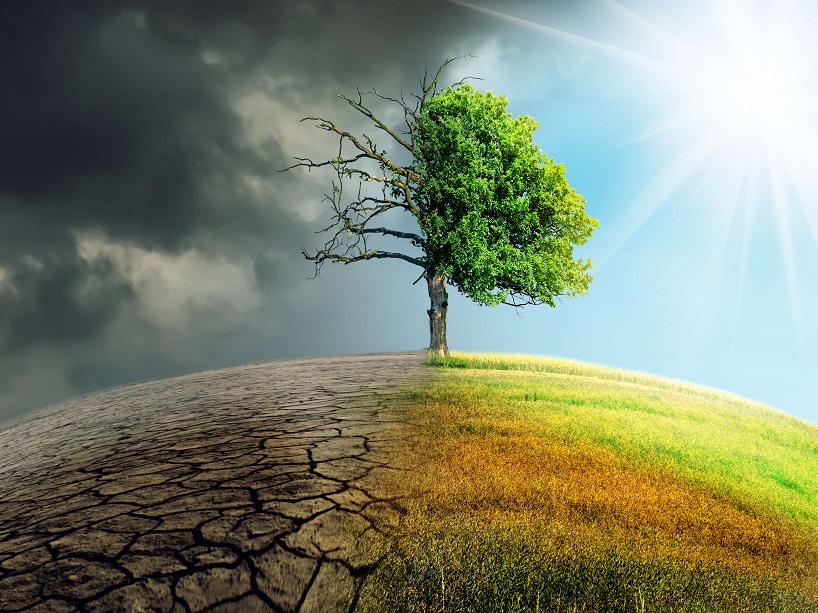
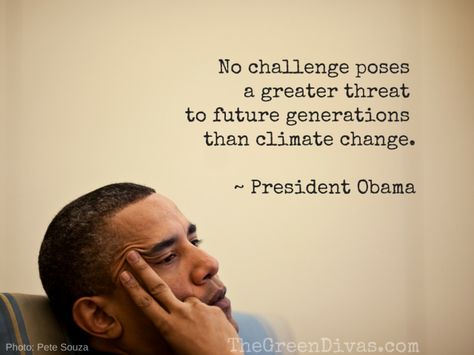
When prevention of climate change is uncertain, preparation is necessary .
CLIMATE CHANGE
Climate change continues to cause unusual and unpredictable weather around the world. Longer drought, flooding, major stroke, snowfall, temperature extreme will increase earth’s temp upto 3-4 ‘C.
Rising CO² level and warmer earth means plant will grow bigger (more surface area of leaves) and thus plant consume more water. Thus, we face water scarcity.
Smog contain Ozone particles and causes various problems – asthma, heart disease, skin cancer etc.
Plant sciences is the study of plants in all their forms and interactions using a scientific approach.
California’s Almond Orchard:-
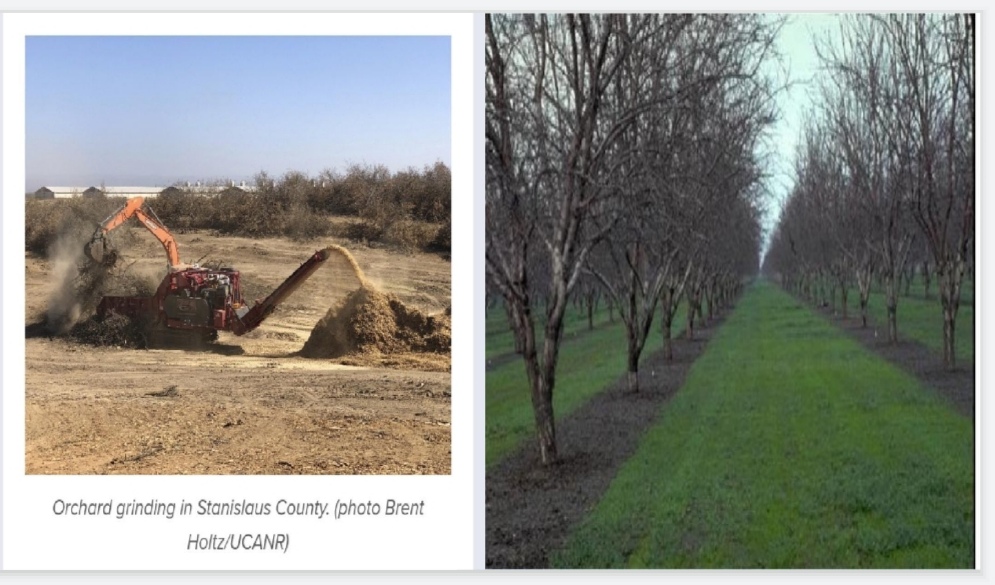
In the past, for removing and disposing of the old trees we burn them in the field. But now Old trees are ground, chipped and turned back into soil before New almond tress are planted. It help almond orchard to be more sustainable and resilient to drought and also increasing carbon content in soil.
Whole orchard recycling result compare to burned treatment : 1) Sequester 5 tons of carbon per hectare. 2) Increase water-use efficiency by 20 percent. 3) Increase crop yields by 19 percent.
scientists from the BBSRC managed to breed a new fast-growing broccoli that no longer relies on a period of cold weather to flower, and goes from seed to harvest in only 8-10 weeks. This discovery is especially relevant for broccoli, as it is flower buds that we eat.
Many terrestrial, freshwater, and marine species have shifted their geographic ranges, seasonal activities, migration patterns, abundances, and species interactions in response to ongoing climate change.
Increased carbon dioxide tends to suppress photo-respiration in plants.
C⁴ plant adapt better for high CO² Concentration and photorespiration.
It make 4 C sugar (OAA) thus fix more CO² and produce high amount of energy.
It suited for hot dry climate.
C4 plants include such low-latitude crops as maize, sorghum, sugar-cane, and millet, plus many pasture and forage grasses.
Better adapt for photo oxidation. Prevent photooxidation due to kranz anatomy.
THE CLIMATE CRISIS HAS ALREADY BEEN SOLVED. WE ALREADY HAVE A FACTS AND SOLUTIONS . ALL WE HAVE TO DO IS WAKE-UP AND CHANGE – Greta Thunburg
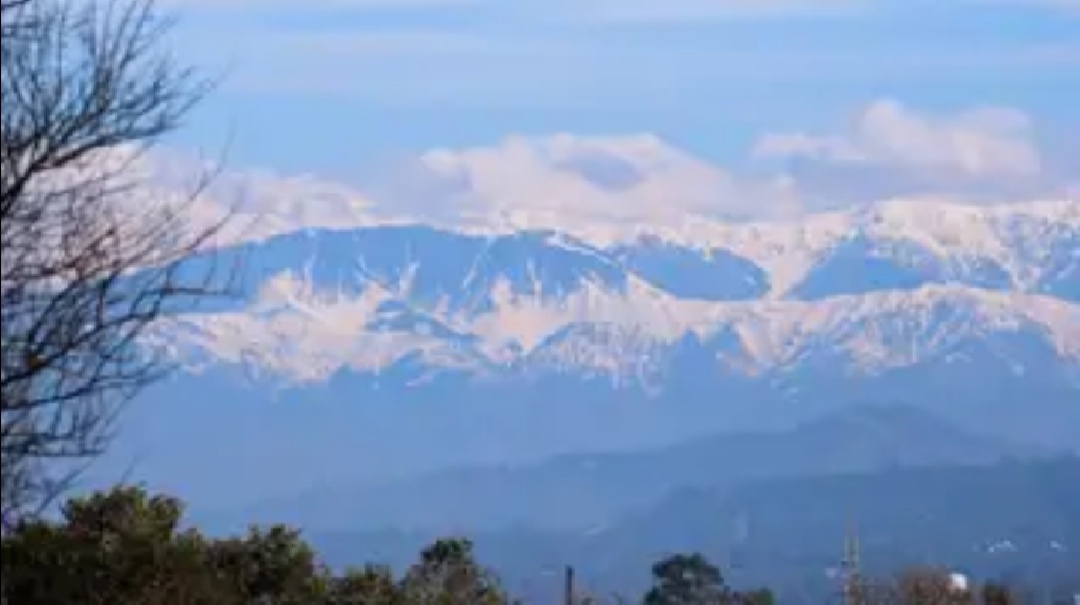
Peoples in India can see the Himalayas with naked eyes for the first time in ‘decades
The unprecedented global disruption caused by the coronavirus pandemic is likely causing a sharp, brief drop in carbon emissions.
Due to global lockdown ‘s impact on transport, demand for oil has fallen at an unprecedented scale.
Gas demand falls less than oil or coal.
The country’s CO² emission fell down by 15% during March and fell 30%in April.
According to Daily data from the national grid. Coal – fired power generation fell 15% in March and 31% in April.
Renewable energy generation increased by 6.4% in March.
Due to reduced power generation, Industrial activity and transport volume. Thus, it has reduced fossil – related and cement – induced CO² emission.
China is the first country where the virus’s impact on carbon emissions became visible
Carbon dioxide emission in China
According to China Emissions Accounts and Datasets(CEADs) :
Reduction of 257.7 Mt. (11%) over Q1 2019
Secondary industry contributed 186.8Mt.(72.5%) CO² to the total reduction (largely due to lower coal consumption and cement production).
Hubei contributed 40.6Mt. reduction (due to decrease of 48.2%in secondary industry).
Transportation significantly contributes 65.1Mt. With a change of – 22.3% in freight transport and – 59.1% in passenger transport compared with Q1 2019.
Globally :
Aviation decreased by 75%.
Surface Transport by 50%.
Power generation by 15%.
Industry – uncertain but~35%.
Small increase in residential buildings of 5%.
Fossil Fuel:
Drop 8% in 3 month and peak drop 17% unprecedented
Emissions in individual countries decreased by ~27%.
Emission from surface transport accounted for 43% of decrease, industry and power together accounted 43% and aviation.
Drop in CO² Emissions had no detectable impact on atmospheric CO² or Climate change
It is extremely small compared to the emission accumulated.
Carbon dioxide emissions in India
As lower power demand growth and competition from renewables weakened the demand for thermal power generation through the last 1 year.
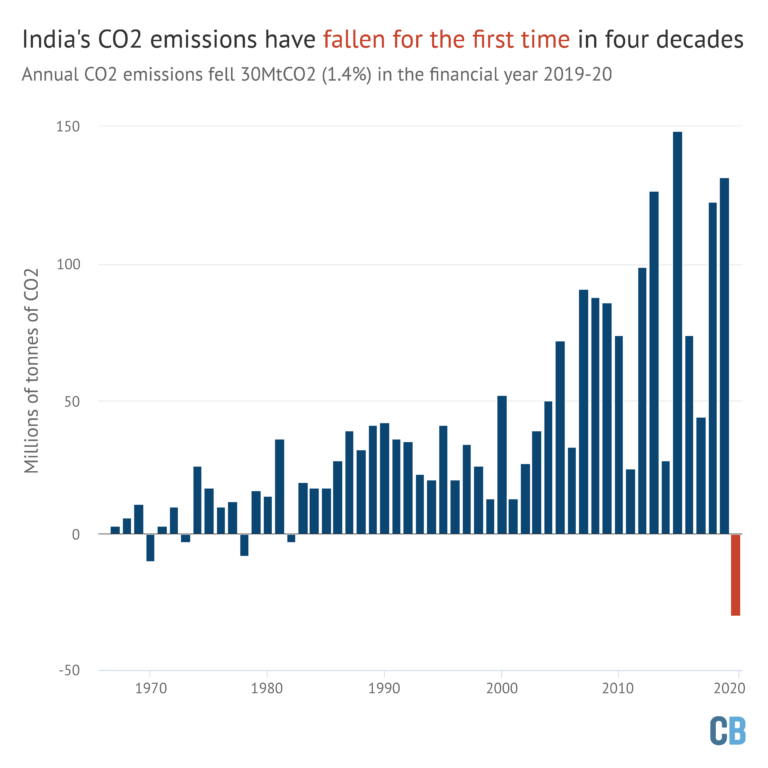
CO² emission fell by an estimated 15% during March and 30% in April.
The fiscal year ending March, coal sales by main coal producer Coal India Ltd. Fell by 4.3%.
Coal import increased by3.2%
Total coal delivery fell by 2%
In March, coal output increased 6.5%.
Oil Demand :
Oil consumption slow down since early 2019.
During national lockdown, oil consumption fell 18% on March 2020.
Crude oil production in India decrease 5.9% compared to last financial year.
Thus, CO² emissions fell by 30mt.(1.4%) in fiscal year ending March.
Environmental health due to Carbon Emission during Global lockdown
The positive effect of lockdown is to decrease the CO2 emission by −17% (−11 to −25%) by 7th April 2020 with respect to the mean level of emission in 2019.
Air quality index (AQI) is the assessment of air quality. The lower the AQI value, the better is the air. The normal air quality index range is (100−200) and presently it is in the satisfactory range (50–100) category as reported by Gurfam being a scientist at SAFAR.
Zambrano-Monserrate et al. (2020) reported that the air quality index (AQI) has decreased by 44%, 33%, 29%, 15% and 32% in north, south, east, central and western India respectively.
The same study also shows that from March 16th to April 14th, 2020, 22 cities of India show the reduction of PM10 (Particulate matter), PM2.5, CO, NO2, by 43, 31, 10 and 18%. During the quarantine period in COVID-19, the amount of NO2 was decreased by 22.8 μg/m3 and 12.9 μg/m3 in Wuhan and China respectively.
In 367 cities, the PM2.5 fell by 18.9 μg/m3. As per the report of CAMS 2020 reduction of 20–30% of PM2.5 is observed in a wide area of China.
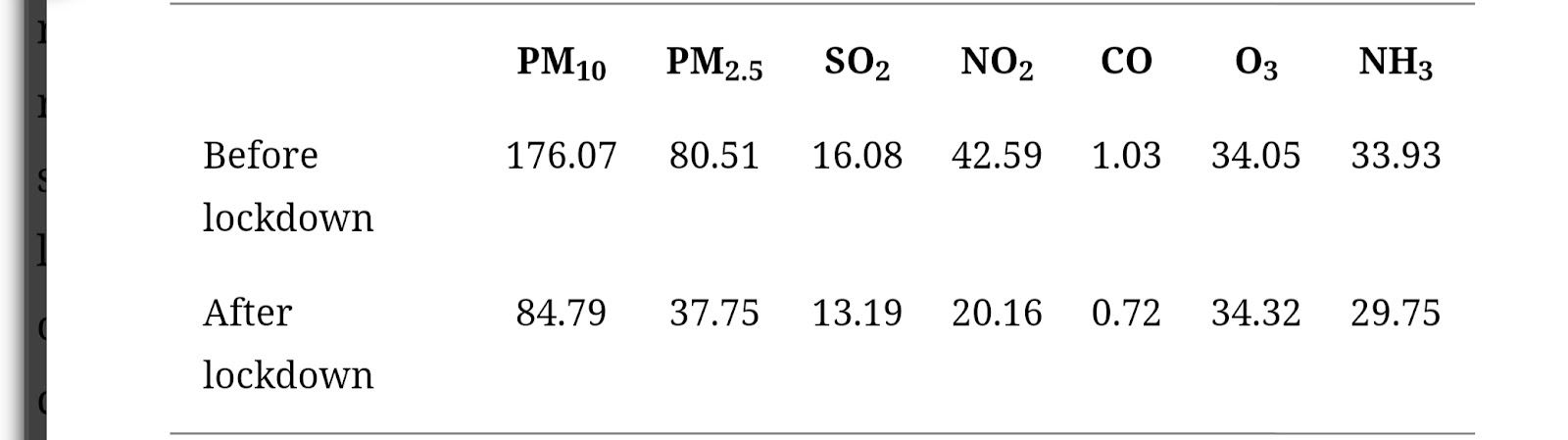
Mahato et al.investigated that after three weeks of lockdown period from 24th March 2020, pollution of the Delhi, India, has experienced a noticeable reduction of different air pollution causing materials in the following Table
Comparison between different pollutants present in air before and after lockdown.
Reduction in carbon emission also lead to Ozone layer recovery over Antarctica:
The ozone layer is found in the upper atmosphere called the stratosphere between 10 and 50 km from the earth.
The ozone layer acts as a natural sunscreen and plays a very important function by absorbing the harmful U—V rays from the sun.
Ozone-depleting substances (ODS) are gases such as chlorine and/or bromine which breaks the ozone layer in the stratosphere. Various ODS are present in the environment are chlorofluorocarbon (CFCs), hydrochlorofluorocarbon (HCFCs), Methyl chloride and various halones.
By the reaction with UV sunlight, these gases form chlorine and bromine and they are responsible for the depletion of the ozone layer.
The international community signed the Montreal Protocol on substances about the depletion of the ozone layer, 30 years ago.
According to the protocol, the consumption and production of ozone-depleting compounds should be regulated.
By banning chlorine-containing synthetic compounds the rate of depletion declined and scientists expect to recover back to the 1980 level up to 2070.
As per the scientific data of 2018, the stratosphere recovered at the rate of 1–3% per decade since 2000.
After the lockdown began on Jan 23, the particulate matter pollution decreased by an average of 35% and NO2 decreased by an average of 60%.
At the same period, scientists found the average surface ozone concentration increased by a factor of 1.5–2.
Emission of ozone-depleting substances is also natural or man-made.
All man-made emission is controlled because of lockdown during COVID-19.
Production and consumption of ODS are also reduced. The World meteorological Organization (WMO) states that economic activity has been limited during COVID-19 which results in a decline in CO2 emission.
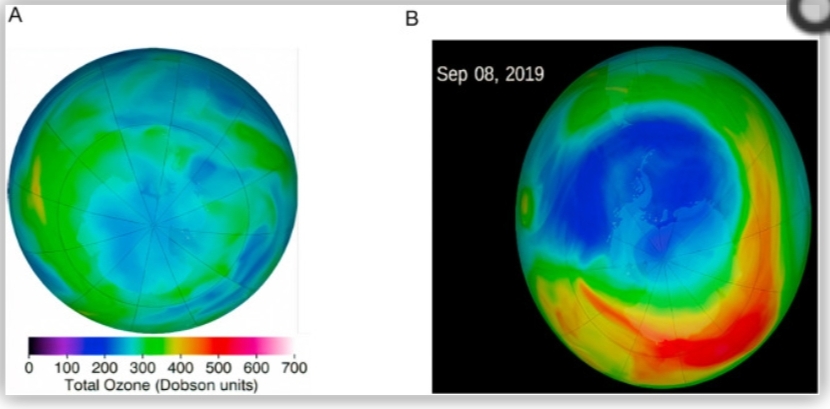
In 2019, As per NASA and NOAA reported that the south pole region of Antarctica has warm temperature in the upper atmosphere which caused a small ozone hole since it was first seen in 1982 .
On 23rd April 2020 Copernicus, atmospheric monitoring services (CAMS) announced that the largest hole was ever seen in the ozone layer over the arctic has been closed.
Although lockdown is surely showing the prominent sign of nature, balance restoration of the ozone layer .
The map of holes in the ozone layer over Antarctica (a) 23rd May, 2020 (b) September 08, 2019
Impact of COVID 19 on Energy resources
The breakout of the Coronavirus Disease (COVID-19) toward the end of 2019 and its culminating transformation into a global pandemic sent shockwaves across the nations. Not only people lost their lives to it, but also numerous industries and governments as a whole succumbed to its impacts. To prevent the spread of the disease, many countries have resorted to observing country-wide lockdowns, damaging the normalcy of their economy. The world economy has seen new lows by trillions of dollars during this period, giving rise to times of constant anxiety about the future. The renewable energy sector, which has always been one of the leading areas to promote sustainability in terms of the environment, too is not spared from being affected by the pandemic. An amalgamation of the effects of the pandemic on the global economy and fluctuating oil prices resulting from country-wide lockdowns across the world further triggered its impact on the renewable energy industry. This work highlights the extensive impacts of COVID-19 on the renewable energy sector of India, a country that has proved itself to be proactive and progressive when it comes to solutions toward sustainable development. It showcases the present impacts of the pandemic on the sector and highlights future projections of the way it may continue to affect this sector as the world continues to struggle with the pandemic. The authors have brought up a set of their opined regulations that the administration and policymakers of the renewable energy sector of India can adopt to avert or reduce the extensivity of the impact of COVID-19 on their sector.
Media Bias is a term used to describe biases and personal prejudices of a journalist in the selection of events that will be reported and the manner in which they’ll be reported.
In earlier times, every media organisation had a political backing, that is, funded by any political party or group. It was only with late 19th century and early 20th century, journalists began to feel the need for a truth and unbiased reporting.
Types of Media Bias:
A) Bias by Omission
This is one of the methods in which journalists wipe out one side of the story or series of facts over a period of time.
B) Bias by Selection of Sources:
In this method, journalists usually approach those sources who will favour their own prejudices. Both sides of a story aren’t given any importance.
C) Bias by Story Selection.
This mostly happens when a media organisation is funded by a political party. In this, journalists only highlight those issues and stories that pertain to one political party. For example, only talking of achievements of a political party and ignoring its failures.
D) Bias by Placement.
This means where an editor places the story and how much they consider the story is important. For example, if a news organisation is supporting a certain political party and there’s a humanitarian crisis in any city because of that political party, in this case, news editor would place the story at the end so that it gets less importance.
E) Bias by Spin.
In this, reporters and journalists give their own “subjective comments” to a factual story and make it appear before the public their own way. These interpretations can be harmful as they divert the minds of public from actual facts.
Some examples of Media Bias:
A) Ethnic Bias:
This is the form of bias which includes racism, nationalism or xenophobia. For example, western media’s portrayal of India as a poverty stricken country with no toilets. Yes, India suffers with poverty but the western media made it look like it’s the only thing India is all about.
B) Corporate Bias:
Media is also extremely biased at times when reporting about corporate misconduct. This is because some media channels are funded by big industrialists and business people.
C) Class Bias
Media houses are extremely bias when it comes to class. Higher class cases are handled with dignity whereas oppressed classes are treated with lack of respect and humanity.
D) Religious Bias
Certain media houses favour one religion according to their own religious ideologies and thus even start supporting or give a biased reporting when their religious community is doing something wrong.
E) Political Bias
Probably the most famous form of bias in which a media house supports a political party right from the beginning of covering their political campaigns to trying to hide their political mismanagements.
Journalists must separate fact from opinions and do an unbiased reporting for a better transportation of news information to the public. This way it would also be able to hold the system responsible.
Change your life today. Don’t gamble on the future, act now, without delay.
Simone de Beauvoir
What’s stopping you, is it your fear ?
From whom you are running , is it a failure ?
When to start , am I getting late ?
What if I hesitate , will they understand ?
How am I going to talk to them ?
In different phases of our life we faced different challenges that may be hard to accept and makes you feel ashamed of yourself.
Most of the time we think our fear might harm us but what we don’t understand is that , if we don’t face them it would never leave .
We hesitate , we fear , we run , we ignore , we lack and in the end we loose hope .
And what we are going to is to reconstruct that hope and trust ourselves . We might need some tools for that and one of them is MOTIVATION .
What is MOTIVATION ? How it works? Will it help ? And so on … There are many questions and the time is limited. So let’s begin .
Introduction
Being successful is not enough in today’s world . To keep the success we need a companion and that is Motivation.
Motivation has a powerful aura it can be your solution if only you used directly on your aim . I might play some tricks with you but the result will always be on your side .
Well it is going to be very hummy dumpy article but who cares (that’s not me ) . What’s important is what you learn from it .
The author Steven Pressfield wrote a great line in his book , The War of Art, which I think gets at the core of motivation.
“At some point, the pain of not doing it becomes greater than the pain of doing it.”
Well said pressfield , in other words (or my words) It is easier to take action , rather than sitting and self,- petrified ourselves.
Like it is easier for MOJO to prepare for his exam rather than think about the result OR It is easier for OJO to workout in the gym rather than sitting in the chair eating junk food . (Well I prefer junk food over gym , just ignore I said that .)
This I think is the core of motivation . To gain something we need to pay the price first . It may be time , energy , sacrifice , risk or it can be anything .
Take action
A lot of people get confused that how to find motivation and when to take action . They are wasting too much time for making plans and than for process . To make it easy find motivation and get started. The more you delay the more it get difficult.
If you waste resources trying to decide when or where to work, you’ll impede your capacity to do the work.
Their are some rituals needs to perform if you want to get motivated :
1. Exercise daily .
2. Become more creative.
3. Start your day stress free .
4. Sleep better .
5. Last but not the least do whatever makes you happy . ( But don’t do nasty things ) .
You’ve gotta dance like there’s nobody watching, love like you’ll never be hurt, sing like there’s nobody listening, and live like it’s heaven on earth.”
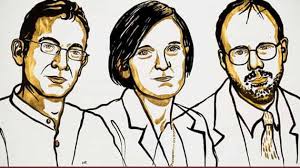
The 2019 Nobel Prize in Economic Sciences was awarded to Abhijit Banerjee and Esther Duflo, who currently work at the Massachusetts Institute of Technology, and Michael Kremer of Harvard University. The Prize committee noted that these economists “introduced a new approach to obtaining reliable answers about the best ways to fight global poverty.” The new Nobel laureates are considered to be instrumental in using randomised controlled trials to test the effectiveness of various policy interventions to alleviate poverty.
So what is randomised control trial?
A randomised controlled trial is an experiment that is designed to isolate the influence that a certain intervention or variable has on an outcome or event. A social science researcher who wants to find the effect that employing more teachers in schools has on children’s learning outcomes, for instance, can conduct a randomised controlled trial to find the answer. The use of randomised controlled trials as a research tool was largely limited to fields such as biomedical sciences where the effectiveness of various drugs was gauged using this technique. Mr. Banerjee, Ms. Duflo and Mr. Kremer, however, applied RCT to the field of economics beginning in the 1990s. Mr. Kremer first used the technique to study the impact that free meals and books had on learning in Kenyan schools. Mr. Banerjee and Ms. Duflo later conducted similar experiments in India.
Why is randomised controlled trial so popular?
At any point in time, there are multiple factors that work in tandem to influence various social events. RCTs allow economists and other social science researchers to isolate the individual impact that a certain factor alone has on the overall event. For instance, to measure the impact that hiring more teachers can have on children’s learning, researchers must control for the effect that other factors such as intelligence, nutrition, climate, economic and social status etc., which may also influence learning outcomes to various degrees, have on the final event.Randomised controlled trials promise to overcome this problem through the use of randomly picked samples. Using these random samples researchers can then conduct experiments by carefully varying appropriate variables to find out the impact of these individual variables on the final event.
What are some criticisms of randomised controlled trials?
A popular critic of randomised controlled trials is economist Angus Deaton, who won the economics Nobel Prize in 2015. Mr. Deaton has contended in his works, including a paper titled “Understanding and misunderstanding randomised control trials” that simply choosing samples for an RCT experiment in a random manner does not really make these samples identical in their many characteristics.
While two randomly chosen samples might turn out to be similar in some cases, he argued, there are greater chances that most samples are not really similar to each other. Other economists have also contended that randomised controlled trials are more suited for research in the physical sciences where it may be easier to carry out controlled experiments. They argue that social science research, including research in the field of development economics, may be inherently unsuited for such controlled research since it may be humanly impossible to control for multiple factors that may influence social events.
Something which caught my attention across all the classes I had was the striking connections between the advantages and disadvantages of globalization. It stopped me to think of the kind of world we live in.
People living in the 21st century had turned around the whole concept of globalization with the coming of inventions and technologies. It now connected every single thing in a whole new level. Not just commodities but culture and lifestyles are also exchanged between the people. With these advantages came the disadvantages. People made use of technology with religious fundamentalism making us go way back in time.
The Modern Era came with the cosmopolitan outlook among people and everyone was more secular. People left behind the conservative outlook towards life and were more adapting and absorbing. Or so we thought, because globalization spread the stereotypes of one place to another. Religious identities also were spread among people. A very bad effect of globalization was the spread of terrorism among the nations.
Now terrorists groups could make use of the technology to make large connections around the world, this has resulted in lots of attacks in different places. With the good side of technological advancements came this very bad side.
People have turned a blind eye to this twisted fact, a very common say that if something has a good side, there definitely will be a bad side. For a minute where we believed that people had changed from being ethnocentric, we directly get a blow from various examples like this.
From the beginning to this day, women have always been oppressed be it by men in their family or by the state that was and is still highly patriarchal. Earlier, the private (households) and the public (political, business world) were strictly kept separate. State had no roles in what was happening in the private sphere. And the major factor of this separation was that public was controlled by males and private appeared to be in control of females.
The separation between private (home) and public (work) made a significant difference in the lives of males and females, and of course, it was negative for women. For example, males were expected to work out and hence they dominated the outside world while females were expected to stay at home and decide the household decisions and thus they happened to be the controllers of the households.
However, the above situation was far away from reality. In most cases, as public was controlled by males it used to have a direct influence on the private sphere. And therefore, the then feminists and scholars labelled this distinction as baseless and started demanding for political rights of females like voting rights, reproductive rights and like. It was through the second wave of feminism in 1960s, feminists began to bring up more such marginalised communities and issues into the picture.
Earlier only a “white heterosexual male” normative was followed in the world and especially in western civilisations. Feminists have rejected the public-private boundary as an acceptable rationale for legal action or inaction. A feminist argument is that such a separation disadvantages women of their rights and advantages privileged groups like white heterosexual males.
Three major arguments that were brought by feminists which aimed to challenge the public-private distinction are, first, politics and society, both had ignored the domestic sphere, second, public-private distinction is deeply gendered and sexist as its assigns roles to people based on their biological characteristics and because of this women become the most affected underprivileged group, third, calling “family” a private sphere was an attempt to hide domination and abuse in the relationships in families from legal discourse.
To put an end to all of this ignorance, women activists fought against the injustices and demanded the states to intervene in household matters like laws against domestic violence, divorce rights to women, abortion rights and other rights to choose. Along with these domestic protection rights, many other rights on the public sphere were also demanded.
Feminists from the second feminist wave asked for equal representation in politics, law-making and other decision making procedures which were of both public and private significance.
Examples:
1) Paid Work:
Even though working environment has changed nowadays as compared to earlier times, females suffer from hard labour but less payment. From corporate houses to films and television everywhere females are paid less than their male counterparts even though all of them do the same work. At times, female actors do more work as they have dance sequences in addition in the movies but still get paid less for the work. This has witnessed a change in recent times where female actors have begun to charge lump sum amount.
2) Patriarchal State:
States can be extremely patriarchal to women in terms of legal and political rights. This can happen in two ways- one by creating patriarchal and misogynist laws for women, two by not doing anything progressive for women (because not interfering into women’s rights is also equal to creating misogynist laws for women). Over the past few decades, this has also witnessed a change where we have seen governments making women friendly laws like reservations and special commissions for women or anti dowry and anti-domestic violence rights.
3) Male Violence:
This can mean anything that happens both in public and private sphere. Sexual harassment at workplaces is at peak all over the world. Thanks to social activists and NGOs in India who all fought for implementation of sexual harassment act back in 1990s when a social worker was brutally sexually assaulted for stopping a child marriage in the Indian state of Rajasthan.
At the end, we all as a society collectively need to understand that opposite of patriarchy is gender equality, that is, feminism, nothing else.
Istanbul is the main attraction of Turkey. Istanbul is the center of this country for its culture,economic status and history. Also Istanbul is the capital city. According to history , in 657 BCE , Istanbul was founded as Byzantion by Megarian colonists. Later it became Istanbul .
Galata tower
Istanbul is a country which is covered by empires across the centuries and stands in both Europe and Asia. It is one of the most popular travel spots in the World. Some popular and attractive tourist spots are- Aya Sophia, Topkapi Palace, Basilica Cistern, Blue Mosque,Istanbul Archaeology Museum, Hippodrome,Süleymaniye Mosque,Grand Bazaar,Spice Bazaar,Chora Church,Dolmabahçe Palace,Little Aya Sofya,Museum of Turkish and Islamic Arts,Rüstem Pasa Mosque,Yedikule Fortress,Galata Tower,Carpet Museum,Fatih Mosque,Pera Museum,Istiklal Caddesi and Taksim,Üsküdar and most popular Cappadocia hot balloon.
Let’s be introduce with some of them-
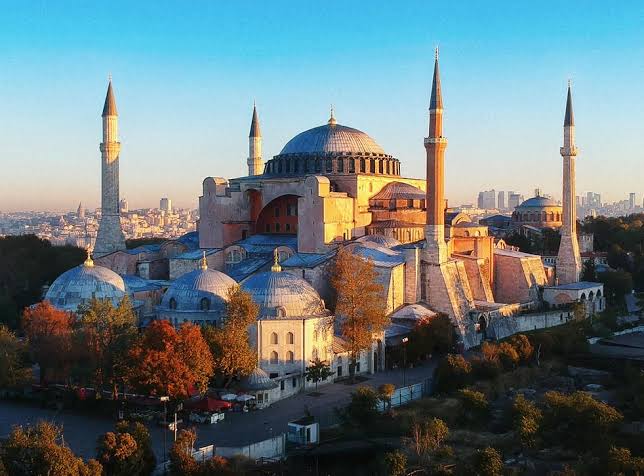
Aya Sofya or Hagia Sophia
Aya Sofya or Hagia Sophia
According to history in AD 536, for the 1st time when the Byzantine Emperor Justinian entered his finished church, he cried out “Glory to God that I have been judged worthy of such a work. Oh Solomon, I have outdone you!” Aya Sofya or Hagia Sophia means ‘holy wisdom’. It is a domed monument of Constantinople (6th century AD). It was the emperor’s swaggering statement to the world of the wealth and technical ability of his empire. Tradition maintained that the area surrounding the emperor’s throne within the church was the official center of the world.
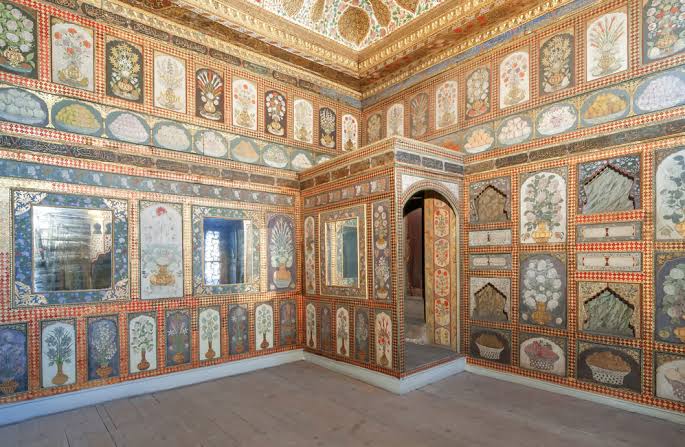
Topkapi Palace
The Topkapi Palace is a large museum in the east of the Fatih district of Istanbul in Turkey, there are the imperial collections of the Ottoman Empire and maintains an extensive collection of books and manuscripts in its library.
Topkapi Palace
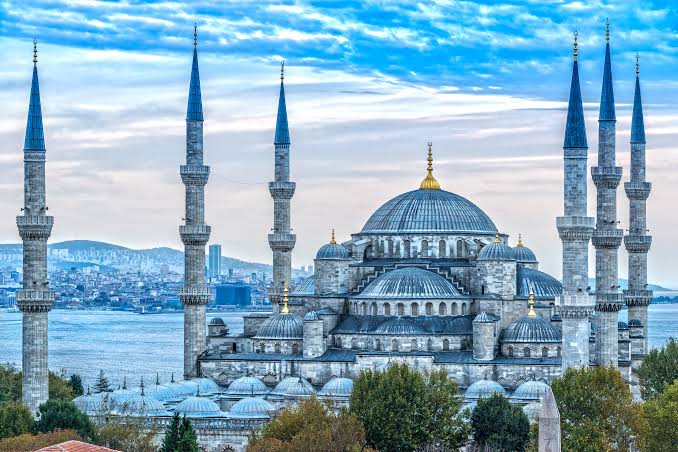
The Blue Mosquewhich
The Blue Mosquewhich
The Blue Mosquewhich is called Sultanahmet Camii in Turkish is an historical mosque in Istanbul .For the blue tiles surrounding the wall it is known as Blue Mosque. It was situated between 1609 and 1616 years, like many other mosques, it also comprises a tomb of the founder, a madrasa and a hospice.
The Basilica Cistern
The Basilica Cistern
The Basilica Cistern is the largest among the ancient cisterns beneath the city which provided a water filtration system for the nearby buildings. This underground chamber measures approximately 138 meters (453 ft) by 64.6 meters (212 ft) and is capable of holding 80,000 cubic meters (2,800,000 cu ft) of water. The ceiling is supported by 336 marble columns.
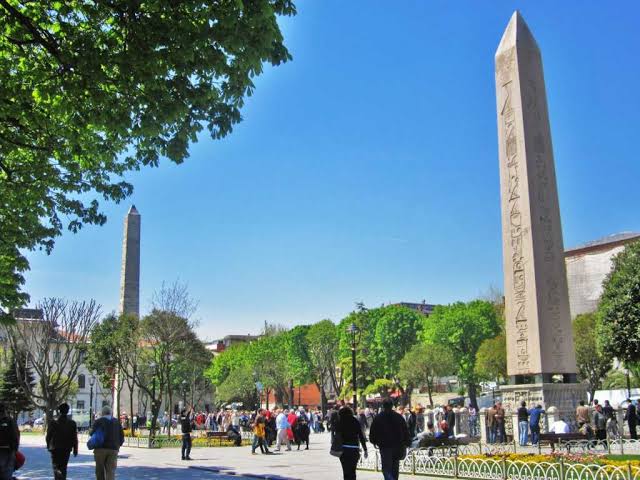
The Hippodrome
The Hippodrome
The Hippodrome’s name comes from Greek word hippos(horse) and dromos(course). It was an ancient Greek stadium for horse racing and chariot racing. But in present day there isn’t much of the Hippodrome left to see, except for a small section of the gallery walls on the southern side, but the At Meydani (park), which now stands on the site, is home to a variety of monuments.
Archaeology Museum
Archaeology Museum
The Istanbul Archaeology Museums are a group of three archaeological museums which are located in the Eminönü quarter of Istanbul, Turkey, near Gülhane Park and Topkapı Palace. The three museums are- in the main building the Archaeological museum, Museums of the Ancient Orient and Museum of Islamic Art.
Grand Bazaar
Grand Bazaar
In Istanbul, the Grand Bazaar is one of the largest and oldest covered markets in the world. It has a total area of 30,700 m2. There are 61 covered streets and over 4,000 shops attracting between 250,000 and 400,000 visitors daily.
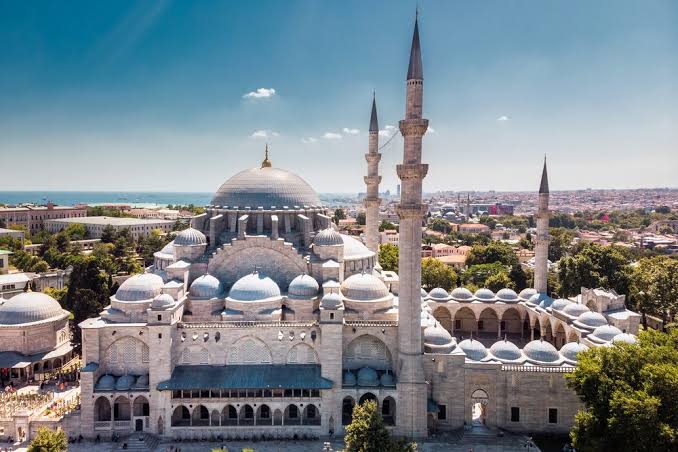
The Süleymaniye Camii
The Süleymaniye Camii
The Süleymaniye Camii (Suleymaniye Mosque) is one of its most distinctive features with its truly staggering size which was built by the legendary architect, Mimar Sinan, it is one of his masterpieces and his largest design. It is not only the inspiring size that is impressive (the central dome stands 47m high), but also the elegantly decorated interior. The sense of space and light is emphasized by the supporting semi-domes to the northwest and southeast and the monumental arched spaces to the southwest and northeast.
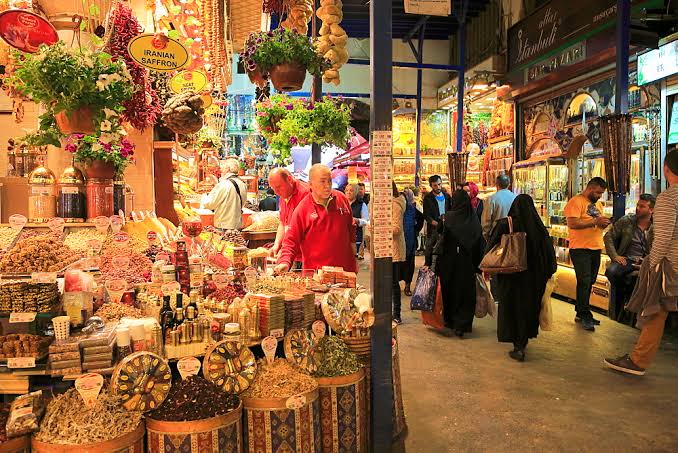
The Spice Bazaar
The Spice Bazaar
The Spice Bazaar is one of the largest bazaars in this city. Located in the Eminönü quarter of the Fatih district, it is the most famous covered shopping complex after the Grand Bazaar.
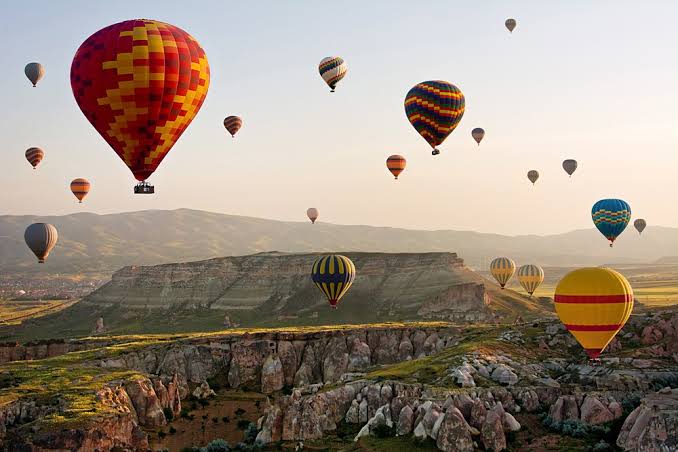
Cappadocia
Cappadocia the hot balloons
Cappadocia is in central Anatolia, in the heartland of what is now Turkey.The area is popular for the hot balloon ride. As it has many areas with unique geological, historic, and cultural features.Hot-air ballooning is very popular in Cappadocia and is available in Göreme. Trekking is enjoyed in Ihlara Valley, Monastery Valley (Guzelyurt), Ürgüp and Göreme.






















 Eduindex
You must be logged in to post a comment.