Digital Tools for Teachers

Over the last few months I have been working on a new book project and finally have it completed.

The new book is Digital Tools for Teachers.

Digital Tools for Teacher Cover


This book has been written and designed primarily with English language teachers in mind though the majority of the resources and tools contained in the book will have much wider use than just language teaching.

The book is available at the introductory price of £1.99 from:


The book contains more than 70 tools and resources and these have been hand picked because they represent a broad cross-section of what is at present available.
The chapters of the book are divided into simple pedagogical tasks that most teachers need to carry out or help their students with and the descriptions of the resources are suitably concise to make the book easy for a stressed teacher to access and browse in a few spare moments between classes.

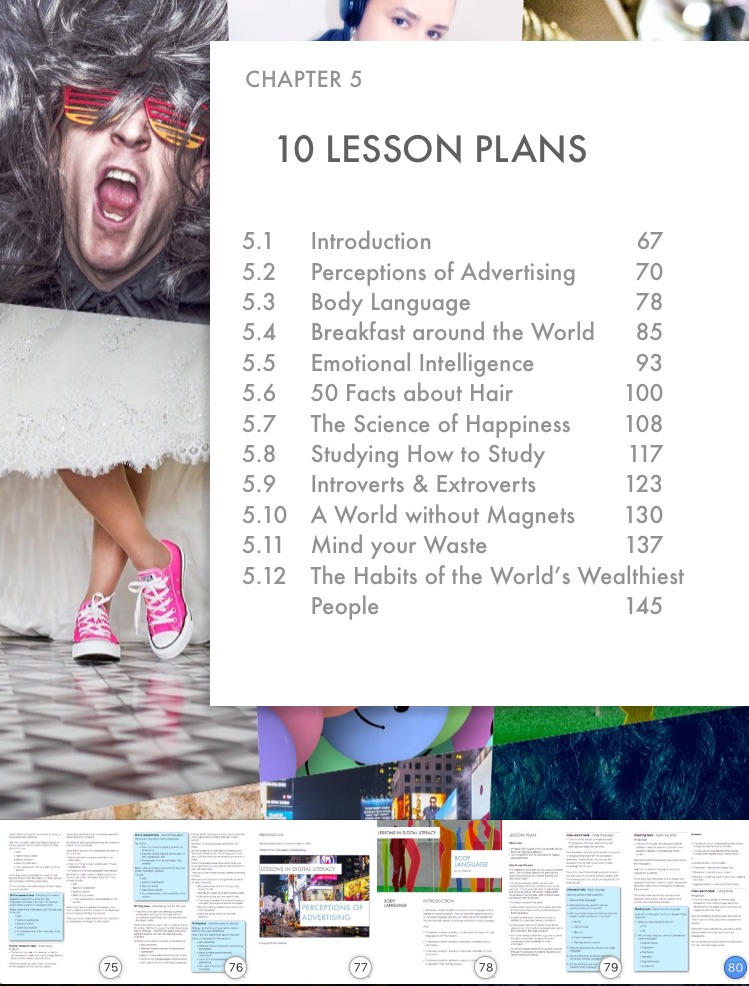
The sites, apps and resources within the book have been divided into the following chapters:

  • Reading Tools
  •  Writing Tools
  •  Speaking Tools
  •  Listening Tools
  •  Grammar Tools
  •  Presentation Tools
  •  Poll & Survey Tools
  •  Infographic Tools
  •  Course Creation Tools

You can download the first two chapters free here:  Digital Tools for Teachers

At present each chapter contains between 5 – 10 different sites that have been selected to help you make a quick choice of the tools you need.

All of the tools and resources selected for the book are either free or have a useable permanent freemium offering, so you will never be forced to pay for any of these resources in order to sustain the work you are doing with your students.

Over the coming years it is my intention to regularly review and expand on the contents of this book. If you would like to be involved and assist in this process you can do so by:

  •  Suggesting tools to be included in future editions
  •  Writing an entry about a tool you have used and found useful
  •  Reporting a dead link or a tool or resource that has become commercially unviable for teachers
  •  Reporting a typo or factual error.

Anyone who contributes in any of the ways above will get a brief mention in the next edition of the book along with a link to their own blog or website.

Related links

Thinking Critically through Digital Media

Although the use of internet and digital materials in the language classroom has come a long way over the last 20 years, still the vast majority of web based material that finds its way into the language classroom is used for information input or comprehension purposes. The students’ interaction with the materials is as such largely passive with the teacher controlling the suitability of the materials selected and deciding what information the students will extract from it.


In Thinking Critically through Digital Media I have tried to build on this model, but develop it and take it to deeper and more critical levels of analysis that go beyond the superficial linguistic level and help to develop students not only as English language speakers, but as capable information literate participants in the global knowledge economy.

The book uses as its basis the development of key digital literacies. These include the ability to understand visually presented data, the ability collect and analyse data using a range of techniques and survey tools and the ability to create and deliver a range of presentation types using digital media tools.

Whilst developing these digital literacies students are also encouraged to assess the validity, credibility and underlying bias of the information they study and are given a range of research tools and techniques for reassessing the information and evaluating how it fits within their personal framework of belief systems and values.

The book itself has four main chapters. The first three chapters contain a range of activities that teachers can use with students to develop their abilities to understand and create infographics, develop research polls and surveys and create and deliver presentations. These activities give students hands on exposure to a range of recommended tools and develop students as active creators of information whilst developing their abilities to work collaboratively in digital online environments.


The fourth key chapter of the book is a collection of lesson plans that teachers can use to take students through a complete process from accessing their existing knowledge about a topic, understanding new input, examining how the information fits into their existing value scheme, checking the credibility and validity of the information, carrying out their own parallel research through social media to finally sharing and reevaluating what they have learned.


I believe that the skills and abilities teachers can help students develop through the use of these materials are ones that are sadly lacking, not only in the English language classroom but also in the general education of many students around the world. Through the use of these materials I hope teachers can develop more actively and intellectually critical students who approach digital media with the ability not only to comprehend and consume information but also understand the possible bias, motivation and underlying values of those creating the information. I believe these skills and abilities are key to creating a more tolerant, open-minded and critically aware global society.

Related links:

12 Tips for training older teachers to use technology

There is an assumption that persists in the educational community that more mature teachers are much more difficult and reluctant to be trained on the effective use of educational technology. To some degree, I think this assumption has been built on by the digital native vs digital immigrant myth. But as someone who has trained teachers of all ages all over the world I would say that, from my own experience, this hasn’t been the case.


What I have found to be the case is that more mature teachers are:

  • Less likely to lured by the shiny hardware and the seemingly wonderful claims made to go along with it.
  • More critical and sceptical about the way technology is used in the classroom.
  • Less confident when using various apps and websites and less likely to explore the different features.
  • More easily discouraged by failures.
  • Less familiar with various tools, applications and services that have become part of every-day life for younger users.
  • More likely to be able to see through “technology for technology’s sake” classroom applications.


So how should trainers approach the challenges of working with these teachers? Here are a few tips from my own experience of training older teachers to use technology.

Be sure of your ground pedagogically

So many edtech trainers are great with technology, but much less versed in educational theory and pedagogy. More mature teachers are more likely to have a stronger theoretical understanding, so be prepared to back up your ideas with sound pedagogical insights and try to relate your training back to theories of learning and pedagogical approaches.

Make sure training is hands on

Running through a list of tools and ideas in a presentation may have some value, but it doesn’t come anywhere close to the impact of giving teachers hands-on experience and the chance to actually work with the tech to create something.


Here is a collection of some of the activities I\’ve used in my training sessions: 20 Tech Enhanced Activities for the Language Classroom

Give solid examples of what you have done

Being able to speak from experience about how you have used tech with your own students will have far more impact than theoretical applications of “You could do blah blah blah with your students.” Sharing anecdotes of how you have used technology in your own classes, the challenges you have faced and how you have overcome or even been overcome by them can really lend credibility to your training.

Manage expectations

A positive attitude is great, but be prepared to also point out weaknesses, potential pitfalls and talk about your own failures. This might help your trainees avoid the same mistakes and stop them from becoming disillusioned.

Make time to experiment and explore

Don’t be tempted to cram in as many tools, techniques and activities as possible. Incorporate project time into your training so that teachers have the chance to go away and explore the things that interest them most and get their own perspective on how they can use them with students.

Back up technical training

Learning to use new tools is getting easier all the time, especially on mobile, but it’s still quite easy for teachers to forget which button to press or which link to follow. So back up any demonstrations with either an illustrated step-by-step guide or a video tutorial that teachers can come back to later.


Make their lives easier

Using technologies that can make what they already do a bit easier or a bit quicker is a great way to start. For example, I have a link to a tool that really quickly creates a cloze test activity. Sharing tools like this that start from what teachers already do can really help to get them on your side.


Do things that can’t be done

One of the most common remarks made by more mature teachers about technology is: “Well that’s fine, but you can do that without tech by …” If you can show examples of technology use that go beyond what is already possible in the classroom, then you are much more likely to get capture their enthusiasm. One example of this is the use of collaborative writing tools like PrimaryPad and its ability to track, record and show how students constructed text.

Solve classroom problems

Being able to spot a genuine classroom problem and show how technology can solve it can be very persuasive. One example of this is gist reading which can be very challenging to teach because students tend to ignore time limits. I show how using a free digital cue prompter can give teachers control of the text and push students to gist read at the speed the teacher chooses. Problem solved.

Plan with long term and short term goals

However inspiring your training session is, and however short or long it is, you should make sure that teachers leave it with a plan. SMART plans are great if you have time to work on them with the teachers. If you don’t have time to get them to create individual SMART plans, at least get them to think about the first step or the first technology application they will try in their classroom and what they will do with it.

Tech can be implemented in CPD

One of the reasons many mature teachers feel less confident with tech is because they often only use it in the classroom. Showing how technology can become part of their own self-guided CPD and professional practice, and helping them to build their PLN can really help to energise their technology use and make their development much more autonomous and long lasting.

Make sure everything works

I can’t emphasise this enough. Make sure you have updated all your plugins, browser versions, etc,and check the network and connectivity and make sure everything runs smoothly. Nothing puts teachers off more quickly than seeing the trainer fail.

Having read this list of tips you are likely to be thinking: “But all technology training should be like that!” Yes, you are right it should, but the truth is we are more likely to be able to get away with lower standards when working with teachers who are already more enthusiastic about tech. So the next time you walk into a training room and see a number of older teachers there, don’t groan with disappointment, but welcome the opportunity to test your skills and understanding with the most critical audience. If you can send them away motivated to use technology then you know you are on the right track.

This article was first published at: https://www.english.com/blog/training-older-teachers-to-use-technology

Related reading

Recap for enouraging reflection on learning

One of the true keys to learning and developing any ability is the willingness and capacity to reflect on what we have learned.


So how can we encourage our students to reflect on what they have learned? Generally we want them to reflect from a slightly more distant perspective of time rather than more immediately within the classroom and this is where Recap can really help.

Recap is a cross platform app that allows teachers to create classes and manage students and set them reflection questions that they can respond to using video on their laptop webcam or smart phone from their own home.


How does Recap work?
To create a class and add your students just register on the site as a teacher.


Once you have registered you click on Add Class and complete the class details form. You can also decide at this point whether you want your students to register with a PIN or an email. Email is a better option for older learners, whereas a PIN is better for younger ones as this doesn’t require them to have an email, but you do have to add all of their names.

Once the class is created you get a link and a code that students can use to enter your class. I’ve set up a dummy EdTech class, so feel free to join and try it out as a student if you wish. Just use the code shown in the image below.

Once your class is ready you can add two types of tasks, a Recap or a Journey.

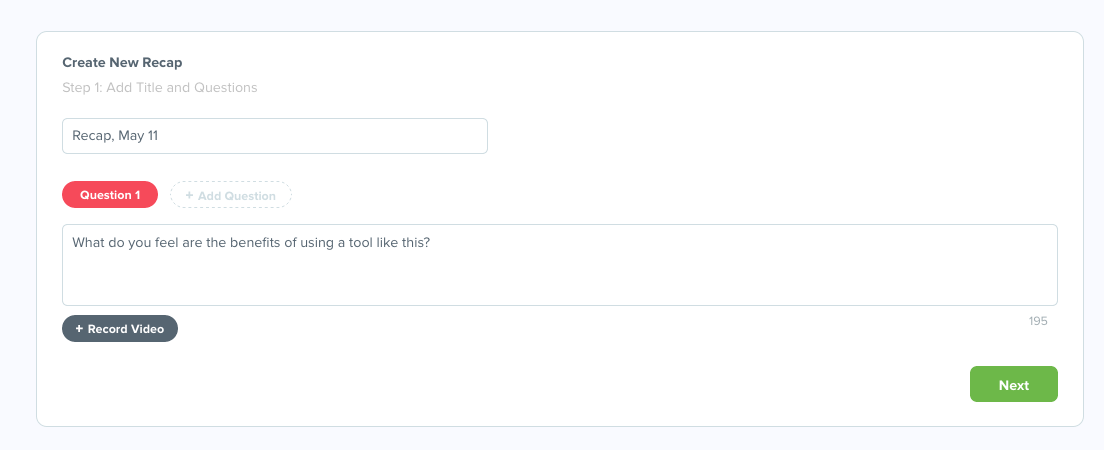
When you click on Add Recap you can type in and / or record your first question.

You can then click on ‘Next’ and set the length of recording for your students’ response and the due date for the assignment. You can also decide if it goes to the whole class or individual students and enable to do some self assessment of their recording.

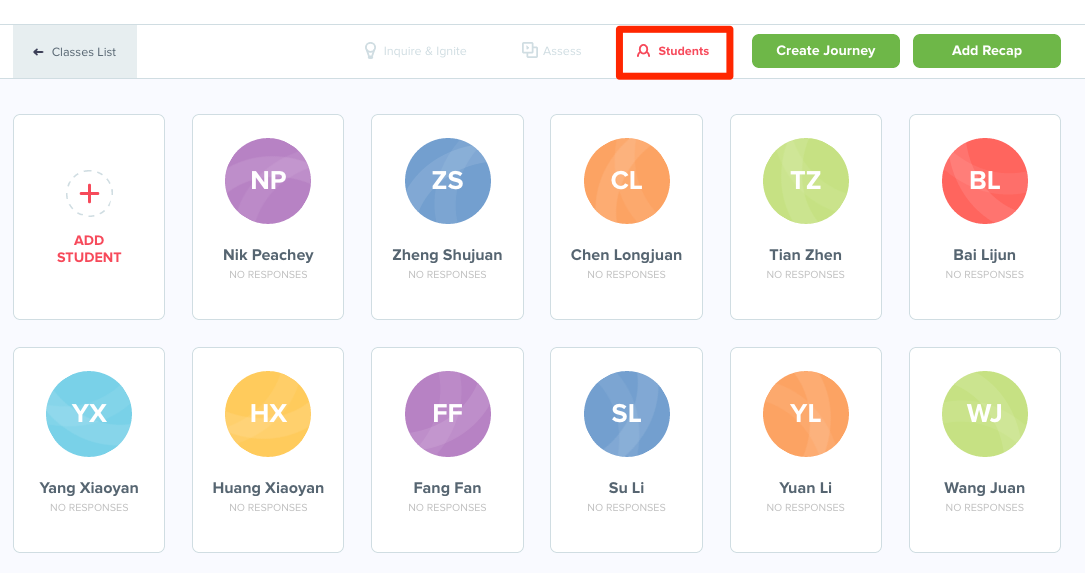
Once you click send the task becomes available to the students.  Once they have replied you can click on the student list and then select each student to see their responses.

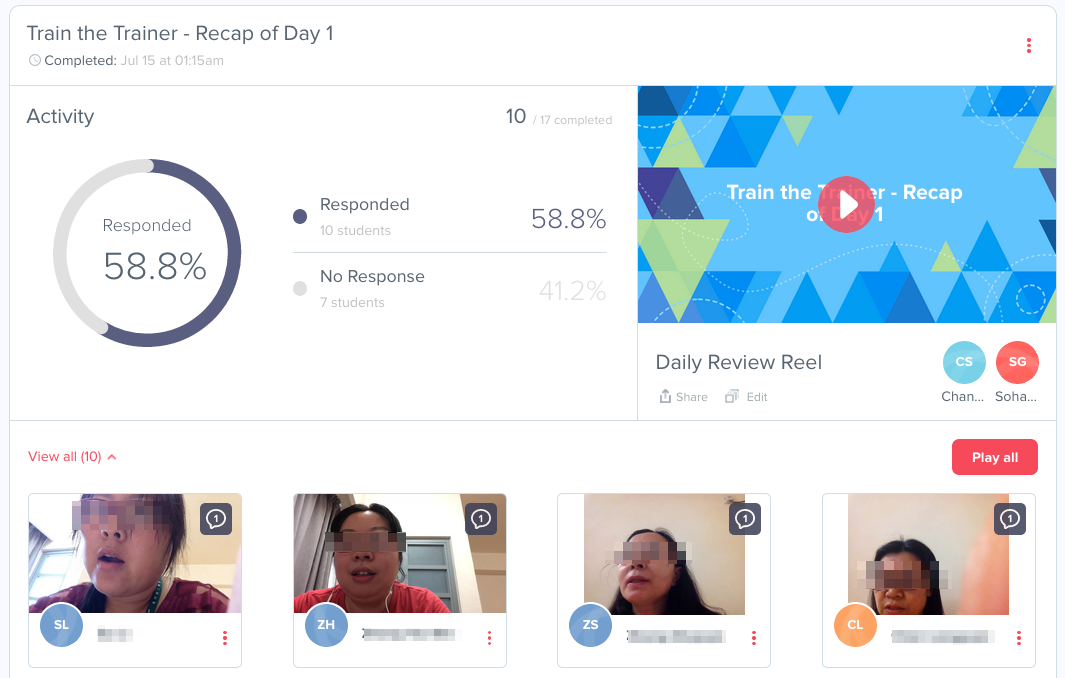
You can also click on ‘Assess’ and access all the student responses and respond back to them or watch a ‘showreel’ compilation of their responses.

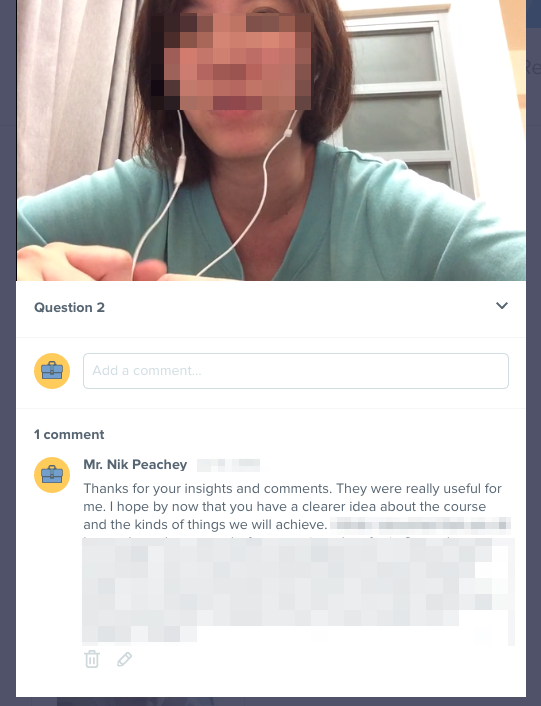
Once you have responded to their comments they can reply, so this can set up a kind of discussion chain.


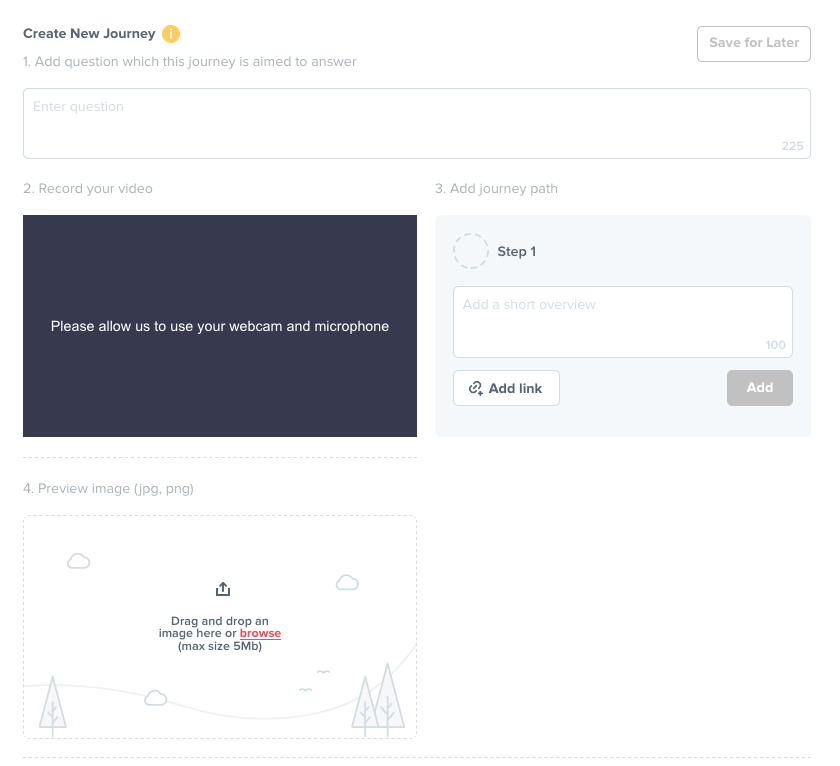
The second type of task you can add to Recap is a Journey. This is a question based around a sequence of materials with links to different media and video stimulus that you can record on your webcam or phone to help engage with students.

To do this just click on ‘Add Journey’, allow access to your webcam and microphone, record your video and then add steps and links to media you want your students to explore.


The video you record has to be very short so this isn’t a tool for delivering lectures, it’s more of a tool for setting students up to discover things for themselves.

Once you have created your ‘Journey’ activity for your students you ca share it with them, but you can also add it to the Recap ‘Marketplace’ this allows you to share or sell your ‘Journey’ activity to other teachers, so this is a great way to potentially make a little money (the maximum sale price is $0.99).


 You can also find ‘Journey’ tasks that you can use with your students there.

How to use Recap with students?

  • Set a Recap task each evening after class and use it as a form of learner diary.
  • Use Recaps for action research and get students to tell you how they feel about what and how they are learning.
  • Set Recaps as short pronunciation assessment activities by getting students to read short texts.
  • Use Recaps to build a more positive dynamic and get to know your students a bit better and discover their motivation and interests.
  • Set Recap tasks to check students remember the vocabulary they learned during previous lessons.
  • Create Journeys based around infographics to get them researching and reflecting on the information within the graphic.
  • Use Journeys to get students doing research before coming to class for debates or for information sharing in class.
  • Use Journeys to share SOLE type questions that students can research.


What I like about Recap

  • Students are often shy to speak and ask questions in class so this is a chance to get them talking just to you.
  • Actually having the opportunity to listen carefully to each student during the class can be difficult, so Recap can provide you with the ability to fairly assess your students speaking.
  • The video clips your students submit are stored on the site, so over time you can see how they are progressing.
  • It’s a safe and controlled way for students to communicate with you through video.
  • You can actually get to know your students a bit better and give them some one to one time.
  • It’s great  to be able to give students speaking homework and for students to see themselves speaking and reflect on their own performance.
  • It’s free and works across platforms (there are apps for both Android and iOS).
  • It offers teachers the opportunity to make some money from their work.

I hope you find Recap useful to help develop your students’ ability to reflect and your own ability to develop a closer understanding of your students’ needs and abilities.

You can find lots more video based apps and activities in my award winning ebook – Digital Video – A Manual for Language Teachers.


Related links:

5 Free Edtech and ELT eBooks

This is just a quick post to share 5 very short ebooks that have been taken from my award winning ebook – Digital Video – A Manual for Language Teachers.

Winner of the 2016 British Council Award for Innovation in Teacher Resources


The ebooks come from chapter 9 of the manual which contains 12 more entries like these. As well as the explainer text, which shows you how to use the tools and gives suggestions for tasks you can do in your classroom, each ebook also has a video tutorial.

Each ebook is available either as PDF from Payhip or from the iBooks Store. I hope you enjoy these free ebooks and find them useful.

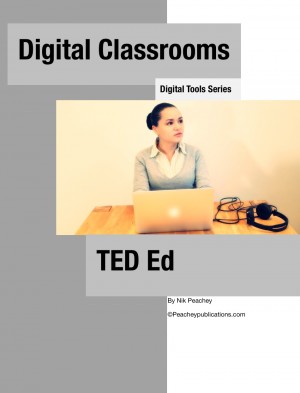
Digital Classrooms – TedEd

TED Ed is a great tool for creating online lessons around videos. It enables you to structure a sequence of interactive activities around the video clip that guides the viewer towards a deeper understanding of the content. It’s an ideal tool for building blended learning.


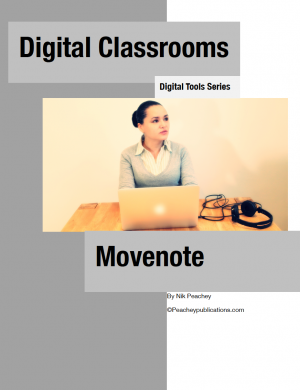
Digital Classrooms – MoveNote

MoveNote is a great tool for getting your presentations online. It enables you to add a talking head with voiceover to guide your students through the materials. These can be embedded into online courses or webpages. It’s ideal for creating flipped learning.


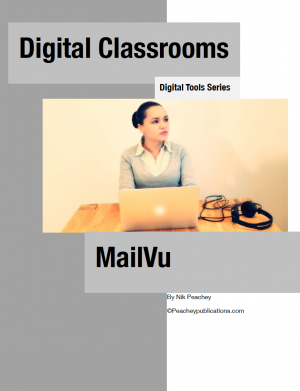
Digital Classrooms – MailVu

MailVu is a great tool for creating asynchronous interaction in either an online course or as part of a blended learning unit of work. It enables asynchronous interaction with just a web-browser and a webcam or there is a free mobile app that runs on most platforms.


 Digital Classrooms – VideoNotes

VideoNot.es is a great tool for building your students’ digital literacies and their abilities to use video to study online. It enables students to take time stamped notes while they watch video content and save them alongside the video file.


Digital Classrooms – Wideo

Wideo is a great tool for creating simple animated movies. It enables you to create a range of teaching materials that explain simple theories. It’s also easy enough to use to get students creating their own animations.


I hope you enjoy these ebooks and find them useful. If you like them then please check out more of my ebooks at: PeacheyPublications.com and sign up for my Edtech & ELT enewsletter to be kept up to date on all that\’s new in digital learning.

Related links

What\’s new about Lessons in Digital Literacy

Over the last few months, I have been revising and redesigning the series of lesson plans I first published in 2016. These lesson plans help to develop students linguistic and digital skills as well as their critical thinking by introducing them to a range of topics and information-rich graphics.

Lessons in Digital Literacy


What\’s New about the Lessons in Digital Literacy?


I\’ve incorporated a number of new features into the redesigned lesson plans.

The biggest change is that I have created digital versions for both teachers and students.

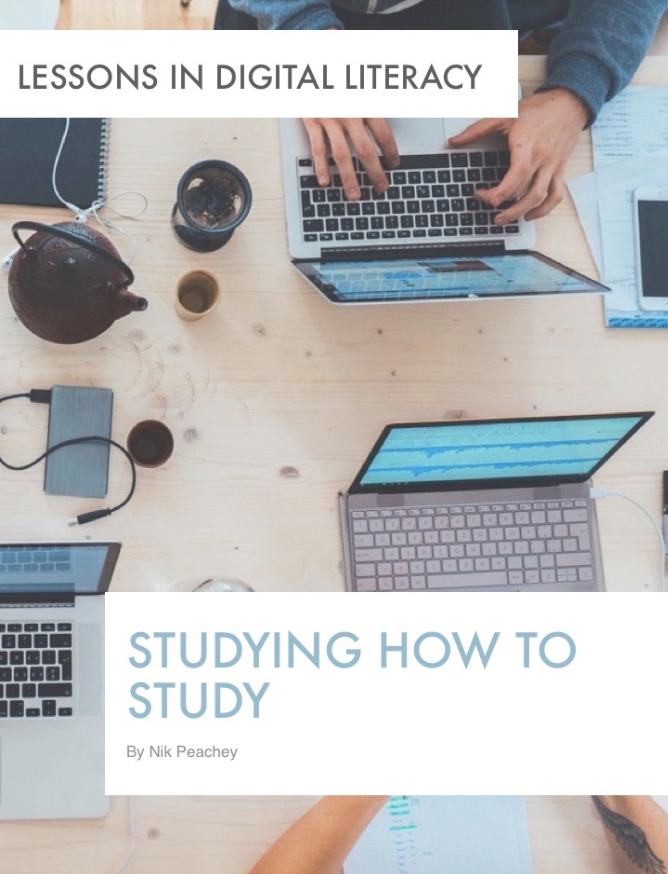
Example: Studying How to Study

/9
By Nik Peachey
LESSONS IN DIGITAL LITERACY
Studying How To Study


These presentations have been created using a technology called html5 which means that they will work in the browser in pretty much any device, including mobile phones, iPads and other tablets.

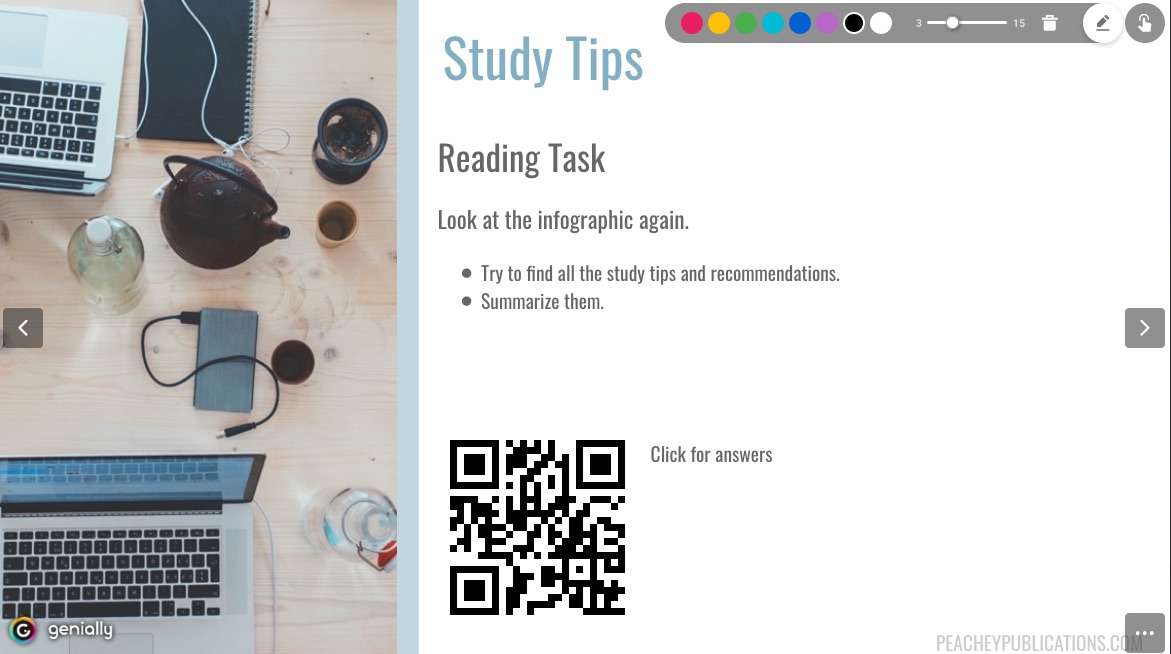
In order to make it easier for both teachers and students to access the infographic for the lesson, I\’ve added QR codes, so that students can either scan them onto a mobile phone from the teacher\’s copy or if they are using their own version of the student materials, they can just click on it and the infographic will open and they can scroll up and down it.


Another feature that these digital materials include is a marker for annotating over the presentation. This is easy to access on both the teacher and student copies and can be opened and closed along with the annotation.


Where writing activities are suggested I\’ve also created a link to an external notepad which students can use and then publish their work directly to the internet.


If your students don\’t have access to digital devices in the classroom you can still use these lessons as there is a PDF version of the students\’ version provided.


The underlying structure of each lesson looks a little like this.


As you can see I try to work from what students already know and believe, introduce new information to them, see how they respond to the information and then get them to examine and evaluate the information more deeply. The final part of each lesson helps students to synergise the information and incorporate it back into their belief system.

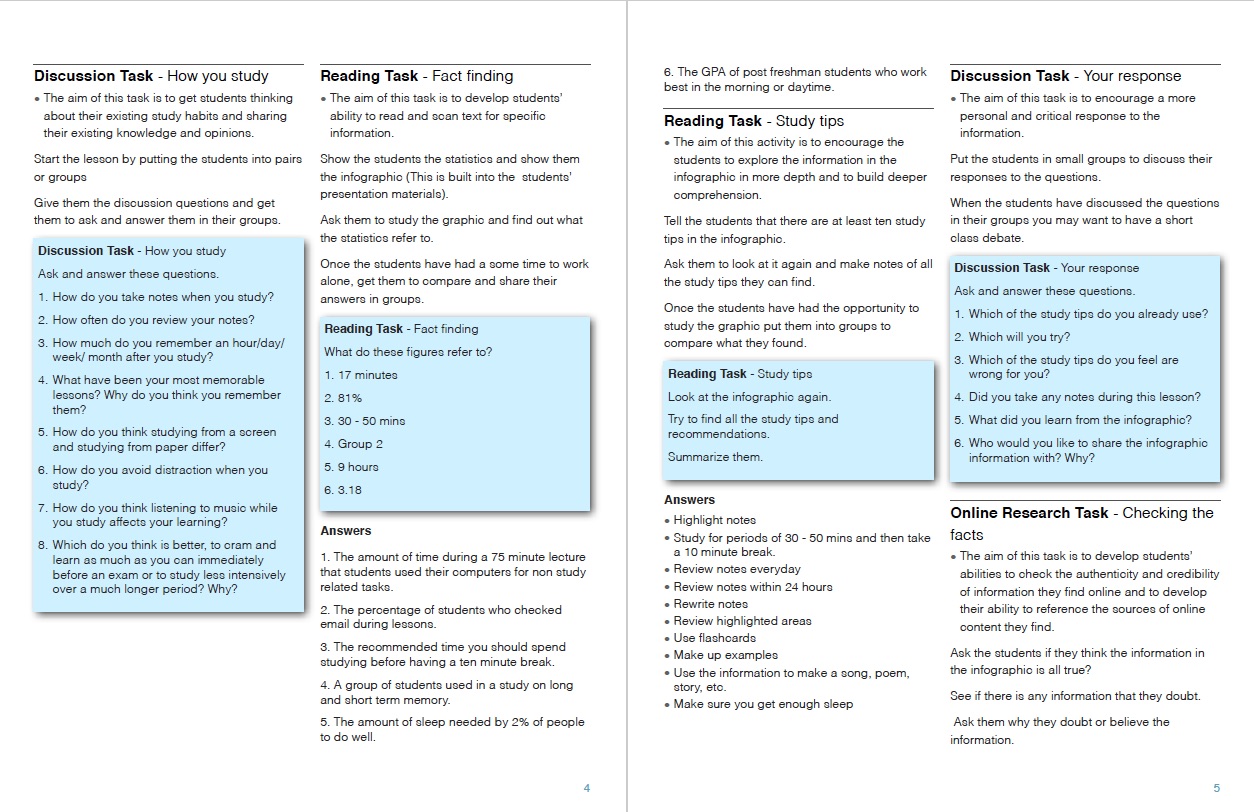
All of the lesson plans include detailed step by step instructions and guidance for teachers, as well as answer keys.


Although each plan contains eight to ten tasks and about 2 hours worth of material, they don\’t have to be completed in one lesson and some of the evaluation tasks used selectively.

 You can download all of these lesson plans and materials from: PeacheyPublications

I hope you enjoy themand sign up to my customer list to be informated when new materials become available and to get customer disocunts.

Related links:


Best

Nik Peachey

What\’s new about Lessons in Digital Literacy

Over the last few months, I have been revising and redesigning the series of lesson plans I first published in 2016. These lesson plans help to develop students linguistic and digital skills as well as their critical thinking by introducing them to a range of topics and information-rich graphics.

Lessons in Digital Literacy


What\’s New about the Lessons in Digital Literacy?


I\’ve incorporated a number of new features into the redesigned lesson plans.

The biggest change is that I have created digital versions for both teachers and students.

Example: Studying How to Study

/9
By Nik Peachey
LESSONS IN DIGITAL LITERACY
Studying How To Study


These presentations have been created using a technology called html5 which means that they will work in the browser in pretty much any device, including mobile phones, iPads and other tablets.

In order to make it easier for both teachers and students to access the infographic for the lesson, I\’ve added QR codes, so that students can either scan them onto a mobile phone from the teacher\’s copy or if they are using their own version of the student materials, they can just click on it and the infographic will open and they can scroll up and down it.


Another feature that these digital materials include is a marker for annotating over the presentation. This is easy to access on both the teacher and student copies and can be opened and closed along with the annotation.


Where writing activities are suggested I\’ve also created a link to an external notepad which students can use and then publish their work directly to the internet.


If your students don\’t have access to digital devices in the classroom you can still use these lessons as there is a PDF version of the students\’ version provided.


The underlying structure of each lesson looks a little like this.


As you can see I try to work from what students already know and believe, introduce new information to them, see how they respond to the information and then get them to examine and evaluate the information more deeply. The final part of each lesson helps students to synergise the information and incorporate it back into their belief system.

All of the lesson plans include detailed step by step instructions and guidance for teachers, as well as answer keys.


Although each plan contains eight to ten tasks and about 2 hours worth of material, they don\’t have to be completed in one lesson and some of the evaluation tasks used selectively.

 You can download all of these lesson plans and materials from: PeacheyPublications

I hope you enjoy themand sign up to my customer list to be informated when new materials become available and to get customer disocunts.

Related links:


Best

Nik Peachey

What\’s new about Lessons in Digital Literacy

Over the last few months, I have been revising and redesigning the series of lesson plans I first published in 2016. These lesson plans help to develop students linguistic and digital skills as well as their critical thinking by introducing them to a range of topics and information-rich graphics.

Lessons in Digital Literacy


What\’s New about the Lessons in Digital Literacy?


I\’ve incorporated a number of new features into the redesigned lesson plans.

The biggest change is that I have created digital versions for both teachers and students.

Example: Studying How to Study

/9
By Nik Peachey
LESSONS IN DIGITAL LITERACY
Studying How To Study


These presentations have been created using a technology called html5 which means that they will work in the browser in pretty much any device, including mobile phones, iPads and other tablets.

In order to make it easier for both teachers and students to access the infographic for the lesson, I\’ve added QR codes, so that students can either scan them onto a mobile phone from the teacher\’s copy or if they are using their own version of the student materials, they can just click on it and the infographic will open and they can scroll up and down it.


Another feature that these digital materials include is a marker for annotating over the presentation. This is easy to access on both the teacher and student copies and can be opened and closed along with the annotation.


Where writing activities are suggested I\’ve also created a link to an external notepad which students can use and then publish their work directly to the internet.


If your students don\’t have access to digital devices in the classroom you can still use these lessons as there is a PDF version of the students\’ version provided.


The underlying structure of each lesson looks a little like this.


As you can see I try to work from what students already know and believe, introduce new information to them, see how they respond to the information and then get them to examine and evaluate the information more deeply. The final part of each lesson helps students to synergise the information and incorporate it back into their belief system.

All of the lesson plans include detailed step by step instructions and guidance for teachers, as well as answer keys.


Although each plan contains eight to ten tasks and about 2 hours worth of material, they don\’t have to be completed in one lesson and some of the evaluation tasks used selectively.

 You can download all of these lesson plans and materials from: PeacheyPublications

I hope you enjoy themand sign up to my customer list to be informated when new materials become available and to get customer disocunts.

Related links:


Best

Nik Peachey

Would you like to become an ELT materials writer?

There are so many talented teachers who create materials for their students each day and never have the opportunity to get them published.

 Perhaps this is you.

  • Would you like to develop your career as an ELT writer?
  • Would you like to generate an income from the materials you produce?
  • Do you enjoy creating materials for your students?
  • Do you write articles for a blog that you would like to put into a book?
  • Do you create teacher development sessions that other teachers could use?
  • Do you like creating your own stories or games for students?
  • Do you have an idea for a teacher development book?
  • Do you have an idea for materials that don’t fit within the usual ELT paper-based niche?
  • Would you like some feedback and help with your ideas?
If you have answered yes to any of these questions, please sign up here to keep in touch with me about a new opportunity that I’ll be launching soon.
Over the last few months, I have been developing a plan to expand PeacheyPublications Ltd and turn it from my personal hobby into a disruptive digital publishing company by raising funds through Patreon.

Part of the plan is to involve more writers and develop and help them grow and become part of the company as the company grows.

What’s in it for you?

  • If you sign up to become a writer you’ll get editorial guidance and help to develop your ideas into publishable products.
  • Once your materials are ready we’ll do all the design and prepare the materials for publication on our platform.
  • Once your materials are published we will market them to our customers and help build up sales.
  • When the materials sell you’ll receive 50% in royalties.
  • We will also enable you to market the materials independently to receive 75% royalties.

Initially, we are looking for 10 – 20 writers to work with. You don’t have to be a previously published writer. This is open to anyone who has an idea for a lesson, activity, book, game or story.

Why us?

  • We can get your work published within weeks rather than years.
  • We give you editorial support based on more than 25 years experience in ELT.
  • We will market your materials for you through our networks and customer list.
  • We help you develop your ideas.
  • We look after design and make the materials look professional.
  • Using our platform you can generate extra income by marketing your materials yourself and by helping to sell materials from our other writers.
  • We will handle the VAT charges

Once again, if you are interested please sign up here

We’ll let you know when we launch.

Find out more about PeacheyPublications

Best

Nik Peachey 

Genealogy–the study of your family tree

I’m an archivist, but the research room where I spend some of my hours to help the public (when the public is allowed to enter) attracts more genealogists than historians. In the past, when someone came to the research room and said, “I’m interested in tracing my family tree—how do I get started?” I would introduce them to our resources, get them rolling, and remain available to answer further questions. Among our resources is ancestry.com – the library has bought a subscription to the service, and patrons can use it for free. But, from now on, when someone says, “how do I get started?” I’m going to steer them properly. For ancestry.com and other library resources belong to the third step of genealogy, not the first or second step.

The first step is to write what you know about yourself. Genealogy always begins with an individual. In your case, that individual is you. Write your full name. When and where were you born? Are you married? To whom, when, and where? Do you have children? Write their full names and when and where each of them was born.

Many genealogists use a notebook to record this information. Some use index cards. Some use a spread sheet such as Excel. Most serious genealogists use more than one method, so the information they have worked so hard to attain will be saved in one form if it is lost in another.

After you have written all your vital information, you then write everything you know about your father. Answer the same questions about your father as you answered about yourself. And if he has died (and I’m sorry if he has) also say when and where he died and where he is buried.

After writing everything you know about your father, do the same for your mother. Then do the same for your father’s father, your father’s mother, your mother’s father, and your mother’s mother. The order matters! You are person number one on the chart; your father is number two, your mother is number three, your father’s father is number four, and so on. After number one, all the even numbers are men and all the odd numbers are women. But—this is even more important—every father’s number is double that of his son or daughter. So your father will be two, your father’s father four, his father eight, and so on back to Adam.

When you have written everything you know—which might include great-grandparents, but probably not every detail about them—is it time to go to the library? No, you’ve only taken the first step. Your second step is to talk with your living relatives to fill the gaps on your chart. Your parents, your grandparents, your uncles and aunts, and your cousins probably can answer some of the questions you needed to leave blank. As you talk with them, let them tell you stories about the family. Encourage them to share the stories. The other data is just a roll call; the stories make family history truly meaningful.

Once you’ve visited with your living relatives, you are ready to go to the library. Libraries have a multitude of resources for genealogy. These resources can help you fill the gaps. Increasingly, online services like ancestry.com have gathered these resources from various libraries and locations. They include official government documents—not only the Census, but also land sale records, military records, and court documents (especially wills and probate proceedings). Plus there are family records, church records, community histories, and the research of other genealogists. All this information tells the researcher about many people, and a few of those many people are your relatives, even your ancestors.

Several problems can occur when tracing your family tree. If you are easily frustrated, you might want to try a different hobby. Frequently several people have the same name. You have so sort through everything you know about your ancestor to find the right one. That’s why birth dates, death dates and places are important in genealogy—they help to distinguish your John Smith from the other five John Smiths who lived in the same general area around the same time.

Second, people make mistakes. Your relatives’ memory might be faulty. Even your memory might be faulty. You thought your grandmother was born in 1930—she always told people that—but actually she was born in 1924. To make matters more complicated, census takers, church secretaries, and even the stone carvers who made the grave markers all make mistakes. One person’s bad handwriting might cause another person to get a name or a year wrong. The information you record must be verified carefully among several sources. Just because it shows up in one book or on ancestry.com doesn’t mean that it’s true.

Genealogists often hit a wall. Scraps of important information don’t seem to exist. Sometimes, people disappeared on purpose. They didn’t want to be found. Some records have been lost to natural disasters. (Even the U.S. Census of 1890 was lost in a fire.) But, given persistence and newly found sources—a distant cousin, perhaps, or a library in another city—the story gradually unfolds. And the journey through that story is educating, exciting, and entertaining.

Who are you? Your family tree cannot fully answer that question, but it offers some useful hints. J.

Adult education in NWFP, Pakistan

by Sultan Muhammad

Introduction:
Education is the backbone in development of a nation, With Education, nation identifies it self in the nations of the world. Education give power and respect to small countries and enables them to control over its economy, with education one can conserve it resources in a better way. Education is the tool of success and dignity in this world. Educations help in character building and improve their moral responsibilities. Educations reduce crime and poverty from the society.
Education in Pakistan:
After 1857 freedom war, Muslims were isolated in the subcontinent and derail from the path of development and education. The doors of education were closed on them. Sir Syed Ahmad khan helps Muslims in those difficult times. He established a Muslim university after 1857 for the Muslim of the subcontinent. He put them back on the track.
Due to those reason Literacy rate was very low at the time of partition, in light of these circumstances in November 1947; first educational conference was held to improve the education system of Pakistan, although many fruitful suggestions were introduced in this conference and later on they were implemented but no attention was given to adult education at that time.
In 1972, the very first comprehensive education policy was introduced after independence of Pakistan under the title of educational policy 1972-80, federal Minister Hafiz Perzada first time gave Attention to education. In this policy literary centres were established to educate Eleven million illiterate people. Also to establish an Open University that will provide education through radio and television.
In 1979 general Zia-ul-Haq held a conference on education, in which educational experts were invited to analyse the education system of Pakistan and presented their precious suggestion to improve the quality of education of Pakistan and prepare a educational policy that suit Pakistan. This conference identifies some problems and put emphasis on the following points to increase the literacy in Pakistan.
· The establishment of Mosque and Mohalla schools to educate the people
· Establish a counsel for Adult Education to increase the literacy rate, attached to AIOU.
In 1992 Nawaz Sharif government announced a policy which had positive suggestions of all policies since 1947 and onward. It was the most comprehensive policy of Pakistan education history, although it was not executed at that time but later on some suggestions were implemented like the establishment of NTS system.
Adult Educationadult education was defined by experts,
1. “It is a process, through which the grownups of a common acquire modern ideas. Awareness of the present issue of the society and to some extent critical thinking is developed”
2. Bryson. Define adult education as “ all activities with an educational purpose carried on by people in the ordinary business life”
It means all those adults people who misfit in society due to lack of education, an educational programme will be planed for them, to educate them up to the level and requirement of the society. So they could be useful for the well being of the society.
Developed countries had already passed through this phase. Still they have adult education programme for those who left behind in the race of education or dropout for some reason from the school.
Education in NWFP
According 1998 census, NWFP population is around 18 million and the literacy rate of NWFP is 34.41%, men 51.39% and women 18.82 %. 2.35 million Children are enrolled in schools and 2.14 million are out of school due to different reason.
In the field of education NWFP is for behind with respect to other provinces, only Balochistan is lacking behind us. That why these two provinces required special attention, which they never get.
According to Population Census Organization 1998
EDUCATION IN NWFP AGE GROUP WISE
LITERACY RATE 1997-98
Province/Area
Population of Age Group 15-24 Year
literates 15-24 years
Literacy rate
NWFP
3.36 (million)
1.62 (million)
48%
EDUCATION IN NWFP GENDER GROUP WISE
LITERACY RATE 1997-98
Province
Male Population Age Group 15-24 Year
literate Male 15-24 years
Male Literacy Rate
NWFP
1.71 (in million)
1.16 (in million)
68%
Province
Female Population Age Group 15-24 Year
Literate Females !5-24 years
Female Literacy Rate
NWFP
1.6 (in million)
0.5 (in million)
31%
According to Population and Housing Census Report 1998, NWFP is the second lowest province in Pakistan in literacy rate. But still no serious attention is given to improve adult education. Some half hearted plans are in progress but those are not enough to eradicate the problem
Adult education in NWFP:
According to 1972-80 education policy, first time few literacy centres were established in NWFP for the purpose of adult education, but it would not achieve its goals.
In 1979 general Zia-ul-Haq era, he put stress on education and on the recommendation of education conference government establish Mosque and Mohalla schools for adult education and actively used media for adult education. For this purpose Open University started educational courses on PTV and radio on daily bases. Media improved the education quality in adults in cities. For the first time in Pakistan and in NWFP Adult education made real progress.
In 1992 policy, government improved adult education and suggested the promotion of education of females through the combination of non-formal and distance education. Opening of distance educational colleges/institutes and establishing a second TV Channel for education purpose.
Public Sector Literacy Programmes
In public sector, first time literacy centres were established in 1972, the target was to literate Eleven million people across Pakistan. Allama Iqbal Open University was establish in 1974 as a language institute, later on it was given the status of university, it is the first open university in Asia. AIOU play a vital role in education in Pakistan. Later on it starts courses on PTV and radio to cure illiteracy problem in Pakistan.
IN 1979 general Zia-ul-Haq improved adult education and gave real attention to adult education. He established Mosque and Mohalla schools to eradicate illiteracy from Pakistan. With the establishment of these schools the literacy rate increased in adult to some extent.
Zia-ul-Haq increased the role of media in education; he opened new channels and started new courses with the help of Allama Iqbal Open Univesity on television and radio. Education courses were provided to People at their door step.
After 1992 Nawaz Sharif government gave attention to the education. They prepared a new education policy to improve overall education system of Pakistan; they brought major changes in education policy and take new initiatives for this purpose. Although the policy was not implemented at that time but later on it was implemented.
Government announced a policy which had the positive suggestion of all policies since 1947 and onward. Which was not executed for some reason at that time, but later on some suggestions were implemented like the establishment of NTS system. Some other programme which were implemented:
Eradication of illiteracy from selected areas of NWFP
This project was launched by Literacy Commission and it opened face to face literacy centre and TV literacy centre in Tehkal Bala, Peshawar. This project was implemented through NGOs and local community. 87% adult were made literate against the target.
Quran literacy project
This project was planed with the consideration of great respect of the people of NWFP towards Islam. It was understood that the people will have more attraction to religious type of education and in this way they will come in to the main stream of learning. This project was specially designed for the females because they have no access to education. Experts believe that with this type of education they would involve female in the education process and make them better persons of the society, with the help of Quran education they will easily learn Urdu as well. As a whole it was very difficult project to organise. Due to that it was not successful as it was thought initially. Time table was very difficult for teacher, with no incentives; in some areas people were still not ready to send their girls to schools.
Non Formal Basic Education Schools
In 1995 Prime Ministers Literacy Commission implemented a project called \”Establishment of 10000 Non-formal Basic Education Schools\” with the total sum of Rs.1263.375 million for a period of five year. This project was implemented on the national level.
This project was based on the idea of united state of America home school that will be run through local community with the help of NGOs. Thousand (7117) of schools were opened under this project. But in 1997 government reduced the budget due to which the student could not received books and teachers could not received salaries.
In the education policy 1998-2010 on further recommendations, the project was expanded on the condition of evaluation of existent schools. Recommendations were given for the opening of another 75000 NFBE community schools during the next three years.
Elementary education:
A Semi-Government Institution of NWFP for promotion of literacy through Community participation. Established in 2002, after the establishment of elementary education foundation, it establishes 36 EEF Model Community Schools for girls in backward districts, and started teacher training programme.
Currently 486 adult schools are running under the supervision of elementary education, funds are provided after the evaluation of the three month progress report. Target 86% adult literacy rate by the year 2015
Dasthkari Schools:
Dasthkari schools were opened all over Pakistan included NWFP to train women to earn livelihood, Pakistan bait-ul-mal also started courses for needed persons to help them to earn livelihood with dignity. Courses of sewing and cutting etc were started.
Pakistan Bait-ul-Mal:
Pakistan Bait-ul-Mal with the help of Allama Iqbal Open University started vocational training and workshops to train the people and improve their technical skills.
PRIVATE SECTOR LITERACY PROGRAMME
Role of NGOS in adult education in NWFP
NGOs stand for Non governmental organisation:, after the invasion of Afghanistan by Russia, a flood of refuges rush to NWFP, Pakistan. To help those refuges, international organisation came to Pakistan and set their offices. Some were taking care of there foods while some providing them shelter. Some organisation took responsibilities of their education. Schools were established in camps and teachers were trained to teach them. This new trend, effected Pakistani society too and the concept of local NGOs developed. With these international NGOs local community started their own NGOs to help their country in different sector. Education and skill development is one of them. Non governmental organisations played a vital role in adult education and skill development in NWFP. List of NGOs, which are involved in the education and skill development programme in NWFP:
1. Khyber Welfare Association
A Non-Governmental Organizations in NWFP was involved Literacy Projects (Pilot) of 1992.
1. Aahung (registered in 1995 – Health) Aahung
Working all over Pakistan, adult education and skill development is one of its components.
2. Association for Creation of Employment (est. registered 1997) (Economic Welfare, Micro Credit)
It mainly works on the skill development but also have adult education programme from time to time.
3. Caritas (est. 1965, registered 1980) (Education, Vocational Training) www.brain.net.pk/~caritas
Registered in 1980 work for education, vocational training in NWFP
4. De Laas Gul Welfare Program (est in 1976, registered in 1988) (Vocational Training) delaasgul@hotmail.com
Da Laas Gul organises vocational training
5. Health Education and Literacy Trust (est. 1987 registered in 1994) (Education and Health)
6. Khwendo Kor – Women and Children Development Program
khanendo kor major components are, working for education, skill development and micro credit programme of women of NWFP.
7. National Research and Development Foundation (est. and registered 1993) tahseen@nrdf-t.pwr.sdnpk.undp.org
8. Lasoona. “LASOONA – Society for Human and Natural Resource Development”
9. CMDO: Community Motivation and Development Organization
CMDO is Community Motivation and Development Organization which is deeply involved in education programme in NWFP. Some of the components of CMDO are:
Community Based Formal Education
Five community base Model school were opened in FATA
Infrastructure Improvement
Improve the infrastructure and rehabilitation of schools in backwards areas, to improve the education.
Non-Formal Education (Transitional Schools)
Schools were opened for working children above the age of 7.
Adult Literacy
20 adult literacy centres were established in FATA and in Kurram Agency and 1500 adult female were educated.
Youth Literacy and Vocation literacy/Trainings
Youth literacy and vocational training programme was started for young adults. 6 months literacy programme followed by 6-months practical/vocational training programme were organised for the ages between 13 -17. Training was provided to 1250 adults under this programme.

Resource centres
Library and computer labs were established in different parts to help the students.
Capacity Building – Teacher Training
Teacher training programme were arranged from time to time, to enhance the ability of teachers to educate adults in there villages.
10. National Commission for Human Development (NCHD)
NCHD is a Pakistan based NGO. It is working in many districts of NWFP
1. Kohat
2. Malakand
3. Abbotabad
4. Swabi
5. Laki Marwat
6. Batgram
7. Shangla
8. Swat
9. HaripurNWFP (3)
10. Mardan
11. Mansehra
12. Karak
NHCD have adult literacy Programme, in 58 Districts of Pakistan and it opened thousand of literacy centre all over Pakistan.
Adult Literacy Programme in 58 districts
Adult Literacy centres opened 5,391
Adult Literacy centres completed 3,874
83,549 non-literates made literate aged 15-39 years (80% women)
11. AKESP Aga Khan Education Services of Pakistan has a major share in private sector education. AKESP specially arranged education programme for women of Chitral and northern area.
In education budget, Less than one 1% was allocated for Adult literacy programme, which is nothing when comparing to problem we are facing in Pakistan, allocated funds were not used in proper way. Funds were spent on ghost schools and ghost teachers. Monitoring of the schools and resources were not up to the standard, due to these loop holes adult education lacks efficiency and effectiveness. The required targets were not achieved up to the expectations of the programme.
Problems and issues to Adult education:
Teacher’s problem
The biggest problem of adult education in NWFP is teacher involvement in the education process. Teacher motivation is required to achieve the goals and objectives. The best way for the motivation of teacher is to increase salaries and give extra befit to those teacher who show commitment to achieve adult literacy target and goals. It will motivate other teacher to follow so.
Political Instability
Political instability is another major problem, when ever new government take over control in Pakistan. It stops old education programmes, no matter how much they are important and effective, and how much many are spent on those projects. They will start their own programme so later on they could tell the people that it was their initiated programme
Coordination
Lack of coordination is also a major problem in the line agencies, sister organisations are unaware what other organisation are doing. What are their programmes? And what are advantages and disadvantages of that programme?
PUBLIC AWARENESS
Public Awareness is very necessary for adult education. The people should know, what are the benefits of education for them and for the society? What are the advantages and what are disadvantages of an illiterate person to society, an educated society would be more helpful. With the awareness in the public, the participation in the adult education will improve. It will also help to reduce the dropout rate from the school at different level of education.
Financial Problem
Financial support is other major problem to adult education of NWFP. Little financial support is available for adult education from federal government when compare to other provinces. In Punjab to improve the participation of adults especially female in classes Rs.20 were paid per class. Later on it was increase to Rs.30 per class
Conclusion/Recommendations:
Keeping in view the above facts and figures; the adult education in NWFP is not enough to cure education problems. Some serious steps need to be taken to improve the education in NWFP. Extra benefit and increment should be given to those teachers, who involved in the process of adult education. Extra funds should be allocated for establishments of new adult centres. The existing schools should be used in evening shift for adult education.
Female education need special attention in the villages and towns, new girls schools should be established in their door step, so the parent could sent their girls with out hesitation to those schools. Like Punjab Rs.40 should be paid per day to girls in those areas were parents are not ready to send their daughters to schools. A realistic monitoring and evaluation system should be designed to achieve the target goals. A communication wing should be established among the educations departments. So that they will be aware of the progress and the areas where the sister organisations are working. Province should be divided in different zones and it should be allocated to them so every area take benefit from adult education Programme equally.
BIBLIOGRAPHY
Afridi, Arbab K. Educational Administration & School Organization. 2nd ed. Vol. 1. Peshawar: The Printman, 1998. 1-235.
Dr. Muhammad S. Education for All the Year 2000-Assessment PAKISTAN COUNTRY REPORT. Ministry of Education Islamabad. Islamabad, 1999. .
AEPAM Ministry of Education. .
SAGE Journal Online. .
Wikipedia Encyclopedia. .

Floral Diversity

Preliminary Results on the Impact of the Nomadic Grazing on Floral Diversity in Miandam, Swat-Pakistan
Ashiq Ahmad Khan and Syed Kamran Hussain


1. Introduction
Miandam is located in the north east of district Swat, lies between 34o 34′ to 35o – 07′ N latitudes and 72o – 36′ to 73o – 35′ E longitudes in the Hindu Kush mountain range. Miandam valley is a summer resort about 56 km from Saidu Sharif, the capital of Swat. The elevation of the valley ranges from 1200 m to 3660 m. The valley comprises of 11 big villages and 15 small hamlets with a population of about 20,000. The forest of the Miandam valley is a fundamental and potentially sustainable source of many services including economically important medicinal plants. One of the studies reveals that there are 190 plant species, identified so far in Miandam. Out of these 179 are used for the treatment of various health problems [1]. As else where in the forest area, Miandam is also facing the problem of overgrazing and deforestation. The basic reason of deforestation is commercial harvesting. This year 2.6 million cft timber has been extracted from the forest while the illegal and unrecorded extraction is much more.
Due to low level of education and life standard combined with lack of information regarding health and hygiene, people of the valley are suffering from different diseases especially women and children. They depend only on one primary Health center, which is not sufficient for a total of 150 sq km area. Required equipments and medicines are also not available in the said center. The nearest hospital is situated 56 km away, and not in the access of poor local people. Previously people of the valley were relying on herbal remedies as a principal means of preventing and curing illnesses. Beside this collection of medicinal plants from the forest area provides employment and fetches earnings to the poor local people. It has been estimated that almost 3000 people are earning 25% of their total income from the collection and sale of the plants [1]. However, these resources, and local knowledge of these, are being threatened by nomadic grazers. Each year nomads carry more than 40,000 goats to the high altitude of pastures passing and browsing through the young forest crop and shrubs throughout. As per the existing traditions, they have to pay a tax (sum of US $ 85 to 120) to the owners, called \”Qalang” for their stay in the pastures. During their stay, in addition to grazing their animals, each nomad collect enormous amount of medicinal plants worth of US $ 450, but the owners of the pastures are not aware of such losses. Since 2000, some of the forest owners put a ban on the nomadic grazers on their land. It has been observed that the area where the nomadic grazing has stopped, showing better vegetation cover, improvement in medicinal plants diversity and good regeneration of pine species.
Thus, first there is an urgent need to study the difference between vegetation cover, plant diversity and regeneration status under grazing and controlled grazing lands. The concluded results will be a good tool for an extension worker to provide awareness to the forest owners about economic importance of their Pastures and adverse effect of nomadic grazing on it.
.
2. Review of Literature
Grazing in the grasslands has played a key role in changing the botanical composition, which, however, varies with the type of grass cover, its palatability etc. Overgrazing represent the most obvious impact on the native biodiversity of grasslands. As overgrazing causes retrogression, stimulates growth of weeds and loss of diversity. In Assam overgrazing reduces the tall grass cover to tufted grass type to Chrysopogon aciculatus and Imperata cyclindrica [4].
Livestock impact on biodiversity through trampling and removal of biomass, alteration of species composition through selective consumption and changed inter-plant competition. Changes in grazing intensity and selectivity will inevitably change biodiversity; under grazing and overgrazing can both have negative effects, but overgrazing by livestock is increasingly problematic [9].
Over-grazing has resulted in land erosion, formation of boggy areas and reduction in plant diversity. The area of natural pasture land has declined from 1.4 million ha in 1940 to 808,000 ha today, and remaining areas have been degraded and have become dominated by rocks (87%), scrub (25%), and inedible (74%) or poisonous plants (47%), while diversity has declined. For example, while between 70 and 80 plant species are normally supported by steppe systems, the number of species found after intensive over-grazing drops to around 15 [10].
Grazing animal may exert beneficial or mutual influences on the vegetations for their own good but on the other hand, large concentration of them often have harmful effects on the plants because of selectivity and over grazing. Quantifying the impact of livestock grazing on natural communities (forages) has become a major issue in the management of rangelands especially where the grazing is very widespread and its impacts may be in conflict with conserving biodiversity [5].
According to Lamprey (1979) Grazing is among the important agents, which influence the distribution of some vegetation types. In most rangeland ecosystems, grazing, browsing and other factors such as fire and climate contribute to vegetation change. Grazing animals influence species composition, change in biomass and distribution of biodiversity [8].
According to Pratt and Gwynne, (1997) Overgrazing reduces the ground cover vegetation, plant diversity and productivity. The impact of grazing on rangeland vegetation depends on three factors: (a) the type of herbivores (grazers and browsers) (b) Number and type of animals utilizing an area (c) Distribution of use in time and space
3. Methodology
A line transect survey technique was adopted in accordance with the popular and locality specific procedures of Akbar (2000), Kent and Coker (1995) and Cox (1967). For comparative assessment, data were collected from 2 sites, one; that is protected by the locals from nomadic grazing, while, other that is open to grazing.
Before data collection, a reconnaissance survey was conducted to make sure that all other factors like Aspect, Altitude and Slope remain constant in both the sites; the only variable is grazing pressure. Data were collected from two different sites through different techniques:
ransect walk to ascertain total number of plant species available in each site along the transect
Sample Plot (Quadrate of 5 X 5 M) to collect detailed information about the 10 selected species, which are economically important.
Sample plots (Quadrate of 5x5m size) in each site were taken at uniform intervals along continuous transects. The plots were taken on main transect and on rows laid in four directions from a systematically selected point. In general, the plots were approached along the transect walking upstream on a track and from their lower positions, across the slopes on rows.
The first plot was fixed in the start of the track. From the fixed point on the transect, after every 200 meters (300 steps), to both right and left ridges on the determined angles, quadrates or sample plots of 5x5m were laid. Proceedings ahead on transect upstream another quadrate after 300m was taken. The same process was repeated for taking sample plots on the rows on left and right. In this way the whole site was sampled.
The number of plants of each species, average phenological stage of the plants, general habitat, altitude and aspect of the plot were recorded on a Performa. This was decided well before starting the counting of plants, and practiced throughout, that all those individual plants whose roots were inside or beneath the quadrate line, irrespective of the place of their shoots, were counted. Similarly, in certain species with rhizomes and bunches, forming compact inseparable clusters having difficulty in defining a single individual, the entire bunch or patch was counted as one individual.
4. Results and Discussions
4.1. Topography of the Area
The topography of both sites i.e. protected and unprotected from grazing, is rugged with slopes very steep to precipitous, between 60 to 80 %. Both sites occupy predominantly the northern aspect of the main mountain ridge running in north-east direction. The altitude varies between 1,850 to 2200 m in both the sites. All the three main factors including aspect, slope and altitude that influence the vegetation pattern in an area are (more or less) the same. It could be infer that any change in the vegetation density/diversity will be the impact of different grazing pressure in both the sites.
4.2. Floral Diversity
The study revealed that 37 and 23 medicinal plants species were found in the protected and unprotected site respectively, during the month of April, 2007. In August, 2007 after the monsoon, 33 MP’s species were found in unprotected site, while 78 species were recorded from the site that has been banned for nomadic grazing since 2000. Table 1 & 2 showing name of species, recorded from both the sites.
Table-1 Protected from Nomadic Grazing
S. No
Scientific Name
S. No
Scientific Name
S. No
Scientific Name
1
Acorus calamus
27
Cynodon dactylon
53
Paeonia emodi Wall.
2
Aconitum violaceum
28
Cynoglossum lanceolatum
54
Plantago lanceolata L.
3
Adiantum capillus-veneris L.
29
Dryopteris jaxtaposta christ.
55
Plantago major
4
Adiantum venustum
30
Diospyros lotus
56
Podophyllum emodi Wall.
5
Aesculus indica Coleb. ex Wall.
31
Elaegnus umbellate
57
Podophyllum hexandrum Royle,
6
Allium sativum
32
Fagonia arabica Linn.
58
Primula denticulata Sm.
7
Ajuga bracteosa Benth.
33
Ficus palmate
59
Rubia cordifolia Hochst. ex A. Rich.
8
Amaranthus viridis
34
Fragaria vesica
60
Rumax hastatus
9
Arisaema flavum ( Forssk.) Schott
35
Fumaria indica Pugsley
61
Ricinus communis
10
Arisaema jacquemontii Blume,
36
Geranium wallichianum D. Don,
62
Skimmia laureola Sieb. & Zucc. ex Walp.
11
Artemisia scoparia Waldst. & Kit.
37
Hedera nepalensis K. Koch,
63
Solanum nigrum L.
12
Artimisia brevifolia Wall.
38
Hypericum heterantha
64
Stachyus parviflora Benth.
13
Artimisia vulgaris L.
39
Hypericum perforatum Linn.
65
Salvia moorcorftiana
14
Asparagus adsendens
40
Indegofera trifoliata
66
Swartia elata
15
Avena sativa
41
Isodon rugosus
67
Silene uugaris
16
Berberis lycium Royle.
42
Lanthyrus aphaca
68
Sonchus asper
17
Bergenia ciliata (Haw.) Sternb.
43
Launea procumbens
69
Sambacus wightina
18
Bistorta ampilexicaulis (D. Don) Greene
44
Male fern
70
Taxus buccata
19
Bunium persicum
45
Mentha longifolia
71
Taraxcicum officinale weber
20
Caltha alba Jacquem.
46
Mentha spicata L.
72
Trachysepermum ammi
21
Celtis australis
47
Micromeria biflora
73
Urtica diotica
22
Caralluma edulis Benth. ex Hook. f.
48
Myrsine africana L
74
Valeriana jatamansi Jones.
23
Chenopodium album
49
Nepta govantiana
75
Valeriana wallichii DC.
24
Chamomilla recutita Rauschert.
50
Onosma hispidium
76
Verbena offcinalis L.
25
Chenopodium botrys L.
51
Otostagia limbata
77
Viola biflora L.
26
Corydalis govaniana Wall.
52
Oxalis corniculata
78
Viola serpens Wall.
Table-2 Open to Nomadic Grazing
S. No
Scientific Name
S. No
Scientific Name
S. No
Scientific Name
1
Acorus calamus
12
Corydalis govaniana Wall.
23
Corydalis govaniana Wall.
2
Adiantum venustum
13
Cynodon dactylon
24
Cynodon dactylon
3
Ajuga bracteosa Benth.
14
Cynoglossum lanceolatum
25
Cynoglossum lanceolatum
4
Arisaema jacquemontii Blume,
15
Fragaria vesica
26
Fragaria vesica
5
Artimisia vulgaris L.
16
Geranium wallichianum D. Don,
27
Geranium wallichianum D. Don,
6
Berberis lycium Royle.
17
Hedera nepalensis K. Koch,
28
Hedera nepalensis K. Koch,
7
Bergenia ciliata (Haw.) Sternb.
18
Hypericum heterantha
29
Hypericum heterantha
8
Bistorta ampilexicaulis (D. Don) Greene
19
Indegofera trifoliata
30
Indegofera trifoliata
9
Caltha alba Jacquem.
20
Isodon rugosus
31
Isodon rugosus
10
Cannabis sativa
21
Male fern
32
Male fern
11
Chenopodium album
22
Mentha spicata L.
33
Mentha spicata L.
4.3. Economically Important/Target species
One of the study revealed that there are 190 plant species, identified so far in Miandam, of which 179 are used for the treatment of various health problems [1]. But some are economically very important because pharmaceutical industries need those herbs in an abundant. Grater demand of herbal industries for those species has threatened their occurrence and abundance. Species that have greater values include Bistorta ampilexicaulis, Morchella esculenta, Valeriana wallichii, Adiantum venustum, Viola biflora, Bergenia ciliata, Geranium wallichianum, Berberis lycium, Podophyllum emodi, and Paeonia emodi. Out of the 10 plant species, 4 are nationally endangered, (Red Data Book of IUCN threatened species 1998).Table 3 showing economic importance of those 10 selected species.
Table-3. Medicinal Plants of Miandam Valley: Prices & Quantities harvested
Botanical Name
Prices (Rs/kg) for:
Qty Extracted (kg/yr)
Collector
Retailer
Customer
Bistorta ampilexicaulis
10
12
15
15,000
Morchella esculenta
7,000
10,000
14,000
300
Valeriana wallichii
60
100
130
20,000
Adiantum venustum
16
20
30
12,000
Viola biflora
180
280
450
10,000
Bergenia ciliata
10
20
30
1,000
Geranium wallichianum
40
60
100
1,000
Berberis lycium
80
150
300
100
Podophyllum emodi
75
100
170
100
Paeonia emodi
10
18
30
800
4.4. Density of the Target species
Density, which is the number of plants of particular specie per unit area, is essential to determine the population density. Hence total number of plants of individual specie in the quadrate was counted and extrapolation for the area of the site was applied. The study revealed that the average population density of the target species decreases upto 90% due to nomadic grazing, while two species, Paeonia emodi and Podophyllum emodi were completely vanished due to overgrazing. Table-4 shows density (# of plants/ha) of the target species in both sites.
Table-4 Density of the Target species in both sites
Species
Density (#/ha)
Reduce in %age
Protected
Unprotected
Bistorta ampilexicaulis
53200
3900
92
Valeriana wallichii
2900
533
81
Adiantum venustum
37200
800
79
Viola biflora
13560
1100
91
Bergenia ciliata
240
133
45
Geranium wallichianum
12340
800
93
Berberis lycium
1000
300
70
Paeonia emodi Wall
920
0
No Found
Podophyllum emodi Wall.
320
0
No Found
Test the hypothesis that there is no statistically significant difference in the population density of the target species in both the sites.
X1 (A) Density in protected site
X2 (B) Density in Unprotected Site
d = (A – B)
d2
53200
3900
49300
2.43E+09
2900
533
2367
5602689
37200
800
36400
1.32E+09
13560
1100
12460
1.55E+08
240
133
107
11449
12340
800
11540
1.33E+08
1000
300
700
490000
920
0
920
846400
320
0
320
102400
Total
∑d = 114114
∑d2 = 4.05E+09
N = 9
D = ∑d /N= 114114/9= 12679.3
S2 = {∑ d2 – (∑ d) 2 / N} / N – 1
= 1/8 {4.05E+09 – (114114)/ 9} = 3.26E+08
S = 19026
t = (D – 0) / S/ √N = 6337.3
The tabulated value of ‘t’ for 8 degree of freedom (df) is 2.306 at significance level 0.05 while the calculated value of ‘t’ is 6337.3, which are much more than 2.306. Therefore null hypothesis of no difference is rejected. We infer that the density of target species in both the sites is differing significantly from one another.
4.5. Frequency of the Target species
Frequency is the occurrence and distribution of a particular plant in a particular site. A plant may have high density with low frequency when the plants generally occur in patches. This will indicate non uniform distribution on the site and any indiscriminate harvest can endanger the species on the site. The plant will also be vulnerable to the local adverse biotic and ecological collapses. Frequency of all the target species from grazed and no grazed land is given in Table-5.
Table-5 Frequency of the Target species in both sites
Species
Frequency in %
Protected
Unprotected
Bistorta ampilexicaulis
100
75
Valeriana wallichii
70
30
Adiantum venustum
90
40
Viola biflora
100
50
Bergenia ciliata
20
10
Geranium wallichianum
80
40
Berberis lycium
50
40
Paeonia emodi Wall
50
0
Podophyllum emodi Wall.
30
0
Comparing the plants frequency of both, protected and unprotected sites shows that there is a clear relation between frequency and overgrazing. The study revealed that the sites banned for nomadic grazing showing uniform distribution of all the target species on the site. On the other hand in unprotected site, frequency occurrence of some of target species was restricted to the steep slops only. Maximum decrease in frequency was recorder in Valeriana wallichii followed by Viola biflora while Paeonia emodi and Podophyllum emodi were completely disappeared from the overgrazed site. The adverse impacts of overgrazing are severe more in terms of frequency than on density. Some plants may have low density with high frequency where the plants will have uniform distribution in a particular site. The harvest of such plants could be safe because of its occurrence throughout the site and the plant will not be threatened if some limits of harvest are imposed. Form the above one can infer that the impact of overgrazing on Valeriana wallichii is more severe as compare to Bistorta ampilexicaulis.
4.6. Overgrazing and Natural Regeneration of Pine Trees
During the survey, sapling of Pine trees was also counted in the quadrate while mother trees were calculated through full enumeration. It has been observed that overgrazing had negative impact on the natural regeneration of pine trees. Total number of plants recorded from protected site were 840 while those from unprotected were 66 saplings/ha. This could jointly be attributed to the presence of low number of mother trees, but this could not be regarded that much significant. According to Khattak et al, 1965, 24 mature trees/ha is required to established good regeneration in the moist temperate zone[3], while during survey 27 mother trees/ha has been recorded from the unprotected site. From the above one can infer that the major contributing factor that signifies is the over grazing resulting in much reduced regeneration capability of the forest.
5. Conclusion
There is grate scope of utilizing medicinal plants for improving the livelihood of rural poor especially in the northern parts of Pakistan. Miandam is rich in floral diversity, particularly in medicinal plants. So far 190 plant species were recorded from the area in out of these 179 have medicinal value. However, these precious resources are facing a tremendous danger due to the nomadic grazing thus threatening their occurrence and abundance in its natural habitat.
Results of the study indicate that overgrazing represent the most obvious impact on the floral diversity. The areas which were opened to nomadic grazing shows a massive decline in their density, frequency and specie diversity. 33 species were only found in the unprotected site making a huge difference of 78 species in the site banned for nomadic grazing. Similarly 90 % decline is observed in the population density of MP’s from the area open to nomadic grazing. The effect of the nomadic grazing in term of the occurrence and distribution of the plants are more severe as it effects the uniform distribution of the plant species and any indiscriminate harvest can endanger the species like Paeonia emodi and Podophyllum emodi were completely disappeared from the overgrazed site.
The study concludes that nomadic grazing has resulted in the reduction of the floral diversity and this issue must be addressed on the priority bases. The areas which have diverse species of medicinal plants must be banned for the nomadic grazers.
References
  1. Adnan, S.M. 2002, Assessment and Documentation of the “non timber forest flora” as livelihood source for the local community in swat, NWFP–Pakistan (case study of Miandam valley). WWF- Pakistan
  1. Akber, K.F. 2000. Urban corridors: the ecology of road side vegetation of Sahiwal city. Lead Pakistan Occasional paper No. 7. http://www.pakistan.lead.org/
  1. Champion, H. G., K. Seth and G. M. Khattak. 1965. Forest types of Pakistan. PFI Peshawar.
  1. Cox, W.G.1997. ; Laboratory manual of general ecology. WMC Brown Co. DubuqueIowa USA.
  1. Landsbery J; James, C.D; Maconochie, J. and Nicholls, A.O.(2002). The relationship between species density and community biomass in grazed and ungrazed coastal meadows. Journal of applied ecology, 39: 427-444
  1. Kent, M. and P. Coker. 1995. Vegetation description and analysis. John Wily and Sons
  1. Shankarnarayan, K.A. 1977. Impact of overgrazing on the grassland. Annals of Arid Zone. 16: 349 – 359.
  1. Oba, G., Vetaas, O.R. and StensethN.C. (2001). Relationship between biomass and plant species richness in arid-zone grazing lands. Journal of applied ecology, 38: 836-845

  1. http://www.nature/ ic.am/biodiv/eng/national_report/first/6/index-2.html