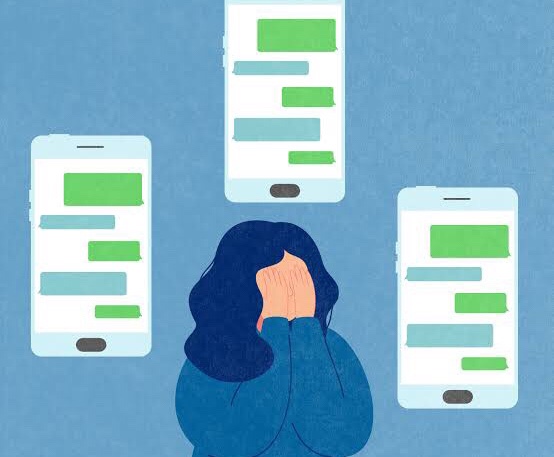
All you need to know about Cyberbullying ( and how to prevent it)

Cyberbullying, also known as cyberharassment, which happens using electronic means. It is also known as online bullying. It has become increasingly prevalent nowadays, especially among adolescents, as technology had advanced and the digital sphere has broadened. Cyber bullying occur on platforms like social media, chat rooms, and gaming sites where people can see and participate in sharing of content.

Cyber bullying is said to be happen, when someone bullies or harasses others on the internet and other digital spaces, usually on social media sites.

Cyber bullying behaviour involves posting threats, rumors, hateful comments on online platforms/apps, or via SMS or messaging in order to cause humiliation to other users. It includes posting, sending or sharing negative, Unpleasant or false information about an individual for causing humiliation and character assassination. It also involves posting threats, a victim’s personal information, hate speech or sexual remarks to someone on the internet.

Types of Cyber Bullying

An awareness of the different types of Cyberbullying is important. This helps parents and young adults to report cyber bullying and adopt various measures for the same. Following are some of the common types of cyber harassment:

• Trolling has become increasingly prevalent in these days and is the most common form of bullying that happens in an online community. This is done to evoke a reaction or disruption, or sometimes, even for personal amusement.

Cyberstalking is another type of bullying or harassment which involves electronic communications to stalk a victim; this may tend to be threatening to the victim.

• posting an embarrassing or unpleasant photo/video.

• faking identity online

• issuing online threats to hurt or provoke someone.

• posting hate comments or content triggering religious, racial, ethnic or political malice.

• Also Doxing, it is a practice common on the internet where personal information about an individual is reasearched and published. One finds out information from the person’s social media and other online platforms. It is then used for online defamation, harassment or other forms of cyber bullying.

Cyber Bullying in India 

Cyber bullying in India had increased prominently since availability of affordable data services and social media presence has increased. According to a research by Symantec, almost 8 out of 10 individuals are exposed to different types of internet bullying in India. Most of the victims are generally women and teenagers.

The same study categorises India as the country facing the highest cyber bullying in the Asia Pacific region, more than Australia and Japan.

Special Concerns

with the widespread presence of digital forums, social media websites, posts, comments, content shared by individual can be seen by strangers as well as acquaintances. Whatever content the individual shares online, be it personal or public, creates a kind of public record of their activities, views and behaviour. this can basically represents their personality, which may be accessible to schools, employers, college, clubs, and other institutions who may be researching an individual now or in the future. Cyberbullying can tamper the reputation of everyone involved, not just the the person being bullied but also those who are participating in the bullying. 

What can you do?

Ask for help: if you are experiencing any distress related to online bullying, reach out to someone for help. It maybe your friend, relative, colleague or someone you trust.

Use the technology to cut off the Bully: almost every social media site allows you to report or block someone. They also enable you to report inappropriate content or behaviour. 

Protect your Accounts: passwords are your private information. never share your passwords with anyone no matter who the person might be. Password protect your phone so that no one can use it for impersonation. 

Report Cyber Bullying: The Ministry of Women and Child Development launched a helpline to report cyber bullying/harassment, cyber defamation, especially for women and children as they are subject to cyberbullying the most. most institutions also have special faculty of development whom you may report to, about the bullying.

Helpline – complaint-mwcd@gov.in

Stop Spending So Much Time In Your Head

I know something about you without knowing you. I bet you spend A LOT of time in your head.

You know, thinking, worrying, stressing, freaking out — call it whatever you want. I call it a preoccupied mind. And with what?

99% of your thoughts are useless. William James put it best:

“A great many people think they are thinking when they are merely rearranging their prejudices.”

All my life I’ve been obsessed with practical things. Practical philosophy, practical knowledge, practical books, practical work, and practical advice.

That idea comes from Pragmatism, a philosophical tradition that started in the 19th century in America. Charles Sanders Peirce, who was a Harvard professor, is considered as the “father of Pragmatism.”

But it was William James, a trained physician turned philosopher, who really defined the philosophy.

About thoughts, worry, and stress, William James says:

“The greatest weapon against stress is our ability to choose one thought over another.”

Pragmatism believes that a mind is a tool. Your mind should work for you, not against you. People who don’t master their mind, don’t believe it’s possible.

Well, you can with enough practice. It’s a skill.

In other words: You have the ability to decide what you think. Or, you can choose NOT to think.

And that is one of the most important and most practical things you can learn in life. Before I learned that skill, I would spend hours and hours inside my head.

Just think about how much you think.

  • “I wonder what my boss thinks?”
  • “What happens if I screw up and lose my job?”
  • “Does she love me?”
  • “I think he doesn’t care about me.”
  • “I just keep failing.”

And the list goes on. That is all REAL shit. That’s stuff people tell me when I ask them what they worry about.

Do you know what those thoughts do to you? Guilt, anger, suffering

Thoughts have no use. 99% of them that is.Which thoughts are useful?

  1. Thinking about how you can solve problems. A problem is just an unanswered question. Put your brain to use and think about how you can solve problems. There are a lot of those on this earth.
  2. Understanding knowledge. That means this: Try to internalize knowledge and think about how you can use that knowledge to improve your life, career, work, relationships, etc.

That’s it. You can ignore every other thought.

If you’re constantly thinking, it’s because you haven’t’ trained your mind yet. You HAVE to get out of your head.

If not, you go mental. Everyone will. No exception.

Also, you’re probably thinking so much that you’re missing out on life. Did you notice the sunshine this morning when you woke up? Or the raindrops? Did you notice the smell of your coffee? Did you feel the texture of your cereals?

If your answer is no, you definitely need to get out of your head. Stop thinking and start feeling.

Now, you might think: “How do I train myself to stop thinking useless thoughts?”

Awareness.

That’s where it starts. Every time you start drifting off, become aware of it. Just observe your brain. Step outside yourself and just observe the crazy shit you’re thinking about.

Don’t judge. Don’t think you’re stupid. If you do that, you’re thinking again.

No, what you want to do is say this to yourself: “Ah that’s a great thought. Now, let’s get back to reality.”

Are you back to reality? Do you feel your eyes reading the letters on your screen? Do you feel your phone in your hand? Are you thinking about how you’re going to apply this information to your life?

Great. You’re USING your mind, and it’s not the other way around. Now, keep using that brain of yours.

Because I’ll tell you this: It’s the most powerful tool on earth

Safoora Zargar Needs Equal Attention As The Elephant Incident

Ever since the NCR act implementation came alive, the country was left with unprecedented anguish. The constitutional’s alarming move saw a full surge of student protests dispersing across the country and worldwide. Now a new incident came into light which has sparked outrage among the nation. 

As soon as the government announced lockdown due to the boost in Coronavirus outbreaks, several students and activists who actively lead a protest in Delhi were put behind bars amidst the lockdown. 

A 21-year-old MPhil student from Jamia Milia Islamia University, Safoora Zargar had been jailed for protesting against her rights as a citizen. The latter is currently nine months pregnant and has a condition of PCOS syndrome, which is widely common in women. 

The young female student has been facing a huge turmoil after her bail was rejected nearly four times. The law being enforced against the pregnant woman is clearly illegal but the judiciary don’t seem to mind breaking the rule when it comes to manning a particular community. 

Safoora was roughly booked under UAPA for allegedly steering the teacup of anti-CAA protest which took place in Delhi around February 2020. 

Comparing the elephant incident with Safoora one, Bollywood celebrity clad showed outrage on the elephant incident while blatantly ignoring the fact that a pregnant woman has been denied her human rights. The conclusion here clearly boasts that the a particular community is being brutally targeted with baseless reasoning to put forth by the rightists. 

E – learning: is it beneficial for all.

Now a days we are totally surrounded by technologies. Technologies has become an integral part of our lives and due to which our dependency on it increasing day by day. From waking up by using alarms to doing office work, doing assignments, playing games and many more day to day tasks, we are totally depend on technology.

E – learning also becoming very popular these days. E- learning is the delivery of any kind of knowledge (subjective knowledge or training) through digital platform. In this time of pandemic, E- learning proves very helpful for us. We can easily sit at their homes and attend their lecture, training etc. But this also led to difficulty to so many students as some students don’t have computer and laptop and some don’t have proper internet connection. So apart from the advantages of E-learning, it has some disadvantages too. It is boon for some whereas may be bain for others. So it is necessary to understand both the advantages and disadvantages of E-learning.

ADVANTAGES OF E-LEARNING

  1. FLEXIBILITY OF TIME- In E-learning we can easily sit at home and attend the lessons whenever we have time according to our comfortablility. We need not to go anywhere and attend lectures on time. It is also beneficial for those also who are doing job or attend some other class along with online lectures.
  2. SAVES MONEY- Online classes are cheaper than regular online classes. We can also save travelling money and time.
  3. LEARN AT OUR OWN PACE – Some students can’t pay attention to longer time and can’t able to understand in one time and if they take classes in some regular institute so there is a fix time in which you have to pay attention and understand the particular topic at the teachers pace. But in E-learning we have videos so we can watch it and can learn at our own pace whenever we feel comfortable. Apart from that some students like to learn at day time, some at the morning or night time. So online learning give them flexibility to learn in their individual style.
  4. LESS JUDGEMENTAL- Some students feel embarrassed to ask questions or doubts in front of the whole class but in online learning they are anonymous so there is no feeling of being judged and they can confidently ask their doubts.
  5. ENVIRONMENT FRIENDLY- E-learning saves tons of paper and textbooks and we know manufacturing of paper leads to cutting down of lots of trees, so it is cost efficient and saves our environment too.

DISADVANTAGES OF E-LEARNING

  1. NO FACE-TO-FACE INTERACTION- Face-to-face interaction leads to better understanding of the topic. Teacher can motivate students to perform better. Teachers can personally give them feedback which encourage them to improve but in E-learning students lack such feedbacks. They can only ask done doubts only and there is no personalized feedback. There is no face-to-face interaction so teacher is unable to understand whether the students getting the topic or not.
  2. NO SOCIAL INTERACTION- Learning is not only what we are studying or acquiring. It includes what we are learning through our peers, environment etc. In E-learning students get no opportunity to interact with anyone which limits their learning to knowledge which is being transmitted. In this they don’t have someone to talk, share their weaknesses, encourage them. There is no external motivation, so it sometimes leads to anxiety, isolation and depression.
  3. LIMITED TO SOME DISCIPLINE- It is good for subjects such as arts and humanities and other disciplines in which we have to do theory, but E-learning is not convinient for those subjects which include practicals. As practicals require proper setup which is nearly impossible in online classes.
  4. NO DIRECT ASSESSMENT- In online learning, assessments are taken indirectly, so there is higher chances of cheating and copying. So the real knowledge of the child cannot be assessed through this method.
  5. INACCESSIBLE TO SOME PEOPLE- Some people lack laptop, Android phone or Computer and some lack good internet so they are access this , so it is limited to only those people who can afford these technology.

So if I conclude E-learning as both advantage and disadvantage, it can prove boon for some people and bain for others. So whether we have to learn online or in regular institute, it totally depends on what our need is. It is necessary not to generalize one method of learning to everyone. People should be given opportunity to choose in which way they are comfortable in learning. The more ways we are finding to impart knowledge, the more people we are including to learn.

Don’t Let Down Your Image By Anger : Get Rid Of Your Anger

” Anger doesn’t solve anything it builds nothing but it can destroy everything” In some situation we overreact and tell something rude, something very wrong which was not told to the anyone, then you actually realise after sometime that whatever you did or say to the person is very wrong or react in very wrong manner. But that situation dominated us and this is out of control because at that time we don’t what we have to say or react in those situation and how we control it . Their is two different things

  1. How we control anger when we are angry.
  2. Another is that we can’t develop those situation or we reduce our anger or not getting angry too much .

Why we get angry or what is the cause of anger?????

  • We built some myth, perception in our mind or develop our own world about any person or about any topic , if someone say out of it so we get angry. You can take an example to understand this situation like you build an image or personality regarding yourself and someone come and say out of it which is different from your personality which you develop automatically you get angry.
  • Someone try to steal something from you , which is your favourite or very close to you. Like you pretend that this individual thing or person is yours so if anyone come and hold out those thing or person so you get Angry.
  • Their is person in your life whom you treat very nicely and politely but those person behaviour is not good with you they are not giving important to you , then you get angry a lot .
  • When you depend to someone or somethought and if anyone raise any question Mark on them so you get angry because you are habitual of that , this is included in your habits. From your child some thoughts build in your mind so leaving this thought and think out of it is not that much easy . Because this thought take a permanent space in your mind and you can’t take it off and if someone saying out of it you can’t bear.

Strong likes and strong dislikes hold your mind to get stick with this and this is the main cause of your anger. They generate a great emotions, strong reaction occurs and those reaction is out of control. After few times you realise that you are angry on very silly things and you react very badly or rudely. But sometimes their is some situation, point, limit where you have to be angry or take action on them. So say them strongly and strictly actually you are not angry from inside but you have to show your this part because this is more than limit or the person is going beyond the limits. So when you not angry on daily basis or not on each and every point and you are angry now so the person take it very seriously because normally you are very calm person but you angry on that point means this is big thing or some alter point.

Their is some cool and realistic way to control your anger and get out of it…..

1. Stay quite and count 10. I know you heard this already but this is realistic trick by which you control your anger . Just take an example and understand this like you order something which is your favourite and you are waiting a lot for this order because it takes too much time and then you suddenly see the waiter is coming with your order and just he about to reach to your table suddenly he drop your order than you start screaming on him it’s just a little mistake , which can happen with anyone with you also , image some guest come at your home and you drop anything in front of them and then the guest start screaming on you , you definitely don’t like it . Think about what you do with other , when you reacting like this you are simply putting people away from you. You are making things much bigger than they are actually , you are going to damage your public image . Staying quiet and count 10 firstly you calm down yourself and secondly you are able accept apology. 2. leave the situation alone when you have argument with your partner or with closed one and argument heated up and you are actually getting angry too much on this topic so leave the situation alone because you cannot stay their without screaming and without reacting. Leave yourself alone. Your mind pushing that say something bad or rude but just leave the situation alone , leave your thoughts alone, let go things which irritate you. If someone say something which you don’t like , instead of saying anything just leave the conservation and you save yourself from big trouble and other person also because if you stay in this conversation their is misunderstanding or bitterness occur in both of mind. 3.find some quite time practising calmness techniques and mindfulness. 4.Express your emotions when you keep things inside you for too long, frustration build up automatically. So talk about your feelings with friends and loved one. 5. Consume H2O Say if their is fire what you did you put water on it, if your hand is massed in glue you wash it from water, when you touch spice you wash your hand with water. Even we can’t survive without water. And our body is also made up of more than 70% water. It is scientifically proved that consuming water when you are angry it relax your nerves and help you to not outburst. And try to make you cool. So drink water and relax you mind. 6. Exercise Regularly Doing exercise regularly release hormones dopamine and serotonin into your body . Which is good for your health. 7.Train Your Mind to Be Patience if boss give you some work and you can’t wait to finish it because you want to see whether boss like it or not. You are habitual of instant result. You want things immediately. Relax hang on don’t be so impatience. Develop a waiting habit. 8. Let it go sometime we have no option but to let an issue go , even if you think is unfair. And you don’t want to spoil your relationship with the person and you don’t wanna win from the person just live with that Person . And you don’t want to create any issue or misunderstanding. 9.Keep a rubber band handy or laugh your anger off. You have to make fool yourself. Confuse your mind. Engage yourself in any other work, distract your mind from anger engage your hand in any work doing any activity or start laughing to forget your anger. Laughter is best medicine or therapy. You have to try this cooler approach. If you are in office or in meeting someone is telling your idea or saying any illogical thing just distract your mind from anger because you are in meeting ,you can hold your hand tightly, or move a pen or something else to just distract your mind. 10. Recognise the warning signs when you are angry, your heart rate rises you breathe faster , be vigilant do you can deal with symptoms before they build up. 11. Catch your breath try to slow your breath.

They all above are cool , realistic genuine idea to control on your anger or overcome it.

Water Pollution

Water pollution is a rising global crisis. According to the UN, today 2.1 Billion people live without safe drinking water. Nowadays water pollution is increasing at an alarming rate, which makes the use of water unsuitable for human consumption.Experts believe that India also face a huge challenge regarding water scarcity as they fear the country has just five years to solve its water crisis . Otherwise hundreds of millions of lives will be in danger. 

Water bodies can be polluted by a variety of substances including toxic chemicals, radioactive substances. etc but the main sources of water pollution include:

1.There are various sources of water pollution, but the domestic source is the primary reason for water contamination. Around 80% of water pollution is caused by untreated domestic sewage

2.Another source of pollution is the industrial effluents along with the raw, untreated sewage discharged from drains into the rivers and canals. Oil leaks from ships , pollutants released from processing plants and waste disposal areas , effluents from factories and industries using radioactive material have harmful effects on marine habitats such as if the level of water pollution increases vigorously then algae would flourish rapidly which releases dangerous toxins causing damage and harm to the fish, dolphins, sea turtles and other aquatic life.

3.A significant source for the pollution in the river Ganga is the dumping of dead bodies, animal carcasses, and corpses into the holy river. Washing of dirty things in the water, and human excreta along the river banks also contribute to pollution. Also a large number of dairy farms in urban areas discharge their wastes into the river.

4.India generates 26000 tonnes of plastic everyday , but 40% of it remains uncollected causing littering of the marine life and hazardous effects to river systems. Single use plastic is being used worldwide and is considered to be the main reason for land pollutants and water pollution.

5. Animal agriculture uses about 70% of agricultural land, and is one of the leading causes for deforestation and water pollution.

6. Mining also causes water pollution which includes metal contamination, increased sediment levels and acid mine drainage.

Various solutions and other implementable ways can be used to limit the pollution of our water resources. These include:

1.Organic farming ,expanding wetlands, growing mangroves reduces water pollution.

2.Capturing rainwater, reusing treated wastewater for irrigation along with proper sewage treatment and management curbs the water crisis.

3.Trees moderate air and water pollution, reduce heating and cooling costs, and provide shade and shelter. Afforestation helps in reduce water pollution and preventing soil erosion.

4.Dispose waste properly.

5. Plan an active role in conserving water. Spread awareness and support projects and initiatives for water treatment

Environmental monitoring shows that the 3 month nationwide lock down due to the corona virus outbreak has resulted in rivers shows sign of overall improvement in quality of water along with decreasing water pollution. Also the critically endangered , enigmatic South Asian River dolphin, or ‘Ganga dolphin’ has been spotted making a comeback to Kolkata with many experts citing intense river pollution is to be the main reason for the dolphins disappearance. 

Water remains the most essential mankind need that nature has so easily provided. Let’s all commit to conserving water, using it judiciously and helping the environment thrive.

George Floyd- What happened and what has happened since.

Racism, a word that’s on everyone’s lips these days. It refers to a systemic and mental prejudice against a particular group based on their looks, ethnicity etc. It’s a phenomenon that’s been around for several decades, it’s the thorn by the side of humankind that has hampered our enhancement. But why now, why the sudden uproar, why bring this issue to light so dramatically.

Photo by Kelly Lacy on Pexels.com

The hotspot for this issue started in Minneapolis, USA, which has an infamous record of police brutality and racism against those of African-American origin. Even within US Minneapolis has had a blatant disregard for the rights of African Americans since the last two decades. The death of George Floyd, a Minneapolis resident was the tipping point for all this. The police were called on Floyd regarding a suspected forgery of a $20 bill, what happened next was both sickening and disheartening. Derek Chauvin, one of the officers in charge of “arresting” Floyd was seen crushing his windpipe by the pavement. He has been involved in using excessive force 20 times out of which 19 included no disciplinary action against him. His offences include pulling a gun at a couple of kids due to their Nerf gun hitting a passer-by. The kids were verbally abused and were threatened by Chauvin. They later told a news outlet that they feel the only reason they are alive is because they weren’t black. So, him killing an African-American in cold blood as he begged him to breathe isn’t too farfetched. Initially as soon as Floyd was termed dead at a local hospital, the police department issued a statement that he “suffered a medical episode while struggling with officers,” however a video posted by a passer-by by the name of Darnella Frazier showed the world the actual truth, as the body cams of the police officers involved were suddenly heavily muted and redacted. The video showed how no sympathy was shown the poor man, who had moved from Houston to start his life anew. What followed were massive protests throughout the country and then the world. The movement involved a cry for reform and justice, justice for Floyd and all the other victims and reform so that no other person suffers like them. However, the response from the government was rather lukewarm, initially whenever the Hennepin County attorney was questioned about the call for an arrest of Chauvin their spokesperson would reply as it being discussed. This sparked a major outrage which led to riots and looting within many states in the US. The subsequent looting increased to such a point that the military was asked to guard various stores to ensure the stores safety. Various celebrities have spoken up about this issue and how devastated they are, especially amongst the African-American community. The brother of George Floyd, Philonise Floyd was asked about his thoughts regarding the movement and its association with looting and breaking of stores and he said  “I want everybody to be peaceful right now, but people are torn and hurt because they’re tired of seeing black men die, constantly, over and over again,” And I understand, and I see why a lot of people doing a lot of different things around the world. I don’t want them to lash out like this,” he added. “But I can’t stop people right now, because they have pain. They have the same pain I feel. I want everything to be peaceful, but I can’t make everybody be peaceful.”  How this episode follows is for all of us to see.

TERRORISM

The fundamentalist seeks to bring down a great deal more than buildings. Such people are against, to offer just a brief list, freedom of speech, a multi-party political system, universal adult suffrage, accountable government, Jews, homosexuals, women’s rights, pluralism, secularism, short skirts, dancing, beardlessness, evolution theory, sex. There are tyrants, not Muslims.

United Nations Secretary-General Kofi Annan has said that we should now define ourselves not only by what we are for but by what we are against. I would reverse that proposition, because in the present instance what we are against is a no brainer. Suicidist assassins ram wide-bodied aircraft into the World Trade Center and Pentagon and kill thousands of people: um, I’m against that. But what are we for? What will we risk our lives to defend? Can we unanimously concur that all the items in the preceding list — yes, even the short skirts and the dancing — are worth dying for?

The fundamentalist believes that we believe in nothing. In his world-view, he has his absolute certainties, while we are sunk in sybaritic indulgences. To prove him wrong, we must first know that he is wrong. We must agree on what matters: kissing in public places, bacon sandwiches, disagreement, cutting-edge fashion, literature, generosity, water, a more equitable distribution of the world’s resources, movies, music, freedom of thought, beauty, love. These will be our weapons. Not by making war but by the unafraid way we choose to live shall we defeat them.

How to defeat terrorism? Don’t be terrorized. Don’t let fear rule your life. Even if you are scared.

Terrorism, the calculated use of violence to create a general climate of fear in a population and thereby to bring about a particular political objective. Terrorism has been practiced by political organizations with both rightist and leftist objectives, by nationalistic and religious groups, by revolutionaries, and even by state institutions such as armies, intelligence services, and police.

Definitions of terrorism are usually complex and controversial, and, because of the inherent ferocity and violence of terrorism, the term in its popular usage has developed an intense stigma. It was first coined in the 1790s to refer to the terror used during the French Revolution by the revolutionaries against their opponents. The Jacobin party of Maximilien Robespierre carried out a Reign of Terror involving mass executions by the guillotine. Although terrorism in this usage implies an act of violence by a state against its domestic enemies, since the 20th century the term has been applied most frequently to violence aimed, either directly or indirectly, at governments in an effort to influence policy or topple an existing regime.

Terrorism is not legally defined in all jurisdictions; the statutes that do exist, however, generally share some common elements. Terrorism involves the use or threat of violence and seeks to create fear, not just within the direct victims but among a wide audience. The degree to which it relies on fear distinguishes terrorism from both conventional and guerrilla warfare. Although conventional military forces invariably engage in psychological warfare against the enemy, their principal means of victory is strength of arms. Similarly, guerrilla forces, which often rely on acts of terror and other forms of propaganda, aim at military victory and occasionally succeed (e.g., the Viet Cong in Vietnam and the Khmer Rouge in Cambodia). Terrorism proper is thus the calculated use of violence to generate fear, and thereby to achieve political goals, when direct military victory is not possible. This has led some social scientists to refer to guerrilla warfare as the “weapon of the weak” and terrorism as the “weapon of the weakest.”

In order to attract and maintain the publicity necessary to generate widespread fear, terrorists must engage in increasingly dramatic, violent, and high-profile attacks. These have included hijackings, hostage takings, kidnappings, mass shootings, car bombings, and, frequently, suicide bombings. Although apparently random, the victims and locations of terrorist attacks often are carefully selected for their shock value. Schools, shopping centres, bus and train stations, and restaurants and nightclubs have been targeted both because they attract large crowds and because they are places with which members of the civilian population are familiar and in which they feel at ease. The goal of terrorism generally is to destroy the public’s sense of security in the places most familiar to them. Major targets sometimes also include buildings or other locations that are important economic or political symbols, such as embassies or military installations. The hope of the terrorist is that the sense of terror these acts engender will induce the population to pressure political leaders toward a specific political end.

Some definitions treat all acts of terrorism, regardless of their political motivations, as simple criminal activity. For example, the U.S. Federal Bureau of Investigation (FBI) defines both international and domestic terrorism as involving “violent, criminal acts.” The element of criminality, however, is problematic, because it does not distinguish among different political and legal systems and thus cannot account for cases in which violent attacks against a government may be legitimate. A frequently mentioned example is the African National Congress (ANC) of South Africa, which committed violent actions against that country’s apartheid government but commanded broad sympathy throughout the world. Another example is the Resistance movement against the Nazi occupation of France during World War II.

Since the 20th century, ideology and political opportunism have led a number of countries to engage in international terrorism, often under the guise of supporting movements of national liberation. (Hence, it became a common saying that “One man’s terrorist is another man’s freedom fighter.”) The distinction between terrorism and other forms of political violence became blurred—particularly as many guerrilla groups often employed terrorist tactics—and issues of jurisdiction and legality were similarly obscured.

These problems have led some social scientists to adopt a definition of terrorism based not on criminality but on the fact that the victims of terrorist violence are most often innocent civilians. Even this definition is flexible, however, and on occasion it has been expanded to include various other factors, such as that terrorist acts are clandestine or surreptitious and that terrorist acts are intended to create an overwhelming sense of fear.

In the late 20th century, the term ecoterrorism was used to describe acts of environmental destruction committed in order to further a political goal or as an act of war, such as the burning of Kuwaiti oil wells by the Iraqi army during the Persian Gulf War. The term also was applied to certain environmentally benign though criminal acts, such as the spiking of lumber trees, intended to disrupt or prevent activities allegedly harmful to the environment.

Various attempts have been made to distinguish among types of terrorist activities. It is vital to bear in mind, however, that there are many kinds of terrorist movements, and no single theory can cover them all. Not only are the aims, members, beliefs, and resources of groups engaged in terrorism extremely diverse, but so are the political contexts of their campaigns. One popular typology identifies three broad classes of terrorism: revolutionary, subrevolutionary, and establishment. Although this typology has been criticized as inexhaustive, it provides a useful framework for understanding and evaluating terrorist activities.

Revolutionary terrorism is arguably the most common form. Practitioners of this type of terrorism seek the complete abolition of a political system and its replacement with new structures. Modern instances of such activity include campaigns by the Italian Red Brigades, the German Red Army Faction (Baader-Meinhof Gang), the Basque separatist group ETA, the Peruvian Shining Path (Sendero Luminoso), and ISIL (the Islamic State in Iraq and the Levant; also known as the Islamic State in Iraq and Syria [ISIS]). Subrevolutionary terrorism is rather less common. It is used not to overthrow an existing regime but to modify the existing sociopolitical structure. Since this modification is often accomplished through the threat of deposing the existing regime, subrevolutionary groups are somewhat more difficult to identify. An example can be seen in the ANC and its campaign to end apartheid in South Africa.

Establishment terrorism, often called state or state-sponsored terrorism, is employed by governments—or more often by factions within governments—against that government’s citizens, against factions within the government, or against foreign governments or groups. This type of terrorism is very common but difficult to identify, mainly because the state’s support is always clandestine. The Soviet Union and its allies allegedly engaged in widespread support of international terrorism during the Cold War; in the 1980s the United States supported rebel groups in Africa that allegedly engaged in acts of terrorism, such as UNITA (the National Union for the Total Independence of Angola); and various Muslim countries (e.g., Iran and Syria) purportedly provided logistical and financial aid to Islamic revolutionary groups engaged in campaigns against Israel, the United States, and some Muslim countries in the late 20th and early 21st centuries.
Terrorism, the calculated use of violence to create a general climate of fear in a population and thereby to bring about a particular political objective. Terrorism has been practiced by political organizations with both rightist and leftist objectives, by nationalistic and religious groups, by revolutionaries, and even by state institutions such as armies, intelligence services, and police.
Definitions Of Terrorism
Definitions of terrorism are usually complex and controversial, and, because of the inherent ferocity and violence of terrorism, the term in its popular usage has developed an intense stigma. It was first coined in the 1790s to refer to the terror used during the French Revolution by the revolutionaries against their opponents. The Jacobin party of Maximilien Robespierre carried out a Reign of Terror involving mass executions by the guillotine. Although terrorism in this usage implies an act of violence by a state against its domestic enemies, since the 20th century the term has been applied most frequently to violence aimed, either directly or indirectly, at governments in an effort to influence policy or topple an existing regime.
Terrorism is not legally defined in all jurisdictions; the statutes that do exist, however, generally share some common elements. Terrorism involves the use or threat of violence and seeks to create fear, not just within the direct victims but among a wide audience. The degree to which it relies on fear distinguishes terrorism from both conventional and guerrilla warfare. Although conventional military forces invariably engage in psychological warfare against the enemy, their principal means of victory is strength of arms. Similarly, guerrilla forces, which often rely on acts of terror and other forms of propaganda, aim at military victory and occasionally succeed (e.g., the Viet Cong in Vietnam and the Khmer Rouge in Cambodia). Terrorism proper is thus the calculated use of violence to generate fear, and thereby to achieve political goals, when direct military victory is not possible. This has led some social scientists to refer to guerrilla warfare as the “weapon of the weak” and terrorism as the “weapon of the weakest.”

In order to attract and maintain the publicity necessary to generate widespread fear, terrorists must engage in increasingly dramatic, violent, and high-profile attacks. These have included hijackings, hostage takings, kidnappings, mass shootings, car bombings, and, frequently, suicide bombings. Although apparently random, the victims and locations of terrorist attacks often are carefully selected for their shock value. Schools, shopping centres, bus and train stations, and restaurants and nightclubs have been targeted both because they attract large crowds and because they are places with which members of the civilian population are familiar and in which they feel at ease. The goal of terrorism generally is to destroy the public’s sense of security in the places most familiar to them. Major targets sometimes also include buildings or other locations that are important economic or political symbols, such as embassies or military installations. The hope of the terrorist is that the sense of terror these acts engender will induce the population to pressure political leaders toward a specific political end.
An Indian policeman firing a shot during a 12-hour-long gun battle in the town of Dinanagar, in the northern state of Punjab, India, July 27, 2015. Three armed gunmen attacked a police station, killing four police officers and three civilians before succumbing to the counterassault by local police.
Some definitions treat all acts of terrorism, regardless of their political motivations, as simple criminal activity. For example, the U.S. Federal Bureau of Investigation (FBI) defines both international and domestic terrorism as involving “violent, criminal acts.” The element of criminality, however, is problematic, because it does not distinguish among different political and legal systems and thus cannot account for cases in which violent attacks against a government may be legitimate. A frequently mentioned example is the African National Congress (ANC) of South Africa, which committed violent actions against that country’s apartheid government but commanded broad sympathy throughout the world. Another example is the Resistance movement against the Nazi occupation of France during World War II.

Since the 20th century, ideology and political opportunism have led a number of countries to engage in international terrorism, often under the guise of supporting movements of national liberation. (Hence, it became a common saying that “One man’s terrorist is another man’s freedom fighter.”) The distinction between terrorism and other forms of political violence became blurred—particularly as many guerrilla groups often employed terrorist tactics—and issues of jurisdiction and legality were similarly obscured.

These problems have led some social scientists to adopt a definition of terrorism based not on criminality but on the fact that the victims of terrorist violence are most often innocent civilians. Even this definition is flexible, however, and on occasion it has been expanded to include various other factors, such as that terrorist acts are clandestine or surreptitious and that terrorist acts are intended to create an overwhelming sense of fear.

In the late 20th century, the term ecoterrorism was used to describe acts of environmental destruction committed in order to further a political goal or as an act of war, such as the burning of Kuwaiti oil wells by the Iraqi army during the Persian Gulf War. The term also was applied to certain environmentally benign though criminal acts, such as the spiking of lumber trees, intended to disrupt or prevent activities allegedly harmful to the environment.
Various attempts have been made to distinguish among types of terrorist activities. It is vital to bear in mind, however, that there are many kinds of terrorist movements, and no single theory can cover them all. Not only are the aims, members, beliefs, and resources of groups engaged in terrorism extremely diverse, but so are the political contexts of their campaigns. One popular typology identifies three broad classes of terrorism: revolutionary, subrevolutionary, and establishment. Although this typology has been criticized as inexhaustive, it provides a useful framework for understanding and evaluating terrorist activities.
Revolutionary terrorism is arguably the most common form. Practitioners of this type of terrorism seek the complete abolition of a political system and its replacement with new structures. Modern instances of such activity include campaigns by the Italian Red Brigades, the German Red Army Faction (Baader-Meinhof Gang), the Basque separatist group ETA, the Peruvian Shining Path (Sendero Luminoso), and ISIL (the Islamic State in Iraq and the Levant; also known as the Islamic State in Iraq and Syria [ISIS]). Subrevolutionary terrorism is rather less common. It is used not to overthrow an existing regime but to modify the existing sociopolitical structure. Since this modification is often accomplished through the threat of deposing the existing regime, subrevolutionary groups are somewhat more difficult to identify. An example can be seen in the ANC and its campaign to end apartheid in South Africa.

Establishment terrorism, often called state or state-sponsored terrorism, is employed by governments—or more often by factions within governments—against that government’s citizens, against factions within the government, or against foreign governments or groups. This type of terrorism is very common but difficult to identify, mainly because the state’s support is always clandestine. The Soviet Union and its allies allegedly engaged in widespread support of international terrorism during the Cold War; in the 1980s the United States supported rebel groups in Africa that allegedly engaged in acts of terrorism, such as UNITA (the National Union for the Total Independence of Angola); and various Muslim countries (e.g., Iran and Syria) purportedly provided logistical and financial aid to Islamic revolutionary groups engaged in campaigns against Israel, the United States, and some Muslim countries in the late 20th and early 21st centuries.

The military dictatorships in Brazil (1964–85), Chile (1973–90) and Argentina (1976–83) committed acts of state terrorism against their own populations. The violent police states of Joseph Stalin in the Soviet Union and Saddam Hussein in Iraq are examples of countries in which one organ of the government—often either the executive branch or the intelligence establishment—engaged in widespread terror against not only the population but also other organs of the government, including the military.

The persistent element of all forms of establishment terrorism, unlike that of nonstate terrorism, is that of secrecy. States invariably seek to disavow their active complicity in such acts, both to evade international censure and to avoid political and military retribution by those they target.

Terrorism appears to be an enduring feature of political life. Even prior to the September 11 attacks, there was widespread concern that terrorists might escalate their destructive power to vastly greater proportions by using weapons of mass destruction—including nuclear, biological, or chemical weapons—as did the Japanese doomsday cult AUM Shinrikyo, which released nerve gas into a Tokyo subway in 1995. These fears were intensified after September 11, when a number of letters contaminated with anthrax were delivered to political leaders and journalists in the United States, leading to several deaths. U.S. Pres. George W. Bush made a broad “war against terrorism” the centrepiece of U.S. foreign policy at the beginning of the 21st century


Wake up, your child is going to do suicide

“If my parents understood my dreams than today I won’t be stealthy sitting on roof and writing this blog.”

So, you are a parent, if not than at one stage of life you’ll be ( but for now just read and share it with a parent). Every parent has great GREAT expectations from their offspring and sometimes that desire becomes so pressurizing that it takes the toll of the life of that little angel.

How many of you asked your child what he or she wants to become well many of you haven’t and in a rare case if you have, I am sorry to say that you didn’t took that seriously.

A child of 21st century is none less than the most busiest person on Earth, schooling, coaching, homework and much more trouble some tasks are a part of their life and after all that when they get the night time to rest, they wander in the land of dreams; the world that’s their own, they make ambitions and set goals for their life.

But do you even know the amount of grief and misery that your child feels when you say a crisp clear NO to them when they beg you to let them achieve what they want ?

Let me talk in statistics. Globally Around 65000 kids committed suicide in 2019 just because their parents didn’t allowed them to study in the field of their choice.

Just imagine the condition of a student who passed school working hard so that he could take admission in his dream college. But guess what, his CARING parents deny him that because the college is in another city . WTF, like seriously, we kids work our ass whole childhood to satisfy your marks hungry taste buds and what we get in return, a big rejection on our dreams.


As a parent your worries and thinking of well being of ur kid is justified. But you have to understand that the dreams and choice of your child also matters, afterall it’s them who would be studying and if they want to pursue a field of their choice then why deny it to them and become the reason of them going into depression or at worse, commuting suicide.


Parents, you have to understand this, your child knows his interests more than you or anyone else. Please, you just can’t put an end on their life by making them give up on their dreams.

Just go and talk to them, understand what ur child wants. Otherwise the day is not far when your child will cry silently in night and will fear to meet eye with people and will curse his very existence like I do. Please parents, wake up .


Lockdown: A Reset button for nature

People were very anxious due to the lockdown, they were bored of sitting at home, they didn’t had work to do, many of the people even lost their jobs especially labours, many people didn’t had food to eat although government had been trying hard to supply food and other essentials to every needy, and many celebrities and even common people were trying to help poors, providing them with food, masks, sanitiser which were very important at the time of corona, making them reach their homes.

People were abusing the corona virus for making them locked up in their homes, but one thing which the government had been trying to do for so many years, there were so many policies regarding that, a lot of fund has been given to that, but none of these worked but it happened now, that is clean environment, clean rivers,  decreasing pollution, decreasing global warming and so many more things. A lot of fund had been given to these campaigns but they didn’t showed much effect, but this corona virus did. This showed that it is the right of the nature to be clean but we humans for our own good destroyed it to the extreme level but the nature always finds its way through different means to retain itself as it is, clean and tidy.

The Biggest concern of Indian government to clean river ganga has been done by this lockdown. The ganga is clean to such extent that aquatic animals can be seen easily through naked eyes. Dissolved oxygen content has been increased which is necessary for aquatic animals to survive and even to clean the river through biodegradable decomposition when waste water from the industries enter into the rivers.

Biochemical oxygen demand has been decreased which is the amount of oxygen required to clean the river through biodegradable decomposition.
Even the ozone layer healed itself, the largest hole in the ozone layer healed during lockdown due to decrement of  harmful gases present in atmosphere.
During lockdown, marine lives were seen to be back on beaches, due to absence of humans, due to no interference of humans in nature cycle.

Nature has been giving us warning through many small natural disasters but we humans didn’t changed, so nature had to take such severe step to heal itself. This positive impact on environment showed us that nature can be healed as it was before the human, it’s not too late, stop now, stop disturbing nature otherwise it will disturb you completely, so live peacefully and let nature live peacefully too.

Beyond the Ivory Tower: New Role of Higher Academic Institutions in Crisis Situations

COVID-19 and natural disaster have provided new opportunities for the higher academic institutions of India to demonstrate their social relevance and potential for outreach beyond purely academic activities. Let us have some glimpses.

As part of negotiating the pandemic threat St. Xavier’s College (SXC), Mumbai, has provided its auditorium hall, canteen and the Xavier Institute of Management and Research terrace to Brihanmumbai Municipal Corporation to set up a 160-bed quarantine centre for fourteen day- isolation. The college has started a helpline number with six professional counsellors, twenty three faculty and six Jesuits. The purpose is to guide the students who are stuck at home, confused about the dates of semester examinations and admission.  The college has sent around Rs. 1,75,000 worth of medical equipment through Urja Foundation to Kasturba Hospital to fight against COVID-19. SXC sent around 1000 food bags to Mumbai Dharavi, adequate for a family of five for ten days. Rs. 1 lakh worth of plastic face visors have been sponsored by SXC for the police. The college also sent Rs. 30,000 to Maharashtra Prabhodhan Seva Mandal, Nashik, for aid work with migrants.

IIT Delhi incidentally was the first higher education institution to receive approval from the Indian Council for Medical Research (ICMR) for a polymerase chain reaction for COVID-19. It is issuing non-exclusive licenses to half-dozen companies. There are more than 200 projects issued by the IIT. One of the projects is Project Isaac, which encourages students to research on COVID-19 or open start-ups and much more.

Super cyclone Amphan, with its 135 km/hr strong wind, played havoc in the southern parts of West Bengal. It destroyed over hundred homes in South 24-Parganas district. Former students of St. Xavier’s College, Kolkata, gathered fund to repair houses of the villagers. The houses belong to the students of the Raghabpur campus of the college, who are from the marginalised rural section of the society. The strong wind blew away the roofs of the houses and fell thousand of giant trees which crashed on lot of houses. The college campus gave shelter to many families before the cyclone struck on 20 May, as a precautionary measure. A project called ‘Gift a Roof’ has been started by the volunteers of St. Xavier’s College Alumni Association, which conducted a door-to-door survey to detect the damage caused. More than Rs. 8 lakh has been given to the affected families of students to repair the homes by sending money directly to their bank accounts. The villagers were also provided with safe drinking water immediately after the super cyclone.

Jadavpur University, Kolkata, has constituted a committee to try and preserve a few out of 181 trees uprooted by the Super cyclone Amphan. The giant trees like banyan, peepal, mahogany and many more were ripped apart and blocked the concrete driveways in the 58-acre campus. The committee has the representatives of National Medicinal Plant Board and teachers of the campus, who have joined hands to try to revive some fallen trees without disposing them. The committee has straightened eighteen trees with the help of a chain pulley. The surviving trees are given fungicides to the roots to kill the infection. The roots of fallen trees will receive hormone treatment to stay alive. The members are building up stacking which is required to support the repaired trees with external props.

The few instances reveal that higher academic institutions during the crisis times are involving themselves directly in facilitating the struggle of survival of the vulnerable sections of the society and also in saving environment. Such activities contribute much more to their societal presence and goes on to increase their credibility.

What should be the main concern? Corona or Unemployment

What is the main reason behind our fear? Is it media, or the public fear or any other reason. We are making our opinions based on the information conveyed to us. Who takes the responsibility that information conveyed is correct? It is basically the incomplete information which we are receiving on the daily basis. Once we get the clear understanding that what is actually happening around us then this may happen that our fear is reduced a bit. Current scenario says that we have around 2,00,000 cases in India, more than 5000 people are dead, out of 40 lakh people being tested. The most important thing to understand is that what is the role of testing and what is the connection of the fear with it? If the question is asked to someone that what is the reason behind his/her fear? The answer would be because of the number of deaths. It must be noted that the death rate is 3% which means the ratio is 3:100. Is it true?

The population of India is 135 crore. Out of 135 crore people, testing is done only of 40 lakh people which is not even 1%. So out of 40 lakh people being tested, 2,00,000 cases are found positive. So, in this way the calculation went wrong. Each one of us is focusing upon the number of deaths and number of positive cases emerging on the daily basis. But, no one is noticing that these cases are growing as the number of tests are increasing so there arises a need that the actual death rate needs to be calculated. Thus, the decision should be made on that basis.

We do not need to under-report the number of deaths. Instead over-reporting can be done. People in India die in accidents more than they are dying due to Corona. We are actually setting up only the mathematical modelling of the figures. We don’t have the correct information conveyed to us. If the death rate is 0.01 % then why are we scared. Shouldn’t we be scared of other important things? Yes, unemployment should be our matter of concern. In one of the articles, it was mentioned that around 13 crore people are unemployed. We must be scared of this figure. It means that out of economic point of view, this 13 crore people would be spending in limit. Lacs of industries are already in trouble because their demands are getting reduced at the economic level. This will lead to the reduction of supply. Hence, unemployment would rise.

Everyone is trying to increase the fear among the people. Instead we must make efforts to remove the unemployment from the country and help the needy ones. The solution is that only the critical cases need to be tested. People having mild symptoms of Corona can be quarantined at home. Since, it is clearly analysed that it is nearly impossible to test the whole country then why the tests are increased on a daily basis? The death rate is less. So, reality is that we must focus more on the people who have lost their jobs in this pandemic.

SELF LOVE

Do you love someone? Does he/she is more important than your own? Do you take time for yourself? Do you love yourself prior to anyone? Do yo make yourself happy?

Well, You should love yourself prior to anyone else. You should take time for yourself. ‘You’ should be important to yourself. You should do things that makes you happy.

The first thing you should do in the morning is to make yourself smile. Eat your favourite food. Go to your favourite place. And do whatever makes you happy.

There are many people who’ll put you down in the life, but chin up princess you are born to shine. No matter what people say about you, you always remember this that people talk about them who have positive character, so, don’t worry and chill. Sometimes people bitch about you and sometimes they appreciate you, but throughout you should appreciate yourself and make all the efforts to make yourself up above all. Never underestimate yourself. You were made with love, so, spread love. Don’t listen to anybody, just do what makes you feel beautiful.

There is one quote, it is personally my favourite, and I have selected it as my phone’s wallpaper, it says “ I will do amazing, I will be amazing, I will be happy and make myself proud”. In short, it says that you are amazing and you will make yourself happy and very proud.

NEED OF FINANCIAL SUPPORT OF GOVERNMENT TO EDUCATION SECTOR

COVID-19 has halted all the productive sectors of economy resulting in financial imbalance. However, a unique sector that has emotions of our kids attached to it is their school, where they prepare themselves for the future. The teachers too have been forced to stay away from the school due to COVID-19 outbreak.

We have been hearing that government is providing some financial relief to certain sector. However, there is a necessity to provide some relief to the education sector too. Many educational institutes have taken loan to cater for variety of courses of instructions. The teachers of private and public educational institutes require support of the government, so that they can survive this tough phase. All the educational institutes and the staff working there needs to be supported financially for the time being.

We should ensure a respectful and dignified life for the teachers and support them to be stable and stay cheerful so that they develop the patience required to conduct the online classes for a longer period. A committee of educationist can be set up to look in to the concept of providing insurance cover against the Coronavirus to the school staff and the students. The government can include the public and private education sector in the list of sectors requiring economical support. Education sector has suffered financially and emotionally too.

A minimum financial help can be provided to all the teachers belonging to private sector on priority as it is a fact that they have not received their salaries since lock down was imposed from the month of March 2020.The plight of private school teachers has increased as these schools are totally dependent on fees from the parents.The management running the schools can support the teachers and hold their hands during this period of financial and health related crisis caused due to spread of Coronavirus.

The policies to hire and retain the teachers needs to be strengthened and redefined in the light of certain evil practices of hiring that are in vogue and have been in practiced. Such practices go unchecked specifically in the private hiring of the teachers. Hiring agencies are providing teachers to educational institutes at times overlooking all the laid down rules by the government. Though the efforts of private schools is commendable in contributing positively towards the growth of the students and in turn that of the society, certain scope of improvement in terms of treating teachers with respect exists. As a onetime special case some financial support can definitely be extended to the teachers so that they can support themselves during this uncertain lock downs due to COVID-19 spread.

A complete redefining of education sector can be done and many issues or evil practices that have intruded the system can be resolved and a new energy can be given to education sector for its revival. All the stakeholders need to accept the change for the betterment of students. The government has a greater role to play in this scenario and should come up with flexible policies for the revival of the education industry that can include granting subsidy to the educational institutes and extending some financial help to the teachers. The risk of COVID-19 is still there in the environment. We all have to treat this situation as an opportunity to learn.

Benefits of waking up early

Early to bed and early to rise makes a man healthy, wealthy and wise”, a very famous quote by Benjamin Franklin which I am sure we all have heard of but most of the people do not apply this in real life. Amid lockdown and with comparatively less work to do, our bodies do not feel tired enough to sleep early. But once you start waking up early and following an organised sleep schedule, your body will feel good, your mood will be better and people around you will be able to sense it.

After talking to a few teenagers, it was seen that almost everyone’s sleep schedule has been poor. Usually people are awake until 5 am and it is their normal routine pattern these days. 

The main reason for sleeping late is the inactivity in the body. As everyone has been home, we do not do much physical activity and our bodies do not feel tired enough to doze off early at night. Another reason is the constant use of the phone all night where time passes so quickly. Before they notice or feel sleepy, it is 5 am. 


Here are a few health benefits of going to sleep on time and waking up early-

  1. Body feels fresh and energetic: Once you start waking up early you will have an immense sense of pleasure. It makes the body feel fresh and energetic and you will not feel lazy instead you will be full of energy. You will also feel happier and healthier as your body is more alert in the morning. 
  2. More organised schedule: Waking up early will make your schedule more organised and you will have a positive outlook towards your day and everyone around you. It is healthy to have an organised schedule as you will have more time in the day and you can be more productive. 
  3. Healthy eating: When you wake up early, you will have time for breakfast. Breakfast is one of the most important meals of the day that no one should miss. Once you have your breakfast on time, you will automatically have rest of your meals on time too. Eating healthy and eating on time is essential for a good and healthy body. 
  4. Morning is comparatively more peaceful, bright and positive: Many people prefer fewer distractions while working, waking up early and doing your work is a good way as mornings are peaceful, calm and distraction free. 
  5. More productivity: When you wake up early, your day feels big, meaning more time to do things. You can also take out time for things you thought you did not have time for. You can work on yourself by doing some exercise, as you have time extra now. Exercising also makes your body healthy and keeps you fit. 
  6. Mind feels healthy: It is important for our body as well as our mind to sleep and wake up on time. Once you try waking up on time. You will notice your mind feels healthy and you will automatically refrain yourself from negativity.