Antibacterial Chemotherapy refers to the use of any chemical or drug for the treatment of bacterial diseases. It is the part of antimicrobial chemotherapy. Antimicrobial chemotherapy can be divided into several branches on the basis of type of pathogen, for e.g. For bacterial pathogen – Antibacterial Chemotherapy For viral pathogen – Antiviral Chemotherapy For fungal pathogen – Antifungal Chemotherapy, etc
ANTIMICROBIAL CHEMOTHERAPY – Chemotherapy may either mean involvement of any drug that fight against any cancerous cell or it may involve the use of any antimicrobial drug to cure diseases caused by infectious microorganisms or pathogens. Antimicrobial drugs work by different mechanisms for different type of organisms. The overall mechanism by which any antimicrobial drug functions is by interfering with the structure and/or function of microorganisms. They either directly kill microbial cell or function by inhibiting their growth.
DEVELOPMENT OF ANTIMICROBIAL CHEMOTHERAPY The development of chemotherapy has been known to begin with the successful research of a German physician, Paul Ehrlich (1854-1915). Ehrlich was always fascinated to learn more about the dyes that bind to and stain the microbial cells. He was sure and stated that one of the dyes could be used as a chemical that would selectively destroy or kill the infectious pathogen inside the human body without making any harm to human cell and he named it “Magic Bullet”. Working more on this, he was able to find that the dye, trypsan red was active against the trypanosome that causes African Sleeping Sickness. Later, Ehrlich with his assistant Sahachiro Hata tested a variety of arsenic-based chemicals on Syphilis-infected rabbits and was successful in finding that Arsphenamine (an arsenic based chemical compound) was active against the Syphilis spirochete which was then made available in the market. The other German scientist, Domagk in 1927 found the another Magic Bullet to treat diseases. He observed the antimicrobial activity of a synthetic dye, Prontosil Red which was able to cure Streptococcal and Staphylococcal infections with very limited toxicity. Sulfanilamide (one of the active breakdown products of prontosil in body) was the first synthetic antimicrobial drug.
A Synthetic Antimicrobial is a drug that is developed from any type of a chemical compound that is not found in nature.
Penicillin was the first naturally synthesized antibiotic which was initially discovered by a 21 years old French medical student. No one remembered his work until Alexander Fleming in September 1928 accidently rediscovered the antibiotic. The petri plate of Staphylococcus which was inoculated by Fleming was found to develop certain molds which made the clear zone of inhibition of staph-bacterial species around them. It was meant that the mold infected the petri plates even before the bacteria were inoculated. Fleming suggested that the mold (probably the strain of Penicillium notatum) produced a substance which inhibited the bacterial growth surrounding it and hence had an antibacterial property. Further experiment results concluded that Penicillin was active against streptococci, meningococci and Corynebacterium diphtheriae, which is the causative agent of diphtheria. The isolation, mass production and purification of penicillin were accomplished by Howard Florey and Ernst Chain for which they got the nobel prize. They found that the penicillin once pured was effectively able to show antimicrobial properties against streptococcal infection in mice. Later, Dorothy Hodgkin observed and analyzed the structure of various naturally synthesized products using X-rays. Because of her observation on the chemical structure of naturally synthesized penicillin, it was easier for many scientists to produce a variety of semi synthetic penicillin.
A semisynthetic antimicrobial is defined as the chemically modified product of a natural antibiotic.
After the discovery of penicillin, other scientists got the determination for the discovery of more antibiotics by natural or chemical synthesis. Selman Waksman developed a new antibiotic, Streptomycin which was produced by the actinomycete, Streptomyces griseus. This antibiotic was discovered by the soil microorganisms, particularly bacteria and fungi. It was the first discovery of antibiotic- producing soil microorganism. It was found that streptomycin was successful in treating tuberculosis. Other microorganisms producing chloramphenicol, neomycin, terramycin and tetracycline were also isolated later.
After the recent incident, where a pregnant elephant died in Kerala after a fruit filled with firecrackers burst in her mouth, triggered nation-wide outrage, a video of a pregnant cow injured in a similar fashion has been circulating on social media. In the video being shared online, one Gurdiyal Singh, a resident of Himachal Pradesh, who claims to be the owner of the injured pregnant cow, describes how the cow’s mouth had been injured after one Nandlal fed her explosives.
Owner of the preganant cow blames neighbour for the brutal act
Meanwhile, Gurdiyal Singh confirmed that Nandlal, the alleged accused, works as a mechanic in Singh’s neighbourhood. Singh said that Nandlal has no remorse for his action. Nandlal has said that he is not scared of the repercussions and that he will continue to do whatever he deems fit. “Even the village sarpanch cannot harm me”, challenged Nandlal when confronted by Singh.
The video of this brutal act was circulated soon after social media was aflutter with outrage and anger over the demise of an elephant in Kerala. Amid outrage, the district police on Thursday (June 4) constituted a special investigation team under a DSP-rank officer to probe the matter.
One suspect arrested in Kerala elephant killing case
The forest department in Kerala has arrested one suspect in the case of death of a pregnant wild elephant in Kerala. The person is being interrogated in the matter. The elephant had died after she was fed a pineapple filled with firecrackers by some villagers.
The autopsy report of the dead elephant has revealed that the crackers stuffed in the pineapple which was fed to the elephant burst in her mouth leading to severe injuries. The elephant was not able to eat anything due to the deep wounds, due to which she fell and drowned due to weakness. The elephant’s preliminary post-mortem examination was conducted at the Mannarkkad Forest Division. It revealed that the animal died as a result of drowning, followed by inhalation of water which led to lung failure. This has been identified as the immediate cause of the death of the elephant.
The investigation in the case has been moving on a faster pace and the forest department has started interrogating the suspect in custody. As per reports, three people are under suspicion of feeding the pineapple full of crackers.
Pregnant elephant dies in Kerala after cracker-filled pineapple burst in its mouth
Recently, in an act of utmost cruelty, a pregnant elephant had died after some locals fed her cracker-filled pineapple which later exploded in her mouth. The incident took place in Malappuram district of Kerala when the elephant had wandered into a village in search of food. It is being believed that some villagers stuffed pineapples filled with firecrackers on her tusks while she was walking on the streets.
From anybody who throws stones at stray dogs to anybody hurting a living soul,choose one face. A lot of these animals trust humans because the have been helped by them in past. This is cruel beyond measure. When you lack empathy and kindness,you don’t deserve to be called a buman. To hurt someone is not human . Just stricter laws won’t help. We need a descent execution of law too. Until the guilty are punished in the worst possible way, these wicked monsters will never fear law. Though it’s difficult, i hope they are able to find out the one who committed this crime and punish them accordingly.
What are the benefits of doing an internship? What effect can an internship have on your career? Benefits range from a great way to get yourself into a company, to becoming an expert in your chosen industry and test driving industry to set yourself up for life, let’s take look at 10 reasons WHY you and your career can benefit from an internship!
Make sure to look out for the case studies where we will be speaking to people who have done internships and moved on to have amazing careers!
Why do an internship?
Gain Industry Knowledge From Experts
There is no substitute for experience. I don’t know who that quote is from but I like it so I’m using it. Learning from experienced professionals is a tremendous way to get to know your industry.
Sure, you’ve read all about the latest trends in marketing, sales or teaching, but there are people who have actually been doing this for years that can teach you little tricks and more efficient ways of doing things, so why not use their knowledge and add it to your own set of skills? It’s just one reason why internships and mentors can be great if you can get good ones.
People are often surprised when they leave school or graduate from University, by the huge difference between what you read in textbooks vs completing tasks in the real world. In University you can often skate by for weeks at a time doing very little, go to lectures and sit on your phone, maybe get some homework done the night before it’s due in. In (most) workplaces this simply won’t do as your manager and colleagues are aware of your productivity and hold you accountable if you don’t complete it satisfactorily.
An example I can share with you is in my current job, each of us has 2-3 long-term activities and one short-term that we have to spend time on each day. If any of us neglect just one of these activities then we’re all aware of it and hear about it from our Director within an hour or two. Very different from a more chilled out Uni isn’t it?
You don’t control your own schedule anymore
It can be a shock to the system when moving from University to full-time work because you are no longer totally in charge of your own schedule, this can be frustrating because at University you can be thoroughly enjoying your freedom and suddenly having to live by a schedule decided by someone else can take some adjustment. Getting used to this through an internship can be helpful and ease the transition from graduation to full-time work.
A colleague of mine once brought up the ‘Imposter syndrome’, when someone gets a new job but worries ‘am I capable of this? Do I actually have the skills?’ which I thought was interesting as it was something I had experienced myself when starting a new job but I was unaware it was something that happens to a lot of people.
If you are starting out on your internship and feel this ‘imposter syndrome’ so what? You’re here to learn so, of course, you don’t know everything yet. Which brings us onto to our next point…
Learn without pressure.
The fact you’re doing an internship is like those ‘L’ learner plates that trainee drivers have on their cars. Your colleagues are aware that you are not an expert yet and so adjust their expectations accordingly, this can reduce the pressure on the intern greatly and allow you to learn at your own pace (within reason, of course, 6 weeks to learn the filing system is a bit much).
While you’re on the internship it’s a fantastic opportunity to develop skills, things you could never do before. Until I did my internship in renewable energy I had only ever given presentations to classmates and was so nervous beforehand that I dreaded it. However, after the experience of writing out the company business plan and presenting it to would-be investors, I now feel extremely confident in my ability knowing that if I have a good grasp of the material, there is nothing to be concerned about as I can present in an informative manner and comfortably answer questions.
Internships also help in that they expose you to workplace issues that aren’t covered in the classroom. Even simple things like going out with your friends for a few drinks on Thursday evening and not quite fancying an early morning lecture on Friday doesn’t cause much of an issue. This is a totally different issue in the workplace and can lead to big problems, not just an angry boss, but your colleagues genuinely depend on you for group productivity so if you go missing, they will often have to pick up your slack and unless you genuinely can’t get to work, that’s not fair.
Group work at University can be frustrating, but the pressure you feel to get a passing grade is nothing compared to investors or directors who are judging you and your group’s knowledge and ideas.
Practical Experience For Your CV
It’s awesome to receive A’s on your papers at Uni and employers will appreciate this, to a point, after this, they want to see what are you actually capable of? What have you done other than reading and then write a few assignments? An internship is a chance to demonstrate you can put theoretical knowledge into practice.
In my personal experience I found that once I’d done my internship and was able to add tasks and accomplishments to my CV to go alongside my academic achievements, interest from companies skyrocketed. It’s because someone who already has experience is less of a risk. The fact that someone has already hired you and the new company can see what you’ve done really boosts your EMPLOYABILITY.
Get Your Foot In The Door Of An Interesting Company
Jobs or at least, interviews often go to people that businesses and recruiters already have some connection with, this is an unfortunate situation I suffered from for a long time. I had no connections in Barcelona and did no networking, thinking and hoping that my talent and hard work would get me the job, sad thing is in many instances, this isn’t the case. As we will see later in a case study with Munish, he was clever enough to utilize a link between his University and a company which got him an introduction, meaning he was not just a faceless CV anymore, but a real person with skills and something to offer, this is INVALUABLE.
Possibility of full-time work after an internship if you perform well
The internship should never be the ultimate goal, it should be the stepping stone on the way. If you do a great job at the place you’re interning, there’s a possibility of getting a full-time job there! Two of my colleagues in my current company started out as interns and moved onto managerial positions in the company. This is what I mean by ‘foot in the door’ these two are very competent individuals and found their way in by accepting the internship and demonstrating their skills. Not everyone is so lucky but by working hard and producing results, what’s stopping you from doing the same thing they did?
Demonstrate you’re a hard worker
Something my Mum ingrained in me from a young age was the importance of showing up early and when possible, stay late, even if it’s only for 5 minutes. I didn’t realize how much managers love this attitude, someone who stays to get the job done and doesn’t run out the door at the first opportunity.
Networking
As you will see from a case study later, making connections for the future can be of great benefit further down the road. A friend of mine got a great new job and the first year of his PhD paid for by a man running a company who used to be his manager during his internship. I’m not saying it will work out this way for everyone but it could be something as simple as a job referral or a skills recommendation on your LinkedIn!
A former colleague of mine has gone on to have the best job of any of my friends and anyone my age that I know of (we’ll speak to him later to find out more). He is currently getting paid to travel the world and write about beach soccer, how amazing is that? But how did he get the job? A referral! Someone knew about a vacancy at the place he’s working now and recommended him for the role. He did his time in an internship and learned loads about his industry, now he can combine this with being a great writer and everything came together so that next week he’s off to Portugal to write about beach soccer!
As stated earlier, finding a mentor can be of great benefit because you can be exposed to all the experiences that this person has had, the advice, things to do, things to avoid, how to deal with certain situations but there is also the chance they could put you in touch with someone for your next role!
Test-drive a career: do you want to do this for the rest of your life?
A great passion of mine is protecting the environment and so upon graduation from my Masters, I immediately embarked on an internship in renewable energy thinking this was my way to do something positive for the world.
I soon realized that the job provided almost no freedom, I needed to be between the laboratory, office and factory floor from 9-5 every day. This was great for a while because I was busy (the worst thing in a job is boredom) but it wasn’t something I could do for the next 60 years.
Doing an internship allowed me to do a ‘test drive’ of sorts and whilst I enjoyed my time there and learned a lot, I decided not to accept the offer of a full-time job as it wasn’t right for me. Something I would have been reluctant to do if I had signed a full-time contract, I would have felt obliged to stay.
Internships allow us to test-drive a company as well as the industry. Let’s face it, some companies are great and some are just plain rubbish, no work-life balance, boring job, poor pay, horrible co-workers etc. The internship is a light at the end of the tunnel, knowing you’ll be leaving and not stuck here until your 65! This way you can throw yourself into the job learning as much as possible.
Get yourself references to support job applications
Similar to networking, references can help get your foot in the door of a company. Put yourself in the situation of a hiring manager, what mean’s more: a phone call from a trusted colleague or ex-colleague regarding an interesting candidate or one of the 200 CV applications in your email inbox?
Having a reference adds weight to your application, backing up your claims of skills and experience. I can’t tell you the struggles I used to have when applying for a job and they ask for references, who the hell do I put? sure I can email my old manager but…who knows if they’ll reply?!
Conclusion
As you can see from the example we’ve used in Andrea, Serena and others, if you work smart, work hard, listen to people who are more experienced and learn from them you can go on to have amazing experiences and awesome careers!
So go and find yourself an amazing in internship and who knows, maybe someone will be asking you to pass on your advice and tips in the future after you’ve had your own amazing experiences! Internships in fields like marketing, finance, sales, teaching, IT and more can be found at EDUINDEX News, so don’t forget to utilize this resource to help you get your own internship!
Building Self-Confidence Preparing Yourself for Success! Everyone admires a self-confident person. We may even envy them a little! Self-confident people seem at ease with themselves and their work. They invite trust and inspire confidence in others. These are attractive characteristics.
It’s not always easy to be confident in yourself, particularly if you’re naturally self-critical, or if other people put you down. But there are steps that you can take to increase and maintain your self-confidence.
What is Self-Confidence – and Why Is It Important?
Self-confidence is understanding that you trust your own judgment and abilities, and that you value yourself and feel worthy, regardless of any imperfections or of what others may believe about you.
Self-efficacy and self-esteem are sometimes used interchangeably with self-confidence, but they are subtly different.
We gain a sense of self-efficacy when we see ourselves (and others like us) mastering skills and achieving goals. This encourages us to believe that, if we learn and work hard in a particular area, we’ll succeed. It’s this type of confidence that leads people to accept difficult challenges and to keep going in the face of setbacks.
Self-esteem is a more general sense that we can cope with what’s going on in our lives, and that we have a right to be happy.
Also, self-esteem comes in part from the feeling that the people around us approve of us. We may or may not be able to control this, and if we experience a lot of criticism or rejection from other people, our self-esteem can easily suffer unless we support it in other ways.
Confidence and Behavior
Take a look at the examples in the table below, which compares confident behavior with behavior that’s associated with low self-confidence. Which thoughts or actions do you recognize in yourself and in the people around you?
Doing what you believe to be right, even if others mock or criticize you for it. (✓)
Governing your behavior based on what other people think. (×)
Being willing to take risks and to go the extra mile to achieve better things.(✓)
Staying in your comfort zone, fearing failure, and avoiding risk. (×)
Admitting your mistakes, and learning from them. (✓)
Working hard to cover up mistakes, and hoping that you can fix the problem before anyone notices.(×)
Waiting for others to congratulate you on your accomplishments. (×)
Extolling your own virtues as often as possible to as many people as possible.(×)
Accepting compliments graciously. “Thanks, I really worked hard on that prospectus. I’m pleased you recognize my efforts.” (✓)
Dismissing compliments offhandedly. “Oh that prospectus was nothing really, anyone could have done it.”(×)
As these examples show, low self-confidence can be self-destructive, and it may manifest itself as negativity.
Self-confident people are generally more positive – they value themselves and trust their own judgment. But they also acknowledge their failures and mistakes and learn from them.
Why Self-Confidence Matters
Self-confidence is vital in almost every aspect of our lives, yet many people struggle to find it. Sadly, this can be a vicious cycle: people who lack self-confidence are less likely to achieve the success that could give them more confidence.
For example, you might not want to back a project that’s pitched by someone who’s visibly nervous, fumbling, or constantly apologizing. On the other hand, you might be persuaded by someone who speaks clearly, who holds their head high, answers questions with assurance, and readily admits when they don’t know something.
Confident people inspire confidence in others: their audience, their co-workers, their bosses, their customers, and their friends. And gaining the confidence of others is one of the key ways to succeed. In the following sections we’ll see how you can do this.
How to Appear More Confident to Others
You can show self-confidence in many ways: in your behavior, your body language, and in what you say and how you say it.
Projecting a positive image to others can help you to improve your self-confidence. It’s not simply a matter of “faking it.” If you project with confidence, others are more likely to respond well, and this positive feedback will help you to believe in yourself.
Body Language
Adopt an open posture. Sit or stand upright and place your hands by your sides. Avoid standing with your hands on your hips, as this can communicate a desire to dominate. And be sure not to slouch!
Keep your head upright and level. Don’t lean too far forward or backward, as this can make you look aggressive. And if you’re presenting, use open hand gestures. Spread your hands apart, with your palms facing slightly toward your audience. This indicates a willingness to communicate and to share ideas. Keep your upper arms close to your body.
Face-to-Face Communication People with low self-confidence often find it difficult to make a good first impression , whether they’re meeting a client, addressing a meeting, or giving a presentation. You may be shy or unsure of yourself, but you can take immediate steps to make yourself appear more confident.
Engaging with people is important, so maintain eye contact while you talk. This shows that you’re interested in what they’re saying, and that you’re taking an active part in the conversation. But bear in mind any cultural considerations when it comes to body language and communication.
Don’t fidget or look away while the conversation continues, as this can make you appear distracted or anxious.
If shaking hands is the usual greeting in your workplace, be firm. Not too firm, though, and avoid being too upfront. Reaching for the other person’s wrist or shoulder with your free hand is often seen as a way of establishing dominance, and it’s not recommended for a first meeting. Avoid making the encounter awkward – or, worse, painful!
Meeting Short-Term Challenges to Your Self-Confidence
Even the most outwardly confident person can find themselves doubting their abilities sometimes. For example, you may have a talent for coming up with great ideas or solutions but struggle to make your voice heard in meetings. Or, you may suddenly find yourself having to work from home for a long period of time, and feel lost or isolated without the company of your colleagues.
To address short-term dips in confidence, first try to identify the cause of the problem.
If you have difficulty maintaining confidence because of things you feel you can’t do, it makes sense to improve your skills. Carry out a Personal SWOT Analysis to identify your strengths and weaknesses. Then draw up an action plan to work on the areas where you’re not so strong.
Other people’s attitudes or behavior may contribute to your lack of confidence. If you’re being bullied , if you’re subjected to microaggressions in the workplace, or if you feel that people are making unfair assumptions about you, you need to call this behavior out.
You can use the Situation-Behavior-Impact Feedback Tool to make it clear to the person responsible that their behavior is harmful. If that doesn’t work, seek help from your line manager. If they’re part of the problem, speak to HR. No-one should accept workplace bullying.
Practice assertiveness to build a sense that you have rights and needs as an individual, and make sure that others understand and respect your personal boundaries . This will help to build the psychological safety you need to develop self-confidence.
People with low self-confidence often feel that they don’t deserve to be happy, and that they somehow deserve to be treated badly. While the feeling may be true, the belief certainly is not!
How Do You Gain Self-Confidence, and Keep It?
Short-term action can fix immediate or acute issues with your self-confidence, but longer-term confidence-building needs more fundamental action. This can involve introducing changes to your lifestyle and making robust plans for the future.
Building Confident Habits
To build a strong sense of self-esteem, and the confidence that develops from it, aim to develop good habits (and to break bad ones !).
Look after your physical and mental health :
Regular exercise can improve both. Make sure that you’re getting enough sleep and eating properly. Not doing so can lead to feeling bad in yourself , and likely about yourself.
Working on your personal branding can also have a positive impact on your self-confidence. If you can project a positive image of your authentic self, you’ll likely start to receive the positive feedback that’s so important to your self-confidence.
Reviewing Past Achievements
Your self-confidence can increase when you’re able to say, “I can do this, and here’s the evidence.” As part of your Personal SWOT Analysis, you’ll have identified things that you’re good at, based on your past achievements.
List the 10 things you’re most proud of in an “achievement log.” Perhaps you came top in an important test or exam, played a key role in an important team or project, or did something kind that made a positive difference in someone else’s life.
Review these achievements, and use them to make positive affirmations about what you can do. These affirmations can be particularly powerful if you tend to undermine your own confidence with negative self-talk.
When you’ve identified the major goals you want to achieve, identify the first step you need to take for each one. Make sure it’s a very small step, perhaps taking no more than an hour to complete.
If, as you’re setting goals, you find doubts starting to surface, write them down and challenge them calmly and rationally. If they seem less serious under scrutiny, that’s great. However, if they are based on genuine risks, make sure you set additional goals to manage these appropriately.
Breaking down large goals into smaller steps in this way makes them seem far more attainable. It also allows you to track your progress and reflect on how far you’ve come already.
Key Points
When you’re self-confident, you trust your own judgment and abilities. It means having a strong sense of self-worth and self-belief.
You can take immediate steps to project greater self-confidence in the way you behave, and how you approach other people. You can then develop these short-term strategies into ways to build and maintain self-confidence for the longer term.
Boosting your confidence means developing good habits that will improve your self-esteem, whatever other people think of you. Feeling good about your past achievements, and setting yourself achievable goals for the future, helps you to build and maintain that confidence.
“Clean was our environment and so were our surroundings,animals were happy and strong were the bondings. In the race to change our selves, we changed everything around, with scarcity of resources, and humanity deeply drowned”. In todays era, where work culture is mostly preferred, and least preferences are given to people, their feelings,emotions and most importantly to the nature. With increasing pollution and leading scarcity of resources all around, human has destroyed the purest form of living standards and shifted to the artificial ones. Man is using all sorts of natural resources available around him for his own benefits and is harming our health as well as nature indeed. But the Awareness and concern has been seen since last few years and people are getting aware about the bad affects of these and how it’s utilization is harming our health and nature and how few terms like “Global warming” and “Climate change” have come up. Most of the countries are working on this issue and trying best resources to counter the effects of these.
But the main thought which comes into mind is that ” Do we humans really care for our nature and thus saving it’s resources from getting replenish” or there is some more in addition to it, which may include the “Thought of utilizing these resources in future,when the other alternatives are not more effective”. And will this shift towards more cleaner resources or sustainable resources prove to be more effective and efficient.
But the major concern for the same is that do we really care for these non-sustainable resources and want them to be with us forever. Possible thoughts could be : 1. That yes, we do care for the natural and non sustainable resources and we want their presence with us for a longer duration of time so as to maintain a proper balance in our environment. 2. Most of the countries are shifting towards cleaner energy. But if they have a thought of saving these for future reserve, it’s still better, as these will remain with us, till further usage. 3. But the truth is that most people hardly care about these natural and non-sustainable resources and believe in just working as it’s going on without any change, which surely needs to be changed.
But the question still arises is that why should we shift to sustainable energy as a source of energy and stop using these resources which we know are less and are harming our nature. This may include- 1. Quantity of these resources is endless 2. These are Ecofriendly. 3. These are more cost effective and require just installation charges.
We have these alternatives and know about these, then why are we still not shifting to these new methods and still using the old traditional ones. The main points include: 1. Technological deficiency. 2. Basic information on how these resources can be brought into physical form and bring out maximum output. 3. Lack of interest of people, as most of them hardly care and others are afraid to shift to new things.
Having a glance around our surroundings, we can easily acknowledge that we have made our life’s horrible and also destroyed or nature. The need to shift to natural and clean source of energy is the prior requirement at present as well future so as to live in a clean environment . Saving our nature through the act of finding alternatives to the energy as a source generation can be the change we want and thus make our planet “Greener” and “Cleaner”
Humans are gradually developing themselves since the very beginning of the creation. They are continuously evolving. What is most important while evolving is to maintain the civilization, so that the society in which a person lives, does not get harmed or affected. Today, we have come a long way in terms of evolution but the question is, would we be able to protect the civilization?
Animal abuse by humans is not a new thing. Though cruelty to animals is a punishable offence, we, the so-called civilized humans cannot resist ourselves from tormenting those helpless and innocent creatures, just for mere entertainment. Our planet is blessed with diverse species, but because of the cruelties caused upon them some of the very beautiful species are on the verge of extinction. The humans have threatened their existence to such an extent that the Earth is no more a safe place for the animals to live. Being the strongest species in the entire eco system, humans are going beyond their limits to commit brutality on the pure and beautiful animals.
Recently, in a small village called Malappuram, in Kerala an extremely heinous crime was attempted by some of the villagers on a 15 years old pregnant elephant, who came into the village in search of food. The innocent elephant was fed a pineapple loaded with firecrackers by some of the villagers. The crackers exploded in her mouth causing severe injury to her tongue and jaws. To get some relief and to save her unborn child the elephant ran to a river nearby and stood in the water for a long time, but inspite of her brave attempts, she could not save herself and her child. These people do not deserve to be called civilized. How much regression is needed to commit such an atrocious crime to a guiltless, pure animal, is really not known. Since the humans have been thinking from a very long time now that they are the superior species amongst all, so, they can do anything they want and most of the times they even do not get punished for these mischievous acts. Being the superior creature, humans should be venerated for what facilities they have got. Instead, some of them are acting as demons by misusing those advantages and heading towards destruction.
Though it is not proved yet, if anyone deliberately fed the crackers stuffed pineapple to the pregnant elephant, they are still at fault. Even if the pineapple was lying on the road and the elephant ate it accidentally, how could anyone keep fruits stuffed with firecrackers on the roads knowing that animals can eat them? Human behavior will always remain an enigma. Elephants are the most expressive animals. There are conjectures that elephants’ mind react to humans the same way humans’ mind reacts to puppies. If the humans do not cause discomfort to them or torment them, they do not harm anyone. The innocent elephant trusted humankind and delightfully ate the food she got at the vicinity. As a result, she got deceived. Even in writhing pain, while running towards the river, she did not harm a single human. She knew the value of lives more than any human out there. May be because, she herself was creating a life inside her.
What happened with the innocent and voiceless elephant in Kerala, was really shameful as well as reprehensible. Yet the enlightened humans across the world are politicizing this incident and also quoting Kerala’s literacy rate since it has the highest literacy rate in India. What they have forgotten is literacy rate has nothing to do with animal maltreatment. Humanistic values do not come entirely from formal education. Humanity and literacy do not go in hand in hand. Many illiterate people may have more humanistic values than some highly educated people. More than being empathetic to the poor animal, some so-called educated people of our society are showing their hypocrisy by targeting and taunting Kerala for its highest literacy rate.
These incidents point out how we are evolving. From throwing stones or water to the stray dogs to feeding fruits loaded with explosives to a pregnant elephant, humans have shown how they have retained their civilization. May be, the animals have not evolved much, that is why corruption could not enter into their world. The speechless, innocent animals are already suffering a lot for the humans’ unending experiments and adventures. Our planet is as much theirs’ as ours’. Together we have to make the Earth a safe place for the animals to live on. Only then we will be able to evolve with the civilization in right means.
The main motive of food safety is to keep up the necessary produced food from production to consumption without contamination. Not only safety but adequate amounts of nutrients that are essential for a healthy survival should be stocked. Apart from food, the most common source of spreading diseases is sipping polluted water. According to WHO, at least 2 billion people use a drinking water source contaminated with scat. Why food safety? Contaminated food can transmit pathogens which can result in being diseased, unhealthy, and can even cause death. Compared with lesser developed countries, developed countries follow strict standards for food preparation whereas the countries yet to be developed don’t follow such norms and standards for food practices.
How the advancement of biotech in agricultural production affects food?
By altering the genes that control nutritious constituents of food yields.
Extending production with the help of pesticides.
By modifying the genes that affect the levels of naturally occurring toxins in food crops. Some stats-
1). As stated by the Kellogg Company in 1981, “Through the advances afforded by genetic engineering, grains will become more widely accepted because of improvements in taste, texture, form, and total nutritional profile”
2)The Rockefeller Foundation, in its continuing commitment to the genetics of rice improvement, has made major research grants to develop through genetic engineering a variety of yellow rice that would produce carotene in the grain to help fight vitamin A deficiency in developing countries where diets consist primarily of rice (Rockefeller Foundation, 1985).
3)Phytogen, a biotechnology subsidiary of J.G. Boswell Co., one of the nation’s largest farms, is attempting to “increase the nutritional quality of the protein” in the Russet Burbank potato with recombinant DNA techniques (Anderson, 1984, p. 6). https://www.ncbi.nlm.nih.gov/books/NBK235027/
The five key principles of food hygiene, according to WHO, are: ● Prevent contaminating food with pathogens spreading from people, pets, and pests. ● Separate raw and cooked foods to prevent contaminating the cooked foods. ● Cook foods for the appropriate length of time and at the appropriate temperature to kill pathogens. ● Store food at the proper temperature. ● Use safe water and safe raw materials.
Food contamination can happen at any stage, from production to consumption. The contamination can be physical (foreign objects like hairs and residuals of plants), biological (bacteria, virus, microorganisms), chemical (pesticides, additives). According to FSA, the 4 C’s that are cross-contamination, cleaning, chilling and cooking are food safety regulations that have to be taken seriously. Inappropriate practice, improper heating such as undercooking, cooking, again and again, poor hygiene, and the re-use of leftovers, are responsible for causing 14% of these diseases. These small things have to be considered seriously as they can cause severe illness. What are foodborne diseases? Commonly known as food poisoning, these are caused by the consumption of inappropriate or contaminated food and water. The microbes that cause foodborne diseases generally enter through the GIT and cause diarrhea, vomiting, etc. According to 2011 data from the Centers for Disease Control and Prevention (CDC), it was estimated that in the United States, one out of every six persons was infected with foodborne illness (48 million people) and that foodborne illnesses resulted in 128,000 hospital cases and 3000 deaths.
History of Indian Ocean Sea Trade- The Indian Ocean, used, explored and travelled by the navigators for over 5000 years, is the oldest sea in the records of history till now. It is believed that Indian Ocean is the third largest maritime space in the world. It is a well known fact that Indian Ocean has remained a major route of maritime trade since the ancient times. Basically the Indian Ocean is too related with the history of the maritime trade in Asia predominantly. The strength and efficiency of the navy belonging to an Indian Ocean power varied widely with respect to the value of the sea borne trade the ruler’s income. It was from the period from Augustus up to the early 3rd century CE of the Principate that represents a high point for the direct Mediterranean involvement in the Indian Ocean trade.. Also, on conquering Egypt, the Roman Empire secured direct access to the centuries-old Indian Ocean trade network that in Roman times brought together China,India, Arabia, Parthia and other regions. In addition to this, the archaeological evidences allow the scholars and historians to observe as well as analyse the peak of Roman involvement in the Indian Ocean sea trade during the 1st century CE. A lot of cities near the Indian Ocean trade route came into being, of which few of them are Aden, Jeddah, Arikkamedu, Zanzibar and much more. The maritime explorations as well as trade through the Indian Ocean have remained in focus from a very long time and to this date as well, it acquires a great position in terms of worldly trade networks.
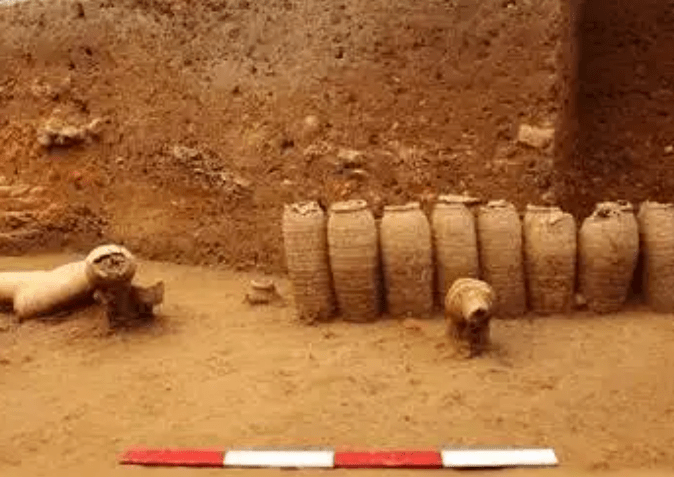
Various sites from Indian Ocean Sea Trade Network having Archaeological Remains- Site 1 (the ancient site and the oldest known till now): one of the oldest sites is an ancient port of Muziris (present day Pattanam), near Kochi in India, belonging to an early historic period of 2nd century BCE. Archaeological evidences suggest that Roman amphorae, pottery shards, precious gem stones, early Chera coins, turquoise glazed potteries, semi precious stone with lion figure measuring 2cm etc.were unearthed from the site.
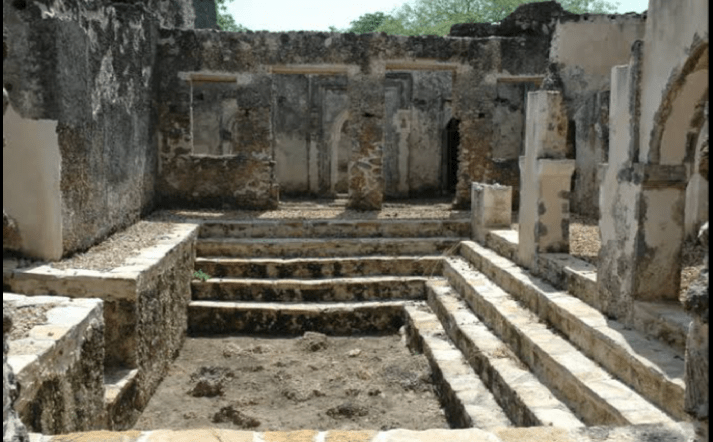
Site 2 (one from the medieval times): one of the major sites from the medieval period is Kilwa Kisiwani, one of the Swahili towns of eastern coast of Africa. Here, several architectural remains can be found, that shows it was one of the trading cities lying in the Indian Ocean Sea trade route. Constructions such as the warehouses, mosques, wells and merchant houses have been found here, that were built in 14th to 15th centuries. It was also evidently analysed that from 13th to 16th centuries, the merchants of Kilwa dealt in gold, silver, pearls, perfumes, Arabian crockery and much more through Indian Ocean trade network. At present the Kilwa Kisiwani is under the UNESCO world heritage site list along with her sister port named Songo Mnara.
Ruins of Kilwa Kisiwani and Songo Mnara.
Site 3 (from recent times): during the early modern period, the port town of Aceh emerged as one of the important ports in the northern part of Sumatra.It became an important port town from the early 17th century. Archaeological evidences includes of material such as medieval ceramics, old stone grave markers, and the ruins of structures and fortifications. This tells about Aceh history prior to the 17thcentury in the Indian Ocean. As an archaeological remain, an inscription dated 1088 that refers to the members of a major commercial guild of India of the South, the Ayyavole guild, relating to rights to pay by the merchants visiting the place of Aceh, have been found. Aceh emerged as a crucial centre of pepper trade in the 16th century.
Colonial influence on the Indian Ocean sea trade – The Indian Ocean trade began with the sea voyages and explorations by the Iberian nations, i.e, Portugal and Spain during the colonial times (from 13th century onwards) and it was through the early sea voyages by Vasco da Gama and Christopher Columbus, that Portuguese were able to set up a colony in various regions including India, Macao,Brazil, Madiera etc. However, the trade network in the Indian Ocean too observed a colonial influence since the times of French, Dutch as well as British, apart from the Spanish and Portuguese sea voyages.Through trade of commodities as well slaves, they all wanted to dominate India along with Indian Ocean; originally their main motive was to control trade through Indian Ocean to various regions of the world. The Portuguese also claimed as lords of the sea, the right to control, direct and tax all trade in the Indian Ocean. Imperial conquests, notably the extension of British power into the western Indian Ocean in the second half of the 19th century, would seem to fit, as would the Omani, French, and Portuguese imperial ventures. Indian maritime trade was little affected by the Portuguese as they relied more on the customs of the Indian shipping. Subsequently,Gujarati ships enabled Goa to earn about a sixth of its entire revenues from the surplus of Diu in the 17th century and henceforth, Diu became an Indo-Portuguese entrepot of importance. The Dutch were more interested in slave trading as well as Coromandel cloth trading while the Britishers focussed mainly on commodities of export to Europe such as indigo, pepper, cardamom, clove, precious stones, cloth and mercantile and much more. So this was how colonialisation impacted the Indian Ocean maritime trade during the colonial times, hence.
Conclusion- As a conclusive part of this topic, it can be said that the Indian was itself a vast component and a factor in facilitating trade. This was due to the fact that Indian Ocean proved to be a better means for promotion of trade via various segmentary routes for distance trade. Also, the nature of the trade in the Indian Ocean has changed a lot as well. And these days the Indian Ocean is in the news as due to lockdown, the shipping traffic declined and in turn,less noise pollution has been noted. Just like in ancient times, the trade in recent times from Indian Ocean is extracting out a huge variety of commodities along with generating economic growth of all the countries involved in the sea trade via this ocean, henceforth.
Yes, you caught it right the most negative word of the year is +ve, didn’t get?
No worries, It tells that if there is +ve in terms of affected via corona the it is the most worrying and dangerous situation specially if it is in our surrounding. The cities are under great pressure due to novel corona virus. Many of the residents of urban area are now heading towards their hometown as seeking for a safe place, but this can be completely opposite to as there are many chances of delivering novel corona virus with them to their home town without their notice and also threatening their lives as well as of their relatives. So, it will be beneficial as there will be minimum travelling along the country. For a while
“let corona stay out and you stay in”
This are some recent data of COVID-19
Corona virus cases total- 6,850,614
Total death- 398,244
Total recovered cases- 3,351,249
Total active cases- 3,101,121 ( Serious cases- 53,619; stable cases- 3,047,502)
Daily around 125k and more cases are being added to the list and daily around 7.5k deaths are occurred due this powerful virus.
India stands at 6th position with total cases of 236,781; total deaths- 6,649; total recovered cases- 114,073; total active cases 116,059 with serious cases of 8,944 and rest with stable condition. If the same situation will continue without any vaccine than it would become very difficult to even breath.
It is very very important to follow the guidelines given by our government and to maintain social distancing with mask. It is
“Now or else forever situation”
If we fail to follow guidelines of our government than this situation will remain forever and unfortunately we have make social distancing and wearing mask as our part of life. If we are able to follow this for at least till the vaccine are discovered than the coming part of our life can be eliminated, or else we have to live ourlife with fear of death in every breath.
Technology has been both a boon and a bane for us, we completely rely on technology and the machinery for almost everything be it cooking, cleaning or even passing some free time (leisure).
We have become quite dependent on it and look forward for further technological advancements in the near future. Most of us have started criticising technology for the leisure seeking beings it has made us into, specifically mobiles and laptops, we do enjoy each and every component of technology but somewhere or the other are uncomfortable with the drastic changes it has made in our life.
Techno-utopianism or technological-utopianism is a theory which states that technological advancement will lead to a world of perfection which is free from any kind of flaws or will lead to a world where mankind will find all or any one of the prefect pleasures which life has to offer.
In a techno utopian society which is free from human suffering, humans would be exposed to the best features be it excellent governance for the people or a life which is human friendly, a world free from the pangs of human pain and all the favourable and pleasure seeking components.
Technology is viewed as a saviour and as the life changing development, technology will give the people of the new world a positive outlook and it will be the final game changer and a hope towards a hassle free future. Technology would be worshipped and will be given a positive outlook, be it new developments in various fields like economic development or developments catering to the societal wants or even technological development which makes life much easier to live. The development would be seen in all spectrum that is social ,economic or philosophical areas.
Currently in the twenty first century we are still developing and currently in a stage where we have a long way to go to become completely technologically dependent, we are currently exposed to the least amount of technological resources and we live in the age where a technological revolution is taking place and we can partially say that we are living in a techno-utopian society in the twenty first century.
Technology will be seen as a benediction which would foster growth, fulfil peoples’ wants and will cater to better communication and will strengthen community ties. Due to the technological advancement one will be able to free themselves form the squabbles, the commotion and the tumult which the daily life offers. It will strengthen societal ties and increase the relation between humans (communities).Technology has brought people closer, we have been able to connect with people overseas via video calls and phone calls and other applications.
The one point which is super advantageous is that it will reduce financial inequalities amongst people and will also aid in access to better skills and knowledge, people will be free to express their thoughts and views without any inconveniences. Techno utopianism will eventually change mind sets, we will become open minded human beings and we will also become practical decision makers.Already our lives have become more easier with devices that do our works with just a few clicks be it mobiles, laptops or even the smart T.Vs.
But many critics feel that we will never be able to reach a stage where each idea is fulfilled to call ourselves a techno-utopian world. As to achieve techno-utopianism in a society which is still developing or underdeveloped it’s an impenetrable and inflexible task. As firstly all the countries don’t have the same requirements, some still hardly have any technological advancements and even if they are exposed to the advancements it would take time for them to adapt themselves in such a techno-savy society.
Further as new technological inventions are taking place we are looking forward to drastic changes which would just turn the tables and we would be living a smart life with the smart use of super technological devices and advancements.
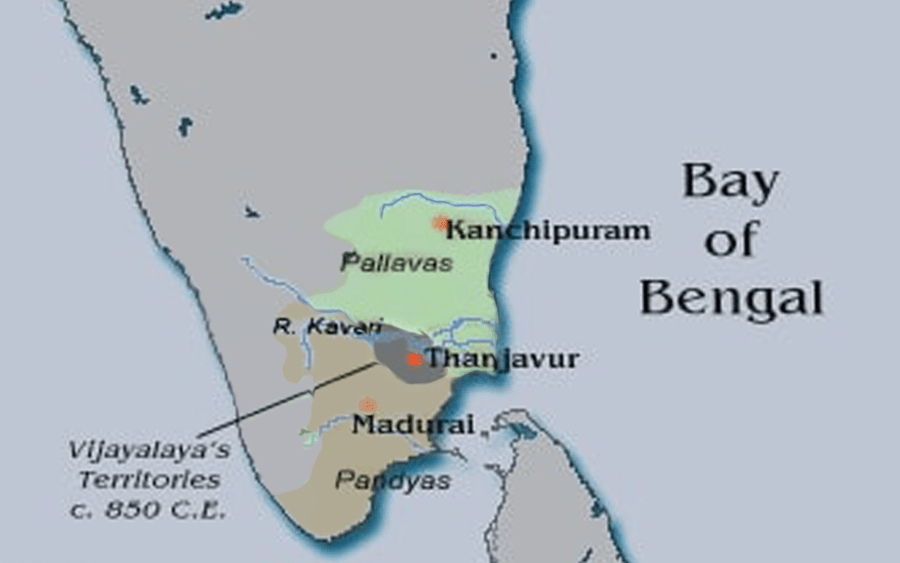
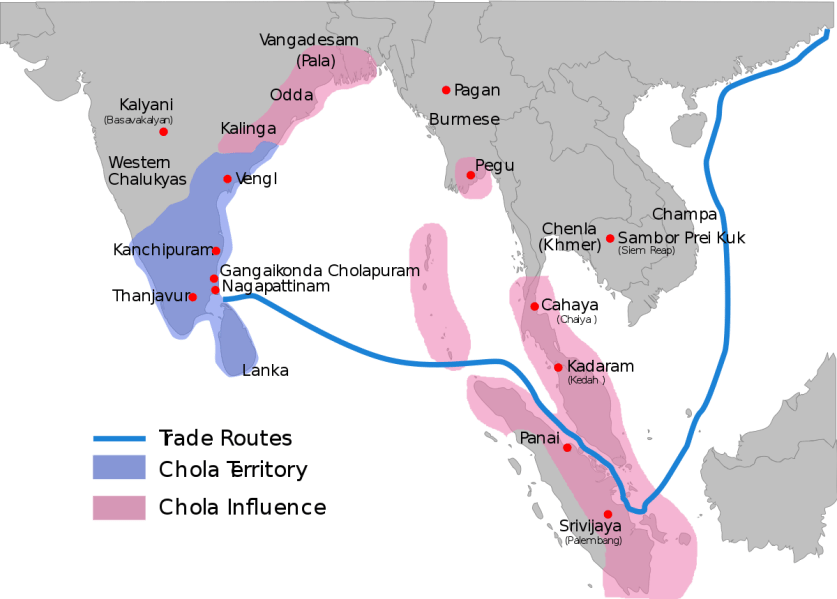
The Chola Dynasty is one of the finest and longest-ruled dynasties in India, it was the Tamil Kingdom and has a vast empire, it was first established in 300 BCE during the Sangam period but the real existence was known from Ashoka’s inscription on three great Tamil kingdoms in the southern part of India and it is one of the Three crowned kingdoms in south India along with the Pandyas and Cheras. The Chola dynasty was not during the earlier times i.e., during the Sangam period as the evidence was washed away due to natural calamities and but the known and the first king of Chola dynasty was Vijayalaya who was a feudatory to the Pallava Dynasty and took the opportunity to capture Thanjavur as there was tension prevailing between the Pandyas and Pallavas and Thanjavur was ruled Mutharaiyar a small community and established the Chola dynasty and in the present day of Thanjavur.
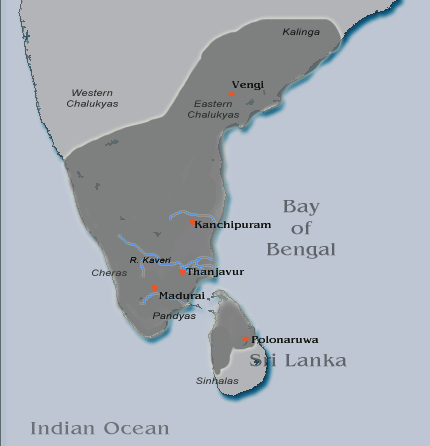
The above picture depicts the region occupied by Vijayalaya and after the demise of Vijayalaya his son Aditya I ascended the throne and brought the downfall of Pallavas and defeated the Pandyas in Madurai and annexed some parts of the Kannada territory and had ties with Western Ganga kingdoms. After him, his son Parantaka I defeated Rashtrakuta Dynasty in the battle of Vallava and he also annexed parts of Sri Lanka. The two great rulers of the Chola kingdom under whom the Chola dynasty flourished in trade, governance, and power were the great Rajaraja Cholan and his son Rajendra Cholan I under whom the Chola dynasty attended the zenith of power.
Rajaraja Cholan
Rajaraja Cholan was born as Arulmoli Varman but changed has to Rajaraja Cholan after ascending the throne in 985 CE and ruled until he died in 1014 CE. He was a great king and an exceptional military solider who expand his kingdom to vast areas. When he ascended the throne the kingdom was relatively small in area and did not have the resources to build the kingdom and was recovering from the Rashtrakuta invasion and Rajaraja Chola was abled administrated and an efficient king who took the task of rebuilding the kingdom and succeeded in it. He restructured the Chola kingdom by taking land surveys and utilizing the resources to great extend and on the military side, he led and successfully captured and annexed various kingdom including Madurai and the Cheran region of parts of Kerala and led an invasion into Sri Lanka and successfully capturing parts of Sri Lanka and captured the kingdoms belonging to Rashtrakuta, Western Chalukyas, Hoysalas, Kalinga and various other kingdoms. He led the successful expedition into the Maldives and this act was deemed as the power of the Cholan Naval Fleet. He was an able administrator and build a powerful and well-structured society and was Succeeded by his abled and fearsome son Rajendra Chola.
Rajendra Cholan I
Under Rajendra Chola, the Chola kingdom was at the power of prosperity and became the most powerful kingdom in the southern region. He ascended the throne after the death of his father in 1014 CE. He led the conquest that his father left for him with the help of his abled and fearsome warrior son Rajadhiraja Chola who is known as Military king as he leads his army from the front and fights along with his soldiers and the other warrior is his commander-in-chief General Senapati Narakkan Sri Krishnan Raman both who was fierce in the battlefield and have helped his father to expand to other parts of Sri Lanka, Maldives, the South-Asia and other regions including Kalinga and some parts of Bengal. He was always supported by his fearsome son Rajadhiraja in every battle and the father-son due ruled the kingdom together, until his death in 1044 CE and was succeeded by his son Rajadhiraja I.
When there is increment in corona patient then our government announced the unlock 1 .The question is what this is right time for unlock 1?
After the announcement of unlock 1 the number of positive patient is increase with very high rate.But the funniest part is that we Indians are not taking it seriously. Currently the number of corona patient is near about 250000 but now our government think about economy of country and releases approx all boundations .And we the public think that corona is no more in India and not taking any precaution and no doubt it is bad for our community.
After the announcement of unlock1 approx all public places are open without any precaution so the number of patients increase with the speed of light.In public places no one follow the rule that is social distancing they meeting with each other as in any festival.Public celebrate unlock as festival and avoiding social distancing.
After unlock1 all religious places are now open and no doubt the number of cases will increase automatically because we know that the social distancing will not follow by our intelligent Indians.
After all the current situation demands a strict lockdown otherwise the result is so bad which we can’t imagine.
Why did I end up keeping a question mark at the end of the title? Is it in order to start my introduction with a question mark by questioning the title or which made me to write this sentence. The answer to this question is a question. Indian Education Future turns out to be a question mark and remains to be question for more far. Our future lies in the past and the past remained as a past and hence future will remain as a future. Past shouldn’t be past in order to make future as a future. Past should change so that our future will not change. Our children’s future can be ours but theirs shouldn’t be theirs which will be cycle and makes the future to be seen only in future’s future.
Chance to change
The change to change the educational system should change which is only possible by changing the mind sets of unchanged. This is only possible by changing the methods of bringing the awareness. Education is the only weapon which can change the change(money) of the unchanged.” Uneducated should be treated as a criminal and illiteracy must be treated as a crime which is the only way to increase the literacy rates”. Education should be mandatory which makes them to read since the only option left to them is it. Fear is the thing which wemake them to feel and the rest is automatically done. Fear for benefit will benefit the society. Before they overcome this fear at least they could have finished secondary education. As soon as they realise it, we make them to understand the importance of education. “If you can’t love to study, fear will make it so”. The feelings are different but the feeling is same. To make the future possible we should take action in the present.
Revolutionary decisions must be made in order to bring a revolution else the only thing we hear about it is “sun is revolving around the sun”.The harsh decisions that you take will make them hard and in turn shine like a diamond. Education can bring the change and in turn make the change like a unbreakable chain. If good has to happen then making bad decisions to make it is not at all a bad decision. Severe tax should be impelled on the parents who are not willing to send their children for the study and that tax will be utilised for the education of that child.
The situation in the world are very worse and so our hope for vaccine also. Scienticts are trying hard and hard to discover the vaccine. Scientist and pharma industry from all over the world are in danger in terms of health and wealth.
Here are some updates related to corona virus vaccine;
Moderna Therapeutics‘ invented mRNA-1273 vaccine prototypes which is heading towards success with high speed. The vaccine, is currently in its second phase of testing is more likely to be tested ahead on its third phase of clinical testing, Moderna therapeutics plans to involve about 30,000 participants between the ages of 18-55 and those who are at high risk of corona virus. If the trials are successful than it would be much relief for the people all around the world, by the time, Moderna promised to manufacture 100 million doses of the vaccine. The third phase of the testing is most likely to start in July.
Oxford University & AstraZeneca of Brazil which is worst affected country due to COVID-19 are jointly working to develop the corona virus vaccine. Once they tried to develop the vaccine but it failed in testing, now after much of research and time they again got hope and now they are soon ready to begin the trails on humans. To speed up the development of vaccine and minimizing the clinical trial time they are conducting both phase I and phase II trials at the same time.
Serum Institute of India (SII) India is also leading in development of vaccine it has already tested for 18-55 age but side effects were observed and is again under development and testing. If India is able to development the vaccine first than India will become super nation as India will show to world that still India can do better in health sector and obvious youth is also at great potential so, ultimately it will attract many of the MNCs to India.








 The main motive of food safety is to keep up the necessary produced food from production to consumption without contamination. Not only safety but adequate amounts of nutrients that are essential for a healthy survival should be stocked. Apart from food, the most common source of spreading diseases is sipping polluted water. According to WHO, at least 2 billion people use a drinking water source contaminated with scat.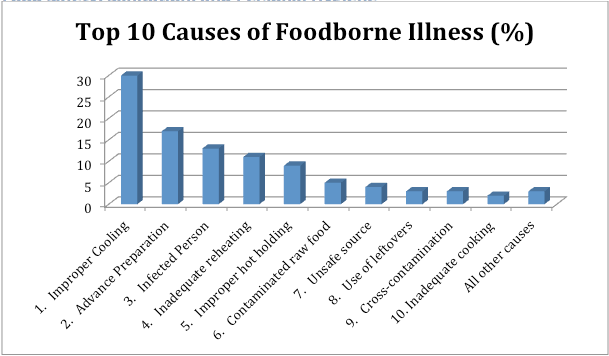




 Eduindex
You must be logged in to post a comment.