Death toll in lightning strikes and rain-related incidents across Bihar, UP mounts to 130

In Bihar, the death toll in lightning and rain related incidents in 25 districts of the state during the last 24 hours has reached 106 while 56  others have been injured.

Most of the casualties are farmers who were doing agriculture related works in fields. 14 people were killed in Gopalganj while 39 in six districts of Purnea,Nawada , Madhubani, Bhagalpur, Aurangabad and Siwan. Other 53 casualties were reported from 18 districts.

The Met department has forecast heavy rain and lightning in the  next  three days in different parts of the state. The people have been advised to remain indoors during this period.The state government has appealed to people to take all necessary precautions during turbulent weather.

Chief Minister Nitish Kumar has expressed grief over the loss of lives and announced an ex-gratia of four lakh rupees to the next of kin of the deceased. He has ordered  free treatment to injured people. 

Meanwhile in Uttar Pradesh, at least 24 persons were killed and 12 others  injured due to lightning yesterday. AIR Correspondent reports that as per the report of the Relief Commissioner of the state, 9 casualties were reported from Deoria district where 6 persons were also injured in incidents of lightning.

Six persons lost their lives in Prayagraj while there are reports of 3 deaths in Ambedkarnagar, 2 in Barabanki and one each death in Kushinagar, Fatehpur, Balrampur and Unnao districts.Those who lost their lives were either working in their farms or had taken shelter under trees during lightning strike.

Chief Minister Yogi Adityanath has expressed grief over the deaths and has announced ex-gratia of 4 lakhs for the families of the deceased. He also ordered officials to provide proper medical care to the injured and help the families of victims of this natural calamity immediately.  

Prime Minister Narendra Modi has expressed condolences to the families of those who have lost their lives  due to heavy rains and lightning strikes in some districts of Bihar and UP. In a tweet, Mr. Modi said the state governments are engaged in relief work with promptness. 

Serological survey to determine spread of coronavirus in Delhi begins today covering 20,000 people

Amid rising coronavirus cases in the national capital, a serological survey will be undertaken in Delhi from today. The exercise will be taken up till 10th July.

AIR correspondent reports, Serological survey will be conducted in all districts of Delhi in which sample testing will be conducted of 20 thousand persons spanning all sections and ages. It will help in comprehensive assessment of the spread of infection and will help draw up a comprehensive strategy.

It is part of the new COVID-19 response plan prepared as per the recommendations of the committee, headed by NITI Aayog member Dr V K Paul. On the directions of Home Minister Amit Shah, the Committee was constituted on 14th June to submit a report on Containment Strategy on COVID-19 for Delhi. 

On Sunday, Mr Shah reviewed Delhi’s Covid-19 situation with Lieutenant Governor Anil Baijal and Chief Minister Arvind Kejriwal and discussed recommendations made by the committee. Dr V K Paul committee has also proposed revised demarcation of containment zones and a strict monitoring and control of activities in such containment zones.

Delhi recorded 3788 fresh coronavirus cases yesterday, taking the tally in the city to 70 thousand 390. With this Delhi has already overtaken worst-hit city Mumbai’s tally of 68,410. The death toll in the National Capital has climbed to 2365. 

Meanwhile, the State Disaster Management Authority yesterday approved modification of SOP for home isolation for Covid patients to meet the twin objectives of containment of local spread and provision of timely medical care for Covid positive cases to save precious lives.

In a tweet Delhi Lieutenant Governor Anil Baijal said, Health department will deploy a robust surveillance mechanism. He said, only those COVID positive cases who do not have adequate facilities at home to ensure physical segregation and do not have other medical conditions would require to be shifted to Covid Care centres and other facilities. 

Central team to visit Gujarat, Maharashtra & Telangana to review COVID-19 situation

A Central team will visit Gujarat, Maharashtra and Telangana today to coordinate with State officials to strengthen ongoing efforts for management of COVID-19. During the four days visit, the team will interact with state government officials over the pandemic.  It will be led by the Joint Secretary in the Health Ministry.  

The Central team will review the measures undertaken by the three states for containment of COVID-19.  Maharashtra has reported the highest number of cases in the country.

Meanwhile,  the recovery rate of COVID-19  patients has improved to 57.43 percent in India.  In the last 24 hours,  over 13 thousand  COVID-19 patients have been cured.  With this,  the number of cured cases has reached  over two lakh 71 thousand so far.

Cases per lakh in India currently stands at 33.39 against the world’s 120.21 cases per lakh population. Also, death per lakh population in the country is presently amongst the lowest in the world with 1.06 deaths per lakh against the world average of 6.24 deaths per lakh population.  In a significant ramping of the testing facilities across the country, India now has 1007 diagnostic labs and over 75 lakh COVID-19 tests have been conducted till now.  

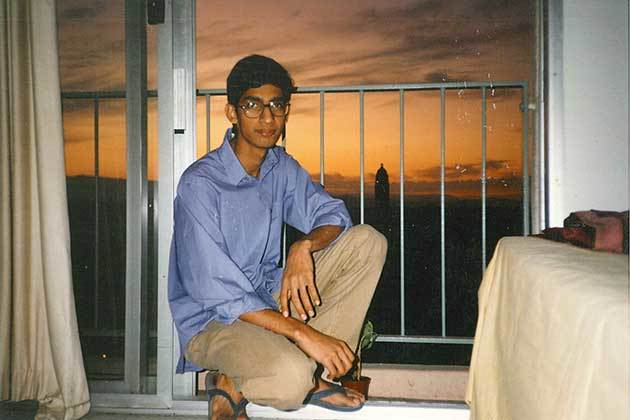
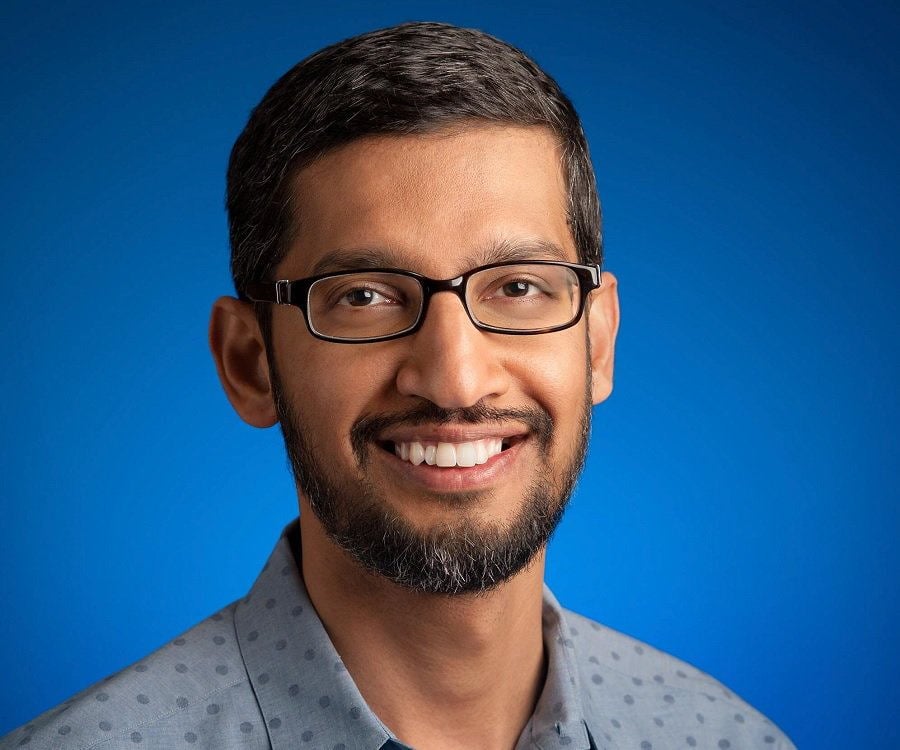
Inspiring story of Google’s CEO: Sundar Pichai – Must read!!!

Growing up in India, like many of you, Sundar Pichai got my first telephone when he was 12. In case it turned out be a rotary phone, so it wasn’t that great for selfies. But he still loved to call my friends, play with it and sometimes take it apart. That telephone cemented my fascination with technology. Sundar Pichai remember in his parents’ house in Chennai, reading about the invention of the transistor at Bell labs. Of course, that initial invention helped found what became referred to as Silicon Valley and out of that came companies like fairchild semiconductor and Intel and every one the computers and software, that we all use today. You can draw an immediate line from that invention to the technology, that powers your Twitter feed or your WeChat messages today.

Google's Sundar Pichai travelled in buses, had no television while ...

Image source : GadegtsNow

When he was younger, people would say, this person didn’t get into this college or something and that is the end of the road. Sundar Pichai thought life is so different from that, and so he think it is important to you know, keep your hopes, keep your dreams and try to follow them and you recognize he think, most of how life plays out is up to you, not up to what happens outside of you. It’s important to keep that in mind and take the long-term view. As a teenager, jumping on to a crowded train. At Chennai and traveling for 24 hours, to attend my school at IIT Kharagpur and that opportunity changed the course of my life. You want to aim high enough that you fail, you know few times thought it is the natural part of the process. In fact, Larry accustomed say if you’re employed on really difficult things, you’re more happy because you’ve got no competition, others aren’t performing on that difficult a drag . And although you fail, you finish up doing something great within the process.

Sundar Pichai Biography - Childhood, Life Achievements & Timeline

Image source: Thefamousperson

You know, working the real world, it is important to be well rounded, it is important to try different things, or you know take some risks, he would encourage people to follow their passions a little bit more. To follow set lanes throughout your career. Getting into an elite institution doesn’t guarantee success, it matters plenty but it doesn’t guarantee success. It is important to stay that perspective in life and life may be a long road, and you know, you would like to require it at the proper pace and luxuriate in what you are doing. Sundar Pichai knew how much hard work it takes to pursue your dream of building a business. The long hours, time faraway from family, the ideas you recognize are brilliant, that just don’t seem to catch on. Reading that and thinking, it is the concept matters. It didn’t matter where you come from or what your background is.
One revolutionary idea, one brilliant invention can unleash other entrepreneurs to revolutionize, industries and ways you could never predict.

black samsung tablet display google browser on screen
Photo by PhotoMIX Company on Pexels.com

PM Modi to launch ‘Atma Nirbhar Uttar Pradesh Rojgar Abhiyan’ for migrant workers today

Prime Minister Narendra Modi will launch Atma Nirbhar Uttar Pradesh Rojgar Abhiyan today which is focused on generating employment for those migrant workers of Uttar Prdesh who recently returned from other states. Today around one crore  25 lakh people will be provided employment in the state in different schemes.  The program will be launched at 11 am through Video-Conference in presence of the Chief Minister of Uttar Pradesh Yogi Adityanath. Ministers of concerned Ministries of the state will also participate in the virtual launch.

‘ROZGAR KA NAYA ABHIYAN, HAR SHRAMIK-KAMGAR KO KAM’ – With this motto, the state government will provide employment to 1.25 crore workers of the state in different schemes of central and state government. A loan amount of 5900 crores will be distributed to 2.40 Lakh units under Atmanirbhar Bharat Package today. 1.11 lakh new units will also get 3226 crore rupees as loan amount.  Around 5 thousand artists will get tool kits through Vishwakarma Shram Samman yojna under one district one product scheme of state.  The Atma Nirbhar Uttar Pradesh Rojgar Abhiyan will be launched in 31 districts of the state. These districts have more than 25,000 returnee migrant workers. These include 5 aspirational districts also.

On this occasion the Prime Minister will interact with villagers from six districts of state which includes Gonda, Sidharth Nagar, Behraich, Sant KAbir Nagar, Gorakhpur and Jalaun.  Villages across all districts of state will join this program through the Common Service Centers and Krishi Vigyan Kendras, maintaining the norms of social distancing in the wake of the Covid-19 pandemic.

Atma Nirbhar Uttar Pradesh Rojgar Abhiyan is focused towards providing employment, promoting local entrepreneurship and creating partnership with Industrial associations to provide employment opportunities. Nearly 30 lakh migrant workers have returned recently from the other parts of state in Uttar Pradesh.  

Can We Sustain?: The environmental challenge Towards Human Existence

Picture Courtesy: Google

In this emerging world crisis what we need to worry about the environment. Biodiversity is being hampered with the living habits of humans. As a part of the environment, We must pay heed to the development of the environment in a right and progressive way. We must know what we are leaving for the next generation. Due to the indifferent nature of human towards the environment and destructive behavior towards nature have called up a pandemic situation like Covid-19. The rising temperature, the growth of the disease, the major wild forests destruction, climatic imbalances all are results of human extravaganza. Our existential security depends on the earth’s existence. So, whenever we are talking about development we have to take the earth under consideration as well. The Hinduism sacred literature talks about ‘Mahabhuta’ which says about the exploitation of the five elements of nature, earth, water, fire, air,  space. Due to the convergence of technology we are running behind the development without thinking who to sustain it.

There are many things we should be worried about. There are many species which are either got extinct or in the way of extinct. Deforestation is one of the main causes of environmental grievance. Reports say nearly 27,000 trees are shot down each day to manufacture toilet paper. Nearly 1 million sea creatures are killed due to plastic pollution. Death of a huge number of animals in ecology, not only push the species towards extinction but also create a disruption in ecosystems and the ecological food chain. Unrestricted fishing can be another cause of the crisis in aquaculture. In this environment, every creature has its own role to play. The popularity of insects is higher than any other living creature on the planet. Due to agricultural safety, many friendly insects are killed. It says female insects travel much comparatively to male insects because they are in the process of pollination. Here if the pollination doesn’t happen, it can lead the human existence to cease. With the spike of the world population( nearly 83 million per year) and carbon footprint sensitizing the consequences like food crisis, economic crises, water problems, climatic changes, and so on. A report says the growing temperature can lead people to kill themselves. 1°C rise in temperature has given a 0.7% rise in the suicidal cases in countries like the US, Mexico. According to a report of WWF, a new disease can arise which will be higher than ever. It will make wreak havoc in the economy, health, and more. Arbitrary wild trade is another resource of ecological imbalance. Expensive release of greenhouse gas from the use of burning fuel like oil and others has indecently increased the rate of pollution, temperature, and other environmental issues.

A report called ‘The Global Tree Restoration Potential’ has remarked tree restoration as one of the efficient strategies to prevent the environmental crisis. Human and environmental development have to be proportional to each other. We can conquer the destruction by choosing sustainable development as a weapon. We are not allowed to perceive the natural beauty apparently as a part of impressionism but we are bound to be careful about securing the existence the beauty so that the next generation also can sense and experience the beauty in the same way.

Facebook or Fakebook?

Facebook is one of the most remarkable names in the field of social networking domains that has evolved to be a brand with no competition whatsoever. Although there are other apps like Twitter, WhatsApp, Instagram and the like, but literally nothing can be compared to Facebook in terms of the wide range of usage it happens to cover. Facebook has become an option that literally provides a huge range of elements to its users which include but are not limited to news, sports, memes, jokes, promotional posts, motivational posts, current affairs and so on. Facebook has made it possible for us to be a part of the global world with just one click in absolutely no-time!

However, the fact that has come to the surface with the gradual development of Facebook should also be mentioned in this regard. A tendency to pretend to be someone else has come up to be one of the major repercussions of using Facebook in a regular manner. Everyone likes putting their daily lives up there on Facebook without thinking about its consequences. It is not bad to post stuff on Facebook but the fact that it has helped a tendency to evolve out of people that goes on to present a mask-like persona. Everyone pretends to show how happy they are in their real life by posting stuff on Facebook regularly no matter what is going on in their life. It has both positive and negative side effects. Therefore it gets clear how Facebook has contributed in making the digital world a domain of pretentiousness which can be really harmful at times.

Facebook has also caused a rise of the rate of cyber bullying along with a huge number of cyber-crimes in today’s world. With each passing day thousands of people create their accounts on Facebook and the rate of cyber bullying and cyber -crime increase by 5%. Teenagers are the most affected ones who have to go through different kinds of humiliations and harassments on a daily basis due to the heinous crimes committed by the cyber criminals.
Facebook has gradually blurred the boundaries between the digital and the real world. It enables people to pretend what they actually are not and present different versions of themselves which are supposedly a more acceptable one to the others. This way, it has also gone forward to create a huge impact on mental health issues.

The fact that Facebook allows everyone to post their heart out has many repercussions. Racist, sexist, homophobic, transphobic and misogynistic posts seem to be floating around all over Facebook without having any counter action from the authorities. It promotes different problematic sets of ideologies that affect every one present on Facebook in some way or the other.
Facebook plays a huge role in influencing and eventually controlling the youth of the world. Considering all these aspects that come along with the positive sides of Facebook everyone should start being more careful about their online presence since it has so much power nowadays.

-Suvasree Bandyopadhyay

16 Year Old Tik-Tok Star Siya Kakkar Commits Suicide.

The year 2020 has been a devastating and shocking year for everyone around the world. When it comes to the entertainment platform which mainly includes acting and dancing there had been many shocking up comings in this year which includes the death of the famous bollywood star sushant singh rajput due to poor mental health and depression. When everyone had not gotten over the death of sushant singh rajput there has been another incident where a famous tik-tok star has committed suicide in Delhi. The 16 year old had caught the eye of the audience with her brilliant set of dancing skills. It has been reported that the 16 year old lived with her family and was found dead around 9 pm the previous night. As per the police reports there has been no suicide note found.

It has been come to light that the star had around 11 lakh followers on tik-tok and her last post was 6 days prior to the incident. The news of the stars death was confirmed by her manager who reportedly said “This must be due to something personal…work wise she was doing well.I had a word with her last night for a new project and she sounded normal. Me and my company Fame Experts manage lots of artist and Siya was a bright Talent. I am heading to her home in Preet Vihar.” she said.

It is absolutely shocking that children of such age can take such a drastic step in their life and put an end to everything. It is the parents that have to suffer for the rest of their lives in guilt that they could not save their child irrespective of the situation. The digital world of movie stars and all sorts of actors and dancers have come under the spotlight as what kind of mental and peer pressure they tend to face in their lives.

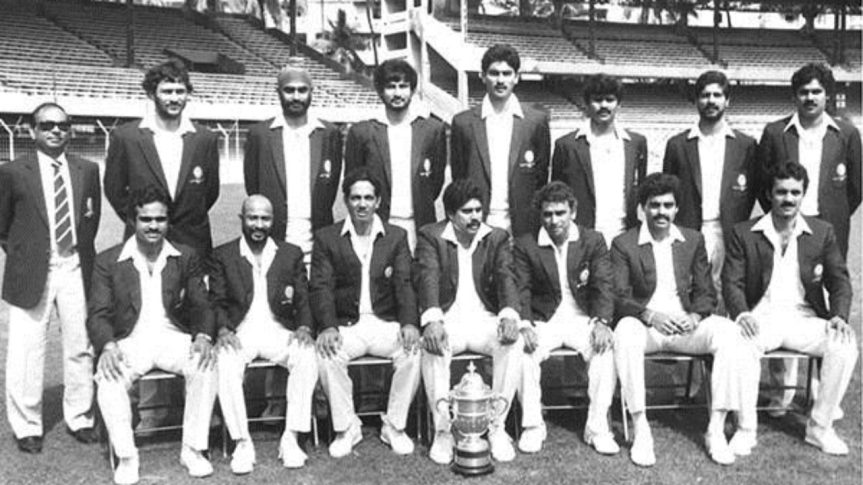
Word cup 1983

25th June 1983, was the first time that India won the cricket world cup. It was the first time that India had made an appearance in the finals, and they were up against West Indies  for whom this was their third consecutive world cup finals appearance. The world cup was hosted by the company Prudential that is why the world cup is also called Prudential world cup .The finals was played in Lord’s  cricket stadium also called  Lord’s in London which had had hosted world cup for the third time. India defeated West Indies by 43 runs. Kapil Dev lifting the Trophy from the balcony of the Lord’s cricket ground still remains the image of savor for the India fans. Even after 37 years people acknowledge this finals as the most memorable game played by the India cricket team.

India were the underdogs in the tournament, there was not much expectations from the team. However they defeated Zimbabwe in a crucial match, thanks to Kapi Dev who made 175 runs which lead the team to win the match. India was at 78 runs 5 wickets when Kapil dev came for batting his extraordinary innings took Indian team to victory. Unfortunately this historical match was not telecasted as British Broadcasting corporation  was on a strike  that day. In semi finals England was defeated by India by six wickets with thirty two balls remaining and Mohinder Amarnath becoming the player of the match. West indies defeated Australia in the semi finals by seven wickets with thirteen balls remaining and Vivin Richards became the man of the match.

West Indies and India made it to the finals, at that time West indies had really good bowling attack. So when they won the toss they chose to ball first and allowed India to Bat.  First came Sunil Gavaskar but his innings was short as he got out for just two runs but Krishnamachari Srikanth and Mohinder Amarnath had a good partnership and brought the runs to the fifty mark. Then soon Srikanth got out making  thirty eight runs, after that as the score was marching towards a hundred Mohinder Amarnath and Yashpal sharma lost their wickets after making twenty six runs and eleven runs respectively. Then came the captain Kapil Dev who stroke three boundaries in eight balls but got out in just 15 runs. Nor could the next players like Kirti Azad and Roger Binny could make runs, they did not even cross the double digit. Then Sandip Patil could only score 27 runs and The all rounder Madan lal came back to the pavilion after making 17 runs. India was all out in 54.4 overs making 183 runs.

Then came India’s turn to bowl, the first wicket was taken in just 11 balls by Balwinder singh sandhu that too of Gordon Greenidge who was really in a great form, he could only take 5 runs. West indies also had a great partnership of  Desmond Haynes and Vivin Richards which enabled west indies to cross the 50 mark, but  both of them were dismissed by  Madan Lal and Kapil Dev respectively. Soon West Indies was all out in 52 overs making 140 runs and India won by 43 runs and Mohinder Amarnath becoming the Man of the match. No Man of the series was awarded that year.

This victory not only made these players a hero but also changed the perception of games in India. This also lead to a high commercialization of cricket as a game, people started to think sports as a career and also many people really got engaged to the game. This win also brought a sense of ” we can do it” for the Indian team.


Media in India: Politics of regulation in a time of false News

The media plays a pertinent role by providing information which is indispensable for two reasons. Primarily, it ensures that citizens formulate proper and updated views by analysing the authentic and genuine facts as provided by media. Secondly, it provides information as a “checking function” by guaranteeing that the chosen government and its representatives act upon electoral promises.

Media thus plays a central role since it is the single means through which public opinion is engendered. The stability of a country is assessed by the way the media report the news of that country. Thus, it becomes the obligation of the media to circulate only applicable and valid facts locally and globally.

The role of media has been changing from what it was perceived. The neutrality of news in reporting is missing in the mainstream media today because of the hidden agendas that many press and media outlets hold.

 Media in India is mostly self-regulated.  The existing bodies for regulation of media such as the Press Council of India which is a statutory body and the News Broadcasting Standards Authority, a self-regulatory organization, issue standards which are more in the nature of guidelines.   Press Council of India established under the PCI Act of 1978 for the purpose of preserving the freedom of the press and of maintaining and improving the standards of newspapers and news agencies in India.

Even though the Constitution guarantees freedom of the press, the government does regulate some media. Print media are largely unregulated, and newspapers and magazines can print nearly anything as long as they don’t slander anyone. The Internet has also gone largely unregulated, despite congressional efforts to restrict some controversial content. Broadcast media, however, are subject to the most government regulation.

Decision-making power in the Indian media regulation is fairly centralized, with the central Government and ministries making the final calls when it comes to new policies and appointments. Politicians have a keen interest in news media regulation owing to the high degree of political ownership in the sector. Thus, political and electoral logic shapes media regulation.

Prime Minister Narendra Modi at the top of the decision-making list.  Modi follows a centralized decision-making model with significant power allotted to his Prime Minister’s Office (PMO), Modi has been a vocal advocate of the use of online media for political mobilization, participation and propaganda. Key influencers in the Indian regulation include Mukesh Ambani, chairman of the Reliance Group of Industries, Amit Shah, an MP and current president of Bharatiya Janata Party (BJP), Subhash Chandra, the chairman of Essel Group, Bennett Coleman & Co. Ltd (BCCL), which owns The Times of India.

WhatsApp has become the platform of choice for politicians because of its massive reach that goes beyond a party’s loyal voter base, but also because of the lack of gatekeepers. Messages forwarded through the system have no context about where they originate, but benefit from the trust of coming from a contact . . one of the BJP leaders denies the  spreading polarising content, but public  WhatsApp data collected by analysts and anecdotal evidence show that Indians are being flooded with propaganda memes, much of it anti-Muslim and critical of the opposition Congress party.

In April smriti Irani’s  ministry issued a circular saying that in order to fight the rise in fake news in print and electronic media, the government had decided that journalists who had complaints of creating/propagating fake news against them, would immediately have their press accreditation suspended.The following day, the Prime Minister’s Office asked her ministry to withdraw it.

Recently A picture of Vadra with the Chinese envoy. Both Republic TV and Times Now got excited enough over a picture of Robert Vadra to launch hashtags and primetime shows. Alt News had to give a video tutorial to Times Now and Republic TV to avoid such rookie mistakes. The picture was from a Chinese food festival that was also attended by India’s Railway Minister Suresh Prabhu, Sitaram Yechuri from CPIM, KC Tyagi from JDU and other leaders from BJP such as Tarun Vijay and Udit Raj. A quick google search could have avoided these channels the embarrassment though we suspect that they neither consider this as an embarrassment nor are they interested in the truth.

Similarly there was a statement attributed to Arundhati Roy – ‘’70 lakh Indian soldiers cannot defeat Azadi gang in Kashmir”  . A fake statement made in a non-existent interview during a trip that never took place was enough to launch prime time debates on Republic TV and CNN News 18 attacking Roy. The fake news had originated from some obscure Pakistani website called times of Islamabad

What followed was attack on Roy by BJP MP Paresh Rawal and prime time debates on the topic. Arnab Goswami called Roy a “one book whiner wonder” and continued to rant about his favorite topic of Lutyens media and pseudo liberals. An investigation by The Wire revealed the truth behind the fake outrage fueled by the news channels and this piece  by News laundry explored it further News laundry had republished an op-ed responding to Roy’s fake quote and it apologised for its editorial oversight and retracted the piece. There was no retraction or apology from Republic TV or CNN News 18 for attacking Roy based on fake news.

Indian media is grappling with many problems, but the country’s regulators fail to address them.

It took the Ministry of Information and Broadcasting (MIB), a key player in India’s media policy, two years and seven months to release public data that had been officially requested in 2015 by TheHoot.org, a website mapping media ownership in India. The ministry said that such data couldn’t be released as it was “third party information.” The ministry’s argument was just tosh as media companies have to reveal ownership data to qualify for a license to operate.

The episode epitomizes the excessively bureaucratic, politicized and clientelistic media regulation in India whose decisions have negative consequences for news media operations

Decision-making in matters related to the Indian media is riddled with political influence, regulatory parallelism and clashes over jurisdiction, involving not only decision-making authorities but also industry players,

Rasputin: The death that changed history

Mystics and holy men, some call them the voices of gods while some refer to them as shams and con-men who try to trick the gullible people of society. Whatever be the truth, the fact is that they have been influential in shaping history throughout the world since time immemorial. These kinds of people often gain a large popularity, are hailed as having the power of gods and yet like every other person, have skeletons on their closets. One such man who changed the course for the Russian monarchy is Grigori Yefimovich Rasputin, a Russian mystic and self-proclaimed holy man who befriended the family of Emperor Nicholas II, the last monarch of Russia, and gained considerable influence in late imperial Russia.

Photo by Mitja Juraja on Pexels.com

Born to a peasant family in rural Siberia, Rasputin lived an obscure life till adolescence and might have continued to do so had he not converted himself to the Russian Orthodox church. After being inspired by many of the wandering humble monks of his generation, Rasputin moved aimlessly from one holy site to another. He spent years of his life on pilgrimages across Russia, and along his travels he amassed a large following due to his charismatic and magnetic presence. He was even believed to have had the power of divination and healing. And despite his repetitive acts of petty theft, heavy drinking and over promiscuous nature with the ladies, he was hailed as a holy monk across Siberia, and he gained the attention of both the powerful orthodox clergymen and common people.  Once he finally reached St. Petersberg, he used his innate charisma and gained popularity and connections to win the favour of the imperial family’s spiritual advisor and soon wormed his way up and was introduced to the Tsar Nicholas II. He like all other “holy men” before and after him had the ability and know-how to milk every opportunity to the fullest. Like every opportunist mystic in the world, he researched about his targets and found out that the Tsar and his wife were devout believers of the supernatural and mysticism.  Rasputin cemented his control in the Tsar’s court by performing a “miracle”. The young heir to the throne had a disease known as hemophilia, a life-threatening blood disease. He refused to let the doctors administer anything to the heir and when Alexie’s health got better, he was hailed as a mystic with supernatural powers. What actually happened was that the doctors had prescribed him aspirin which worsens the hemophilia’s effect in the body, thus it seemed that the young heir got better. Thus, to cement his place of power, he proclaimed that should he die or be deserted the royal crown and their son would also disappear. Due to his increasing popularity in court and his ill habits of theft and skirt-chasing, the orthodox had begun to hate him and decided to have him killed prevent his further acts of corruption to the royal family and to stabilize the kingdom, not taking into account that to the public Rasputin was hailed as the public’s hero. In 1916, a group of nobles led by Felix Yusupov, tried to kill Rasputin by lacing his pastries with cyanide or so they thought as one of their co-conspirators had changed the poison with something harmless out of pity for Rasputin. As that plan failed, Yusupov shot Rasputin at point blank range, which again Rasputin miraculously survived and punched away his assailant and ran away. However, the group of noblemen gave chase and shot Rasputin dead and dumped his body in the Malaya Nevka river. However rather than stabilizing the kingdom, his death enraged the peasantry who were already on a boil from decades long political tensions within the area, saw this as the tipping point and took down the Tsar’s regime. As Rasputin prophesised his death was soon followed by the royal families. Thus, ended the tale of a monk who reshaped the Russian history.

SEX EDUCATION- still a taboo?

So here’s another theme one should be concerned about. Yes, whether you mention it as an orgasm or simply sex, this education is actually far broader than that. According to me, the lack of sex education results in Rape, sexual abuse, sexual assaults, and many such issues. Whenever we hear someone mumbling the word sex, we often become slightly uncomfortable and uneasy. A recent research from Columbia University’s Sexual Health Initiative to Foster Transformation (SHIFT) project implies that comprehensive sex education protects students from sexual assault even after high school. A survey by researchers at the Harvard Graduate School of Education’s Making Caring Common initiative found that 65 percent of young-adult respondents wished they had talked about relationships at school. At some places when students study the chapter of Reproduction in biology, they are advised to operate different batches in coaching centers for boys and girls. This shows how uncomfortable and delusional students are about this issue.

What is sex education?

Sex education is high-quality teaching and learning about a broad variety of topics related to sex and sexuality. Various other aspects include safe sex, age of consent, reproductive health, emotional relations, etc. The increasing incidents of teenage pregnancy, in the mid 20th century, led to the introduction of sex education. Also, the eruption of an increasing number of cases in AIDS/ HIV led as a curtain-raiser towards sex education. Country like India has a massive population along with more no.of cases of sexual abuse, teen pregnancy.

According to SIECUS, the Sexuality Information and Education Council of the United States, 93% of grown-ups researched support for sexuality education in high school, and 84% supported it in junior high school. In fact, 88% of the parents of junior high school students and 80% of parents of secondary school students conclude that sex education in school makes it simpler for them to talk to their adolescents about sex.

Being sex-positive.

This may take you to various meanings.

  • No more feeling ashamed and embarrassed talking about sex or sexuality. 
  • Behaving toward straight, bisexual, gay and lesbo the same.
  • No more tagging sex as a dirty thing.
  • Promoting sex education for safe intercourse.
  • Accepting one’s body.

The latest report by UNESCO on comprehensive sexuality education (CSE) points out the urgent need for imparting this education to young people to help them lead healthy and sexually satisfying lives.  Admitting how you were born, yes, of course, you are a result of intercourse.  How to be sex-positive:

  1. Undirty The Word ‘Sex’– Why treat it with shame? It’s a positive emotion so it has to be dealt with positivity. There’s nothing wrong about not being a virgin until it wasn’t forced.
  2. Treat ‘sex’ with respect– Making love is not a crime. Treating the thought of sex with respect can also change to help you being sex-positive.
  3. Reach out to your friends and discuss– This does not mean to ask random people about their intercourse. Maybe it would leave a negative impact. Talking and sharing ideas with dear ones will actually broaden the thinking about ‘sex’. 
  4. ‘No’ to dirty jokes– There’s always a difference between what sounds good and what’s dirty. Vulgarity should be eliminated and healthy sex jokes should be appreciated. 

https://www.shethepeople.tv/news/sex-dirty-word-change-perception/amp/

Mutuality and Maturity play a vital role in this education.

People usually talk about rapes and the root cause of such crimes. Of course, we can’t control this but we can educate the upcoming generations and broaden their circle of thinking. Proper sex education helps in dealing with such principles.

Effective Leadership


Leadership is a process by which a person influences others to accomplish an objective and directs the organization in a way that makes it more cohesive and coherent. Leaders help their team and organization make progress and act in the right way. They can be found at many levels in our communities, businesses, organizations, and in homes across the world. Good leaders should build a vision, set clear goals and directions, and map a dynamic path forward for their team or group. True leadership can be determined, observed and measured by others desire to follow. Leadership means that leaders work with their followers to achieve objectives that they all share. Establishing shared objectives that leaders and followers can consolidate is difficult but worth the effort. Leaders who are willing to expend time and effort in determining appropriate goals will find these goals achieved more effectively and easily if followers and leaders work together. Leader-imposed goals are generally harder and less effectively achieved than goals developed together. Also leadership tends to operate in groups. It is about influencing a group of people who are engaged in a common goal or purpose and works towards achieving their goals. Therefore, leadership is about directing a group of people toward the accomplishment of a task by working skillfully.

Leaders exert influence on the environment through the goals and performance standards they establish, the values they establish for the organization and the business and people concepts they establish. People want to be guided by leaders they respect and who have a clear sense of direction. Hence effective leadership requires certain important characteristics. These include:

1.To be an effective leader, you need to roll up your sleeves and take charge. They must have strong self-confidence and must be confident enough to ensure others follow him. This includes being confident enough to lead, knowing that your plans and vision are not only viable for the team but the absolute best decision possible.

2.If you’re in a leadership role, good communication skills are absolutely crucial. Being able to express yourself openly and build empathy with other people is the foundation of effective leadership. Good communication will increase the rate of work.

3.Integrity is a set of values about which we must never compromise, no matter the circumstances. \We must have a strong handle on those values is critical to the basis of trust and loyalty, and allows people to identify whether or not we are someone they want to follow. An honest leader succeeds when they stick to their word, live by their core values, lead by example, and follow-through. Without integrity, no real success if possible.

4.A good leader must be an excellent innovator. He must display a creative attitude in his work. Most noteworthy, innovation is a guarantee of survival of a group or innovation. Without creative thinking, progress is not possible.

5.Great leadership styles focus on problem-solving and team dynamics much more than self-promotion. A great leader will never be effective if they’re more concerned with themselves than with the well-being of their team. Being humble and vulnerable with their team members will make a leader much more relatable and effective.

Good leaders are made not born. If we have the desire and willpower, we can become an effective leader.

Rajyasabha elections…

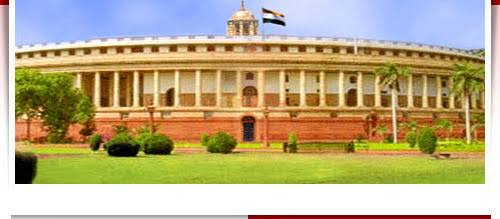
The Constituent Assembly, which first met on 9 December 1946, acted as the Central Legislature till 1950, when it was converted as ‘Provisional Parliament’.

During this period, the Central Legislature which was known as Constituent Assembly (Legislative) and later Provisional
Parliament was unicameral till the first elections were held in 1952.

Extensive debate took place in the Constituent Assembly regarding the utility or otherwise of a
Second Chamber in Independent India and ultimately, it was decided to have a bicameral legislature
for independent India mainly because a federal system was considered to be most feasible form of Government for such a vast country with immense diversities.

A single directly elected House, in
fact, was considered inadequate to meet the challenges before free India. A second chamber known as the ‘Council of States’, therefore, was created with altogether different composition and method of election from that of the directly elected House of the People. It was conceived as another Chamber, with smaller membership than the Lok Sabha (House of the People). It was meant to be the federal chamber i.e., a House elected by the elected members of Assemblies of the States and
two Union Territories in which States were not given equal representation. Apart from the elected members, provision was also made for the nomination of twelve members to the House by the President.

The minimum age of thirty years was fixed for membership as against twenty-five years for the Lower House. The element of dignity and prestige was added to the Council of State House by making the Vice-President of India ex-officio Chairman of the Rajya Sabha who presides over its sittings.

Only elected members of the State Legislative Assemblies can vote in a Rajya Sabha election.

The legislators send a batch of new members to the Upper House every two years for a six-year term.

A third of Members of Parliament in the Rajya Sabha from each State retire once in two years and polls are held to fill up the vacancies.

Vacancies that arise due to resignation, death or disqualification are filled up through bypolls after
which those elected serve out the remainder of their predecessors’ term.

Polling for a Rajya Sabha election will be held only if the number of candidates exceeds the number of vacancies.
Since the strength of each party in the Assembly is known, it is not difficult to estimate the number of seats a party would win in the Rajya Sabha poll. Voting is by single transferable vote and on the principle of proportional representation.

The Rajya Sabha polls have a system of open ballot, but it is a limited form of openness.
As a measure to check rampant cross-voting, which was taken to mean that the vote had been purchased by corrupt means, the system of each party MLA showing his or her marked ballots to the party’s authorised agent, before they are put into the ballot box, has been introduced.

Showing a marked ballot to anyone other than one’s own party’s authorised agent will render the vote invalid.

thanks to all

Power of Positive Thinking ..!

Positive thinking sounds useful on the surface. Most of us would prefer to be positive rather than negative, but, “positive thinking” is also a soft and fluffy term that is easy to dismiss. In the real world, it rarely carries the same weight as words like “work ethic” or “persistence.”

But those views may be changing.

Research is beginning to reveal that positive thinking is about much more than just being happy or displaying an upbeat attitude. Positive thoughts can actually create real value in your life and help you build skills that last much longer than a smile.

The impact of positive thinking on your work, your health, and your life is being studied by people who are much smarter .

What Negative Thoughts Do to Your Brain

Let’s say that you’re walking through the forest and suddenly a tiger steps onto the path ahead of you. When this happens, your brain registers a negative emotion — in this case, fear.

Researchers have long known that negative emotions program your brain to do a specific action. When that tiger crosses your path, for example, you run. The rest of the world doesn’t matter. You are focused entirely on the tiger, the fear it creates, and how you can get away from it.

In other words, negative emotions narrow your mind and focus your thoughts. At that same moment, you might have the option to climb a tree, pick up a leaf, or grab a stick — but your brain ignores all of those options because they seem irrelevant when a tiger is standing in front of you.

This is a useful instinct if you’re trying to save life and limb, but in our modern society we don’t have to worry about stumbling across tigers in the wilderness. The problem is that your brain is still programmed to respond to negative emotions in the same way — by shutting off the outside world and limiting the options you see around you.

For example, when you’re in a fight with someone, your anger and emotion might consume you to the point where you can’t think about anything else. Or, when you are stressed out about everything you have to get done today, you may find it hard to actually start anything because you’re paralyzed by how long your to–do list has become. Or, if you feel bad about not exercising or not eating healthy, all you think about is how little willpower you have, how you’re lazy, and how you don’t have any motivation.

In each case, your brain closes off from the outside world and focuses on the negative emotions of fear, anger, and stress — just like it did with the tiger. Negative emotions prevent your brain from seeing the other options and choices that surround you. It’s your survival instinct.

What Positive Thoughts Do to Your Brain

 When you are experiencing positive emotions like joy, contentment, and love, you will see more possibilities in your life. These findings were among the first that proved that positive emotions broaden your sense of possibility and open your mind up to more options.

But that was just the beginning. The really interesting impact of positive thinking happens later…

How Positive Thinking Builds Your Skill Set

The benefits of positive thoughts don’t stop after a few minutes of good feelings subside. In fact, the biggest benefit that positive thoughts provide is an enhanced ability to build skills and develop resources for use later in life.

Let’s consider a real-world example.

A child who runs around outside, swinging on branches and playing with friends, develops the ability to move athletically , the ability to play with others and communicate with a team , and the ability to explore and examine the world around them (creative skills). In this way, the positive emotions of play and joy prompt the child to build skills that are useful and valuable in everyday life.

These skills last much longer than the emotions that initiated them. Years later, that foundation of athletic movement might develop into a scholarship as a college athlete or the communication skills may blossom into a job offer as a business manager. The happiness that promoted the exploration and creation of new skills has long since ended, but the skills themselves live on.

As we discussed earlier, negative emotions do the opposite. Why? Because building skills for future use is irrelevant when there is immediate threat or danger (like the tiger on the path).

All of this research begs the most important question of all: if positive thinking is so useful for developing valuable skills and appreciating the Big Picture of life, how do you actually get yourself to be positive?

The Power of a Constraint You Believe In

Every decision is made within some type of constraint. Maybe it’s how much knowledge you have. Maybe it’s how much money you have. Maybe it’s how many resources you have. Why not what values you have?

Making better choices is often a matter of choosing better constraints. By limiting your options to those that fit your values, you are taking an important step to ensuring that your behavior matches your beliefs.

Know your principles and you can choose your methods.

How to Put This Into Practice

Most people never take the time to think about their values, write them down, and clarify them. Maybe it sounds too simple or unnecessary. keep pushing. Don’t chalk things up to “just a dream.” It can be something small like making it to the gym or something big like buying that one-way ticket to Buenos Aires, but if you keep pushing enough, it’s going to be a reality instead of a dream.