Dieing Yesterday …

Isn’t it my creator’s job to make me intelligent, beautiful and someone fit for living? It’s his fault that he made me with stupidity, and not mine! Once I cursed my creator for being wrong, and now I’m praising my destroyer for being the same! Oh, wait! Whom should I blame now? Is this my creator’s fault that he tattooed a wrong date in my hands? Or my destroyer who forgot this silly being? Uff! Life’s like that!

High tides and beautiful sea shores..
I was gazing at the tattoo which says I have to die now.
Screaming aloud, wait this is the moment i started to live..
Alarm clock raising the voice stupid wake up its just a dream..

Life moves faster than we expect, soon year 1 changes to year 10, and our face starts to look more mature as we dive further down in life. We bond with so many people yet we stay in touch with the only few. Once we grow old, we travel back in time using memories as time machine, and relive the moments which were heaven to us , and sometimes the one which were not. Life gets easier as we go into our old age, we get wiser and know what life was meant to be. Soon enough the time comes, we close our eyes for the last time as the soul take its goodbye leaving behind a cold body with a smile on its face.

What will you do if you knew that you gonna die tomorrow. What do you do today which becomes a yesterday on tomorrow.

Abundant amount of clothes and footwear,
But always choose to wear limited.
Rest, are static characters to fill the void.
Plenty of emotions stifle inside,
But always choose to wear the mask of isolation.
Various ways to go home,
But always choose the same path.
Diverted from the society,
Focused in self manufactured rigid world.
One is not dead,
One is experiencing death every day.

Meditation in the age of covid

Online intervention has a large group of preferences, yet additionally bears some advised.

We live in weird occasions. Old assurances have offered approach to new vulnerabilities. Down the ages, Lady Justice, blade in one hand and eyes blindfolded, has been essentially similar to the Rock of Gibraltar, guaranteeing soundness, yet additionally being impervious to change. One bug, initiated COVID-19, tags along and the Lady is reeling . At the core of the ill-disposed framework is promotion acted in open setting, in full look of customers and individual legal advisors, and that has directed methods of thought and approach and conduct, all basic to the framework. Equity must appear to be done, however passes judgment on must likewise be seen while they are occupied with the undertaking of doing it. Be that as it may, nearness in numbers requires vicinity, and now closeness spells threat. Denied of their normal setting of the court, judges and legal advisors have fallen back to discuss virtual courts, so the minimum necessity is accomplished — the appointed authority having the option to hear the specific legal counselor. Every single other element of the court are shunned , and along these lines a basically open setting is changed over to a shut entryway one. It is, and will stay, inadmissible.

A tenderfoot

There is, in any case, another device in the contest goals ordnance , which is impervious to COVID-19, and maybe could even blossom with it. That is intervention, which is the total inverse of the court procedure. It attempts to accomplish accord between gatherings to go to a neighborly understanding, as opposed to the success lose decision of the antagonistic framework. At its center is secret conversation among go between and parties, and among arbiter and individual gatherings. It centers around revealing interests, and evoking recommendations from the gatherings themselves for down to earth answers for end the question. As much as the basic quality of the conventional equity framework is the open court hearing, intervention’s pith is shut entryway correspondence with its assurance of secrecy. Furthermore, significant in the current setting, it has an intrinsic adaptability and flexibility.

As a procedure, organized intercession is a newcomer, with a presence of scarcely a few decades in India, and only a couple of increasingly around the world. Regular suit and intervention are vintage, traversing many years and ages of judges and legal advisors. Intervention, be that as it may, is a thought whose opportunity has arrived and is quickly making strides. Enactment has given it the legitimate structure and defends, and gave the confirmation that the courts will actualize intervention understandings. India’s appointed authorities have been energetic embracers of this procedure. Attorneys, saturated with antagonistic ways, have shockingly heated up to a framework which is its direct opposite.

Helpful and practical

Online intercession will empower the go between and the gatherings to collect together, each on their PC screens maybe several miles away. Conversation can be guided, allowing gatherings and legal advisors the chance to advance their perspectives. At the point when separate gatherings are required, the go between can, at the snap of a catch, move the other party and its legal counselor to another virtual room. The incredible bit of leeway of online intervention is that it is advantageous, practical and a proficient utilization of time. Gatherings don’t need to endure costs, don’t need to travel, don’t need to stand by extended periods, and don’t need to experience dismissals and various visits to the intercession community. Much should be possible by utilizing this medium to get quicker outcomes.

What will be absent in this procedure is the promptness, unequivocal quality and complete contact that is conceivable just in eye to eye gatherings. Then again, it might likewise be that in an online procedure, we are giving the member a little casing of security, when we make this grainy obstruction of two screens and a middle universe of Internet and WiFi. It will unquestionably be of advantage in situations where feelings run high and up close and personal showdown may expand the contention. That happens frequently in marital cases, and in privately-run company debates, where tempers and feelings emerging from frayed local circumstances and settings can push out reasonable business rationale. Correspondingly, where gatherings are situated in various nations, we would have discarded troubles of separation when we receive this mode. As the new impulsive of online courses appears, it is anything but difficult to get individuals from various areas on to one stage.

Online intervention has a large group of favorable circumstances, yet in addition bears some forewarning. Classification can be undermined since hearings could be recorded; specialist organizations must be cautious, and rules should punish members for break. Specialized glitches must be limited, and Internet administrations must apparatus in the mood for giving screen lucidity and continuous feed. In any case, most importantly, there is the trepidation that online correspondence will reject the oppressed, the individuals who can’t bear the cost of access to Internet or don’t have the limit or help to utilize it. Such rejection will be equivalent to forswearing of access to equity. In the event that the State and its Courts will permit and urge online intervention to determine questions, more vulnerable gatherings must be helped and empowered to profit of this office.

As we wander in obscurity to discover what the new ordinary is going to comprise of, we may well find that a decent piece of the universe of contest goals has been flipped, and that COVID-19 is the harbinger of progress taking on the web consensual goals to a more significant level. Maybe, this cloud also has a silver covering.

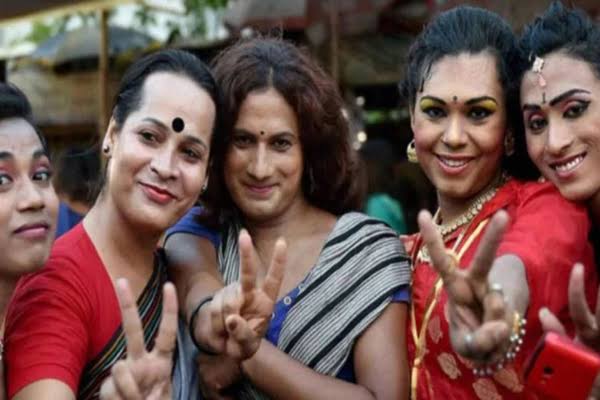
BSF and CRPF are ready to welcome transgenders.

Rights of the transgenders have always been an issue in our country. They constantly had to face communal descrimination and people always kept them aside.

Recently, Ministry of Home Affairs has asked for opinion to the five forces that are SSB, BSF, CRPF, ITBP and CISF about the inclusion of transgenders to be an officer.

BSF had already showed it’s consent now CRPF spread their hands to welcome the transgenders to be the change.

Two days after the Union Ministry of Home Affairs (MHA) asked the paramilitary forces for their views on recruitment of transgender people as officers in their ranks, the Central Reserve Police Force (CRPF) has said it is ready make its force “compatible” to the new recruits.

The CRPF communication refers to the April 15, 2014 judgment of the Supreme Court declaring transgender people as the Third Gender. Following this, Parliament passed the The Transgender Persons (Protection of Rights) Act in 2019.

Sources said other forces are also likely to give a positive response.

World,s Most Famous Photographers.

  • By Tushar Soni

“When words become unclear, I shall focus with photographs. When images become inadequate, I shall be content with silence.”

If you love photography and if you truly want to take unforgettable and moving photographs, you can learn photography by studying the pictures of some famous photographers. Some of the most valued artists are decreased, but some are still delighting us with their photographs. The list below includes some of the most famous photographers that still impact our lives today.

1. Annie Leibovitz is an American portrait photographer. She is best known for her engaging portraits, particularly of celebrities, which often feature subjects in intimate settings and poses. Leibovitz,s polariod of John Lennon and Yoko Ono, taken five hours before Lennon,s murder, is considered Rolling Stone magazine,s most Famous cover photograph.

2. Robert Capa has taken many famous war-time photographs. He has covered five wars, even though the name “Robert Capa” was only the name placed to the photos the Endre Friedman took and that were marketed under the “Robert Capa” name. Friedman felt that if you were not close enough to the subject, then you wouldn,t get a good photograph. He was often in the trenches with soldiers when he took photographs, while most other war photographers took photos from a safe distance.

3. Eliot Porter was an American photographer best known for his intimate colour photographs of nature. He started to photograph birds and the landscapes with Kodak box camera as a child. Porter acquired a Leica in 1930. In 1933, he was powerfully moved by the photographs of Ansel Adams. Ansel encouraged him to work with a large-format camera. Porter did so upon meeting Alfred Stieglitz, who exhibited his work at An American in 1939.

4. Paul Strand was an American photographer who helped to establish photography as an art form in the 20th century. His diverse body of work spanned six decades. He covered many genres and subjects throughout the Americas, Europe, and Africa. Alfred Steiglitz helped influence his modernistic approach. Paul even worked with renowned documentary photographer Lewis Hine. Here,he learned how to capture urban bustle, Formal abstractions, and street portaits.

5. Edward Western was an 20th-century American still life photographer. Over the course pf his 40-year career, Weston photographed an increasingly expensive set of subjects. These included landscapes, still lifes,nudes and portraits. He came to focus on portraits after spending part of his career capturing trees and rocks in California. In 1937, Weston was the first photographer to receive a Guggenheim Fellowship. Over the next two years, he produced nearly 1400 negatives using his 8*10 camera.

6. Steve McCurry is a famous for his photo ‘Afghan girl,’ taken in a refugee camp in Peshawar, Pakistan. This photo was named the most recognized photo of National Geographic. McCurry has photographed many assignments for National Geographic and has been member of Magnum Photos since 1986.

7. Jimmy Nelsson is well-known for his portraits of tribal and indigenous people taken in more than 16 countries. His photos will live to tell the tale. Nelsoon,s book is now a collector,s item.

Disengagement with Chinese Army starts in Galwan Valley as per agreed terms in Corps Commander’s meeting

Disengagement with Chinese Army has started in Galwan Valley as per agreed terms in the Corps Commander’s meeting of the two sides. Army sources said, Chinese forces were seen removing tents and structures at Patrolling Point 14.

AIR correspondent reports that rearward movement of vehicles of Chinese Army seen at General Area Galwan, Hotsprings and Gogra. This development is in line with what the Corps Commanders agreed to on 30th of June at Chushul.

Government sources told AIR News that this is a work in progress and they will have to wait till sunset to see up to what distance the Chinese have retreated. The Indian and Chinese Armies were locked in a standoff in eastern Ladakh recently.

Arrest the virus of Arbitrary power


What is worrisome today is the whimsical curtailment of liberty and brazen partisanship.

In the early days of the lockdown, when COVID-19 cases began to rise, we witnessed a second virus spreading equally rapidly in the country — the virus of communalism. But there is a third virus around which is less spoken about; a virus eating into and severely corroding our democratic structure — the virus of arbitrary power. There is no better evidence of this than the denial of bail to a pregnant student-activist, arrested for creating disorder on an ‘unprecedented scale’ when all she appeared to have done was actively participate, like many others, in a protest against the Citizenship (Amendment) Act, 2019, proposed by the government.

Tyranny and slavery

This arbitrary use of power, implied by the absence or selective use of law, is deeply troublesome. More so, when exercised by a democratically elected government. Frequent arbitrariness in the political domain leads to tyranny, quite like when persistently present in the social sphere, it leads to slavery. Either way, it tramples upon basic freedoms. But what, one might ask, is the connection between arbitrariness and the loss of freedoms?

Individuals, communities or citizens cannot function freely without a stable set of expectations. By stabilising expectations, laws enable significant freedoms, even as they restrict some others. To take just one example, once it is widely known that I am legally restricted to driving only on the left, I drive with greater freedom, knowing that headlong collision is unlikely. I regulate the speed of travel and calculate the time to get from home to office. This helps me schedule my work for the day and coordinate with others who likewise make their own schedules. By jointly accomplishing our goals, we enhance our freedom. Laws enable our actions and interactions to become broadly predictable. Many of our freedoms require that the arbitrary, by which is meant ‘unpredictable, random or unexpected’ does not throw us off balance. The arbitrary blocks freedom.

However, an even more basic feature of arbitrariness, one that produces much greater harm, is to be at the mercy of the whim or fancy of someone else, especially the powerful. Return to the traffic example. Suppose that two vehicles stop at the traffic light but just beyond the zebra crossing. The policeman, embodying the entire might of the state, issues a ticket or a challan to one but not the other. Worse, instead of fining the violators, he seizes the driving licence of a careful driver, who has stopped a good metre behind the crossing, merely because he dislikes the make of his car. Surely, this arbitrary implementation of the law is grossly unjust. This shows that the minutest aspect of daily life — travelling to work — can be dependent upon the arbitrary opinion of someone else. When power is exercised arbitrarily by the state, a person is made to act not in accordance with a legitimate, general rule but at the pleasure of state officials. The most extreme example of this is political enslavement, when an entire people are colonised, subjected to the will of the colonisers, where laws, good or bad, flow from the like and dislike of colonial masters.

The Emergency and now

These examples strengthen my point about an inverse relation between arbitrary political power and freedom. In dictatorships, entire populations are subject to the whim of the supreme leader or a tiny elite. Who did not fear the midnight knock in the regimes of Hitler and Stalin? While the devastation they caused is well chronicled, smaller tyrannies abound in our world too. Even democracies contain authoritarian spaces within them where the law can be used to continuously harass opponents. Anyone who has lived through the Emergency knows that Opposition leaders were thrown in jail on the false charge of conspiring against the state and thereafter a small crack unit began to arbitrarily control the activity of anyone politically significant. Surely that experience should have sufficed to make all of us realise the supreme value of freedom from arbitrary rule. However, with the number of first information reports (FIRs) being filed at the behest of random persons, on unsubstantiated complaints and little explanation, largely uncontested by a tired, silent political Opposition, one begins to wonder if we are headed in that awful direction once again.

Upending rights

Consider the arrest of activists. Article 21 of the Constitution gives every citizen the right of basic liberty and security. No one can be deprived of liberty, held without properly following procedures prescribed by law. Article 22 requires that anyone arrested and detained must be informed of the ground for such an arrest and must be brought before a competent legal authority within a prescribed time frame. Legal scholars have rightly pointed out that the best interpretation of this Article requires that the grounds of arrest and detention must be reasonable. The grounds of preventive detention, to be used in very rare cases, must likewise assume that the suspicion of offence is well-grounded, based on available evidence, on relevant information that satisfies any objective observer, and not on mischievous allegations. But reality seems to confirm what every other Indian movie has shown about police acting on the caprice of a ruling leader, and the law being used to harass citizens. Is suspicion always supported by available facts? Is the ‘offender’ really a threat to internal security, or merely present at the scene of the ‘crime’? Whatever the facts of the case, was the offence committed by a pregnant student-activist so grave that bail could not be granted until yesterday, on her 4th attempt? If ordinary persons could smell arbitrariness here, why could not the sessions judge? Anyhow, why fill our coronavirus-infested jails with what are largely political prisoners, when other countries are releasing even non-political inmates? Minimum lock-up during lockdown should be the political slogan in our catastrophic times.

The Emergency, whose anniversary falls tomorrow, was meant to be a watershed in the life of Indian democracy, a brief, critical phase when the Indian political system could have gone either the way of authoritarian rule or mature as a democracy. By restoring faith in democracy, India appeared to have passed one of its crucial tests and firmly taken the second route. But are we on the verge of giving up the gains from that chastening experience? Has the struggle against the suspension of democracy been in vain? Have a small section of its victims now become perpetrators?
What is worrisome today is the whimsical curtailment of liberty and brazen partisanship.

In the early days of the lockdown, when COVID-19 cases began to rise, we witnessed a second virus spreading equally rapidly in the country — the virus of communalism. But there is a third virus around which is less spoken about; a virus eating into and severely corroding our democratic structure — the virus of arbitrary power. There is no better evidence of this than the denial of bail to a pregnant student-activist, arrested for creating disorder on an ‘unprecedented scale’ when all she appeared to have done was actively participate, like many others, in a protest against the Citizenship (Amendment) Act, 2019, proposed by the government.

Tyranny and slavery

This arbitrary use of power, implied by the absence or selective use of law, is deeply troublesome. More so, when exercised by a democratically elected government. Frequent arbitrariness in the political domain leads to tyranny, quite like when persistently present in the social sphere, it leads to slavery. Either way, it tramples upon basic freedoms. But what, one might ask, is the connection between arbitrariness and the loss of freedoms?

Individuals, communities or citizens cannot function freely without a stable set of expectations. By stabilising expectations, laws enable significant freedoms, even as they restrict some others. To take just one example, once it is widely known that I am legally restricted to driving only on the left, I drive with greater freedom, knowing that headlong collision is unlikely. I regulate the speed of travel and calculate the time to get from home to office. This helps me schedule my work for the day and coordinate with others who likewise make their own schedules. By jointly accomplishing our goals, we enhance our freedom. Laws enable our actions and interactions to become broadly predictable. Many of our freedoms require that the arbitrary, by which is meant ‘unpredictable, random or unexpected’ does not throw us off balance. The arbitrary blocks freedom.

However, an even more basic feature of arbitrariness, one that produces much greater harm, is to be at the mercy of the whim or fancy of someone else, especially the powerful. Return to the traffic example. Suppose that two vehicles stop at the traffic light but just beyond the zebra crossing. The policeman, embodying the entire might of the state, issues a ticket or a challan to one but not the other. Worse, instead of fining the violators, he seizes the driving licence of a careful driver, who has stopped a good metre behind the crossing, merely because he dislikes the make of his car. Surely, this arbitrary implementation of the law is grossly unjust. This shows that the minutest aspect of daily life — travelling to work — can be dependent upon the arbitrary opinion of someone else. When power is exercised arbitrarily by the state, a person is made to act not in accordance with a legitimate, general rule but at the pleasure of state officials. The most extreme example of this is political enslavement, when an entire people are colonised, subjected to the will of the colonisers, where laws, good or bad, flow from the like and dislike of colonial masters.

The Emergency and now

These examples strengthen my point about an inverse relation between arbitrary political power and freedom. In dictatorships, entire populations are subject to the whim of the supreme leader or a tiny elite. Who did not fear the midnight knock in the regimes of Hitler and Stalin? While the devastation they caused is well chronicled, smaller tyrannies abound in our world too. Even democracies contain authoritarian spaces within them where the law can be used to continuously harass opponents. Anyone who has lived through the Emergency knows that Opposition leaders were thrown in jail on the false charge of conspiring against the state and thereafter a small crack unit began to arbitrarily control the activity of anyone politically significant. Surely that experience should have sufficed to make all of us realise the supreme value of freedom from arbitrary rule. However, with the number of first information reports (FIRs) being filed at the behest of random persons, on unsubstantiated complaints and little explanation, largely uncontested by a tired, silent political Opposition, one begins to wonder if we are headed in that awful direction once again.

Upending rights

Consider the arrest of activists. Article 21 of the Constitution gives every citizen the right of basic liberty and security. No one can be deprived of liberty, held without properly following procedures prescribed by law. Article 22 requires that anyone arrested and detained must be informed of the ground for such an arrest and must be brought before a competent legal authority within a prescribed time frame. Legal scholars have rightly pointed out that the best interpretation of this Article requires that the grounds of arrest and detention must be reasonable. The grounds of preventive detention, to be used in very rare cases, must likewise assume that the suspicion of offence is well-grounded, based on available evidence, on relevant information that satisfies any objective observer, and not on mischievous allegations. But reality seems to confirm what every other Indian movie has shown about police acting on the caprice of a ruling leader, and the law being used to harass citizens. Is suspicion always supported by available facts? Is the ‘offender’ really a threat to internal security, or merely present at the scene of the ‘crime’? Whatever the facts of the case, was the offence committed by a pregnant student-activist so grave that bail could not be granted until yesterday, on her 4th attempt? If ordinary persons could smell arbitrariness here, why could not the sessions judge? Anyhow, why fill our coronavirus-infested jails with what are largely political prisoners, when other countries are releasing even non-political inmates? Minimum lock-up during lockdown should be the political slogan in our catastrophic times.

The Emergency, whose anniversary falls tomorrow, was meant to be a watershed in the life of Indian democracy, a brief, critical phase when the Indian political system could have gone either the way of authoritarian rule or mature as a democracy. By restoring faith in democracy, India appeared to have passed one of its crucial tests and firmly taken the second route. But are we on the verge of giving up the gains from that chastening experience? Has the struggle against the suspension of democracy been in vain? Have a small section of its victims now become perpetrators?

Heavy rains in Mumbai

Every year Mumbai experiences days where there is heavy rains which creates a pause in the life of people for sometime. like the local trains becomes late, or the railway tracks are submerged inside the water. Every year we hear the news of the Sion railway station filled with water and people are struck in many different places. The conditions never get better. Mumbai rain always brings out some difficulties with it, it clogs the drainage or sometimes even some bridges falls due this heavy rains. This year also the history was repeated. For three consecutive days it is been raining and the Indian meteoritical department has warned that the heavy rains will continue for next two days. There would be rain and thunder shower in places like Mumbai, Mumbai suburban, Palghar, Pune, Raigad and Thane. Also yellow alert has been declared in isolated places of these districts. Mumbai police has requested citizens to be away from the seashore and stay at home if possible.They have also urged the fisherman at Maharashtra to Goa coast to cancel their fishing venture for today.

The Brihan Mumbai Muncipal coorporation that is the BMC has said that a high tide of 4.67 metres is also expected at one thirty at the noon.  High tide is the highest elevation of water, that means if you stand there the moon will be directly over you, jokes apart don’t go and stand there to experience it, a very dangerous adventure to take. The IMD has also said there there would be strong winds of  fifty to sixty kilometre per metre.

As the after effects of this rain can be seen already, though because of this pandemic lockdown there is no effect to people’s life in the magnitude that would effect till last year.

Water logging has been reported in many places like  Chembur, Vadala,Dharavi, Andheri, Hindmata junction, Khar subway, Milan subway and Dahisar subway. These are the main places of residential areas in Mumbai and every year there is this problem arising but there is no solution to these. These areas are more prone because they are relatively low lying areas in Mumbai and they tend to get flooded easily every time.

The Powai lake has started overflowing in the morning, because of which there is flooding in the road. The Colaba weather station in Mumbai recorded one sixty nine milimetres of rain during the last twenty four hours. Shanties in Bandra near the Sea hit the high tides.

The places in the Interior of Maharashtra has also recieved a fair amount of rains. In Navi Mumbai and Thane there was very intense rain fall and there was a record of 200 mili metre rain today.  A Vacant and stand alone building in Thane west fell shortly after the rains started. There were some trees branches falling which lead to a traffic jam in many parts of Mumbai.

So that is the record of the Mumbai records yet , thankfully there is no case of injuries or casualties but the weather department has warned about heavy rains in next 2 days so take care of yourself.

Why China is being aggressive at LOC

Its moves are influenced by a large group of components — from the breaks in the worldwide request to the decrease of India’s savvy power.

The progressing pressures along the Line of Actual Control (LAC) represent the greatest national security challenge to New Delhi in any event 20 years. The conflicts in Galwan Valley in eastern Ladakh have guaranteed 20 Indian carries on with, the main episode of fatalities on the India-China outskirt in 45 years. China has resuscitated its case on the whole Galwan Valley and has requested that India pull over from the zones. Satellite pictures in the open space recommend that China has set up guard positions in the valley just as the contested “Fingers” of Pangong Tso. The two sides are occupied with a go head to head at Hot Springs. Regardless of different rounds of military-level talks, strains are probably not going to ease given the multifaceted nature of the ground circumstance.

What prompted the current circumstance? In 2017, India and China consented to agreeably resolve the Doklam stalemate that went on for over two months. No blood was spilt at that point, and no shots discharged. The National Democratic Alliance government drove by Prime Minister Narendra Modi has been mindful so as not to disturb China’s residential and international sensitivities. Excepting intermittent joint articulations gave with pioneers from the U. S. also, Asia-Pacific nations, reasserting India’s promise to “opportunity of route” (a hidden analysis of China’s cases over the South China Sea), India has avoided reprimanding China on questionable points, regardless of whether its “de-radicalisation” camps in Xinjiang, crackdown on fights in Hong Kong, or debates with Taiwan. However China decided to build strains along the LAC. Why?

Salami cut methodology

One well known contention is that China’s turn, driven by neighborhood factors, for example, India’s foundation redesign and its choice to change the status of Jammu and Kashmir and Ladakh, was careless. For some square kilometers of land, this contention goes, China has lost India deliberately, toward the West. A few specialists have guaranteed that the strains on the fringe are driving India more profound into a vital grasp with the U. S. Be that as it may, it’s not as simple as it appears. There is a reasonable move in Chinese international strategy post the COVID-19 flare-up. This is found in China’s rising pressures with the U. S. , its dangers against Taiwan, rehashed maritime occurrences in the South China Sea, and another security law for Hong Kong. The strains along the LAC are a piece of this move. To comprehend this move, one needs to get a feeling of the wellsprings of China’s lead.

The present China is an eager rising force which needs to reorient the worldwide request. In contrast to the Soviet Union of the 1940s (in the beginning phases of the Cold War), China isn’t an ideological express that means to send out socialism to different nations. Be that as it may, similar to the Soviet Union of the post-war world, China is the new superpower on the square. At the point when it was rising, China had received distinctive strategic positions — “conceal your ability and stick around for your opportunity”, “serene ascent” or “tranquil turn of events”. That time is finished. Under President Xi Jinping, the Chinese think they have shown up. With the worldwide economy in the doldrums, globalization in a hopeless emergency emphasizd by the COVID-19 episode, and the U. S. under an independent President taking the most forceful situation towards China since Richard Nixon, Beijing accepts the worldwide request is at a limit. It is retaliating through what game scholars call “salami strategies” — where a predominant force endeavors to build up its authority piece by piece. India is one cut in this salami cut system.

View of decay

China doesn’t consider India to be a ‘swing state’ any more. It considers India to be a partner in-progress of the U. S. Its activities were not careless, taken at the danger of losing India deliberately. Its activities are a consequence of the vital misfortune that has just occurred. On the off chance that India is the thing that numerous in the West call the “stabilizer” to China’s ascent, Beijing’s distinct message is that it isn’t hindered by the stabilizer. This is a message to India, yet to a large group of China’s adversaries that are collaborating and anxious to enroll India to the club.

Inside this more extensive system there could be a large group of components — nearby, provincial and worldwide — that affected China’s moves. At the point when the majority of the world’s enormous forces are wrestling with the pandemic, revisionist powers, for example, China have more space for international moving . Europe has been crushed by the infection. The U. S. is fighting in a political decision year the COVID-19 episode just as the most profound financial emergency since the Great Depression. Its worldwide authority is unwinding quick. The Indian economy was in a difficult situation even before COVID-19 struck the nation, hindering its ascent. Social change over the Citizenship (Amendment) Act (CAA), 2019, and the National Register of Citizens had debilitated the Indian commonwealth. India’s conventional clout in its neighborhood was slipping: strains with Pakistan have been high keeping the soldiers involved in the outskirt regions; Nepal raised limit issues with India; Sri Lanka is expanding its international strategy and China is making profound advances into that locale; and Bangladesh was profoundly annoyed with the CAA. Indeed, even in Afghanistan, where Pakistan, China, Russia and the U. S. are engaged with the progress procedure, India is out. Progressively significant, a year ago’s Balakot airstrike was deliberately tragic. It might have helped Prime Minister Modi win a re-appointment, yet there was no proof that demonstrated that Indian strikes hit the aggressors. India lost a fly to the neighbor and its pilot was caught and later discharged by Pakistan. The entire activity uncovered the chinks in our defensive layer, disintegrating India’s discouragement. A conversion of every one of these elements, which point to a decrease in the nation’s keen force, permitted China to make forceful proceeds onward the LAC.

This is a key snare. India has reached here incompletely in light of the absence of profundity in its key reasoning. A profound grasp of a declining U. S. isn’t an answer the same number of contend; rather, it’s a piece of the issue. Pakistan grasped a far steadier U. S. during the Cold War to check India. What befell Pakistan from that point ought to be an exercise for India. What India needs is a national security methodology that is decoupled from the impulses of residential legislative issues and tied down in neighborhood authenticity. It should face China’s harassing on the fringe now, with a drawn out spotlight on improving limits and winning back its amicable neighbors. There are no convenient solutions this time.

FLOWER:-THE MOST EYE CATCHING THING!

Hello everyone today we are going to know about the most beautiful and eye catching thing in the world, it is nor other than flower.The most beautiful thing in the world which enhances more beauty of the world.Have you ever thought earth without flowers?It is impossible to thing as the flowers are from gift from our nature which sometimes makes us speechless or so astonished.It feels so wonderful having full of flowers in garden.

Flowers spread us joy and happiness. When see some beautiful flowers we automatically so much energetic and happiness that is way when people go on date or visit to some place they take flower bouquets with them so that the other person will be happy. The spreading of sweet fragrance stimulates our body into full energetic and happy mood.By the fragrance we feel that our mind and soul are in in relax mode.In different flowers there are different types of fragrance.

So now we will talk about the most beautiful flowers in our world and their facts.Let’s start!

1.You all have guessed which flower is number 1. The flower is one and only Rose.

Rose the most beautiful flower in whole world.It’s other name is ” Queen of the Garden”. In whole world this flowers come in different sizes and colors in different part of the world.This is flowers are used for mainly making of perfumes.

There are some facts about Rose.They are:-

First this is the oldest flower to be believed more than 1000 years ago.

Second Rose grow very tall.The highest recorded height was 23 feet tall or 7 meter high.

Third there are more than 100 species of Rose.

Fourth the rose also grow into fruit. Rose hip are known as Fruit.

Fifth the rose hip of some species of rose are full of vitamin C.

Sixth the Rose is the flower who known as the ancient symbol of love. Till now also it has been the symbol of love.

So these were the facts of rose.

Let’s move to the next Flower.

2.Hydrangea the second most beautiful flower of the world.

This are the spring flower found in Southern Asia of the world. There is day celebrated for this flower, the day is 5th January. It is dry flower but it is very beautiful for decoration.

So let’s know some fact about Hydrangea.

First there are about 70-75 species of hydrangea.

Second for those who eats flower you can’t these flower as it is the most toxic flower.

Third this flowers are found in early spring to late autumn.

Fourth in America there considered to be made a society for those love hydrangea flower.

3. Dicentra also known as the “Bleeding-Heart”.

This flower actually looks it has a heart which is bleeding. This flower are similar to hydrangea and also found in Asia.This flowers also are in different colors like pink, red etc.

The facts on Dicentra are:-

First it stores the energy and nutrients in beginning of the spring for the development of flowers and leaves.

Second this plants can easily cause skin irritation to humans.

Third in this plant all parts are very poisonous.

Fourth it the fire resistant plant and can tolerate easily the drought.

So this are the most beautiful flowers in the world.I hope you like this flowers.There are some others flower like Cherry blossom,orchid,Tulip,Freesia, Lotus Flower etc.

I hope you like my article. Let me know in comment which flower you like.

Thank you for reading my article and have a nice day!

Making sense of China’s calculation

Experts ought to have thought about the pandemic’s effect on its economy and India’s vital arrangement with the U. S.

What strategy organizers in Delhi, and perhaps those in Beijing, have since quite a while ago dreaded, viz. , a face to face showdown prompting deadly losses, happened in the Galwan statures in the late night of June 15. The quantity of losses, 20 on the Indian side was the most elevated since 1967, and incorporated that of a high positioning Colonel of the Bihar Regiment. The quantity of setbacks on the Chinese side has not been officially demonstrated, however they have yielded that in any event one Colonel was among those executed.

No abnormality

With this episode, it ought to have been evident that the bite the dust was given a role as respects the fate of China-India relations. By the by, there was a glimmer of expectation when evidently the Corps Commanders of India and China on June 22-23 seemed to arrive at a “shared accord” to withdraw and leave on bringing down “strains” through a “steady and obvious separation”. This demonstrated shortlived, with the Chinese post in the Galwan zone not exclusively being reestablished, yet in addition, from satellite pictures accessible, greater in size than previously.

What happened in the Galwan statures on June 15, must not, subsequently, be seen as a distortion . It would be progressively prudent to see it as meaning another and irritable stage in China-India relations. Regardless of whether the circumstance returns to what in particular existed in mid-April (profoundly impossible), India-China relations seem set to observe “another and distinctive typical”.

The discussion on the Indian side has so far been to a great extent constrained to China’s dishonesty in disregarding the norm. Previous Prime Minister Manmohan Singh for example, blamed China for “audaciously and illicitly looking to guarantee portions of Indian Territory, for example, the Galwan Valley and Pangong Tso”. Adding flavor to the discussion was the Prime Minister’s announcement at an all-party meeting on June 19 to talk about the fringe issue, that “there was no interloper on our property now and no post in anybody’s care”, which raised the Opposition’s temper.

China’s response has been steady — India must move out of Galwan. This is something that India can’t disregard any more. What occurred in the Galwan statures can’t be seen as a negligible replay of what occurred in Depsang (2013), Chumar (2014) and Doklam (2017). This is another and diverse circumstance and India must not contract from tending to the center issue that relations among India and China are in a risky state.

China’s affirmation of its case to the entire of the Galwan Valley needs close and cautious investigation. For one, Point 14 gives China a virtual stranglehold over the recently finished, and deliberately noteworthy, Darbuk-Shyok-Daulat Beg Oldie Road, which leads on to the Karakoram Pass. For another, the vital ramifications for India of China’s emphasis on keeping the entire of the Galwan Valley are not kidding as it in a general sense changes business as usual. At last, by making a case for the Galwan Valley, China has revived a portion of the issues left over from the 1962 clash, and exhibits that it is eager to set out on another showdown.

Vagueness has existed with respect to the Line of Actual Control (LAC) in this division; the Chinese “guarantee line” is that of November 1959, while for India the LAC is that of September 1962. As of late, the two sides had avoided reviving the issue, yet China has never surrendered its cases. By its one-sided announcement now, China is looking to settle the issue in support of its. India needs to match this test.

Significance of Aksai Chin

A charge that could be leveled against progressive organizations in Delhi as of late is that while China has reliably declared its cases over the entire of Aksai Chin, India has decided to neglect China’s later stances in this locale. The significance of Aksai Chin for China has incredibly expanded generally, as it gives direct network between two of the most grieved districts of China, viz. , Xinjiang and Tibet. This doesn’t appear to have been satisfactorily considered in to our estimations. While Indian approach producers saw the renaming of Ladakh as simply an interior issue, they disregarded the way that for China’s military organizers, the cutting out of Ladakh into a Union Territory (followed later by Home Minister Amit Shah’s announcement a year ago making a case for the entire of Aksai Chin) placed a danger to China’s tranquility and peacefulness.

On insight evaluation

It is in this specific situation, that questions are presently being raised about the disappointment of knowledge. It is aphoristic that pioneers settle on better choices when they have better data, and the suffering estimation of insight originates from this central reality. Truly, the planning and nature of China’s activities ought to have excited distinct fascination for knowledge hovers about China’s vital computations. The Chinese develop in the Galwan Valley, Pangong Tso and Hotsprings-Gogra didn’t require any incredible insight exertion, since there was little endeavor at camouflage by the Chinese. India additionally has top notch symbolism knowledge (IMINT) and signs insight (SIGINT) abilities, conveyed between the National Technical Research Organization, the Directorate of Signals Intelligence of the Ministry of Defense and different offices, which made it conceivable to follow Chinese development.

Where, maybe, insight can be blamed is with respect to lacking energy about what the development implied, and what it predicted for India. This is characteristic of a shortcoming in understanding and investigation of the insight accessible, as additionally a powerlessness to give an intelligible appraisal of China’s genuine expectations. Insight evaluation of China’s expectations, unmistakably missed the mark regarding what was required.

It is simultaneously obvious that while India’s innovative abilities for insight assortment have limitlessly expanded as of late, the limit with respect to translation and examination has not stayed up with this. Advances in innovation, uncommonly Artificial Intelligence have, over the world, enormously expanded endeavors at insight investigation. It is a debatable issue whether such abilities were utilized in this occurrence.

The inability to disentangle China’s aims in time is no uncertainty disastrous, yet it must be comprehended that interpreting China’s goals, understanding the Chinese brain (which will in general be relevant and social), and attempting to understand Chinese reasoning, are a very troublesome undertaking whenever. All things considered, since a year ago when China’s economy started to give indications of a decay followed by the COVID-19 pandemic, China is known to have gotten very delicate to what it saw as endeavors by others to abuse its shortcoming. It has frequently felt constrained to exhibit that no country should endeavor to misuse the circumstance to China’s burden. India’s insight and strategy experts clearly neglected to dissect this perspective sufficiently, while attempting to comprehend China’s most recent forward push.

Another of China’s present distraction, viz. that India is feeling encouraged due to its developing key arrangement with the United States, ought to likewise have been satisfactorily considered by the experts, in any appraisal of putative Chinese reactions.

The key obligation regarding knowledge appraisal and investigation concerning China, rests with the National Security Council Secretariat (NSCS) and India’s outside insight organization, the Research and Analysis Wing (R&AW), and less significantly, the Defense Intelligence Agency. It may not, maybe, not be right to gather that the choice of the NSCS to destroy the Joint Intelligence Committee has added to a debilitating of the knowledge evaluation framework. On account of the R&AW, absence of area mastery, and an insufficiency of China pros may likewise have been a contributory factor.

Impediments of culmination meets

We can’t likewise limit the unfriendly effect of certain arrangement objectives. For one, the inclination offered as of late to Summit discretion over conventional international strategy making structures end up being a serious debilitation. Highest point strategy can’t sub for painstakingly organized remote office strategy making. Any number of occurrences of this nature are accessible. Head administrator Neville Chamberlain of Great Britain was probably the most punctual casualty of Summit strategy. The unfortunate gathering between Prime Minister Indira Gandhi and U. S. President Richard Nixon had long haul antagonistic ramifications for India-U. S. relations. Head administrator Manmohan Singh and U. S. President George W. Shrubbery established a compatibility through continuous Summit gatherings, however this was the special case as opposed to the standard.

At present, India’s Summit strategy has would in general underestimate the External Affairs Ministry with respect to strategy making, and we are presumably taking care of it. For what it’s worth, the Ministry of External Affairs’ (MEA) load of China specialists is by all accounts waning , and its general tilt towards the U. S. in many issues, has brought about an irregularity in the manner in which the MEA sees issues and circumstances.

8 Genuine ways to earn money from your home!!!

Here are some of the genuine ways to earn in your spare time without any investment.

  1. Transcriber: average earnings per month is hundred and fifty. All you need is actually to have a good pair of headphones and of course you need to get stored to type there now there is a few other sites so you can’t only rely of course on hundred and fifty dollars average earning per month but if you are good at this you can actually earn of course much more but what you can do is you can become a transcriber. rev.com is another site here as a transcriptionist you can anywhere from 24 to 90 cents per audio/video minute basically you can be a video captioner also which is pretty much the same here and you can earn anywhere from 45 cents up to 75 cents.
  2. Micro tasks you can do this on my.com in your spare time you get paid for completing simple tasks here so it can be anything from like tagging objects here helping companies select the best picture the audit user classifying you can see that there is tons of opportunities. Rapidworkers.com is another site where you can earn a decent amount just by doing some micro taskes.
  3. Data entry jobs on Amazon on rapid workers there is micro workers also but there is also assigned like a clickworkercalm.com. You just sign up for a free account and you work independently your schedule is flexible and all you need is a computer and of course and/or a mobile device with an internet connection and it’s totally up to you how much you want to work. You can do text creation, copy editing, research surveys, mystery visit, app testing and photo capturing a lot of opportunities that you can earn money from the comfort on clickworker.com.
  4. Virtual assistant one of my favorite sites is virtual assistant jobs calm and basically you can apply for data entry, call center whatever comes into your mind you can get started here and apply and search for it you might be available only to do this on part time so you can search for part-time flexible with contracts. Jobs.com helps us out there by providing all types of virtual assistance jobs.
  5. Online tutoring if you’re good at something math or English or something like that one side is a shag.com , VIP kid teachers.com which is basically they teach English here and you can earn up to twenty two dollars per hour teaching. There are many students who want to learn extra and out of their books so here comes opportunity by teaching them.
  6. Freelancer totally depends on your skills. There is other popular freelance sites like upwork.com there is freelancer.com there is people per hour so a lot of options actually that you can apply for here as a freelancer. Freelancing is one of the best option as you can work also on your niche and can enhance it for future use.
  7. Affiliate marketer and the good thing with affiliate marketing is that you don’t have to deal with shipping you don’t have to deal with anything at all. You need is just grab a link and promote that offer whatever it is and of course you earn a commission okay so one of the most popular platforms is Clickbank.com. They have thousands of products here probably one of the most popular niches will be health and fitness. You just grab a link here and what you do is you use this link to promote it you can use something like bitly to shorten this ugly link of course and then all you need to do is drive traffic to this offer. Amazon is another option that you can make money as an affiliate marketer they have millions of products here that you can promote ok you can earn a commission from anything you promote inside Amazon here so it works the same way it totally depends on your niche here how you can drive traffic to it.
  8. Sell stuff on eBay you have available that you don’t use at your home you can get stored there to sell this or you can actually use this platform to buy something and sell it much higher. So, you can be a sort of a middleman here so this is another option tons of ways and opportunities to make money eBay and you can of course do this from your home without any investment.


OTTs & Its impact on Youths.


Its very obvious for our parents to mock at us by teasing that how we would prefer to start our day –taking a tooth brush in our hand or with the shitty Android smart phones; though for most of us the word shitty implying to our extraordinary smart gadget of entertainment may be a lil bit annoying. In this world of internet, every information, news, education related stuffs, games and above all entertainment are easily available within our palm. 

Watching television is like out of the trend, actually its true indeed our generation somewhere lacks time and patience both but even comes to the group called the early majority, the sharpeness and thoughts regarding to the new innovations is quite commendable which has given rise to ample of advancements in the field of science and technologies and subsequently led to the rise in OTTs (over-the-top). Thus OTTs platforms has given a great opportunity for the youths to showcase their talents and thus provides lots plof employments to the people of this era, though there are innumerable criticisms and controversies regarding the concept how they make high profits through small screen and regulate big way to income using the youths. The emerging and popular OTTs like Netflix, Amazon Prime Video, SonyLiv, Zee5, Hotstar etc. Now the point is that these OTTs have already threatened DTH services so we can\’t even imagine how the within such a short period of time the OTTs have put its magical impact to our generation.

And behind their popularity there lies an awesome strategy to make their contents with lots of spices and bold scenes in them.They usually target to catch people from a specific age group or community and make their contents accordingly. Nowadays every other youngsters have the subscriptions of one or more than one OTT at a time because not only for the fact that they provide contents with much more bold scenes but also they strategize to make these tales & web series available at a very low cost. 


Basically, we in our super hectic and busy schedule prefer watch movies & web series during those small breaks in between the work loads to make ourselves get a bit charged while making the mood light & fresh as well, then again paused and continue with our respect assignments or works so subsequently the scenario goes on. Its a truth that now they tries to capture the greater audiences from the youths making relatable contents in web series like Kota Factory, Four More Shots Please, etc. 
The era of popular web series started from Game of Thrones to the Indian originals now even in various regional languages . 

In brief we can conclude that yes the way to get entertainment via OTTs has developed a separate fanbase among our generation and it will continue to do so if it succumbs for giving such spicy and versatile contents. At the same time its a very vital message to our youths not to get any sort of addiction while watching those web series with adults contents especially below 18 yrs. folks should able to take the differences between the reel and real and thus must be well informed before they get access to such web series having more adults contents. We must kept in mind the practical life and scenes on screens no matter big or small they varied a lot and made only for making enormous profits so without wasting much time or get any kind of addiction can watch them just for entertainment . 


How to control your mind & thoughts through Vipassana Meditation


mind_control-01

A Non-Sectarian Technique

Vipassana meditation is for the purification of the mind. It is the highest form of awareness—the total perception of the mind-matter phenomena in its true nature. It is the choiceless observation of things as they are. Vipassana is the meditation the Buddha practiced after trying all other forms of bodily mortification and mind control, and finding them inadequate to free him from the seemingly endless round of birth and death, pain and sorrow. It is a technique so valuable that in Burma it was preserved in its pristine purity for more than 2,200 years.

Vipassana meditation has nothing to do with the development of supernormal, mystical, or special powers, even though they may be awakened. Nothing magical happens. The process of purification that occurs is simply an elimination of negativities, complexes, knots, and habits that have clouded pure consciousness and blocked the flow of mankind’s highest qualities—pure love (mettā), compassion (karuṇā), sympathetic joy (muditā), and equanimity (upekkhā).

There is no mysticism in Vipassana. It is a science of the mind that goes beyond psychology by not only understanding, but also purifying, the mental process. The practice is an art of living which manifests its profound practical value in our lives—lessening and then eliminating the greed, anger, and ignorance that corrupt all relationships, from the family level to international politics. Vipassana spells an end to daydreaming, illusion, fantasy—the mirage of the apparent truth. Like the sizzling explosion of cold water being thrown on a red-hot stove, the reactions after bringing the mind out of its hedonistic tendencies into the here and now are often dramatic and painful. Yet there is an equally profound feeling of release from tensions and complexes that have for so long, held sway in the depths of the unconscious mind. Through Vipassana anyone, irrespective of race, caste, or creed, can finally eliminate those tendencies that have woven so much anger, passion, and fear into our lives. During the training a student concentrates on only one task—the battle with his own ignorance. There is no guru worship or competition among students. The teacher is simply a well-wisher pointing the way he has charted through his own long practical experience. With continuity of practice, the meditation will quiet the mind, increase concentration, arouse acute mindfulness, and open the mind to the supramundane consciousness the “peace of nibbāna (freedom from all suffering) within.”

As in the Buddha’s enlightenment, a student simply goes deep inside himself, disintegrating the apparent reality until in the depths he can penetrate even beyond subatomic particles into the absolute. There is no dependence on books, theories, or intellectual games in Vipassana.

The truth of impermanence (anicca), suffering (dukkha), and egolessness (anattā) are grasped directly with all the enormous power of the mind rather than the crutch of the intellect. The illusion of a “self,” binding the mental and physical functions together, is gradually broken. The madness of cravings and aversions, the futile grasping of “I, me, mine,” the endless chatter and conditioned thinking, the reaction of blind impulse—these gradually lose their strength. By his own efforts, the student develops wisdom and purifies his mind.


The foundation of Vipassana meditation is sila—moral conduct. The practice is strengthened through samadhi—concentration of the mind. And the purification of the mental processes is achieved through panna—the wisdom of insight. We learn how to observe the interplay of the four physical elements within ourselves with perfect equanimity, and find how valuable this ability is in our daily lives. We smile in good times, and are equally unperturbed when difficulties arise all around us, in the certain knowledge that we, like our troubles, are nothing but a flux, waves of becoming arising with incredible speed, only to pass away with equal rapidity.

Although Vipassana meditation was developed by the Buddha, its practice is not limited to Buddhists. There is no question of conversion—the technique works on the simple basis that all human beings share the same problems, and a technique that can eradicate these problems will have a universal application. Hindus, Jains, Muslims, Sikhs, Jews, Roman Catholics, and other sects have all practised Vipassana meditation, and have reported a dramatic lessening of those tensions and complexes that affect all mankind. There is a feeling of gratefulness to Gotama, the historical Buddha, who showed the way to the cessation of suffering, but there is absolutely no blind devotion.   The Buddha repeatedly discouraged any excessive veneration paid to him personally. He said, “What will it profit you to see this impure body? Who sees the teaching—the Dhamma—sees me.”

Although Vipassana is a part of the Buddha’s teaching, it contains nothing of a sectarian nature, and can be accepted and applied by people of any background. The Buddha himself taught Dhamma (the way, the truth, the path). He did not call his followers “Buddhists”; he referred to them as “Dhammists” (those who follow the truth).

Vipassana courses are open to anyone sincerely wishing to learn the technique, irrespective of race, caste, faith or nationality. Hindus, Jains, Muslims, Sikhs, Buddhists, Christians, Jews as well as members of other religions have all successfully practiced Vipassana. The malady is universal; therefore, the remedy has to be universal. For example, when we experience anger, this anger is not Hindu anger or Christian anger, Chinese anger or American anger. Similarly, love and compassion are not the strict province of any community or creed: they are universal human qualities resulting from the purity of mind. People from all backgrounds who practice Vipassana find that they become better human beings.

The Present-day World Environment

Developments in the fields of science and technology, in transportation, communications, agriculture and medicine, have revolutionized human life at the material level. But, in actuality, this progress is only superficial: underneath, modern men and women are living in conditions of great mental and emotional stress, even in developed and affluent countries.

The problems and conflicts arising out of racial, ethnic, sectarian and caste prejudices affect the citizens of every country. Poverty, warfare, weapons of mass destruction, disease, drug addiction, the threat of terrorism, epidemics, environmental devastation and the general decline of moral values—all cast a dark shadow on the future of civilization. One need only glance at the front page of a daily newspaper to be reminded of the acute suffering and deep despair which afflict the inhabitants of our planet.

Is there a way out of these seemingly insolvable problems? The answer is unequivocally, yes. All over the world today, the winds of change are readily apparent. People everywhere are eager to find a method which can bring peace and harmony; restore confidence in the efficacy of wholesome human qualities; and create an environment of freedom and security from all types of exploitation—social, religious and economic. Vipassana can be such a method.

mind_control-01.jpgVipassana and Social Change

The technique of Vipassana is a path leading to freedom from all suffering; it eradicates craving, aversion and ignorance which are responsible for all our miseries. Those who practice it remove, little by little, the root causes of their suffering and steadily emerge from the darkness of former tensions to lead happy, healthy, productive lives. There are many examples bearing testimony to this fact.

Several experiments have been conducted at prisons in India. In 1975, Mr. S. N. Goenka conducted a historic course for 120 inmates at the Central Jail in Jaipur, the first such experiment in Indian penal history. This course was followed in 1976, by a course for senior police officers at the Government Police Academy in Jaipur. In 1977, a second course was held at the Jaipur Central Jail. These courses were the subject of several sociological studies conducted by the University of Rajasthan. In 1990, another course was organized in Jaipur Central Jail in which forty life-term convicts and ten jail officials participated with very positive results.

In 1991, a course for life-sentence prisoners was held at the Sabarmati Central Jail, Ahmedabad, and was the subject of a research project by the Department of Education, Gujarat Vidyapeeth.

The Rajasthan and Gujarat studies indicated definite positive changes of attitude and behaviour in the participants, and demonstrated Vipassana is a positive reform measure enabling criminals to become wholesome members of society.

In 1995, a massive course was organised for 1000 prisoners in Tihar jail with far-reaching effects. Vipassana was adopted as a prison reform technique in the largest jails of India. A detailed report of the scientific studies carried out to assess the impact of Vipassana meditation on the prisoner’s mental health proves that Vipassana is capable of transforming criminals into better human beings.

The civil service career of S. N. Goenka’s meditation teacher, Sayagyi U Ba Khin, is an example of the transformative effect of Vipassana on government administration. Sayagyi was the head of several government departments. He succeeded in instilling a heightened sense of duty, discipline and morality in the officials working under him by teaching them Vipassana meditation. As a result, efficiency dramatically increased, and corruption was eliminated. Similarly, in the Home Department of the Government of Rajasthan, after several key officials attended Vipassana courses, decision-making and the disposal of cases were accelerated, and staff relations improved.

The Vipassana Research Institute has documented other examples of the positive impact of Vipassana in such fields as health, education, drug addiction, government, prisons and business management.

These experiments underscore the point that societal change must start with the individual. Social change cannot be brought about by mere sermons; discipline and virtuous conduct cannot be instilled in students simply through textbook lectures. Criminals will not become good citizens out of fear of punishment; neither can caste and sectarian discord be eliminated by punitive measures. History is replete with the failures of such attempts.

The individual is the key: He or she must be treated with love and compassion; he must be trained to improve himself — not by exhortations to follow moral precepts, but by being instilled with the authentic desire to change. He must be taught to explore himself, to initiate a process which can bring about transformation and lead to purification of mind. This is the only change which will be enduring.

Vipassana has the capacity to transform the human mind and character. It is an opportunity awaiting all who sincerely wish to make the effort.


HEALTH :-THE MOST IMPORTANT IN OUR LIFE!

Hello every one today we are going discuss the most important which we used maintain it properly, that is nor other than Health. Health is the most important think in the world.If we doesn’t keep us healthy we have to undergo through different types of diseases. Now a days we are reading different types of books, or watching workouts some people do workout and some doesn’t. In first some people think they can do workout perfectly but later on they looses interest on keeping fit themselves.If we consider strongly that we can do workout and keep fit ourselves then nobody or type disease will affect you.

To maintain good health we must eat vegetables,fruits also we should make perfect timetable of everything so then only we can keep our-self fit.Buddha said that ” To keep the body in good health is a duty, otherwise we shall not be able to keep our mind strong and clear”. Actually Buddha said correct that we should maintain our good health otherwise we will not have strong mind.The most important to have strong mind and this can be only done keeping our-self healthy.

Do you know when you are physically fit you will feel that you are in the top of the world.If we don’t keep our-self healthy we have regularly visit to the doctor and pay off all your salary to the doctor.Do you want that the money which you earn by many efforts want to give all to the doctor? Think about it! If you don’t want then start to be living in healthy lifestyle or it’s your choice!

You must heard that An apple keeps doctor away.You all must have heard in your childhood. They tell us like these as we will avoid to cause some disease to us. It not only mention about one apple its been telling to eat every type of fruits and vegetables to not to go to the doctor and got injected!It is the most precious gift given to us as we are not gods we have to keep ourselves healthy so that we can live more in old age without any problems in our body.Emotions also affect our health. Sometimes when we heard some sudden news or sad news we get a panic attack because our heart cannot bear the news.If we have done exercises workouts and more thing we would have less chance of attack. There are many types of emotions like sad,greed,jealousy etc this all affects our health.

If we always try to be happy, it will increase our life as by laughing and being happy our health becomes stronger. We can say that Laughter is the best medicine for better health.We should keep ourselves healthy so we can deal with every situation in our life.

If you are very rich person but repeatedly you have get sick or you have many health problem so what is the use of money? Money is not more important than healthy life.If you have healthy life then you should know that you are the more richest person in the world.As money cannot buy our happiness and healthy life, so if are once determined to keep happy yourself then you are the healthiest and wealthiest person.

In lastly I would say that the most important is health and we should practice to keep our-self healthy.

I hope you like my article and be healthy.

Thank you for reading my article and have a nice day.