Love maintaining tonic: SORRY

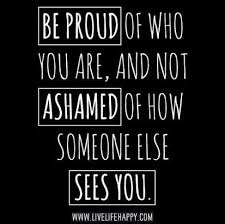
The value of the word sorry in today’s context has become very cheap. A person commits a crime then very brazenly says sorry.

Here, the once powerful word has become very small in size because of non- realisation of its importance by the masses. Nowadays, a new trend of unapologetic behaviour is in vogue.

This act creates bitterness among the people scarred from the act of wrongdoer whereas a simple sorry can make a situation/day sonewhat better for the person wronged. But the people are finding this habit difficult to enact, this causing contempt and hatred for fellow citizens.

Here i would like to quote the sacred text which was authored by intellectual men for the upliftment of the entire mankind. “Forgiveness is a kind deed”. Forgiveness is not a sign of a weak person but is considered a virtue of a strong personality.

In the end, i would like to quote M.K Gandhi “An eye for an eye will make the whole world blind.”

7 Online Business Anyone Can Start (No Scam No Investment)

Earning money has always been associated with and restricted to traditional ‘offline’ route. With the Internet taking over a large part of our lives, more people are looking to ways to earn money online to increase their financial inflows.

Photo by Andrea Piacquadio on Pexels.com

However, you should be careful of the platform that you opt for. While there are numerous ways to earn money online, some of these might be fake, thus taking you for a ride. Also, do not expect to earn a huge amount quickly when using online avenues.

1- TEESPRING

Teespring is a free platform that lets you create and sell over 50 kinds of products with no upfront cost or risk. We handle everything, from printing to shipping to customer service. Teespring is for everyone—from entrepreneurs looking to start their own online business, to Creators wanting to offer awesome merch to their fans, to charities looking for a hassle-free way to raise funds, and everyone in between.

Use Teespring tools like stores, promotion codes, buyer messaging, and more to maximize your sales! We can even list your products within the most powerful global marketplaces like Amazon, eBay, and more through Teespring’s Boosted Network.

How do I make money using Teespring?

You choose the selling price and profit for all of your products. When a product sells you get to keep the profit. For example, the base cost of a t-shirt is $10 and your selling price is $24; when you sell a shirt you will earn $14. Once the orders are processed your profit will be available for withdrawal in the Payouts section of your Teespring account. Don’t forget the more you sell the more profit you can earn per product per month.

2- Merch by Amazon

Basically, if you have 100 t-shirts in your account, you could expect to make about … This is a conservative estimate, about $150 a month. If you have 1,000 t-shirts in your account, you can expect to make maybe $1,500 a month. If you have 8,000 t-shirts in your account, you could expect to make about $12,000 a month.

Merch by Amazon is a very cool startup type program by Amazon. It is a pod program where you can sell tshirts, sweatshirts and hoodies in USA. Anyone can participate as long as you have payoneer. For Indians, there is a 15% tax on earnings. (No wonder taxation is theft as we have to pay tax on those earnings in India as well. But then IRS are a bunch of thieves)

3- REDBUBBLE

The designers earn royalties from the sale of their creations. They receive a percentage of the profit and the rest of the funds account for the fee paid to Redbubble and the manufacture of the merchandise. The site then handles the inventory and shipping transactions on your behalf.

The designers earn royalties from the sale of their creations. They receive a percentage of the profit and the rest of the funds account for the fee paid to Redbubble and the manufacture of the merchandise. The site then handles the inventory and shipping transactions on your behalf

4- UDEMY

One of the best features of selling classes on Udemy is the fact that it can become an excellent source of passive income. Once you create and post a course, it can earn you money for a long time without additional work. It just might take more work to market your course to potential students.

For example if a student purchases your course using an Instructor Coupon code, either from promotions to your own audience (e.g., your email list or YouTube subscribers) you can make 97% revenue share. Alternatively if the course is sold via an Affiliate, the split is 50% affiliate, 25% Instructor and 25% Udemy.

5- AFFILIATED MARKETING

Affiliate marketing is one of the oldest marketing practice which gains affiliates a commission in the case of sale based on the affiliate’s recommendation. It is one of the cheapest and easiest ways of marketing as you don’t need to create and sell a product. Just one thing you need to do is to enable a linked connection between buyer and seller and take your commission when the sale is made.

As you see, affiliate marketing is a passive income source. It is highly competitive it is true but still it may be so easy to make money online with affiliate marketing. To be successful, you need to learn what works and what doesn’t while promoting your products.

There are many affiliate marketing works. So, you need to be patient. You can feed your website with qualified content to get high ranking positions and raise awareness, attend affiliate marketing events, seminars or webinars and join a discussion forum or online communities to meet new people. All make a great contribution to develop you. Naturally after these contributions you will be more passionate to make money from affiliate programs. If you are patient enough you will make money with affiliate programs. 

6- YOUTUBE AFFILIATED MARKETING

You can make money on YouTube by doing affiliate marketing, which is including links to products you review and use in your videos that will track a purchase. If someone makes a purchase using your affiliate link, you receive a small commission for the sale.

Another thing about affiliate marketing is the payout percentages as well as how these people track your viewers who are clicking on these links. Every time someone clicks on one of your special tracking affiliate links, a little cookie is put onto that person’s computer to track what they purchase. The best part about the cookies is that if you link to a specific product, they don’t have to purchase that product. Anything they purchase on that website, you get commissions for. So they could click over with your affiliate link and that cookie and decide not to purchase that, but purchase a whole bunch of other things, and you get paid commission off it.

7- EBATES REFERRALS

You can still make money without a blog! In fact, you can make some major coin with the Rakuten Referral Program simply by inviting friends and family, using your social media networks to the fullest – including Pinterest – and even promoting in neighborhood groups and forums.

Have friends and family share your link. If you are saving for something special, and they feel like they can be a part of it, they will likely glady share the opportunity with their followers.

Of course, using the strategies above won’t hurt either. Pay special attention to numbers 3 through 5 and remember – have fun with it, but own it!

WHAT IS SINUS AND SINUSITIS?

The sinuses are a connected system of hollow cavities in the skull. The paranasal sinuses are located in your head near your nose and eyes. They are named after the bones that provide their structure.
The maxillary sinuses (The biggest sinus cavity is the maxillary cavity, and it is one of the cavities that most often becomes infected.), in the cheekbones.
The frontal sinuses, in the low-center of the forehead.
The ethmoid sinuses, between the eyes, at the nasal bridge.
The sphenoid sinuses, in bones behind the nasal cavity.

7 simple home remedies to get rid of your sinus

Sinus infections happen when fluid builds up in the air-filled pockets in the face (sinuses), which allows germs to grow. Viruses cause most sinus infections, but bacteria can cause some sinus infections too.The sinuses make thin mucus that drains out of the channels of the nose. This drainage helps keep the nose clean and free of bacteria. Normally filled with air, the sinuses can get blocked and filled with fluid. This is also called rhinosinusitis, with “rhino” meaning “nose”. The nasal tissue is almost always swollen if sinus tissue is inflamed.

Several factors can increase your risk of getting a sinus infection:

  • A previous cold
  • Seasonal allergies
  • Smoking and exposure to secondhand smoke
  • Structural problems within the sinuses (such as growths on the lining of the nose or sinuses, known as nasal polyps)
  • A weak immune system or taking drugs that weaken the immune system

For infants and young children, spending time in day cares, using pacifiers or drinking bottles while lying down could increase the chances of getting sinusitis.

For adults, smoking increases the risks for sinus infections. If you smoke, you should stop. Smoking is harmful to you and to the people around you.

Symptoms

Common symptoms of sinus infections include:

  • Runny nose
  • Stuffy nose
  • Facial pain or pressure
  • Headache
  • Mucus dripping down the throat (post-nasal drip)
  • Sore throat
  • Cough
  • Bad breath

There are different types of sinusitis:

  • Acute bacterial sinusitis: This term refers to a sudden onset of cold symptoms such as runny nose, stuffy nose, and facial pain that does not go away after 10 days, or symptoms that seem to improve but then return and are worse than the initial symptoms (termed “double sickening”). It responds well to antibiotics and decongestants.
  • Chronic sinusitis: This term refers to a condition defined by nasal congestion, drainage, facial pain/pressure, and decreased sense of smell for at least 12 weeks.
  • Subacute sinusitis: This term is used when the symptoms last four to twelve weeks.
  • Recurrent acute sinusitis: This term is used when the symptoms come back four or more times in one year and last less than two weeks each time.

How can I tell if I have a sinus infection, cold, or nasal allergy?

It can be difficult to tell the difference between a cold, allergies, and a sinus infection. The common cold typically builds, peaks, and slowly disappears. It lasts a few days to a week. A cold can transform into a sinus infection. Nasal allergy is inflammation of the nose due to irritating particles (dust, pollen, and dander). Symptoms of a nasal allergy can include sneezing, itchy nose and eyes, congestion, runny nose, and post nasal drip (mucus in the throat). Sinusitis and allergy symptoms can happen at the same time as a common cold.

If you are fighting off a cold and develop symptoms of a sinus infection or nasal allergy, see your healthcare provider. You will be asked to describe your symptoms and medical history.

The goals of treatment for sinusitis are to:

  • Improve drainage of mucus and reduce swelling in the sinuses.
  • Relieve pain and pressure.- take some pain killer
  • Clear up any infection.- by suitable antibiotics ( Augmentin would be better)
  • Prevent the formation of scar tissue, and avoid permanent damage to the tissues lining the nose and sinuses.

SOME HOME REMEDIES TO TREAT SINUSITIS:

  1. Use a humidifier.
  2. Breathe in steam vapors.
  3. Put a warm, wet towel on your face. It can take off some of the pressure.
  4. Try a nasal saline solution (Saline is salt water).
  5. Flush out your sinuses using bulb syringes or Neti pots.
  6. Drink lots of fluids but avoid alcohol .
  7. Eat immune-boosting foods
  8. Rest.

Water, Sanitation and Hygiene

Today, 2.2 billion people lack access to safely managed drinking water services and 4.2 billion people lack safely managed sanitation services. Unsafe hygiene practices are widespread, compounding the effects on people’s health. The impact on child mortality rates is devastating with more than 297 000 children under five who die annually from diarrhoeal diseases due to poor sanitation, poor hygiene, or unsafe drinking water.

Safe drinking water, sanitation, and hygiene (WASH) are fundamental to improving standards of living for people. The improved standards made possible by WASH include, among others, better physical health, protection of the environment, better educational outcomes, convenience time savings, assurance of lives lived with dignity, and equal treatment for both men and women. Poor and vulnerable populations have lower access to improved WASH services and have poorer associated behaviors. Improved WASH is therefore central to reducing poverty, promoting equality, and supporting socioeconomic development. Drinking water and sanitation were targets in the Millennium

Water

A person without access to improved drinking water – for example from a protected borehole well or municipal piped supply for instance – is forced to rely on sources such as surface water, unprotected and possibly contaminated wells, or vendors selling water of unverifiable provenance and quality.

For many communities, water sources are usually far from their homes, and it typically falls to women and girls to spend much of their time and energy fetching water, a task which often exposes them to attack from men and even wild animals.

Sanitation

Without improved sanitation – a facility that safely separates human waste from human contact – people have no choice but to use inadequate communal latrines or to practice open defecation. For women and girls, finding a place to go to the toilet outside, often having to wait until the cover of darkness, can leave them vulnerable to abuse and sexual assault.

In the immediate environment, exposed faecal matter will be transferred back into people’s food and water resources, helping to spread serious diseases such as cholera. Beyond the community, the lack of effective waste disposal or sewerage systems can contaminate ecosystems and contribute to disease pandemics.

Hygiene

In some parts of the world there is little or no awareness of good hygiene practices and their role in reducing the spread of disease. However, it is often the case that even when people do have knowledge of good hygiene behavior, they lack the soap, safe water and washing facilities they need to make positive changes to protect themselves and their community.

Improved water supply and sanitation provide individuals with increased comfort, safety, dignity, status, and convenience, and also have broader effects on the living environment. The social welfare effects are difficult to quantify, given their subjective nature. Nevertheless, those benefits are consistently cited as among the most important for beneficiaries of water supply and sanitation and may be particularly relevant for women.

STOP BODY SHAMING

Are You Being Body Shamed? Here Is How You Can Deal With It!

Body shaming is the act of suggesting that someone’s body isn’t good enough, and that they should not be satisfied or comfortable with its current composition, proportions, or exposure to the gaze of others. It is rude and disrespectful behavior, and there is no body type that creates an exception that would make body shaming less rude or less disrespectful.

A person’s body is their own. It is none of your business. You are not their medical practitioner, and you are neither assisting nor improving the lives of anyone by boorishly sharing your opinions and “helpful” intentions. There is no person on the planet that is not keenly aware of the ways in which their body does not meet the current standard. There is not one person who needs you to point it out.

Body shaming includes:

Suggesting that slender people are too thin, their bosoms and backsides are inadequate, that they’re weak and not manly, that they’re unhealthy and that their eating or exercise habits must be disordered. Dismissing very slender people as stuck up, meek, cowardly, weak, pathetic, neurotic, or shrill because of the composition of their bodies.

Suggesting that fat people are too fat to deserve basic human dignity, that fatness is a result of a flaw of character or failure of self discipline and therefore deserving of derision and mockery.

Body shaming linked to more weight gain among children, suggests ...

Suggesting that a body is too old to be beautiful. That the signs of maturity and experience are unsightly and revolting, and should be covered or “fixed”. That people over a certain age should cover up, that a woman’s body is meaningless after menopause, that older adults should not reveal their bodies or sexuality.

Suggesting that short people are undesirable and therefore foolish to attempt to begin a romantic relationship with a potential partner of average or above-average height.

Suggesting that tall people should only wear or do certain things because of their height, and that tall women should avoid high heels or shorter partners.

Suggesting that bodies are not sufficiently gendered: that muscular bodies are not feminine enough, that willowy bodies aren’t masculine enough, and that bodies that do not clearly evoke a gender are an embarrassment to be fixed.

Suggesting that some bodies are to be hidden from view. Too fat, skinny, tall, short, unusual, scarred, tattooed, devoid of curves or of defined muscles, unusually or deeply pigmented, affected by physical or medical challenges…and that they should not choose clothing that allows their skin and form to be visible for what it is and to celebrate it.

Body shaming and popular media: the Selfie Culture- SheThePeople TV

Body shaming is all around us. Judging has become such an automatic response that people tend to do it without any prior thoughts. Some people try to find humor in degrading someone else’s body which is highly undesirable. The problem is not just limited to judging others but judging our own selves. Thinking about the parts of your body you could change or comparing them with the notion of “perfect body” our media has successfully created. It saddens me to witness the social media popularizing certain body types as beautiful. Today, almost all the teenagers are highly active on social medias. When platforms like Facebook and Instagram reinforce the ideal concepts of beauty, it distorts the thinking processes of the teenagers who in turn experience insecurity and face issues of low self-esteem later in life.

“The world is too big to have one sort of view to show beauty”. It’s time to break the mold if we want to stop body shaming in all forms. Motivate, encourage and support the differences. If each one of us start to accept our own body structures, nobody can make us feel bad about it.

FIVE WAYS TO MOTIVATE YOURSELF:

1. You can wear WHAT YOU want and whatever makes you feel confident whether it’s being fully covered from head to toe, naked or anywhere in between.However, its not that wear a bikini to go to a temple. Always be appropriate to the area and situation it’s but YOUR choice. And should always be your choice.

2. Don’t be insecure about any part of your body. Or trying covering it up because you think “it’s dirty”. It’s ain’t. Your body is royal. Your skin is precious. Every part of you is important. Dress how you please BUT don’t think “oh, I can’t wear a bikini because of my cellulite, or stretch marks, or butt acne, or belly rolls, or bra bulges, or not having the same skin tone or being hairy or whatever you feel you’re insecure about.”

3. No matter what has happened to you, your body is not shameful. You are is not a disgrace. You my loves, are a fucking warrior made of resilience.Having scars (sometimes you can’t see them) on your body for all the battles you’ve fought. Every scar has a story. You are admirable. Wear your skin with pride.

4. And you know what for most of us who have hated our bodies for so long it’s difficult to “love ourselves”.But accept who you are, what you are now AND ALWAYS work on getting stronger. You will find moments of self love and then you’ll be addicted to it, and you’ll know how to truly take care of yourself. It will happen.

5. No matter what you start taking HEALTHIER options for you to get better. Yes, accept yourself and love yourself but also take steps for you TO BE HEALTHY. For your to get better, to get stronger, to get healthier than you were before.

Body Shaming… – Tamlin- Lauren xo

Please choose kindness. Choose empathy. See the beauty in every body, and choose to spend your time bringing people and ideas together. We each have a staggering array of our own flaws on which to focus — let us not mock others for the state of their earthly form.

We often blame the society for what is happening around but we need to realize that it us who form the society. Thus, the first step is to fight our own thinking patterns to accept ourselves and then we need to make others aware of the same. Embrace who you are!

Indian culture and the positive changes.

Since ancient times India is known for diversity and prosperity in its Culture. It has one of the oldest civilization and culture in the world. Despite of such diversity Indian culture has the immense power to unite peoples together. There are fifteen national languages recognized by the Indian constitution and these are spoken in over 1600 dialects. With language changing across different parts of country, culture is also diverse. The Culture of India has played a vital role in its civilization.
Changing Values
We all know that Change is the law of nature. This law is governing almost everything in this universe and so as the Indian Culture. Over Centuries Indian Culture has influenced by a lot of changes and many of them has incorporated in this culture remaining the other features intact. These Changes are more or less like two faces of a coin. Some changes are beneficial for our society and culture, and some others are dangerous. In other words these changes have both Positive and Negative aspects. Changes In Indian Culture that are Positive for Indian Society
A few Centuries ago “Sati pratha” was abolished and “widow remarriage” was approved. These Changes were the major achievements of Indian Society. These changes have removed the traditions and methodologies which was a curse to all the women and humanity. These Changes were the major revolution in the Indian Society. From that time,changes have influenced a lot to the Indian Society. Now a days, there are many visible changes in our society.

Health Benefits of Tulsi plant.

Tulsi Benefits: Basil plants will be found in most homes in India. It is also worshipped in Hinduism. It is considered a symbol of happiness and well-being, but aside from mythological significance, Tulsi is also a well-known medicine. It is used in many diseases. There is an effective medicine in many major and severe diseases ranging from cold and cough.A single basil leaf can overcome many of your problems. Ayurvedically, every part of the basil plant is good for your health. So let’s know where else you can use basil leaves in addition to cough and cold.
Make the tea by adding at least 10 to 12 basil leaves and then drink it cures cough, cold and fever. If you have a respiratory disease and feel unable to breathe then put basil leaves with black salt in your mouth like a betel nut, you will get relief from this disease. If you roast basil leaves on fire and eat it with salt, then it also cures bad throat. Chewing 4 roasted cloves with basil leaves will give you relief from cough. Do you know that applying basil leaves mixed with alum also heals wounds quickly? This is because basil contains anti-bacterial elements that do not allow the wound to ripen. Apart from this, basil seeds have been considered helpful in the treatment of cancer in many types of research. However, this has not been confirmed. Most women complain of irregularities in periods. In such a situation, basil is very beneficial. Helps to remove irregularity of menstrual cycle.

An unforgettable saga of Bravery

A victory saga of ‘Operation Vijay’, no matter how many time we hear, it always makes us proud. It’s been 21 years of victory on Pakistani troops in Kargil.

The war started after Indian forces detected infiltration from Pakistan side into our territory. By the time Pakistani troops had positioned themselves in key locations and were in a better position than the Indian Army.

After a three month long battle, under the temperature of minus 10 degree Celsius, our brave soldiers fought and evicted the Pakistani troops. The Indian Army succeeded in recapturing the Tiger Hill and other posts as a part of Operation Vijay but in order to achieve this victory we lost nearly 490 officers and soldiers, who gave their supreme sacrifice in this battle.

Today on the 21st anniversary of the Kargil war, Prime Minister Narendra Modi paid his tribute to the brave heart martyrs. On his ‘Mann ki baat’ address he said that, “India can never forget the circumstances under which this war was fought. Pakistan undertook this misadventure with sinister plans to capture India’s land and to divert attention from its ongoing internal conflicts. India was then trying to have cordial relations with Pakistan but as it is said, it is the nature of the wicked to have enmity with everyone for no reason,”; “People of such nature think evil even of those who do good to them. That is why in response to India’s friendly endeavours, Pakistan tried to backstab. But the entire world witnessed the valour and strength of India’s brave forces.”

PM also appealed against the social media posts that, demoralises our soldiers who fight for the country. He added that, ‘these days wars are not only fought on borders but within the country too on multiple fronts simultaneously, and every countryman has to decide his or her role in it.

Some other important facts about the Kargil war:

* IAF’s launched its air operations under Operation Safed Sagar in support of the army on May 26. Indian MiG-21, MiG-27 and Mirage-2000 fighters fired rockets and missiles throughout the Kargil War at the “fortified enemy positions” from their side of LoC.

* IAF had planned to bomb targets in Pakistan during the Kargil War. But the then National Democratic Alliance or NDA government led by Atal Bihari Vajpayee instructed the then IAF chief air chief marshal AY Tipnis that his fighter jets must not cross LoC under any circumstances.

* IAF also wanted to cross the LoC slightly during the Kargil War but this request was also rejected by the government.

* Pakistan shot down two Indian fighter jets while another crashed during the operation.

* The Indian Navy also launched Operation Talwar to blockade Pakistani ports, especially the one in Karachi, during the Kargil War to stop the supply of oil and fuel.

* The Indian Navy’s western and eastern fleets patrolled the Arabian Sea and threatened to cut Pakistan’s trade routes.

* Pakistan asked the US to intervene but then American president Bill Clinton declined its request, saying Islamabad must withdraw its troops from LoC.

* Indian armed forces attacked the rest of the outposts as Pakistani troops withdrew and captured the last of them by July 26.

* The official death toll on the Indian side was 527 and that on the Pakistani side was between 357 and 453.

* Pakistan had initially denied it had any role in the conflict and said that India was facing off with “Kashmiri freedom fighters.” It, however, awarded its soldiers medals for the conflict later.

* After the Kargil War, India increased its defence spending in the budget.

* The complete overhaul of India’s intelligence set-up and the creation of a younger and fitter army are among the most significant changes made by the government on the basis of recommendations of the Kargil Review Committee (KRC).

* The creation of the post of a Chief of Defence Staff (CDS) was also among them. General Bipin Rawat took over as the first CDS on January 1 this year and will serve a full three-year term till December 2022.

* The creation of the Defence Intelligence Agency in 2002 and the technical intelligence gathering agency, National Technical Research Organisation (NTRO) in 2004, were some of the report’s key outcomes.

* The timespan for promotions was slashed up to the rank of commanding officers (COs) or colonels and their equivalent in the air force and navy.

(Courtesy – Hindustan Times)

Shift in the workplace legal structure

COVID-19 has completely revolutionized the workplace by pushing most of the organizations and the businesses to quickly switch from ‘office model’ to ‘work-from-home’ model. While working under the roof of an office, there existed legislations and legal framework to monitor the behaviour, but those existing policies need to be adjusted so as to incorporate the WFH scenario.

Some key areas where the legal framework needs to be adjusted are:

  1.  Women working at night. Previously as per the Shops and Establishment Act of each state, women employees were prohibited to work during some specified hours at night or they have to arrange for transport services along with escort to make sure that they reach their home safely. So employers had to face compliance issue with regard to women employees. But now since most female employees have moved to WFH, so the employers are free from such compliance issues and at the same time, the floor is open for the employers to look out for those women population who could not previously access the jobs due to geographical and other constraints.
  2. Change in compensation structure. Previously many allowances such as conveyance allowance, meal allowance or food coupons were given out to employees as a part of hardship allowance. But this might not be attractive now considering the WFH scenario. Instead, employers should provide other allowances such as internet reimbursement, ergonomic allowances, IT expenses etc.
  3. Sexual harassment at the new workplace. POSH Act was passed in the year 2013 for the prevention of sexual misconduct at office. But now as the workplace has changed, new forms of misconduct such as repeated phone calls at inappropriate and ungodly hours, forcing to switch on videos, playfully passing lewd remarks and over-discussion of work are creeping up with time. Considering the face that the boundary between work and home has become blurred, POSH needs to incorporate some new rules to prevent such misconduct.
  4. Overtime work. Just a few months back, employers used to measure productivity by checking the entry and exit times of an employee. They used to do so by either swiping their cards or by biometric screening. So if an associate is doing overtime work, usually it was thought that the person is very hardworking. But now the associates are working from home, so performance should now be measured depending on the outcome of the employees rather than on the time spent on doing the work.
  5. Security and compliance threats. SEZ does not have guidelines for WFH facility but STPI has it. As per them, it is necessary for the employees to work on Virtual Private Network. So employees should spend on securing a robust and private WiFi so that that IT security is not compromised on the local system and confidentiality is maintained.
  6. Modification of labour laws like maternity benefits and compensation laws. Previously associates can claim compensation from the employers if any accident occurs at the workplace, but now with the WFH arrangement, the existing compensation laws need to be modified so as to arrange for any compensation if any accident occurs at home.

Our workplace dynamics have completely changed and to enable smooth transition, employers also need to look into the existing legal structure so that eventually the employees does not feel to be disadvantaged. Our home is the new workplace and so laws have to be adjusted taking our ‘home-office’ into consideration.

Source – Self

India-Australia Relations

A virtual bilateral summit was held virtually for the first time between the Prime Ministers of India and Australia.

A few of the major outcomes of the Summit was the Elevation of the bilateral Strategic Partnership to Comprehensive Strategic Partnership. The Elevation of the “2+2” engagement to the level of Foreign and Defence Ministers, where strategic discussions will be taking place every two years. India previously has had such mechanisms with USA and Japan.

Memorandum of Understanding (MOU) was established for cooperation in the field of mining and processing of Critical and Strategic minerals. Along with it, the Mutual Logistics Support Agreement was also signed. A Joint declaration on the shared vision for Maritime Cooperation in the Indo- Pacific region was also emphasized upon.

India- Australia Relations is not a ‘today affair’ as the two countries began their alliances during the cold war period back since when Australia was United States’ closest ally, also remembered to when India opted for non-alignment. The end of the Cold War and the launch major economic reforms in 1991 provided the first positive move towards development of closer ties between these two nations.

However, this could not last long as India’s nuclear status outside the nuclear Non-Proliferation Treaty (NPT) resulted in Australia taking a particularly strong stance against India’s 1998 nuclear tests.

 With the changing global scenario in 21st century, Australia looked at India as an important partner in promoting regional security and stability. This led to up progression of their bilateral relationship to a ‘Strategic Partnership’, as well as a Joint Declaration on Security Cooperation in 2009.

Talking of the Economic and commercial relations, the Bilateral goods and services trade between these two nations was about $30.3 billion in 2018-19, and the level of two-way investment was $30.7 billion in 2018.

Australia announced implementation of “An India Economic Strategy to 2035” in 2018. A vision document to shape India- Australia bilateral ties. India is also preparing an Australia Economic Strategy Paper (AES) on these similar outlines.

The two countries have also decided to re-engage meetings on a Comprehensive Economic Cooperation Agreement (CECA). These discussions first started in 2011, and the last time it happened was in 2015.

In the Defence and security cooperation field, there was a Civil Nuclear Cooperation Agreement signed between the two in 2014 which had also enabled India to secure uranium from Australia.

Both of the countries also contracted Mutual Legal Assistance Treaty (MLAT), Extradition Treaty and the Social Security Agreement.

Maritime Security cooperation is seen in the form of joint exercises like AUSINDEX 2019, AUSTRAHIND, Exercise Pitch Black and Kakadu biennial exercise (Hosted by the Australian Navy).

Some concerns that remain in India-Australia relations is the Comprehensive Economic Cooperation Agreement (CECA) which is still unsettled after nine rounds of negotiations. India had also earlier opted out from Regional Comprehensive Economic Partnership (RCEP). Among other things, India and Australia could not reach to agreement on the market access over agriculture and dairy products.

Furthermore, an Australia-India Strategic Research Fund commenced in 2006 for scientists to collaborate on leading-edge research. Agreement on Cyber and Cyber-Enabled Critical Technology was also signed of late to promote cooperation in the extents of digital economy, cyber security, critical and emerging technologies.

The economy of Australia has been quite heavily dependent on China, as China is one of Australia’s largest trading partners and accounts for 26 % of its world trade. Chinese aggressions and assertive foreign policies are common apprehensions between the two nations and certainly has brought both the democracies closer.

Both the countries have also shown similar interests in the vision of an open, free inclusive and rules-based Indo-Pacific region. Australia’s Pacific Step Up and India’s Forum for India-Pacific Islands Cooperation (FIPIC) give reaffirmation of their cooperation in the South Pacific region.

Both also have co-operated in various multilateral fora including QUAD security dialogue, G-20, Indian Ocean Rim Association (IORA), East Asia Summits, ASEAN Regional Forum etc.

The People to People Relations have found a different edge for these countries as the Indian diaspora, estimated at nearly 7 lakhs is the fastest growing in Australia and has become a constructive factor in the bilateral relations. Including that, almost 1 lakh Indian students are enrolled for studying in Australia and the under New Colombo Plan of Australian government, Australian undergraduates have studied and completed numerous internships in India.

Australia Government has also affirmed to help in establishing a world class Sports University in India.

University of Alaska Fairbanks

About UAF

Inspiring discovery. Inspiring greatness. Inspiring, naturally.

There are places in this world where you are destined to discover who you truly are. Here at the University of Alaska Fairbanks, as wisdom passes from one generation to the next, revolutionary ideas are thriving and a new academic culture is taking shape. Smarter questions. Better answers.

With undergraduates making up 89 percent of the total student body, UAF is a hotbed of diversity and fresh thinking. Whether you\’re returning to school to start a new phase of your life or coming in as a recent high school graduate, you\’ll quickly make new friends with a similar drive to achieve. And, because our backyard is the vast environmental laboratory of Alaska, UAF attracts exceptional individuals — academic superstars and adventure-seekers alike.

With seven campuses across the state, we are home to more than 8,500 students from all over the world — each in pursuit of something extraordinary. Whether you\’re looking for a greater sense of purpose or a true sense of belonging, the UAF community lives authentically, believing that life is what you make of it, that knowledge is indeed power, and that a natural curiosity about the world around you will always be your best GPS.

Welcome to the University of Alaska Fairbanks — it may feel like you\’ve journeyed far, but in fact, this is where it all begins.


A journey of a thousand miles begins with a single click.


Apply

Apply for admission.


Find out more

Get some specifics or request more information.


Discover UAF

Schedule a campus visit or take a virtual tour.

UAF gets it done

We\’re a top university

UAF is the only national university in Alaska, according to U.S. News and World Report\’s 2020 rankings. In fact, Times Higher Education ranked UAF the #1 U.S. school for quality education in their 2020 impact rankings, and among the world\’s best small universities in 2019.PreviousNext
See more rankings

More options, more opportunities

Launch a rocket. Monitor muskoxen. Study in Spain. It\’s your life. Make it off the charts or off the grid.

Whether Alaska is home or a new beginning, a UAF degree offers the ultimate opportunity: a chance to make a living doing what you love. So choose the path that intrigues you — you never know where it might lead.
See our list of majors
More about academics at UAF

Creative Things to do When You Feel Lonely

According to a study of more than 170,000 people published at the Psychology Bulletin in 2013, the average adult’s network of friends have reduced in the past decades. It’s no wonder many people feel lonelier than ever.

Feeling lonely, however, is not a direct cause of being alone. It’s possible to feel lonely in a crowd.

Loneliness, in fact, is more dangerous than isolation because it increases a person’s mortality rate.

If it’s so dangerous, how do we fight loneliness then?

Wondering What to Do When You Feel Lonely?  Here Are some Tried and Tested Tips.

  • Watch Inspiring Ted Talks.
Rob Greenfield Speaking - Inspire Your Community with Rob!

Ted Talks are inspiring and informative. I don’t know why, but watching a few Ted Talks really help when I feel lonely and helpless. Watching TED talks will not only give you a motivational boost while your studying, it could also inspire your next career move. Better than that, it could help you improve your interview techniques and confidence in meetings helping you advance your career once you get your foot in the door.

  • Look Through Old photos
Remembering Through Photographs Stock Image - Image of photographs ...

Old photos bring back a time, a place, and a life that are long gone. Perhaps, it reminds us all; that everything shall come to an end at some point. I believe an old photo is a physical instillation of our memory from the past.Human emotions are fickle things. They are ever changing. Tears don’t indicate anything in particular. They’re just a bodily response.

  • Dance (Naked)
And I Feel Alive: Learning To Dance Alone

Sometimes, we feel lonely because we’re actually alone. So take this chance to do the things you can only do when you’re alone, like dancing naked or jumping on the bed with your shoes on. Doing crazy stuff alone will give you a good laugh.

  • Take A Bath
Do You Have To Take A Shower After A Bath Bomb? | Shower+Bath

Where do good ideas come from? In the shower, right? Taking a nice, long, and relaxing bath is a great way to be bask in your alone time, instead of drowning in self-pity.  Ladies, prepare a glass of red, chocolates and magazines. Gents, take a bubble bath with that scotch and enjoy life.

  • Adopt A Cute Pet
Cute babies - Babies Pets and Animals Photo (17268865) - Fanpop

All pets are cute no matter whom you want to adopt. A furry cat or dog will cheer you up. The playfulness of pets, plus the troubles (and fun) you’ll experience while training them will make you forget about your troubles. Even a goldfish or pretty parrot can do wonders for your mood.

  • Go on a solo date to eat your favorite food
Coffee Date with Myself - Chopstick Panorama

You know the problem with group and couples dates? The annoying “So what do we do?” and “Where do we eat?” questions. When you go on a date with yourself, you’re sure to go somewhere you actually like and you don’t have to wait around for others to decide.

  • Start Gratitude Journal
Dear Diary: The "Write" Way to Journal | Project Best Life

It’s hard to feel down when you know that you have a lot to be thankful for.  When you don’t know what to be thankful for, just write what you feel. Sometimes, it can help you identify why you feel lonely in the first place.

  • Create Something New
25 Easy To Do Waste Material Craft Ideas for Children

Wondering how to not feel lonely, when you actually prefer to be alone? Getting bored is a prerequisite of feeling lonely. And what’s one of the main causes of getting bored? Having nothing to do. So keep yourself occupied! Try a new recipe. Create a scrapbook. Finish that DIY project you’ve been postponing for so long.

  • Behave like a tourist in your own city and do crazy things
Tourist traps worth visiting - Insider

Dress up like a tourist, and do all the cheesy touristy things in your city. Eat the local delicacy, tour the crowded tourist spots and explore new locations you’ve never heard of. Take pictures with monuments and come home and rejoice those memories.

  • Read any book especially a fiction
Pin on Photography

Please don’t pick a Dummies book on how to stop feeling lonely.  Reading self-help when you’re feeling miserable will make just you feel worse. Read a good novel instead. Losing yourself in a good story or identifying with a powerful character will boost your confidence and fill you with a sense of adventure.

  • Sing your heart out and have your own concert in your room
Singing in Home Images, Stock Photos & Vectors | Shutterstock

The part “your heart out” basically means with vigorous or intense conviction. This is the basic intent of the sentence — that it’s okay to do that something as long as the person is doing it with great conviction or considerable effort.

To sing your out more literally means to sing with great conviction or great gusto and sincerity. Of course, it doesn’t mean to sing loudly at the top of your voice, which then isn’t necessarily a positive thing. To sing care-free like there is nobody else in this world except you.

  •  Go For A Quick Run
Feeling anxious? Run it out! — Neurofantastic

Running is scientifically proven to make you happier. Even 30 minutes of walking can instantly lift your mood, according to a 2006 study published at Medicine & Science in Sports & Exercise.

  • Volunteer for a cause
About Us – Butterfly Hospice Care

Focusing on the needs of others steers your mind away from sad thoughts. It’s impossible to feel lonely when you’re feeding the homeless, reading to kids at an orphanage, or dancing with grandmas at a salsa class. Helping the less fortunate will also fill you with immense gratitude.

  • Watch a Movie or Series
7 Best Apps To Watch Movies Together Online With Your Friends

Watch a movie alone or call some friends to go with you—it doesn’t matter. What’s important is you immerse yourself in an interesting story that’ll erase your gloomy thoughts. Watch a chick-flick, or a super hero movie—anything but a tear jerker, really —and grab lots of candy and popcorn.

“What to do when you feel lonely?”

I can’t imagine how many people have Googled that phrase when they felt the pangs of loneliness. Unfortunately, it’s not the best question to ask. Would you ask a doctor for a prescription before they check your symptoms?

Instead of trying things randomly, hoping one solution will do the trick—losing hope and feeling worse when it doesn’t—it’s better to identify the cause of your loneliness first. If you were previously happy in your own company, what could’ve caused you to feel lonely this time? Do your friends make you feel lonely? Is it your work or surroundings, perhaps? The cause of your loneliness will clue you in on the appropriate solution.

Do your friends make you feel lonely? Is it your work or surroundings, perhaps? The cause of your loneliness will clue you in on the appropriate solution.

Loneliness is an emotion, mostly triggered by a sad memory. Unfortunately the brain loves to overanalyze things, so even momentary loneliness can escalate to longer spells because of thoughts like “Why do I feel so alone?” and  “Am I a loser no one loves?” When this happens, just acknowledge the feeling and don’t overreact.

These are some of the things I do when I’m hit by this gruesome feeling of being alone even if I have more friends than I can count. What are your tips to feel less lonely? Do share in the comments!


Drug Addiction

Drug addiction is one the most serious problems in the country. The use of intoxicants is old practice. People in every part of the world have been using intoxicants in one or other form. In olden times, this practice was mostly adopted but nowadays people make this trend within parties and clubbing. And as time passed life became MORE complex and complicated and use of intoxicants went on increasing. With the progress of science, new types of intoxicants were introduced in the market and in today’s time you can find a large variety of intoxicants drinks and various other intoxicants are readily available in the market. Use of intoxicants and drugs has become so common that it has been a worldwide problem. All rich or poor are so much indulged in this practice that they even forget about their health and life. The poor people have some different problems like problems of food, clothing, and housing etc.and due to this they start indulging into various intoxicants. On the other hand, rich ones have made this trend look super cool by taking these intoxicants drugs and drinks in their parties. The situation is quite alarming. A survey was recently conducted in some universities in India to check and findings were staggering. Drug addiction is catching hold of young boys and girls in big cities especially like Mumbai, pune, Delhi and universities and colleges of the country. Hostels of boys and girls are becoming homes of these drug addicts.

Basically, the use of drugs has come from west of India. Most of the students start taking drugs as a matter of fashion or for thrill but later they cannot stop their use. The market is flooded with different types of intoxicants. Most of these are taken to produce sedation or under strict medical observation and care. But young boys and girls start taking them without medical advice. Most of these who start taking drugs are unemployed youth or frustrated with some other complications in life or social or family problems.

It is the duty of the government to make study of various pros and cons of the problem. Sale of drugs which are open in the market should be banned. The problem of unemployment should be tackled sincerely and taken on priority basis. Some sort of guidance and counseling should be held in universities only to provide advice to the frustrated youth of the country. Various social and voluntary organizations should take steps to maintain this nuisance. The government should use all advertising media to educate people about harmful effects of intoxicating drugs. Medical aid should be provided to those who are badly suffering from this problem. Moral education should be introduced in schools and colleges. All foreigners who visit India and encourage the use of drugs should be put behind the bars.

All these steps can help the country from menace of this drug addiction. In India, this disease is still in a state of infancy but if proper precautions may not be taken then it may take the form of epidemic. We must see the writing on the wall and net before it is too late.

How Covid-19 is affecting work culture ?

As countries begin loosening restrictions and easing lockdowns, the Ministry of Home Affairs (MHA) released guidelines to allow private offices in India to operate at 100 per cent capacity, but urged people to work from home as much as possible.

Not just India, several countries have released norms for employees. In New Zealand, for instance, Prime Minister Jacinda Ardern has said that those businesses in the “position to do so” should consider a four-day workweek in order to boost domestic tourism.

In South Korea, on the other hand, the government has encouraged that workshops and trainings be conducted online, asked colleagues to sit two metres apart, urged people to regularly disinfect places that hands often touch and refrain from shaking hands. Further, employers are encouraged to minimise international and domestic business trips and use video conferencing and phone calls as much as possible.

New Zealand and South Korea are two countries that have been able to contain the spread of the virus. Their guidelines for workers could hold lessons for other countries

Some private companies too have initiated steps to change their work culture in order to adapt to the pandemic. Tech giant Twitter, for example, was among the first global companies to allow employees to work from home. In a blog post published on May 12, Jennifer Christie, the leader of the People Team at Twitter, said “with very few exceptions”, offices would not open before September and there would be no in-person company events till the end of 2020. Later, CEO Jack Dorsey said he would allow employees the option to permanently work from home.ADVERTISEMENT

Facebook CEO Mark Zuckerberg Thursday said in a live-streamed staff meeting that the company would allow many employees to work from home permanently. He said that as many as 45,000 Facebook employees could be working from home within the next decade.

Microsoft has allowed employees to work from home till October, while Google has said the option was open until the end of this year.

How Covid-19 may change work culture

Due to Covid-19, it is likely that people would want to change their work environments, even after the pandemic. A Gallup poll found that three in five (59 per cent) US workers, who have been working from home during the pandemic, said they would prefer to continue even after restrictions are lifted. Over 41 per cent, meanwhile, said they would prefer to return to their workplace. At the time of this survey, 62 per cent of employed Americans said they worked from home during the pandemic.

Further, Covid-19 might also change the notion that creative work demands corporate campuses built by companies such as Facebook and Google, complete with free food, open office plans and ping pong tables, a report in the Associated Press said.

A shift in remote work could also lead to the movement of workers from big cities where the cost of living is higher. Significantly, if workers are given the option to work from anywhere, it may also affect their pay. If remote work becomes the norm, salaries may be pegged to cost of living, which may bring down salaries for employees who shift locations to smaller cities with lower costs of living