10 Reasons for Why Poor Sleep is Dangerous

Picture Courtesy: Google

Sleeping is as important as eating and doing exercise. A good night’s sleep is important to sound health properly. It’s true people now sleep less than they used to do in past. But it is also hampering their digest system and many more. So, let’s know why poor sleep is dangerous.
10 reasons why poor sleep is dangerous
Sleeping less can higher the bodyweight

Short sleep is one of the reasons behind obesity. We see the people with short sleep weigh noticeably in comparison to those who have adequate sleeping habit.89% children and 55% of adults nearly grow obesity due to short sleeping habits. Short sleep can make hormonal disorders also.
Calorie consumption gets lower with adequate sleep
It’s said those who sleep less have higher calories consumption habits. If one deprives sleep it will cause to harm the appetite hormones and lead to poor appetite. It enhances the number of ghrelin hormones which highers the appetite and lowers the leptin hormones which suppress the appetite
Less enhancement of concentration and productivity
Good sleep enhances concentration, productivity, and performance. Sleeping fewer impacts brain which eventually brings errors to work. Sleeping fewer causes similar effects to the brain as alcohol intake does.
Minimize the athletic performance
Good sleep helps to be physically fit and active. It helps the brain to count accuracy, speed, redactions, etc. Poor sleep can result in slower walking, weak grip strength, etc.
Chances of heart disease and stroke
A study showed that sleeping less is harmful to those who sleep less. It can lead to heart disease. Minimum 7-8 hrs sleep is important at night.
Causes insulin sensitivity
If one person restricts sleep to 6hrs for only 4 days, the person will have prediabetic symptoms. Sleeping less affects glucose and increase insulin sensitivity.
Can cause depression
Poor sleep can cause depression. Continually poor sleep causes insomnia. 90% of depressed people complaints about poor sleep. Not only that poor sleep can increase the risk of suicide also. Insomnia or disturbed sleep can be the cause of depression also.
Immune function Deterioration
Lower sleep higher the risks of the immune system. 8hours of sleep a day can even help to fight the common cold. If you monitor for 2 weeks between two who sleep well and who doesn’t by giving the both same medicine for cold allergy, you can see the difference.
Maximize the inflammation
Poor sleep not only causes bowel disease but also causes disease recurrence. Poor sleep is related to long time inflammation. It causes to loss of digestive tracks. It is known as inflammatory bowel disease. Experts suggest good sleep to get rid of inflammatory diseases, without sleep the disease relapses.
Hamper emotions and social interactions
Those who do not sleep well, usually they seem to be irritated with little things. Not only that they become unable to recognize persons and their emotions. It reduces the ability to social responses and creates a bad social image.
So, to this end, we also come to realize how sleeping is important to have a healthy life. At least 7-8 hours of sleep a day can give you a healthy life in all aspects.
celebrate not just a day but life full of yoga

Yoga: understanding fundamentals

Yoga is a group of spiritual,mental and physical practices originated in ancient India. the modern yoga is seen as exercise to the body which mainly consists of postures or asanas. The practice of yoga has been thought to date back to pre-vedic Indian traditions; possibly in the Indus valley civilization around 3000 BCE. Yoga is mentioned in the Rigveda and also referenced in the Upanishads. Yoga gurus from India later introduced yoga to the West,[17] following the success of Swami Vivekananda in the late 19th and early 20th century with his adaptation of yoga tradition, excluding asanas. Outside India, it has developed into a posture-based physical fitness, stress-relief and relaxation technique. Yoga in Indian traditions, however, is more than physical exercise; it has a meditative and spiritual core.

why yoga ?

There are many reasons why one should keep habit of practicing yoga for at least half an hour a day even if they are busy all the day. yoga is an art whivh cures you from a disease before you get infected by it.

some of the benefits of yoga are:

  • increased flexibility.
  • increased muscle strength and tone.
  • improved respiration, energy and vitality.
  • maintaining a balanced metabolism.
  • weight reduction.
  • cardio and circulatory health.
  • improved athletic performance.
  • protection from injury.

Prominent personalities practicing yoga:

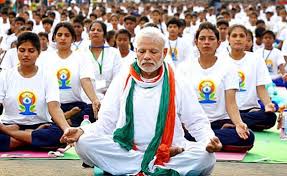
  1. Narendra modi:
If prime minister can do then we can too at least we are not as busy as him.

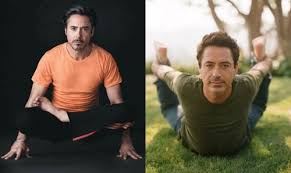
2. Robert downey ,jr.(Iron Man):

Shocked!! yes he also do yoga which has helped him in leaving the bad habit of drugs addiction.

3.Jennifer Aniston (Racheal green in Friends):

she is been practicing yoga since 2005 for at least 20-30 minutes a day regularly

admist her busy schedule.

The list goes on thus it is well known that yoga is key to healthy life. Practice it daily if you don’t know asanas search in google or refer you tube videos. Hope you start practicing Yoga.

Why one should definitely watch ‘F.R.I.E.N.D.S’

Imagine a Friday evening. You came back from your office after a long week. Of course you do not feel the urge to cook and so you order Pizza from your authentic pizza store. You snug into your bed, with the large hot pizza and open a bottle of red wine. You take out your laptop and start searching for a good show for binge watching. But somehow, you find yourself listening to the tune:

“So no one told you life was gonna be this way
Your job’s a joke, you’re broke
Your love life’s D.O.A …….”

Friday night is sorted. Good food with a good show.

F.R.I.E.N.D.S – The iconic show celebrates 25 years today ...
F.R.I.E.N.D.S Poster

But it is not just about a show. We all have our favorite shows, but F.R.I.E.N.D.S is a tad bit different. Apart from just enjoying an evening with the show, this show teaches us some aspects of management and career which can make our ‘binge-watching’ time worthwhile. So just to further accelerate your career, I would like to list a few management tips which we can learn from F.R.I.E.N.D.S:

  1. Have patience. Remember when Phoebe was trying to teach Joey a new language and how he was getting on her nerves by learning it the wrong way? Yes, and how did Phoebe respond? She just maintained her calmness and her patience level high, without giving up on him. She knows that she might be an expert in that language while the other person is not. Key takeaway is that in your work life, you will definitely come across various situations and meetings where you need to explain that thing at which you are an expert, and even though the other person is not aware of that thing, you should have enough patience to explain.
  2. Be really focused. One of the most heartbreaking scene was that when Monica broke up with Richard (apparently of age and difference of opinion issues) but even that scene taught us something very valuable. Monica took that negative event and turned it into a positive trait by going down to the dock, buying loads of fruits and making batches of jam. And she did not just deliver it, she gave her full efforts to make the best batches of jam. So the key takeaway is that whatever be the situation, use it to your advantage and give your best, especially while you are working on a project and there can be innumerable roadblocks.
  3. Sleep for at least 8 hours before a big meeting.We can never forget that meeting when Chandler fell asleep, only to be woken up to the decision of heading the branch office from Tulsa. Now well, a promotion in all forms is always good, but not at the expense of leaving your family and, especially, to the most remote place possible. So the key takeaway is to get hold of your mind before any big event in office.
  4. Be great at networking and always have the support of your friends. Remember when Phoebe came up with a job of a head chef at first for almost everyone, except for Monica, especially at the time when Monica had no work. Another instance when Rachel lost her job at Ralph Lauren because her boss overheard her conversation for a job interview at Gucci. Even then she was rescued by Mark, who happens to be her ex-colleague, to on-board her for a better position at Louis Vuitton in Paris. So the key takeaway is that always maintain a great relationship with everyone and one thing is to be kept in mind – ‘Give what you would want to receive.
  5. Give your 100%. Remember the time when Phoebe was given the charge of ice even though she wanted to play a major role in a party. But she took her job very seriously, arranged for all the forms of ice and cups and delivered the biggest hit of the party. So the key takeaway is that even though you get a mini part of a big event, give your best and make it a hit, so that others will definitely notice.
  6. And finally, never be afraid to follow your passion. Rachael started her career as a waiter and finally followed her passion to land up in Ralph Lauren. Joey failed multiple times as an actor but he was passionate about it. Monica was passionate about cooking. But the most notable one was about Chandler. How he left his job in “statistical analysis and data reconfiguration” only to follow his passion of writing to land up as an intern in advertising. So the key takeaway is that even though you might be best at what you do, but you should still be brave enough to follow your passion.
Friends - Phoebe's Cups And Ice - YouTube
Phoebe managing the ‘ice counter’ of the big party

So these are some of the management tips which you can take away from the show. The show depicts that love, friendships and relationships are meant to be nurtured. And that’s not limited to just your personal life, but also to your professional life too.

But for now, take hold of your career and just binge away …

Source:

The Challenge of Doing Less When You’re Used to Doing More

“I became an overachiever to get approval from the world.” ~Madonna

I have spent my entire life looking for more. More to do, more to achieve, and more to see.

I have always been a planner—meticulously planning everything from vacations to visits with friends to my life months (or years) ahead.

I plan because I’ve always wanted to fit in as much as possible in the finite time I was allotted. I never wanted to feel like time was wasted or opportunities to do or see something were taken for granted.

When plans went awry, my anxiety would overtake my entire body and make me feel like I had failed—even if the change was completely out of my control. I planned because I saw the space in front of me, and I wanted to fill it as perfectly as possible—with colors, themes, and vibrant things.

I never wanted to risk that this space would go empty or uncolored, and maybe that’s a reflection of how I see myself in some twisted way.

I have always been an overachiever—doing the bare minimum has never been an option for me. I started working part-time at sixteen, joined every club I could, and maintained side hustles in college before side hustles were a thing.

I had to add to my responsibilities constantly because I thought that was the only way I could make myself stand out. And, to be fair, it did. I saw the benefits of busting my butt, but I also lamented the chances I missed to slow down and look at the scene and just breathe rather than climbing the mountain relentlessly.

In every job I held, I would walk in each day and ask myself, “How can I go above and beyond?” I was always looking to improve or to impress.

When this was recognized, it was like being dosed with relief like a Gatorade bucket after a football game. Yes, I mattered. Yes, I was seen. So, I kept going, carrying the pressure of constant achievement. With this came that constant worry of, “Is this enough?” Rather than slowing down to find the answer, I’d add more to my plate “just in case.”

I have always been a romantic—and I have royally messed up my relationships with giving far more than I received. Was I doing enough? Could I be doing more? Always trying to be as compassionate and as giving as possible.

Eventually, I toned this down and tried to “play it cool.” But that meant that inside my mind I was reeling wondering if low-key was working. Of course, I was so hyper-focused on someone else’s happiness that I never noticed mine debilitating time and time again. I was so concerned with being “perfect” that I lost who I was when I wasn’t trying to achieve perfection.

I never stopped to ask whether the other person was meeting me in the middle of giving me what I needed. Instead, I felt the weight of the world to hold relationships together.

If I had tried to do less, then maybe I would’ve given them space to do more. Or, maybe, if I had paused, I could’ve seen what was in front of me and saved myself multiple heartbreaks. I found out too late that true love wasn’t found on a to-do list.

I have always been a dreamer—imagining a life that had more than the one I was in. Of course, there’s a lot of beauty in my endless daydreams and fantasies. Some of them came to be, but, honestly, it meant that I was always living in my head or a few chapters ahead.

I was always writing the next book before I finished reading the one I had already started. I couldn’t enjoy the word, the sentence, or even the page I was on. Even if, for a moment, my life was seemingly coming together from all of the overachieving, planning, and romanticizing. Even if all of that paid off, then I was simply daydreaming about galivanting in a new, different life somewhere else.

It was as if my feet never touched the ground, and I’ve spent years running through time—wondering why I’ve never felt whole.

It wasn’t that I don’t believe in being a dreamer, but gosh I wish I let myself enjoy the dreams that had come true and the life that I had built in front of me instead of feeling the need to stick my head back up in the clouds for more.

I have spent my entire life, almost thirty years of it, doing more for the need to be seen, to be validated, to be worthy. I have spent so much time making “the most” of my time and, ironically, have lost so much time because of it. And now? In this weird world where all we have is time and we’re asked to slow down… it’s like I’m coming to a head-on collision with reality.

I’m finally seeing how tired my soul is from this constant running. Honestly, I’m really struggling with slowing down in a way that feels sustainable. I’m still spending way too many minutes wondering, when will this end? And I’m not spending enough time thinking, how can I make this moment I have—right now—enough?

Now, the world put up a speed limit, and it’s showing me just how much I lived in the fast lane.

It’s challenging to slow down on purpose without feeling like I’m wasting time. But maybe that’s why I needed this. So that I didn’t miss the next thirty years of my life seeking more. Because I am forced to see all that I have acquired between the four walls of my heart and the four walls of my home, and there’s a lot of good in that. Because I’ve never really given myself the opportunity to just be happy with what’s in front of me.

It’s a lesson, ironically, in both humility and pride—being happy with the little things, but also being proud of what I was able to achieve to be here.

I have spent my entire life checking things off of a list and running on empty. Now, I finally have the opportunity to stop and consider—what would make me feel full? What would make me feel whole? And the only thing I need to do right now to answer that question is breathe.

Importance of awareness and contemplation

For the greater part, life implies essentially floating through it, battling with ordinary obligations and job and coming full circle in the last exit. Nonetheless, the chance of human life is too valuable to be in any way negligible endurance. As indicated by Aristotle: “a definitive estimation of life relies on mindfulness and the intensity of examination as opposed to upon minor endurance. ” This decree holds the way in to a satisfying and significant life.

In Buddhism, ‘mindfulness’ has been likened to ‘care’. Generally, mindfulness implies carrying on with existence with sharpness and comprehension. It is mindfulness from second to-second about ourselves and our environmental factors.

Mindfulness must be developed with exertion and afterward rehearsed till it turns into a propensity. To begin with, we create mindfulness about our own self – our body, brain and keenness – which at the appropriate time grows to our environmental factors and various features of lives. Cognizance about our body brings about great wellbeing with ideal anticipation and control of sicknesses. Attention to our psyche implies power over our contemplations; nascent , negative musings can be supplanted by solid ones. This thusly trains our discourse, sentiments, feelings and activities.

Mindfulness permits us to be attentive of our environmental factors, encouraging us to associate, relate, open to others’ pain and appropriately broaden our administrations. At the point when we lead a mindful life, we intentionally decide to avoid paltry exercises and enjoy just in those that increase the value of life. We do, peruse and talk just the significant, along these lines rationing valuable time and vitality. Continued mindfulness is equal with center. No errand, managed without mindfulness, can ever accomplish flawlessness. Henceforth, a condition of consistent mindfulness is a certain way to self-upgrade.

Driving a mindful life implies catching every second, along these lines staying absolutely in the present. Melancholy of the past and tensions of things to come get consigned to the foundation; just the present overwhelms. Precipitously, we build up a feeling of worship forever’s favors and can make every second count.

Like mindfulness, the act of consideration is additionally crucial to an agreeable and improved life. Examination and mindfulness are firmly interlinked. Truth be told, mindfulness can appropriately be known as a result of examination.

Consideration is probably the best trait of man, however rehearsed distinctly by a chosen few. It implies significant reflection or mindful perception. By expository reflection on our everyday encounters and a legitimate, basic self-examination, we can bring perfection into our lives.

An upset brain can’t ponder. Just a tranquil brain can think judiciously and with clearness. By means of examination, numerous issues can be worked out with intelligent arrangements. We will in general see our slip-ups and inadequacies and present appropriate reparations in like manner. When considered over brilliantly , numerous circumstances, which seemingly out of the blue, seem terrible or unjustified, lose their poisonousness. Tense connections get backed out. After some time, as thought develops, we begin appreciating the subtleties of life and its working. The ‘how’ and ‘why’ of life encounters begin getting clear . We begin seeing obviously that beneficial encounters are not arbitrary – every one of our deeds (cause) is faultlessly adjusted by its impact (our destiny). The sentiment of being misled by life vanishes. We discover harmony and satisfaction.

In the current situation of the pandemic, attention to our self and our environmental factors is fundamental for our own and others’ prosperity. It is likewise an opportunity to consider profoundly on the positive viewpoints with confidence and expectation – it will light our way through the haziness.

ATMANIRBHAR BHARAT :VICE PRESIDENT OF INDIA LAUNCH, FIRST INDIA SOCIAL MEDIA APP

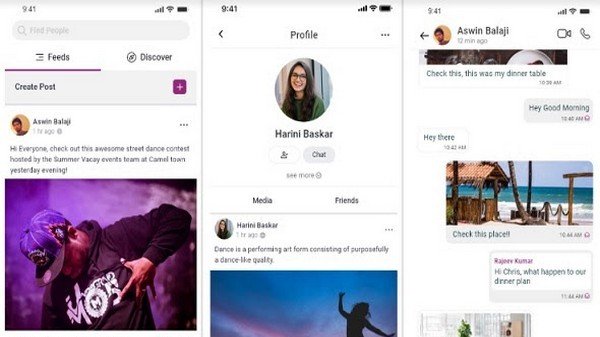
Atmanirbhar Bharat start building itself. Neccesity is the mother of invention. See now we made our own social media platforms. We are indian and we can do anything. Be atmanirbhar.

Vice President of India M Venkaiah Naidu is to launch Elyments, the first Indian Social Media Super App, on 5th July 2020. More than 1000 IT professionals jointly created the indigenous first social media super-app.  Elyments: 1. Elyments was built with an aim to keep the user’s privacy in mind, as a primary concern. 2.The product was designed by India’s top privacy professionals. 3. Data of users will be stored in the app and will never be shared with a third party without the user’s explicit consent. 4.The app is available in more than eight Indian languages. 5. The app aims to combine the special features of popular social media apps and present it on a single unified app. 6.The app will allow the users to stay in touch through a vibrant feed, seamless free audio/video calls, and private/group chats. 7. Elyments also aims to launch: Audio/ Video conference calls Secure payments via Elyments Pay Public profiles who users can Follow/Subscribe Curated commerce platform to promote Indian brands Regional voice commands.

Dieing Yesterday …

Isn’t it my creator’s job to make me intelligent, beautiful and someone fit for living? It’s his fault that he made me with stupidity, and not mine! Once I cursed my creator for being wrong, and now I’m praising my destroyer for being the same! Oh, wait! Whom should I blame now? Is this my creator’s fault that he tattooed a wrong date in my hands? Or my destroyer who forgot this silly being? Uff! Life’s like that!

High tides and beautiful sea shores..
I was gazing at the tattoo which says I have to die now.
Screaming aloud, wait this is the moment i started to live..
Alarm clock raising the voice stupid wake up its just a dream..

Life moves faster than we expect, soon year 1 changes to year 10, and our face starts to look more mature as we dive further down in life. We bond with so many people yet we stay in touch with the only few. Once we grow old, we travel back in time using memories as time machine, and relive the moments which were heaven to us , and sometimes the one which were not. Life gets easier as we go into our old age, we get wiser and know what life was meant to be. Soon enough the time comes, we close our eyes for the last time as the soul take its goodbye leaving behind a cold body with a smile on its face.

What will you do if you knew that you gonna die tomorrow. What do you do today which becomes a yesterday on tomorrow.

Abundant amount of clothes and footwear,
But always choose to wear limited.
Rest, are static characters to fill the void.
Plenty of emotions stifle inside,
But always choose to wear the mask of isolation.
Various ways to go home,
But always choose the same path.
Diverted from the society,
Focused in self manufactured rigid world.
One is not dead,
One is experiencing death every day.

Meditation in the age of covid

Online intervention has a large group of preferences, yet additionally bears some advised.

We live in weird occasions. Old assurances have offered approach to new vulnerabilities. Down the ages, Lady Justice, blade in one hand and eyes blindfolded, has been essentially similar to the Rock of Gibraltar, guaranteeing soundness, yet additionally being impervious to change. One bug, initiated COVID-19, tags along and the Lady is reeling . At the core of the ill-disposed framework is promotion acted in open setting, in full look of customers and individual legal advisors, and that has directed methods of thought and approach and conduct, all basic to the framework. Equity must appear to be done, however passes judgment on must likewise be seen while they are occupied with the undertaking of doing it. Be that as it may, nearness in numbers requires vicinity, and now closeness spells threat. Denied of their normal setting of the court, judges and legal advisors have fallen back to discuss virtual courts, so the minimum necessity is accomplished — the appointed authority having the option to hear the specific legal counselor. Every single other element of the court are shunned , and along these lines a basically open setting is changed over to a shut entryway one. It is, and will stay, inadmissible.

A tenderfoot

There is, in any case, another device in the contest goals ordnance , which is impervious to COVID-19, and maybe could even blossom with it. That is intervention, which is the total inverse of the court procedure. It attempts to accomplish accord between gatherings to go to a neighborly understanding, as opposed to the success lose decision of the antagonistic framework. At its center is secret conversation among go between and parties, and among arbiter and individual gatherings. It centers around revealing interests, and evoking recommendations from the gatherings themselves for down to earth answers for end the question. As much as the basic quality of the conventional equity framework is the open court hearing, intervention’s pith is shut entryway correspondence with its assurance of secrecy. Furthermore, significant in the current setting, it has an intrinsic adaptability and flexibility.

As a procedure, organized intercession is a newcomer, with a presence of scarcely a few decades in India, and only a couple of increasingly around the world. Regular suit and intervention are vintage, traversing many years and ages of judges and legal advisors. Intervention, be that as it may, is a thought whose opportunity has arrived and is quickly making strides. Enactment has given it the legitimate structure and defends, and gave the confirmation that the courts will actualize intervention understandings. India’s appointed authorities have been energetic embracers of this procedure. Attorneys, saturated with antagonistic ways, have shockingly heated up to a framework which is its direct opposite.

Helpful and practical

Online intercession will empower the go between and the gatherings to collect together, each on their PC screens maybe several miles away. Conversation can be guided, allowing gatherings and legal advisors the chance to advance their perspectives. At the point when separate gatherings are required, the go between can, at the snap of a catch, move the other party and its legal counselor to another virtual room. The incredible bit of leeway of online intervention is that it is advantageous, practical and a proficient utilization of time. Gatherings don’t need to endure costs, don’t need to travel, don’t need to stand by extended periods, and don’t need to experience dismissals and various visits to the intercession community. Much should be possible by utilizing this medium to get quicker outcomes.

What will be absent in this procedure is the promptness, unequivocal quality and complete contact that is conceivable just in eye to eye gatherings. Then again, it might likewise be that in an online procedure, we are giving the member a little casing of security, when we make this grainy obstruction of two screens and a middle universe of Internet and WiFi. It will unquestionably be of advantage in situations where feelings run high and up close and personal showdown may expand the contention. That happens frequently in marital cases, and in privately-run company debates, where tempers and feelings emerging from frayed local circumstances and settings can push out reasonable business rationale. Correspondingly, where gatherings are situated in various nations, we would have discarded troubles of separation when we receive this mode. As the new impulsive of online courses appears, it is anything but difficult to get individuals from various areas on to one stage.

Online intervention has a large group of favorable circumstances, yet in addition bears some forewarning. Classification can be undermined since hearings could be recorded; specialist organizations must be cautious, and rules should punish members for break. Specialized glitches must be limited, and Internet administrations must apparatus in the mood for giving screen lucidity and continuous feed. In any case, most importantly, there is the trepidation that online correspondence will reject the oppressed, the individuals who can’t bear the cost of access to Internet or don’t have the limit or help to utilize it. Such rejection will be equivalent to forswearing of access to equity. In the event that the State and its Courts will permit and urge online intervention to determine questions, more vulnerable gatherings must be helped and empowered to profit of this office.

As we wander in obscurity to discover what the new ordinary is going to comprise of, we may well find that a decent piece of the universe of contest goals has been flipped, and that COVID-19 is the harbinger of progress taking on the web consensual goals to a more significant level. Maybe, this cloud also has a silver covering.

BSF and CRPF are ready to welcome transgenders.

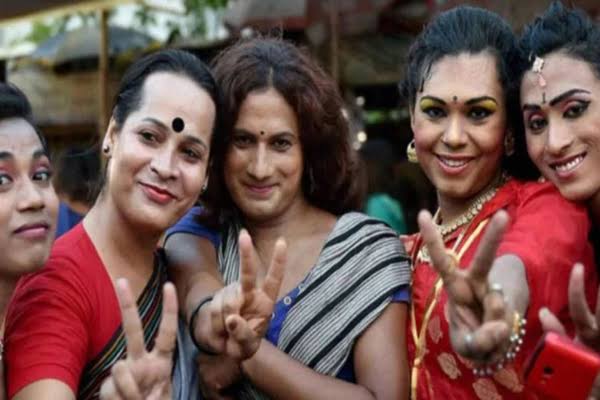
Rights of the transgenders have always been an issue in our country. They constantly had to face communal descrimination and people always kept them aside.

Recently, Ministry of Home Affairs has asked for opinion to the five forces that are SSB, BSF, CRPF, ITBP and CISF about the inclusion of transgenders to be an officer.

BSF had already showed it’s consent now CRPF spread their hands to welcome the transgenders to be the change.

Two days after the Union Ministry of Home Affairs (MHA) asked the paramilitary forces for their views on recruitment of transgender people as officers in their ranks, the Central Reserve Police Force (CRPF) has said it is ready make its force “compatible” to the new recruits.

The CRPF communication refers to the April 15, 2014 judgment of the Supreme Court declaring transgender people as the Third Gender. Following this, Parliament passed the The Transgender Persons (Protection of Rights) Act in 2019.

Sources said other forces are also likely to give a positive response.

World,s Most Famous Photographers.

  • By Tushar Soni

“When words become unclear, I shall focus with photographs. When images become inadequate, I shall be content with silence.”

If you love photography and if you truly want to take unforgettable and moving photographs, you can learn photography by studying the pictures of some famous photographers. Some of the most valued artists are decreased, but some are still delighting us with their photographs. The list below includes some of the most famous photographers that still impact our lives today.

1. Annie Leibovitz is an American portrait photographer. She is best known for her engaging portraits, particularly of celebrities, which often feature subjects in intimate settings and poses. Leibovitz,s polariod of John Lennon and Yoko Ono, taken five hours before Lennon,s murder, is considered Rolling Stone magazine,s most Famous cover photograph.

2. Robert Capa has taken many famous war-time photographs. He has covered five wars, even though the name “Robert Capa” was only the name placed to the photos the Endre Friedman took and that were marketed under the “Robert Capa” name. Friedman felt that if you were not close enough to the subject, then you wouldn,t get a good photograph. He was often in the trenches with soldiers when he took photographs, while most other war photographers took photos from a safe distance.

3. Eliot Porter was an American photographer best known for his intimate colour photographs of nature. He started to photograph birds and the landscapes with Kodak box camera as a child. Porter acquired a Leica in 1930. In 1933, he was powerfully moved by the photographs of Ansel Adams. Ansel encouraged him to work with a large-format camera. Porter did so upon meeting Alfred Stieglitz, who exhibited his work at An American in 1939.

4. Paul Strand was an American photographer who helped to establish photography as an art form in the 20th century. His diverse body of work spanned six decades. He covered many genres and subjects throughout the Americas, Europe, and Africa. Alfred Steiglitz helped influence his modernistic approach. Paul even worked with renowned documentary photographer Lewis Hine. Here,he learned how to capture urban bustle, Formal abstractions, and street portaits.

5. Edward Western was an 20th-century American still life photographer. Over the course pf his 40-year career, Weston photographed an increasingly expensive set of subjects. These included landscapes, still lifes,nudes and portraits. He came to focus on portraits after spending part of his career capturing trees and rocks in California. In 1937, Weston was the first photographer to receive a Guggenheim Fellowship. Over the next two years, he produced nearly 1400 negatives using his 8*10 camera.

6. Steve McCurry is a famous for his photo ‘Afghan girl,’ taken in a refugee camp in Peshawar, Pakistan. This photo was named the most recognized photo of National Geographic. McCurry has photographed many assignments for National Geographic and has been member of Magnum Photos since 1986.

7. Jimmy Nelsson is well-known for his portraits of tribal and indigenous people taken in more than 16 countries. His photos will live to tell the tale. Nelsoon,s book is now a collector,s item.

Disengagement with Chinese Army starts in Galwan Valley as per agreed terms in Corps Commander’s meeting

Disengagement with Chinese Army has started in Galwan Valley as per agreed terms in the Corps Commander’s meeting of the two sides. Army sources said, Chinese forces were seen removing tents and structures at Patrolling Point 14.

AIR correspondent reports that rearward movement of vehicles of Chinese Army seen at General Area Galwan, Hotsprings and Gogra. This development is in line with what the Corps Commanders agreed to on 30th of June at Chushul.

Government sources told AIR News that this is a work in progress and they will have to wait till sunset to see up to what distance the Chinese have retreated. The Indian and Chinese Armies were locked in a standoff in eastern Ladakh recently.

Arrest the virus of Arbitrary power


What is worrisome today is the whimsical curtailment of liberty and brazen partisanship.

In the early days of the lockdown, when COVID-19 cases began to rise, we witnessed a second virus spreading equally rapidly in the country — the virus of communalism. But there is a third virus around which is less spoken about; a virus eating into and severely corroding our democratic structure — the virus of arbitrary power. There is no better evidence of this than the denial of bail to a pregnant student-activist, arrested for creating disorder on an ‘unprecedented scale’ when all she appeared to have done was actively participate, like many others, in a protest against the Citizenship (Amendment) Act, 2019, proposed by the government.

Tyranny and slavery

This arbitrary use of power, implied by the absence or selective use of law, is deeply troublesome. More so, when exercised by a democratically elected government. Frequent arbitrariness in the political domain leads to tyranny, quite like when persistently present in the social sphere, it leads to slavery. Either way, it tramples upon basic freedoms. But what, one might ask, is the connection between arbitrariness and the loss of freedoms?

Individuals, communities or citizens cannot function freely without a stable set of expectations. By stabilising expectations, laws enable significant freedoms, even as they restrict some others. To take just one example, once it is widely known that I am legally restricted to driving only on the left, I drive with greater freedom, knowing that headlong collision is unlikely. I regulate the speed of travel and calculate the time to get from home to office. This helps me schedule my work for the day and coordinate with others who likewise make their own schedules. By jointly accomplishing our goals, we enhance our freedom. Laws enable our actions and interactions to become broadly predictable. Many of our freedoms require that the arbitrary, by which is meant ‘unpredictable, random or unexpected’ does not throw us off balance. The arbitrary blocks freedom.

However, an even more basic feature of arbitrariness, one that produces much greater harm, is to be at the mercy of the whim or fancy of someone else, especially the powerful. Return to the traffic example. Suppose that two vehicles stop at the traffic light but just beyond the zebra crossing. The policeman, embodying the entire might of the state, issues a ticket or a challan to one but not the other. Worse, instead of fining the violators, he seizes the driving licence of a careful driver, who has stopped a good metre behind the crossing, merely because he dislikes the make of his car. Surely, this arbitrary implementation of the law is grossly unjust. This shows that the minutest aspect of daily life — travelling to work — can be dependent upon the arbitrary opinion of someone else. When power is exercised arbitrarily by the state, a person is made to act not in accordance with a legitimate, general rule but at the pleasure of state officials. The most extreme example of this is political enslavement, when an entire people are colonised, subjected to the will of the colonisers, where laws, good or bad, flow from the like and dislike of colonial masters.

The Emergency and now

These examples strengthen my point about an inverse relation between arbitrary political power and freedom. In dictatorships, entire populations are subject to the whim of the supreme leader or a tiny elite. Who did not fear the midnight knock in the regimes of Hitler and Stalin? While the devastation they caused is well chronicled, smaller tyrannies abound in our world too. Even democracies contain authoritarian spaces within them where the law can be used to continuously harass opponents. Anyone who has lived through the Emergency knows that Opposition leaders were thrown in jail on the false charge of conspiring against the state and thereafter a small crack unit began to arbitrarily control the activity of anyone politically significant. Surely that experience should have sufficed to make all of us realise the supreme value of freedom from arbitrary rule. However, with the number of first information reports (FIRs) being filed at the behest of random persons, on unsubstantiated complaints and little explanation, largely uncontested by a tired, silent political Opposition, one begins to wonder if we are headed in that awful direction once again.

Upending rights

Consider the arrest of activists. Article 21 of the Constitution gives every citizen the right of basic liberty and security. No one can be deprived of liberty, held without properly following procedures prescribed by law. Article 22 requires that anyone arrested and detained must be informed of the ground for such an arrest and must be brought before a competent legal authority within a prescribed time frame. Legal scholars have rightly pointed out that the best interpretation of this Article requires that the grounds of arrest and detention must be reasonable. The grounds of preventive detention, to be used in very rare cases, must likewise assume that the suspicion of offence is well-grounded, based on available evidence, on relevant information that satisfies any objective observer, and not on mischievous allegations. But reality seems to confirm what every other Indian movie has shown about police acting on the caprice of a ruling leader, and the law being used to harass citizens. Is suspicion always supported by available facts? Is the ‘offender’ really a threat to internal security, or merely present at the scene of the ‘crime’? Whatever the facts of the case, was the offence committed by a pregnant student-activist so grave that bail could not be granted until yesterday, on her 4th attempt? If ordinary persons could smell arbitrariness here, why could not the sessions judge? Anyhow, why fill our coronavirus-infested jails with what are largely political prisoners, when other countries are releasing even non-political inmates? Minimum lock-up during lockdown should be the political slogan in our catastrophic times.

The Emergency, whose anniversary falls tomorrow, was meant to be a watershed in the life of Indian democracy, a brief, critical phase when the Indian political system could have gone either the way of authoritarian rule or mature as a democracy. By restoring faith in democracy, India appeared to have passed one of its crucial tests and firmly taken the second route. But are we on the verge of giving up the gains from that chastening experience? Has the struggle against the suspension of democracy been in vain? Have a small section of its victims now become perpetrators?
What is worrisome today is the whimsical curtailment of liberty and brazen partisanship.

In the early days of the lockdown, when COVID-19 cases began to rise, we witnessed a second virus spreading equally rapidly in the country — the virus of communalism. But there is a third virus around which is less spoken about; a virus eating into and severely corroding our democratic structure — the virus of arbitrary power. There is no better evidence of this than the denial of bail to a pregnant student-activist, arrested for creating disorder on an ‘unprecedented scale’ when all she appeared to have done was actively participate, like many others, in a protest against the Citizenship (Amendment) Act, 2019, proposed by the government.

Tyranny and slavery

This arbitrary use of power, implied by the absence or selective use of law, is deeply troublesome. More so, when exercised by a democratically elected government. Frequent arbitrariness in the political domain leads to tyranny, quite like when persistently present in the social sphere, it leads to slavery. Either way, it tramples upon basic freedoms. But what, one might ask, is the connection between arbitrariness and the loss of freedoms?

Individuals, communities or citizens cannot function freely without a stable set of expectations. By stabilising expectations, laws enable significant freedoms, even as they restrict some others. To take just one example, once it is widely known that I am legally restricted to driving only on the left, I drive with greater freedom, knowing that headlong collision is unlikely. I regulate the speed of travel and calculate the time to get from home to office. This helps me schedule my work for the day and coordinate with others who likewise make their own schedules. By jointly accomplishing our goals, we enhance our freedom. Laws enable our actions and interactions to become broadly predictable. Many of our freedoms require that the arbitrary, by which is meant ‘unpredictable, random or unexpected’ does not throw us off balance. The arbitrary blocks freedom.

However, an even more basic feature of arbitrariness, one that produces much greater harm, is to be at the mercy of the whim or fancy of someone else, especially the powerful. Return to the traffic example. Suppose that two vehicles stop at the traffic light but just beyond the zebra crossing. The policeman, embodying the entire might of the state, issues a ticket or a challan to one but not the other. Worse, instead of fining the violators, he seizes the driving licence of a careful driver, who has stopped a good metre behind the crossing, merely because he dislikes the make of his car. Surely, this arbitrary implementation of the law is grossly unjust. This shows that the minutest aspect of daily life — travelling to work — can be dependent upon the arbitrary opinion of someone else. When power is exercised arbitrarily by the state, a person is made to act not in accordance with a legitimate, general rule but at the pleasure of state officials. The most extreme example of this is political enslavement, when an entire people are colonised, subjected to the will of the colonisers, where laws, good or bad, flow from the like and dislike of colonial masters.

The Emergency and now

These examples strengthen my point about an inverse relation between arbitrary political power and freedom. In dictatorships, entire populations are subject to the whim of the supreme leader or a tiny elite. Who did not fear the midnight knock in the regimes of Hitler and Stalin? While the devastation they caused is well chronicled, smaller tyrannies abound in our world too. Even democracies contain authoritarian spaces within them where the law can be used to continuously harass opponents. Anyone who has lived through the Emergency knows that Opposition leaders were thrown in jail on the false charge of conspiring against the state and thereafter a small crack unit began to arbitrarily control the activity of anyone politically significant. Surely that experience should have sufficed to make all of us realise the supreme value of freedom from arbitrary rule. However, with the number of first information reports (FIRs) being filed at the behest of random persons, on unsubstantiated complaints and little explanation, largely uncontested by a tired, silent political Opposition, one begins to wonder if we are headed in that awful direction once again.

Upending rights

Consider the arrest of activists. Article 21 of the Constitution gives every citizen the right of basic liberty and security. No one can be deprived of liberty, held without properly following procedures prescribed by law. Article 22 requires that anyone arrested and detained must be informed of the ground for such an arrest and must be brought before a competent legal authority within a prescribed time frame. Legal scholars have rightly pointed out that the best interpretation of this Article requires that the grounds of arrest and detention must be reasonable. The grounds of preventive detention, to be used in very rare cases, must likewise assume that the suspicion of offence is well-grounded, based on available evidence, on relevant information that satisfies any objective observer, and not on mischievous allegations. But reality seems to confirm what every other Indian movie has shown about police acting on the caprice of a ruling leader, and the law being used to harass citizens. Is suspicion always supported by available facts? Is the ‘offender’ really a threat to internal security, or merely present at the scene of the ‘crime’? Whatever the facts of the case, was the offence committed by a pregnant student-activist so grave that bail could not be granted until yesterday, on her 4th attempt? If ordinary persons could smell arbitrariness here, why could not the sessions judge? Anyhow, why fill our coronavirus-infested jails with what are largely political prisoners, when other countries are releasing even non-political inmates? Minimum lock-up during lockdown should be the political slogan in our catastrophic times.

The Emergency, whose anniversary falls tomorrow, was meant to be a watershed in the life of Indian democracy, a brief, critical phase when the Indian political system could have gone either the way of authoritarian rule or mature as a democracy. By restoring faith in democracy, India appeared to have passed one of its crucial tests and firmly taken the second route. But are we on the verge of giving up the gains from that chastening experience? Has the struggle against the suspension of democracy been in vain? Have a small section of its victims now become perpetrators?

Heavy rains in Mumbai

Every year Mumbai experiences days where there is heavy rains which creates a pause in the life of people for sometime. like the local trains becomes late, or the railway tracks are submerged inside the water. Every year we hear the news of the Sion railway station filled with water and people are struck in many different places. The conditions never get better. Mumbai rain always brings out some difficulties with it, it clogs the drainage or sometimes even some bridges falls due this heavy rains. This year also the history was repeated. For three consecutive days it is been raining and the Indian meteoritical department has warned that the heavy rains will continue for next two days. There would be rain and thunder shower in places like Mumbai, Mumbai suburban, Palghar, Pune, Raigad and Thane. Also yellow alert has been declared in isolated places of these districts. Mumbai police has requested citizens to be away from the seashore and stay at home if possible.They have also urged the fisherman at Maharashtra to Goa coast to cancel their fishing venture for today.

The Brihan Mumbai Muncipal coorporation that is the BMC has said that a high tide of 4.67 metres is also expected at one thirty at the noon.  High tide is the highest elevation of water, that means if you stand there the moon will be directly over you, jokes apart don’t go and stand there to experience it, a very dangerous adventure to take. The IMD has also said there there would be strong winds of  fifty to sixty kilometre per metre.

As the after effects of this rain can be seen already, though because of this pandemic lockdown there is no effect to people’s life in the magnitude that would effect till last year.

Water logging has been reported in many places like  Chembur, Vadala,Dharavi, Andheri, Hindmata junction, Khar subway, Milan subway and Dahisar subway. These are the main places of residential areas in Mumbai and every year there is this problem arising but there is no solution to these. These areas are more prone because they are relatively low lying areas in Mumbai and they tend to get flooded easily every time.

The Powai lake has started overflowing in the morning, because of which there is flooding in the road. The Colaba weather station in Mumbai recorded one sixty nine milimetres of rain during the last twenty four hours. Shanties in Bandra near the Sea hit the high tides.

The places in the Interior of Maharashtra has also recieved a fair amount of rains. In Navi Mumbai and Thane there was very intense rain fall and there was a record of 200 mili metre rain today.  A Vacant and stand alone building in Thane west fell shortly after the rains started. There were some trees branches falling which lead to a traffic jam in many parts of Mumbai.

So that is the record of the Mumbai records yet , thankfully there is no case of injuries or casualties but the weather department has warned about heavy rains in next 2 days so take care of yourself.

Why China is being aggressive at LOC

Its moves are influenced by a large group of components — from the breaks in the worldwide request to the decrease of India’s savvy power.

The progressing pressures along the Line of Actual Control (LAC) represent the greatest national security challenge to New Delhi in any event 20 years. The conflicts in Galwan Valley in eastern Ladakh have guaranteed 20 Indian carries on with, the main episode of fatalities on the India-China outskirt in 45 years. China has resuscitated its case on the whole Galwan Valley and has requested that India pull over from the zones. Satellite pictures in the open space recommend that China has set up guard positions in the valley just as the contested “Fingers” of Pangong Tso. The two sides are occupied with a go head to head at Hot Springs. Regardless of different rounds of military-level talks, strains are probably not going to ease given the multifaceted nature of the ground circumstance.

What prompted the current circumstance? In 2017, India and China consented to agreeably resolve the Doklam stalemate that went on for over two months. No blood was spilt at that point, and no shots discharged. The National Democratic Alliance government drove by Prime Minister Narendra Modi has been mindful so as not to disturb China’s residential and international sensitivities. Excepting intermittent joint articulations gave with pioneers from the U. S. also, Asia-Pacific nations, reasserting India’s promise to “opportunity of route” (a hidden analysis of China’s cases over the South China Sea), India has avoided reprimanding China on questionable points, regardless of whether its “de-radicalisation” camps in Xinjiang, crackdown on fights in Hong Kong, or debates with Taiwan. However China decided to build strains along the LAC. Why?

Salami cut methodology

One well known contention is that China’s turn, driven by neighborhood factors, for example, India’s foundation redesign and its choice to change the status of Jammu and Kashmir and Ladakh, was careless. For some square kilometers of land, this contention goes, China has lost India deliberately, toward the West. A few specialists have guaranteed that the strains on the fringe are driving India more profound into a vital grasp with the U. S. Be that as it may, it’s not as simple as it appears. There is a reasonable move in Chinese international strategy post the COVID-19 flare-up. This is found in China’s rising pressures with the U. S. , its dangers against Taiwan, rehashed maritime occurrences in the South China Sea, and another security law for Hong Kong. The strains along the LAC are a piece of this move. To comprehend this move, one needs to get a feeling of the wellsprings of China’s lead.

The present China is an eager rising force which needs to reorient the worldwide request. In contrast to the Soviet Union of the 1940s (in the beginning phases of the Cold War), China isn’t an ideological express that means to send out socialism to different nations. Be that as it may, similar to the Soviet Union of the post-war world, China is the new superpower on the square. At the point when it was rising, China had received distinctive strategic positions — “conceal your ability and stick around for your opportunity”, “serene ascent” or “tranquil turn of events”. That time is finished. Under President Xi Jinping, the Chinese think they have shown up. With the worldwide economy in the doldrums, globalization in a hopeless emergency emphasizd by the COVID-19 episode, and the U. S. under an independent President taking the most forceful situation towards China since Richard Nixon, Beijing accepts the worldwide request is at a limit. It is retaliating through what game scholars call “salami strategies” — where a predominant force endeavors to build up its authority piece by piece. India is one cut in this salami cut system.

View of decay

China doesn’t consider India to be a ‘swing state’ any more. It considers India to be a partner in-progress of the U. S. Its activities were not careless, taken at the danger of losing India deliberately. Its activities are a consequence of the vital misfortune that has just occurred. On the off chance that India is the thing that numerous in the West call the “stabilizer” to China’s ascent, Beijing’s distinct message is that it isn’t hindered by the stabilizer. This is a message to India, yet to a large group of China’s adversaries that are collaborating and anxious to enroll India to the club.

Inside this more extensive system there could be a large group of components — nearby, provincial and worldwide — that affected China’s moves. At the point when the majority of the world’s enormous forces are wrestling with the pandemic, revisionist powers, for example, China have more space for international moving . Europe has been crushed by the infection. The U. S. is fighting in a political decision year the COVID-19 episode just as the most profound financial emergency since the Great Depression. Its worldwide authority is unwinding quick. The Indian economy was in a difficult situation even before COVID-19 struck the nation, hindering its ascent. Social change over the Citizenship (Amendment) Act (CAA), 2019, and the National Register of Citizens had debilitated the Indian commonwealth. India’s conventional clout in its neighborhood was slipping: strains with Pakistan have been high keeping the soldiers involved in the outskirt regions; Nepal raised limit issues with India; Sri Lanka is expanding its international strategy and China is making profound advances into that locale; and Bangladesh was profoundly annoyed with the CAA. Indeed, even in Afghanistan, where Pakistan, China, Russia and the U. S. are engaged with the progress procedure, India is out. Progressively significant, a year ago’s Balakot airstrike was deliberately tragic. It might have helped Prime Minister Modi win a re-appointment, yet there was no proof that demonstrated that Indian strikes hit the aggressors. India lost a fly to the neighbor and its pilot was caught and later discharged by Pakistan. The entire activity uncovered the chinks in our defensive layer, disintegrating India’s discouragement. A conversion of every one of these elements, which point to a decrease in the nation’s keen force, permitted China to make forceful proceeds onward the LAC.

This is a key snare. India has reached here incompletely in light of the absence of profundity in its key reasoning. A profound grasp of a declining U. S. isn’t an answer the same number of contend; rather, it’s a piece of the issue. Pakistan grasped a far steadier U. S. during the Cold War to check India. What befell Pakistan from that point ought to be an exercise for India. What India needs is a national security methodology that is decoupled from the impulses of residential legislative issues and tied down in neighborhood authenticity. It should face China’s harassing on the fringe now, with a drawn out spotlight on improving limits and winning back its amicable neighbors. There are no convenient solutions this time.