Are Flat-Earthers Being Serious?

Members of the Flat Earth Society claim to believe the Earth is flat. Walking around on the planet’s surface, it looks and feels flat, so they deem all evidence to the contrary, such as satellite photos of Earth as a sphere, to be fabrications of a “round Earth conspiracy” orchestrated by NASA and other government agencies.

The belief that the Earth is flat has been described as the ultimate conspiracy theory. According to the Flat Earth Society’s leadership, its ranks have grown by 200 people (mostly Americans and Britons) per year since 2009. Judging by the exhaustive effort flat-earthers have invested in fleshing out the theory on their website, as well as the staunch defenses of their views they offer in media interviews and on Twitter, it would seem that these peoplegenuinely believe the Earth is flat.

But in the 21st century, can they be serious? And if so, how is this psychologically possible?

Through a flat-earther’s eyes

First, a brief tour of the worldview of a flat-earther: While writing off buckets of concrete evidence that Earth is spherical, they readily accept a laundry list of propositions that some would call ludicrous. The leading flat-earther theory holds that Earth is a disc with the Arctic Circle in the center and Antarctica, a 150-foot-tall wall of ice, around the rim. NASA employees, they say, guard this ice wall to prevent people from climbing over and falling off the disc. (In keeping with their skepticism of NASA, known flat-earther conspiracy theorist Nathan Thompson recently approached a man he said was a NASA employee in a Starbucks in mid-May 2017. In a YouTube video of the exchange, Thompson, founder of the Official Flat Earth and Globe Discussion page, shouted that he had proof the Earth is flat — apparently saying an astronaut drowning was that proof — and that NASA is “lying.”)

Earth’s day and night cycle is explained by positing that the sun and moon are spheres measuring 32 miles (51 kilometers) that move in circles 3,000 miles (4,828 km) above the plane of the Earth. (Stars, they say, move in a plane 3,100 miles up.) Like spotlights, these celestial spheres illuminate different portions of the planet in a 24-hour cycle. Flat-earthers believe there must also be an invisible “antimoon” that obscures the moon during lunar eclipses.

What is cloud computing?

Today’s era is the era of technologies and Technologies such as cluster, grid, and now cloud computing, have all aimed at allowing access to large amounts of computing power in a fully virtualized manner, by aggregating resources and offering a single system view .Utility computing describes a business model for on-demand delivery of computing power; consumers pay providers based on usage.

Cloud computing refers to applications and services that run on a distributed network using virtualized resources and accessed by common Internet protocols and networking standards. It is distinguished by the notion that resources are virtual and limitless and that details of the physical systems on which software runs are abstracted from the user.

Cloud computing is particularly valuable because it shifts capital expenditures into operating expenditures.It also shifts risk away from an organization and onto the cloud provider. Cloud computing presents new opportunities to users and developers because it is based on the paradigm of a shared multi tenant utility.

These are the unique characteristics of an ideal cloud computing model:
Scalability: You have access to unlimited computer resources as needed.
Elasticity: You have the ability to right-size resources as required.
Low barrier to entry: You can gain access to systems for a small investment.
Utility: A pay-as-you-go model matches resources to need on an ongoing basis.

There are an number of benefits that more Companies are becoming cloud computing providers:
Profit: The economies of scale can make this a profitable business. Optimization: The infrastructure already exists and isn’t fully utilized.This is the case for Amazon Web Services.
Strategic: A cloud computing platform extends the company’s products and defends their franchise.This is the case for Microsoft’s Windows Azure Platform.
Extension: A branded cloud computing platform can extend customer relationships by offering additional service options. This is the case with various IBM cloud services.

Cloud computing is an amazing technology it has an number of benefits it is more efficient to use,with the help of cloud IOT is making life easy and convenient.

Designs and need of clothing!

Ever wonder why there are so many designs in clothing and why there was a need of clothing lets understand this topic with the help of design philosophy.

Design is something which is problem solving not only aesthetic is involved its for the usage as well .It includes variation of ideas , thoughts that are implemented different process of fashion. Design implies a conscious effort to create something that is both functional and aesthetically pleasing. Isn’t it amazing to know? Let us now understand Design philosophy

“Design philosophy” is simply someone’s philosophy on design: what they are trying to accomplish with design, and,
more importantly, what one thinks design should accomplish.
-Some think aesthetics have nothing to do with design. Some think design is all about utility.
– Some believe design doesn’t exist in isolation; it is a reflection of the larger society. As society changes, so should
design.

So the idea here is that design is solely depend on a person choice. So now understand the need of clothing why there is so much variety

Apparels, accessories, are a part of our life. They shield us,warm us as well as give us pleasure. They reflect our
personality and express our attitudes.On the basis of above reasons, four theories have been
developed to explain the origin of clothing, which are:

The Protection Theory
The Modesty Theory
The Adornment Theory
Combined Need Theory

The Protection Theory

According to protection theory, humans are defenseless and need protection from the environment and other creatures. Clothes provide them with a portable source of physical protection. Clothes were made from animal skins and parts of trees, including their bark, to protect the body from excessive heat, cold, and bites and stings of insects and animals

The Modesty Theory

It suggest the people first wore clothing to cover or conceal the private parts of the human body. The classification of what is right and what is wrong in clothing varies from one individual to another, from one culture to another.
-For example, it is considered immodest for Muslim women if she goes out
without wearing burka. And in few African tribes removing earrings and lip plugs is considered immodest.
This proves that the sense of shame and modesty is not inborn but its a learned and cultivated behavior, based on beliefs, customs, traditions of culture or society at a particular point of time.

The Adornment Theory

This theory refers to the decorative nature of clothes and other forms of appearances; modifications for purposes of display, attraction or aesthetic expression

Combined Need Theory

The combined need theory is based on the theory of hierarchy of needs, which describes the human being as an ever wanting creature whose requirements move from one level of priority to the next. This theory states five levels of needs. These are as follows:
Psychological
Safety
Belongingness
Self- esteem
Self- realization or actualization
The first level refers to the need of clothing for protection from physical and psychological forces.
Safety also relates to protection.
Clothing also helps one to gain acceptance in a group and provide a sense of belonging to it.
Clothing helps in boosting self-esteem by enhancing the appearance of the wearer. It maximizes the potential of the wearer and helps the self- realization.Therefore, according to this theory, the reason behind wearing clothes can be a combination of needs

Isn’t this topic amazing i hope you like it!!

Peace, can it be achieved or only experienced?

“Don’t stay awake for too long
Don’t go to bed
I’ll make a cup of coffee for your head.” This goes perfectly for the mind peace with a slightest change that if you are a tea fan then replace it with coffee.

You know, it should be on Guinness Book for the most searched thing in the world.

I’m not saying that, i have got that.. no, and how can I get that when I’m living in the same world where you all are??

But, I know something which you should also know. Peace is something which can be never found, but always experienced. It can be never achieved, but, it can be shared.

Like, for a moment something happens which makes you happy, and you start dreaming of the life which is full of happiness. No, it’s not wrong, but what happens when for a moment you experience sadness. Do you think same or do, we think same??

No, we want that moment to pass as soon as possible and happiness to re-enter our life. And that’s wrong.

Gautam buddha said “When there’s wants and desire of something in your mind, peace can never make home there”.

Ok! But, aren’t we humans, it’s our work. Without wants and desire, how can a human live?? Does that mean humans are never going to find peace??

No, we can and someday we will, at least one of us will. All we have to do is live both the moments, happy and sad. That’s all, when we are ready to accept Whatever life is giving us to live and learn. Then we can have the Peace.

In a simple words, we can have our wants and desire because we are humans, but first we should have what is needed. Then only peace can make it’s home in your mind.

Now, how to know the difference  between wants and need. There’s always a simple example for that , you want to have 4-5 chapati but all you need was 3-4 chapati. Then why extra? For saving purpose? Come On that chapati will be thrown out in last if it didn’t get utilized in the required time, and it goes not just with chapati, it goes with every thing.

Like Gautam Buddha had an empire to run, and a family to see.. but he did what he was needed at that moment or in that era.

So, focus on the thing you need first, then when you achieve that, you will experience peace in your mind and then again you will go for wants but that’s acceptable because life goes on with thoughts and wants, but always go for need first.

Leave your views down below on this topic and tell us more what can be done to have, that peace for a moment.

See yaa.

What are Information System?

An information system (IS) is a set of interrelated components that collect, process, store and distribute information to support decision making and control in an organization. The components of Information system (IS) include hardware, software, network, database and human resource that interact to produce information.

IS accept data from their environment and manipulate data to produce information that is used to solve a problem or address a business need. In earlier days, majority of information system were manual systems. •These days, IS is mostly computerized, software intensive systems.

So let us understand the need why we have to shift from manual to computerized system

DISADVANTAGES OF MANUAL SYSTEM: Time Taking Process ,Difficult to handle ,More possibilities of errors

ADVANTAGES OF COMPUTERIZED SYSTEM Time Saving ,Proper Management ,Easy to handle ,Less possibilities of errors

obviously there are more advantages of computerized system.

FUNCTIONS OF INFORMATION SYSTEMS

IS consists of data, hardware, software, procedures and people. The major functions are: Input, storage, processing, control, output. IS are developed to support specific business functions. For example Manufacturing- ERP(Enterprise Resource Planning), Human resource- HR information systems,Marketing and sales- CRM(Customer Relationship Management)

IMPORTANCE OF INFORMATION SYSTEMS

Communication – with help of information technologies the instant messaging, emails, voice and video calls becomes quicker, cheaper and much efficient.

Globalization and cultural gap – by implementing information systems we can easily share the information, knowledge, communication and relationships between different countries, languages and cultures.

Availability – information systems has made it possible for businesses to be open 24×7 all over the globe.

Creation of new types of jobs – Most of the jobs nowadays are information- intensive i.e. based on handling large amount of information. Examples: training, teaching, accountants, lawyers etc.

Cost effectiveness and productivity – the IS application promotes more efficient operation of the company and also improves the supply of information to decision-makers. IS has a positive impact on productivity.

Decision-Making: Help to make profitable decisions for any organization.

Record-Keeping: All data is saved and kept for any reference.

The bottom line is that Information systems plays a crucial role, so it is required to keep them safe and secure. Data contained in IS should not be allowed to accessed by unauthorized people.

Threats: -use of internet opens the door for external encroachment

-data stored on hard disk of computer without precautions can be read, copied or modified when connected to internet

 -misuse of information systems by employees may cause loss of productivity, loss of revenue, legal liabilities etc.

SO it is clear there that the advantages of is is more than the threats and threats can be minimized when carefully examined.

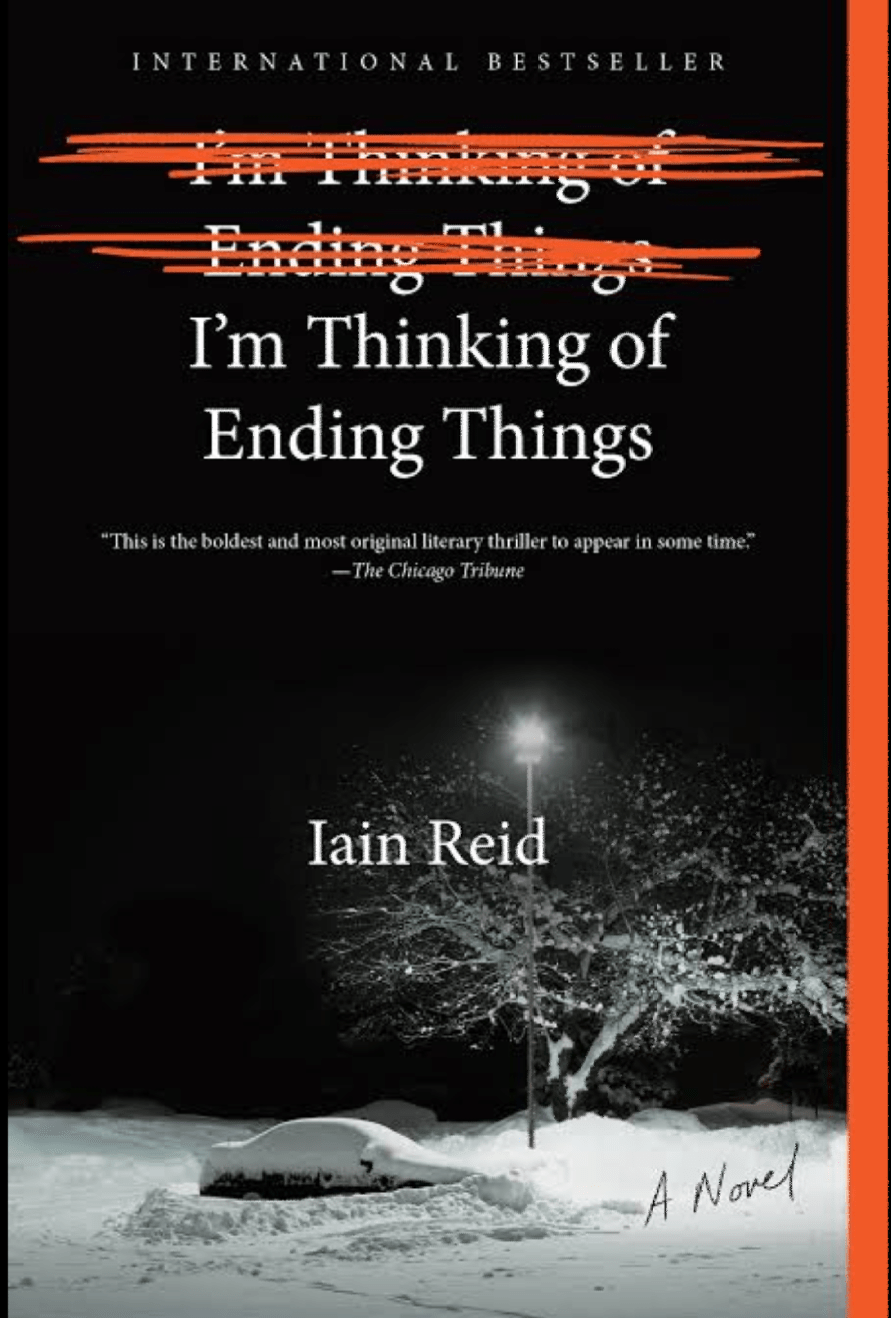
I’m thinking of ending things…

Author – Iain Reid

Page count – 224 (hardback) 130 (eBook)

Genre – Suspense, psychological thriller

The story is about a young woman and her boyfriend. A girl has no name (high five if you GoT (again) that reference). Jake is her boyfriend. We find them driving to his parents house in the country and then back home. Its just that. But you won’t believe how much happens in that time frame. The conversation between the couple makes you think. They have these deep talk about childhood and other stuff.

The name of the book is such because the girl keeps thinking of ending things with this boyfriend all this time and this is important.

Recently made into a Netflix movie this book is what I wish I had heard about earlier. I strongly recommend thriller novel fans to give it a read. Moreover it’s short. You could finish it within a day or two. Haven’t seen the movie yet but I will check it out after I finish writing this. I really want to see the difference between how I pictured it and how the movie is portrayed. I do that with every book based movie.

It’s been a while since a read a good book. This one kept me hooked. One of those un-put-downable. The suspense it creates. You know there’s something wrong about it but you cannot pin point what it is. There’s this one crazy page and the next page is normal but you turn to the next page and it’s crazier than the first. You’ll make yourself comfortable with the surrounding, the character and the scene changes out of the blue. The last few pages are so confusing makes you feel anxious unless you read it all.

It has a 3.5/5 rating on Goodreads. I would rate it 4/5.

P.s. Suggest me some good thriller novels please.

Thank you for reading. Have a nice day!

Covid-19 vaccine tracker, Sept 10: AstraZeneca trial paused after volunteer developed neurological symptoms

Covid-19 vaccine tracker, Sept 10: AstraZeneca trial paused after volunteer developed neurological symptoms

Coronavirus (COVID-19) vaccine tracker September 10 Update: The report also said that the trials had been halted once earlier as well, in July, after another participant had also developed neurological problems. The patient was later diagnosed with multiple sclerosis, something that was assessed to be unrelated to the vaccine.
A test tube labelled with the Vaccine is seen in front of AstraZeneca logo in this illustration taken, September 9, 2020. REUTERS/Dado Ruvic

Coronavirus (COVID-19) Vaccine Tracker: The volunteer whose serious ailment halted clinical trials of a coronavirus vaccine candidate being developed by AstraZeneca and Oxford University is a woman who has shown symptoms of a neurological disorder that affects the spinal cord, according to a report in Stat News, the media organisation which first reported that the clinical trials had been paused.

The report said information about the woman was released by AstraZeneca CEO Pascal Soriot during a “private conference call” with company investors. It said the CEO had informed the investors that the woman had symptoms of a rare disease called transverse myelitis, but that her condition was improving and she was likely to be discharged from the hospital soon.

Equality

Priya Yadav,

I think nowadays we are taking the word ‘equality’ in the wrong sense. Equality does not mean to be exactly the same. Here it means equal, equal chance, equal respect, but not equal work. If you get equal in the activity, you will bring the woman in a state of harm in most areas of life, and in some other areas of life, the man will come in a state of loss. More than this, inefficiency will spread everywhere. Women will try to do in which men are better, men will try to do that in which women are better. In this way, both works will get messed up. See, with training, everyone can do everything. But natural ability must be used. If this is not done, the level of activity will be average. Therefore it is best to use the natural ability.

Now the question is, who will decide who should do what? Why should it be decided beforehand what a man should do or what a woman should do? It should be allowed only to decide that person.

We are proud to be 21st century Indians who celebrate happiness when a son is born and if a daughter is born, they are peaceful even when no rule has been made to celebrate. So much love for the boy that in the desire of the birth of boys, we have been killing girls since ancient times before birth or before birth, if fortunately they are not killed then we find many ways to discriminate with them throughout life. Let’s take it.

Today the circumstances have changed a lot and many activities can be done by both men and women, which was not possible in earlier times. Thousands of years ago, most people lived in villages and there was forest all around. There were wild animals everywhere. At that time, tigers were not like cats, which needed protection. They were very dangerous creatures, which made you panic. At that time there was no shop from where anything could be purchased. You had to hunt every day or bring something to break. The man was definitely fit to go out and do this job. There was also a biological responsibility for the woman, to have children. If she went to the forest with a small baby, she might have to return empty-handed. Therefore, because of children, the woman was kept safe and the male went out in search of food. This was an ideal sharing of work.

Vice President calls for making nature’s conservation a people’s movement

The Vice President of India, Shri M. Venkaiah Naidu called for making nature’s conservation a people’s movement and appealed to all citizens, especially the youth to actively take up this cause. 

Speaking at a webinar on the occasion of Himalayan Day, the Vice President called for rethinking our development paradigm in such a way that human beings and nature co-exist and thrive together.

Shri Naidu further said that the Himalayas are an invaluable treasure house and emphasized the need for their protection and preservation. He also called for a pan-Himalayan development strategy based on the region’s natural resources, culture and traditional knowledge.

Drawing attention to threat of degradation faced by the fragile Himalayan ecosystem, the Vice President stressed that development should not be at the cost of the environment.

Frequent natural calamities are a result of our carelessness towards the nature, he added.

Highlighting the ecological, economic and cultural importance of the Himalaya, the Vice President said that in the absence of these mountains, India would have been a dry desert.

These mountain ranges not only guard our country from the cold and dry winds coming from Central Asia but also cause most of the rainfall in northern India by acting as a barrier for the monsoon winds, he said.

Further highlighting the contribution of Himalayan Ecosystems, Shri Naidu said that with more than 54,000 glaciers these mountains are the source for 10 major river systems in Asia, a lifeline for almost half of humanity. 

He also drew attention to the immense hydropower potential of the Himalaya which could make it a reliable source of clean energy thus reducing the carbon emissions.

Expressing concern over the increasing rate of melting of Himalayan glaciers due to global warming, the Vice President said that this would severely affect the lives of over one billion people who depend on it for water – for their drinking, irrigation and energy needs.

“We cannot continue with this kind of disregard for nature. If we neglect or over-exploit nature, we are putting our future in danger”, he warned.

Describing the conservation of nature as our ‘culture’, he appealed to respect nature and preserve culture for a better future.

Talking about the various government programs for the conservation of Himalayan ecology such as ‘National Mission for Sustaining the Himalayan Ecosystem’ and ‘SECURE Himalayas’, Shri Naidu stressed that our developmental approach should be sustainable.

Drawing attention to the fact that local communities are dependent on forests for their agriculture and basic needs, the Vice President called for creating a development model that maintains balance between economic activity and the pristine environment of the region.

This is important not only for Himalayan states, but for the future of all North Indian states dependent on rivers originating from there, he added. 

Suggesting that the organic agriculture may be the best way forward in a fragile ecology, the VP appreciated the states such as Sikkim, Meghalaya and Uttarakhand that have made strides in this direction.

He appealed to governments, scientists and universities to find solutions to the challenges faced by the farmers in adopting organic farming.

Calling tourism as an important route to economic development in the Himalaya, Shri Naidu called for an ecosystem-based approach for tourism which is sustainable in long term.

Signifying the ecological and spiritual importance of Himalayas, the Vice President said that tourists come to these majestic mountains for both its natural beauty as well as for holy pilgrimages.

He called for creating awareness among the tourists as well as locals about the problem of pollution, litter and solid waste affecting most high Himalayan tourist sites. “People need to understand that if the environment degrades, tourism will also be impacted”, he said.

On this occasion, he was also virtually presented the copy of a book titled “Sansad Mein Himalaya” written by the Education Minister, Dr. Ramesh Pokhriyal Nishank.

The Vice President also appreciated the efforts of by green activists such as Shri Anil Prakash Joshiji who have been working towards the development of environmentally sustainable technologies for agriculture and livelihood of people in the region.

Dr.Ramesh Pokhriyal, Union Minister of Education, Shri Jitendra Singh, Minister of State (IC) for Personnel, Public Grievances and Pensions, Shri Kiren Rijiju, Minister of State for Youth Affairs and sports, Shri Anurag Singh Thakur, Minister of State for Finance and Corporate Affairs, Shri Ajit Doval, National Security Advisor, Gen. Bipin Rawat, the Chief of Defence Staff, Shri Vijay Raghavan, Principal Scientific Advisor, Shri Rajiv Kumar, Vice Chairman, NITI Aayog, Dr. Anil Prakash Joshi, Founder, Himalayan Environmental Studies and Conservation, Shri Ashutosh Sharma, Secretary, Department of Science, Ms Renu Swarup, Secretary, Department of Bio-technology were among the dignitaries who participated in the webinar. 

Ministry of Education to organise a two-day conclave on School Education in 21st Century under Shikshak Parv initiative on 10th and 11th September

Ministry of Education will be organising a two-day conclave on School Education in 21st Century under Shikshak Parv on 10th and 11th September, 2020 through online medium. On first day of the Conclave, the focus will be on Principal and Teacher practitioners, who will discuss how they have already implemented certain themes of the NEP in creative ways. National Awardee teachers and other creative teachers will be a part of this conclave. Prime Minister Shri Narendra Modi will address the conclave on 11th September, 2020. Earlier Prime Minister Shri Narendra Modi also delivered the inaugural address at the ‘Conclave on Transformational Reforms in Higher Education under National Education Policy’ on 7th August 2020 through video conference.

In the two days conclave discussions by Expert Practitioners will be held to demystify some of the important themes of NEP for school education. Some of the suggestions from teachers received on MyGov will also be shared.

Shikshak Parv is being celebrated from 8th September- 25th September, 2020 to felicitate the Teachers and to take New Education Policy 2020 forward. The Ministry will be organizing a

series of webinars on NEP and its implementation. In these webinars, various important themes of NEP will be discussed by experts. Each theme will target different sets of stakeholders of the education system; however, it will be useful for all schools, teachers, parents, students as well.   

Chairman, Rajya Sabha conducts mock session of the House to ensure a smooth beginning of Monsoon Session

Chairman, Rajya Sabha, Shri M. Venkaiah Naidu, today took stock of the entire gamut of special arrangements put in place for holding the Monsoon Session of Parliament summoned from Monday, the 14th September.

A mock session of the House was conducted, with him in the Chair, and the Chamber and the four galleries of the House occupied by the staff of the Secretariat as per the seating arrangements already earmarked keeping in view the social distancing norms.  Staff members were also made to sit in and participate from the Chamber of the Lok Sabha, which becomes a part of the House for the entire session. 

Every aspect of transmission of audio and video signals from one Chamber of the House to the other was thoroughly checked.  Interpretation signals were also found to be working well.  People sat in the Chamber of Lok Sabha were asked to participate in the discussions.  A sample voting process was also conducted by distribution of slips in all the three places.  Chairman, Shri Naidu, expressed his satisfaction over the arrangements made.

Shri Naidu advised the senior officials of the Secretariat to ensure that all the guidelines issued by the Ministries of Home and Health & Family Welfare have to be followed very scrupulously.  He also directed the officials to remind Hon’ble Members through an advisory about the health protocols to be observed by them before and during the upcoming session.

Shri Naidu reiterated the need to get every member of Staff connected with the functioning of the House tested.  The officials said that testing processing was on for the last two days.  The Secretariat has been trying to tie up the loose ends, if any.

The Chairman also administered the oath to the newly elected Member from Andhra Pradesh, Shri Parimal Nathwani, in his Chamber.  The Hon’ble Member made a special request for taking oath in the Chamber of Chairman. Oath/Affirmation for the remaining Members who could not take oath on 22nd July, 2020 will be administered on the first day of the Session i.e., 14th September, 2020.

PM reviewed ongoing development work at Kedarnath Dham

Prime Minister, Shri Narendra Modi today reviewed the ongoing development work at Kedarnath Dham. The review included boosting infrastructure at Kedarnath, which would enable more pilgrims as well as tourists to visit.

Prime Minister  emphasized on the need to create pilgrim-friendly and environment-friendly facilities. He also called for using latest technology in the efforts underway as a part of further developing Kedarnath and surrounding areas.

Prime Minister  emphasized on the need to create pilgrim-friendly and environment-friendly facilities. He also called for using latest technology in the efforts underway as a part of further developing Kedarnath and surrounding areas.

Finance Minister unveils Doorstep Banking Services and declares EASE 2.0 Index Results

Union Minister of Finance & Corporate Affairs Smt. Nirmala Sitharaman today inaugurated Doorstep Banking Services by PSBs and participated in the awards ceremony to felicitate best performing banks on EASE Banking Reforms Index.

Secretary, Department of Financial Services Shri Debasish Panda and Chairman IBA, Shri Rajnish Kumar,were also present at the virtual event.

Doorstep Banking Services by PSBs

As part of the EASE Reforms, Doorstep Banking Services is envisaged to provide convenience of banking services to the customers at their door step through the universal touch points of Call Centre, Web Portal or Mobile App.  Customers canalso track their service request through these channels.

The services shall be rendered by the Doorstep Banking Agents deployed by the selected Service Providers at 100 centres across the country. 

At present only non-financial services viz. Pick up of negotiable instruments (cheque / demand draft / pay order, etc.), Pick up new cheque book requisition slip, Pick up of 15G / 15H forms, Pick up of IT / GST challan, Issue request for standing instructions, Request for account statement, Delivery of non-personalised cheque book, demand draft, pay order, Delivery of term deposit receipt, acknowledgement, etc., Delivery of TDS / Form 16 certificate issuance, Delivery of pre-paid instrument / gift card  are available to customers.  Financial services shall be made available from October 2020.

The services can be availed by customers of Public Sector Banks at nominal charges. The services shall benefit all customers, particularly Senior Citizens and Divyangs who would find it at ease to avail these services. 

Performance of PSB on EASE 2.0 Index

A common reform agenda for PSBs, EASE Agenda is aimed at institutionalizing clean and smart banking. It was launched in January 2018, and the subsequent edition of the program ― EASE 2.0 built on the foundation laid in EASE 1.0 and furthered the progress on reforms. Reform Action Points in EASE 2.0 aimed at making the reforms journey irreversible, strengthening processes and systems, and driving outcomes.

PSBs have shown a healthy trajectory in their performance over fourquarters since the launch of EASE 2.0 Reforms Agenda. The overall score of PSBs increased by 37% between March-2019 and March-2020, with the average EASE index score improving from 49.2 to 67.4 out of 100. Significant progress is seen across six themes of the Reforms Agenda, with the highest improvement seen in the themes of‘Responsible Banking’, ‘Governance and HR’, ‘PSBs as Udyamimitra for MSMEs’, and ‘Credit off-take’.

Union Minister of Youth Affairs and Sports Shri Kiren Rijiju sanctions Rs.5 lakhs for ailing Indian junior footballer Ramananda Ningthoujam

The Sports Ministry has come forward to extend financial support to Ramananda Ningthoujam, a young Indian footballer who has represented India at various international tournaments, and is suffering from kidney failure. The son of a rickshaw-puller, his family does not have the means to provide him necessary treatment. He is presently at Shija Hospital in Manipur and is also suffering from a problem of blurred vision, along with the kidney problem.

Taking cognizance of his serious medical condition and the financial situation of the family, Union Minister of Youth Affairs and Sports Shri Kiren Rijiju has sanctioned an ex-gratia financial assistance of Rs. 5 lakhs to the athlete under the Pandit Deendayal Upadhyay National Welfare Fund for Sportspersons.

Speaking about the decision, Sports Minister said, “The welfare of our athletes is of primary concern for the Government. Ramananda has represented the country on various occasions and contributed to Indian sport. To provide the best facilities, both off and on the field, is important because not only are athletes our national assets, they are also national icons so if we cannot ensure a life of dignity for them, then it would be impossible to motivate sportspersons who give up the best years of their life for sport.”   

Ramananda, who is also the eldest son of the family, has represented India in  the U-17 Asian Football Soccer Championships in Guwahati in 2017 as well as the U-12/U-13 National Sub-Junior Championships in 2013 in Kalyani and U-15 National Championships in Delhi in 2015.  

Earlier, veteran sports commentator Novy Kapadia was given financial assistance through the same fund. Any needy sportsperson can apply for the assistance through the Sports Ministry’s website or write to myasoffice@gmail.com