Mental health and the social stigma around it

The Tabooed Ailment

Have you ever felt really happy? So happy that, it becomes impossible to imagine what normal feels like? Well, we all have such rare moments from which we can’t get back. A state of euphoric bliss experienced more in our childhood that depletes as we age. Do you know? Whenever you feel that joy, our body releases: dopamine that causes pleasure-seeking behavior, endorphin that reduces pain, Anandamide (derived from the Sanskrit word ‘Ananda’ meaning bliss) that maintains ecstasy and about a 100 more neurochemicals.

Happiness is wonderful! I know. Except, the dark side is – the same happens when one feels self-deflatingly depressed. One can’t get back to normal. One feels helpless; crushed; drained-out; anxious; and nihilistic. Such a person needs medicine, not philosophy.

I often find people using the word – ‘depressed’ casually whenever they feel dull, drunk, dumped, or drowsy. If you feel anything like that then you are just bummed out, ordinary- rather, a little extra-ordinary. These are all passive states of mind. Mental Illness is a negatively active state of mind. Symptoms of depression can have a wide range from trouble sleeping and eating, to persistent anxiety and sadness, recurring episodes of hopelessness, overeating, fatigue, a sudden switch from sadness to calmness, desperately pretending to be happy, taking risks, tying up loose ends, changing wills, and finally- death.

I once asked my brother about his friend who was diagnosed as clinically depressed, he recalled her sentences quite vividly – “It felt like I am living through the blank pages of my fate. Wish I had a way to erase it!”, she said. The most important thing that our society must be sensitive to is the fact that the cause of the behavior of a mentally ill person is rooted within him. Therefore, changing situations around him will not change anything significant.

Suicide is the leading cause of death in India among 15-29 years. This is not a mere statistic, but a statement to the world – “In our country, people kill themselves more than they get killed by others”, and we have the time to blame politicians. Yes, I know, we all want to do something about it, and that’s the extent of our concern. Here’s what I propose – How about being a little sensitive with people around? 1 in 7 people are mentally ill in our country. Well, it may not be your friend, but it might be you. Recognise mental health as an actual issue, instead of tossing it under the carpet, just because you are not ready to accept it. Don’t call someone lazy or unmotivated, they’re fighting their own battles that they can’t share. So, be kind to everyone, including yourself.
sanitation in rural area

A government survey shows that 93% of rural households in India have access to a toilet and 96% of those having a toilet use them. However, critics point out contradictions between these data and micro-level assessments in different parts of India.

Water is a basic necessity, and an important resource for sustaining life. The decline in water quality endangers the health of humans as well as the ecosystem. Clean drinking water, hygiene, and sanitation play an important part in maintaining health. 

Contaminated water causes many water-borne infections like diarrhoea, and also serves as a carrier for vectors such as mosquitoes spreading epidemics. Open defecation means no sanitation. It fouls the environment, and spreads diseases. According to WHO-UNICEF report (2010), India has the highest rate of open defecation. Access to safe drinking water and good sanitation are vital for family well-being. It results in control of enteric diseases, and boosts child health. A healthy child has better learning and retaining ability. Girls avoid going to school where there are no proper sanitation measures.

Sanitation makes a positive contribution in family literacy. According to a UNICEF study, for every 10 per cent increase in female literacy, a country’s economy can grow by 0.3 per cent. Thus, sanitation contributes to social and economic development of the society. Improved sanitation also helps the environment. 

Clean drinking water and good sanitation would not prevent infections without practicing good hygiene. A simple habit of washing hands goes a long way towards preventing diseases. The stored water supply may also serve as a source of infection in the absence of hygiene. 

In India, rapid urbanisation and the increasing population has placed a major strain on the existing infrastructure. It has affected the capacity of the government to provide clean drinking water, and effective sanitation measures. Though the government has tried to overcome this problem through urban development programmes like Clean India Campaign, the total costs required for successful operations continue to mar their efforts. Hence, the contributions of corporations, and other organisations is a welcome change.   

These Six Questions Will Improve Your Decisions

BUT WE CAN KNOW!

To improve your decisions, you want to look at your process for making a decision. Most people assume that good decision making is a matter of picking a course of action that leads to the desired outcome.

That’s a misconception. Decision making refers to your cognitive process. It’s about how you end up with your decision, not what the decision leads to. 

Good decision making can lead to bad outcomes. The opposite is also true. Bad decision making doesn’t mean you always get bad results. For every decision, there are external factors that influence your outcomes.

So how can we improve our decisions? By focusing on the process, not the outcome. The best method for improving your decision making process is to ask yourself critical questions. It’s not enough to ask obvious questions like, “What are my alternatives? What has worked for others? What are the consequences?”

While it’s good to ask yourself those questions, it will not change your decision making process. Those questions only look at what you already know. 

I found a list of six thought-provoking questions in Annie Duke’s book, Thinking In Bets. Notice what the theme is.

  • Why might my belief not be true? 
  • What other evidence might be out there bearing on my belief? 
  • Are there similar areas I can look toward to gauge whether similar beliefs to mine are true? 
  • What sources of information could I have missed or minimized on the way to reaching my belief? 
  • What are the reasons someone else could have a different belief, what’s their support, and why might they be right instead of me? 
  • What other perspectives are there as to why things turned out the way they did?

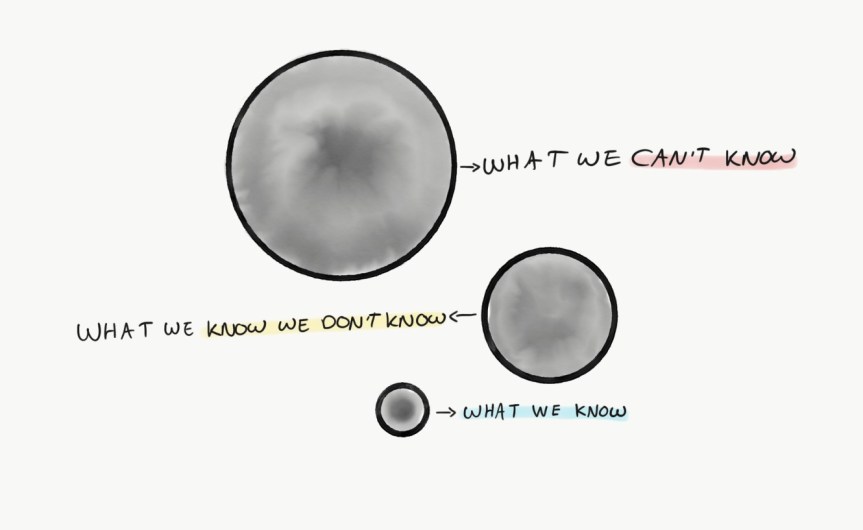
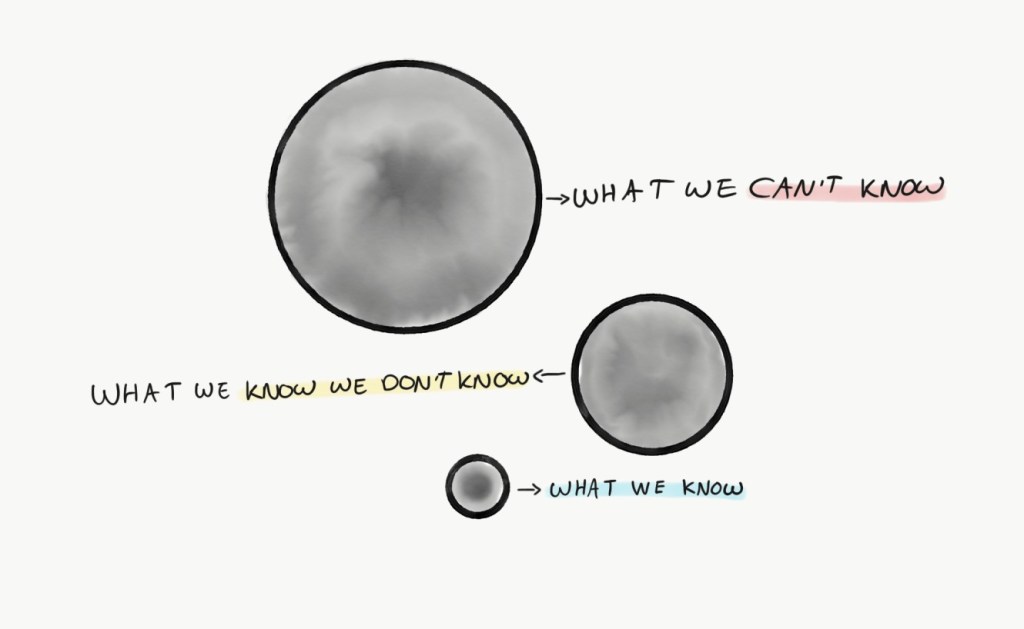
Think About What You Can’t Know

The reason I like these questions from Annie Duke is because they force you to think about what you can’t know. In my experience, that’s what drastically improves your decisions. 

We all know the feeling of talking to an experienced person who shares some insights with us, and we go, “Aha! I didn’t realize that.” That’s what you want. Duke writes the following in Thinking In Bets:

”Just by asking ourselves these questions, we are taking a big step toward calibration. But there is only so much we can do to answer these questions on our own. We only get exposed to the information we have been exposed to, only live the experiences we have experienced, only think of the hypotheses that we can conceive of.”

This is the reason I often turn to my friends, mentors, communities, books, courses, and podcasts for insights that come outside of myself. I want to learn about things I can’t know.

It’s impossible to know and see everything. We haven’t had the experiences of other people. Most of us keep making the same decisions because we never get an outside point of view. We don’t make an effort to improve our decisions.

Open To Beliefs—Not Gullible 

To improve your decisions, ask yourself questions that challenge your existing beliefs. I highly recommend saving those six questions in your note-taking app. I’ve done it and when I face a decision, I often go through these questions and my other notes on decision making.

As you become open to other beliefs and perspectives, keep in mind that other people also don’t have all the answers. Adopt the mindset of a skeptic. Be open to other beliefs, but don’t believe everything instantly. 

Keep looking for evidence and other perspectives. When you have collected enough information, make your decisions. Sometimes people assume you have to listen to everything “experts” have to say. This will only make us gullible. If there’s one thing that harms our decisions, it’s that.

We should always make our own decisions after going through a process. We should avoid making rash decisions based on the opinions of others.

Common Decision Making Pitfalls

Here’s what you should watch for when you’re making decisions (no matter how big or small):

  • Analysis paralysis—This is very common. At some point you get stuck in the process and you can’t make a decision. You go over the process over and over again. This is a big risk. You can NEVER have 100% of the information you need. It also helps that your decisions are not about the outcomes. Don’t let your fear of making the “right” decision paralyze you. There’s no right or wrong outcome. Just outcomes. Deal with it later.
  • Extinction by instinct—The opposite of the above. It’s the belief that instincts are a useful tool in decision making. This leads to rash decisions.
  • Information overload—This is when you ask too many people for their opinion or insights. Stick to trustworthy sources and keep them at a minimum. More information is not better. Reliable information is.

I’m not a fan of complicated theoretical decision-making frameworks to improve your decisions. Those types of formal frameworks might work for large institutions, but for you and me, it’s just not useful. Who makes time to read an 800-page textbook on statistical decision theory? And if you do study it, you probably can’t remember all of that theory. Instead, work with what you have.

When you face a problem, simply look at your options, collect some information, think about what you can’t know (the six questions at the top), evaluate everything, and pull the trigger. Done. Then, move on to the next one.

Social media is for us, social media isn’t us.

Our world has added so much to it. Changes are occurring now and then having thousands of factors contributing. Changes are a part of nature which no one can deny to accept. Changes can either be for the benefit of thousands or to destroy millions. Perception and a positive attitude are what make you chose between how you adapt to the changes. Among all the factors that have given the world a chance to change, social media has played a vital role. Social media has changed the world and the lifestyle of the people living in it.

Social media was initially introduced to the world to get in touch with their close ones. It came up as a platform to showcase your talent to the world. We live in a world where everyone couldn’t know the well-being of the world every time. Media and social media became a source of information for us. These points describe that social media was brought into practice with a positive motive to change the world. But have we appropriately used social media?

Everyone nowadays is so busy being fake on social media that they have completely forgotten our world is beyond that. The toxicity of social media has made people pretend to be someone else to fit in the so-called society standard. Social media has made people forget themselves and the people around them. People are so busy making friends online that they barely meet their real-life friends. They are busy talking to people on text, calls, and video calls that they are losing the courage to face people in real. They are so busy clicking photos for social media that they have forgotten that enjoying the moment is more precious than clicking pictures.

Why can’t we take a break from all this toxicity? Why can’t we spend our life without social media? Why can’t we use social media as a positive and encouraging platform? The answer is because we don’t want to. We have become an addict. (not only consuming drugs and alcohol regularly can be an addiction) And the only way to detox addiction is to have control over it.

How can you detox addiction to social media? (these are some of my ways to do so)

  1. Decide for how long do you want to take a break.
  2. When you’re on it, deactivate all the social media handles (at least keep yourself away from your phone)
  3. Discover what activities you enjoy and indulge yourself in those.
  4. Spend some quality time with your friends and family.
  5. If possible, go on a vacation.
  6. Spend some quality time with yourself. It will help you discover your inner self.

What is the importance of detoxing social media?

  1. It breaks the social comparison cycle.
  2. It will protect your privacy.
  3. Your mood will automatically get better.
  4. You will be able to reconnect to the real world.
  5. Once again, you will start living in the moment instead of capturing it for social media.
  6. You will get some quality time for your friends, family, and yourself.

Social media has so much to contribute to us. Social media should be everything that someone needs for refreshment and development. But, it should always be a part of our life, not our life.

IMPACT OF THE CORONAVIRUS PANDEMIC

The COVID-19 pandemic has brought fast-moving and unpredictable factors, some of which were not equipped to tackle current disaster plans and teams. Incident response strategies unique to this crisis have been successfully established by many businesses and are now looking ahead.

In this article we will be focusing on the hospitality industry which has been affected.

Novel Coronavirus has already begun to impact the hotel industry and cost about Rs. 620 crore to the Indian hospitality industry, which is a big sum in itself in the initial days of the lockdown. Various large hotel chains and small resort chains have begun with losses of over 130 to 150 crores, while the alternative provider of accommodation facilities has suffered losses of over 420-470 crore, which is enormous and bad for the Indian market when the stock is already crashing.

All companies around the world have ordered their workers to work from home. Work from home has been an unusual phenomenon or a revolution in the working community, but it works the way the employer expects. The duty of going forward at work is on the hands of both the employer and the worker. Business culture, leadership , employee experience and interactions in the digital workplace are now being put to the test. The way that many businesses operate changed overnight. Travel limitations, however, have gutted the opportunity to perform certain activities.

Since the situation we are in the government, the lockdown was forced to be lifted in order to save the economy and SOPs (Standard Operating Procedures) were offered to industries 

To have a stable environment. Hotels only hire the necessary workers required for daily operations, while the majority operate from home. Employees can be seen wearing PPE (Personal Protective Equipment) kits that help keep the customers and staff safe from this deadly virus.

Novel Coronavirus has already begun to impact the hotel industry and cost about Rs. 620 crore to the Indian hospitality industry, which is a big sum in itself in the initial days of the lockdown. Various large hotel chains and small resort chains have begun with losses of over 130 to 150 crores, while the alternative provider of accommodation facilities has suffered losses of over 420-470 crore, which is enormous and bad for the Indian market when the stock is already crashing.

All companies around the world have ordered their workers to work from home. Work from home has been an unusual phenomenon or a revolution in the working community, but it works the way the employer expects. The duty of going forward at work is on the hands of both the employer and the worker. Business culture, leadership , employee experience and interactions in the digital workplace are now being put to the test. The way that many businesses operate changed overnight. Travel limitations, however, have gutted the opportunity to perform certain activities.

Since the situation we are in the government, the lockdown was forced to be lifted in order to save the economy and SOPs (Standard Operating Procedures) were offered to industries 

To have a stable environment. Hotels only hire the necessary workers required for daily operations, while the majority operate from home. Employees can be seen wearing PPE (Personal Protective Equipment) kits that help keep the customers and staff safe from this deadly virus.

Social media is for us, social media isn’t us.

Our world has added so much to it. Changes are occurring now and then having thousands of factors contributing. Changes are a part of nature which no one can deny to accept. Changes can either be for the benefit of thousands or to destroy millions. Perception and a positive attitude are what make you chose between how you adapt to the changes. Among all the factors that have given the world a chance to change, social media has played a vital role. Social media has changed the world and the lifestyle of the people living in it.

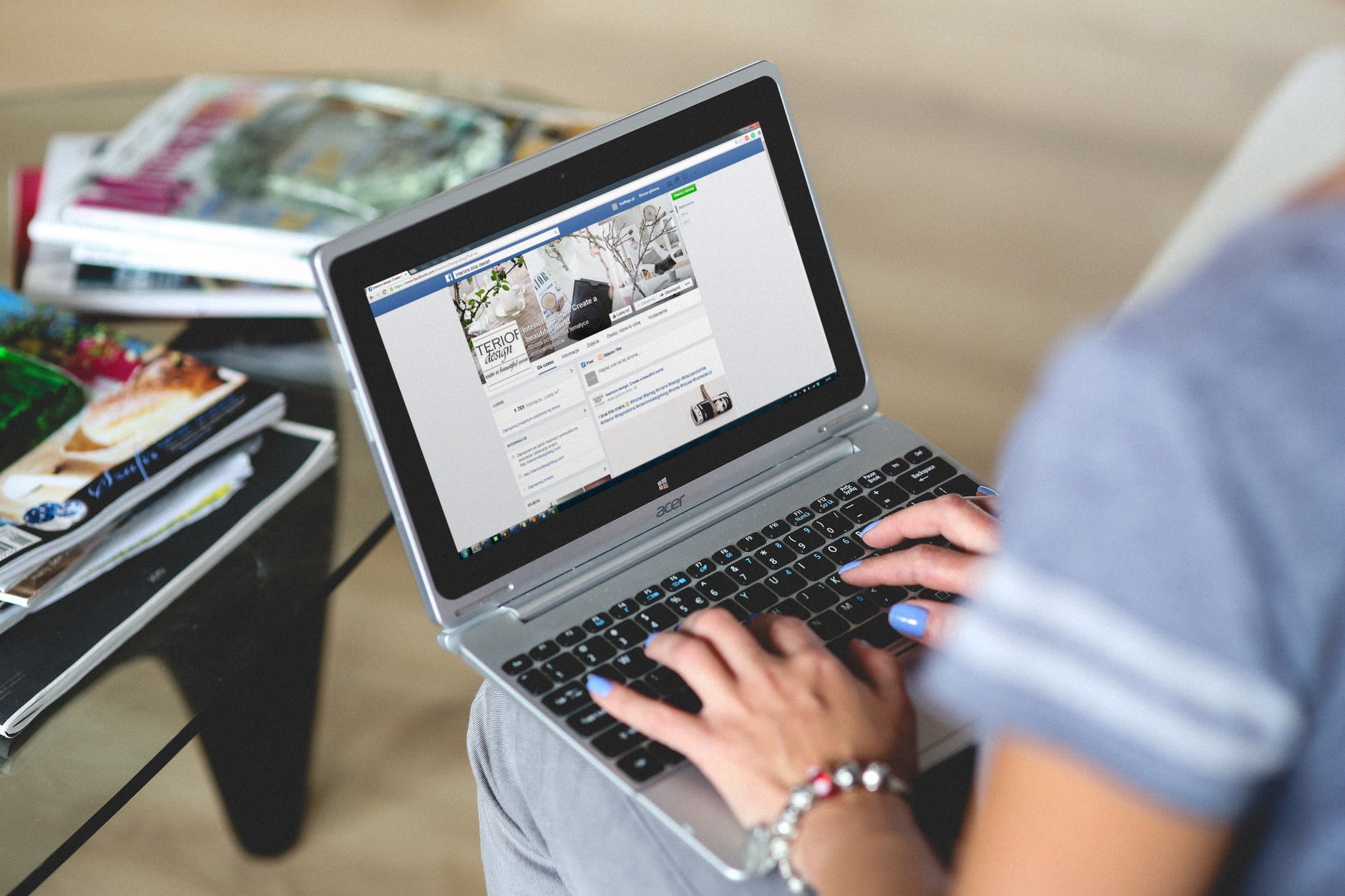
Photo by Kaboompics .com on Pexels.com

Social media was initially introduced to the world to get in touch with their close ones. It came up as a platform to showcase your talent to the world. We live in a world where everyone couldn’t know the well-being of the world every time. Media and social media became a source of information for us. These points describe that social media was brought into practice with a positive motive to change the world. But have we appropriately used social media?
Everyone nowadays is so busy being fake on social media that they have completely forgotten our world is beyond that. The toxicity of social media has made people pretend to be someone else to fit in the so-called society standard. Social media has made people forget themselves and the people around them. People are so busy making friends online that they barely meet their real-life friends. They are busy talking to people on text, calls, and video calls that they are losing the courage to face people in real. They are so busy clicking photos for social media that they have forgotten that enjoying the moment is more precious than clicking pictures.
Why can’t we take a break from all this toxicity? Why can’t we spend our life without social media? Why can’t we use social media as a positive and encouraging platform? The answer is because we don’t want to. We have become an addict. (not only consuming drugs and alcohol regularly can be an addiction) And the only way to detox addiction is to have control over it.
How can you detox addiction to social media? (these are some of my ways to do so)

  1. Decide for how long do you want to take a break.
    2.When you’re on it, deactivate all the social media handles (at least keep yourself away from your phone)
    3.Discover what activities you enjoy and indulge yourself in those.
    4.Spend some quality time with your friends and family.
    5.If possible, go on a vacation.
    6.Spend some quality time with yourself. It will help you discover your inner self.
    What is the importance of detoxing social media?1.It breaks the social comparison cycle.2.It will protect your privacy.
  2. 3.Your mood will automatically get better.
    4.You will be able to reconnect to the real world.
    5.Once again, you will start living in the moment instead of capturing it for social media.
    6.You will get some quality time for your friends, family, and yourself.
    Social media has so much to contribute to us. Social media should be everything that someone needs for refreshment and development. But, it should always be a part of our life, not our life.

Social media is for us, social media isn’t us.

Our world has added so much to it. Changes are occurring now and then having thousands of factors contributing. Changes are a part of nature which no one can deny to accept. Changes can either be for the benefit of thousands or to destroy millions. Perception and a positive attitude are what make you chose between how you adapt to the changes. Among all the factors that have given the world a chance to change, social media has played a vital role. Social media has changed the world and the lifestyle of the people living in it.

Photo by picjumbo.com on Pexels.com

Social media was initially introduced to the world to get in touch with their close ones. It came up as a platform to showcase your talent to the world. We live in a world where everyone couldn’t know the well-being of the world every time. Media and social media became a source of information for us. These points describe that social media was brought into practice with a positive motive to change the world. But have we appropriately used social media?
Everyone nowadays is so busy being fake on social media that they have completely forgotten our world is beyond that. The toxicity of social media has made people pretend to be someone else to fit in the so-called society standard. Social media has made people forget themselves and the people around them. People are so busy making friends online that they barely meet their real-life friends. They are busy talking to people on text, calls, and video calls that they are losing the courage to face people in real. They are so busy clicking photos for social media that they have forgotten that enjoying the moment is more precious than clicking pictures.
Why can’t we take a break from all this toxicity? Why can’t we spend our life without social media? Why can’t we use social media as a positive and encouraging platform? The answer is because we don’t want to. We have become an addict. (not only consuming drugs and alcohol regularly can be an addiction) And the only way to detox addiction is to have control over it.
How can you detox addiction to social media? (these are some of my ways to do so)

  1. Decide for how long do you want to take a break.
  2. When you’re on it, deactivate all the social media handles (at least keep yourself away from your phone)
  3. Discover what activities you enjoy and indulge yourself in those.
  4. Spend some quality time with your friends and family.
  5. If possible, go on a vacation.
  6. Spend some quality time with yourself. It will help you discover your inner self.What is the importance of detoxing social media?1. It breaks the social comparison cycle.
  7. 2. It will protect your privacy.
    3. Your mood will automatically get better.
    4. You will be able to reconnect to the real world.
    5. Once again, you will start living in the moment instead of capturing it for social media.
    6. You will get some quality time for your friends, family, and yourself. Social media has so much to contribute to us. Social media should be everything that someone needs for refreshment and development. But, it should always be a part of our life, not our life.

RAIN

          “Clouds come floating into my life, no longer to carry rain or usher storm, but to add color to my sunset sky.”
                                
                                  – Rabindranath Tagore

The monsoon is also called the rainy season , it is the time of year when most of a region’s average annual rainfall occurs. Generally, the season lasts at least a month.

Monsoon or rainy season, lasting from June to September. The season is dominated by the humid southwest summer monsoon, which slowly sweeps across the country beginning in late May or early June. Monsoon rains begin to recede from North India at the beginning of October.

Rainy Season has very pleasant weather with cool breeze and rain showers. … Dark clouds and lightning are very common during the rainy season. Rainy season helps farmers by providing rainwater needed for good cultivation of crops.

All plants and trees become green and greenery makes the environment more beautiful.

It refreshes everyone by making the climate cool and delightsome and brings in a sigh of relief from the scorching heat. Rainy day gives us relief from the usually hot and humid climate and slow cool breeze, smell of fresh wet earth and moist air.

➡️ Tips to be healthy in rainy season:

• Normal rains are the most enjoyable thing in the rainy season .

• We should protect ourself from diseases that spread in the monsoon.

• We should Keep our surroundings clean.

➡️ Food/ snaks enjoyed in monsoon :

• Bhutta (Corn)
• Pakoras
• Samosa
• Masala Chai
• Kachoris
• Spring roll
• Momos
• Jalebi

                     “Celebrate the rain; it only means that the sun shall shine bigger and brighter than ever.”
                
                                             — Unknown

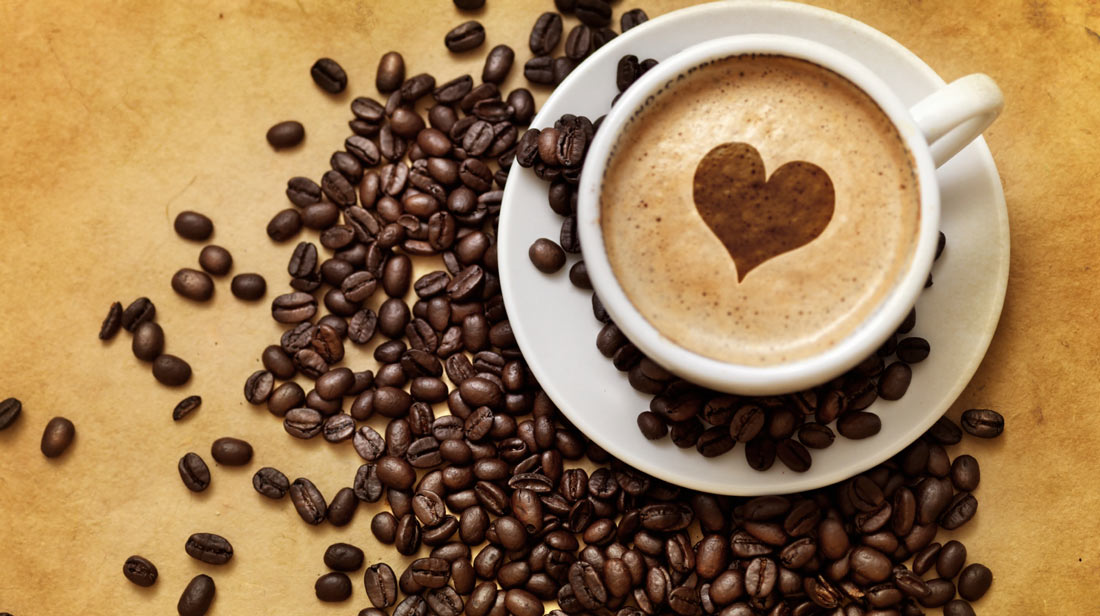
Is coffee healthy ?

According to a report published last year at the Harvard School of Public Health it stated that drinking coffee in moderation “can be part of a healthy lifestyle”.

Coffee is one of the world’s most popular beverages due to its high levels of antioxidants and beneficial nutrients, it also seems to be quite healthy.
Studies show that coffee drinkers have a much lower risk of several serious diseases.

Benefits of drinking coffee –

1. Boosts energy –
Coffee can help people feel less tired and increase energy levels since it contains a stimulant called caffeine. The caffeine is absorbed into the bloodstream from there, it travels to the brain where it blocks the inhibitory neurotransmitter adenosine. This is instrumental in improving energy levels and lifting up the mood.

2. Aids in burning fat –
Caffeine boosts metabolism significantly by 3 to 11%. This in turn helps in burning the excess fat in the body.

3. Contains essential nutrients –
Many of the nutrients in coffee beans make their way into the finished brewed coffee.

A single cup of coffee contains –
Riboflavin (vitamin B2): 11% of the Reference Daily Intake (RDI).
Pantothenic acid (vitamin B5): 6% of the RDI.
Manganese and potassium: 3% of the RDI.
Magnesium and niacin (vitamin B3): 2% of the RDI.

4. Lowers the risk of Diabetes-
Type 2 diabetes is a major health problem, currently affecting millions of people worldwide.
It’s characterized by elevated blood sugar levels caused by insulin resistance or a reduced ability to secrete insulin.
For some reason, coffee drinkers have a significantly reduced risk of type 2 diabetes. Studies observe that people who drink the most coffee have a 23–50% lower risk of getting this disease. One study showed a reduction as high as 67%

5. Reduces the chances of dementia –
Alzheimer’s disease is the most common neurodegenerative disease and the leading cause of dementia worldwide.
This condition usually affects people over 65, and there is no known cure. However, there are several things you can do to prevent the disease from occurring in the first place. This includes the usual suspects like eating healthy and exercising, but drinking coffee may be incredibly effective as well. Several studies show that coffee drinkers have up to a 65% lower risk of Alzheimer’s disease

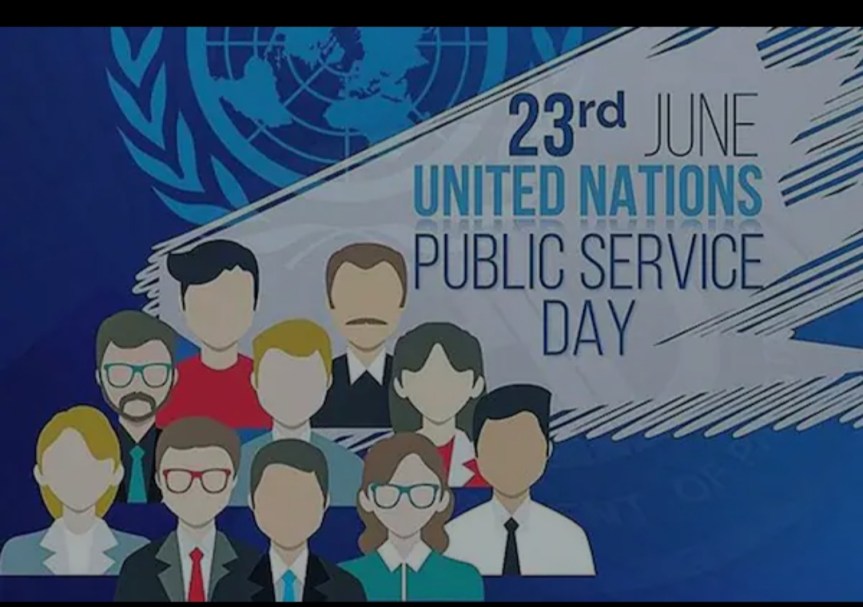
United Nation Public Service Day , 23rd June 2021.


You must have heard about stories of superman with Cape , flying high in the sky, fighting selflessly to save people , dodging punches and being as far as one can be from reality , being all fiction .

But do you know about hero’s born without a Cape , one with no flying ability ,no superpower like reading minds and breaking buildings  or spider webs spilling from their wrist  to climb the walls ?

You must have heard them being designated as unsung heroes , humans as heroes. Being human does limit us if you contrast them with fiction but the truth is  reality always challenges fiction .

To make it more comprehensive ,  stating , David Harris Bradfield, words

Everyday somewhere in the world
another unsung hero is born.
Someone who is willing,
to lay his life on the line
to save another living creature,
on this wonderful planet of ours.
To go out of their way,
and risk life and limb to save something,
from danger and certain death.
These unsung heroes don’t want medals,
glory or even fame.
In fact, most would walk away afterwards,
without anyone ever knowing their name.”


Going out of the context but have you watched the NESCAFÉ  ad ?
Where they tell us we meet nearly 80,000   people in our lives.
I assume you do .

They weren’t lying. We do meet 80,000 people. Some or the other help us to live ,some help us to eat ,some help us to be safe , some and some and some ….who are these some ?

They are public servants .
Yes the hero without Cape ,the unsung heroes who are willing to lay their life on the line .


23rd June , Public Service Day :-

23rd June of every year is celebrated as
The United Nations Public Service Day “. The UN Public Service Day was designated by the United Nations General Assembly’s in 2003, to “celebrate the value and virtue,  the willingness to serve , the unsung heroes , and their public service to the community”.


Public Service Day  reminds us of the unmatched sacrifices of the public servants in making this society a better place to live in.


Theme 2021:-

This year, the United Nations Public Service Day will be celebrated under the theme of “Innovating the Future Public Service: New Government Models for a New Era to Reach the SDGs”.


The theme focuses on innovation and technology playing an important role in the delivery of public services. The pandemic itself highlights the rapid adoption of technology at its best .  The theme also considers the  preparation of future public service for a new era, so as to reach the 2030 sustainable development goals.

The  digital revolution that changed the way we inhabit our lives helped us to bide during the pandemic . The 2020 Covid-19 pandemic manifested  the digital service ,  virtual service , new technology ,an  increase in digitalization  leading firms and educational  institutions, and work-from-home service .  
Every country needs to reform and set the future for the   fundamental changes in the public service , to be  nimble footed  as well as tech savvy with  the new innovations and technology.


Origin & Events .:-


The General Assembly entitled 23 June as Public Service Day by adopting a resolution on 20 December 2002.
To  appreciate and celebrate  the contribution of public service in the development process ,Their selfless service , and to  encourage youth  to pursue careers as public servants ,the UN   inducted 23rd June as Public Service day. To acknowledge  the value of public service, the United Nations established the UN Public Service Awards (UNPSA) programme in 2003, which was reviewed in 2016 to align  with the Agenda for Sustainable Development 2030.

Several other events are organised by public service organizations to  recognise the role of public servants in making developments and improvements in the community.


Public Service the Major Instrument :

Every kind of service necessary to public good   becomes  honourable by being necessary “
                   Albert Schweitzer


Public servants  are the major instrument   in improving people’s lives. Sustainable development is evidently impossible without public servant administration .  Modernization , digitalisation and this pandemic gave us the picture  that human  existence is impossible without public administration.

Government service , Education , Public safety , Emergency service , healthcare , Environmental protection, justice , consumer protection, custom & immigration , transportation, infrastructure, global affairs, public broadcasting, social service,  postal service , art & culture , agriculture , natural resources ,
Urban & rural development planning , etc. are some common typical standard public services .

The local government try to balance the community choices  and goals to make it better together ,  the doctors saving life risking their own, the soldiers and police administration  who are never coming home and the ones who come home but never remain the same after the tragedies faced to keep the security blanket around civilians , the cleaners doing their best to fight the virus and deadly disease for public to have a safe environment to walk around ,  come  together to accomplish a common goal to find meaning 
beyond our political beliefs or opinions regarding their service .


The public servant, regardless of position or title work together with a share passionate and  vision, a purpose and  commitment to the importance and value of
public community.


Selfless Public Service  during Covid -19  :-

The frontline battle of Covid -19 is more scary than we see it flooding on social media. We can rarely discern reality and social media but that’s because we are incapable not because there is nothing to comprehend .
The life threatening  pandemic has finally sailed and became death threatening  .
While  we remain confined in our  homes dealing with  online education   institution system and doing online work  , seeing the virus becoming lethal  and  shutting down all the possible chances of facing the lethality  ,  doctors, health-care workers, and medical staff members and all the other public servants are leading the battle against COVID-19 , putting their own lives at risk with selfless determination for the sake of saving lives despite of every possible chances of actually been dead threaten. 

  Putting their own health, families, and most importantly their own lives at risk, the least we can do is appreciate their efforts and celebrate their audacious  gallant effort  on this entitled day of Public Service .


Public service is the most difficult job in a modern society.  Their  work too often goes unnoticed . Today , 23rd June this is a chance to
acknowledge their efforts and celebrate their  willingness to sacrifice themselves for the public and are 
most passionate about finding meaning in their service  then  profit .

Let’s glorify the virtue and passion of the public servants on this designated Public Service Day  by showing our gratitude for their altruistic service .

This day in Indian history(day 1)

This article
Every day is significant in history and in future. Specifically speaking every single day has its own importance in the history of Indian Independence or in general history of India. Today’s article will be about what happened today, years ago.

Today – 23rd June in the year 1757, was the day the famous Battle of Plassey started. So, with this article we are gonna dive into Indian history day by day. We will go in detail about the Battle of Plassey.
The Battle of Plassey took place between British East India Company and The Nawab of Bengal with his French allies. The British side was spear headed by Robert Clive while the Nawab at that time was Siraj ud-Daulah. The location of this battle was from where it got its name: Palashi (Plassey) on the banks of Hoogly river. Spoiler alert: British won. It was what we call “won by a landslide” in today’s terms. This should be a surprise because, the Nawab’s force combined with his French allies was much larger compared to that of Robert Clive’s.

Why is this battle important in the history of India?
There were a lot of battles and wars in the history of India’s Independence. But our history books do not talk about all of them. Firstly because it would take years to cover all that syllabus. Secondly, because not all battles were an important turning point in Indian history. Though every soldier’s sacrifice is respected. So, why is The Battle of Plassey important? We’ll see. This victory was a huge advantage to the East India Company in many ways. It was, in other words, a pivotal battle in the control of Indian subcontinent by the colonial powers. First and foremost, It aided the British to sieze control over Bengal entirely. After or due to this war, the British had big influence and control over the Nawab which helped them cover their losses due to previous causes. This battle also aided them to expand their military power. In the span of next hundred years, they won control over Indian subcontinent, Afghanistan and Myanmar. In short, this victory was the start of nearly two centuries rule of British over India.

What did it cost for India?
So we have seen what the British have gained from this battle. Let’s delve into what it cost us. Speaking in terms of casualties the Nawab’s forces lost 500 people to death and injury. Looking at the colonizer’s side, there were 22 deaths reported and 50 injured. This vast change in proportion is obvious because of the size of the army. More the soldiers, more the casualties. Now looking at the political side, the French were no longer a strong force in Bengal. Robert Clive placed Mir Jafar – commander of Siraj ud-Daulah’s army on the throne resulting in Mir Jafar becoming the first dependent Nawab of Bengal. Siraj ud-Daulah was then sentenced to death by Mir Jafar’s son. This battle led to a lot of similar puppet governments under the control of East India Company.

Now?
Now, to commemorate the turning point in Indian history, there is a monument situated in Palashi itself which is in West Bengal, India. So if you ever want to take a historic visit, I believe this could be a good choice.


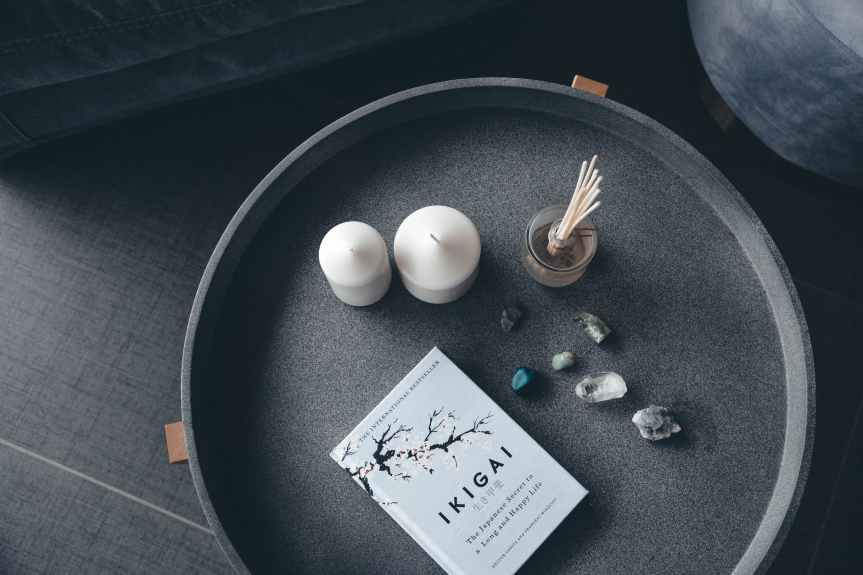
book review :IKIGAI- The Japanese secret to a long happy life.

” Life is not a problem to be solved. Just remember to have something that keeps you busy doing what you love while being surrounded by the people who love you”- Ikigai by Hector Garcia and Francesca Miralles

IKIGAI is a Japanese concept referring to have direction or purpose in life, providing a sense of happiness and fulfillment and towards which the person may take action, giving them satisfaction and a sense of meaning.

This book touches on various elements of life that certainly we all are aware of, but always fail to implement in our daily life by giving ourselves unnecessary excuses. This book talks about how every person in this world has the ikigai ( a reason for being ), and by asking a few simple questions to yourselves, you can discover yours and live a prosperous and happy life. The authors of the book have beautifully put down all the ideas and facts which will persuade you to live your life to the fullest. The authors in the book bring the Japanese secret for the readers from the wise people of OKINAWA Island in Japan on how to live a happy and long life.

The best part of this book is, unlike many other self-help books, this does not go on and on. There are very few chapters. The idea or the message which the authors try to convey is straightforward. Read the book carefully, and it will surely teach you how you can bring meaning and joy to every day by following your IKIGAI .

Overall, a wonderful book to read if you feel stuck in your life or just want to make some changes in your life.

HAPPY READING ; )

Education in times of Covid-19

Covid-19 pandemic is wreaking havoc across the globe.It has disturbed the pattern of our lives and livelihoods. Numerous restrictions have been placed upon the people to tackle the pandemic . One such restriction is the closure of schools and colleges across the country . This closure has transformed one’s house into one’s school . Online teaching through zoom , Google meet has become the new normal . 

“Am I audible?” “Mam please let me in!” . These phrases have replaced the ones like “Keep quiet everyone” , “All of you sit down”.

Online learning is the need of the hour. But it is not without certain limitations. 

In India, there has been a rich-poor divide, literate-illiterate divide but online teaching has fostered a digital divide. Not everyone has access to laptops , 4G connectivity, and smartphones to attend the classes.  Many families lost their means of livelihood in this pandemic forcing them to make a brutal choice between child’s hunger and child’s education.

To understand the havoc of Covid-19 pandemic upon education, one can analyse the situation class-wise.

  • Pre-school- Online teaching has deprived these students of a playful classroom environment. Learning is primarily a social activity and small children are unable to comprehend anything taught online . They are missing out on the valuable experience of getting up early, going to school, making friends, playing and just enjoying their life.
  • Primary school- Here also the children are stuck to their laptops , smartphones for hours . Since they lack a structured environment they get easily distracted . They lack concentration and lag behind in learning things.
  • Secondary- They suffer the most . They are in their prime both in terms of academics and development.  They get easily distracted and spend most of their time playing games and chatting with friends . Even when exams take place they pass taking help of their books, internet and friends. Most of them don’t take online classes seriously and hardly understand anything .
  • University- Some colleges across India never opened . The students are cooped up in their homes missing out on all the college experience. They give open book exams and just copy paste things from the internet. The seriousness, anxiety about exams has vanished . The students who need to do practicals like in engineering study 3D representation of things which creates a vacuum in their learning.

This was about limitations of online teaching class wise . However there are many other limitations: 

Technical difficulties like network problems interrupt the class.

Most children lack a conducive environment at home , making them give up their studies, lack concentration etc.

In India government schools provide mid day meals to the students. With the schools closed they miss out on a nutritious meal and it is known that some of the children used to have only that proper meal in their entire day. Some girls are even forced to give up their studies and household duties are thrusted upon them . 

It has also been found that for some children school was a safe haven away from their unstable families . But online teaching has disrupted this, they can’t feel the same warmth on a virtual platform nor can they escape the tensions of their homes . Their conditions become all the more deplorable. 

Not just students but  parents too have become overburdened as now they have to manage their offices and also have to become an equal participant in their child’s education. 

The teachers too face a lot of problem because many of them are not tech-savvy and due ot pandemic they had to start afresh and educate themselves about the new digital platforms. 

Having understood some of the limitations of online teaching , some ways to improve the situation could be:

  • Making rural areas , remotest corners of the country well equipped with better network and connectivity. 
  • Providing smartphones, laptops to students so that they don’t lag behind.
  • Parents must guide their children that they should pay attention to their online classes and gain the best out of it. 
  • Students must understand it is not new normal, but it is the normal. 
  • Teachers must be trained to use the different digital platforms .
  • Adequate arrangements must be made to impart quality education even in these trying times .

Covid-19 pandemic is a test for India . But in these times of crisis one must look for opportunity. Adequate steps should be taken to provide quality education to everyone and to lessen the growing digital divide in India.

Day 2; How covid19 attacked us personally

Lock down and Covid-19 has attacked us personally in very different ways, its an endless list of things I would have done if this pandemic hadn’t happened. None of this was planned, all I could remember around me was the announcement of the sudden lock down and social distancing. Everything around me was suddenly dysfunctional, schools and colleges seemed like a distant dream now. Already an year late to college (since I had taken an year off for coaching), I was very much excited about my visit to Jindal University. Tickets were booked, seats picked, dress chosen and excitement was brewing in the air until everything was thrown out of the window by the news of the lock down. 

I could still close my eyes to picture how the sudden news of lockdown affected our schedule. I was disappointed at how close I was to being at Jindal and how it was snatched away from me because of a virus, that cannot be seen by a human eye. It led me to think, how could something so small turn our lives apart. The months passed by in a blur, I was waiting every day, I haven’t been so patient in my life, at least my mother says so. Every day was a repeat of the previous day, my only hope at one point of the time was going back to college. But after months of being locked up in home that faded away too. 

I could no longer relate myself to who I was after months of being isolated, was I the old me or have I changed, if then how much. I had a long list of questions to which I couldn’t find answers by myself. But somewhere I saw the light again at the end of the tunnel, maybe it was my mother’s words of how she wanted to see me in heights I couldn’t imagine then, I saw how proud she was when she talked about it, if she had the courage, then sure her daughter can too.

FESTIVALS

A festival is an event ordinarily celebrated by a community and centering on some characteristic aspect of that community and its religion or cultures. It is often marked as a local or national holiday.

Festivals are larger than life celebrations of various things. They occur at regular intervals and helping in breaking the monotony of life. Furthermore, they give you the chance to celebrate the little and big things in life. Festivals are the carriers of peace and joy in the communities.

Festivals are perfect learning experiences to teach moral values . Festivals are full of excitement, celebration and happiness. They not only bring joy to our homes but also brings families together.

Some of the benefits of festivals are :

•Keeps us closer to our religion and tradition.

•Promotes harmony.

•Carrying the message of the past generations to the present and future.

•Festival celebrations promote communal harmony.

•We get to know about different religions.

• Helps to preserve our culture and heritage.