THE ARMED FORCES.

The Indian armed forces consist of the Army, Navy and the Indian Airforce of the Indian union including the armed forces of the Indian states. Now let’s look into the armed forces nature and their presence that help our nation.

The Indian Army is of the nature of the land -based forces that are more indulged in land branch and the Indian Army has the largest component of the Indian Armed forces. The Indian Army came into life on 1st April 1895 which is over 216 years ago, which play an virtual role in land warfare the shape of Indian Army is of 1237117 active and 960000 reserve personnel and the head quarters is situated in Integrated Defence Headquarters Ministry of Defence,New Delhi. The commander in chief is President Ramnath Kovind and chief of Army staff is General Manoj Mukund Naravan. The primary mission of Indian Army is to ensure National security and National unity and also to defend the nation from external aggression and internal threats and also to maintain peace and security within borders. The Army as been involved 4 wars with neighbouring countries Pakistan and China. The Army is an all volunteer force and comprises more than 80% of the countries active defence personnel. The Army has embarked on an infantry modernization program and is also upgrading and acquiring new assets for its armoured as armed and aviation branches. Currently, the Army is also looking at enhancing its special forces capabilities. The Army has taken up the responsibility of providing internal security especially against insurgencies in Kashmir and North-east India over the years.

The Indian Navy is the naval branch of the Indian armed forces that came into existence 1947 with the role to Naval welfare force projection, Sealift, nuclear deterrence the size of the Indian Navy is 67252 active and 55000 reserve personnel and around 150 ships and 300 aircraft. The chief of the Naval staff is Admiral Karambir singh. The primary objective of the Navy is to safeguard the Nations marine land boards and act to determine or defeat any threats or aggression against the territory, people or maritime interests of India. In case, of both war and peace India Navy promotes bilateral relation between nations. The Indian Navy also conducted an International fleet review bridges of friendship and many ships of friendly navies from all around the world participated.

The Indian Air force complements of personnel and aircraft assets ranks 4th amongst the air forces in the world. It aim in air arm of Indian Armed forces the Indian Air force came into existence on 8 Oct 1932 with the role of aerial welfare and consist of 139576 active and 140000 reserve personnel with 1850+ aircraft. Commander in Air staff Air chief Marshal Rakesh Kumar Singh Bhadauria. After India gained independence the royal India name of Air force was kept and served in the name of Dominion of India. They also undertake the operation vipay, operation meghdoot, operation cactus, operation poomali. It expands beyond engagement with forces. There is never more than one serving ACM at any given time in Indian Air force. The IAF provides close air supporte to Indian Army troops on the battlefield, strategic and access to modern capabilities. The IAF has also undertaken relief mission such as operation Rainbow in Sri Lanka.

Marine force are typically a military force trained to operate on littoral zone. In most countries the marine are an integral part of that state’s Navy. The principal role is to military operation in littoral zone operating from ships they are trained to land on as well as amphibious operations. Marine troops are used in a variety of other naval roles they conduct small scale raiding, maritime boarding operation, security of naval vessels amd bases,riverine and coastal missions. And they perform other tasks including special operations and land warfare, ceremonial duties and miscellaneous other takes as directed by the Government.

City of Dreams

Mumbai, what can I say about this city?
It’s a place where dreams are born and are converted into reality.
Staying in Mumbai is itself a dream for thousands of people but very few of them can make it here. Even after facing thousands of difficulties, one will always say, “we will adjust”. The city will challenge you in different ways and once you pass the test, you will never think of leaving it.
Every year thousands of people come to Mumbai with a suitcase full of clothes and eyes full of dreams. These dreamers constitute about 37% of Mumbai’s population.

Every Megacity has skyscrapers, mass transport, infrastructure. opportunities, same as Mumbai, Then what so special here?
It is special because it never stops working. Days and nights have no difference and the energy seen in the Mumbaikars is next level.

It’s where you will find people from every corner of the world.
And yet you may never lose yourself in the crowd.

It’s where you cross a road with orange Hindu flags hung up to walk into a Muslim community and Green flags hung while you walk into a Hindu community.
It’s a place where you shall find a beautiful church next to a gurudwara, or a mosque next to a temple.

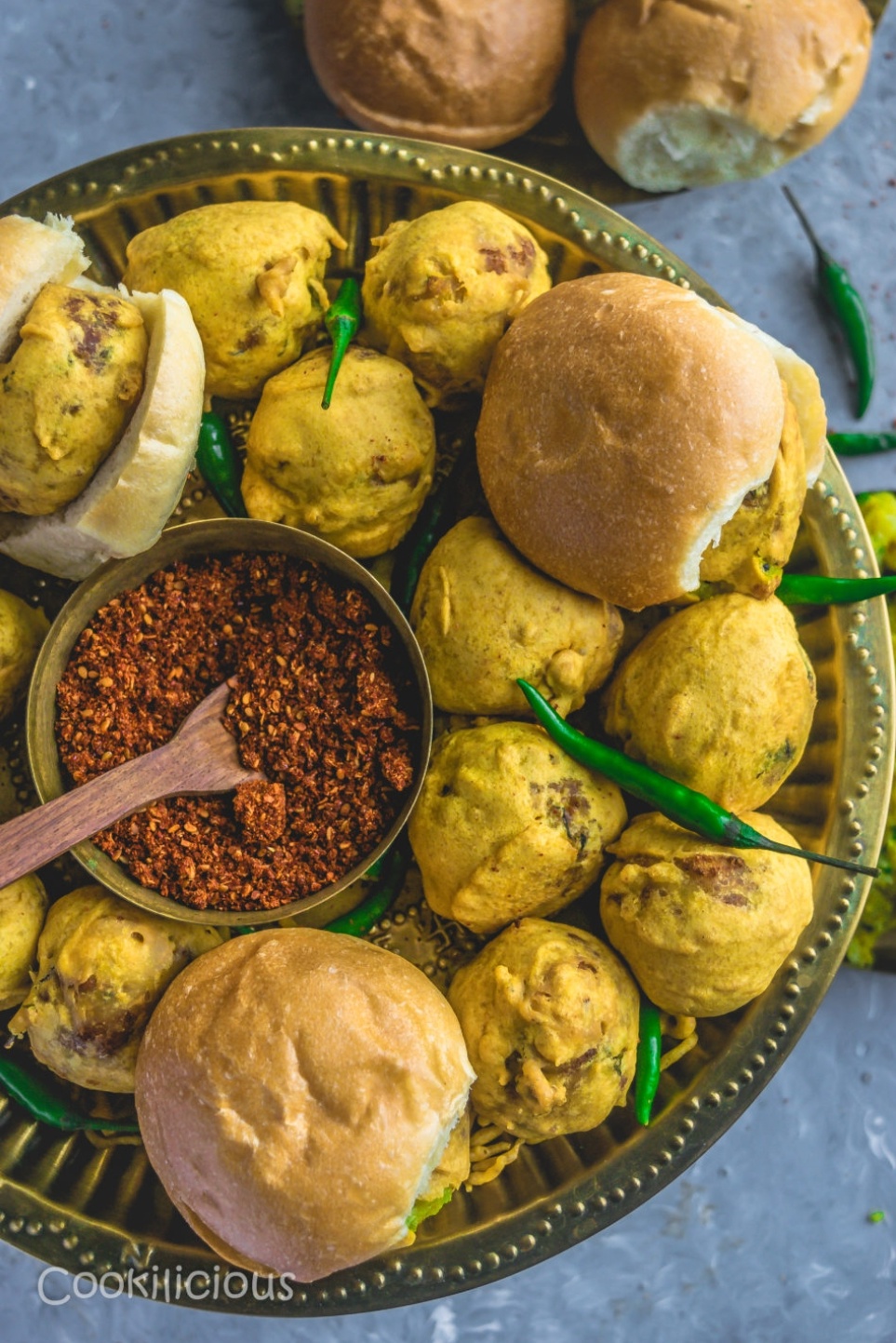
It’s where you can enjoy the best, cheapest food; and how can one forget about the vada-pav and chai stalls which make the city complete.

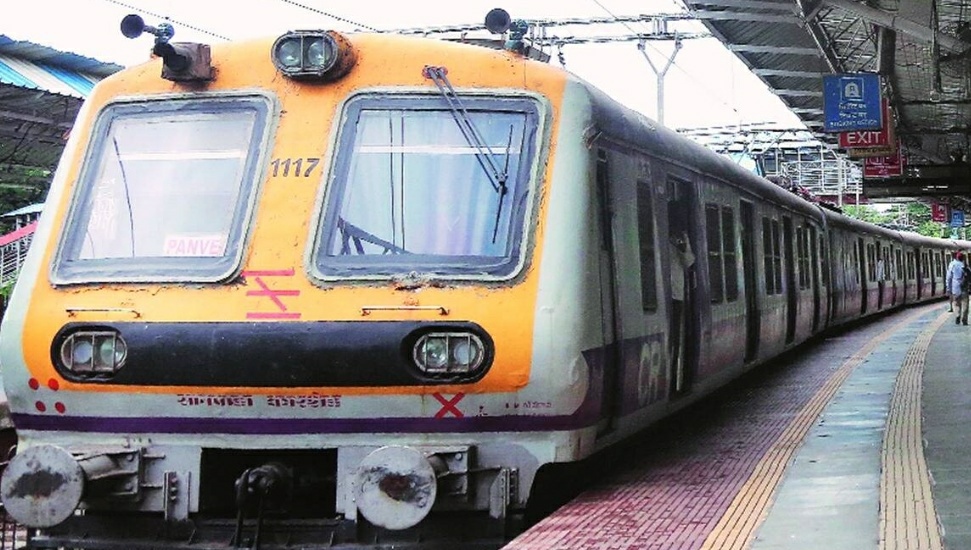
Travel in a chock full bus filled with sweaty men and women. Then find it fun while swinging in it, and miss it when you leave. The “local railways” the lifeline of the city which commutes 3.7 million passengers every day.

Burn your wallets in top brand shops and in buying exotic products. Find the same things available on the road, with substantially good quality at a much cheaper price.

Want to fill that empty hole in your stomach even at midnight. And find food vendor’s around every corner of the street waiting for you.

Chillax on a beach, drive by the sea, enjoy the breeze, feel cold in winter, feel wet in monsoon, sweat the hell out in summer, and still enjoy it all.

Ask the next person for directions, and be surprised to find that person accompanying you to your destination,
Learn Marathi by just daily journeying around, speak Gujarati without knowing it with friends, hear some French, and experience one of the best English knowledge the world can offer.

Still, what can one say about it because it’s “Aamchi Mumbai”

Social Change ( Meaning, Definitions, Causes )

Nothing social remains the same , nothing social abides .

Nature is never at rest . Change is present in the world because change is the Law of Nature .
Like Heraclitus an ancient Greek philosopher said ,
” It is impossible for a man to step into the same river twice “
According to Heraclitean philosophy , “Neither remains the same “, ” the reality of change , the impermanence of being the inconstancy of everything but change itself “

Society we live in is changing .
It’s not a static phenomenon but a dynamic entity . It’s an “ongoing process “subject to constant change due to many forces and factors that irresistibly cause changes .

The perfect example can be observed in our own history , where the man’s rise and growth from the Paleolithic age to the Neolithic age, then to the Stone Age and next to the copper age to development over time, technologies expand, ideologies and values take on new components; institutional functions , modernization etc .

Incessant changeability is the very inherent nature of human society .
Hence , social change is due to the fact that humans are dynamic beings and undergo variation .

Meaning of social change

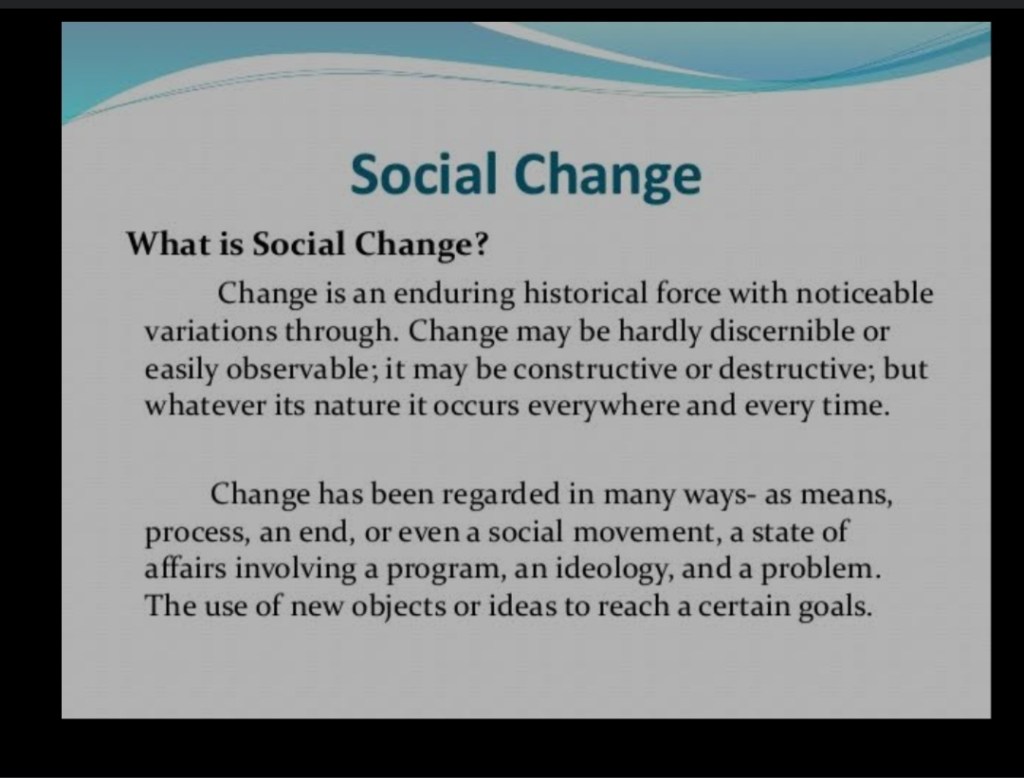
Social change in general means change in society .
Society is a web of Social relationships .

Social relationships include social processes and social interactions .

Hence , ‘social change ‘ is used to indicate the changes that take place in human interaction and interrelations .

Society is composed of a vast and complex network of patterned human relationships in which all humans participate.
When human behaviour is in process of modification , this is another way of indicating social change.
Thus , apparent alteration in the mutual behaviour between individuals which takes place is a sign of social change .

Definitions :-

Social change is a term used to describe variations in or modification of any aspect of social processes , social patterns , social interactions or social organisation .”
– M.E. Jones

By social change is meant only such alterations as occur in social organisation , that is structure and functions of society “
– Kingsley Davis

Social change may be defined as a new fashion or mode , either modifying or replacing the old ,in the life of a people – or in the operation of society “
– Majumdar ,.H.T

Social change refers to a ‘ process ‘ responsive to many types of changes ; to changes in the man-made conditions of life ; to changes in the attitudes and beliefs of men , and to the changes that go beyond human control to the biological and the physical nature of things .”
– MacIver and Page

MacIver also refers to social change as simply a change in human relationships .

Thus , social Change includes alternations in the structure and functions of the society .


Characteristics of Social Change

1:
Social Change is Continuous

2:
Social change is universal

3:
Social Change in Environment

4:
Social Change is Human change

5:
Social Change Results from Interaction of a Number of Factors

6:
Social Change May Create Chain Reaction

7:
Social Change Involves Tempo (or Rate) and
Direction of Change

8:
Social Change maybe planned or unplanned

9:
Social Change is an Objective Term

10:
Social Change can be a short as well as long run process.

11:
Social Change is Temporal


Sources of Social Change

There are several factors due to which social relationships undergo constant alterations .
Sociologists as well as many anthropologists have been debating and discussing the sources of social change .

Fundamentally , there are two factors that are major sources of social change according to various discussions by several sociologists.

Diffusion
• Inventions

The source of social change is to be found in both diffusion and invention .

Social change takes place due to cultural diffusion i.e spread of elements of culture from one local group to another .
Every society borrows the cultural elements of another society for its progress directly or indirectly . Many tribes became more civilized by diffusion of cultural elements from several local groups.

Social change also takes place because of the inherent capacity of people to invent .
Invention refers to the rearrangement of known traits into new patterns or configurations .
Inventions in every field whether industrial , agricultural , communication or transportation had a huge impact on society .
Hence , inventions constitute the major source of social change.


Causes of Social Change


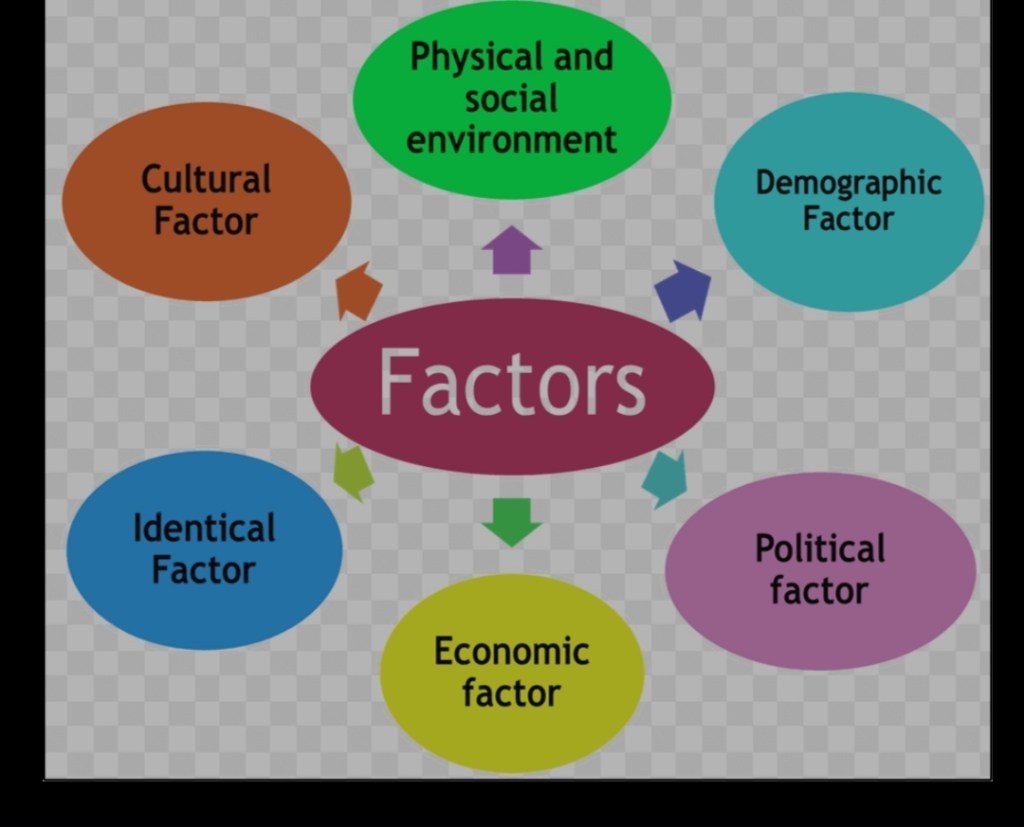
There is no single cause that produces change in society . Several factors operate together to cause social changes .

According to Harry M. Johnson the cause of social change are of three types

i) the causes of social change are inherent either in the general social system or in any specific social system.

ii) the change is caused because of some impact from the social environment of the social system.

iii) changes due to impact from a non – social environment .

The physical , biological , cultural and the technological factors have been generally regarded as the potential factors of social change.
Lapiere regarded these factors as ‘intervening variables ‘ rather than just ‘ causal or determining ‘ factors .


Geographical / Physical Factors


This factor emphasised the impact of the geographical environment upon human society .
According to Huntington ,. alternation in climate is the sole cause of the evolution and devolution of civilization and cultures.
Some social ecologists have attributed much importance to geographical factors for social change.
The physical factors such as climate , rivers ,climate , mountains , natural vegetation etc have profound influence on human society but these factors cannot solely explain the cause of rise and fall of civilization . Hence , the influence of geographical factors are neither decisive nor negligible.

Biological Factors

Biological factors include living and non living creatures. Man is influenced by non-human biological factors and modifies them to serve his purposes .
The biological factors influence the numbers , the composition ,the birth rate , the death rate , the fertility rate and hereditary quality of the successive generations.
Among the biological factors is the qualitative aspect of population , that produces major social change which has dynamic relations with man and society.

Cultural Factors

According to Max Weber theory of comparative study of religious and economic institutions , the main cause of social change is cultural factors.
Cultural factors consist of values and beliefs , ideas and ideologies , morals and manners , customs and traditions and various institutions .
Ideas and ideals , ideologies and philosophies are inherently changeful ,hence not only social values direct social changes but change themselves .
Dawson and Getty have written that culture gives speed and direction to social change and determines the limits beyond which social change cannot occur .
Our behaviour , living , thinking etc are influenced by the changes in social values.

Technological Factors

Technological Factors have immense influence on social change .
Ogburn stated , ” Technology changes society by changing our environments to which we ,in turn , adapt . The change is usually in a material environment and the adjustment we make to the changes often modifies customs and social institutions .”

The increase in new machines , new discoveries had a very great influence upon society.
Technology is the product of civilization .It is a systematic knowledge through which using tools and running machines helps to serve human purpose .
A single invention may have innumerable social changes . In the modern age technological factors are among the predominant causes of social change.


Role of Great Men in Social Change

Great Men like Buddha , Mahavira , Shankaracharya , Jesus Christ , Zoroaster , Prophet Mohammed , Confucius and many other great personalities introduced revolutionary change in the realms of religion .
Napoleon Bonaparte, Washington , Lincoln , Karl Marx, Lenin , Mao Tse Tung , Kemal Pasha , Mahatma Gandhi , Hitler , Mussolini , Khomeini and many others have caused revolutionary changes in the political field .
Similarly many writers , scientists , philosophers have many contributions to social changes .

Great Men and their leadership , revolutionary thoughts , extraordinary talents , powerful expression , ability and efficiency have brought revolutionary and long lasting changes in society .

All Social changes occur because of the actions of men and women .

As Robert Bierstedt said ,

Culture is not self innovating , ideas are not self creating , and technology is not self inventing . Somehow , somewhere , in a society , a man breaks however slightly from tradition . He does some things in a different way . He finds a shortcut . He has a new idea or makes a new discovery . When that happens whether he is a ‘ great man’ or not , he has distributed the stream of culture and like a stone , tossed into the waters , it’s ripples may go on forever . It may affect a while , all the compartments of culture and all the sectors of society .”

66A IT ACT

News –Supreme Court found the enforcement of
Section 66A of the Information Technology
(IT) – six years after it was struck down.

Section 66 A of IT act

• Dealt with information related crimes

• Sending information – found to be offensive, disrespectful and threatening – are punishable offence
 Communication – sent by means of a computer resource or through any
communication device

THE INFORMATION TECHNOLOGY ACT, 2000
CHAPTER XI – OFFENCES
66A.

Punishment for sending offensive messages through
communication service, etc.–Any person who sends, by
means of a computer resource or a communication device,–
(a) any information that is grossly offensive or has
menacing character; or
(b) any information which he knows to be false, but for the
purpose of causing annoyance, inconvenience, danger, obstruction, insult, injury, criminal intimidation, enmity, hatred or ill will, persistently by making use of such computer resource or a communication device;
(c) any electronic mail or electronic mail message for the purpose of causing annoyance or inconvenience or to deceive or to mislead the addressee or recipient about the origin of such messages, shall be punishable with
imprisonment for a term which may extend to three
years and with fine.

Weakness of Section 66A

• Created an offence on the basis of undefined actions
 Sub section (b) – law can be enforced when the information is found to be
causing inconvenience, danger, obstruction – fails to define the terms
 Gives a scope for wider interpretation – may go against the purpose of this
law
• Such terms do not fall among the exceptions granted under Article 19 of the Constitution

• Section 66A did not have procedural safeguards like other sections of the law.

Provide Poor Lunch Organization(PPLO)

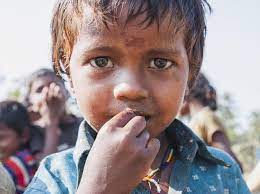
PPLO is started by G.Sanjay on 2019 as an initiative to serve the lunch to the poor people who starve for food.

PPLO’s motive is to “Reduce Shortage by Donating the Wastage“.

FOOD WASTAGE- A SHORT GLIMPSE AND STATS:

Having food is something to celebrate but have you ever wondered consciously just much food you waste. Have you ever stopped to analyze just how much food is wasted in your household, society, country and the world? It is not something that people, who have food readily available whenever they feel hungry, worry about. However, for people who are not even able to eat one meal a day, often wonder if all the food that is being wasted around them on a daily basis could have filled their stomach.

Food waste is an issue of importance to global food security and the environment. But what a lot people may not realise is that is impacts a country’s economy as well. Every day, food suitable for human consumption is wasted in large quantities in medium and high-income countries at the retail and consumer level. In fact, a significant food loss and waste occur at the production to processing stages in the food supply chain in low-income countries. 

Food Wastage in India:

Contrary to the belief of Indians that we don’t waste food, data showed that India wastes as much food as the whole of United Kingdom consumes. In fact, food wastage is an alarming issue in India and country’s streets, garbage bins and landfills have sufficient evidence to prove this. According to the United Nations Development Programme, up to 40 per cent of the food produced in India is wasted and about 21 million tonnes of wheat are wasted annually. 

You don’t even have to scour through several resources to see how much food is wasted in the country. During the nationwide lockdown this year, India registered high wastage because of a poor supply chain. Food delivery website MilkBasket lost 15,000 litres of milk and 10,000 kg of vegetables in a single day after delivery agents were denied entry in societies due to lockdown. Farmers in Belagavi district of Karnataka spilt thousands of litres of milk in a river after they could not reach the people due to the lockdown. Several other reports surfaces which showed how much food was wasted.

Food Wastage stats:

  • Around 67 million tonnes of food is wasted in India every year which has been valued at around Rs 92,000 crores. For context, this amount is enough to feed all of Bihar for a year
  • Annually, nearly 21 million metric tonnes of wheat rots in India. This figure is equal to Australia’s total annual production
  • According to old 2018 BMC data, Mumbai generates close to 9,400 metric tonnes of solid waste per day, from which 73% is food, vegetable, and fruit waste, while only 3% is plastic. 
  • National Delhi also generates around 9,000 metric tonnes of waste per day, with the country’s largest landfill located in East Delhi.

Economic Impact:

Food Wastage not only leads to negative environmental impact but also causes economic loss. According to an FAO report, approximately one-third of all food produced for human consumption is lost or wasted. The economic costs of this food wastage are substantial and amount to about $1 trillion each year. However, the hidden costs of food wastage extend much further.  In addition to the $1 trillion of economic costs per year, environmental costs reach around $700 billion and social costs around $900 billion.

Global food wastage costs as per FAO report:

  • 3.5 Gt CO2e of greenhouse gas emissions. Based on the social cost of carbon, these are estimated to cause $394 billion of damages per year.
  • Increased water scarcity, particularly for dry regions and seasons. Globally, this is estimated to cost $164 billion per year.
  • Soil erosion due to water is estimated to cost USD 35 billion per year through nutrient loss, lower yields biological losses and off-site damages. The cost of wind erosion may be of a similar magnitude.
  • Risks to biodiversity including the impacts of pesticide use, nitrate and phosphorus eutrophication, pollinator losses and fisheries overexploitation are estimated to cost $32 billion per year.
  • Increased risk of conflict due to soil erosion, estimated to cost $396 billion per year.
  • Loss of livelihoods due to soil erosion estimated to cost $333 billion per year.
  • Adverse health effects due to pesticide exposure, estimated to cost $153 billion per year.

Earlier this year, former Union Minister of Consumer Affairs, Food and Public Distribution Ram Vilas Paswan said that in financial year 2019-20, foodgrain wastage in the country stood at 1,930 tonnes, which was 0.002 per cent of the total procurement. The total procurement in FY 2019-20 was 751.72 LMT (Lakh Metric Tonnes). The minister shared the data on Twitter and asserted that the notion that foodgrain wastage is high in FCI (Food Corporation of India) godowns is not true. While he was right, the truth is that over a thousand tonnes of foodgrains was wasted which could have fed millions of people. 

Now that it is clear that food wastage cripples a country’s economy to an extent that most are unaware, some measures that the government needs to take is to include containing wastage in transportation, improve storage facilities. Food processing also needs to be sped up so food is saved and wasted less to feed more. 

PPLO’s WORK:

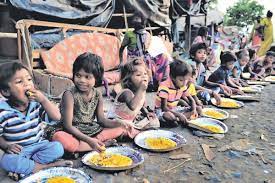
In PPLO Sanjay and his friends collects the food wasted by common people from their schools and houses and test the quality of the food ensuring that only healthier and good food will be served. We then serve the lunch for the poor people in need instead of throwing to the dusbin. If we find the food has been contaminated we convert the food into a manure by composting.

So in PPLO we ensure that the food is not wasted and it is either used to feed humans or to nurture plants.

Chennai: Fish sales remain extremely poor

Why eat lunch?

Lunch is an important meal for everyone. It provides energy and nutrients to keep the body and brain working efficiently through the afternoon. A packed lunch made at home can be a healthy and delicious choice and gives you control over the foods and ingredients included so the mothers or fathers or children who cook their food for loved ones can able to help the people in need by donating their wastage. So, we took a step to serve the lunch to the needs.

We were able to provide lunch for the slum consisting of 370 people from food collected from a single school. So, we can able to feed the whole world if the wastage is managed properly.

Food waste as fertilizer.

Foods which we find contaminated are transformed to manure to Grow plants. We could use all the food waste and prepare a compost out of them which can be used as organic fertilizer. This way we save the earth from the pollution caused by food waste and also do something productive.

Food waste is unique as a composting agent, it is the main source of organic matters. Fruits, vegetables grains, coffee filters, eggshells can be composted.

PPLO MISSION:

FOOD FOR ALL AND WASTE FOR NONE.

PPLO ACCOMPLISHMENT:

PPLO was successful in providing lunch for nearly 400 people from the food remains generated by a school of 527 students.

If you would like to support PPLO or if you need support from PPLO

Please Contact: s98208366@gmail.com

Right to Information

 RTI

The word RTI stands for Right to Information .The Right to Information is an act that was passed by the Indian Parliament on 15th June 2005 and it came into effect on 12th October 2005. Right to Information could be considering as an effective part of fundamental rights that comes under Article 19(1) of the Constitution. Under this Act any citizens can request for information from The State and The Central Government departments and that request have to be processed on time which was mandated under the RTI Act 2005. Other than this every individual have the right to speech and manifestation. Except in Jammu and Kashmir the RTI Act was extended to whole part of India. This Act was like a power bank for the citizen of India because its inclusive in nature and covers every possible matters of the governance.

RTI and its Information

We can get any information from the RTI Act such as:

1. Right to Inspect Records or Works

2. Right to Certified Copies

3. Right to Get Samples and Models

4. Right to Get Information in Electronic Form

Where can one file an RTI Application?

One can separately file a complaint under the sec-18(1) (a-f) with the State or Central Information Commission as applicable. If the PIO or APIO does not accept the application, delays it, or refuses to provide the information (mala fide intention),or provides wrong information according to the applicant or the PIO knowingly destroyed the information for which requisition is asked for by the applicant or any other obstacle made in order to not to get the information.

If the following complaint is found correct by the concerned Information Commission, the relevant PIO/APIO would be personally fined a penalty of Rs 250 per day for each day delay subject to a maximum of Rs 25000/- and some departmental information action can also be initiated against him as given in Section 20(1)and (2).

Right to Information and its Objective

The basic agenda in the Act of Right to Information was to empower every individual of the contrary and to bring transparency, flexibility and accountability in the working process of the Government. India is a democratic country and it’s the basic right of the citizens to get democracy in true sense. If there is awareness and every citizen knows there rights then accountability sometimes become easy. One thing that should be noted is only the authorities which are lying in the hands of the government or held under public consultant covers this Act. The Act suggests that any information which can’t be denied to the Parliament or State Legislature intend not to be denied to any citizen. 

Conclusion

Right to Information is an Act which is itself certified by the Constitution. Arrival of such act could be considered as a powerful instrument for its citizens as this act gave us the right to known detailed information from our Government. Here, the Government have to give proper guidelines which could be easily comprehensible by every person. The basic purpose behind such acts is to build a strong country by making strong and effective steps and giving every possible information to the public about its Government.
ANXIETY-DOMINATING BRILLIANT MINDS

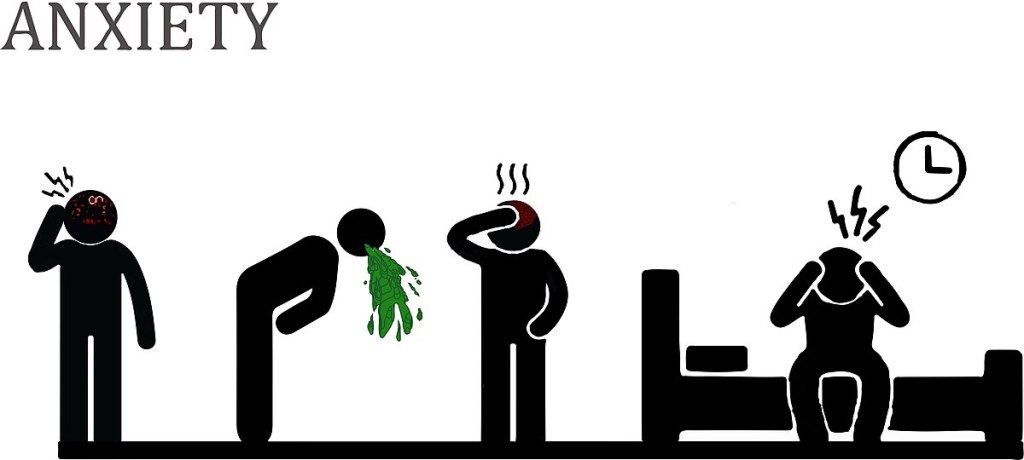
Anxiety is our body’s natural response to stress. It’s a feeling of fear or apprehension about what is going to come our way. Reason for the same can be many, such as first day of school, going for an interview, overthinking, personal life problems, career etc. Anxiety is an emotion characterized by an unpleasant state of inner turmoil, often accompanied by nervous behavior such as pacing back and forth, somatic complaints and rumination. It includes the feeling of uneasiness and worry, usually generalized and unfocused as an overreaction to a situation that is only subjectively seen as menacing. It is often accompanied by muscular tension, restlessness, fatigue, inability to catch one’s breath, tightness in abdominal region and problems in concentration. If longer than six months and are interfering with normal life, then this may be an Anxiety disorder.

WHAT ARE ANXIETY DISORDERS?

Ordinary Anxiety is a feeling that comes and goes but does not interfere with our everyday life. But incase of an anxiety disorder, the feeling of fear prevails all the time. It is intense and sometimes debilitating. This type of anxiety may cause the person to stop doing things he/she enjoys. They start losing interest in everything around them. In many cases, it may even prevent the person from entering the elevator, crossing the street and leaving home. If left untreated, it keeps getting worse. Anxiety disorders are the most common form of emotional disorder and can affect anyone at any age.

TYPES OF ANXIETY DISORDER

  1. Panic disorder– experiencing recurring panic attacks at unexpected times. A person with the same may live in fear.
  2. Phobia– excessive fear of specific object, situation or activity.
  3. Social Anxiety disorder– extreme fear of being judged by others in social situations.
  4. Obsessive- Compulsive disorder– recurring irrational thoughts that leads to perform specific, repeated behaviors.
  5. Separation Anxiety disorder– fear of being away from home or loved ones.
  6. Illness Anxiety disorder(formerly called Hypochondria)- anxiety about health.
  7. Post-Traumatic Stress disorder(PTSD)– anxiety following a traumatic event.

SYMPTOMS OF ANXIETY

Anxiety feels different depending upon the person experiencing the same. The person might feel out of control, like there’s a disconnection between mind and body. Other ways people experience anxiety includes nightmares, panic attacks, painful thoughts or memories that can’t be controlled. General anxiety symptoms include:-

  • increased heart rate
  • rapid breathing
  • restlessness
  • trouble concentrating
  • difficulty falling asleep

TREATMENT

Once the person has been diagnosed with anxiety, it is not necessary that they would need medical treatment. Lifestyle changes may be enough to cope with the symptoms. In moderate or severe cases, treatment can help us to overcome the symptoms and lead a more manageable life. Seeing a Psychiatrist helps with proper medication required and physical assistance as well.
Money and it’s Functions

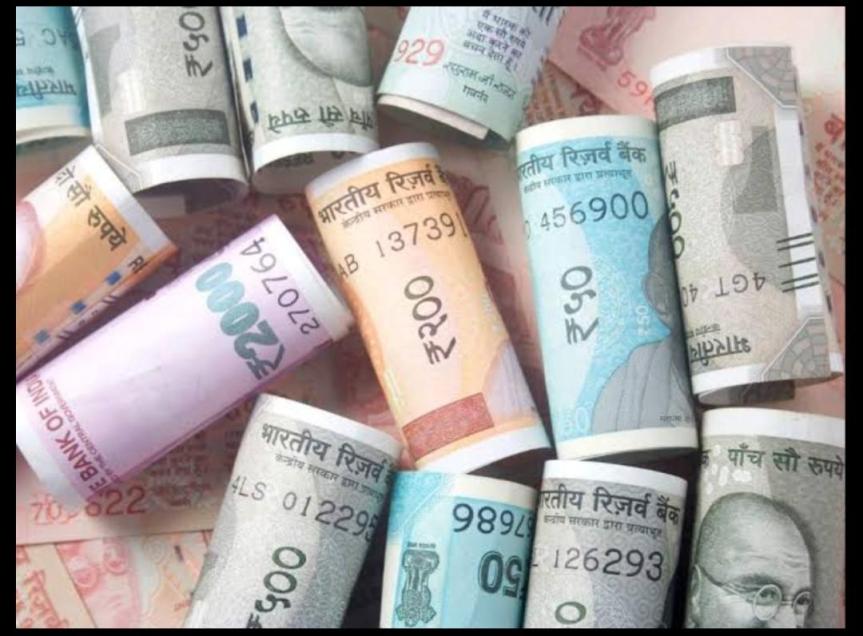
Money a commodity accepted by general consent as a medium of economic exchange. It is basically the legal tender of exchange. The paper currency which we use today has a long history behind it’s origin and evolution. Even today, money is continuously evolving, going from paper to plastic to digital. Over the years, money has changed it’s forms several times but what hasn’t changed is it’s functions. No matter what form it is used in, money almost always serves the same functions.
The functions of money are categorised as primary, secondary and contingent functions.

Primary Functions of Money:

Under this category, money performs it’s two main functions that are medium of exchange and unit of value. In the former case, money has removed the need of double coincidence of wants, something which was very much needed in the batter system which was used earlier. Being a medium of exchange means being generally acceptable. This gives the user freedom of choice and economic independence. It also acts as an intermediary and facilities exchange.
Money as unit of value means money is the standard for measuring values of all goods and services. This value is expressed in terms of price. Price is in terms of monetary unit and money acts as the determiner of rate of exchange. It also helps in calculating important economic parameters like costs, revenue, profits etc.

Secondary Functions of Money:

Under this, money performs three functions. It acts as a standard of deferred payments, it acts as a store of value and as a transfer of value. Money as a standard of deferred payments means that money acts as a standard for payments, which are to be made in future.
Money as a store of value means that money can be used to transfer purchasing power from present to future. Money is a way to store wealth. Although wealth can be stored in other forms also, but money is the most economical and convenient way. Money as a transfer value refers to the fact that money has velocity. It keeps transferring from person to other person.

https://www.yourarticlelibrary.com/economics/money/primary-and-secondary-functions-of-money/30307

Contingent Functions of Money:


Money performs certain contingent functions. These include: distribution of national income, maximization of satisfaction, basis of credit system, money as the most liquid asset. Money helps in distribution of the national product in the form of rent, wage, interest and profit, which are expressed in money terms. Money helps the consumers and producers in maximizing their satisfaction. A consumer derives maximum satisfaction when marginal utility is greater than marginal cost. Money helps in credit creation for banks. Money as a store of value has encouraged savings by people in the form of demand deposits in banks. These deposits are used for generating credit. Money is the most liquid asset of all assets in which wealth is healed. Individuals hold wealth in numerous forms ranging from currency, demand deposits, time deposits to bonds , savings, treasury bills etc. All these forms can be converted into money and vice versa.

https://www.yourarticlelibrary.com/economics/money/contingent-functions-of-money-in-economics/30310

SPORTS.

The word sport is generally a system of activities that are based in physical athleticism or physical dexterity. Several organs that aim to use, maintain or improve physical ability and skills while providing the enjoyment to participants and in some cases, entertainment act as an spectators. Sports is usually governed by a consistent adjudication of winners. A sportsmanship is an attitude that strives for fair play, courtesy towards teammates and the opponents as well. Grace in victory or the defeat. It expresses an aspiration or ethos that the activity will be enjoyed for its own sake the most impact thing is not winning but taking part in the game.

Sports are the way to relive stress and maintain a healthy body by engaging in different types and categories of sports. The sports promote friendliness, team work, hard work, and discipline. The satisfaction you get while playing the sport is equals or even exceeds the one you get from winning it. Sports can through casual or organised participation improve one’s physical health, Hundreds of sports exist from those between single contestants through to those with Hundreds of simultaneous participants either in teams or competing as individuals. When we look into the top sports played , Soccer or well known as football or also called as soccer is the most popular sport in the world. In the last global census FIFA it was established that there were around 265 million people who play this sport and have over 4 billion of fans in the world. One reason for the football popularity is all you need to play football is a ball and your foot. Moving on to the next sport that is Cricket which is the most popular all over the world including a long rectangular pitch at the centre of the cricket field. The International Cricket Council ICC identified that around 125 countries play This sport and have over 2.5 billion fans. Hockey is the sport consists of both ice and on-field. The game involves 2 teams trying to put a ball into the opposing team’s net with hockey stick and hockey as around 2 billion fans and over 100 counties and 5 continents play hockey sport which include both men and women. And next badminton is one of the most participated sports which is played regularly by an estimation their are over 220 million people who play badminton and have 2 billion fans around the world. The next sport is volleyball which was originated from America and around 998 participants both whether won or lost this sport was played all over the world. One popular variant of this game is it is played on sand and gained around 900 million fans. The most famous sport basket ball have around 825 million fans and is now played world wide and to the maximum 450 million people have played basketball. If you like to jump, run, and shoot then you will love this sport more. And then is tennis is widely recognised as individuals sports in world have around 60 million men and women players which has ranking in this sport and has around 875 million fans. It is the popular sport in Asia. Finally we speak about the sport Golf which is the one most popular pastimes in the world and owned around 450 million fans and approximately 60 million people have played this sport.

The top rated players in India are Pullelu Gopichand Jwala Gutta, Prakash Padukone, Sania Nehwal, P.V Sindhu ,Siril verma, players from badminton and Apurvi Chandela ,Ganga narana, Rajyavardhan Singh Gavaskar, Ravichandran Ashwin from cricket and Vishwanath from chess and Rohan Bopana, Sania Mirza, Leander Paes, Mahesh Bhupathi Sushil Kumar, Khashaba Dadasaheb Jadhav from tennis and Yogeshwar Dutt in wrestling and Vijender Singh from Boxing.

The awards given for the cricket achievers or players are most popularly Rajiv Gandhi Khel Ratna, Lauren’s world sports award.

The love for sports will never end till the history of sports man exist and make us give the Heritageous spirit that boost every Indians.

Looper : Loop back

Time travel is an idea adored by every science fiction enthusiast, it has been a popular concept in all kinds of media for a long time now. Time is a fascinating concept itself and the idea of somehow being able to traverse it is even more fascinating. First popularized by H.G.Wells in his novel “The Time Machine” in 1895, now a concept used by almost all form of media. There have been multiple fictional methods of time travel depicted in a wide spectrum, everything ranging from magic to advanced physical theories like blackholes have been used to explain time travel. Not many stories try to convey the possible consequences of time travel, most just end up brushing the very possible effects under the rug. This movie does its best to show the possible consequences of making changes to the past.

Looper is set in the year 2044 in a world quite similar to ours, technological advancements in 2074 have found a way to facilitate time travel. The use of time travel is not elegant or something good at all, it is instead use to coverup crimes of the future. The tracking in 2074 have reached a point where covering up a murder is almost impossible. The future crime bosses utilize time travel to care of their tracking problem, they simply send their targets to the past to be killed and disposed. Loopers are assassins hired by these crime syndicates who take care of the targets sent their way, the targets are bound and blindfolded before being sent back with silver bars on their body as a form of payment. The Looper shoots the target and recovers the silver bars to complete the contract.
The story follows Joe a 25 year old looper that works for the Kansas Crime syndicate played by Joseph Gordon-Levitt. His job is simple, execute the target and recover the silver. He has a pretty wild night life and is also addicted to a type of hallucinogenic. The crime syndicates of the future send the Loopers old self to be executed to hide their connections, these executions are identified with gold bars on the target instead of silver this is referred to as closing the loop. Every looper bides his time waiting for the day to come, Seth a Looper and friend of Joes lets his past self live. This action is frowned upon by the organisations and a manhunt for Seth begins, Joe reluctantly hides Seth in his place but gives him up when his finances are threatend.

The movie does a fantastic job of depicting the consequences to changing past, Seth is captured and used as a beacon for his old self to come back to. The movie shows in its own gruesome way what would happen to the future self if pain is inflicted on the present body. Seth is tortured by first by cutting an address on his arm which develops into scar tissue for his future self then slowly his limbs are severed, these effects appear on the future Seth’s body until he finally dies.

Joe gets to the location for his next target which turns out to be his old self played by Bruce Willis. The only surprising thing for Joe is that his future self is unbound and facing him, Joe fails to kill his old self and returns to his apartment. It is shown that the Joe who returned was successful in closing his loop, he moves on with his life waiting for the day to come. When the day eventually comes Joe is not ready to die and wishes to change the past to avenge his wife, so he returns to the past with the motive to stop “The Rainmaker” a person that overthrows all the crime bosses and forcefully closes the loops. It becomes a battle between Future Joe and the present Joe to save their respective lives.

In my conclusion this is a must watch movie for any science fiction enthusiast with interests in time travel. The cast included Joseph Gordon-Levitt as the primary protagonist, Bruce Willis plays the part of an antagonist, Emily Blunt plays the role of a mother trying to save her son who has psychic powers from the old Joe. Its an amazing movie with an enticing plot, written and directed by Rian Johnson.

My best Brother

Brother isn’t it sounds too good and having an elder brother is the best part of life because from childhood to old age he always care about us.

The best part is I have experienced all these things mentioned above because I have my elder brother and he is too good. I am at 16 and till now I don’t have to ask for help from anyone and you will think why he don’t have to ask for help because” I have my elder brother to help me out from all problems and difficulties”.

But sometimes we feel like having a we elder brother is like restrictions in our life not to do this and all. We all used to fight with them but at the end we reconcile together. I don’t know about anyone but believe me having elder brother is not less then blessing.

Brothers are the only one who protect us from everyone and take care of us after our father.

Volcano Eruption

“We are, all of us, growing volcanoes that approach the hour of their eruption, but how near or distant that is, nobody knows- not even God.”

~ Friedrich Nietzsche

We always talk about , what it would be like to see volcano eruption in front of your eyes ?

How amazing it would be like to find out , how the volcano erupt ?

There are many things that we don’t know exist in our earth 🌍. Do you want to know about it . If yes , than read the editorial .

Introduction

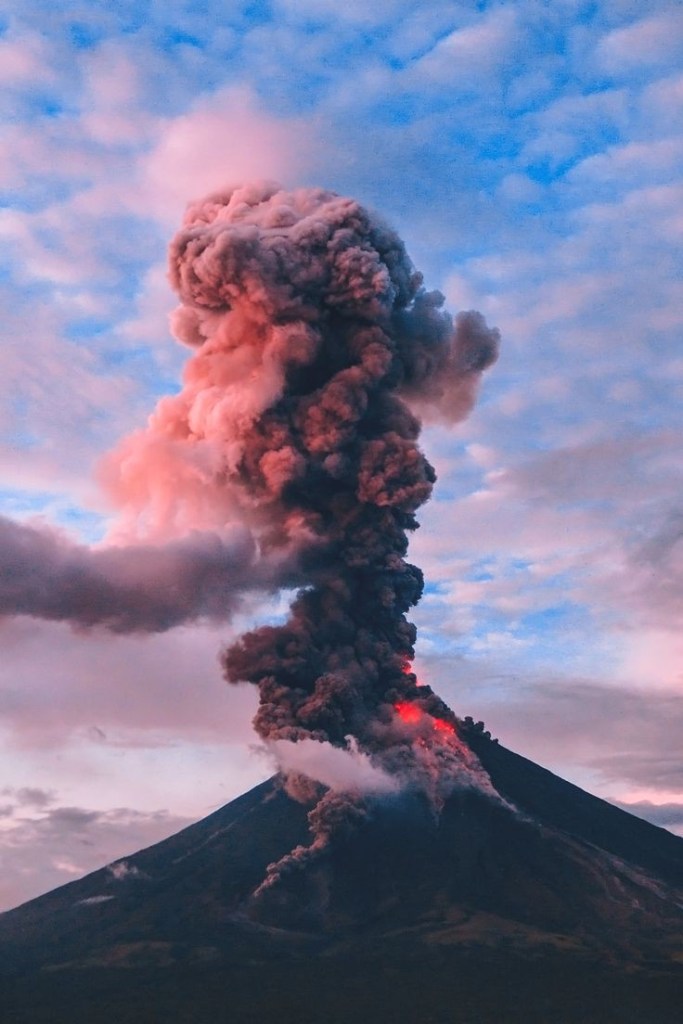
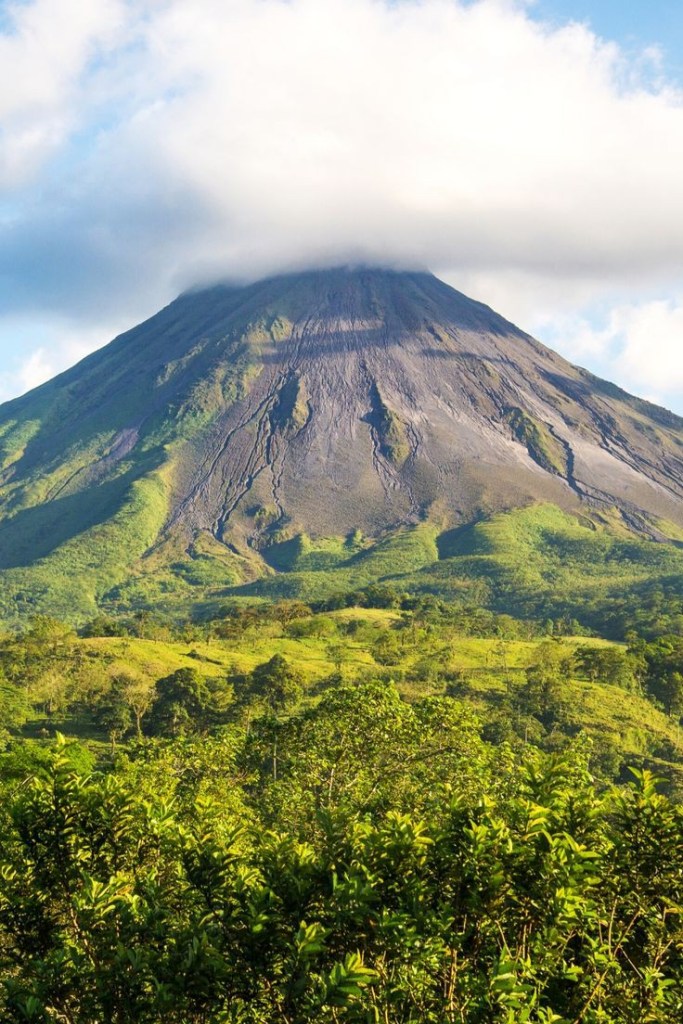
A volcano is a rupture in the crust of a planetary-mass object, such as Earth, that allows hot lava, volcanic ash, and gases to escape from a magma chamber below the surface.

On Earth, volcanoes are most often found where tectonic plates are diverging or converging, and most are found underwater.

The word volcano is derived from the name of Vulcano, a volcanic island in the Aeolian Islands of Italy whose name in turn comes from Vulcan, the god of fire in Roman mythology.

Many ancient accounts ascribe volcanic eruptions to supernatural causes, such as the actions of gods or demigods. To the ancient Greeks, volcanoes’ capricious power could only be explained as acts of the gods, while 16th/17th-century German astronomer Johannes Kepler believed they were ducts for the Earth’s tears.[87] One early idea counter to this was proposed by Jesuit Athanasius Kircher (1602–1680), who witnessed eruptions of Mount Etna and Stromboli, then visited the crater of Vesuvius and published his view of an Earth with a central fire connected to numerous others caused by the burning of sulfur, bitumen and coal.

Types of eruptions

  • Hydrothermal eruption. An eruption driven by the heat in a hydrothermal systems.
  • Phreatic eruption. An eruption driven by the heat from magma interacting with water.
  • Phreatomagmatic eruption.
  • Lava.
  • Strombolian and Hawaiian eruptions.
  • Vulcanian eruptions.
  • Subplinian and Plinian eruptions.

How do volcanoes erupt?

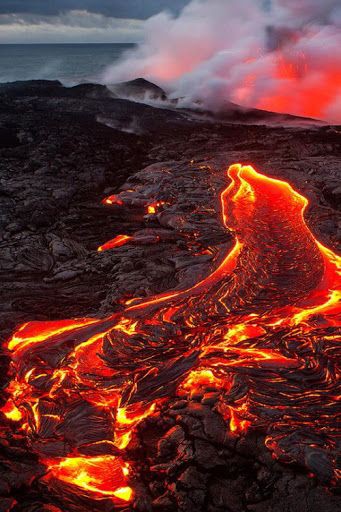
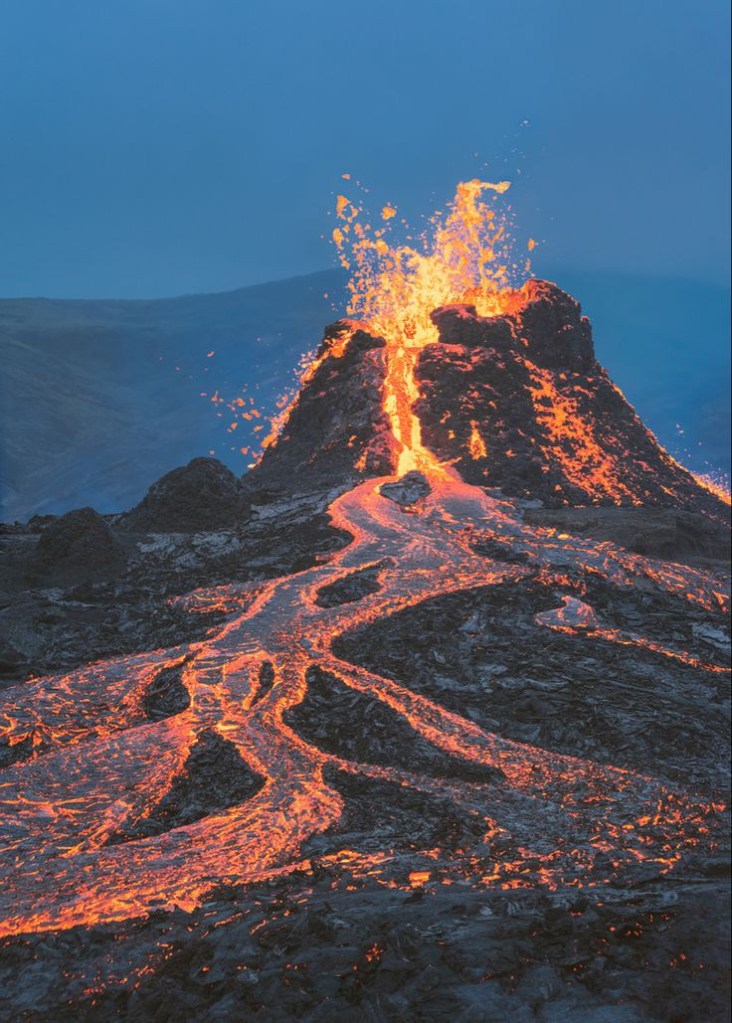
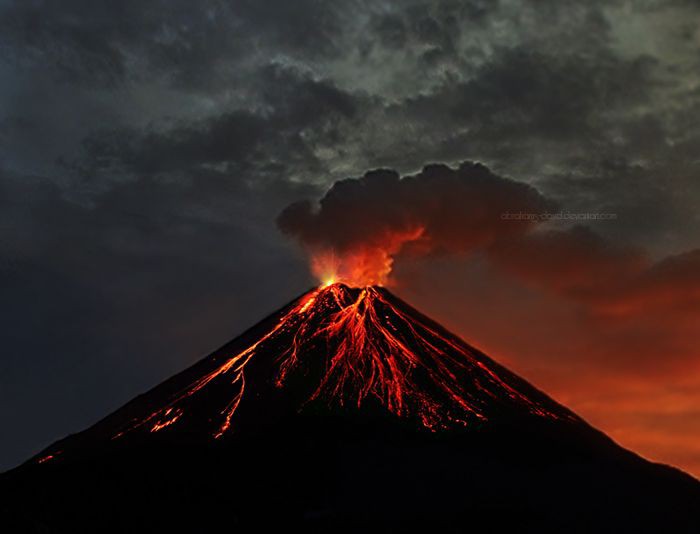
Deep within the Earth it is so hot that some rocks slowly melt and become a thick flowing substance called magma. Since it is lighter than the solid rock around it, magma rises and collects in magma chambers. Eventually, some of the magma pushes through vents and fissures to the Earth’s surface. Magma that has erupted is called lava.

The explosivity of an eruption depends on the composition of the magma. If magma is thin and runny, gases can escape easily from it.
Explosive volcanic eruptions can be dangerous and deadly.

Humans and volcanoes

Volcanic eruptions pose a significant threat to human civilization. However, volcanic activity has also provided humans with important resources.

Although volcanic eruptions pose considerable hazards to humans, past volcanic activity has created important economic resources.

Volcanic ash and weathered basalt produce some of the most fertile soil in the world, rich in nutrients such as iron, magnesium, potassium, calcium, and phosphorus.

Volcanic activity is responsible for emplacing valuable mineral resources, such as metal ores.

The paradox of volcanoes was that they were symbols of destruction but also life. Once the lava slows and cools, it solidifies and then breaks down over time to become soil – rich, fertile soil.
She wasn’t a black hole, she decided. She was a volcano. And like a volcano she couldn’t run away from herself. She’d have to stay there and tend to that wasteland.
She could plant a forest inside herself.

Matt Haig, The Midnight Library

Link

History of Globalization:

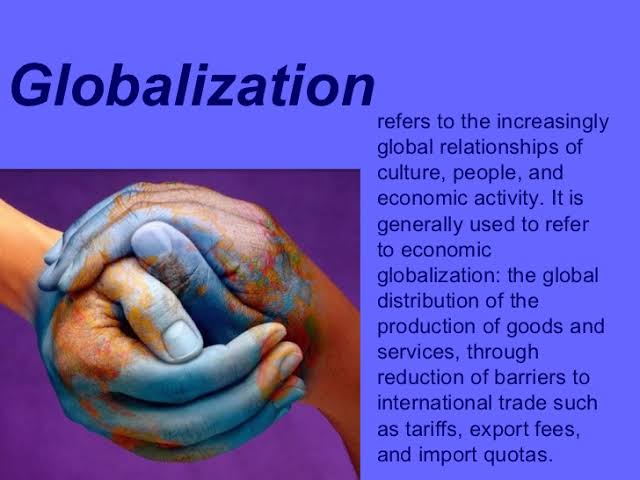
The term of ‘ Globalization ‘ was introduced by Pro. Theodore Levitt. The historical background of Globalization can be discussed on three stages.

Globalization🌎🌏

Stage:1 Stage:2 Stage:3 Archaic Proto Modern

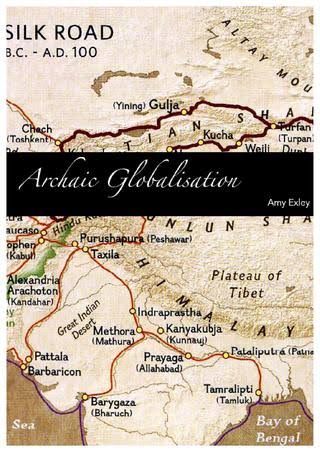
Archaic Globalization🌏🌎 :

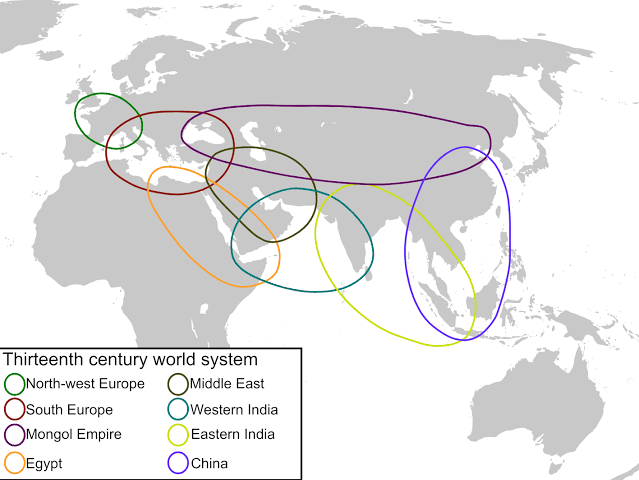
🌟According to Andre Gunder Frank,Globalization has been in existence since the rise of trade links between sumer and Indus Valley civilization in the 3rd millennium BC (BCE).
🌟An early form of Globalization economics and culture ,known as Archaic Globalization existed during the Hellenistic Age.


🌟When commercialized urban centers were focused around the axis of Greek culture over a wide range that stretched from India to Spain with such cities as Alexandria, Athens and anthioch ,as its center.
🌟An early from of Globalization in the trade link between the Roman Empire, Parthian Empire and the Han Dynasty inspired the development of the Silk Road.
🌟The Islamic Golden Age was also an important early stage of Globalization.

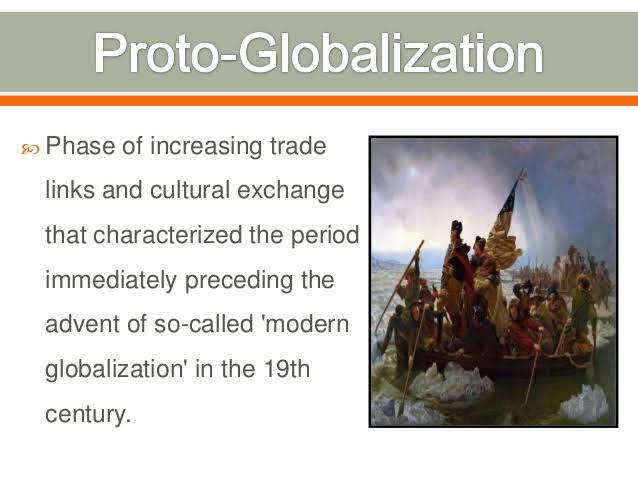
Proto Globalization 🌏🌎:

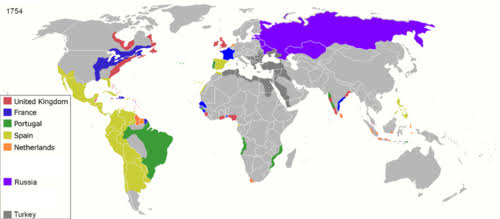
🌟 Proto – Globalization is characterized by the rise of maritime European empires,in thec16 th and 17th centuries.
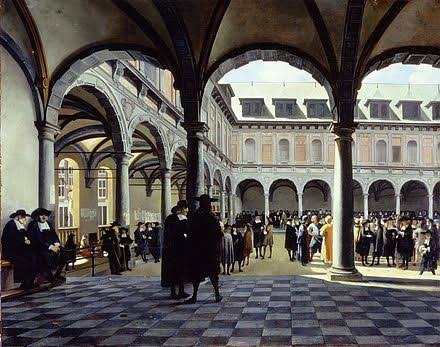
🌟In the 17th century, Globalization became private business phenomenon like British East India Company was founded in 1600.


🌟The first Dutch East India Company was found in 1602.
🌟In 16 th Century, Portuguese started establishing trading posts (factories) from Africa to Asia and Brazil.

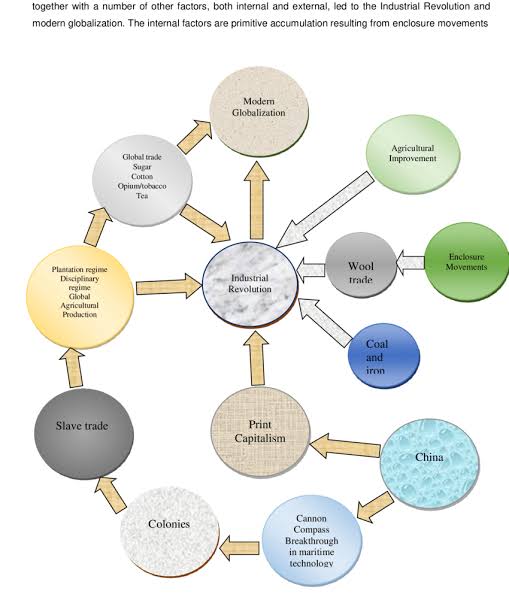
Modern Globalization🌎🌏 :

🌟The 19th century witnessed the advent of Globalization approaching its modern form.
🌟Between the Globalization in the 19th and in the 20 th Century there are significant differences.


🌟The global trade in this centuries as well as the capital, investment and the economy and another one is the global trade in the 20th century shows a higher share of trade in merchant production.
🌟 A growth of the grade in services and the rise of production and trade by multinational firms.
🌟Multinational trade contracts and agreements have been signed ,like the General Agreement on Tariffs and Trade [GATT] and World Trade Organization [WTO].

These, Our Bodies, Possessed By Light – Book Review

Introduction

‘What can one say of childhood grief? That it is lonely. That it is invisible. That it is denied the vocabulary granted to adult despair. That it shifts, mutates, but seldom vanishes. That it casts a mark. My sisters and I, were sorrow stained.’

‘These Our Bodies Possessed by Light’ by Dharini Bhaskar.

Central Theme

This is that book you want to sink your teeth into, heedlessly you try to embrace the characters and before putting it down, your eyes won’t tear away from the pages. This is that cavernous, mercurial prose I’ve been wanting to read everytime I pick up a book. I was effortlessly sliding down into the souls of Saroja, Vanaja and Deeya, into their sorrows, happiness, unearthliness. Some of their emotions got no name, it strikes you hard, it’s evocative but it’s got no name.

Plot Analysis

Let’s start with Amamma, Amamma in 1943 as Saroja, brushing her pinky finger with Venu’s, feeling the utmost ecstacy and suddenly Ranga overstrips him and imprisoning Amamma, she’s now traveling with Ranga in a bullock cart, faraway, faraway from Venu. Saroja becomes Amamma and Amamma forgets her memories. Her story ends here with indelible pain and forgotten memories.

Karthik writes letters to Vanaja in 1980s,’Dear Vanna’ he starts, he scrawls with love, he weds Vanaja and leaves one night, leaving his three children, Karthik goes away, farway from Vanna, somewhere colder than Bombay. Here, Vanaja scrawls, ‘Dear Karthik’ she starts, and ends every letter with ‘Is it cold? Hope to see you soon in Bombay’. Vanna becomes Vanaja, her story ends here with indelible memories and forgotten pain.

Deeya is now struggling to find premonition of love (vaguely translated from Japanese phrase ‘koi no yokan’) in an old man Sahil, her love for Sahil suffocates her, and Deeya’s story doesn’t end here, unlike Amamma and Vanaja, Deeya’s story starts in the ending.

Closure | These Our Bodies Possessed By LightBook Review

Every page has a strange evasiveness, the story of these three women and many other women in this book will not get erased from your heart for years, it stays there. It stays in your heart and asks you to draw a conclusion.

These, Our Bodies, Possessed by Light‘ by Dharini Bhaskar is an ambiguous story of broken souls. It encapsulates a lot of emotions, as I have mentioned above some emotions are nostalgic and anonymous, the father issue of Deeya and her struggles in the relationships are strikingly profound. Dharini Bhaskar has weaved a storyline that bewilder and astonish you at the same time.

Liberalism

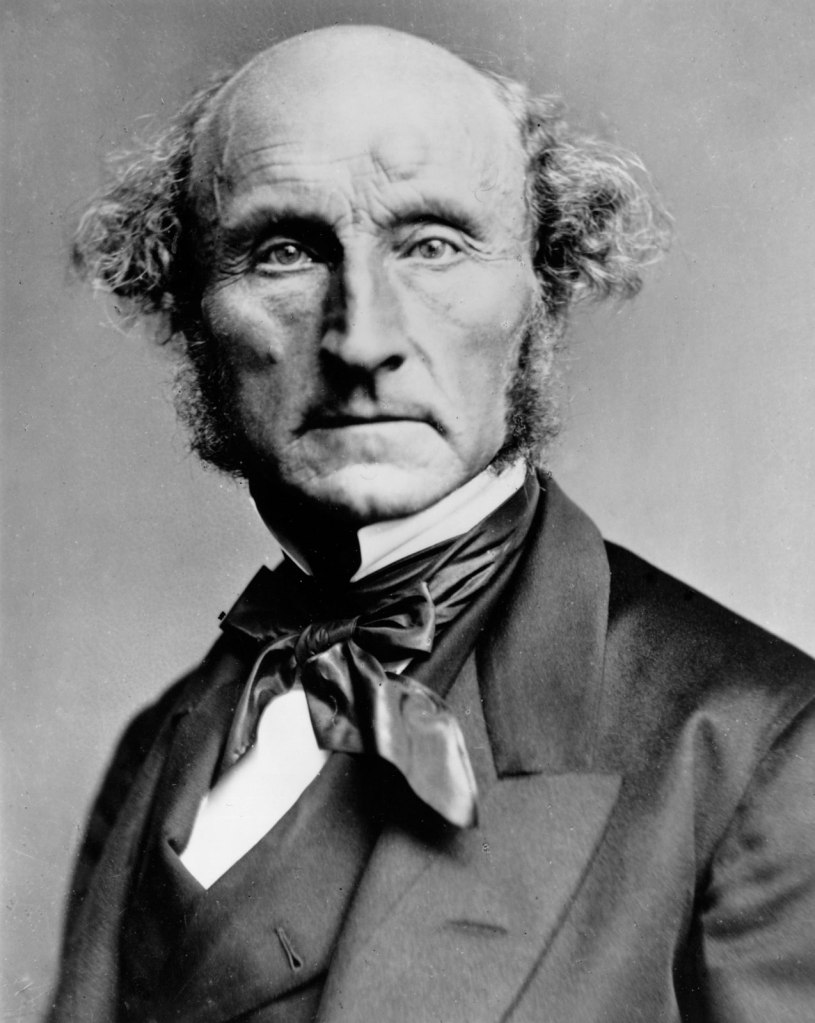
The concept of liberalism is a combination of different ideas of a common nature developed by different thinkers over time. There is no one exact definition of liberalism. It is based on the idea that people have the right to exercise liberty and government has to impose only less restrictions on them. John Stuart M, an English philosopher and political economist, was a proponent of liberalism. His opinion was that the State should exercise minimal control over a citizen. The theory of liberalism was a response to the unjust authority of the State and the Church.

John Stuart Mill

According to proponents of liberalism, State is a necessary evil. It is regarded as evil as power is vested in this institution and can use coercive force. They accept state as a necessary evil regardless of this drawback or evil. State is necessary for the existence of an ordered society. According to David G. Smith, “Liberalism is the belief in, and the commitment to, a set of methods and policies that have, as a common aim, greater freedom for individuals.” According to Sartori, “ Very simply, liberalism is the theory and practice of individual liberty, judicial defence, and the constitutional State”.

There are certain general principles that stand out in different varieties of liberalism. Liberalism is opposed to all artificial pressures and regulations on the liberty of a citizen. This theory believes that traditions and social institutions no longer hold any relevance in the development and progress of an individual. Economically, liberalism favours laissez-faire economics where the market is not restricted and is guided by market factors alone. It advocates for free trade and production without restrictions. It is opposed to restrictions on imports and exports. The proponents believe that the individual must be allowed to use and allocate resources according to their wishes.

Politically, the theory advocated for a complete restriction on the State for imposing restriction on an individual in the initial stages. It believes in the theory of separation of powers to curb arbitrary use of power. It supports for the existence of judicial review to monitor and ensure the executive is acting according to the Constitution. It favours parliamentary democracy and advocates for the Rule of Law(Law is supreme). it is against concentration of power in a few hands and favours decentralisation of power. It strongly believes that the power is with the people and the government must be made accountable through regular elections. It favours equality before law. It strongly supports the freedom of speech and expression. It is for Secularism. The state has to use its authority and power for the welfare of people and protection of their natural rights. 

Liberalism of early days differs a lot from today’s liberalism. Liberalism can be classified into two types – Classical and Modern Liberalism. 

Classical Liberalism

Classical liberalism is political ideology that advocates civil liberties. It is in the form it was originally conceived. The major proponents of classical liberalism are Adam Smith, Thomas Malthus, and David Ricardo who advocated for economic natural liberty and Jeremy Bentham and John Stuart Mill who advocated for political natural liberty. Classical liberalism was seen as fundamentally negative in nature as it advocated individual liberty without any restrictions. According to Prof. Hallowell, the basis of classical liberalism is in the rationality and good faith of man – that man, left to himself without any restrictions or shackles, is inherently good, and demonstrates positive behaviour. As a result, it advocated for minimal interference on the part of the Station in the matters of individual. It supports for inalienable natural rights for man like the right to life, freedom to own property, etc. It believes in the Rule of Law and not men or rulers. It advocates for political, economic, social, cultural, moral, and spiritual freedoms. It also emphasizes equality in matters of faith and personality.

According to Leonard Hobhouse – civil liberty, political liberty, social liberty, personal liberty(personal choices like food, clothin, religion), fiscal liberty(people representation in framing fiscal policies and no taxation), domestic liberty(rights to women and children), administrative(free to administer one’s own territory), geographic(all regions should be treated equally) and racial liberty and international(freedom of state with no external control from other states) liberty are the essential components of classical liberalism.

Modern Liberalism

Modern liberalism is the form as we know it today. Liberalism went through several changes during the 19th century. Modern liberalism departs from the classical form and its ideas. The proponents of modern liberalism understood the importance of the state and developed a concept called welfare state. Welfare state is the concept that the State exists not just to perform police functions, but its ultimate goal is to protect people and ensure development. 

Modern liberalism believes that the State is not a necessary evil and regards it as a moral institution. The State should promote the intellectual and moral faculties of the citizens and work to ensure their welfare. For this purpose, it encourages increased participation of the State for welfare of people. It advocates for the formation of welfare state. It advocates the need for collective responsibility of the State and its citizens in ensuring healthcare, education, welfare of children and women, etc. According to this theory, rights are not sacrosanct or natural. They exist by virtue of their sanction by the State. It believes in humanism and secularism as the principal goals to promote harmony and peace. It supports for regulation and control of the economic life of the society. It encourages for some degree of public control in industrial matters. It is for protecting a state from external threat and ensuring autonomy at all level of administration. It advocates for a constitutional, democratic, and parliamentary system of government.