Ovarian Cancer, more common than you think

Ovarian cancer is the sixth most common cancer worldwide among women in developed countries and the most lethal of all gynecological related problems. We all must have heard about ovarian cancer but what exactly is Ovarian cancer? Ovarian cancer is when abnormal cells in the ovary begin to multiply out of control and form a tumor. If left untreated, the tumor can spread to other parts of the body. Most women having ovarian cancer live in fear of recurrence, which happens in about 85% of cases. Current treatments offer little hope and survival has remained virtually unchanged for almost three decades. New methods to prevent, detect and treat recurrence are urgently needed.

The biggest problem lies with the fact that the symptoms of ovarian cancer resembles the symptoms of other common problems faced by women. So, it is often ignored and taken lightly. Some of the symptoms include

  1. Abdominal bloating
  2. Menstrual irregularities
  3. Difficulty eating
  4. An increase in urination
  5. Menstrual irregularities

Again having these symptoms doesn’t always signify having a disease but definitely get it checked out to be on the safe side. Usually symptoms these types of symptoms are often temporary and respond to simple treatments in most cases. The symptoms will persist if they’re due to ovarian cancer. Symptoms usually become more severe as the tumor grows. Technology needed to treat ovarian cancer are fairly under developed and less so it is always to have it be diagnosed during the initial stages.

Vaccination drive could save lives

The corona virus pandemic hits all of us so hard; it has impacted the lives and livelihoods of the people around the world. Second wave was a warning sign with thousands of death reported due to covid.

Image : FDA

Although, during first wave India have managed well by following norms and guidelines issued by our government.  People followed social distancing, hand washing and masking along with other preventive measures. The whole country was under lockdown to break the chain of transmission but had a devastating impact on the country’s economy.

However, we should thankful for the advances made in the field of medical technology and research for the discovery of covid-19 vaccination. This will strengthen our fight against corona virus. Even after vaccination it is important to follow the covid appropriate behavior.

Image: Microsoft templates

As extraordinary situations required extra ordinary measures, mandatory vaccination for all could help us to achieve herd immunity. This will help us to increase the capacity of healthcare system. 

Why the need and demand increases with time?

High Time – This is the high time to make vaccination mandatory to protect the lives of people, protecting the vulnerable and preventing the devastating effect of lock down.

Public Safety – Clinical trials and ongoing researches have shown vaccinated people are at lower risk of developing severe diseases than the unvaccinated ones. Mortality is rare for fully vaccinated ones, researchers and scientists have developed vaccines which have negligible side effects and higher efficacy rates.

Continuous Supply – As per the current situation it is important to maintain the pace of vaccination drives to break the chain of transmission and to achieve herd immunity. The central and state governments should work in collaboration to make the vaccination drive successful by ensuring proper supply.

Healthcare System – Healthcare workers or frontline warriors should be fully vaccinated along with their family members. So, that everyone could be safe because they are the ones who are taking care of the patients in this time of emergency. Their safety should come first to strengthen healthcare infrastructure.

Image: India Tv

Self Driving Cars

A self-driving car uses a combination of sensors, cameras, radar and artificial intelligence (AI) to travel between destinations without a human operator. To qualify as fully autonomous, a vehicle must be able to navigate without human intervention to a predetermined destination over roads that have not been adapted for its use.

Companies developing or testing autonomous cars include Audi, BMW, Ford, Google, General Motors, Tesla, Volkswagen and Volvo. Google’s test involved self-driving cars – including Toyota Prii and an Audi TT – navigating over 140,000 miles of streets and highways.

How self-driving cars work

AI technologies power self-driving car systems. Developers of self-driving cars use vast amounts of data from image recognition systems, along with machine learning and neural networks, to build systems that can drive autonomously.

The neural networks identify patterns in the data, which is fed to the machine learning algorithms. That data includes images from cameras on self-driving cars from which the neural network learns to identify traffic lights, trees, curbs, pedestrians, street signs and other parts of any given driving environment.

Google’s self-driving car project, called Waymo, uses a mix of sensors, Lidar (light detection and ranging — a technology similar to radar) and cameras and combines all of the data those systems generate to identify everything around the vehicle and predict what those objects might do next. This happens in fractions of a second. Maturity is important for these systems. The more the system drives, the more data it can incorporate into its deep learning algorithms, enabling it to make more nuanced driving choices.

The following outlines how Google Waymo vehicles work:

  • The driver or passenger sets a destination. The car’s software calculates a route.
  • A rotating, roof-mounted Lidar sensor monitors a 60-meter range around the car and creates a dynamic three-dimensional (3D) map of the car’s current environment.
  • A sensor on the left rear wheel monitors sideways movement to detect the car’s position relative to the 3D map.
  • Radar systems in the front and rear bumpers calculate distances to obstacles.
  • AI software in the car is connected to all the sensors and collects input from Google Street View and video cameras inside the car.
  • The AI simulates human perceptual and decision-making processes using deep learning and controls actions in driver control systems, such as steering and brakes.
  • The car’s software consults Google Maps for advance notice of things like landmarks, traffic signs and lights.
  • An override function is available to enable a human to take control of the vehicle.

Teacher’s Day

The pillar of the student, the second parent of any child. Why exactly do we celebrate teacher’s day? Is it that much essential? What role it actually play in our lives?

Photo by cottonbro on Pexels.com

“A teacher effects eternity; they can never tell where their influence stops.”

Well said by- Henry Adams.

The most important people in any person’s life is the one who trained you, guide you and mentor you. When a human came in to this life in this world his/her parents are the first most important people who love them and care for them. But a child cannot be live with their parents always. It is the rule of this era one should have to go outside and face the world.

Have you ever think why a child should go to school? Is his/her parents are not enough to conquer them? Absolutely not, The level to understanding that a child shared with their parents is very different which no one can attain. But at some point of time parents are quite emotional for their child, their intake are always focused on the fact that their child should resemble them. but this world, maturity, functioning of the creator doesn’t work like this. while on the other hand teacher is like a government even if we are mature enough to handle everything still there are certain decisions of which we are not at all familiar of. The mind of the teacher is like an Internet it contains lot of information and it can also give you lot of knowledge. let me share a story for that: “Once upon a time a 6 year old child got the information about the mobile phone and he really want to know more about it. As a student he is very bright and focused for his studies but also want to understand why really we need to have a mobile phone. so firstly he contacted his parents and asked them about the mobile phones. Since his parents is already using the one they show him and explain how it actually works. it really fascinate him and he requested his parents to buy them. On the other hand when he asked the same with his teacher she give him the same definition that his parents give but with a little twist, she strictly tell him to not buy for himself because of his age. It eventually angry the child and he decided he will anyhow get a mobile phone for himself and make his teacher proven wrong. And as a result he gets addicted to it, always playing games in the phone, his academic gets drastically decrease.”

Photo by Yan Krukov on Pexels.com

Now you understand, what is the actual meaning of teacher. They not only emotionally connected with you they are also mentally connected with you. If this person is really that much important why doesn’t we hate teacher’s so much…..funny but true.

The main reason that a person is called as a teacher is because of her students and her teaching’s. You know what, may be any teacher is just like a human being but still there are some importance that teacher have that nobody have. Do you know what is it? The patience and learning they shared to the children. Teacher’s are the only person who teach you guide you without any reason of profit their only focus is to give best knowledge to you.

So dont you think we need to give the fullest of respect to the most respected person.

If keyboards could talk……

Quite a mind boggling and thought provoking heading !!!! Isn’t it ? A famous quote says that actions speak louder than words but have you ever imagined in your weirdest dreams that how miraculously our life would be turned upside down if a simple electronic device like keyboard ,could talk . There are plenty of thoughts hovered over my mind as to how amazingly absurd this world would be if all our unspoken thoughts actually get heard by everyone around !! The only part in computer system which is capable of conveying our thoughts to ever complicated wired machine’s brain by sending our messages in the form in the form of linked words would create an interesting havoc if its buttons would actually speak up the words being pressed upon them !! Thinking of funniest consequence which comes to mind is the one when in working place of 10-20 employees typing together on the respective keyboards eventually turning it all into a remarkable fish market filled with the voices of their talking keyboards!!! Another most important use of these keyboards is found almost everywhere in the era of booming social social networking sites like Facebook and Twitter and more . Where people are spending almost of half of their live typing their thoughts on the computers spreading it around the world !

Keyboards are probably the best secret keepers the world has to offer because you can express exactly what you are thinking and feeling , unless you save the document , no one will know what you were saying , keyboards could also tell us what kind of lives we live. so, I stick to typing out how I feel.

Teacher's Day

The pillar of the student, the second parent of any child. Why exactly do we celebrate teacher’s day? Is it that much essential? What role it actually play in our lives?

Photo by cottonbro on Pexels.com

“A teacher effects eternity; they can never tell where their influence stops.”

Well said by- Henry Adams.

The most important people in any person’s life is the one who trained you, guide you and mentor you. When a human came in to this life in this world his/her parents are the first most important people who love them and care for them. But a child cannot be live with their parents always. It is the rule of this era one should have to go outside and face the world.

Have you ever think why a child should go to school? Is his/her parents are not enough to conquer them? Absolutely not, The level to understanding that a child shared with their parents is very different which no one can attain. But at some point of time parents are quite emotional for their child, their intake are always focused on the fact that their child should resemble them. but this world, maturity, functioning of the creator doesn’t work like this. while on the other hand teacher is like a government even if we are mature enough to handle everything still there are certain decisions of which we are not at all familiar of. The mind of the teacher is like an Internet it contains lot of information and it can also give you lot of knowledge. let me share a story for that: “Once upon a time a 6 year old child got the information about the mobile phone and he really want to know more about it. As a student he is very bright and focused for his studies but also want to understand why really we need to have a mobile phone. so firstly he contacted his parents and asked them about the mobile phones. Since his parents is already using the one they show him and explain how it actually works. it really fascinate him and he requested his parents to buy them. On the other hand when he asked the same with his teacher she give him the same definition that his parents give but with a little twist, she strictly tell him to not buy for himself because of his age. It eventually angry the child and he decided he will anyhow get a mobile phone for himself and make his teacher proven wrong. And as a result he gets addicted to it, always playing games in the phone, his academic gets drastically decrease.”

Photo by Yan Krukov on Pexels.com

Now you understand, what is the actual meaning of teacher. They not only emotionally connected with you they are also mentally connected with you. If this person is really that much important why doesn’t we hate teacher’s so much…..funny but true.

The main reason that a person is called as a teacher is because of her students and her teaching’s. You know what, may be any teacher is just like a human being but still there are some importance that teacher have that nobody have. Do you know what is it? The patience and learning they shared to the children. Teacher’s are the only person who teach you guide you without any reason of profit their only focus is to give best knowledge to you.

So dont you think we need to give the fullest of respect to the most respected person.

If keyboards could talk……

Quite a mind boggling and thought provoking heading !!!! Isn’t it ? A famous quote says that actions speak louder than words but have you ever imagined in your weirdest dreams that how miraculously our life would be turned upside down if a simple electronic device like keyboard ,could talk . There are plenty of thoughts hovered over my mind as to how amazingly absurd this world would be if all our unspoken thoughts actually get heard by everyone around !! The only part in computer system which is capable of conveying our thoughts to ever complicated wired machine’s brain by sending our messages in the form in the form of linked words would create an interesting havoc if its buttons would actually speak up the words being pressed upon them !! Thinking of funniest consequence which comes to mind is the one when in working place of 10-20 employees typing together on the respective keyboards eventually turning it all into a remarkable fish market filled with the voices of their talking keyboards!!! Another most important use of these keyboards is found almost everywhere in the era of booming social social networking sites like Facebook and Twitter and more . Where people are spending almost of half of their live typing their thoughts on the computers spreading it around the world !

Keyboards are probably the best secret keepers the world has to offer because you can express exactly what you are thinking and feeling , unless you save the document , no one will know what you were saying , keyboards could also tell us what kind of lives we live. so, I stick to typing out how I feel.

YOGA

WHAT IS YOGA ?

Yoga is an ancient practice that involves posture, concentration, and deep breathing.

Practicing regular yoga can encourage endurance of a reliable source, strength, calmness, flexibility, and well-being.

Yoga is now a world-class exercise. According to a 2017 national survey, 1 in 7 people in the United States has used yoga in the last 12 months.

HISTORY


The first word for “yoga” comes from Rig Veda, a collection of ancient texts. Yoga comes from the Sanskrit word “yuj,” meaning “union” or “joining.”

Yoga can be traced back to northern India more than 5,000 years ago.

Indian monks spread their knowledge of yoga in the West in the 1890s. The teachings of modern yoga have become quite popular in Western lands in the 1970’s.

PHILOSPHY

The overall philosophy of yoga is that of connecting the mind, body, and spirit.

There are six branches of yoga. Each branch represents a different focus and set of symbols.

TYPES OF YOGA

1)Hatha yoga: This is a branch of body and mind that aims to make the body and mind the foremost.
2)Raja yoga: This branch incorporates meditation and adherence to a series of disciplinary measures known as the eight limbs of yoga.
3)Karma yoga: This is a practice that aims to create a future free of indifference and selfishness.
4)Bhakti yoga: This aims to establish a way of devotion, a positive way of conveying emotions and cultivating acceptance and tolerance.
5)Jnana yoga: This branch of yoga is about wisdom, expertise, and the development of understanding through study.
6)Tantra yoga: This is the practice of rituals, ceremonies, or relationships.

Chakras

The word “chakra” means “spinning wheel.”

Yoga ends by calling the chakras the centers of energy, thoughts, feelings, and physical body. According to yogic teachers, chakras determine how people actually experience it through emotional reactions, desires or arguments, levels of confidence or fear, and even physical symptoms and consequences.

When energy is restricted to the chakra, it causes physical, mental, or emotional imbalance resulting from symptoms such as anxiety, fatigue, or poor digestion.

Asanas are the most visible form of Hatha yoga. Yoga practitioners use asanas to release energy and promote uneven chakra.

There are seven major chakras, each focusing on:

1)Sahasrara: The chakra of the crown, which is the crown on the head, symbolizes spiritual communication.
2)Ajna: Located between the eyebrows, the third chakra of the eye is related to intuition.
3)Vishuddha: The chakra of the throat is associated with self-defense and verbal communication.
4)Anahata: The heart chakra, located in the middle of the chest, contributes to a professional and personal relationship. Any imbalance in this chakra will affect oxygen, hormones, tissues and organ control.
5)Manipura: The solar plexus chakra is located in the abdomen. It is similar with confidence, wisdom, and self-control.
6)Svadhishthana: The sacral chakra, under the belly button, connects pleasure, well-being, and energy.
7)Muladhara: The root chakra, located at the base of the spine, connects the mind and body to the earth to keep a person focused. It controls the sciatic nerve and the parasympathetic nervous system.


Towards Data Science

With the gradual increase in data day by day, the need for its storage also grew. This was a big challenge in front of the enterprise industries until 2010. The prime objective was to build a framework and solution to store data. This is where Data Science came to the rescue.

Today, in this article we’ll get a sneak peak into Data Science and its related infos and probably by the end of this article, you will be able to understand what Data Science is and its role in extracting meaningful insights from the complex and large sets of data. 

What is Data Science?

Data science is the field of study that integrates domain expertise, programming skills, and knowledge of mathematics and statistics to extract meaningful insights from data.

It can also be defined as the process of using algorithms, methods and systems to extract knowledge and insights from structured and unstructured data. It is a blend of various tools, algorithms, and machine learning principles with the goal to discover hidden patterns from the raw data.

Who is a Data Scientist?

In the most simple term, a Data Scientist is one who knows the art of Data Science. Data scientists are the ones who crack complex data problems with their strong expertise in certain scientific and mathematical disciplines. They draw a lot of information from the scientific fields and applications whether it is statistics or mathematics and apply it to the raw data to generate useful insights.

Why Data Science is Important?

Data Science is important in order to generate maximum value from a raw set of data for any business. The insights that a data scientists generates is very useful to drive business decisions and take actions intended to achieve business goals.

The Pillars of Data Science

Although there are numerous skills and expertise that are highly desirable in Data Science, but these are the four major areas in my opinion :

  • Business/Domain
  • Mathematics (Particularly Stats and Probability)
  • Computer Science
  • Communication Skills

Data Scientist vs Data Analyst vs Data Engineers

Data Analyst
Data Analyst is the one who analyzes numeric data and uses it to help companies make better decisions.

Data Engineer
The job of a Data Engineer is to prepare data.

Data Scientist
The Data Sceintist analyzes and interprets complex data.

Is it worth to go with Data Science in 2021 ?

According to the U.S. Bureau of Labor Statistics, there will be a tremendous growth in the data science field which will lead to an increase in the number of jobs by about 28% through 2026. If we convert this 28 % in numbers then it will be roughly 11.5 million new jobs in the field.

And reasons that make favour Data Science as a very good career option are the high demand for Data Scientist while the supply is still low. Also there is lack of competition for these jobs in comparison to the other trending job options. These factors combined together makes this field a very lucrative and smooth option as a career path.

Data Management

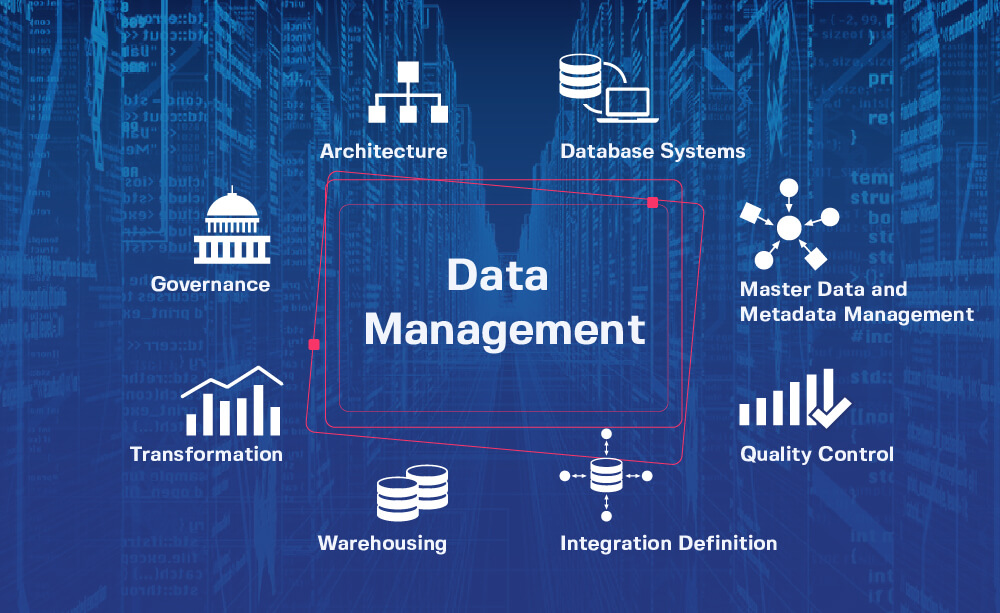
Data management is the process of absorbing, storing, organising, and managing an organization’s data. Effective data management is a critical component of implementing IT systems that operate business applications and offer analytical information to enable corporate executives, business managers, and other end users to drive operational decision-making and strategic planning. The data management process ensures that data in business systems is correct, available, and accessible. The majority of the needed work is performed by IT and data management teams, while business users are involved in some aspects of the process. This thorough reference explains what it is and offers information on the various fields it encompasses.

History and Evolution

The early blooming of data management was primarily driven by IT experts who concentrated on tackling the problem of garbage in, garbage out in the earliest computers after discovering that the machines drew incorrect conclusions due to erroneous or inadequate data. Beginning in the 1960s, industry groups and professional organisations pushed optimal data management practises, particularly in terms of professional training and data quality criteria. That decade also saw the introduction of mainframe-based hierarchical databases. 

The data warehouse concept was created in the late 1980s, and early adopters started using them in the mid-1990s. Relational software was the dominating technology in the early 2000s, with a virtual monopoly on database deployments. Organizations now have a wider range of data management options because of the emergence of big data and NoSQL alternatives. 

Benefits of data management

By increasing operational performance and allowing improved decision-making, a well-executed data management strategy may help firms acquire potential competitive advantages over their business rivals. Organizations with well-managed data may also become more flexible, allowing them to more rapidly detect market trends and seize new business possibilities.

Effective data management may also assist businesses in avoiding data breaches, data privacy issues, and regulatory compliance difficulties that might harm their brand, add unanticipated expenses, and put them in legal trouble. Finally, the most significant benefit that a sound data management strategy can give is improved company performance.

Importance of data management

Data is increasingly being viewed as a corporate asset that can be utilised to make better business choices, enhance marketing efforts, streamline operations, and save expenses, all with the objective of boosting revenue and profits. However, a lack of appropriate data management may leave businesses with incompatible data silos, inconsistent data sets, and data quality issues, limiting their capacity to operate business intelligence (BI) and analytics applications — or, worse, leading to erroneous conclusions. As organisations are subjected to a growing number of regulatory compliance obligations, including data privacy and protection legislation such as GDPR and the California Consumer Privacy Act, data management has become increasingly important. Furthermore, organisations are gathering ever-increasing amounts of data and a broader range of data kinds, both of which are trademarks of the big data platforms that many have implemented. Without proper data management, such settings may become cumbersome and difficult to traverse.

Tasks and duties in data management

The data management process necessitates a wide range of activities, responsibilities, and abilities. Individual workers in tiny firms with less resources may take on several responsibilities. Data management professionals, in general, include data architects, data modellers, database administrators (DBAs), database developers, data quality analysts and engineers, data integration developers, data governance managers, data stewards, and data engineers, who collaborate with analytics teams to build data pipelines and prepare data for analysis. 

Data scientists and other data analysts may also undertake certain data management activities on their own, particularly in large data systems containing raw data that must be filtered and processed for specific applications. Similarly, application developers frequently assist in the deployment and management of big data environments, which necessitate the acquisition of new skills in comparison to relational database systems. As a result, businesses may need to acquire new employees or retrain established DBAs in order to fulfil their big data management requirements.

Data Management

Data management is the process of absorbing, storing, organising, and managing an organization’s data. Effective data management is a critical component of implementing IT systems that operate business applications and offer analytical information to enable corporate executives, business managers, and other end users to drive operational decision-making and strategic planning. The data management process ensures that data in business systems is correct, available, and accessible. The majority of the needed work is performed by IT and data management teams, while business users are involved in some aspects of the process. This thorough reference explains what it is and offers information on the various fields it encompasses.

History and Evolution

The early blooming of data management was primarily driven by IT experts who concentrated on tackling the problem of garbage in, garbage out in the earliest computers after discovering that the machines drew incorrect conclusions due to erroneous or inadequate data. Beginning in the 1960s, industry groups and professional organisations pushed optimal data management practises, particularly in terms of professional training and data quality criteria. That decade also saw the introduction of mainframe-based hierarchical databases. 

The data warehouse concept was created in the late 1980s, and early adopters started using them in the mid-1990s. Relational software was the dominating technology in the early 2000s, with a virtual monopoly on database deployments. Organizations now have a wider range of data management options because of the emergence of big data and NoSQL alternatives. 

Benefits of data management

By increasing operational performance and allowing improved decision-making, a well-executed data management strategy may help firms acquire potential competitive advantages over their business rivals. Organizations with well-managed data may also become more flexible, allowing them to more rapidly detect market trends and seize new business possibilities.

Effective data management may also assist businesses in avoiding data breaches, data privacy issues, and regulatory compliance difficulties that might harm their brand, add unanticipated expenses, and put them in legal trouble. Finally, the most significant benefit that a sound data management strategy can give is improved company performance.

Importance of data management

Data is increasingly being viewed as a corporate asset that can be utilised to make better business choices, enhance marketing efforts, streamline operations, and save expenses, all with the objective of boosting revenue and profits. However, a lack of appropriate data management may leave businesses with incompatible data silos, inconsistent data sets, and data quality issues, limiting their capacity to operate business intelligence (BI) and analytics applications — or, worse, leading to erroneous conclusions. As organisations are subjected to a growing number of regulatory compliance obligations, including data privacy and protection legislation such as GDPR and the California Consumer Privacy Act, data management has become increasingly important. Furthermore, organisations are gathering ever-increasing amounts of data and a broader range of data kinds, both of which are trademarks of the big data platforms that many have implemented. Without proper data management, such settings may become cumbersome and difficult to traverse.

Tasks and duties in data management

The data management process necessitates a wide range of activities, responsibilities, and abilities. Individual workers in tiny firms with less resources may take on several responsibilities. Data management professionals, in general, include data architects, data modellers, database administrators (DBAs), database developers, data quality analysts and engineers, data integration developers, data governance managers, data stewards, and data engineers, who collaborate with analytics teams to build data pipelines and prepare data for analysis. 

Data scientists and other data analysts may also undertake certain data management activities on their own, particularly in large data systems containing raw data that must be filtered and processed for specific applications. Similarly, application developers frequently assist in the deployment and management of big data environments, which necessitate the acquisition of new skills in comparison to relational database systems. As a result, businesses may need to acquire new employees or retrain established DBAs in order to fulfil their big data management requirements.

Digital Marketing

Digital marketing is, as the word suggests, the use of digital media to market products. There are multiple websites like Amazon, eBay, Flipkart, etc., where people can buy products. With the availability of these websites, to purchase a product, one doesn’t have to leave the house if one doesn’t want to. It can be seen as a new philosophy and business practice emerging with improvements in technology. Digital marketing makes shopping easier for the consumer. If a seller knows what his target audience wants, it makes marketing products to them much easier.

Types of Digital Marketing

  • SEO (Search Engine Optimization)

Search Engine Optimization helps with the expansion of online visibility in results that come up in search engines. What happens is that if a business ranks high on the search engine results page (SERP), the number of visitors that your website gets is increased. With the use of SEOs, passive visits to your page can become active and receive more traction.

  • Search Engine Marketing

Search Engine Marketing is a technique where a business or a company can buy a particular advertising space. This can be seen on search platforms like Facebook Paid Promotions, or even Google or Instagram. One example is Pay Per Click advertising. It is, as the name suggests that the marketer pays the search engine for every click that a user makes.

  • Content Marketing

To amplify visibility, reputation, and to advertise itself, a lot of attention and effort has to be put into the content. The content has to be precise, good quality, transparent, and sharp so that it stands out and boosts SEOs.

  • Social Media Marketing

Social media now plays a very crucial role in the promotion of the goods and services of any company. It connects with a much more comprehensive range of people in a more intimate way. It is easy to gain feedback or engagement from social media. Social media is also used to place orders, which makes it so much simpler for the user to find the page, see if it is trustworthy, based on interactions by other customers, and also place orders with no hassle. These companies don’t just post content that relates to their product. Making statements on current situations or having posts only for the sake of engagement and witty commentary can all help have a large customer base. This enables visibility and also promotion of the product itself.

Importance of Digital Marketing

Today we live in a technologically advanced world where anything is possible through the internet. Digital marketing functions and is possible only because of the internet. It is the core of what digital marketing is. In a society where we struggle with scarcity and rising prices, digital marketing is the way to turn that around. The internet is easily accessible by everyone in any part of the globe. It is no longer reserved for a specific stratum of society. It is now easier to connect with people without even having to meet them.

It is also incredibly convenient for people to buy anything required from the internet without taking a foot outside of their homes. It saves time and shows a person the various reviews people have left. A person can easily compare prices on multiple websites and pick what is best suited to their needs. It is beneficial to those who are disabled and can help them get their work done and live a life of independence.

It also helps businesses themselves. The traders can advertise for less money, or even for free if one knows how to do it well. Products can often go viral without any money being invested in marketing. It mainly helps small businesses and helps them get traction.

Digital marketing majorly helps all kinds of businesses take off. It is a vital source of marketing in this day and age. This form of marketing shows how one can take advantage of technology and further their business. The internet has made the world a smaller place and digital marketing just helps build bridges between the business and the customer. After all, “It’s hard to find things that won’t sell online.” – Jeff Bezos

Television is chewing gum for the eyes

Television is invented by the scientist J.L.Baird. It is the first electronic appliance that can be used to watch movies, videos, TV shows, and much more. Children prefer to view the TV all the time because of the many entertainment cartoons they show us. The earlier models of the TV were bulky and needed to be placed on a strong and sturdy table.

Telegram television (also known as a TV) is a machine with a screen. Television receive broadcasting signals and change them into pictures and sound. The word “television” comes from the words tele (Greek for far away) and vision (sight). ….A TV can show pictures from many television networks.

Television is a fantastic educational tool. It broadens knowledge of different cultures, promotes tolerance and global understanding of international issues. Through current affairs, discovery, lifestyle, cooking shows and children’s programmes, television encourages scientific and cultural curiosity.

10 LINES ON TELEVISION

1. Television is an audio-visual component by which we can watch our favorite shows, movies and various other programs.

2. Television is a huge industry in India with thousands of programs in more than 800 channels in different languages.

3. Till 2016, there were 857 channels, and out of them, 184 were paid channels.

4. In India, Doordarshan was a part of all India Radio, which separated in 1976.

5. After the 1980’s, ‘Ramayan’ and ‘Mahabarat’ were the two epic shows which entartained people.

6. During economic and social reforms in 1991, the government allowed foreign and private broadcasters to start their TV channels in India.

7. Traditionally, programs used to telecast via antennas, but in 1992, cable Television Network started with better viewing and multiple channels.

8. Now India television has shifted towards DTH (Direct to Home) platform which receives signals via satellite and provides better picture and sound clarity.

9. With the advent of smart phones, programs can also telecast on our phones via the Internet.

10. Nowadays live streaming of new programs on the internet is in high demand.

Television is chewing gum for the eyes

Television is invented by the scientist J.L.Baird. It is the first electronic appliance that can be used to watch movies, videos, TV shows, and much more. Children prefer to view the TV all the time because of the many entertainment cartoons they show us. The earlier models of the TV were bulky and needed to be placed on a strong and sturdy table.

Telegram television (also known as a TV) is a machine with a screen. Television receive broadcasting signals and change them into pictures and sound. The word “television” comes from the words tele (Greek for far away) and vision (sight). ….A TV can show pictures from many television networks.

Television is a fantastic educational tool. It broadens knowledge of different cultures, promotes tolerance and global understanding of international issues. Through current affairs, discovery, lifestyle, cooking shows and children’s programmes, television encourages scientific and cultural curiosity.

10 LINES ON TELEVISION

1. Television is an audio-visual component by which we can watch our favorite shows, movies and various other programs.

2. Television is a huge industry in India with thousands of programs in more than 800 channels in different languages.

3. Till 2016, there were 857 channels, and out of them, 184 were paid channels.

4. In India, Doordarshan was a part of all India Radio, which separated in 1976.

5. After the 1980’s, ‘Ramayan’ and ‘Mahabarat’ were the two epic shows which entartained people.

6. During economic and social reforms in 1991, the government allowed foreign and private broadcasters to start their TV channels in India.

7. Traditionally, programs used to telecast via antennas, but in 1992, cable Television Network started with better viewing and multiple channels.

8. Now India television has shifted towards DTH (Direct to Home) platform which receives signals via satellite and provides better picture and sound clarity.

9. With the advent of smart phones, programs can also telecast on our phones via the Internet.

10. Nowadays live streaming of new programs on the internet is in high demand.

National Disaster Management Authority(NDMA)

The Government of India recognising the importance of disaster management as a national priority had set up a High powered committee in 1999 and a Nationals Committee in 2001 after the Gujarat earthquake to make recommendations on the preparation of disaster management plans and suggest effective mitigation mechanisms.

However, after the Indian Ocean Tsunami of 2004, the Government of India took a defining step in the legislative history of the country by enacting the Disaster Management Act 2005. The act provided for the creation of National Disaster Management Authority to spearhead and implement a holistic and integrated approach to disaster management in the country

Objectives of the NDMA:

To promote a culture of prevention preparedness and resilience at all levels for knowledge, innovation and education.

To encourage mitigation measures based on technology, traditional wisdom and environmental sustainability.

To mainstream disaster management into the developmental planning process.

To ensure efficient mechanism for identification assessment and monitoring of disaster risks

To establish institutional and techno-legal frameworks to create an enabling regulatory environment and a compliance regime and so on.

Functions of the NDMA:

To lay down policies on disaster management. 

To approve the national plan.

To approve plans prepared by Ministries and departments of the Government of India in accordance with the national plan.

To laid out guidelines to be followed by the state disaster management authority is in drawing of the state plan.

To co-ordinate the enforcement and implementation of the policy and planning for disaster management.

To recommend provision of funds for the purpose of mitigation. 

To provide such support to other countries affected by major disasters as may be determined by the central government.

To lay down broad policies and guidelines for the functioning of the National Institute of disaster management.