RTI ACT and Investigative Journalism.

Just like citizens, the RTI act has enabled lot many journalists in the country to investigate regarding their concerned issues. RTI act over the years has become an important weapon for journalists to divulge hidden and lesser known information. RTI act has become so crucial and an “everyday thing” for some journalists that they have build their entire career out of it.

Some of the famous cases where RTI act has helped journalists in their investigation procedure are:

1) Chhatrapati Shivaji Memorial Project by journalist Mr. Vishwas Waghmode:

Mr. Waghmode, a journalist at the time in The Indian Express investigated the controversial Chhatrapati Shivaji Memorial project. According to him, the initial cost quoted by the contractor was Rs.3826 crores which was supposed to be the lowest bid as opposed to the government’s bid which was Rs.2500 crores. The government in order to resolve this issue set up a committee led by the chief secretary in order to renegotiate the cost which successfully got the cost down to the government’s estimate of Rs.2500 crores. Mr.Waghmode in connection with this case stated that the rules do not allow renegotiation but rather they are supposed to issue fresh tenders. He further added that the opposition was alleging the government had reduced the height of the statue in order to reduce the cost which the government vehemently denied.

In order to have the “genuine information”, he took the help of RTI act. Mr. Waghmode discovered and revealed how the government had in reality decreased the height of the statue and the horse by 7.5m. But in order to show that the height of the statue was not reduced, they had instead increased the height of the sword by 7.5m. He further revealed that since the sword was straight, the amount of money required to build the sword was quite less when compared to the reduction in height and that in turn helped them reduce the cost by a substantial amount.

RESULT:

When all of this came into the public eye, the State Government could not justify why the height of the sword was increased and was in deep shame.

2) HONORARY DOCTORATE SCAM by Shyamlal Yadav.

When we talk about investigative journalism in India, we can never ignore this name, that is, Shyamlal Yadav. In 2018, Mr. Shyamlal Yadav in The Indian Express published a series of investigative reports on how India has emerged as one of the biggest markets for “predatory” publishers of substandard research journals.


On February 6, 2018, The Indian Express scrutinised over 500 RTI applications filed over 470 higher educational institutions to find that monitoring authorities, and hundreds of politicians and bureaucrats were awarded such degrees between 1997 and 2017.

The list for instance included former director of IISC, who received 18 honorary doctorates from public universities between 2006 and 2012 when he was chairman of NAAC’s EC. The list also had several UGC chairmen who had such degrees during their tenure.


RESULT:
Rules were made by higher authorities in 2019 after the investigative report via RTI files whereby NAAC officials, family weren’t allowed to accept honorary doctorates from institutions under their watch. RTI was used to dig out crucial facts in this case.

3) Discontinuation of LIC policies by Shyamlal Yadav

Shyamlal Yadav got information through RTI from Life Insurance Corporation (LIC) that there were 59 million insurance policies those were lapsed permanently due to discontinuance of premium. And the premium deposited since then had become LIC property. Despite many efforts LIC did not provide the info on total money deposited against those policies till the date they lapsed. As a result, Indian Express published the story about the discontinuation.


RESULT:


Within 25 days of publication of the story, LIC issued fresh
advertisements regarding renewal of policies.

4) Streams of Filth by Shyamlal Yadav:

This was an investigation by Shyamlal Yadav regarding water pollution in India that took over one year. About 39 RTI applications regarding expenses by Government on water projects were filed.
It came into notice that large amount of money was spent by Government for water purification projects but there was little effect on nation’s lifelines.
The story was published in The Indian Express and was selected by UNESCO as one of the 20 best Investigative pieces in the world.


RESULT:
Central Pollution Control Board said the rivers of India are not just polluted but severely toxic.


INSTANCE ON PUBLIC PLACES INJUSTICE.

A woman receives sexual harassment from a man in public transport.

Sexual harassments are becoming the worse part of people in public places. This kind of act is provoked by men in a very aggressive way that women can’t tolerate as well as be untold to others. Similar circumstance happened in a place while I was travelling to my native via public transport. I noticed that a family along with their relatives was travelling for a grand occasion I suppose. The family comprises of an adult girl along her little brother accompanied by their parents. As hours passed everyone felt drowsy and were fast asleep soon. While I was half awake, I noticed from a distance that the girl seating place has changed after sometime that she was with her uncle and his family was in one of their dreams.

“A STRONG WOMAN STANDS UP FOR HERSELF. A STRONGER WOMAN STANDS FOR EVERYONE ELSE.”

“WE DON’T WANT TO USE THE TERM ‘HARASSMENT’.WHAT IS HAPPENING TODAY IS SEXUAL TERRORISM.”

She as a small child without knowing the trouble trusting her uncle whole-heartedly.  But as being unnoticed by anyone his activities become suspicion and strange also. His touch was becoming worse after which the girl woke up. Inspite, of his worse activity she couldn’t express it to anyone as it was her own bloodline relative. Her struggle to relieve herself from him ended up in a failure. I can’t able to do anything because it was their own family people which could not be outspoken. It is also a shame for men because of these people wandering in this world. She felt the most indigestible moment until she got escaped from it. At that situation her sacrifice and tolerance were beyond words. I felt empathetic I express this happening and to share it to you at this place. I couldn’t control my tears flowing for this unacceptable incident. “Treat and respect women” is the quotes said by women protestors but animals like men forge them to do so.  “Freedom is something when women are treated with equal dignity and respect like men”, ’Women are not statues, they are even humans’ ,do try to treat them and share them with your thoughts and I request elders or guardians of female child to teach them to fight against this issue so that people will realize to punish such bastards.

“DON’T BE ASHAMED OF YOUR STORY, IT WILL INSPIRE OTHERS”

INDIAN EDUCATION SYSTEM

India, being a developing country, has a lot of work to do to improve its education system. Despite its progress, India’s education system still lacks some of the basic needs for the country’s development. Education is critical to a country’s development and to an individual’s success. Because a lack of sufficient education has already resulted in poverty and despair in India, it is critical to strengthen the country’s educational system.

In recent years, India’s education system has been plagued by a slew of challenges that have hampered students’ growth and development. The grading system is a curse to our system, which assesses pupils’ intelligence based on their academic exam results. This makes pupils feel insecure, even if they are talented in other areas. Every person has their own unique talents, and judging them solely on the basis of their grades is absurd. As a result, even if they don’t understand what they’re writing, children do their hardest to achieve good grades in the exam. They’ve turned into bookworms with no practical expertise.

In the pursuit of higher grades, they are unable to learn the subjects adequately. Many pupils have been rendered jobless and unfit of society due to a lack of practical expertise. They are unable to obtain employment based on their education and study.

What can we do to improve our education system?

Rote learning: We have improved over time, but we have not yet been able to break free from rote learning. While we recognize that IB schools are transforming education at the local level, we must also recognize that the population of students who attend IB schools is extremely small. The education system that they provide is not affordable to everyone. As a result, the government must seize the initiative and eliminate rote learning from all levels of education. Schools should be encouraged to implement conceptual learning, which prevents students from memorizing what they are taught. This will not only help students grasp the concepts better, but it will also help them retain and apply them more effectively.

System of evaluation: Grades remain the most crucial aspect in determining a child’s future, and this is generally viewed as a burdensome factor for pupils. Students commonly underperform due to the pressure of grades. Rather than relying on a three-hour exam, the focus of the evaluation should be on a student’s classroom involvement, projects, communication and leadership abilities, and extra-curricular activities. Only then will pupils do their very best and be evaluated accordingly.

All subjects should be treated equally: We are still surviving in an educational system where the science stream has overturned the stream hierarchy. Students are pressured to become a machine that solely studies high-profile topics, whereas disciplines such as languages, communications, and the arts are shunned. Instead of creating a distinction between disciplines, students should be encouraged to pursue the subject they enjoy.

Introduction of technology: As we all know, the fourth industrial revolution has begun. We are in the midst of a technological renaissance, and technology and education cannot be separated in this situation. Students must be taught about technology beginning in elementary school so that it does not seem alien to them later in life. Indian schools must embrace technology and education with an open mind and teach it to pupils since it is there that their future resides.

Teach them the aim of education: The qualities that colonial educators established into our educational system are still present. It is not always about becoming a huge, wealthy person through education. The focus should be on humanism. Students should also be taught about life’s morality and instilled with humanistic values. They should be educated that life is about so much more than money, and that success isn’t measured in dollars. We can reach the level of the best education system in the world if the Indian education system starts adopting these things seriously. It is critical that we, as a country, begin to elevate education beyond the subpar level with which we have become accustomed and begin to view education holistically.

Hiccups

Hiccups(hichki). They can be annoying or embarrassing, but we typically don’t think of them as concerning. They’re usually short-lived, although in rare cases, they can persist. When they last more than a of couple days, or if other symptoms occur at their onset, they can be a sign of a more serious medical condition.

What causes hiccups (hichki)?

Hiccups seem to come from the chest–a quick influx of air that hits your vocal cords and causes a little sound. The spasm that causes a hiccup is really coming from your diaphragm or the nerves that control it. Some common causes include:

  • Eating too much or too fast
  • Feeling excited, nervous or scared
  • Drinking carbonated beverages or too much alcohol (sometimes in excess)
  • Stress
  • A sudden change in temperature
  • Swallowing air while chewing gum or sucking on candy
  • Irritation of the esophagus

Esophageal reflux is a common cause of hiccups. Prolonged hiccups, though, could be caused by direct post-surgical irritation of the phrenic or vagus nerves. Irritation can also be caused by cancers of the chest or neck. Rarely, hiccups can be associated with disorders of the brain–including tumors and strokes, among others—or cardiovascular disease. Some medications can trigger long-term hiccups, too.

Finally, hiccups can also persist without an apparent cause.

What really gets rid of hiccups?

Before we worry too much about serious conditions, let’s consider some of the many recommendations to get rid of your hiccups. One of the most common is temporarily holding your breath to disrupt your breathing pattern. It can be helpful, and it doesn’t carry much risk to try.

As mentioned, the vagus and phrenic nerves affect your diaphragm. They’re part of your autonomic nervous system, which controls your heart rate and breathing.

Maneuvers that affect the nerve reflex may knock out your hiccups. The Valsalva maneuver is performed by attempting to exhale while closing your mouth and pinching your nose shut at the same time. You’ll bear down a bit as well, trying to (unsuccessfully) expel air, as if blowing up a balloon.

This motion stimulates the vagus nerve, called a vagal nerve response, and it can interrupt the hiccups. I like to think of it as rebooting your nervous system; sort of a reset for the irritated nerves.

Ingesting ice or applying mild pressure to your closed eye might also reboot this nervous system response.

You also may get rid of hiccups with a spoonful of sugar to stimulate the back of your throat (which also might cause a vagal nerve response). Eating peanut butter from a spoon might relax the back of your throat and could help. Interestingly, some patients have had success getting rid of hiccups by eating a lemon wedge.

The one common recommendation to be cautioned against is the tradition of scaring someone to rid them of hiccups. While the gasp of fright may induce a vagal nerve response that interrupts the spasm, it also risks dangerous side effects: If you scare someone, they could lose their balance and fall, and being startled may also negatively impact an underlying heart condition.

Scripting languages

Introduction to Scripting Languages


All scripting languages square measure programming languages. The scripting language is essentially a language wherever directions square measure written for a run time surroundings. {they do|they square measure doing} not need the compilation step and are rather understood. It brings new functions to applications and glue advanced system along. A scripting language may be a artificial language designed for desegregation and communication with different programming languages.

There square measure several scripting languages a number of them square measure mentioned below:

bash: it’s a scripting language to figure within the Linux interface. it’s tons easier to use bash to form scripts than different programming languages. It describes the tools to use and code within the command and build helpful reusable scripts and conserve documentation for others to figure with.
Node js: it’s a framework to write down network applications mistreatment JavaScript. company users of Node.js embrace IBM, LinkedIn, Microsoft, Netflix, PayPal, Yahoo for period net applications.
Ruby: There square measure tons of reasons to be told Ruby artificial language. Ruby’s flexibility has allowed developers to form innovative software system. it’s a scripting language that is nice for net development.
Python: it’s simple, free and open supply. It supports procedure-oriented programming and object-oriented programming. Python is associate degree understood language with dynamic linguistics and big lines of code square measure scripted and is presently the foremost hyped language among developers.
Perl: A scripting language with innovative options to form it totally different and in style. Found on all windows and Linux servers. It helps in text manipulation tasks. High traffic websites that use Perl extensively embrace priceline.com, IMDB.
Advantages of scripting languages:

Easy learning: The user will learn to code in scripting languages quickly, not abundant information of net technology is needed.
Fast editing: it’s extremely economical with the restricted range of information structures and variables to use.
Interactivity: It helps in adding visualisation interfaces and mixtures in websites. fashionable websites demand the utilization of scripting languages. to form increased websites, fascinated visual description which has background and foreground colours and then on.
Functionality: There square measure {different|totally totally different|completely different} libraries that square measure a part of different scripting languages. they assist in making new applications in net browsers and square measure totally different from traditional programming languages.
Application of Scripting Languages: Scripting languages square measure employed in several areas:

Scripting languages square measure employed in net applications. it’s employed in server facet in addition as consumer facet. Server facet scripting languages are: JavaScript, PHP, Perl etc. and consumer facet scripting languages are: JavaScript, AJAX, jQuery etc.
Scripting languages square measure employed in system administration. For example: Shell, Perl, Python scripts etc.
It is employed in Games application and multimedia system.
It is accustomed produce plugins and extensions for existing applications

5 Best Colleges from All Over the World

When it comes to higher study everyone wants to attend the best colleges. If you are a student you also have the same dream. It is also same for an engineering student. I am listing Some best colleges below, which are eventually the dream college for not only engineering student but for every student from every other education field.

MIT
  1. MIT or Massachusetts Institute of Technology, USA: It is one of the renowned colleges in the world, which is situated in Massachusetts of USA. It was established in 10th April of 1861.It accepted 7% students from all over the world. Their moto is “Mind and Hand”. Here UG, PG, master and PhD courses are available .MIT holds the greatest number of Nobel winners, the notable alumni of these college are Kofi Annan, Richard Feynman, Raghuram Ranjan, Jairam Ramesh Katie Bowman and others. Subjects: language, law, Technology, general science, business ,art social & every other subjects . One can admitted here by GRE, GMAT, CAT etc. international examination.
Stanford University

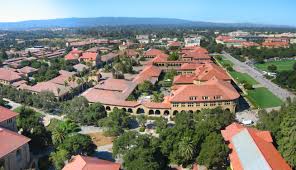
2.Stanford University: It is one of prestigious college for student. It was established in 1891 in the world by Leland Stanford and Jane Stanford. Their Moto is “the wind of freedom blows”. It situated in Stanford in California in USA. Here UG, PG, master and PhD courses are available .The  subjects which are taught here are language, law, Technology, general science, business and everything. It accepts 4.3% students from all over the world, it has some Nobel winner students and professors. Notable alumni of this college are Larry Page, Reed Hastings, Mukesh Ambani, Jennifer Connelly, Elon Musk, Stephen Brayer and others. One can admitted here by GRE, GMAT, CAT etc. internal examination.

Cambridge University

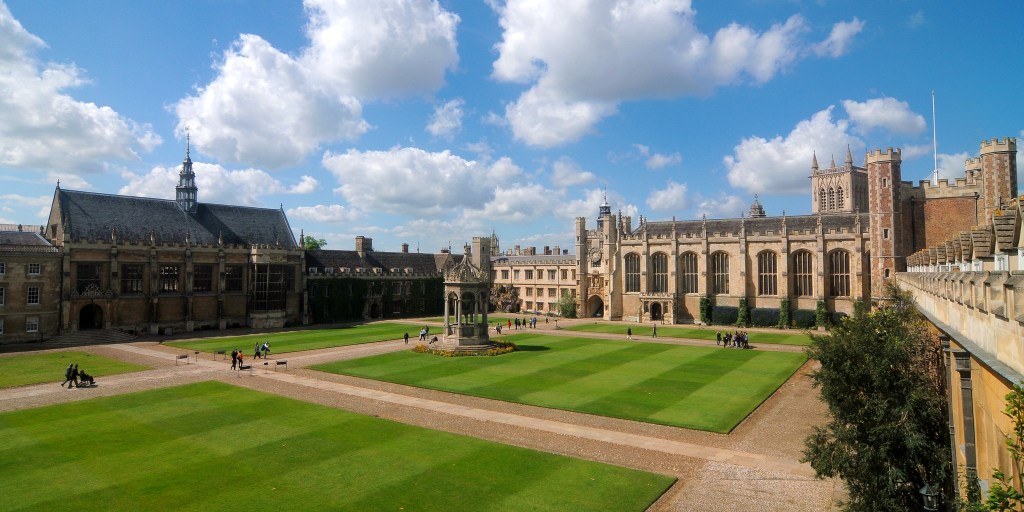
 3.University of Cambridge: Their motto is “from this place, we gain enlighten and precious knowledge”. It was first established in 1209 AC .It is one of the oldest and prestigious college in the world. Here UG, PG, master and PhD courses are available . It is situated in Cambridge in UK. It accepted 21% students from all over the world. Subjects taught here are language, law, Technology, general science, business and everything. It also has noble winner students and professor. Notable alumni are Stephen Hawking, Charles Darwin, John Milton, Emma Thompson. Rajiv Gandhi. One can admitted here by GRE, GMAT, CAT etc. internal examination.

NTU

Nanyang Technical University (NTU):It is situated in Singapore. It is one of the oldest University. It was established on 1st August 1981. It has continuously ranked with 100 from all over the world. 36% students from all over the world are accepted in the University. GATE score is acknowledged here for the admission of Indian student. Subjects which are available — language, law, Technology, general science, business and everything. Here UG, PG, master and PhD courses are available .Notable alumni are Melvin Yong, Cheryl Chan, Darryl David, General Tito Karnavian,  Inderjit Singh, Shirley Meng and others.

Harvard University

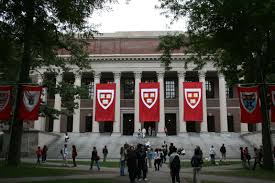
5.Harvard University: It is situated Cambridge, USA. The motto of the University is “truth”. It was established in 1636. It is one of the oldest and most prestigious University. Here UG, PG, master and PhD courses are available. It accepts only 4% students from all over the world .The subject taught here are — language, law, Technology, general science, business and everything. Notable alumni are John Adams, Theodore Roosevelt, John F. Kennedy, Benazir Bhutto, Bill Gates, Michael Obama, Barack Obama. There are so many Nobel Prize winner is from this university. One can admitted here by GRE, GMAT, CAT etc. international examination.

BOOK REVIEW: PATHER PANCHALI

Pather panchali is iconic novel of Bibutibhushan Banerjee. The story originally written in Bengali. It was first published as a set of preodically in 1928 which was later put together as a book in 1929. The story is basically a bildungsroman of the child protagonist Apu whose narration is somewhat related to the author’s own childhood. “Pather” means the path or journey while “Panchali” means a folk poem/song,which can be put loosely as “Song of the Road”. 

The plot:

The plot is set in the village of Nischindipur where the family of Apu lives in a ancestral home of their Grandmother Indir Thakuran who happens to be the aunt of Apu’s father Harihor Rai who is the priest but not a man of pratical affairs. Another important person in this story is Indir Thakurun who has lost her whole family and is forced to live alone. So she accepts the proposal of letting in Harihor and their family members who were far off relatives to her. While Sarbhojaya is overly offensive on the old lady with whom they are forced to share their meager rations (although they are living in the old lady’s home) Durga,her daughter and Apu’s elder sister is sympathetic and has a filial affinity towards the old lady. Whenever the old lady leaves the house unable to bear the indifferent attitude meted out on her by Sarbhojaya,it is Durga who drags her grandma back to the home,with her innocent and gleeful talk.One day after an altercation between the two, Indir Thakrun refuses to come back forever and despite repeated calls by Durga she yields no ground. Durga is the quintessential free-spirited girl who refuses to be never bogged down by the difficulties and is presented as a cheerful and happy-go-lucky kind of girl. She has her own shortcomings;especially her propensity to steal things. She doesn’t mind taking away the things which she likes very much such as mangoes from trees of other family people of the village;the bead necklace from her neighbours etc. But she has a good and kind heart. It is just that poverty and failure to fulfill her desires forces her to steal them and behave like a kleptomaniac. Apu is more of an innocent kid who has followed in his father’s footsteps as it can be seen that he is more interested in the scholarly books and articles that are brought home by his father and is more happy to be left alone writing poems and plays of his own, unlike his sister who is an bubbling with hyperactivity and easily approaches any person with whom she wishes to interact. He is more of a shy kid who driven by her sister’s actions. Together they share the simplest of joys which any young brother and sister can have,like eating secretly the stolen mangoes from neighbour’s backyard,running after a candyman who passes through the village,watching a kaleidoscope shown by a vendor and being marvelled by its exquisiteness,walking miles far away from their home just to have a glimpse of the train and so on. As Harihor fails to make any considerable income from the village,he decides to try his luck elsewhere. He promises Sarbhojaya to come back soon with lots of money and gifts for kids. Although he goes here and there,his search goes in vain for the major part. So occasionally he sends a small token amount home which is not at all sufficient to run the family chores. They fall into greater poverty in this period. Adding to their woes Durga falls ill and cyclone hits them at the same time.Due to lack of medical facilities in the nearby village and monetary problems she fails to fully recover from the fever and on a stormy night the dilapidated house collapses partially and also takes away the life of Durga.

Finally Harihor gets a good opportunity as a family priest of a rich family. Brimmed with joy and unaware of the recent happenings in his house he comes back to inform them of the new job and and brings with him new gifts for the family.

Filled with anger and sorrow,when Sarbhojaya breaks down in front of him,he is equally overcome with grief and decides to leave the house and take the whole family with him to the new home where they can lead a better life and leave their bitter memories behind.

The story is a simple expression of human interactions and emotions that has been presented beautifully and poignantly.Even a movie was made in the name “Song of the Little Road” post independence by legendary director Satyajit Ray which was his directorial debut. It was hailed as a master-piece of its own.

SOME OF THE BEST QUOTES FROM THE BOOK: THE QUICK AND EASY WAY TO EFFECTIVE SPEAKING

1. “ Successful communication depends upon how well the speaker can make his talk a part of the listeners and the listeners a part of the talk”

2. “The chief cause of your fears of public speaking is simply that you are unaccustomed to speak in public”

3. “ If you want to interest your listeners then don’t begin with an introduction. Begin by leaping right into the heart of your story.”

4. “The best way for a speaker to endear himself to an audience is to play himself down.”

5. “ The audience must feel that there is a message being delivered straight from the mind and heart of the speaker to their minds and their hearts.”

6. “The ability to speak clearly precedes the ability to move others to action.”

7. “ You cant project your personality in a talk to others by using reasons alone; you have to release to them how deeply you yourself believe on what you say.”

8. “ You will never know what progress you can make unless you speak, and speak and speak again.”

A Rich and Confusing Environment

College is a new environment. You are probably surrounded by a wider variety of classmates than you experienced in high school – students of different ethnicities and nationalities; students of different economic and social
backgrounds; students from more regions of the state, country, and the
world; students of more interests and accomplishments; older students returning to school after varied experiences; and upperclassmen and graduate
students with developed knowledge and commitments. Your professors will
often be deeply involved in their areas of specialization, in ideas they have
pursued over time with their colleagues, and in projects that apply their
learning to improving various aspects of life. The readings you have been assigned in your courses will introduce you to new subjects and to deeper levels of understanding of subjects with which you are already familiar. The
books and journals in the library and the bookstores provide opportunities to
pursue ideas and learning on your own in directions not limited by the curriculum.
You also get to see special accomplishments and skills up close – the sociology professor’s ability to analyze how people relate to each other, the literature professor’s ability to find the right expression, the philosopher’s
ability to cut to the heart of an argument, the architect’s ability to conceive of
a graceful and useful building, the government professor’s involvement in
state policy making. Many of your classmates may also have abilities, skills,
and knowledge you may admire- from the computer programming whiz
to the wrestling champion to the classmate who is just so witty. Seeing these
accomplishments may open your eyes to new goals and lead you to reassess
exactly where your best talents lie.
How do you make sense of all you come in contact with and set some directions for yourself? Some questions will sort themselves out spontaneously
as you become involved in a heated discussion or suddenly want to do extra reading for a course that fascinates you. Some instructors may encourage
you to think about your reaction to what you are learning through discussion
questions and informal assignments. They may be available for you to talk
with outside of class, during office hours, or even over coffee. Informal talk
with your friends and classmates also helps you sort through all the new
ideas and experiences you are confronting.

Land Policy since Ancient era

Introduction

Land policy in India has been an important topic of government policy discussion. Since the ancient era, various changes took place in land policy. It was only after independence, the major issues of land has been somewhat sorted out.

In the regime of Akbar, his land revenue officer Todar Mal gave the shape to land policy by introducing various features like land measurement, fixed land revenue and classification of lands. It was the possible beginning of systematic efforts in this field. Under the pre-British era, land revenue was collected by state and it was the sole owner of land who confirmed their rights to land produce. During British rule, existence of non-cultivating intermediaries made the condition even worse by extracting high revenues and sustaining the political hold on the country. At the time of independence, Indian agrarian system was characterised by parasitic intermediaries, high rent, different land revenues, small farmers holding large lands etc.

After Independence-

Immediately after the independence, the newly formed government appointed a Committee under J. C. Kumarappa. His Committee recommended comprehensive reforms in agrarian system. However, mostly of its recommendations were rejected.
Since then, India’s land policy has undergo many changes like abolition of intermediaries, tenancy reforms, redistribution of lands using land ceilings, bringing uncultivated land into cultivation while maintaining the land revenue administration simultaneously.

Moreover, the Constitution of India also provided Article 39 which says that the  ownership and control of material resources of the country should be distributed as best to serve the common good and no concentration of wealth in hands of few that may result detrimental. The Constitution also made land a state subject. However, the central government played a significant advisory role and also provide finances to states.

The focus and emphasis on land policy has changed from last 50 years but some of the issues remain persistent. India’s economy is significantly based on agriculture. Hence, the government should make some policies to improve agrarian structure.

Nikola Tesla

Serbian-American engineer and physicist Nikola Tesla (1856-1943) made dozens of breakthroughs in the production, transmission and application of electric power. He invented the first alternating current (AC) motor and developed AC generation and transmission technology. Though he was famous and respected, he was never able to translate his copious inventions into long-term financial success—unlike his early employer and chief rival, Thomas Edison.

Nikola Tesla and Thomas Edison

Tesla arrived in New York in 1884 and was hired as an engineer at Thomas Edison’s Manhattan headquarters. He worked there for a year, impressing Edison with his diligence and ingenuity. At one point Edison told Tesla he would pay $50,000 for an improved design for his DC dynamos. After months of experimentation, Tesla presented a solution and asked for the money. Edison demurred, saying, “Tesla, you don’t understand our American humor.” Tesla quit soon after.

Nikola Tesla and Westinghouse

After an unsuccessful attempt to start his own Tesla Electric Light Company and a stint digging ditches for $2 a day, Tesla found backers to support his research into alternating current. In 1887 and 1888 he was granted more than 30 patents for his inventions and invited to address the American Institute of Electrical Engineers on his work. His lecture caught the attention of George Westinghouse, the inventor who had launched the first AC power system near Boston and was Edison’s major competitor in the “Battle of the Currents.”

Westinghouse hired Tesla, licensed the patents for his AC motor and gave him his own lab. In 1890 Edison arranged for a convicted New York murderer to be put to death in an AC-powered electric chair—a stunt designed to show how dangerous the Westinghouse standard could be.

Buoyed by Westinghouse’s royalties, Tesla struck out on his own again. But Westinghouse was soon forced by his backers to renegotiate their contract, with Tesla relinquishing his royalty rights.

In the 1890s Tesla invented electric oscillators, meters, improved lights and the high-voltage transformer known as the Tesla coil. He also experimented with X-rays, gave short-range demonstrations of radio communication two years before Guglielmo Marconi and piloted a radio-controlled boat around a pool in Madison Square Garden. Together, Tesla and Westinghouse lit the 1891 World’s Columbian Exposition in Chicago and partnered with General Electric to install AC generators at Niagara Falls, creating the first modern power station.

Domestic Violence and Its Types

What is Domestic Violence?

Domestic violence is violence or other abuse in a domestic setting, such as in marriage or cohabitation. Domestic violence is often used as a synonym for intimate partner violence, which is committed by one of the people in an intimate relationship against the other person, and can take place in heterosexual or same-sex relationships, or between former spouses or partners. In its broadest sense, domestic violence also involves violence against children, teenagers, parents, or the elderly. It takes multiple forms, including physical, verbal, emotional, economic, religious, reproductive, and sexual abuse, which can range from subtle, coercive forms to marital rape and to violent physical abuse such as choking, beating, female genital mutilation, and acid throwing that results in disfigurement or death. Domestic murders include stoning, bride burning, honour killing, and dowry death.

A 2014 study reports that although the reported sexual violence rate in India is among the lowest in the world, the large population of India means that the violence affects 27.5 million women over their lifetimes. However, an opinion survey among experts was carried out ranked India as the most dangerous country in the world for women.

Globally, the victims of domestic violence are overwhelmingly women, and women tend to experience more severe forms of violence. They are also likelier than men to use intimate partner violence in self-defence. In some countries, domestic violence may be seen as justified or legally permitted, particularly in cases of actual or suspected infidelity on the part of the woman

Domestic violence often occurs when the abuser believes that abuse is an entitlement, acceptable, justified, or unlikely to be reported. It may produce an intergenerational cycle of violence in children and other family members, who may feel that such violence is acceptable or condoned.

Types of Domestic Violence:-

All domestic violence are not equivalent. Differences in frequency, severity, purpose, and outcome are all significant. Domestic violence can take many forms, including physical aggression or assault (hitting, kicking, biting, shoving, restraining, slapping, throwing objects, beating up, etc.), or threats thereof; sexual abuse; controlling or domineering; intimidation; stalking; passive/covert abuse and economic deprivation. It can also mean endangerment, criminal coercion, kidnapping, unlawful imprisonment, trespassing, and harassment.

  • Physical Abuse:

It is a violence which is intended to cause fear, pain, injury, other physical suffering or bodily harm. Physical violence can be the culmination of other abusive behaviour, such as threats, intimidation, and restriction of victim self-determination through isolation, manipulation and other limitations of personal freedom. Denying medical care, sleep deprivation, and forced drug or alcohol use, are also forms of physical abuse.

Strangulation in the context of domestic violence has received significant attention. It is now recognized as one of the most lethal forms of domestic violence; yet, because of the lack of external injuries, and the lack of social awareness and medical training in regard to it, strangulation has often been a hidden problem.

During pregnancy, a woman is at higher risk to be abused or long-standing abuse may change in severity, causing negative health effects to the mother and foetus.  Pregnancy can also lead to a hiatus of domestic violence when the abuser does not want to harm the unborn child.

Acid attacks, are an extreme form of violence in which acid is thrown at the victims, usually their faces, resulting in extensive damage including long-term blindness and permanent scarring.

Bride burning or dowry killing is a form of domestic violence in which a newly married woman is killed at home by her husband or husband’s family due to their dissatisfaction over the dowry provided by her family. The act is often a result of demands for more or prolonged dowry after the marriage.

  • Sexual Abuse:-

Sexual abuse, is defined by World Health Organization as any sexual act, attempt to obtain a sexual act, unwanted sexual comments or advances, or acts to traffic, or otherwise directed, against a person’s sexuality using coercion. It also includes obligatory inspections for virginity and female genital mutilation.

In many cultures, victims of rape are considered to have brought dishonor or disgrace to their families and face severe familial violence, including honor killings.This is especially the case if the victim becomes pregnant.

Incest, or sexual contact between a related adult and a child, is one form of familial sexual violence.[  In some cultures, there are ritualized forms of child sexual abuse taking place with the knowledge and consent of the family, where the child is induced to engage in sexual acts with adults, possibly in exchange for money or goods.

Reproductive coercion are threats or acts of violence against a partner’s reproductive rights, health and decision-making; and includes a collection of behaviors intended to pressure or coerce a partner into becoming pregnant or ending a pregnancy.

Marital rape is non-consensual penetration perpetrated against a spouse. It is under-reported, under-prosecuted, and legal in many countries, due in part to the belief that through marriage, a woman gives irrevocable consent for her husband to have sex with her when he wishes.

  • Emotional Abuse:-

Emotional abuse is a pattern of behavior that threatens, intimidates, dehumanizes or systematically undermines self-worth. According to the Istanbul Convention, psychological violence is “the intentional conduct of seriously impairing a person’s psychological integrity through coercion or threats”.

Emotional abuse includes minimising, threats, isolation, public humiliation, unrelenting criticism, constant personal devaluation, coercive control, repeated stonewalling and gaslighting. Stalking is a common form of psychological intimidation, and is most often perpetrated by former or current intimate partners. Victims tend to feel their partner has nearly total control over them, greatly affecting the power dynamic in a relationship, empowering the perpetrator, and disempowering the victim.

See the World through books!

As the current pandemic has got us all confined in our house, a lot of dreams of travelling around the world has been crushed. So instead, how about I take you on a world tour via books!

However, this book tour will happen over a series of 7-8 days, so pack up your luggage accordingly. 

This tour begins with the largest continent – Asia. 

( PLEASE NOTE THAT THESE ARE SOME OF THE MANY COUNTRIES IN ASIA, THOSE THAT ARE MISSING WILL HAVE THEIR OWN PART IN THE NEXT BLOG OR SO AND THIS BLOG HAS NO PREJUDICE AGAINST ANY COUNTRY OR COUNTRIES.) 

Afghanistan

  • 1) Born under a million shadow – Andrea Busfield.
  • 2) A Thousand Splendid Suns – Khaled Hosseini.
  • 3) The places in between – Rory Stewart.
  • 4) A Thousand Rooms of Dreams and Fear – Atiq Rahimi.
  • 5) The Patience Stone – Atiq Rahimi.

Armenia 

  • 1) Passage to Ararat – Michael J. Arlen.
  • 2) The Sandcastle Girls – Chris Bohjalian.
  • 3) Armenian Golgotha – Grigoris Balakian.

Azerbaijan 

  • 1) Mirror of the Invisible World: Tales from the Khamseh of Nizami.

Bahrain  

  • 1) City of Strangers – Andrew Gardner.

Bangladesh

  •  1) A Golden Age – Tahmima Anam
  • 2) The Black Coat- Neamat Imam
  • 3) Banished! – Han Dong

Bhutan

  • 1) Buttertea at sunrise – Britta Das
  • 2) The Kingdom at the centre of the world: Journeys into Bhutan – Omair Ahmad
  • 3) The Circle of Karma – Kunzang Choden.

China

  • 1) Soul mountain – Gao Xingjian.
  • 2) The April 3rd Incident – Yu Hua.
  • 3) The Art of War – Sun Tzu.

India

  •  1) The God of Small things – Arundhati Roy.
  • 2) The White Tiger – Aravind Adiga.
  • 3) The Inheritance of Loss – Kiran Desai.
  • 4) A Suitable boy – Vikram Seth.
  • 5) Midnight’s Children – Salman Rushdie.
  • 6) A Fine Balance – Rohinton Mistry.
  • 7) Sea of Poppies – Amitav Ghosh.

Indonesia

  • 1) This Earth of Mankind – Pramoedya Ananta Toer.
  • 2) Man Tiger: A Novel – Eka Kurniawan.
  • 3) Durga/Umayi -Yusuf Bliyarta Mangunwijaya.

Japan

  • 1) Norwegian wood – Haruki Murakami.
  • 2) Convenience store women – Sayaka Murata. 
  • 3)Kafka on the shore – Haruki Murakami. 
  • 4) Strange Weather in Tokyo – Hirami Kawakami. 
  • 5) The Memory Police – Yöko Ogawa.
  • 6) Killing Commendatore – Haruki Murakami.
  • 7) Manazuru – Hiromi Kawakami.

South Korea

  • 1) Kim Ji-young, Born 1982 – Cho Nam-ju.
  • 2) The Vegetarian – Han Kang.
  • 3) Human Acts: A Novel – Han Kang.
  • 4) The White book – Han Kang.
  • 5) The Hen Who Dreamed She Could Fly – Sun-mi Hwang.
  • 6) If I Had Your Face – Frances Cha.
  • 7)Pachinko – Min Jin Lee.

Thailand

  • 1) Sightseeing – Rattawut Lapcharoensap.
  • 2) Four Reigns – Kukrit Pramoj.
  • 3) Bangkok wakes to Rain – Pitchaya Sudbanthad.

Pakistan

  • 1) Train to Pakistan – Khushwant Singh.
  • 2) The Wandering Falcon – Jamil Ahmad.

Saudi Arabia

  • 1) Girls of Riyadh – Rajaa Alsanea.

Myanmar

  • 1) The Glass Palace – Amitav Ghosh.

Iran

  • 1) The Man who snapped his fingers: Fariba Hachtroudi.

(PLEASE NOTE, THAT ABOVE MENTIONED BOOKS ARE JUST SOME OF THE MANY BOOKS THAT ARE EITHER PUBLISHED BY OR WRITTEN ABOUT THAT COUNTRY.)

TIPS TO MAKE YOURSELF FINANCIALLY LITERATE

Have you ever heard or read in a newspaper that a person who won millions of dollar got broke after few years, why is this so ? This is because of lack of financial education, and the reason behind many of the people after good degree and jobs and a good salary still facing financial issues is the same lack of financial education.

1. Listen to podcasts, like the Rich Dad Radio Show.

2. There are plenty of you tube channels of financial experts, subscribe their channels and follow them.

3. Read newspapers, magazines, or books based on money, finance, and investing.

4. Follow peoples or pages sharing financial knowledge on social media.

5. Hang around with people smarter than you beyond all this have a keen interest and a burning desire. That’s all you need to be financially literate.

MAJOR LEARNING LESSON FROM THE BOOK- TALK LIKE TED

1. The speaker must love and should be genuinely passionate about his topic, if the speaker himself is not inspired by what he is speaking then it cant inspire others. So always choose the topic which you would love to speak about.

2. No one wants to hear the same boring and old stuff. People want something new, thus reveal information that’s completely new to your audience, and they will be your devoted listener.

3. Deliver jaw dropping moment in your presentation. Share something by which your audience will get surprised because that moment makes your presentation remarkable.

4. Don’t try to make your talk too long or too short that the audience cant even get what you have to say. According to the author, the ideal length of a talk should be 18 minutes. Because it forces you to say only what is important.

5. The best way to teach the heart and soul of your audience is to tell them stories, especially your own stories. Because they will only listen to what you are saying only if they feel familiar and connected to what you have to say.