Fantasy – A wizardry Land of the lost wanderers

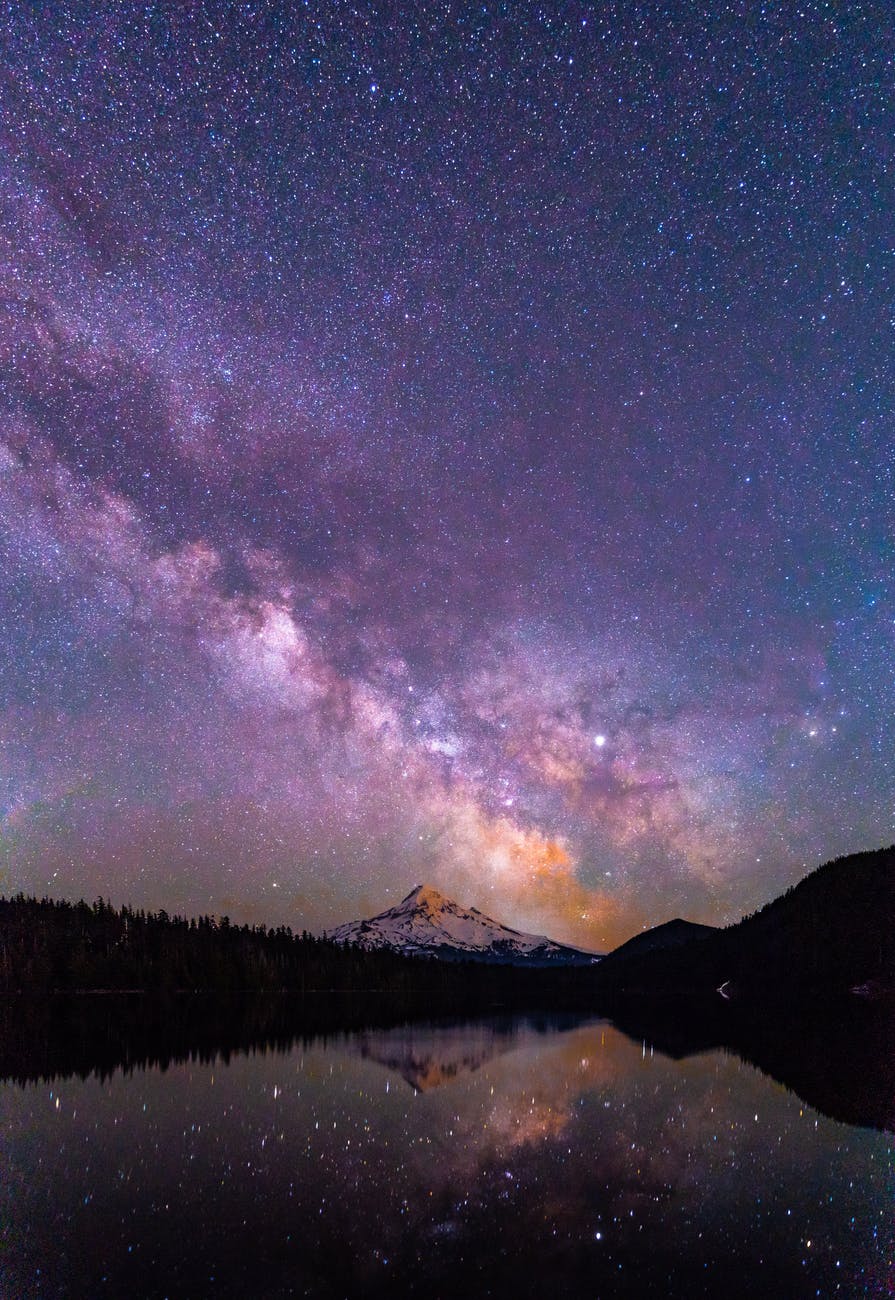
Photo by Mohan Reddy Atalu on Pexels.com

We have always come across the word “Fantasy”, which is different for every person in this universe. For a poet, it is a place where they can get lost and live in those unending stories which don’t have any obstacles. Whereas for some philosophers, fantasy would be something which makes them realize as a beautiful place to live, and for saints, it would be a place where they can encounter God and live a peaceful life.

Sometimes, Fantasy is when a dreamer dreams about their dreams. However, this is a controversial topic as for some fantasy is just a mere illusion of Thoughts.

Although, Fantasy is where unexplored ideas pop up and due to fantasy many great personalities have contributed their best parts to the world of notions.

However, the feeling of Fantasy gives us satisfaction to tackle the real world and provides us a sense of delight in accomplishing our dreams.

“These mortal wizards are the explorers of their wonderland, where they traipse, fondle, gaze over their mystical thoughts.”

The substantiality of our existence is revealed through our reality and our delusion of unrealistic thoughts. Those fictitious stories sprinting through our nerves and then vigorously to our hearts make us feel like the fairies of the fantasy land.

          We mortal beings are so devoid within ourselves but are fulfilled with the phantasm which exists within our heads forever. It is like the unrealistic elements of those magical fables which make us feel accomplished and satisfy our existence. 

             Our existence relates to those oblivious thoughts which are every time inside us, inside our minds. Maybe this virtual world is filled with infinite fictional stories which are yet to be discovered. These never-ending illusioned stories flickering might be part of those parallel universes which is still a mystery.

                    It is the conundrum of my abundant conviction. We are the wizards of our concocted minds, which are still drifting around these mystifying islands. The mortals have a different notion.

                The shattered humans are astray from their delusion and ponder about their fictional characters drifting in those summer haze forests, valleys which are still a blur of memories in this mortal world.

   They are emancipated with those clasped thoughts between the virtual land and the magic land. Perhaps, these fantasies are the mirage of our parallel universe, maybe it’s just the artistry of thoughts popping up out of the crafted minds.

     In those fantasies lies the stripped and naked pain or grief of those humans who are escaping from the harsh reality. The mortal beings are fragmented into deep emotions, sparkling in those never-ending illusions.

                    These artists dilute themselves in those fantasizing moments to get lost, lost from the truth. These tales are smoldering with the reality of their aura, possibly their identity lies somewhere deep under the ocean of those unreal dragons, or the mermaids which is still make oneself a bliss whenever he/she is living on those islands.

               Being frail or fragile is the reason for he/her to be the daredevil in their cloud of thoughts. It’s very outlandish but it is the reality of oneself hiding through their existence.

“Perhaps it’s an eerie or a bewilderment of one’s self.”

ISSUE OF STATUS IN INDIAN SOCIETY

Everyone in this world tries hard to earn a living. According to his income he lives, arranges best facilities for himself and the family. 
From the day a person is born he is born normal.  Until and unless parents don't feed with a silver spoon since childhood. When he dies, he dies with an image that he had made on his own. Some become rich, and some can just have two meals a day. It's all about how one deals with life. 
While giving the theory of state, a great political thinker Aristotle, stated that in this world neither everyone can be rich nor everyone can be poor. The imbalance in the standard of living is naturally created by the universe for the survival and functioning of the society. 
Aristotle supported slavery theory on the ground that being slave or working under someone's supervision doesn't mean he/she is inferior than you, or his/her work is inferior, or is of low standard. If he/she is providing you his service doesn't mean he is beneath you and liable to be your slave. According to him every work deserves respect. No work should be considered inferior, also not the man who is doing that work. 
Whether it's human nature or it's the culture of Indian society, or the morality of a country like India is so weak, that every single person wants to be supreme over others, wants to rule, wants to overpower. Everyone fights for power. 
In India since ancient times kings ruled over its people. India was ruled by Britishers.  Labourers were ruled by their owners and zamindars. History is full of this horrible culture. 
After Independence, under the facade of democracy, leaders ruled and are still ruling over its people. We are a democracy just in name. Reality is quite different. The ground reality is very brutal.  Money is power, and power is money. High standard of living matters. One who cannot afford a good living, good house, good clothes, good accessories, good amenities are considered as inferior by those who have the money. 
One who has money can easily purchase a person's respect. He feels entitled to order him. 
Respect should come from the people around him by his behavior, his attitude, and his actions. Not because he holds a special post in an office or a government. 
At the same time we appreciate all the journalists, actors, actresses, singers, dancers for their skills and abilities. But they should not take it to their heads and consider themselves superior over the fans. 
A person who is lacking in something is the thing he tries to show off the most. Sometimes a person has nothing but just because everyone has treated him like the most important person he considers himself superior and center of importance among others. 
In India, status of work matters a lot. If you have no good job, no money, no power you have no value in society, and your surroundings. A person who has power, can slap you, can kill you. 
In India it's too easy to rape, get jailed, give bribe and get bail. It's easy to commit a crime, it's easy to get a position at an officer level. On one hand for the poor it's hard to earn and on the other hand it's easy to give lakhs of money to be spared from the law. Law is made just for powerless, middle class, moneyless persons. Not for the rich. 
India is the country where clothes, money and a glass of whiskey matters. Nature, love and equality are ignored. It is a country where democracy exists in an undemocratic way, Equality exists in a non-equal way. 
Only few are able to touch the height of success and remain grounded, believe in real equality, not have ego and pride, remain down to earth, consider everyone as human, and eager to help each other. 
Money, position, post, and luxury cannot define success. What matters is your behavior, your knowledge, your moral, your nature. This is how people remember you, how you behaved, how you treated people around you. This makes you immortal in the memories of people you met in your life. 

Thin line between pride and arrogance | Are people just envious of my success?

Am I really arrogant or am I just confident? How to deal with people calling me over-ambitious or arrogant when I am just working towards my dream?

Let’s first dive into difference between pride i.e., self-confidence and arrogance.

As we discuss previously, pride is having satisfaction over our abilities and our accomplishments.

Previous article: https://eduindex.org/2021/07/22/pride-prejudice-and-aggression/

Arrogance is having excessive pride over one’s or a particular group’s accomplishment to an extent wherein we believe that our abilities are nothing compared to others and the success would have come sooner if I had done it alone.

In psychological context, there are two kinds of pride. 

  • Authentic pride- Positive feeling about ourselves, loved one’s success, our actions after successfully coming out from comfort.
  • Hubristic pride- It usually involves ego coupled with arrogance. Has an exaggerated self-concept.

PRIDE

  1. Any act that boosts our self-esteem, building trust about what we are capable of, and recognizes it, accepts our flaws. It pushes you to perfect your talent and bring forth a blooming personality.
  2. You accept the potential of those working with you and try to form a group that will put in collective work to achieve your collective goal.
  3. Values other’s input and doesn’t hesitate to ask for guidance.
  4. Accepts constructive criticisms, filters their work to make it more productive.
  5. Never slacks off.
  6. Is aware of strengths, weaknesses, and areas which can be improved.
  7. Keeps striving better (Knows that knowledge is boundless).

ARROGANCE

  1. Believes that I have everything I need and that my gifts are beyond immeasurable.
  2. Believes that I have no flaws and cannot make a mistake or create complications from my actions.
  3. Every bad outcome is due to the people affiliated with my work.
  4. Looks for external validations.
  5. Thinks that there is no need to practice or attend meetings because I can win no matter in the end.
  6. Is okay to not follow moral rules (Legal ways) to achieve my needs.
  7. Other’s input is worthless (but will take others’ great ideas making it own saying you got this idea from me) and find them distracting.
  8. Works alone even though being a part of a group activity.

SELF-REFLECTION

If you need to know, whether you really are being arrogant due to impatience or intentionally or people are envious of your success, potential; self-reflecting on your actions, thoughts, and intention will help you resolve your doubts and get back on track with change in yourself or environment.

Self-reflection: Ability to witness and evaluate our own cognitive, emotional, and behavioral processes. To give an objective thought about your behaviors, thoughts, attitudes, and desires.

You work hard, burn the midnight oil, respect everyone and their opinions, and achieve success. But in the end, you get judged as an overachiever, arrogant and rude. Those judgements try to bring your down, make you doubt yourself.

 Well, let me just highlight that it is okay. These doubts usually arise because you care about how you respect not only yours but others’ effort that goes into bringing about results which is beneficial for everyone.

Look at few differences I have mentioned above and reflect.

Are you dismissive of your colleagues’ efforts? Do you assure them to implement their ideas but you end up doing completely different without informing them? Do you go late to meetings and displace your external anger on their capabilities?

Few more points to take note of:

  1. Not being honest about their work, where you want improvements, and blaming entire failure on their recklessness. (This is concerning leadership).
  2. Thinking you are superior and forcing rules obnoxiously while you try to put them down.
  3. Seeking constant validation.
  4. Yes, you have achieved great things, burnt that midnight oil but boasting about it is not going to change the outcome of your efforts. You have to keep learning and communicate and inculcate views of your colleagues to bring the best out of them and to bring about a team with the same goals and motivation.

Negative critics/members with less motivation, insecurity and less self-esteem may see you with the lens blurred with their issues.

Reach out, write a diary, and find out ways to bring out the best in you. People will usually have prejudices regarding your ethnicity, your way of leading, the cause of your goals, gender, religion, race, color, and everything that has nothing to do with you or your work but everything about themselves.

Do not give up because just like supporters exist, people against you will try to affect you. Believe in yourself, your teammates, reflect occasionally, and keep moving forward with your head held high.

BOOK REVIEW: “WINGS OF FIRE”

“WINGS OF FIRE” is the autobiography of APJ Abdul Kalam, a great scientist in Indian science history and a great person. He is very well known across India and is a recipient of India’s three highest civilian awards – Padma Bhushan, Padma Vibhushan and Bharat Ratna. This book cover the entire life of APJ Abdul kalam before he became president of India and in 2013 another autobiography titled ”My journey: Transformation Dreams into Actions” was released.

BOOK REVIEV:

Wings of Fire is an autobiography of Kalam of his early life, his professional life and also the journey how he become a scientist in ISRO. It is the story of a boy from a humble background who went on to become a key player in Indian space research/Indian missile programs and later became the president of India. The book has been very popular in India and has been translated into multiple languages. I recently picked up a copy and read it in a couple of days. It was very engaging initially, but tended to drag a bit towards the end with lot of technical details and procedural information of his space research and missile projects.

I loved the initial chapters of Wings of Fire since it gives a vivid picture of our country during 1930 – 1950s. Kalam was born in Rameswaram, a southern religious town in Tamilnadu. The initial chapters provides an interesting glimpse of religious harmony which existed before India’s partition. Kalam in younger years wanted to be an officer in air force, however he couldn’t clear the interview. He met Swami Sivananda after this failure and I found his words to Kalam interesting and in a way prophetic.

Kalam describe how he started his academic life and started his career in ADE and engaged to design hovercraft. Later he moved to Indian Space Research which was the brain child of Vikram Sarabani. The book covers a lot of “behind the scene” information and technical details about India’s satellite and missile program (SLV-3, Prithvi, Agni, Thrisul, Akash and Nag). This might interest technically inclined readers but is sure to put off readers who bought the book to get to know Kalam or to know his principles/ideas. The book does give a glimpse of the participatory management technique adopted by Kalam, but at the same time it doesn’t go into details. Wings of fire covers Kalam’s personal life only briefly which is strange for an autobiography. For example, we don’t know why he decided to remain single or his activities outside space research (even though we can conclude in the end that he was married to science and technology).

One of the things that stands out throughout the book is kalam’s positive thinking. Yet in the book he rarely mentions anything about lethargy/corruption of bureaucracy or politicians. The secret to his success seems to be his ability to ignore negative things around him. The book also gives a clue to his popularity in India. Kalam is a simple, secular, inspiring humanitarian.

Google Classroom – The Future Of Teaching

As more schools have transitioned to online learning, the platforms or apps that offer online learning have come up to be extremely useful. One such is Google Classroom.
It was initially released publicly on August 12, 2014, but its usage increased recently during the pandemic period. Reportedly, its usage increased sharply, in 2020, when many schools shifted to remote education during the COVID-19 pandemic. Since then It has got a far wider use.

What is Google Classroom?

According to Wikipedia, Google Classroom is a free web service developed by Google for schools that aims to simplify creating, distributing, and grading assignments. The primary purpose of Google Classroom is to streamline the process of sharing files between teachers and students.

Uses Of Google Classroom

It has got a variety of usage which varies depending on the category of the user and can be categorized as follows :-

A Teacher Can

  • Start a video meeting.
  • Create and manage classes
  • Create assignments and assign grades on them
  • Add materials to the assignments, such as YouTube videos, a Google Forms survey, and other items from Google Drive.
  • Use the class stream to post announcements
  • Send Invitation to parents and guardians to sign up for email summaries.

A Student Can

  • Keep a track of classwork
  • Submit assignments.
  • Check feedback and grades
  • Share resources inside the class stream.

A Parent/Guardian Can

  • Receive an email summary of the child’s work.
  • Review announcements and activities.

Why Google Classroom?

It offers a free service to schools or anyone with a personal Google Account, making it easy for learners and instructors to connect both inside and outside of schools. 

It allows teachers to set assignments and have work submitted by students, mark them, and can even return grades on them and that too digitally. Thus reducing the usage of papers in classes. It saves time and makes it easy to communicate and stay organized.

What does Google Classroom cost?

Google Classroom is free to use. It also has a paid version for those who want some extra features. But as such there’s not much difference and one can get all the necessary things done via the basic unpaid version itself.

Key Features :

Make Assignments :

It allows the teachers to create assignments for the students. The assignment can be further supplemented with any necessary documents. Students are notified about the assignments via e-mail alert. When finished, The students can “turn in” the assignments that the teacher can then grade.

Make Announcements :

The teachers can make announcements that go out to the entire class. Any announcements made, appear on the home screen of the respective class in Google Classroom and are visible to all the students who are added to the classroom. Also, an email message is sent out so that everyone is notified.

Store classroom materials:

The materials that are added to the assignments get stored in the google drive of the respective user.

Allow students to interact:

 Students can comment on assignments and announcements and e-mail each other through the Classroom interface.

Google Classroom – Where teaching and learning come together

BENEFITS OF CARDIO WORKOUT

Cycling. Running. Dancing. Hiking. Kickboxing. When it comes to cardiovascular exercises, the options are endless to improve your overall quality of life.

When part of an overall heart-healthy lifestyle, not only can regular cardio exercise lead to creases in your resting blood pressure and heart rate, but these basic changes can also mean your heart doesn’t have to work unnecessarily hard all of the time, says clinical exercise physiologist Erik Van Iterson, PhD, MS.

But how often should you do cardio to reap the health benefits? The American Heart Association recommends achieving at least 150 minutes of moderate-intensity heart-pumping exercise or 75 minutes of vigorous-intensity exercise spread out over most days of the week.

“Try getting in a 30-minute workout five or more days a week that raises your heart rate for the duration of the activity,” says Dr. Van Iterson. “Or try three, 10-minute workouts, five or more days a week.”

The benefits of cardio go beyond just your heart. Dr. Van Iterson explains how it affects your entire body:

1.BRAIN AND JOINTS:
Cardio exercise can benefit brain and joint health. One study reported that physical activity may reduce dementia risk, no matter what age you are. Other benefits include:

Increases blood flow and decreases chances of stroke.
Improves memory and thinking ability.
Combats decline in brain functioning with age.
Helps protect against developing Alzheimer’s disease.
Fights osteoporosis and reduces chances for a hip fracture.
Helps manage arthritis discomfort and maintains joint range of motion.

2.SKIN,MUSCLES AND WEIGHT:
No matter how you choose to move, being active helps increase circulation, which leads to clearer, healthier skin. Other health benefits can go much deeper than just your skin, too.

When you work your muscles, it increases oxygen supply, therefore allowing muscles to work harder. Over time, regular cardio exercise allows your muscles to adapt to an increased workload, making regular activities seem easier.

When paired with a heart-healthy nutrition plan, safe weight loss comes with doing regular cardio exercise. Not only are you less likely to develop diseases like diabetes, certain cancers and heart disease, but your body can more easily circulate blood. Less sitting time and more physical activity also helps you maintain a healthy weight by burning more calories throughout the day.

3.PANCREAS,LUNGS AND BLOOD:
Your pancreas is the organ that helps convert the food you eat for energy while also helping aid in digestion. Staying active helps improves blood sugar control, decreases stress on this vital organ and reduces your chance of developing type 2 diabetes. It also helps improves good cholesterol levels while lowering blood fats.

“Your lungs are also positively affected by physical activity,” says Dr. Van Iterson. “Cardio helps decrease how frequently you have to breathe as exercise ability improves and can lead to reductions in fatigue and shortness of breath in chronic lung problems.

4.MOOD:
Our moods fluctuate on a daily basis but staying active helps boost your mood, especially after a stressful day. So next time you’re feeling stressed or you’re having an off day, get to moving your body.

“Not only that, but it combats depression, improves your self-esteem and releases tension-fighting hormones like serotonin, dopamine and norepinephrine,” says Dr. Van Iterson.

5.SLEEP AND ENERGY:
There’s a reason why you feel amazing after a workout. Physical exercise helps your energy by releasing endorphins, giving you more, lasting energy throughout your day. When it comes to hitting the sheets, struggling to fall asleep is the last thing you want after that long, busy day. The good news is that cardio helps you doze off faster and promotes REM sleep.

“Make sure to avoid rigorous exercise too close to bed or you’ll be too energized to count sheep,” warns Dr. Van Iterson.

Grab your workout clothes and throw on your sneakers, you’ll not only boost your immune system — helping you steer clear of the cold or flu — but by improving your cardiorespiratory fitness, you can also increase your chance of living longer.

Fashion!

Man is a social animal and always wants to show himself in the society in a very presentable way. He likes variety, change and novelty. Old, stale, stereotyped and typecast things are not liked by him. He wants things to suit his changing moods, likes and dislikes and therefore, takes recourse to fashions. His hunger for being new, novel, refreshing, different, sensational and attractive makes him a fashionable being. To be fashionable is an integral part of his complex psychology. He feels bored, tired, fed up and in a rut by using the same clothes, styles, designs, food, colours, lines and textures after a certain period of time. What has been in fashion for sometime appears dull and tiresome and then he wants a change, something different, new and uncommon. This search for something thrilling, new, offbeat and unconventional gives rise to fashions.

Fashions are never static. They are always changing. What is in fashion today will become obsolete and out of date the next day. And people never like to be out of fashion. They want to be in the mainstream and flow along the current of the fashion. Fashions work as a very powerful force in the society and also reflect change, progress, prosperity and advancement. They influence human behaviour, etiquettes, moods and ideology in a way as no other thing can do. They are of much social and psychological significance and which is why to be out of fashion is to be out of the stream.

People living in cities and towns are more fashion conscious than their counterparts in villages and rural areas. In city life thousands and thousands of men and women belong to different classes and cultures live and mix up with one another and they have a lot of opportunities to imitate one another’s fashion or can improve upon the existing fashions. Newspapers, magazines, fashion shows, movies, television viewing, social gathering etc are a great source of changes in style and designs. Young men and women imitate the style of their film or sports heroes or heroines in everything – in clothes, hair clothes, hair styles, shoes, ornaments, foods and drinks and also in manners.

In big cities and towns there are fashion designers in droves. They are ever engaged in creating new fashion, styles and designs to increase the sale of their goods. The beautiful men and women are used as models to display their latest designs and styles. Fashion shows and parades are held in five star hotels, exhibition grounds and halls. It is big and well organised business and big cities like Bombay, Bangalore, Delhi etc are big fashion centres in India. The expert fashion designers can well in advance recognise the incoming and outgoing trends in fashion and taking advantage of it , create new styles and fashions. They produce consumer items in latest fashion and styles which may be described as avant-garde.

Fashions also change according to seasons and environment. They have to be in harmony with the moods, needs and lifestyles of the people. Changes in fashion are evolutionary than revolutionary. Sometimes changes in fashion look sudden and abrupt but actually it is not the case. Thry are gradual and in stages. Fashion practitioners know full well this evolutionary nature of it and take full advantage and make a fast buck.

Fashions are part and parcel of our life. They are essential and appreciable but it never means aping the west or slavish and blind imitation of others. It simply means to satisfy our urges of change, novelty and the latest. The tyranny of fashions should never be allowed to prevail.

Grief and Bereavement.

Life isn’t as easy and smooth as we assume and expect it to be. With life comes hardships and sufferings. For some, it’s the loss of a loved one, and for others, it’s a financial crisis or maybe some sort of physical, emotional or mental abuse. Grief is linked to anything that overstresses your mind that causes extreme pain leading to heart break.

Grief is something that everyone will experience at some point in life. In simple words, grief can be defined as a reaction that an individual revert in response to any type of loss while bereavement is a type of grief that is linked to the death of the loved one.

A person under grief usually undergo five stages of it that is subject to one’ environment. However, we can culminate it in below five stages and these are:

1.Denial: It is the first stage of grief where an individual is reluctant to accept the reality that the loved one is gone to never return. It’s the most difficult phase where it’s hard to feel anything and that empty feeling is hard to explain.

2.Anger: Denial is followed by anger where you’re partly aware of what has happened and the bereaved will never come in person, and the discomfort this thought provokes, leads to resentment.

3.Negotiation: Now, here comes that negotiation part where individual attempts to postpone sadness by visualizing a “what if” scenario. Like what if it wouldn’t have turned out this way and life wouldn’t have lead despair and anguish.

4.Depression: After bargaining our feelings, our attention moves to the present reality that gives rise to the empty feeling. The stage where it is difficult to carry out day to day activities. Losing someone is very depressing and it is a normal and appropriate response in the given situation. Grief is no doubt a process of healing, so is the depression a necessary step along the way.

5.Acceptance: After going through the above stages, now comes the time to accept your reality that the loved one is gone and it is impossible to meet him/her in person. It’s the time to accept that ‘It is what is it” and that’s how I’ve to live my burying it in heart and move forward in life with a smile on your face.

Grief is indeed necessary because this is how life works. The pain of grief can often cause you to retreat into your shell and withdraw from others. But having face-to-face support is necessary. Even if you’re not comfortable talking about your feelings under normal circumstances, it’s important to express them when you’re grieving. It’s not necessary to talk about your loss all the time, but be with someone, who’s presence is just enough to lessen your burdened soul. The key is just not to isolate yourself while healing.

Psychological Disorders Part 7

Introduction

In Psychological Disorders Part 6, Disruptive Disorders were discussed. They are rare and chronic but can be controlled with the help of medication and therapy, so if you think you have any, you should consult a psychologist. This article will discuss Depressive and Substance-Related Disorders.

Depressive Disorders

Depression is a mood disorder that involves a persistent feeling of sadness and a loss of interest. It is also called a major depressive disorder or clinical depression. This can cause trouble in doing daily activities. It is also important to remember that you cannot just snap out of it and it takes time but medication and therapy can help with it. Symptoms for depression are:

  • Feeling of sadness, hopelessness, or emptiness
  • Frustration and angry outbursts
  • Loss of interest in normal activities
  • Sleep disturbance like insomnia or hyposomnia
  • Reduced appetite or increased appetite
  • Lack of energy
  • Slowed thinking
  • Anxiety or restlessness
  • Unexplained physical problems like headache and backache
  • Trouble concentrating and remembering things
  • Suicidal thoughts
  • Feeling worthless

Although there are different types of depressive disorders based on the duration and timing:

Disruptive mood dysregulation disorder is a childhood condition in which the child has extreme anger and irritability.

Major depressive disorder is when the person feels a loss of interest in activities.

Persistent depressive disorder (dysthymia) is chronic depression.

Unspecified depressive disorder is when the case cannot be categorized into one particular category.

Premenstrual dysphoric disorder is a type of premenstrual syndrome (PMS) wherein the person feels depression, anxiety, and irritability before a week or two of the menstruation date.

Substance depressive disorder is when the person experiences the symptoms of depression while using alcohol or any other such substance.

Depressive disorder due to medical condition is when the person is going through depression because of another medical condition.

The cause for this is firstly, biological, people with depression have physical changes in their brains, secondly, brain chemistry, difference in the functioning of neurotransmitters, thirdly, hormones, change in the level of hormones can also cause depression like after delivery which is known as postpartum, and lastly, inherited traits, you are more likely to have depression if someone in your family has or had it.

Substance-Related Disorders

These are the disorders that involve the use of alcohol and drugs. Examples of this disorder are:

Alcohol-related disorders involve consuming alcohol wherein the person has a problem controlling the alcohol consumption. Symptoms include being unable to limit alcohol consumption, wanting to cut down the consumption but being unable to, spending a lot of time drinking or recovering from the use of it, craving alcohol, failing to fulfill major obligations because of the consumption, continuing to drink knowing the problem it is causing, giving up on work and hobbies, developing a tolerance for alcohol resulting into consuming more, experiencing withdrawal symptoms like nausea and using alcohol in unsafe situations like driving.

Drug-related disorders involve the inability to control the use of legal or illegal drugs or medication which affect the person’s brain and behaviour. Symptoms are the same as alcohol-related disorders, the only difference is of the substance being used.

It is important to note that substance-related disorders negatively affect the health and immunity of the person.

Conclusion

Depressive and Substance-related disorders are very common and serious. The way to deal with both of them is to approach psychologists and doctors. It is important to note that these two disorders can often be related, meaning that a person starts abusing alcohol because of depression and a person suffering from depression because of alcohol-related disorder. Depression is a very serious disorder, please consult a psychologist immediately if you think you are suffering from it.

References

Note: this is just Part 7 of the Psychological Disorders series.

Nationalization of Banks

Despite the provisions, control and regulations of the Reserve Bank of India (RBI) , banks in India except the State Bank of India (SBI), remain owned and operated by private persons. By the 1960s, the banking industry had become an important tool to facilitate the development of the Indian economy. At the same time, it had emerged as a large employer, and a debate had ensued about the nationalization of the banking industry. The then Prime Minister of India, Indira Gandhi, expressed the intention of the Government of India in the annual conference of the All India Congress Meeting in a paper entitled Stray thoughts on Bank Nationalization.

The decision came at the end of a troubled decade. India was buffeted by economic as well as political shocks. There were two wars—with China in 1962 and Pakistan in 1965—that put immense pressure on public finances. Two successive years of drought had not only led to food shortages, but also compromised national security because of the dependence on American food shipments to keep hunger at bay. Fiscal retrenchment through a three-year plan holiday had hurt aggregate demand as public investment was cut.

Thereafter, the Government of India issued the Banking Companies (Acquisition and Transfer of Undertakings) Ordinance, 1969 and nationalized the 14 largest commercial banks with effect from the midnight of 19 July 1969. These 14 banks included: Allahabad Bank (now Indian Bank), Bank of Baroda, Bank of India, Bank of Maharashtra, Central Bank of India, Canara Bank, Dena Bank (now Bank of Baroda), Indian Bank, Indian Overseas Bank, Punjab National Bank, Syndicate Bank (now Canara Bank), UCO Bank, Union Bank of India United Bank of India (now Punjab National Bank). These banks contained 85 percent of bank deposits in the country. Within two weeks of the issue of the ordinance, the Parliament passed the Banking Companies (Acquisition and Transfer of Undertaking) Bill, and it received presidential approval on 9 August 1969.

As a result of this nationalization, it led to an impressive growth of financial intermediation. The share of bank deposits to GDP rose from 13% (1969) to 38% (1991), the gross saving rate rose from 12.8% (1969) to 21.7% (1991). Gross Domestic Savings almost doubled as a percentage of national income in the 1970s. The reach of the banking system also increased and banks were no longer confined to the metropolitans and reached remote areas of the country, thus promoting rapid growth in agriculture, small scale industries and development of these remote and backward areas. The nationalization furthered India’s growth process, particularly during the Green revolution.

There were also some harmful effects of the nationalization. The primary purpose for which the nationalization was done i.e. extending bank facilities to rural areas was also unfulfilled and many areas of the country including Uttar Pradesh, Chhattisgarh and the North Eastern part remain unbanked. It failed to eradicate poverty and scaling down of wealth inequalities. Financial inclusion was only increased post the implementation of the Jan Dhan Yojana. Moreover, multiple public sector banks also suffered due to political interference. Banking was no longer done on professional and ethical grounds. It resulted in lower efficiency and poor profitability. The performance of these banks on the basis of branch expansion and number of deposits never surpassed the numbers shown by private banks.

Bank nationalization was the beginning of a broader political economy strategy in the 1970s- a decade where economic growth barely outpaced population growth. This nationalization did succeed in certain areas such as financial deepening cause of the rapid spread of branches but eventually, it did more harm than good. As of 2021, there are a total of 12 nationalized banks in India.

WORLD MALARIA DAY

World Malaria Day(WMD) is an international observance commemorated every year on 25 April and recognizes global efforts to control malaria. Globally, 3.3 billion people in 106 countries are at a risk of malaria. In 2012, malaria caused an estimated 627,000 deaths, mostly among African children, Asia, Latin America, and to lesser extent the Middle East and parts of Europe are also affected. World Malaria Day sprang out of the efforts taking place across the African continent to commemorate Africa Malaria Day. World Malaria Day is one of the 11 official global public health campaigns currently marked by the World Health Organization(WHO).

According to the most recent World Malaria Report, the global tally of malaria reached 429,000 malaria deaths and 212 million new cases in 2015. The rate of new malaria cases fell by 21 percent globally between 2010 and 2015, and malaria death rates fell by 29 percent in the same period. World Malaria Day was established in May,2007 by the 60th session of the World Health Assembly, WHO’s decision-making body. The day was established to provide “education and understanding malaria”, and spread information on “year-long intensified implementation of national malaria-control strategies, including community-based activities for malaria prevention and treatment in endemic areas”. Prior to the establishment of World Malaria Day, Africa Malaria Day was held on April 25. Africa Malaria Day began in 2001, one year after the historic Abuja Declaration was signed by 44 malaria-endemic countries.

WHAT IS MALARIA?

Malaria is a disease caused by a parasite. The parasite is spread to humans through the bites of infected mosquitoes. People who have malaria usually feel very sick with a high fever and shaking chills. While the disease is uncommon in temperate climates, malaria is still common in tropical and subtropical countries. To reduce malaria infections, World Health programs distribute preventive drugs and insecticide-treated bed nets to protect people from mosquito bites.

CAUSES:-

Malaria is caused by a single-celled parasite of the genus plasmodium. The parasite is transmitted to humans most commonly through mosquito bites. Mosquito transmission cycle:-

  1. Uninfected mosquito- a mosquito becomes infected by feeding on a person who has malaria.
  2. Transmission of parasite- if this mosquito bites in the future, it can transmit the malaria parasites to the person.
  3. In the liver- once the parasite enters the body, they travel to the liver where some types of them can lie dormant for as long as a year.
  4. Into the bloodstream- when the parasites mature, they leave the liver and infect the red blood cells. This is when people typically develop malaria symptoms.
  5. Onto the next person- if an uninfected mosquito bites someone at this point of time, it will become infected and pass on to the next person it bites.

COMPLICATIONS:-

Malaria can be fatal especially when caused by the plasmodium species common in Africa. Malaria deaths are usually related to one or more serious complications including:-

  • cerebral malaria– if parasite-filled blood cells block small blood vessels to brain, swelling of brain or brain damage may occur.
  • breathing problems– accumulated fluid in lungs (pulmonary edema) can make it difficult to breathe.
  • organ failure– malaria can damage the kidneys or liver or cause the spleen to rupture.
  • Anemia- malaria may result in not having enough red blood cells for an adequate supply of oxygen to body’s tissues.
  • low blood sugar.

HOW DO YOU PRESENT YOURSELF…

Presentation is very important and crucial part in everyone’s life, because at some point everyone should go through this presentation. Basically, we do think that presenting ourselves is an easy thing, Yes indeed it is , but if you follow some tips then you can present yourself in an extraordinary way and style. Here in this article we’ll be sharing some important tips to be noted and remembered for a wonderful presentation. Let’s look at them one by one.

5P’s of Presentation: The five p’s of presentation are planning, preparation, consistency, practice and performance.

TIPS FOR A GOOD AND HEALTHY PRESENTATION:

1.The first thing to be kept in your mind is you should prepare for the presentation, if it is informed to you beforehand.

2.It’s better to practice or make a trail performance before you give your original presentation.

3.Do not byheart everything that you wanted to convey in your presentation, but just remember the main points that you want to highlight or speak about, and so you can proceed your talk based on the main points.

4.Try to learn the correct pronunciation of the words that you find hard , vocabulary is important for an effective talk.

5.If you are presenting through some PPT presentation or something like that, you need to speak out the points relating to the slides.

6.Be confident in talking, if you get nervous before the gathering, it won’t look good, so try to practice before a mirror or before your close friends if you have the stage fear.

DO’S DURING PRESENTATION:

1.Firstly introduce yourself .You should talk confidently whatever you feel like talking, instead of uttering the words in a confused way.

2.You need to maintain proper pitch in your speech,  it leads to effective presentation.

3.Next, your body language. It includes, your hand gestures, facial expressions, body posture, eye contact, touch and use of space. If all the above were maintained in an orderly manner it gives the interest to the audience.

4.Your flow should be balanced, because you should neither speak like an express train nor be like a tortoise, so balance should be maintained.

5.Connect with the audience, keep your eye contact and keep a smile on your face, use your voice effectively.

6.Keep your speech simple, and tell some stories in between to create interest among the audience.

7.Keep yourself relaxed, breathe and convey with full confidence.

DO NOT’S DURING PRESENTATION:

1.You should never doubt in your talk, feel free and speak what’s in your mind.

2.Do not cover yourself like folding your hands or keeping hands tight etc., it delivers that you’re not confident enough and it shows your nervous feel.

3.Do not look at the script and keep on reading if you have a script with you, because you should keep eye contact with the gathering.

4.If you are showing some slides, do not reading the whole sentences from the slides as it is.

5. Do not try to make it fast and cut short your works, like if it’s and hour presentation do not end it within 30 minutes.

6.Don’t end your talk by simply summarizing what you have talked about.

7. If place is given, try to move and talk, instead of standing at the same place like an idol.

8.While using your gestures, do not move them very frequently but move accordingly.


*ALWAYS TRY TO GIVE YOUR BEST IN YOUR PRESENTATION AND SO NO NEED TO CONSIDER THE REST OF THE THINGS…

*KEEP A SMILE ON YOUR FACE,BREATHE AND CONVEY HEARTHFULLY…

Art and Architecture of Tamilnadu

The Sangam Tamils had their own system of music,dance and drama(Pann,Aadal and Koothu).The Panar and Viraliyar were proffesional musicians and dancers.String instruments (Yaazh) wind instruments (kuzhal) and drums(Muzhauu) were used in such performances.Festivals and worship were also associated with dance and music(Kuravai,Veriyaattu).The pallava inscription at kudumianmalai refers to a great musician Rudracharya.

The Devaram and Divya Prabandam were set to Ragas.The puranic themes were enacted in the form of Koothu or gaathas.The Devadasis or temple servants were excellent dancers.

In the field of architecture the Sangam age did not produce enduring structures with the advent of the Pallavas a new style in art and architecture appeared in Tamilnadu.At first Mandapams were excavated out of rocks with excellent sculptural representations(Mahisasura mandapam,Varaha mandapam).Then single rocks were converted into ratha like temples(monolithic rathas at mahabalipuram).They built structural temples by filling up stone slabs(Shore temple,kailasanathar temple and vaikuntha perumal temple).These temples were noted for their Vimanas.The imperial cholas developed this style further.Elaborate campuses,protective walls,pillared halls,huge towers and multi shrines marked the chola temple architecture.The Tanjore Brihadeeswaram,Gangai Kinda cholapuram and Darasuram are outstanding specimens of chola architecture.All these temples have excellent sculptural representations.The Sittannavasal caves , kailasanathar temple and Brihadeeswarar temple have the best specimens of paintings.The chola bronze images of Nataraja,Siva,Vishnu and other dieties have earned global acclaim.

The Tamil had developed their own system of mathematics time calculation, astronomy and medical systems.

The Sangam literature refers to “Enn” kanakku Nazhigai ,Yamam kaatham and kol.They also refer to seasons as Elavenil,Elaiudir etc.References to native medicines like Elathi,Tirikadukam,Siru pancha Mulam etc reveal Tamil’s versatile achievements.Kaniyans were both astronomers and astrologers.The Tamil Siddhas produced excellent treaties on Siddha system of medicine and these treaties elaborate diagnosis, treatment by herbs and chemicals and also provide pharmacological details.

Is the Modi government really spying on journalists and opposition leaders through Pegasus?

300 high-profile Indians out of a list of 50,000 people worldwide have been subjected to targeted hacking and tapping of their phones using the ‘Pegasus spyware’. On the target list was Congress’ Rahul Gandhi, Political analyst Prashant Kishore, Mamata Banerjee’s nephew Abhishek Banerjee, former Election Commissioner Ashok Lavasa (that ruled that PM Modi had violated the MCC during the 2019 election commission). Also, there were 40 Journalists from various Media houses including Rohini Singh, Swati Chaturvedi (that criticize the ruling govt), Supreme Court Judge, and opposition leaders.

The French media Forbidden stories and Amnesty International shared the leaked list with ‘The Wire’ in India and 15 other news organizations across the world including The Guardian, The Washington Post, Le Monde, Suddeutsche Zeitung as part of the Pegasus project.

But what really is Pegasus? How does it operate? Who uses the software? And why has it earned the reputation of being behind the most sophisticated spyware attacks? According to The Citizen Lab, in this way, Pegasus can be used to gather a vast amount of victim information: “Passwords, contact lists, calendar events, text messages, and live voice calls from popular mobile messaging apps.” According to this report, “Pegasus could even listen to encrypted audio streams and read encrypted messages”. NSO does not openly name who buys its software. But its website does say that its products are used and bought exclusively “by government intelligence and law enforcement agencies to fight crime and terror”. 

“Pegasus is modular malware. After scanning the target’s device, it installs the necessary modules to read the user’s messages and mail, listen to calls, capture screenshots, log pressed keys, exfiltrate browser history, contacts, and so on, and so forth. Basically, it can spy on every aspect of the target’s life,” cybersecurity company Kaspersky noted. Pegasus infections can also be achieved via so-called “zero-click” attacks that do not require any interaction from the phone’s owner. It means that your phone could still be hacked even if you’re careful not to click on those malicious links. Most of these attacks exploit vulnerabilities in an operating system that the phone’s manufacturer may not yet know about and so has not been able to fix. An example of such an attack was revealed by WhatsApp in May 2019 when the spyware targeted a vulnerability in its VoIP stack. Simply by placing a WhatsApp call to a target device, Pegasus could be installed on the phone, irrespective of whether the target answered the call or not.

In November 2019, Lok Sabha MP from the DMK, Dayanidhi Maran, asked on the floor of the House if the government taps WhatsApp calls and messages and whether the government uses Pegasus for this purpose. A written response provided by then Minister of State for Home Affairs, Kishan Reddy, did not directly address queries about tapping or Pegasus. “Section 69 of the Information Technology Act, 2000 empowers the Central Government or a State Government to intercept, monitor or decrypt…any information generated…or stored in any computer resource,” the response said, adding that it was for reasons including sovereignty and security of the country. “Section 5 of the Indian Telegraph Act, 1885 empowers lawful interception of messages on the occurrence of public emergency or in the interest of public safety,” the response added.

The response also listed the 10 agencies that can intercept messages under the law and a Standard Operating Procedure (SOP). Such agencies allowed to intercept messages include the Intelligence Bureau, Enforcement Directorate, Cabinet Secretariat (RAW), and Commissioner of Police, Delhi.

The Government of India responded that they are not spying on anyone illegally and they have got nothing to do with Pegasus. The response further said that “there is no blanket permission to any agency for interception or monitoring or decryption and that permission from competent authority is required, as per the due process of law and rules, in each case”. While, on the other hand, NSO claims that only governments can buy its software, private parties cannot buy the software.

This clearly points finger towards the Government and the names of those under surveillance have a definite pattern that threatens power.

15 Books Everyone Should Read At Least Once In Their Lives

1.To Kill a Mockingbird, by Harper Lee

2. 1984, by George Orwell

3.The Lord of the Rings, by J.R.R. Tolkien

4.Pride and Prejudice, by Jane Austen

5.The Book Thief, by Markus Zusak

6.The Hobbit, by J.R.R. Tolkien

7.Fahrenheit 451, by Ray Bradbury

8.Jane Eyre, by Charlotte Bronte

9.Animal Farm, by George Orwell

10. Gone with the Wind, by Margaret Mitchell

11.The Catcher in the Rye, by J.D. Salinger

12.The Grapes of Wrath, by John Steinbeck

13.The Kite Runner, by Khaled Hosseini

14.A Tale of Two Cities, by Charles Dickens

15.Romeo and Juliet, by William Shakespeare