Let’s talk about period!

What is Menstruation or A Period?

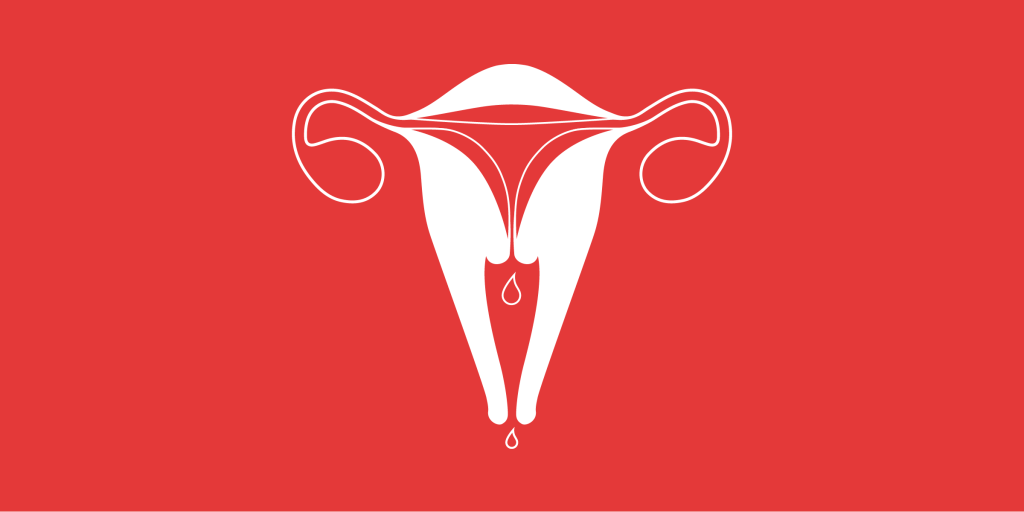
The level of estrogen and progesterone, reproductive hormones, climbs every month as the uterus prepares for pregnancy. The uterine lining becomes dense and spongy as a result of these hormones. This lining is made up of tissue and blood, much like everything else inside our bodies. It provides a variety of nutrients that help pregnancy progress. If there isn’t a pregnancy, progesterone levels drop, and the thick endometrial lining sheds and leaks out of the vaginal orifice. And Menstruation is the result.
Red Wedding . shark week . Time of the week . code red.
A slew of terms for one utterance – Menstruation. And not just human beings; Other mammals, such as Old World monkeys and apes, 3-5 kinds of bats, and the elephant shrew, have periods as well.

Only 121 million (roughly only 36% of the women) of India’s 336 million menstruating women use sanitary pads, according to the National Family Health Survey 2015-2016. Many women still refuse to use sanitary pads for a variety of reasons, including personal preference and familiarity, a lack of access to or affordability for high-quality commercial sanitary pads, and a lack of adequate knowledge regarding pads.

“More than a third of girls in South Asia miss school during their periods, as they lack access to toilets or pads, and many receive no education about menstruation before reaching puberty,”- A recent report by charity WaterAid and UNICEF revealed.

Because they cannot afford these expensive sanitary goods, many girls and women utilize a new soft cloth or some homemade product. Women may also use hay, ash sand, ash, wood shavings, newspapers, dried leaves, or plastic in extreme circumstances.

In both urban and rural India, qualitative investigations and surveys have revealed the most common reason for not using a sanitary pad is its high price. Pads from high-end commercial manufacturers can cost up to 1.5 times as much as pads from low-cost vendors. Quality sanitary pads are desirable, but the majority of girls from low-income homes cannot afford them.

TAX-FREE SANITARY PRODUCTS

“I am sure all mothers and sisters will be very happy to hear that sanitary pads are now 100 percent exempt from tax,” India’s interim finance minister, Piyush Goyal, at a news conference in New Delhi.

In 2018, India abolished its 12% tariff on all sanitary items, declaring tampons and sanitary napkins tax-free.

But is it enough?

A bundle of ten sanitary napkins, which used to cost roughly 100 rupees, will now cost around 88 rupees when the 12 percent GST is abolished. This could be a woman’s monthly outlay on menstrual products. However, given that 65.07% of India’s population lives in rural regions and relies on manual labor, with many of them subsisting on less than 120 rupees per day, the price of 88 rupees for a packet of sanitary napkins remains exorbitant.

Recently, The Period Products (Free Provision) (Scotland) Act 2021 was approved by the Scottish Government, making sanitary products free for all women and making Scotland the first country in the world to do so in the battle against “period poverty.” It is also the world’s first regulation requiring all public institutions to distribute menstrual sanitary goods, such as tampons and pads.

But why only in Scotland?
Periods are not a choice for women. They occur monthly and are a natural phenomenon. Therefore, every woman or girl who is menstruating deserves access to adequate sanitary products, regardless of her family’s income bracket.

It is high time for India and other countries to follow Scotland’s lead and make sanitary products free & accessible for their women.

Entrepreneur

The word entrepreneur has its origin in the French language. It refers to the organiser of musical or other entertainments. An entrepreneur is one who organises, manages, and assumes the risks of an enterprise. An entrepreneur visualises a business, takes bold steps to establish undertaking, coordinates the various factors of production and gives it a start.Entrepreneurs are the owners of the business Who Contribute the capital and bear the risk of uncertainties in business life. Entrepreneur is action – oriented and highly motivated. He has the ability to evaluate business opportunities, to gather the necessary resources to take advantage of them and to initiate appropriate action to ensure success. Entrepreneur is associated with innovations.He is the main factor of production. Entrepreneur takes decision regarding what to produce, how to produce, where to produce and for whom to produce. He mobilises other factors of production namely, land, labour, capital, organisation and initiates production process. He is responsible for both the profit or the loss. In India, Birla, Tata, Modi are big entrepreneurs.

Many people dream of becoming entrepreneurs someday. But it made me realize that there other factors that needs to be taken into consideration. We need to ask ourselves are we ready to take the challenge to the outside world. Not everyone have the vision, innovation and creativity to become an entrepreneur. The individual must have a positive attitude and accept the responsibility, have discipline to meet their goals, and take action when the opportunity presents itself. Many prefer a job security and rely on a weekly paycheck, while entrepreneurs will take risks and doesn ‘t have that luxury to know the amount of their income.

Starting your own business can be exciting and it can become a well- rewarded experience. Being your own business includes great benefits,
Businesses trying to survive the current economic crisis need to pursue competitive advantages and empower them. Competitive advantage results from matching core competencies to the opportunities. The entrepreneur that I interviewed uses her experience, quality, consistency and overall learned what the customers really need and demand. Jane’s skills and experience enable her to respond faster to market changes. Jane has remarkable negotiation and sales skills that make her a most competitive in the market. There are also questions that you need to ask yourself to determine if you are ready to take the next step. Are you able to think of new ideas? Can you imagine new ways of solving problems? Entrepreneurs should think creatively. If you have ideas learn how take advantage of new opportunities. Be your own boss also means that you are responsible for making difficult decisions. The business world involves uncertainty. Do you avoid the uncertainty in life at all costs? If so, owning your own business is not the best.

Nile River

The Nile River flows from south to north through eastern Africa. It begins in the rivers that flow into Lake Victoria (located in modern-day Uganda, Tanzania, and Kenya), and empties into the Mediterranean Sea more than 6,600 kilometers (4,100 miles) to the north, making it one of the longest river in the world. The Nile River was critical to the development of ancient Egypt. In addition to Egypt, the Nile runs through or along the border of 10 other African countries, namely, Burundi, Tanzania, Rwanda, the Democratic Republic of the Congo, Kenya, Uganda, Sudan, Ethiopia, and South Sudan. Its three main tributaries are the White Nile, the Blue Nile, and the Atbara.

The soil of the Nile River delta between Cairo and the Mediterranean Sea is rich in nutrients, due to the large silt deposits the Nile leaves behind as it flows into the sea. The banks of the Nile all along its vast length contain rich soil as well, thanks to annual flooding that deposits silt. From space, the contrast between the Nile’s lush green river banks and the barren desert through which it flows is obvious.

For millennia, much of Egypt’s food has been cultivated in the Nile delta region. Ancient Egyptians developed irrigation methods to increase the amount of land they could use for crops and support a thriving population. Beans, cotton, wheat, and flax were important and abundant crops that could be easily stored and traded. 

The Nile River delta was also an ideal growing location for the papyrus plant. Ancient Egyptians used the papyrus plant in many ways, such as making cloth, boxes, and rope, but by far its most important use was in making paper. Besides using the river’s natural resources for themselves and trading them with others, early Egyptians also used the river for bathing, drinking, recreation, and transportation.

Today, 95 percent of Egyptians live within a few kilometers of the Nile. Canals bring water from the Nile to irrigate farms and support cities. The Nile supports agriculture and fishing. The Nile also has served as an important transportation route for thousands of years. Today, some residents of Cairo have begun using private speed boats, water taxis, or ferries to avoid crowded streets. Dams, such as the Aswân High Dam in Egypt, have been built to help to tame the river and provide a source of hydroelectric power.

However, the silt and sediment that used to flow north, enriching the soil and building the delta, is now building up behind the dam instead. Instead of growing in size through the soil deposits, the delta is now shrinking due to erosion along the Mediterranean Sea. In addition, routine annual flooding no longer occurs along parts of the Nile. These floods were necessary to flush and clean the water of human and agricultural waste. As a result, the water is becoming more polluted.

The Nile River also continues to be an important trade route, connecting Africa with markets in Europe and beyond.

How to Create a Strong Password ?

A strong password is the main barrier keeping most of your online accounts from being hacked. Without up to date practices, you might be using passwords that cyber-frauds can easily guess within hours. Exposing yourself to identity theft and extortion is a risk you should never take. You will need to create passwords that can fight modern password theft methods.

Weaknesses in your account credentials can be a cybercriminal’s dream. But their success is your nightmare, so you’ll need to take steps to avoid being a victim of password hacking.

Biggest Mistakes Users Make

By using a weak password, you are “opening the door” for hackers and inviting them in. To top it off, there’s high likelihood that what you consider to be “strong” passwords” are really weak ones. Have you ever used any of the following as a password:

  • Your name. (Like seriously? It doesn’t take a hacker or a malware to crack this)
  • Your friends or family members’ names. Pet names as well. – Well sure, I love my dog too, but it could be easily guessed, even without a professional on the other side.
  • Keyboard patterns – “123456” is the leader in most “worst passwords” lists. Followed by the likes of “qwerty” and such.
  • Your login information. If your username is, let’s say, Ironman, your password shouldn’t be Ironman as well.
  • Common words – these are too many to list, but let’s just say passwords like “password”, or “admin” aren’t the best options. Also, avoid the names of sports, sports teams or common names for your password.
  • Avoid using short passwords – The shorter your password, the less time someone needs to crack it. Only 30% of users use passwords longer than six symbols.

How to Create a Strong Password

To protect yourself against the newest hacking methods, you’ll need powerful passwords. If you’re wondering. “how strong is my password?” here are some tips to help you create a strong password:

  • Is it long? Try for over 10-12 characters minimum but aim to make it longer if possible.
  • Is it hard to guess? You should avoid sequences (“12345” “qwerty”) because these can be brute force hacked in seconds. Also, avoid common words (“password1”) for the same reason.
  • Does it use varied character types? Lowercase, uppercase, symbols, and numbers can all have a home in your password. Variety can increase how unpredictable your password is.
  • Does it avoid apparent character substitutes? For example, you might use the number zero “0” in place of the letter “O.” Hackers code these into their software nowadays, so avoid this.
  • Does it use any uncommon word combinations? Passphrases might be more secure when using unexpected words. Even if you are using common words, you can arrange them in an odd order and make sure they are unrelated. Both methods can throw off dictionary hacking.
  • Will you remember it? Use something that makes sense to you but will be hard for computers to guess. Even random passwords can be remembered by muscle memory and being semi-readable. But passwords that lock you out of your account won’t help much.
  • Have you used it before? Reusing passwords compromises multiple accounts. Make it original every time.
  • Does it use a rule that’s hard for computers to guess? An example might be a passphrase of three 4-letter words, where you are replacing the first two letters of each word with numbers and symbols. This might look like: “?4ee#2ge?6ng” in place of “treecagesing”

For example:

TGG_bFSF!HwBo9241896 [ The Great Gatsby_ by F. Scott Fitzgerald! He was Born on 9/24/1896 ]

InTlItMbA_rn!4S-mny$ [ I need To log In to My bank Account_right now! 4 Some – mny$]

A passphrase example might be, “coW!burN#movE?pianOh” (using the words cow, burn, move, and piano.)

The ‘holy grail’ of batteries: Scientists create a ‘iron-air’ battery that rusts and stores power for days at a tenth of the price of lithium-ion batteries.

In the United States, an ‘on-air battery has been created that can hold electricity generated by wind or solar power plants for days before gently discharging it to the grid.

Form Energy intends to stack thousands of its “iron-air” batteries together in massive warehouses, as seen in this illustration.

According to Form Energy, a technological firm based in Massachusetts, it will help combat climate change by eliminating the demand for fossil fuel power plants.

The Iron-Air battery is a ‘new kind of cost-effective, multi-day energy storage device,’ capable of supplying electricity for 100 hours at a fraction of the cost of lithium-Ion, the renewable energy technology’s “holy grail.”

It’s constructed of iron, one of the most abundant elements on the planet, and it operates by inhaling oxygen, changing iron to rust, and then converting rust back to iron.

It is charging and discharging the battery as it takes in oxygen and transforms iron back and forth, a process that allows the energy to be held for longer.

According to the company, the batteries are too hefty for use in electric automobiles since they are intended to handle the difficulty of maintaining a consistent power supply.

This will address one of the renewable energy’s most vexing problems: how to store vast amounts of electricity inexpensively and provide it to power networks when the sun isn’t shining for solar panels or the wind isn’t blowing for turbines.

Solar and wind resources are the cheapest sources of energy in much of the globe, but unlike fossil fuel power plants, they do not provide a consistent supply.

The electric grid now has to figure out how to deal with this supply unpredictability while maintaining electricity dependability and cost.

According to Form Energy, their innovative battery technology is the answer to this rising problem.

According to Mateo Jaramillo, CEO and Co-Founder of Form Energy, the company performed a thorough analysis of all existing technologies and ultimately redesigned the iron-air battery.

This was done to ‘optimize it for multi-day energy storage for the electric grid,’ according to the researchers.

According to the company, the battery they are creating would enable governments to retire thermal assets such as coal and natural gas power facilities completely.

‘We’re attacking the largest obstacle to deep decarbonization with this technology: making renewable energy accessible when and where it’s required, even over several days of harsh weather or grid disruptions,’ Jaramillo explained.

It will also be less expensive, according to the company. Nickel, cobalt, lithium, and manganese minerals are used in lithium-ion battery cells, which can cost up to $80 per kilowatt-hour of storage.

Form hopes to reduce mineral prices for each cell to less than $6 per kilowatt-hour by using iron and to maintain the cost of a whole battery system to less than $20 per kilowatt-hour of energy storage by cramming them into a full battery system.

Renewables will eventually be able to replace traditional fossil-fuel power facilities at this pricing range, according to experts.

Breakthrough Energy Ventures, a climate investment fund sponsored by Bill Gates, Jeff Bezos, and others, is one of the firm’s investors. They’ve also received investment from ArcelorMittal, the world’s largest iron-ore producer.

HOW DOES AN IRON-AIR BATTERY WORK?

According to the company, the primary concept of functioning is reversible rusting.

The battery takes in oxygen from the air during discharging and transforms ferrous metal into rust.

The introduction of an electrical current during charging transforms the rust to iron, and the battery exhales oxygen.

They collect energy from renewable sources, store it for up to 150 hours, and then discharge it to the grid when renewables are unavailable.

Each battery is just around the size of a washing machine.

Each of these modules is filled with a non-flammable, water-based electrolyte similar to that found in AA batteries.

Stacks of 10 to 20 meter-scale cells, which comprise iron electrodes and air electrodes, the elements of the battery that enable electrochemical processes to store and release electricity, are contained within the liquid electrolyte.

Thousands of battery modules are joined together in modular megawatt-scale power blocks, which are housed in an environmentally protected container.

Tens to hundreds of these power blocks will be linked to the energy grid, depending on the scale of the system.

A one-megawatt system, in its most compact form, takes roughly one acre of land.

3MW/acre can be achieved with higher density designs.

South India Is Better For Women Than North India

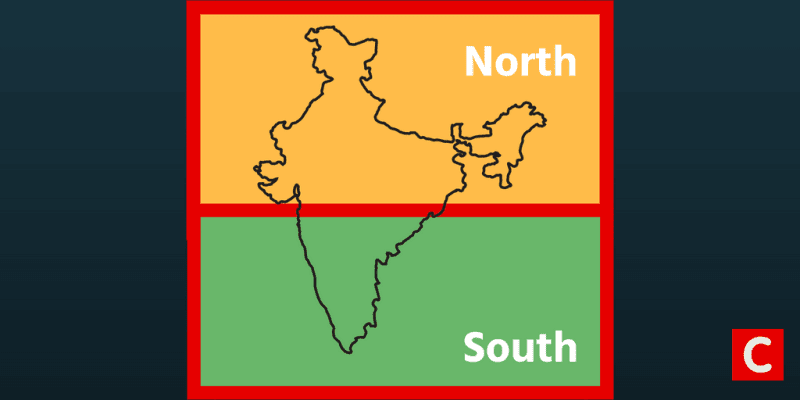
Hi everybody, If you were to ask an Indian woman, to prefer between living in North India or South India, imagine what would her answer be? Don’t worry, it’s not a trick question? Most women would prefer to live in South India. And it shouldn’t come as a surprise. In South India, women marry late, live longer, and are more educated. 

The gender gap in education is 26% for the north and while for the south it’s only 9%. Other than economic and social benefits, safety is another factor that could explain the woman’s preference. Compared to North India there could be less crime against women in the south. If you notice, I used the word ‘could’. It’s because data suggest that states like Kerala have high crime rates against women. But it’s not clear why the crime rate is higher in Kerala. 

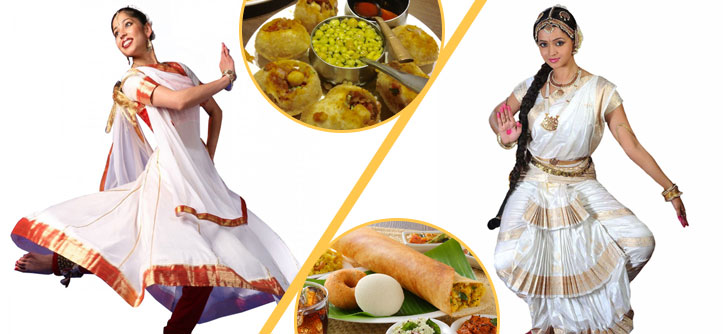
NORTH INDIA VS SOUTH INDIA

Due to which a woman and her family will feel safer to lodge a police complaint against a crime. compared to the north Indian states? We’re aware that the family of a sexual assault victim doesn’t lodge a complaint in India. Around 99% of the sexual assault cases go unreported. Like the data we studied before, due to many socioeconomic indicators, women of South India live better lives than that of North India. But what’s the reason?

 It’s very interesting to find an answer to such a question. Because this difference didn’t arise in the past 70 years. It dates back to the 19th century. According to research, due to a famine in the 19th century, the women in Punjab got affected more severely than the women in Madras. Around that time the sex ratio of South India was better compared to the north. 

So Maharastra has been included in South India and West Bengal in North India. Professor Alice Evans wrote a detailed article on this subject. In her article, she wrote that when during the 19th century a group of Marathi women traveled to Calcutta, they got surprised by what they saw. According to the group of Marathi women, a woman in Calcutta could scarcely stand in presence of her relatives. Her face was always veiled. 

She wasn’t allowed to speak to any man, muss less laugh with him. Before discussing the factors that could explain this difference, let’s first understand the factors that can’t explain it. One such factor is Poverty. Many might think South India has more female empowerment given how rich the state is. But it’s not necessarily the truth. According to the GDP, Punjab and Haryana are one of the richest states in India. But these states have the worst sex ratio too.

 Doctor Evans uses these charts to prove that it’s not necessary that a woman belonging to a rich state will find better job opportunities. The second factor that can’t explain the difference, is the marriage custom or traditions. In North India, women are generally married into other villages. When they go away from their families, the chances of them ever getting their share of inheritance of property becomes nil. 

In South India, women are most probably married into the same village. And according to research when a woman marries into the same village, she’s more likely to move freely, and earn more cash. And the logic behind this is that in an intra-village marriage, you get more freedom as you live within the security of your parents and a community with whom you’ve grown accustomed. But can this norm of intra-village marriage explain the gender difference? Alice believes that it can’t. As we can see the examples of cousin marriages in the Middle East and North Africa. 

Even though after marriage the women live among their relatives, the cases of women empowerment weren’t reported in these regions. The third reason is that of colonialism. This map shows the years Britishers governed a certain region of India. They governed some regions for more than 200 years and on the other hand, they scarcely governed some regions at all. Given this, we never saw much difference in the terms of women empowerment. 

As you can notice, Britishers governed the regions of Tamil Nadu and UP for the same time period. But there’s a huge difference in the female literacy rate of UP and Tamil in the data of the 19th and 20th centuries. Now let’s discuss the factors that can better explain the difference. And one of the factors relied largely on the British administration. Looking at a broader level we won’t sense the difference that the Britishers created in the women empowerment between North and South India. 

But we dig deeper, it becomes clearer. According to Hindu law, there are two types of property inheritance rights. One is called Mitakshara and another is called Dayabhaga. Dayabhaga originated in the Bengal region. According to Dayabhaga, women could inherit property. Mitakshara operated in Madras and Bombay presidency. According to this law, women had no inheritance rights.

 Looking at the surface level, you might think that the Bengal region should have more women empowerment given it had Dayabhaga law, which ensured property to women. But we saw in research how surprised the women of Madras were on seeing restrictions on the women of Calcutta. So what’s going on here? If Bengali women held more rights, why didn’t they have a better position? According to research, the district governed by Dayabhaga saw an increase in the practice of Sati Pratha (widow immolations) too. 

Instead of improving a women’s position in society, inheritance rights led to an average increase of between 115 and 437 widow immolations in Dayabhaga districts. This law was enacted at the time of extreme elite patriarchy. This suggests that women were subjected to torments. This positive law backfired. Many joint families argued that by implementing Dayabhaga law they would tarnish their traditions. Due to this, the districts where women were given the rights of inheritance, saw an increase in the practice of sati too.

 The second factor that can explain this difference is the tradition of Ghunghat (veil). This system originated in the Arabic region and was introduced to India during the Islamic invasions. This was a mode of ensuring status. The families that belonged to higher status wanted their women to practice Purdah (veil) to maintain their status of superiority. The cast system of India was already had several restrictions for women. If a woman from an upper-caste married a man belonging to a lower caste, the family of the woman lost its honor. And the Purdah system got added to that.

 This was common among the Rajput families belonging to North India. This practice severely affected the way the women lived their lives. In rural Haryana, if a woman failed to cover her face with a veil, she was subjected to afflictions and her character was questioned too. This affected the women’s ability to earn a living. As researches have shown that due to Purdah or Ghunghat, women become more dependent on men for financial support. 

Many of you might wonder who would be practicing an age-long tradition of the Purdah system nowadays. But that’s not true. In rural Rajasthan, 98% of women in the age group of 18-25 cover their faces with a veil. The third reason is the difference in the agricultural practices between North and South India. In India, crop cultivation has two patterns. One is the cultivation of wheat by plowing of fields as seen in North India. 

Another one is the wet and intensive cultivation of rice in South India. If we take wheat for an instance, the intensive plowing isn’t carried out by women. And cultivation of wheat isn’t labor-intensive. This lowers the demand for female labor in the field. Whereas cultivation of rice is labor-intensive. Here women are required to contribute to the workforce. Dr. Evans states in her research that, women are required to step out and contribute to the workforce for the cultivation of rice. And that’s the reason why women in South India are better empowered as compared to their North Indian compatriots.

 These three factors can explain the difference in the condition of women in North and South India. Inheritance rights, Purdah/Ghunghat system (veil system), and the agricultural practices. But we need to let go of the delusion that women living in south India are leading a perfect life. They too have to face problems of their own. 

Our government shouldn’t have an objective that they should somehow provide North Indian women the quality of life as that of South Indian women. They should have a broader objective. If you consult the rankings, India is further low in gender issues. In the UN’s Gender Inequality Index, India ranks 131st, even lower than Iraq. According to World Bank, nations not well off as India, like Bangladesh and Nepal, have better literacy rates among girls. 

Our politicians dream about making India a superpower. But it would never become a reality until Indian women are given opportunities to contribute too. Through this video, we learned the differences in the situation of women in North and South India. But North Indian women shouldn’t take the lives of South Indian women as their ideal. They should aim for something better than that. This is the way India will become a superpower.

What is Eco-tourism

Definition

Ecotourism is now described as “responsible travel to natural regions that conserves the environment, supports local people’s well-being, and includes interpretation and education” (TIES, 2015).

Both staff and visitors are expected to participate in education.

Ecotourism has been hailed as a panacea around the world: a way to fund conservation and scientific research, benefit rural communities, promote development in poor countries, improve ecological and cultural sensitivity, instill environmental awareness and social conscience in the travel industry, satisfy and educate discriminating tourists, and some claim and bring world peace

Photo by Maria Orlova on Pexels.com

Ecotourism is a type of tourism that aims to have a low environmental impact, is environmentally friendly, and avoids the negative consequences of many large-scale tourism projects in previously undeveloped areas.

History of eco-tourism

Although the origins of the term “ecotourism” are unknown, Heizer (1965) appears to be one of the first to use it, identifying four “pillars” or principles of responsible tourism: minimizing environmental impacts, respecting host cultures, maximizing local benefits, and maximizing tourist satisfaction.

In the 1970s and 1980s, ecotourism grew out of the environmental movement’s womb. Growing environmental concerns, along with a growing discontent with mass tourism, resulted in a surge in demand for alternative outdoor experiences.

At the same time, developing countries came to recognize that nature-based tourism may be a source of foreign cash while also being a less resource-intensive alternative to forestry and agriculture.

Many Definitions of Eco-Tourism

Ecotourism, according to Ceballos-Lascurain, is “travelling to relatively undisturbed or uncontaminated natural areas with the specific goal of studying, admiring, and enjoying the scenery and its wild plants and animals, as well as any existing cultural manifestation (both past and present) found in these areas.”

Ecotourism is defined as “responsible travel to natural regions that conserves the environment and improves the well-being of local people,” according to the Ecotourism Society.

“Ecotourism is nature-based tourism that combines teaching and interpretation of the natural environment and is managed to be environmentally sustainable,” according to the Ecotourism Association of Australia.

This definition emphasises that the word “natural environment” encompasses cultural elements, and that “ecologically sustainable” refers to a fair return to the local people as well as long-term resource conservation.

Ecotourism, according to Tickell, is “travel to appreciate the world’s wonderful diversity of natural life and human culture without harming either.”

Ecotourism is a type of environmentally friendly tourism that promotes environmental and cultural awareness, appreciation, and conservation.

Photo by Mateusz Sau0142aciak on Pexels.com

Types of Eco-Tourism

We defined mass tourism as a more traditional kind of tourism development in which short-term, free-market principles predominate and profit maximization is the primary goal. Tourism development was once thought to be a desirable and generally “clean” business for nations and regions to pursue.

This was especially true in terms of gains in foreign exchange profits, job creation, and infrastructure development, such as transportation networks.

We are more prone these days to demonize or portray traditional mass tourism as a beast; a creature with few redeeming features for the destination place, its people, and its natural resource base.

This isn’t to say that “mass tourism” hasn’t generated issues; it has. There has been a legitimate need to establish an alternative way to tourism growth that mitigates the harmful effects of mass tourism.

As a result, the concept of “alternative tourism” has gained popularity. This alternate strategy has been referred to as a “competing paradigm” to mass tourism, but it may also be seen as a complimentary approach. That is, there is no such thing as “alternative tourism.”

As a result, the dispute devolves into a semantic one. It may be best to recognize that alternative tourism is a natural result of a growing awareness of tourist development and its strengths and weaknesses.

Alternative tourism is a broad phrase that refers to a variety of tourist tactics (e.g., suitable, eco, soft, responsible, people to people, and green tourism), all of which claim to provide a more environmentally friendly alternative to traditional mass tourism in specific areas.

However, as Weaver correctly points out, alternative tourism is not without its detractors. It is apparent that just because alternative tourism arose in response to mass tourism’s negative repercussions does not mean it is less destructive or better than its alternatives.

Nature of Ecotourism

Between 2008 and 2017, tourism is predicted to rise at a rate of 4.3 percent per year in real terms. Ecotourism, often known as nature-based tourism, is the fastest-growing segment of the tourism business, increasing three times faster than the overall industry.

There can be little doubt that rising environmental concerns, along with the historically common habit of travel as a means of escape to nature, are encouraging people to seek solitude with nature, resulting in an increase in the number of visitors to national parks and other protected places.

Nature-based tourism encompasses a variety of aspects. Although not all forms of travel to natural places are necessarily ecotourism, this is an important step in distinguishing nature-based tourism from ecotourism and provides us with a number of levels at which to differentiate the link between certain tourism activities and nature:

Those activities or experiences that rely on the natural world.
Those activities or experiences that are made better by the presence of nature.
Those activities or experiences that happen to take place in a natural context.
Nature-based tourism is divided into numerous categories, each of which employs a combination of these dimensions.

Camping, too, is an activity/experience that is frequently enhanced by nature. Most people would rather camp in a natural area than along the side of a busy highway.

As a result, while nature is an important aspect of these experiences, it is not the driving force behind them.

GURU PURNIMA

Guru Purnima symbolizes offering gratitude towards Gurus; it is celebrated on the day of full moon of Ashada. The teacher not only guides a student but also shapes his life by instilling true knowledge and by giving him direction. As full moon holds an attraction and magnetism that uplifts mind, similarly gurus have that aura which makes the disciple to acknowledge the true sign and inner light. Widely celebrated by the Hindus, Sikhs and Buddhist communities all over the world.

Image : Rkalert

 A true guru spread the light of knowledge and wisdom to his disciples. Like the shine of silvery moon gives joy to everyone, a guru is also like that; he blesses the entire world with auspiciousness.

A guru is one who guides us through the knowledge of eternal self. A disciple should be ready to take the knowledge, keen to learn, should have faith, reverence and devotion to guru every moment.

Beside that a true guru reside all of us, the need is to look into self. So, why do we need an external guru? For example, children who want to become a researcher have to study for years under the supervision of expert educators. If we desire for knowledge, we must need an expert masters.

Image: Bee bulletin

Like a dark room can be lit only when somebody enters with a light or candle, the disciple also needs a guru to realize its true self. A guru can remove darkness with the light of wisdom; the inner lamp needs to be lit with the guidance of a Guru. There is a mirror within us but due to the hustle bustle of life, we are unable to visualize our inner guru. The mirror can be cleaned when you realize the true self and open to take the light within to remove the darkness of ignorance.

We all need a true guru who can show us the way through the journey of our life.

EPI INDEX


The Environment Performance Index (EPI) is a summary of the sustainable development status of 180 countries around the world. The index uses 32 performance measures for the following 11 issue categories:


  1. Air quality
  2. Sanitation and drinking water
  3. Heavy metals
  4. Waste management
  5. Biodiversity and habitat
  6. Ecosystem services 
  7. Fisheries
  8. Climate change
  9. Pollution emissions
  10. Agriculture 
  11. Water resources


These categories track the performance and progress towards the two main policies, environmental health and ecosystem vitality. EPI provides a scorecard after analyzing the environmental performance of the country. The EPI highlights toppers and laggards in the environmental performance, and provides viable guidance for the countries seeking a sustainable future.


EVALUATION


As a composite index, the Environmental Performance Index aggregates the data of many sustainability indicators into one particular number. The data for EPI comes from trusted third-party sources, such as international government agencies, NGOs, and academic research centers. From the data provided EPI draws an indicator scale of 0-100 (from worst to best performance). At the end, the scores of each country are weighed and aggregated into issue categories and then into EPI score. The EPI index shows which countries can best solve the environmental challenges. For the first time, the 2020 EPI rankings included waste management metric and an indicator on CO2 emissions. 


7 Mumbai-Based Women Entrepreneurs Made a 1600 Cr empire from 80Rs – Lijjat Papad Case Study

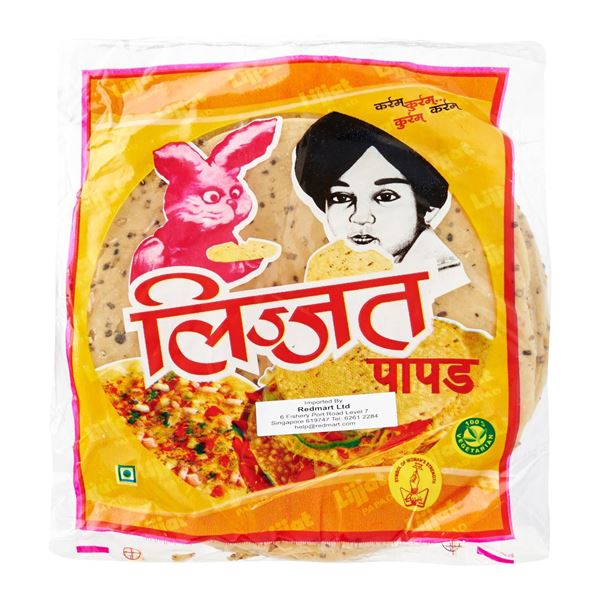
 Hi everybody, This is a story of 7 ordinary women who had no background in business, no significant educational qualification And with just 80 rupees in capital they were able to build a business empire worth 1600 crores which is spread across 69 branches and more than 42,000 employees. This home-grown brand that I’m talking about is none other than Shri Mahila Griha Udyog Lijjat Papad.

 Now, what’s more fascinating about this company is not the growth of the company but the fact that the business philosophies of this home-grown company somehow seems to have very close resemblance to extraordinary companies like Starbucks and Apple also. The question is- What is so special about this papad company and how has it lasted for more than 62 years ? And how did these 7 women manage to build a business empire out of just ₹80 in capital ? The answer to this question lies in the incredible history of the Lijjat papad. 

This is a story that dates back to the late 1950s India when India was a fairly underdeveloped country. And back then let alone education, even literacy was considered to be a luxury. And even in terms of literacy during those times woman’s literacy was not even considered important because of which only 8% of women in India could read and write while 92% of women in India were illiterates. On top of that, women were not even allowed to go out and work and the earning capacity of the families was not enough to afford a decent standard of living. That is when in 1959, Mumbai. 

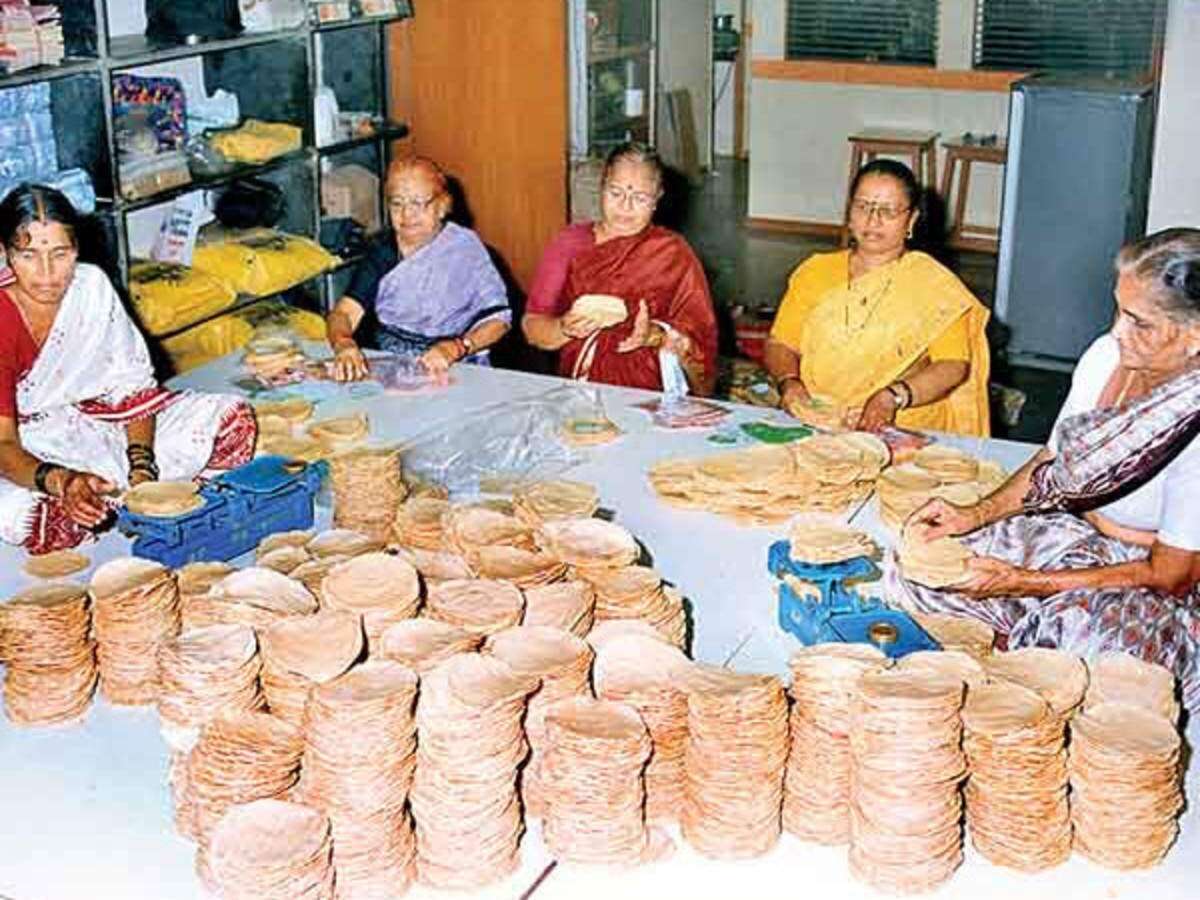
A group of 7 amazing women from very ordinary background came together to discuss a business idea which wouldn’t need them to step out of the house, wouldn’t need education and yet could produce a competitive product in the market. Ladies and gentlemen, that is how the idea of Lijjat Papad was born with just ₹80 of capital that was given to them by a social worker. They first started selling their papads at a local store and soon enough due to the superb quality and taste of the papad even other shops started buying their papads. And that’s when they started scaling up. 

Now, when they started scaling they had the opportunity to hire women at a dearth cheap cost because they were one of the rarest avenues of income for women which allowed them to work from home. But you know what ? When these women had their first board meeting they established the fact that the primary goal of their business wouldn’t be to make money but to empower women from the smallest households of the country and to provide them with the livelihood to nurture their family. And mor importantly they also established the fact that money would only be used as a fuel to scale their impact on the women of India and not be the sole purpose of their existence. 

So instead of hiring women they started to give out ownership to every woman who joined their business and called them Lijjat Sisters rather than employees. This is what you call as collective ownership, wherein every employee owns a small part of the company such that the profits and losses, both are shared by every single person in the organisation. So regardless of your age, caste, religion even if you were at the lowest hierarchy of the Lijjat Papad organisation you’d still own a part of the business.

 Now, most of us might think that this is just another business move but I gotta tell you guys that this attribute of collective ownership is one of the foundational principles that make Starbucks an extraordinary company. Because you know what ? Just like the sisters of Lijjat papad own a small part of the company regardless of their position in the organisation, every employee at starbucks is considered as a partner in the business rather than an employee. Everyone starting from the baristas who serve coffee to the customers all the way upto the senior management officers, each one of them are offered stock options of the company. 

So this way, just like the Lijjat sisters every employee in Starbucks could be a small owner of the company And this move develops a deep sense of ownership which cultivates a culture of greatness wherein every employee is motivated to go out of the way and to contribute diligently towards the growth of the organisation. But the only difference between both these companies is that while Starbucks ideated this with MBA masterminds and with a million dollar capital backing the 7 sisters of Lijjat did it way before Starbucks, in 1959 without even knowing what an MBA degree is. 

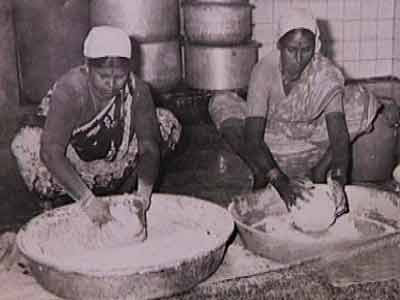
Such was the business acumen of these incredible women. The second phase of Lijjat was building a robust supply chain that would be cost effective, would ensure quality production and would fit the lifestyle of the women who work for the company. So instead of having huge office spaces they used the houses of the sisters as their small centres of papad making. And this is what their supply chain looked like The flour would first arrive from the mills to the respective central location wherein the dough is made. And after the dough is made the sisters will be brought by a bus facility provided by the company. 

Over here they would collect the doughs and then go home, make papads dry them on the veranda and then deliver the papads the next day. And lastly, after the delivery of the papads they would collect their money and the dough for the next cycle. This would be followed by surprise visits by the supervisors to check the quality of oil they use, the hygiene check of the house and most importantly the process of making papads. Now the sisters are also given aluminium papad makers to ensure that the papad is produced in a standardised manner. This happens at all the branches. If one of these branches does very well the profits are distributed among the sisters. And if not, the losses are borne by the branch members together. And after all of this comes the most challenging part of all and that is sticking to the vision and mission statement of the company. 

Now people, for most of us mission and vision statements are just stupid formalities and they have no real significance for us.  At the same time in case of colleges also even your principle wouldn’t remember the vision and mission statement of your college and if he did it would only be because he mugged it up because some committee was visiting to give your college some stupid certification or some accreditation. And this is the reason why most of us do not understand the importance of mission and vision statements. 

But here’s a thing guys Mission and vision statements form the very foundations of every single organisation. And when designed and followed the right way it can help the organisation sustain for a century. At the same time, if not done right they can even bring down a million dollar business. A classy example of the same is Apple. Now people, when Steve Jobs got fired from Apple in 1984, Apple was a million dollar company. Until he was there at the company, the company stuck to it’s value. And it was a formidable player in the industry. But after he left, they started to derail from their values. And within just 10 years they were almost about to go bankrupt. 

That’s when Steve Jobs got called back to Apple to fix things and get the company back on track. And you know what ? After he took over the company, the first question he asked to every single engineer to every single deisgner and every single manager was What does Apple stand for ? And what are the values that we believe in as a company. Because the biggest mistake that Apple made was while he was not around they started to loose their identity and started to deviate from their values because of which they started making products with no sense of purpose. 

Eventually, the brand lost it’s unique identity and customer loyalty just faded away. So Steve baba comes back asks this question and within some time the entire team is absolutely clear as to what exactly they were supposed to do. And this is what got them the ‘Think Different’ campaign that told the world what Apple truly stood for. And that is “Think Different”. And within just 2 years the same company with the same engineers and the exact same resources then went on to create history to become a legendary company that made products that changed the world forever. And again as soon as Steve baba left we all know what’s happening with Apple.

This is the importance of mission and vision statements. And here’s the most mind-blowing fact of all. In it’s 62 years of existence, not a single time Lijjat Papad has ever deviated from it’s core values. And even today After expanding to 67 branches and scaling up to 42,000 employees and after exporting their products to 15 different countries. They still abide by the core philosophy of their business, that is, Sarvodaya, which means Progress for all. 

While we live in a world where billion dollar corporates, even with the slightest change in the policies wouldn’t think twice before firing thousands of employees and putting each one of their family’s life at stake. On the other side we have got Lijjat Papad wherein with every single machinery they bring in for automation, they make sure that not a single woman is asked to leave the organisation. Because they are 100% clear that their ultimate purpose of business is not to make money but the empowerment of women so that they can give their family and children a better quality of life. 

On one side where we have got these evil companies who would put the health of their frontline workers at stake just to maximize their profits. On the other hand we have got Lijjat Papad wherein even if they have a great year, they make use of the extra profits to sponsor the education of the children of their frontline workers regardless of their age, caste, religion or even the position in the organisation. 

And they do all of this just so that the next generation of these frontline workers can be given the opportunities that they truly deserve. And last and most importantly while inspite of being at the pinnacle of the technological revolution there are people like you and me who often keep doubting our capabiities. And here we see a standing example of 7 incredible women who had no educational qualification. no background in business and no fancy investor. And yet, they were able to build a business empire that is now empowering generations of women all across the country. 

And that too during a time when women had no scope of opportunities. If this isn’t an epitome of greatness I don’t know what is…. bye bye.

Abortion

Abortion is probably the most controversial topic out there. Everyone has different views on whether abortion should be allowed or not. Personally as a women I feel that abortion should be the mothers choice, as the mother has to take care of the baby for the rest of her life. Most people argue that abortion should be banned as that will help in prevention of teen pregnancy but just for that one category why should the others suffer. If someone wants to abort their child they will do so whether they get it done professionally or not. Abortion is not always done because the mother cant take the responsibility of the child there are numerous other reasons like pregnancy due to sexual assault, pregnancy harmful to life of mother or child etc. Of course abortion for the wrong reason example in case the couple is having a girl child but they wanted a boy for these reasons abortion should be banned.

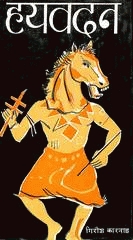
HAYAVADANA

HYBRIDITY AND COMPLETENESS

Introduction:
In this article, I’ll be exploring the themes of Hybridity and completeness. One of the most recurring themes in Hayavadana is the theme of incompleteness and Hybridity. Through this incompleteness, we learn that no matter how much one yearns or desires completeness, it is unattainable.
In this play by Girish Karnad, we see three expressions of hybridity. One is in the opening act where the narrator speaks about lord Ganesha, the embodiment of imperfection, of incompleteness, the second concerns Hayavadana and the third is the story about two men whose head were swapped due to an incident.

The play opens with Bhagavatha performing a puja to Ganesha and asking him to bless the performance. He then moves on to introduce the characters when he hears a scream off stage and notices nata, an actor who is causing the ruckus. He then proceeds to question him as to why he is screaming and nata tells the story of how he heard a voice but when he looked up, there was no one but a horse. Bhagavata is unable to believe this and doubts nata but a few moments later, he himself witnesses Hayavadana. Hayavadana proceeds to explain his story and Bhagavatha suggests he visit the Kali temple to fulfill his wish/dream of being complete. He then proceeds with the story where two men fell in love with a woman and lost themselves.

In the beginning of the play when Bhagavatha was praying to Ganesha, he mentions how even though Ganesha is a form of different being, he is still considered complete and perfect. He also says that this might not be something a mere mortal can comprehend. At the end of the play, no other mortal is able to achieve this completeness or perfection.

As the play progresses, we see Hayavadana who longs for completeness. Hayavadana is a creature with a man’s body and a horse’s head, the offspring of a deity in horse form and a woman. He tries very hard to get rid of his horse head but fails every time and when he leave to go to the Kali temple, he requests Kali to turn him into a complete being and she fulfills his request by turning him into a complete horse. Even though, he loses his body of a man, his voice remains the same and worries about if he will ever find completeness but towards the end of the play, he magically achieves completeness with the help of a little boy. As they sing and laugh together, he loses his human voice and starts neighing.

The primary story line is about two friends Devadatta and Kapila who fall in love with the same woman, Padmini. Even though Padmini marries Devadatta, notices that she has feelings for Kapila and is in despair. This drives him to cut off his own head the Kali temple. Seeing his best friend in that state, Kpaila decides to cut off his head too. Padmini found them lifeless and begs goddess Kali to help her. She then swaps the heads, that is, Devadatta’s head is on top of Kapila’s body and vice versa. When this happens, one might think that Padmini has gotten the best of two worlds as she was physically attracted to Kapila’s body while being married to Devadatta. This isn’t true as at one point, she realizes that both of those men cannot go on and live like that their whole life. She realizes that this would end only with bloodshed as it did. The incompleteness of the two men becomes the main conflict between all three characters. Their inability to find a sense of wholeness drives them to kill each other/themselves at the end of the play. 

Conclusion:
Karnad tries to make us realize that completeness is not something every or any human being can achieve. It must be left to the divine beings.

Reference: https://www.litcharts.com/lit/hayavadana/themes/identity-hybridity-and-incompleteness

WHAT ARE VOWELS ?

Vowels are sounds in which there is no obstruction to the flow of air as it passes from the larynx to lips . Vowels are thus produced with a stricture of ‘open approximation ‘, that is the tongue (active articulator ), is raised towards , the roof of the mouth (passive articulator),so that there is enough gap between them for the air to flow out freely and continuously , without friction . Vowels are essentially a ‘tone’ or ‘hum’ issuing from the glottis with the vocal cords vibrating . Hence all vowels are voiced sounds .The quality of a vowel depends on the shape of the cavities of the pharynx ,the mouth and the nose , which in turn depend on the position of the soft palate , the tongue and the lips during its articulation .

CLASSIFICATION OF VOWELS

Vowels may be either long or short ./I/ for example ,is short while /i:/ is long Usually vowels from the ‘nucleus’ in a syllable . They are soft , voiced and musical .Vowels can be classified on the basis of

  • THE HEIGHT TO WHICH THE TONGUE IS RAISED
  • THE PART OF THE TONGUE THAT IS RAISED
  • THE POSITION OF THE LIPS

CARDINAL VOWELS

For the proper study of vowel sounds ,we need a set of fixed vowel points as references .The vowel sounds specially selected for this purpose are called Cardinal vowels .They are used as references to describe , classify and compare the the vowels of any language . If we learn them we are learning about the range of vowels that human vocal organs can make.

Ways To Improve Your Work-Life Balance While Working From Home

Work is an important aspect of everyone’s lives. Our income ensures that the lights are kept on, that there is food on our table, and the rainy-day fund is full. In today’s volatile and incredibly quick corporate environment, achieving work-life balance is a difficult challenge.

As we become more linked via social media and the internet, it becomes increasingly difficult to distinguish our workplace from our personal life. It is standard practise to read emails at all periods of the day and night, to handle business calls at the dinner table, and to work on our computers on weekends. How did this come to be regarded as acceptable?

Jobs are starting to require more and more from their employees, putting them under intense pressure to provide better outcomes. As a result, employees work harder and longer and spend less time at home.

Despite overwhelming proof that working longer is damaging to both individuals and employers, several workers continue to struggle to alter their beliefs — and strongly established behaviours — about work hours.

Establishing a healthy work-life balance is not only beneficial to one’s health and wellbeing, but it could also boost one’s efficiency and, consequently, performance. Simply stated, if your employees do not see work as a chore, they will work even harder, commit fewer errors, and are much more inclined into becoming company supporters.

How To Improve Your Work-Life Balance While Working From Home

Allow yourself to just let go of perfection

We should constantly aim for excellence rather than perfection; this really is especially crucial when balancing work and life while working remotely. You are unlikely to have everything you need to do your tasks exactly as you would at the office. You won’t have access to all of your files, computer, copier, or even the fax machine you barely use once a month. It’s time to make changes and just do the utmost you can with the resources you have. It’s a little mental adjustment, but it makes a massive impact.

Disconnect

If you’re always available, your working hours never conclude. You require those periods when you switch off. Allow yourself some time away from work. It might be something as easy as not reading emails in the evenings or on weekends. Give yourself periods of tranquilly rather than racing through each activity.

Exercise

Exercise should always be the first thing we make time for when our routine is interrupted in such a major way. It decreases stress, increases endorphins, and improves your mood. Don’t even have an hour to work out? Begin by stretching for 15 minutes with yoga. It will provide you with the same benefits (although on a smaller scale) as well as an extra sense of achievement and self-care.

It’s understandable that when gyms and sports centers are shut, it might be difficult to find alternative forms of exercise. Several trainers and gyms now offer online lessons, and you may even find free classes on YouTube. When working at home, exercising is a wonderful method to attain work-life balance.

Have proper meals

While munching on snacks during the day while working from home may sound appealing, it does nothing for your productivity or feeling of work-life balance. At work, we may feel more driven to take a lunch hour when our colleagues urge us to do so – this doesn’t really occur when you are working from home. Ensure that you schedule time in your day for a decent break. Create a calendar or phone alert about it.

Create transitions going in and out of the work mindset

We frequently take our transit time for granted and wish we can get there sooner. However, we rarely recognise the chance it provides to psychologically prepare. You don’t usually sign off on a large project and then head home to cook dinner. Allow your mind to press the reset button. Get a signal to serve as a buffer at the start and conclusion of your day.

Remember to socialise

When the whole company begins working from home, you are shut away from several informal everyday contacts. If you’re not accustomed to working alone, this might be isolating. Occasional social contacts can break up your day and make it feel unique, whereas isolation may make each day seem like Groundhog Day, except we’re all working.

Resist this by speaking with your coworkers several times during the day. Take a video coffee break, inquire how they did over the weekend, check up on their personal happenings, reach out and exchange that joke or meme, or simply talk about the series you’re currently binge-watching. Continue to chat to them on a certain issue if you typically do.

When working from home, these small encounters might help you maintain your work-life balance.

Unfettered Wings – A Book Review

Introduction

LEXIBLE, STOIC, CALM, UNDERSTANDING and so many glorifying words to teach women how they should behave in relationships, with family members and literally with everyone.

Have you ever physically cringed while encountering stoic women characters in a movie/book, who behave like a rehabilitation centers for emotionally unavailable men? Have you ever felt betrayed when the society normalizes the mansplaining?

I was reading a ridiculous, an absolutely disgusting statement yesterday, ‘Women using mobiles will pave a way for them to elope with men’. The appalling thing is the above statement was made by Women’s Commission Member. When women talk about their broken marriage, abusive relationships, the distressing advice, the society throws in their face is, ‘YOU COULD HAVE BEEN FLEXIBLE, IT WOULD HAVE WORKED’.

The above statement justifies that, if a woman is not stoic, if a woman is not flexible, she deserves the abuse. It’s high time we have to stop glorifying the flexible women.

The Book Analysis

Unfettered Wings’ by Sana Munir is an excellent collection of short stories that delineate the lives of ten Pakistani women, ‘Unfettered’, YES, the women you encounter in these stories are uncontrollable, they are unbounded from abusive relationships, moral policing, society’s pejorative stereotypes. This powerful collection of short stories left an indelible impact, agonizing story of Reema who’s sexually abused by her uncle in childhood, story of a young, charming Habiba who’s shot by her brother for helping a man without his knowledge, an appalling story of a sex worker, and so many grisly storylines made my blood run cold. Some stories revolve around the political tensions in the borders alongside the portrayal of harrowing emotions of women.

Sana Munir’s writing style is claustrophobic. It’s still suffocating me. A must read feminist literary work.