Paranormal Existence- Myth for many


Paranormal Activity refers to them beyond the range of normal experience of or about the events or perceptions occurring without any scientific explanation. It is merely an extrasensory perception. It is used to describe a variety of activities and phenomena. It is also referred to as the phenomenon that in one or more prospects exceeds the limit of what is physically impossible according to scientific assumptions. Recent surveys have shown that a significant portion of the population believes in ghosts, leading some scholars to conclude that we are witnessing a revival of paranormal beliefs in Western society.

Recent research has shown that people who espouse paranormal and conspiratorial beliefs are much more susceptible to the conjunction-fallacy. For example, consider the fact that people often endorse multiple (or contradictory) conspiracy theories about the same event, where belief in one conspiracy serves as evidence for belief in another. Yet, the likelihood that two (or many) different conspiratorial explanations about world events are all true at the same time is increasingly unlikely. Similarly, belief in one paranormal phenomenon might quickly lead to the belief that many “magical” things are happening (it can’t merely be coincidence).

Recent survey data show that belief in the paranormal – including aliens, ghosts, telepathy, mind reading, and unlucky numbers – is widespread in India. Given the ubiquitous nature of paranormal beliefs in society, insight into why individuals believe in the paranormal is surprisingly limited. Although the few studies that do exist on this topic show that paranormal beliefs vary somewhat by race/ethnicity, gender, and social class, few studies have applied a rigorous test of theory to quantitatively understand why individuals believe in the paranormal. To address this key gap in research, we use an original dataset and apply the theory of self-control to the understanding of paranormal beliefs. Overall, the data demonstrate that the majority of respondents in our sample report belief in at least one paranormal phenomenon. Multivariate analyses show that individuals with lower levels of self-control report significantly greater belief in the paranormal than those with higher self-control, even after controlling for a range of variables. The characteristics of low self-control – a tendency to choose immediately gratifying courses of action while ignoring long-term consequences – may predispose people to endorse high levels of paranormal beliefs.

Many may dismiss the existence of spirits but those who have experienced it, cannot help but believe that there is, in fact, something beyond the realm of our understanding. India, like every other place, has its fair share of haunted places from Bhangarh Fort in Rajasthan, where no one is allowed to go in after sunset, to Ramoji Film City in Hyderabad where spirits haunt women more than men, from Kuldhara, the abandoned village of Rajasthan, to the royal palace of Shaniwar Wada in Pune, where cries of an assassinated prince are heard at night, all these places have a spooky tale to tell.

Here are some of the most haunted places in India. Get ready to be spooked!

1. Kuldhara Village


The village that is today maintained by the Archaeological Survey of India, Kuldhara’s story is quite well known. A quaint village that looks spectacular in the day turns into your worst nightmare at night. The story of why this happened is equally chilling. It is an abandoned village over 200 years old but you can find houses and temples in near-perfect condition even today. What led to this abandonment?

About 200 years ago, on a fateful night, the villagers of Kuldhara who belonged to the Paliwal Brahmins community, fled from their homes, leaving behind their land and property. If you are wondering what forced an entire village to do so, here’s the reason: The story involves a brutal prime minister, Salim Singh, who was rumoured to be even more powerful than the local king he served. Salim Singh (who was also called Zalim Singh for the brutalities he committed) was also infamous for debauchery. His tax collection methods were not fair and citizens were fed up with his ways. One fine day, the roving eye of Salim Singh fell on the beautiful daughter of Kundhara’s village chief. So mesmerised was he with her beauty that he declared his intentions to marry her! The Paliwal Brahmins were horrified by the proposal but were no match for the powerful prime minister who, by now, had threatened to levy heavier taxes on the villagers. Not having much of a choice, the villagers decided to pack their belongings and leave the village overnight.

To this day, no one really knows where the villagers went and settled after fleeing from Kuldhara.

2. Mukesh Mills Mumbai
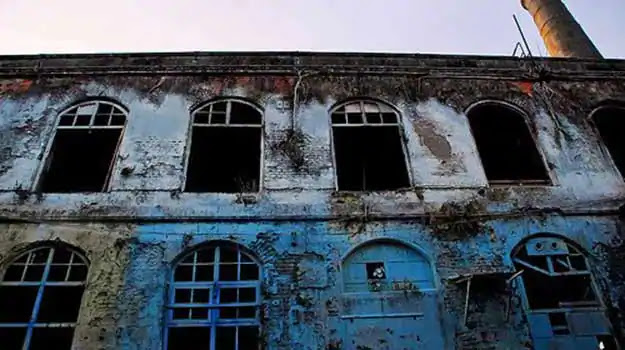
Mukesh Mills is a popular location for TV serials and Bollywood films. Located in Mumbai’s tony Colaba area Mukesh Mills takes you back in time with its dilapidated structure and warehouse-like look. But the rundown structure is sure to send shivers down your spine not just with its interiors but because people who have worked here have had some unusual experiences here.

Mukesh Mills was once a thriving mill when it opened its doors in the 1870s. Its location right next to the Arabian Sea made it apt for ships to dock here for loading and unloading of cotton and yarn. The mill, however, went out of business in the 1980s when the workers struck work. The mill was later shut and then an unexplained fire broke out in Mukesh Mills which left it in the condition it now is.

But it seems like Mukesh Mills is as popular among the spirit world as it is in Bollywood. According to crew members and even actors who have worked here, there is something spooky about this location, so much so that shoots to wrap up before sunset as no one wants to be here late at night. People have allegedly heard strange voices, things are reported lost and on one or two occasions, people suddenly seem to get possessed. These occurrences have been reasons enough to avoid shooting here at night.
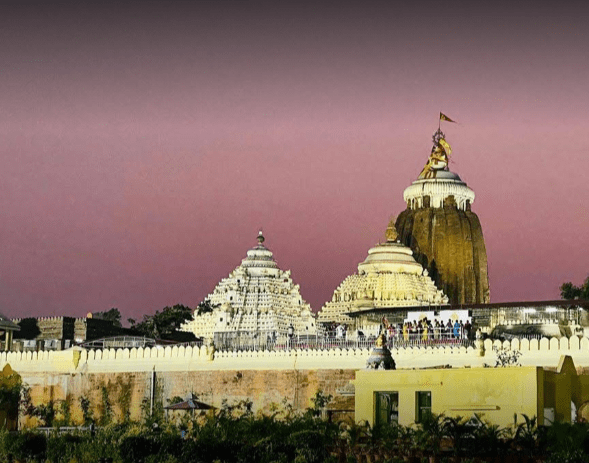

Most intriguing facts of Jagannath Puri

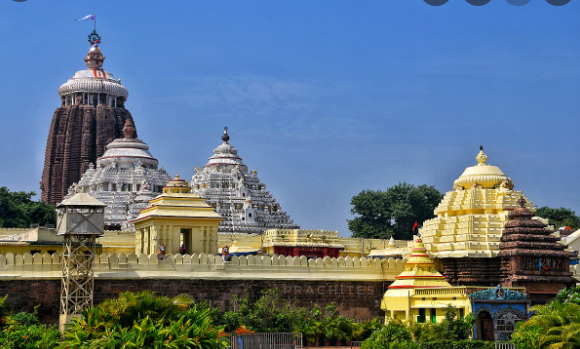
Shri Jagannath’s Temple in Puri has uttermost importance for the Hindu devotees as it is one of the Char-Dham pilgrimages i.e. Puri, Dwaraka, Badrinath, and Rameshwar. This temple is famous for its annual Rath Yatra, but that’s not the sole reason people worship Lord Jagannath and Devi Subhadra and elder brother Lord Balabhadra.

Jagannath Puri is also famous for the mysteries and undefinable facts that catch the traveler’s eye worldwide. Devotees believe that all these are blessings of Lord Jagannath, and people who consider these as myths should visit the place themselves and find themselves dumbfounded. So, here are some most intriguing facts about Jagannath Puri.

No birds, no planes fly above the Lord

They say no one’s above God, so nothing flies above it. It’ll leave you surprised to encounter such a divine miracle that no birds, no planes fly above the temple. This is a rare contrast compared to other temples, as we have always seen birds resting on the top of temples are other entities. The temple is considered as a no-fly zone, not by any state government orders but by the Lord himself. And this phenomenon apparently has no scientific explanation.

Flag defying the power of wind

All of us know that any cloth flows towards wind direction, be it the sails of ship or the kites we flew in our childhoods. But here, the flag that flies atop of the Jagannath temple is an exception to this common principle. No scientific explanations reason the flag flow in the opposite direction of wind.

Mute oceans

Odisha Tourism : Puri Beach
As soon as you step inside the main door, i.e. Singha Dwara entrance of the temple, you can’t hear the burble of water. And this phenomenon is more prominent in the evenings. But once you step out the audibility of water returns. It’s said that Devi Subhadra wished for serenity inside the temple walls and by this her wish was duly fulfilled.

Neela Chakra at the pinnacle

The riddle of Neela Chakra (Blue wheel) has still been unsolved. First, just think about the fact, how did the wheel made of 8 different alloys and a 36 feet circumference get up there at the pinnacle with just a human force of that century. Second, the view of this wheel doesn’t really depend on the direction that we look at it from. It’s like it was designed to look the same from all directions.

The temple casts no shadows

Every small object/thing/ peoples have shadows. But ever wondered what if something doesn’t have a shadow? The temple Jagannath Puri doesn’t cast any shadow on any part of the day under sunlight. If this is not a miracle, what would it be; just an unexplained phenomenon with no scientific reason to back up.
The magical techniques to cook

The traditional methods for cooking the mahaprasadam have been preserved here from the start. They place exactly 7 pots, one above the other on the firewood. Enchantingly, the upper pot gets cooked first, followed by the rest in order.

Mahaprasad never goes vain here

In India, wasting food is considered as a bad sign; the temple crew lives by this same. So, here at Jagannath temple the food is never futile, even if the crowd of devotees may vary from 2,000 to 2,00,000. Miraculously, the Parsadam prepared every day is never wasted, not even a bite. Could this be an effective management or the Lord’s will?

After reading such celestial facts, you might want to see them yourself. So, do not forget to check these facts on your next trip to Odisha and share your experience with me.

Training and Internship in Video Editing, Video Making


Why learn Video Editing?

Make amazing videos

Master all the elements that go into making an awesome video, tell impactful stories, and have the audience come back for more.

Be in demand

From education to entertainment, media to marketing – the world is hooked to the videos and the demand for video editors is at an all time high!

Creative freedom

Work in Bollywood, become the next YouTube star, or freelance for clients around the world – video editing is a soul satisfying pursuit.

Anger management

Anger is a human emotion. But when its get out of control, it leads to destruction in your relationship, workplace, and etc. It is a unpredictable and powerful emotion, which makes you regret after some time. In this blog, we are going to counter the following topics – What is anger? Types of anger, what is anger management? Anger management techniques, disadvantages of Anger.

Image by Małgorzata Tomczak from Pixabay

What is Anger?

Anger is an intense emotion you feel when something has gone wrong or someone has wronged you. Anger is also a emotion like others. Everyone at some other the point will become angry. When you get angry, your heart beat and blood pressure go up. It can be caused by both internal and external events. You can get angry on a person, an event, or a problem. Also your adrenaline, and noradrenalin levels go up. Anger can have many physical and mental consequences. The external expression of anger can be found in facial expression, body language, and etc.

Types of Anger

  • Passive aggressive It is the indirect way to express negative feeling towards a person.
  • Behavioral it is a type of anger that is expressed physically. It is usually aggressive.
  • Overwhelmed It is a uncontrollable type of anger, it usually causes when a situation is beyond our control. This type of anger results in hopeless situation.

What is Anger management?

Anger management is the way to manage and control your anger. The goal of anger management is to control your emotional feelings that cause anger. It helps you to control your reactions.

Anger management techniques

  1. Think before you speak – it’s easy to say something, But it often regrets, we cannot take our words back. Take few seconds and think and speak. Do not react so fast.
  2. Once you calm, explain the reason for your anger Once you calm down, explain the person the reason behind your anger. Make them understand. This is the best way to control your anger.
  3. Relax Sometimes anger and frustration is caused by problems in our lives, surrounding, etc. Close your eyes and take a deep breathe, think solution for problem, causes for the problem, reasons for problem, and etc. This help you to get solution for your problem.
  4. Change your environment Sometimes changing your environment helps you to change your mood. Go to a place where you can get peace.
  5. Do some exercise physical exercises helps you to reduce your anger. If you feel anger, and just do some exercise like jogging, walking, etc.
  6. Spend time with your friends Spending time with your friends help you to feel better. Explain them the cause for your anger. Get support from them.

Disadvantages of Anger

  1. Outburst of Anger may result in heart attack Anger may effect on our cardiac health, it doubles the chance to get heart attack.
  2. It shortens your life span In a study, it was found that the person who angers often has short life span.
  3. It weakens our immune system You may not believe this but, it is true anger weakens our immune system. Anger imbalance our hormones, which weakens our immune system.

That’s all from my side. I hope you like it.

The impact of Covid-19 on Small Businesses

The Covid-19 pandemic has had an impact on almost every industry in the world. The IMF’s World Pandemic Uncertainty Index for Q1 2020, which stands at 13.46, is comfortably higher than any prior pandemics in the last two decades. During the SARS pandemic in Q2, 2003, the previous high was 4.40. The Uncertainty Index has always been linked to economic consequences, and the pandemic is no exception.

While small firms are projected to be the hardest hit, many of them are seeking to reinvent themselves by embracing technology and focusing on customers. However, not everyone will be able to use the online mode. During the shutdown, many companies were unable to duplicate their previous working model; it is critical to find a new approach.

These organizations are now developing new channels that do not require physical engagement to keep their clients motivated, having previously depended heavily on social interaction and group involvement to keep motivation levels high. For instance, forming WhatsApp groups, presenting role models, hosting online introductory sessions for new members, and holding contests such as plank challenges, surya-namaskar challenges, and skipping challenges, and publicizing victors on social media are all examples.

The ongoing battle to suppress the world’s second-largest coronavirus outbreak in India has stifled demand, disrupted supply networks, and changed consumer behaviors. Many small firms are developing or changing their business models to cope with the new terrain and uncertainties brought on by virus protocols.

After a boom in WhatsApp orders for carrom boards (an Indian game akin to pool with little discs that are flicked into corner pockets) and home exercise equipment, the company, which regularly employs ten people but is suddenly down to four, decided to offer free delivery.

Photo by cottonbro on Pexels.com

In this moment of crisis, you might also look for goods that are readily available and can be used as needed. Even the tiniest of details can make a significant difference in the global economy’s recovery during these difficult times. To combat this pandemic, stay cheerful, don’t lose hope, be vigilant, and have a lot of patience.

COVID19 is being fought by everyone, and the entire globe is fighting together to remove it. Treat lockdown as an era of creativity, learning, and wisdom that will help humanity grow into a brighter future.

Because to the enormous economic recession induced by COVID 19, businesses have incurred significant losses and many have lost their jobs. We cannot continue to wait without doing action. As a result, we must become more aware, decisive, and proactive, as well as consider enterprises that can be started from home during lockdown for students, working class, or post-retirement.

Following are some of the best small business ideas that can be started after lockdown:

Healthcare Product Sales
With the implementation of lockdown, the manufacturing of homemade or small-scale masks and hand sanitizers has risen dramatically to fulfil the rising demand for a variety of face masks and hand sanitizers. Several entrepreneurs, small company owners, self-employed professionals, and MSMEs have decided to start making face masks and hand sanitizers instead of closing their present enterprises during the lockdown. Business owners or manufacturers can contact local shops, merchants, and wholesalers directly to sell their products to local customers.

Door-to-door delivery service In the coming years, the internet delivery sector will flourish, and customers will prefer to buy things online rather than visiting grocery stores, malls, and shopping complexes, where there is a higher risk of infection. Doorstep delivery is the best alternative business during the lockdown period, in which various types of delivery services can be initiated, such as essential items delivery, grocery delivery, pharmaceuticals delivery and alcohol delivery. Respective licenses shall be required to be obtained from concerned authority to start a specific delivery business.

Food Delivery or Tiffin Service The Indian Central Government recently gave restaurants and food outlets access to sell meals via online platforms and have it delivered by delivery companies. You can also start a new business by opening a kitchen that serves a popular or desired cuisine in your neighborhood. The initial expenditure is minimal, as it only necessitates the acquisition of raw materials from a trained and professional source.

Paintings or Art work Artists have plenty of time to show off their skills through paintings or other forms of art. Artists have all of the necessary materials and only need to create a virtual display online to sell their work and deliver it to the customer’s address. Artists can host an event and showcase their talent if they have enough space to display their paintings.

While nearly all consumers surveyed (95 percent) are ready to wait out the continued limitations, only 61 percent agree with the continued lockdown measures, indicating a desire to return to normalcy, according to the survey.

Fiber-Optic Cables

Physical Description

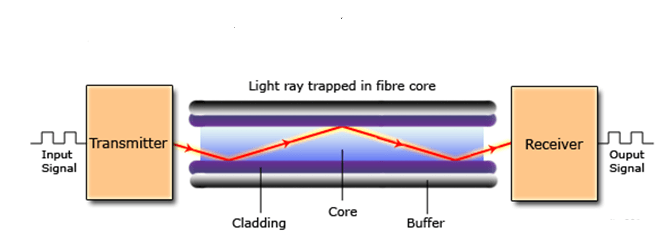
Core:-

Physical medium that transports optical data signals from an attached light
source to a receiving device. It is a single continuous strand of glass or plastic
that’s measured in microns (μ) by the size of its outer diameter. The larger the core,
the more light the cable can carry.

Cladding:-

It surrounds the Fiber core and serves as a boundary that contains the
light waves and causes the refraction, enabling data to travel throughout the length
of the Fiber segment.

Coating:-

It is a layer of plastic that surrounds the core and cladding to reinforce
and protect the Fiber core. Coatings are measured in microns and can range from
250 to 900 microns.

Strengthening Fibers:-

These components help protect the core against crushing forces and excessive tension during installation.

Cable jacket:-

This is the outer layer of any cable. Most Fiber optic cables have an
orange jacket, although some types can have black or yellow jackets.

Transmission Characteristics

-Optical fiber transmits a signal-encoded beam of light by means of
total internal reflection.
-Total internal reflection can occur in any transparent medium that
has a higher index of refraction than the surrounding medium.
-In effect, the optical fiber acts as a waveguide for frequencies in
the range of about to this covers portions of the infrared and visible
spectra.
-Act as wave guide for 1014 to 1015 Hz

Optical Fiber Advantages: –

  • Higher Bandwidth
  • Less Signal Attenuation
  • Immunity to Electronic Interface
  • Resistance to Corrosive Material
  • Less Weight
  • Less Number of Repeaters
  • Signal Security

Optical Fiber Disadvantages:-

  • Installation
  • Maintenance
  • Unidirectional Light Propagation
  • Cost

Cable Selection Criteria to establish a network

1. Bandwidth:

Data carrying capacity of a channel or medium. Higher bandwidth communication channels support higher data rates.

2. Flexibility:

For Expanding network, the need for extra equipment or devices.

3. Reliability:

The consistency of transmission media.

4. Radiation:

It refers to the leakage of signal from the medium due to undesirable electrical characteristics of the medium.

5. Noise Absorption:

It refers to the susceptibility of the media to external electrical noise that can cause distortion of data signal.

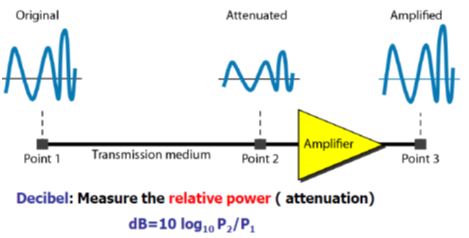
6. Attenuation:

It refers to loss of energy as signal propagates outwards. The amount of energy lost depends on frequency.

7. Number of receivers:

The number of users to be connected.

8. Transmission Rate:

This refers to the speed or data transmission rate.

9. Cost and Ease of Installation

10. Distance between each device

Deepak chahar helps India to win 2nd ODI

Deepak Chahar’s wonderful knock of unbeaten 69 helped India to win the second ODI against Sri Lanka. Deepak chahar with the help of Bhuvneshwar Kumar at the other end chased down the target with a record partnership of unbroken 84 runs. .

India were struggling at 193 for 7 when Bhuvneshwar joined chahar , when 83 more runs runs were needed for India to win. Both produced an incredible Chase .Bhuvneshwar was also beaten on 19 off 28.

Sri Lanka again won the toss in the second ODI , and made a descent score of 275 , thanks to Karunaratne who contributed some important runs at the death overs, after a poor show of middle order. The total of 275 was not a match winning total, but a fighting total. and something to bowled to.

India again started very nicely, Prithvi Shaw started the innings with 3 consecutive fours in 1st overs. and made 14 runs in 1st over. Shikhar Dhawan was also looking comfortable in starting. but at 6th ball of 3rd over, leg spinner Hasaranga bowled Prithvi Shaw with the ball coming little bit in to the batsman.it was really a master stroke from Sri Lankan captain Shanaka to introduce spin so early because they knew if Prithvi Shaw had stayed 5-6 overs more , he would have drag Sri Lanka out of the context.

But it was not only one dent that India faced during the chase, soon after Prithvi Shaw was dismissed, Ishan Kishan soon followed him with just 1 off 4.Then the chase become little bit tricky for India . Captain Shikhar Dhawan was joined by Manish Pandey who was also wanting to score some runs after a poor show in 1st ODI,but at the score of 65, Indian captain Shikhar Dhawan was also dismissed by Hasaranga. than it became a tough challenge for Manish Pandey and Suryakumar Yadav to get India chased down the target they both were batting really good but than came an unfortunate run out of Manish Pandey. Surya’s straight drive was so straight that it hit the stumps at the bowlers end and Shanaka managed to touch the ball in the process.

Hardik Pandya was straightaway dismissed for 0 off 3 . Making condition more worse for India. Soon after scoring his maiden fifty , Suryakumar was dismissed by spinner Sandakan. Krunal Pandya showed some resistance but was gone with a beauty of Hasaranga. After that it became almost impossible for India to win from that situation.Then came India’s hero of the match . Deepak chahar along with Bhuvneshwar managed to make a match winning partnership of 84 runs.

The innings of chahar was a combination of patience and maturity. he knew that the asking rate was not much . if India managed to rotate strike , they would achieve the target. he took some calculated risk with some outstanding running between the wickets soon after he scored his maiden fifty, and hopes of Indian dugout and fans was again came again.

it was a masterstroke from Rahul Dravid to send chahar ahead of Bhuvneshwar because he knew about the capabilities of chahar. Chahar also contributed with ball taking 2 for 52 in 8 overs. It was an all round performance from chahar to contribute in India’s win. After the second ODI , the third match is on Friday.

Psychological Disorders Part 2

Introduction

In Psychological Disorders Part 1, Neurodevelopmental and Bipolar Disorders were discussed. The DSM (Diagnostic and Statistical Manual of Mental Disorders) contains a huge range of disorders which will be explained in a series of articles. This article discusses Anxiety and Stress-related disorders.

Anxiety Disorders

These disorders are characterized by persistent and extreme fear and worry. Fear is a response to a threat and anxiety is the anticipation of a threat in the future. There are various types of anxiety disorders which are explained further. Generalized Anxiety Disorder (GAD) involves extreme levels of worry about daily events, so much so that it interferes with the person’s daily functioning.

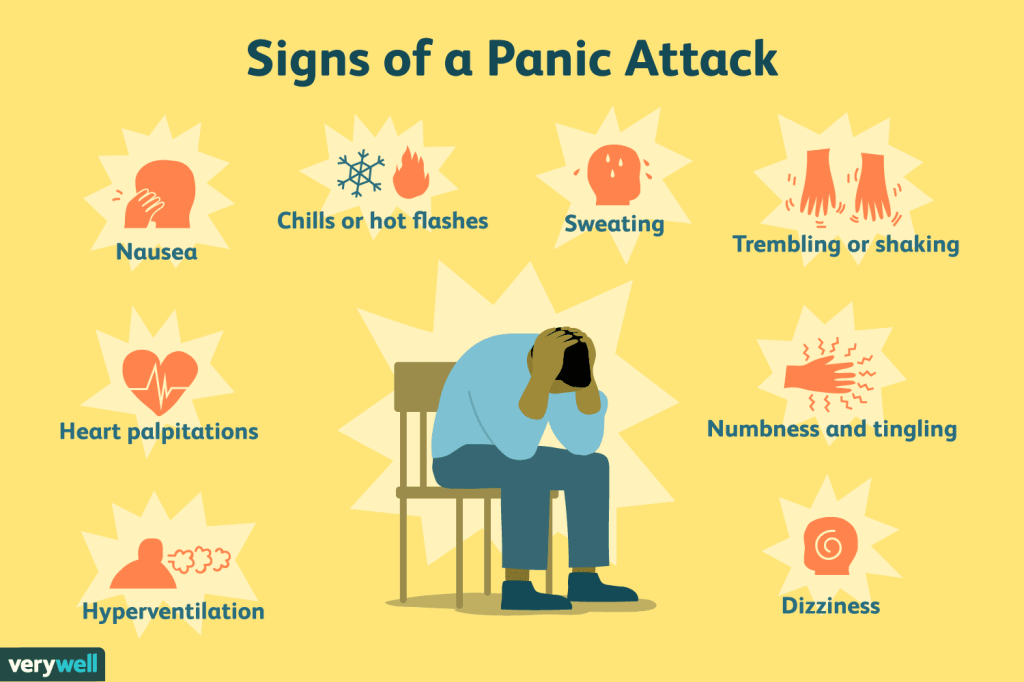
Panic Disorder involves having panic attacks in certain situations and so people start avoiding the situations which trigger a panic attack. A panic attack is a sudden episode of intense fear which brings symptoms like a sense of impending doom, rapid heart rate, sweating, shaking, chills, hot flashes, nausea, chest pain, headache, dizziness, and numbness.

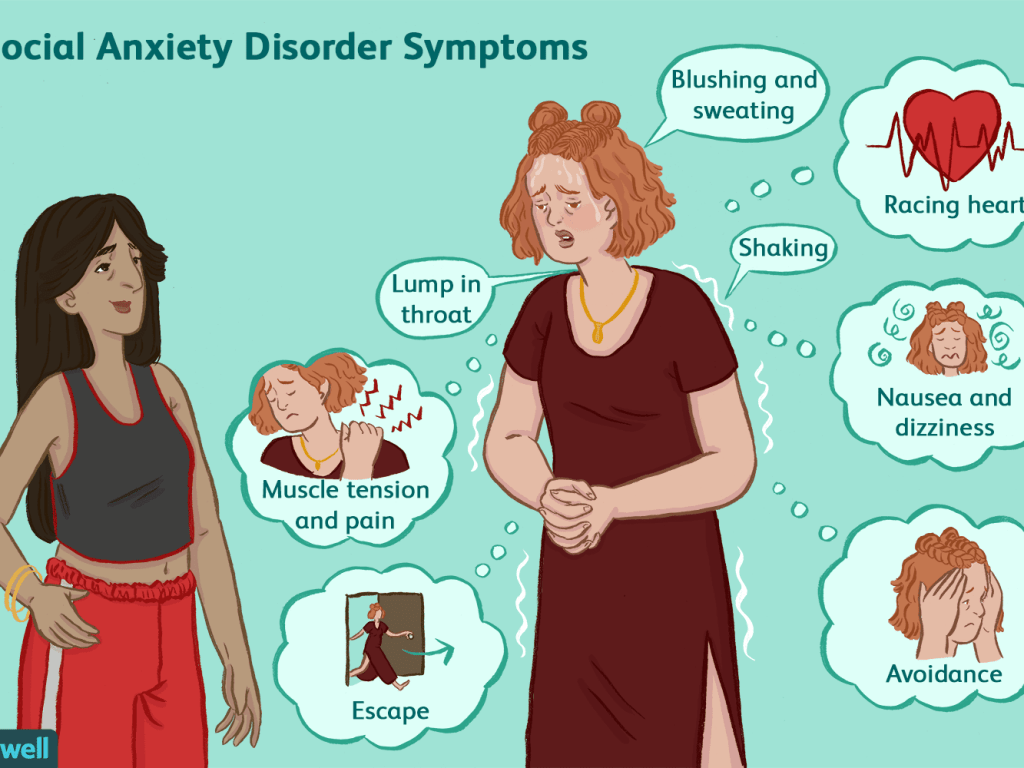
Social Anxiety Disorder involves an irrational fear of being judged or watched. This is a very common disorder and it interferes with functioning at school, work, and other social settings. For example, a person can have a fear of going to a party because of the fear of being judged by everyone.

Agoraphobia involves a fear of public places, that is that the people with this disorder have a fear of anticipating a panic attack in a place where they cannot escape or deal with it.

Specific Phobias involves an extreme fear of a specific object or a situation, such as fear of insects, animals, height. When people are confronted by their phobic object, they experience trembling, nausea, and rapid heart rate. These phobias usually arise from a bad associating event they have had before in their life.
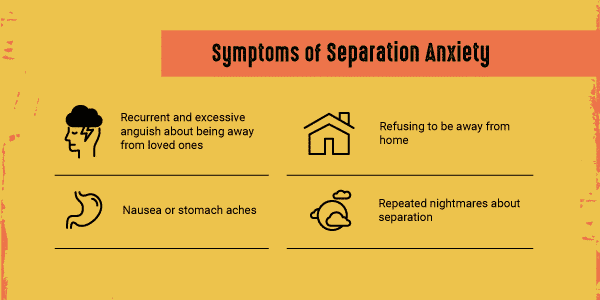
Separation Anxiety Disorder involves a high level of fear of being separated from things and the people they are attached to. This is most common in the case of young children having the fear of being away from their parents but it also exists for adults.

Stress-Related Disorders

These previously used to be grouped with anxiety disorders but are now considered a separate category. These disorders usually arise because of trauma or stress-inducing event. Acute Stress Disorder involves severe anxiety for almost a month after a traumatic event, such as accidents or the death of a loved one. This can result in the person experiencing dissociative symptoms like inability to remember important parts of the event, flashbacks, and difficulty in experiencing positive emotions.

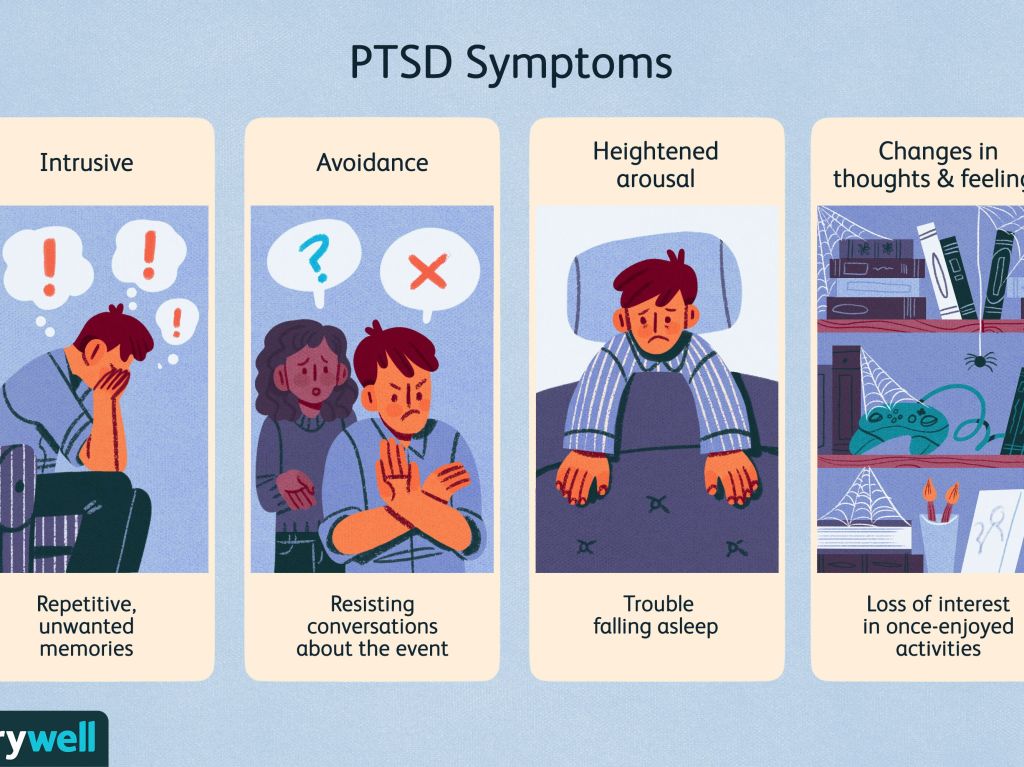
Post-Traumatic Stress Disorder (PTSD) can arise after a person has gone through a very traumatic event. This disorder includes symptoms such as reliving the event, feeling on edge, having negative thoughts, avoiding things that remind them of the event, nightmares, bursts of anger, and difficulty in concentrating.

Adjustment Disorders can arise because of a sudden change in life like losing a job, a break-up, shifting from one state to another. This disorder can bring symptoms like anxiety, worry, hopelessness, feeling of isolation, depressed mood.

Reactive Attachment Disorder forms when children in their early years of childhood fail to form a healthy relationship with their adult caregiver which later on results in being withdrawn from these caregivers, and they might also face social and emotional disturbance.

Conclusion

Some people keep claiming they have anxiety when they are just suffering from fear, same with the use of PTSD. It is important to not self-diagnose yourself as you might not be qualified to do so and it is wrong to claim to have disorders when you don’t as it creates a negative environment for people who are actually suffering from these disorders. It is important to consult a psychologist if you face any of the symptoms you think might point to anxiety or stress-related disorder as there are therapies to deal with it.

References

Note: this is the Part 2 of the Psychological Disorders series.

The Stripling Faces Insomnia: Know the reasons

-ADITI RAJ

The teenagers are so full of positive energy, so full of life and so sleepy. Research shows that most of the teenagers do not get the sufficient amount of sleep as they needed. Every individual has their own need for sleep. This need may vary from one person to another. Teens are at an other important stage of their growth and development. Because of this, they need more sleep than a normal adult. They need at least eight to nine hours of sleep at night to feel fresh for the whole day

Teen sleeping problem start as early as 13. The sleeping habits and changing bodies of 10 to 12 -years have a close link to the teen years. The sleep patterns of teens are also firmly set in their lives. It is not easy for them to change the way they sleep. Thus teen sleep problems can continue well into their years as adults. For this reason, information found in these articles are for age 10 to 25 years of age

These are two main factors that affect how sleepy or how alert you are at any given time in a day. The first is how long it has been since you last slept. This is called the sleep-wake balance. If you stay awake for too long, your sleep wake balance will be off. This will make you sleepy.

The second factor that affects your level of sleepiness is your internal body clock. This clock controls the “circadian” means to occur in a 24 hour cycle. This clock controls the “circadian rhythms” in your body. The word ” circadian” means to occur in a 24hr cycle

Most teens will sleep much better if they simply develop the habits of good sleep hygiene.

Do You Remember This Legend?

‘Charlie Chaplin’ – ( Journey from rags to riches.)

(

Born – Charles Spencer Chaplin, 16 April 1889, Walworth, London, England.

Died – 25 December 1977 (aged 88), Manoir de Ban, Riviera-Pays-d’Enhaut District, Vaud, Switzerland.

Resting place – Corsier-sur-Vevey, Riviera-Pays-d’Enhaut District, Vaud, Switzerland.

Occupation – Actor, comedian, director, composer, screenwriter, producer, editor.

Years active – 1899–1976

Parent(s) – Charles Chaplin Sr.Hannah Chaplin (née Hill)

Awards – Academy Award (1973): Music (Original Dramatic Score) ,Honorary Award of the Academy of Motion Picture Arts and Sciences (1972), Special Award of the Academy of Motion Picture Arts and Sciences (1929).

Works written – My trip abroad, A Comedian Sees the World, My Autobiography etc.

About Charlie:

Chaplin, one of the most financially successful stars of early Hollywood, was introduced to the stage when he was five. The son of London music hall entertainers, young Chaplin was watching a show starring his mother when her voice cracked. He was quickly shuffled onto the stage to finish the act. Chaplin and his older half-brother, Sydney, roamed London, where they danced on the streets and collected pennies in a hat. They eventually went to an orphanage and joined the Eight Lancashire Lads, a children’s dance troupe. Charlie Chaplin is considered a phenomenon in the world of acting. He is worshipped, studied, and imitated by millions of wannabe stars who want to ape his comic timing.

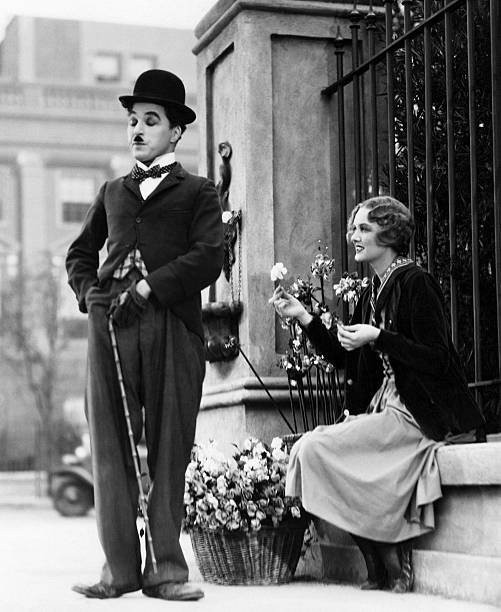
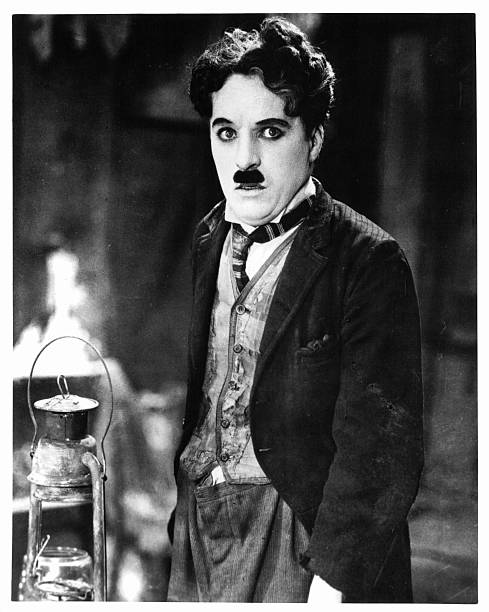
LOS ANGELES – 1931: Actors Charlie Chaplin as The Tramp and Virginia Cherrill as a blind flower seller in the film ‘City Lights’. (Photo by Donaldson Collection/Getty Images) /Getty Images)

His Life:

Charlie Chaplin had to struggle as a child. He was the son of poverty- stricken music-hall entertainers. Chaplin’s father, Charles Chaplin Sr was an alcoholic and had little contact with his son. His father died of alcoholism when Charlie was twelve. A larynx condition ended the singing career of Chaplin’s mother. After Chaplin’s mother (who went by the stage name Lilly Harley) was admitted to the Cane Hill Asylum, her son was left in the workhouse at Lambeth in South London. Charlie and his half-brother, Sydney, forged a close relationship in order to survive. They gravitated to the music hall while still very young and both of them were talented. Themes in Charlie’s films in later years would revisit the scenes of his childhood deprivation and poverty in Lambeth. A lot of his humour was rooted in pain.

On tour in New York (1913), Charlie caught the who signed him to a film contract. Unfortunately, Chaplin had considerable initial difficulty adjusting to the demands of film acting, and his performance suffered for it, but destiny gave Charlie eye of Mark Sennet another chance and there was no looking back. Chaplin’s earliest films were made for Mark Sennet’s ‘Keystone Studios’, where he developed his ‘tramp’ character and very quickly learned the art and craft of film making. Chaplin developed the costume baggy pants, derby hat, oversized shoes, and cane-that was to become the hallmark of his famous “little tramp’ character. He was soon directing his own films, and he produced, directed, and starred in such classics as The Gold Rush (1925), City Lights (1931), Modern Times (1936), The Great Dictator (1940), Monsieur Verdoux (1947) and Limelight (1952).

Chaplin never spoke more than cursorily about his film making methods, claiming that such a thing would be tantamount to a magician spoiling his own illusion. In fact, until he began making spoken dialogue films with The Great Dictator, Chaplin never shot from a completed script. The method he developed was to start from a vague premise-for example ‘Charlie enters a health club’ or ‘Charlie enters a restaurant’. Then he had sets constructed, and worked with his stock company to improvise gags around them. This is creativity at its best. Charlie Chaplin’s unique film-making techniques became known only after his death, when his rare surviving cut sequences were carefully examined in the 1983 British documentary Unknown Chaplin.

5 Things You May Not Know About Charlie Chaplin:

1.Chaplin made his stage debut as a tot – Both of Chaplin’s parents were music hall entertainers in London. In his autobiography, he described how, at age 5, his mother’s voice suddenly failed in front of a crowd of rowdy soldiers. The stage manager—or possibly his father or one of his mother’s lovers—then ushered him onstage as a replacement. Chaplin first sang a popular song called “Jack Jones,” prompting the audience to shower him with coins. He purportedly drew big laughs by announcing that he would pick up the money before continuing. More laughter ensued when he began imitating his laryngitis-addled mother. A few years later, Chaplin made his professional debut as a member of a juvenile clog-dance troupe. He followed that up with a couple of theater roles, toured with vaudeville acts and did one disastrous night of stand-up comedy in which he was booed off the stage.

2. Chaplin partly grew up in an orphanage – As the health of Chaplin’s mother deteriorated, so too did the family’s finances. It got so bad that in 1896 Chaplin and his older half-brother were sent to a public boarding school for “orphans and destitute children.” Chaplin spent about 18 months there, the longest period of continuous schooling he would ever receive. He learned to read and write, but apparently suffered quite a few indignities, including a severe caning and the shaving of his head during a bout with ringworm. Shortly thereafter, his mother was committed to a mental institution. His father, meanwhile, played very little role in his upbringing and ended up dying of alcoholism at age 37.

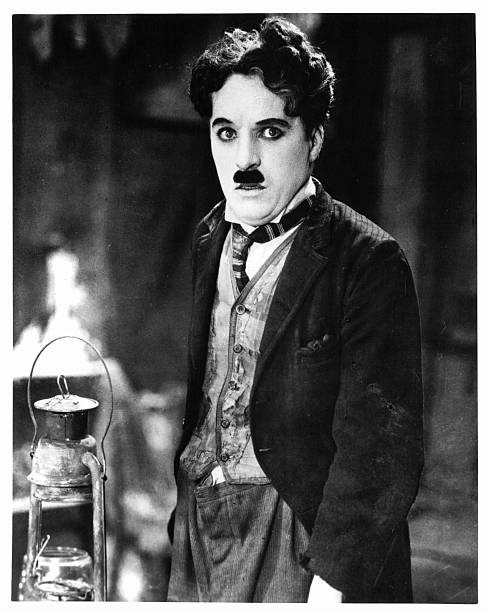
Charles Chaplin in a scene from the film ‘The Gold Rush’, 1925. (Photo by United Artists/Getty Images)

3 Chaplin loathed his first film – During Chaplin’s second vaudeville tour of the United States in 1913, Keystone Studios hired him away for $150 a week. He made his first film appearance early the following year, playing an out-of-work swindler in “Making a Living.” Wearing a handlebar moustache, top hat and monocle, he got in a few funny gags, particularly while fighting the story’s hero, a journalist who at one point interviews a man trapped under a car instead of helping him. Overall, though, Chaplin was appalled by his performance. “I was stiff,” he later said. “I took all the surprise out of the scenes by anticipating the next motion.” He also accused the director of cutting his best material out of jealousy.

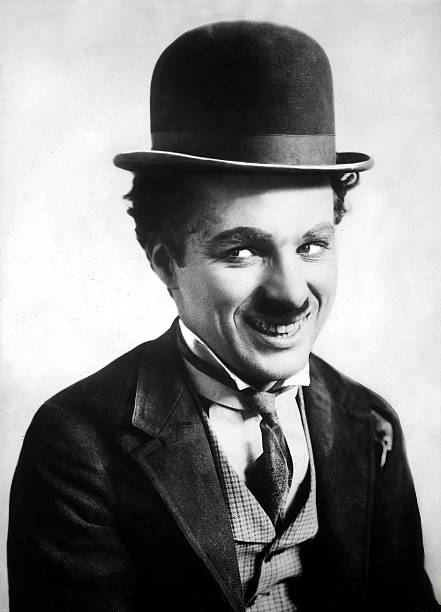
4. Chaplin played thr same character in all but a few movies – Prior to his second film, Chaplin dressed up one day in baggy pants, a tight coat, big shoes, a small bowler hat and a bamboo cane. He added a small fake moustache and is said to have strutted around while his co-actors were playing pinochle. Having witnessed the scene, the head of Keystone allegedly “giggled until his body began to shake.” “Chaplin,” he exclaimed, “you do exactly what you’re doing now in your next picture. Remember to do it in that get-up.” This so-called Little Tramp character immediately took off in popularity, spawning so many imitators and marketing schemes that the press labeled it “Chaplinitis,” and would become Chaplin’s onscreen persona for the next two-and-a-half decades. In 1914 alone, he appeared in dozens of short films as the Little Tramp, most of which he directed himself.

5 .Chaplin quickly became a millionaire – For $1,250 a week, plus a $10,000 bonus, Chaplin moved in December 1914 to Essanay Studios, which touted him as “the greatest comedian in the world.” He then signed with the Mutual Film Corporation for $670,000 a year, after which he agreed to make eight comedies for First National for over $1 million. Finally, in 1919, he founded his own studio with fellow Hollywood icons Douglas Fairbanks, Mary Pickford and D.W. Griffith. “I went into the business for money, and the art grew out of it,” Chaplin once said. “If people are disillusioned by that remark, I can’t help it. It’s the truth.”

Importance of Training and Internship

Over the years, the Indian education system has landed itself into myriad controversies as it is often criticized by the masses for its sheer inability to go beyond the four walls of the classroom and non-deliverance of an all-round enriching, practical learning experience to the pupils. The critics argue further that its biggest problem is the lack of emphasis on experiential learning and undue focus given to rote learning. As a result of this, the students bear the brunt of this massive shortcoming, often being faced with a bombshell when they enter the job market,looking for gainful employment.
At that stage, they find themselves unequipped with relevant skills as well as unbeknownst to professional
requirements and work culture.

Against the backdrop of the wedge between the education system and the job market, training and internships come to the rescue of the budding young talent to endow them with a strong foundation and a bright future.
An internship is a short-term work commitment made by a student with an organisation, whether paid or unpaid for the purpose of gaining a hands-on-experience in the relevant field. It is usually aligned to the student’s career goal and thus, holds of utmost significance to his/her career prospects in the specific field.
The first and foremost advantage that an internship offers is exposure to the professional environment, skill requirements and work-culture in the field of interest. It promises a formidable opportunity to the students to apply classroom teaching in real life work-scenarios, broadens the horizons of their knowledge and helps them to learn to accommodate themselves in a professional setting.
It’s rightly said, “What you learn, you may forget but what you experience, you will always retain”.This precisely puts forth the marvel of experiential learning that a student can savour using the tool of training & internship.
Our education system too has been trying to play fair its own part in overcoming the obstacle of excessively theoretical, syllabus bound learning remote from practicality with the incorporation of case studies at secondary & higher levels. What is more, many postgraduate schools such as MBA institutes are trying to engage students in group discussions, corporate case studies and debates over global issues so to enhance their knowledge about how things operate in the real world. However, they can never pale into insignificance, the true foundational experience that an internship promises. It continues to standout as a worthwhile experience and does not fail to deliver upon its promise helping students to not only gain a competitive edge in today’s globalised world but contributing equally to their personality development by imparting them life skills.
Another incredible advantage is that the students are set to gain both personally & professionally under the guidance of experts in the field as they work in an organization. Besides, they have the opportunity to build valuable contacts in the relevant field through networking which might come handy later when they enter the industry as employees.
Organizations and employers are also benefitted as they can evaluate the fresh talent and infuse their innovative, nouvelle ideas to create something of value using a fresh perspective for the organisation. Sometimes, they may even find suitable candidates who can transform into valuable human resource in the disguise of interns and thus, may be able to hire qualified young people on a full time commitment. In such a case, prospective employees no longer need to set off on a job hunting spree post completion of degrees while employers too can employ highly qualified and tested new talent acquainted with their work-culture. Therefore, internships are able to create a mutually beneficial relationship between the two.
There is no denying the fact that internships help enhance resume or CV but they indeed offer a lot more than just that. Fresh graduates are not bombarded with sky-high expectations of employers abruptly. They know precisely what to expect and what the employers expect from them in addition to how the career is going to contribute to their all-round growth. With this being said, internships can be considered to be a crucial point of decision-making if students are infested with doubts regarding how a particular field would shape their career. They may explore multiple fields before taking the ultimate plunge into that one career that is meant for them and for which they are best suited for.
Henceforth, internships help tremendously in choosing the right career path based on experience and rationale rather than impulse or hearsay. It brings us to the conclusion that training & internships are crucial to bridging the gap between education system and job market even as they prepare the budding talent of tomorrow to hone requisite skills and pursue their scintillating dreams unflinching, embracing a brighter future.

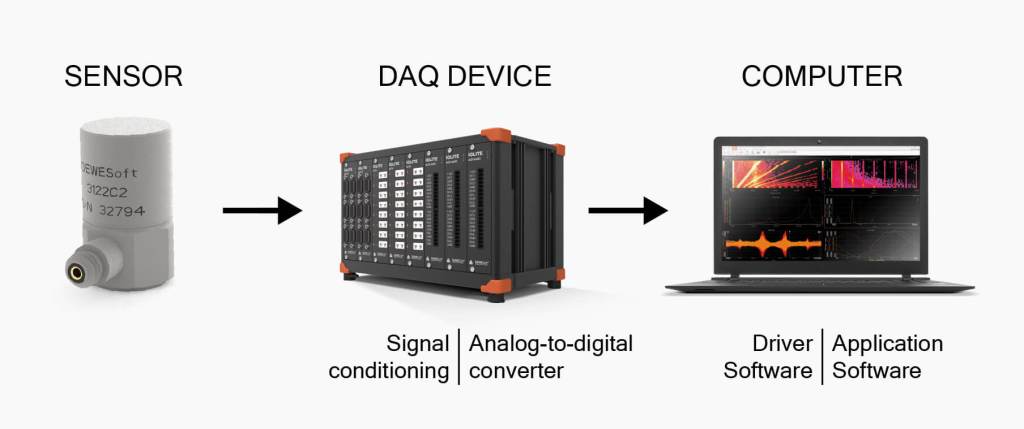
Signal Conversion In Computer Networks – In Short

1) Analog to Digital conversion

-It is an electronic process in which a continuously variable (analog) signal is changed,
without altering its essential content, into a multi-level (digital) signal.

-The input to an analog-to-digital converter (ADC) consists of a voltage that varies
among a theoretically infinite number of values.

-Examples are sine waves, the wave forms representing human speech, and the signals
from a conventional television camera.

-The output of the ADC, in contrast, has defined levels or states.

-The number of states is almost always a power of two – that is, 2, 4, 8, 16, etc.

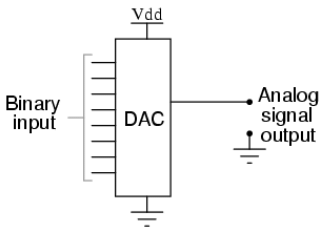
2) Digital to Analog Conversion

-In this conversion technique, the amplitude of analog carrier signal is modified to
reflect binary data.

-A Digital to Analog Converter, or DAC, is an electronic device that converts a
digital code to an analog signal such as a voltage, current, or electric charge.

-Signals can easily be stored and transmitted in digital form; a DAC is used for the
signal to be recognized by human senses or non-digital systems.