


College is a new environment. You are probably surrounded by a wider variety of classmates than you experienced in high school – students of different ethnicities and nationalities; students of different economic and social
backgrounds; students from more regions of the state, country, and the
world; students of more interests and accomplishments; older students returning to school after varied experiences; and upperclassmen and graduate
students with developed knowledge and commitments. Your professors will
often be deeply involved in their areas of specialization, in ideas they have
pursued over time with their colleagues, and in projects that apply their
learning to improving various aspects of life. The readings you have been assigned in your courses will introduce you to new subjects and to deeper levels of understanding of subjects with which you are already familiar. The
books and journals in the library and the bookstores provide opportunities to
pursue ideas and learning on your own in directions not limited by the curriculum.
You also get to see special accomplishments and skills up close – the sociology professor’s ability to analyze how people relate to each other, the literature professor’s ability to find the right expression, the philosopher’s
ability to cut to the heart of an argument, the architect’s ability to conceive of
a graceful and useful building, the government professor’s involvement in
state policy making. Many of your classmates may also have abilities, skills,
and knowledge you may admire- from the computer programming whiz
to the wrestling champion to the classmate who is just so witty. Seeing these
accomplishments may open your eyes to new goals and lead you to reassess
exactly where your best talents lie.
How do you make sense of all you come in contact with and set some directions for yourself? Some questions will sort themselves out spontaneously
as you become involved in a heated discussion or suddenly want to do extra reading for a course that fascinates you. Some instructors may encourage
you to think about your reaction to what you are learning through discussion
questions and informal assignments. They may be available for you to talk
with outside of class, during office hours, or even over coffee. Informal talk
with your friends and classmates also helps you sort through all the new
ideas and experiences you are confronting.
Month: July 2021
Land Policy since Ancient era

Introduction–
Land policy in India has been an important topic of government policy discussion. Since the ancient era, various changes took place in land policy. It was only after independence, the major issues of land has been somewhat sorted out.
In the regime of Akbar, his land revenue officer Todar Mal gave the shape to land policy by introducing various features like land measurement, fixed land revenue and classification of lands. It was the possible beginning of systematic efforts in this field. Under the pre-British era, land revenue was collected by state and it was the sole owner of land who confirmed their rights to land produce. During British rule, existence of non-cultivating intermediaries made the condition even worse by extracting high revenues and sustaining the political hold on the country. At the time of independence, Indian agrarian system was characterised by parasitic intermediaries, high rent, different land revenues, small farmers holding large lands etc.
After Independence-
Immediately after the independence, the newly formed government appointed a Committee under J. C. Kumarappa. His Committee recommended comprehensive reforms in agrarian system. However, mostly of its recommendations were rejected.
Since then, India’s land policy has undergo many changes like abolition of intermediaries, tenancy reforms, redistribution of lands using land ceilings, bringing uncultivated land into cultivation while maintaining the land revenue administration simultaneously.
Moreover, the Constitution of India also provided Article 39 which says that the ownership and control of material resources of the country should be distributed as best to serve the common good and no concentration of wealth in hands of few that may result detrimental. The Constitution also made land a state subject. However, the central government played a significant advisory role and also provide finances to states.
The focus and emphasis on land policy has changed from last 50 years but some of the issues remain persistent. India’s economy is significantly based on agriculture. Hence, the government should make some policies to improve agrarian structure.
Nikola Tesla

Serbian-American engineer and physicist Nikola Tesla (1856-1943) made dozens of breakthroughs in the production, transmission and application of electric power. He invented the first alternating current (AC) motor and developed AC generation and transmission technology. Though he was famous and respected, he was never able to translate his copious inventions into long-term financial success—unlike his early employer and chief rival, Thomas Edison.
Nikola Tesla and Thomas Edison
Tesla arrived in New York in 1884 and was hired as an engineer at Thomas Edison’s Manhattan headquarters. He worked there for a year, impressing Edison with his diligence and ingenuity. At one point Edison told Tesla he would pay $50,000 for an improved design for his DC dynamos. After months of experimentation, Tesla presented a solution and asked for the money. Edison demurred, saying, “Tesla, you don’t understand our American humor.” Tesla quit soon after.
Nikola Tesla and Westinghouse
After an unsuccessful attempt to start his own Tesla Electric Light Company and a stint digging ditches for $2 a day, Tesla found backers to support his research into alternating current. In 1887 and 1888 he was granted more than 30 patents for his inventions and invited to address the American Institute of Electrical Engineers on his work. His lecture caught the attention of George Westinghouse, the inventor who had launched the first AC power system near Boston and was Edison’s major competitor in the “Battle of the Currents.”
Westinghouse hired Tesla, licensed the patents for his AC motor and gave him his own lab. In 1890 Edison arranged for a convicted New York murderer to be put to death in an AC-powered electric chair—a stunt designed to show how dangerous the Westinghouse standard could be.
Buoyed by Westinghouse’s royalties, Tesla struck out on his own again. But Westinghouse was soon forced by his backers to renegotiate their contract, with Tesla relinquishing his royalty rights.
In the 1890s Tesla invented electric oscillators, meters, improved lights and the high-voltage transformer known as the Tesla coil. He also experimented with X-rays, gave short-range demonstrations of radio communication two years before Guglielmo Marconi and piloted a radio-controlled boat around a pool in Madison Square Garden. Together, Tesla and Westinghouse lit the 1891 World’s Columbian Exposition in Chicago and partnered with General Electric to install AC generators at Niagara Falls, creating the first modern power station.
Domestic Violence and Its Types
What is Domestic Violence?
Domestic violence is violence or other abuse in a domestic setting, such as in marriage or cohabitation. Domestic violence is often used as a synonym for intimate partner violence, which is committed by one of the people in an intimate relationship against the other person, and can take place in heterosexual or same-sex relationships, or between former spouses or partners. In its broadest sense, domestic violence also involves violence against children, teenagers, parents, or the elderly. It takes multiple forms, including physical, verbal, emotional, economic, religious, reproductive, and sexual abuse, which can range from subtle, coercive forms to marital rape and to violent physical abuse such as choking, beating, female genital mutilation, and acid throwing that results in disfigurement or death. Domestic murders include stoning, bride burning, honour killing, and dowry death.
A 2014 study reports that although the reported sexual violence rate in India is among the lowest in the world, the large population of India means that the violence affects 27.5 million women over their lifetimes. However, an opinion survey among experts was carried out ranked India as the most dangerous country in the world for women.
Globally, the victims of domestic violence are overwhelmingly women, and women tend to experience more severe forms of violence. They are also likelier than men to use intimate partner violence in self-defence. In some countries, domestic violence may be seen as justified or legally permitted, particularly in cases of actual or suspected infidelity on the part of the woman
Domestic violence often occurs when the abuser believes that abuse is an entitlement, acceptable, justified, or unlikely to be reported. It may produce an intergenerational cycle of violence in children and other family members, who may feel that such violence is acceptable or condoned.
Types of Domestic Violence:-
All domestic violence are not equivalent. Differences in frequency, severity, purpose, and outcome are all significant. Domestic violence can take many forms, including physical aggression or assault (hitting, kicking, biting, shoving, restraining, slapping, throwing objects, beating up, etc.), or threats thereof; sexual abuse; controlling or domineering; intimidation; stalking; passive/covert abuse and economic deprivation. It can also mean endangerment, criminal coercion, kidnapping, unlawful imprisonment, trespassing, and harassment.
- Physical Abuse:
It is a violence which is intended to cause fear, pain, injury, other physical suffering or bodily harm. Physical violence can be the culmination of other abusive behaviour, such as threats, intimidation, and restriction of victim self-determination through isolation, manipulation and other limitations of personal freedom. Denying medical care, sleep deprivation, and forced drug or alcohol use, are also forms of physical abuse.
Strangulation in the context of domestic violence has received significant attention. It is now recognized as one of the most lethal forms of domestic violence; yet, because of the lack of external injuries, and the lack of social awareness and medical training in regard to it, strangulation has often been a hidden problem.
During pregnancy, a woman is at higher risk to be abused or long-standing abuse may change in severity, causing negative health effects to the mother and foetus. Pregnancy can also lead to a hiatus of domestic violence when the abuser does not want to harm the unborn child.
Acid attacks, are an extreme form of violence in which acid is thrown at the victims, usually their faces, resulting in extensive damage including long-term blindness and permanent scarring.
Bride burning or dowry killing is a form of domestic violence in which a newly married woman is killed at home by her husband or husband’s family due to their dissatisfaction over the dowry provided by her family. The act is often a result of demands for more or prolonged dowry after the marriage.
- Sexual Abuse:-
Sexual abuse, is defined by World Health Organization as any sexual act, attempt to obtain a sexual act, unwanted sexual comments or advances, or acts to traffic, or otherwise directed, against a person’s sexuality using coercion. It also includes obligatory inspections for virginity and female genital mutilation.
In many cultures, victims of rape are considered to have brought dishonor or disgrace to their families and face severe familial violence, including honor killings.This is especially the case if the victim becomes pregnant.
Incest, or sexual contact between a related adult and a child, is one form of familial sexual violence.[ In some cultures, there are ritualized forms of child sexual abuse taking place with the knowledge and consent of the family, where the child is induced to engage in sexual acts with adults, possibly in exchange for money or goods.
Reproductive coercion are threats or acts of violence against a partner’s reproductive rights, health and decision-making; and includes a collection of behaviors intended to pressure or coerce a partner into becoming pregnant or ending a pregnancy.
Marital rape is non-consensual penetration perpetrated against a spouse. It is under-reported, under-prosecuted, and legal in many countries, due in part to the belief that through marriage, a woman gives irrevocable consent for her husband to have sex with her when he wishes.
- Emotional Abuse:-
Emotional abuse is a pattern of behavior that threatens, intimidates, dehumanizes or systematically undermines self-worth. According to the Istanbul Convention, psychological violence is “the intentional conduct of seriously impairing a person’s psychological integrity through coercion or threats”.
Emotional abuse includes minimising, threats, isolation, public humiliation, unrelenting criticism, constant personal devaluation, coercive control, repeated stonewalling and gaslighting. Stalking is a common form of psychological intimidation, and is most often perpetrated by former or current intimate partners. Victims tend to feel their partner has nearly total control over them, greatly affecting the power dynamic in a relationship, empowering the perpetrator, and disempowering the victim.
See the World through books!
As the current pandemic has got us all confined in our house, a lot of dreams of travelling around the world has been crushed. So instead, how about I take you on a world tour via books!

However, this book tour will happen over a series of 7-8 days, so pack up your luggage accordingly.
This tour begins with the largest continent – Asia.
( PLEASE NOTE THAT THESE ARE SOME OF THE MANY COUNTRIES IN ASIA, THOSE THAT ARE MISSING WILL HAVE THEIR OWN PART IN THE NEXT BLOG OR SO AND THIS BLOG HAS NO PREJUDICE AGAINST ANY COUNTRY OR COUNTRIES.)
Afghanistan
- 1) Born under a million shadow – Andrea Busfield.
- 2) A Thousand Splendid Suns – Khaled Hosseini.
- 3) The places in between – Rory Stewart.
- 4) A Thousand Rooms of Dreams and Fear – Atiq Rahimi.
- 5) The Patience Stone – Atiq Rahimi.
Armenia
- 1) Passage to Ararat – Michael J. Arlen.
- 2) The Sandcastle Girls – Chris Bohjalian.
- 3) Armenian Golgotha – Grigoris Balakian.
Azerbaijan
- 1) Mirror of the Invisible World: Tales from the Khamseh of Nizami.
Bahrain
- 1) City of Strangers – Andrew Gardner.
Bangladesh
- 1) A Golden Age – Tahmima Anam
- 2) The Black Coat- Neamat Imam
- 3) Banished! – Han Dong
Bhutan
- 1) Buttertea at sunrise – Britta Das
- 2) The Kingdom at the centre of the world: Journeys into Bhutan – Omair Ahmad
- 3) The Circle of Karma – Kunzang Choden.
China
- 1) Soul mountain – Gao Xingjian.
- 2) The April 3rd Incident – Yu Hua.
- 3) The Art of War – Sun Tzu.
India
- 1) The God of Small things – Arundhati Roy.
- 2) The White Tiger – Aravind Adiga.
- 3) The Inheritance of Loss – Kiran Desai.
- 4) A Suitable boy – Vikram Seth.
- 5) Midnight’s Children – Salman Rushdie.
- 6) A Fine Balance – Rohinton Mistry.
- 7) Sea of Poppies – Amitav Ghosh.
Indonesia
- 1) This Earth of Mankind – Pramoedya Ananta Toer.
- 2) Man Tiger: A Novel – Eka Kurniawan.
- 3) Durga/Umayi -Yusuf Bliyarta Mangunwijaya.
Japan
- 1) Norwegian wood – Haruki Murakami.
- 2) Convenience store women – Sayaka Murata.
- 3)Kafka on the shore – Haruki Murakami.
- 4) Strange Weather in Tokyo – Hirami Kawakami.
- 5) The Memory Police – Yöko Ogawa.
- 6) Killing Commendatore – Haruki Murakami.
- 7) Manazuru – Hiromi Kawakami.
South Korea
- 1) Kim Ji-young, Born 1982 – Cho Nam-ju.
- 2) The Vegetarian – Han Kang.
- 3) Human Acts: A Novel – Han Kang.
- 4) The White book – Han Kang.
- 5) The Hen Who Dreamed She Could Fly – Sun-mi Hwang.
- 6) If I Had Your Face – Frances Cha.
- 7)Pachinko – Min Jin Lee.
Thailand
- 1) Sightseeing – Rattawut Lapcharoensap.
- 2) Four Reigns – Kukrit Pramoj.
- 3) Bangkok wakes to Rain – Pitchaya Sudbanthad.
Pakistan
- 1) Train to Pakistan – Khushwant Singh.
- 2) The Wandering Falcon – Jamil Ahmad.
Saudi Arabia
- 1) Girls of Riyadh – Rajaa Alsanea.
Myanmar
- 1) The Glass Palace – Amitav Ghosh.
Iran
- 1) The Man who snapped his fingers: Fariba Hachtroudi.
(PLEASE NOTE, THAT ABOVE MENTIONED BOOKS ARE JUST SOME OF THE MANY BOOKS THAT ARE EITHER PUBLISHED BY OR WRITTEN ABOUT THAT COUNTRY.)
TIPS TO MAKE YOURSELF FINANCIALLY LITERATE


Have you ever heard or read in a newspaper that a person who won millions of dollar got broke after few years, why is this so ? This is because of lack of financial education, and the reason behind many of the people after good degree and jobs and a good salary still facing financial issues is the same lack of financial education.
1. Listen to podcasts, like the Rich Dad Radio Show.
2. There are plenty of you tube channels of financial experts, subscribe their channels and follow them.
3. Read newspapers, magazines, or books based on money, finance, and investing.
4. Follow peoples or pages sharing financial knowledge on social media.
5. Hang around with people smarter than you beyond all this have a keen interest and a burning desire. That’s all you need to be financially literate.
MAJOR LEARNING LESSON FROM THE BOOK- TALK LIKE TED


1. The speaker must love and should be genuinely passionate about his topic, if the speaker himself is not inspired by what he is speaking then it cant inspire others. So always choose the topic which you would love to speak about.
2. No one wants to hear the same boring and old stuff. People want something new, thus reveal information that’s completely new to your audience, and they will be your devoted listener.
3. Deliver jaw dropping moment in your presentation. Share something by which your audience will get surprised because that moment makes your presentation remarkable.
4. Don’t try to make your talk too long or too short that the audience cant even get what you have to say. According to the author, the ideal length of a talk should be 18 minutes. Because it forces you to say only what is important.
5. The best way to teach the heart and soul of your audience is to tell them stories, especially your own stories. Because they will only listen to what you are saying only if they feel familiar and connected to what you have to say.
WORLDS FASTEST INTERNET SPEED
Japan’s National Institute of Information and Communication Technology has reportedly set a new world record for world’s fastest internet speed at 319 Terabytes Per Second (TBPS) . This is almost double the last record of the fastest internet speed in the world held by researches from the university College of London . The speed was 178 Tbps . Many reports said that 319 Tbps means one can download 57000 full- length movies in 1 second or entire library of spotify in less than three seconds. One Terabyte means 1000 Gigabytes . One gigabytes is 1024 megabytes . Nasa’s system runs at 400 Gigabytes per second . Japan set World Record For the “WORLDS FASTEST INTERNET SPEED ” at 319 Tbps . It means you can download Over 50000 movies in one second. The long-haul transfer of took place over 3001 kilometers . 319 Tbps is are markably fast speed for transfer of Data online . The entire Netflix will be insufficient for 319 Tbps as with this speed one can Download 57000 Full- length movies in 1 second , reports said.

WANT TO KNOW ABOUT INDIAN ECONOMY
A country’s growth is usually measured by National income, marked by Gross Domestic Product (GDP). The GDP is the total monetary value of the goods and services produced by that country over a specific period of time, usually one year. The level of economic development also indicated by Human Development Index (HDI), Physical Quality of Life Index (PQLI), and National Happiness Index (GNHI).
Indian economy is the seventh largest economy of the world. Being one of the top listed countries. In terms of industrialization and economic growth, India holds a strong position with an average growth rate of 7%.
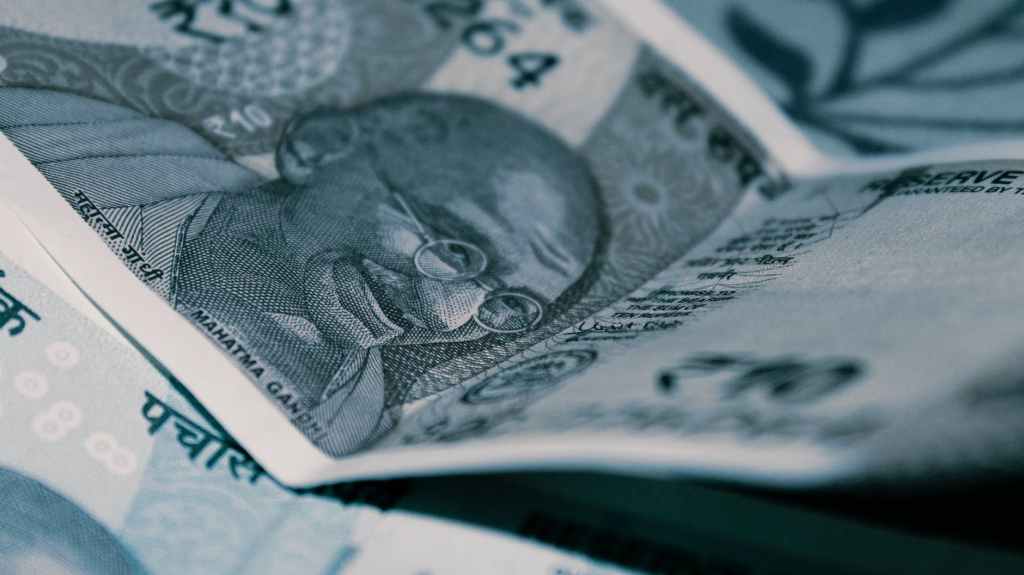
STRENGTHS OF INDIAN ECONOMY:
1. INDIA HAS A MIXED ECONOMY- Indian economy is a typical example of mixed economy. This means both private and public sectors co-exist and function smoothly. Some of the fundamental and heavy industrial units are being operated under the public sectors. The private sectors has gained importance. This makes it a perfect model for public-private partnership.
2. AGRICULTURE-Agriculture being the maximum pursued occupation in India. It plays an important role in its economy as well. Around 60% of the people in India depend upon agriculture for their livelihood. Green revolution and inventions in bio technology have made agriculture self sufficient and also surplus production. The export of agriculture products such as fruits, vegetables, spices vegetable oils, tobacco, animal skin etc.
3. AN EMERGING MARKET- India has emerged as vibrant economy sustaining stable GDP growth rate even in the midst of global down trend. This has attracted significant foreign capital through FDI and FII. This also makes it an emerging market for the world.
4. EMERGING ECONOMY-India bags the seventh position in terms of nominal Gross Domestic Product (GDP) and third in terms of Purchasing Power Parity (PPP). Indian economy has a place among the G20 countries.
5. FAST GROWING ECONOMY-Indian economy is well known for high and sustained growth. It has emerged as the world’s fastest growing economy in the year 2016-17.
6. FAST GROWING SERVICE SECTOR-The service sector, contributes a lion’s share of the GDP in India. The sectors like Information Technology, BPO have contributed to the growth of the economy.
7. LARGE DOMESTIC CONSUMPTION-With the faster growth rate in the economy the standard of living has improved a lot. The standard of living has considerably improved and life style has changed.
8. RAPID GROWTH OF URBAN AREAS- Urbanization is a key ingredient of the growth of any economy. There has been a rapid growth of urban areas in India after independence.
WEAKNESS OF INDIAN ECONOMY:
1. LARGE POPULATION-India stands second in terms of size of population next to China. Population growth rate of India is very high and this is always a hurdle to growth rate. The population growth rate in India is as high as 1.7 per 1000.
2. INEQUALITY AND POVERTY-There exist a huge economic disparity in Indian economy. The proportion of income and assets owned by top 10% of Indian goes on increasing. This has led to an increase in the poverty level in the society.
3. INCREASES PRICES OF ESSENTIAL GOODS-Even though there has been a constant growth in the GDP and growth opportunities in the Indian economy. The continuous rise in prices erades the purchasing power and affects the poor people, whose income is not protected.
4. WEAK INFRASTRUCTURE-Even though there has been a gradual improvement in the infrastructural development in the past few decades, there is still a scarcity of the basic infrastructure like power, transport, storage.
5. UNEMPLOYMENT-With growing youth population, there is a huge need of the employment opportunities. The Indian economy is characterised by jobless growth.
6. OUTDATED TECHNOLOGY- The level of technology in agriculture and small scale industries is still outdated and passed.
CURRENT INDIAN ECONOMY:
In 2019-20, India’s GDP was Rs 146 trillion. In other words, India had produced goods and services worth Rs 146 trillion that year. Then, in the last financial year, that is, in 2020-21, it fell to Rs 135 trillion. That’s the fall of minus 7.3% we were talking about earlier.
“India will be a global player in the digital economy” -Sundar Pichai, CEO Google
TIPS TO MAKE YOUR SPEECH FUNNY


1. QUOTE OTHER PEOPLE
This is probably the most easy way to get a laugh from the audience without much time to spend on it! You just have to do your homework, search for the quotes and its not necessary it should be from famous people but only remember it should make other people laugh.
2. VIDEOS AND PHOTOS
Use videos and photos which you find funny or has a bit of humour in it, tell stories connected with them, tell them what happened exactly, by doing this you will take off the pressure from yourself to be funny.
3. ANECDOTES, OBSERVATION AND PERSONAL STORIES
Try to remember an incident from your pasty where you find humor and if you find it funny then it will definitely put a smile on other people faces too. But remember don’t try to get the big laughter you just need a smile and that’s it!
CASE ANALYSIS- SUJATA SHARMA V. MANU GUPTA
Deciphering the Contours of Sujata Sharma v. Manu Gupta
- Introduction:
Sujata Sharma v. Manu Gupta was the first case in which the Hon’ble Delhi High Court granted the 1
right to become a Karta to the eldest female Coparcener of the Hindu Undivided Family (hereinafter
referred to as “HUF”). Such an approach by the Hon’ble Delhi High Court has generated a positive
impact by removing gender discrimination yet the same approach was not taken by satisfactory
means. The positive and negative component of the judgement is discussed at the length in the
present case comment. - Facts & Procedural History:
In the present case, the controversies were around the HUF named D.R.Gupta & Sons-HUF and Mr
D R Gupta was a Karta of this HUF. The said HUF has some movable properties and shares and a
long term lease on a bungalow situated in Delhi. Mr D R Gupta died on October 1, 1971, leaving
behind 5 sons and their families. Mr Kishan Mohan Gupta, the eldest son was then named Karta. Mr
Kishan Mohan Gupta’s eldest daughter is the plaintiff. All 5 sons died over time, and the 1st
defendant, who was the son of one of Mr Kishan Mohan Gupta’s younger brothers, proclaimed
himself as a Karta of the HUF by virtue of being the eldest living male member of the said HUF. After
the Hindu Succession (Amendment) Act of 2005 (hereinafter referred to as “2005 Amendment”), the
dispute arose between the plaintiff and defendant relating to who should be the Karta of the HUF. The
position of the law relating to whether the female Coparcener can become a Karta of the HUF was not
clear and the dispute came before the Hon’ble Delhi Court. - Issues:
This case involved numerous question of facts and mixed questions of facts and law. However, a
significant issue of law was as follows:
Whether, by virtue of the introduction of the 2005 Amendment, daughter being the senior-most
member of HUF can become a Karta? - Arguments:
4.1 Arguments from the side of Plaintiffs-
The learned counsel for the plaintiff heavily based her initial argument on the effect of the 2005
Amendment. By drawing attention to the said effect, she categorically argued that the effect of the
2005 Amendment is such that now the daughter is legally recognised as a Coparcener and shall be
having the same right in the coparcenary property that of a son . In addition to this, she also 2
established that there is an absence of controversy relating to the plaintiff being the eldest member of
the HUF. Thereafter, with an aim to establish the required qualification to become a Karta of the HUF
Conclusion:
The 2005 Amendment created a lot of confusion and by going through the fundamental change it also
generated the various dispute between the family members. Giving the extended effect to the 2005
Amendment, the Court in the case of Sujata Sharma v. Manu Gupta aimed at establishing gender
equality in the Hindu societal set-up. But by the given reflection of the judgement, it is axiomatically
established that the approach taken by the Court is not in consonance with the legal principles and it
suffered from incompleteness. Hence, the author is of the view that:
Mental Health
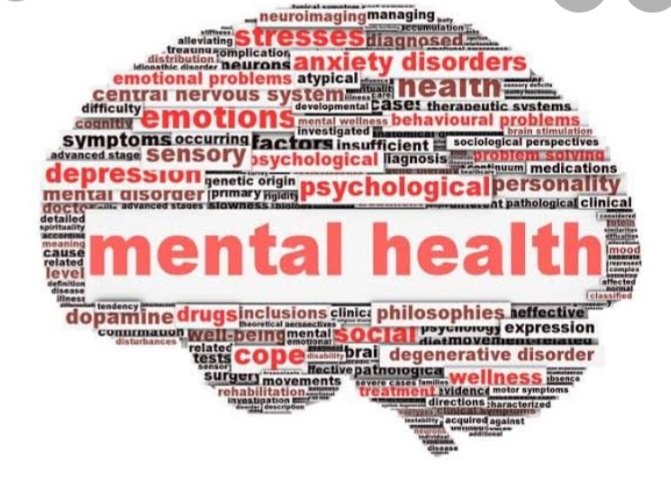
We human beings often tend to pay less attention to our mental health than our physical one, but we all should understand its heavy importance and admit the fact that they can be equally or even more dangerous than the physical issues so one should take immediate help of doctor or councilor in case some abnormalities or issues arises.
Importance of mental health :
Mental and physical health are equally important components of overall health. Mental illness, especially depression, increases the risk for many types of physical health problems, particularly long lasting conditions like stroke, type 2 diabetes and heart disease. Similarly, the presence of chronic conditions can increase the risk for mental illness.
Some mental illnesses :

Mental illnesses are among the most common health conditions in the united states.
* More than 50% will be diagnosed with a mental illness or disorder at some point in their lifetime.
* 1 in 5 children,either currently or at some point during their life, have had a seriously debilitating mental illness.
Causes of mental illness :
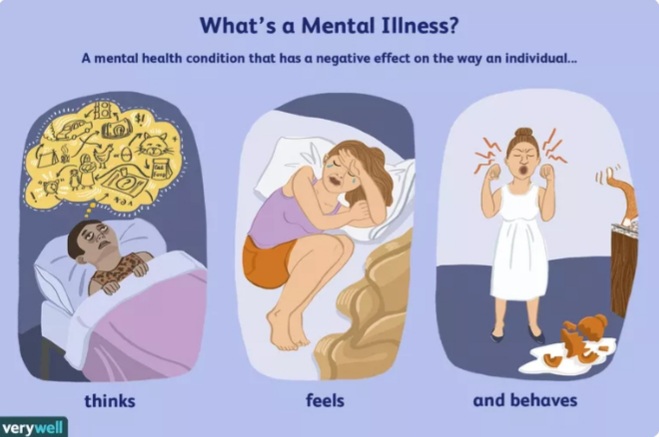
There is no single cause for mental illness. A number of factors can contribute to risk for mental illness, such as
* Early adverse life experiences such as trauma or a history of abuse.
* Experiences related to other ongoing medical condition, such as cancer or diabetes
* Biological factors, such as genes or chemical imbalances in the brain.
* use of alcohol or recreational drugs.
Types of mental illness :
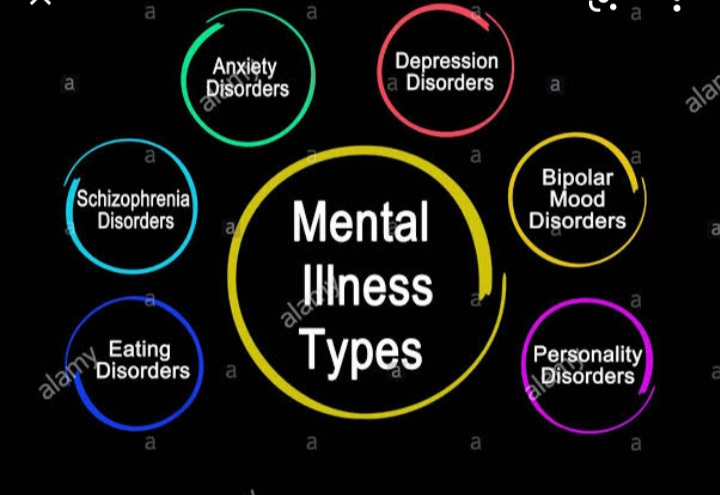
People can experience different types of mental illnesses or disorder and they can often occur at the same time.Mental illness can occur over a short period of time or be episodic. This means that the mental illness comes and goes with discrete beginnings and ends. Mental illness can also ongoing or long term.
There are more than 200 classified types of mental illness. Some of the main types of mental illness and disorders are listed below; however; this list is not exhaustive.
Anxiety Disorders :
People with anxiety disorders respond to certain objects or situations with fear and dread or terror. Anxiety disorders include generalized anxiety disorder, social anxiety, panic disorders and phobias.
Hyperactivity Disorder :
It is one of the most common childhood mental disorders. It can continue through adolescence and adulthood. People diagnosed with ADHD may have trouble paying attention, controlling impulsive behaviors or be overly active.
Disruptive Behavioral Disorders :
It involves a pattern of disruptive behaviors in children that last for atleast 6 months can cause problems in school, at home and in social sitauations.Behavioral symptoms can also continue into adulthood.
Depression and other mood disorders :
While bad moods are common and usually pass in a short period, people suffering from mood disorders live with more constant and severe symptoms. People living with this mental illness find that their mood impacts both mental and psychological well- being, nearly evry day and often for much of the day.
Eating Disorders :
Eating disorders involve obsessive and sometimes distressing thoughts and behaviors including
* Reduction of food intake
* overeating
* Feelings of depression or distress
* concern about weight, body shape, poor self image
Personality Disorders :
People with personality disorders have extreme and inflexible personality traits that cause problems in work, school or social realtionships. Personality disorders include antisocial personality disorder and borederline personality disorder
Substance use Disorders :
Substance use disorders occur when frequent or repeated use of alochol and or drugs causes significant impairment, such as health problems, disability, and failure to meet major responsibilities at work, school, or home. Substance use problems can be fatal to the user or others. Exsmples include drunk driving fatalities and drug overdoses.
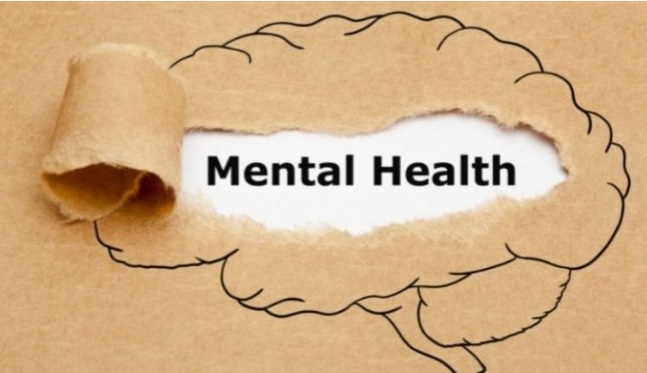
In this busy world our brain gets a lot stressed and its very important that we should take due care of it, some of the practices which will help us to do better with our mental health are:
- Yoga plays a great role in keeping our mind calm and also helps us to focus and concentrate on things. It also helps us deal with tough situations and gives us the strength to stay away from negativity.
- Exercising regularly is a key to healthy body and we all know that a healthy body and a healthy mind goes hand in hand, so we must ensure that we exercise daily to keep ourselves fit.
- The environment that we stay in also the company with which we spend time also plays a major role we should be extremely aware while selecting our company and in case we are not able to adjust we should walk away.
- Food is the fuel and is of immense importance we should ensure that we are not nutrient deficient also we should ensure that we intake enough amount of water daily.
Some believe in ‘KARMA’, some doesn’t.


If karma works, why are so many corrupt people successful? Why do good people have to struggle?
Karma, as a concept, was the idea of cause and effect translated through multiple lives, not just through one.
That by living a good life now and being kind and happy, you will create a positive start for whatever meets you after you pass away.In this sense, Karma isn’t something we will feel any effects of now and is something we will only come to see once we meet our next life.However, even if we do take out that concept the idea is still one of Cause and Effect.Good deeds cause good things, and bad deeds cause bad things, but it never said that we had any control as to what things we gain from what deeds.
When talking about Karma we assume that it is all one big ball of yarn.Different colored strings are so intertwined in this ball that it looks like a rainbow colored sphere where everything is connected.However, the truth may be a little different.
What if Karma did not work like we assume it does?
What if you cannot just treat others nicely and make more money because those two are not connected?
What if you actually had to pull on the money string to get money karma?
And what if, by doing well on the ‘treating others’ string you simply get others to treat you better too?
But then again, maybe that would not be Karma anymore but a very straight-forward matter of cause-and-effect. Most of us do not like this explanation because it means we cannot be as comfortable as we have been. We like the idea of being able to pull on a string that comes easiest to us to uplift our entire lives, for some things just do not come that easy to us. But maybe that is where we have been wrong in what we think Karma is all about. Maybe the successful, but corrupt people, just knew what strings to pull to get to success and have that area of life in order while the rest is crumbling around them. And maybe we do not know how to pull the strings of success so we struggle in a world of niceties and laziness.

Honestly, I do not know how Karma works or if it does. I am probably wrong about it all. Maybe we all are. Karma might just be an idea we tell ourselves to feel more justified in being nice and treating others kindly, but maybe it matters not one bit.
‘Who knows?’
The thing is that it clearly does not work as simply as we make it out to work, for we do see contradictory examples everywhere. But if we take the idea of the ball of yarn, I believe we get a lot closer to how Karma may truly work.
For if you work on your finances every day, if you are charitable and treat others at your job well while still fostering the belief that money will find its way to you, chances stand much better you do create more money for yourself. Psychology supports this concept through things such as the Confirmation Bias, Self-Fulfilling Prophecies and Selective Attention. You will likely find more opportunities and therefore more successes in this area if you do more good deeds here, which is the whole point. If you pull on the green string you will get greener results, but you may not get green results by pulling on the red string. You cannot just do good to get good things returned to you in a completely separate area of life.

Successful people, as corrupt as they may Be, often at least have something they know about success.
Some cheat their way through, others lie their way through, and others hide the truth or weasel their way through with other people, but as long as they find a way that means there has to be something they know we do not. And while we go through life being honest, nice and hard-working there is clearly something that is not leading to more success. That does not mean you have to stop being honest, nice or hard-working, but rather that it may be time to learn about success and money instead of relying on Karma to do it all for you. It’s easy to say that we could just be as corrupt as they are and then we’d be rich and famous too, but I believe it is a little more complicated than that, for there are already quite a few corrupt but unsuccessful people out and about.
Corruption is not the string that will lead to success either.
It’s easy to point the finger towards others but maybe we have to ask ourselves what the things were we did and did not do. Maybe we got the Karma, but maybe it was just by getting something we did not want to get. If you have your health, if you have people that care for you, if you have a roof over your head and clean water, then you already have more than most, which may mean your Karma is quite positive.
Whether or not I am right with my assumptions does not really matter. If I am not and Karma is supposed to work in a way where pulling one string leads to random, but positive, results, then maybe there is just something wrong with the system or maybe you did not yet pull hard enough. Either way, even then learning about success and money and taking actions that lead to results you want to have may just be more reliable way to go.
For if Karma does not exist at least this way will give you more opportunities to create the life you want to create.
I, for one, will take the route that gives me the most likely chance to create the life I want, and if that means doing extra work then so be it!
What about you?
Indian Cricket
Tokyo Olympics is nearing. Tamil Nadu Premier League ( TNPL) starts today ( Monday 19th July). India Vs England Test Series enclosing 5 Test matches starts on August 3. In the middle of all these and Covid-19 pandemic, India toured Sri Lanka to play 3 ODIs and 3 T20s. India have sent a B-team to Sri Lanka for this tour as the main team is in England now. Yesterday India played their first ODI against Sri Lanka. Two new faces made their debut yesterday. They are new for the International arena but not for India. They are Suryakumar Yadav and Ishan Kishan. Suryakumar Yadav has played quality cricket for years and have been impressive for last 3 years. Ishan Kishan, at the age of 23 impressed the selectors through his consistent IPL performance. Both performed very well for Mumbai Indians in the IPL. Also both made their T20I debut in March in the series against England. They both scored 50 in their T20I debut. Now together they made their ODI debut. It was also Ishan Kishan’s birthday yesterday.
Team India – Shikhar Dhawan (c), Prithvi Shaw, Ishan Kishan (wk), Manish Pandey, Suryakumar Yadav, Hardik Pandya, Krunal Pandya, Deepak Chahar, Bhuvaneshwar Kumar, Kuldeep Yadav, Yuzvendra Chahal.
Team Sri Lanka – Avishka Fernando, Minod Bhanuka(wk), Bhanuka Rajapaksa, Dhananjaya de Silva, Charith Asalanka, Dasun Shanaka(c), Wanindu Hasaranga, Chamika Karunaratne, Isuru Udana, Dushmantha Chameera, Lakshan Sandakan.
Other than the debuts, two good things happened for Team India yesterday. One was the return of Kuldeep and Chahal combo. Other was seeing Hardik Pandya bowling.
Let’s see the first thing now. Yes, Kuldeep and Chahal are back. They are playing together after 2 years since the 2019 World cup. Their performance in International cricket was not as per the expected standards. Many ups and downs. Going in and out of the team. Kuldeep traveling with the team in every tour and not getting any chance of playing. Everything came to an end yesterday when they played the game. Not only just playing, they also took 2 wickets each. They controlled the middle overs with stability. They haven’t gave runs easily. They also picket wickets at necessary intervals.
Then coming to Hardik’s bowling, he bowled 5 overs giving 34 runs and picking a wicket. He came back as an all-rounder to the team. It is a really good sign for him and also for the nation. This will help the team to maintain balance in bowling and batting units in the T20 World cup coming this year after IPL.
Krunal Pandya was impressive with his economy. Prithvi Shaw scored a quick fire 43 at the start of the innings. Manish Pandey gave balance in the middle overs but he failed to score much. Above all, the captain Shikhar Dhawan scored 86* and took the innings deep and won the match. Suryakumar Yadav impressed at the end of the innings.
Sanju Samson was injured. So he couldn’t make into the playing 11 yesterday. He had a ligament injury. Many expected him to be in the playing 11 as he smacked the bowlers in nets and in the practice matches. We’ll expect him in the next match tomorrow. Bye.
#staysafe
5 best affordable headphone July 2021.
Are you a music lover too? Check out these five amazing budget headphones.
- Sony MDR-XB550AP Wired Extra Bass On-Ear Headphones.

Sony has been producing audio equipment for many years and is capable of producing high-quality portable headphones that seldom disappoint clients.
The Sony MDR-XB550AP is a small and light speaker that weighs only 190 grammes. Sharp colours were chosen by Sony to give these headphones an edgy look. When it comes to wired headphones, you won’t have to worry about audio compression or battery life.
Red, Black, and Blue are the three colours available for the headphones.
The headphones’ finer features will leave you speechless. You’ll note that the earcups have a rough surface and are somewhat marbled.
The wire on these headphones is quite durable. When you store it in your bag, it will retain its shape and will not tangle.
Key specification:
- In-line mic for hands-free calling
- Tangle-free flat serration cord
- Portable and revolving folding design
- Matte finish
- Cord-length – 1.2 meter.
- Sensitivity – 102dB, Frequency Response – 5Hz-22,000Hz, Impedance – 24 ohm.
- Cushioned ear pads
- 30mm dynamic driver unit
- 1-year warranty.
Pros
- The earcups are quite soft and plush and allow you to wear for a long duration sans any discomfort
- The headphones work in conjunction with all other sounds.
- Good Bass if you’re looking for extra bass.
- The headphones sound quite precise, controlled, and tight thus leaving you engaged and impressed
- You can also attend a call without any hassle
- Offers you an incredibly great value
- The headphones offer great durability
Cons
- Not extremely loud.
- Headphone foams can get soiled after a year or two (replaceable).
- Active noise cancellation is missing
2. JBL Tune 500 Powerful Bass On-Ear Headphones

If you’re looking for a pair of headphones that won’t break the bank, the JBL Tune 500 is a good option. Also, if you enjoy listening to contemporary music, you will be completely happy with these.
The JBL Tune 500 has a foldable and lightweight design. You’ll have the choice of purchasing the headphones in one of four beautiful hues. While travelling, the strong and flat cable can efficiently maintain the cable tangle-free.
The concept for travelling, listening to music, and playing games while on the go.
Key specification
- Quick launch access to Google Assistant and Siri
- 12 months manufacturing warranty
- Compatible with Android and IOS mobile, tablet, laptop, and audio player
- It weighs 150g
- One button remote/mic
- Tangle-free flat cable
- Requires a Li-ion battery
Pros
- You will get good cushioning on the headband and it sits quite firm against ears.
- The button lets you play/pause, skip tracks, and answer the phone calls
- The terminations of the headphones appear to be well-insulated
- The small yet foldable design of the on-ear cans make them quite portable
- The frequency range of the headphones is 20-20,000 Hz
Cons
- May not excite bass heads and audiophiles looking for studio-grade audio.
- Overall a good mix of sound and ergonomics – not excel in any field.
The headphones allow you to enjoy clear audio for music, calls, and games. When you buy the headphones, you are assured of a trustworthy headset for daily chores that may include video calls with family members and friends.
3. Boat BassHeads 900 Wired Headphone with Mic

The headphones’ super extra bass allows you to experience a shockingly strong and dramatic bass at an inexpensive price.
The sound stage will be more grounded, and the frequency response will range from 20 to 20,000 Hz. The headphones’ sleek and small form makes them extremely portable.
Furthermore, the on-ear headphones with rotating ear cups offer a flexible fit and a pleasant fit for all users.
Key specifications
- Designed for all 3.5mm supported device
- On the ear
- 12 months warranty
- In-line microphone
- Tangled-resistant cable
- 40mm Neodymium drivers
- Weighs 150 g
Pros
- Offers flexible wearing and comfortable fit for all users
- The headphones are available in sleek, compact, and lightweight design.
- The travel-friendly headphones are easy to store.
- The price is quite affordable.
- The padding in the device helps in blocking external noise.
Cons
Average comfort and they don’t sound very natural and miss on lows and highs.
4. Sony MDR-ZX110AP Wired On-Ear Headphones

The Sony MDR-ZX110 wired headphones have 30 mm dynamic drivers for incredible sound. The cushioned earpads provide a lengthy period of pleasant use.
Almost all soundtracks feel sharp and rhythmic through the headphones. These headphones have a well-balanced sound with no excessive bass or treble.
These also have a wide frequency range of 12Hz to 22KHz, allowing for a more immersive listening experience. On some of the most basic TWS headsets, you can hear the small beats that you might miss.
The enfolding shape prevents you from being distracted when listening to music or making phone calls.
Key specification:
- 30 mm dynamic driver unit
- On-ear headband
- Cushioned Earpads
- In-line microphone and controls
- Tangle-free cord
- Portable and Swivel folding design
- Weight – 120 grams
- Frequency Response – 12 Hz-22 kHz
- Impedance – 24 ohm
- 3.5 mm jack
Pros
- Good sound clarity
- Soft and comfortable cushions
- Handy and lightweight
- Durable
Cons
- Missing active noise cancellation
- Cable is fragile.
5. Sony MDR- XB 450AP (Bass King)

The headphones were created with electronic dance music fans in mind. Deep bass notes are made possible with Extra Bass technology.
Furthermore, it has the ability to efficiently enhance low-end frequencies, providing you with a memorable experience. The swivel design in the housing allows you to store your headphones flat, making them ideal for travel.
Key specifications
- Weighs 165 g
- Wired extra bass headphones
- Tangle-free wire
- Frequency response 5 -22000 Hz
- Available in 3 colors
- 30 mm powerful bass
- Wired 3.5 mm single pin
Pros
- The headphones are equipped with cushioned earpads for maximum comfort
- Strong sensitivity for clear and loud sound
- The headphones offer an in-line remote and mic for hands-free calls
- Neodymium dynamic driver help in providing top-quality sound
Cons
- Sound Stage is not as wide as on Sennheiser.
 Eduindex
You must be logged in to post a comment.