While mass vaccination drive is going on around the whole globe,news of emergence of Third wave of coronavirus have started to surface. WHO (world Health organisation) have also warned about the third wave in Europe. Cases recorded in this wave are of ‘Delta-variant’ of coronavirus.
Second wave of coronavirus caught us all off-guard and hit us hard and many lives were lost and there was a State of panic amongst us all for few months, due to this wave of coronavirus. After, passing of this second wave, people flocked the hill stations and flouted covid norms. Even, in markets people are walking without masks and not taking necessary precautions.
Tourists in Manali
Alarmed by this situation government of India have warned the citizens about this 3rd wave. Lav Agarwal, Joint Secretary, Health Ministry, on Tuesday said that the third wave of Covid-19 may be caused due to the gross violation of covid appropriate behavior. He told that :
We would like to request to everyone- when we talk about the third wave (of COVID-19), we are taking it as a weather update and not understanding its seriousness and our responsibilities associated with it
Lav Agarwal (joint secretary, Health ministry, GOI)
According to union health ministry data on Tuesday there were 32,906 new cases of Covid-19 and 2020 related fatalities, which pushed the overall tally to 30,905,819 and the death toll to 410,784.
Markets are open and govt offices and school’s are running with 50% capacity, but the way in which common people are violating the covid-19 precaution guidelines, day is not far when we’ll have to pay for this type of behaviour. If situation remains like this, then the government in order to control the spread may impose lockdowns and come up with strict measures.
Hill Stations will be there,if we’ll be safe,then we can visit there later on. We need to learn from our mistakes commited during the second wave of pandemic and try not to repeat them this time.
Government is preparing on its behalf to face up with the inevitable third wave of pandemic. We all as a responsible citizen should adhere with the government guidelines and take precautions,then we can defeat this pandemic.
When we explore the musical industry every country in the world is about different culture, articulation, creation and meaning of music which make it stand out from others and make more fun, starting with this list of most musical countries of world, the first is:
1.THE UNITED KINGDOM:
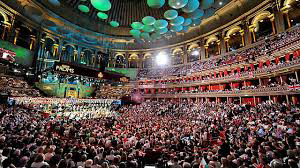
The country has been a great producer and source of musical creation, with its artistic base from history of the United Kingdom, from church music, western culture with ancient and traditional folk music.
In 20th century, musicians from the UK became dominant in musical culture, which led to explosion of POP and ROCK music acts. Hence, the UK has become one of the world’s largest music industries today, with many British artists influencing the modern music.
Each country as mentioned above has different form of folk music:
English Folk Music
Northern Irish Music
Scottish Folk Music
Welsh Folk Music
Popular form of music from the UK includes: English Folk, Jazz, Rapping, Hip-Hop, Pop, Rock, British Folk Rock, Drum and Bass, Heavy Metal.
With that the UK has given us the most famous Music Artist we have at present and we’ve been listening to them from very beginning: The Beatles, Queen, The Who, The Rolling Stones, Pink Floyd, David Brownie and so many more.
2. THE UNITED STATES:
Music here reflects the country’s multi-ethnic population through a diverse array of styles. It is influenced by music mixture from that of West African, Irish and Scottish.
The United States’ music is heard by people all over the world and they love it. In 17th Century, after Native American played their first music, immigrants from different countries of the UK, Ireland, Germany bought their own musical instruments and African slaves bought in their own musical tradition.
The US also had documented folk music and recorded popular music in ethnic styles of Ukrainian, Irish, Scottish and Jewish among other communities.
Popular music genres of the US includes: Blues and Gospel, Jazz, R&B, Rock, Metal, Punk, Techno and Latin American Music.
Popular Artists: Eminem, Taylor Swift, Rihanna, Madonna, Beyonce, Bob Dylan and so many more.
3. GERMANY:
Germany comes up as a largest music market in Europe and third in the list of world music industry.
German classical is most performed in world, including Pop Rock, Punk, Disco and Indie. German Electronic music gained global influence along with Electro and Techno scene being internationally popular.
Germany hosts large rock musical festivals annually. One of them is: Rock am Ring Festival, the largest in world. Since 1990, Berlin has developed a diverse music and entertainment industry.
Coming to Classical Music, Germany is the largest in its development. They host the largest Classical Summer Music Festival: Schleswig-Holstein Musik Festival.
Classical Music of Germany includes:
Chorale (Vibrant and Energetic)
Opera
Baroque Period
Classical Era
Romantic Era
Apart from this included the Folk and English Popular music from Germany which are great hit among the people of world.
4. IRELAND:
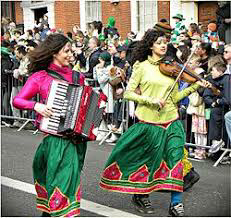
Irish music has been created in various genres in Ireland. The indigenous music is known as Irish Traditional Music which has been vibrant for ages despite globalizing cultural forces. Even after influencing from all the music from Britain, The US and other cultures, Irish music has kept its influence and has impact on modern rock music.
Some of the fusion artists have attained mainstream success.
Irish has produced Traditional music, popular modern music, Folk music and Classical Music.
Popular genres developed there were: Pop, Rock, Techno, Rock and Roll, Fusion music.
Famous Artists: Westlife, Van Morrison, Boyzone and the Cranberries.
5. INDIA:
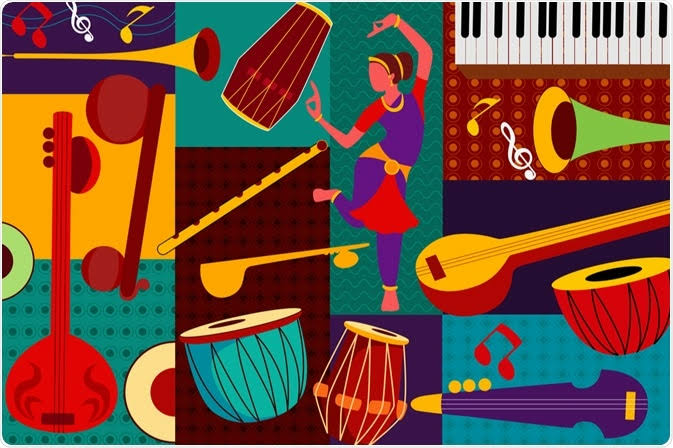
Music of India stands 5th in the list of world musical countries, including all genres classical, folk, Indian rock and Indian pop. Music here began as an integral part of socio-religious life.
Indian Music has numerous genres:
Classical Music- Hindustani and Carnatic Music (Dhrupad, Dhamar, Sadra, Raga, Tala, Pallavi)
Light Classical- Thumri, Sangeet, Qawwali, Ghazal
Folk Music- Which is different from different states of India because of diverse culture
Then we have Indian Pop, Rock and Metal, Indian Rock, Raga Rock, Jazz and Blues.
6. MEXICO:
The music culture here is diverse and is a mixture of musical genres and performances styles and influence majorly by culture of indigenous people of Mexico and Europe.
They have wide classification of music starting from:
Traditional Music which is majorly divided in two forms- By musical form and styles –Corrido, Mexican Danzon, Mexican Bolero and By types of ensembles- Banda, Mariachi and Marimba.
Popular Folk Music had Grupera influenced by the styles of cumbia, norteno and reached heights of popularity in rural areas.
Popular Music had genres like Pop, Rock, Latin Alternative, Mexican Ska, Electronic.
Whereas Art Music includes Operas, Classical and Jazz which makes Mexican music culture rich of different forms and artistic editions.
7. ITALY:
Italian music is a traditional marker of Italian national culture and ethnic identity, which holds important position in society and politics. Music innovation- harmony, notation and theatre- helped in development of Opera.
Italian folk music is an important part of musical heritage of country and includes diverse arrays of styles, dance and instruments.
Characteristics of the music majorly revolved around- Society and Politics.
Classical Music included- Ballet, Sacred and Instrumental Music, Experimental Music
Folk music had deep and complex history depending on regions, songs, dance and instrumentation.
Popular music consisted of: Modern Pop, modern dance, imported styles.
Along with rich music culture, Italy hosts a lot of large music festivals – Sanremo Music festival being one of those.
8. SWEDEN:
Music of Sweden shares a touch of Nordic folk Dance with its neighboring Northern Europe Countries. The instrumental genre is the biggest in Swedish Traditional music.
Swedish music also included more modern pop and modern influences. Sweden is one of the world’s most successful exporters of popular music.
Classical music included Choral genre.
Modern music again had- Jazz, Pop, Bubblegum dance, hip-hop, rock, punk rock and heavy metal.
Progressive and Jazz-rock music along with electronic gained much popularity from the country.
9. JAPAN:
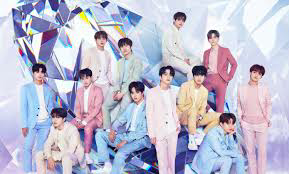
They have wide array of performers from traditional and modern music. Japan is the largest physical music market in world. Traditional music here differs a lot from the western music.
Traditional and Folk Music- Minyo – which had 4 categories- Work, Religious, Gatherings and Child songs
Okinawan Folk music- dance songs, celebratory music.
Western music consisted of traditional pop music, western classic and orchestras.
Popular music came with Jazz, Idol music, dance and disco music, rock and heavy metal along with Theme music, game music, noise music.
10. AUSTRIA:
Slavic and Hungarian forms influenced the Austrian Music culture. Yodeling, was a form of singing involving the rapid and repeated changes of registers, was called ‘juchizn’ by Austrians.
Then with upcoming technologies came the development of Rock and Pop music in Austria and they started hosting annual music festival show casing European Music Arts.
“A person lives a single life, but a reader lives multiple lives”. A quote that inspired me to get into reading. How do you define reading? Well, Wikipedia defines it as “A process of taking in the sense or meaning of letters, symbols, etc., especially by sight or touch”. But is that all a habitual reader goes through? Obviously not. This is just a definition that describes the generalized view. If you call a bibliophile to describe reading, He or she may say ” Reading is a journey, an experience filled with all the emotions and knowledge”.
Reading is not only for experience, But there are many benefits of making reading a habit:
it empowers your brain
Many researches have shown that reading involves a complex process in your brain. There are complex networks in brain which strengthen through reading. It keeps you mentally stimulated. Reading is an exercise to your brain. And these exercises will make you smarter. Reading improves brains connectivity.
it gives new ideas
Reading helps in detecting patterns, solving puzzles and problems. You are actively thinking while reading. This will arise new ideas to the problems you were having trouble to solve or it may show a new approach to the same. You may get situations in life where references from the books you have read will guide you or solve your problem.
it helps you to write better
When you read a good book, which is well written and executed, brain absorbs that technique. reading multiple types will increase your skill. These skills you acquired while reading, that technique you appreciated when you noticed it will unknowingly show up in your writing. This will increase the quality of your writing.
it influences your world view
While reading you are thinking using the writers mind. He will provide a new view to a same situation. Good things that you accumulated during reading process will reflect in your opinions. They influence and improve the way you approach the world. It broadens your perspective and makes you question and reexamine your beliefs and judgements.
reading increases your knowledge
When you love a specific genre or a type of book, you effortlessly gain all the knowledge given within the book. This will make you smarter effortlessly. Books will have information about history, economics, science, culture, customs and what not. You will get all of these information without taking courses in colleges.
reading reduces stress
When you read a good book, it will help you reduce all your stress either from work or from personnel issues. Many researches have also proven the same. Reading can ease tension in your muscles. It is like a mini break but without taking a break!
reading improve vocabulary
Reading more and more will introduce you to more and more new words. Unknowingly these words make their way in your daily vocabulary improving your language skill. A person with good conversational skill is preferred everywhere and a good vocabulary will increase your confidence also. This will definitely help in having a good career.
If all these things are not motivating you to read, here is another fact. Bill gates, one of the worlds richest man takes a braked named “Think break” where he isolates from the other distractions of the world and just reads to have new ideas. He takes this break twice a year and you don’t need a proof to show how they end up.
It’s not exactly news that Greenland and Antarctica are shedding ice at record rates.
But in 2016, an eyebrow-raising idea ricocheted through the scientific community: It was possible, the authors said, that a warmer planet could push the towering ice cliffs at the fringes of the Antarctic ice sheet to essentially self-destruct, collapsing like a set of dominoes.
What was extra shocking was just how fast the ice could retreat under this runaway scenario, leading to about three feet of sea level rise fed from Antarctica alone by 2100—much faster than previous estimates, which generally proposed increases of only a few centimeters by the end of the century.
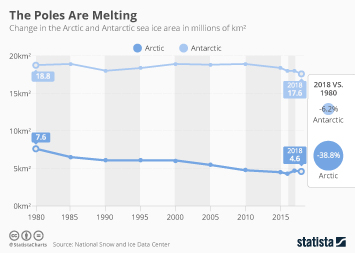
But two new pieces of research, published Wednesday in Nature, suggest a more measured retreat is likely in the coming decades. Both studies revise the estimates of just how much sea levels will rise by 2100 downward, suggesting that Antarctica could contribute somewhere between about three to 16 inches to the world’s oceans under the “worst case” scenarios.
Adding that to the other components that make up sea level rise—how the ocean expands as it warms (which will likely add about 10 inches), the melt from mountain glaciers (about six inches), and changes to the amount of water stored in lakes and rivers on land (one and a half inches), and the total is still a daunting number somewhere between just under two- to over three- foot range.
That is in no way a get-out-of-jail-free card, say the authors of both studies. It’s still an enormous amount of extra water that could slosh up onto coasts, enough to debilitate cities from Boston to Shanghai. But the most drastic impacts of sea-level rise, they say, are likely to kick in only after the turn of the century, giving communities around the world more time to adapt.
What’s more, changes to the ice sheets in both Greenland and Antarctica could also trigger planet-wide shifts in temperature, ocean circulation, and many other parts of the climate system, says says Nick Golledge, a climate scientist at the Antarctic Research Center of the University of Victoria, Wellington, and the lead author of one of the studies.
“The sea-level estimates maybe aren’t as bad as we thought, but the climate predictions are worse,” says Golledge.
What happens in the Antarctic…
In a separate analysis, the team led by Golledge found that their ice sheet model could match the modern and Last Interglacial records well—also without MICI. Warm water soaking the base of the ice sheets, they found, was enough to force key parts of the ice sheet to melt away.
They used that model to predict how the Greenland and Antarctic ice sheets will speed up their melting in the coming decades. If the world continues to burn greenhouse gases unabated, following the worst-case scenario, the authors predict that the two ice sheets will add about 10 inches to the world’s oceans by 2100.
That number is similar to what the IPCC projected for the “worst case scenario” in their last comprehensive report in 2013, predicting about nine inches of sea level rise from Greenland and Antarctica. It is smaller than the number predicted by the 2016 study, which said that Antarctica alone might feed more than three feet of sea level rise into the oceans by 2100.
The sea level rise estimates may be lower, but the overall picture of how melting ice sheets will affect climate is grim.
Golledge and his colleagues also attached their ice sheet model to a global climate model, in order to see how the impacts of ice melting at the poles would influence climate and oceans in farflung parts of the world (in the past, ice sheet models have traditionally been run separately, primarily because computers haven’t been powerful enough to link them together).
Changes in the ice sheets, they found, could influence global climate profoundly—slowing down major ocean circulation pathways, skewing air temperatures around the world, and somewhat surprisingly, making climate more variable from year to year.
“What happens in the Antarctic does not stay in the Antarctic, and that’s what they show very clearly,” says Pattyn.
The impacts are already leaking out of the poles. “We’re living in a time when, even in the last few years, we have seen extreme weather events become even more and more common,” says Golledge. “Dealing with steady warming is easier, in many ways. But if things are just unpredictable and extremely variable from year to year—well, that’s a much harder problem for society to solve.”
The more you practice yoga, the more you’re building awareness in your body, The biggest thing to do as a beginner is to start and then stay consistent with your practice, remember that practice makes progress.
1. Mountain Pose (Tadasana)
This pose teaches one to stand with majestic steadiness like a mountain. The word ‘Tada’ means a mountain, that’s where the name comes from .Mountain Pose is the base for all standing poses; It involves the major groups of muscles and improves focus and concentration. Mountain pose may seem like “simply standing,” but there is a lot going on.
How to do it
Stand with your toes together and heels slightly apart hang your arms besides the torso.
Spread your toes and place your weight evenly on your feet. Firm your thigh muscles while rotating them inwards Relax your shoulders and roll them back and down.
As you inhale, elongate your torso and when you exhale release your shoulder blades away from your head. You may also put your hands in prayer position in front of your chest, or rest them by your sides.
Take long, slow, deep breaths in
Beginner’s Tip
You can check your alignment by standing against the wall initially. You can even raise your hands and stretch them. Breathe easy.
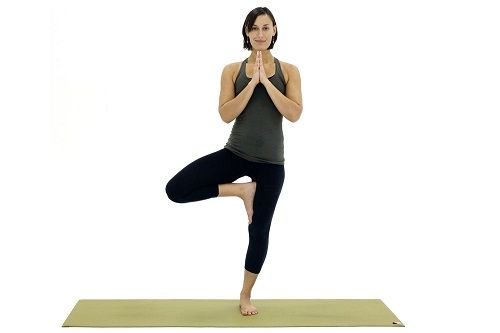
2. Tree Pose (Vrksasana)
Tree is an awesome standing balance for beginners to work on to gain focus and clarity, and learn to breathe while standing and keeping the body balanced on one foot. . It replicates the steady stance of a tree.
How to do it
Start with your feet together and place your right foot on your inner left upper thigh. Press your hands in prayer and find a spot in front of you that you can hold in a steady gaze.
Hold and breathe for 8-10 breaths then change sides. Make sure you don’t lean in to the standing leg and keep your core engaged and shoulders relaxed.
Beginner’s Tip
You can stand with your back braced against a wall if you feel unsteady in this pose.
3. Triangle (Trikonasana)
Triangle is a wonderful standing posture to stretch the sides of the waist, open up the lungs, strengthen the legs and tone the entire body.Triangle Pose is the essential standing pose in many styles of yoga.
How to do it
Stand with your feet wide apart. Stretch your right foot out (90 degrees) while keeping the leg closer to the torso. Keep your feet pressed against the ground and balance your weight equally on both feet.
Inhale and as you exhale Rest your right hand on your shin, ankle, or the floor outside your right foot, Stretch your left arm toward the ceiling.
Turn your gaze up to the top hand and stay in this pose for 5-8 breaths. Inhale to come up and repeat on the opposite side.
Beginner’s Tip
Place your back heel or the back of your torso against a wall if you feel unsteady in the pose.
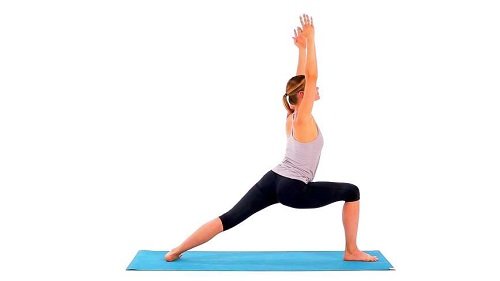
4. Warrior I (Virabhadrasana I)
Warrior pose is quintessential for building strength and stamina in a yoga practice. It give us confidence and stretch the hips and thighs while building strength in the entire lower body and core.
How to do it
Stand in Tadasana (Mountain Pose). With an exhale, step or lightly jump your feet apart. Raise your arms perpendicular to the floor (and parallel to each other)
Turn your left foot in 45 to 60 degrees to the right and your right foot out 90 degrees to the right. Align the right heel with the left heel. Exhale and rotate your torso to the right.
With your left heel firmly on the floor, exhale and bend your right knee over the right ankle so the shin is perpendicular to the floor.
To come up, inhale, press the back heel firmly into the floor and reach up through the arms, straightening the right knee. Turn the feet forward and release the arms with an exhalation. Take a few breaths, then turn the feet to the left and repeat for the same length.
Beginner’s Tip
When your are bending the front knee As a beginner you have a tendency to tilt the pelvis forward.You must lift the pubis up toward the navel and lengthen the tail toward the floor.
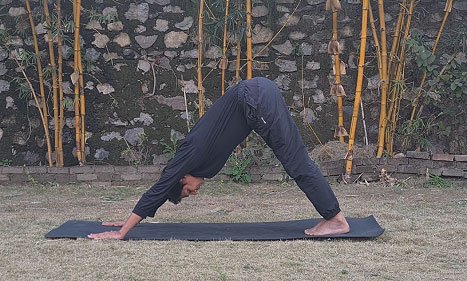
5. Downward-Facing Dog (Adho Mukha Svanasana)
Downward Dog is used in most yoga practices and yoga classes and it stretches and strengthens the entire body. It may be the first pose you learn as you begin a yoga practice. It acts as a transitional pose and can be a resting position.
How to do it
Come onto the floor on your hands and knees. With your hands slightly forward of your shoulders and knees below your hips. Spread your hands wide and press your index finger and thumb into your mat.
Exhale and lift your knees away from the floor lift the butt toward the ceiling. Straighten your legs as much as you can and press your heels gently toward the floor.
Your head should be between your arms, facing your knees, and your backs should be flat.
Hold for 5-10 breaths.
Beginner’s Tip
If you have difficulty releasing and opening your shoulders in this pose, raise your hands off the floor on a pair of blocks or the seat of a metal folding chair.
In terms of the snake species that do observe pets (such as corn snakes and ball pythons), what a snake has got to offer is this: they will become habituated to handling and tolerate it well. They’re pleasing to handle. They’re beautiful in color/pattern. They’re interesting to observe once they explore and eat. They’re extremely low-maintenance if found out correctly. They’re silent and may cause no damage to a home.
Pro: they’re really cool! Literally and figuratively
Con: cold blooded animals need a continuing heat source if you do not sleep in a tropical climate.
Pro: they’re relatively low maintenance compared to other pets, so no having to steer it or train it, celebrate birthdays, etc.
Con: they do not have much to supply within the way of companionship or connection. Best you’ll hope for may be a little snuggle time 🙂
Pro: you will not have many visitors over to your house once they determine you own a snake. (Psst… most of the people hate them.)
Con: you’ll be single, if not already.
Pro: tons of them are pretty hardy and may live a few years .
Con: you’ll got to find a Vet that treats reptiles – not always easy.
Pro: Snake housing is simplistic but you’ll get as creative as you wish if you actually want to spoil the small fella.
Con: The day you forget to latch the enclosure properly, snake are going to be on the loose and should never be seen again. Trust me on this 😦
Pro: They eat rodents
Con: They eat rodents.
if you would like one as a pet, knowing full well that they do not wish to be constantly handled (it causes them stress, that — regardless of how nicely you decorate their vivarium — they’re going to presumably spend the bulk of their time curled in their hide, which you ought to never use it as a standing symbol (not only does that damage their already negative reputation but it are often considered a sort of intimidation if you carry one arounf your body call at public), then maybe you’ll be considered right for a snake.
Ms dhoni is the guy who pulled me towards cricket. I’m out of adjectives to describe this man. He is the one who injected energy into t20 cricket. He is the epitome of success having achieved more than success. He has got the magic in him to attract even his haters through lofted dip shots. His debut , golden duck with a run out. That run out brought his emotions. His still known last match against the kiwis in the semis , again run short off inches, which brought the entire nation’s emotions. He isn’t like other cricketers he doesn’t play for us he only plays for the nation. He hasn’t taken a brake from cricket and has only taken break.
Positive thinking isn’t magic and it won’t make all of your problems disappear. What it will do is make problems seem more manageable and help you approach hardships in a more positive and productive way.
Positive thinking can be achieved through a few different techniques that have been proven effective, such as positive self-talk and positive imagery.
Here are some tips that to get you started that can help you train your brain how to think positively.
Focus on the good things
Challenging situations and obstacles are a part of life. When you’re faced with one, focus on the good things no matter how small or seemingly insignificant they seem. If you look for it, you can always find the proverbial silver lining in every cloud — even if it’s not immediately obvious. For example, if someone cancels plans, focus on how it frees up time for you to catch up on a TV show or other activity you enjoy.
Practice gratitude
Practicing gratitude has been shown to reduce stress, improve self-esteem, and foster resilience even in very difficult times. Think of people, moments, or things that bring you some kind of comfort or happiness and try to express your gratitude at least once a day. This can be thanking a co-worker for helping with a project, a loved one for washing the dishes, or your dog for the unconditional love they give you.
Keep a gratitude journal
Studies Trusted Source have found that writing down the things you’re grateful for can improve your optimism and sense of well-being. You can do this by writing in a gratitude journal every day, or jotting down a list of things you’re grateful for on days you’re having a hard time.
Open yourself up to humor
Studies have found that laughter lowers stress, anxiety, and depression. It also improves coping skills, mood, and self-esteem.
Be open to humor in all situations, especially the difficult ones, and give yourself permission to laugh. It instantly lightens the mood and makes things seem a little less difficult. Even if you’re not feeling it; pretending or forcing yourself to laugh can improve your mood and lower stress.
Spend time with positive people
Negativity and positivity have been shown to be contagious. Consider the people with whom you’re spending time. Have you noticed how someone in a bad mood can bring down almost everyone in a room? A positive person has the opposite effect on others.
Being around positive people has been shown to improve self-esteem and increase your chances of reaching goals. Surround yourself with people who will lift you up and help you see the bright side.
Practice positive self-talk
We tend to be the hardest on ourselves and be our own worst critic. Over time, this can cause you to form a negative opinion of yourself that can be hard to shake. To stop this, you’ll need to be mindful of the voice in your head and respond with positive messages, also known as positive self-talk.
Research shows that even a small shift in the way you talk to yourself can influence your ability to regulate your feelings, thoughts, and behavior under stress.
Here’s an example of positive self-talk: Instead of thinking “I really messed that up,” try “I’ll try it again a different way.”
Identify your areas of negativity
Take a good look at the different areas of your life and identify the ones in which you tend to be the most negative. Not sure? Ask a trusted friend or colleague. Chances are, they’ll be able to offer some insight. A co-worker might notice that you tend to be negative at work. Your spouse may notice that you get especially negative while driving. Tackle one area at a time.
Start every day on a positive note
Create a ritual in which you start off each day with something uplifting and positive. Here are a few ideas:
Tell yourself that it’s going to be a great day or any other positive affirmation.
Listen to a happy and positive song or playlist.
Share some positivity by giving a compliment or doing something nice for someone.
Peter Theil in his book ‘ZERO to One’ has given descriptive pathways on every aspect of entrepreneurship. The author is a German-American billionaire entrepreneur and a co-founder of Pay-Pal and various other successful businesses.
In this book, the author suggests starting a business that is new in the market and the first of its kind. Doing what we already know how to do, takes the world from 1 to n, adding more of something familiar. But every time we create something new, we go from ‘Zero to 1’, and that’s how the book is named. “Creating something new is absolutely difficult, but not impossible”, says the author. One needs to find a problem, and a business should be erected by focusing on solving that problem. Similarly, a business can be focused on fulfilling a ‘need’ as well. There is a simple problem that we face every day ie. not able to find a cab or an autorickshaw easily. Bhavish Agarwal focused on solving this problem and started a business that each one of us is familiar with ie. OLA. Now people can easily book cabs/auto rikshaws through their mobile phones and can also get ‘pick-up’ service right outside their building/colony.
The writer further shares insights into his entrepreneurial journey. It was in the 1990s when the US was undergoing a recession. Unemployment was proliferating. Commercial use of the internet was allowed in 1992 and the ‘Mosaic browser’ was officially released in Nov 1993. With the advent of a search engine, people started seeing a prospective online business opportunity. Subsequently, there was a ‘Dot Com’ boom. Many startups were emerging in the US, precisely in Silicon Valley. There was exuberance all over. Some people started having 5-6 startups at a time. Pay Pal was a startup that provided a service of sending money through email. Initially, they did not get much of the anticipated response and audience. So, the team came up with an excellent scheme which proved to be very effective. They gave customers $10 for joining and $10 more every time they referred a friend. They gained thousands and thousands of new customers and an exponential growth rate. But this scheme wasn’t financially viable as they gave out money for getting customers. But seeing such exponential growth within a short span, they received a lot of funding later.
The author, further, suggests that one should not start a business related to a market that already has a lot of competition. For example, launching a new biscuit brand wouldn’t be a good idea because there already exist many biscuit brands and people are very familiar with them. So, why would they abandon other brands and buy yours? Rather, a lot of revenue has to be spent on marketing. On the other hand, by creating a monopoly, your customers do not have many choices and will continue to be your customers. Besides, a considerable part of your revenue can be spent on research and development, which would’ve rather been spent on marketing had we entered into a competitive market. You can update and develop your product from time to time which would help you gaining customer loyalty, just as Google does. Most people use Google despite there being many other search engines. They constantly upgrade their functions, bring in new features, etc.
Further, the author has emphasized the need to use technology. Amazon, when launched, claimed to be ‘Earth’s largest bookstore’. Amazon didn’t need to physically store any books. It only requested the title from its supplier whenever a customer made an order. To create a monopoly, your product/service should be 10 times better than your immediate competition. The author has profoundly highlighted the need for innovation and has quoted, “Always invent-Never stop”. Nokia was a successful brand, but since it did not cater to the developing times, it has completely vanished from the market.
While highlighting few aspects of Human Resource Management, the author has suggested that hire employees who are not just talented but will enjoy working with you. While hiring, sell mission and not perks. Paying salaries, in the initial stages would not be viable and would be difficult. Instead, you can give a stake (share) of your company to them. The initial employees of your startup are very important and giving them a stake in your company would make them feel like being the owner and would put in more effort.
Similarly, the author has excellently talked about every aspect of starting a startup and further scaling it. Hence, I awfully suggest you to read this book and start your journey to become a successful entrepreneur.
In todays life social media has become a very vital and essential part of our life. and the extent of its need is that at we cant live even a single day without social media. Its like we drink water to survive, same is for social media(for most of the people),we cant imagine ourselves without it. But first of all , the questions arises…how it has gained this much of importance?
If we look back.. (say 20 years back) those were the days when social media was not much popular not everyone knew about that but with the passage of time, it gained popularity. People started liking it because of its benefits. the relatives which lives far from our home we have no clue about them that what is going on their life was made possible due to social media. which we could have never imagined. it has not only changed personal life but also professional life. communication has been made much easier with the help of social media.
Through Social media people were able to adopt digital marketing instead of offline. these are some of the benefits of social media, due to which Social media became such popular and essential part in one’s life.
Advantages of social media
There are several advantages of social media , but some of the advantages that i would like to state are:-
1.It has made communication in both (personal and professional ) relations very easy and strong .we are just a message far from communicating with our loved ones .it has created a huge network to connect people .people are getting new friends through social media and in professional life also people are they are able to get lot of knowledge .
2.Through social media , we are able to share our qualities and skills to whole world which we sometimes hesitate to share face to face. Due to which we are able to connect with our mentors ,friends and role models .we can also express ourselves in social media.
3.carrier building is one of the most important use of social media. and social media allows us to connect with specific people or pages that keeps us updated about current affairs, that gives us tips and guide us to achieve our goals.
4. One of the most important use of social media nowadays is it keeps our mental state(if used properly) good. there are many things in social media that makes our mood happy and one of the most important thing in this is none other than ‘Memes’.
memes are anything (image , video or anything else) which has humor in it which is shared by internet users to each others. They are made from any film, real life incident or current affairs, that is liked by all over the world.
5.And last but not the least , during this pandemic social media helped us a lot. it created awareness among people to wear mask and maintain social distancing and many important information were exchanged through social media.
As earlier we discussed about advantages of social media, there are equal number of disadvantages of social media some of the disadvantages are listed below:-
1.Anything that is overused is harmful for us, same is applied for social media.one of the major problems of social media is that people spends lot of time in these social networking sites searching irrelevant things .That are of no use instead of using it the right way, people( specially teenagers ) are always busy in social media. They are addicted to social media, especially teenagers are busy with social media which eventually lead to cut off to society and physical meeting to each other.
2.cyberbullying is one of the biggest disadvantage of social media people are creating fake accounts and doing whatever they want with it without being traced.it has become very common and bully anyone on the internet .This also includes death threats ,fake rumor and discomforting anyone which can have effect in victims mental state.
3. Social media helps people in relationships but some people cheats others with fake feelings and totally wrong in formation about them.
4.Hacking is also a concern in using social media. People’s personal data and privacy can be easily hacked and can be misused .which can also cause financial loss to the person. We always hear news that famous celebrity’s or politician twitter account been hacked. this is a very serious problem. when these VIP people’s account can be hacked with such ease so what about us .This is very serious issue.
5.social media also cause health issues. People are not adopting healthy lifestyle they are busy in social media till late nights and waking up late in morning that is affecting health .people are not adopting healthy lifestyle which can cause some serious health issues.
conclusion
we discussed about social media and its effect in our life.we came into a conclusion that social media is very important and essential in one’s life but the miost important thing is to use it the right way and in a limited amount.
Trying to be positive when you’re grieving or experiencing other serious distress can seem impossible. During these times, it’s important to take the pressure off of yourself to find the silver lining. Instead, channel that energy into getting support from others.
Positive thinking isn’t about burying every negative thought or emotion you have or avoiding difficult feelings. The lowest points in our lives are often the ones that motivate us to move on and make positive changes.
When going through such a time, try to see yourself as if you were a good friend in need of comfort and sound advice. What would you say to her? You’d likely acknowledge her feelings and remind her she has every right to feel sad or angry in her situation, and then offer support with a gentle reminder that things will get better.
Negative thinking and the many feelings that can accompany it, such as pessimism, stress, and anger, can cause a number of physical symptoms and increase your risk of diseases and a shortened lifespan.
Stress and other negative emotions trigger several processes in our bodies, including stress hormone release, metabolism, and immune function. Long periods of stress increase inflammation in your body, which has also been implicated in a number or serious diseases.
If you’re feeling consumed by negative thoughts and are having trouble controlling your emotions, see a doctor. You may benefit from medical help, such as positive psychology or therapy. Persistent negative thoughts can be caused by an underlying psychiatric condition that requires treatment.
You won’t be able to undo years of pessimism and negative thoughts overnight, but with some practice, you can learn how to approach things with a more positive outlook.
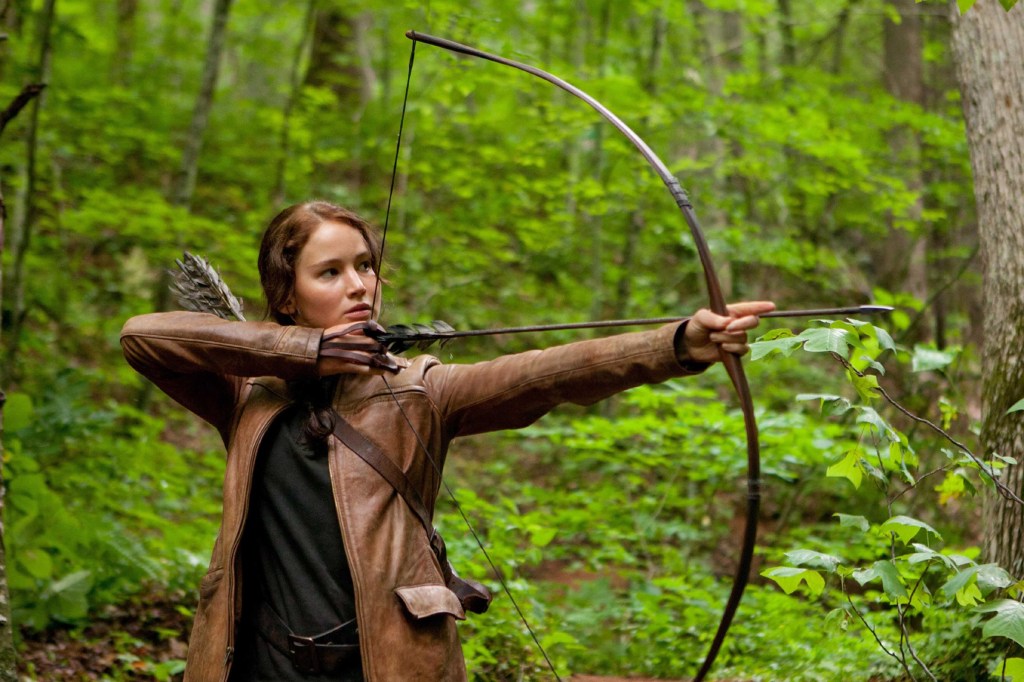
Suzanne Collins’s Hunger Games trilogy was published in the years 2008-2009. It is a fictional dystopian story it revolves around the lives of Katniss Everdeen and her family. Set in a post-apocalyptic nation called Panem, it captures the conflict between the rich capitol against its poverty stricken 12 districts. The history of the nation goes that the 13 districts were in war against the capitol. And after the Capitol’s victory over the 13 districts, the capitol starts an annual survival reality show wherein the districts competed against each other for a yearly supply of food. The contestants were chosen by the capitol and were usually children from each district. Hunger Games is basically a survival show where children are to kill each other to win victory for their district. This survival game takes place in an enclosed space named as the arena and the game is recorded and broadcasted live for the viewers of the capitol who enjoy seeing these children kill each other in combat.
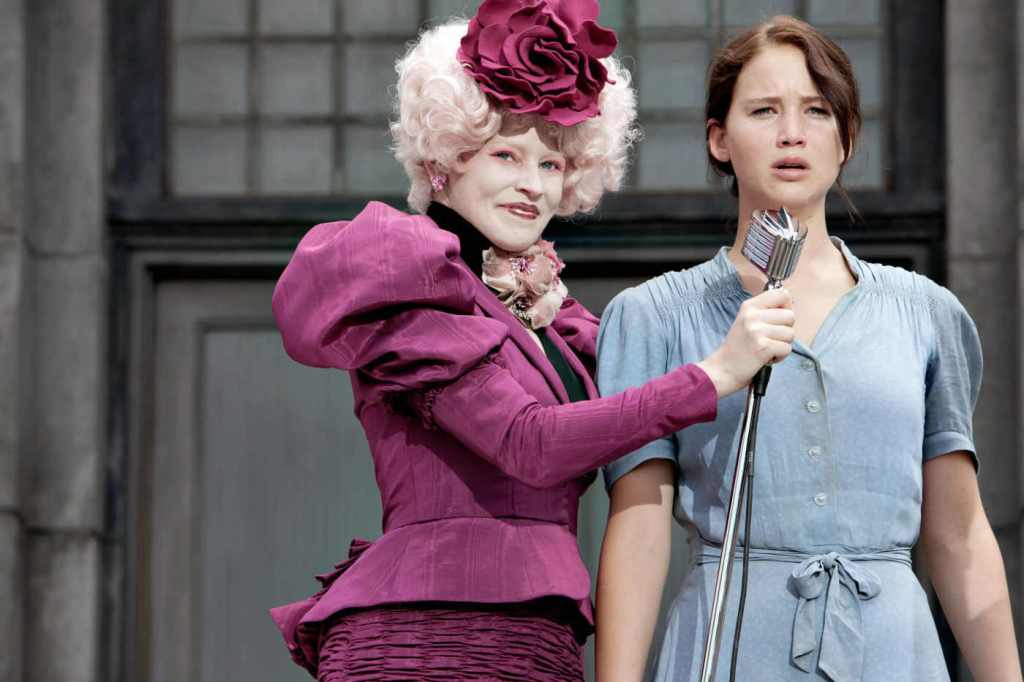
The most obvious power imbalance is between the two conflicting divisions. The capitol is luxurious, everyone lives a grand life filled with events and marvellous technology. On the other hand, the 12 districts are in utter poverty without even food for survival. The rich are perpetually rich, while the poor are perpetually poor. The ignorance of the rich is even more highlighted when Katniss observes that the people in Capitol take pills to puke out their food so that they can eat more. They spend money lavishly on clothing items and ornate jewelleries while the children in the Arena have to earn their admiration to be sent sponsored food and gifts.
“We had to save you because you’re the mockingjay, Katniss,” says Plutarch. “While you live, the revolution lives.”
When Katniss volunteers to join the games in the place of her sister, she takes on an important journey and unknowingly ends up becoming the face of resistance against the capitol. After Rue’s death, Katniss treads carefully yet vengefully in the Arena. She does everything that it takes to survive and bring food for her district. When Peta and her end up being the final two standing, they threaten to commit suicide together instead of killing each other. This essentially serves as a threat to against the Capitol’s power because indirectly, she showed control over their tyranny. The capitol game makers as well as the citizens are ruthless and sadistic. The more the children in the Arena suffered, the more they enjoyed and the more they sent items to the children. By actively fighting and resisting against this sort of injustices, her actions set forth a chain reaction of events including a full-scale revolt which ultimately leads to the downfall of the Capitol dictatorship.
“President Snow says he’s sending a message. Well I have one for him. You can torture us and bomb and burn our districts to the ground, but do you see that?” One of the cameras follows where I point to the planes burning on the roof of a warehouse across from us. “Fire is catching!” I am shouting now, determined he will not miss a word of it, “And if we burn, you burn with us!”
-Mockingjay
The power dynamic between the two warring units might seem like dystopia, but on a closer look we see that our world isn’t too far off. There’s a clear instance of hegemony and power imbalance between the weaker sections of a society and the more powerful sections. Despite being a young adult fictional story, The Hunger Games strikes a deeper chord with relation to the injustices happening all over the world.
You recharge your phone when it runs out of juice. You refill your gas tank when you’re running on empty.
But sometimes, you forget to do the same for your most precious possession: Your body (and the brain that’s inside of it).
Whether you love what you do, are in between jobs, or have a job you hate: You’re working. ‘Living’ is also a job. A pretty tough one, actually.
Just the act of getting up in the morning can be a daunting task. And I’m not even talking about all the responsibilities we have.
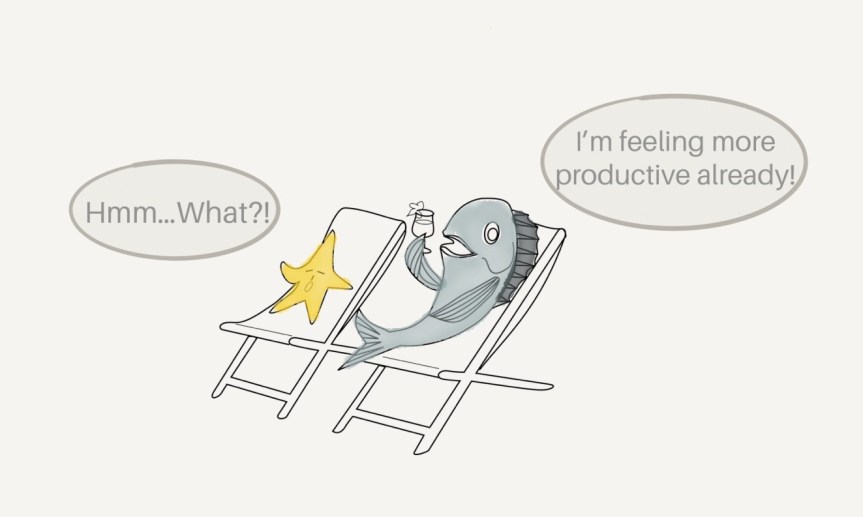
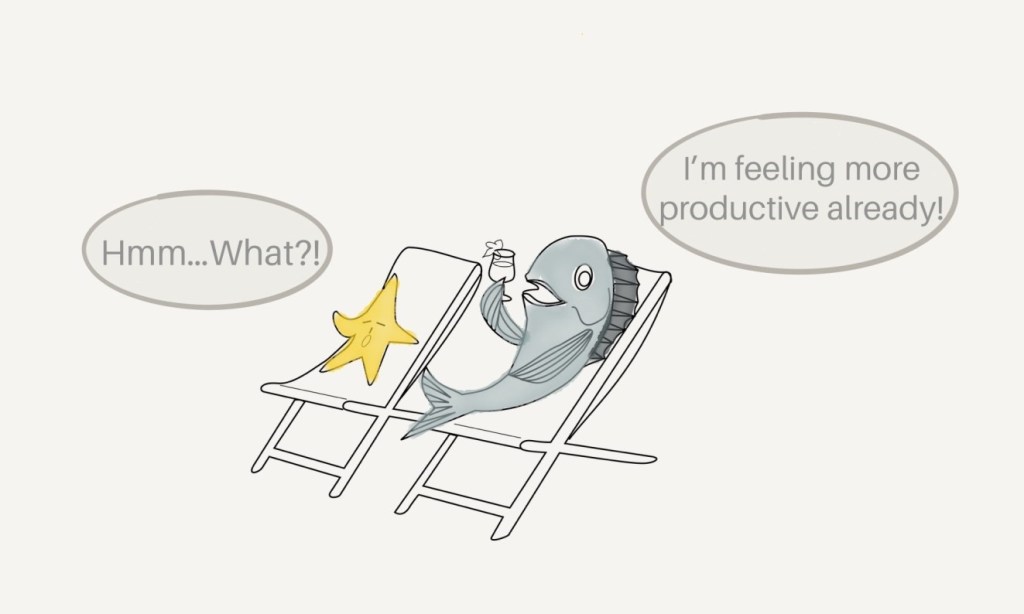
So, why do you make your life even more challenging by not taking a vacation to recharge? I’m not talking about your weekends that are packed with activities or holidays where you do more work than relax.
No, that type of “free time” doesn’t serve a purpose. I’m talking about resting with a very specific reason: To recharge your battery so you can keep working hard.
“The further I advance in age, the more I find work necessary. It becomes in the long run the greatest of pleasures, and takes the place of the illusions of life.”
Rest reduces stress. It improves creativity and productivity.
Scientific research shows that a vacation decreases perceived job stress and burnout. Now, that’s a pretty solid benefit of taking a few days off. But there’s more.
As you may know, I’m always interested in productivity. In the case of resting or a vacation, my question is:
Will I get more things done when I get back?
The answer is yes, but there’s one major thing to keep in mind.
But let’s back up a bit: What does it mean to get more done? Getting things done has nothing to do with time—if you work more hours, you don’t necessarily get more done.
In fact, research shows that working more hours in general means less productivity.
Why? Well, we often waste time if we have more of it. It’s simple: If I say to you, you have a year to write an article. What would you do? Procrastinate, right?
But what if I tell you that you only have 2 hours? You immediately think, how can I write this article ASAP!
So in a way, having more days off, and fewer days to work forces you to be more effective with your time.
Research shows that a vacation in itself won’t make you more productive, but when you have more days off, you have a strong desire to get more things done in less time.
And that’s a win-win situation for everybody: You, your business, or your job.
You take off a few days, recharge, spend time with your family or friends, and when you come back, you’re more productive.
Sounds great. But wait, there’s a caveat.
When your vacation is stressful, the positive benefits go away. Have you ever watched National Lampoon’s Vacation with Chevy Chase? That’s how my family holidays were. Not good.
So keep the stress at a minimum on your holiday. Otherwise, you’ve wasted a perfect opportunity to relax and boost your overall productivity.
Here are a few tips that might help.
1. If You’re A Planner, PLAN
One of my friends loves to plan everything. He loves itineraries and minute by minute plans of the day when he is on vacation. I’m the opposite.
When we went on a trip a few years back, he said, “I’m going copy your style and just go with the flow.” I said, “perfect.”
On the first morning, I slept until 10 AM. It turned out he woke up early, got nervous because he didn’t have a schedule, and spent the whole morning creating one.
Don’t try to be someone you’re not. If you like to plan your holiday, just do it. But try to stay flexible: You’re on a holiday.
2. Make A Daily Movie
It’s creative, and it’s a great memory for later. Plus, focusing on the act of filming will force your attention on something specific. In that way, you will be more in the moment, and you’ll worry less about stuff back home.
Just don’t film ALL day. Otherwise, you won’t be present at all.
All you need is a smartphone. Just film stuff with your phone and edit it right on your phone. If you’re more into video, bring a proper camera and a laptop.
3. Read A LOT
Bill Gates is famous for his voracious reading habit. He is also known for his ‘Think Week’ where does nothing else but read and think.
I like to read for hours on my holidays. Reading slows downtime, makes you think, and is good for your brain.
4. Get Bored
One of my favorite strategies for finding new ideas is to get bored out of my mind. It sounds easier than it is because of distractions.
In the past, I would do everything to NOT get bored: Watch TV, go out, browse Facebook, etc. But did you know that you can use boredom to your advantage?
Instead of giving in to distractions, just give in to the boredom and see it leads your mind to. In fact, one of my favorite artists of all time, Andy Warhol, embraced boredom. You can tell by the boring films he made or the references he made in The Philosophy Of Andy Warhol about getting bored.
Whenever I hit a creative wall, I just do nothing. Literally, nothing. Try it sometime. It’s a great strategy; maybe you come up with the next best thing in your industry.
It’s never a good time to take a break.
“I just need to finish this project.”
“My boss will never accept it.”
“People will think I’m lazy.”
“I don’t have time.”
“Money never sleeps.”
Yeah, yeah, I’ve been there too. But what would you rather: Continue to work without resting and burn the fuck out? Or take some rest before you’re tired? Yup, life is long — so play the long game.
On that note, I might not be tired yet, but it’s time for me to take a break. So I will see you again when I come back on August 1 with a new article.
Until then — take it easy, because I definitely will.
P.s. For years I couldn’t afford to go on holiday. If you’re in the same position, have a staycation. The above tips still apply.
Do you believe that more opportunities equal more chances of success? I sure did.
And since we all want to feel important in this world, we think that the way to achieve that is to chase every single opportunity out there.
I hear it often: “This is a big opportunity for me.”
But that idea is broken. Chasing opportunities is a bad strategy. It’s more practical to chase skills and PREPARE for opportunities.
That’s a small tweak in your mindset, but it changes everything. Abraham Lincoln put it best:
“I will prepare and some day my chance will come.”
We’re always desperately looking for the next big opportunity. The next big business idea, technology to adopt, a holiday to plan, house to buy, person to seduce, promotion to acquire.
What are you pursuing in your life?
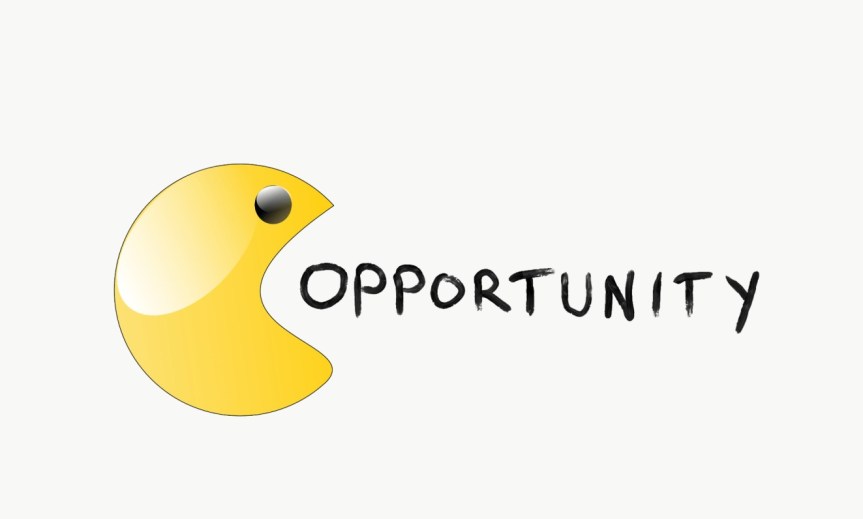
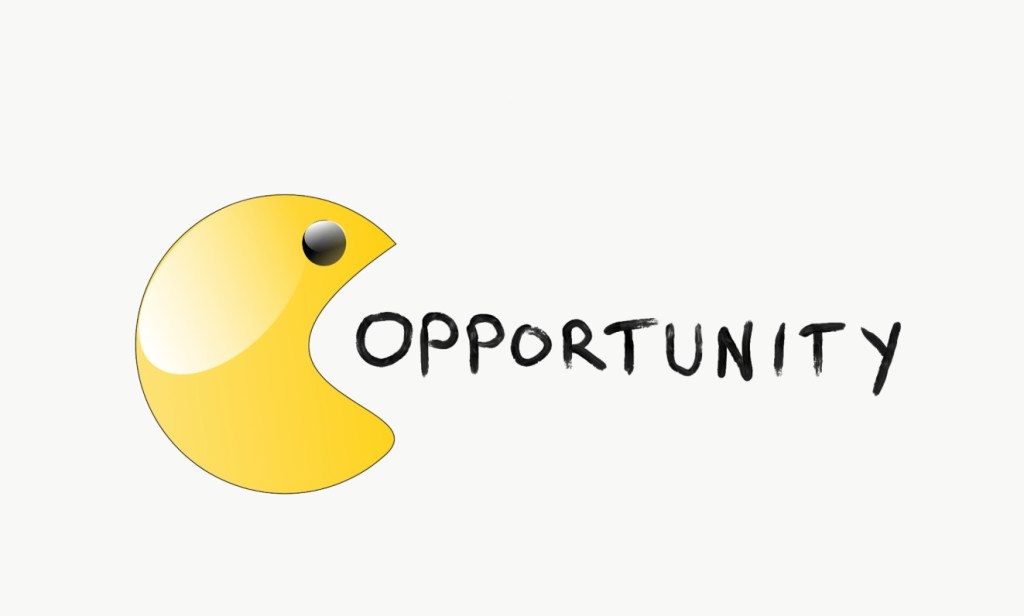
Are you all over the place? Trying to make the best of everything? Chasing every single opportunity on your path? If you do that, this is you:
You’re just fooling yourself. You want it all, but you lack the courage to say no. So you say yes, and you put yourself in an impossible situation.
Many priorities equal NO focus
I must be honest — I’m talking to myself here. For most of my life, I’ve been moving from one opportunity to the other. That changed about two years ago when I decided to only focus on growing Vartex, my family business, and my blog.
And that went well. I said no to everything else. But I was tempted by opportunities in the last few months. Consulting, coaching, speaking, writing more books, starting other businesses, creating YouTube videos — things I either did or considered.
But all it did was confuse me. I had too many priorities and zero focus. It was time for me to rethink my opportunities.
However, it’s never a matter of finding opportunities. Everyone has opportunities. So it’s not about how many opportunities you have, it’s about how many opportunities you eliminate from your life. And that’s not easy.
I decided to only focus on my business, blog, online courses, and podcasting. Just four things. They’re all very closely related. And I say no to every other opportunity.
Opportunities are not only external
Most opportunities come from within. Every time you think: “Should I pursue this?” You’re evaluating an opportunity.
And that requires a lot of brainpower. So make your life easy, and DECIDE.
Decide what you want to focus on in your career.
What do you want to excel at? And do exactly that. Nothing else.
“How many things should I focus on?”
That’s a tough one. It depends on where you are in life. At the beginning of your career, I would pick one to make things easy. Just pick one skill and give it all your attention.
But having just one skill in life will not get you far. When I look at people who are doing well in life, they often have combined several skills to get a competitive advantage.
You also don’t want to be a jack of all trades. Otherwise, you’re okay at many things, but never exceptional at a few.
“How do I know when opportunity knocks?”
When you know that it requires hard work to actualize the opportunity. Thomas Edison put it nicely:
“Opportunity is missed by most people because it is dressed in overalls and looks like work.”
At the end of the day, an opportunity is just a chance of making something good happen. An opportunity alone means nothing. Give ten people the same opportunity, and you’ll get ten different outcomes.
Opportunity = More Work (which is not always a good thing)
Because you don’t want to work yourself to death, it’s best to pick your opportunities wisely. How? I ask myself two questions.
What am I good at? This question helps you pick opportunities that align with your strengths
What type of work do I enjoy? I don’t like to pursue opportunities just because I think it will make me money. Or just because other people are doing something. Those are lousy reasons to do something.
And when you answer those questions honestly, you always get a handful of career opportunities. No one is good at 107 skills. And no one enjoys doing everything in the world.
Remember that drawing from earlier? You’re chasing all opportunities, but you end up confused.
Now, when you decide to pursue a few good opportunities that knock on your door, you get this:
Look, life is full of opportunity. You just have to figure out which opportunities you’re going after. And yes, that’s a hard thing to figure out. You also don’t control the opportunities that come your way.
What do you control? How prepared you are. So stop chasing everything like a happy dog in the park on a summer day. Just keep things simple, work on your skills, character, and become better at a few things every single day.
And when opportunity knocks, don’t be afraid of the work, grab it by the head and give it EVERYTHING YOU GOT.
Don’t you think life is weird sometimes? Take quitting.
Most of us believe that it’s wrong to quit. That it’s for losers. And that quitting equals failure.
The ‘never quit’ attitude is a good thing. Especially when we pursue hard things. I don’t think you should ever quit just because you can’t handle something.
However, quitting is also a smart strategy. Sometimes quitting is even the better option.
Seth Godin wrote a book about quitting. It’s called The Dip. And it’s very good. He says:
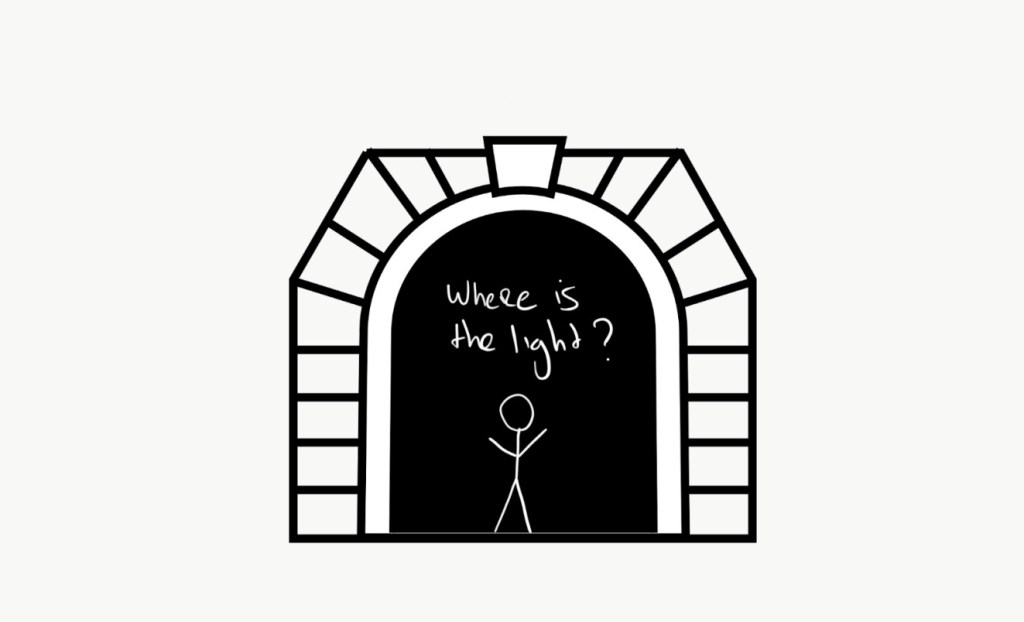
“Persistent people are able to visualize the idea of light at the end of the tunnel when others can’t see it. At the same time, the smartest people are realistic about not imagining light when there isn’t any.”
Sometimes you’re in a tunnel where there is no light to be found at all. So no matter how hard you work and persistent you are, you will never achieve anything.
Dead-end jobs, businesses, projects, relationships, behavior. We’ve all been there.
Quitting is not easy.
Be honest, how many times did you have the guts to quit? Because I’ll tell you this, quitting is one of the most difficult things I’ve ever done.
When I got a corporate job a few years ago, I was fed up with owning a business. I was burnt out, didn’t see the results I wanted, and felt overwhelmed. So I decided to quit my business and get a corporate job.
But I just couldn’t fully quit entrepreneurship. So I was stuck in the middle of a corporate job and not letting go of my business. I worked the corporate job during the days, and in the evenings and weekends, I worked for myself.
That made my life even more stressful. And after a year I had the same feeling as before I got the job. I was on a dead end.
I didn’t have the desire to climb the corporate ladder. And I also didn’t have the energy to grow my business. I realized that the path I was on lead to nowhere.
I knew what I had to do. I struggled with it daily in my mind. And it took months to get my act together and hand in my resignation. I did that with tears in my eyes. Quitting is not in my DNA.
If you can’t climb the ladder you’re on: Quit and pick a different ladder.
Let’s say you work at a corporation and you want to climb that ladder. I don’t think it’s a bad thing at all. You just need commitment. But I get why a lot of people don’t like it because there’s a lot of politics involved.
Look, I’m also not good at that stuff, but that doesn’t mean corporations are evil. They are only a reflection of society. And not everyone can become a CEO or board member. It’s simply a game of numbers. It’s not personal.
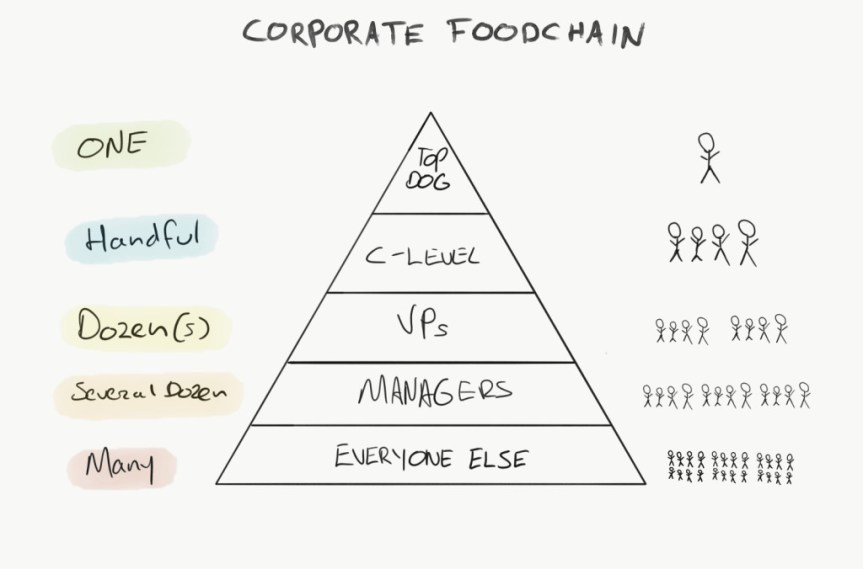
“Darwinism influences almost any pyramid-shaped structure, and the corporation is not only not an exception, it is probably the best example. There are simply not as many presidents as vice-presidents, there aren’t as many vice-presidents as there are managers, and so on.”
That book is from 1984. And yet, a lot of people don’t get the concept. The corporate food chain looks like this:
Many things are like that. If you don’t want to play that game, just get out.
In The Dip, Seth Godin argues that you should only strive for becoming the top dog. Everything else is not worth it.
In other words: Only try to climb the corporate ladder if you’re in it to win. Otherwise, it’s better to quit.
You make a bigger impact when you’re #1.
Seth Godin says:
“We reward the product or the song or the organization or the employee that is number one. The rewards are heavily skewed, so much so that it’s typical for #1 to get ten times the benefit of #10, and a hundred times the benefit of #100.”
I must say, I don’t like the way Seth puts this. You can easily interpret that it’s all about the rewards. In other words: Ca$h money, fame, status, etc.
I don’t care about that shit. If I would, I would be doing a lot of other things instead of writing a bunch of free blog posts. I agree with Seth’s message, but for a different reason.
To me, being #1 is good for only one reason: You get to make a bigger impact.
LeBron James. Richard Branson. Oprah Winfrey.
They are #1s in their fields. They also make the biggest impact. They help and inspire the most people.
Plus, they set the bar. They push the limits of what is possible. And others will either follow or move past them.
Don’t settle for mediocrity.
When it comes to quitting, there’s only one question you want to ask yourself:
“Is there light at the end of the tunnel I’m in?”
Are people responding to my blogs, videos, music?
Is there mutual respect in my relationship?
Are people buying my products?
Can I climb the ladder in my organization without playing politics? (In case you think this is not possible, read What They Don’t Teach You at Harvard Business School.)
If your answer is no, it’s time to quit. Find a different crowd. Move to a new company. Rediscover love.
Whatever you do, find a different tunnel. And keep doing that until you find one where there is light. And once you see one ray of light, cling to it and don’t quit before you reach the end (or top).

























 Eduindex
You must be logged in to post a comment.