Indian parenting:flaws

What is parenting?

Parenting is the means of upbringing of children. There a lot of parenting techniques. Depending on the techniques followed parenting may be efficient or inefficient.

Why is parenting important?

“Health” is described as the state of complete physical, mental, social well being and not merely the absence of disease.Parenting impacts the physical, mental and the social well being of children which means that it influences the children’s “health”.The factors that are influenced by parenting are of paramount importance in an individual’s life. Negligent parenting techniques may lead to deterioration of individual qualities in the child.

Parental attitudes:

Parental attitudes refers to the parent’s perspective of interaction with their children.Parental attitudes have intense consequences towards parenting. The different type of parental attitudes are Over-protectiveness, Permissiveness, Rejection, Acceptance (Democratic parenting style), Domination, Submission.

Over-protectiveness:

This parental attitude tend to prolong infantile care and prevents the development of Self-reliance. The children brought up through this parental attitude may become over dependent and always seek for attention/help from others. Children may also develop nervous tendency and they will lack Self-confidence. They may become sensitive to criticism.

Permissiveness(Laissez-Faire style) :

Parents always give their time and energy for the sake of children when they follow permissiveness style. Children become more selfish and demanding due to this parental attitude.

Rejection:

Rejecting attitude causes the parent to express dominance over the child. Parents who are dissatisfied with their marital life and who do not like parental responsibilities show hostility towards their children. The rejecting attitude of parents shapes the child into an aggressive child. Rejecting attitude also enables children to develop into an independent being and the children learn to spend time by themselves. This also results in exhibition of mature behaviour, however it causes mental stress upon the child.

Acceptance (Democratic parenting style) :

As the name intends, Acceptance style desires to accept the children for who they are. Acceptance style does not support criticism. Parents encourage freedom of emotional expression and love the child unconditionally. The word “unconditionally”means to love someone without any reason to love. That means, loving the children for who they are naturally. Unconditional love develops without “expectations”.Parents recognise and satisfy the child’s needs in this style.Therefore the child would face life confidently, and they would become an better introspector.

Domination:

Parents demand unquestioning obedience from their child through domination style.Children may eventually become polite, honest,self conscious and feel inferior.

Submission:

Submission style allows the children to dominate parents and treat them with no respect. This makes the child to become disobedient, irresponsible and careless.

Among all kind of parental attitudes, accepting attitude is the best because the parents follow Democratic methods of disciplining and children evolve to self-confident and cheerful personalities.

Flaws found in Indian parenting methods:

According to the Indian society, the most common mistake that some of the Indian parents commit is expressing dominance over the child. Not all Indian parents follow substandard parenting techniques, but most of the parents seem to raise their child with defective parenting techniques. Most of the Indian parents aim to control their children’s life completely. This is the most erroneous practice.

The parents control their children’s personal life and education. This control affects the children’s mental health.Sometimes parents also allow their kin to take responsibility for their child’s life. This further reflects on the child’s social life.As parents follow these techniques, the children begin to distance themselves from their parents.Parents expect children to behave in a certain way and they are not loved unconditionally. Parents should never try to control their children’s life just because they were born from them. A good parent only guides the pathway to their children’s life and the children are permitted to act upon their life decisions. The most important thing in any relationship is “Healthy Communication”.Similarly, Parents and the children must have a healthy communication between them. Healthy communication allows both of them to express their opinions confidently and sort out the queries.

Indian parents lack healthy communication with their children due to difference of opinions and busy schedule for work.Most of the children fear to express their opinions. Healthy communication also lets parents to teach important concepts of life to their children. Indian parenting is still followed as brutal practices where some of the parents try to kill their own children when children overstep their parent’s decisions. This happens due to the disgusting norms of the society such as indiscrimination due to caste,religion, money etc. Indian parents believe these norms due to the society and they fail to recognize their child’s needs. Indian parents must understand the importance of parenting.

Indian parenting is greatly impacted by the society. Thus it results in the flaws of parenting techniques.


Top MBA Colleges in UK

Masters in business administration (MBA) is quite a famous higher education qualification for students from every background let it be Science,Hotel Management, Fashion Designing etc .  As we all know ,the UK is a top leading competitor in every way possible when it comes to the best education. The pie chart for diversity is majorly filled by overseas students , whereas, the permanent residents cover up the minor section .

MBA in the UK provides a steady career growth and the college’s curriculum plays a vital role in it from arranging one-to-one interaction with top business leaders to providing real life experiences and challenges followed by detailed solutions of business tactics . 

A job with a six to eight figure salary in pounds adds to the pros along with Strong communication skills and  social skills.

A degree in MBA can cost anywhere between 45,000(pounds) to 95,000 (pounds or GPB) a year excluding hostel , books , and travelling expenses .

There are 132 business schools in the UK that offer MBA . But every college has a world ranking ,acceptance rates , pros and cons based on  the environment , curriculum and job opportunities .

Hence , here are the top colleges recommended for you. Comparing their fees , branches available and ranking and admission requirements and mean salary to boost up your business career.

1)LONDON BUSINESS SCHOOL.

From ranking :

-1st in the world for full-time Masters in Finance post-experience programme, Financial Times Ranking, 2020.

-1st in the world for two-year MBA programme, Forbes Ranking, 2019 -4th in the world for EMBA-Global Asia programme, Financial Times Ranking 2019.

It is a constituent college from University Of London, offering  massive exposure and international opportunities in MBA, Masters in Analytics and Management, Masters in Financial Analysis etc . 

Acceptance rate – 24.5% which is highly competitive 

Consisting 91% international admissions . It costs approximately 92,000 GBP .

Employment rate is as high as 97% hiring by companies such as amazon, Google , wall street startups etc.

Mean salary – 85,000 GPB.

2) CASS BUSINESS SCHOOL.

Rankings:

-3rd in London, 16th in UK.

-QS Global world ranking 70th.

Located in Bunhill,London, Institute has major concentrations in Digital Transformation,Innovation and Entrepreneurship,Investment Management and Marketing .

Acceptance rate – 14% making it highly competitive for the applicants. 

Apart from the high rankings the school is pocket friendly with fee expenditure only upto 45,000 GRB.

With 80% placement rate from companies such as blackstone, amazon etc.

Mean salary- 65,000GRB.

3)IMPERIAL COLLEGE BUSINESS SCHOOL.

Rankings: 

-19th in the QS Global MBA ranking 2020.

-55 in the Financial Times Global MBA ranking 2020.

-13 among European business schools in 2019–20 by Bloomberg Businessweek.

Situated in the heart of london , opened by Queen Elizabeth II in 2004, College has top working rankings in its MBA, Msc and Executive programmes . etc

Acceptance rate- 50%

Cost may go as high as 54,000GPB ,but the school offers lectures and internship opportunities in international companies .

Employment rate 87% and offering 2 study trips to other parts of europe and china. 

4) JUDGE BUSINESS SCHOOL.

16Th on EMBA global ranking

-6th on world university for business ranking.

College is a part of well known University Of Cambridge ,within one of the world’s most prestigious research universities having major courses inGlobal Business and Marketing.

Acceptance rate – 33.2%.

Fee costing as high as 60,000GPB , School offers opportunities in entrepreneurship , and marketing re-search .

Employment rate is satisfying being 85% and MNC visiting the campus for placements especially block chain marketing is on peak in Europe.

5) ALLIANCE BUSINESS SCHOOL.

-5th in the UK for business and management by Times Higher Education (THE).

-5th in the UK, 11th in Europe.

-7th in the world, outside the US by Forbes.

Acceptance rate – 50%, making it fairly competitive .

Alliance business school is a part of University Of Manchester located in located in booth street manchester ,occupying top ranking for its MSc programs as well along with MBA.

Tuition fee is as high as  45,000GRB with 81% international student rate. And 82% for the employments including many big companies in and outside europe.

There are more and in total 15 business school that makes to the top 100 global ranking. Such as,Durham business school, Aston University ,Cranfield School of management. Etc with similar or maybe better resources and less fee followed by some scholarships. 

To sum up , the UK is a hub for best and in demand MBA colleges around the globe , excelling in each perspective from studies to real life world class exposure which makes it highly eligible to pursue the required education in business ,brushing up the soft skills , building a strong portfolio . And invest in high demand careers as Business advisor , banker, Insurance broker, Project manager , Investment analyst etc .    

Courses and programs

Courses and programs for students are the main role to their education .

A program is your degree . A course is one building block (subject) of your program

Our featyre is depends on our Courses and programs

Some of courses

1 B.Com. This is the most popular choice among Commerce stream students. …

2 Chartered Accountancy.

3 Bachelor’s course in Economics.

4 Company Secretaryship course.

5 Law courses. …

6 Management courses. …

7 Technical courses. …

8 Designing courses.          

And some more

Administration Studies

Architecture Studies

Art Studies

Aviation

Business Studies

Construction

Cosmetology Studies

Design Studies

Economic Studies

Education

Educational and academic news and updates

Energy Studies

Engineering Studies

Environmental Studies

Fashion

Food and Beverage Studies

General Studies

Health Care

Humanities Studies

Journalism and Mass Communication

Languages

Law Studies

Life Sciences

Life Skills

Management Studies

Marketing Studies

Natural Sciences

Performing Arts

Professional Studies

Self-Improvement

Social Sciences

Sport

Sustainability Studies n

Technology Studies

Tourism and Hospitality

The ten most engaging sites on the web today

If you invest any energy on the web, it’s probably you’re comfortable with a portion of the world’s most visited engaging sites. On the present web, a modest bunch of monsters have unrivaled predominance. 

1)Google 

2)youtube 

3)Facebook 

Together, the main three sites rake in 152 billion visits month to month, dominating the following 7 sites consolidated. Likewise, as the pandemic changed everything from the manner in which we work, learn, convey, and greater part diversion. 

There are tons and huge loads of sites accessible on the Internet today and with regards to discovering the absolute most fascinating ones, it turns into a somewhat exhausting errand. Large numbers of us truly don’t realize that a ton of stunning locales exist on the web that can paralyze you with their highlights. Here and there taking a break from conventional sites is must to mitigate your pressure and unwind while you work. 

4)AintItCool.com 

On the off chance that you need to plunge further into films, TV and comic books than normal locales go, AintItCool.com is for you. They have been at the cutting edge of online amusement geekery since 1996, a decent 10 years before geeks began to get cool. Look at audits, online talks and a gathering where you would geek be able to out about pretty much anything without feeling shaky. 

5)AVClub.com 

While TheOnion.com is amusing phony information, AVClub.com is 100% genuine, yet composed with a similar degree of humor and aptitude. They cover everything in mainstream society, and even survey stand-up parody collections, which as a rule don’t get inclusion. Their meetings with periphery big names dive as deep and are just about as intriguing as the A-rundown stars they highlight. Each time you head here, you’ll track down some exemplary faction film to watch or something standard to get amped up for. 

6)Netflix.com 

Netflix is the world’s driving Internet telecom company with in excess of 36 million individuals in 40 nations appreciating more than one billion hours of TV shows and motion pictures each month, including unique arrangement. For one low month to month value, Netflix individuals can look however much they need, whenever, anyplace, on almost any Internet-associated screen. Individuals can play, respite and resume watching, all without plugs or responsibilities. 

7) Hulu 

Hulu Plus offers limitless moment spilling of current hit shows, exemplary arrangement and acclaimed motion pictures. You can observe any flow season scene of top shows on moment streaming. Like Netflix, you will pay a low month to month expense for their limitless assistance. 

8)The National Geography 

The National Geographic Society has been motivating individuals to think often about the planet since 1888. It is one of the biggest philanthropic logical and instructive foundations on the planet. Its inclinations incorporate topography, archaic exploration and normal science, and the advancement of natural and recorded protection. 

9)StubHub.com 

StubHub permits you to purchase tickets for anything you can consider, with the exception of the films. It gives fans a protected, advantageous spot to get passes to the games, shows, and theater shows they need to see. 

10)ImperialLibrary.com 

Imperial Library is a public safe of filtered books. As a little something extra, it’s regulated by a person with a Riseup email address. Until now, almost 400,000 books have been transferred.

What Is Bone Death…?

As India continues to fight the aftermath of the second wave of the deadly coronavirus, doctors have established a linkage between Covid 19 patients and Avascular Necrosis ( AVN) being referred to as bone death.

AVN is a painful condition affecting the hip joint and thigh bones of Covid-19 patients, adding to the long list of post-Covid complications among recovered patients.

HOW WAS BONE DEATH DETECTED IN COVID RECOVERED PATIENTS ?

The complication came to light when Dr Manish Khobragade, a recovered Covid-19 patient suddenly developed pain in the left hip joint. He initially thought that it was a simple joint pain, but since it did not subside even after a week he contacted an orthopaedic surgeon and was advised an X-Ray test. The X-Ray didn’t detect any glaring issues and was hence prescribed regular medications, pain killers and muscle relaxers. But even after a month and half the doctors felt no relief.

Khobragade said that it was at that point that he realised that the pain was different from the routine problem, and there was something wrong with the hip joint. He then got the MRI done post which he was diagnosed with bone death. However, by that time he couldn’t even stand for long hours. Even walking became a difficult task. He couldn’t squat at all.

WHAT IS AVN OR BONE DEATH ?

AVN, known as Avascular Necrosis is a condition where the blood supply to the bone gets affected, killing it slowly. “That sector of the bone dies, just like it would in the heart or the brain,” the doctors said. Because it is bone and there is a lot of structure around the bone, it does not necessarily collapse right away, but it begins to pain.

Doctors said that it is not something that one needs to keep thinking about for every piece of pain in the bone is not AVN. The pain can sometimes be attributed to a sprain or injury as well. However, “we know that this can happen in the hip. When you get pain in the hip and if there is a restriction of movement, the person concerned should seek the advice of an orthopaedic surgeon.”

Patients who have been given steroids that have improved lung function,  may be prone to get AVN on the hip. “We recognised that since the patient has had Covid-19, he may have a chance of thrombosis of his blood vessels and more likely because he has been on steroids,” they added.

HOW TO IDENTIFY BONE DEATH AND TREATMENT ?

Doctors say that the best way is to get a clinical diagnosis and can be confirmed by an MRI. This is the most sensitive test available now. Just taking plain X-rays would not be sufficient to identify bone death. The doctors said that there is a possibility of treating the condition at an early stage.

Mindful gardening

Have you ever had the flavor of fruits and vegetables cultivated in your garden? If you have not, just give a try at least once in your lifetime and then that would let you take up gardening eternally. Trust me, even the bitter gourd might sound sweet when you get it from your labor and that could be so heart warming and relishing. Some take up gardening in their leisure time and some really have a great passion towards it. It doesn’t matter about the size of your garden it is about the mindfulness, just gather few pot plants and little herbs and that tends leave a huge impact in your life. Cultivating plants aids in cultivating a healthy mind and grants serenity. A study found that ” every green environment improved self esteem”. When you feel distressed and anxious about your repetitive life just drop in to your garden and it will restore all your inner peace.

When you land up in the soil, its smell uplifts your mood and makes you feel elated!

When you clear up the weeds your mind also gets cleaned by giving up all the negativity!

When you dig deep into the soil your mind goes in deep and revives the positivity back!

When you sow the seeds, your heart is been sowed and scattered with cheerfulness and bright thoughts!

When you notice the tiny little branches you will find an intangible happiness sprouting within you and When you sprinkle the water, the mother earth sprinkles her blessings on you.

Spending some quality time in the garden would render many physical and mental benefits. The pulling, digging, reaching, twisting and bending of gardening amounts to light aerobic exercise, which improves heart and lung health, helps prevent obesity. The plants clean the air around us and makes us feel fresh. Currently, the food industry is responsible for emitting 26% of global CO2 waste by transporting food from suppliers to grocery stores. So it becomes apparent that when we grow food in our garden we are reducing our carbon footprint. Spending time in nature can promote the mental health and gardening has been used as therapy for depression for many years. A group of researches have come with findings after tracking over 3000 subjects for 16 years and it stated that gardening regularly reduces the risk of dementia by 35-46%. Gardening is a very big stress buster and watching the plants flourish is a huge stress relief. People who have raised a prosperous garden might know how great it feels to notice the flowers budding and blooming and that boosts a person’s self esteem because developing a garden could be a rewarding hobby. When we invest our diligent & earnest work, certainly the plants will nourish our body and mind in return. The inner happiness that you find when your dining is been filled with the food that you harvest could be so remarkable and rejoice at the fact that you are able to nurture your health with your own scrupulous work.

Besides the mental and physical benefits of gardening there many medicinal plants we can cultivate in our garden space that assures us a healthy lifestyle and those plants are also easily obtainable. Tulsi is believed to be a physical incarnation of Goddess Lakshmi on earth and regarded as the holiest of all. They are rich in adaptogens which help in reducing the stress levels in your body, cures common cold, promotes digestion etc. It is true that there is a science behind every activity and also there is a medicinal benefit behind each plant. Aloevera is extremely useful to speed up healing and reduce the risks of infections. Pepper mint regarded as the world’s oldest medicine is used to treat fevers, inhibit bacterial growth. Coleus amboinicus (Omavalli) can be used a remedy for cough, cold, indigestion. Coriander, curry leaves, mint are very simple to grow and they play a very major role in our daily diet. In addition there are several plants and trees that aids in our physical health.

There are many fascinating facts about plants and one such is, plants could really respond to sounds. Talking to plants to help them grow is a well know old wives’ tale but studies have shown that compared to a silent greenhouse to one where they piped in a voice soundtrack, the plants in the latter grew more. This could also make you to get rid of the loneliness at times. Gardening helps us to overcome our inhibitions and makes our life complete & alluring. I think that we should acquire the great quality from plants of how to grow in silence and letting your success make the noise. Garden is a grand teacher and gardening is enduring and never ceases. To grow a plant is to believe in tomorrow!

Microsoft Windows

Microsoft windows also known as windows; windows operation system is developed by Microsoft Corporation to run personal computer. On 20th November Microsoft introduce an operating environment called Windows as a graphical user interfaces for MS-DOS in responds to growth more interest in graphical user interfaces. Microsoft also overtake Apple OS in profit which introduce in 1984.

Version History:

The first version of Windows was Windows 1.0. Microsoft started a program called “Interface Manager” in 1981 and it was announced in 1983 under the name windows but windows 1.0 released on November,1985. The Shell of Windows 1.0 known as MS-DOS executive. Component included Calculator, calendar, clock, control panel etc. Next released version was windows 2.0 and it was released on December, 1987 and was most popular than its previous one. It had an improvement of the user interface and memory management. Windows 2.1 released in two different version: Windows/286 and windows/386. Windows/386 use virtual 8086 mode of the intel 80386 to multitask several DOS Programs and the Paged Memory model to emulate expanded memory using available extended memory.

Windows NT:

In November 1998, a new development team within Microsoft began work on a revamped version of IBM and Microsoft’s OS/2 operating system known as “NT OS/2”.

Windows XP:

The next major version of Windows of after Windows NT is Windows XP and it was released on 25th oct, 2001. Windows XP would also introduce a redesigned user interface with start menu and a “task-oriented” Windows Explorer. With retaining some feature from previous version, Windows XP introduce an interface which was a new visual appearance, with an increased use of Alpha Composition effects, drop shadow, and Visual Style.

Windows Vista:

After Lengthy Development process, Windows Vista was released on 30th November, 2006. It introduces a number of features form redesigned shell and user interface to significant technical changes with a particular focus on security features.

Windows 7:

Windows 7 was released on july22, 2009. Windows 7 was intended to be more focused, incremental upgrade to windows line, with the goal of being compatible with applications and hardware with which windows Vista was already compatible. Windows 7 had multi-touch support with an updated taskbar and redesigned windows shell.

Windows 8:

Windows 8 was released on 26 oct, 2012. Windows 8 introduces a number oof change including the introduction of user interface based around Microsoft’s Metro Designed language with optimization for touch-based devices such as tablets and all-in-one pc.

Windows 10:

Windows 10 was released on 30th September,2014 as a successor of windows 8.1. Changes of pc returns on the start menu, a virtual desktop system, and the ability to run windows stores apps within windows on the desktop rather than in full-screen mode. In June 2021, shortly before Microsoft’s announcement of Windows 11, Microsoft updated their lifecycle policy pages for Windows 10, revealing that support for their last release of Windows 10 will be October 14, 2025.

Windows 11:

On June 24, 2021, Windows 11 was announced as the successor to Windows 10 during a livestream. The new operating system was designed to be more user-friendly and understandable. It is set to release in Fall 2021. Windows 11 will be a free upgrade to all Windows 10 users.

How to become an established content writer

HOW TO BECOME AN ESTABLISHED CONTENT WRITER Content writing is considered the most growing and existing job in India. Content writing offers knowledge, experience and money at the same time. Content writing companies help one to develop good vocabulary and lingual skills that make it more beneficial for the writers and for their futures as well.Content writers in India have experienced a lot of things in the market which has helped them in growing their skills and experience.According to the demands there are a lot of hurdles that hamper a person from being a content writer in India. But here are a few tips which may help.

Create a portfolio– Portfolio is considered as your first impression, one portfolio can do wonders for you. If you are a new content writer then there are fewer chances to win the trust of people. You have to be individual and certain to win their trust in any way you can. So by creating a portfolio you’re representing yourself in front of them, make sure it’s as per the requirement of the clients.

Blogging– Blogging is becoming a truly popular choice among youngsters. It can be a great start if you are planning something in the field of content writing. Follow some easy tips and tricks like – plan your blog post by choosing the topic, creating an outline, conducting research and check facts. Use images to enhance your post, improve its flow and explain complex topics.

Certification – Many online portals provide you with a chance to showcase your skills and get a certification for the same. Flaunted by taking certification assessments. Share some level of expertise in various domains then go for a skill certificate. You can even attend workshops and short term courses. To content writing comes with practice and imagination so, practice will fuel your writing skills.

Internships – You can do an internship as early as possible, one must consider the internship option very actively. You can do a part time internship because a full time internship can be a pain while studying. There are plenty of online internship opportunities that pay you on an hourly basis. Hence, you can flexibly work according to your college schedule. See, one is required to curate wide-ranging content while taking up a content writing role.

Qualifications– Freshers who ponder on how to become a content writer must know the qualification. Skills like editing ,language skill, flexible writing skill ,awareness about social media. These are some qualifications and skills which are helpful for content writers to create amazing content. These skills will help you to stand out from the crowd.

Conclusion– My biggest advice to all aspiring content writers would be to keep experimenting until you satisfy your own creative urges. The written word is a strong medium of expression of your thoughts, ideas, opinions and by extension your own self. So, if you see your future in content writing , don’t be afraid to take the leap.

Astronomical Terms

Astronomy is the branch of science dealing with the study of celestial objects. It requires various scientific terminologies. Here are a few important ones: 

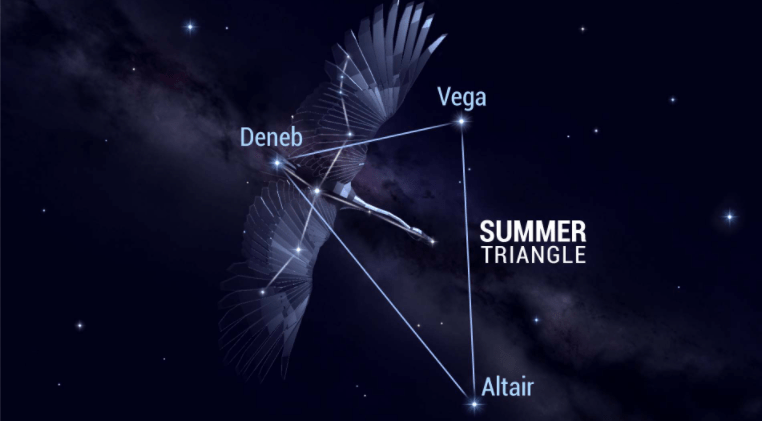
Asterism example
  1. Asterism: Any pattern of stars recognizable in Earth’s night sky.
  2. Albedo:  A measure of the proportion of the total solar radiation received by an astronomical body, such as a planet, that is diffusely reflected away from the body. It is a dimensionless quantity typically measured on a scale from 0 (indicating total absorption of all incident radiation, as by a black body) to 1 (indicating total reflection).
  3. Azimuth: An angular measurement of an object’s orientation along the horizon of the observer, relative to the direction of true north. When combined with the altitude above the horizon, it defines an object’s current position in the spherical coordinate system.
  4. Conjunction: A phenomenon during which two astronomical objects or spacecraft have either the same right ascension or the same ecliptic longitude as observed from a third body (usually the Earth), such that, from the observer’s perspective, the objects appear to closely approach each other in the sky.
  5. Diurnal motion: The apparent motion of an astronomical object (e.g. the Sun, a planet, or a distant star) around the two celestial poles in the Earth’s night sky over the course of one day. Diurnal motion is caused by Earth’s rotation about its own axis, such that every object appears to follow a circular path called the diurnal circle.
  6. Dwarf star: The category of ordinary main sequence stars like the Sun.
  7. Elongation: The angular separation between the Sun and an orbiting body, such as a planet, as it appears from Earth.
  8. Ephemeris: A list or table of the expected positions of astronomical objects or artificial satellites in the sky at various dates and times. 
  9. Extinction: The absorption and scattering of electromagnetic radiation by matter (dust and gas) between an emitting astronomical object and the observer. 
  10. Facula: A bright spot on a star’s photosphere formed by concentrations of magnetic field lines.
  11. Field galaxy: Any galaxy that does not belong to a larger cluster of galaxies and is gravitationally isolated.
  12. Fulton gap: The apparent uncommonness of planets having a size between 1.5 and 2 times that of the Earth
  13. Galactic period: The time a given astronomical object within a galaxy takes to complete one orbit around the galactic center. Estimates of the duration of one revolution of the Solar System about the center of the Milky Way range from 225 to 250 million terrestrial years.
  14. Geosynchronous orbit (GSO): A synchronous orbit about the Earth, i.e. with an orbital period equal to Earth’s rotational period, such that the orbiting object appears to return to exactly the same position in the sky after a period of one sidereal day. All geosynchronous orbits have a semi-major axis equal to 35,786 kilometres (22,236 mi); geostationary orbits are a special case of geosynchronous orbits.
  15. Hypergalaxy: A system consisting of a large galaxy accompanied by multiple smaller satellite galaxies (often elliptical) as well as its galactic corona. The Milky Way and Andromeda systems are examples of hyper galaxies.
  16. Julian year (a): A unit of time defined as exactly 365.25 days of 86,400 SI seconds each. 
  17. Laniakea Supercluster : Also called the Local Supercluster, or Local SCI.- contains Virgo supercluster.
  18. Moving group: Also called a stellar association. A loose grouping of stars which travel together through space. Although the members were formed together in the same molecular cloud, they have since moved too far apart to be gravitationally bound as a cluster.
  19. Nutation: A continuous, gravity-induced change in the orientation of an astronomical body’s axis of rotation which results from the combined effects of small, short-term variations. Nutation is distinguished from precession.
  20. Occultation: A celestial event that occurs when a distant astronomical body or object is hidden by another, nearer body or object that passes between it and the observer, thereby blocking the first object from view. Solar and lunar eclipses are specific types of occultations.
  21. Periapsis: Also called the pericenter. The point at which an orbiting body is closest to its primary. 
  22. Planetesimal: Any solid object (generally larger than 1 kilometre (0.62 mi) in diameter) that arises during the formation of a planet whose internal strength is dominated by self-gravity and whose orbital dynamics are not significantly affected by gas drag. There is no precise distinction between a planetesimal and a protoplanet.
  23. Prograde motion: Also called direct motion. Orbital or rotational motion of an object in the same direction as the rotation of the object’s primary.
  24. Roche limit: The distance from an astronomical object at which the tidal force matches an orbiting body’s gravitational self-attraction. Inside this limit, the tidal forces will cause the orbiting body to disintegrate, usually to disperse and form a ring. Outside this limit, loose material will tend to coalesce.
  25. Sidereal period: The orbital period of an object within the Solar System, such as the Earth’s orbital period around the Sun. The name “sidereal” implies that the object returns to the same position relative to the fixed stars of the celestial sphere as observed from the Earth.
  26. Starburst galaxy: Any galaxy that has an anomalously high rate of star formation.
  27. Synodic day: The time it takes for an object to rotate once about its own axis (e.g. its rotation period) relative to the primary it is orbiting (rather than to distant fixed stars).
  28. Syzygy: The straight-line configuration of three celestial bodies in a gravitational system. The synodic month, or complete cycle of phases of the Moon as seen from Earth, averages 29.530588 mean solar days in length
  29. Transit: An astronomical event during which a body or object passes visibly across the face of a much larger body. 
  30. Zodiac: The area of the sky that extends approximately 8 degrees north or south (in celestial latitude) of the ecliptic, the apparent path of the Sun across the celestial sphere over the course of the year as observed from Earth.

https://en.wikipedia.org/wiki/Glossary_of_astronomy
https://telescopeadviser.com/glossary-of-astronomy-terms/#:~:text=Glossary%20of%20Astronomy%20Terms%201%20Altazimuth%20Mount.%20…,Astronomy.%20…%2010%20Astrophotography.%20…%20More%20items…%20

Tax

The origin of the word “tax” is from “taxation,” which means an estimate.Taxation is a means by which goverments finance their expenditure by imposing charges on citizens and corporate entities.The main purpose of taxation is to accumulate funds for the functioning of the government machinery.Tax has come into forefront on account of the new concept of “Welfare state”.Modern goverments do not confine themselves to law and order only.The importance of public finance (tax) has vastly increased in recent years.

Taxes are compulsory payments to government without expectation of direct return (or) benefit to the tax payer.prof.Selingman also defined a tax as a “a compulsory contribution from a person to the government to defray the expenses incurred in the common interest of all, without refference to special benefits conferred”.

Tax system

Every type of tax has some advantages and some disadvantages.So we have a tax system,that is,a collection of variety of taxes.All countries use a variety of taxes.There are some characteristics of tax system that economists think should be followed while designing a tax system.These characteristics are called as canons of taxation.From Adam Smith ,many economics have given lists of canons of taxation.It is important to recall those common among them for discussion here.

Canon of equity

Since tax is a compulsory payment,all economists agree that equity is the cardinal principal in designing the tax system.The equity principal says that the rich should pay more tax revenue to government than the poor, because rich has more ability than the poor to pay the tax.Morever,after payment of tax,you will find the economic difference is reduced between the rich and the poor.You can do an exercise to find out which of the taxes adhere to the canon of equity.

Canon of certainty

Government should announce in advance the tax system so that every tax payer will be to calculate how much tax amount one may have to pay during a year to the government.In other words, government should not change the tax system frequently and should not announce sudden changes in the tax system.

Canons of Economy and Convenience

These two canons are related.As tax payers we incur a cost to process our accounts and pay the tax,for example ,salary paid to accountants and auditors.Similarly government also pays salary to its taxmen and run huge institutions.If the tax is simple,then the cost of collecting taxes(tax payer cost + tax collector cost)will be very low.Further,tax should be collected from a person at the time he gets enough money to pay the tax.This is called Canon of Convenience.A convenient tax reduces the cost of collecting tax.

Canons of productivity and Elasticity

Government should choose the taxes that can get enough tax revenue to it.In other words,it should choose a few taxes that can fetch more tax revenue,instead of lots of taxes and each one their incomes.Therefore the tax system should be designed in such a way that the people out their incomes.Therefore the tax system should be designed in such a way that the people automatically pay more tax revenue if their incomes grow.This is called Canon of elasticity.In a broader sense,as the economy is growing the people will get more income and consequently they will also pay more tax revenue to government if the tax system is elastic

The Link Between Anxiety and Perfectionism

Everyone knows at least one perfectionist. They’re hyper-critical of their own work, almost to a fault. And according to a growing body of research, there’s a good chance they also suffer from an anxiety disorder. The very nature of a perfectionist makes them particularly susceptible to the illness.

Here’s what can be done about it: –

🔺on the surface, perfectionism doesn’t seem like such a bad thing. It keeps you focused and motivated. It also helps you consistently produce work of the highest quality.

🔺on the other hand, it also has the potential to wear significantly on one’s psyche. The impossibly-high standards perfectionists set for themselves can lead to a distorted sense of self-worth, in addition to high levels of stress. And that, in turn, can easily spiral into an anxiety disorder.

🔺It’s not just anxiety, either. Perfectionism has been linked to numerous other mental illnesses in medical research, including bipolar disorder, severe depression, and even suicidal ideation. In other words, if you’re a perfectionist and let your tendencies control you, they can literally kill you.


Worse still, there’s evidence that being a perfectionist doesn’t even afford you a significant advantage over non-perfectionists in the workplace. Per the Harvard Business Review:

“Our results showed that performance and perfectionism were not related to each other – perfectionists are not better or worse performers than non-perfectionists. Even employees high in excellence-seeking perfectionism were not better performers…taken as a whole, our results indicate that perfectionism is likely, not constructive at work.”

Scaling back on toxic perfectionism and setting healthy boundaries for yourself starts with understanding the source of your behaviour. As noted in health publication medical news today – which itself cited a landmark psychological work published several decades ago – there are three primary sources of perfectionism. These are:

 1◾Self-oriented.
You hold unrealistic expectations for yourself and are extremely critical of your own work. This could be caused by a negative experience at some point in your life, or simply a series of habits developed over time and linked to mental illness.
2◾ Socially-prescribed.
You believe that your peers are extremely critical and that you must be perfect in order to gain their approval.
3◾Other-oriented.
You set impossibly high standards for the people around you. This form of perfectionism isn’t exactly relevant to our discussion here, though it can occasionally overlap with one of the other two.
🔹Positive self-talk is the second step in overcoming toxic perfectionism. Understanding how your own tendencies manifest will help you structure it in the right way. Whenever a toxic belief or thought manifests in your mind, counter it with a positive one.
In other words, be compassionate towards yourself. Understand that your self-worth is not tied to your performance in the workplace or your ability to turn out flawless work. You have value as a person beyond your output.
And if self-talk alone isn’t enough to help you, know that there’s no shame in seeking help from a trained professional. Everyone could use therapy now and then.

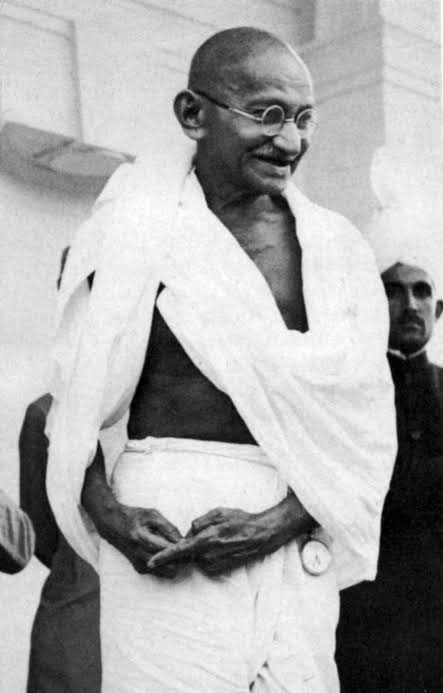
MAHATMA GANDHI

Revered the world over for his nonviolent philosophy of passive resistance, Mohandas Karamchand Gandhi was known to his many followers as Mahatma, or “the great-souled one.” He began his activism as an Indian immigrant in South Africa in the early 1900s, and in the years following World War I became the leading figure in India’s struggle to gain independence from Great Britain. Known for his ascetic lifestyle–he often dressed only in a loincloth and shawl–and devout Hindu faith, Gandhi was imprisoned several times during his pursuit of non-cooperation, and undertook a number of hunger strikes to protest the oppression of India’s poorest classes, among other injustices. After Partition in 1947, he continued to work toward peace between Hindus and Muslims. Gandhi was shot to death in Delhi in January 1948 by a Hindu fundamentalist.

Early Life

Mohandas Karamchand Gandhi was born on October 2, 1869, at Porbandar, in the present-day Indian state of Gujarat. His father was the dewan (chief minister) of Porbandar; his deeply religious mother was a devoted practitioner of Vaishnavism (worship of the Hindu god Vishnu), influenced by Jainism, an ascetic religion governed by tenets of self-discipline and nonviolence. At the age of 19, Mohandas left home to study law in London at the Inner Temple, one of the city’s four law colleges. Upon returning to India in mid-1891, he set up a law practice in Bombay, but met with little success. He soon accepted a position with an Indian firm that sent him to its office in South Africa. Along with his wife, Kasturbai, and their children, Gandhi remained in South Africa for nearly 20 years.

Did you know? In the famous Salt March of April-May 1930, thousands of Indians followed Gandhi from Ahmadabad to the Arabian Sea. The march resulted in the arrest of nearly 60,000 people, including Gandhi himself

Gandhi was appalled by the discrimination he experienced as an Indian immigrant in South Africa. When a European magistrate in Durban asked him to take off his turban, he refused and left the courtroom. On a train voyage to Pretoria, he was thrown out of a first-class railway compartment and beaten up by a white stagecoach driver after refusing to give up his seat for a European passenger. That train journey served as a turning point for Gandhi, and he soon began developing and teaching the concept of satyagraha (“truth and firmness”), or passive resistance, as a way of non-cooperation with authorities.

The Birth of Passive Resistance

In 1906, after the Transvaal government passed an ordinance regarding the registration of its Indian population, Gandhi led a campaign of civil disobedience that would last for the next eight years. During its final phase in 1913, hundreds of Indians living in South Africa, including women, went to jail, and thousands of striking Indian miners were imprisoned, flogged and even shot. Finally, under pressure from the British and Indian governments, the government of South Africa accepted a compromise negotiated by Gandhi and General Jan Christian Smuts, which included important concessions such as the recognition of Indian marriages and the abolition of the existing poll tax for Indians.

In July 1914, Gandhi left South Africa to return to India. He supported the British war effort in World War I but remained critical of colonial authorities for measures he felt were unjust. In 1919, Gandhi launched an organized campaign of passive resistance in response to Parliament’s passage of the Rowlatt Acts, which gave colonial authorities emergency powers to suppress subversive activities. He backed off after violence broke out–including the massacre by British-led soldiers of some 400 Indians attending a meeting at Amritsar–but only temporarily, and by 1920 he was the most visible figure in the movement for Indian independence.

Leader of a Movement

As part of his nonviolent non-cooperation campaign for home rule, Gandhi stressed the importance of economic independence for India. He particularly advocated the manufacture of khaddar, or homespun cloth, in order to replace imported textiles from Britain. Gandhi’s eloquence and embrace of an ascetic lifestyle based on prayer, fasting and meditation earned him the reverence of his followers, who called him Mahatma (Sanskrit for “the great-souled one”). Invested with all the authority of the Indian National Congress (INC or Congress Party), Gandhi turned the independence movement into a massive organization, leading boycotts of British manufacturers and institutions representing British influence in India, including legislatures and schools.

After sporadic violence broke out, Gandhi announced the end of the resistance movement, to the dismay of his followers. British authorities arrested Gandhi in March 1922 and tried him for sedition; he was sentenced to six years in prison but was released in 1924 after undergoing an operation for appendicitis. He refrained from active participation in politics for the next several years, but in 1930 launched a new civil disobedience campaign against the colonial government’s tax on salt, which greatly affected Indian’s poorest citizens.

A Divided Movement

In 1931, after British authorities made some concessions, Gandhi again called off the resistance movement and agreed to represent the Congress Party at the Round Table Conference in London. Meanwhile, some of his party colleagues–particularly Mohammed Ali Jinnah, a leading voice for India’s Muslim minority–grew frustrated with Gandhi’s methods, and what they saw as a lack of concrete gains. Arrested upon his return by a newly aggressive colonial government, Gandhi began a series of hunger strikes in protest of the treatment of India’s so-called “untouchables” (the poorer classes), whom he renamed Harijans, or “children of God.” The fasting caused an uproar among his followers and resulted in swift reforms by the Hindu community and the government.

In 1934, Gandhi announced his retirement from politics in, as well as his resignation from the Congress Party, in order to concentrate his efforts on working within rural communities. Drawn back into the political fray by the outbreak of World War II, Gandhi again took control of the INC, demanding a British withdrawal from India in return for Indian cooperation with the war effort. Instead, British forces imprisoned the entire Congress leadership, bringing Anglo-Indian relations to a new low point.

Partition and Death of Gandhi

After the Labor Party took power in Britain in 1947, negotiations over Indian home rule began between the British, the Congress Party and the Muslim League (now led by Jinnah). Later that year, Britain granted India its independence but split the country into two dominions: India and Pakistan. Gandhi strongly opposed Partition, but he agreed to it in hopes that after independence Hindus and Muslims could achieve peace internally. Amid the massive riots that followed Partition, Gandhi urged Hindus and Muslims to live peacefully together, and undertook a hunger strike until riots in Calcutta ceased.

In January 1948, Gandhi carried out yet another fast, this time to bring about peace in the city of Delhi. On January 30, 12 days after that fast ended, Gandhi was on his way to an evening prayer meeting in Delhi when he was shot to death by Nathuram Godse, a Hindu fanatic enraged by Mahatma’s efforts to negotiate with Jinnah and other Muslims. The next day, roughly 1 million people followed the procession as Gandhi’s body was carried in state through the streets of the city and cremated on the banks of the holy Jumna River.

Vedas and Upanishads

The Vedas are the oldest religious texts of the Hindus. Vedas are regarded as the world’s oldest piece of literature. It is believed that the Veda have composed several thousands of years ago. They were written down by several seers known as “Rishis” in the Hindu tradition. The Vedas were composed in Sanskrit and contain hymns describing the glories of God. They include material, religious, and spiritual knowledge.

The term veda means “knowledge” in that they are thought to contain the fundamental knowledge relating to the underlying cause of, function of, and personal response to existence. They are considered among the oldest, religious works in the world. They are commonly referred to as “scripture”, which is accurate in that they can be defined as holy writ concerning the nature of the Divine. 

Unlike the scriptures of other religions, however, the Vedas are not thought to have been revealed to a certain person or persons at a specific historical moment; they are believed to have always existed and were apprehended by sages in deep meditative states at some point prior to c. 1500 BCE but precisely when is unknown. The Vedas existed in oral form and were passed down from master to student for generations until they were committed to writing between c. 1500 – c. 500 BCE (the so-called Vedic Period) in India. They were carefully preserved orally as masters would have students memorize them forwards and backwards with emphasis on exact pronunciation in order to keep what was originally heard intact.

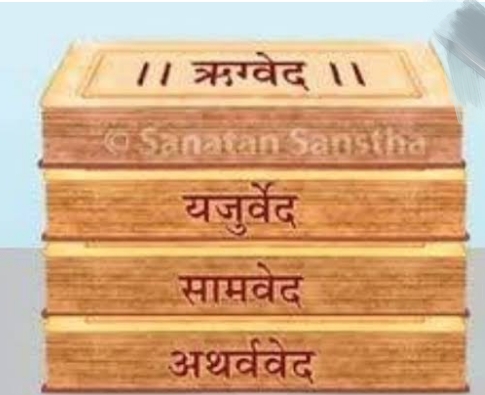
The Vedas are therefore regarded as Shruti in Hinduism meaning “what is heard” as contrasted with other texts designated Smritis (“what is remembered”), accounts of great heroes and their struggles in works such as the Mahabharat, Ramayan, and Bhagvat Gita (although some sects of Hinduism regard the Bhagavat Gita as Shruti). The texts which make up the Four Vedas are:

1. Rig Veda 2.Yajur Veda 3.Sama Veda 4.Atharva Veda

The Rig Veda is the oldest and the Sama Veda and Yajur Veda draw from it directly while the Atharva Veda takes a different course. All four, however, maintain the same vision, and the Upanishads for each of these address the themes and concepts expressed.

Each of these is further divided into types of text included within them:

  • Aranyakas – rituals, observances
  • Brahmanas – commentaries on said rituals
  • Samhitas – benedictions, prayers, mantras
  • Upanishads – philosophical narratives and dialogues

The Upanishads are an assortment of texts central to Hinduism that are recorded from oral traditions. They contain information regarding the philosophical principles and concepts of Hinduism, including karma (right action), brahman (ultimate reality), the atman (true Self or soul), moksha (liberation from the cycle of reincarnation) and Vedic doctrines that explain Self-realization through yoga and meditation practices. Upanishad is a Sanskrit word that translates in English to mean “sitting at the feet of” or “sitting down near.” This illustrates the position of receiving wisdom and guidance humbly from a teacher or guru.

The Upanishads are the best known and most often read of the Vedas because their discourse is presented in dialogue/narrative form and they were the first to be translated into other languages. The four Vedas, conversely, are considered the literal sounds of the Divine which, when recited or sung, recreate the primal vibrations of the universe. Accordingly, they are actually impossible to translate and what one reads in a translation should be understood as a paraphrase at best.

The word Upanishad is usually interpreted as “sitting down beside.” This Sanskrit word can be broken down into three parts and translated as “upa” meaning near, “ni” as down and “shad” as to sit. 

The 13 Upanishads are:

  • Brhadaranyaka Upanishad
  • Chandogya Upanishad
  • Taittiriya Upanishad
  • Aitereya Upanishad
  • Kausitaki Upanishad
  • Kena Upanishad
  • Katha Upanishad
  • Isha Upanishad
  • Svetasvatara Upanishad
  • Mundaka Upanishad
  • Prashna Upanishad
  • Maitri Upanishad
  • Mandukya Upanishad

Their origin and dating are considered unknown by some schools of thought but, generally, their composition is dated to between c. 800 – c. 500 BCE for the first six (Brhadaranyaka to Kena) with later dates for the last seven (Katha to Mandukya).

In these sacred texts, we see an internalization of the sacrifice and worship extolled in the Vedas and a deeper understanding and exploration of the internal world of mind and spirit. Composed over several centuries and in many volumes, the Upanishads reflect a strong need to express and communicate the deep mystical states and spiritual contemplations that the ancient yogis experienced.

According to tradition, there were over two hundred Upanishads, but there are only eleven “principal” Upanishads, as commented on by the ancient sage Shankara. The texts are written in a passionate poetic verse describing mystical states and spiritual concepts or in descriptive short stories and dialogues between historical figures.

The teachings of the Upanishads revolve around four primary spiritual themes. These four philosophical concepts are described in many different ways as they can be difficult to grasp. These main teachings are repeatedly reinforced in the texts of the eleven principal Upanishads.

  1. The first and most important is the realization that the ultimate, formless, and inconceivable Brahman (Godhead) is the same as Atman, as our internal soul. Brahman represents the entire universe, and the Atman is a little piece of that divine oneness that we contain inside us. This philosophical idea is summed up in the mantra Tat Tvam Asi (That Art Thou).
  2. The idea that the Atman is eternal, and becomes reborn over and over again is central to the concept of reincarnation that is taught in the Upanishads.
  3. This concept of rebirth is highly tied to the teachings of Karma: the future consequences of one’s current intentions, thoughts, behaviors, and actions.
  4. It is the accumulation of Karma that binds us to Samsara, the cycle of death and rebirth. To escape the endless cycle of Samsara requires one to attain enlightenment through the realization of Atman/Brahman. It is this state of Self realization that the majority of the Upanishads attempt to describe and encourage us to achieve through the yoga practices of meditation, mental discrimination, and mantra recitation.

 Spiritual concepts have exerted a profound influence on the development of Yoga, Hindu, and Indian philosophy. While the yogic practices taught in the Upanishads were primarily mediation based, these philosophical teachings will remain the core beliefs for all of the future developments in the many paths and practices of yoga.

A new membrane production could desalinate water with 99.9% efficiency.

According to the World Health Organization, more than 785 million people lack clean drinking water. Although 71% of the Earth’s surface is covered with seawater, we can’t drink it. Scientists around the world are working to find effective means of desalinating seawater at a low cost. Now, a team of Korean scientists may have figured out how to do it in a matter of minutes.

The freshwater necessary for most human activities represents only 2.5 percent of the total water available on the planet. Rivers and lakes hold only a fraction of them, but that is what life on Earth depends so much on.. Unfortunately, human activities are putting this vital resource under tremendous strain.

Diagram of the electrothreading device used to make this membrane from nanofibres.

It is hardly surprising that desalination of seawater is the easiest way to address this issue. But these processes have their limitations. One such limitation is membrane wetting.  Wetting the membrane pores eliminates dry pathways where contaminants, like particles, gels, or bubbles could pass through, resulting in high defect levels in your process. Polymer membranes are natively hydrophobic or hydrophilic.

•           Hydrophobic – having a natural aversion to water

•           Hydrophilic – having a natural affinity to water

If a membrane is hydrophobic, it is difficult to wet with water. This results in a high contact angle, or a very round bead of water sitting on top of the membrane. If a membrane is hydrophilic, it is easily wet with water, and the water will penetrate the pores of the membrane.

When using membranes to filter seawater, the membrane must remain dry for long periods. If the membrane becomes moist, the filtration process becomes inefficient and permits large quantities of salt to pass through the membrane. For long-term operations, progressive membrane wetting has been observed regularly, which be resolved by changing the membrane.

Researcher Yunchul Woo and his team at the Korea Institute of engineering and Building Technology (KICT) have now developed a membrane that’s less vulnerable to wetting and is stable within the future .

The membrane is formed of nanofibres that are fabricated into a three-dimensional hierarchical data structure , This was achieved by employing a sort of nanotechnology called electrospinning. Using this technology, the researchers were ready to fabricate a highly hydrophobic membrane — i.e. water repellent.

The hydrophobic nature of the membrane is valuable because it is designed to keep water molecules from passing through. Instead, a temperature differential is applied on both sides of the membrane which causes the water to evaporate from one end to the water vapor. The membrane allows water vapor to pass, which then condenses onto the cooler side. Called, membrane distillation, this is a commonly used method of desalination using membranes. Because salt particles are not transformed into gas, they are set aside on one side of the membrane, giving highly purified water on the other side.

The Korean researchers also used silica aerogel in their membrane fabrication process which further enhanced the flow of water vapor through the membrane, providing quicker access to desalinated water.

In tests, the team ran the new membrane for 30 days, and found that it still filtered out 99.99 percent of the salt after that time. That’s a far longer runtime than other electrospun nanofiber membranes, which the team says struggle to last more than 50 hours of continuous use before they begin to leak.

The co-axial electrospun nanofiber membrane have strong potential for the treatment of seawater solutions without suffering from wetting issues and may be the appropriate membrane for pilot-scale and real-scale membrane distillation applications,” says Dr. Yunchul Woo, lead researcher on the study.

15 Mind Blowing Paradoxes

A paradox is a logically self-contradictory statement or a statement that runs contrary to one’s expectation. It is a statement that, despite apparently valid reasoning from true premises, leads to a seemingly self-contradictory or a logically unacceptable conclusion. A paradox usually involves contradictory-yet-interrelated elements that exist simultaneously and persist over time.

  1. Bentley’s paradox: In a Newtonian universe, gravitation should pull all matter into a single point.
  2. Boltzmann brain: If the universe we observe resulted from a random thermodynamic fluctuation, it would be vastly more likely to be a simple one than the complex one we observe. The simplest case would be just a brain floating in vacuum, having the thoughts and sensations you have.
  3. Fermi paradox: If there are, as various arguments suggest, many other sentient species in the Universe, then where are they? Shouldn’t their presence be obvious?
  4. Pinocchio paradox: What would happen if Pinocchio said “My nose grows now”? If Pinocchio were to say “I am getting sick,” this could be either true or false, but Pinocchio’s sentence “My nose grows now” can be neither true nor false; hence this and only this sentence creates the Pinocchio (liar) paradox.
  5. Heat death paradox: If the universe were infinitely old, it would be in thermodynamic equilibrium, which contradicts what we observe.
  6. Olbers’ paradox: Why is the night sky dark if there is an infinity of stars, covering every part of the celestial sphere?
  7. Bootstrap paradox (also ontological paradox): You send information/an object to your past self, but you only have that information/object because in the past, you received it from your future self. This means the information/object was never created, yet still exists.
  8. Predestination paradox: A man travels back in time to discover the cause of a famous fire. While in the building where the fire started, he accidentally knocks over a kerosene lantern and causes a fire, the same fire that would inspire him, years later, to travel back in time. The bootstrap paradox is closely tied to this, in which, as a result of time travel, information or objects appear to have no beginning.
  9. Schrödinger’s cat paradox: This is a well known paradox. According to the Copenhagen interpretation of quantum mechanics, a cat could be simultaneously alive and dead, as long as it remains unobserved.
  10. Black hole information paradox: Black holes violate a commonly assumed tenet of science that information cannot be destroyed.
  11. Temporal paradox: What happens when a time traveler does things in the past that prevent them from doing them in the first place? 
  12. Grandfather paradox: If one travels back in time and kills their grandfather before he conceives one of their parents, which precludes their own conception and, therefore, they couldn’t go back in time and kill their grandfather. Don’t even think about trying this.
  13. Polchinski’s paradox: A billiard ball can be thrown into a wormhole in such a way that it would emerge in the past and knock its incoming past self away from the wormhole entrance, creating a variant of the grandfather paradox.
  14. Hitler’s murder paradox: One can travel back in time and murder Adolf Hitler before he can instigate World War II and the Holocaust; but if he had never instigated that, then the murder removes any reason for the travel.
  15. Twin paradox: The theory of relativity predicts that a person making a round trip will return younger than his or her identical twin who stayed at home.

Paradoxes are very interesting in their own way which sometimes lead to new ideas and many a time confusion. I hope you found these paradoxes very mind-blowing. Share this with your friends and enjoy the look on their faces!

https://en.wikipedia.org/wiki/List_of_paradoxes
https://en.wikipedia.org/wiki/Paradox