CASE ANALYSIS

GLOUCESTER GRAMMAR SCHOOL CASE

Facts: In this case, the defendant was a school teacher who used to work in plaintiff school. Due to some conflicts which arose between the defendant and plaintiff, defendant had left the school. Later, he set up a rival school next to that of plaintiff. Defendant school teacher was very popular for his teaching. Boys from the plaintiff school left it and started to join in defendant�s school, because of this competition the plaintiff had to reduce them from 40peneace to 12penance. The plaintiff sued defendant for monetary loss occurred.

Issues Raised In This Case:

  1. Can defendant be held responsible for the monetary loss suffered by the plaintiff, just because he had fixed a rival school and damaged the right of plaintiff?
  2. Did this case cover the essentials of Damnum sine injuria? And if yes then the defendant couldn�t be held liable?

Judgement:
It was held by court that; no suit could lie. It was held by court of law that defendant couldn�t be held liable. The court stated that:
compensation is no ground of action even though the monetary loss is caused, but if no legal right is violated.

It also further stated that, the defendant had lawfully set up his own school and he nowhere violated any legal right of plaintiff.

It was believed by the court that, students liked the teaching style of defendant, hence it was at the discretion of the students to study in which ever school they want to.

Appellant has no right to stop the defendant to run a business as a competition to his school.

Case Analysis:
Law of Torts is understood to be An instrument to form people adhere to conduct of reasonable behavior and respect the rights and interests of one another.

  1. And the same are kept in mind while giving the judgment of the case at the top of the decision of the law of court.
  2. The case which we discussed above is related to An act which caused damage but no legal right is infringed or compromised
  3. This is known as Damnum Sine injuria which means: Damage without legal injury.

The decision taken in the case GLOUCESTER GRAMMER SCHOOL, was also applied to the similar case Chasemore vs Richards (1859). In this case the plaintiff was running a mill on his own land, and for the same purpose he was using stream water for a long time. The well which was dug in his own land did cut the supply of underground water supply.

Damnum Sine Injuria:

This is a legal maxim in law of torts which deals with damages caused without injury. So it basically deals with the damages caused where there is no involvement of infringement of legal rights. Since there is no infringement of legal rights to any particular person, hence this cannot be enforced in court of law.

The mere fact that a man is injured by another’s act gives in itself no cause of action; if the act is deliberate, the party injured will have no claim in law even though the injury is intentional, so long as the other party is exercising a legal right.

Damnum sine Injuria is a Latin word, which mean DAMAGE WITHOUT INJURY, and hence the word itself clearly establishes that if a person suffers from any kind of damage, but if there is no Inter vision with the legal rights of a person, then neither it can be enforced in the court of law, nor a person can claim any compensation.

The maxim Damnum Sine Injuria is dived into three parts:

  1. Damnum includes anything which is related to substantial loss, harm, damage with respect to money, health etc.
  2. Injuria means infringement of a right given by the law by the plaintiff
  3. Sine means without

The general principle on which this maxim is based upon is that if one exercises his common or ordinary rights, within reasonable limits, and without infringing others legal right; such an exercise does not give rise to an action in tort in favor of that other person. Damages can be in any form either in the form of any substantial harm or loss suffered from respect to the money, comfort, health, etc.
National gallery of modern art

A virtual tour 

During the pandemic, our department arranged a virtual tour of the National Gallery of Modern Art, New Delhi, India. Mr. Ganguly S took us to the virtual tour of the NGMA. He discussed the aim and objective of the NGMA. The art is preserved in the gallery from the 1850s. He also discussed how they develop and maintain the gallery art. He also shared information about a specialized library of books, periodicals, photographs and other audio visual materials. NGMA has also organized lectures, seminars and conference. They also encourage higher studies and research in the field of art and its different areas such as art criticism, art appreciation, museology and the inter-relation of visual and performing arts. NGMA helps people to understand the work of our great artists, their works and share the story of their arts. 

The NGMA was inaugurated by the late former vice- President of India Dr. S Radhakrishanan in the presence of former Prime Minister Pandit Jawaharlal Nehru and artist and art lover of the city on March 29, 1954. NAGMA’s inauguration was marked by an exhibition of sculptures. Debi Parsad Roy Chowdhary, Ramkinkar Baji, Sankho chaudhari, Dhanraj Bhagat, Sarbari Roy chowdhary and others were present at the time of inauguration.

The art collection of the NGMA is vast and eclectic. The 17,000 works within it testify to a rich and resplendent past even as they pay tribute to the present. Much care was lavished in the building up of a modern and contemporary collection. The collection of Raja Ravi Verma, Abanindranath Tagore (old master), amrita sher-gil and Rabindranath tagore and et ul (modernists artists) are displayed here. The contemporary art is also included in the gallery by different artists. Landmark paintings of M.F hussain, tyeb mehta’s santiniketan triptych were entered in the NGEMA’s collection in the 90s. The art work of NGMA was obtained through purchase, permanent loans and gifts. 

The virtual tour were really interesting and informative. We learn so much about modern art, artists and preservation of art material for a long time. It was really interesting to know about the facts of NGMA. We learn about the preservation of painting and the story behind the painting. The whole museum is divided according to the themes. The arrangement of the showcase was so allegiant. There is also a library which consists of the written works and sculptures there. It was really good to see how long the journey of our  art is.  The beauty is innate in the painting and also speaks of the evolution in painting and storage. The gallery had many paintings there for such a long time.   The storage techniques are different with the needs of the arts. They also offer diplomas and courses in the gallery. Many PhD students and professors arranged    seminars there. 

 The experience of the virtual tour was really useful. During the pandemic we missed our  real tour but  it was also work. It gives us ideas to work with the online mood. Hope, so we are going to have an actual walk of NGMA soon. 

CASE ANALYSIS

RYLANDS V. FLETCHER

Rylands vs. Fletcher (1868) L.R. 3 H.L. 330 is one of the landmark cases of tort law.  In this case, The House of Lords laid down the rule recognizing ‘No Fault’ liability. The ‘Rule of Strict Liability’ originated in this case. By this rule, a person may be liable for some harm even though he is not negligent in causing the same. Further, this case paved the way for ‘The Rule Of Absolute liability’ in India.

Judges (sitting)

 Lord Cairns and Lord Cranworth

Decided on

17 July 1868

Major contribution of the case

‘The Rule of Strict Liability’ originated in this case.

Facts of the case

The defendant, Rylands got a reservoir constructed, through independent contractors, over his land for providing water to his mill. There were some old disused shafts under the site of the reservoir, which the contractors failed to observe. So they didn’t block the shafts. When water was filled within the reservoir, it burst through the shafts. As a result plaintiff’s coal mines on the adjoining land was flooded. The defendant didn’t know about the shafts and he had not been negligent although the independent contractors had been. The negligence was on the part of independent contractors. Since the plaintiff, Fletcher has to suffer losses, he sued defendants.

Issues raised

  • Whether there was any nuisance or not?
  • Was the use of Defendant’s land unreasonable and thus was he to be held liable for damages incurred by the Plaintiff?

Judgment

The House of Lords dismissed the appeal and agreed with the six Exchequer judges. Lord Cairns, while speaking for the House of Lords, stated their agreement of the rule stated above by Justice Blackburn in the court of Exchequer Chamber but included a further limitation on liability. The one more requirement is that the land from which the escape occurs must have been modified in a way which would be considered non-natural, unusual or inappropriate.  The decision of House of Lords added a requirement that the use be ‘non-natural’. The judgement of this case was delivered on 17 July. In this the court consisted of only two judges, Lord Cairns and Lord Cranworth; Lord Colonsay didn’t attend the case.

Three essentials, for the application of the Rule of Strict Liability

  • Some dangerous thing must have been brought by a person on his land.

According to this rule, the liability for the escape of thing from one’s land arises when the thing collected was a dangerous thing. It means a thing likely to do mischief if it escapes. In Rylands v. Fletcher, the dangerous thing was a very large body of water

  • The thing thus brought or kept by an individual on his land must escape.

For the rule in Rylands v. Fletcher to apply, it is also essential that the thing causing the damage must escape to the world outside the occupation and control of the defendant

  • It must be non-natural use of land.

Water collected within the reservoir in such an enormous quantity in Rylands v. Fletcher was held to be non-natural use of land. In order to show that, the use is non-natural, it must be shown that use is some special use bringing with it increased danger to others.

Exceptions to the Rule of Strict Liability

A number of defences to the rule of strict liability too  was developed in this case and some later cases:

  • Escape was owing to the plaintiff’s default
  • Escape was a consequence of vis major
  • Consent of the plaintiff
  • Act of third party
  • Statutory authority

Impact of the case in India

In M. C. Mehta v. Union Of India, the Supreme court took a bold decision holding that it was not bound to follow the 19th-century rule of English law. The honourable Supreme Court said it could evolve a rule suitable to the social and economic conditions prevailing in India at the present day. It evolved the rule of ‘Absolute Liability’ as a  part of Indian law in preference to the rule of Strict Liability laid down in Rylands v. Fletcher. This rule was not subject to any of the exceptions under the rule in Rylands v. Fletcher. The defences to the Rule of Strict Liability can be used by the persons who had established ‘hazardous and inherently dangerous’ industries to escape the liability for the havoc caused, by pleading some exceptions. So to remove that grey area and in order to increase accountability on the part of persons engaged in such kind of activities, the rule of ‘Absolute Liability’ has been evolved in India.

Conclusion

Ryland vs. Fletcher played a great role in deciding owners’ liability when he is bringing any dangerous object in his premises. It was necessary to have a law that could increase the duty of the owner. So that he can be more careful while bringing any dangerous object in his premises. The world is progressing very fast and in this era of industrialization, privatisation and globalization disputes regarding the duty of care are burgeoning rapidly so there was a need for a law that could solve these problems. This was done in this case. In the context of India, this  Rule of strict liability paved the way for ‘The Rule of Absolute Liability’ in India.

5 true stories prove multiple universes do exist!

Would you believe me if I say parallel universes exist and are a ‘real’ thing? Well if no, I would request you to continue reading ahead. We have all come across the terms like parallel universes/ multiple universes several times in the fictional books that we read. But who knew that those stories weren’t just a myth or an old-wives’ tale. Here are 5 more real-life stories that will leave you dumbstruck.

1. A guy at Tokyo International Airport who was supposed to be from a non-existing country

Allegedly, this man told customs he was in Japan for business, and had legitimate visa stamps, currency from multiple European countries, cheques from an unknown bank, and a driver’s license issued in Taured. They sent him to a hotel while things were sorted out, while two immigration officers stood outside of his hotel door. But when they went to check on him in the morning, he’d vanished. This was from 15 stories up, above a busy street, so escaping through a window was unlikely, if not impossible. The Tokyo Metropolitan Police Department searched, but never located the man from Taured again.

2. The green-skinned children who simply just appeared in Woolpit

Back in the 12th century, two children, a brother and sister, allegedly popped up in the village of Woolpit, in Suffolk, England. Both had greenish-colored skin, spoke an unknown language, wore bizarre clothing, and initially refused to eat any food other than raw beans. They were taken in, cared for, and eventually they adapted, developing a taste for food and losing the green hue in their skin. Shortly after, the boy became sick and died, but after learning to speak English, the girl explained that she and her brother were from a place where the sun didn’t shine bright, and it was perpetual twilight. She and her brother were there, herding their dad’s cattle, when they heard some loud noise, and were suddenly in a new place where they were eventually discovered, in Woolpit. The girl grew up and integrated herself into her new surroundings. Though it remained unknown how she and her brother got there, the girl went on to get married and live her life here, in a dimension that might not actually be her place of origin.

3. The cabin in the Markawasi Stone Forest that leads to a parallel dimension

One day, a woman and her friends were camping at a site near the mysterious forest, when they heard music coming from a small, stone cabin that was lit up by torches. They claimed to see people wearing 17th-century fashion dancing inside, and the curious woman was drawn to it, so she headed over and tried to enter. Before she could get inside, a friend pulled her away, and half of her body immediately became paralyzed — the half that had entered the cabin.

Some believe that the woman partially entered a dimensional gateway, and when she was pulled out, she experienced a shift that threw off her nervous system, resulting in her partial paralyzation.

4. The strange man who wound up shipwrecked in Germany from an unknown world

So this story goes, a peculiar guy popped up in a village, where he was picked up and questioned by authorities. The only comprehensible language he spoke was a broken variation of German, but he said his name was Jophar Vorin, and claimed to come from a part of the world known as Sakria. He conveyed that he was searching for his long-lost brother, whom he’d been separated from during a shipwreck. While he had geographical information regarding his home planet, such as five compartments known as Sakria, Aflar, Aslar, Auslar, and Euplar, he couldn’t trace his route on shore, and he would wind up living in Berlin, where he was a topic of discussion amongst the scientific, and simply curious, communities.

5. The universe in which the Beatles never broke up

In 2009, a man named James Richards was in Livermore California driving home from Turlock with his dog. He claims that when he pulled over to let the pup empty her bladder; she sprinted after a rabbit, and he followed her, but tripped, knocking himself unconscious. When James came to, he was next to an odd machine, in the company of a man named Jonas who claimed to have found his unconscious body while on a work trip for an interdimensional travel agency.

While they were together, Jonas and Richards wound up chatting about the pop culture in their respective universes, and discovered that not only did the Beatles also exist in this dimension, but they were all still alive and actively making music. Richards gained a cassette tape labeled “Everyday Chemistry,” which contained Beatles songs that never existed in our dimension. He even uploaded the songs to a website and called it TheBeatlesNeverBrokeUp.com

21.5 million lost jobs in tourism sector, says Centre

Significant job loss due to lockdown, Tourism Minister tells Rajya Sabha.

With the tourism industry among the hardest hit due to the pandemic, it is estimated that about 21.5 million people working in the sector lost their jobs during the nine-month period from April 2020-December 2020, as per the data shared by the government recently.

In a written reply to the Rajya Sabha, Tourism Minister G. Kishan Reddy said a significant number of jobs were lost in the tourism sector once the lockdown was implemented.

“About 14.5 million jobs during Q1, 5.2 million during Q2 and 1.8 million jobs during Q3 were expected to have been lost as compared to estimated 34.8 million jobs in the pre-pandemic period of 2019-20,” the Minister said.

Mr. Reddy said this was one of the key findings of the study done by the National Council of Applied Economic Research (NCAER) for the Ministry of Tourism to assess the extent of losses to the sector.

As per the report, due to overall economic slowdown during 2020-21, tourism economy or tourism direct gross value added (TDGVA) saw a fall of 42.8% in April-June 2020, 15.5% in July-September 2020 and fall of 1.1% in October-December 2020.

“Due to significant drop in tourist arrivals and hence tourism expenditure, during the pandemic, it is estimated that TDGVA plummeted by as much as 93.3% in Q1 of 2020-21 over its level in the same quarter of previous year,” the Minister stated, adding that it picked up slightly to post a decline of 79.5% and 64.3% in second quarter and third quarter respectively.

However, Mr. Reddy added that the Tourism Ministry did not maintain data on revenue generated from tourism.

Replying to another query, the Minister said no formal study had been instituted by the Ministry to assess whether the movement of people from all States increased at tourist places, which might raise fears of the increase in COVID-19 positive cases after the second wave.

Further, Mr. Reddy said that as per the Bureau of Immigration, the number of foreign tourist arrivals in India stood at 10.93 million in 2019, declining to 2.74 million in 2020 and about 0.42 million till June 2021.

According to the data compiled by the Ministry of Tourism, domestic tourist visits during the calendar year 2019 stood at 2321.98 million and in 2020 at 610.21 million.

Advertisements and Body Image

Advertisements have the power to shape the belief of a person and convince them into buying a particular product. But often these advertisement campaigns, especially the ones related to beauty products, promote an unrealistic body image which affects the consumer’s state of mind. They glorify and emphasize the importance of physical appearance and set certain standards of beauty. 

 This can affect not only the mind but also the social and emotional state of a person. It can lead to low self esteem issues and impact their overall well-being. Youngsters and teenagers are the most vulnerable to this negative impact of advertisements. They idealize the body image shown in the advertisements and end up with body dissatisfaction or taking drastic measures in order to change the body. 

The issue of Body Image

Body image refers to one’s perception about one’s size and shape of body. Body dissatisfaction is experienced when the person feels that they do not fit into the perception of body image. This can lead to unhealthy habits like chronic dieting . 

Nationwide Surveys conducted in the USA during the 1970s, 1980s and 1990s,  indicated that both men’s and women’s body image perceptions were becoming more and more negative with the growth of print and television advertisements. 

When it comes to beauty products or fashion related content, the models are always shown to be extremely thin. This stereotypical standard of beauty leads to body related anxiety issues and eating disorders among women. Likewise, Men are always stereotyped to have a physically strong, lean, and muscular body. 


Similarly racist attitudes are also promoted by many fairness product’s advertisements. Fairness creams, powders, etc. showcase fair skin as the standard of beauty. This issue of fairness creams was widely questioned and criticized recently, especially on social media.


Some advertisements set unattainable goals for the consumer. For instance the unrealistic standards are set like a totally spotless and ever-glowing face, or always having silky smooth hair. These notions of beauty are far from reality, they are unlike the people that we see in our everyday life. Trendy clothes, perfectly smooth skin,etc. is glamorized to the extent that people consider it to be the “perfect body”. 

However, due to recent debates around the issue of body image being shaped by advertisements, some advertisements have started promoting body positivity. More advertisement campaigns that promote body positivity and inclusivity are required for normalization and acceptance of the non-stereotypical body images in society.


Different opportunities after the GATE exam

In this era, just being a graduate won’t bag you a wonderful job opportunity. All of us are well aware of the decreasing employment rates in India. So for an unprecedented career, one should go for higher studies. This won’t just open up the doors to your bright future but will also boost your career. Hence, these days, the students prepping for higher education opt for competitive exams.

GATE (Graduate Aptitude Test in Engineering) exam is one such very well-known exam. Almost all the science and engineering students appear for the exam and are also aware of the chunks of opportunities.

Well, if you too want to go for higher studies such as M. Tech or ME after your graduation. Then, this competitive exam is for you. Let me list out some benefits of qualifying GATE exam.

Public Sector Units (PSUs)

Candidates qualifying GATE with magnificent ranks is directly called for interviews by these organizations. These days many PSUs are hiring candidates with good GATE scores such as BHEL, IOCL, ONGC, SAIL, NTPC, HPCL, PGCIL, BARC and over 200 more PSUs present in the country consider GATE scores as a satisfactory criterion in their recruitment process. A job in a PSU ensures you keep in touch with intriguing engineering advances while enjoying the security and perks of a Govt. salary. Working in a PSU will not only help you lead an affluent life but also you will serve your country.

Higher Studies

If you crack the exam with an outstanding score, then the best opportunity is to get into India’s prestigious institutes like IITs and NITs or IISC. Based on your specialization and interests you can choose your favorite institutes. After completion of your higher studies, firms like Google, Samsung, Tata, Maruti, Cisco, and several other eminent companies with salaries ranging from 8 lakhs to 30 lakhs per annum bless you with really excellent campus placement opportunities. And if you have always dreamt of getting that tag of an “IITian” before your name, this is the exam that paves the path towards it.

Research

If you are zealous about your subject and want to explore new things, then after the completion of your M. Tech or ME, you can also opt for research, Junior Research Fellowship in CSIR Laboratories. Research is an area which is not developed properly in our country explored though it holds great promise. A very few people stay back in the country to do their research fellowship rather they go to foreign countries for a better prospect and future. But why should you go to a foreign university and do research while also having to struggle with part-time jobs to meet expenses? You can do the same outstanding and path-breaking researches in your own country and simultaneously can earn a hefty stipend for that. Isn’t a good option for you? By doing research in your own country, you can make your country and people proud.

Joining foreign universities after GATE

Another great opportunity after GATE is that you can join foreign universities for your higher education and fulfill all your dreams. Many universities in Germany, Singapore consider a valid GATE score, i.e. above 90 percentile as a parameter for admission. While many universities in Germany waive tuition fees for their various M. Tech and MS programs. So, make hard work for your GATE exam preparation and can get one step closer to your dream.

So, it’s prime time to start with your GATE preparation if you’re in your third year of engineering

History of Republic Day

India celebrates Republic Day on January 26 annually with a lot of pride and fervor. It is a day that is important to every Indian citizen. It marks the day when India became truly independent and embraced democracy. In other words, it celebrates the day on which our constitution came into effect. On 26 January 1950, almost 3 years post-independence, we became a sovereign, secular, socialist, democratic republic.

While we got independence from British rule on August 15, 1947, our country was still lacking a concrete constitution. Moreover, India also did not have any experts and political powers which would help in the functioning of the state affairs smoothly.  Up until then, the 1935 Government of India Act was basically modified in order to govern, however, that act was more bent towards the colonial rule. Therefore, there was a dire need to form an exclusive constitution that would reflect all that India stands for.

Thus, Dr. B.R. Ambedkar led a constitutional drafting committee on August 28, 1947.  After drafting, it was presented to the Constituent Assembly by the same committee on November 4, 1947. This whole procedure was very elaborate and took up to 166 days to complete. Moreover, the committee organized sessions were kept open to the public.

No matter the challenges and hardships, our constitutional committee left no stone unturned to include rights for all. It aimed to create the perfect balance so all citizens of the country could enjoy equal rights pertaining to their religions, culture, caste, sex, creed and more. At last, they presented the official Indian constitution to the country on January 26, 1950.

Moreover, the first session of the India Parliament was also conducted on this day. In addition to that, 26th January also witnessed the swearing-in of India’s first president, Dr. Rajendra Prasad. Thus, this day is very important as it marks the end of the British rule and birth of India as a Republic State.

The new ‘kid’ in the block; COVID-19

The world was gripped by the outbreak of a disease called Novel Coronavirus Disease which made normal life impos sible for the people. The year 2020 will be remembered by most people as ‘an nus horribilis.”

On 11 March 2020, WHO declared Novel Coronavirus Disease (COVID-19) outbreak as a pandemic and reiterated the call for countries to take immediate actions and scale up response to treat, detect and reduce transmission to save people’s lives.

The COVID-19 pandemic is consid ered as the most serious global health crisis of the century and the greatest challenge that the humankind faced since the 2nd World War, In Decem ber 2019, a new infectious respira tory disease emerged in Wuhan, Hu bei province, China and was named by the World Health Organization as COVID-19 (coronavirus disease 2019). A new class of corona virus, known as SARS-CoV-2 has been found to be responsible for occurrence of this disease. As far as the history of human civilization is concerned there are instances of severe outbreaks of diseases caused by a number of virus es. According to the report of the World Health Organization, the current outbreak of COVID-19, has affected over 2164111 people and killed more than 146,198 people in more than 200 countries throughout the world. Till now there is no report of any clinically approved antiviral drugs or vaccines that are ef fective against COVID-19. It has rapidly spread around the world, posing enor mous health, economic, environmental and social challenges to the entire hu man population. The coronavirus out is severely disrupting the global economy, Almost all the nations are struggling to slow down the transmis sion of the disease by testing & treating

patients, quarantining suspected persons through contact tracing, re stricting large gatherings, maintaining complete or partial lock down etc.

Before the onset of COVID-19, there were at least five pandemics in the cur rent century, H1N1 in 2009, polio in 2014, Ebola (West Africa in 2014), Zika (2016) and Ebola (Democratic Republic of Congo in 2019). COVID-19 outbreak was declared as the sixth public health emergency of international concern on 30 Jan 2020 by the WHO. Compared to the other diseases, COVID-19 was much more widespread.

The COVID-19 outbreak was first re ported in the Chinese city of Wuhan in December 2019, and within a couple of months it turned out to be a global health emergency. Live animals like bat, frog, snake, bird, marmot and rabbit are frequently sold at the Hunan seafood market. Genomic analysis revealed that SARS-CoV-2 is phylogenetically related to severe acute respiratory syndrome like (SARS-like) bat viruses, bats could therefore be the possible primary source. Although the intermediate source of origin and transfer to humans is not clearly known, the rapid human to hu man spreading capability of this virus has been established. As per the latest update of WHO on 30 October 2020, the outbreak of COVID-19 had spread in more than 200 countries. Approximately 11,87,582 people had died after con tracting the respiratory virus out of nearly 4,54,29,027 confirmed cases, whereas more than 3,30,35,620 people have re covered from the disease. These numbers are changing rapidly.

Bringing a glimmer of hope, Russia on August 11, 2020 declared itself the first country to approve a coronavirus vaccine with President Vladimir Putin saying one of his daughters had been inoculated. Dubbing the vaccine “Sputnik V” after the Soviet-era satellite that was the first launched into space, Russian officials said it provided safe, stable immunity and denounced Western attempts to un dermine Moscow’s research. Scientists in the West have raised concerns about the speed of development of Russian vaccines, suggesting that researchers might be cutting corners and coming un der pressure from authorities to deliver. The World Health Organization said any WHO stamp of approval on a COVID-19 vaccine candidate would require a rigorous safety data review.

Janmashtami

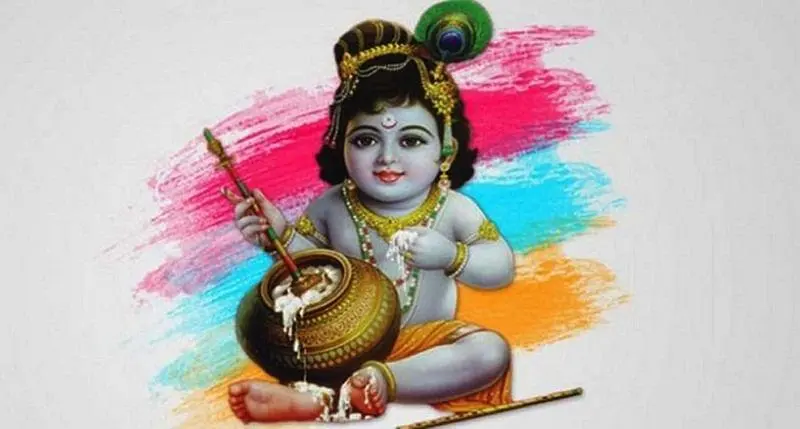
The Hindus celebrate Janmashtami for the birth of Sri Krishna. The festival usually occurs in August. Moreover, the Hindus celebrate this festival in the Ashtami of Krishna Paksha. Moreover, Lord Krishna is the most powerful incarnation of Lord Vishnu. It is a joyful festival for the Hindus. Furthermore, the Hindus perform different rituals to please Lord Krishna. This is one of the most joyous celebrations for the Hindus.

Krishna Janmashtami 2018: Bollywood wishes Happy Janmashtami

Lord Krishna was born on the 8th day of Dark Fortnight in the month of Bhadon. Bhadon is a month in the Hindu calendar. Moreover, he was born around 5,200 years ago approximately. Because he was one of the most powerful Gods. He was born for a special purpose on Earth. Lord Krishna was born to free the world from evil.

As a result, he played an important role in the book of Mahabharata. Also, Lord Krishna preached about good karma and the theory of Bhakti.

Lord Krishna was born in a prison. He was in the clutches if Kansa. But his father Vasudev gave him to his friend Nand to save him. Because he knew that Kansa was evil-minded. Furthermore after getting saved the upbringing of Sri Krishna was in a Gokul family. Sri Krishna after some time became strong. As a result, he was able to kill Kansa.

When I was a child I used to watch many shows on Sri Krishna. As a result, I know many things about him. First of all, Sri Krishna was very fond of eating Makhan. Because of that he always used to steal it from his mothers’ kitchen. Therefore his name was ‘Natkahat Nand Lal’. Sri Krishna was dark-colored. So he was always worried about his color. Moreover, Sri Krishna had a friend named Radha. Radha was of great importance to Krishna. So he always spent time with her. Radha was very beautiful and fair so Lord Krishna always feels color complex.

Teachers Day

A Teacher is someone who acts as a guide and inspiration to people – both young and old. He/she is charged with the responsibility of creating awareness as well as opening the mind of people by instilling values, morals, and ethics. Teachers efforts are recognized during the teacher’s day. They shape minds, and we annually celebrate their contribution to the development of society in the form of Teachers’ day across the world. However, We celebrate The International Teachers Day on October 5th annually.

Teachers’ Day in India

Teachers are respected and honored for their important contribution in shaping individuals. 5th of September is annually celebrated as Teachers’ day in India. This is actually the birthday of the former President of India, Dr. Sarvepalli Radhakrishnan.

essay on teachers day

Teachers play an important role in the development of any country. This is why it is vital to set aside a day when the teachers are given the recognition they deserve. We celebrate Teachers’ day to honor the contribution of Teachers in our lives. Duties undertaken by teachers in the upbringing of children is immense and thus being recognized with teachers’ day is a step towards recognizing the profession and the role they play in society.

History of Holi

Holi is known as the festival of colours. It is one of the most important festivals in India. Holi is celebrated each year with zeal and enthusiasm in the month of March by followers of the Hindu religion. Those who celebrate this festival, wait for it every year eagerly to play with colours and have delectable dishes.

The Hindu religion believes there was a devil king named Hiranyakashyap long ago. He had a son named Prahlad and a sister called Holika. It is believed that the devil king had blessings of Lord Brahma. This blessing meant no man, animal or weapon could kill him. This blessing turned into a curse for him as he became very arrogant. He ordered his kingdom to worship him instead of God, not sparing his own son.

Following this, all the people began worshipping him except for his son, Prahlad. Prahlad refused to worship his father instead of God as he was a true believer of Lord Vishnu. Upon seeing his disobedience, the devil king planned with his sister to kill Prahlad. He made her sit in the fire with his son on the lap, where Holika got burned and Prahlad came out safe. This indicated he was protected by his Lord because of his devotion. Thus, people started celebrating Holi as the victory of good over evil.

it is easy to adopt online education in india

 IT IS EASY TO ADOPT ONLINE EDUCATION IN INDIA 


By : Neha Shahab 
 The most educational institutions have been shut since the end of March. It is still difficult to predict when schools, colleges and universities will reopen. Teachers and school administrators have been advised to continue communication with students through virtual lectures or portals.
The major challenge of remote learning is disparity in access – from electricity and internet connections to devices like computer or smartphones.
Mission Antyodaya, a nationwide survey of villages conducted by the Ministry of Rural Development in 2017-’18, showed  that 16% of India’s households received one to eight hours of electricity daily, 33% received 9-12 hours, and only 47% received more than 12 hours a day. While a computer would be preferable for online classes, a smartphone could also serve the purpose. However, the phone might be convenient for apps, but not for carrying out lengthy assignments or research. While 24% Indians own a smartphone, only 11% of households possess any type of computer, which could include desktop computers, laptops, notebooks, tablets.
The difference is starker in case of internet access. In states like Delhi, Kerala, Himachal Pradesh, Haryana, Punjab and Uttarakhand, more than 40% households have access to internet. The proportion is less than 20% for Odisha, Andhra Pradesh, Assam, Bihar, Chhattisgarh, Jharkhand, Madhya Pradesh and West Bengal.
The gender divide in internet usage is also stark. As per the internet and mobile association of india report, in 2019, while 67% men had access to internet, this figure was only at 33% for women. The disparity is more prominent in rural India, where the figures are 72% and 28% for men and women.

STRESS BUSTERS FOR A HAPPY LIFE

Ever since we humans have descended onto the Earth and made developments through generations and centuries, we have been living with decorum and discipline. The world has become quite organized and diversification has been well designed, planned and implemented. Well, as more and more people get access to better quality of knowledge, competition has levelled up too, and even though there are numerous opportunities available to everyone, the opportunities per person are less than a millionth. With such a tough and cut-throat competition taking place, the chances of making the cut amongst the selected ones for any opportunity is really difficult. People have to stay resilient and hard as a rock to complete and overcome all hardships to stay in the race. Physically with practice and consistency, hurdles seem to be easier to cross. But the real hurdle here is the emotional quotient. It is a herculean task to keep up with failures, setbacks and keep working towards our goals despite all the problems. Also, peer pressure and public opinions affect us and our outlook adversely. The conception of living a healthy life doesn’t just mean good physical health, it also hints towards good mental, emotional and social well-being as well. Thus proper mental health should also be maintained in order to remain completely fit and happy. But mental health isn’t given the same level of attention and importance as maintaining a fit body. Though it is said that a healthy mind resides in a healthy body, a healthy mind paves for a happy self. It is extremely necessary to keep an equally healthy state of mind and stability in order to live a fulfilling and enriching life. Not until very recently, psychological and mental issues were stigmatised and overlooked at by the society. But the gen – z has raised awareness about such issues, and has motivated people to come out of their shells and seek professional help to overcome their problems. Many famous personalities and public figures have opened about their stories, their health problems and how they accepted it and sought the help of their close people and medical experts to get better and healthy. This has encouraged the common person to address his/her condition with a better outlook and positive approach rather than being embarrassed and not facing it, causing more self-harm in the process.

The lifestyle that today’s generation lives is subjected to great stress levels, and coping with that huge amount of stress is itself a great challenge in today’s world. Some people might happen to get stuck in this maze, and might be unable to find the other side of the lit tunnel. These people might happen to be our close-knit ones too, and we might be unaware of what they are going through. In such cases, if we realize that our near and dear ones are emotionally distressed, it is our moral responsibility to support them in their hard times instead of ignoring or mocking them. We need to help them understand that it is totally okay if they are going through a low phase or are emotionally disturbed in any way, and that they can reach out to someone they are comfortable with, or medical professionals who can help them better in such a situation. The same goes with us too. The most important part of bouncing back with vigour and flamboyance in such situations is self-belief. If we believe in our strengths, willpower and potential, nothing is impossible and even the most difficult things are accomplishable. To be emotionally strong and focused, we need to embark on a journey of self-realization, that is, finding ourself. When we understand our good side and shortcomings, we can enhance our strengths and work on our weaknesses to become better versions of ourselves. Activities like meditation, spirituality and wellness programs can help connect our mind and body and help them work in unison as a whole unit in order to increase productivity and synchronization. Many relaxation activities can really help unwind and develop a peaceful environment for introspection and retrospection. This in turn can prove useful to help us understand our mistakes, so that we work on them well. This can also help us understand if our methods and ways are aligned in the proper direction and we can propel ourselves accordingly. We need to look after our mental health with the same intensity and importance as we do for our bodily health. A balanced and completely fit body will help us in living a contended and happy life.

A SOUND BODY, A HEALTHY BODY

Great learned people had been emphasizing on the importance of exercise and fitness since ancient times. We did have ancient doctors who had truly deep knowledge of the human anatomy and all the organ systems as well as the body’s working, but the technology to confirm their estimations was not available at that time. Yet, these people stressed on practising various forms of exercises and designing and playing a number of games which aided in complete body movement. With advancements in technology and detailed understanding of the body and its functioning in the medical field, the positive impact of exercise became more and more tangible to prove. Nevertheless, no matter what century it is, the significance of proper fitness and good health cannot be overlooked. And by good health, only a lean body does not translate as a healthy one; health means total physical, mental and social well-being. Studies have found out that exercise not only paves way for good physical health, but also rejuvenates the mind when done with concentration and interest. When all the senses become alert and the body is stretched, strained and relaxed during exercise, it helps relieve stress and refreshes our mind.

Today, people have realized that having a good physique is not necessarily an indicator of good health. If one is happy, can cope up with stress well and is free from lifestyle related diseases and also practices physical fitness regularly, then he/she can be termed healthy. And this is not just limited to having a good run or cardio session. The diet we consume also determines our wellness. As the common saying goes ‘good food, good mood’, a good diet ensures the body’s nourishment and negligible intake/accumulation of unhealthy components in our system. A lot of emphasis is being given on eating good, junk-free meals power-packed with the daily dose of required nutrients and devoid of harmful ingredients. Many people say that the combination of exercise and a planned diet have churned out wonderful and promising results. Food consisting of fruits and vegetables, low starch and sugar content, high fibre content, low LDP/cholesterol content and all the essential nutrients supplements the body well. Maintaining fitness and health by regular workout along with a proper balanced diet is very useful. Along with performing all the strenuous physical activities, taking care of mental health is also necessary. The world is becoming a busier place, and work and life stress have been mounting a lot of pressure on us, affecting our daily personal lives drastically too. In these times, a stress-busting activity is the need of the hour to keep up with all the issues and resolve them with a calm and composed mind. With an increase in psychological issues around the world, it is necessary that we keep a happy mindset towards things, open up to our close people, take breaks for self-realization activities and immerse ourselves into positivity and satisfaction. Nowadays, people do not care much about social attachment and involvement as they used to in the early days. But it is important that we stay connected and emotionally attached to the outside world and maintain healthy social relations and interactions. This will help in building strong bonding within the community and people will be able to share their joys and tackle their sorrows more effectively.

All in all, health and fitness are not just good food, good mind or good body. Healthiness is a state of self which encompasses and brings inner peace and content to us, and not just suffices our tangible needs. It is something which adds substance to living, and happiness to doing what we do.