Women’s Rights During and After Divorce in India

INTRODUCTION

In India, women are assumed to be reliant on their husbands at the moment of marriage. After their divorce, they have no access to work or any other means of gaining independence. Some of these limitations are alleviated by the rights they can assert following their divorce.
RIGHT TO ALIMONY AND MAINTENANCE

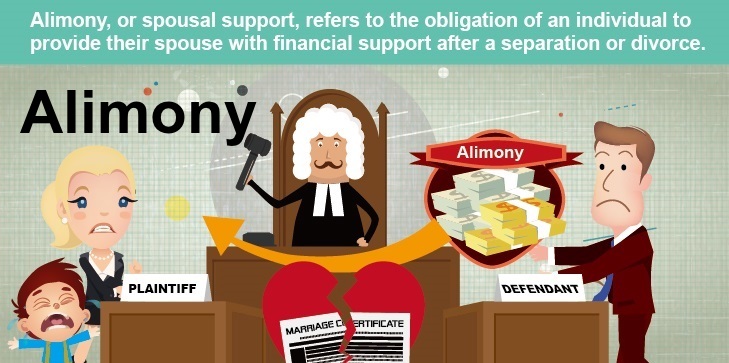
After marriage, women have the right to alimony. If women are not granted an adequate amount of alimony, they can petition the court for maintenance. Alimony is a lump sum payment made after a divorce, while maintenance is when the payment is made on a regular basis on a set date. If alimony is insufficient to cover her needs, the wife may request maintenance until she remarries.

Women’s rights in divorce include the fundamental right to request an allowance in order to support oneself. Maintenance is a certain payment paid by the husband to the wife after their divorce to make it easier for her to support herself. Maintenance refers to the requirements for self-sufficiency. Women may not be able to support themselves after a divorce, therefore they may be able to claim maintenance. Women in India have access to this right. If the spouse violates this right, the woman can seek redress under Section 125 of the Cr. P.C.
However, section 125(4) states that if both spouses are not living together by mutual consent, the women cannot seek support. However, if a divorce decision allows them to live apart, the wife might file a claim for support. Some personal laws, such as Parsi and Christian laws, provide provisions for support. Section 125 Cr. P.C. is a criminal claim in the event that the wife is refused support, and it applies equally to all laws.

Women may be granted maintenance on a variety of grounds, including:

  • Her husband has been nasty to her.
  • Her husband has either purposefully ignored her or abandoned her.
  • The husband has a severe leprosy or a venereal illness.
  • At the time, the husband had another wife living with him.
  • The husband maintains a concubine in the house or lives elsewhere with that woman.
  • The husband has left Hinduism and converted to another faith.
  • The husband has a mental illness ( mental state and unsound mind)
  • If the woman hasn’t heard from her spouse in at least seven years, the husband is presumed dead.
  • Any other legal reason for the husband and wife’s separation.

RIGHT TO RESIDENCE

After her divorce, the lady is entitled to a place to live. The marital home in which the couple dwelt belongs to both husband and wife; she can assert her right to residence even if the house is in the hands of the husband or is a rental or ancestral property.

RIGHT OF STREEDHAN

Streedhan refers to the presents of riches, jewels, property, and so on that are presented to the bride at the time of her marriage. She has exclusive ownership of the Streedhan, which differs from dowry in that it is given to the bride freely. The wife is free to keep her Streedhan because she is the only owner of it. She might use her Stree Dhan to alienate, sell, or give as she pleased. Women’s rights are guaranteed in Section 27 of the Hindu Marriage Act of 1955, as well as Section 14 of the Hindu Succession Act. There are no conditions linked to the wife’s ability to keep her Streedhan after the divorce.

CHILD CUSTODY RIGHTS

The youngster suffers as a result of the couple’s separation. When a marriage falls apart, it separates every aspect that is linked to it. The children are also forced to pick a side and stay with either of their parents.

The guardian and wards legislation of 1890 and the Hindu minority and guardianship act of 1956 govern child custody rights. The mother has custody of a kid under the age of five years under the Hindu minority and guardianship legislation of 1956.

The natural guardian of a child is generally considered as a father otherwise mother. In case the child’s custody is not suitable for the father in that case or if it is not better than that of the mother’s then any indefeasible right can be claimed. Depending upon the welfare and security of the child, the custody can be shifted on either of father or mother.

Categories of child custody:

  1. Physical custody
  2. Joint custody
  3. Legal custody
  4. Third-party custody

Both parents have the right to custody of their children because they are the primary caretakers for them. However, the court makes this judgement with the child’s safety and well-being in mind. When deciding on child custody, the idea of ‘the best interest of the kid’ is applied, and custody of the child is awarded as a result.

RIGHT TO ANCESTRAL PROPERTY

If the woman is part of the joint family property she will have the right over the property even after divorce. This right to retain her property cannot be taken from her.

CONCLUSION

Women are free even after divorce and are not constrained by any boundaries when it comes to enforcing their rights. Maintenance, child custody, property, retaining her gifts, and other rights are all accessible to her. Some of these rights have evolved through time, and law has been interpreted differently, paving the door for women to seek justice. The law guarantees that their rights are provided to them and that they are safeguarded if they seek redress.

CASE ANALYSIS

VELLORE CITIZENS WELFARE FORUM V. UNION OF INDIA

Facts

In the present case the Petitioner- Vellore Citizens Welfare Forum, filed a PIL under Article 32 of the Constitution. The Petition was filed against the water pollution caused due to excessive release of pollutants by the tanneries and other industries in the State of Tamil Nadu into the river Palar. Palar River was the main source of water for the livelihood of the surrounding people. Later, the Tamil Nadu Agricultural University Research Centre, Vellore discovered that approximately 35,000 hectares of agricultural land has turned either entirely or partially barren and not fit for cultivation. This is one of the landmark cases whereby the Supreme Court critically analyzed the relationship between environment and industrial development.

Issue Raised

Whether the tanneries should be permitted to keep on working at the expense of the health of individuals and the environment?

Arguments from the Parties

Petitioner

The Learned Counsel of the Petitioner argued that the whole surface and sub-soil water of river Palar has been intoxicated and as a result, it has turned out non-accessible for consumption to the inhabitants of the region. They further contended that the tanneries in the State of Tamil Nadu have caused serious damage to the environment in the region. A study conducted by a non-administrative association, covering 13 towns of Dindigul and Peddiar Chatram Anchayat Unions, uncovers that 350 wells out of an aggregate of 467 wells used for drinking and water system purposes have been contaminated.

Respondent

The advocates from the side of the tanneries argued that the quality concerning Total Dissolved Solids (TDS) fixed by the Board wasn’t legitimized. This Court by the request dated April 9, 1996, coordinated the NEERI to examine this angle and offer its input. In its report, NEERI has legitimized the models stipulated by the Board. The Ministry of Environment and Forests has not completely set down models for inland surface water release for Total Dissolved Solids, sulphates, and chlorides. the selection on these guidelines rests with the individual State Pollution Control Boards in line with the prerequisites supported nearby site conditions. The rules stipulated by Tamil Nadu Pollution Board Control (TNPCB)  have been advocated. The principle endorsed of the TNPCB for inland surface water release is met for tannery squander waters cost-viably through appropriate embed control gauges in tanning activity, and normally structured and viably worked wastewater treatment plants (ETPs and CETPs).

Judgement:

The Supreme Court after hearing both the parties and examining the report ruled making all efforts to maintain a harmony between environment and development. The Court observed that these Tanneries are the major foreign exchange earner to the country and also provide employment to several people. But at the same time, it harms the environment and poses a health hazard to everyone. The Court ruled in favour of Petitioners and directed all the Tanneries to deposit a sum of rupees ten thousand in the office of Collector as fine. The Court further directed the State of Tamil Nadu to award Mr M. C. Mehta with a sum of Rupees Fifty thousand as a token of appreciation towards his efforts in protecting the environment. The Hon’ble Supreme Court also made it a point to emphasize on the formation of green benches in dealing with matters related to the protection of the environment.


IMPACTS OF SECOND WORLD WAR


Introduction

World War II, also called Second World
War, was a conflict that involved virtually every part of the world during the
years 1939–45. The principal belligerents were the Axis powers—Germany, Italy,
and Japan—and the Allies—France, Great Britain, the United States, the Soviet
Union, and, to a lesser extent, China. It was the biggest conflict in history
that had lasted almost six years. Nearly some 100 million people had been
militarised, and 50 million had been killed (around 3% of the world’s
population).

All wars have significant social and
economic impacts but this is especially so in the case of the First and Second
World Wars. Their impact was very different to previous European conflicts that
Britain had been involved in because of their scale, the involvement of the
civilian population, and the extended powers and actions of the state. Because
the state operated at a British level, many of the war’s impacts did not differ
between England and Wales. However, the war did heightened Welsh national
consciousness, despite the power of popular and political Britishness. Yet this
was actually an existing long-term process and many of the impacts of the war
were a quickening of trends already taking place.

The German Instrument of Surrender ended
World War II in Europe on the night of May 8, 1945. The terms of Germany’s
unconditional surrender had been discussed since January 1944 and further
clarified at the Yalta conference. They established, among other things, that
the Allied Representatives “will take such steps, including the complete
disarmament, demilitarisation and dismemberment of Germany as they deem
requisite for future peace and security.” The surrender of Japan was announced
by Imperial Japan on August 15 and formally signed on September 2, 1945,
bringing the hostilities of World War II to a close. Their terms of surrender included
disarmament and occupation by Allied forces. The terms of Italy’s defeat were
determined during the Paris Peace Conference in 1947, and included limits on
their military and a ban on all fascist organizations.
The
unconditional surrender of Germany on May 8, 1945, and Japan on September 2,
1945, brought World War II to an end. Various documents and treaties placed
stringent terms on Axis powers to prevent future hostilities.

Some 75 million people died in World War
II, including about 20 million military personnel and 40 million civilians,
many of whom died because of deliberate genocide, massacres, mass-bombings,
disease, and starvation.

The major causes of World War II were
numerous. They include the impact of the Treaty of Versailles following WWI,
the worldwide economic depression, failure of appeasement, the rise of
militarism in Germany and Japan, and the failure of the League of Nations.

Treaty of Versailles

Following World War I, the victorious
Allied Powers met to decide Germany’s future. Germany was forced to sign the
Treaty of Versailles.

Under this treaty, Germany had to accept
guilt for the war and to pay reparations. Germany lost territory and was
prohibited from having a large military.

The humiliation faced by Germany under
this treaty, paved the way for the spread of Ultra-Nationalism in Germany.

CASE ANALYSIS

UNION CARBIDE CORPORATION V. UNION OF INDIA

Facts of the Case

In 1934, Union Carbide India Ltd (UCIL) was consolidated in India. It manufactured chemicals, batteries, and pesticides. In 1970, in Bhopal, Madhya Pradesh,  UCIL established a pesticide plant. On the night of 2-3rd December 1984,very toxic methyl isocyanate (MIC) leaked from the plant. Although no official death count was undertaken, it is estimated that while the casualities were about 20000, the number of people who suffered unrecoverable physical damage was about 60000.

Issue before the Court

The validity of the agreement ordered by the Madhya Pradesh High Court.

Arguments Raised

Appellants

  • The appellants challenged that whether in the suits for damages, tort courts in India have the jurisdiction to grant interim compensation or damages, and is it permissible to selectively incorporate and adapt in Indian parts of English Statutory Laws relating to the grant of interim compensation while ignoring safeguards specifically indicated in that Law?
  • The appellants questioned the observations of the judgment in M.C. Mehta v. Union of India, which are per incuriam, and thus, not binding under Article 141 of the Constitution of India. They argued that the M.C. Mehta case had confined the doctrine of strict liability established in Rylands v. Fletcher, and the newly introduced doctrine of absolute liability should not have retrospective effects.
  • The appellants argued the responsibility determination of a shareholder of a company (whatever his percentage of shareholding) for the so-called torts of a company limited by shares, this is contrary to the Scheme and specific provisions of the Companies Act 1956 (particularly S. 34 and S. 426). Did they maintain the same, given the doctrine of piercing the corporate veil was holding UCC liable impermissible in Law?
  • The appellants contended that having held that interim compensation could not be awarded under S.151 of the Civil Procedure Code (as found by the District Judge). Was it permissible for the learned High Court Judge to summarize the entire issue of liability and hold that interim compensation was payable under the “substantive law of torts.”

UCC pointed out the absence of statutory procedure required to be followed under the Scheme, which was not observed even after two years had elapsed since the Scheme promulgation. It claimed that no credible information was there before the Court about the nature, category, and genuineness of the claims nor even any simple approximation about the injury and damage caused to the alleged claimants. In these circumstances submitted (in the written submission dated August 17, 1987), the formulation of proposals for further immediate relief that may be required was considerably hampered. It also pointed out that there was no material on record about any of the claimants’ present health status.

Respondents

  • The respondents furnished that the appellant was responsible to pay the interim compensation to gas victims under ‘substantive law of torts’ because the terms “other authority” used in Article 372 (1) of the Constitution of Indian, in the context of the said Law, included a competent Civil Court (which in this case is District Court of Bhopal) exercising jurisdiction under S. 9 of the Civil Procedure Code. As a result, it was beyond doubt in the Bhopal suit, whichever was the enterprise occupied in the high-risk activity, be it UCC or UCIL, it was responsible to pay the damages as per the rules of absolute liability
  • Moreover, they withstood that even if the decision in M.C Mehta’s case was taken after the Bhopal gas tragedy, there was no reason to think that the principle of absolute liability laid in the case can not be used here.
  • The respondents reiterated that since the UCIL did not have sufficient assets to meet the claims of the magnitude of disaster injured parties and UCC held majority shares, thus, the Court was justified in raising the corporate veil of the Corporate entity of Indian Company, UCIL.
  • Concerning the interim payment, the respondents questioned that while the Indian Council of Medical Research is involved in epidemiological studies, can the gas injured parties survive till the time all the real data with correct preciseness is collected and proved and adjudged in refined forensic style in working out final amount of reimbursement with the precision of quantity  and quality?
  • In response to the nature, category, and genuineness of the claims, the respondents responded that due to the enormous magnitude of filing of claims, the process of scrutinizing, categorizing, and ascertaining of their claims is bound to take time, and it was the responsibility of Government of India to provide relief and rehabilitation of the injured parties.

Judgment

The Supreme Court ordered UCC to pay damages of 750 crores “in full settlement of all claims, rights, and liabilities arising out  and relating to of Bhopal Gas Tragedy disaster.” All all criminal proceedings quashed and civil proceedings were disposed of,. Later, several petitions were filed to resuscitate criminal charges.

The judgment has been criticized on several grounds, especially for quashing criminal proceedings in the first place. The pertinent delay and lack of responsibility have often raised the question “If lives in India are less valuable than the rest of the world?” because the people’s outrage and grievances would have been addressed if a dreadful act had taken place elsewhere,. The state would not have been permitted to escape the liability. However, if we ignore the downside, we will notice that several enactments like the Environmental Protection Act 1986 and Public Liability Insurance Act 1991 have been enacted to introduce sustainable and responsible development.

DRUG ADDICTION

Addiction is a complex situation, a brain disease that may affect your behavior, when a person is used to drugs, one cannot hold out against taking them, even when we know what harm it causes to us. As soon as you get treated yourself from the drug addition the less you will step towards the destruction of your life.

Craving for drugs are not only about taking heroin, cocaine or other illegal drug. But you can also get used to alcohol, sleeping pills or anxiety medications.

During the starting days, one may feel taking drugs gives them never experience before feeling. Whereas some of may feel they know how often to use it. But the saddest part is when you realise the true colours of drugs by that time it gets so late that instead of you control the intake, it starts to control you. And leads to damaging behaviour.

How drug influence you brain?

Our brain functions amazingly which makes us to take the satisfactory experience again and again. Intake of drug may be addictive the brain system. This releases the chemical called dopamine in the brain that generates magnificent feeling. And you keep on taking the drug until you feel high.

By that time your brain gets addicted to the extra dopamine, which leads you to take more drug to feel good.

Using of drugs for long time can cause damage to brain system and circuit too. This can harm your: memory, decision making and thinking capacity.

Symptoms of addiction

  • Desire to take drugs many times a day of every time.
  • Carrying drug everywhere
  • Buying drugs even when you can barely afford it
  • Spending more alone time
  • Showing carelessness in grooming
  • Sickness when you feel like quitting it

Prevention from addiction

“Prevention is better than cure” is so true statement here. Following are some prevention measures to escape form addiction.

  • Avoid inappropriate peer influence

Every person knows his/her limits and have different personalities too. One should never get influenced by others to do what they are not supposed to. One should choose their peer wisely.

  • Medical help

Many highly qualified psychologists, psychia­trists can give you best advice to get rid of such addiction. Also rehab centres helps such people to overcome drug addiction. It just you need to be determined and focused.

  • Seek help from parents

No matter what parents are the true blessing you have, always ask help from parents, and share your problems with them. This can motivate young generation to share their feelings of anxiety and wrong doings.

  • Counselling and education

Educating and counselling children is very important to face any difficulties in their future. Making them aware about the effects of drugs and how it can harm, should be taught to them.

Superstitious beliefs

ITCHY PALM- Good luck, BREAKING A MIRROR – Bad luck, FINDING A HORSESHOE- Good luck, BLACK CATS – Bad luck, Don’t go near a Peepal tree in the night, lemon and green chilies to avert, bathe after attending a funeral, don’t cut nails after sunset, avoid sweeping the floors in the evening……..

and there many such superstitions revolving around us where some are considered as good luck and bad luck as well. Technologies has been evolving by leaps and bounds every day but still all these superstitions may tend to hold a major place in many people’s lives. Most of us probably don’t know why we stumble a bit when we see a black cat on our way, give a little shudder when see Friday the 13th looming in the calendar or we say ‘god bless you’ when someone sneezes. Many raise questions of such superstitions the way they are said and others accept them unwittingly. While some superstitions are just meant for fun which should be defied completely, others might have a real hidden fact or science behind them. It is absolutely important to question such beliefs to prevent a slow degradation and to put an end to blindly believing things and perceive the right truth and science. Other than the pointless beliefs termed as superstitions there are also many rituals and scientific procedures that we label as superstitions and tend to avoid it unmindfully.

Futile beliefs

In our country more than half the population literally thrives on pointless superstitions where most of them are illogical and senseless. The most common one is the poor black cats are just blamed for their color, if a black cat crosses your path, its a bad omen which is symbolized that when you come across such a thing the way to your work get delayed. If someone who is not aware of such superstitions and finds a black cat his way, obviously he is not bothered about and gets all his work right, but some just because they come to know such baseless beliefs they stumble themselves become intimidated. When your intellect is strong and you are confident about yourself nothing around can shake you.

Many omit the 13th floor in the building or the 13th room in a floor as they are considered unlucky with no explanations and reasons as the cinemas portray such a weird thing, till date apartments and hotels skip the 13th floor, lets hope that things like this doesn’t become a barrier and hurdle for anybody’s life because every number number is just a number. Can such numbers which are considered unlucky be omitted in all pats of life, isn’t it strange? Keeping onions and knife under one’s bed will drive away bad dreams. When your mind is in peace you will completely have a good sleep and when you are distressed or restless about something there are chances of erratic sleeps and dreams, so just don’t connect all these senseless practices in your life and there are chances of you to get hurt with the knife. Crows shit brings luck. Some believe that it brings money and if that’s the case everyone would be under a tree waiting for a crow to shit and also then crows would’ve been the pets no?

Hidden science/facts behind some beliefs

Not all the superstitions are meaningless because there is always a reason or scientific logic behind it and we should not label them as such because some may turn away from them thoughtlessly. We should make people believe them with right reasons without making them go blind or crazy with things by intimidating and also lets not take all the scientific things beneath superstitions because people hardly believe it.

People were discouraged from venturing near a peepal tree at night to avoid inhaling carbon dioxide so to highlight its importance the ancestors were spinning ghost stories around the trees. Bathing after attending a funeral ceremony was to prevent infection from the dead body because our ancestors did not have vaccination against hepatitis, small pox and other contagious diseases so they came up with a set of rituals to be followed after the funeral rites. Not to cut nails after sunset because in the absence of light one might get hurt because nail clippers were sharp blades which required precision. Sweeping the floor during the evening brings bad luck– This is something which we encounter now and then, the reason behind is that something important might get swept away in the dark so preferably to clean the houses in the morning. To eat curd and sugar before heading out can bring good luck- It is probably not a symbol of good luck, it is to keep oneself cool which provides instant glucose because the consumption of curd has a cooling effect, so this can avoid tension/ trauma before you set to work. A girl should be restricted to certain things at menstruation– because sanitary pads weren’t available those days and would be let to sit and sleep alone, so without knowing the reason behind it still some people follow it as a ritual which is senseless when many medications are available in today’s world. Breaking the mirror, sliding the door lock would bring fight in the family– The reason is anyone in the home can get hurt because of doing so. Plastering the floor with cow dung is auspicious– Before the people did not have luxury to buy bottled commercial disinfectants like we do, so before cowdung was effectively used as a disinfectant against insects and reptiles.

So just educate the budding generation the science and facts of doing such practices and do not label them as superstitions by weaving strange stories.

Rights Of An Agent

An “agent” is a person employed to do any act for another, or to represent another in dealing with third persons. The person for whom such an act is done, or who is so represented, is called the “principal”. Section 182 of the act defines the terms “Agent” and “Principal”.

Rights of an Agent

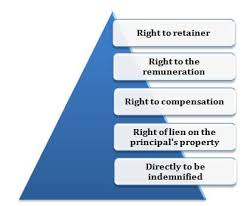
  1. Right to Receive Remuneration: According to Section 219 of the Indian Contract Act, an agent is entitle to his remuneration. But Section 220 of the said act says that, an agent who is guilty of misconduct in the business of an agency is not entitled to any remuneration in respect of that part of the business which he has misconducted.
  2. Right of Lien (Section 221): Agent’s lien on principal’s property- In the absence of any contract to the contrary, an agent is entitled to retain goods, papers and other property, whether movable or immovable, of the principal received by him, until the amount due to himself for commission, disbursements and services in respect of the same has been paid or accounted for to him.
  3. Right to Indemnity: Agent to be indemnified against consequences of lawful acts. Indemnity means promise make good the loss. According to Section 222 of the Indian Contract Act, 1872 “The employer of an agent is bound to indemnify him against the consequences of all lawful acts done by such agent in exercise of the authority conferred upon him. Illustrations: B, at Singapore, under instructions from A of Calcutta, contracts with C to deliver certain goods to him. A does not send the goods to B, and C sues B for breach of contract. B informs A of the suit, and A authorities him to defend the suit. B defends the suit and is compelled to pay damages and costs and incurs expenses. A is liable to B for such damages, costs and expenses.
  4. Right to Compensation: According to Section 225 of the said act, an agent is entitled to claim compensation for the injuries suffered as a consequence or want of skill of the principal. Section 225 reads as follows- “The principal must make compensation to his agent in respect of injury caused to such agent by the principal’s neglect or want of skill. Illustration: A employs B as a bricklayer in building a house, and puts up the scaffholding himself. The scaffholding is unskillfully put up, and B is in consequence hurt. A must make compensation to B.
  5. Right to Retain Sums (Section 217 and 218): The agent has a duty to pay to his principal all sums received on principal’s account. But he also has a right to retain, out of any sums received on account of principal in the business of agency, all money due to himself in respect of advances made or expenses properly incurred by him in conducting such business and also such remuneration as may be payable to him for acting as agent. Similarly, when an agent sells his principal’s goods, he may detain the money received, for his remuneration on account of the goods sold by him. Such right can be exercised by an advocate also but lien must be confined to the costs incurred in that particular case.

3 R’s of Waste Management

Waste is one of the biggest problems for humans in today’s world. Whether it be of any kind ,(solid or liquid) it can cause a lot of health damage and many other problems. Basically, waste is any material that is discarded because it has serves its purpose and is no longer useful for us. waste is anything that occupies space, produces odour and smell, and has some weight.

But management of this waste is very difficult and important step to manage it. we know that nature recycles a lot of waste through many processes but due to increasing population , nature cannot manage all waste and this is where humans have to step up because if we will not be look into this it will gradually destroy our environment, cause harmful diseases and many other serious problems.

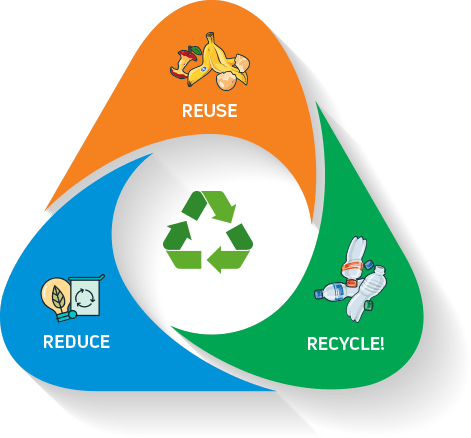
one of the easiest and popular way to do management of waste is 3 R’s( Reuse, Reduce and Recycle ) let us discuss these 3 R’s in detail :-

  1. Reduce: reducing the waste is the very good way to manage the waste in environment . As more we will reduce the waste more , the less waste will be in environment .some efforts that we can do to reduce waste are:-

we should try to use disposals as minimum as possible, we should buy less products with packaging as it is a very big reason of waste, we always see food packages in streets and roads. This is a major reason of waste. we should either avoid packaging food or manage it properly by keeping it in dustbin. some more methods are:-

  • we should change our old processes for best use of raw material , through which we will be able to reduce waste in industries.
  • the liquid waste can be reduced by many scientific techniques such as precipitation etc.
  • we should try to use segregation of waste method to manage the waste .

2. Reuse: This method is becoming popular day by day. because if we reuse any particular material rather than throwing it away after just 1 use, definitely we will be able to reduce waste in pour area or environment .

we should not throw any material or product just due to a small defect or something else we can do something out of it. it can be reused in a different manner. we should only throw it if we realize that it cannot be reused anymore.

In countries like India, some waste materials like glass, bottles rubber etc. are placed casually in streets, these materials’ can be reused if we use them properly. Although many waste collectors in areas collect these wastes and supply them in useful areas helping in reducing the waste.

3. Recycle : the best R of waste management is recycling the waste. it is a processing of remanufacturing a product to make it useful again. some materials that can be recycled are such as plastic, rubber , glass etc. In India, we have tonnes of waste that is recycled . Plastic is one of the most recyled material that is recycled in tonnes. Recycling helps in reducing the consumption of fresh materials .it is one of the most important process of waste management .

CASE ANALYSIS [BALFOUR V. BALFOUR]

Facts Of The Case

  • Mr. Balfour and Mrs. Balfour were husband and wife from Ceylon ( Sri Lanka) and once they went for a vacation to England in the year 1915
  • But unfortunately during the course of vacation, Mrs. Balfour fell ill; she was in urgent need of medical attention.
  • Then they decided and made an agreement that Mr. Balfour would return to Ceylon and his wife, that is Mrs. Balfour shall stay back until she recovers from her illness.
  • They had also decided that during that period of time Mr. Balfour shall pay Mrs. Balfour 30 pounds as maintenance every month until everything falls into place, unless she recovers and returns back to Ceylon.
  • Now this understanding and interpretation was made when their relationship was fine and there was not any sort of sourness in between them.
  • But slowly and gradually their relationship deteriorated which resulted in non- payment of the amount of maintenance by Mr. Balfour to Mrs. Balfour
  • But Mrs. Balfour decided to sought to enforce the agreement and moved to the court.
  • Mr. Balfour wrote the letter to his wife suggesting to make their separation permanent.
  • And at later point of time they separated legally, that means they were divorced.
  • Mrs. Balfour had brought the action against Mr. Balfour for non-payment of the amount he was supposed to pay in court of law in the year 1918.

Issues Raised In The Case

  1. Did Mr. Balfour ever intended to enter into any sort of agreement with his wife, Mrs. Balfour?
  2. Is the agreement between Mr. And Mrs. Balfour valid in nature at all?
  3. Does the contract between husband and wife enforceable in court of law?

Contention At The Part Of The Appealant (Mr. Balfour)

The Agreement made between Mr. Balfour and Mrs. Balfour was purely domestic in nature, it does not hold any legal enforcement. Moreover Mr. Balfour never had any sort of intention to to form an agreement which is legal in nature.

Contention At The Part Of The Respondent (Mrs. Balfour)

The husband must be obliged to pay her the maintenance because, because the husband got into the domestic agreement by entering into the contract that he would pay her the amount of 30 pounds as support for which she had agreed to stay back in England.

Judgement
As mentioned above, the agreement was not legally binding, the agreements made in personal family relationships are not counted in law of contract the agreements made between spouses to provide capitals or monetary benefits does not hold any legally binding authority. Generally, spouses or parties to marriage do make arrangements for personal and household expenses, but there is never a legal instinct in those things.

The court of Appeal had unanimously ruled that there was no such enforceable agreement between Mr. Balfour and Mrs. Balfour. Subsequently, Mr Balfour was allowed. Basically, the law revolves around the concept that there must be an intention on the part of both the parties to create a legal relationship in order to validate a contract. This was the ratio decidendi of the case. Whether the parties intended to create a legal relationship or not is determined by examining the circumstances that existed, under which the execution of the contract was done.

Short Analysis Of The Case
Initially, at the first instance of the case, Justice Sargant had held that, the claims made by Mrs. Balfour are valid and Mr. Balfour should be entitled to pay her the maintenance which he promised to pay. Finally, Mr. Balfour appealed in the court of appeal. In the court of Appeal, it was held by the bench of judges, Warrington LJ, Duke LJ, Atkin LJ that the agreement is not enforceable in court of law. Atkin LJ observed it with regard to owing to its domestic nature. Whereas Warrington LJ and Duke LJ did so because they doubted that Mrs. Balfour gave consideration. The doctrine of intention to create a legal relation was invoked by Atkin LJ basically.

It was said that the doctrine was with regard to public policy and domestic agreement has got nothing to do with it. The court can not indulge into such trifle issues relating to personal and family agreements.

Though there may be certain circumstances, where husband and wife may enter into an agreement which is legally binding in nature, but here in this case there was no such circumstance. The doctrine attracted attention and gained prominence. This intention is sometimes also referred as animus contrahendi.

In one of the later case of Jones vs. Padavatton, Salmon LJ had said that the this is factual in nature. It does not possess any legal presumption.
Intention to create a legal relationship is one of the essential elements required to enter into a contract.

Conclusion
By studying and going through the case of Balfour vs. Balfour (1919), we understand that a mere social agreement made within a family can not be enforced in court of law, these agreements do not hold any legally binding authority. Second thing is there must be an intention to create a legal relation at the part of the parties. Owing to all this, Mr. Balfour could not be sued by Mrs. Balfour in court of law. This case has often been seen in conjunction with Merritt vs. Merritt 1970] 2 All ER 760; [1970] 1 WLR 121. In this case, though the couple was married but they already had an estranged relationship, when the agreement was made, so in this scenario, any sort of agreement between them was to be considered that of legal in nature.

Peer group and its influence


                                                                            (Photo: Titanium Success)

According to APA Dictionary of Psychology, a group of individuals who share one or more characteristics, such as age, social status, economic status etc. are peer groups. Peer Group is both social group and primary group. 

Functions of Peer group:

  • Provide support in shaping an individual’s self-esteem and self-valuation.
  •  Provide emotional security under unprecedented or threatening situations.
  • Provide the foundation for intimate relationships as they are essential non-family contexts for intimacy and affection.
  • Teach gender roles.
  •  Help in Identity formation.
     The peer group is an important socializing agent contributing beyond the influence of the family and school. Peers socialize each other through certain mechanisms. They are.

  •  Reinforcement – Giving Attention.
  •  Modeling-Imitation
  •  Punishment- Rejection, bullying etc.
  • Apprenticeship- Someone with more experience teach someone with less experience.

As your teen grows older, their peers will play a bigger role in their life. Their friends may influence everything from what they wear to how they talk.

  1. Positive influence: Positive peer influence is when someone’s peers influence them to do something positive or growth building. For example, peers who are committed to doing well in school or at sport can influence others to be more goal orientated. Similarly, peers who are kind, loyal or supportive influence others to be the same. They are subconsciously looking to their friends for information about how to act and interact with others. For the same reason, they also learn more quickly in the presence of their peers. For example, friends tell your teen to study harder so they can get better grades. They decide it’s cool to get good grades in a test. Several of your teen friends buy their own car. Your teen becomes motivated to save their money so they can buy their own car too.
  2. Negative influence: If your teen starts hanging around with the wrong crowd, like peers who skip school, do drugs, and break the law, they’re likely to influence your teen behavior in an unhealthy way. Most negative peer pressure involves more serious problems, like pressuring a teen to smoke cigarettes or experiment with drugs. For example, your teen skips school because it’s senior skip day and they don’t want to get made fun for showing up. Your teen purchases e-cigarettes online because their friends tell them they can get away with it.
Peer Group Stages

ž PEER GROUP BY AGE (2 TO 6) –The first bond Or attachment that a child shares with is his Or her family. They feel secure and warmth around the family. They tend to be less aggressive and more actively involved in activities.

ž MIDDLE CHILDHOOD PEER GROUP ( 6 TO 13) –Children no longer need adults or their family to structure them socially. They start looking for children of their own age group. They try to socialize with children of their own age by doing friendship with them and spending time with each other.

ž ADOLESCENT –During adolescence, peer groups tend to face dramatic changes. Adolescents tend to spend more time with their peers and have less adult supervision. Adolescents’ communication shifts during this time as well. They prefer to talk about school and their careers with their parents, and they enjoy talking about sex and other interpersonal relationships with their peers. Children look to join peer groups who accept them, even if the group is involved in negative activities. Children are less likely to accept those who are different from them.

     How to tackle it ?

     1. Developing good self-esteem and taking charge of yourself.  

     2. Satisfaction and taking charge of our aspirations. 

     3. Choosing our friends wisely.

     4. Identify our core values.

     5. Taking the help of our parents/elders/teachers.

     CONCLUSION

     “Without friends no one chooses to live, though he has all other goods.” – Aristotle

     It is not possible to live our lives without being influenced by anyone. So the best thing that we can do is guard ourselves and to choose our influence.


VOID AND VOIDABLE CONTRACTS

The difference between void and voidable contracts Is that a void contract is illegal and unenforceable while a voidable contract is legal and the parties can enforce it. A void contract is invalid or entirely against the law, so no one involved can say it’s enforceable under the law. Contracts that are voidable are valid and legally enforceable.

Null and Void

The word void means something isn’t valid and it isn’t legally binding. When we say a contract is void, that means it’s null, void, and that it is not backed by the force of law. That makes it unenforceable, and if anyone breaches an unenforceable contract, the other party to the contract has no legal recourse against them.

A contract can be valid when formed and later become void. This happens when the contract fulfills all the necessary conditions of a valid contract when it’s formed, but the laws change later or something changes to make fulfilling the contract impossible and beyond the capacity of imagination or beyond the control of the involved parties. Then, at that time, it becomes void. The things necessary to establish a valid contract include:

  • Capacity
  • Consideration
  • Lawful object
  • Free consent

What Makes a Contract Voidable

A voidable contract binds one party and the other party has the option to change their mind. This means they can cancel the contract anytime they want. The party that isn’t bound by the contract has the control in this type of contract. A mutual mistake on the part of both parties to a contract makes it voidable. If one or more pieces of material information are omitted from the contract, that also makes it voidable. A contract involving a minor is one example of a voidable agreement.

Minors can enter contracts, but if minors decide to breach the terms of a contract there isn’t any form of legal action that can be taken against them. This makes minors unbound parties in the contract. Another example of an unbound party in a contract is someone who’s either under the influence or someone who isn’t mentally capable of entering into a contractual agreement.

Both void contracts and voidable contracts are forms of legal contracts. A void contract, however, is invalid from the very beginning because it regards an illegal act. A voidable contract becomes invalid when one of parties involved cancels it for legal reasons. Because a void contract is holding against the law, neither party can enforce it. The voidable contract is both legal and valid until canceled or revoked. Starting at the beginning, a void contract can’t be enforced legally.

While no law is in place to support a void contract as a valid, existing contract, at least one party involved can be bound by a voidable contract. Neither obligations nor rights are associated with a void contract. With the voidable contract, which is covered under the law, only one party has the option of whether to continue it or rescind it. Legal liability can’t be assessed on either party to the contract if it’s void, but the voidable contract is upheld until the unbindable party chooses to rescind it.

When a contract is no longer enforceable, it becomes void. When a tactic like coercion, misrepresentation, or fraud are used in establishing a contract, it becomes voidable. A contract that is void can’t be made into a valid contract by two parties agreeing to the contract because you can’t legally agree to do something that’s illegal. A voidable contract, however, can be made valid by the party who isn’t bound, if they agree to give up the right to rescind the contract.

When a contract is ruled void, the court treats it as if it never existed. When a contract is ruled voidable, it can become a void contract based on the conditions that were in place when the contract was formed or it can be avoided under the law. Also, one party, or potentially both, has an option to void the contract. With a void contract, one or both parties have to do something that’s either impossible to do or illegal to do.

Review of book: Think like a monk

Think like a Monk By Jay Shetty: Jay Shetty is an Indian-English author, former monk, and life coach.

This book revolves around the problems which  a human being faces everyday, from their 9to5 jobs, stress ,depression etc.

Jay shetty has written it so beautifully that you can relate to your life and remedies for it which gives you a new perspective of life
One of the bestsellers in India and other countries let’s see what are the context of the book should you read it?or not

What I learnt from this book-

1.Nothing is permanent in life not even you, life goes on with people you love or without the people you love
2.Never get back to your past it’ll only degrade your mental state
3.Meditate expect 0 from everyone expectation hurts
4.Hustle for your self you got only one life
5.How to overcome from your negativity and fears negativity degrades your life and your mental state you start to feel low every time

6.Purpose of life,if you have a human life everyone has a purpose so he was born on this Earth we have to find the purpose, reason to live and sustain ourselves

Conclusion-

Life is all about up and downs you can’t control it sometimes it’s sunny sometimes it’s storm but it depends on us how we face it how we can live with it without losing ourselves, people comes in ourlife teaches us and leave we can’t hold onto anyone but what can we hold is the purpose for which they come. So Find your purpose in life 

If you are lost in this world read it you’ll find yourself (4.5/5) recommended

A magnified view of our Health care system

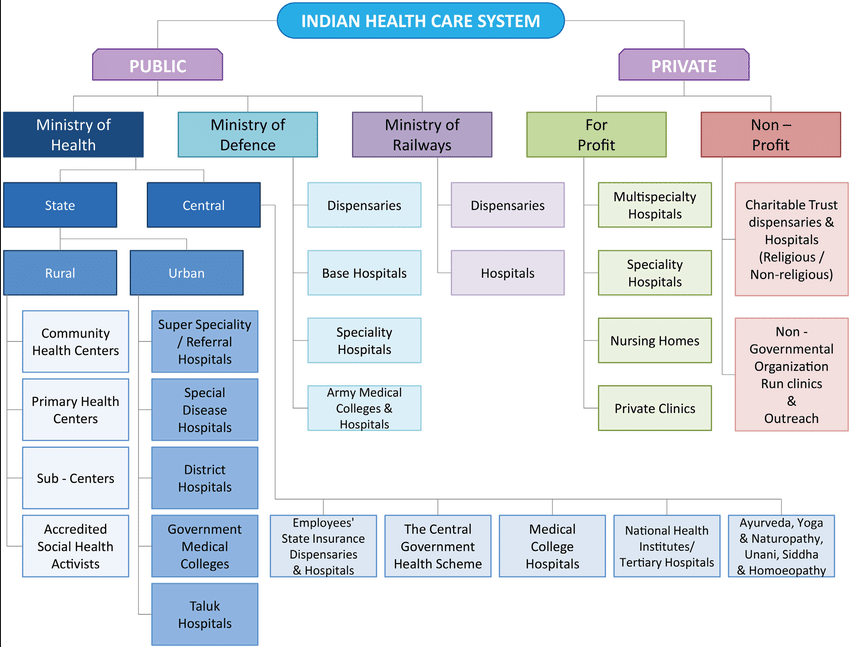
The Covid-19 pandemic reiterates the importance of Public Health systems. The private health sector which accounts for 70% of healthcare services in India, is playing only a supporting role.

There is a need to address the constraints and revamp of the public health system in India which would not only enable improved handling of Covid-19, but would also have widespread positive impacts extending much beyond the Covid-19 situation.

Covid-19 And Significance of Public Health Care

  • For Indian population, the availability of functional public health systems is literally a question of life and death.
  • A robust government health-care service is translated into a more effective outreach, timely testing, early case detection and more rational treatment for Covid patients. This is evident by comparing two States— Maharashtra and Kerala. Their per capita gross State domestic product (GSDP) is similar. However, their Covid-19 case fatality rates are hugely different — this being 0.48% for Kerala and 2.04% for Maharashtra.
  • A major reason for such critical divergence is likely to be the huge differences in the effectiveness of public health systems. Kerala has per capita two and a half times more government doctors, and an equally higher proportion of government hospital beds when compared to Maharashtra, while allocating per capita over one and half times higher funds on public health every year.
  • Despite Maharashtra having a large private health-care sector, its weak public health system has proved to be a critical deficiency.

Issues With Current Healthcare System

  • Lack of Primary Healthcare Services: The existing public primary health care model in the country is limited in scope. Even where there is a well-functioning public primary health centre, only services related to pregnancy care, limited childcare and certain services related to national health programmes are provided.
  • Supply-Side Deficiencies: Poor health management skills and lack of appropriate training and supportive supervision for health workers prevent delivery of the desired quality of health services.
  • Inadequate Funding: Expenditure on public health funding has been consistently low in India (approximately 1.3% of GDP). As per OECD, India’s total out-of-pocket expenditure is around 2.3 % of GDP.
  • Sub-optimal Public Health System: Due to this, it is challenging to tackle Non-communicable Diseases, which is all about prevention and early detection. It diminishes preparedness and effective management for new and emerging threats such as pandemic like Covid-19.

What can be done?

  • Focus On Public Health:
    • Need for a larger programme which requires the immediate attention is the National Health Mission (NHM); since 2017-18, Union government allocations for the NHM have declined in real terms, resulting in inadequate support to States for core activities such as immunisation, while systemic gaps affect the delivery of Covid-19 vaccination.
    • The condition of the National Urban Health Mission (NUHM) also remains pathetic.
      • This year’s Central allocation for the NUHM is ₹1,000 crore, which amounts to less than ₹2 per month per urban Indian.
  • Private Sector Regulation:
    • Another clear priority that has been highlighted during the Covid-19 pandemic is the need to regulate rates and standards of care in the private sector.
    • Massive hospital bills have caused untold distress even among the middle class.
    • Although various determinants have contributed to the Mucormycosis outbreak, irrational use of steroids in Covid-19 patients, especially diabetics, appears to be an important factor.
    • The central government should take necessary steps to promote the implementation of the Clinical Establishments (Registration and Regulation) Act (CEA).
      • Passed in 2010 and presently applicable to 11 States across India, this Act is not effectively implemented due to a major delay in notification of central minimum standards, and failure to develop the central framework for regulation of rates.
  • NITI Aayog Prescriptions:
    • NITI Aayog has recently published the document, ‘Investment Opportunities in India’s Healthcare Sector’.
    • The document states that ‘in the hospital segment, the expansion of private players to Tier 2 and Tier 3 locations, beyond metropolitan cities, offers an attractive investment opportunity’.
    • Manufacturing of medical devices and equipment, expansion of diagnostic and pathology centres and miniaturized diagnostics have high growth potential.
    • Technology advancements such as Artificial Intelligence, wearables and other mobile tech, along with the Internet of Things, also offer numerous avenues for investment.

Conclusion

Existing evidence from the Covid-19 pandemic provides a clear message that a neglect of public health systems can mean large-scale, avoidable losses of lives; hence, public health services must be upgraded rapidly and massively as a topmost priority.

Why Dating a Single Mom is not Acceptable in India?

At some point in life we all have heard the dating phrase “it’s not you, it’s me”, but in case of a single mother they are usually left out with a heartbreak and the saying change as “it’s not you, it’s your child”. Our restrictive culture portrays that a second chance is not meant for a single mom. Our patriarchal society demonstrates that if a person is dating a single mother then he is doing a great offense but we never try to image the scrutiny of society she has to tackle. Society pictures that dating a single mother is impossible and in case it is possible it is not accepted.

Life of women is very difficult weather it’s her life before marriage or after marriage. Many women face a lot of harassment plus mental as well as sexual abuse after their marriage which ultimately results in split-up of the couple. Our patriarchal society is so cruel that getting divorce is acceptable but dating a single mom is not tolerable. If a married women who have child practice dating then she is always asked to put the child interest as the first preference. The reason behind single mom refuse to date is the social stigma they have to face. Whatever is the situation the one who is always considered in the faulty side is the women only and the amount of social scrutiny she have to face is numerous. Dating of a mom is not acceptable in India and is considered as a massive ill but taking dowry is referred as a ritual and this is the bitter reality. People often criticize others situation but the trauma one suffers is inexpressible. Dating a mother is like a shame and thus women ultimately decides to either quit the relationship or simply never approaching. If a woman is having a child it is just well-thought-out as a liability or we can simply say a burden which is in the form of joint custody of the child, all the expenses of the child which includes their schooling, tuition and all extra expenses. A divorced woman is always subjected to gossips and if she is an independent mother then definitely she has to tolerate a lot of humiliations and blabbermouths. A counselor from Mumbai, Mr. Narendra Kinger expresses his view that men feels extremely threatened as women’s give their first preference to their child. Every person needs a support in their life and same goes in case of single mom too as even they need companion in their life but keeping the child at the forefront is mandatory for women.

A single woman who has a child usually encounters a lot of difficulties and barrier in her mundane dating life. We all are living at a free democratic country where we have the right to go with our own will then why a mother is always subjected with questionable eyes if she is dating? Only we can change our society by changing our outdated thinking plus we have to modify our patriarchal society to a society which treats everyone equally.

Dr. Trinetra Haldar Gummaraju

Born as Angad Gummaraju, Trinetra grew up always feeling alienated from her own body and plagued by society’s norms of gender identity. Having faced immense scrutiny and provocation from both society and her peers over the years for being different, finally, at the age of 20 she made the brave decision to come out as queer. 

She put up a post on Facebook that read ‘Call Me Trinetra’, officially coming out as a woman, and it was from here on that her journey of self-love and self-discovery became inconceivably more difficult. The ensuing onslaught of harassment, judgement was nothing like she’d ever experienced in her life, because this time, she wasn’t the confused and unsure teenager anymore, this time, she was the self-assured, informed and more confident version of herself. 

Since then, her openness about her gender identity made her the lightning rod for a lot of slander, transphobia and hate. But that didn’t stop her from chasing her dreams, she channelized her anguish into her studies and decided to go to med school. Being a med student exposed her to another plethora of challenges, from being thrown out of a lecture for wearing a nose pin, to not being allotted a room in the girl’s hostel because she didn’t have the ‘organs’ for it. It soon made her understand that the very flag-bearers of the field she pursued suffered from transphobia. 

She is now a YouTube vlogger who has been consistently documenting her transition journey on her channel ‘The Trinetra Method’. She underwent a gender confirmation surgery (GCS) abroad in February last year, after which she adopted the name Trinetra after the goddess Kali. Presently a surgical intern at KMC Manipal, and a well-known social-media figure, Dr Trinetra isn’t just a beacon of hope for others like her, she’s also an inspiration to anyone seeking to find happiness and self-love. Her once arduous but now buoyant journey warrants no emotion short of admiration and respect.