Baltic States – Latvia, Lithuania, and Estonia

Baltics, also known as the Baltic States is comprised of three countries including Latvia, Lithuania, and Estonia. The three countries are situated on the eastern shores of the Baltic Sea. In 1991 the regional governments of Lithuania, Latvia, and Estonia declared independence from the Union of Soviet Socialists Republics (USSR). Three countries have a collective population of just over 6 million. The three have been one of the better examples which have been progressing well after the breakup of the USSR. Many other former Soviet republics have been suffering the disarray of corruption and political instability. 

In 2002 Baltic countries applied for membership in the European Union (EU) and by May 2004 all the three countries joined the EU. They also gained membership in NATO by March 2004.

It’s truly astounding how the three countries have developed since 1991. None of them were independent since 1940. The three countries had large Russian minorities and many Soviet soldiers were still stationed there. There were no major national institutions and banking infrastructure with a crumbling economy. There was a growing homegrown national moment against the ruling government since the 1980s. The homegrown fronts won the republican parliamentary election against the ruling party in early 1990 and were allowed to govern but with limited power. The Russian president at that time, Boris Yeltsin had not contested their newly declared independence in 1991. The Baltic also witnessed no violence when the three governments had declared their independence.

The three nations also had almost no natural resources, unlike USSR which was resource-rich. They were still in a very vulnerable situation with a small population and no military of their own. Even though the countries were linguistically distinct with different languages, but people in all three countries had the united drive to strive for a better future. The three had implemented reforms with a shared vision. The governments of the three share many policies, ideas, and experiences. The Baltic States also valued their new independence with a lot of enthusiasm and didn’t take it for granted. The other ex- USSR countries often had to ask for assistance from Russian Federation and also formed new alliances with the Russian government. Baltic countries on the other hand tried to stay away from joining the post-Soviet Commonwealth of Independent States. In the subsequent years, all the three countries adopted radical economic policies and Estonia was the first mover and Latvia and Lithuania would follow suit. In 1994 Estonia introduced a flat income tax at just 24 percent and the other two also implemented the policies. Currently, Lithuania has a tax rate of just 15 percent which is one of the lowest. With early and fast deregulation and privatization, the Baltic countries were able to capture a large amount of foreign direct investment. Estonia also radically transformed its public sector with various digitalization implementations and less reliance on paperwork. Latvian and Lithuania’s transformation in this area was not as drastic but after some time both of them followed Estonia’s footsteps.  Transparency International ranks Estonia No. 17, Lithuania 37, and Latvia 42 out of 175 countries on its Corruption Perception Index for 2020. This is a commendable ranking considering they all the three are relatively new entrants to the EU and many other EU countries have lower ranks than the three.

The success can also be attributed to the generous support that the three countries received from the international community and funds granted by the EU, World Bank, and the IMF. In 2008 Baltic suffered from the global economic crisis. The three soon adopted the Euro as their currency to avoid any future liquidity freeze issues that they experienced at that time. The economies al the Baltic rebounded quickly and due to good monetary measures, the three have a very low public debt. Baltic governments have also made swift progress in the Education sector and the three have attained commendable rankings in the Program for International Student Assessment (PISA) of the Organization for Economic Cooperation and Development (OECD). Estonia has done a very commendable task in this area with top 10 rankings in many assessments.         
In 2002 Baltic countries applied for membership in the European Union (EU) and by May 2004 all the three countries joined the EU. They also gained membership in NATO by March 2004.

It’s truly astounding how the three countries have developed since 1991. None of them were independent since 1940. The three countries had large Russian minorities and many Soviet soldiers were still stationed there. There were no major national institutions and banking infrastructure with a crumbling economy. There was a growing homegrown national moment against the ruling government since the 1980s. The homegrown fronts won the republican parliamentary election against the ruling party in early 1990 and were allowed to govern but with limited power. The Russian president at that time, Boris Yeltsin had not contested their newly declared independence in 1991. The Baltic also witnessed no violence when the three governments had declared their independence.

The three nations also had almost no natural resources, unlike USSR which was resource-rich. They were still in a very vulnerable situation with a small population and no military of their own. Even though the countries were linguistically distinct with different languages, but people in all three countries had the united drive to strive for a better future. The three had implemented reforms with a shared vision. The governments of the three share many policies, ideas, and experiences. The Baltic States also valued their new independence with a lot of enthusiasm and didn’t take it for granted. The other ex- USSR countries often had to ask for assistance from Russian Federation and also formed new alliances with the Russian government. Baltic countries on the other hand tried to stay away from joining the post-Soviet Commonwealth of Independent States. In the subsequent years, all the three countries adopted radical economic policies and Estonia was the first mover and Latvia and Lithuania would follow suit. In 1994 Estonia introduced a flat income tax at just 24 percent and the other two also implemented the policies. Currently, Lithuania has a tax rate of just 15 percent which is one of the lowest. With early and fast deregulation and privatization, the Baltic countries were able to capture a large amount of foreign direct investment. Estonia also radically transformed its public sector with various digitalization implementations and less reliance on paperwork. Latvian and Lithuania’s transformation in this area was not as drastic but after some time both of them followed Estonia’s footsteps.  Transparency International ranks Estonia No. 17, Lithuania 37, and Latvia 42 out of 175 countries on its Corruption Perception Index for 2020. This is a commendable ranking considering they all the three are a relatively new entrant to the EU and many other EU countries have lower ranks than the three.

The success can also be attributed to the generous support that the three countries received from the international community and funds granted by the EU, World Bank, and the IMF. In 2008 Baltic suffered from the global economic crisis. The three soon adopted the Euro as their currency to avoid any future liquidity freeze issues that they experienced at that time. The economies al the Baltic rebounded quickly and due to good monetary measures, the three have a very low public debt. Baltic governments have also made swift progress in the Education sector and the three have attained commendable rankings in the Program for International Student Assessment (PISA) of the Organization for Economic Cooperation and Development (OECD). Estonia has done a very commendable task in this area with top 10 rankings in many assessments.     

Origin of Vedas

The Vedas are a large body of religious text originating in ancient India. Composed in Vedic Sanskrit, the texts constitute the oldest layer of Sanskrit literature and the oldest scriptures of Hinduism. Vedas are considered as the earliest literary records of Sanskrit Literature, written by Rishi Vyasa. It is bealived to be the oldest book in hinduism. Vedas means knowledge.  It is a Sanskrit word from the root “Vid”, which means finding, knowing, acquiring, or understanding. The Vedas formed the earliest segment of Vedic literature. The Vedic literature had been evolved in the course of many centuries and was handed down from generation to generation by the word of mouth. The Vedas are the collection of hymns, prayers, charms, litanies, and sacrificial formulae. The ideas, teachings, and practices described in the Vedas formed the basis for the six major schools of Hindu philosophy – Nyaya, Vaisheshika, Samkhya, Yoga, Mimamsa, and Vedanta.

There are four Vedas: the Rigveda, the Yajurveda, the Samaveda and the Atharvaveda.and all of them together are attributed to as ‘Chaturveda

  • Rig Veda − It is the oldest Veda. It is a collection of hymns.
  • Samveda − it is a collection of songs, which are mostly taken from Rig Veda.
  • Yajurveda − It is a collection of sacrificial formulae.
  • Atharvanaveda − it is a collection of spells and charms.

The Rig Veda serves as the principal one and all three but the Arthaveda agree with one another in form, language, and content. Each Veda has been subclassified into four major text types or four portions.

  • The Samhitas, the most ancient layer of text in the Vedas, consisting of mantras, hymns, prayers, and benedictions which has in literary terms put together or joined the other three texts;
  • The Aranyakas which constitute the philosophy behind the ritual sacrifice,
  • The Brahmanas which in turn has the commentary on hymns of four Vedas and
  • The Upanishads, which consist of conversations between teachers and students which clarify the philosophical message of the Vedas.

Rigveda

The Rigveda Samhita is the oldest extant Indic text. It is a collection of 1,028 Vedic Sanskrithymns and 10,600 verses in all, organized into ten books. The hymns are dedicated to Rigvedic deities.  Two Sanskrit words Rig and Veda constituting it translates to ‘praise or shine’ and ‘knowledge’ respectively

Like the other three Vedas, the believers of the Hindu dharma regard the Rig Veda too as Apauruṣeya; meaning, not of a man or impersonal and also not belonging to a particular author. The hymns and the verses were written by the Rishis (Sages) and as the ardent believers of the Sanatana dharma claim the revered Lord himself taught the Vedic hymns to the sages, who then handed them down through generations by word of mouth.

The Mandalas of the Rig Veda which are ten in number and were composed by poets from different priestly groups over a period of several centuries is structured based on clear principles The Rigveda is structured based on clear principles. The Veda begins with a small book addressed to Agni, Indra, Soma and other gods, all arranged according to decreasing total number of hymns in each deity collection; for each deity series, the hymns progress from longer to shorter ones, but the number of hymns per book increases. Finally, the meter too is systematically arranged from jagati and tristubh to anustubh and gayatri as the text progresses.

Rigveda, in contemporary Hinduism, has been a reminder of the ancient cultural heritage and point of pride for Hindus, with some hymns still in use in major rites of passage ceremonies.  Musicians and dance groups celebrate the text as a mark of Hindu heritage, and these have remained popular among the Hindus for a long time. However, the contemporary Hindu beliefs are distant from the precepts in the ancient layer of Rigveda Samhitas.

Sama Veda

The Samaveda Samhita consists of 1549 stanzas, taken almost entirely (except for 75 mantras) from the Rigveda. While its earliest parts are believed to date from as early as the Rigvedic period, the existing compilation dates from the post-Rigvedic Mantra period of Vedic Sanskrit, between c. 1200 and 1000 BCE or “slightly later,” roughly contemporary with the Atharvaveda and the Yajurveda.

The Samaveda samhita has two major parts. The first part includes four melody collections and the second part three verse “books”. A melody in the song books corresponds to a verse in the arcika books. Just as in the Rigveda, the early sections of Samaveda typically begin with hymns to Agni and Indra but shift to the abstract. Their meters shift also in a descending order. The songs in the later sections of the Samaveda have the least deviation from the hymns derived from the Rigveda.

In the Samaveda, some of the Rigvedic verses are repeated. Including repetitions, there are a total of 1875 verses numbered in the Samaveda recension translated by Griffith. Two major recensions have survived, the Kauthuma/Ranayaniya and the Jaiminiya. Its purpose was liturgical, and they were the repertoire of the “singer” priests.

Yajurveda

Yajur Veda, of Sanskrit origin, is composed of Yajus and Veda; the two words translate to ‘prose mantras dedicated to religious reverence or veneration’ and knowledge respectively. Third of the fourth canonical texts of the Hindu dharma, this liturgical collection is famous as the ‘book of rituals’. Of the ancient Vedic text, it is a compilation of ritual offering formulas or the prose mantras to be chanted or muttered repeatedly by a priest while an individual performs the ascertained ritual actions before the sacrificial fire or the Yajna.

The earliest and most ancient layer of Yajurveda samhita includes about 1,875 verses, that are distinct yet borrow and build upon the foundation of verses in Rigveda. Unlike the Samaveda which is almost entirely based on Rigveda mantras and structured as songs, the Yajurveda samhitas are in prose and linguistically, they are different from earlier Vedic texts. The Yajur Veda has been the primary source of information about sacrifices during Vedic times and associated rituals.

The Yajurveda is broadly grouped into Krishna Yajurveda and Shukla Yajurveda, also referred to as the Black Yajurveda and the latter as the White. In reference to the verses of the Krishna Yajurveda being un-arranged, unclear, and disparate or dissimilar, the collection is too often referred to as Black Yajurveda. In contrast, the well-arranged and imparting a particular meaning, the Shukla Yajurveda is known as the White Yajurveda.

Yajurveda, in contemporary Hinduism, has been a reminder of the ancient cultural heritage and point of pride for Hindus. The text is a useful source of information about agriculture, economic, and social life during the Vedic era. The verse, translated from the Shukla Yajurveda, for example, lists the types of crops considered important in ancient India.

Atharvaveda

The Artharvaveda Samhita is the text ‘belonging to the Atharvan and Angirasa poets. It has about 760 hymns, and about 160 of the hymns are in common with the Rigveda. Most of the verses are metrical, but some sections are in prose. Two different versions of the text – the Paippalāda and the Śaunakīya – have survived into the modern times. The Atharvaveda was not considered as a Veda in the Vedic era, and was accepted as a Veda in late 1st millennium BCE. It was compiled last, probably around 900 BCE, although some of its material may go back to the time of the Rigveda, or earlier.

The Atharvaveda is sometimes called the “Veda of magical formulas”, an epithet declared to be incorrect by other scholars. The Samhita layer of the text likely represents a developing 2nd millennium BCE tradition of magico-religious rites to address superstitious anxiety, spells to remove maladies believed to be caused by demons, and herbs- and nature-derived potions as medicine. The text, states Kenneth Zysk, is one of oldest surviving record of the evolutionary practices in religious medicine and reveals the “earliest forms of folk healing of Indo-European antiquity”. Many books of the Atharvaveda Samhita are dedicated to rituals without magic, such as to philosophical speculations and to theosophy.

The Atharva veda has been a primary source for information about Vedic culture, the customs and beliefs, the aspirations and frustrations of everyday Vedic life, as well as those associated with kings and governance. The text also includes hymns dealing with the two major rituals of passage – marriage and cremation. The Atharva Veda also dedicates significant portion of the text asking the meaning of a ritual.

Section 309 IPC

The World Health Organisation defined suicidal act as “the injury with varying degree of lethal intent” and that suicide may be defined as “a suicidal act with fatal outcome”. Suicidal acts with non fatal outcome are called as “attempted suicide.” In recent times, attempted suicide has gained more importance than the suicide which is the successful act because for this there is no offender who can be brought within the purview of law. In India, attempt to suicide is made punishable under section 309[1] of Indian Penal Code, 1860. A lot of conflicting opinions have generated on retaining or deleting Section 309 of Indian Penal Code because of some differing judgments by the judiciary about whether right to life includes right to die within the meaning of article 21 of the Constitution of India.

One side is of the opinion that Article 21 of the Constitution of India is a provision guaranteeing protection of life and personal liberty and by no stretch of the imagination can extinction of life be read to be included in protection of life. By declaring an attempt to commit suicide a crime, the Indian Penal Code upholds the dignity of human life, because human life is as precious to the State as it is, to its holder and the State cannot turn a blind eye to a person in attempting to kill himself. Another set of people are of the opinion that the Section 309 of Indian Penal Code is cruel and irrational because it provides double punishment for a troubled individual whose deep unhappiness had caused him to try and end his life. It is cruel to inflict additional legal punishment on a person who has already suffered agony and ignominy in his failure to commit suicide.

Section 309 of the IPC was daunted with many controversies regarding its validity over the decades on the grounds of legality and morality. Finally, giving approval to the various Law Commission Reports and judgments of the Hon’ble High Courts and the Supreme Court, attempted suicide is de-criminalized (not punishable) after passage of The Medical Health Care Act, 2017.

 Section 309 of Indian Penal Code, 1860

Suicide has not been defined anywhere in the IPC. However briefly defined, ‘suicide’ is the human act of self-inflicted, self-intentioned cessation. It has been defined by various sociologists and psychologists in different ways. Suicide is killing oneself intentionally so as to extinguish one’s life and to leave this world. 

Suicide as such is no crime under the code. It is only attempt to commit suicide that is punishable under this section. If the person succeeds, there is no offender who could be brought within the purview of law. The section is based on the principle that the lives of men are not only valuable to them but also to the state which protects them.

Section 306

If any person commits suicide, whoever abets the commission of such suicide, shall be punished with imprisonment of either description for a term which may extend to ten years, and shall also be liable to fine.

S. 309 – Attempt to commit suicide: “Whoever attempts to commit suicide and does any act towards the commission of such offence shall be punished with simple imprisonment for a term which may extend to one year or with fine, or with both.”

Attempt must be intentional- The essence of suicide is an intentional self destruction of life.. Similarly, if a person because of family discord, destruction, loss of a near and dear relation or other cause of a like nature overcomes the instinct of self- preservation and decides to take his life, he should not be held guilty for attempt to suicide. In such a case, the unfortunate man deserves indulgence, sympathy and consolation instead of punishment. It is under very compelling adverse circumstances that a person resorts to taking the extreme step of attempting to commit suicide. Some of them are depressive illness, schizophrenic attitude, physical illness which is intolerable, poverty, unemployment, frustration, disappointment, dowry problems etc.

There are many ways in which suicide can be committed. The known methods are by drowning, hanging, poisoning, cutting throat, burning, shooting oneself, hunger strike etc. But it is difficult to generalize any and conceptualize particular theory because whenever we hear news about individuals committing suicide, we immediately come up with a conclusion that these people are depressed, dissatisfied, and unhappy with their lives. However, when popular and rich people commit suicide, we are left in confusion. Why would someone who is loved and idolized by many decide to kill himself? Depression may be the main culprit, but there are a lot of things to consider as well. These include overwhelming pain, grief, and stress; some use it as an escape for their failure and shortcomings like criminals who are about to be sentenced or caught. However, there are cases where suicide is an option that is mandatory or required. Thus, most people end up sacrificing themselves to save the lives of others in unbelievable circumstances. Heroes during the wartime generally belong to this category. 

The Indian constitution under Article 21 confers the right to Life as the fundamental right of every citizen. The Right to Life enriched in Article 21 have been liberally interpreted so as to mean something more than mere survival and mere animal existence. The Supreme Court has asserted that Article 21 is the heart of the fundamental Rights provided under part III of the constitution. The Supreme Court has clearly stated that in order to treat a right as a fundamental it is not mandatory that it should be expressly stated as a fundamental right. In India “The right to life” under Article 21 of the Constitution has received the widest possible interpretation under the able hands of the judiciary and rightly so. On the grounds as mentioned, Article 21 does not have a restrictive meaning and needs to be interpreted broadly. This affirms that if Article 21 confers on a person the right to live a dignified life, it should bestows the “Right to Die” also, but the inclusion of Right to die under Article 21 contradict the provision of Indian Penal Code under section 309. As according to section 309 of the I.P.C. “Whoever attempts to commit suicide and does any act towards the commission of such offense, shall be punished with simple imprisonment for a term which may extend to one year or with fine, or with both”. This section is based on the principle that lives of men are not only valuable to them but also to the state which protects them.

Section 309, Indian Penal Code [“IPC”] criminalises an attempt to suicide by any person. However, Section 115, Mental Healthcare Act, 2017 [“MHA, 2017”] states that any person who attempts to commit suicide shall be presumed, unless proved otherwise, to have severe stress and therefore, shall not be punished under the IPC.Therefore, Section 115, MHA, 2017 imposes a rebuttable presumption that the person who commits suicide is suffering from severe stress and, therefore, shall not be punished under Section 309, IPC. The result of the abovementioned provision of the MHA, 2017 is that Section 309, IPC is otiose. However, if the presumption of severe stress is rebutted, then such a person may be punished under Section 309, IPC. The MHA, 2017 has made Section 309, IPC redundant unless the presumption of severe stress is rebutted. However, there has been widespread use of the provision regarding cases of “hunger strikes” and “fasts unto death”, and to coerce public authorities. Nonetheless, retaining the provision to serve this purpose under its current language has unnecessary implications.The costs of retaining the provision is that there are several instances of police charging persons under the provision due to a lack of legislative awareness. The retention of the provision also makes attempted suicide a medico-legal case and prevents effective treatment to the person who has attempted such suicide at the “golden hour” for providing effective treatment.Since there is a clear intention of the Legislature to make Section 309, IPC redundant, its practical unwanted implications shall be done away with by removing such provision from the statute book. However, there is a need for a provision to take action against those who either intend to coerce public authorities by threatening to commit suicide, or attempt suicide to evade public authorities altogether. Nonetheless, since the cost of retaining the provision in its current form creates an unnecessary burden, the recommendation along the lines of the 42nd Law Commission Report to add Section 506A, IPC seems to be valid even now.

Rise in views of web series during covid 19.

Web series usually refer to series that are available on the various platforms like netflix , amazon prime , youtube
etcetera. During the pandemic there has been a rapid increase in the veiws

orms, too .One third of 55-64-year-olds, and 15% of people aged 65+ used subscription
services in the early weeks of lockdown.

The majority signed up to Netflix and Amazon Prime Video, although Disney+ overtook Now TV as the third most
popular paid-for streaming platform .Older viewers, who typically watch more traditional broadcast TV, increased
their use of streaming platf

The study, entitled Media Nations 2020, suggested that as lockdown
measures eased towards the end of June, the uplift in streaming services held firm – 71% up on the same time last year.
This figure also included people viewing more non-broadcast content on platforms like YouTube and gaming sites.
And more than half of UK adults (55%) with new streaming subscriptions said they will keep them and spend the same
amount of time watching streamed content in future.Growth is slowing as consumers get through the initial shock of
coronavirus and social restrictions,” the company said.

Valentine’s Day

Ah, Valentine’s day! The celebration many people love to hate and others to be the perfect excuse to get cheesy with their loved ones. No matter how you react to Valentine’s Day, there is no chance you can ignore it. It’s everywhere. In fact, once December ends and the Christmas decorations come down, all the brands get ready for the next big thing which is most definitely Valentine’s Day. And for good reason.

I’m sure we can all agree by now that what first started as a holiday celebrating love is now more about how much brands sell. Nothing wrong with this. Did you know that authors like Chaucer and Shakespeare popularized Vday and made it this gift-giving holiday it is today?

And have you ever wondered what goes beyond the famous February 14? How did Valentine’s Day become this huge, commercial holiday it is today? Let’s dig deeper into the history of Valentine’s Day and see how all this started.

A brief history of Valentine’s Day

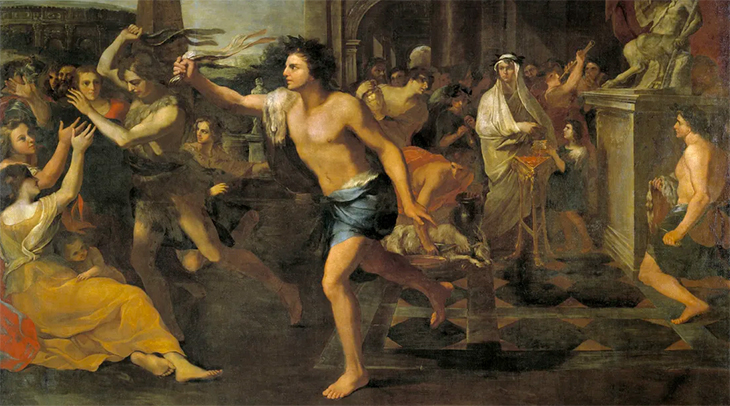
This pink-hearted holiday wasn’t always pink. The origins of this cutesy day are kind of dark and bloody. As far as we could track its provenance, the history of Valentine’s Day goes back to the Roman Empire. A time when men literally hit on women by hitting them. And women literally stayed in line for this to happen, believing it would make them more fertile. Kinda crazy, right? Stick with me, it gets even crazier.

According to the legend, what happens next is some sort of ancient version of “The Bachelor”. They had this tradition where all the young, fertile women in the city would have their names in a big urn. Then, the city’s single men would each pick a name and make a couple with that girl for the upcoming year. When the match was right, often these couples would end up getting married. This crazy ritual was called the Festival of Lupercalia.

Festival of Lupercalia

Who was Saint Valentine? 

Well, it seems like there was more than just one St. Valentine. Or at least, the history is mixed up a little bit. Because there are, at least, two different stories about who St. Valentine was. According to the first legend, Valentine was a Christian priest who was imprisoned and fell in love with his jailer’s daughter. Before he died, he left a love letter signed with the words “from your Valentine.”

The second one features, yet again, a priest who ignored the orders of Emperor Claudius of not officiating marriage for young men in his army. He continued to marry couples who were deeply in love and so, the priest got executed exactly on February 14th in the third century of Rome. The history of Valentine’s day tells us that this priest wore a ring with a Cupid on it – one of the well-known symbols of this holiday – so that soldiers would recognize him. He also liked to share paper heart cards to remind Christians of their love for God. 

While St. Valentine’s story established this holiday to be a romantic one, what truly solidified the connection between St. Valentine and love was a poem by medieval author Geoffrey Chaucer in 1381. Historians consider this poem as being the origin of the “modern” celebration of Valentine’s Day.

Why do we celebrate Valentine’s Day?

As we’ve already mentioned before, Chaucer and Shakespeare had a great impact on the history of Valentine’s Day. They both romanticized this holiday in their work that much that it gained popularity throughout Great Britain and the rest of Europe. Soon, people began writing and exchanging love letters to celebrate Valentine’s Day. The common folk even started to beg divinations to reveal their future romantic partners. 

Valentine's Day card example

In 1913, a well-known American company called Hallmark began distributing official “Valentine’s Day cards”. And the celebration of this popular and romantic holiday continued even more: flowers, candies, teddy bears, paper hearts, jewelry, romantic dinners… and the rest is history. February has not been the same since. 

Valentine’s Day nowadays. How people celebrate it

The celebration of Valentine’s Day still goes on nowadays all over the world, in many various ways. Many will break the bank buying jewelry, perfumes, or other expensive gifts, while others will prefer the simplest gifts: romantic dinners, flowers, chocolate, and Valentine’s Day cards. Did you know that people exchange millions of Valentine’s Day cards every year? Looks like Hallmark really revolutionized the history of Valentine’s Day! And also the tradition of offering red roses on Valentine’s Day is a special one. These flowers are associated with the Greek goddess of love, Aphrodite, that’s why people choose to give red roses instead of other types of flowers to express their love.

Valentine's Day gifts

No matter how you choose to celebrate Valentine’s Day, keep in mind that there are no rules. It’s a totally new era, so you can feel free to celebrate the way you want. A dreamy dinner out, some champagne, going out to the movies, cooking a fancy meal, offering a nice Valentine’s Day card, or even hosting a Valentine’s Day party…it’s up to you to pick the best option.

Legendary Bollywood actor Dilip Kumar passed away

Legendary Bollywood actor Dilip Kumar passed away today. He was one of India’s earliest and most famous film actor. His age was 98 years and died in Mumbai. Dilip Kumar acted in more than 65 films over nearly five decades and is known for his iconic roles in movies like ‘Ganga Jamuna’ (1961), ‘Kranti'(1981), ‘Karma'(1981), ‘Naya Daur'(1957), ‘Mughal-e-Azam'(1960). He was last seen in ‘Quila’ in 1998. The actor had been recuperating from age-related health issues for the last few days and had been admitted to the hospital multiple times. He was admitted to the intensive care unit (ICU) of Mumbai’s Hinduja Hospital on June 30 after he complained of breathlessness. He had been frequently ill for months. Kumar’s wife Saira Banu had been with throughout. His family friend Faisal Farooqui tweeted through the actor’s handle “With a heavy heart and profound grief, I announce the passing away of our beloved Dilip saab, few minutes ago. We are from God and to Him we return”

Many Bollywood celebrities including filmmaker Vidya Balan, Sidharth Roy Kapoor, Shabana Azmi, arrived at Dilip Kumar’s house to pay their last respects to the legendary actor Dilip Kumar.

Tributes have been pouring in on social media for the actor- Politicians, Bollywood stars and even historians have tweeted.

Lolita: The Book Review

Introduction

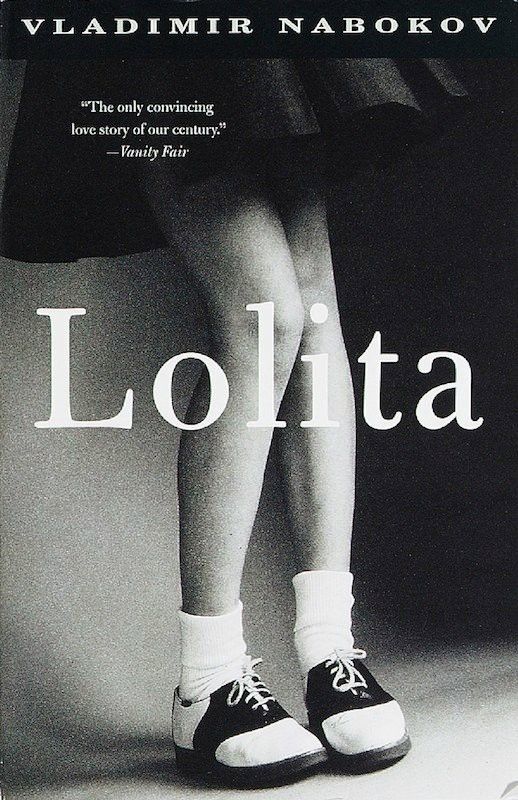
The cover of Lolita (1955)

Lolita  is a 1955 novel written by Russian-American novelist Vladimir Nabokov. The novel is notable for its controversial subject, which engages an unethical relationship between a middle aged man and a minor girl. First issued in 1955 by an unorthodox Paris press after being rejected by a string of American publishers; banned by the French government, presumably out of solicitude for immature English-speaking readers (the ban was later quashed by the French High Court); pronounced unobjectionable by that blue-nosed body, the U. S. Customs office; and heralded by ovations from writers, professors, and critics on both sides of the Atlantic, became a near-instant bestseller in the US, shifting over 100,000 copies in its first three weeks alone. The shocking subject matter, gleefully punning unreliable narrator, and Nabokov’s spellbinding sentence-level prowess combined to create a book as repulsive as it was inviting—comic and horrific and utterly absorbing. The novel was later adapted in two movies with the same name of the novel, Lolita(1962) and Lolita(1997) .

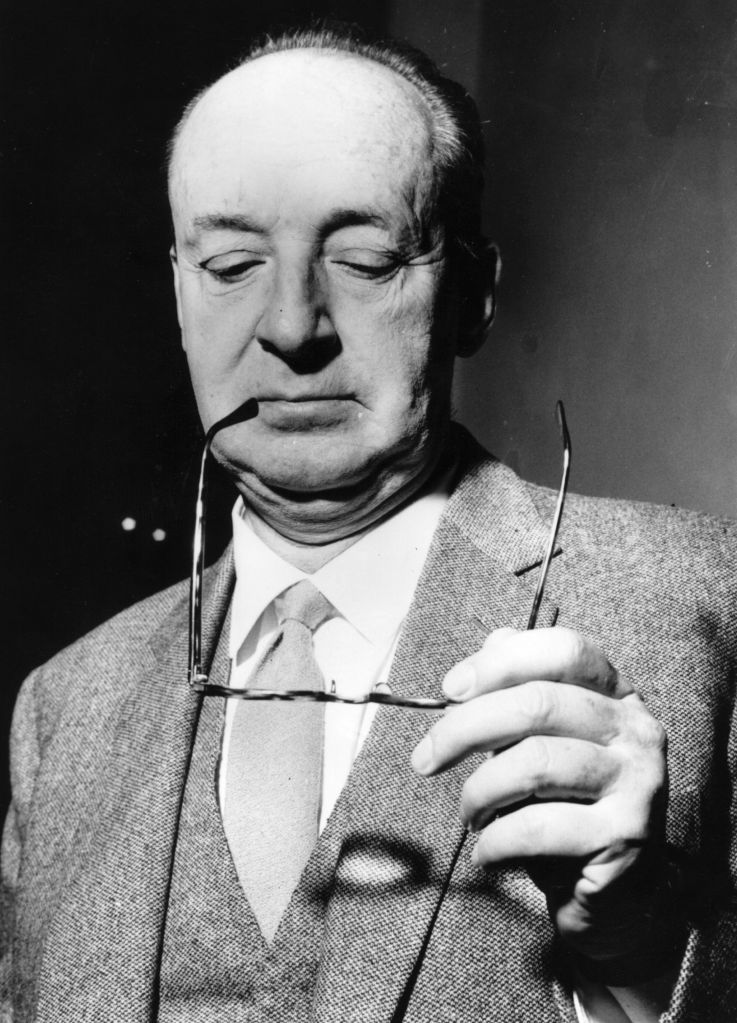
Russian writer Vladimir Nabokov (1899 – 1977) in Rome to work on the film screenplay of his most famous book, ‘Lolita‘.

About The Author

Vladimir Vladimirovich Nabokov , also known by the pen name  Vladimir Sirin, was a Russian-American novelist, poet, translator, and entomologist. Born in Russia, he wrote his first nine novels in Russian (1926–1938) while living in Berlin. He achieved international acclaim and prominence after moving to the United States and beginning to write in English. Nabokov became an American citizen in 1945, but he and his wife returned to Europe in 1961, settling in Montreux, Switzerland.

Nabokov’s Lolita  (1955) was ranked fourth in the list of the Modern Library 100 Best Novel  in 2007, Pale Fire  (1962) was ranked 53rd on the same list; and his memoir, Speak Memory (1951), was listed eighth on publisher Random House list of the 20th century’s greatest nonfiction. He was a seven-time finalist for the National Book Award for Fiction.

Cinematic Adaptation of Lolita (1962), starring James Mason as Humbert Humbert and Sue Lyon as Lolita

Storyline of The Novel

Lolita, Vladimir Nabokov’s immaculate and disturbing masterpiece, is the story of middle-aged paedophile man Humbert Humbert—a handsome, French-born intellectual on the one hand, and unapologetic sexual predator on the other and his tragic love affair with his 12-year-old, bubble-gum popping stepdaughter Dolores Haze, who is fondly called Lolita by Humbert. It’s a post-war road novel, the odyssey of a venerable European man and a prepubescent American girl bouncing across the United States, trying to outrun the past and find a future that doesn’t exist.

Lolita (1962)

Humbert’s sociopathic behaviour might be traced back to a sexual experience when he was 13, when he meets his “first love” Annabel—a 12-year old girl who is travelling with her parents. They lust for each other fervently, with an intensity that leaves a permanent impression on Humbert. He describes his passion with a cannibalistic “frenzy of mutual possession [that] might have been assuaged only by our actually imbibing and assimilating every particle of each other’s soul and flesh.” Their failure to complete the dirty deed leaves an indelible, unresolved tension in Humbert—an impoverished thirst for early-pubescent girls that carries through to adulthood, which he is forced to lie about . He gets married to a widow who he physically abuses to get his own way. He constantly admits himself to sanatoriums, but finds the doctors ridiculous and uses his intelligence to mislead them. He swings from “ashamed and frightened” to “recklessly optimistic,” craving hedonistic intercourse with 11 to 14 year-old girls, but living in the wrong country and century. He tries to justify his urges by recounting accepted paedophilia throughout history, but even his vindications are half-hearted and remorseless—he’s a grown man who wants to have intercourse with children, and there’s nothing to be done about it. He’s an “artist and a madman, with a bubble of hot poison in his loins.” His anguish is illustrated beautifully by Russian-born Nabokov, whose mastery of English is mind-blowing. The animalistic language that he uses is both shocking and enthralling, and some sentences are appalling in their vividness.

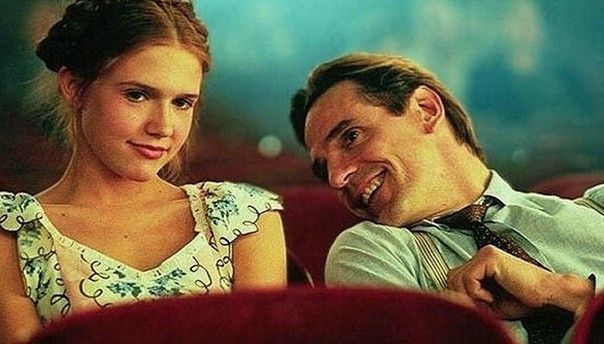
Cinematic Adaptation of Lolita (1997), starring Jeremy Irons as Humbert Humbert and Dominique Swain as Lolita

Humbert understands the precariousness of his attachment to Dolores. She’s a hostage who he appeases with countless and expensive bribes, spawning a crippling jealousy that his nymphet will run away with someone else, especially because of her flirtatious nature. The juvenile sensuality of Dolores Haze makes a paedophile and a green-eyed monster of Humbert, who becomes more and more paranoid as the story unfolds. 

Analysis of The Novel

To be sure, this novel isn’t for the faint of heart, but neither should prospective readers retreat to any kind of moral high ground. Nabokov, in fact, threads an unexpected and affirming emotional serenity through his portrait of obsession. His enigmatic narrator leaves us in spellbound rapture. Because for all of its linguistic pyrotechnics — as Humbert confesses, “you can always count on a murderer for a fancy prose style” — and for all its controversial subject matter, Lolita is one of the most beautiful love stories you’ll ever read. It may be one of the only love stories you’ll ever read. This is the most thrilling and beautiful and most deeply disturbing aspect of the novel — and it’s what most persuasively recommends the book — that in addition to finding Humbert’s soul on the page, we also find, like it or not, a little of our own.

Lolita (1997)

The Author has afflicted poor Humbert with a special and taboo variety for a couple of contradictory reasons. In the first place, its illicit nature will both shock the reader into paying attention and prevent sentimentally false sympathy from distorting his judgment. Contrariwise, I believe, Mr. Nabokov is slyly exploiting the American emphasis on the attraction of youth and the importance devoted to the ‘teen-ager’ in order to promote an unconscious identification with Humbert’s agonies. 

Criticism of The Novel

The art that palliates Humbert’s misery has not notably relieved the distress of reviewers, most of whom have felt obliged to ask themselves, how the author could come up with such horrific storyline. Some have concluded, rather desperately, that he hasn’t done it at all. According to one interpretation, Mr. Nabokov has merely written an allegory of a European intellectual who falls in love with America and discovers, to his gentle sorrow, that the country is still a trifle immature. Aside from the difficulty of assigning roles, the fact that the author is obviously capable of writing such a story without the aid of a nympholeptic allegory throws considerable doubt on the argument. It has also been suggested, ingeniously, that Mr. Nabokov really wanted to write a tale of romantic passion in the grand, or nineteenth-century, manner, and found that the only way to make such a passion interesting to the contemporary reader was to disguise it as psychopathology. If this interpretation is correct, one can only say that Mr. Nabokov has beautifully concealed his disappointment at having to portray his heroine as a child.

Lolita (1997)

Despite Humbert’s evil, the fallout from the relationship is heartbreaking. Our empathy for the odious rogue is Nabokov’s greatest achievement in the novel. We both detest and sympathise with him, leaving us feeling confused and perhaps a little guilty. Humbert’s vile actions and fantasies, in which he dreams of painting a mural and re-live hopelessness of falling in love with a girl who could never love him back. Like Humbert’s love for DoloresLolita felt like a forbidden fruit, breaking the sturdiest of taboos to illuminate the mind of an infatuated, sociopathic paedophile, which is a mind we rarely get to see. 

Lolita (1997)

Conclusion

Lolita is old enough and infamous enough to be known as a story of unhinged paedophilia. But it’s also a beautiful and depressing love story, with a tortured antagonist who despite his crimes, and due to the skill of the book’s author Vladimir Nabokov, we can eventually empathise with.

A Dialogue on National Education Policy 2020 at Nehru Centre, London

 A dialogue on the “New Education Policy 2020 – NEP Outreach”, was organized by the Nehru Centre, London with National Book Trust, India (under Ministry of Education) on 18 January, 2021.

Speaking on the occasion, Union of Education Shri Ramesh Pokhriyal ‘Nishank’, Minister said that under the leadership of Prime Minister Shri Narendra Modi, the NEP-2020 has been implemented with a futuristic mindset, thereby turning the challenges into opportunities. It will equip India to hold a position in the global knowledge system while maintaining and developing its traditional knowledge system. “Through the policy, we are hoping to transform education and putting a significant thrust on learning about how to think critically and solve problems, how to be creative and multidisciplinary, and how to innovate, adapt, and absorb new material in the novel and changing fields. Pedagogy is expected to evolve to make education more experiential, holistic, integrated, inquiry-driven, discovery-oriented, learner-centred, discussion-based, flexible, and, of course, enjoyable,” the Minister added.

Shri Vinay Sahastrabuddhe, President, ICCR, in his opening remarks said that the NEP-2020 is one of the greatest reforms presented by the Prime Minister Shri Narendra Modi.

Rt. Hon Jo Johnson, Educationist, Former Minister for Universities, Science, Research & Innovation, United Kingdom, lauded India’s NEP-2020 as an event of global significance and as a policy that will turn India into a global knowledge superpower, emphasizing its strong focus on early years, teachers, universal numeracy & literacy, etc. He also mentioned that the exciting fact about NEP-2020 is that it proposes to shift the mode of assessment from summative to formative, testing higher order skills like critical thinking, analysis and conceptual clarity.

Rt. Hon Jo Johnson and Shri Ramesh Pokhriyal ‘Nishank’ also engaged in a dialogue on various provisions of the NEP-2020, such as teacher training, entry of top 100 foreign universities in India, and education in Indian HEIs.

The engaging and enlightening event was moderated by Shri Amish Tripathi, Minister (Culture), High Commission of India, UK and Director, The Nehru Centre.

Start-up to success: OYO

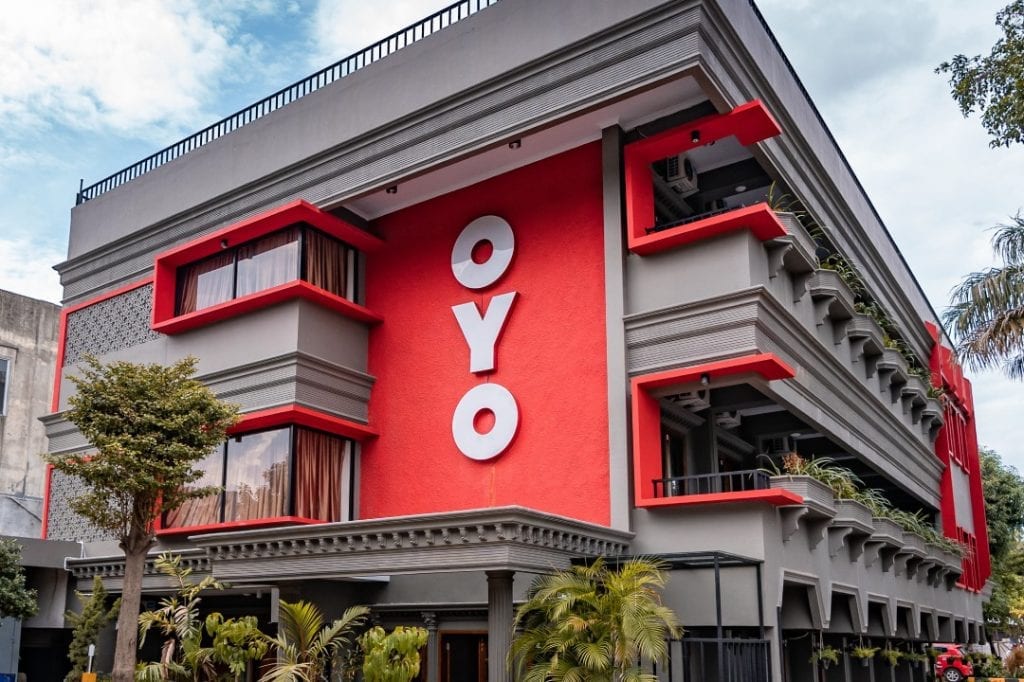
OYO Hotels and Homes is one of the first choices that comes to our mind when we think of affordable and comfortable accommodation while on a vacation. The success of OYO as a hospitability empire has been enormous, and it has been growing ever since the inception of the company in 2013 by Ritesh Agarwal.

OYO stands for ‘On Your Own’. And OYO has been a leading venture in the avenue of budget-friendly rooms along with offering commendable hospitability services. The company has been adding ways to improve its quality and services for the consumers over the years.

The origin of OYO

Ritesh Agarwal aspired to be a coder, and left for Kota in 2009. However he later realised that coding was not for him. Meanwhile he wrote and published his book ‘Indian Engineering Colleges: A Complete Encyclopaedia of Top 100 Engineering Colleges’, which turned out to be a hit. He was then selected for Asian Science Camp held at Tat Institute of Fundamental Research, Mumbai. Later he was among 20 students under 20 who received Thiel Fellowship with a sum of $100.000 for two years. Thus providing him with the resources to drop out of college to start something of his own.

Since Ritesh Agrawal travelled a lot and stayed in different hotels, he realised the poor condition of the hospitality sector, and was motivated to start Oravel Stays in 2011, which was later relaunched as OYO Hotels and Homes in 2013. He envisioned OYO as the all-encompassing accommodation system where people could enjoy all the best facilities of hospitality sector in a budget.

Eventually OYO spread all over India, generating revenue of 51 lacs in 2013-14 and 2.4 Crores in 2014-15. OYO also bagged investment from big shot companies like Lightspeed India, Sequoia, Softback and most recently Microsoft in 2021.

The Struggles of OYO

OYO did not become a success overnight. It had to endure its fair share of struggles and setbacks on its way to success. OYO was surrounded with allegations of cheating and fraud. In 2019, a Bengaluru hotelier accused OYO for not paying his dues. However, OYO rejected such claims.

Other instances includes the death of a national level shooter in an OYO hotel due to electrocution, and an OYO employee raping a women, and a few more. In all these cases OYO clarified its stand and coped with authorities to help with the investigations.  

Other then such instances of setbacks, OYO also had to deal with the obstacles of COVID-19. Like all businesses, the hospitality sector was also hit severely with the pandemic. The hospitality sector revenue generation was down by 50-60% in 2020, as a result the OYO employees had to go through a pay cut of 25%.

Success of OYO

After dealing with its fair share of struggles and shortcomings, OYO has established itself as the World’s third largest and fastest growing hotel chains and home and living spaces. After 8 years of business OYO operates in 800 cities in more than 80 countries. It has 23,000 hotels under, 850,000 rooms and 46,000 vacation homes worldwide.  

In 2019, OYO generated a revenue of $951 million, and is believed to revive itself from the effects of pandemic in the coming years. Ritesh Agarwal was declared the youngest CEO at 17, he was also declared the world’s youngest self-made Billionaire after Kylie Jenner in 2020. And he has a number of other titles to his name such as Forbes 30 under 30 and much more.

                      Nonetheless, the biggest takeaway is that, a teenager with an entrepreneurial mindset manifested his dreams into reality and made it big to a billion dollar industry. Ritesh Agarwal has an inspiring story that can surely encourage other young minds.

Electric Vehicles

At present, the technology is advancing day by day and so is pollution, global warming and increased demand for fuel. Thus, in order to tackle such issues and to be at par with the modern era, electric vehicles as a means of eco-friendly transport is a better option in future.

Electric vehicles refers to vehicles or transport means that consume electric energy in place of traditional fuels such as diesel, CNG and petrol. Such vehicles include an electric generator to convert fuel to electricity or maybe inbuilt with a solar panel, battery, fuel cells or electricity may be supplied via collector system from off-vehicle sources. The metros are already running with electricity around the world.

The contemporary age in which we all are living has now become an era of technology and this advancement in technology has greatly enhanced our human life. Thus, the use of electric vehicles is necessary in near future. The electric vehicles run from electricity and as a result no smoke is emitted, reducing the pollution, global warming and import of diesel and petrol. It would conserve natural resources like CNG, petrol and diesel that are non-renewable and promote the use of renewable energy. The over use of such fuels are harmful for the environment. It would also fulfill the requirement of growing demand of more means of transport. Electric vehicles are eco-friendly, thus it is good for both human beings and environment. As it is a new form of technology and with the increasing demand of this sector, more employment generation will take place. Electric vehicles will also reduce the nation dependency on petroleum export countries.

The electric vehicles are environment friendly and seemingly cheaper in the long run. Since past decade, many trains including the metros have been running on electricity. Even almost all the trains in the Indian Railways are running on electricity. As a result, the use of electric vehicles are continuously promoted by the government. Today, electric scooters or bikes, electronic rikshaw, electronic cars , etc. are already in the market. Various campaigns have been started by the government to promote the use of electric vehicles. Recently, a campaign named’ Switch Delhi’ was launched by the Delhi Government to promote the same. The Delhi government took this initiative to cut down the pollution of air which was caused by the smoke emitted by the traditional petrol and diesel vehicles. The smoke emitted is hazardous to human health. Prior in 2020, Delhi EV Policy was also introduced. Under this policy, a waiver on road tax was provided with a benefit up to Rs. 1.5 lakh on four wheelers and more.

Thus, it can be inferred that the people should use more electric vehicles instead of traditional petrol and diesel vehicles. Electric Vehicles are seemingly the future of means of transport. It becomes more essential when the increasing pollution, global warming and diseases borne out of pollution are considered.

“I really do encourage other manufactures to bring electric cars to market. It’s a good thing, and they need to bring it to the market and keep iterating and improving and make better and better electric cars, and that’s what going to result in humanity achieving a sustainable transport future. I wish it was growing faster than it is.”

– Elon Musk

Porter’s Five Forces Model

Porter’s 5 Forces Model is a business model and a tool which helps in identifying main competitive forces of an industry or a sector. The 5 Forces Model is mainly used to create a corporate strategy which will help a company to enhance its long- term profitability.

Understanding Porter’s Five Forces Model

The 5 Forces Model was created by Harvard Business School’s Professor Michael E. Porter and was published in his book “Competitive Strategy: Techniques for Analyzing Industries and Competitors” in 1980. The model was created to explain why various industries are able to maintain varying level of profitability. Porter’s 5 Forces helps in analyzing the industry of the company so that a company can adjust their corporate strategy, boost their profitability and beat their competition.

What are the five forces of the Porter’s Model?

  • Competition in the industry
  • Potential of new entrants into the industry
  • Power of Suppliers
  • Power of Customers
  • Threat of substitute products

Competition in the Industry

For most industry, the level of competition in the industry determines the positioning of the product in the market. The intense the competition in the market, the more the company has to focus on innovation, marketing, price, etc. of the product. When the competition is less, a company has more authority to charge higher prices and establish the terms of deals in order to increase sales and profits.

Potential of New Entrants into the Industry

A company’s positioning is also affected by the new entrants in the market.  This in turn puts pressure on prices, costs, and the rate of investment needed to sustain a business within the industry. The less the time, money and effort it takes for a competitor to enter the market, more is the threat for a company to lose its market share. On the contrary, if there are strong barriers to entry in the industry, companies more secure about their market share.

Power of Suppliers

Power of suppliers in a market means how easily suppliers can increase the cost of the inputs. The suppliers’ power in the market is determined by the factors like number of suppliers in the market, uniqueness of the inputs they provide, cost of switching a supplier for a company. If the number of suppliers in an industry is less, a company would depend more on its current supplier, thus giving more power to supplier in terms of cost of inputs and other advantages in trade. However, if the suppliers are more in the market, then company has the advantage of switching the supplier in case the supplier increases the price or if a company finds a cheap supplier, thus keeping their input costs low and increasing their profitability.

Power of Customers

Customers are more powerful in an industry when there are less number of customers in an industry and more number of suppliers. Because the client base for a company is smaller and more strong, each customer has greater negotiating leverage to get better rates and deals. A company with a large number of smaller, independent consumers will find it easier to raise prices and increase profits.

Threat of Substitute Products

A substitute is a product or service that can be easily replaced with another by consumers. In economics, products are often substitutes if the demand for one product increases when the price of the other goes up. When there are no close substitutes in the market, a company can take advantage of charging higher prices. However, if there is availability of close substitutes, customers will switch to substitutes in case of increase of the prices of the products of a company.

Understanding Porter’s Five Forces and how they apply to a particular industry can help a company change its business plan to make better use of its resources and generate more profits for its shareholders.

HEALTHY EATING FOR HEALTHY HEART

When stress hits hard as it has during the pandemic, many of us eat more, and less-than-healthy comfort foods may be the treats we reach for first. But an unhealthy response to stress can be hard on your body, especially your heart. That’s why it’s smart — at the top of the New Year, or anytime — to try to eat more foods that nourish. It’ll make your heart happier, and maybe trim your waistline, too.Don’t know where to start? Let the National Heart, Lung, and Blood Institute (NHLBI) help.”We have many recipes for healthy and really tasty dishes, plus an award-winning eating plan called Dietary Approaches to Stop Hypertension, or DASH for short,” says Charlotte Pratt, Ph.D., M.S., R.D., a nutrition expert at NHLBI. For years, the DASH eating plan has ranked among the U.S. News & World Reports’ best diets for healthy living and heart health. Its secret, says Pratt: “Eating nutrient-dense foods and meals that are lower in sodium and saturated fat, rich in fruits, vegetables, low-fat dairy, and legumes.”Some of the recipes NHLBI has developed to support the plan feature healthy versions of comfort foods, such as oven-baked french fries, chicken chile stew, and sweet potato custard. The recipes are easy to make and family-friendly. They include traditional African American, American Indian/Alaska Native, Vietnamese, Latino, and Filipino dishes. You can find these recipes, along with tips about safe cooking, what to stock in your kitchen online The DASH eating plan is scientifically proven to lower your blood pressure and cholesterol levels,” says Pratt. And NHLBI research shows that increasing your physical activity and watching your calories while following DASH will also help you lose weight.DASH requires no special foods, and it helps you set daily and weekly nutritional goals using these simple guides:

  • Eat vegetables, fruits and whole grains
  • Include fat-free or low-fat dairy products, fish, poultry, beans, nuts and vegetable oils
  • Limit foods that are high in saturated fat, such as fatty meats, full-fat dairy foods and tropical oils such as coconut, palm kernel and palm oils
  • Limit sugar-sweetened drinks and desserts

To make it easier to follow the DASH for life, these tips can help:

  • Change gradually. Add one more serving of vegetables a day. Read nutrition labels to choose the food lowest in saturated fat, sodium or salt and added sugar.
  • Vary foods high in proteins. Try a mix of lean cuts of meat. Remove the skin from chicken. Eat fish once or twice a week. Eat two or more meals without meat each week.
  • Select healthy, tasty snacks. Have a piece of fruit, a few unsalted snacks such as rice cakes, fat-free or low-fat yogurt or raw vegetables with a low-fat dip.
  • Find substitutes. Try whole-wheat bread or brown rice instead of white bread or white rice. Try beans or seeds such as flax or sunflower seeds, if you’re allergic to nuts.

Combining healthy eating habits with other self-care activities can help you reduce stress and take care of your heart. Top of the list: move more throughout the day, get 7 to 8 hours of sleep, and try relaxation exercises such as meditation or yoga. If you smoke, try quitting, and develop a strong social-support system to help keep you motivated. Delicious Oven-Baked French Fries Baking instead of frying these potatoes reduces the fat while keeping them crispy.Prep time: 10 minutes.
Cook time: 35 minutes.
Makes 5 servings.
Serving size: 1 cup.Ingredients4 large potatoes (2 lbs.) (regular or sweet potatoes)
8 C ice water
1 tsp garlic powder
1 tsp onion powder
1/4 tsp salt
1 tsp white pepper
1/4 tsp allspice
1 tsp hot pepper flakes
1 Tbsp vegetable oilDirections

  1. Scrub potatoes and cut them into long 1/2-inch strips. Place the strips in the ice water, cover and chill for 1 hour or longer.
  2. Remove potato strips and dry them thoroughly. Preheat oven to 475 degreeF.
  3. Place garlic powder, onion powder, salt, white pepper, allspice and pepper flakes in a plastic bag. Toss the potato strips in the spice mixture.
  4. Put the potato strips in a shallow baking pan and brush them with oil.
  5. Cover the baking pan with aluminum foil and bake at 475 degreeF for 15 minutes.
  6. Remove the foil and continue baking, uncovered, for an additional 15 to 20 minutes or until golden brown. Turn fries occasionally to brown on all sides.

An Integrated Mobile Service Delivery Van’for Divyangjan and Senior Citizens

 A ‘SamajikAdhikaritaShivir’ for distribution of aids and assistive devices to ‘Divyangjan’ under the ADIP Scheme and Senior citizens under ‘RashtriyaVayoshri Yojana’ (RVY Scheme) of the Ministry of Social Justice and Empowerment, Government of India will be organized by the Department of Empowerment of Persons with Disabilities (DEPwD) in association with ALIMCO and District Administration Chhatarpur at 12 Noon on 13.02.2022 at Government Higher Secondary School, No.1, Chhatarpur in Madhya Pradesh.

A total of 5286 aids and assistive devices valued at Rs. 2.33 crore will be distributed free of cost to 1391 Divyangjan and 553 Senior Citizens at Block/Panchayat levels by following the SOP prepared by the Department in view of  COVID-19 Pandemic.

Hon’ble Union Social Justice and Empower Minster Dr. Virendra Kumar will be the chief guest of the function wherein, Union Minister will also launch ‘An Integrated Mobile Service Delivery Van’ whichhas been developed by the ALIMCO to provide “After-Sale Service” and undertakean awareness campaign on the use of Aids and Assistive devices and offering in-situ repairs/ correction /adjustment and fitting of Prosthetics and orthotics devices at the destination for the Aids and Assistive devices being distributed under the ADIP/RVY Scheme of Govt. of India, in Districts where the distribution of aids and assistive devices has been done in recent past to Divyangjans and Senior Citizens. Shri Pradumn Singh Lodhi, Chairman Madhya Pradesh State Civil Supplies Corporation Ltd.,and MLA, Badamalhera, Madhya Pradesh will preside over the function.

SMILE: Support for Marginalised Individuals for Livelihood and Enterprise

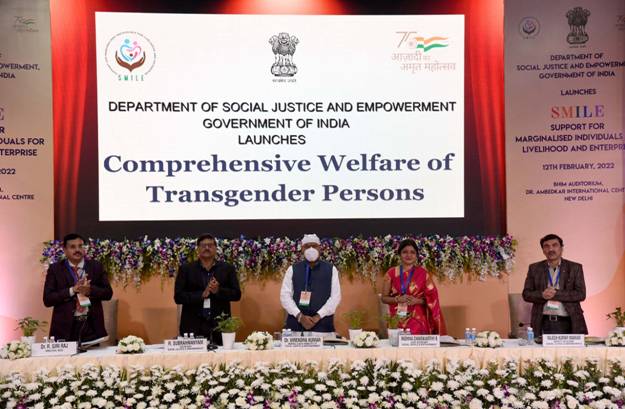
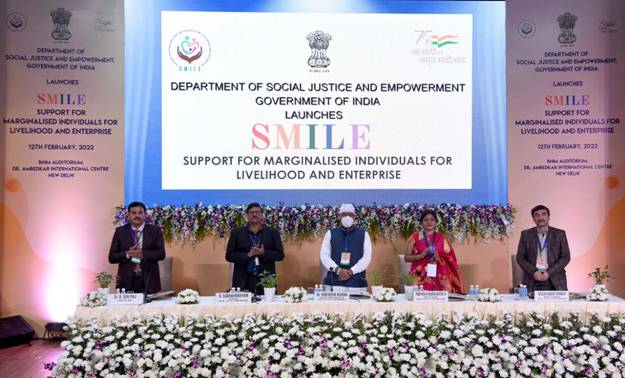
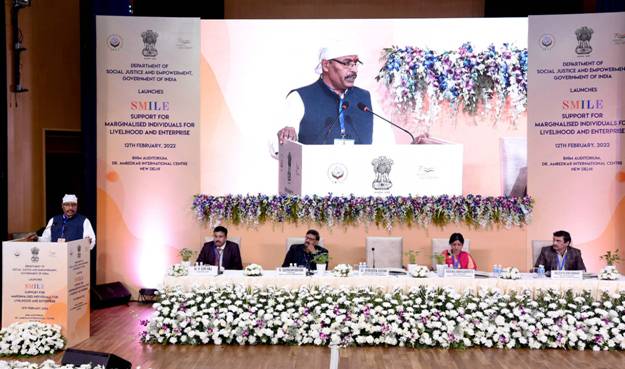
 Union Minister for Social Justice & Empowerment Dr. Virendra Kumar launched the Central Sector scheme “SMILE: Support for Marginalised Individuals for Livelihood and Enterprise” today at BHIM Auditorium, Dr. Ambedkar International Centre, 15, Janpath    Road, New Delhi. This umbrella scheme, designed by Department of Social Justice & Empowerment, is set to provide welfare and rehabilitation to the Transgender community and the people engaged in the act of begging.


Speaking on the occasion, Dr. Virendra Kumar said, “As a progressive and developing society it is our duty to respect the identity and dignity of all sections of society. The Ministry has ensured that each and every need of Transgender community and persons engaged in the act of begging are taken care of in most professional way.”

“The provision of National Portal & Helpline will provide necessary information and solutions to the problems of the Transgender community and the people engaged in the act of begging,” the Union Minister added.


The two sub-schemes of SMILE – ‘Central Sector Scheme for Comprehensive Rehabilitation for Welfare of Transgender Persons’ and ‘Central Sector Scheme for Comprehensive Rehabilitation of engaged in the act of Begging’ – provide comprehensive welfare and rehabilitation measures to the Transgender community and the people engaged in the act of begging.

The scheme keeps in mind the social security that is needed through multiple dimensions of identity, medical care, education, occupational opportunities and shelter. The Ministry has allocated Rs. 365 Crore for the scheme from 2021-22 to 2025-26.


The Sub-scheme – ‘Central Sector Scheme for Comprehensive Rehabilitation for Welfare of Transgender Persons’- includes various components.  It provides Scholarships for Transgender Students studying in IX and till  post-graduation to enable them to complete their education. It has provisions for Skill Development and Livelihood under PM-DAKSH scheme. Through Composite Medical Health it provides a comprehensive package in convergence with PM-JAY supporting Gender-Reaffirmation surgeries through selected hospitals. The Housing facility in the form of ‘Garima Greh’ ensures food, clothing, recreational facilities, skill development opportunities, recreational activities and medical support etc. to the Transgender community and the people engaged in the act of begging. The Provision of Transgender Protection Cell in each state will monitor cases of offences and to ensure timely registration, investigation and prosecution of offences. The National Portal & Helpline will provide necessary information and solutions to the Transgender community and the people engaged in the act of begging when needed.

The sub-scheme – ‘Comprehensive Rehabilitation of persons engaged in the act of Begging’ – will focus on Survey and identification, Mobilisation, Rescue/ Shelter Home and Comprehensive resettlement.

Besides, pilot projects have been initiated on Comprehensive Rehabilitation in ten cities namely Delhi, Bangalore, Chennai, Hyderabad, Indore, Lucknow, Mumbai, Nagpur, Patna and Ahmedabad.

Impact of caste dynamics in contemporary India

The association between various caste groups has now become more flexible and is now at ease. One of the significant impacts in the contemporary age is personal job preference. In the past, men believed in pursuing occupation under its caste like mainly they were engaged in pottery, blacksmithing etc. However, the current scenario is very much different, people have started pursuing jobs of their own choices irrespective of their caste such as in railways, teaching, government jobs, marketing and business. The food habits of the people have been modified, sharing of food is now common between both the sections of society and nowadays people of both upper and lower caste enjoy their food in restaurants in the local together. Power and wealth are almost in least association with the caste. The belief that the lower castes are responsible for pollution and freshness has now somewhat become extinct. However, in petto, rituals of purification with regard to one’s caste ranking, such practice still prevails. The custom of marrying only within the limits of a caste is still in practice, though not as severely as in the past. Lower sections of the society still faces difficulty in pursuing of caste related occupation and access to essential resources in extreme remote rural areas, however in urban areas, caste has almost nil significance in the society. The growth or ranking of women is still based on man’s positioning in the society. But today awareness of equal rights of women, education, employment are eventually advancing the modern society. The Indian Constitution made and implemented various special provisions, due to which competition among the caste groups in order to access the power and necessities like better life enhancement, educational benefits, government oriented jobs, etc. have gained force.

Implementation of such provisions and policies have always been the talk of the town and ground to numerous controversies, although political parties support these policies seemingly for their political benefits, but keeping it aside, it has been of great significant to the people belonging to the lower caste especially the Scheduled Castes (SCs), Scheduled Tribes (STs) and backward classes (OBCs). These groups have grabbed every opportunity provided to them and excelled in it. In the elected offices, these groups have greater representation. They have proved to be an essential part of the Indian political election system. They have also successfully mend their paths in each and every institution, be it political, legal or educational, and also secured high posts in government jobs. In a number of regions, these caste groups have succeeded in forming powerful parties in politics.

However, regrettably, a small portion of people belonging to the lower caste have gained profit from the policies and provisions made by the Indian Constitution. When observed from far, other sections of society seem to have willingly accepted the individuals of the lower castes, but the reality is quite contrary, in numerous parts of India, the upper castes still treat the lower caste’s individuals as outsiders and deny them access to resources. Such an incident came into light in parts of Bihar, India in 1994, the landowners of the upper caste formed a special army known as Ranvir Sena in order to defend themselves from lower caste’s individuals. Though fortunately by 1999, this was disbarred, the Ranvir Sena had already slaughtered 20 Dalits. The upper caste’s individuals who are against the special polices made for the lower castes and also those who are at any sort of economic disadvantage by the implementation of such policies, often are responsible for the mistreatments against lower sections.

The caste system has played a vital role in molding the ethics, principles as well as habitation of the society in India. The rituals  and customs of Hindu philosophy greatly influence the faith and lives of the Indians. Post independence, Indians are still in the clutch of beliefs regarding one’s social rank and their caste status. In the ancient days, people of a common society were divided on the basis of caste, sex and birth. Since birth they had their lifestyles organized according to their specific caste rule and had no choice preference as such. However, with the course of time the linkage between one’s occupation and caste has become almost insignificant. In urban areas, interaction among various castes is without restriction. The current Indian society is progressing eventually from the closed caste system to interactive functioning of the society irrespective of any caste. The various provisions and policies implemented by the government have encouraged the lower sections to come forward and represent themselves in the society. Such provisions have also encouraged the people of other caste groups to be secular towards one another. Therefore, it is essential to look after how caste discrimination has affected the standard of life and mobility of society in contemporary India.