

CHAC Electric manufactures CQC1 and CQC6 AC contactors for motor-control applications. The two series differ in current range, coil options and accessories. CHAC also offers engineering, branding and packaging services for importers, distributors and equipment manufacturers sourcing contactors under their own brand.
CQC1 has the wider current range: 9–800 A under AC-3 at 400 V. CQC6 covers 6–95 A under AC-3 at 380/400 V, including a 38 A model. Above 95 A at these conditions, CQC1 is the applicable range of the two. Where the current ranges overlap, the choice also depends on coil supply, auxiliary contacts, accessories and installation dimensions.
CHAC reports more than 30 years of low-voltage electrical manufacturing experience and over 1,100 employees. Its facilities include automated assembly, injection molding, stamping and testing. The company offers original equipment manufacturer (OEM) and original design manufacturer (ODM) services, including coil and auxiliary-contact configuration, logos, labels and packaging.
CQC1 vs CQC6 AC Contactors: Key Differences
Both series are listed in the CHAC AC contactor range. Some models have the same current rating, but their coils, accessory interfaces and dimensions are specified separately.
CHAC CQC1 and CQC6: series selection comparison
| Selection point | CQC1 | CQC6 | Practical implication |
|---|---|---|---|
| Published AC-3 current range at 400 V | 9–800 A | 6–95 A, listed at 380/400 V | CQC1 covers requirements above 95 A at this voltage and duty. |
| Intermediate model steps | Includes 32 A and 40 A models at 400 V. | Includes 32 A, 38 A and 40 A models at 380/400 V. | CQC6 includes a 38 A step between 32 A and 40 A. |
| Published AC-4 data | Separate current ratings are listed for 380/400 V and 660/690 V. | The reviewed product table presents AC-3 ratings; an AC-4 current table is not provided. | CQC1 provides published AC-4 ratings. CQC6 requires further data from CHAC for this duty. |
| Coil information | The 09–95 A block lists AC and DC control-supply options. | The technical table lists AC control-supply options at 50/60 Hz. | Coil supply and main-circuit voltage are separate specifications. |
| Accessory information | Lists F4 auxiliary blocks and S4/S5 delay accessories, with mounting arrangements dependent on frame size. | Lists auxiliary blocks, interlocks, coil suppression and timer accessories with model-specific compatibility. | Accessory compatibility depends on the series and frame. |
CHAC’s CQC1 specifications and CQC6 specifications contain the model tables, dimensions and accessory information used in this comparison.
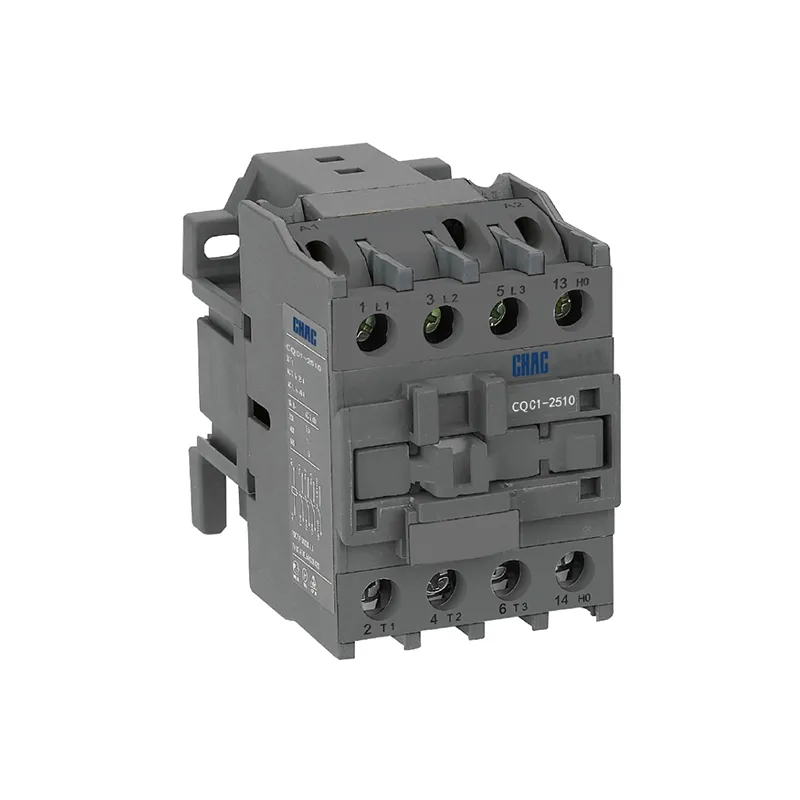
CHAC CQC1 series AC contactor.
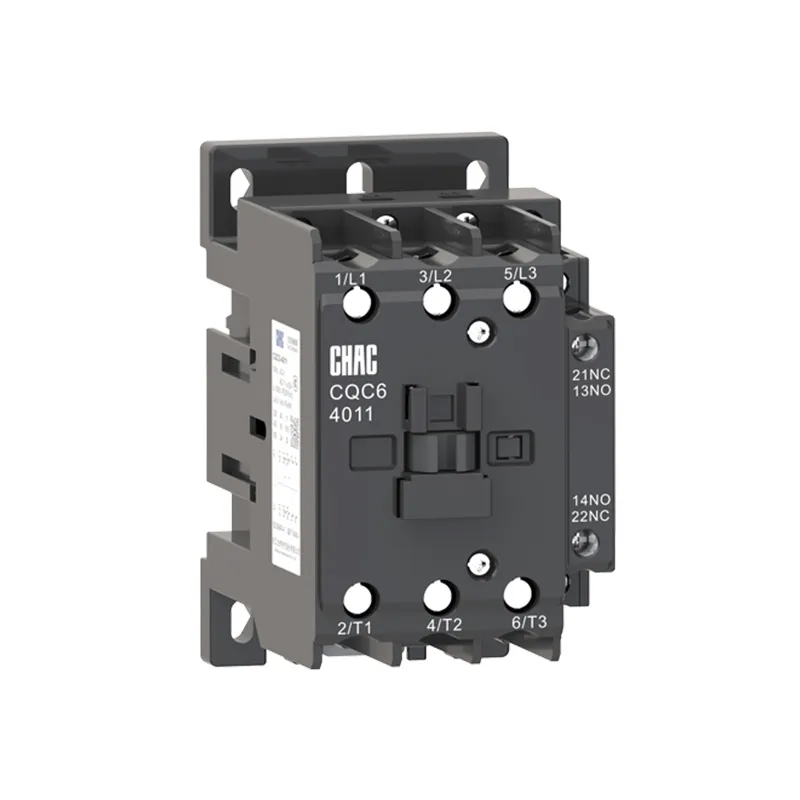
CHAC CQC6 series AC contactor.
CQC1 and CQC6 Current Ratings at 400 V and 690 V
A contactor’s rated operational current, Ie, applies at a stated voltage and utilization category. Its rated insulation voltage, Ui, is a separate parameter. The current available for switching a load therefore comes from the relevant operational-rating row, not the insulation-voltage value.
For example, CQC6-38 is rated at 38 A under AC-3 at 380/400 V and 20.2 A at 660/690 V. CQC6-32 is also rated at 20.2 A in the higher-voltage row. The 38 A model offers more current at 400 V, but no increase over CQC6-32 at 690 V.
Selected AC-3 ratings from the published model tables
| Model | Ie at 400 V | Ie at 690 V |
|---|---|---|
| CQC1-32 | 32 A | 21 A |
| CQC6-32 | 32 A | 20.2 A |
| CQC6-38 | 38 A | 20.2 A |
| CQC1-95 | 95 A | 49 A |
| CQC6-95 | 95 A | 49 A |
| CQC1-115 | 115 A | 86 A |
The CQC6 table groups its ratings under 380/400 V and 660/690 V; CQC1 uses 400 V and 690 V. The table above compares the common 400 V and 690 V points. Both 95 models are rated at 49 A under AC-3 at 690 V; this shared rating does not make them mechanically interchangeable.
For orders covering several operating voltages, CHAC needs the load requirement at each voltage. A model number alone leaves out the conditions behind its current rating.
AC-3 and AC-4 Ratings for CQC1 and CQC6 Contactors
CQC1-32 is rated at 32 A under AC-3 at 400 V. Its AC-4 rating is 12 A at 380/400 V. The same contactor therefore has different current limits for these two switching duties; the 32 A figure cannot be used for an AC-4 application.
CHAC publishes separate CQC1 AC-4 ratings at 380/400 V and 660/690 V. The reviewed CQC6 table provides AC-3 data without a separate AC-4 current table. An AC-4 enquiry for CQC6 needs additional ratings from CHAC.
CHAC’s engineers can assess a proposed application from the switching sequence, starts per hour and service conditions. Electrical endurance depends on the switching load; mechanical-life figures describe a different condition.
AC and DC Coil Options for CHAC Contactors
The main circuit carries the switched load, while the coil operates the mechanism. Coil voltage follows the control supply, identified as Us in the technical tables. A 400 V motor circuit may use a different control voltage, so both belong in the order specification.
CQC1’s 09–95 A technical block lists AC coils of 24, 36, 110, 220 and 380 V at 50/60 Hz, plus DC options of 24, 48, 110 and 220 V. These values apply to that block. The 115–800 A frames have separate coil data.
CQC6 lists AC coil voltages of 24, 36, 48, 110, 220, 230, 380, 400, 415 and 440 V at 50/60 Hz. Its reviewed table does not list a DC option. For a 24 V DC control circuit, CQC1’s 09–95 A block includes a published option; a CQC6 DC-coil enquiry requires confirmation from CHAC.
Coil demand also changes between pickup and holding. CQC6-9 is listed at 70 VA for pickup and 8 VA when sealed. A control supply sized only for 8 VA would leave out the higher pickup demand.
CHAC accepts coil-voltage customization enquiries. Availability depends on the frame and requested supply; the approved sample specification should identify the complete order code and coil marking.
Contactor Accessories: Auxiliary Contacts, Interlocks and Mounting
An auxiliary contact provides a separate control or indication function. Its required normally open (NO) and normally closed (NC) arrangement should be specified in addition to the main switching contacts.
For CQC1 models rated 32 A and below, “10” identifies one NO auxiliary contact and “01” identifies one NC contact. The 40–95 A group uses “11” for one NO plus one NC contact. CHAC’s model note describes the 115–800 A group as conventionally supplied without auxiliaries, so larger-frame orders need any required auxiliary blocks specified separately.
CQC6 accessories include top-mounted two- and four-contact blocks, side-mounted auxiliaries, timer heads and interlock kits. F2-LS1 mechanical interlocks are listed for CQC6-06–38; F2-LS2 is listed for CQC6-40–95.
Auxiliary blocks and timer heads add to the installed dimensions. CHAC offers configuration and drawing support for the assembled contactor, including the requested NO/NC contacts and accessories. The assembly drawing should show the space needed for terminal access and maintenance.
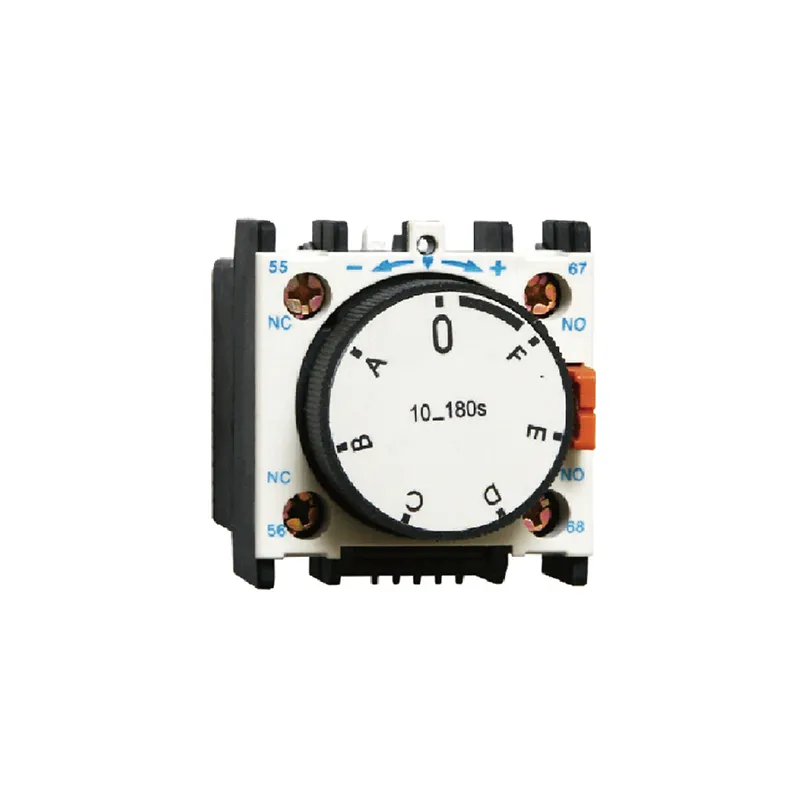
Accessories shown on CHAC’s CQC1 product page.
AC Contactor Protection and Export Documentation
CQC6’s table includes gG-fuse values for Type 2 coordination under stated conditions and without an integral thermal overload relay. Those values apply to the stated arrangement. Other fuse, breaker and overload-relay combinations need their own coordination data.
The CQC6 making- and breaking-capacity data reference IEC 60947-4-1 and GB/T 14048.4. These references identify the standards used in the table, not approval for every destination market. CHAC accepts requests for datasheets, certificates and drawings; the documents supplied need to cover the ordered model and configuration.

Testing facilities presented by CHAC Electric.
CHAC Contactor OEM/ODM: Coils, Contacts and Private Labels
CHAC’s industrial control OEM/ODM services cover coil voltage, auxiliary contacts, electrical parameters and engineering development. For private-label orders, the company offers logos, nameplates, product identification, cartons, labels and manuals.
A branding change and a technical modification involve different work. Logo and carton requirements can be specified alongside existing models. A nonstandard coil or contact arrangement may need engineering work, samples or further testing, with the requirements agreed before production.
For repeat orders, the approved drawing, coil code, accessory list and artwork provide the product reference. Inspection and test records can then be discussed against that configuration.
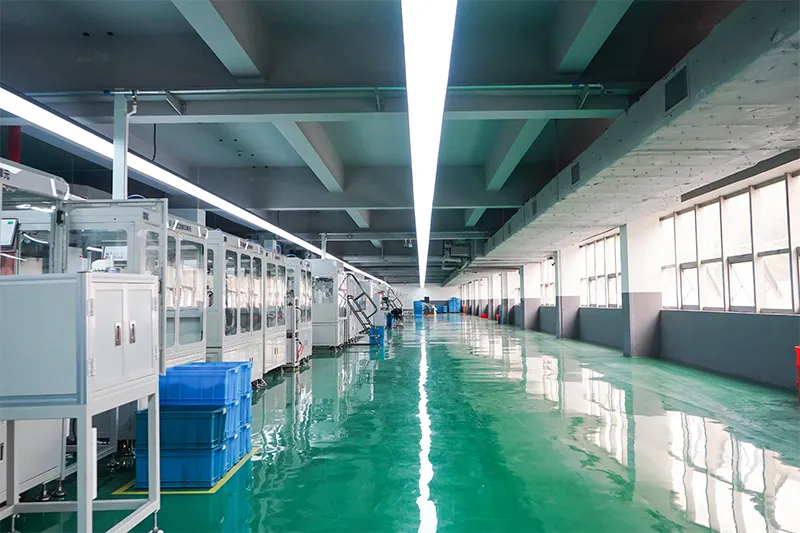
Automated assembly facilities presented by CHAC Electric.
CHAC AC Contactor Purchasing FAQs
Can a CHAC Contactor Replace My Existing Model?
That depends on the existing contactor’s electrical ratings, coil, contacts, mounting dimensions and protection arrangement. CHAC needs its datasheet or nameplate details and a drawing to assess a replacement. Equal amperage alone is insufficient.
Can I Use CQC1 and CQC6 Accessories Interchangeably?
The published data do not establish cross-series interchangeability. Accessories are listed by series and frame. Even within CQC6, F2-LS1 and F2-LS2 mechanical interlocks serve different frame groups. CHAC needs the exact contactor model to confirm an accessory combination.
Which CHAC Series Lists a 24 V DC Coil?
CQC1’s 09–95 A technical block includes a 24 V DC coil option. The selected model still needs the required main-contact rating and mounting dimensions. The reviewed CQC6 table lists AC options, so a DC version needs confirmation from CHAC.
Can CHAC Supply Contactors With Our Logo and Packaging?
Yes. CHAC offers private-label logos, nameplates, labels, cartons and manuals. The enquiry needs the models, quantities by coil configuration, artwork and packaging requirements. The sample and product documents should reflect the version being ordered.
Does CHAC Provide Contactor Drawings and Technical Support?
Yes. CHAC offers technical-document enquiries and product selection and engineering support. Drawings and datasheets need to match the selected model, coil and accessories, including any modifications.
What Information Does CHAC Need for Contactor Selection?
The main inputs are load current, operating voltage, switching sequence, control supply, auxiliary contacts and mounting space. Interlock or timing requirements also affect the assembly. A complete model code is not necessary for the initial technical enquiry.
What Are the MOQ and Lead Time for Private-Label Contactors?
The minimum order quantity (MOQ) and delivery schedule are confirmed in the quotation. They depend on the model mix, quantities, customization and packaging. CHAC states that production lead time varies with order quantity and process complexity.
Request a CHAC AC Contactor Quotation
To request a technical review and quotation, send your contactor requirements to CHAC Electric. Include:
- Electrical requirements: load current, operating voltage, duty, switching frequency and control supply.
- Assembly requirements: candidate models, auxiliary contacts, interlocks, timers, mounting constraints and protection scheme.
- Market and documents: destination country, required drawings, conformity documents and inspection or test records.
- Order scope: quantity per configuration, branding, labels, manuals, carton requirements and requested delivery date.


