The Dream Catcher

Globalisation has brought the world under a big digital umbrella, which helps everyone across the globe to connect, understand and imbibe with people all around them. As a part of this, we see a world that moves alongside the trends adapting and taking inspiration from any possible nooks and corners. One such pop-culture artefact that caught the eyes of the netizens was the Dreamcatcher. If you have watched the Twilight series, the enigmatic hoop that Jacob gifts Bella might have caught your eye. The dainty piece famous for its rusty looks, not only is a collection piece that could decorate your room but is also a powerful tool used by the Native Americans. 

Photo by cottonbro on Pexels.com

In the traditional Native American narrative, dreamcatchers are handmade hoops made out of willow wood, embellished with feathers and beads, which would act as an armour of protection against bad dreams. The Native American tribe of Ojibwes are known to be the founders of the dreamcatchers. The Godmother of the Ojibwes, Asibaikaashi or the Spider Woman, found it extremely difficult to look after her people as the Ojibwe community started being nomadic. According to the old Objiwen tales, their women had to find an alternative method to protect their families. As a solution to it, they started weaving magical webs with charms for protection. 

Dreamcatchers in the present day are decor pieces that add a pop of indigenous feeling to your living space. But the Native American myths compare the dreamcatchers to sieves, which would filter your dreams while you are sleeping and only let the good dreams reach you. The structure of dreamcatchers also has an interesting myth behind it. The circular pattern that it is made in symbolises the shape of the earth. The web that is woven within is said to absorb the bad dreams and the feathers, the path that would lead the good dreams into you. If you are interested in owning a dreamcatcher you can find several DIY videos on how to make one. Let me know in the comments below if you own a dreamcatcher and whether you knew about the history of dreamcatchers even before.

A Flamboyant Thriller That Grips You From Start To End

Pink Movie Review, Ratings, Star Cast, Story, Songs, Actors - Movies
Image Source: google.com

FILM: PINK
LANGUAGE: HINDI
GENRE: THRILLER/DRAMA
REALEASE DATE: 16 SEPTEMBER 2016
DIRECTOR: ANIRUDDHA ROY CHOWDHURY
SCREENPLAY: ANIRUDDHA ROY
CHOWDHURY, SHOOJIT SIRCAR, RITESH SHAH
CINEMATOGRAPHY: ABHIK MUKHOPADHYAY
CASTS: AMITABH BACHCHAN, TAPSEE PANNU,
KIRTI KULHARI, ANDRIA TARIANG, ANGAD
BEDI, VIJAY VARMA

Pink is a powerful, socially relevant, mainstream film that is bound to make you think about the society we are living in. It challenges the orthodox mindset of people regarding woman in our country. Narrated in a linearly, it brings forward the concept of ‘sexual consent’. No means No , no matter what. This film talks about patriarchy, gender discrimination, double standards etc & keeps viewers glued to the screen from the very beginning with its killer performance and fearsome dialogue delivery. This is Anirudhdha Chopra’s first try on Bollywood, and what a debut it is.

Synopsis

The story is about three independent girls Minal Arora (Tapsee Pannu), Falak Ali (Kirti Kulhari), & Andrea Tariang (Andrea Tariang) living within the outskirts of Delhi who are friends and flatmates. After a rock concert, they meet Rajveer (Angad Bedi) nephew of a very influential political person, and his friends. Minal and friends accept dinner invitations at a resort from them.

Rajeev tries to molest and seduce Minal to which she smashes his head with a bottle for self-defense. Rajeev is seriously injured and plans to take revenge on her with the assistance of his friends.
Minal along with her friend files an FIR against them. Rajveer with his political influence get Minal arrested for an attempt to murder with Minal’s case being handled by Deepak Saigal (Amitabh Bachchan). The film revolves around how Deepak Saigal fights the case against these influential boys.

Direction

Aniruddha Chaudhary has directed the film in such a way that the soul of the film isn’t lost in any scene. Also, the courtroom scenes are not shown as how a typical Bollywood film does so.

Performance

Amitabh Bachchan with his thunderous performance will leave the audience in awe. The performances of Tapsee Pannu and Kirti Kulhari are highly commendable and laudable, especially the scenes within the court room. Andrea Tariang is extremely natural and lives within the character. She is fine in her role as debutant actress. Angad Bedi delivers remarkable performance and makes the foremost of his limited screen time.

Screenplay & Dialogue

The movie is written realistically and does not deviate from the core theme. Screenplay & dialogues are undoubtedly the backbone of this film. Court room scenes are written in such a way that it creates suspense to the audience. The dialogues are powerful and energetic conveying socially relevant messages without beating around the bush. There are many interesting and fantastic scenes in the film.

Music

It is unarguably one of the best part in the movie. The song ‘Kaari Kaari’ is well placed in the film as it creates the mood in delivering the message to the audience. Incredibly emotional, this song gives massive goosebumps every time you listen to it. The background score also works as an additional key element to the movie.
Pink is a mixture of various emotions. This film gives a tight slap to people who think woman’s social friendliness and gestures are an invitation to men for sleeping with them. A woman has the complete right to wear short skirts, to drink, party hard, comes home late at night and so on without any doubt. Exposing India’s real face, this film is truly a landmark in Indian Cinema. In short, Pink is bloody brilliant and deserves a watch.

Service Marketing

Must have heard this term often right? But do you really know what is service marketing all about? Keep reading to understand properly.

The term can be easily understood separately as the service refers to an act of performing something for someone in exchange for adequate consideration on the other hand marketing is a broader term but in simple word it means promotion. Collectively we can say that when a person or entity promotes services it offers to the various clients it can be known as service marketing which aims at providing the solutions to the problems faced by the clients. Both the B2B (business-to-business) and B2C ( business-to-consumer) marketing is included in it.

Service Marketing have occupied a significant role in the market because service is something which can’t be seen or touched it can only be availed and experienced. The decision of the buyers in case of products is highly influenced by its quality but it is something different in case of services because the quality of service can be determined after it is availed by the customers. So it is required by the marketers to adopt those strategies that are highly attractive for the customers to induce them for availing a particular service.

Also these services can’t be resold or returned that means they are one time action and the manner it is availed at that time affects its future sale because if the goodwill of a particular service is not maintained then it will not be able to attract another more customers.

Examples: marketing of medical services, beauty parlours and spa, coaching centres , telecommunication etc

Service marketing is often confused with the term product marketing but it is important to know that both of them are different product marketing is the marketing of a tangible item that can be seen and touched whereas services are intangible.

If the proper service marketing strategies are adopted then it can leads to huge profit potential for a business and promote it to get more customers also.

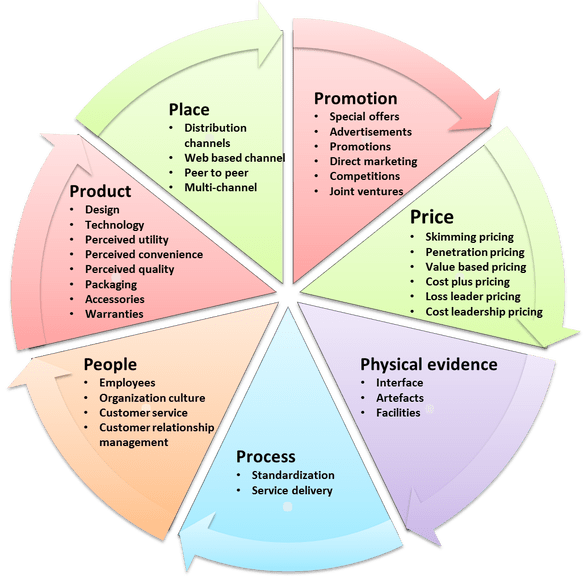
Services marketing are dominated by the 7 Ps of marketing namely Product, Price, Place, Promotion, People, Process and Physical evidence. All these are the factors or elements that are mixed by the marketer in order to deal with the customers much better.

Explanation of service marketing elements.

Not everything turns out beautiful

Not everything is supposed to become something beautiful and long lasting. Sometimes people come into your life to show you what is right and what is wrong, to show you who you can be, to teach you to love yourself, to make you feel better for a little while.
Not everyone is going to stay forever and we still have to keep on going.

We may feel we weren’t bad, it may just be our destiny or the bad timing we had.

Glycolysis and Krebs cycle

Glycolysis is the process in which glucose is broken down to produce energy. It produces two molecules of pyruvate, ATP, NADH and water. The process takes place in the cytosol of the cell cytoplasm, in the presence or absence of oxygen. Glycolysis is the primary step of cellular respiration. In the absence of oxygen, the cells take small amounts of ATP through the process of fermentation. This metabolic pathway was discovered by three German biochemists- Gustav Embden, Otto Meyerhof, and Jakub Karol Parnas in the early 19th century and are known as the EMP pathway (Embden–Meyerhof–Parnas).

Glycolysis stages:

Step 1: 

A phosphate group is added to glucose in the cell cytoplasm, by the action of enzyme hexokinase.

In this, a phosphate group is transferred from ATP to glucose forming glucose,6-phosphate.

Step 2: Glucose-6-phosphate is isomerized into fructose,6-phosphate by the enzyme phosphoglucomutase.

Step 3: The other ATP molecule transfers a phosphate group to fructose 6-phosphate and converts it into fructose 1,6-bisphosphate by the action of enzyme phosphofructokinase.

Step 4: The enzyme aldolase converts fructose 1,6-bisphosphate into glyceraldehyde 3-phosphate and dihydroxyacetone phosphate, which are isomers of each other.

Step 5: Triose-phosphate isomerase converts dihydroxyacetone phosphate into glyceraldehyde 3-phosphate which is the substrate in the successive step of glycolysis.

Step 6: This step undergoes two reactions:

The enzyme glyceraldehyde 3-phosphate dehydrogenase transfers 1 hydrogen molecule from glyceraldehyde phosphate to nicotinamide adenine dinucleotide to form NADH + H+.

Glyceraldehyde 3-phosphate dehydrogenase adds a phosphate to the oxidized glyceraldehyde phosphate to form 1,3-bisphosphoglycerate.

Step 7: Phosphate is transferred from 1,3-bisphosphoglycerate to ADP to form ATP with the help of phosphoglycerokinase. Thus two molecules of phosphoglycerate and ATP are obtained at the end of this reaction.

Step8: The phosphate of both the phosphoglycerate molecules is relocated from the third to the second carbon to yield two molecules of 2-phosphoglycerate by the enzyme phosphoglyceromutase.

Step 9: The enzyme enolase removes a water molecule from 2-phosphoglycerate to form phosphoenolpyruvate.

Step 10: A phosphate from phosphoenolpyruvate is transferred to ADP to form pyruvate and ATP by the action of pyruvate kinase. Two molecules of pyruvate and ATP are obtained as the end products.

The Krebs cycle or Citric acid cycle is a series of enzyme catalysed reactions occurring in the mitochondrial matrix, where acetyl-CoA is oxidised to form carbon dioxide and coenzymes are reduced, which generate ATP in the electron transport chain.

Krebs cycle was named after Hans Krebs, who postulated the detailed cycle. He was awarded the Nobel prize in 1953 for his contribution.

It is a series of eight-step processes, where the acetyl group of acetyl-CoA is oxidised to form two molecules of CO2 and in the process, one ATP is produced. Reduced high energy compounds, NADH and FADH2 are also produced.

Two molecules of acetyl-CoA are produced from each glucose molecule so two turns of the Krebs cycle are required which yields four CO2, six NADH, two FADH2 and two ATPs.

Krebs cycle steps:

It is an eight-step process. The Krebs cycle takes place in the matrix of mitochondria under aerobic conditions.

Step 1: The first step is the condensation of acetyl CoA with 4-carbon compound oxaloacetate to form 6C citrate, coenzyme A is released. The reaction is catalysed by citrate synthase.

Step 2: Citrate is converted to its isomer, isocitrate. The enzyme aconitase catalyses this reaction.

Step 3: Isocitrate undergoes dehydrogenation and decarboxylation to form 5C 𝝰-ketoglutarate. A molecular form of CO2 is released. Isocitrate dehydrogenase catalyses the reaction. It is an NAD+ dependent enzyme. NAD+ is converted to NADH.

Step 4: 𝝰-ketoglutarate undergoes oxidative decarboxylation to form succinyl CoA, a 4C compound. The reaction is catalyzed by 𝝰-ketoglutarate dehydrogenase enzyme complex. One molecule of CO2 is released and NAD+ is converted to NADH.

Step 5: Succinyl CoA forms succinate. The enzyme succinyl CoA synthetase catalyses the reaction. This is coupled with substrate-level phosphorylation of GDP to get GTP. GTP transfers its phosphate to ADP forming ATP.

Step 6: Succinate is oxidised by the enzyme succinate dehydrogenase to fumarate. In the process, FAD is converted to FADH2.

Step 7: Fumarate gets converted to malate by the addition of one H2O. The enzyme catalysing this reaction is fumarase.

Step 8: Malate is dehydrogenated to form oxaloacetate, which combines with another molecule of acetyl CoA and starts the new cycle. Hydrogens removed, get transferred to NAD+ forming NADH. Malate dehydrogenase catalyses the reaction.

Bond linking in the monomers

Polymers such as proteins, polysaccharides and nucleic acids are formed when monomers link in long chains. The different types of bonds provide structure and stability to biomolecules and make them functional. Proteins are formed from amino acids when the carboxyl group of an amino acid reacts with the amino group of the next amino acid and form a peptide bond. This bond is formed due to dehydration. Polysaccharides are formed when several monosaccharides linked together by a glycosidic bond. This bond is also formed due to dehydration. The glycosidic bond connects carbohydrate molecules or a carbohydrate and a non-carbohydrate molecule. Nucleic acids are formed when a nitrogenous base, a phosphate group and a pentose sugar are linked to form a polynucleotide chain. Here, the three prime carbon atoms of one sugar of a nucleotide are linked to the five prime carbon atoms of the sugar of the succeeding nucleotide by a phosphate moiety. The phosphate and hydroxyl groups of sugar join to form an ester bond. The ester bonds formed by the phosphate group, between the third and fifth carbon atoms of adjacent pentose sugar rings, are called phosphodiester bonds. This bond links three prime carbon atoms of one sugar molecule with the five prime carbon atoms of an adjacent sugar molecule. The phosphodiester bond forms the backbone of the DNA strands.
The B-form of the DNA exists as a double helix, where two strands of polynucleotides are anti-parallel, that is, one strand runs in three prime to five prime and the other strand runs in five prime to three prime directions. The backbone of the DNA is formed by a sugar-phosphate-sugar chain. The four bases found in the DNA are adenine, cytosine, guanine and thymine. Adenine on one strand base pairs with thymine on the other strand by a double bond. Similarly, cytosine on one strand base pairs with guanine on the other strand by a triple bond. One full 360o turn of the helical strand would involve ten base pairs. The distance along one turn is known as a pitch, which is thirty-four angstroms. The distance between two base pairs is three-point four angstroms.

Investing lesson of Peter Lynch


Peter Lynch is one of the most successful and top value investor of all time. He was a legendary fund manager who gave 29% returns to their investors for 13 years in a row. He wrote books on value investing , where he shared his investment lessons which he learned and used during his journey as an investor. He is one of the greatest value investor of all time. He is a firm believer that an average investor can also pick winning stocks as Wall Street professional with right research, patience , steady discipline and common sense.


Some of his investment principles are –

1. Invest in what you already know – “The worst thing you can do is invest in companies you know nothing about. Unfortunately buying stocks on ignorance is still a popular American pastime.” -Peter Lynch
People can perform well by investing in what they already know. For instance if a doctor wants to invest in banking sector (about which he know nothing) , he will not have that great return as compared to if he will invest in pharmaceutical companies ( as he already knew about drugs, healthcare sector and their companies)
“Invest in what you know. It leaves out the role of serious fundamental stock research. People buy a stock and they know nothing about it. That’s gambling and it’s not good.” -Peter Lynch
So, it’s better to choose the company whose products/services are either used by you or you are familier of the products/services of that company in some way or other. These knowledge will lead you to invest in better stocks .
2. Invest in companies not in stocks – “Look for small companies that are already profitable and have proven that their concept can be replicated. • Be suspicious of companies with growth rates of 50 to 100 percent a year”-Peter Lynch

Behind every stock there is a company. If companies will perform well, the stocks automatically will perform well. So, it’s important to know about the company, it’s business model. Choose a company whose fundamentals are strong. A company whose business model is so easy to understand that anyone can understand and run that company.

“Go for a business that any idiot can run – because sooner or later any idiot probably is going to be running it” -Peter Lynch

Know a companies management, it’s fundamentals and then ask yourself , “are you able to understand the mission and vision of the company? “ or “If you’ll be given the responsibility to run this company, will you be able to run the company? “
If the answers to the above questions are a YES then it’ll be great to invest in that company.
So always remember that you have to invest in a company and not in a single stock.


“Behind every stock is a company. Find out what it’s doing.” -Peter Lynch

“Never invest in a company without understanding its finances. The biggest losses in stocks come from companies with poor balance sheets.”

3. Don’t take unnecessary risks. Take calculated risks – You don’t have to take risks which you can’t bear. Only take calculated risks.
Let’s say, you have $10 dollar, maybe if you will lost this, you won’t regret. But what if you lost $100 or $1000! Always buy stocks of the amount if you lose won’t regret. You are not required to put all your money in market and risk all that money. Instead put only that amount which if you lose won’t make you regret of investing.
Also, invest only the amount you will not need ever back in your life
4. Peter Lynch said that the most important thing that keep in mind while investing is : know why you own it.

“ You have to know what you own ,and why are you own it .” -Petrr Lynch

It sounds simple but it is not . He said when I asked most people they just don’t know why they own a stock . 80% of investors have no answer to this question .

They maybe hear some tip from anywhere and put their money at risk and when they lose it they blame institutions .
First you have to know the reason . Why you should invest in this company ,research about that company . Check their balance sheets . Without proper research you are not investing you are just gambling . Read and know as much as you can about the company. And remember to buy the company and not just a stock.

“If you’re prepared to invest in a company, then you ought to be able to explain why in simple language that a fifth grader could understand, and quickly enough so the fifth grader won’t get bored.” – Peter Lynch

5. Invest for long time- Lynch used to hold stocks for long period of time. He used to sell the stocks when the fundamentals of any company gets changed. This is his advice for all investors out there to not go behind short term profits but invest for a long period of time.
He even conducted many studies to understand the power of compounding.

“People who succeed in the stock market also accept periodic losses, setbacks, and unexpected occurrences. Calamitous drops do not scare them out of the game.”


Some more investment lessons by Peter Lynch :

• “Never invest in any idea you can’t illustrate with a crayon .”

• “The trick is not to learn to trust your gut feelings, but rather to discipline yourself to ignore them. Stand by your stocks as long as the fundamental story of the company hasn’t changed”

• “Whenever you invest in any company, you’re looking for its market cap to rise. This can’t happen unless buyers are paying higher prices for the shares, making your investment more valuable.”


• “There’s no shame in losing money on a stock. Everybody does it. What is shameful is to hold on to a stock, or worse, to buy more of it when the fundamentals are deteriorating.”

• “Never invest in any company before you’ve done the homework on the company’s earnings prospects, financial condition, competitive position, etc”

• “Big companies have small moves, small companies have big moves.”

• “Good management, a strong balance sheet, and a sensible plan of action will overcome many obstacles, but when you’ve got weak management, a weak balance sheet, and a misguided plan of action, the greatest industry in the world won’t bail you out.”

• “In the long run, a portfolio of well chosen stocks and/or equity mutual funds will always outperform a portfolio of bonds or a money-market account. In the long run, a portfolio of poorly chosen stocks won’t outperform the money left under the mattress.”


This is how he succeed in the world of investment. You can learn from him and help yourself to reach the level you want in investment.


Thank you.

WILL POWER OF WOMEN IN THE WORLD

The future is about women .women leading the way for a better world where they can live fulfilling lives ,pursunig their individual dreams and those of their families .the tools of the 21st century connectivity ,access to knowledge ,access to each other -are tools that women can and do put to powerful uses women in positions of power are women who hold an occupation that gives them great authority ,influence ,and/or responsibility .the women will power refers to making women powerful to make them capable of deciding themselves .women have suffered a lot through the years at the hands of mean.in earlier centuries ,they were treated as almost non-existence .as if all the rights belonged to men even something as basic as voting.as the times evolved ,women realized their power .there on began the revolution for women empowerment.as women were not allowed to make decision for them ,women empowerment came in like a breath of fresh air.it made them aware of their rights and how they must make their own place in society rather than depending on a man. It recognized the fact that things cannot simply work in someone’s favor because of their gender. However ,we still have a long way to go when we talk about the reasons  why we need it .india is almost the countries which are not safe for women .there are various reasons for this. Firstly ,women in india are in danger of honour killings. Their family thinks its right to take their lives if they bring shame to the reputation of their legacy .more over ,the education and freedom scenario is very regressive here .women are not allowed to pursue higher education ,they are married off early .the men are  still dominating women in some regions like its the women’s duty to work for him endlessly .they do not let them go out or have freedom of any kind .women have naturally power and abilities .these innate characteristics affect the intellectual ,cultural ,spiritual , emotinal sociopolitical ,and inter personal world of men with different outcome and with detrimental results to both genders.by leaving behind the boundaries of family and society ,giving rights to women from all aspects of decisions ,rights ,thoughts ,mind etc., is to make them independent .many agencies of united nations in their reports have emphasized that gender issue is to be given utmost priority.it is held that women now cannot be asked to wait for any more for equality. The women will power is the most powerful thing to change our hole world.


Be that strong girl that everyone knew would make it through the worst. Be that fearless girl the one would dare to do anything. Be that independent girl, who doesn’t need a man. We cannot say all Men have awesome will power or all Women have awesome will power. Will power is not classified based on gender. In most of out lives we need some trigger to get this Will power. All of us are capable of having strong will power. Its just that we take ourselves for granted.

It’s so important for women self-esteem and also for societies. Empowering women is to give women the right. Women can have equal right to participate in education, society, economy and politically. Women can involve in society as they are glad to choose their religious, language, work and other activities.

             SHE BELIVED;SHE COULD;

                    SO,SHE DID.

Why are supplements bad ?

Anything that changes any natural process is considered to be bad. Supplements used to increase body metabolism by artificial processes are also not good for health, but not all.

What are supplements ?

Supplements include vitamins, minerals, enzymes, amino acids and herbs. They are marketed in many different forms like in tablets, capsules, pills or other forms.

Some common supplements

  • Calcium
  • Green tea
  • Vitamin D
  • Garlic
  • Fish oil
  • Ginseng
  • Echinacea
  • Melatonin
Photo by Nataliya Vaitkevich on Pexels.com

Why supplements are bad ?

It is a less known fact that there is no safety testing of the supplements by FDA. There is no such rule that the potential adverse effects be mentioned on the supplements.

Many people using supplements since decades, don’t even know about the harmful effects of supplements. They just use in the hope of maybe curing some allergies or minor diseases. But supplements are not always safe and beneficial.

Some multivitamins are not known to cause health risks but it’s better to be cautious. Many supplements contain some ingredients that may cause severe biological effects. They may complicate your health any lead to harmful effects.

Things to know before using supplements

  1. Although some supplements come from natural sources, that doesn’t mean they are safe to use.
  • Some supplements may contain many contaminants like drugs or chemicals that make them of poor quality.
  • Do not at any cost combine any supplements.
  • It is also advised to not take supplements along with medicines.
  • Do not substitute supplements for the prescribed medicines.
  • Do not consume supplements in a large quantity.
  • Always speak with your healthcare provider before taking any supplements.

Can Guinea Pigs Eat Apples ?

“An apple a day, keeps the doctor away.” Everyone must have heard this. But is it true for guinea pigs ? Can guinea pigs eat apples ? Are apples safe for them ? Allow us to enlighten you on the fact that guinea pigs can in fact eat apples but with some restrictions. If you pet a guinea pig and are curious to know about their diet then you have come to the right place. Come on, let’s have a look.

Can Guinea Pigs Eat Apples ?

Yes, guinea pigs can eat apples. But listen guinea pig owners, this is for you. You certainly can give your pet apples. But first you just have to take care of the conditions which come with feeding apples to your guinea pig. Here we will tell you all about guinea pigs and apples. This is the perfect guide for your pet regarding apples.

Photo by Scott Webb on Pexels.com

Are Apples safe for Guinea Pigs ?

Yes, apples are safe for guinea pigs but only in moderation. Apples contain a high sugar content which is not considered appropriate for guinea pigs. Here are some listed conditions to take care of before serving apples to guinea pigs.

  1. Apples are safe for guinea pigs but the stem and the seeds  of the apple can have a damaging effect on their health. The seeds contain enough cyanide to have an adverse effect on their health but not enough to kill them. The main reason to not feed apple seeds to guinea pigs is that they might choke on them.
  • Guinea pigs can have apples in a small quantity. Excessive feeding can lead to various problems like diarrhoea and other health issues.
  • Apple skin contains most of the nutrients which are good for guinea pigs. They can eat apples with their skin on and enjoy the  crunchiness of the fruit. Apple skin or peel contains fibre which is good for their health. Unwashed for waxed skin may damage their health.
  • Guinea pigs do like apples, but ensure that you feed them as a treat and not include them in their daily diet.
  • In addition to the crunchy fruit you can also feed them apple leaves. Apples contain calcium which is good for guinea pigs.
  • Unripe, sore or rotten apples can also damage guinea pigs’ health.
  • Guinea pigs enjoy the hard fibrous core of the apples, but make sure they are seed free and not so sour to eat.

What happens if a guinea pig eats too much Apple ?

If your pet ate too much apple, it’s nothing to worry about. It may have a bit of diarrhoea, but it will be fine. Don’t worry about taking it to the vet because there will not be any long-term problems.

Consider feeding them small apple chunks. Since apples are high in sugar content you may want to restrict their diet of apples to once a day or maybe only 2-3 a week.

Too much of an apple to guinea pig may lead to bloating. You may also want to know that Vitamin C is the most important ingredient in a guinea pigs’ diet. And apples have a higher Vitamin C content than most fruits. Apples are considered to be safe and enjoyable for Guinea pigs but they are not the best diet for them.

Till now we have made sure that you know the answer to the main question, which is, “Can Guinea Pigs eat apples ?” Now coming on to the types of apples they can consume and how you should feed them.

Which Type of Apples can Guinea Pigs Eat ?

Apples are the most diverse fruit. It comes in many types, about 2500 different varieties. Let us have a look on which type of apples your furry pet would like to munch on.

Guinea pigs can eat both red and green apples. But as green apples are much more sour than the red ones, your pet may not like them.

Apples come in many varieties, textures and flavours, so you might want to know the preference of your pet before feeding them.

How Much Apple Should a Guinea Pig be Given ?

Guinea pigs can eat apples, but that doesn’t mean they can eat a whole one of them. You should not give your pet a whole apple to eat, maybe not even a half. Guinea pigs like to be served with small chunks of apples for them. Giving anything in excess to them is a health hazard. And as well as apples are not an essential part of a guinea pigs’ diet.

Guinea pigs can also be fed different snacks of apples like apple sticks, apple leaves and many more for your pet. So now, are you sure about your answer to the question, “can guinea pigs eat apples ?’

Most guinea pigs like eating this crunchy food but as we humans, these furry animals are also moody and some of them may not like apples. But it is certain that yes, guinea pigs can absolutely enjoy apples.

Polysaccharides

Polysaccharides are major classes of biomolecules. They are long chains of carbohydrate molecules, composed of several smaller monosaccharides. These complex bio-macromolecules functions as an important source of energy in animal cell and form a structural component of a plant cell. It can be a homopolysaccharide or a heteropolysaccharide depending upon the type of the monosaccharides. Polysaccharides can be a straight chain of monosaccharides known as linear polysaccharides, or it can be branched known as a branched polysaccharide.

Functions of Polysaccharides-

The polysaccharides serve as a structural organization in animals and plants. Other functions of polysaccharides include:

  1. They store energy in organisms.
  2. Due to the presence of multiple hydrogen bonds, the water cannot invade the molecules making them hydrophobic.
  3. They allow for changes in the concentration gradient which influences the uptake of nutrients and water by the cells.
  4. Many polysaccharides become covalently bonded with lipids and proteins to form glycolipids and glycoproteins. These glycolipids and glycoproteins are used to send messages or signals between and within the cells.
  5. They provide support to the cells. The cell wall of plants is made up of polysaccharide cellulose, which provides support to the cell wall of the plant. In insects and fungi, chitin plays an important role in providing support to the extracellular matrix around the cells.

Mendel’s laws of inheritance

Gregor Mendel, through his work on pea plants, discovered the fundamental laws of inheritance. He deduced that genes come in pairs and are inherited as distinct units, one from each parent. Mendel tracked the segregation of parental genes and their appearance in the offspring as dominant or recessive traits. He recognized the mathematical patterns of inheritance from one generation to the next. Mendel’s Laws of Heredity are usually stated as-

The Law of Segregation: Each inherited trait is defined by a gene pair. Parental genes are randomly separated into the sex cells so that sex cells contain only one gene of the pair. Offspring, therefore, inherit one genetic allele from each parent when sex cells unite in fertilization. In the case of flower colour, the Mendel Pea Experiment showed that a cross between a purple flower plant and a white flower plant produced only purple flower plants for the F1 generation. It appeared that the white flower characteristic had disappeared. However, the F2 generation threw up a surprising result; the white flower variant appeared in a quarter of this generation.

The Law of Independent Assortment: Genes for different traits are sorted separately from one another so that the inheritance of one trait is not dependent on the inheritance of another. Mendel examined two different traits, seed colour and seed shape. Two alleles at the locus controlling seed shape were studied, the dominant round (R) and recessive wrinkled (r) alleles. Mendel crossed one parent that was homozygous for the dominant alleles of these two different genes (round yellow RRYY) with another parent that was homozygous for the recessive alleles of those two genes (wrinkled green rryy). Re-stating the basic question, do the alleles at each locus always stay together (i.e. round with yellow, wrinkled with green) or do they appear in new combinations in the progeny? As expected from the 1st law, the F1 generation shows a uniform round yellow phenotype, since one dominant and one recessive allele was inherited from the parents. When the F2 progeny are obtained by crossing the F1 generation, the parental phenotypes reappear (as expected from the first law), but two nonparental phenotypes also appear that differ from the parents: wrinkled yellow and round green! The results can be explained by the alleles of each different gene assorting into gametes independently. For example, in the gametes from the F1 generation, R can assort with Y or y, and r can assort with Y or y, so that four types of gametes form: RY, Ry, rY, and ry. These can rejoin randomly with other gametes from the F1 generation.

The Law of Dominance: An organism with alternate forms of a gene will express the dominant form. The genetic experiments Mendel did with pea plants took him eight years (1856-1863) and he published his results in 1865. During this time, Mendel grew over 10,000 pea plants, keeping track of progeny number and type. Mendel’s work and his Laws of Inheritance were not appreciated in his time. It wasn’t until 1900, after the rediscovery of his Laws, that his experimental results were understood.

Single gene disorders

Single gene disorders are caused by DNA changes in one particular gene and often have predictable inheritance patterns. Over 10,000 human disorders are caused by a change, known as a mutation, in a single gene. These are known as single-gene disorders. The mutated version of the gene responsible for the disorder is known as a mutant, or disease, allele. Individually, single-gene disorders are very rare, but as a whole, they affect about one per cent of the population. Since only a single gene is involved, these disorders can be easily tracked through families and the risk of them occurring in later generations can be predicted. Single gene disorders can be divided into different categories: dominant, recessive and X-linked.

Dominant diseases – Dominant diseases are single-gene disorders that occur in the heterozygous state –when an individual has one mutant copy of the relevant gene and one healthy copy. The effects of the mutant version of the gene (allele) override the effects of the healthy version of the gene. So, the mutant allele causes disease symptoms even though a healthy allele is present. Dominant disorders tend to crop up in every generation of an affected family because very one carrying a dominant mutant allele shows the symptoms of the disease.  Dominant disorders spread vertically down family trees, from parent to child. In rare cases when an individual has two copies of the mutant gene  (also known as being homozygous), the disorder symptoms are generally more severe.  An example of a dominant single gene disorder is Huntington’s disease, which is a disease of the nervous system.

Recessive diseases – Recessive diseases are single-gene disorders that only occur in the homozygous state – when an individual carries two mutant versions (alleles) of the relevant gene. The effects of the healthy allele can compensate for the effects of the mutant allele. The mutant allele does not cause disease symptoms when a healthy allele is also present. However, if a parent inherits two mutant alleles, there are no healthy alleles, so the mutant allele can exert its effect. As shown in the diagram below, affected individuals arise when both of their parents carry a single mutated allele and each pass on that mutated copy to the child so the child then has two mutated copies. In this diagram, the mother of the affected grandson has inherited a mutated copy from the grandmother, and the father has inherited a mutated copy from his family. Recessive diseases are more difficult to trace through family trees because carriers of a mutant allele do not show symptoms of the disease. It, therefore, appears that the disease has skipped a generation when it is seen in groups of children within a family. The risk of an individual having a recessive disorder increases when two closely related people have a child together (consanguinity). This is because there is a much greater chance that the same mutant allele will be present in related parents.

X-linked disorders – X-linked disorders are single-gene disorders that result from the presence of a mutated gene on the X chromosome. Because females (XX) have two copies of the X chromosome, but males (XY) only have one copy, X-linked disorders are more common in males. If a male’s single copy on the X chromosome is mutated, he has no healthy copy to restore healthy function. The inheritance patterns of X-linked diseases are simplified by the fact that males always pass their X chromosome to their daughters but never to their sons. Like other single-gene disorders, X-linked disorders can be either recessive or dominant.

X-linked recessive diseases – Examples of X-linked recessive disorders include red-green color blindness,  hemophilia and the Duchenne and Becker forms of muscular dystrophy.  X-linked recessive disorders are much more common in males than females because two copies of the mutant allele are required for the disorder to occur in females, while only one copy is required in males. The inheritance patterns of X-linked recessive disorders are as follows: The overall pattern of the disease is characterized by the transmission of the disease from a carrier mother, who inherited a copy of the mutant gene from her affected father.

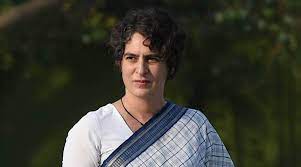
Priyanka Gandhi’s demand on cancelation of UP Block Pramukh Elections.

On July 16 Priyanka Gandhi arrived in UP and is ready and is ready to revive Congerss in the state. On the second day of visit Piyanka Gandhi visited Lakhimpur to meet the victims of abbuse at Block Pramukh Election.

Priyanka Gandhi said that she and all the women of our country are with them and will support them. She also pointed out the authorities for being responsible to conduct the elections in a proper manner without any violence. and demanded the elections to be terminated and to be held again in a organised manner.

She talked to the victims and pointed out the silence of administration and that whenever anything like this happens the elections are terminated but why it is not happening here.

She also mentioned that Prime Minister congratulated UP to successfully conducting the elections even after all that happened and took place not at a single but at more than one place. And asked for the better investigation and to held the election again in a stable manner.

Why plastic bags should get banned?

Plastic bags are harming our environment. Plastics are non biodegradable product which means that they will not degrade in the soil for thousands and thousands of years. Plastic harms our environment in all the ways it can.

How plastic degrades our environment?

Land pollution from plastics…

Firstly, let’s talk about land pollution so if we throw plastic bags on for example, soil, it will not degrade easily and it will degrade may be after thousand years but the chemicals which are used to make the plastic bag degrade the fertility of the soil. Plastic bags are made from poisonous chemicals and if we will throw it in soil firstly it will degrade the fertility of the soil and secondly it will make the crop poisonous and if we will eat that food crops that will grow on such soil we can even die so it deplete the fertility of soil and at the same time makes our food poisonous. Please ,Please ,Please never throw plastic bags on soil or some land area where crops are grown. This way it causes land pollution.

How plastics causes animals death?

Sometimes animals eat plastic bags which causes them to choke. We should never throw plastic bags in garbages because in our country especially in India cows and many other animals like dogs eat from garbages and if by mistake they eat plastic it will let them to die so please never throw garbage inside plastic bags.

Water pollution from plastics…

Plastic bags also causes water pollution. Let’s see how. So when plastics are thrown inside water, the Marine animals which used to live inside the water bodies , by mistake eat that plastic or even a part of the plastic bag which made them to die. The plastic bags are made from poisonous chemicals so please remember never to throw plastic bags anywhere.

In these above-mentioned ways and many more ways plastics destroys our environment.

Measures taken against plastics by different countries…

Some Countries banned plastic totally while some other countries levied taxes on it. But a country is made by its countrymen and we are the country man of India and it is our national duty to stop using plastic bags and save our environment. In our country today also people are using plastic bags even after knowing that they are not good for our environment and causes so many problems.

Why still using plastic bags?

The question is why we are not stopping ourselves from using the plastic bags even if we know that it causes harmful effects on environment. So, there are a lot of reasons behind it. Let’s discuss them one by one.

The first reason is that we are used to it. We habitual of using plastic bags.

The second reason is that it is very convenient to use plastic bags. Plastic bags are lightweight and are very small in size so it becomes very easy for us to carry them . On the other hand cloth or jute bags are not lightweight and are big also, which makes them inconvenient or less convenient than plastic bags.

The third reason is that plastic bags are very cheap. So it’s easy to buy them.

So there are many more reasons but these are the main reasons which make plastic bags very common in use.

Conclusion

We should today take the oath that we have to never use plastic bags and this is not a rule that you have to follow against your will but this is your duty to never never never use plastic bags because it’s our Earth we can make it a better place to live for everybody else.We always want to change our society and the world. But let me tell you very clearly that you can’t.

You can just change yourself and you know what that will make the world change.

“If you can change yourself, you can change the world and if you can’t change yourself ,you will never be able to change the world.”

Thankyou so much for reading.