EduPub (Edupedia Publications Pvt Ltd) is a company dedicated to the development of the education, learning, research and innovation in the field of the research and books publication. We are pioneer in providing wide range of services to educational institutions, government agencies, individuals and corporates in the field of training and education, research and development, research and innovation. research and publication.
Rowlatt Acts, (February 1919), legislation passed by the Imperial Legislative Council, the legislature of British India. The acts allowed certain political cases to be tried without juries and permitted internment of suspects without trial. Their object was to replace the repressive provisions of the wartime Defence of India Act (1915) by a permanent law. They were based on the report of Justice S.A.T. Rowlatt’s committee of 1918.
The Rowlatt Acts were much resented by an aroused Indian public. All nonofficial Indian members of the council (i.e., those who were not officials in the colonial government) voted against the acts. Mahatma Gandhi organized a protest movement that led directly to the Massacre of Amritsar (April 1919) and subsequently to his noncooperation movement (1920–22). The acts were never actually implemented.
The purpose of bringing this Act in effect was to abolish revolt and remove any conspiracy theories against the British from India. Under this act, people who indulged in rebellion against the British could be sent to jail for up to 2 years without trial. Any suspect could be nabbed without a warrant and could be detained for an extended period. The act also gave the government power to muzzle the press’s voice if they wanted to probe the reasons behind it with the evidence.
Consequently, they prohibited public gatherings of any cultural or religious sort. To revoke this act, Mahatma Gandhi and the other leaders called for a Hartal (suspended all activities) to make them view the rejection by Indians with this rule. Many freedom fighters and nationalists were arrested after protesting against it.
The Imperial Legislative Council cleared the Anarchical and Revolutionary Crimes Act (the official name of the Rowlatt Act) irrespective of the united opposition from the Indian members of the council. All of them resigned while the protest was on. The bills were called “black laws”.These consisted of Mohammed Ali Jinnah, Madan Mohan Malviya and Mazhar Ul Haq. Two prominent Congress leaders Satya Pal and Saifuddin Kitchlew were arrested on April 10. The protest was grisly when the government implemented the act, and the army was called in Punjab to control the situation.Gandhiji called for a nationwide hartal on April 6 in response to the act. It was known as the Rowlatt Satyagraha. Many places such as Bombay, Ahmadabad, Nadiad, and Punjab saw an ugly turn leading to riots and violence. The movement was suspended by Gandhiji when the rioting took place in some provinces, especially in Punjab, where the situation was not acceptable.
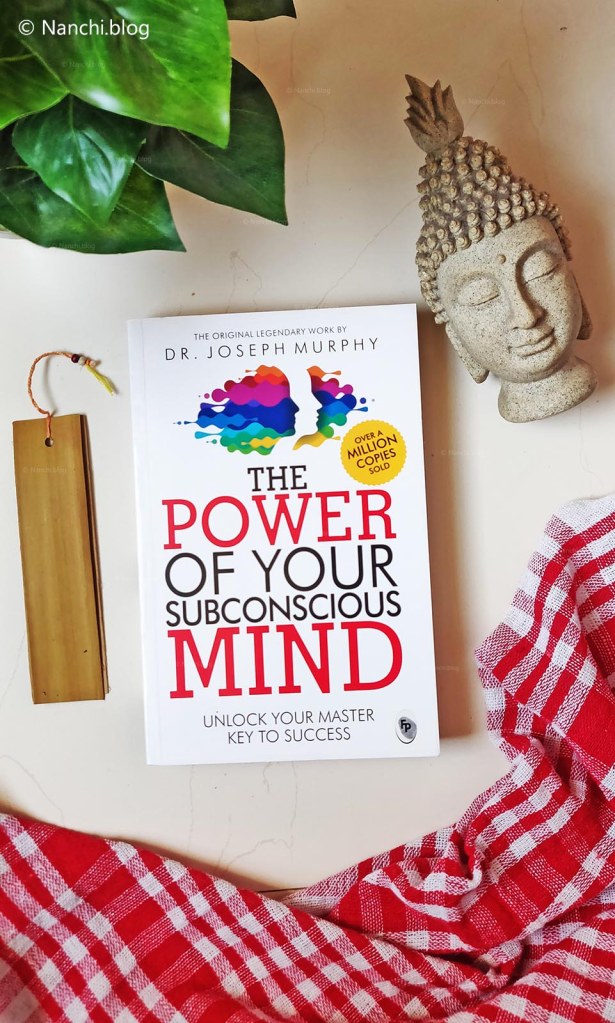
The Power of Your Subconscious Mind by Joseph Murphy
This is our comment on the “power of the subconscious” by author Joseph Murphy. A self-help e-book will help those who are struggling to turn their ideas into reality. Power beyond our daily ability. The book is divided into several parts and contains many items. As the book draws to a close, the theory becomes more complicated. It is easy to follow the examples in the e-book, and these examples can serve as meaningful comparisons for breaking down complex sentences. Sometimes it can be regarded as a self-service e-book, suitable for those who have no motivation to take defensive measures and turn ideas into actions. Because, due to non-public prejudice, whether we want to solve these problems or not, we may become one of the biggest obstacles to our way forward. This is not a new book, it first hit the shelves in 1963. Even after six years, knowledge is still true. In a sense, unconscious thoughts have always attracted me because I was attracted to this idea a few years ago. The idea that we can explore without actively paying attention to the subject or listening to the recording in our sleep still bothers me today.The starting point of this idea is a journey about how the electrical impulses ignited in my talent can lead to physical manifestations in the form of something as simple as housework, and the complexity of my daily tasks that I minimize every day. It’s like owning a service vehicle when you reach a safe experience level; the body just reacts to the situation. In fact, when website visitors actively consider sharing tools or know very little about the content of the tournament, it slows down your reaction because the idea is executed faster when executed unconsciously. The author Joseph Murphy makes some lofty claims that this is still a reality beyond any scientific basis or certification. You should use your personal collective judgements, as well as the statements in the e-book, and try to get things done. Instill it in your life from him. Won’t hurt him. It may also be useful to you, or you may be tired of preparing to present important meanings, but it provides many options in e-books. Your genius should keep this idea and use it to make your existence higher than personalized. Because there is no single method for human thinking. Since subconscious thinking works from the beginning of our business to our last breath, we can find its wider application in the following simple steps. Obviously, he is a spiritual man who uses biblical royalties, and they turn the entire experience into thought, even if it does not include a spiritual perspective. I am a lazy atheist, and giving up the idea of an unnamed god used to be a difficult capsule to swallow, but there is no scientific objection to some factors so I can check it, admit it for a minute, and others will think about it. I can quantify and examine myself.
Pangong Lake also known as Pangong Tso is a beautiful endorheic lake situated in the Himalayas and is 134 km long, extending from India to China. Pangong Lake is situated at a height of 4350 m and is one of the biggest tourist attractions of the country. The beauty and allure of this lake has attracted people from all over the country and beyond. The lake is said to be in the process of being identified as a wetland with international significance under the Ramsar Convention and if everything goes as expected then the Pangong Lake will be the first in South Asia to be a trans-boundary wetland and that too under this convention.
The one factor that makes this Lake so popular is the fact that it keeps changing colors. Situated in the Himalayan range it is approximately 140 km from Leh in Jammu and Kashmir. The name of the lake Pangong was got from a Tibetan word Banggong Co that means a narrow and enchanted lake. And now you know that the lake has got its name rightfully. You will know this when you visit the beautiful lake of Pangong. You are sure to be enchanted by the charm. And because the lake is a long stretch, one third area of the lake lies within our country and the other two third portion lies with Tibet and is controlled by China.
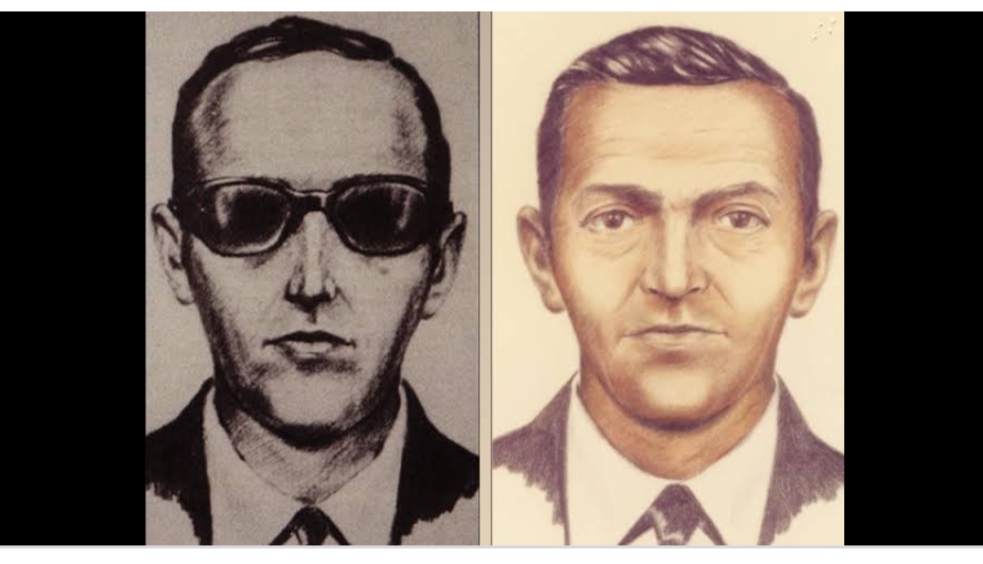
D. B. Cooper is a media epithet (actual pseudonym: Dan Cooper) used to describe an unidentified man who hijacked a Boeing 727 aircraft in United States airspace between Portland and Seattle on the afternoon of November 24, 1971. After a stop at Seattle-Tacoma airport to collect $200,000 in ransom (equivalent to $1.28 million today) The hijack that took place nearly 50 years ago by an unidentified criminal still leaves in astonishment. On November 24th 1971,D.B. Cooper as he is called ,took a ticket from the Northwest Orient Airlines flight As he was dressed in suit and tie people found nothing suspicious .He casually got in the plane waited for the plane to take off and after the plane took off he passed a note to one of the flight attendants saying that he had a bomb in his brief case and demanded for $200,000 and 4 parachute.He was given the money and the parachute after 36 other passengers got off the plane at the airport in Seattle. Cooper kept back some of the crew members and told them to fly to Mexico.On the way to Mexico he jumped off the plane with the money .After this incidents he was not seen or heard again by anyone .The FBI doesn’t believe that Cooper survived but the theory has not been confirmed yet. Investigations say that he jumped off the plane without being an expert skydiver from a height of 5000 feet in risky conditions. Also he was dressed in a suit and tie .According to FBI records Cooper leaped into a woods at night where it was raining at a speed of 200 kmph wearing loafers and a trench coat.
Available evidence and a preponderance of expert opinion suggested that Cooper probably did not survive his high-risk jump, but the FBI nevertheless maintained an active investigation for 45 years after the hijacking. Despite a case file that grew to over 60 volumes over that period, no definitive conclusions were reached regarding Cooper’s true identity or fate.
This infamous criminal has still not been found and leaves us with a unsolved mystery. In 2016 ,the FBI announced that they would no longer investigate this cold case and are backing off from the longest and the most exhaustive U.S. investigation ever.
Do you telecommute? In the event that you’re independently employed or in the event that you work from home, you may as of now have a current work space. Assuming not, maybe doing as such could be an impermanent game plan, (for example, on account of social separating), or, more than likely you may decide to work for yourself later on. Peruse my blog entry for tips on telecommuting happily, with an attention on efficiency.
Here are 8 hints that I love and live by consistently:
1.spruce up
Spruce up toward the beginning of the day, like you’re leaving for office. Do permit yourself more solace than expected, however. Try not to remain in your nightgown. This will get you in the right mind-set and mentality for useful work.
2. Work space
Distinguish an agreeable, calm corner or room. Ensure that you have office writing supplies convenient, ergonomic or possibly sensibly agreeable furnishings, and the gadget you’ll be working with. Allow in sufficient natural air and unwind.
Work from Home – Balance between fun and serious activities and Using time productively.
3. Characterize limits
On the off chance that you’re new to having a work space, you may have to brief your family about your accessibility. Do define sensible limits, according to the idea of your work. On the off chance that you have little children, they could think that its hard to comprehend.
Asian little son helping father drinking coffee between working with laptop computer notebook at workplace happy family together at home concept.
4. Web wellbeing
The web has dangers and dangers, so try to secure your gadget while taking care of significant data at home. Bosses are probably going to set rules for this reason and may give satisfactory programming to working together with colleagues successfully.
5. To-do and not-daily agenda
Have a to-do and not-daily agenda. Start with the main/earnest undertakings to guarantee finishing on schedule. Telecommuting interestingly can be testing. Notwithstanding, with appropriate association, it’s conceivable!
6. Handicap warnings
Handicap pointless warnings, particularly for web-based media. Playing music while you work is brilliant and can be an extraordinary inspiration. Pull out all the stops in the event that you can stay centered.
7. Usefulness hacks
Keep away from performing multiple tasks as it has been believed to be counterproductive. While doing particular kinds of errands, really like to group comparative ones together.
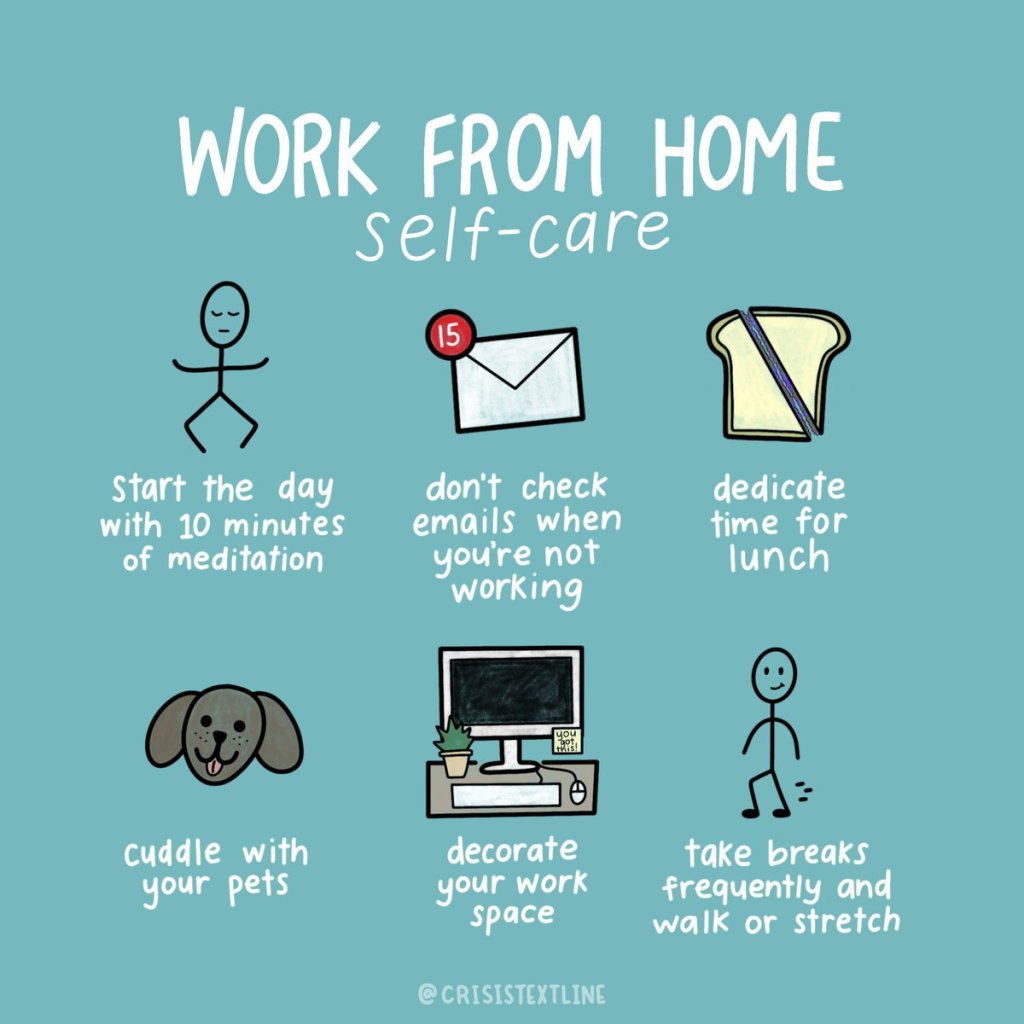
The most effective method to telecommute happily is Self-care
8. Self-care
Keep away from wear out. Take normal breaks, have espresso or lunch time, keep a sound eating regimen, work out, drink a lot of water, rest appropriately, appreciate time with family, telephone a companion, practice a side interest, and whatever else you that properly need to remain fit and blissful.
Work from Home – Balance between serious and fun activities and Using time effectively
End
Telecommuting doesn’t need to be a problem. With legitimate arranging, sorting out and execution, you can make it both fun and useful! Might you want to share your experience? Kindly do as such. In the event that you know any individual who might profit with such tips, if it’s not too much trouble, share my post. Much obliged to you!!
Khoisan people represent ‘earliest branch off human family tree. The Khoisan people of southern Africa have been recognised as one of the earliest formed distinct human genetic groups.Some 22,000 years ago, they were the largest group of humans on earth,the Khoisan, a tribe of hunter-gatherers in southern Africa. Today, only about 100,000 Khoisan, who are also known as Bushmen, remain.
The Khoisan people from Southern Africa maintained ancient lifestyles as hunter-gatherers or pastoralists up to modern times, though little else is known about their early history. Here we infer early demographic histories of modern humans using whole-genome sequences of five Khoisan individuals and one Bantu speaker. Coalescent analysis shows that the Khoisan and their ancestors have been the largest populations since their split with the non-Khoisan population ~100–150 k yr ago. In contrast, the ancestors of the non-Khoisan groups, including Bantu-speakers and non-Africans, experienced population declines after the split and lost more than half of their genetic diversity. Paleoclimate records indicate that the precipitation in southern Africa increased ~80–100 k yr ago while west-central Africa became drier.
ORIGIN OF KHOISAN TRIBE :
In around 2300 BP (Before Present), hunter-gatherers called the San acquired domestic stock in what is now modern day Botswana. Their population grew, and spread throughout the Western half of South Africa. They were the first pastoralists in southern Africa, and called themselves Khoikhoi (or Khoe), which means ‘men of men’ or ‘the real people’. This name was chosen to show pride in their past and culture. The Khoikhoi brought a new way of life to South Africa and to the San, who were hunter-gatherers as opposed to herders. This led to misunderstandings and subsequent conflict between the two groups.
The Khoikhoi were the first native people to come into contact with the Dutch settlers in the mid 17th century. As the Dutch took over land for farms, the Khoikhoi were dispossessed, exterminated, or enslaved and therefore their numbers dwindled. The Khoikhoi were called the ‘Hottentots’ by European settlers because the sound of their language was so different from any European language, and they could not pronounce many of the words and sounds.
The Khoikhoi used a word while dancing that sounded like ‘Hottentots’ and therefore settlers referred to the Khoikhoi by this name – however today this term is considered derogatory. The settlers used the term ‘Bushmen’ for the San, a term also considered derogatory today. Many of those whom the colonists called ‘Bushmen’ were in fact Khoikhoi or former Khoikhoi. For this reason, scholars sometimes find it convenient to refer to hunters and herders together as ‘Khoisan’.
When European settlement began, Khoikhoi groups called the Namaqua were settled in modern day Namibia and the north-eastern Cape; others, including the Korana, along the Orange River; and the Gonaqua, interspersed among the Xhosa in the Eastern Cape. But the largest concentration of Khoikhoi,numbering in the tens of thousands inhabited the well-watered pasture lands of the south-western Cape. These ‘Cape’ Khoikhoi would be the first African population to bear the brunt of White settlement.
NOMADIC HERITAGE :
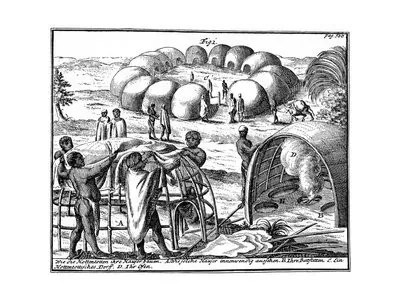
The Khoikhoi kept herds of animals such as goat, cattle and sheep and had to move around to find enough grazing land for their animals. They moved according to the seasons and only stayed in one place for a few weeks. This meant that they had to be able to carry all their belongings themselves, or load them onto the backs of their animals.
Houses had to be very light and easy to erect and take apart. For this reason they were made of thin poles covered with reed mats. Even pots and buckets were made of wood with small handles to make them easier to tie to animals’ backs. They also wore clothes made of leather, like the San.
The animals, especially cattle, were a sign of wealth and the Khoikhoi only ate cattle that had died or had been stolen from their enemies. They only killed their own animals for important occasions like funerals or weddings. The women milked the animals and gathered wild plants from the veld and the men killed game for everyday food. This shows that the Khoikhoi hunted and gathered, but also herded animals.
KHOIKHOI SOCIETY AND LANGUAGE :
Khoikhoi society consisted of both rich and poor, as animals – which were a sign of wealth – could belong to individuals. This is because animals provided food, clothes and transport. This was completely different from the San, who were all considered equal and shared everything. Wealthier Khoikhoi people would share their milk with poorer members of their group, but would still be considered more important. They would also rub animal fat over their bodies to show their wealth.
THE KORA :
The Korana or Kora were a nomadic Khoikhoi group that probably derived their name from a chief called Kora (or Gora), who was originally a leader of the Gorachouqua (`-qua’ meaning ‘people of’). This leader detached himself from this group with his followers and became the first great chief of the Korana.
Initially there were two main groups, the Great Korana and the Little Korana. Each of these broke into splinter groups that divided until there were many groups whose names have been slowly forgotten or were not recorded. Quarrels over water and grazing rights, or the ownership of women or livestock usually caused the divisions amongst groups. When parties split up they usually assumed the name of their leader. But sometimes they took the name of a place where they had stayed for a long time.
One such case was the name Hoogekraal (`High Kraal’), the original name for Pacaltsdorp, near George. Korana family names tended to signify a special characteristic or occupation such as the Towenaars (Sorcerers) and the Regshande (Right-handers). Where the first Chief Kora lived is unknown, but in early times, most Korana lived near the Gariep, Vaal and Harts rivers and others moved into the Overberg and the Karoo.
The last great Korana trek took place during the late 17th century, when they trekked from their chiefdoms in the south-western Cape to escape pressure from White settlers. These Korana trekkers travelled along the western trading routes as far north as the great river that they called Gariep, which means ‘river’. The early pioneers added ‘Groot’ (Great) to it, and after that, it was simply known as the Groot Rivier. A Dutch soldier of Scottish extraction, Robert Jacob Gordon, who was commander of the garrison at the Cape in 1777, renamed it the Orange after the Prince of Orange. However, many still referred to it as the Groot Rivier. After the 1994 change of government, it was given back its original name, Gariep.
For many centuries the early people lived along this river and its tributaries because game was able to graze in the vleie and the berry trees and bulbous plants grew in profusion. There, the Korana settled among the Nama herders and groups of San hunter-gatherers. By then, the Korana had become well-armed and some sources cite that they lived very much in the style of the ‘Wild West’. They knew how to ride horses, understood the value of keeping their mounts in prime condition, and frequently raided the farms south of the great river and the Baster communities.
They also settled in what is today the Free State, the district that became known as Koranaland (Gordonia). Many small conflicts over hunting and plundering took place between these groups and the Bantu-speaking peoples and White trekkers in the area. It is important to note however, that livestock raids were carried out by a minority group of Korana.
GROUPS IN TO RAIDERS :
The small conflicts over cattle and land raids came to a head in 1868, when the colonial government created a special magisterial district. The Northern Border Protection Act was passed to permit action against the Korana. A special border unit was stationed at Kenhardt, but the handful of police and burghers were too few to protect a 330 km stretch of land. This eventually led to the Korana wars of 1869 and 1878.
In 1869, the Frontier Armed and Mounted Police and a small detachment of the Royal Artillery arrived in the area – led by Sir Walter Currie. Later, a prolonged drought forced White settlers and Coloured farmers, as well as the Korana, to move closer to the Gariep River. Such a conglomeration of herds close made it easy for Korana ‘raider’ groups to prey on the herds, and their activities aroused the ire of the district.
Klaas Lukas, who was initially neutral, gathered together 1,000-armed men to defend their livestock. His supporters included the majority of the Korana. The Korana ‘raider’ groups were defeated and came under the control of the Cape Government. Those Korana who rejected a future under colonial rule trekked further into the Kalahari. The Cape Government settled the Basters near Upington to form a buffer between the Boers and the Korana. Today, the Korana have almost completely disappeared as a separate group through assimilation with the population in the area.‘Bastaards’ or ‘Baster’ was a derogatory referred to offspring of liaisons between Europeans, slaves and Khoikhoi. The term was also used to refer to subordinate Blacks who could speak Dutch, ride and shoot.
THE KORANA WERE THE “SOCIAL GLUE ” OF THE GHAAP:
There were often close and complex relationships between the Bushmen and the Korana. When the Korana made war on the Bushmen, they captured Bushman women and children – who were then integrated into the Korana community as wives. Bushmen would sometimes assist Korana in raiding parties, or as messengers and herdsmen. Korana groups traded dagga and tobacco for honey and the Bushmen’s honey and honey beer. Some Bushmen would pay reciprocal visits to Korana kraals.
The Bushmen are hunters and food-gatherers, the Hottentots are also herders. The latter work iron, which the Bushmen have never learned to do. The Bushmen, on the other hand, have a graphic art that stands out as one of the achievements of man- kind, while the Hottentots have no art at all.
Some of the Korana clans also had close relationships with the Tswana. The Koranas called the Thlaping the “Briquas”, and exchanged products from them, such as tobacco and sibilo. Of great importance is that several key Tswana chiefs took Kora wives. When the Tlhaping came to the Langberg in the 1770s, they, and some southern communities, developed close relationships with the Kora who were settled along the Orange. Maswe, the Tlhaping chief at this time, took a Kora wife.
Social media is a necessary piece for everyone. For many, lives without social media are unimaginable. But to the rest, it’s completely okay because they never managed to create an account on any social media platform. Social media like Instagram, Facebook, Snapchat etc are becoming popular day by day. Whether we know it or not, it is of no doubt that social media has a significant role in our life. Everybody spends an astounding amount of time on social media. It really paves a way to showcase your talent. Social media platforms like Twitter, Facebook, WhatsApp, and more help to connect people in a squint of an eye.
A ton of things can be expected if social media die tomorrow. It will help individuals to reconnect with the present reality. They will have more time to call, chat, examine numerous things, and so on. You don’t have to constantly compare yourself with people who only post things that they want others to see. They only post their happy moments on social media. So it unknowingly creates a sense of comparison in us. This is known as ‘upward social comparison’ in psychology. Bully/harassment is another common thing on social media. Getting bullied is truly horrendous, no matter if it is in person or via social media. If social media kicked the bucket tomorrow, you can be glad that you are no more a victim of online bullying.
A few people behind their cover actually post unpleasant remarks, despite the fact that they know about the repercussions. It is much easier to unfriend or block in social media but not in actuality. Some people use social media to get to know people better. Whenever we want to know about the person, we surf through their social media profiles. It is true to an extent that what is portrayed on social media may not be completely real. But you can still get a glimpse of that person. So, without social media, you will only be able to know about them with your experience with them.
As an outcome, you may feel plenty of changes like pressure or tension to start with. We are so much concerned about what is there in our feed than about our peace of mind. However, it will just keep going for a couple of days.
You can face this beautifully. You can begin to live in the moment without bothering many unwanted things. You don’t have to worry about how you look, what you wear, or compare yourself with others. You will get a lot of time. So, you can contribute to many things. Yes, make better usage of time.
Social media has evolved communication to new heights. It can also affect your health in many ways like an obsession, stress, or emotional associations. It may also lead to depression for some. As there are two sides to anything, so does social media. But it all depends on the user at the end.
Social media plays a very important role in shaping our mind, personality.
And talking about mental health, yes social media effects our mental health sometimes in positive and some times in negative ways. It all depend upon what you wish to see in social media.
It you follow negative people like the people who are always showing off and bragging about everything then they might effect you negatively so we should stay away from such people. We should be very careful in choosing what to follow and we should always keep a filter and grasp only positive things. Every one is different and if certain pages or account trigger you unfollow them or you can even mute them.
And in tern you should fill that void with positive content like following business pages they post very positive content which help you to grow mentally.
We should take of our mental health First then comes everything else. so if you wish to take a break from social media you can at any moment. frankly speaking nobody cares whether you are their or not they won’t even notice.so stop having FOMO and do it.
Health is a state of complete physical, mental and social well being and not merely the absence of disease or infirmity.
This is the definition given by WHO.
Health
Mental
Physical
Social
Concepts of health.
There are four main concepts of health, let us discuss each one of it below in detail.
Biomedical concept
So, if you are free from disease, then we can say you are healthy one. This is known as Biomedical concept of health and this theory is based on the germ theory of the disease.
But the development of the mankind says that only biomedical health is inadequate and we can’t say he/she is healthy.
Ecological concept
As the biomedical concept of health is inadequate the ecologist came out with the ecological concept of health.
They viewed the dynamic equilibirium between the mankind and the environment, from this if the mankind is balanced with the environment, we can say he/she is healthy.
Psychological concept
This concept say’s that the health is influenced by social, psychological, cultural, economic and political factors of the people. So, for calculating the health one should consider all above things.
Holistic concept
It involves all the above strength of social, economic, politic and environment.
This concept clearly explains that every sector plays an important role to calculate the healthiness of the individual.
Mental Health the word that has so much in it , you can’t even think of . Living in a world with so much of negativity around , comparability , insecurity , stress issue is what we were dealing with every day , you can’t run from these as they are the part the life no matter how good or bad you life is , its surrounding will effect you in one or the other way .Earlier people don’t know the importance of mental health , even today there are people who still felt shy talking about it , prefer dealing with it alone than being transparent about it , which further leads to other health issues. “What mental health need is more sunlight, more candor, and more unashamed conversation” , these days people are more exposed to mental issues than physical issues as the diversity of internet is somewhere becoming the cause of mental health issues now a days. So how can we deal with it.
Well , there are several life changing habits that you need to adopt to deal with the day to day mental issues , these are neither time taking nor do unconventional to do , remember a health mind is an ‘edited mind’ you like edited things so why not to try it with your “mind”. So lets dive in
1. Doing Physical Activity
Sounds boring , let me tell you how effecting it is for your mental health. Researches had shown , doing physical activity help to release good endrophins , a natural cannabinoids brain chemical and other such chemicals that enhances your sense of well being . Physical activity here does not necessarily mean going to gym spending hours there , following strict schedule , truly not any of these but rather means doing few exercise for atleast 10 minutes a day , 10 minutes won’t be tough right , or you may just have a walk of 40 min a day this will also help.
2. Get a nice nature meetup.
Nature has the ability to calm you down , it spread positivity .You must have felt calm , relax by being at a place surrounded by greenery , fresh air . Researches had shown that a five minute contact with the nature can change your mood and general emotional well being , a simple walk in the nature has the ability to reduce your stress , negativity and will relax your mind deeply . I know because of the current situation it will not be possible neither safe to go out no worry you can just have a nice early morning walk on your terrace area that will also be good for your mental well being.
3. Practice Positive Thinking.
Psychologist says that your brain has tendency of making you feel like what you think of your self , if you only had negative thoughts in your mind than it will make your body feel that way , so better let positive thinking comes on your way it will help you in and out both . Positive thinking has amazing effect on your mental well being , instead of focusing on bad do focus on good that happen to you in a day . I can understand its hard to stay positive all the time but remember that you have the ability to stop that as no one can control your mind other than you .
4. Socialising with people , you are happy with.
Researches had shown that socialising with people does have positive effect on your mental health . These days chatting , texting had hindered socialising , we prefer to talk over on phones than to meet and this has become the new way of meeting people which is somewhere not good for our mental health. For your mental well being do socialise with people you stay happy with , in the current situation though it’s not preferable but you have your family , sit with them have a nice talk about random stuff , this will be good for your mental well being .
5. Keep a Gratitude Journal.
Gratitude is linked with happiness and positivity . Feeling grateful has a positive effect on your mental health , when you feel grateful you hinder the negativity leading to positive mind set . The best way to increase your gratitude is to keep a gratitude journal , write down atleat 3 think that makes you happy in a day at night before going to bed you will find out how effecting it is for your mental health.
6. Get enough Sleep .
I know it is very basis but, is also very important for your mental health almost 60% to 80 % of the people with insomnia had depression which further leads to other health issues . Have a check on your sleeping pattern , get a proper sleep of 8 hours , or as recommended by your doctor. Your body need time to rest so do your brain too , follow the proper sleeping pattern for your mental and physical well being and if you are having a regular imbalance sleep than do prefer to meet a doctor .
All these need to become the daily routine of your life , if you are dealing with any mental issue you will see the difference by following few of the steps above and try to make these your habit . Mental health is important infact it is much more important than your physical health , as most of the mental health issues are the cause of your physical health issues . So do prefer to prioritize your mental health.
Fast-moving consumers goods are non-durable products that sell quickly at relatively low cost.
FMCGs have low-profit margins.
Examples of FMCGs are Milk, gum, fruit and vegetables, toilet paper, soda, beer, and over-the-counter drugs like paracetamol and digene.
What are Fast-moving consumer goods (FMCG)?
The products that are always in demand, easy to buy, and sold quickly are called Fast-moving consumer goods (FMCG). FMCG products principally have meager profit margins, but they do wonders in the business sectors due to their higher demand. FMCGs generally spend less time on the shelves of the stores mainly due to two reasons firstly, higher in requests and secondly quick putrefaction. All the items in your nearby supermarket fall in the FMCGs sector.
Some common Fast-moving consumer goods are:
Fruits and vegetables, eggs, fish and meat, soft drinks, Dairy products, toiletries, bread, other baked items, grooming products, and some of the medications are some of the Fast-moving consumer goods.
Most of the time, FMCGs are sold in massive proportions at low prices. If the prices are set higher, FMCGs like fruits and vegetables, fish, meats, or dairy products can remain unsold as they forfeit their freshness shortly.
HOW DOES FMCG RUN?
FMCG category has a powerful present and future as this sector provides relief to people’s daily necessities effortlessly at affordable prices. For illustration, the office employees who have to rush in the morning prefer ready to make food or packed food to avoid delay reaching their offices. Likewise, the industry makes itself capable of providing medicines, personal grooming commodities, and many other daily requirements effortlessly. FMCGs require a dominant distribution system as this industry promises not to let the shelves of the marts be vacated.
Practically, the distribution system consists of two parts. The marketing happens between the manufacturers and consumers and where manufacturers trade the products through some third party.
CLASSIFICATIONS OF FMCG.
1.Durable products.
Durable products last on the shelves for a long time, i.e., for at least 3-4 years. Some of these products are home appliances, electronics items, furniture, tools, and stationery.
2. Non-durable products.
Non-durable products last on the shelves for a short duration, i.e., less than a year from their manufacturing date. Some of these products are food, beverages, cosmetics, and drugs.
STRUGGLES FOR FMCG COMPANIES.
FMCG products have low-profit margins and limited shelf existence. So to maintain fluency in the market, FMCG companies have to sell a large number of products with intelligent marketing and keeping high-quality products at a lower cost to gain permanent consumers.
Other struggles for FMCG are:
Delaying the expiration of perishable products (meats and dairy products).
Keeping a pocket-friendly price because consumers are becoming price-sensitive due to the increase of E-Commerce.
Producing products and packaging that are favorable to the environment.
TOP 5 FMCG COMPANIES IN INDIA.
1. Hindustan Unilever Limited.
According to a survey, HUL products are found in almost every household. Assimilated on 17th October 1993, HUL is India’s largest FMCG company because of its substantial brand value and quality. Top brands like Clinic plus, Glow and lovely, Surf Excel, Rin, Pond’s, and Vaseline are produced by Hindustan Unilever Limited.
Corporate Office: Mumbai, Maharashtra.
Employees: 17,000+
Turnover: 4.2 Billion dollars.
2. Colgate-Palmolive.
Colgate-Palmolive is solely based on health care products. Top brands like Colgate toothpaste, Halo shampoo, Palmolive Natural Soap, Colgate Plax active Salt Mouthwash, and many more are produced by Colgate-Palmolive.
Corporate Office: New York, USA.
Employees: 38000+
Turnover: 17.5 Billion dollars.
3. ITC Limited.
It is one of the broadest FMCG companies in India. Popular products like Savlon, Yippee noodles, Classmate, Bingo, Sunfeast, Fiama, Ashirvaad lie under ITC Limited. Varying from Hotels, Agri businesses, Packaged foods, and confectionery to Safety Matches and Tabacco products, ITC has a varied brand portfolio.
Corporate Office: Kolkata, West Bengal.
Employees: 29000+
Turnover: 7.2 Billion Dollars.
4. Nestle India Limited.
Nestle is India’s most famous FMCG company, producing Milk and nutrition, prepared food, chocolates, Infant cereals, Pasta, and Noodles. Nestle India Ltd. has top brands like Maggi, Milkybar, Kit Kat and Nescafe.
Corporate Office: Vevey, Switzerland.
Employees: 330000+
Turnover: 87.2 Billion Dollars.
5. Parle Agro India Limited.
Solely based in India since 1985, Parle agro India Ltd. is India’s vastest beverage company. Top brands like Frooti, Appy Fizz, Appy Bailey, and Bailey soda are produced by Parle Agro India Ltd.
Corporate Office: Mumbai, Maharashtra.
Employees: 2700+
Turnover: 1 Billion Dollars.
HOW CAN SOMEONE JOIN THE FMCG SECTOR?
FMCG has good career opportunities. Some of the jobs one can pursue in FMCG companies are-
A. Product control executive.
B. Sales executive.
C. Procurement Assistant.
WHAT ARE THE MAJOR SKILLS FOR A CAREER IN FMCG SALES?
People willing to work in this sector should be good travelers. Why? Meeting existing customers and making new customers is the primary goal required. They will need to know about the product’s data in detail to convince their clients with ease. To be recognized in this sector, one has to be optimistic, generous, and have excellent communication and presentation skills.
However, one should be aware of fake job calls that claim to be from India’s top companies.
FMCGs AND E-COMMERCE.
Nowadays, people are rapidly shifting from offline stores to online stores because of the price-sensitive offers and door-to-door delivery. Even offline stores give incredible suggestions to bring the consumers to their stores to compete with the online stores.
FMCG PRODUCTS.
Toiletries.
Food products.
Self-care products.
Herbal products.
Dairy products.
Home Appliances.
Electrical products.
Stationery.
Ayurvedic Products.
FMCGs can be divided into various categories, including-
Processed foods: Cheese products, cereals, and boxed pasta
Prepared meals : Ready-to-eat meals.
Beverages : Bottled water, energy drinks, and juices
Baked goods: Cookies, croissants, and bagels
Fresh, frozen foods, and dry goods: Fruits, vegetables, frozen peas and carrots, and raisins and nuts
Medicines: Aspirin, pain relievers, and other medication that are bought without doctor’s consultants.
Cleaning products : Baking soda, oven cleaner, and window and glass cleaner
Cosmetics and toiletries: Haircare products, concealers, toothpaste, and soap
Office supplies : Pens, pencils, staplers, and other products.
The longest form of cricket i.e., Test cricket was started in 1877. The first test match was played between England and Australia in Melbourne Cricket Ground (MCG) in Australia. Australian team emerged as the winner of the first test. This was a timeless test match it means that no specific number of days is fixed for playing and play will not stop until there is any result. The five days test cricket that we are familiar with was first played in 1985. From 1877 to 2021 we do not have a champion team in test cricket. It was in 2019 when ICC decided to conduct a World Test Championship to decide the first test champion among the test playing nations. It was in 2021 that the first Test Championship final was played between New Zealand team and the Indian side and New Zealand become the first Test Champions by defeating India.
Now it the time to start the next edition of WTC and ICC has announced the schedule of next WTC which will happen from 2021 to 2023. This edition of the WTC will start with the starting of the test series of England VS India in England in August. Australia, Bangladesh, England, India, New Zealand, Pakistan, South Africa, Sri Lanka, West Indies. Each team will play only six series. Out of the six series three will be home series and three will be away series for each team. Afghanistan, Ireland, Zimbabwe are teams that are full test playing members of the ICC but will not take part in WTC 2021-2023. The total number of matches each team will play is given below.
VS
India
Australia
England
New Zealand
Bangladesh
South Africa
Pakistan
Sri Lanka
West Indies
India
4
5
2
2
3
3
Australia
4
5
3
2
2
2
England
5
5
3
3
3
3
New Zealand
2
3
2
2
2
2
Bangladesh
2
2
2
2
2
2
South Africa
3
3
3
2
2
2
Pakistan
2
3
2
2
2
2
Sri Lanka
3
2
2
2
2
2
West Indies
2
3
2
2
2
2
Fixture of series of each team in WTC 2021-23
Teams
Away
Home
India
VS
England, South Africa, Bangladesh
New Zealand, Sri Lanka, Australia
Australia
VS
India, Pakistan, Sri Lanka
England, West Indies, South Africa
England
VS
Australia, West Indies, Pakistan
New Zealand, India, South Africa
New Zealand
VS
India, Pakistan, England
Bangladesh, South Africa, Sri Lanka
Bangladesh
VS
New Zealand, South Africa, West Indies
India, Pakistan, Sri Lanka
South Africa
VS
New Zealand, England, Australia
India, West Indies, Bangladesh
Pakistan
VS
West Indies, Bangladesh, Sri Lanka
Australia, New Zealand, England
Sri Lanka
VS
Bangladesh, India, New Zealand
Australia, Sri Lanka, West Indies
West Indies
VS
South Africa, Sri Lanka, Australia
Pakistan, England, Bangladesh
Away and home series of each team in WTC 21-23
This year point system is different from the first edition. This time each match will be worth of 12 points. A win would be of worth 12 points, a tie and draw would be of 6 and 4 points respectively and lose would be no points. Point will be deducted from the overall point as penalty if the over rate is behind the required over rate after every match. One point will get deducted for each over it was behind. The top two teams of the points table will qualify for the final schedule to be played in 2023 and dates are to be announced.
Sumer was an ancient civilization founded in the Mesopotamia region of the Fertile Crescent situated between the Tigris and Euphrates rivers. Known for their innovations in language, governance, architecture and more, Sumerians are considered the creators of civilization as modern humans understand it. Their control of the region lasted for short of 2,000 years before the Babylonians took charge in 2004 B.C.
Sumerian Civilization
Sumer was first settled by humans from 4500 to 4000 B.C., though it is probable that some settlers arrived much earlier.
This early population—known as the Ubaid people—was notable for strides in the development of civilization such as farming and raising cattle, weaving textiles, working with carpentry and pottery and even enjoying beer. Villages and towns were built around Ubaid farming communities.
The people known as Sumerians were in control of the area by 3000 B.C. Their culture was comprised of a group of city-states, including Eridu, Nippur, Lagash, Kish, Ur and the very first true city, Uruk. At its peak around 2800 BC, the city had a population between 40,000 and 80,000 people living between its six miles of defensive walls, making it a contender for the largest city in the world.
Each city-state of Sumer was surrounded by a wall, with villages settled just outside and distinguished by the worship of local deities.
Sumerian Language And Literature
The Sumerian language is the oldest linguistic record. It first appeared in archaeological records around 3100 B.C. and dominated Mesopotamia for the next thousand years. It was mostly replaced by Akkadian around 2000 B.C. but held on as a written language in cuneiform for another 2,000 years.
Cuneiform, which is used in pictographic tablets, appeared as far back as 4000 B.C., but was later adapted into Akkadian, and expanded even further outside of Mesopotamia beginning in 3000 B.C.
Writing remains one of the most important cultural achievements of the Sumerians, allowing for meticulous record keeping from rulers down to farmers and ranchers. The oldest written laws date back to 2400 B.C. in the city of Ebla, where the Code of Er-Nammu was written on tablets.
The Sumerians were considered to have a rich body of literary works, though only fragments of these documents exist.
Sumerian Art and Architecture
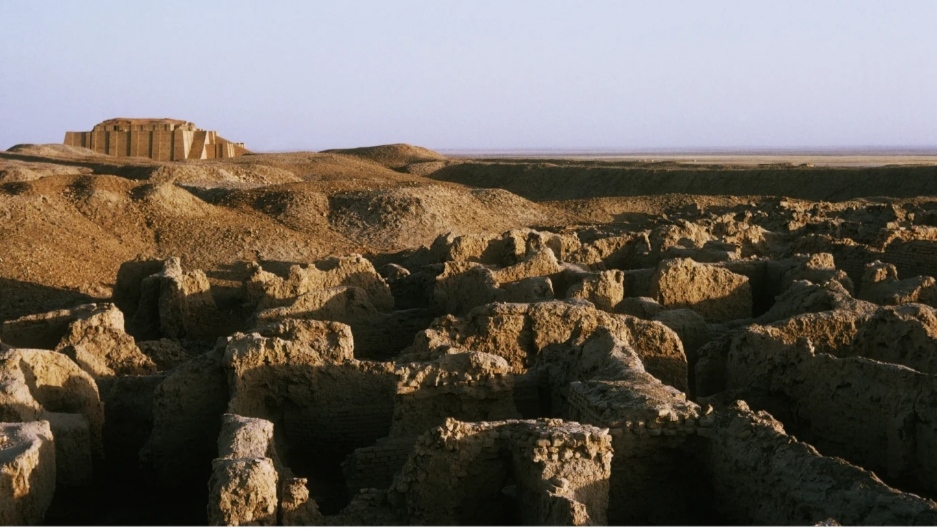
Architecture on a grand scale is generally credited to have begun under the Sumerians, with religious structures dating back to 3400 B.C., although it appears that the basics of the structures began in the Ubaid period as far back as 5200 B.C. and were improved upon through the centuries. Homes were made from mud bricks or bundled marsh reeds. The buildings are noted for their arched doorways and flat roofs.
Elaborate construction, such as terra cotta ornamentation with bronze accents, complicated mosaics, imposing brick columns and sophisticated mural paintings all reveal the society’s technical sophistication.
Sculpture was used mainly to adorn temples and offer some of the earliest examples of human artists seeking to achieve some form of naturalism in their figures. Facing a scarcity of stone, Sumerians made leaps in metal-casting for their sculpture work, though relief carving in stone was a popular art form.
Under the Akkadian dynasty, sculpture reached new heights, as evidenced by intricate and stylized work in diorite dated to 2100 B.C.
Ziggurats began to appear around 2200 B.C. These impressive pyramid-like, stepped temples, which were either square or rectangular, featured no inner chambers and stood about 170 feet high. Ziggurats often featured sloping sides and terraces with gardens. The Hanging Gardens of Babylon was one of these.
Palaces also reach a new level of grandiosity. In Mari around 1779 B.C., an ambitious 200-room palace was constructed.
Sumerian Science
Sumerians had a system of medicine that was based in magic and herbalism, but they were also familiar with processes of removing chemical parts from natural substances. They are considered to have had an advanced knowledge of anatomy, and surgical instruments have been found in archeological sites.
One of the Sumerians greatest advances was in the area of hydraulic engineering. Early in their history they created a system of ditches to control flooding, and were also the inventors of irrigation, harnessing the power of the Tigris and Euphrates for farming. Canals were consistently maintained from dynasty to dynasty.
Their skill at engineering and architecture both point to the sophistication of their understanding of math. The structure of modern time keeping, with sixty seconds in a minute and sixty minutes in an hour, is attributed to the Sumerians.
Sumerian Culture
Schools were common in Sumerian culture, marking the world’s first mass effort to pass along knowledge in order to keep a society running and building on itself.
Sumerians left behind scores of written records, but they are more renowned for their epic poetry, which influenced later works in Greece and Rome and sections of the Bible, most notably the story of the Great Flood, the Garden of Eden, and the Tower of Babel. The Sumerians were musically inclined and a Sumerian hymn, “Hurrian Hymn No. 6,” is considered the world’s oldest musically notated song.
Gilgamesh
The very first ruling body of Sumer that has historical verification is the First Dynasty of Kish. The earliest ruler mentioned is Etana of Kish, who, in a document from the time, is credited as having “stabilized all the lands.” One thousand years later, Etana would be memorialized in a poem that told of his adventures in heaven.
The most famous of the early Sumerian rulers is Gilgamesh, king of Uruk, who took control around 2700 B.C. and is still remembered for his fictional adventures in the Epic of Gilgamesh, the first epic poem in history and inspiration for later Roman and Greek myths and Biblical stories.
A devastating flood in the region was used as a pivotal point in the epic poem and later reused in the Old Testament story of Noah.
Sumerian Power Struggles
Somewhere around 2600 B.C., a power struggle erupted between the leaders of Kish, Erech and Ur, which set off a “musical-chairs” scenario of rulers for the region for the next 400 years.
The first conflict resulted in the kingdom of Awan seizing control and shifting the ruling body outside of Sumer until the kingship was returned to the Kish.
The Kish kept control briefly until the rise of Uruk King Enshakushanna, whose brief dynasty was followed by Adabian conqueror Lugalannemundu, who held power for 90 years and is said to have expanded his kingdom up to the Mediterranean. Lugalannemundu also conquered the Gutian people, who lived in the Eastern Iraqi mountains and who would later come to rule Sumer.
In 2500 B.C. the only woman to rule the Sumerians, Kubaba, took the throne. She is the only female listed on the Sumerian King List, which names all rulers of Sumer and their accomplishments. Kubaba’s son, Puzur-Suen, eventually reigned, bringing in the fourth dynasty of Kish, following a brief ascendency of Unzi, the first in the Akshak Dynasty.
This last Kish dynasty ruled for a century before Uruk king Lugal-zage-si ruled for 25 years before Sargon took control in 2234.
Sargon
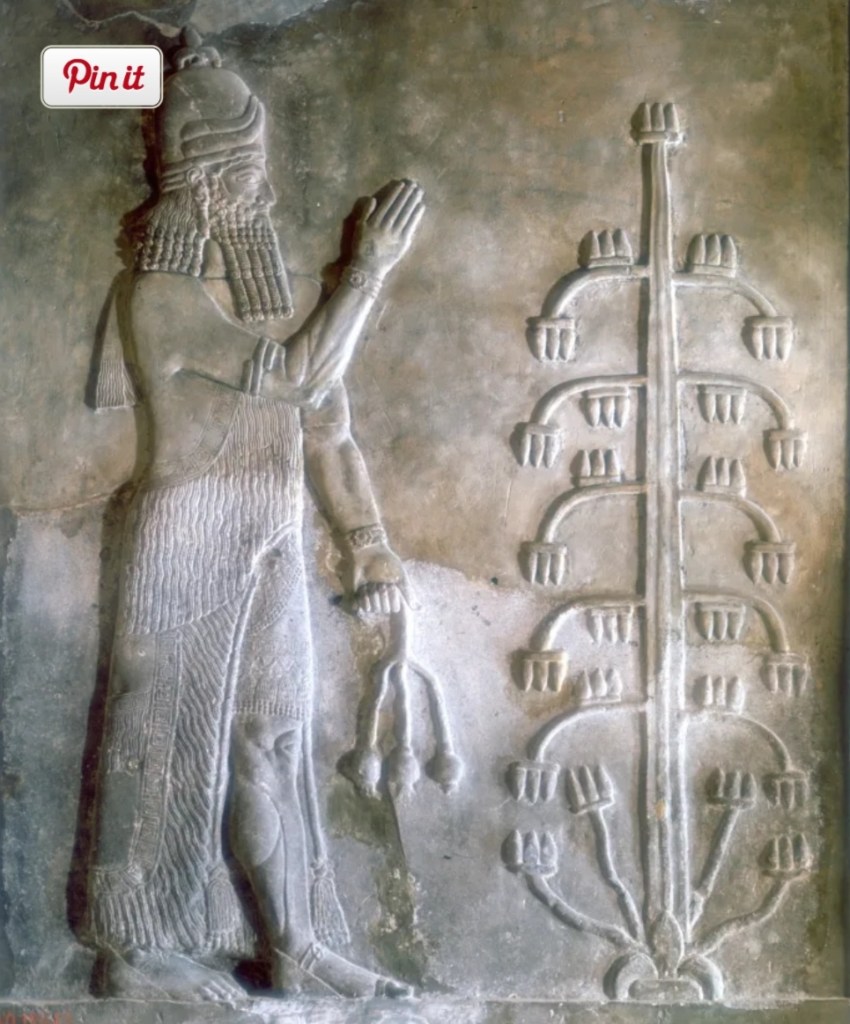
Sargon was an Akkadian whose past is shrouded in legends that some claim were ignited by Sargon himself. The claim is that he was the secret child of a high priestess who placed him in a basket and cast him off into a river, a story that was later utilized for Moses in the Old Testament.
Sumerian tradition says that Sargon was the son of a gardener who rose to the position of cupbearer for Ur-Zababa, king of Kish, which was not a servant position but a high official.
Ur-Zababa was defeated by the king of Uruk, who was, in turn, overtaken by Sargon. Sargon followed that victory by seizing the cities of Ur, Umma and Lagash, and establishing himself as ruler. His militaristic reign reached to the Persian Gulf.
Sargon built the city of Agade as his base, south of Kish, which became an important center in the ancient world and a prominent port. Agade was also home to Sargon’s army, which is considered the first organized standing army in history and the earliest to use chariots in warfare.
Sargon took control of the religious cultures of the Akkadians and the Sumerians, making his daughter Enhedu-anna the head priestess of the moon god cult of Ur. Enheduanna is best remembered for her transcriptions of temple hymns, which she also wrote and preserved in her writings.
Sargon ruled for 50 years, and after his death, his son Rimush faced widespread rebellion and was killed. Rimush’s brother Manishtushu met the same fate.
Sargon’s grandson, Naram-Sin, took the throne in 2292 B.C. Naram-Sin considered himself divine and was leveled with charges of sacrilege.
The Gutians invaded in 2193 B.C. following the reign of the last Akkadian king, Naram-Sin’s son Sharkalisharri. Their era is marked by decentralized chaos and neglect. It was during Gutian reign that the grand city of Agade decayed into wreckage and disappeared from history.
Ur-Nammu
The final gasp of Sumer leadership came in 2100 B.C. when Utuhegal, king of Ur, overthrew the Gutians. Utuhegal’s reign was brief, with Ur-Nammu, the former governor of Ur, taking the throne, starting a dynasty that would rule for about a century.
Ur-Nammu was known as a builder. Figurines from the time depict him carrying building materials. During his reign, he started massive projects to build walls around his capital city, to create more irrigation canals, construct new temples and rebuild old ones.
Ur-Nammu also did the considerable work of constructing an organized and complicated legal code that is considered the first in history. Its purpose was to ensure that everyone in the kingdom, no matter what city they lived in, received the same justice and punishments, rather than rely on the whims of individual governors.
Ur-Nammu also created an organized school system for state administrators. Called the Edubba, it kept an archive of clay tablets for learning.
What Happened to Sumer?
In 2004 B.C., the Elamites stormed Ur and took control. At the same time, Amorites had begun overtaking the Sumerian population.
The ruling Elamites were eventually absorbed into Amorite culture, becoming the Babylonians and marking the end of the Sumerians as a distinct body from the rest of Mesopotamia.
Reading has always been my favorite hobby since I was introduced to the magical universe of books. I love reading books as it improves our vocabulary as well as enhances our creative mind. It gives me a sense of peace and satisfaction in quenching my thirst for knowledge. It helps to know the world around you better. It is an excellent method to mitigate your pressure, much the same as a natural therapy. I love the power of books to explore our past, present, and future. Books are immortal and I can’t envision a world without books.
I was an ardent reader during my school days. But during my college days, I got busy with my college life schedule. So, I wasn’t able to focus much on reading. Apart from that, my procrastination also occupied a great role. But this lockdown has cleared me an approach to return to my old reading days and I am so happy with that. There are many tips to help cultivate your reading habit. You can always carry a book to wherever you go, by reading at least 10-15 pages per day or read books that excite you. However, there’s more you can do. The habit of reading cannot be compelled to anybody. You ought to consistently allow yourself to stop on the off chance that you are losing interest. Before you want to start reading, ask yourself why? The answer may vary according to the personal interest of a person.
During the lockdown, I had pretty much free time. So, I thought of reading a book titled ‘Ikigai; The Japanese secret to a long and happy life’ by Albert Liebermann & Hector Garcia. It is a life-changing book. I cherished the book deeply. I completed the book in one go. One thing that I loved about this lockdown was getting on track with my reading habit. Before lockdown, I just read fiction books. But now I read many genres like non-fiction, self-help, crime & thriller, etc. Though it was a slow process, I loved every bit of being on track again. Also, I am a quote lover person.
Some of my favourite quotes from books are:
“You will never be able to escape from your heart. So it’s better to listen to what it has to say. That way, you’ll never have to fear an unanticipated blow.” – The Alchemist by Paulo Coelho
“Confidence doesn’t mean that everything will go our way. It simply gives us the ability to accept failures that we will inevitably meet on our path and move forward with hope.” – Three Thousand Stitches by Sudha Murthy
“if you have not made somebody’s day happier, if you’ve not appreciated something good that has happened to you and if you have not felt thankful to be alive, then you have wasted that day of your life on earth!” – Life Is What You Make It by Preethi Shenoy
“All animals are equal, but some animals are more equal than others.” – Animal Farm by George Orwell
“The words that come out of our mouths do not vanish but are perpetually stored in infinite space, and they will come back to us in due time.” – Fourty Rules Of Love by Elif Shafaf
Earlier, I felt really bad staring at large piles of unread books on my book-shelf. Reading a book after many years was a herculean task for me as I couldn’t concentrate much. However, it was worth it. Reading books is a good quality that a person can possess. They are truly your companion because you can rely upon them, regardless of what your state of mind is.
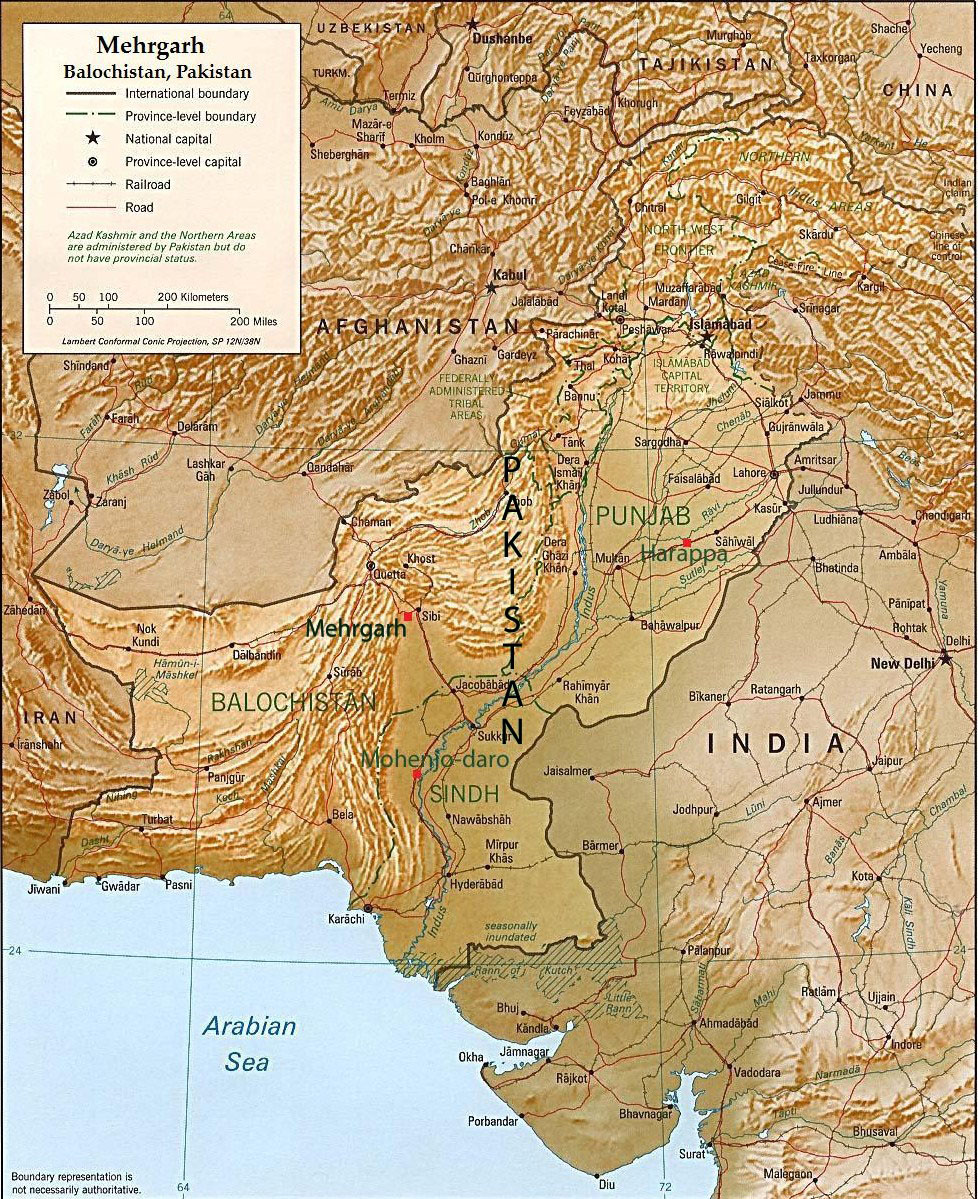
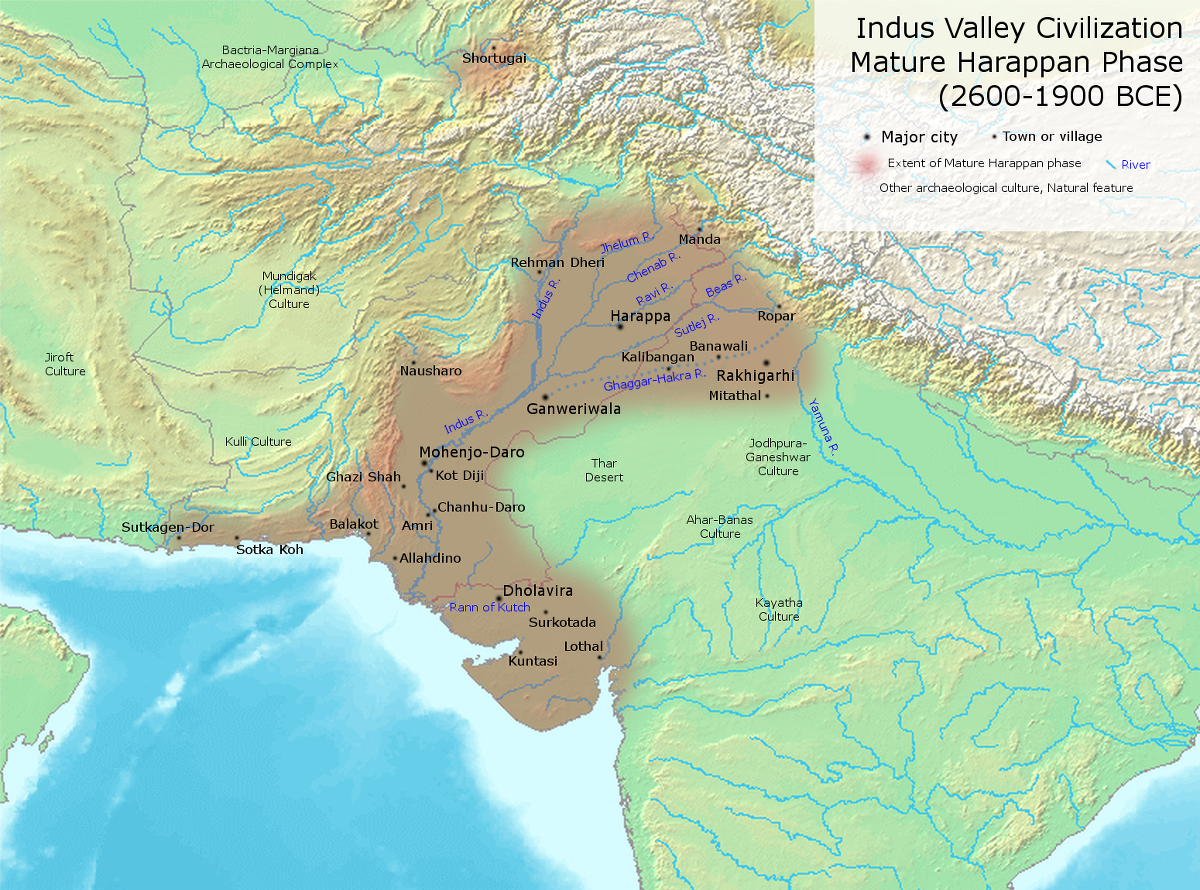
The Indus Valley Civilization existed through its early years of 3300-1300 BCE, and its mature period of 2600-1900 BCE. The area of this civilization extended along the Indus River from what today is northeast Afghanistan, into Pakistan and northwest India. The Indus Civilization was the most widespread of the three early civilizations of the ancient world, along with Ancient Egypt and Mesopotamia. Harappa and Mohenjo-daro were thought to be the two great cities of the Indus Valley Civilization, emerging around 2600 BCE along the Indus River Valley in the Sindh and Punjab provinces of Pakistan. Their discovery and excavation in the 19th and 20th centuries provided important archaeological data about ancient cultures.
Overview
The Indus River Valley Civilization, 3300-1300 BCE, also known as the Harappan Civilization, extended from modern-day northeast Afghanistan to Pakistan and northwest India.
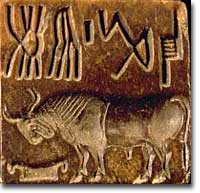
Important innovations of this civilization include standardized weights and measures, seal carving, and metallurgy with copper, bronze, lead, and tin.
Little is understood about the Indus script, and as a result, little is known about the Indus River Valley Civilization’s institutions and systems of governance.
The civilization likely ended due to climate change and migration.
Indus Valley Civilization:
The Indus Valley Civilization was one of the three “Ancient East” societies that are considered to be the cradles of civilization of the old world of man, and are among the most widespread; the other two “Ancient East” societies are Mesopotamia and Pharonic Egypt. The lifespan of the Indus Valley Civilization is often separated into three phases: Early Harappan Phase (3300-2600 BCE), Mature Harappan Phase (2600-1900 BCE) and Late Harappan Phase (1900-1300 BCE).
At its peak, the Indus Valley Civilization may had a population of over five million people. It is considered a Bronze Age society, and inhabitants of the ancient Indus River Valley developed new techniques in metallurgy—the science of working with copper, bronze, lead, and tin. They also performed intricate handicraft, especially using products made of the semi-precious gemstone Carnelian, as well as seal carving— the cutting of patterns into the bottom face of a seal used for stamping. The Indus cities are noted for their urban planning, baked brick houses, elaborate drainage systems, water supply systems, and clusters of large, non-residential buildings.
The Indus Valley Civilization is also known as the Harappan Civilization, after Harappa, the first of its sites to be excavated in the 1920s, in what was then the Punjab province of British India and is now in Pakistan. The discoveries of Harappa, and the site of its fellow Indus city Mohenjo-daro, were the culmination of work beginning in 1861 with the founding of the Archaeological Survey of India in the British Raj, the common name for British imperial rule over the Indian subcontinent from 1858 through 1947.
The Twin Cities :
The ruins of two ancient cities, Harappa and Mohenjo-Daro (both in modern-day Pakistan), and the remnants of many other settlements, have revealed great clues to this mystery. Harappa was, in fact, such a rich discovery that the Indus Valley Civilization is also called the Harappan civilization.
Harappa was a fortified city in modern-day Pakistan that is believed to have been home to as many as 23,500 residents living in sculpted houses with flat roofs made of red sand and clay. The city spread over 150 hectares (370 acres) and had fortified administrative and religious centers of the same type used in Mohenjo-daro. The modern village of Harappa, used as a railway station during the Raj, is six kilometers (3.7 miles) from the ancient city site, which suffered heavy damage during the British period of rule.
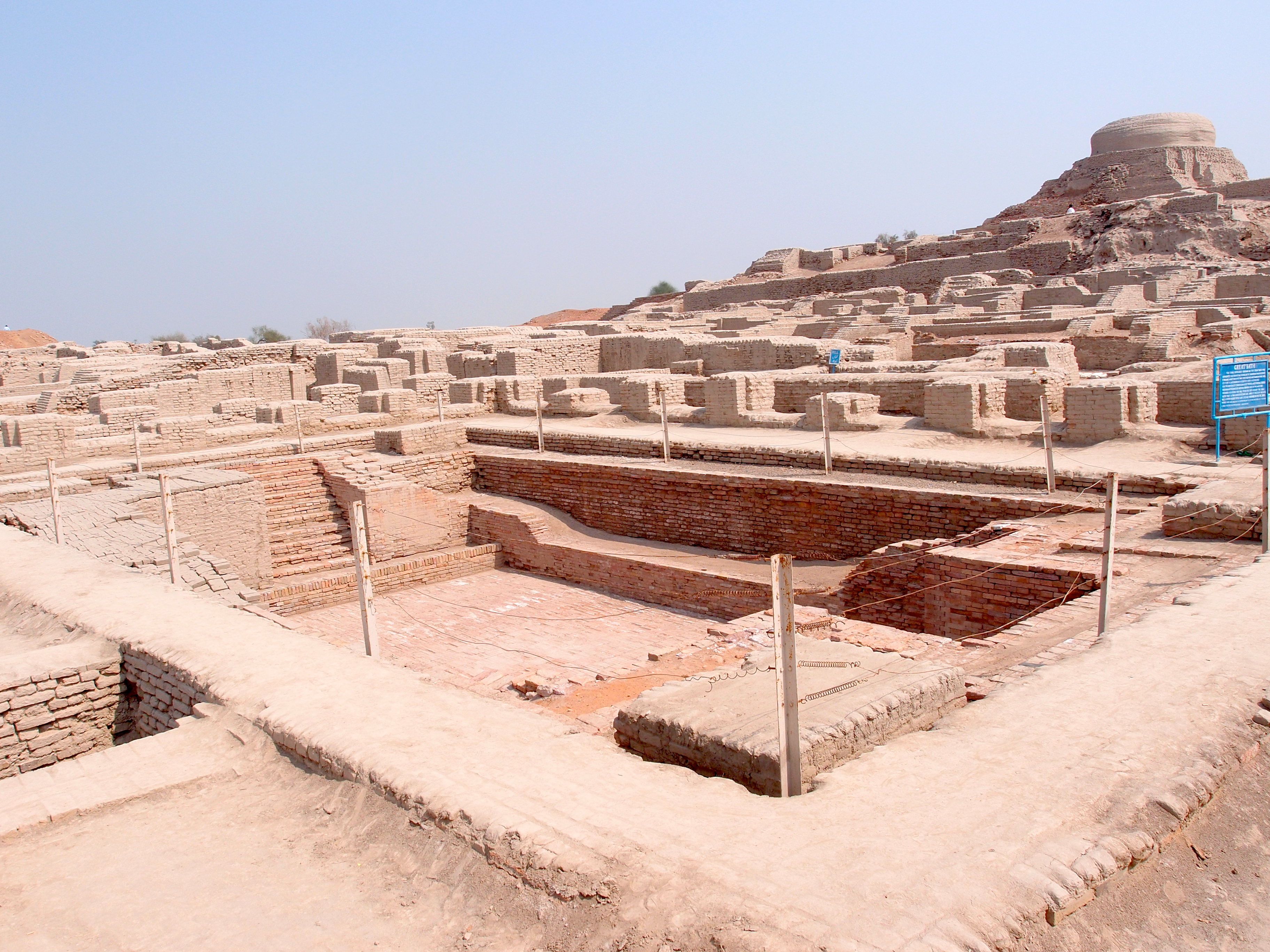
Mohenjo-daro is thought to have been built in the 26th century BCE and became not only the largest city of the Indus Valley Civilization but one of the world’s earliest, major urban centers. Located west of the Indus River in the Larkana District, Mohenjo-daro was one of the most sophisticated cities of the period, with sophisticated engineering and urban planning. Cock-fighting was thought to have religious and ritual significance, with domesticated chickens bred for religion rather than food (although the city may have been a point of origin for the worldwide domestication of chickens). Mohenjo-daro was abandoned around 1900 BCE when the Indus Civilization went into sudden decline.
The ruins of Harappa were first described in 1842 by Charles Masson in his book, Narrative of Various Journeys in Balochistan, Afghanistan. In 1856, British engineers John and William Brunton were laying the East Indian Railway Company line connecting the cities of Karachi and Lahore, when their crew discovered hard, well-burnt bricks in the area and used them for ballast for the railroad track, unwittingly dismantling the ruins of the ancient city of Brahminabad.
Geography and time-frame :
In 1856, British colonial officials in India were busy monitoring the construction of a railway connecting the cities of Lahore and Karachi in modern-day Pakistan along the Indus River valley.As they continued to work, some of the laborers discovered many fire-baked bricks lodged in the dry terrain. There were hundreds of thousands of fairly uniform bricks, which seemed to be quite old. Nonetheless, the workers used some of them to construct the road bed, unaware that they were using ancient artifacts. They soon found among the bricks stone artifacts made of soapstone, featuring intricate artistic markings.Though they did not know it then, and though the first major excavations did not take place until the 1920s, these railway workers had happened upon the remnants of the Indus Valley Civilization, also known as the Harappan Civilization, after Harappa, the first of its sites to be excavated, in what was then the Punjab province of British India and is now in Pakistan. Initially, many archaeologists thought they had found ruins of the ancient Maurya Empire, a large empire which dominated ancient India between c. 322 and 185 BCE.Before the excavation of these Harappan cities, scholars thought that Indian civilization had begun in the Ganges valley as Aryan immigrants from Persia and central Asia populated the region around 1250 BCE. The discovery of ancient Harappan cities unsettled that conception and moved the timeline back another 1500 years,situating the Indus Valley Civilization in an entirely different environmental context.
There is evidence of settlement in this area as early as 7000 BCE.The Indus Valley Civilization is often separated into three phases: the Early Harappan Phase from 3300 to 2600 BCE, the Mature Harappan Phase from 2600 to 1900 BCE, and the Late Harappan Phase from 1900 to 1300 BCE.
The Indus cities are noted for their urban planning, a technical and political process concerned with the use of land and design of the urban environment. They are also noted for their baked brick houses, elaborate drainage systems, water supply systems, and clusters of large, nonresidential buildings.The Indus Valley Civilization began to decline around 1800 BCE.
Urban infrastructure and architecture:
By 2600 BCE, small Early Harappan communities had developed into large urban centers. These cities include Harappa, Ganeriwala, and Mohenjo-daro in modern-day Pakistan and Dholavira, Kalibangan, Rakhigarhi, Rupar, and Lothal in modern-day India. In total, more than 1,052 cities and settlements have been found, mainly in the general region of the Indus River and its tributaries.Mohenjo-daro is thought to have been built in the twenty-sixth century BCE; it became not only the largest city of the Indus Valley Civilization but one of the world’s earliest major urban centers. Located west of the Indus River in the Larkana District, Mohenjo-daro was one of the most sophisticated cities of the period, with advanced engineering and urban planning.
Harappa was a fortified city in modern-day Pakistan that is believed to have been home to as many as 23,500 residents living in sculpted houses with flat roofs made of red sand and clay. The city spread over 150 hectares—370 acres—and had fortified administrative and religious centers of the same type used in Mohenjo-daro.Both cities had similar organization and featured citadels, central areas in a city that were heavily fortified—protected with defensive military structures.The remains of the Indus Valley Civilization cities indicate remarkable organization; there were well-ordered wastewater drainage and trash collection systems and possibly even public baths and granaries, which are storehouses for grain.Harappans demonstrated advanced architecture with dockyards, granaries, warehouses, brick platforms, and protective walls. These massive walls likely protected the Harappans from floods and may have deterred military conflicts.
Indus Valley Cities:
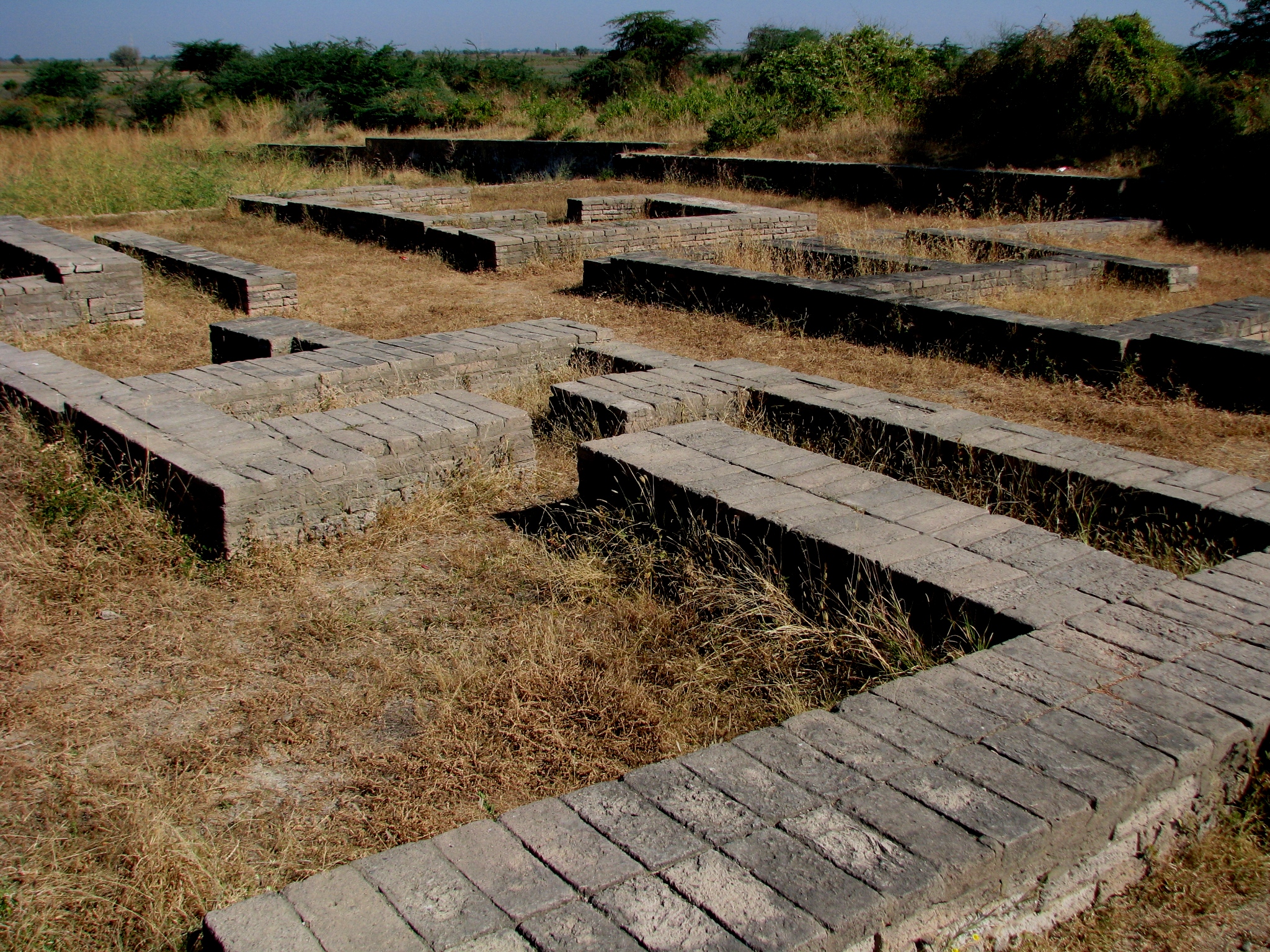
The cities of the ancient Indus Valley consisted of highly functional, multistory buildings and structures constructed with uniform, kiln-burnt bricks. There is evidence of urban planning due to the uniformity of size and the style of the brickwork, as well as the organization of streets and neighborhoods into grid patterns, much like many current cities.
The first-known sanitation system, whereby waste-water was directed into covered drains that lined major streets and where clean water was obtained from wells in a designated room in the home, was employed in the ancient Indus Valley. This system of sewage and drainage is quite remarkable and was more advanced than some seen even today.
The Indus Valley Civilization is also known for developing a unified system of weight and measurement, as well as a decimal system and the first known use of negative numbers. In 2001, it was discovered that people from the early Harappan period had knowledge of proto-dentistry with the excavation of the first evidence of drilled human teeth.
Art in the Indus Valley :
The Indus Valley period is well documented through the wealth of artifacts that were excavated from its magnificent cities. It is widely believed that most of the inhabitants of Indus Valley cities were tradespeople and artisans. Archaeologists have excavated sculptures, seals, pottery, gold jewelry, elaborate beadwork, and anatomically detailed figurines in terracotta , ceramic, bronze, lead, tin, and steatite from the ancient Indus Valley area.
A number of bronze, gold, stone, and terracotta figures of girls in dance poses reveal the presence of some dance forms from the time, and a harp-like instrument depicted on a seal indicates the use of stringed musical instruments.
Similarities in the iconography and construction of excavated artifacts suggest the considerable mobility and trade networks of the Indus Valley inhabitants. Raw materials found only in distant regions, such as lapis lazuli and steatite, were imported for artistic use. It is believed that the trade networks of the Indus Valley reached as far as Afghanistan, coastal Persia, northern and western India, Mesopotamia , and Egypt.
The Fall of Harappan Culture:
The remains of their walls yield clues about the culture that thrived in the Indus Valley. Clay figurines of goddesses are proof that religion was important. Toys and games show that even in 3000 B.C.E., kids — and maybe even adults — liked to play. Pottery, textiles, and beads are evidence of skilled craftsmanship and thriving trade
It was this intensive devotion to craftsmanship and trade that allowed the Harappan culture to spread widely and prosper greatly. Each time goods were traded or neighbors entered the gates of the cities to barter, Indus culture was spread.Eventually, though, around 1900 B.C.E, this prosperity came to an end. The integrated cultural network collapsed, and the civilization became fragmented into smaller regional cultures. Trade, writing, and seals all but disappeared from the area.
Many believe that the decline of the Harappan civilization was a result of Aryan invasions from the north. This theory seems logical because the Aryans came to power in the Ganges Valley shortly after the Indus demise of the Indus Valley Civilization. Because there is little evidence of any type of invasion though, numerous historians claim that it was an environmental disaster that led to the civilization’s demise. They argue that changing river patterns disrupted the farming and trading systems and eventually led to irreparable flooding.
Although the intricate details of the early Indus Valley culture might never be fully known, many pieces of the ancient puzzle have been discovered. The remains of the Indus Valley cities continue to be unearthed and interpreted today. With each new artifact, the history of early Indian civilization is strengthened and the legacy of this ingenious and diverse metropolis is made richer.





















 Eduindex
You must be logged in to post a comment.