EduPub (Edupedia Publications Pvt Ltd) is a company dedicated to the development of the education, learning, research and innovation in the field of the research and books publication. We are pioneer in providing wide range of services to educational institutions, government agencies, individuals and corporates in the field of training and education, research and development, research and innovation. research and publication.
” Time and tide wait for none”. No matter how many times we hear or see this clichéd quote, not all of us actually understand the essence of these words. Time management is an essential skill for aspirants of all kinds. In this fast-evolving world, one must keep up par with others to achieve their goal. The fact that smart work is better than hard work is of the essence. Productivity is smart work. One such method to maintain productivity in our daily life is the Pomodoro technique.
Pomodoro technique is a time management method where a timer is used to break down the work at hand into intervals, separated by short breaks. This method was developed by Francesco Cirillo in the late 1980s. Each interval is called a ‘Pomodoro’ the Italian word for tomato, the tomato-shaped kitchen timer that Cirillo used as a college student.
The original technique has 6 steps
1. Choose a task you would like to get done
No matter how small or big the task is, it deserves your full undivided attention.
2. Set the timer for 25 minutes
Keep a promise to yourself that you don’t interrupt yourself for just 25 minutes. You can use your mobile timer or a good old clock for timing your session.
3. Work on the task until the timer rings
Immerse yourself. Meanwhile, if you remember anything other than the work at hand, write it down on a sheet of paper. You can give them thought later.
4. When the timer rings, tick off your completed task
Hurray! You have given your undivided attention to the task for 25 minutes.
5. Take a short break
Take a deep breath, meditate, grab a cup of your favourite beverage go for a stroll or do something that is relaxing for your brain to reward yourself.
6. After every 4 Pomodoros take a longer break
A break of 20 to 30 minutes is good enough to rest, preview the information and prepare yourself for the next set of Pomodoros.
To make the best out of these Pomodoro sessions you can:
Use the first few minutes of the session to review what you have done earlier.
Set up a timetable and try to be devoted to it.
You can use airplane mode or do not disturb mode on your mobile. (Apply only if you are not accountable for not picking up calls 🙂
Be mindful of the shorter breaks. They might prolong at times, thus unsettling your next Pomodoro cycle.
Understand your body — find out which part of the day you are most productive. This can work wonders and get a lot of things done.
The rules of the Pomodoro technique are not necessarily rigid. If you are not able to pull up 4 Pomodoros continuously, opt for one or two Pomodoros in a day. At the end of the day, what matters the most is how much productive and focus you are in those sessions and how much work gets done. You can also vary the time interval as 50/10 (50 minutes of focus and 10 minutes of break) instead of the traditional 25/5 technique if you are quite confident about your focus.
This technique is useful if you feel distracted or overwhelmed to focus on what matters to you. It has worked well for me in this lockdown and has helped a lot in my exam preparations. Hope it works for you too!
Do you want to become an avid reader? But you don’t seem to find the zeal to sit and start a book? Or do you not like to read at all? Well, maybe it’s because you have been submerging through the wrong bookshelves, and are yet to find the right direction to your world of imagination, adventure and learning.
At a young age, we hear and read many short stories, comics or fairy tales from our elders. Those books are filled with colorful illustrations, beautiful fonts and simple language to attract us and give shape to our imagination. But as we grow up the books become more black and white with tough vocabulary and equal to no pictures. Along with a wider choice to look from. Due to this and the lack of encouragement from our surroundings, we tend to give up on our reading habits and conclude it to be boring eventually.
But isn’t that the very reason why the books become so? So that as we grow up, we fill our own colors, illustrations, and meaning to the words written by the authors in our minds; develop our power of imagination, expand our dictionary and deepen our journey between the lines. And soon become a sailor to the treasure of words, in an island of books brimming with adventure and experiences. The best part being, there is absolutely no age restriction to pick up a book and give some exercise to your brain. You can be 45 and still love to read rom-com or learn a new language!! The books aren’t judging you after all.
So, before you buy a book, it is necessary to find the ‘right book’ for you and this requires some research to be done to make a smart and worthy purchase. To begin with, know your purpose to buy a particular book because this helps you to be motivated throughout the reading. For instance, if you have a role model in life you can opt for their biography or autobiography, or if you want to polish any of your skills you can go for self-help books. Likewise, there are many other genres, such as – action and adventure, romance, classics, comic books, detective and mystery, fantasy, historical fiction, etc. The next step is to keep in mind your budget. These days, much to our advantage, we can find books both online (e-books) or offline, new or used, paid or free on various apps and bookstores. Google it! You can even borrow books from a local or school library just in case you don’t want to spend money on your first purchase. Furthermore, it is always recommended to check for book reviews and summaries online or through friends, to avoid impulsive buying just by finding the cover page attractive. Once you have brought down the list to a minimum number by following the above steps, you are ready to make the final purchase with confidence! In the end, make sure that when you sit down to read, have a pencil/pen/highlighter to mark your favorite quotes or lines or unfamiliar words, even a diary to note them down and remember in the long run. Do not forget to have a beverage on the side!
Stick to these tips and no one is stopping you from being an avid reader and to live a thousand lives. Learn from other’s experiences. Find yourself and your peace of mind. And become a better person with every book you close with a little heavy heart but many more beautiful memories swirling in your mind.
The home were the new end and the new beginning starts. Those known faces gonna fade away and the new ones gonna blossom.
Think of the very first day your family leaving you in that situation, it is the foot prints that are drawn with the sharpen nail on your cardiac heart and that may be the inner scars that will never fade away for those left.
They said the room is air conditioned, with the good foods and snacks and with other stuffs. They also gave them someone who gonna take care that alone souls. Everything was fine but the orphan souls don’t have the ability to accept these painful lists. The silent is the hiking king here.
Though the visitors are welcome, but their sobbing eyes and the kind face towards them was both healing and killing them a side as they visit.
The four walls with the spinning fan always used to remember them of their blissful spinning year’s out the orphanage home.
And of course they got the new friends, who have experienced the same feeling’s at different clips at their own spinning time’s.
Most of their final wish was to set their soul rest with the setting sun, but sun never thought of taking them these evening’s. The nature is the master here to have them or not.
The counting day’s are the only hobby of the unknown orphan there. It say’s at times the orphan disease is ok but being orphan is worst, even the disease have the drug but not them.
Seeing the funding agencies, NGO’s, government funding and of course the common human’s help towards these places makes the humanity to live. The every drop fall’s from the eye and the every curve the mouth makes say’s the words that sound could not.
Every orphanage home is the place were the innocent soul lives and every blessed child’s live, it is not just a place but the home were the unknow makes the new family and friends.
Differentiation is easy to deal with the following rules. It is considered to be easier than solving integrals. Most of the integrals can be evaluated using an antiderivative calculator while derivatives have some rules that students should grasp on priority.
These rules should be applied to according to the equation or underlying problem. We will explain the basic rules for students so that they can solve derivative problems like a pro.
1.Power Rule
The power rule is applied to polynomial functions. The formula is:
The example of f(x2) we solved to learn derivatives is a perfect representation of the power rule. But for more understanding, see another example:
Example:
Derivative of x6. Solve this using limits as well as power rules.
Solution:
Solving using limits.
Step 1: Add delta x i.e and expand the equation.
= (x + )6
f(x + )6 = (x6 + 6x5 + … + 6)
Step 2: Apply the formula of the slope.
=
=
= … cancelling x6
=
= 6x5 + 15x4x + … +x5
Step 3: Apply limit.
f’(x6) =6x5 + 15x4x + … +x5
= 6x5
Solving using power rule.
Step 1: Write the function.
f(x) = x6
Step 2: Identify the components and apply the power rule.
As yn = nyn-1, (we formed the formula with y to remove any confusion.)
Here, y = x
n = 6
Applying the rule;
f’(x6) = (6)x6-1 = 6x5
The results of both methods are the same. This proves that the power rule is true for any n.
2.Sum & Difference Rule
Two functions in addition or difference are also eligible for a differentiation rule. The rules applied in such situations are;
f + g = f +g
f – g = f –g
Find f’(x) for 2x + 3x2.
Solution:
Step 1: Apply derivative.
= ( 2x + 3x2)
Step 2: Apply the rule.
= 2x + 3x2
= 2.1x1-1 + 3.2x2-1 applying the power rule.
= 2 + 6x
3.Product Rule
When the derivative of two functions in multiplications is computed, we then use the product rule. An example of such a function will be 4x4(3x + 9).
The formula of product rule is:
f(x)g(x)= fg + gf
What is the derivative of 4x4(3x + 9)?
Solution:
Step 1: Apply derivative.
=4x4(3x + 9)
According to the product rule.
=4x4(3x + 9) + (3x + 9) 4x4
Step 2: Solve for (3x + 9).
=(3x + 9)
Apply sum rule.
=3x + 9
= 3 + 0 … (power rule for 3x and constant rule for 9)
= 3
Step 3:Solve for 4x4.
Using power rule;
= 4.{(4)x4-1}
= 4.4x3
= 16x3
Step 4:Put the values and simplify.
= 4x4.3 + (3x +9)16x3
= 12x4 + 48x4 + 144x3
= 60x4 + 144x3
= x3(60x + 144)
4.Constant Rule
It is probably the simplest derivative rule. When we don’t have a variable in a function e.g y=4, then the derivative is 0.
f’(c) = 0
Where c is a constant number. This rule makes sense if you try to visualize it.
Since x = 0, hence there is no slope. And the graph is a straight vertical line. But let’s see this with the help of differentiation.
Example:
What is the derivative of f(x) = 5.
Solution:
Step 1: Add delta x.
f(x + ) = 3 + = 3
Step 2: Apply formula.
=
=
= 0/ = 0
5.Quotient Rule
We have a formula for product but do we have a formula for division? Yes! And It is called the quotient rule. It is mainly derived from product rule for differentiation.
=
A quotient equation looks something like this: . To find its derivative, it is divided into two parts; . You can see that actually, we have to perform the product rule.
= f(x) + f
All we need to do is to find the derivative of 1/g(x). Following all the familiar process of applying formula and limit, we will get:
Note that is the with a negative sign.
Or it can be written as:
Now on putting this value in the product formula we discussed above:
= +
Taking LCM.
=
=
This is the quotient rule.
Find the derivative of (x – 3)/(x3 + x).
Solution:
Directly apply the quotient rule.
Step 1: Find the derivative of (x-3).
=(x-3)
= 1
Step 2: Find derivative of (x3-x)
=(x3-x)
Using the rules discussed above;
= 3x2 – 1
Step 3: Use these in the main equation.
After simplifying;
6.Chain rule
Last but not the least, we have the chain rule. It states that:
or f(g(x)) = f’{g(x)}g’(x)
This is for simplicity’s sake. When a function has many mathematical operations, it is better to convert it in terms of two functions e.g, we have a function:
f(x)= (X2 + 6)4
Let g =X2 + 6, then
f(g) = (g)4 where g =X2 + 6
f(g(x)) = (X2 + 6)4
To find its derivative, you first find the difference of f with respect to g and then g’(x). After that, multiply.
Solve (X2 + 6)4
Solution:
Let g(x) = x2 + 6
And f(g) = g4
So the derivative of f(g(x)) = f(g(x)) =f’(g(x)).g’(x).
Applying the chain rule.
Step 1: Find the derivative of g(x).
= x2 + 6 … using power rule for x2 and constant rule for 6
= 2x
Step 2: Find the derivative of f(g).
= g4
= 4g3
Step 3: Putting in the formula and multiplying.
= 4(x2+6)3. 2x
= 8x.(x2+6)3
Wrapping up
<
p class=”MsoNormal” style=”line-height: 22px”>All of the above listed rules of derivatives are most common rules that students have to deal with during their academic course. You should practice these rules to avoid any step backs during your exams. You should also try differentiation calculator after practicing these rules. This tool will help you out in solving derivatives while performing differentiation.
Robert Kiyosaki, in his book Rich Dad, Poor Dad, has significantly changed the way people think about money. This book teaches that you do not need to have a high income to become rich. Ironic? So let’s dive into the ocean of thoughts the author shares through this book.
The author, initially, narrates a story of his childhood where he and his friend Mike aspire to earn money and end up meeting Mike’s dad who offers them a job as laborers. Apparently, they are too small to fit in the job, besides, the labor laws too did not permit minors to work as laborers. Despite, Mike’s dad makes them work very hard and pays relatively less remuneration. The world would’ve definitely called this as exploitation. But the boys kept working day after day, week after week. One day, the author’s father, who is a government official, comes to know about this. It was obvious that he would get furious. He suggested the author to quit ASAP and also went to the height of saying that the man should be criminally charged for child labor.
Later the author goes to his employer (Mike’s dad) and was about to file his informal, oral resignation. But Mike’s dad said something. Explained something. Taught something. That moment was trailblazing and revolutionary for him. Those words proved to be life-changing. Those preaching made the author as well as his friend Mike very rich. I would suggest you to read the book to end your curiosity of knowing as what was it that the man told these boys.
On becoming rich, the author shares, with us, the key aspects of making, sustaining, and making more money. The author has presented a rather unconventional idea that your house might not be an asset. On the contrary, for most people, their house is an asset. But the author says that anything that drains money out of your pocket is a liability. And anything that makes money to get into your pocket is an asset. Many people find loans as the best option for buying a house. Hence, every month a large part of your saving is paid out as EMI. Besides, the bank charges hefty interest as well. Then how is your house an asset?
The author materially emphasizes and criticizes the habit of spending your own money extravagantly on frivolous desires. The author doesn’t say that do not buy luxury. But he, instead, suggests that do not buy them on your salary. According to him, ‘you should not work hard for the money but money should work hard for you.’ Your salary and other incomes should be invested somewhere so that your investments make more for you. And only this extra money should be spent on buying whatever you wish.
Further, the author talks about the need of working for yourself. Many people hunt jobs, work there and think that they are working in order to make themselves rich. This is an illusion. When you work at a job, you work for the owner of the company. You work hard day and night to make him rich. Secondly, you work for the government. The rich also pay taxes, but they have numerous ways of escaping from taxes. But in the case of a job-going person, tax is already cut from the salary even before it reaches his hand. Thirdly, a person doing a job works to make the banks rich. Every luxury you buy, mostly can’t be afforded out of your savings. So you choose to take loans. A loan for a car, a loan for a house, etc. The banks enjoy sitting and watching you working hard and making them rich by paying heavy interest. A solution to this is mentioned in detail, in the book. The author, further quotes the need to become a ‘jack of all trades’. Having said that, you need not be excellent at everything but you should definitely know a lot in many fields. This will make you self-reliant and capable of taking better decisions in your business or any other venture.
This is an amazing book and I would highly suggest you read his one to get insights into healthy money habits and start your journey to becoming a rich person.
Absurd theatre came about as a reaction to world II. It took the basis of existential philosophy and combine it with dramatic element to create a style of theatre which presented a world which cannot be logically explained.
The absurdist play was initially created because critics and reviews were used to be more conventional: realism in practice. the absurd play departs from the realistic characteristic situation and all of the associated theatrical conventions. Time, place, and identity are ambiguous and fluid and even basic causality frequently breaks down. Meaningless plots repetitive or nonsensical dialogues and dramatic non-sequence are often used to create dreamlike or even nightmare life moods. There is a fine line, however between the careful and artful use of chaos and non-realistic elements and true, meaningless chaos. while many of the places described by this seem to be quite random and meaningless.
The character in the absurdist play is lost and floating in an incomprehensible universe and they abandon rational devices and discursive thought because these approaches are inadequate. Many characters appear as automatons stuck in runtime speaking only in cliche. Characters are frequently stereotypical, archetypal, or flat characters. In an absurd play, characters may also face the chaos of a world that science and logic have abandoned.
The plot of many plays features the character in interdependent pairs, commonly either two males or a male and a female. The two characters may be roughly equal or have a begrudging interdependence. One character may be dominant and may torture the passive character.
Language plays the most important role. Despite its reputation for nonsense language, much of the dialogue in the absurdist play is naturalistic. The movements when character restores their senses, when words appear to have lost their denotative function, thus creating misunderstanding among the characters. In other cases, the dialogue purposefully elliptical; The language of absurdist theatre becomes secondary to the poetry of the concrete and objectified image of the stage.
Every couple experiences this phase. In this stage, you only focus on the good things and similarities between each other. You spend a lot of time together and imagine that you both are made for each other. You avoid fights, and it seems that fights will never happen.
You start finding flaws in your partner. It doesn’t mean that you don’t love your partner, but things are not as beautiful as initially. You start fighting and doubting if you are really in love. The spark in the relationship seems declining.
You start getting angry because of little things. You know that fights can ruin your relationship, but at the end of the day, you fight anyway. And in this higher stage of a relationship, you think of stupidity like breaking up and leaving each other by blaming each other for no reason.
You know you both are totally different persons, you both have other qualities and flaws, but you both accept each other. You realize that things can’t be run in a fantasy world for a lifetime there comes a time when you have to act with maturity.
With time you get to know each other completely. Your involvement in each other ripes up and brings a thought in your heart that you only need that particular person in your life. You fall in love with that person forever. And this is the most natural and honest thing in any relationship.
India, being a growing nation is drastically effected by the pandemic. Not a single area is left untouched by its effect.
Starting from the most affected area which is the tourism sector. With the government imposing complete lockdown in the initial days of pandemic tourism industry almost collapsed. Small business owner were helpless. For all of us this was the first time experience of such a situation we only have read in the history textbooks about the world wars but hardly anyone knows how to face them we were such naïve. Talking about the tourism sector, everyone was very terrified of the pandemic so majority people just shut themselves into their cozy houses till everything was over but not every one have that big a house or the resources to stay home they were the daily wage workers who gets money only when they travel. So they were helpless many people have changed their professions they moved to their respective home town to work in the farms seeing no scope of employment the city.
Other area that was affected was the educational as their was a severe change in the method of teaching from traditional classroom teaching to completely online. It has effected the students mental health very badly.
The entrainment industry is also effected by the pandemic with the crew members starving to earn money as the industry was completely shut down.
Hope,we will learn from this and will save our planet from any such happening in near future.
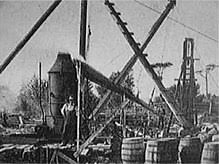
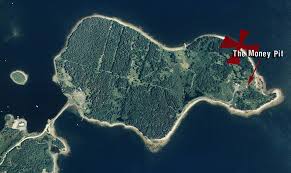
Oak Island located on the south shore of Nova Scotia, Canada has been an attraction for treasure Hunters since the late 1700s. It was rumoured that Captain Kidds treasure has been buried in the Oak Island.With a little evidence found in the early excavation peoples started to publish stories and documents in 1856. The original Searchers spot on the island which attracts the Treasure Hunters called ‘The Money pit’
Money pit
Theories about the artefact that are present on the island range from pirate treasure to Shakespearean manuscripts, to possibly the Holy Grail or the Ark of the Covenant, with the Grail and the Ark.The items found on the surface have been carbon dated and found to be hundreds of years old. However, no item such as treasure has been found in the excavation. ‘The curse’ said that 7 men will die in the search of the treasure and after their death the treasure will be found.Six men have died till now.
More than 50 books have been written on the hidden treasure but no confirmed treasure has been found still. A television series ‘Curse of the Oak Island ‘ is based on the treasure search .Humans are still in search of the treasure of the oak island.
Disappearance of the Malaysian Flight 370
While flying from Malaysia to China on 8th March 2014 the Malaysian flight 370 carrying 239 passengers and crew members got lost into thin air. A multinational search was carried out which was the largest search in the history of aviation.A lot of conspiracy theories were developed .Nothing of the ship was found except some pieces of aircraft debris.
the passengers of the flight
The prime minister of Malaysia said nothing other than the disappearance of the flight over the Indian ocean.Theories includes hijacking,capture by the united nations or the crew suicide ,fire aboard the aircraft, alien abduction, meteor strike or entry into the sea.Almost after 6 years now and expenditures of millions of dollars in search of the flight, the disappearance of the flight and the 239 passengers still remains a mystery unsolved.
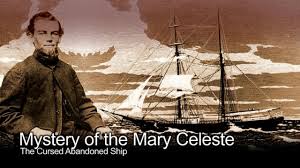
Mary Celeste ship
On 4th December 1872 the ship Mary Celeste was found deserted in the Atlantic ocean with no human onboard and a lifeboat missing. The ship had left New York on 7th November 1872 and when found was in proper sail worthy condition with everything intact.The belonging of the crew members was also undisturbed. None of the people who were on board were ever seen or heard again. The ship was captained by Benjamin briggs who went on board with his wife and a 2 year old daughter. Brigges chose his crew with great care. The last log written on the ship was 10 day before the ship was found by a Canadian brigantine Dei Gratia .
mary celeste
Mary Celeste was built in Spencer’s Island and launched under British administration as Amazon in 1861. She was transferred to American ownership and registration in 1868, when she acquired her new name. Thereafter she sailed eventually, until her 1872 voyage. At the hearings in Gibraltar following her recovery, the court’s officers considered various possibilities of foul play, including fraud by Mary Celeste’s crew, piracy by the Dei Gratia crew or others, and conspiracy to carry out insurance or fraud. However ,no convincing evidence supporting these theories were found.
Hypotheses include the effects on the crew of alcohol fumes rising from the cargo,submarineearthquake,watersports, attack by a giant squid or sea monsters, and paranormal intervention. A lot of false story about the ship were rumoured and films, plays and novels were written about the ship .After the hearing the ship was taken back to work under her new owner until 1885 when it was taken off coast.The mystery about the missing crew members and the ship being deserted is still unexplained.
Short story “The three question” is written by Leo Tolstoy, is a parable. Theme of the story is wisdom, knowledge, awareness, kindness, forgiveness and acceptance. It is a very motivational story to read I would recommend to read it once. Summary The story revolves around a king who wants to find answers to his three most important questions in life. He gathers many wise men of his kingdom to answer his question but every one differs in their answer and none of the answers satisfied king. So, he goes to a saint in search for answers and got some of most important life lessons their. The three questions were What is the right time to begin something? Which people should he listen to? What is the most important thing for him to do? I think the purpose of the story was to reminds people to be mindful and live in the present as it is the only time we have any control over. And the writer was very much successful in achieving that purpose. Leo Tolstoy, always brings a story that people will probably like and that’s why I am very thankful for him because he wrote us another good, beautiful and interesting story. In this story Motive of life is explained very wisely in just few pages. Conclusion Lesson learned-You should not go ask other people to decide for what you are going to do because in the end it’s still you who will answer everything, in the end it’s your decision. In the story I can quite relate to the king because I often ask other people before actually doing something which now I think is bad. It just shows that you don’t believe in yourself. If there is one character here in this story whom I am really love, it is the saint. I liked him for being full of wisdom. I liked everything he answered. It really proved that elders are really more experienced and logical about things in life; they are full of wisdom.
About-Mental Health has to be one of the most important issue that whole world is facing right now, but you know who is silently facing it, yes they are so called cool teens. who always love to over exaggerate their life. They always love to compare their life with others,buy things they don’t need to impress people they don’t like, and ironically their parents who have raised them are complaining about their behavior.I think mental health is very much linked with your nature like whether you are introvert,extrovert.
suppose,if you are extrovert you will not think that much about something like an introvert.
If you are introvert I think the whole problem lies their,they too good for this cruel world where everyone is thinking about themself.
How to tackle Negativity
First of all if you want to change the world you need many sources such as money,power without money and power you can,t do anything over here so work day and night to get as much money as you can and then raise your voice against any injustice and in this process of having a aim you can keep yourself away from negativity.
Every much has got so much to say, but rarely they listen.
Listen to online video of famous motivational speaker.
And never compare your day-1 at something to somebody’s day-1000,you can’t compare your life to anybody,and for god-sake stop using social media and stop giving it that much importance,it will ruin you ,if you cannot handle it properly.
I write about this topic with the utmost care because i accept this is bigger than us and i am sure even the most unwavering atheist would agree.
This is not an article about the history of religion, there are enough of those already, however this is an exploratory venture into a field even science has little to contribute to.
I have never believed in much, and didn’t give god much of a chance either. But a person changes, and he has to give himself room and enough open mindedness to accept those changes.
So what is the relevance of religion? Why did we design a god for ourselves? And more importantly, why are there so many of them? The latter question establishes that there is no one particular god, because if one of them is true the others become mere figments of imagination. This seems like a safe deduction and a relatively scientific place to start off with.But the fact that numerous cultures and people around the world came up with the idea of a higher power without any flow of information between them can be mind boggling too. Which bring us to our second deduction, a more adventures one this time. We need religion.
When i say we need it, i do not mean on a survival basis like we need water or food. Humans by nature are conscious beings, with a mind of their own, capable of critical thinking and problem solving. But a fallacy arising out of this very state of consciousness is that it doesn’t provide answers as much as it likes exploring questions. This very article is an apt example. But what about the questions we have no answers for? That’s where religion comes in.
It gives a sense of calm to the restless and a peaceful sense of relinquishment to the defeated but unbowed. It says to them it’s alright and that there is a place for everyone. It tells the sinners, what happens on earth stays on earth, and shoulders their burdens and it lays down a path for the unexceptional but steady.
This said, i still don’t believe that religion can give life meaning. Responsibilities do that. What religion can give you is strength and humbleness. Humbleness that some things are beyond your control.
Like anything religion too has evolved from the days of bowing to deities and sculptures. It took a spiritual turn with Buddhism in the 6th century(a religion which completely separates itself from any one particular god). A religion should not lock your mind in with its narrow scope, but instead give it wings.
In my humble opinion have an atheists attitude to religion but an agnostics mind.You can glean what you glean when you’re ready to glean what you glean. Do not buy into it, but don’t dismiss it either. One makes you helpless and the other hopeless.
The movement began in the middle 19th century in Europe. Play write Henrik Ibsen is credited for introducing realism in drama it is known as the father of realism. The main aim of realism is to bring greater fidelity of real-life to the stage. It also deals with social value and unconventional subjects of society.
Realism pertains to any artistic or literary narrative of life in a faithful, accurate manner unclouded by false ideas, literary conventions, and beautification of the world. It is a theory or a tendency in writing to depict events in human life in a matter-of-fact straightforward manner. It is an attempt to reflect life as it is.
The beliefs of Darwin and mark lead to an overall change in social and autonomous thoughts. Society began to question religious-political and economic beliefs, science, and deep observation paramount in European societies. the scientific methodology can apply to human problem-solving.
In a realistic work in En, English drama there important techniques that make a play or a novel realistic. The realistic story, the characters believable and engaging. The character lives a relatable life in the story. There is an accurate reflection of the human condition and contemporary life with no stereotype in the story. As a reality, there is a reflection made by the culture and social class in the play. There is always a detail of individual problems and challenges taking place in life.
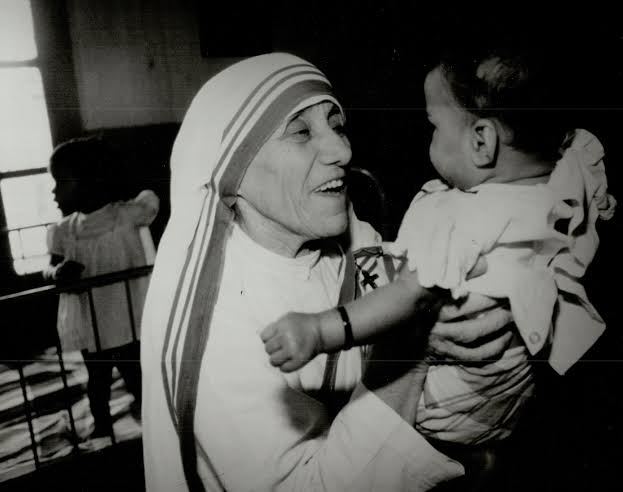
Nun and missionary Mother Teresa, known in the Catholic church as Saint Teresa of Calcutta, devoted her life to caring for the sick and poor. Born in Macedonia to parents of Albanian-descent and having taught in India for 17 years, Mother Teresa experienced her “call within a call” in 1946. Her order established a hospice; centers for the blind, aged and disabled; and a leper colony.
In 1979, Mother Teresa received the Nobel Peace Prize for her humanitarian work. She died in September 1997 and was beatified in October 2003. In December 2015, popefrancis recognized a second miracle attributed to Mother Teresa, clearing the way for her to be canonized on September 4, 2016.
Mother Teresa’s Family and Young Life
Mother Teresa was born on August 26, 1910, in Skopje, the current capital of the Republic of Macedonia. The following day, she was baptized as Agnes Gonxha Bojaxhiu.
Mother Teresa’s parents, Nikola and Dranafile Bojaxhiu, were of Albanian descent; her father was an entrepreneur who worked as a construction contractor and a trader of medicines and other goods. The Bojaxhius were a devoutly Catholic family, and Nikola was deeply involved in the local church as well as in city politics as a vocal proponent of Albanian independence.
In 1919, when Mother Teresa — then Agnes — was only eight years old, her father suddenly fell ill and died. While the cause of his death remains unknown, many have speculated that political enemies poisoned him.
In the aftermath of her father’s death, Agnes became extraordinarily close to her mother, a pious and compassionate woman who instilled in her daughter a deep commitment to charity. Although by no means wealthy, Drana Bojaxhiu extended an open invitation to the city’s destitute to dine with her family. “My child, never eat a single mouthful unless you are sharing it with others,” she counseled her daughter. When Agnes asked who the people eating with them were, her mother uniformly responded, “Some of them are our relations, but all of them are our people.”
Education and Nunhood
Agnes attended a convent-run primary school and then a state-run secondary school. As a girl, she sang in the local Sacred Heart choir and was often asked to sing solos. The congregation made an annual pilgrimage to the Church of the Black Madonna in Letnice, and it was on one such trip at the age of 12 that she first felt a calling to religious life. Six years later, in 1928, an 18-year-old Agnes Bojaxhiu decided to become a nun and set off for Ireland to join the Sisters of Loreto in Dublin. It was there that she took the name Sister Mary Teresa after Saint Thérèse of Lisieux.
A year later, Sister Mary Teresa traveled on to Darjeeling, India, for the novitiate period; in May 1931, she made her First Profession of Vows. Afterward, she was sent to Calcutta, where she was assigned to teach at Saint Mary’s High School for Girls, a school run by the Loreto Sisters and dedicated to teaching girls from the city’s poorest Bengali families. Sister Teresa learned to speak both Bengali and Hindi fluently as she taught geography and history and dedicated herself to alleviating the girls’ poverty through education.
On May 24, 1937, she took her Final Profession of Vows to a life of poverty, chastity and obedience. As was the custom for Loreto nuns, she took on the title of “Mother” upon making her final vows and thus became known as Mother Teresa. Mother Teresa continued to teach at Saint Mary’s, and in 1944 she became the school’s principal. Through her kindness, generosity and unfailing commitment to her students’ education, she sought to lead them to a life of devotion to Christ. “Give me the strength to be ever the light of their lives, so that I may lead them at last to you,” she wrote in prayer.
‘Call Within a Call’
On September 10, 1946, Mother Teresa experienced a second calling, the “call within a call” that would forever transform her life. She was riding in a train from Calcutta to the Himalayan foothills for a retreat when she said Christ spoke to her and told her to abandon teaching to work in the slums of Calcutta aiding the city’s poorest and sickest people.
Since Mother Teresa had taken a vow of obedience, she could not leave her convent without official permission. After nearly a year and a half of lobbying, in January 1948 she finally received approval to pursue this new calling. That August, donning the blue-and-white sari that she would wear in public for the rest of her life, she left the Loreto convent and wandered out into the city. After six months of basic medical training, she voyaged for the first time into Calcutta’s slums with no more specific a goal than to aid “the unwanted, the unloved, the uncared for.”
Missionaries of Charity
Mother Teresa quickly translated her calling into concrete actions to help the city’s poor. She began an open-air school and established a home for the dying destitute in a dilapidated building she convinced the city government to donate to her cause. In October 1950, she won canonical recognition for a new congregation, the Missionaries of Charity, which she founded with only a handful of members—most of them former teachers or pupils from St. Mary’s School.
As the ranks of her congregation swelled and donations poured in from around India and across the globe, the scope of Mother Teresa’s charitable activities expanded exponentially. Over the course of the 1950s and 1960s, she established a leper colony, an orphanage, a nursing home, a family clinic and a string of mobile health clinics.
In 1971, Mother Teresa traveled to New York City to open her first American-based house of charity, and in the summer of 1982, she secretly went to Beirut, Lebanon, where she crossed between Christian East Beirut and Muslim West Beirut to aid children of both faiths. In 1985, Mother Teresa returned to New York and spoke at the 40th anniversary of the United Nations General Assembly. While there, she also opened Gift of Love, a home to care for those infected with HIV/AIDS.
Mother Teresa’s Awards and Recognition
In February 1965, Pope Paul VI bestowed the Decree of Praise upon the Missionaries of Charity, which prompted Mother Teresa to begin expanding internationally. By the time of her death in 1997, the Missionaries of Charity numbered more than 4,000 — in addition to thousands more lay volunteers — with 610 foundations in 123 countries around the world.
The Decree of Praise was just the beginning, as Mother Teresa received various honors for her tireless and effective charity. She was awarded the Jewel of India, the highest honor bestowed on Indian civilians, as well as the now-defunct Soviet Union’s Gold Medal of the Soviet Peace Committee. In 1979, Mother Teresa was awarded the Nobel Peace Prize in recognition of her work “in bringing help to suffering humanity.”
Criticism of Mother Teresa
Despite this widespread praise, Mother Teresa’s life and work have not gone without its controversies. In particular, she has drawn criticism for her vocal endorsement of some of the Catholic Church’s more controversial doctrines, such as opposition to contraception and abortion. “I feel the greatest destroyer of peace today is abortion,” Mother Teresa said in her 1979 Nobel lecture.
In 1995, she publicly advocated a “no” vote in the Irish referendum to end the country’s constitutional ban on divorce and remarriage. The most scathing criticism of Mother Teresa can be found in Christopher Hitchens’ book The Missionary Position: Mother Teresa in Theory and Practice, in which Hitchens argued that Mother Teresa glorified poverty for her own ends and provided a justification for the preservation of institutions and beliefs that sustained widespread poverty.
When and How Mother Teresa Died
After several years of deteriorating health, including heart, lung and kidney problems, Mother Teresa died on September 5, 1997, at the age of 87.
Contempt in its true sense means scandalizing, disrespecting courts or individual judges or jury and attributing motive to certain judgment. With the intent of implementing the orders of the court of law and preserving it from scandalizing the “CONTEMPT OF COURT ACT” was modified and adopted in the parliament in 1971. The punishment for contempt is maximum of six months imprisonment or fine of rupees 2000 or both. It is a restriction on one of the fundamental rights “The Right to Expression”. Contempt is of two types-Civil contempt and Criminal contempt.
According to the section 2(b) of The Contempt of Court Act, 1971, civil contempt means willful disobedience to any judgment, decree and direction, order, writ or other process of a court or willful breach of an undertaking given to the court.
According to the section 2(c) of The Contempt of Court Act, 1971, criminal contempt means the publication (whether by words, spoken or written, or by signs, or by visible representation, or otherwise) of any matter or the doing of any other Act whatsoever which scandalize or tend to scandalize, or lower or tends to lower, the authority of any court or prejudice or interfere or tends to interfere with, the due course of any judicial proceeding or ineterface or tends to interfere with or obstructs, the administration of justice in any other manner. Criminal contempt is considered a conduct directed against dignity of Court. That’s why criminal contempt often highlights as the only contempt. But that’s not true according to the report submitted on the review of the Contempt of Court Acts, 1971 by The Law Commission of India chaired by Justice B.S. Chauhan states that there is more number of civil contempt cases (96,993) than civil contempt cases (583) in various high courts and The Supreme Court. But despite high ratio of civil contempt the punishment ratio is very low. There is a very fine line between contempt and criticisms and because of it criticism is understood as contempt. In its previous judgments Supreme Court states that contempt victims should not be punished until the contempt is intended or tends to interfere in the due course of administration of the courts. One of the major drawback of the contempt law is that the judge is victim as well as prosecutor and the same person is assuring justice which is against the basic theory of justice. In the recent cases we see renowned Prashant Bhushan criticizing CJIs and found guilty in the court of law and fined for Rs 1. The court has the power to pick up any publication and scrutinize it as contempt of court in the courts. This makes people hesitate to present their point of views on certain judgments as they fear to be punished for contempt. This also present judiciary in a bad light in front of the citizens.
The Courts should check civil contempt more than criminal contempt. The Courts should develop habit of criticism on their judgment because they can also give controversial judgments. Even the Supreme Court is supreme but not infallible. In a healthy democracy everything should be questioned. Courts should accept their bonafide criticism as they will help them deliver better judgments in the future and criticism makes any institution better not disrespect them.




















 Eduindex
You must be logged in to post a comment.